Tag: Universität Zürich

  • “Buy-to-let” A model calculation from the perspective of private investors

    “Buy-to-let” A model calculation from the perspective of private investors

    “Buy-to-let provides Swiss private investors with a way to participate in the real estate market and has enjoyed growing popularity in the wake of the low interest rate environment. The share of rented condominiums and single-family houses accounted for 17.0% of all newly concluded residential property financing in 2019 on a volume-weighted basis. This means that almost every sixth property was purchased with the intention of subsequently renting it out. In most cases, investments are made in condominiums and thus in smaller lot sizes due to the financial assets available.

    The aim of the final thesis was to show private investors the main risks associated with a buy-to-let investment and to establish a relative comparison with alternative capital market investments. To this end, an investment analysis model was developed that looked at the profitability of a 3.5-bedroom condominium from its purchase in 2000 to its sale in 2020. Based on studies in various markets in the Bern area and by means of different sensitivities regarding the use of debt capital, their effects on the profitability ratios were illustrated.

    Result
    Risky investment strategy: With regard to the holding phase, it became clear that in particular the choice of the degree of debt financing and the prevailing interest rate level determines the achievable return on equity and at the same time also forms the highest expenditure item. In the first years of the holding period, a high leverage ratio of 75% and an average interest rate of 3.70% resulted in exclusively negative net returns. With regard to the sale of the property, it became apparent that the value development was the most significant determinant for the success of the buy-to-let investment (see Fig. 1). The potentially realisable market value is subject to cyclical fluctuations. Combined with an increased leverage ratio and the associated debt risk in terms of rising interest rates and possible losses in value, these factors constitute the main risk of the buy-to-let investment. If, in addition, a large proportion of the assets is tied up in a single property, this creates a considerable cluster risk, which is further increased by the effect of rising interest rates and losses in value. It is important to note that passing on rising interest rates to the tenant is only possible to a limited extent due to legal restrictions and the sluggishly reacting reference interest rate. In addition, higher interest rates are usually accompanied by rising inflation rates. Since residential rents are usually not fully linked to the consumer price index, inflation leads to a partly real reduction in rental income.
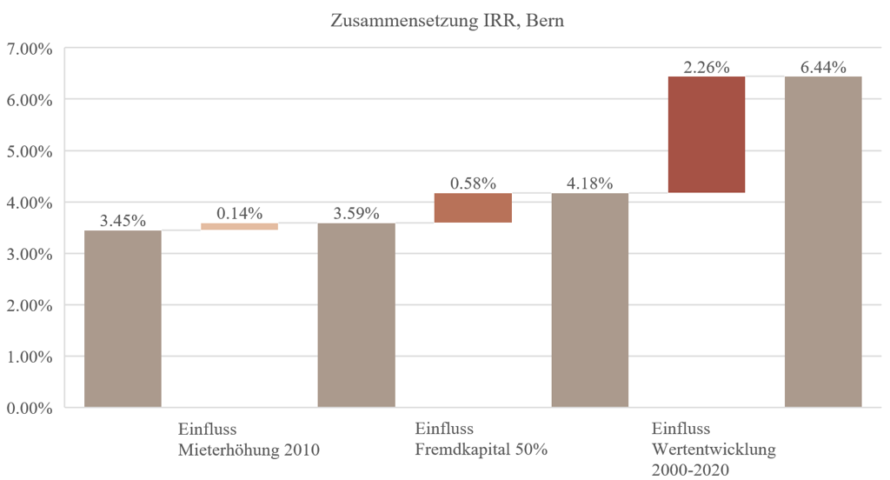
    Fig. 1: Composition of IRR, using the example of the city of Bern.

    The consideration of the different markets – depending on the location of the property – also made it clear that the regional disparities can lead to large differences in the profitability and investment risk of the private investor and represent a further risk for the buy-to-let investment. With regard to the value retention of the property, the private investor should therefore primarily assess the location quality and the property.

    Comparison of capital market investments
    The comparison with the two asset classes Swiss equities and Swiss government bonds showed that the buy-to-let strategy could certainly represent an attractive alternative (cf. fig. 2+3). It was possible to further improve the return on the property over the period under consideration by using debt capital, but this was accompanied by a significantly higher risk (see Fig. 3). It should also be noted that the risk-return characteristics must be extended to include the variable of liquidity: In a weak economic environment, the sale of a property is only possible under timely circumstances and is usually associated with financial losses.
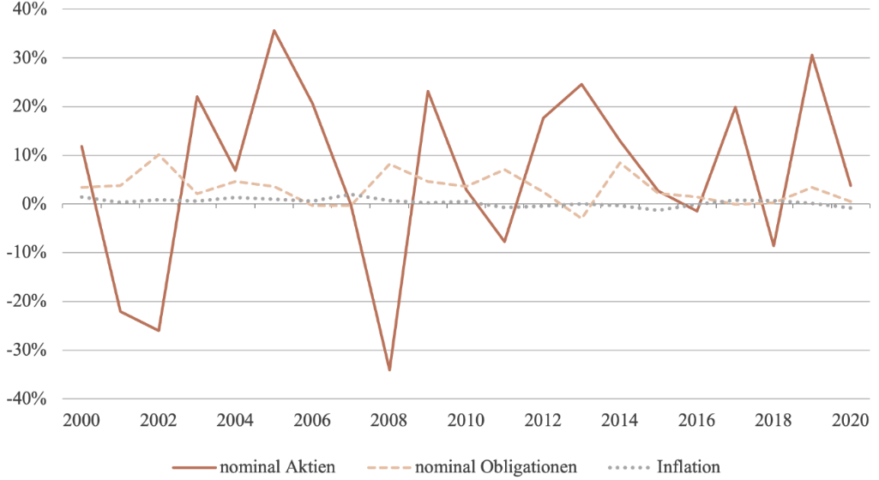
    Fig. 2: Annual returns on equities and bonds, observation period 2000-2020.

    Conclusion
    The decision for a buy-to-let investment should not be made lightly. A property purchase financed out of a lack of alternative asset classes and low financing costs often does not take into account the risks assumed at the same time. The property must remain effectively affordable in a higher interest rate environment and further capital gains should not be relied upon as an investment strategy. It can be concluded that rental income in particular determines the success or failure of the buy-to-let investment.
    Personal details
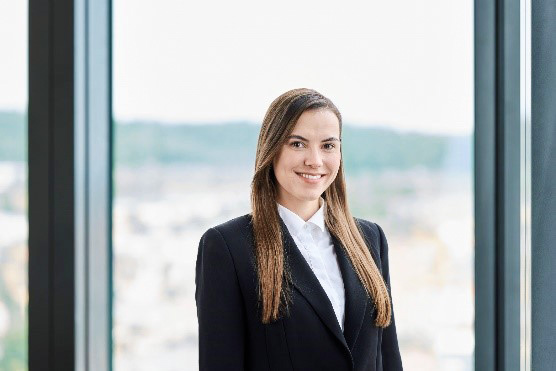
    Anissa Kühni, born 1991. Studied architecture at the Bern University of Applied Sciences, graduating in 2016. Master of Advanced Studies UZH in Real Estate, graduating in 2021. From 2016, active at Frutiger AG in project development for various site developments with a focus on “residential” as well as acquisitions. Since 2023 employed as project manager for real estate developments at Swiss Prime Site Solutions AG for the real estate fund “Akara Swiss Diversity Property Fund PK”.

  • Art students cooperate with the building department

    Art students cooperate with the building department

    In cooperation with the canton of Zurich’s structural engineering department , fine arts students from the Zurich University of the Arts ( ZHdK ) have designed works of art on sports halls and a drainage aqueduct. The ZHdK announced in a press release that the results will be on display until February 27, 2023 under the title Aqueous Transmissions in the industrial district around the Klingenpark in Zurich. The vernissage will take place there on July 12th.

    The building department specifically addressed its tender for art in the building near the sports halls to ZHdK fine arts students at Master’s level. The three provisional sports halls of the canton schools Freudenberg/Enge, Uetikon am See and the Irchel campus of the University of Zurich were available. “The aim was to develop a work of art at, in and around the building at each location, which underlines the young, fresh and sporty character of the place.”

    The result was a total of 17 projects, from which a jury selected three. These include the works Higher Goals by Gregor Vogel for the Irchel campus, Community Show by Julia Nusser and Tereza Glazova for the Uetikon am See canton school and Bouncing Balls by Otto Szabo and Cristian Zabalaga for the Freudenberg and Enge canton schools. They deal with themes such as minority, identity, sexuality and vulnerability as well as the moment when a sports ball hits a wall.

    Another eight works of art by bachelor students were created in connection with a temporary drainage aqueduct that was built for the replacement building of the construction trades school on Limmatstrasse. They can all be seen during the installation period until February 27, 2023 as an urban art parcours through the district around the Klingenpark.

  • Forum UZH takes next hurdle

    Forum UZH takes next hurdle

    The UZH Forum has completed its preliminary project and thus completed the first phase of the project planning, the UZH informs in a press release . The planned nine-story building for the UZH research and education center will form “the future hub of the University of Zurich in the heart of the Zurich Zentrum university district,” the statement said. A large part of the building is to be made accessible to the public.

    The cost of the new building is expected to amount to CHF 598 million. The Government Council of the Canton of Zurich has now referred a corresponding loan application to the Cantonal Council, the State Chancellery of the Canton of Zurich informed in a separate statement . According to her, the Forum UZH provides “the urgently needed additional space for teaching and research”. In addition, the Communications Department of the Government Council emphasizes the function of the planned research and education center as a “link between the three traditional institutions of the University of Zurich, the University Hospital Zurich and the ETH Zurich “.

    The seven above-ground floors of the Forum UZH are reserved for research and teaching. Law, economics and modern philology will occupy the top four floors. In addition, seven of the 40 locations of the university library will move into the new building. In the center of the building there will be an inner forum in the form of a large hall that breaks through the entire structure, which gives the building “an open, pleasant atmosphere across all floors”, writes the UHZ in its press release. The Forum UZH is scheduled to open in 2029.

  • Swiss Prime Site and Superlab are building laboratory space in Schlieren

    Swiss Prime Site and Superlab are building laboratory space in Schlieren

    Swiss Prime Site Immobilien has entered into a partnership with Superlab Suisse . Superlab is a provider of laboratory and research space. According to the press release , Superlab Suisse provides operational and fully equipped research and laboratory space as well as operational services. It already has such a location in Lausanne. Both partners plan to develop locations in Basel and Schlieren with a total area of more than 10,000 square meters. According to Superlab Suisse, the laboratory in Schlieren will have an area of 5,400 square meters.

    The city on the Limmat is home to facilities of the Swiss Federal Institute of Technology Zurich (ETH), the University of Zurich (UZH) and research centers of numerous national and international pharmaceutical companies. The demand for laboratory space is correspondingly high, it is said. Swiss Prime Site Immobilien is planning a modern new building project on the JED site in Schlieren. In cooperation with Superlab Suisse, research and laboratory areas for start-ups, spin-offs or established companies are to be created on two floors.

    “Due to the direct proximity to the Wagi area in Schlieren and the technology park in Basel, companies from the life sciences sector can benefit from significant synergy effects of these ecosystems,” says Zhang Xi, CEO of Superlab. In Basel, a state-of-the-art building with laboratory and research areas is to be built by Superlab Suisse at the Stücki Park in the next 18 months.

    For Martin Kaleja, CEO of Swiss Prime Site Immobilien, the modern standard of construction, the flexibility of the space and the guarantee of support and services are key success factors. Kaleja is quoted as saying that Swiss Prime Site Immobilien and Superlab Suisse together had the necessary know-how to ensure the space required for laboratory and research areas.

  • CondenZero wins Swiss Innovation Challenge

    CondenZero wins Swiss Innovation Challenge

    The Swiss Innovation Challenge has been decided, the three winners come from Zurich: on Thursday the main prize of CHF 20,000 was awarded to condenZero . The spin-off of the University of Zurich ( UZH ) received this award virtually when the award ceremony was broadcast from the Haus der Wirtschaft in Pratteln. According to a press release , a message from Federal Councilor Guy Parmelin was leaked.

    The physicists at condenZero develop and produce scientific sample holders that work at low temperatures of around minus 270 degrees. The innovative cooling principle was originally developed at the Swiss free-electron laser at the Paul Scherrer Institute . In the start-up phase, the team will concentrate on introducing the new technology to the cryo-electron microscopy market. The condenZero technology can hold cryogenic temperatures for up to 24 hours. With the current cryo-microscopy solutions, this is only possible for 15 minutes. CondenZero is also in the final round of the start-up CERN BIC incubator .

    Second place and the special life sciences prize of CHF 5,000 went to MyLeg . This is a “unique” device that recovers sensory information about the touch and movement of a prosthetic leg. It does this through non-invasive electrical stimulation. The device does not have to be used surgically and can be added to any existing prosthesis.

    Third place and the special construction prize were awarded to Oxara . The spin-off from the Swiss Federal Institute of Technology in Zurich converts construction waste into sustainable and affordable building materials with self-developed and patented mineral additives, thus promoting the circular economy. The company’s goal is to significantly reduce “the immense footprint” of conventional building materials.

  • UZH wants to generate electricity on a green roof

    UZH wants to generate electricity on a green roof

    The University of Zurich is to have a new teaching and learning center, the FORUM UZH, by 2028. According to a message on Monday, the cantonal building construction department submitted the building pre-submission. Afterwards, the seven-story building designed by the Basel architects Herzog & de Meuron will be erected as a wood hybrid construction with a concrete structure. The use of wood is supposed to save as much CO2 as is needed to build 77 single-family houses.

    The roof is to be greened intensively, thereby improving cooling in summer and thermal insulation in winter. At the same time, the roof will have a photovoltaic system. This should generate around 150 megawatt hours per year, enough electricity for 50 households.

    Construction is scheduled to begin in 2024. In the future, the building will have 700 workplaces for students and work space for 6000 members of the university.

  • University of Zurich relies on Winterthur water flow

    University of Zurich relies on Winterthur water flow

    Stadtwerk Winterthur has won the University of Zurich ( UZH ) as a new customer. In the corresponding tender, the UZH assumed electricity from renewable energies and opted for water electricity from the European Union, explains the city administration of Winterthur in a message . The municipal company will supply UZH with 69 gigawatt hours of electricity from hydropower annually from 2024 to 2028.

    In addition, Stadtwerk Winterthur was able to win two more tenders from existing customers, the communication further explains. According to this, on the one hand, the Swiss Federal Institute of Technology in Zurich ( ETH ) will also receive sustainable water power from the Winterthur municipal utility in the years 2024 to 2028. Of the 110 gigawatt hours contractually agreed annually, 4 gigawatt hours should meet the strict ecological guidelines of naturemade star.

    On the other hand, the Cantonal Hospital Winterthur will continue to receive electricity from hydropower from Stadtwerk Winterthur between 2024 and 2026. The corresponding contractual agreement includes the delivery of around 24 gigawatt hours of electricity annually, writes the city administration of Winterthur.

  • University of St.Gallen gets a house in the park

    University of St.Gallen gets a house in the park

    The University of St.Gallen ( HSG ) needs more space, according to a joint communication from the Canton of St.Gallen , the City of St.Gallen and the HSG. The canton of St.Gallen will therefore have a second campus built for the HSG on the Platztor site in the city of St.Gallen. The project had already been approved by the population of the canton in 2019.

    In the architecture competition organized by the canton, the project House in the Park by Zurich architect Pascal Flammer was able to prevail from among 59 candidates, informs the city administration. The winning project envisages a six-story building surrounded by a park. Large windows and a lot of wood made the building appear light and open, according to the announcement. On around 31,000 square meters, space will be created for around 3,000 students, lecturers and employees. The new building will significantly enhance the area “compared to the current situation”, write the authors.

    In the next step, the canton will now work out the specific construction project. The approval process is then to be started in 2023. Construction is scheduled to start in 2025. The Haus am Park should be ready for use in 2029.

    The communication estimates the cost of the project at CHF 207 million. The canton's population has already given their approval for the CHF 160 million allocated to the canton. The federal government and the HSG will contribute CHF 25 million and CHF 20 million respectively. The city of St.Gallen made a contribution of 2 million francs to the sale of the property.

  • Genome researchers at the Irchel campus get a new laboratory

    Genome researchers at the Irchel campus get a new laboratory

    The Functional Genomics Center Zurich (FGCZ) of the University of Zurich (UZH) and the Swiss Federal Institute of Technology Zurich (ETH) is getting a new building on the Irchel campus. The groundbreaking is in May. As general contractor, Implenia AG Switzerland and SAM Architects AG Zurich are responsible for the planning and implementation. With their project, they won a selection procedure from the cantonal building construction office in Zurich in March, according to a media release .

    Accordingly, a new laboratory building of 1300 square meters is planned. This offers space for 20 different room types. This should accommodate high-tech devices that have different requirements in terms of room climate, temperature, power consumption and availability.

    In addition to the laboratories, a new type of office concept is also being created, which offers different opportunities for community and privacy. This new working environment is intended to make work easier for genome researchers and external users, according to the press release. If everything goes according to plan, the 80 employees at the Functional Genomics Center Zurich could move in summer 2022.

    The old building of the genome researchers on the Irchel campus is meanwhile being cleared for temporary use. From 2023, three secondary schools in the canton of Zurich are to move in there. After about ten years, the buildings are to be renovated and handed over again for university purposes.

    Accordingly, the new laboratory building is a temporary solution. It consists of modules that can easily be dismantled and recycled. Because: After 15 years, the scientists should move back into their traditional building.

  • UZH gets new center for dentistry

    UZH gets new center for dentistry

    The jury has decided: According to a statement, the new Center for Dentistry (ZZM) at the University of Zurich is to be built according to the plans of the Boltshauser Architects / Drees & Sommer consortium. 46 teams had applied for the architectural competition, 15 had been admitted. Now the winning project “Light Rack” is being further developed under the direction of the UZH together with the building department. A preliminary project that is eligible for approval is to be submitted to the government and cantonal council by 2023.

    The five-storey new building will house the seven clinics and institutes of the ZZM. If everything goes as planned, the new building should be ready for occupancy in 2029. It will be located on what is now the children's hospital in Zurich (Kispi) in Hottingen. The Kispi is expected to move to a new building in Lengg in 2022. François Chapuis, Director of Real Estate and Operations at UZH, is quoted in the press release.

    The new ZZM building is designed as a hybrid structure made of wood and concrete. "The UZH deliberately relies on wooden hybrid buildings in order to improve the CO2 balance," said Chapuis in the press release. The planning provides for a planted inner courtyard and an atrium in the entrance area. The facades and roof are to be equipped with photovoltaic elements and the roof is to be planted with a variety of species. A large part of the energy consumption is to be covered with renewable energies.

  • Fabian Streiff becomes the top Zurich location promoter

    Fabian Streiff becomes the top Zurich location promoter

    There is a change at the top of the business location promotion department at the Zurich Office for Economics and Labor. Markus Assfalg is retiring after eleven years as head of location promotion, as announced by the office. He will be replaced by Fabian Streiff . The 35-year-old has been with the Basel Area Business & Innovation since the beginning of 2019 and heads the DayOne healthcare initiative. Prior to that, he was co-head of Basel-Stadt's economic development department.

    Streiff holds a doctorate in economic geography from the University of Bern and a Master of Science from the University of Zurich .

    One of the first to congratulate the cantonal location promotion and to Fabian Streiff is the location promoter of the city of Schlieren , Albert Schweizer. "We are very pleased with the choice of Fabian Streiff," he says. "We have known Fabian Streiff for a long time and have followed his work in the canton of Basel-Stadt very carefully."