Tag: Unternehmenskultur

  • The construction site also wants flexibility

    The construction site also wants flexibility

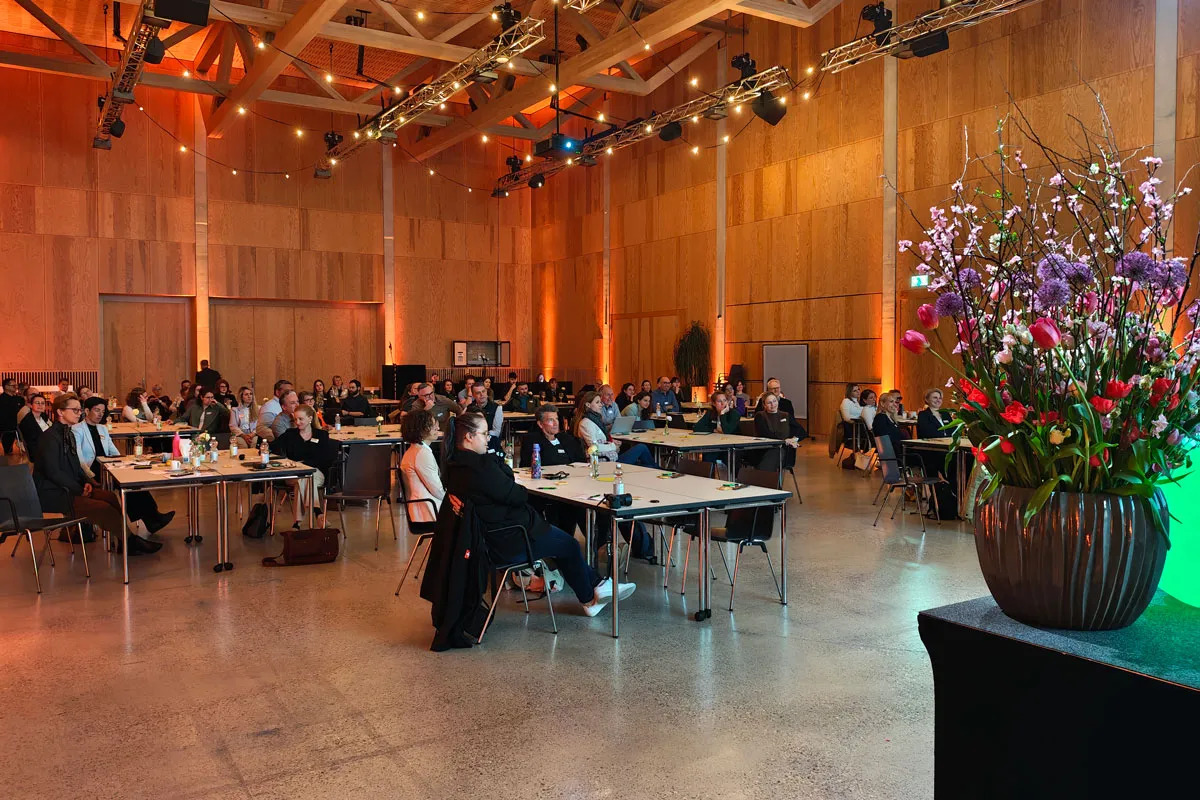
    Adrian Dinkelmann, Managing Director of Infra Suisse, put it in a nutshell. Compatibility is not achieved through individual measures, but through a fundamental anchoring in the corporate culture. Two projects funded by the federal government highlight specific areas for action. The framework must be designed in such a way that it accommodates the different realities of employees’ lives.

    Not everyone wants the same
    Jan Malmström, CEO of the JMS Group, asked around in his company. The result is surprising. The desire for part-time work is strong in the office, but much less so on the construction site. But even there, there is a clear need for more flexibility in everyday life. Standard models fall short. Anyone who treats all employees the same is missing the point.

    Co-CEO as a reality check
    Sandra Werneyer and Lea Ott at werneyer ott architektur gmbh demonstrate what is possible: shared leadership in the co-CEO model. This works with high organizational and communicative requirements. Their presentation made it clear that new forms of work are not a sure-fire success. They require clarity about which responsibilities can really be shared.

    Stereotypes slow down the industry
    Dörte Resch, Professor of Applied Psychology at the FHNW, made it clear that image campaigns alone do not change anything. Stereotypes that no longer correspond to the reality of the construction professions must be actively addressed. Authentic career marketing is needed that makes the attractive aspects of the industry visible to everyone. Caroline Farberger, Swedish entrepreneur, added a personal perspective. Inclusion begins with questioning existing thought patterns.

    Culture beats concept
    The panel made it clear what makes the difference. Olivier Imboden, CEO of Ulrich Imboden AG, describes it like this. When employees share a company’s values, this has a direct impact on its attractiveness as an employer. Sven Stingelin from Frutiger AG added to the construction site perspective and addressed the framework conditions, which are different to those in the office. Thomas Weber from Walo Bertschinger pointed out that project processes have a significant impact on the scope for action. Cornel Müller, founder of Work-ID AG, showed how targeted career marketing opens up new target groups, including through early career guidance.


  • Global employer rating strengthens position in the competition for talent

    Global employer rating strengthens position in the competition for talent

    Holcim has secured the Global Top Employer award from the Top Employers Institute for the second year running. According to a press release, a total of 27 Holcim subsidiaries across all regions have been certified as Top Employers. With 27 certified markets, Holcim achieved a global score of 87 per cent, thereby exceeding the global benchmark.

    The Top Employers Institute rated Holcim particularly highly in the areas of Ethics & Integrity, Learning and Business Strategy. These results reflect the performance-oriented corporate culture that drives the Group’s NextGen Growth 2030 strategy, the press release states.

    “A strategic growth driver of our NextGen Growth 2030 strategy is our performance culture and the value we create for employees, customers and shareholders. We call this the Holcim Spirit, which is focused on purpose, people and performance,” CEO Miljan Gutovic is quoted as saying. “This award belongs to our more than 45,000 colleagues who embody the Holcim Spirit every day and make Holcim an outstanding place to work.”

    For the Top Employer award, companies are assessed against global standards in the areas of career development, learning, well-being and remuneration. Companies recognised as Global Top Employers must also be certified as regional Top Employers in a minimum number of countries and regions – including the country where their global headquarters are located.

    Holcim is headquartered in Zug, Switzerland, and employs more than 45,000 people globally across 43 markets, including Europe, Latin America, Asia, the Middle East and Africa.

  • Strong followers instead of weak bosses

    Strong followers instead of weak bosses

    The classic assumption is that those who perform will be promoted. However, the so-called Peter Principle already explains why good employees often rise to the level of incompetence. Researchers Christian Zehnder, Benjamin Tur and Matthieu Légeret have now introduced a new perspective. They argue that it is not only their competences that count when a manager is promoted, but also the loss of their contribution as a follower.

    A conflict of objectives with consequences
    If a person with high team competence becomes a manager, the group often loses a productive and committed employee at the operational level. In some cases, it may therefore be strategically wiser to promote a less competent person, simply in order to maintain the functioning team structure.

    Leadership is not always the key to success
    “Our research shows that under certain circumstances it can be optimal to place less competent people in leadership roles,” explains Zehnder. This is particularly true when the leadership function is time-consuming but operationally less crucial and when the best follower is indispensable for day-to-day work.

    Role of corporate culture
    A key element here is recognising the value of good follower roles. Reward systems could be designed in such a way that top performers want to remain at lower hierarchical levels without this being perceived as a career standstill. Internal communication is also needed to explain why not every promotion is synonymous with the highest contribution to the organisation.

    Rethinking leadership means increasing efficiency
    The study calls for a radical rethink of talent strategy. The classic idea of promotion is not always the best solution for the organisation. Sometimes it is more effective to leave expertise where it brings the greatest benefit, even if this means that the best people are not at the top. True success may lie in the strength of those who do not lead.