Tag: urbane Verdichtung

  • New building in Gundeli creates living space near the railway station

    New building in Gundeli creates living space near the railway station

    According to a statement, Schlieremer Halter AG has completed construction of the Gundeli new build project and handed it over to the client, WIMAG Weibel Immobilien AG. The project is a rental property in the Gundeli district, directly adjacent to Basel SBB railway station. The new building at Güterstrasse 89/91 and Meret Oppenheim-Strasse 16 offers 66 new apartments as well as commercial and office space, replacing the former residential and commercial buildings on the site.

    The new building densifies the urban space in a central location with a variety of rental apartments. The apartments range from 1.5-room apartments to 3.5-room apartments and feature open floor plans and balconies with versatile views. A green inner courtyard serves as a retreat and enhances the quality of living.

    In addition, versatile commercial space for offices or retail outlets is being created on the ground floor, covering an area of around 1,250 square metres. This is complemented by two further office spaces, each measuring 80 square metres, on the first floor and storage facilities for businesses.

    The two basement levels offer 53 parking spaces that can be rented. These are supplemented by 158 bicycle parking spaces on the ground floor and first basement level.

  • From freight station to urban district

    From freight station to urban district

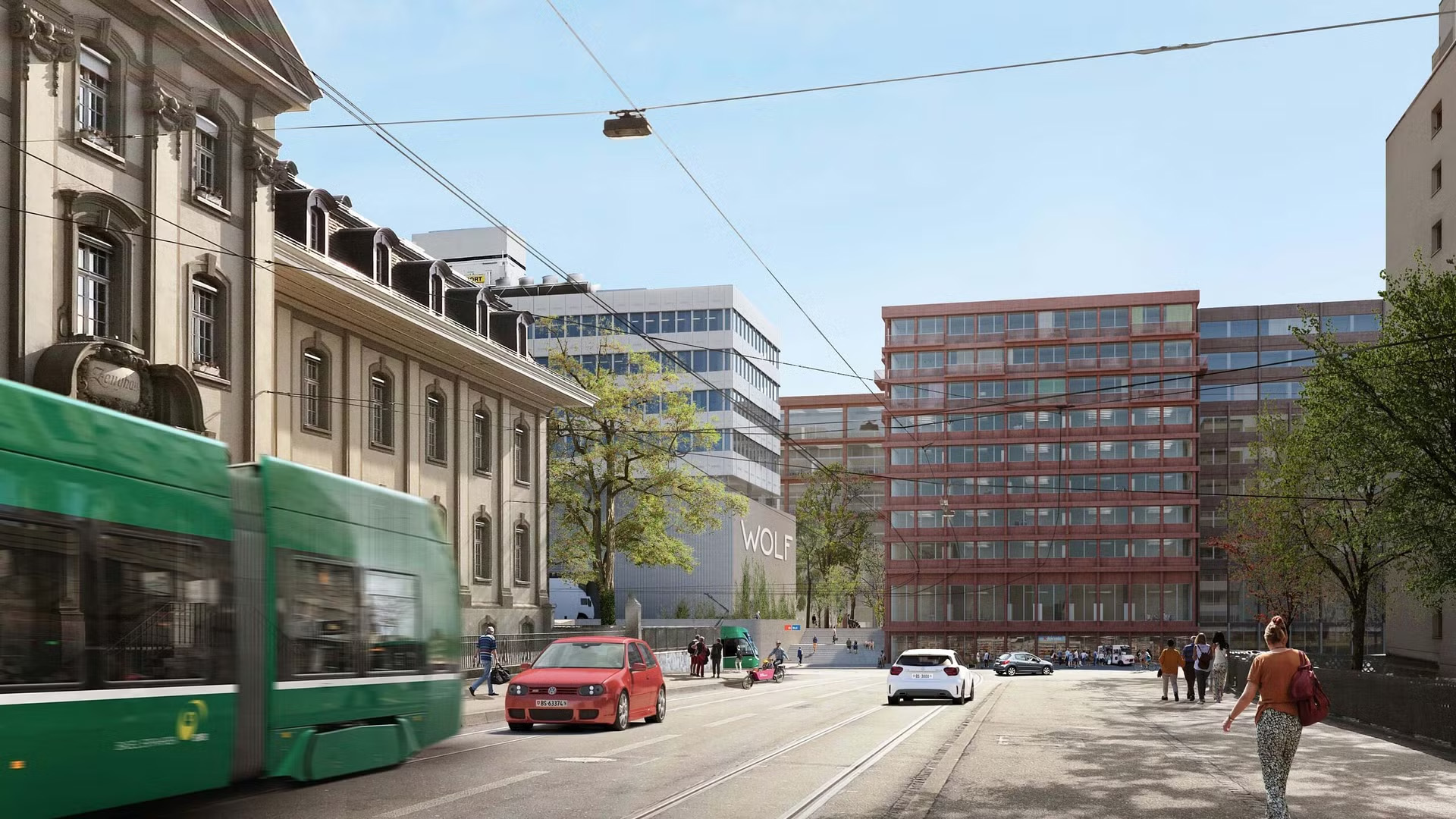
    The transformation will begin in 2027 with the first phase of development in the western part of the site. Around 600 flats will be built, a third of which will be affordable cooperative flats. The aim is to attract a diverse population and combine urban density with social diversity. The Urban Hub will become the lively centre of the neighbourhood. It will combine gastronomy, sport, culture and services and act as a link between residential buildings and commercial areas.

    The second phase of development will begin in the east of the site in 2031. Modern service and commercial buildings will create around 1,000 jobs and unlock the site’s potential for business, innovation and city logistics. Its central location at the railway station and its connection to the regional transport network reinforce its function as an urban hub in Basel.

    Focus on architecture, sustainability and flexible use
    The master plan consistently follows the principles of ecological and sustainable urban development. The new perimeter block development is based on the sponge city principle and integrates historic railway buildings into the courtyard concept. This ensures a pleasant microclimate, promotes biodiversity and improves rainwater management. Buildings such as Janus and Binaria impress with reused components, modular wood and metal elements, green and accessible roofs, and photovoltaic surfaces. The flexible construction guarantees reparability, ease of maintenance and subsequent conversion.

    Cultural and social start-up initiatives strengthen neighbourhood identity
    Even before construction begins, the area is being actively revitalised through innovative temporary uses. SBB is opening historic warehouses for culture, gastronomy and sport. One example is pickleball, which offers 2,000 square metres of space and attracts new players. Rental space for creative and social initiatives is also available. These pioneering uses create proximity to the neighbourhood population and promote creative participation. In particular, the broad participation process, in which the public, associations and organisations are involved from the outset, guarantees acceptance and innovation.

    Mobility, smart city and quality of life as a guiding principle
    People are at the centre, with technology and sustainability as the supporting pillars. A city logistics hub in the eastern area ensures resource-efficient goods distribution in Basel and the surrounding area. Modern mobility services and integration with public transport are an integral part of the neighbourhood strategy. The SBB’s scientifically supported quality of life model, developed in collaboration with the University of Basel, makes Wolf Basel a laboratory for innovative solutions in energy, circular economy and social cohesion.

    Wolf Basel is creating an inspiring neighbourhood that combines urban densification, sustainability, smart networking and social diversity. In this way, Basel is growing not only spatially, but also socially and technologically into the future.

  • ABB cashes in and Oerlikon builds

    ABB cashes in and Oerlikon builds

    ABB is selling a site of around 7,000 square meters near Zurich-Oerlikon railroad station to real estate service provider Pensimo. The sale will result in an operating gain on disposal of around CHF 290 million before taxes in the first quarter of 2026. ABB no longer needs the site as a strategic land reserve and is taking this step to enable the further development of the Neu-Oerlikon district.

    Around 500 apartments, a high-rise building and commercial space are planned for the site. Over the next few years, the former industrial area is to be transformed into a mixed-use district with housing, services, workplaces and cultural and commercial facilities. Due to high land prices, rents are expected to be rather high. At best, individual apartments at cost rents are conceivable, for example as part of a densified site development.

    New ABB headquarters in Oerlikon
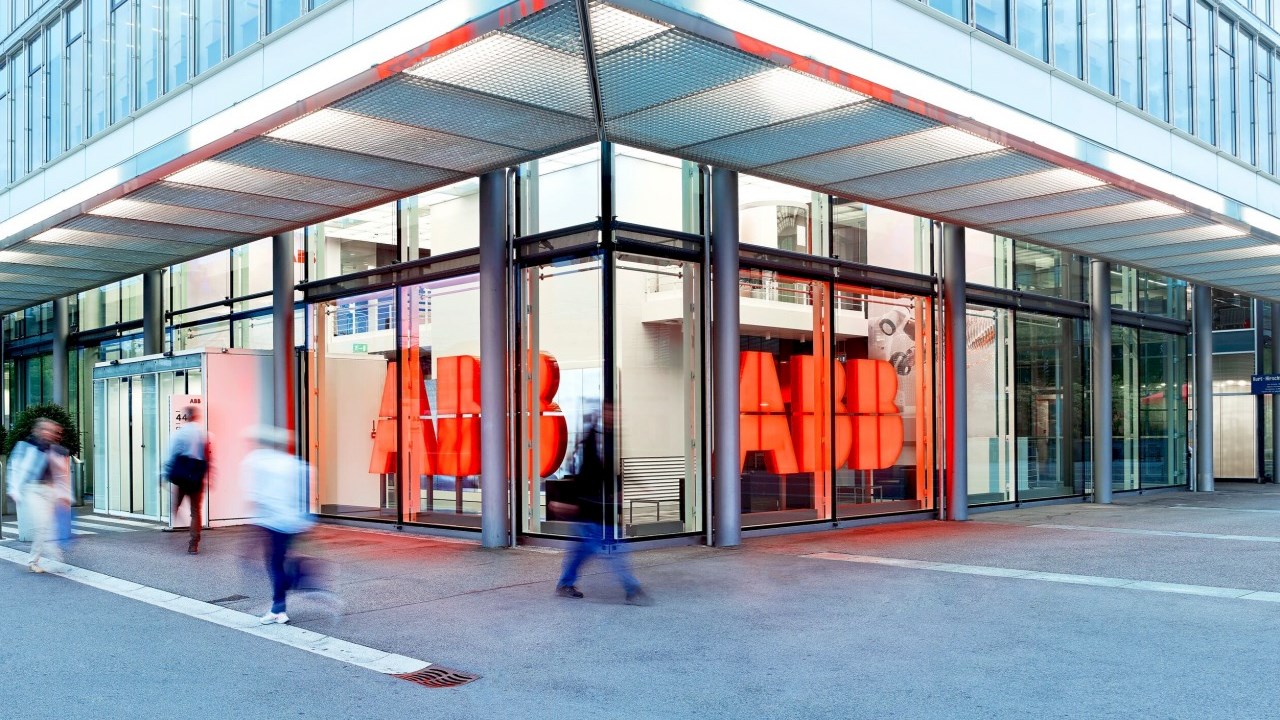
    ABB is expanding its presence in Oerlikon at the same time as selling the land. The Group is planning a new headquarters in the immediate vicinity, into which around 500 employees are expected to move in 2031. The project comprises a renovated, listed existing building and a new six-storey timber composite construction designed by Christ & Gantenbein.

    With a gross floor area of around 10,800 square meters, modern working environments including an auditorium, lounge and cafeteria, foyer and exhibition area as well as recreation and fitness areas will be created. The investment volume is around 80 million Swiss francs. ABB CEO Morten Wierod emphasizes the company’s commitment to Switzerland and the city of Zurich. Mayor Corine Mauch speaks of an even more “colorful and lively” district around Oerlikon station in the future.

    Strong final quarter of 2025
    ABB made significant operational gains in the final quarter of 2025. Comparable sales rose by 9 percent to 9.05 billion US dollars. Order intake developed particularly dynamically, increasing by 32 percent on a comparable basis to USD 10.32 billion, exceeding the USD 10 billion mark in a quarter for the first time.

    The operating EBITA margin improved from 16.6% to 17.6%, while adjusted net profit rose by 29% to USD 1.27 billion. For the full year 2025, net profit increased to USD 4.73 billion, around 20% more than in the previous year. The dividend is to be increased from CHF 0.90 to CHF 0.94 per share; at the same time, ABB is announcing a further share buyback program.

    Outlook and new buyback program
    For the first quarter of 2026, ABB expects comparable sales growth of 7 to 10 percent and a further increase in the margin. For the year as a whole, management expects growth of 6 to 9 percent and slightly higher profitability. Analysts see particularly strong drivers in the data center business and in the Electrification division, where orders increased by around a third.

    In addition, ABB is launching a new share buyback program with a volume of up to USD 2 billion, which is scheduled to run until January 27, 2027. A previous program of up to 1.5 billion US dollars has expired. This strengthens the attractiveness of the share and signals confidence in the company’s own earning power.

    ABB share at record level
    The figures and outlook were rewarded with price gains on the stock market. ABB shares rose by 8.46 percent to 66.38 Swiss francs, reaching a new all-time high of 67.22 Swiss francs. The strong order intake, the improved margin, the increased dividend and the larger share buyback program clearly exceeded the previously cautious expectations.

    For the Zurich-Oerlikon site, the combination of the sale of land, the construction of the new Group headquarters and the planned development of the district means a significant structural change. From an industrial site to a dense, urban residential and working district, with high investments, but also with the prospect of further rising rents.

  • Rankstrasse residential tower block

    Rankstrasse residential tower block

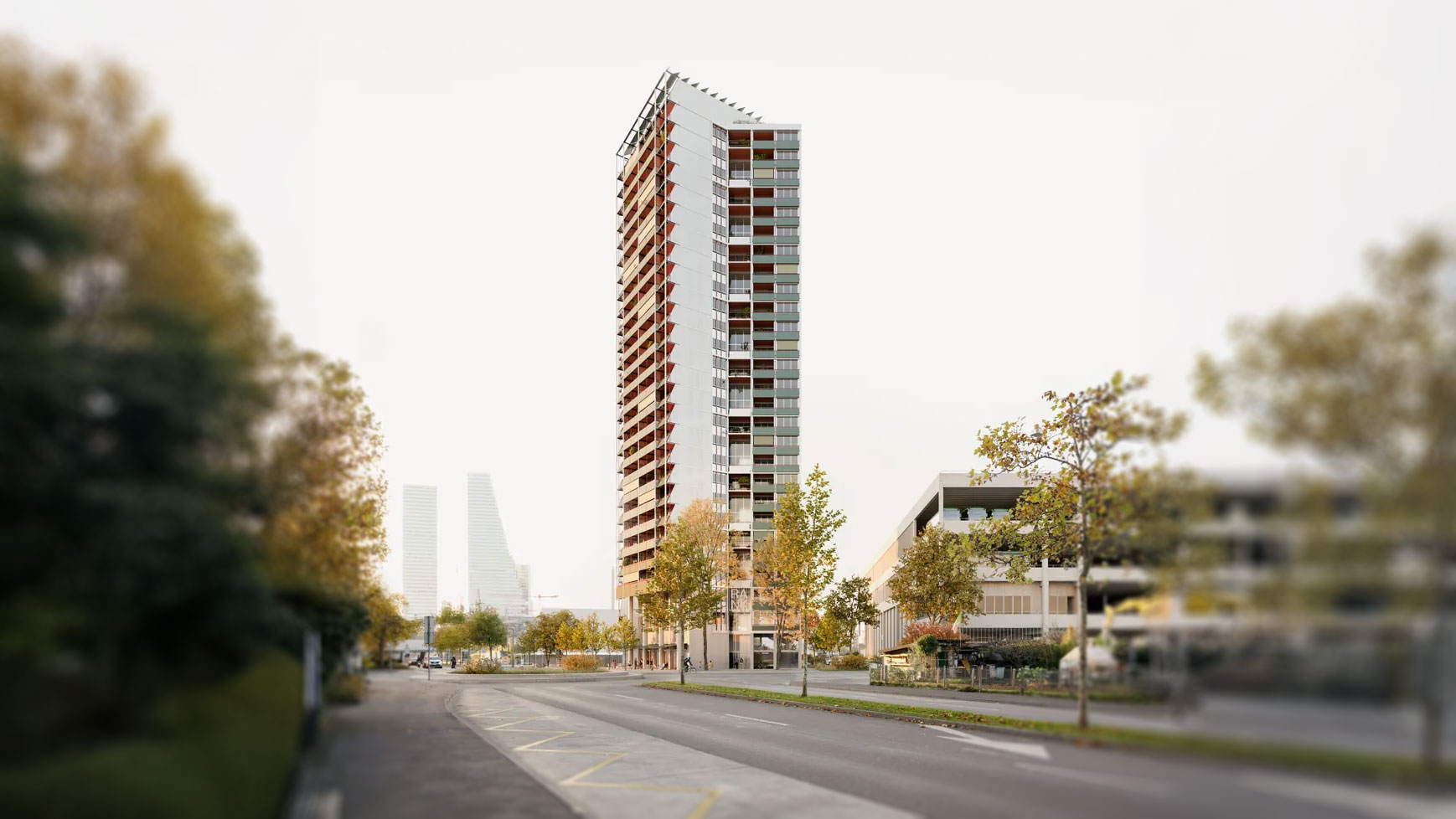
    In order to make optimal and sustainable use of the limited space on Rankstrasse, Basel’s “1000 ” residential construction program is based on a widely advertised, anonymous architectural competition. 78 teams showed interest, 15 selected projects were submitted and competed for the best solution. The expert jury was ultimately won over by “Miranda” by Zurich-based studio DIA, Haller Ingenieure and Hefti Hess Martignoni.

    Sustainability integrated into the architecture and social fabric
    The 88-metre-high building will provide over 100 new rental apartments based on the “Mietvertrag Plus” model, which is affordable and bound by income and occupancy rules. The outstanding feature is the innovative neighborhood concept. Three floors are connected vertically, creating inclusive meeting zones for diverse groups of tenants. The apartments have a compact and functional design, enable economical use of space and meet high ecological and economic standards. Green outdoor areas, communal spaces and resource-conserving construction methods underline the sustainability claim. The city is thus proactively committed to responsible, socially integrative urban growth.

    New benchmark for living on the outskirts of the city
    With “Miranda”, Basel-Stadt is launching a further development on the eastern outskirts of the city. The high-rise marks a striking prelude to future neighborhood developments and sets an architectural example of openness. The earliest start of construction is 2028, preceded by a development plan and public information. The focus on community, mixing, sustainability and architectural quality positions the project as a reference for modern, urban construction in Switzerland.