Built in the 19th century as a military complex with barracks, armouries and stables, the site is now one of the largest and best-preserved historicist ensembles in Switzerland. With the planned departure of the cantonal police, a large part of the site will become available for future use, while existing facilities and interim uses will continue to revitalise the site.
The canton and city of Zurich developed a vision for the site in a collaborative process with the city’s population. It is to become an urban magnet that combines recreation, encounters and work, with a strong connection to the neighbourhood. Cultural institutions, small businesses, educational and leisure facilities are planned, which will characterise the site and ensure a versatile, community-oriented use.
Changes to the historic ensemble will be made carefully in order to preserve the existing qualities and at the same time enable a variety of uses. The design of the open spaces should support the diversity of use without changing the character of the site.
Transparent operational organisation and clear usage management ensure a balanced mix of different offerings. The focus is not on maximising profits, but on the flexible and gradual development of the site. The barracks area is currently enriched by a variety of offers and uses.
A competition is currently being held to find project proposals for the further development of the public open spaces.
The competition programme was drawn up together with an echo group from the neighbourhood. The aim is to ensure that the project proposals meet the needs of the neighbourhood. The competition results for the further development of the public barracks open spaces are expected to be available by the end of 2024.
The redevelopment of the barracks site is exemplary of a sustainable and community-oriented approach to urban development. The combination of historical appreciation and modern diversity of use will transform the site into a vibrant part of Zurich’s city centre. The development is a significant step towards an integrative, sustainable urban landscape that offers the citizens of Zurich new spaces for recreation, culture and encounters.
Tag: Veränderung
-

New concept for the Zurich barracks area
-

Holcim divests businesses in Uganda and Tanzania
Holcim has signed agreements to divest its businesses in Uganda and Tanzania. According to a press release issued by the Zug-based building materials manufacturer, its local subsidiary in Uganda, Hima Cement Ltd, has been sold to the Sarrai Group for an enterprise value of USD 120 million.
Holcim has also agreed to sell its 65 per cent stake in Mbeya Cement Company Ltd in Tanzania to the Amsons Group for an undisclosed amount. The completion of both transactions is subject to the respective regulatory approvals.
“These divestments advance our strategy to consolidate our leadership position in core markets as the world’s leading provider of innovative and sustainable building solutions,” said Martin Kriegner, Regional Head Asia, Middle East & Africa. “We are delighted to have found strategic and trusted partners in the Sarrai Group and the Amsons Group, who are ideally positioned to develop these businesses in the long term.”
-

Yes to the partial revision of the Environmental Protection Act gives additional impetus to the circular economy
Construction activity in Switzerland produces around 57 million tonnes of excavated material and 17 million tonnes of excavated material per year. The term “waste” should not be used in this context, as it tempts one to confuse the statistics with the volume of rubbish that is disposed of. Rather, this total of 74 million tonnes of material is an indication of how many tonnes of excavated and spoil material accumulates as a valuable resource, much of which can be recycled. In order to make the best possible use of this, ideal legal framework conditions are needed. Such improvements are included in the partial revision of the Environmental Protection Act, which the National Council will deal with on 3 May 2023 during the special session.
SBC already supported the goal of creating an appropriate framework in the Environmental Protection Act for a modern and environmentally friendly circular economy during the consultation process in February 2022. The chosen regulatory approach consisting of a mixture of incentives, competences for regulation and promotion instruments seems to be purposeful. However, it is important to underline that the companies in the construction industry have long since implemented many of the main concerns of the revision on a voluntary basis. In addition, important legal foundations have already been created, such as the Ordinance on the Prevention and Disposal of Waste (VVEA). This gives high priority to the avoidance, reduction and targeted recycling of waste.
Close coordination with the construction industry is important
With life-cycle-optimised buildings, resources and materials can generally be kept in circulation or recycled over several object life cycles without any loss of quality or functionality. The construction industry has already developed many innovative solutions in this regard and will continue to develop them. However, the choice of materials for building projects is made by the clients, architects and planners and not by the building contractors. It is important to convince them to integrate the circular economy at a very early stage in project development. SBC therefore appeals to these stakeholder groups and to politicians to coordinate closely with builders in the implementation of the Environmental Protection Act in order to make use of the know-how of the entire construction industry and to prevent inhibiting framework conditions or false incentives. Another key issue for the SBC is the compatibility of the Swiss Environmental Protection Act with international standards and regulatory requirements. It is explicitly important to take developments in the EU into account in order to prevent a Swiss Finish and the resulting trade barriers.Abandonment of national limit values for grey energy
SBC suggests that national limit values for grey energy be abandoned. In practice, the correct recording of grey energy in new buildings and renovations is tantamount to a Herculean task that is likely to fail – or worse – could deliver distorting results. The end result would be a de facto ban on certain construction methods and materials, which in turn would lead to immense increases in the cost of buildings. Instead of such limit values, which are unsuitable in practice, the tendering of buildings should always be oriented towards the required or desired function and not towards specific building materials. This is determined by the demands on the building. It is important to consider not only the conservation of resources, but also overall sustainability for the environment, the economy and society. -

Data protection and real estate – more topical than ever before
What is data protection and what is not?
There is no regulation on the handling of factual data, such as the use of defined data formats or specifications on data consistency in construction projects. Unfortunately, such a regulation is largely lacking today, ultimately to the detriment of property owners. The Data Protection Act (DSG) regulates the processing of personal data by private individuals and companies, among others. In principle, every person should be able to determine the use of their data themselves. Swiss data protection law is designed in such a way that the processing of personal data by private individuals is generally permitted, provided that the principles laid down in the FADP (e.g. purpose limitation, data minimisation) are observed. The revised FADP will enter into force on 1 September 2023. In a real estate cycle, there are numerous starting points for handling personal data. Some areas are highlighted below:Marketing by estate agents
Through their activities, estate agents come into contact with interested parties whose customer and personal data they process. Brokers are therefore now legally obliged to draw up a data protection declaration. In it, they must inform the data subject, among other things, about what data is collected or processed for what purpose, what the processing modalities are and what rights he or she is entitled to. The declaration can be published on the website or in the GTC. If tenant profiles are used for the sales process, caution is required. Either personal data must be blacked out or the tenants must explicitly agree to the disclosure to prospective buyers or the tenancy agreements contain clauses that allow the disclosure in the sales process.Management data
Data is often processed as part of the management process: Tenant checks before conclusion of the contract, user data on the operation of a property, data from access controls (outside the property or to the tenant unit), network data, electronic concierge or smart solutions offered by the landlord (such as tablets in rented rooms, smart homes, etc.). The DPA creates an obligation for every service provider to account for the data they process and to ensure that it is handled in accordance with the law. It is therefore recommended to conduct an individualised data protection analysis. Such an analysis must take into account, among other things, the specific circumstances and data flows, the type of data and service provision, as well as the storage locations. The tenants must be informed of all processing of their personal data, unless there is a corresponding basis in the tenancy agreement.Offer abroad
If offers for sale are also made to persons in the EU area, the provisions of the European Data Protection Regulation (GDPR) must be observed. These are much stricter in some points than the regulations of the DSG. If necessary, the use of geo-blockers should be examined.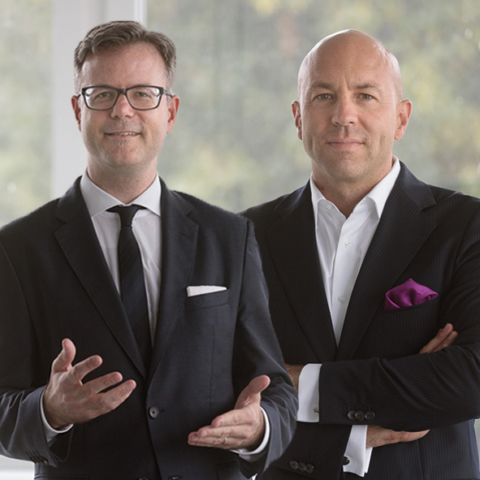
Seidel & Partner Rechtsanwälte AG specialises in legal issues for construction, planning and real estate. Our focus is on value-added and solution-oriented support for SMEs, investors, cooperatives and authorities. We strive for economically sensible solutions; litigation typical of lawyers is only a last resort for us.
Contact
Dr. Wolf S. Seidel &
Lic. iur. Simon Kohler
Seidel & Partner Rechtsanwälte AG
Balz-Zimmermann-Strasse 7
8302 Kloten
Phone 044 590 20 12
info@seidelpartner.ch
www.seidelpartner.ch -

All industry participants must be ready for change
What exactly is Building Information Modeling?
Literally translated, BIM means building information modeling – that's a pretty good idea. With BIM, one is able to determine and further use the data necessary for operation in addition to the digital planning and execution of projects. You work with three-dimensional models that are nothing more than visually represented databases. That sounds complicated now, but it's not at all, it's just a new way of working. We used to have two-dimensional plans, now we have three-dimensional digital building models. It is important that everyone involved can access the same data, in new German: Single Source of Truth. You can therefore be sure that the data stored in databases is not only up-to-date, but also correct and of course relevant for further processing. This is where the greatest benefit lies.Why did the SBB decide to use BIM for construction projects?
We see clear potential here in data processing and in the entire value creation process. The SBB anticipate a sustained reduction in capital-bound expenses for planning, realizing and managing real estate. Of course, this also applies to the entire railway infrastructure owned by SBB.We can also work very strongly towards reducing CO2, as we can, for example, use the data to simulate how operations will develop over the next 20, 25 and more years. You can also compare projects with each other and thus learn from other projects. This is how we create transparency over the entire life cycle.
How is BIM actually used in the construction of the Letziturm project?
The Letziturm was one of the first building construction projects by SBB Immobilien to be implemented using BIM-supported methods and working methods. It is also a learning project for the management phase. The planning and implementation of such a project will be completed in ten years, but we will manage the building at least four times longer. For example, we will use the knowledge gained from the Letziturm to carry out material samples. We are in the process of implementing plan approvals via the collaboration platforms. We have learned a lot about what we can use to optimize planning and implementation – and we see this as an important first step.
"You can no longer do it alone as a client."What is your current summary of the use of BIM?
We recognized the potential of BIM for SBB at an early stage and actively promoted development with the BIM @ SBB group program that was set up for this purpose. We have already made important progress in this way. The BIM @ SBB program is based on four pillars that are mutually dependent: development, testing, standardization and the specific take-away of the industry. We share all of our knowledge and experience with our partners at events and receive inputs from the market that we specifically incorporate into the development. We involve our community. It is no longer possible to work alone as a client, it takes a strong, mutual cooperation. This is also reflected in the skills of the employees. We feel that the employees are very interested, they want to learn from one another together. It's incredibly exciting and instructive for everyone involvedWhat are the advantages?
Of course, a now data-driven implementation changes the way in which we work with our partners and develop the projects in close cooperation. In fact, projects are processed faster and more securely if everyone involved is also involved. The already mentioned “Single Source of Truth” is another advantage. The system data is stored in a structured manner, can be found quickly and is always up-to-date. Lengthy searches and verification of the data are largely eliminated. Communication is more targeted than before and is benefit-oriented. Project teams can find solutions much faster, can view problems and pending issues directly on the three-dimensional model and work out variants and alternatives together. That helps for mutual understanding.Are there any disadvantages?
BIM is often only associated with the technology aspect. Of course, it's nice to hover over the construction site in a Hololens. But if the underlying data is not correct, the most modern technology is of no use. Data has to be correct, a new way of working with precision is required. There are only two states of data: correct or not. Not everyone in the value chain is ready to use new technologies and methods. Everyone in the industry must be ready to change and do their part to make it happen.What could be the reasons that BIM has not yet caught on in Switzerland?
Many associate BIM with the use of the latest software or the latest database technology. Often this is necessary, but not yet sufficient. To be successful, our way of thinking and working methods will have to change further. In the BIM environment, we often speak of collaborative project teams that develop solutions together. This process takes time, but the trend makes me positive. It is also up to us public clients to further promote this development and to require the use of BIM when awarding projects, as we did with the Letziturms project.What are SBB's goals for the use of BIM?
We currently have almost two dozen pilot projects that we provide with the basics and try out a wide variety of methods, technologies and techniques. The knowledge gained from this flows into the development. International principles are also taken into account by means of normalization and standardization. In this way we can ensure that we have our finger on the pulse. This knowledge is given back to the industry in a targeted manner. From 2021, the use of BIM will be mandatory for state-related companies in building construction, according to the federal digital strategy, and from 2025 for the infrastructure, as much more has to be worked out here. That is our stated goal.SBB BIM project Letziturm:
Between the train stations in Zurich Altstetten and Hardbrücke, a new urban area is developing along the track area due to the restructuring of existing commercial and industrial areas. The Letziturm as a six-storey building base takes up the edge of the listed warehouse in the east. He thus defines a first urban horizon. The two residential towers are based on the building height of Letzibach D. The planned single tower will thus create an ensemble of three tall buildings.Construction started this year. The 178 residential units, consisting of 1.5 room to 7.5 room apartments, should be ready for occupancy from autumn 2022. The ground floor is characterized by the two main entrances and the two commercial rooms, each of which is oriented towards the future square and towards the SBB workshops. Between them are the ground floors of four larger, two-story studio units that combine work and living and, if desired, connect directly to the public space.
Both the small and the larger residential units are housed in the base building. 2.5 to 4.5 room apartments are planned above the 7th floor, which has a common room