Tag: Verkehrsinfrastruktur

  • Start of construction for double track expansion in Dietikon postponed to 2028

    Start of construction for double track expansion in Dietikon postponed to 2028

    There is a delay in the double-track expansion of the Bremgarten-Dietikon railway and the renovation of Bremgartnerstrasse. According to a statement by Aargau Verkehr AG, the building permit from the Federal Office of Transport (FOT), which was scheduled for the end of 2025, could not be granted due to ongoing appeal negotiations and a renewed partial suspension of the project in connection with compensation claims.

    The transport company now expects the start of construction, originally planned for summer 2026, to be postponed until summer 2028. Until then, a number of project adjustments will have to be made. This will require technical reviews and consultation with the authorities.

    According to Aargau Verkehr, the expansion is intended to increase the safety, punctuality and capacity of rail operations: “The construction of a centrally located double track will integrate the railway safely into road traffic, which will increase traffic safety and reduce traffic jams.”

    Planning approval is expected to be completed by the second quarter of 2027. Aargau Verkehr AG is in contact with the Civil Engineering Office of the Canton of Zurich, the client for the road construction project, the FOT, the city of Dietikon and affected residents to clarify outstanding issues and move the project forward.
  • Infrastructure investment gains momentum in Europe

    Infrastructure investment gains momentum in Europe

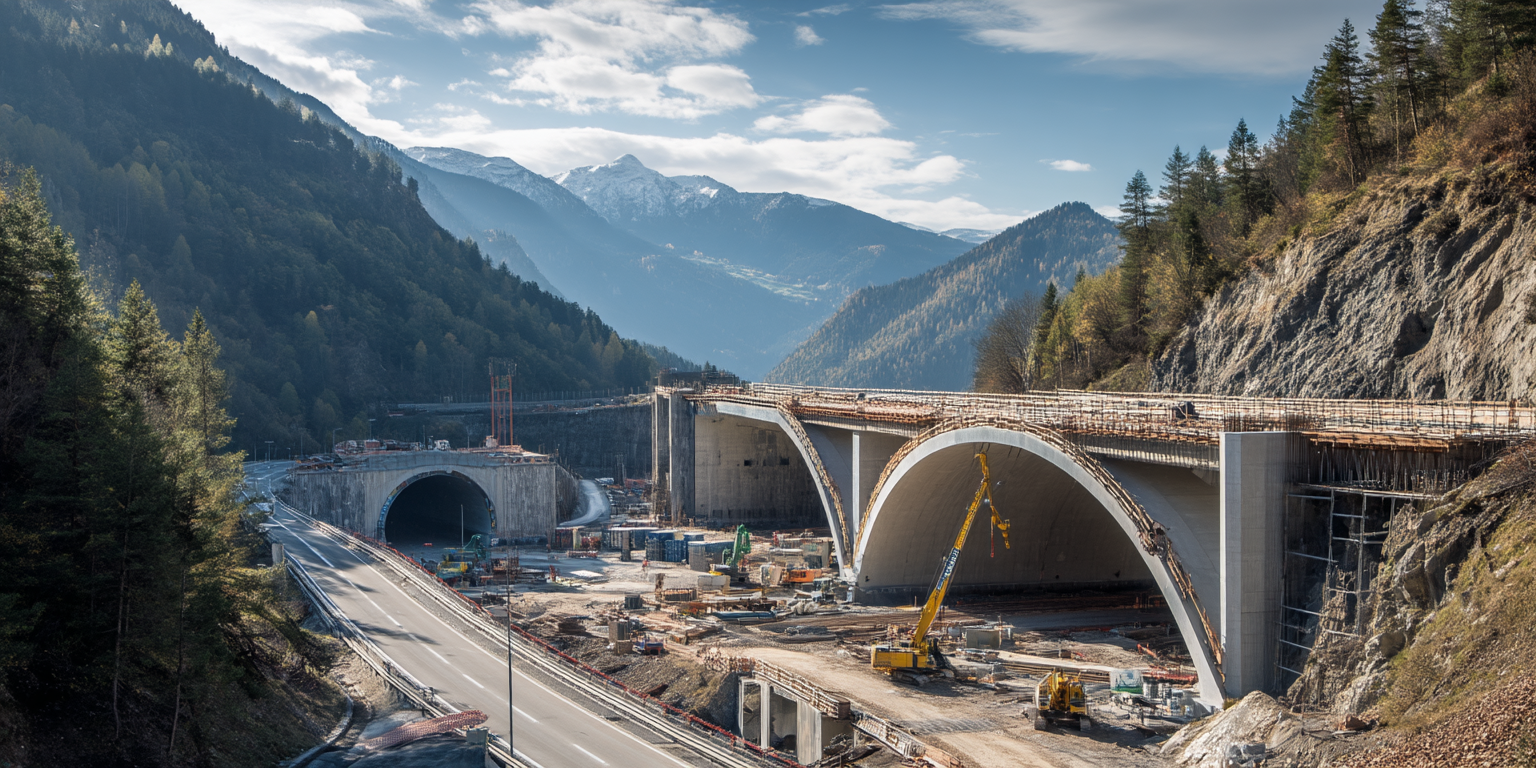
    Construction company Impleniahas secured major infrastructure projects in Germany and Norway, according to a press release. The contract package includes the new Peene Bridge in Wolgast, the replacement of the Main Bridge in Marktbreit, the first construction phase of the Riederwald Tunnel in Frankfurt am Main and the new Lågen Bridge in Norway.

    For the new Peene Bridge in Wolgast, Implenia is leading a consortium with DSD Brückenbau, Victor Buyck Steel Construction and Stahl Technologie Niesky. The approximately 1.4-kilometre-long cable-stayed bridge will connect the A20 motorway with the island of Usedom and, with a clearance height of 42 metres and 70-metre-high pylons, will be one of the largest bridges of its kind in Europe. Construction work has been underway since December 2025 and is expected to continue until 2030.

    Implenia is the technical leader in a consortium with Plauen Stahl Technologie for the replacement of the Marktbreit Main Bridge on the A7 motorway. The new bridge will be built as a steel composite box girder using the incremental launching method. It will be around 925 metres long and 31 metres wide. Construction is taking place while traffic continues to flow and will be completed by around 2033. The new contracts in Germany are rounded off by the construction of the new Riederwald Tunnel in Frankfurt am Main. In a consortium with Wayss & Freytag Ingenieurbau and Bickhardt Bau, Implenia is realising the centrepiece of the gap closure between two important motorway sections. The approximately 1.1-kilometre-long tunnel is being built using the open construction method. Work began in 2025 and will take around three years.

    In Norway, Implenia is building the Lågen Bridge on the new E6 Roterud–Storhove motorway on behalf of AF Gruppen. The 552-metre-long, four-lane concrete box girder bridge spans the Lågen River north of Lillehammer. Strict environmental regulations to protect breeding birds, spawning grounds and biodiversity minimise the impact on the sensitive delta area.

  • Zurich Stadelhofen is open to the public

    Zurich Stadelhofen is open to the public

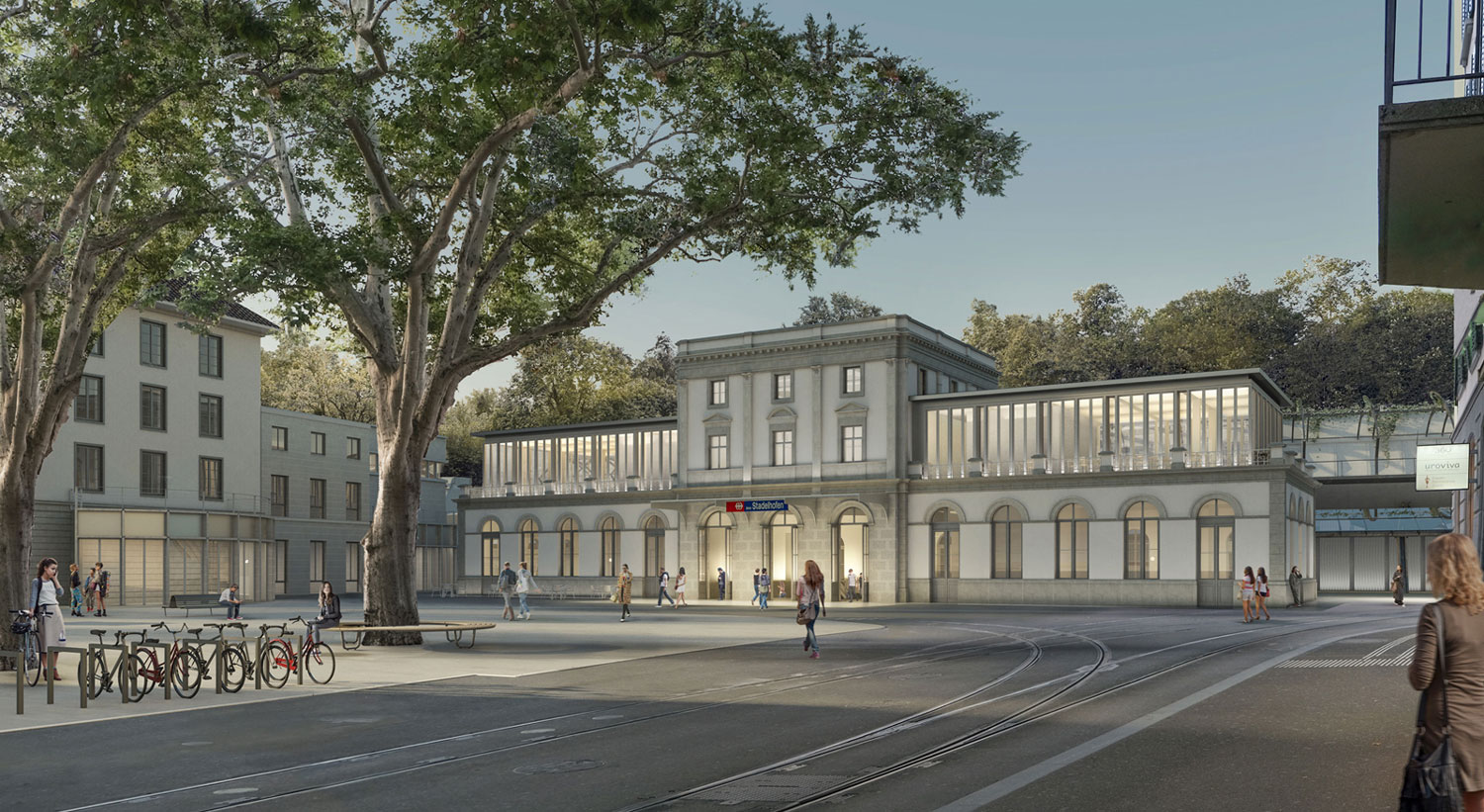
    With 80,000 travellers a day, Zurich Stadelhofen is a central transport hub in the city. However, the three existing tracks are overloaded and limit the growth of the S-Bahn. The construction of a fourth track and an additional tunnel in the direction of Tiefenbrunnen will massively increase capacity. An expansion that will have an impact far beyond the city limits.

    More capacity, better connections
    The expansion should enable up to 50 per cent more train movements. It paves the way for a comprehensive quarter-hourly service throughout the entire Zurich S-Bahn network. An improvement that will benefit not only the city of Zurich but also the 6 neighbouring cantons. The project involves several sections, including a new main access, improved passages and additional platform access in the Kreuzbühl-/Mühlebachstrasse area.

    Ten years of construction and an investment of CHF 1.1 billion
    The project will take around ten years to complete. If everything runs smoothly and there are no objections, construction should start in the second half of the 2020s, with commissioning scheduled for the 2030s. The estimated costs amount to around 1.1 billion Swiss francs. A significant but necessary step for a sustainable mobility infrastructure.

    Transparency and participation – project open to the public at
    The project will be open to the public in Zurich and Dübendorf from 14 May to 12 June 2025. The complete plans can be viewed in Zurich and those for the Zürichberg tunnel in Dübendorf. SBB specialists will be on hand to answer questions. A planned major expansion with room for dialogue.

  • Lucerne wants to use transport infrastructure as solar power plants

    Lucerne wants to use transport infrastructure as solar power plants

    The canton of Lucerne wants to use more solar energy to generate renewable electricity and heat and utilise additional areas of the canton’s own road infrastructure as solar power plants. The canton plans to equip bridges, tunnels, galleries, noise barriers, carriageways, embankments and retaining walls with photovoltaics.

    According to a press release, ten times more energy could be generated by utilising the sun at the most suitable locations than is currently the case. The photovoltaic potential on these areas could therefore be increased, according to the technical report “Potential for renewable energy production in the canton of Lucerne”, which was published in 2024.

    Two pilot projects should provide concrete figures on the electricity generation potential. Photovoltaic systems are to be installed on the noise protection gallery in Knutwil and at the Rontal bridge near Buchrain and Dierikon. According to the press release, 1 gigawatt hour of renewable electricity could be generated on these sites.

    The plant on the Rontal Bridge is due to go into operation in 2025 and is being realised by the canton, which plans to generate its own electricity there. The Knutwil noise protection gallery has the largest area of the properties analysed. It is the size of half a football pitch and the plant there is scheduled to supply solar power from 2026. Various renovation measures are due to be carried out on the noise protection gallery before the plant is built.