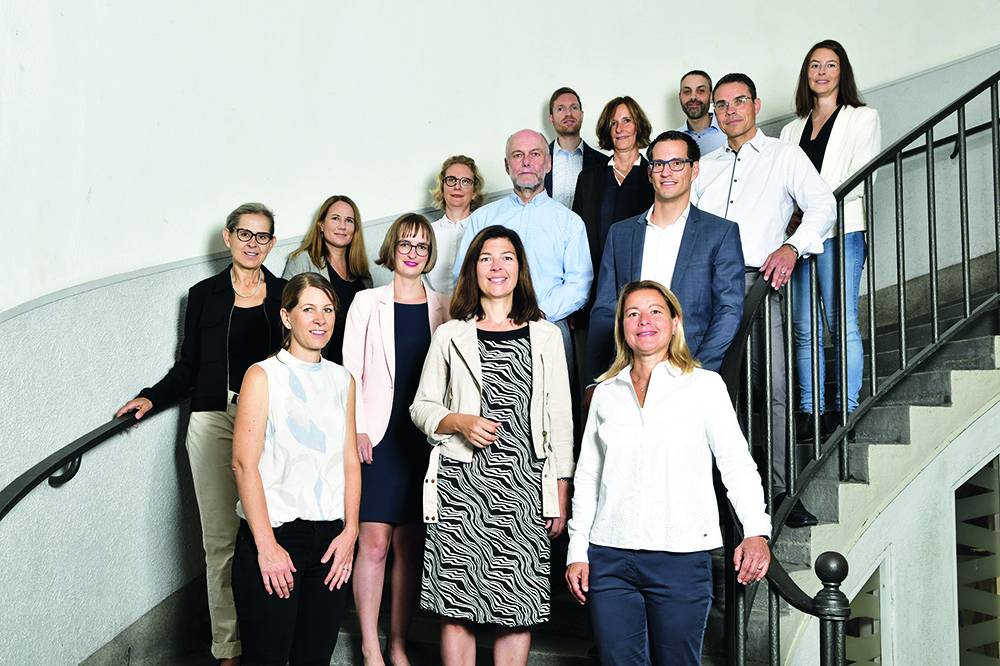
The GlarnerlandPass combines the registration system, guest card and travel guide in an integrated system and links tourism, culture and trade on a common platform. It is being implemented as part of the realignment of tourism, which began with the merger of all organisations in 2024. Under the new umbrella brand “Glarnerland”, an overall Alpine experience with a strong regional identity is being created just outside Zurich, which will be digitally visible, combinable and bookable.
Guest centricity and digital proximity The application accompanies the guest along the entire customer journey and enables interactive communication in real time. Not only overnight guests are taken into account, but also day guests, second home owners and locals. For guests staying overnight, public transport throughout the canton is included in the pass. A strong signal for sustainable mobility.
Added value through local networking Tourism companies, businesses and cultural institutions are actively involved. A common understanding of digital processes is created in workshops and focus groups, new products are developed and additional sales channels are opened up. This close collaboration strengthens the regional economy and creates real added value in the Glarus region.
Sustainable management and modern technology The platform allows flexible management of visitor flows and provides valuable impetus for sustainable destination development through the data collected. Technologically, the system is based on proven, modular solutions from leading destinations and utilises the connection to discover.swiss.
Visibility through ESAF 2025 The Swiss Wrestling and Alpine Festival 2025 offers an ideal opportunity to present the pass to a wide audience. The combination of Alpine authenticity, digital innovation and an integrative location strategy makes the project a showcase for the future of tourism.
The eleventh ImmoSummit organised by the FRZ Zurich Airport Region(FRZ) attracted a record attendance of almost 700 construction and real estate industry professionals, the FRZ announced in a press release. The event on 18 June at THE HALL in Dübendorf was held under the motto “From silo to team sport”. The tenor was that climate change, regulation and economic uncertainties cannot be tackled single-handedly, but only with networked, agile and interdisciplinary teams.
A whole series of speakers shed light on individual aspects of this core message. FRZ Managing Director Rahel Kindermann Leuthard outlined the willingness to cooperate, the ability to make quick decisions and digital expertise as essential skills for the industry in the future. President of the cantonal government Martin Neukom explained that “climate protection, a circular economy and a secure energy supply” can only be achieved “if the canton, municipalities and the private sector consistently act as a learning system”.
Fredy Hasenmaile announced the end of lone wolves in the property market. “Without systematic, strategic partnerships between investors, authorities and operators, the sector will not be able to solve its structural bottlenecks,” said the chief economist of Raiffeisen Switzerland. Thomas Sevcik put forward the thesis that the airport region is “condemned to excellence”. “Airport regions are the railway corridors of metropolitan regions worldwide,” said the co-founder of the think tank Arthesia. Andrea Claudio Thöny, Managing Director of IPZ Operation AG, explained the economic power of the emerging Zurich Innovation Park.
The hotel property sector is currently undergoing a profound structural change. The demands of guests are changing rapidly and the structures of owners and operators are becoming increasingly complex. Patrick Vogler, former CEO of the Grand Resort Bad Ragaz, and Professor Norbert Hörburger, researcher and lecturer in hospitality at the University of Applied Sciences Graubünden, have founded Hotelinvest GmbH. Their goal: the sustainable utilisation and further development of high-quality accommodation properties through targeted consulting and brokerage.
Targeted strategies for sustainable success Hotelinvest GmbH attaches great importance to the careful selection of investment properties and investors. Comprehensive analyses, feasibility studies and plausibility checks are carried out before each transaction. The team consists of highly qualified senior consultants, including Eva White, an internationally experienced specialist in hospitality property transactions, and Annette Fink, an expert in wellness and spa management as well as marketing and positioning. “Our focus is on the sustainable success of our clients,” emphasises Norbert Hörburger. “We offer optimal market access for buyers and sellers thanks to our excellent network.”
Diverse hotel concepts and flexible solutions Thanks to its extensive experience and large network of international investors, Hotelinvest GmbH is an ideal partner for various types of hotels, from city hotels and serviced flats to holiday resorts. Patrick Vogler emphasises that the trend in the city hotel industry is towards young, digitalised hotel concepts that manage with fewer staff. Innovative forms of service living are also emerging in other areas of commercial accommodation that can react flexibly to different property situations.
Strategic cooperation and comprehensive support Hotelinvest GmbH focuses on developing trusting partnerships and offers comprehensive support throughout the entire investment and development process. Thanks to their network, they can accompany project developers, property owners and architects before, during and after the transaction and support them in the conceptual orientation of their investments and construction projects. “Our outside perspective and wealth of experience often result in completely new, promising concepts,” explains Norbert Hörburger.
This strategic and comprehensive approach to the development of hotel properties makes it possible to create innovative and sustainable solutions that meet the current and future requirements of the industry.
The Lucerne through station is the focus of this year’s Luga, the Central Switzerland Spring Fair, which takes place from 26 April to 5 May 2024. The project of the century will be brought to life in three dimensions over an area of around 800 square metres. Visitors will have the unique opportunity to learn about the project in an interactive and playful way and experience its enormous benefits for the entire region.
Government President Fabian Peter emphasises the importance of the special exhibition: “By presenting the Lucerne through station at Luga, we are giving the people of Central Switzerland the opportunity to experience the project up close and understand the added value it will bring to our region.”
The special exhibition will not only take place in Hall 1, but can also be experienced on the exhibition forecourt. There, the focus will be on public transport, with various activities under the motto “experience, try out and join in”. Lucerne’s through station is more than just a railway station; it is a crucial building block for a denser public transport network throughout Central Switzerland.
Over 100,000 people board, alight or change trains at Lucerne station every day. However, the capacity limit has been reached and additional connections are no longer possible. The Lucerne through station paves the way for the further development of sustainable mobility and enables a forward-looking design of the public transport network.
The special exhibition on the Lucerne through station is a joint initiative of the Canton of Lucerne and the Lucerne Transport Association (VVL), supported by the City of Lucerne, the Central Switzerland Public Transport Conference and other partners.
The “Initiative Zukunft Arbon” recently organised its first major network meeting, a gathering of innovators and decision-makers that focused on the wealth and potential of the region. Host Daniel Camen from Insel auf Rädern GmbH created an inspiring atmosphere for the exchange of ideas and visions. Mayor René Walther and SECO Ambassador Dr Eric Jakob emphasised the importance of regional networking and Arbon’s unique economic potential.
Samuel Struhs, project manager of the initiative, emphasised the importance of collective commitment. According to Struhs, the initiative thrives on the active participation and commitment of its members, who are shaping the network of the future. A cosy evening with chestnuts and mulled wine provided the perfect setting for a lively exchange and making new contacts.
Andy Suter from A.Vogel AG presented Phyto Valley, an example of successful cooperation in natural medicine that makes the Lake Constance region and Thurgau internationally visible. This cluster illustrates the strength of joint efforts and the global significance of local innovations.
The “Initiative Zukunft Arbon” stands for a dynamic community characterised by diversity and the common will to shape a prosperous future. The event confirmed the path taken and motivated those involved to actively continue and support the regional development processes.
At the beginning of this year you took over the management of location promotion. What measures have you taken to settle in well and quickly? Fabian Streiff: An important point for me was networking with cantonal actors, representatives from business and science. Due to the circumstances, this first had to be done virtually. But even more relevant for me was the question of how we can support companies – especially during the pandemic. The companies’ need for information was enormous. Especially in times when instruments such as short-time work and hardship aid were used.
What exactly have you done to support the companies? The Office for Economy and Labor sought an intensive exchange with entrepreneurs early on in order to find out which issues we need to address at national level and which we can solve within the canton. We have also set up a hotline for companies and continuously updated various websites. Now we are looking to the future and addressing the question of how we can positively influence the attractiveness of Zurich as a business location.
What is this plan like? Discussions with Zurich-based companies confirmed that we should focus even more on an attractive innovation location. Innovations are increasingly emerging in networks, which is why strong innovation ecosystems make a significant contribution to the future success of Zurich’s economy. This needs to be strengthened. A central theme are new hybrid forms of work such as home offices or working from co-working spaces. We have to ask ourselves what this means for the location and its development. It is also exciting to see how Zurich can remain an attractive business location for companies. Are there opportunities to improve access to talent and specialists, especially in the context of mobile working? What role can the state play in making a contribution here? These are all open questions – we are already seeing trends, but of course also the consequences of them, such as the discussion about making labor law more flexible.
Is Zurich really losing its attractiveness as a business location? Many companies answer this question with a resounding no. But shifts are becoming apparent. Large companies are forecasting a concentration on individual locations within the next two years. This means that certain properties could become vacant. On the other hand, these could quickly be used again for new forms of work such as co-working spaces. Rural centers are likely to be revitalized thanks to home office options. The business location Zurich is also strengthened by the universities, which do a great job with their successful spin-offs and research work and are right at the top of the rankings. The companies in the canton of Zurich were also able to attract risk capital on a large scale last year, which is very gratifying.
How did this positive development come about despite the pandemic? Zurich has positioned itself well in recent years, especially with a view to digital transformation. Top talent is needed here and can be found at the Zurich location. This is thanks to the universities and the talent pool, which has been able to develop significantly in recent years. At first the banks had a magnetic effect, now it is the large companies from the information and communication technology sector. The interaction of the various industries is very promising for the future. We are also registering positive developments in the area of research. The points mentioned are becoming more and more relevant in the location competition. But other locations don’t sleep and have positioned themselves very well nationally and internationally, which is why the leading position of the Canton of Zurich cannot be taken for granted. It must continue to be strengthened in the area of innovation.
The canton of Zurich is Switzerland’s leading business location. Why? The attractiveness of Zurich is based on various factors. Starting with education, through a highly qualified workforce, to strong sectors from the financial sector and increasingly from the areas of life science technology, cleantech and information and communication technology. This diversity of competencies enables strong ecosystems, which strengthen cross-industry learning and innovation. The quality of life per se also speaks in favor of Zurich as a location.
What are you doing to secure this status in the future? Our new strategy has three focal points: The first is the strong focus on innovation topics in the areas of financial technology, digital health, biotech, cleantech and new mobility. Here we want to create more networking and opportunities for cooperation. The second focus is on cooperation with regional location subsidies in order to strengthen the diversity of the industry. The size of the Canton of Zurich requires networked work in order to do justice to the diversity of the individual regions. In this way, we can also support exciting regional projects, such as was the case with the Bio-Technopark in Schlieren. We are currently also seeing this at the Digital Health Center in Bülach. The third focus is on creating attractive framework conditions, especially in the area of innovation. Here we can work to ensure that the regulations at federal level are adapted for specific innovation topics.
Which regulations are in urgent need of adjustment? With Zurich as a strong innovation location, the focus is currently on the consequences and solutions following the failed framework agreement with the EU. The exclusion from Horizon Europe weighs heavily. Adjustments to labor law due to changed needs must also be checked – such as when working on the move.
Which areas are companies currently looking for the most? From the customer side, we see a need for space in well-developed locations that are integrated into an ecosystem. Connections to universities are being sought more and more. Biotech laboratories are also becoming increasingly important. Schlieren was able to develop enormously in this area. Nevertheless, we are registering a demand here that cannot yet be satisfied nationwide.
What is the problem? In the biotech sector, the space that comes onto the market is occupied again very quickly. More and more investors are needed who are willing to invest in laboratories. Such a project usually takes two years or more to develop. Appropriate foresighted planning is imperative.
How do you see the future for the office buildings in the canton of Zurich in light of the changing work models? We are currently grappling with this question. In general, employers want to become even more attractive. The demands on an office workplace will therefore increase. But whether that means that more space is required for each employee, or whether there will be mergers, we will only see in one or two years. But we believe that co-working will become even more important. However, in a more comprehensive form than today – in the sense of a meeting place where an in-depth exchange with science, the authorities and other actors in the ecosystem can take place. Quasi a co-working plus.
Which locations are most desirable? The city of Zurich and the airport region remain very attractive. At the airport, we are seeing high demand for the newly built The Circle. And the Limmattal has become even more attractive with the Limmattalbahn and the Bio-Technopark. The city of Winterthur and the Zimmerberg region are also popular locations thanks to the ZHAW.
Which companies are interested in The Circle? The Circle not only attracts companies from the information and communication technology sector such as Microsoft or Oracle, but also from the life sciences sector. Digital health is an important topic here. After a difficult start-up phase caused by Corona, the business on the Circle is now picking up, and 85 percent of the space is already rented.
What are the most important source markets for the Canton of Zurich? The USA is still by far the strongest market. Europe, especially Germany, as well as China and Japan are also important. We are now concentrating on Korea and Israel. Companies are increasingly thinking in terms of research and development hubs. For many companies, Zurich is not only an international business location, but also such a hub. Marketing abroad is handled by the Greater Zurich Area location marketing organization for us.
How should Zurich as a business location develop over the next 10 years? It should become even stronger as an innovation location. Zurich has a long history and is well known as a financial center. That is important – also with a view to future settlements in the area of financial technology. Zurich should also distinguish itself in the areas of artificial intelligence and new mobility, such as the development of autonomous systems. We believe in a move away from the traditional Zurich financial center towards a business location that will be very strong in the new topics mentioned and in digitization. The Zurich economy is already well positioned and is resistant to crises – but in the future Zurich should become even more innovative, attractive and thus even stronger.
Thanks to digitization, networking, participation and efficiency, a smart city should contribute to a higher quality of life and more sustainability. This is how most Swiss cities explain the concept of the Smart City, according to a study by the Zurich University of Applied Sciences ( ZHAW).
The ZHAW carried out the study for the first time this year and was supported by several partners. A total of 84 Swiss cities and municipalities took part. According to the results, more than half of them rate the topic of smart cities as important or very important and are actively involved in it. At the end of 2020, however, only 23 cities had a developed smart city strategy. According to the ZHAW, this number is likely to increase in the coming years. For example, a strategy is already being developed for seven cities.
The ZHAW has examined the development of intelligent cities using nine dimensions. The cities surveyed had a total of 329 existing projects in these dimensions. Most of the projects – 98 in total – are part of the Smart Governance dimension. City apps or chatbots, for example, make it easier to access information relevant to administration. This category also includes digital building permits or the digital notification of relocation.
There are also 76 projects in the Smart Energy and Environment dimension. Certification as an energy city was mentioned here particularly often. Many projects aim to promote renewable energies and conserve resources. But intelligent power grids and lighting systems are also in focus in several cities.
According to the ZHAW, most smart city projects are initiated within the administration, by energy suppliers or by politics. The cities are often based on other cities at home and abroad. However, many cities would like more support overall from the federal government and the cantons.
Wir verwenden Cookies zur Unterstützung und Verbesserung unserer Dienste. Mit der Nutzung dieser Website erklären Sie sich mit der Verwendung von Cookies einverstanden. Weitere Informationen finden Sie in unserer Datenschutzerklärung.