Tag: Versorgungssicherheit

  • The grid becomes Switzerland’s bottleneck

    The grid becomes Switzerland’s bottleneck

    By 11 votes to 0 with 2 abstentions, the Energy Committee of the Council of States adopted the amendment to the law to speed up the expansion and conversion of the electricity grids. The committee has thus made it clear that the expansion of the grid infrastructure should no longer be treated as a political sideshow.

    This is more than just a technical step. The Commission expressly emphasises the outstanding importance of a domestic, renewable energy supply and demands that the legal framework conditions finally reflect this importance. The electricity grid is thus being transformed from a companion into the strategic backbone of energy policy.

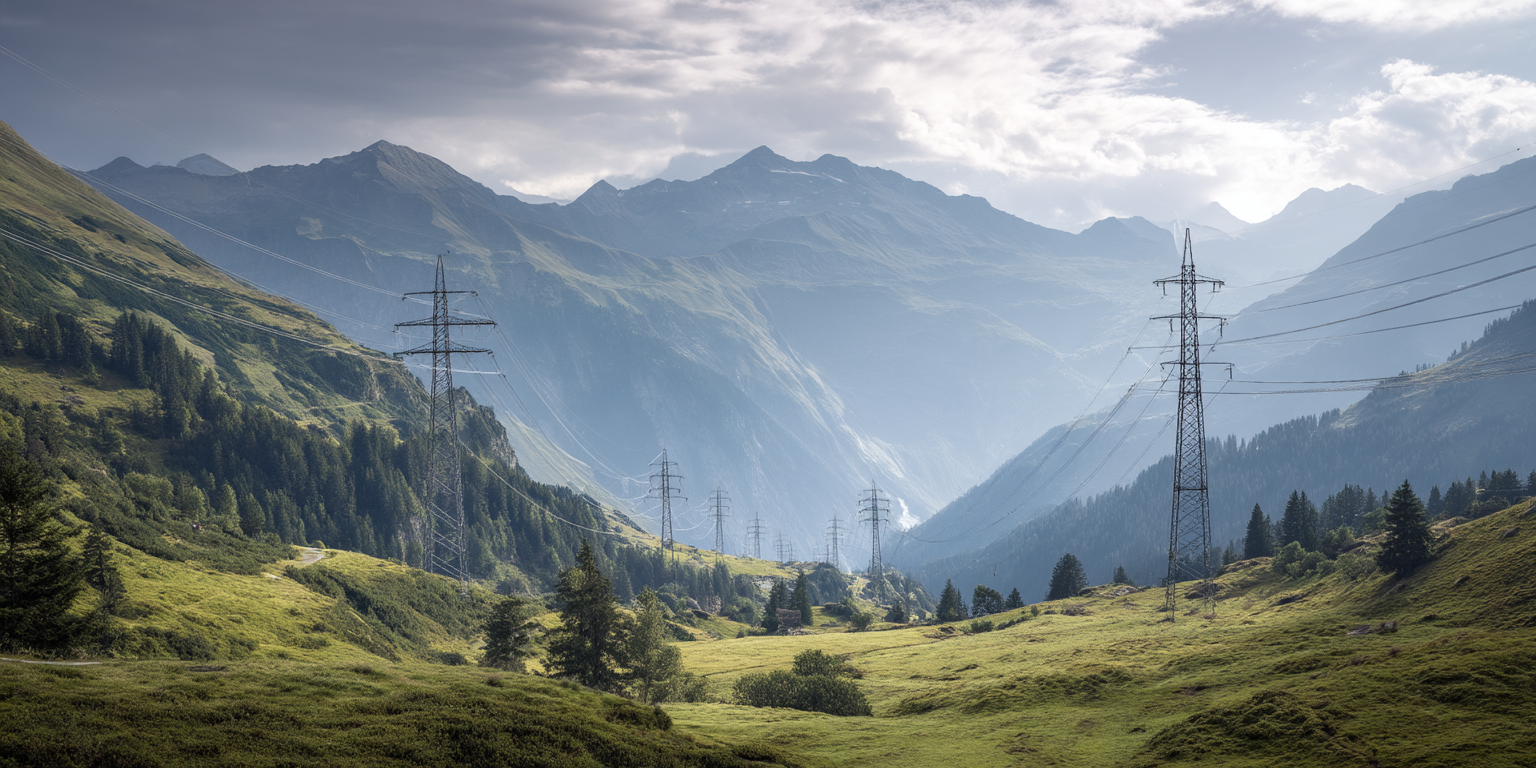
    Overhead lines before underground cables
    The Commission emphasises one key point. Transmission grid lines should primarily be realised as overhead lines. Underground cables remain the exception and should only be considered in special cases. However, this principle should not apply in construction zones.

    The political priority is thus visibly shifting towards speed and feasibility. The more complex the balancing of interests, the longer procedures take. This is precisely where the bill wants to start and streamline planning processes.

    More room for manoeuvre when replacing
    The focus on existing buildings is particularly relevant. In the coming years, a large part of the grid infrastructure will reach the end of its service life. According to Swissgrid, structural bottlenecks are already noticeable today and two thirds of the 6,700 kilometre-long transmission grid is over 40 years old.

    The Commission therefore wants to facilitate the replacement of existing high-voltage and extra-high-voltage lines, including on existing or directly neighbouring routes. This principle should now also apply to parts of the distribution grid above 36 kV. This is a signal with an impact. Not every grid expansion begins on a greenfield site. Much is decided by replacing the existing grid more quickly.

    The silent hurdle of the energy transition
    There is also a detail with a major impact. In future, transformer stations will also be possible outside the building zone under certain conditions if no suitable location can be found within the building zone. This also shows where the energy transition gets stuck in everyday life. Often not because of the strategy, but because of the land.

    The proposal therefore hits a sore spot. Switzerland has accelerated the production of renewable energy, but the grid is threatening to become a bottleneck. If procedures continue to take years, it is not a lack of ideas that will slow down the turnaround, but a lack of lines.

  • Infrastructure project replaces overhead lines with modern networks

    Infrastructure project replaces overhead lines with modern networks

    The Aargau municipalities of Bellikon, Remetschwil and parts of Oberrohrdorf are no longer supplied via wooden pole lines from the valley, but via a new cable line. According to a statement, AEW Energie AG has completed and commissioned a central infrastructure project on the Rohrdorferberg with this cable. As a result, 1.6 kilometres of existing wooden pole lines have been dismantled – “a contribution to a more robust, low-maintenance network and an improvement to the landscape,” according to the Aargau energy supplier.

    The Rohrdorferberg line between Künten and Fislisbach has a total length of 11.2 kilometres. A total of eight transformer stations were connected to the new line. According to the information provided, this will particularly benefit businesses “with increased requirements for security of supply”.

    AEW invested a total of CHF 3 million in the project. “By consistently expanding and cabling our grid infrastructure, we are not only increasing security of supply for the population, but also creating the conditions for a flexible and sustainable energy system,” says Christoph Fischer, who heads the Networks division at AEW.

  • Electricity industry warns of declining security of electricity supply

    Electricity industry warns of declining security of electricity supply

    According to a press release, the Association of Swiss Electricity Companies (VSE) has presented the Swiss Electricity Supply Index for the first time. The index rates Switzerland’s electricity supply at 82 points for 2035 and only 69 points for 2050.

    The index assesses the electricity supply in five categories. Per capita electricity demand is set to rise further, mainly due to electromobility and data centres; the index gives a score of 86 points for 2050. The expansion of renewable energies is too slow, especially for winter supply. Solar panels on roofs are not sufficient for this, and projects in wind and hydroelectric power production are being delayed or cancelled. The index gives 83 points for 2050. The flexibility of the electricity system is rated at only 52 points for 2050. The federal target for the expansion of seasonal storage will be significantly missed. The expansion of electricity production receives 63 points. The phasing out of domestic nuclear power from 2040 onwards will increase demand. The expansion of the grids is rated at only 57 points.

    In its statement, the VSE points out that imports cannot be increased at will and do not offer any security in times of shortage. “Switzerland is at a decisive crossroads: without decisive energy policy decisions, concrete investments in new production capacities and a significant acceleration of the approval process, we are putting our security of supply at risk,” VSE President Martin Schwab is quoted as saying in the statement.

  • Mobile networks must receive emergency power

    Mobile networks must receive emergency power

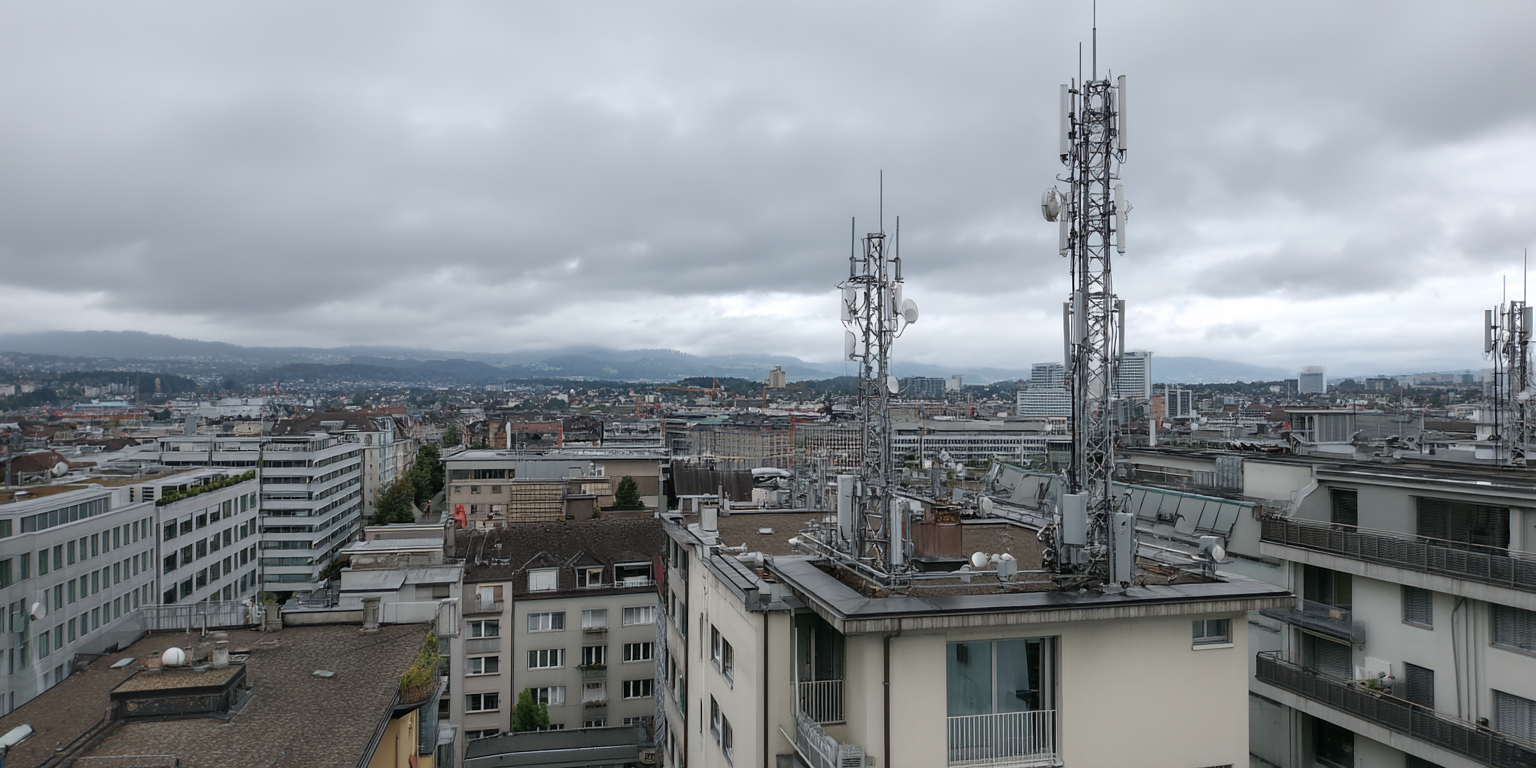
    The Federal Council is tightening the requirements for the reliability of mobile networks. In future, operators will have to install an emergency power supply at key locations and antennas that will maintain operations for at least four hours in the event of power outages.

    The focus is on the safety of the population. Emergency calls, traditional telephony and Internet access should continue to function even if the regular power grid fails. This also explicitly includes radio programs that are broadcast via the Internet as an information channel in crisis situations.

    Staggering until 2034
    The new requirements do not apply to all services equally or immediately. From 2031, emergency calls must be possible for at least four hours. Other mobile services, such as general data traffic, will only have to be secured over this period from 2034.

    In order not to overload the networks in a shortage situation, operators will also be given clear room for maneuver. They will be allowed to restrict the transmission of videos and TV programs in order to secure capacity for priority services such as emergency calls, voice connections and central information services.

    Compromise after criticism from the industry
    The Federal Council originally planned much stricter requirements. The mobile networks should have remained stable even in the event of power outages lasting up to three days and repeated shutdowns. Telecommunications companies and trade associations criticized these requirements in the consultation process as hardly feasible and too costly.

    In a moderated dialog led by Federal Councillor Albert Rösti, mobile network operators and the administration agreed on the solution that has now been adopted. It increases the level of protection of the networks without overburdening the industry with maximum scenarios and is in line with what other European countries are also demanding.

    Examination of further hardening
    The partial revision of the Telecommunications Services Ordinance is not the end of the discussion on security of supply. In a second stage, the responsible department is examining the extent to which further hardening of the grids is realistically feasible for scenarios such as power shortages or outages lasting several days.

    Several federal departments are working together on this, including Economic Affairs, Education and Research as well as Defense, Civil Protection and Sport. By the end of 2027 at the latest, it should be clear whether and how additional measures are necessary to ensure that Switzerland is provided with the most reliable mobile services possible, even in extraordinary situations.

  • Ticino shows the way to a modern power supply

    Ticino shows the way to a modern power supply

    The European energy system is facing the biggest transformation in its history. Transport, industry and buildings are being electrified, electricity demand is increasing massively and production is becoming more decentralised and volatile. For Switzerland, this means fundamentally adapting its grids. In Ticino, the course was set early on. As early as 2013, the canton brought together the major players, Swissgrid, Azienda Elettrica Ticinese (AET) and SBB, to think about electricity grids and spatial planning together.

    The analysis clearly showed that the infrastructure created in the 1950s was inefficient. Each institution had built its own lines without taking into account the overall view or the landscape. The result is a patchwork of routes through sensitive areas. Today, joint planning makes it possible to bundle several lines on one route, resulting in 140 kilometres becoming superfluous.

    Projects with national appeal
    At the heart of the realisation are three major projects, Airolo – Lavorgo in the Leventina, All’Acqua – Vallemaggia – Magadino and Lavorgo – Magadino in the Riviera and Piano di Magadino. They form the backbone for a secure supply for future generations. At the same time, they create the conditions for the dismantling of old lines, which significantly relieves the landscape.

    Lengthy procedures act as a brake
    The construction of new high-voltage lines in Switzerland often takes more than 15 years. However, close consultation in Ticino has made it possible to develop trust, coordination and joint proposals to speed up federal procedures. Municipalities and the population are actively involved in order to achieve broad-based solutions.

    Balancing landscape protection and security of supply
    Ticino combines sensitive habitats, historic villages and landscapes with lakes and mountains that are important for tourism. The balancing act between security of supply and landscape protection has been mastered here in an exemplary manner. Instead of unilaterally planning power lines, the territory is viewed as an overall system. An approach that increases acceptance and reduces conflicts.

    Federal Council wants to expand the model
    The innovative process has not gone unnoticed. The Federal Council has recognised the advantages and proposed extending the Ticino model to other cantons in a bill. This could turn a regional pioneering achievement into a national model of success, with a signalling effect for the entire energy transition.

    Ticino shows how the modernisation of critical infrastructures can succeed in a way that is technically efficient, compatible with the landscape and politically acceptable to the majority. The dismantling of 140 kilometres of power lines is only the most visible success. The decisive factor is a new way of thinking that strengthens security of supply and quality of life in equal measure.

  • Zurich invests in large-scale battery storage for greater security of supply

    Zurich invests in large-scale battery storage for greater security of supply

    Zurich City Council has applied to the municipal council for a framework credit of CHF 20 million. According to a press release, the credit is to be used for the expansion of free-standing large-scale battery storage facilities operated by Elektrizitätswerk der Stadt Zürich(ewz).

    The independently operated systems are used to store large amounts of energy, such as that generated by renewable sources like solar or wind energy. In addition to the existing power plants, the large-scale storage facilities can feed energy into the grid at peak times and thus contribute to the stability of the energy system and security of supply. An important contribution can be made here, particularly in view of the requirements of increasing electrification, such as the switch to electric vehicles and heat pumps.

    According to the press release, the city council can approve ewz projects independently within this framework credit and thus significantly shorten decision-making processes. For ewz, this means that even larger projects in highly competitive business areas can be handled swiftly and remain competitive.

  • Discussion about security of supply and dependence on nuclear power

    Discussion about security of supply and dependence on nuclear power

    The Gösgen nuclear power plant(KKG) is modernizing its feed water system. It has therefore been off the grid since the end of June. The resumption of electricity production has now been delayed by a further six months, according to a statement.

    KKG blames this on the increasing safety requirements. The system needs to be strengthened at certain points. It also needs more time to provide evidence to the authorities. The KKG can only be restarted once the Swiss Federal Nuclear Safety Inspectorate(ENSI) has given its approval. The KKG is therefore expected to be able to return to the grid at the end of February 2026, according to the press release.

    The operators expect a loss of production during these eight months amounting to almost 6 terawatt hours and a loss of revenue of 500 million Swiss francs, Alpiq writes in a press release.

    Alpiq is the largest single shareholder with 40 percent and expects a loss of earnings of CHF 200 million. Axpo is the second-largest shareholder with 25 percent, followed by the city of Zurich with 15 percent, Axpo subsidiary CKW with 12.5 percent and Energie Wasser Bern(ewb) with 7.5 percent. On top of this, the shareholders must now procure the missing electricity on the free market in order to meet their supply obligations.

    KKG covers a good tenth of Switzerland’s electricity consumption. Critics of nuclear power such as the Swiss Energy Foundation SES point out the risks of centralized power generation. “Dependence on individual nuclear power plants represents a cluster risk for the secure supply of electricity,” Managing Director Nils Epprecht is quoted as saying in an SES press release. “We would do well to shift our electricity production to many decentralized, renewable plants as quickly as possible.”

  • Civil engineering work for power grid at Stadelhofen railway station started

    Civil engineering work for power grid at Stadelhofen railway station started

    According to a press release, the Dietikon-based construction company Walo Bertschinger is starting civil engineering work on the cable systems of the Elektrizitätswerk der Stadt Zürich(ewz) directly at Zurich-Stadelhofen railway station. Walo has been awarded an annual contract by ewz from 2024 to 2028. This makes Walo one of four companies involved in important infrastructure projects. Walo Bertschinger will start civil engineering work on ewz’s cable systems directly at Stadelhofen station in February.

    ewz is responsible for the secure and efficient operation of the distribution grid in the city of Zurich and parts of the canton of Graubünden, ewz says. ewz’s modern and intelligent metering and grid infrastructure ensures security of supply in the city of Zurich. In the long term, this infrastructure supports Zurich’s net-zero target for 2040 and the preservation of quality of life in the city. At the same time, it is a prerequisite for further networking and digitalisation.

  • SBC launches election platform “For a constructive Switzerland

    SBC launches election platform “For a constructive Switzerland

    The density of regulation in the construction sector, the 2050 climate targets, security of supply and the shortage of skilled workers are key concerns of the population, the economy and politics and will accordingly also be the focus of the federal elections on 22 October 2023. The SBC has therefore chosen these key issues for its national election platform “For a constructive Switzerland”. This with the catchy slogan “We modernise, we build, we take responsibility”. Gian-Luca Lardi, Central President of the Swiss Association of Master Builders, states: “The main construction trade can and wants to contribute to constructive solutions for the future”. Until election day on 22 October, the positions on these topics, which are also at the heart of the SBC’s “Agenda 125.0”, will be presented on www.konstruktive-schweiz.ch. On the other hand, candidates will be presented on the platform whom the SBC recommends to the voters for election. Newsletters, posts in the social media, reporting in the association’s publications and construction site leaflets round off the communication support for the candidates. The SBC works closely with its cantonal sections on this.

    We modernise. We build. We take responsibility.
    Since Switzerland’s building stock is responsible for almost half of the country’s energy consumption, this is another area where we must take action, says Martin Bäumle, a member of the Zurich National Council: “Security of supply is of central importance. That’s why it’s crucial that we renovate buildings to make them more energy-efficient and enable efficient new buildings.” In concrete terms, higher incentives and the removal of barriers to modernisation could help Switzerland to increase its building renovation rate to the necessary level.

    In addition to modern buildings, Switzerland also needs a top infrastructure, says Bernese National Councillor Christian Wasserfallen: “After all, infrastructures are Switzerland’s lifeline.” Alex Farinelli, National Councillor for Ticino and candidate for the Council of States, adds: “The ecological and energy challenges require an efficient infrastructure and a modern building stock. That’s why it’s important to give the building sector the opportunity to make its contribution with faster procedures and fewer bureaucratic hurdles.” The necessary framework conditions and legal certainty are created by politics, while the construction work is done by the master builders.

    Last but not least, the shortage of skilled workers is also a topic in the campaign of the Swiss Association of Master Builders. The challenges of finding the necessary personnel are also great in the main construction trade. “I am committed to a constructive Switzerland that continues to train enough practitioners to implement Switzerland’s modernisation in buildings and infrastructure,” emphasises Isabelle Chassot, Fribourg’s Councillor of States. “We must take decisive action against the shortage of skilled workers,” adds Diana Gutjahr, National Councillor for the Canton of Thurgau. This starts with ensuring that vocational apprenticeships remain as attractive as possible, Gutjahr continues.

  • City council plans reorganisation of heat supply

    City council plans reorganisation of heat supply

    So far, there are three municipal providers of heating networks on city territory: Elektrizitätswerk ewz, Entsorgung + Recycling Zürich (ERZ) and Energie 360° AG. All large-scale heating networks are now to be united under the umbrella of ewz. Through their joint efforts to achieve the city’s net zero targets, the three providers of district heating networks have intensified their cooperation in recent years. Then, about two years ago, the city council formalised this cooperation by establishing the Wärme Zürich office. Since then, Wärme Zürich has been coordinating the expansion of the networks of the three providers. Currently, it is being examined whether the existing heating networks can also be physically connected to each other, so that an overall network is gradually created on city territory, which further increases the security of supply. The planned reorganisation takes these changes into account and represents the next integration stage in the area of heat supply.

    Implementation plan in progress
    A project headed by City Council members Michael Baumer (Head of the Department of Industrial Operations), Simone Brander (Head of the Department of Civil Engineering and Waste Disposal) and Andreas Hauri (Head of the Department of Health and Environment) will show in an implementation plan by the end of the year how and in what timeframe such a reorganisation can take place. The consultation with the staff associations will also take place during this period.

    Integration of ERZ’s district heating activities
    ERZ’s district heating activities will be integrated into ewz. The implementation plan will show how the integration of the district heating activities is to be structured and how and when the employees concerned are to transfer from ERZ to ewz. The experts from ERZ will play a decisive role in shaping the new organisation with their knowledge and many years of experience in the heating sector.

    New prospects for Energie 360°
    Energie 360° will also transfer part of its heating networks in the city of Zurich to ewz, with the employees remaining with Energie 360°. Ownership and operation of the gas grid and all other activities will remain with Energie 360°. Energie 360° is a joint-stock company owned by the public sector. The main owner is the city of Zurich. The company’s strategy of driving forward the transformation throughout Switzerland and supplying exclusively renewable energy by 2040 will be maintained. As the focus of Energie 360°’s activities will shift even more to activities outside the city in the future, the city council wants to offer the company new perspectives and open up the field for cooperation. In order to gain more freedom of action, the city council’s authority to sell shares in this company is to be extended.