Tag: Verwaltung

  • New ways to combat stock shortages

    New ways to combat stock shortages

    With a vacancy rate of around one percent for apartments, free space in the Swiss real estate market is extremely scarce. Away from the housing market, however, other problems arise with storage space. Storage spaces of less than 100 square meters in particular are often vacant because the effort involved in viewings, fixed price negotiations and physical contracts is disproportionate to the return. Neither owners nor administrators find the time-consuming letting process worthwhile, as fees and monthly rents are low and resources would be better spent on high-margin properties.

    Digital innovation for the management of small storage spaces
    Since the beginning of 2025, the Swiss start-up storabble has been using fully automated processes to solve this problem. The company offers outsourcing solutions for renting out vacant storage space and takes care of all administrative tasks. This includes tenant search, identification, verification, contract processing, key management and debt collection. Even risks such as debt collection claims or damage are outsourced, reducing the burden on owners and administrators.

    Automated processes for greater efficiency
    The business model is based on specially developed software and a digital marketplace where around 12,000 people across Switzerland can find potential rental properties every month. Full automation reduces costs and effort and also makes it possible to rent out low-value space profitably. Owners of well-known portfolios are already processing vacancies with the company.

    Economic relevance and outlook
    The rental income missed due to vacant warehouse space corresponds to around 0.02 percent of the total portfolio value on the Swiss real estate market each year. In view of a market value of CHF 6 trillion, this results in economically relevant potential for digitally efficient solutions. The outsourcing model opens up new economic benefits for very small spaces and is an example of digitalization and increased efficiency in the real estate sector. At the same time, the smart management creates relief in the sector and can serve as a blueprint for other special properties.
  • Digitised road network for the district of Horgen

    Digitised road network for the district of Horgen

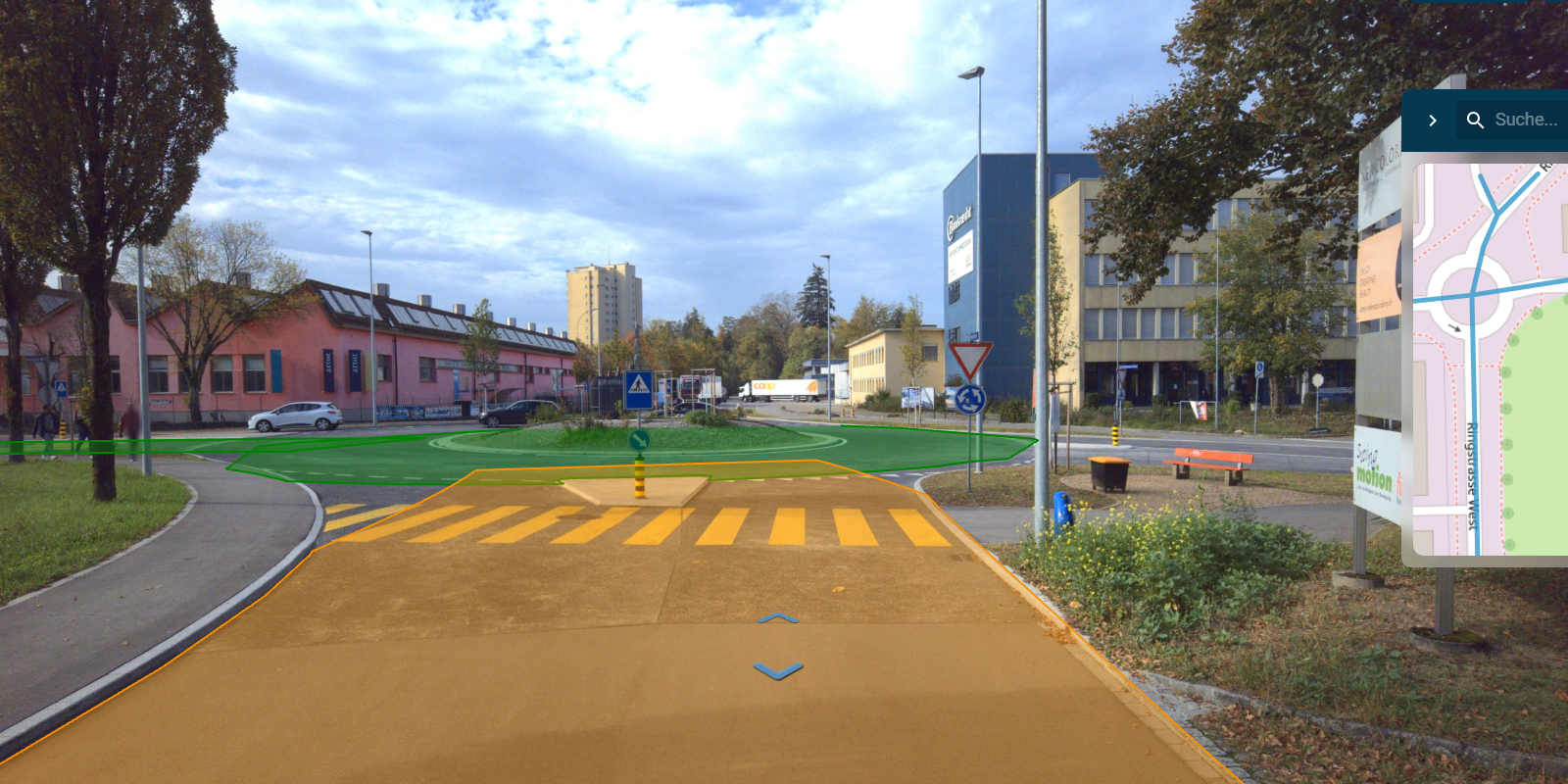
    From mid-July 2025, iNovitas from Baden will be mapping the streets in the district of Horgen. The company is creating a three-dimensional digital image of the public road network, according to a press release. The data obtained from the model is intended to form a basis for the areas of administration, utilities management and planning. The digital image reduces the time and effort required for inspection trips and inspections and should therefore provide an efficient organisation for maintenance and planning directly from the office.

    The municipal and cantonal roads of Adliswil, Kilchberg, Langnau am Albis, Rüschlikon, Thalwil and Oberrieden will be digitised. The municipality of Horgen had already commissioned iNovitas to carry out this work at an earlier stage. The data is recorded exclusively on public roads. According to the press release, people and number plates are anonymised, thereby protecting personal rights. The captured image and geodata is provided via the web-based infra3D platform and is only available to authorised specialists or administrative bodies with the appropriate authorisation.

  • Business opportunities in the Uri valley floor

    Business opportunities in the Uri valley floor

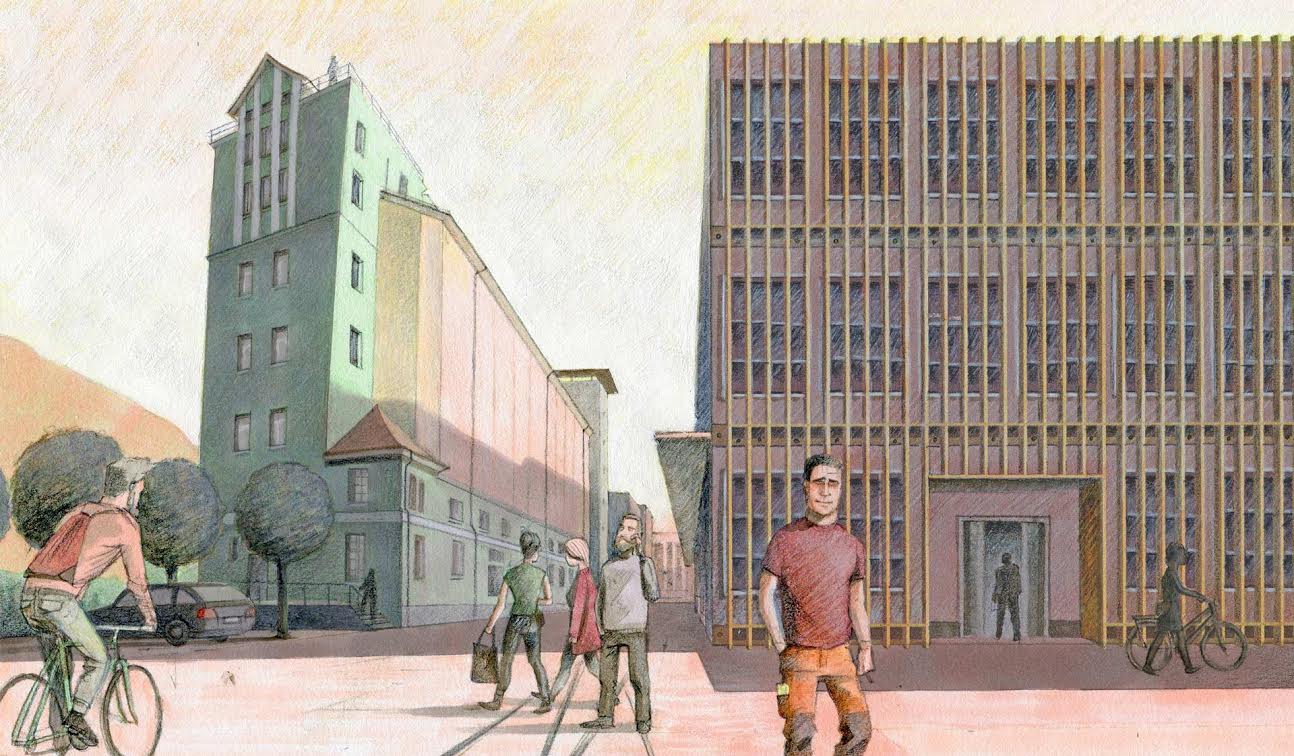
    Werkmatt Uri is one of the last large land reserves in the Uri valley floor. The first industrial uses with a direct railway connection were already established here during the First World War. The listed grain stores designed by architects Eduard Züblin and Robert Maillart in 1912/13 are particularly characteristic. These buildings will be preserved as landmarks and converted into an exhibition centre and art warehouse. The canton is investing in infrastructure to further develop the area between the new Altdorf cantonal railway station and the future Altdorf South motorway junction.

    Optimum location and economic impetus
    Uri is strategically located on the most important European north-south axis with the Gotthard Base Tunnel and the A2 motorway. The immediate proximity to the Altdorf intercity railway station and a modern bus concept promote the accessibility of Werkmatt. The improved accessibility provides impetus for economic and residential projects. With “Vena”, “Cubo” and “Strickermatte”, private investors have realised modern residential developments within walking distance.

    Development with vision
    Kässbohrer Schweiz AG has already recognised the added value of Werkmatt and relocated its headquarters to Altdorf in 2019. The new service building has created 30 qualified jobs in the areas of administration, sales, service, training, final assembly and production of special vehicles, mainly snow groomers. Werkmatt AG is also developing an innovative utilisation concept for building plots 9 and 13. The plans include a multifunctional centre with a business hotel with 80 rooms, co-working spaces, commercial and cultural spaces, restaurants and fitness and recreation areas.

    Targeted planning for sustainable growth
    As the owner, the canton of Uri is striving for a win-win situation with the future owners, users and investors in the area. The plots are to be sold and built on gradually over the next few years. The canton is developing the Werkmatt Uri site in a coordinated manner so that sustainable economic uses are created in the interests of the region as a whole. To this end, it is drawing up guidelines – including those relating to workplace density. The neighbourhood design plan serves as a planning instrument for investors and companies wishing to build on the site, which is binding on the owner and defines the parcel of land. It sets guidelines regarding utilisation, design and infrastructure.

    Success through co-operation
    Werkmatt Uri is an example of coordinated and sustainable site development. Companies benefit from a committed administration, short decision-making processes and needs-orientated solutions. The region expects the project to provide long-term economic impetus and create more than 1,000 jobs.
    Werkmatt Uri is therefore much more than just an industrial area, it is an economic driver and an attractive location for forward-looking companies.

  • Roman Mayer takes over as Head of the Federal Office for Spatial Development

    Roman Mayer takes over as Head of the Federal Office for Spatial Development

    Roman Mayer will take over as Head of the Federal Office for Spatial Development (ARE) on 1 October 2025. The 51-year-old from Nidwalden brings with him in-depth knowledge from his previous role as Deputy Director at the Federal Office of Energy and is considered an expert in complex authorisation procedures, legislative processes and sectoral planning.

    With his legal training and his positions in various cantonal administrations, Lucerne, Basel-Landschaft and Bern, Mayer stands for a balanced combination of expertise, administrative practice and strategic foresight.

    Spatial development as the key to location attractiveness
    The ARE is at the centre of spatially relevant future issues such as overall transport, settlement development, sustainable use of resources, maintaining quality of life and promoting economic areas. Under the new management, it is expected that these challenges will be tackled in an even more networked manner – with coherent, forward-looking planning across sectors and spatial types.

    This is a key message for investors, project developers and location managers. The federal government is strengthening the planning framework and thus promoting stable and attractive investment areas in the long term.

    Generational change with vision
    Roman Mayer succeeds Maria Lezzi, who has headed the Federal Office since 2009 and will retire at the end of September. Her era was characterised by far-reaching impulses in spatial planning and the sustainable development of Switzerland. The Federal Council would like to thank her for her many years of service.

    In Mayer, a high-profile personality is now taking over who will continue to think about and shape spatial development in the context of social, ecological and economic transformation.

  • Smart City Strategy Zug

    Smart City Strategy Zug

    The challenges of urban growth, from the climate crisis to transport logistics and urban densification, call for holistic approaches. Zug is focusing on digitalisation as a key strategy. With its strong technological basis and the active involvement of all urban stakeholders, the Smart City Strategy Zug offers innovative answers to the questions of the future.

    Intelligent administration and citizen-centred services
    The city of Zug is striving for an efficient, citizen-centred administration that facilitates access to services and promotes transparency. Digital technologies, such as open data and smart administrative processes, offer citizens access to municipal services regardless of time and place. This customer-friendly approach strengthens the dialogue between the city and the population and makes Zug a pioneer for modern city administration.

    Strengthening social participation and digital skills
    With its smart city strategy, Zug is creating new platforms for the participation of all social groups. Digital channels expand dialogue and promote the right to have a say, especially for younger generations and less mobile people. Educational programmes are designed to improve the digital skills of both the population and the administration and prepare the people of Zug for the opportunities and challenges of the digital transformation.

    Smart mobility for sustainable mobility and quality of life
    Smart mobility is a central pillar of the strategy. Innovative technologies and alternative forms of transport are intended to reduce commuter traffic, cut emissions and improve the quality of life. Zug is focussing on real-time data, intermodal mobility and the expansion of emission-free modes of transport. The goal: clean, safe and sustainable mobility that enriches city life.

    Innovative business location
    With its dynamic start-up scene and innovative sectors such as fintech and blockchain, Zug creates an attractive environment for high-tech companies and qualified specialists. The Smart City strategy strengthens the location’s profile and connects companies that are committed to a sustainable economy and circular processes. In this way, Zug is not only positioned for the future as a place to live, but also as a business location.

    Sustainability and environmental protection through smart technologies
    Promoting energy efficiency and CO2 reduction is a key objective of the strategy. Digital applications such as “smart metering” enable a transparent presentation of energy consumption and promote the conscious use of resources. The city is focussing on the expansion of renewable energies and the intelligent use of existing infrastructure – a clear commitment to climate protection and sustainable urban development.

  • Progress and outlook for the cantonal climate strategy

    Progress and outlook for the cantonal climate strategy

    Successes include the introduction of a procurement guideline for CO2-free vehicles in the cantonal administration and the creation of a legal basis for financial support for flood protection measures. Two measures that have been finalised, while a further 47 are currently being implemented. New administration vehicles must now have a CO2-free drive system, which represents an important step towards a more climate-friendly administration. In addition, the Water Management Act has created the basis for promoting flood protection projects, which are essential for adapting to climate change.

    Public relations work as the key to raising awareness
    Another key aspect of the climate strategy is raising public awareness. Every year, a “climate walk” is organised on a climate-related topic to present projects to citizens. This year’s focus was on the energy-efficient refurbishment of an apartment block, which was upgraded from efficiency class G to class B. This shows how effective refurbishment measures can help to reduce energy consumption and CO2 emissions.

    Challenges in the area of fossil fuels and renewable energies
    The latest climate figures show that the proportion of oil heating systems in residential and service buildings has fallen by 5 per cent, while the proportion of heat pumps has risen by the same amount over the same period. Nevertheless, the proportion of natural gas heating systems remains unchanged, which contradicts the climate policy goals. In order to achieve the goal of a climate-friendly energy supply, the transition from fossil fuels to renewable energies must be accelerated.
    On a positive note, electricity production from photovoltaic systems in the canton has more than doubled since 2015. This shows that the use of renewable energies is progressing, even if considerable efforts are still required to achieve the climate targets that have been set.

    Potential for improvement in the cantonal administration
    The cantonal administration has set itself the goal of acting as a role model in climate protection. Despite initial progress, it is clear that energy consumption for heating and hot water in cantonal buildings has only been reduced by 2 per cent. More than half of the heating energy is still obtained from fossil fuels. CO2 emissions from the combustion of these fuels have remained virtually unchanged since 2016, indicating a need for additional action.

    Adjustments to energy requirements and future steps
    The Government Council has submitted measures that can be implemented quickly for consultation in order to increase the use of renewable energies. Among other things, these relate to the replacement of heating systems and the generation of self-generated electricity in new buildings. One example is the requirement that a renewable energy system should always be used in future when replacing heating systems in canton-owned buildings.
    Overall, it is clear that the canton of Schaffhausen is on the right track, but that targeted measures are still required to accelerate the transition to a climate-neutral future.

  • Four eastern Swiss cantons strengthen cooperation for a networked future

    Four eastern Swiss cantons strengthen cooperation for a networked future

    On July 4, 2024, the governments of the cantons of St.Gallen, Appenzell Ausserrhoden, Appenzell Innerrhoden and Thurgau signed a declaration on closer strategic cooperation. This step marks the start of an intensive cooperation process aimed at strengthening and networking Eastern Switzerland. The joint declaration underlines the commitment of the four cantons to work together to find and implement solutions to common challenges.

    Joint commitment to the Lake Constance region
    The four cantons had previously announced that they would work together to establish the international Lake Constance region at a national level as part of the Swiss Spatial Concept. This project was positively received by the economy and the public and highlighted the potential of closer cooperation to strengthen Eastern Switzerland as a whole.

    Strategic fields of action and annual discussions
    The declaration raises cooperation to a strategic level. The governments of the four cantons will discuss fields of action for cooperation on an annual basis and evaluate the potential for cooperation. Employees of the administrations are invited to submit proposals and participate in the selection of areas for action.

    Possible strategic fields of action include spatial development, transport, education and culture, innovation and digitalization, natural hazard prevention, crisis management and security. The cantons hope that strategic cooperation will lead to more efficient and effective solutions in these areas.

    Flexible cooperation models
    Cooperation can take different forms depending on the needs and situation. Solutions can either be implemented jointly by all four cantons or by two or three cantons. Other cantons, particularly from Eastern Switzerland, can also participate in projects. Each canton decides individually whether a joint solution makes sense for it and offers added value.

    Institutionalization of cooperation
    A central concern of the governments is to start the process of strategic cooperation and then institutionalize it. By taking this step, the four cantons are sending out a strong signal for closer cooperation and a networked future for Eastern Switzerland.

    The signing of the declaration on closer cooperation marks an important milestone on the way to a stronger and more efficient Eastern Switzerland. Together, the cantons want to overcome challenges and develop the region sustainably.

  • Increased efficiency in property management

    Increased efficiency in property management

    Although intergenerational living concepts have the potential to strengthen coexistence in neighbourhoods, many owners of large property portfolios are reluctant to implement them. The reason for this lies in the lack of experience with the administrative burden of these special forms of housing, which differ significantly from conventional offers.

    In order to meet these challenges, an orientation framework and a toolbox have been developed that offer insights into the necessary administrative tasks and questions that need to be clarified. The aim is to provide owners, portfolio managers and property managers with a clear guideline to simplify the realisation of such innovative forms of housing. These useful tools emerged from an intensive exchange of experience organised by Zimraum and Stratcraft, in which various stakeholders took part. In a total of four brown bag meetings, essential topics such as marketing, letting, operational management and advice on project development were discussed and solutions developed.

    With the new orientation framework and the toolbox, SVIT Zurich is providing important impetus for the property sector by not only paving the way for the implementation of community-promoting forms of housing, but also helping to rethink and redesign housing for the elderly.

  • Digitisation of building permit procedures in the canton of Zurich

    Digitisation of building permit procedures in the canton of Zurich

    As part of its efforts to modernise and digitalise administrative processes, the canton of Zurich has taken a decisive step to simplify and speed up the building permit procedure. From 1 April 2024, the procedure for submitting building applications will be completely digitalised with the introduction of the platform. This development marks a step forward in the administration and processing of building projects by reducing paper consumption and increasing efficiency.

    Since its launch in February 2020, the platform has already made a significant contribution to simplifying the building permit process. It enables a smooth exchange of information between applicants, authorities and other parties involved and supports the entire process from submission to approval of a building project. Until now, however, the process was not completely paperless, as legal provisions prevented the exclusive use of digital means.

    The latest amendments to the Planning and Building Act, the Building Procedure Ordinance (BVV) and the Special Building Ordinance I, which were passed by the Government Council, remove these hurdles. The new legal basis paves the way for a fully digitalised building permit procedure. Building Director Martin Neukom emphasises the importance of this development and stresses that the implementation of this digital project will create a customer-oriented and resource-saving service that meets today’s requirements and simplifies the processing of building applications for all parties involved.

    To ensure full implementation, all cities and municipalities in the canton of Zurich must switch to the new, exclusively electronic process within three years. This changeover promises to make the building permit process more efficient and environmentally friendly, which represents a significant innovation for property management professionals.

  • Revolutionary investment strategy for commercial rental deposits

    Revolutionary investment strategy for commercial rental deposits

    At a time when the focus is on adding value to capital, the new solution brings a breath of fresh air to the management of rental deposits. The innovative solution, which was developed in collaboration with leading asset managers and banks, enables companies to invest their rental deposits efficiently while providing the necessary security for landlords.

    The CEO: “It’s time for capital to work for the company and not destroy value over time. With our solution, companies can quickly move from costly rental deposits to profitable investments.”

    A 1999 study by the Federal Office for Housing states: “For the tenant, rent deposits are de facto a kind of “forced saving” on terms that he cannot influence. It is therefore appropriate to look for a new alternative to rent deposits”.

    Traditionally, rent deposits have been seen as a cost for companies that primarily ties up liquidity. Now, companies can seamlessly transition from cost to revenue. The ability to quickly and easily convert rent deposits into secure and profitable investments dusts off the previous understanding of antiquated deposit accounts and allows them to shine in a new light. The company provides both tenants and landlords with a smart match tool.

    According to a study conducted by the Federal Housing Office in 1999, rental deposits were previously regarded as an inflexible form of compulsory savings without tenants having any influence.

    In order to be able to offer the best possible investment strategy for rental deposits, the company co-operates with renowned partners in the field of custodian banks and asset management.

  • Evorest receives seven-figure early financing

    Evorest receives seven-figure early financing

    The Zurich-based start-up Evorest has acquired a seven-figure sum in a so-called pre-seed financing, according to a media release. The company has set itself the goal of renewing the rental deposit market. For the first time, tenants will be able to digitally invest their rental deposits in low-cost funds.

    This is intended to simplify the entire rental deposit management process for tenants and property managers. In the future, tenants will thus be able to sign their rental deposit contract digitally and invest their tied-up capital in exchange-traded index funds such as ETFs. They will benefit directly from the return achieved in the process.

    In the future, it will also be possible to conclude a conventional deposit account completely digitally via Evorest. Thanks to digitalisation, deposit accounts can be opened within 24 hours. Property managers will receive a higher damage cover sum as security, in line with the market. Evorest works with an unnamed Swiss partner bank that manages the capital and guarantees the security of the deposit.

    The financing now obtained is expected to be effective by the fourth quarter of 2023. With the acquired capital, the company, which was founded in March 2023, wants to implement its programme developments and activate the programme interface to its partner bank.

  • The Swiss proptech company Immowise offers its solution in German-speaking Switzerland

    The Swiss proptech company Immowise offers its solution in German-speaking Switzerland

    Condominiums in Switzerland: An industry that only gains from digitization
    Swiss real estate is feeling the direct effects of the turn to digitization, as the most important players in the industry have accelerated the pace of increasing efficiency every year. Switzerland, with its 1.4 million owners* (including more than 445,000** condominiums), ultimately represents an important market for Immowise.

    Immowise's digital solution is easy to implement and adapts to any type of condominium. By connecting to the most important ERPs used in the industry, the platform is fully integrated into the digitization strategy initiated by the agencies. The lean cost management is also suitable for small structures and self-governing condominium associations.

    An office in Zurich serving condominium owners' associations in German-speaking Switzerland
    With the office opening in Zurich, Immowise wants to offer administrations, self-managed condominium associations or independent local administrators a solution to simplify and reduce the workload with a platform that has already proven itself in western Switzerland. By 2022, around 20 general meetings for over 500 condominium owners had already been held. Immowise wants to cover all Swiss regions by 2023. In addition, the platform will be expanded with additional modules such as the internal news service for condominium owners, the comparison of cost estimates and budget management.

    Immowise's development in German-speaking Switzerland is rounded off with the appointment of Teresa Astorina as Director, based in the Zurich region. As a recognized expert in the real estate sector, in which she has been active for over 25 years, she takes over the proptech leadership with the declared goal of converting the management of condominium associations throughout Switzerland using digital technology.

    Sebastian Chiappero, Managing Director of Wise.swiss, Immowise's parent company, adds: "20 months after the founding of Immowise, the appointment of a director marks a further step towards ensuring the nationwide rollout of Immowise. I am very pleased that Teresa will be part of this Position has joined us. Her many years of experience in the real estate industry and her skills in the area of strategy development are all plus points for Immowise". Among other things, she was also active in the management or in leading positions in companies such as Credit Suisse, m3 Real Estate, Privera or EPM.

    Teresa Astorina emphasizes: "The future of the real estate industry lies in digitization. I am very proud to be able to accompany the development of a "Swiss made" solution that offers a real service in the management of condominiums in Switzerland."

    Portrait of Teresa Astorina here for download

    About Immowise
    Immowise was founded in 2021 and is the first Swiss solution for the digitization of condominium meetings. Developed and hosted in Switzerland, this application helps administrators and condominium owners prepare, manage and follow up on meetings. It complements the wise.swiss software from EPwise AG, which was launched in 2020 and offers public administrations and companies a range of digital communication and event organization tools (eventwise, partnerwise and fundwise). https://wise.swiss/de/immowise/
    Immowise headquarters: Neuchâtel
    Offices: Geneva, Zurich

  • Digital tool organizes meetings of co-owners

    Digital tool organizes meetings of co-owners

    Immowise is the first platform for the digitization of general meetings of floor owners and property managers, writes wise.swiss in a press release. The digital tool helps the administrator to digitally design all phases of a general meeting, it says there. The administration of the invitations, the preparation and adjustment of the agenda, the calculation and determination of the quorum as well as the recording of voting results and surveys and the creation of minutes are named as such. In addition, notes and comments on the General Assembly can be recorded with Immowise. Immowise can be adapted to the particular characteristics of co-ownership, writes wise.swiss.

    The young company based in Neuchâtel specializes in the development of digital tools in working life. A number of real estate companies were already among the customers, explains Sebastian Chiappero in the press release: "The concept of a specific platform for managing general meetings was born in 2019 at your request," said the wise.swiss CEO. The coronavirus pandemic also drove implementation.

    Immowise can reduce the time required in all phases of a general assembly by 20 to 30 percent, explains the director responsible for the platform, Gilles von Burg. At the same time, care is taken to ensure data security. "The initial feedback from our customers has been very positive, both for remote and on-site use," says Gilles.

  • Canton of Zurich – on the pulse of the action

    Canton of Zurich – on the pulse of the action

    The canton of Zurich is an important growth driver in the Swiss economy. Its gross domestic product (GDP) was more than CHF 143 billion in 2017. That corresponds to more than 20 percent of Swiss GDP. This means that the canton of Zurich has the greatest economic output and added value within Switzerland. The added value can be increased by companies, research and educational institutions and specialist organizations cooperating along the value chain in clusters such as financial services, life sciences, creative industries, cleantech, aerospace, information and communication technology. According to the Statistical Office, the canton of Zurich generates more than 20 percent of the Swiss gross domestic product (GDP) with an annual GDP volume of over CHF 120 billion. This is the greatest cantonal economic added value in Switzerland.

    Maintaining international relationships is also an opportunity to directly follow and actively influence international developments in both the economic and political spheres. The business contacts acquired in this way are of direct benefit to the representatives from business, science and administration based in the canton.

    In terms of quality of life and standard of living, Zurich has held top positions in international rankings for many years. The city of Zurich emerged as the winner of the well-known Mercer study on quality of life seven times in a row. It has been in second place since 2009. The study compares 230 cities based on 39 criteria such as health care, entertainment, shopping, schools, housing, environmental issues, and the political and economic situation.

    A new index also measures the economic and social distribution of prosperity for the first time, and the metropolis on the Limmat ranks first among 113 cities, as zh.ch writes: The “Prosperity and Inclusion in Cities Seal and Awards Index” not only measures economic growth, but above all its quality and what proportion the different population groups have in it. Zurich scored particularly well in terms of work, living, leisure, security and education. Vienna follows in second place, ahead of Copenhagen, Luxembourg and Helsinki. In the inner Swiss city ranking, Zurich ranks first and Winterthur third.

    Testimonials

    Carmen Walker Spah
    Government Councilor,
    Director of Economics

    Thanks to the first-class universities, the availability of specialists, the excellent infrastructure and the high innovative strength of our economy, the canton of Zurich is a highly attractive location for companies.

    David Allemann
    Co-founder On

    Zurich is cosmopolitan, cool and rethinks. It is important that many creative minds live and work in Zurich who drive the location forward in terms of creativity and innovation. So Zurich remains unique.

    René Kalt
    Managing Director
    Innovation Park Zurich

    Universities and numerous innovative companies make Zurich a perfect location for networking science and business. The Innovation Park Zurich contributes to this knowledge and technology transfer, making Zurich even more innovative.

    Mario Jenni
    Co-Founder &
    CEO Bio-Technopark Schlieren-Zurich

    Zurich is an excellent life sciences location due to numerous health and technology companies as well as excellent universities. The “Paradeplatz” of the biotech scene is located in Schlieren and is becoming more and more important nationally and internationally.

  • The foundation stone for the Rieter Campus has been laid

    The foundation stone for the Rieter Campus has been laid

    With its construction project for the Rieter Campus, Rieter is committed to the Winterthur location and to Switzerland as a business location, according to a press release from the textile machine manufacturer. The foundation stone for the new customer and technology center as well as the administration building was laid on Wednesday. The company, which has been based in Winterthur for 225 years, is investing around 80 million francs in this

    From 2024, the Rieter campus is to offer space for around 700 workplaces on a floor area of over 30,000 square meters. To this end, the company developed an open room concept with a specialist in office architecture. With heat generation via geothermal probes and a 1,300 square meter photovoltaic system, Rieter is relying on renewable energies. “The entrepreneurial focus on sustainable and energy-efficient solutions for yarn production is thus reflected in the overall concept of the campus,” CEO Norbert Klapper is quoted as saying.

    In the course of its company history, Rieter has helped shape the city of Winterthur, said Chairman of the Board of Directors Bernhard Jucker. “Now, with the new campus, the foundation is being laid for the future as a leading technology company.”

  • Limmat Verwaltungs AG gets a new name

    Limmat Verwaltungs AG gets a new name

    Limmat Verwaltungs AG has become Elicere Real Estate Management AG. Limmat Verwaltungs AG, founded in Schlieren in 1967, has been taken over by Elicere AG in Zug, according to a press release in 2019. The company was renamed from Limmat Bau-, Treuhand- und Verwaltungs AG to Limmat Verwaltungs AG.

    The administration is now to be continued under the new name, which refers to the new owner. The new company Elicere Real Estate Management AG is naturally based in Schlieren on Schulstrasse, at the previous address of the Limmat administration.

    Before the start with the new name, a comprehensive restructuring and especially digitization had been carried out, it says in the message. In addition to the management and valuation services already offered, there is now also the assumption of construction management.

    The new company, which was founded in December, is managed by Rikard Memaj and Roger Priester. Both are members of the Board of Directors. Its President Roger Priester is quoted as saying: "We are convinced that with the transparent and structured set-up in the company, we can lead our customers into a sustainable future with the most modern tools and motivated employees."