Tag: Virtual Reality

  • «The real estate industry still has the best years of digitization ahead of it»

    «The real estate industry still has the best years of digitization ahead of it»

    About the person
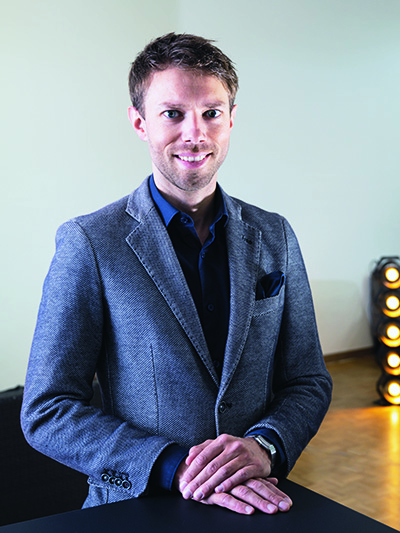
    As Chief Digital Officer at Steiner AG, Giuseppe Giglio is responsible for digital transformation and the development of new digital products. Previously, he was responsible for the digitization of sales channels and the development of support platforms for private customers at Swisscom.

    Mr. Giglio, what is your job at Steiner AG?
    Together with my team of around 25 people, I am responsible for digital corporate development. Our goal: to keep the company technologically fit and to successfully establish it in new digital markets. A year ago, Steiner AG bundled the competencies for the digital area and gave me responsibility.

    You previously worked outside of the real estate industry. From your point of view, where is digitization in the real estate sector compared to other sectors?
    Other industries were able to benefit from the advantages of digitization earlier. Real estate is still at the beginning of this journey. However, in the many discussions I have had with various companies in our industry, I sense a great willingness to change. There is a kind of spirit of optimism. The real estate sector still has the best years of digitization ahead of it. It was also this circumstance that made me personally decide to switch.

    Was this spirit of optimism stimulated by the corona pandemic?
    The pandemic has certainly put some pressure on pushing digital issues. But I believe that the real estate industry would be at this point even without Corona. Companies don’t want to be left behind and remain competitive.

    Where is Steiner AG ahead in terms of digitization?
    Not least because of its modern IT infrastructure, the company was able to adapt very quickly to the new market conditions of the last two years. For example, we were able to immediately send the staff from the offices to the home office without any problems and ensure operations at all times. We came out of the pandemic more successful and stronger. Steiner AG also consistently relied on BIM for its own developments very early on. Today we can draw on more than ten years of experience in this technology and know all the tricks and pitfalls.

    Which digitization topics are currently particularly in demand?
    The energy and climate targets for 2030 challenge the industry along the entire value chain. In this respect, there is a great deal of demand for topics relating to transparency with regard to environmental indicators. In addition, online collaboration platforms – which are already standard in other sectors – are gradually gaining a foothold in the real estate industry.

    To what extent has BIM already established itself today?
    We find that BIM or parts of BIM are very often used in larger projects. We have also registered high demand for renovations and existing buildings in recent months. We have some catching up to do when it comes to smaller projects or explicitly in the area of building operations. Digitization is always associated with process changes and investments – many companies are still cautious here. We need to show decision makers the benefits of BIM and provide evidence.

    What are the advantages of BIM?
    BIM creates the basis for real networking of real estate projects. If applied consistently and consistently, planning errors can be avoided in an early phase – and it is possible to react faster and therefore more cheaply to new general conditions. Digital planning also enables efficient operation. The benefits for building operations are exponentially greater.

    « Artificial intelligence is already indispensable today »

    Can you give an example of Smart Home?
    The best-known examples are the intelligent control of building technology such as lighting, heating and security solutions, such as door locks or alarm systems. Such solutions are now widespread.

    What are the advantages of Smart Home?
    One speaks today of “Ambient Assisted Living”. Smart technology in the living area, for example, allows older people to stay longer in their own apartment or house and lead a self-determined life, even if they have health restrictions. For example, with the help of sensors that register when someone falls over and immediately trigger an alarm. There is also the option of controlling lights/blinds, etc. barrier-free via speech and not via complicated control elements. Last but not least, this topic also harbors a lot of potential on the investor side.

    Which one exactly?
    A smart home can measure and control the consumption of household technology such as heating or cooling, which leads to a reduction in electricity consumption. This results in lower operating costs.

    How and where are future technologies such as Augmented Reality (AR), Virtual Reality (VR), Artificial Intelligence (AI) already being used today?
    AR and VR are currently still niche topics that are often used as marketing tools. They are excellent for visualizing visions and are breeding ground for inspiration.

    AI, on the other hand, is already a reality more often than you think: For example, when determining costs or detecting anomalies in building operation. Since these processes are usually carried out in the background, the user often does not notice that artificial intelligence or an algorithm is involved. If you plan and build digitally today, artificial intelligence has become indispensable.

    What is necessary for AR and VR to also become suitable for everyday use?
    We have to tackle projects with a «digital first mindset». The earlier a project is tackled digitally, the more profitable it becomes overall. We need more practical examples that show that projects with this way of thinking become more successful. VR in particular is helpful in an early phase to improve cooperation and to quickly make critical decisions. I am convinced that AR and VR will prevail in the real estate sector in the next five years.

    Which digitization solutions are most in demand from partners and subcontractors of Steiner AG?
    Many companies are still at the beginning of their digitization journey. That is why training courses, BIM management and real estate inventories for the digital inventory of the real estate portfolio are currently in particularly high demand.

    In your opinion, how will digitization change the industry in the next five years?
    I believe that digitization is bringing us all closer together. Clients, the public and companies work and exchange information on the same platform and actively shape the project. This leads to a democratization of real estate projects, which in turn leads to more successful and sustainable results.

  • Steiner AG enters into a strategic partnership with HEGIAS

    Steiner AG enters into a strategic partnership with HEGIAS

    The dynamic startup HEGIAS offers the world’s first automated and browser-based solution for visualization and communication with Virtual Reality (VR) for the planning, construction and real estate industries. The rapidly growing company was founded in 2017 and currently employs around 20 people at the two locations in Zurich and Lugano. “With Steiner AG, we have a strong partner at our side who supports us in realizing our growth ambitions,” says Patrik Marty, CEO of HEGIAS. Giuseppe Giglio, Chief Digital Officer at Steiner AG, adds: “The new virtual collaboration environment will enable everyone involved in the project to work on the same model at the same time and from any location.” This simplifies and accelerates previous processes and contributes to a significant reduction in errors.

    Ajay Sirohi, CEO of the Steiner Group, is convinced that the cooperation will contribute to the long-term success of both companies: “The combination of HEGIAS’ digital expertise and our proven experience in the BIM and construction sectors enables us to jointly create tailor-made innovations for the market develop. With the first strategic partnership in the digital sector, we can expand our expertise in this area and actively help shape the future of the real estate industry. In the future, we are planning further collaborations with innovative start-ups in order to continue the digital transformation of our company and to grow sustainably in the field of future technologies.»

  • 5 good reasons for a tech check

    5 good reasons for a tech check

    There are several reasons why it is worthwhile for a company in the real estate business to embrace new technologies.

    Attractiveness for employees: High potentials and well-trained employees want to work in companies that are agile and digital. In order to be able to keep up with the future “war for talents”, digital company DNA is almost a “hygiene factor”.

    Creation of efficiency and transparency: With new solutions – for example in the field of artificial intelligence and data analytics – resources can be bundled correctly, investment decisions can be made well-founded, and rental and sales processes can be processed faster and more cost-effectively.

    Minimizing risks: Through the targeted use of technologies, data can be generated, structured and analyzed in order to improve the basis for decision-making and thus minimize risks.

    New options for monetization: Disruptive new technologies such as blockchain technology are “business enablers” and promote the development of new business models, ecosystems and collaborations.

    Improvement of the user experience: New technologies such as virtual or augmented reality enable a completely new user experience. This type of convenience will become standard in the future and customers will probably no longer want to do without it.

    You can find an overview of new technologies and PropTech solutions here: https://hubs.li/H0RQjYL0

  • These visualization trends are stirring up the real estate industry

    These visualization trends are stirring up the real estate industry

    Applications and tools such as 360 ° tours, interactive design or virtual reality (VR) are not new. But what two Swiss and a German start-up have made of it, yes. For example, the Zurich start-up Coding Mind AG with their product “Remotely360 °”: The founders, Alexandros Tyropolis and Danijel Veljkovic, have revolutionized the 360 ° tours: “These virtual tours have been around for around 10 years. But the existing solutions on the market did not go far enough for us: The tours are primarily perceived as a marketing tool. Once entered into the Internet, prospective tenants are then left to their own devices. Any questions that arise remain unanswered – any misunderstandings cannot be clarified, ”analyzes the CEO, Alexandros Tyropolis.

    Therefore, with the Remotely360 ° solution, marketers and interested parties can meet digitally in the property: “The property manager receives all information about the property overlaid. Thanks to the integration of Google Streetview and Google Maps, the surroundings can also be shown, ”explains the CEO. Further documents could be sent immediately in the chat. The integrated floor plan shows where you are in the property. With this offer, the company is one of the so-called first movers: "We only know of a handful of start-ups worldwide that are pursuing similar ideas," says the young entrepreneur. Big players in the field of 360 ° tours in particular would have overslept to continue spinning their thoughts and ask themselves how 360 ° tours could have a deeper impact on the marketing process. Remotely360 ° customers include companies such as the CBRE Group, Crédit Suisse and Swiss Finance & Property Funds AG.

    In order to use the tool, the first step is to digitize the property. “We maintain a network of photographers who, if necessary, take pictures of the object with a 360 ° camera,” explains Tyropolis. The customer can also do this himself without any problems: "Our solution is compatible with all 360 ° cameras." After that, all you need is an Internet browser. The tours are hosted free of charge. Anyone who would like to benefit from additional tools pays CHF 24.90 per property and month.
    The start-up was founded during the corona pandemic. The makers cannot therefore conclusively answer whether this gave the tool a boost. "Corona definitely sensitizes and has increased acceptance even among more conservative market participants," says Tyropolis. In the future, the innovative solution should also be able to be used for other applications in the life cycle of a property, such as handover protocols. “The simultaneous implementation of a tradesman's offer tool is being planned. Another milestone would be the connection between visualization and photo. We are working on integrating floors, colors or furnishings into the 360 ° tour, ”says Tyropolis, revealing the plans for the future.

    There is no need to build model apartments
    The start-up «Hegias», founded in 2017 and based in Zurich and Lugano, also wants to make life easier for building planners, architects, marketers and authorities. With deceptively real tours of properties that are often still in the planning phase. Quite often the first word that the three founders Patrik Marty, Tuan Nguyen and Andreas Schmeil hear from their customers is: “Wow!”. The three young entrepreneurs rely on virtual reality (VR) for their solution. “We noticed that agency VR applications are static, expensive and difficult to share with other stakeholders. We want to democratize VR and make it possible to use it for smaller projects such as single-family houses, ”explains Marty, who is CEO. This gave rise to the idea of developing software with which anyone without experience or programming knowledge can bring content into the VR, change it in real time and commit and discuss it together with all the people involved.

    Hegias VR works simply and intuitively: “Our solution is the first in the world to be completely browser- and cloud-based; all you have to do is drag a 3D plan into your internet browser and a few minutes later you can walk through it – with or without VR glasses, ”explains the young entrepreneur. With the help of so-called libraries, the plans can then be materialized and furnished. The innovation is intended to prevent misunderstandings and planning errors and make the construction of model apartments superfluous. Additional services such as the laser scan of a property and the subsequent creation of a 3D model are available for existing buildings.

    The acceptance in the real estate industry is very high: "We even dare to say that anyone who has experienced Hegias VR live will never build again without first going through the project in the VR," Marty is convinced. Today VR is still a competitive advantage, but in a few years it will become the standard. The solution was developed for the masses and for collaboration. “The application is completely automated. Our innovation is therefore significantly cheaper than the VR offers of the agencies, ”says the CEO. A virtual tour of a project costs less than 200 francs, depending on the subscription and its utilization.

    The solution is already available in four languages (German, English, French and Italian). “In the next two years, the focus will be on Switzerland as well as on countries that are increasingly using Building Information Modeling (BIM). In other words: Scandinavia, Great Britain, the Netherlands and the USA ”, Marty reveals. The pandemic accelerated the digitization surge in the industry: "We are feeling that more and more solutions are being sought for decentralized meetings and inspections of real estate projects." Marty sums up other advantages of the tool: “Competitions can be carried out purely digitally. Objections can also be shortened and, at the end of the day, construction can be carried out faster, more efficiently, more sustainably and more cheaply. "

    The potential of the application is far from being exhausted. Marty opens: "In five years, it will be possible to order materials and furniture on our platform with a click of the mouse – of course after you have looked at them in virtual reality in peace and quiet in your own four walls." In ten years at the latest, the VR will be an integral part of our lives – the resourceful entrepreneur is convinced of that.

    Real estate and furniture providers are directly networked for the first time
    “Deceptively real” are attributes that apply to the furnishing solution for real estate agents from the German start-up MockUp Studio. Monica Riad, founder and CEO, has developed a tool with which apartments can be virtually furnished with real furniture, floors can be changed, wall colors can be tried out and decoration can be exchanged as desired. All of this in true-to-life quality that cannot be distinguished from real photos: "Our solution is particularly interesting for new construction projects or apartments in need of renovation," explains the managing director. The tool enables floor plans and apartment pictures to be uploaded. The apartment is then automatically digitized and can be set up virtually. "2D images or 360 ° tours can be easily created from the digitized apartment," says Riad, who founded MockUp Studio in 2017.

    Users can try out different furnishing styles and, thanks to the collaboration with furniture dealers, order their favorite items directly in the application – an absolute novelty, as Riyadh says: “We are the first to connect real estate and furniture providers directly – and the whole thing is 70 percent automated. » All that is needed to use the tool is photos of the apartment – smartphone quality is sufficient. The solution costs from 100 euros per room. If several objects are digitized at the same time, this amount is reduced to 25 euros. The next development step is imminent: "At the end of 2021 we will also be offering the tool to end customers," announced Riyadh.

    Digitization has already become an integral part of the real estate industry. With their ideas and solutions, the start-ups presented should hit the nerve of the times – and perhaps even stir up the industry internationally in the coming years.

    To person
    Mario Facchinetti, founder of PropTechMarket, has
    the overview in the innovation
    Jungle. As an expert, he knows what is important when evaluating and implementing quality-checked PropTech solutions:
    www.proptechmarket.ch

    Mario's tip
    Visualization solutions make real estate mobile. The offer is large and difficult to understand. This question grid helps with decision making.

    1. Is it a new or an existing building?
    2. Which quality level is the property assigned: high-end or standard construction?
    3. Who is the target group: tenants or buyers? What about digital affinity?

    Solutions in the field of virtual reality are suitable for new buildings in order to make visions tangible. This technology has developed strongly over the last few years and is becoming suitable for the masses. For existing properties, 3D visualizations are increasingly becoming the standard – implementation is uncomplicated and can be adapted to the quality requirements of customers. Simply integrating tours of this kind on the property side is a long way from getting the maximum added value out of the models. In addition to digital appointments and visits via an integrated live stream, this solution can also be used to show the virtual furnishing of untidy or empty objects in 2D or 3D.

    Of course, given the multitude of options, the customer must not be disregarded. The type of object visualization and its integration into the viewing process must be adapted to the target group using the appropriate medium (online portals, print advertisements, social media, website, posters, etc.).