Tag: Wärmepumpe

  • New innovation boost for sustainable heating systems

    New innovation boost for sustainable heating systems

    EBP Schweiz AG has acquired a stake in Nullpunkt AG via its venture capital investor EBP Ventures. The start-up from Oberengstringen has developed an innovative ice storage heat pump system and launched it on the market this August following a trial run with a prototype last year. “With this investment, EBP Switzerland is not only strengthening its own innovation network, but also making a concrete contribution to the energy transition in the building sector,” Simon Hess, Partner and Head of Energy Technology at EBP Switzerland, is quoted as saying in a corresponding post by the Zurich-based consulting and engineering company on LinkedIn.

    The system from Nullpunkt AG consists of an external heat exchanger, an ice storage tank and a heat pump. The outdoor heat exchanger extracts energy from the ambient air during the day. This is used to melt the ice in the ice storage tank. When this water freezes again, thermal energy is released. This is extracted from the storage tank by the heat pump and used to heat the house. Compared to other ice storage systems, the system from Nullpunkt has a more compact design, “high energy efficiency and an attractive price-performance ratio”, writes EBP.

    Nullpunkt’s current programme includes further development to include more powerful systems and additional regeneration sources. “A competent partner such as EBP will also provide us with the right technical impetus to establish Nullpunkt on the market in the long term,” Nullpunkt CEO Thomas Degelo is quoted as saying in the article.

  • Helicopter deployment for climate-friendly energy supply

    Helicopter deployment for climate-friendly energy supply

    The Clinique Valmont in Montreux has been equipped with a climate-friendly heat supply system by BRUGG Pipes. It consists of a Siemens air heat pump, which is connected to the clinic via a district heating pipe, BRUGG Pipes explains in a press release. The heating capacity of the system is estimated at 321 kilowatts. With the new sustainable heat supply, the clinic, which is part of the Swiss Medical Network, will be able to avoid around 263 tonnes of CO2 emissions every year.

    BRUGG Pipes took an unusual approach to the delivery of the district heating pipe. “As space was limited and an incline had to be negotiated between the unloading and installation sites, we used a helicopter to transport the four sections, each weighing around 700 kilograms,” said René Hilty, Project Manager Specialist Construction Planning at the company, which is part of BRUUG GROUP AG in Brugg, in the press release. The Siemens heat pump even weighs 2.8 tonnes. It will be transported by a Super Puma helicopter on 30 September.

  • Olten-Trimbach heating network starts after approval from the cantonal hospital

    Olten-Trimbach heating network starts after approval from the cantonal hospital

    Aare Energie AG(a.en) and IWB are tackling the realisation of a heating network in the Hagmatt border area between the Solothurn municipalities of Olten and Trimbach. The partner companies had made the realisation of the plans for extracting thermal energy from the groundwater dependent on the involvement of Olten Cantonal Hospital. This key customer has now agreed to participate, a.en and IWB announced in a joint press release.

    A.en and IWB intend to start construction work on the heating network as early as next year. Its network length is expected to be 6 kilometres. A new heating centre in the Dellen drinking water pumping station is named in the press release as the heart of the system. Two heat pumps, each with an output of around 2.5 megawatts, will extract heat from the groundwater here.

    According to the press release, the provision of heat from groundwater can also be guaranteed at low water temperatures in winter. The annual heat output of the plant is estimated at 20 gigawatt hours. Interested parties who have already requested an indicative offer should now receive concrete offers and be able to conclude contracts. The partners expect the first heat deliveries from 2027.

  • Efficient cooling with underfloor heating

    Efficient cooling with underfloor heating

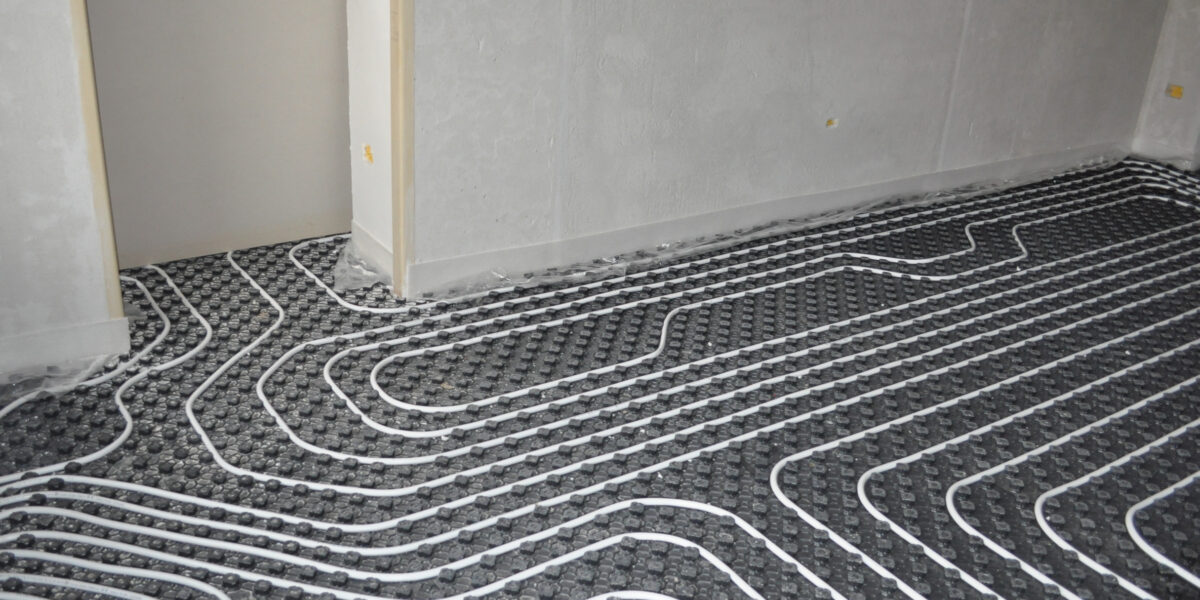
    In well-insulated new buildings and energy-efficiently renovated old buildings, interest in alternative cooling methods is increasing. Underfloor heating can not only provide cozy warmth in winter, but can also contribute to a pleasant indoor climate in summer, provided it is connected to a suitable heat pump. This opens up an efficient, noiseless and climate-friendly dual use of existing technology.

    Technology that can do both
    Only water-based systems are suitable for cooling. Cool water flows through the pipe system laid in the floor in summer, controlled by a pump and a smart control system. The decisive factor is the combination with a reversible heat pump, which provides technical support for the cooling mode. The difference between heating and cooling mode lies primarily in the water temperature. Instead of 35 to 40 °C, 16 to 20 °C is pumped through the system.

    Active or passive – two ways to cool down
    Passive cooling uses the temperature difference to the ground or groundwater without the compressor being active. This saves energy, but is often only sufficient for a slight temperature reduction in very hot weather.

    Active cooling, on the other hand, works at full pump capacity. Rooms can be cooled significantly more, but with higher power consumption.
    Brine/water and water/water heat pumps are suitable for both variants. Air/water systems are designed exclusively for active cooling.

    Technology and planning must go together
    The achievable temperature reduction is between 2 and 5 °C. With active solutions, values around 20 to 22 °C are also realistic. A flow temperature that is too low can cause condensation. This is why systems with dew point monitoring are needed that automatically counteract critical values.

    Know the limits, exploit the potential
    Underfloor heating systems react slowly, so cooling needs proactive control. However, with good planning and suitable technology, anyone building or renovating today can rely on a single system that provides year-round comfort without additional air conditioning.

    The achievable temperature reduction depends on the construction method, insulation and design of the system. In well-insulated new buildings or renovated properties, it is possible to cool rooms to 22 °C or below even when it is hot outside. Bedrooms, offices or heavily heated living areas in particular benefit from uniform, silent cooling.

  • Monument protection and technology in harmony

    Monument protection and technology in harmony

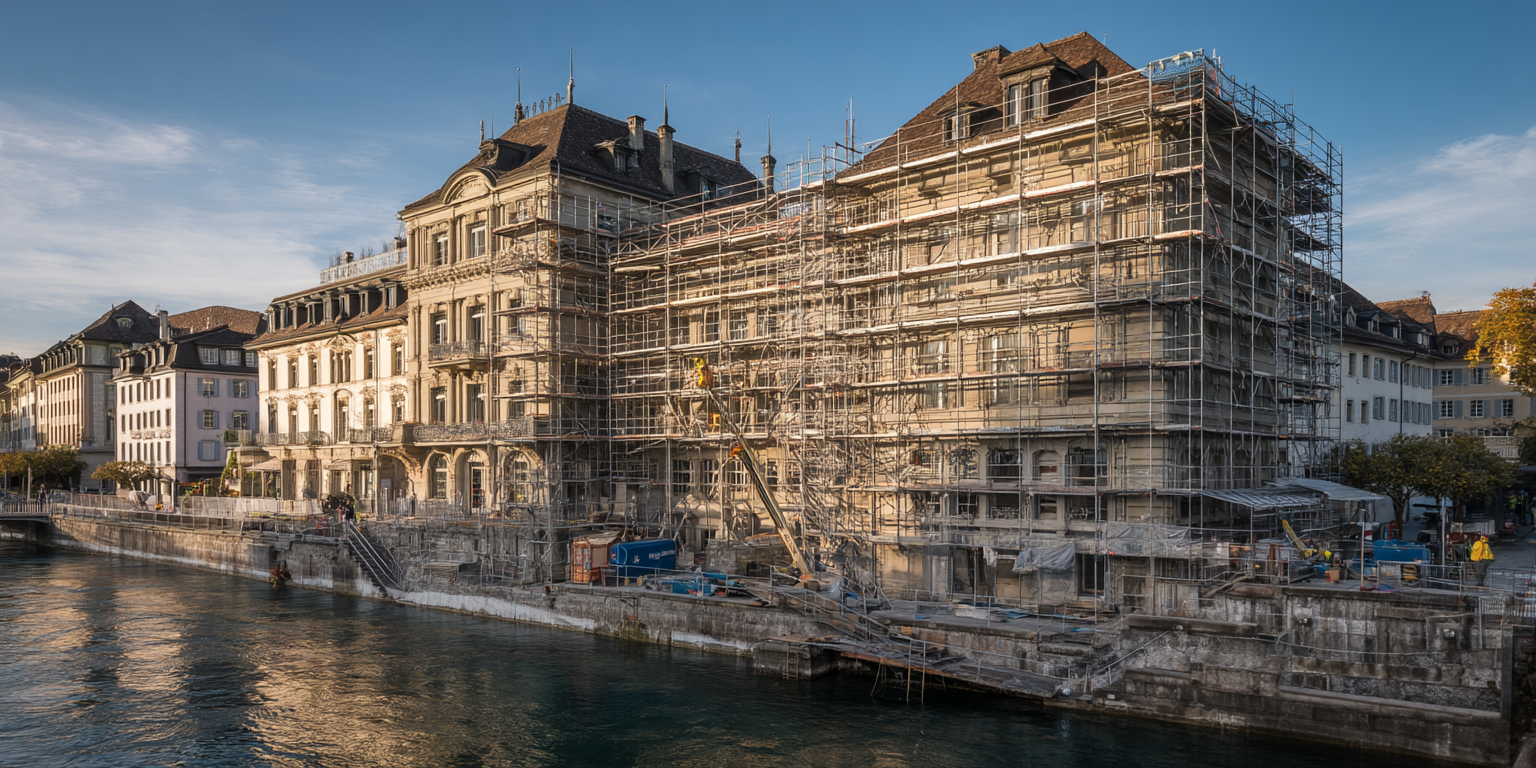
    According to a press release, the Schlieren-based construction company STRABAG AG and its building construction department are taking on “central tasks in the comprehensive renovation of the Landhaus Solothurn”. In addition to measures to modernize the building’s technical infrastructure, including plumbing, ventilation, lighting and stage technology, the focus is on modernizing the heating system.

    This will be converted to resource-saving energy generation by means of a heat pump. Water from the River Aare will be used as a heat source to supply both the Landhaus and adjacent public buildings such as the youth hostel, Kollegium school and municipal theater.

    The location between the old town and the River Aare requires logistical attention. Material deliveries and waste disposal had to take place in the morning so that the riverside promenade could be used as a promenade from midday.

    It was also necessary to take into account the stringent requirements of monument protection. The listed country house is like a “winding architectural work of art with six levels, each with its own renovation requirements”. The approach required “sensitivity” in order to preserve the historical character and the fabric of the building. In particular, the original Solothurn limestone staircases are to be preserved in their uniqueness, it is said. Special protective devices have been created for this purpose.

    Solothurn voters approved the renovation in October 2023. Construction work has been underway since January 2025. Construction is scheduled to end in October 2026. In January, construction site operations will be suspended in consideration of the Solothurn Film Festival 2026.

  • Logistics centre in Bedano is operated completely fossil-free

    Logistics centre in Bedano is operated completely fossil-free

    The meat processing company Ernst Sutter AG from Gossau operates its Ticino logistics centre at the Bedano site without the use of fossil fuels. According to a press release, 45 per cent of the power supply for all necessary systems is covered by solar energy and the remainder by hydropower. The solar power is generated by a photovoltaic system on the roof of the centre, where the 271 square metre system produces 55,000 kilowatt hours of electricity per year.

    The heating system was switched from oil heating to an air-to-water heat pump system. The heat extracted from the cooling systems is used to produce hot water.

    With the company sites in Gossau and Bazenheid SG, Bedano is now the company’s third site to be supplied with fossil-free energy. “We are setting ourselves ambitious goals to continuously reduce our ecological footprint and thus contribute to a more sustainable future,” Reto Sutter, CEO, is quoted as saying in the press release. “The expansion of renewable energies at our sites plays a central role in this.”

  • Online tool for climate-neutral industrial processes

    Online tool for climate-neutral industrial processes

    Industry is facing the challenge of converting its processes from fossil fuels to renewable energies. High-temperature heat pumps offer an energy-efficient solution for temperature ranges from 100 to 200°C in particular. They can not only provide process heat, but also generate cooling at the same time, which makes them particularly attractive for many branches of industry.

    Interactive technology map for companies
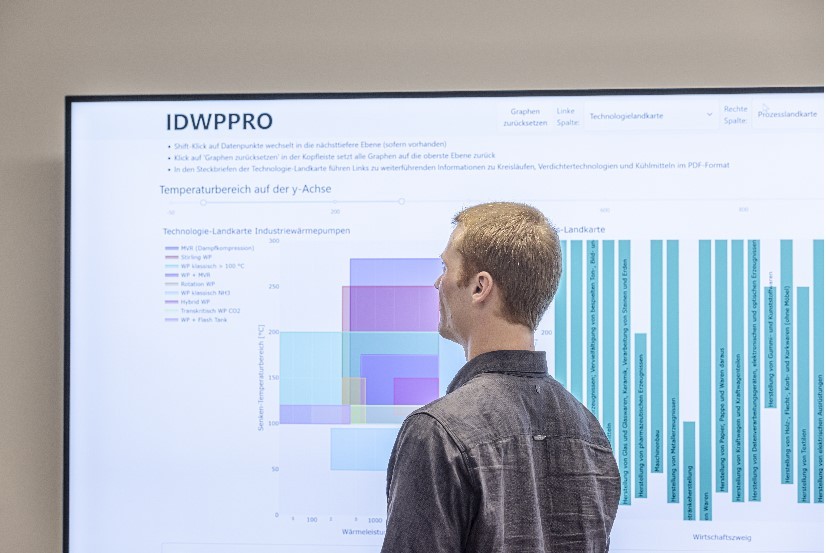
    In the research project “Identification of industrial heat pumps for process heat”, Fraunhofer ISE has developed an online tool that provides companies with targeted support in selecting the right heat pump technology.

    The tool offers

    • Visualisation of the available heat pump technologies in the temperature range and output
    • Allocation of heat pumps to specific industrial processes (e.g. cleaning, drying, cooling)
    • Interactive retrieval options for process temperatures in various industries
    • Detailed fact sheets on circulation processes, compressor technologies and refrigerants

    A contribution to climate-neutral industry
    The online tool is part of the Fraunhofer research topic “Climate-neutral industry”, which supports companies on their way to a CO₂-neutral energy supply.

    This includes:

    • Optimisation of potential energy savings
    • Utilisation of industrial waste heat
    • Integration of renewable energies (e.g. photovoltaics for in-house power supply)
    • Storage solutions for heating, cooling and electricity

    Special attention is also paid to the treatment of industrial waste water, which not only contains waste heat but often also valuable residual materials such as metals or acids. These can be efficiently recycled using modern recovery technologies.

    Participate and contribute data
    The data pool of the online tool is constantly being expanded. Manufacturers of heat pumps and industrial companies can get in touch with Fraunhofer ISE to integrate their data into the platform and thus drive development forward.

    With this new digital solution, Fraunhofer ISE offers companies an effective tool for decarbonising industrial processes and increasing energy efficiency – a decisive step on the way to climate-neutral production.

  • Lake Biel supplies energy for Nidau and Biel

    Lake Biel supplies energy for Nidau and Biel

    Energieverbund Bielersee AG is supplying energy to customers in Nidau and Biel for the first time, according to a press release. To this end, the intermediate circuit connecting the pumping station on Dr. Schneiderstrasse with the energy centre in the Alpha building in Nidau has been constructed in recent weeks.

    The lake water reaches the pumping station via two pipes at depths of 20 and 30 metres. In the energy centre, heat pumps are used to produce hot water for heating systems that are connected to the heating network. The cold, in turn, is channelled via a separate network to the Robert-Walser-Platz area near Biel railway station. A peak load boiler is available for cold days.

    The plans for the use of lake water date back to 2015. in 2020, Energie Service Biel/Bienne founded Energieverbund Bielersee AG, in which the city and the Burgergemeinde Nidau are now also shareholders. The lake pipelines were laid in March 2022 and the shell of the pumping station was completed the following May. In future, the energy centre is to be renovated and the heating network extended towards Ipsach.

  • Heating renovations boost Meier Tobler’s business

    Heating renovations boost Meier Tobler’s business

    Meier Tobler can look back on a good half-year, according to a media release. The Schwerzenbach-based company, which specialises in air-conditioning technology, increased its turnover by 7 per cent to 276.4 million Swiss francs compared to the previous year. Net profit rose by 38.7 per cent to around 16 million Swiss francs.

    The “essential basis” for the growth was reportedly the continuing momentum in heating renovations. At the same time, sales of heat pumps also increased in the double-digit percentage range. Business with air conditioning systems improved only slightly compared to the previous year. Here Meier Tobler benefited mainly from large projects such as the delivery of two absorption chillers with 3.4 megawatts each for the Shoppi Tivoli in Spreitenbach AG.

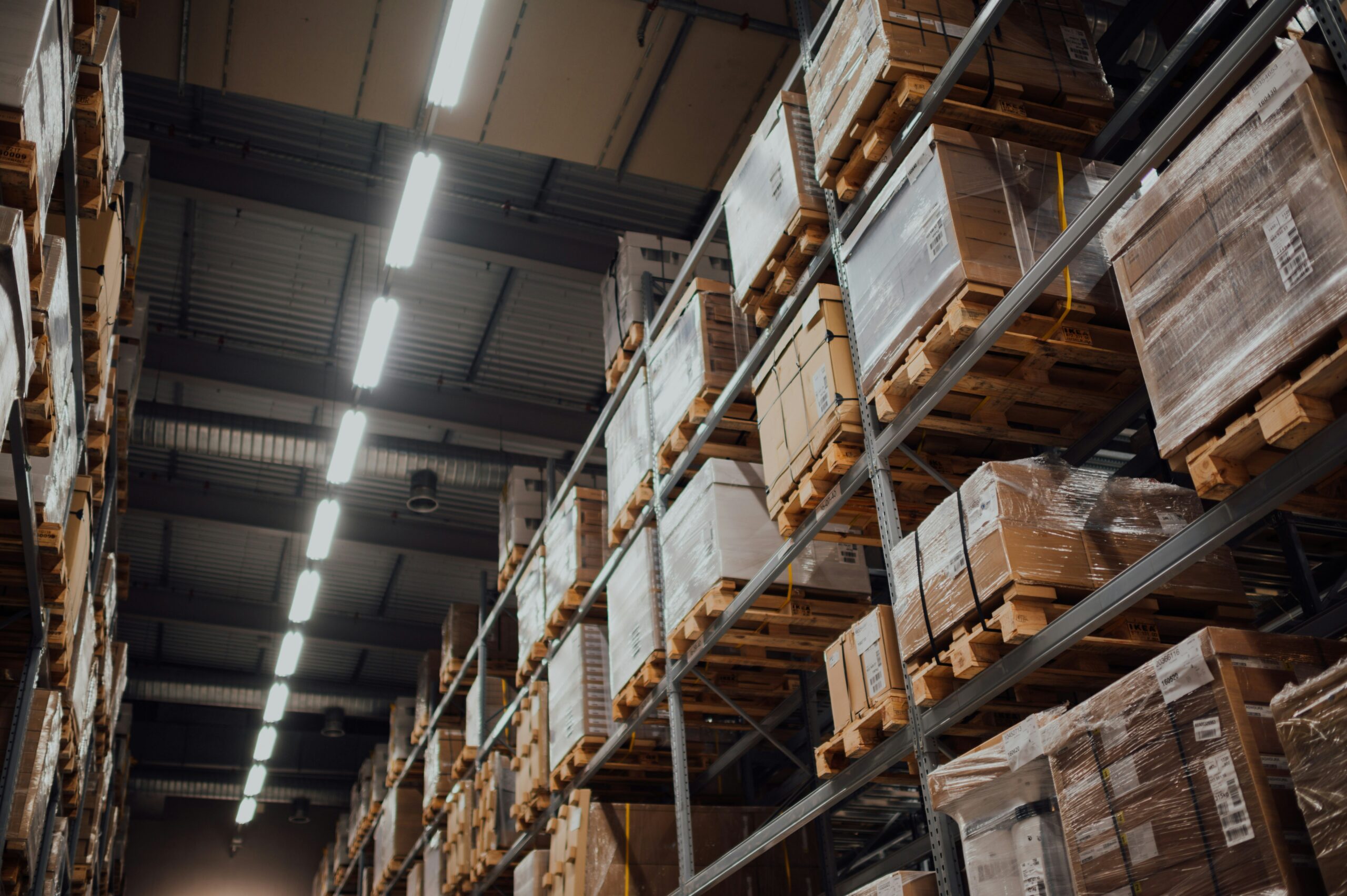
    Furthermore, Meier Tobler was able to put its new service centre in Oberbuchsiten SO into operation in the first half of the year. Among other things, automated high-bay and small parts warehouses or autonomous mobile robots are in use in the newly built centre. According to Meier Tobler, operations are being ramped up continuously.

  • 58 percent of Swiss buildings are heated with oil and gas

    58 percent of Swiss buildings are heated with oil and gas

    According to a press release , most heating systems in Swiss buildings were operated with oil or gas in 2021. This is the result of the building and housing statistics now published by the Federal Statistical Office ( BFS ) based in Neuchâtel. According to this, in 2021 there were 1.77 million residential buildings and 4.69 million apartments in Switzerland. 58 percent of the buildings were heated with fossil fuels – heating oil and gas are mentioned. Every fourth person heated with gas. 17 percent of the apartments were equipped with a heat pump. Their share of Swiss heating has quadrupled since 2000.

    Almost 40 percent of the population used heating oil in 2021. 25 percent heated with gas and 16 percent with a heat pump. The proportion of people who use heating oil was highest in the cantons of Ticino with 54 percent and Glarus (50 percent). Gas was used most frequently in the cantons of Geneva and Vaud, at 38 percent and 37 percent respectively.

    There are big differences in the share of gas between urban and rural areas. In urban communities, 30 percent of buildings were heated with gas, compared to just 4 percent in rural communities.

    More than 1 million of all buildings are single-family homes, of which more than half of the inhabited single-family homes were only occupied by one or two people, according to the BFS statement. An inhabited apartment in Switzerland was 102.4 square meters on average. Three and four room apartments make up 55 percent of all apartments in Switzerland.

  • New myclimate calculator makes it easier to switch to heating

    New myclimate calculator makes it easier to switch to heating

    On the website www.myclimate.org/heizung , visitors only have to enter a few data for the calculation. The canton of residence, the previous heating (oil, natural gas), the planned new heating technology (heat pump or pellet heating) and the previous annual consumption are queried. Based on this information, the myclimate calculator provides an immediate overview of possible funding from the myclimate funding program for heating replacements in Switzerland.

    In addition to this information, the website also provides a link to the respective cantonal building program. This allows homeowners to find out directly about the cheaper offer for heating replacement. The myclimate contributions are sometimes higher than those of the cantons and sometimes heating systems that are not covered by the canton can also be subsidised. A cantonal subsidy can only enjoy automatic priority for the smaller heat pumps. The new website also provides this information.

    In order for owners to participate in the programs, certain criteria must be met. The subsidy program does not apply to new buildings. The new heating system must therefore replace an existing oil or gas heating system. There must still be no double funding. This means that no other financial aid from the federal government, canton, municipality or private individuals is required for the project. In addition, the order must not yet have been placed with an installation or planning company.

    Important tool for reducing CO2 emissions in the building sector

    In Switzerland, single and multi-family houses are still mostly heated with fossil fuels. They therefore make a significant contribution to Switzerland’s CO₂ emissions in the building sector. At the same time, in many properties – for example in around 70 percent of apartment buildings – gas or oil heating is still being replaced by a similar heating system, thus increasing dependence on fossil fuels. Technically, heat pump systems are now able to reliably and environmentally friendly not only provide the heat demand of individual houses but also of large buildings. Where the installation of a heat pump is not possible, wood pellet heating systems offer a climate-friendly alternative for single-family homes and apartment buildings.

    With financial support, the myclimate programs for heating replacements reduce the hurdle of high investment costs.

    These heating replacement programs can be implemented thanks to the contributions of the Foundation for Climate Protection and CO2 Compensation KliK and other partners.

  • Primeo Energie and Technic 360 join forces for renewables

    Primeo Energie and Technic 360 join forces for renewables

    Primeo Energie and Technic 360 are launching an offensive for decentralized renewable energy supply in the canton of Fribourg, the Basel-based energy supplier said in a statement . The two partners have developed a portal on which interested parties can calculate the potential and benefits of their own combination of photovoltaic system and heat pump. In addition, maison-intelligente.ch offers detailed advice and financing solutions.

    “From a global perspective, climate-friendly energy and mobility solutions are among the most important drivers of a successful energy transition,” Conrad Ammann is quoted as saying in the press release. For the CEO of Primeo Energie, “intelligent solutions for the optimal implementation, use and financing” of solar systems and heat pumps “make an important contribution”.

    With maison-intelligente.ch, the two partners have created the first offer of this type in French-speaking Switzerland, the press release explains further. You are planning information events in the canton of Friborg in the near future to make the platform better known. The project is supported by the Freiburger Kantonalbank . It offers preferential financing conditions for solutions implemented via maison-intelligente.ch.

    “The energy transition can only succeed in cooperation with the population and thus our customers,” explains Alexandre Fragnière, Director Technic 360, in the communication. Maison-intelligente.ch should offer them “a simple and effective solution for the procurement of their solar system and heat pumps”.