Tag: wiederverwendung

  • Research project promotes the reuse of concrete in construction

    Research project promotes the reuse of concrete in construction

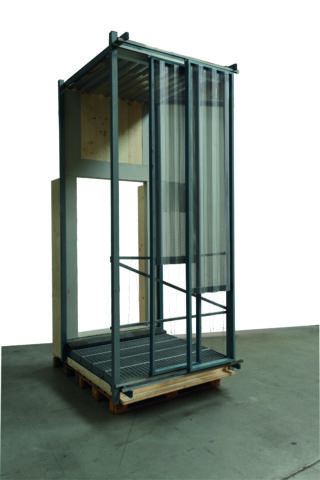
    The Materials and Structures Group of the Institut du patrimoine construit, d’architecture, de la construction et du territoire(inPACT) at the Haute école du paysage, d’ingénierie et d’architecture de Genève(HEPIA) is leading the Concrete Upcycling Techniques(CUT) research project. The project, led by Professor Maléna Bastien Masse, aims to integrate the reuse of concrete slabs into construction practice, as detailed in a press release. The aim is to reduce the industry’s CO2 footprint. The project is supported by the Swiss National Science Foundation(SNSF) and is being carried out in collaboration with Professor Corentin Fivet’s Structural Xploration Lab at the Swiss Federal Institute of Technology Lausanne(EPFL).

    The project aims to preserve concrete slabs during the demolition of buildings. The slabs are sawn up on site and then analysed by HEPIA researchers. The aim is to find out whether these slabs can be reused. The panels approved for reuse are then used in new buildings. The project is also investigating how they can be joined together during reuse. Advanced techniques and materials such as high-performance fibre-reinforced cementitious composite (CFUP) will be used.

    “The construction industry loves concrete. It is an indispensable, versatile, adaptable and cost-effective material, but it is also extremely harmful to the environment. One solution is obvious: reuse,” reads the press release. “By recovering and reusing components from existing buildings for new construction projects, concrete consumption is reduced, resulting in a lower CO2 footprint.”

    HEPIA is a Geneva-based university that specialises in education and research in the fields of engineering, architecture and the environment, particularly in the areas of materials and sustainable construction. The university is part of the University of Applied Sciences Western Switzerland(HES-SO).
  • A lack of clarity in legal requirements is holding back the circular economy

    A lack of clarity in legal requirements is holding back the circular economy

    The circular economy is still being held back by a number of obstacles. A report compiled by Basel-based ecos and Münsingen-based Rytec for the Building Department of the Canton of Zurich has identified 71 such barriers. Of these, 28 stem from legal requirements, whilst 43 arise only during the actual implementation of regulatory provisions. Often, they only emerge during the implementation of regulations.

    The construction and real estate sectors, with their high level of regulation, are particularly affected by regulatory barriers. Here, sustainability criteria are often not sufficiently binding or are given insufficient weight. Particularly when it comes to reuse, the scope for deviating from standards is not yet being utilised. Processes are still geared towards the linear rather than the circular economy.

    In retail and logistics, the infrastructure for returning used goods and incentives for developing the necessary logistics are often still lacking. Private collection initiatives are held back by unclear scope for implementation. The circular economy in commerce and industry suffers, among other things, from a lack of incentives for repairs and reuse.

    The report divides the barriers into four categories. The first three include those whose removal would have a significant impact. They are ranked according to the canton’s ability to influence them. The fourth category comprises measures with low impact and limited scope for influence.

    In the next steps, the canton intends to focus on the two categories of barriers whose removal would have a significant impact and over which the canton has considerable influence. This concerns 33 barriers. The barriers of least relevance will not be pursued further.

    The report is based on a survey of 122 people and workshops involving a total of 80 participants.

  • The city is exploring new approaches to reducing waste and resource consumption

    The city is exploring new approaches to reducing waste and resource consumption

    The Government Council of Basel-Stadt is currently reviewing a pilot project with the Bern-based start-up Pretty Good aimed at the more systematic collection and repair of used or only slightly damaged everyday items. This is evident from a responseto a motion tabled in the Grand Council.

    The cantonal government refers to pilot projects carried out in Bern and Zug with Pretty Good. Their results showed that such an approach brings environmental benefits and is economically viable. However, these projects are not yet financially self-sustaining. This would also be the case for a pilot project in Basel. The cantonal government will therefore seek to bring further investors on board.

    If a pilot project goes ahead in Basel, the local second-hand goods and repair sector is to be involved. The aim is to build up a strong network of repair shops and sales outlets.

    Waste Management Recycling in the City of Bern and Pretty Good launched a pilot project in 2023, under which functional and slightly damaged everyday items could be handed in at two of the city’s waste collection centres. Of these, 74 per cent were refurbished, and almost 84 per cent of those were subsequently sold. A large proportion of the items were electronic goods. The project was supported by the industry association Swico, the Berner Kantonalbankand the Burgergemeinde Bern.

    Pretty Good is organised both as an association based in Langnau i.E. and as a limited liability company based in Bern. Following the pilot in Bern, the project was expanded to other locations in the canton of Bern and in Zug.

    The Basel Cantonal Government responded to a motion tabled by SVP member of the Grand Council Beat K. Schaller and other members of the Grand Council.

  • Digital marketplace promotes circular economy in construction

    Digital marketplace promotes circular economy in construction

    Zirkular GmbH, based in Basel, has launched its new platform , rematerial. According to a press release, the new online DIY store will offer high-quality, reusable building components. For example, it will offer LED lights that have been reconditioned by specialist companies and now come with a guarantee. Components can also be reserved for a month or stored temporarily for up to 24 months for just-in-time deliveries. The building components collected from demolition sites are stored in a systematic manner.

    The rematerial platform can be used in conjunction with thePlanularplanning tool, which was also developed by Zirkular. In this module, architects, planners and builders can select the components required for their respective projects from a database. The path of the building material can be traced through the steps of source object, component, warehouse and target object.

    With both modules, Zirkular GmbH supports sustainable construction through circular economy, as demonstrated, for example, in construction projects such as the Lysbüchel Süd neighbourhood in Basel.

  • Conserving resources and extending building life cycles

    Conserving resources and extending building life cycles

    ETH professors Catherine De Wolf and Maria Conen are advocating a radical change in the construction industry. Instead of sacrificing old, energy-inefficient buildings, they advocate their preservation, renovation and expansion. In addition to ecological aspects, the focus is on social and cultural factors. Buildings harbor identities and histories, the preservation of which is essential for city life. Sustainability thus becomes a link between the environment, society and architecture.

    Reuse of building materials
    A good example is the reuse of glass elements from the external escalators of the Centre Pompidou in Paris as office partitions. The time-consuming dismantling, sorting and reintegration is cost-intensive, but offers enormous ecological benefits through significant CO₂ savings and the avoidance of waste.

    Building materials such as wood and concrete have great, previously untapped potential for reuse. While wood is often simply burned, concrete slabs could be cut out and used as wall elements. Although steel beams are recycled, they are usually melted down in an energy-intensive process instead of being reused in a stable form. The challenges lie in technical feasibility, costs and complex planning.

    Digitalization and material passports for optimization
    Digital tools such as material passports should make it easier to gain an overview of the origin, composition and useful life of components in the future. This will make reuse and dismantling more efficient and transparent. The harmonization of such standards is the subject of research in order to create binding solutions in the industry.

    Legal and standardization barriers
    Another stumbling block is today’s prevailing standards, which are primarily designed for new buildings and take insufficient account of conversions and the context of existing buildings. This makes renovations and work on existing buildings more difficult from an energy perspective. Laws and regulations must be made more flexible in future in order to promote circular construction methods.

    Circular economy as a pioneer for CO₂ reduction
    The construction industry is responsible for around 50 percent of resource depletion and considerable amounts of CO₂ emissions. The circular economy significantly reduces these by cutting material costs, waste and energy consumption through reuse and modular construction. Deconstructability through bolted or plugged rather than glued connections is key here.

    Challenges and future prospects
    The biggest challenge lies in the effort involved in dismantling and reusing materials and finding buyers for reused materials. The lack of comprehensive market structures makes widespread implementation difficult. This is where initiatives such as digital marketplaces and the involvement of specialized engineering expertise come in.

    Modular construction and flexible usage concepts, such as the use of less well-insulated buildings as museums, show viable prospects for the future. The young generation of students and researchers at ETH and other institutes in particular are driving innovation, which gives hope for a more sustainable construction industry.

  • CO2-neutral commercial building with ramp and roof garden

    CO2-neutral commercial building with ramp and roof garden

    Felix Partner Architektur und Design from Zurich have symbolically handed over the first dismantled components of the former Stewi headquarters in Winterthur-Grüze to their customers for recycling at the start of construction of their Green Spin project in Winterthur. According to a press release, most of the demolished parts will not end up in landfill, but will be reused in other buildings. The demolition concrete will also be shredded and used to produce recycled concrete.

    A service building for commercial tenants will be built on the same site. Companies that also focus on sustainability themselves are set to move in from late summer 2027.

    The building shell is planned as a CO2-neutral timber construction. A green inner courtyard and a roof garden will also be realised. Photovoltaic modules on the façades and wind turbines will supply green electricity, while geothermal energy will be used for heating. The building is to be certified in accordance with the international BREEAM sustainability standard.

    The centrepiece is a ramp that is up to six metres wide and rises gently around the inner courtyard. It provides access to the rental areas on all levels, including by bicycle. The commercial, office, production and sports space will be complemented by catering outlets and individual retail outlets.

    “I hope this project will inspire others to think big and act boldly,” said FDP National Councillor Andri Silberschmidt in his speech at the start of construction. Jens Andersen, Winterthur’s master builder, emphasised that the project “fits in perfectly with our strategy of sustainable urban development”.

  • Sustainable construction with reusable carbon concrete panels

    Sustainable construction with reusable carbon concrete panels

    The introduction of carbon fibre-reinforced concrete slabs by the ZHAW marks a significant advance in building construction. These panels, which are prefabricated and cut to size in the factory, can be quickly assembled on site. “Our carbon concrete construction system works in a similar way to Lego, but like a modern version of it, with customised components,” explains ZHAW researcher Josef Kurath. This system not only significantly shortens construction times, but also enables flexible adaptations and extensions to buildings.

    Sustainability and reuse
    A prime example of the application of this technology is the 120 square metre pavilion in Winterthur, which serves as an innovation laboratory for sustainable construction. Thanks to a new sharing model, around 90 per cent of the material used can be reused, which represents significant progress compared to conventional methods, where only around 10 per cent can be reused. In view of the fact that cement is responsible for eight per cent of global greenhouse gas emissions, this development represents an important contribution to reducing the ecological footprint.

    Carbon fibres at the heart of
    The CPC (Carbon Prestressed Concrete) concrete slabs are characterised by their durability and environmental friendliness. “Thanks to the new lightweight construction method in concrete, we reduce the CO2 footprint by a factor of two to four and save up to 75 per cent material compared to conventional construction methods,” explains Kurath. The combination of pre-stressed carbon fibres and concrete offers outstanding structural properties: carbon absorbs tensile forces, while concrete absorbs compressive and shear forces. As a result, no cracks occur under load and the panels retain their shape and load-bearing capacity despite their reduced thickness.

    Industrial production and future prospects
    The CPC slabs are manufactured by Holcim in the first plant in Germany, while the carbon fibres are produced in Switzerland, in future using bio-based carbon. “The developed panels will also be produced in this country in the future and the new construction system will be widely used in building construction – the Swiss market in particular is predestined for this,” says Kurath. Further research will focus on optimising the panels for sound insulation and fire protection as well as on earthquake-proof constructions. Innovative joining techniques enable almost endless horizontal planes without additional connecting elements, which further increases the flexibility and efficiency of construction.

  • Winners of the Bern Upcycling Challenge have been chosen

    Winners of the Bern Upcycling Challenge have been chosen

    The winners of the first Bern Upcycling Challenge have been announced: Scrimber, Mymyio and Second Life Recharger. The prize from the Department of Economics at Bern University of Applied Sciences and the Berner Kantonalbank development fund is worth a total of CHF 30,000. It was awarded at the 2nd User Forum in Bern.

    According to a press release, the competition aims to stimulate the transformation to a circular economy in the region and make an active contribution to the sustainable reorganisation of companies. At the same time, the aim is to position the greater Bern region as an important location for the circular economy.

    The jury voted the Scrimber project into first place. Its high-quality load-bearing construction products made of wood can replace concrete and steel and thus CO2 emissions in the construction industry. The wooden panels are made from low-grade wood assortments such as smaller, irregular log cross-sections or side timber from sawmills and waste wood. After an initial utilisation phase in a building, the parts can be reused.

    Second place went to Mymyio‘s upcycling furniture, which is made from discarded office materials, although this is not recognisable. Mymyio can even offer customised product and project solutions from stocks of valuable raw materials.

    In third place was the Second Life Battery Recharger project, a system that allows old e-bike batteries to be reused. It was developed by the training and adventure platform Swiss Bike Park Oberried, together with partners such as Gustoil, Petrusso, Thömus, Twinner, Stromer and the GVB Kulturstiftung.

  • Corentin Fivet becomes the new head of the Smart Living Labs

    Corentin Fivet becomes the new head of the Smart Living Labs

    Corentin Fivet will take over as head of the Smart Living Lab at the Fribourg branch of the Swiss Federal Institute of Technology Lausanne(EPFL) in spring. He has been a professor at EPFL since 2016 and, according to a press release, has developed pioneering methods for the reuse of concrete slabs, walls and beams made of wood or steel. The Smart Living Lab celebrates its tenth anniversary in 2024.

    When Fivet took up an assistant professorship at the EPFL in Fribourg, his field of research was still in its infancy, according to the press release. “It was easy to review the literature, as hardly anything had been published,” he is quoted as saying. At that time, the reuse of load-bearing structures was not as widespread as it is today. And the Smart Living Lab itself was also in its early stages. The Smart Living Lab is a joint initiative of three Swiss universities – EPFL, the School of Engineering and Architecture Fribourg(HEIA-FR) and the University of Fribourg.

    “We now have around a dozen research groups that have achieved numerous successes – including some that have been recognised internationally. My appointment as academic director of the centre marks the beginning of the next phase,” Fivet is quoted as saying.

    Fivet will take over as Academic Director of the Smart Living Lab on 1 April 2024 and will work alongside Martin Gonzenbach, who will continue as Operational Director. Fivet will continue to pursue the Smart Living Lab’s goal of serving as a catalyst for sustainability and well-being in the built environment, according to the press release. One of its first goals will be to expand the centre’s training courses for architects, civil engineers, construction managers and property managers.

  • Challenges are the mother of invention

    Challenges are the mother of invention

    Representative façade made of used materials
    The task: Simple, used everyday materials and components are to be used for the façade of a prominent administrative building at Zurich’s main railway station. At the same time, the client, who was actually represented at the workshop, wanted to use the replacement of the façade to give the property a representative expression.

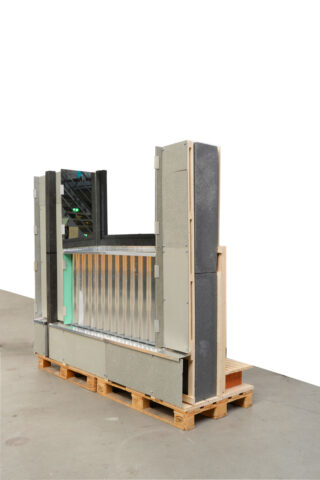
    The students are to create a design for the façade in small groups from the used material provided. They are to discuss and develop urban planning, constructive and atmospheric aspects. And finally, they are to build a section of the façade in original size. The students are supported and guided by ZHAW lecturers and international experts.

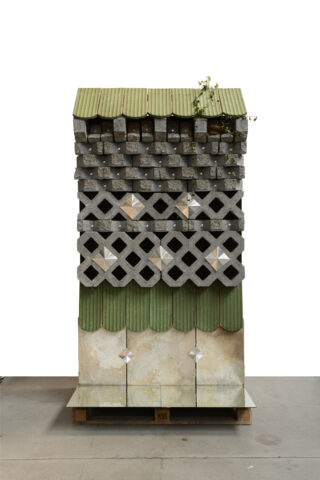
    The materials store contains various used or leftover components. Each group is given a different material as a starting point for their design idea: mirrors, steel grids, grass pavers, roof tiles, profiled sheets or glass-fibre reinforced plastic.

    Creative solutions
    The challenging task of giving the property an attractive and representative design expression with simple, used everyday materials leads to surprising results: The students reinterpret lawn paving stones into artistic stylistic elements.

    Turf stones are reused and transformed into artistic stylistic elements.

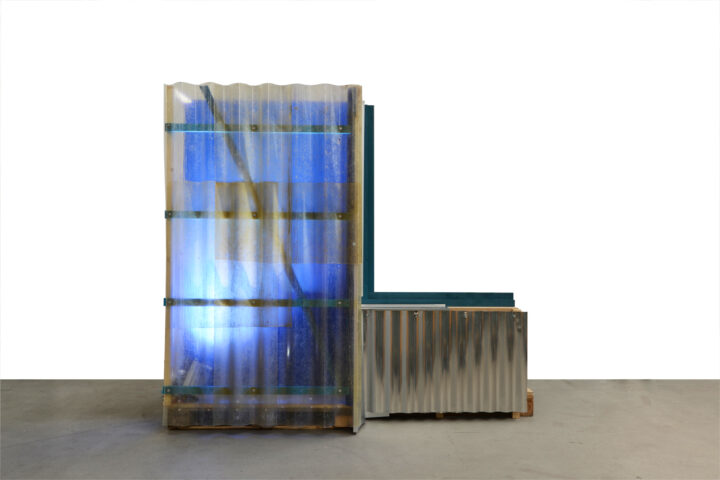
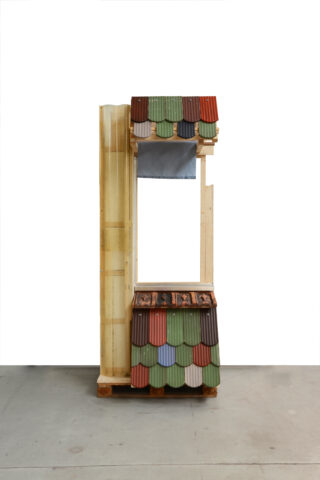
    They backlight plastic panels that simultaneously create a thermal buffer. They arrange roof tiles with varying reliefs and finishes to create animated surfaces.

    Backlit plastic panels create a thermally insulating buffer layer.

    In order to breathe homeliness into the sober administrative building, a group of students combines French balconies with galvanised stair treads, which also provide support for a green façade.

    Roof tiles with varying reliefs and paintwork become animated surfaces.

    Another group uses mirrors from the recently demolished Winterthur Cantonal Hospital as slanted window reveals, giving the façade a surreal, playful appearance.

    French balconies with galvanised stair treads provide cosiness and offer support for a green façade.

    Appreciation for the existing building stock
    The search for qualities in the seemingly worthless changes the students’ view of the existing building stock. Some students take the assignment so seriously that they question it: Is a replacement of the existing façade elements, as it is envisaged in reality, necessary at all? Can it be possible to preserve the existing façade and retrofit it for the new use? In their project, a group of students proposes to renovate the existing façade and to leave the scaffolding required for this on the building later – in order to create new living spaces in the outdoor area.

    Mirrors as diagonally inserted window reveals give the façade a surreal, playful appearance.

    Along the way, a realisation also grows during the workshop week. The architecture of reuse can indeed produce a variety of architectural attitudes and forms of expression – but they are all based on a common foundation: the respectful and careful treatment of existing buildings.

    The existing façade is to be renovated. The scaffolding used for this purpose will remain on the building after the renovation and create new living spaces in the exterior.
  • Baden launches pilot project for reuse in the building park

    Baden launches pilot project for reuse in the building park

    The city of Baden is the focus of a new research project on the reuse of building components at city level, according to a media release. The research programme Buildings and Cities of the Swiss Federal Office of Energy(SFOE) has been implemented with the participation of the Zurich-based company intep (Integrale Planung GmbH) and the Swiss Federal Institute of Technology Zurich(ETH) with Baden as a case study since January.

    The project will run for about two years and is largely financed by the SFOE. The city of Baden is contributing about a quarter of the project costs and the Federal Office for the Environment(FOEN) is also participating. “The city of Baden will benefit from tailor-made findings, especially for the city’s own construction projects and the ongoing revision of the land-use planning,” Markus Schneider, the city mayor, is quoted as saying.

    In the research project “Re-Use on the way to the net-zero target for buildings”, the focus is not on recycling building components, but on direct reuse in other buildings. For the project, component flows are being modelled, the environmental impact is being determined and the necessary framework conditions and measures for broad application are being systematically recorded, according to a statement from intep.

    “The CO2 emissions of a building over its entire service life – i.e. not only during operation but also during construction – are an important and still underestimated potential for the necessary reduction of CO2 emissions to net zero,” Nadja Lavanga, project manager at intep, is quoted as saying.

    Christian Vogler, energy coordinator of the city of Baden, names as reduction potentials “the preservation of existing buildings instead of new ones, circular and resource-saving construction methods, the reuse of building components and recycling”.

  • New double kindergartens made from re-use components

    New double kindergartens made from re-use components

    This semester, the architecture students of the 6th semester part-time are dealing with the question of how new double kindergartens can be created for the city of Basel from the building component catalogue of the Roche South Basel deconstruction project.

    An ambitious and experimental task and a pilot project
    After visiting the South Area on the Roche Campus in Basel, the students analyse the buildings that will soon be deconstructed for their resource potential for a future as double kindergartens. This is a pilot project, as there is currently no established industry for re-use parts. “New buildings” constructed from re-use resources are a step towards a circular economy in the construction industry. The 10-R cascade and Crade-to-Cradle are brought to the fore as theoretical foundations.

    For this ambitious and experimental task, the Department of Architecture, Wood and Construction at the Bern University of Applied Sciences is working with experts from the companies Gruner, CSD Ingenieure and Erne Holzbau. Every week, different speakers with knowledge and experience in the field give input and take part in the table discussions with the students.

    In partnership with the city of Basel and the Roche company, the students will develop proposals for the further use of the building components by the end of the semester. In the process, living spaces for children will be created by rejoining the building components.

    Re-use for Kidsdesign studio
    The “Re-Use for Kids” design studio is about finding ways to design and build new kindergartens from a catalogue of components from a deconstruction project. The aim is to find principles and parameters that enable a stringent architectural design when reusing building components. The effects of the reused parts on the structure, construction, spatial arrangement and atmosphere of the architecture are examined.

    Addressing the topic requires the inclusion of a wide variety of issues in the design process and is therefore an interdisciplinary task. Various external experts contribute their expertise in the design studio, thus creating a realistic teaching situation.

  • Steel profiles from demolished objects should live on

    Steel profiles from demolished objects should live on

    Representatives of the Swiss steel and construction industry have formed an alliance for the recycling of used steel profiles in construction. According to a press release, representatives of the Swiss Steel Construction Center , the Christoph Merian Foundation , the Federal Materials Testing and Research Institute ( Empa ), the Empa research and innovation building NEST and the Eawag water research institute met in situ at a round table in November , ZPF Ingenieure , Madaster and Sumami and decided to jointly promote the recyclability of steel profiles in Switzerland. The project team Purchasing Compass Recycling Management and the Metal suisse industry association were invited to the round table. The aim is to better understand the potential of steel profiles in the circular economy and to make it practicable.

    A car park in Basel belonging to the Christoph Merian Foundation that is being demolished is to serve as a prototype project. According to the announcement, the construction office in situ, which has already implemented projects in this context, is supporting this. It is now being investigated how the dismantling of the steel profiles in the parking garage can succeed, where the steel profiles are reinserted and where they can be stored in the meantime. Steel profiles are considered to be particularly recyclable because they can be expanded in their existing form and usually integrated directly into new buildings. There is no loss of material or quality and no energy is required for melting or reshaping.

    Through this energy saving, greenhouse gas emissions can be reduced directly during construction. The direct reuse of building materials without recycling represents the greatest lever in reducing emissions in the construction industry. In addition to steel profiles, concrete, facade elements, windows or doors can also be reused.

  • Adrian Amstutz is to become the top building material recycler

    Adrian Amstutz is to become the top building material recycler

    The board of directors of arv Baustoffrecycling Schweiz proposes Adrian Amstutz as new president to the general assembly. He justifies this in a press release with the experiences of Amstutz as the former owner of an architecture and construction management office, as mayor of Sigriswil BE and as SVP national and state council. Amstutz also chaired the central board of the ASTAG commercial vehicle association for twelve years.

    Amstutz is to succeed Thomas Merz. He resigned as president of the association in autumn after five years. Since then, Vice President Kurt Morgan has been running the President on an interim basis.

    The association was founded in 1990 and is based in Schlieren. He advocates the interests of recyclers of construction waste. The election of the new President is scheduled for the General Assembly on May 19.