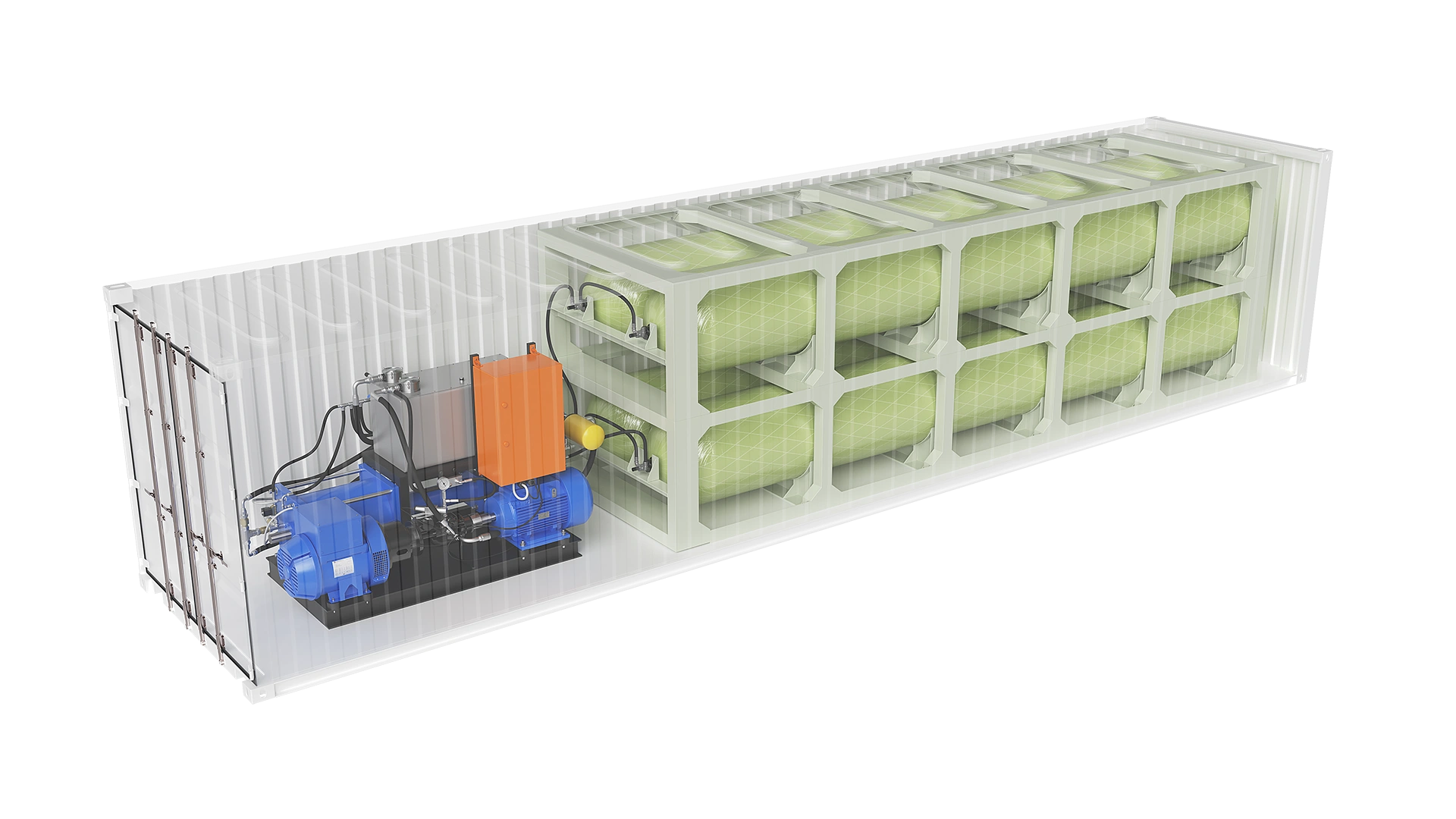
When wind and sun fail, reliable reserves are needed. Conventional battery systems reach their limits with large amounts of energy and long storage times. This is precisely where compressed air storage systems come in. They convert surplus energy into compressed air and store it in underground caverns for days, weeks or even months. When required, the air is expanded again and electricity is generated. The AirBattery and modernised CAES systems represent a turning point in storage technology.
Innovative combination of compressed air and water
The AirBattery uses salt caverns to store compressed air at up to 200 bar. The expansion of the air displaces water, which drives a turbine. A closed water circuit ensures high efficiency with low use of resources. Initial pilot projects show efficiencies of 47%, and the first industrial plant is due to be built in Germany in 2027/2028.
CAESwith over 70% efficiency
While older CAES systems were 40-55 %, new developments such as those at the North China Electric Power University show that thermal recovery and hybridisation can now achieve up to 70 %. This innovation makes CAES economically attractive for the first time, with electricity generation costs of between €55 and €120/MWh. At the same time, the consumption of raw materials is drastically reduced as no rare metals are required.
The potential is huge
In Europe alone, there are many suitable salt caverns with a storage potential of two thirds of annual electricity consumption. In Switzerland, granite formations, old fortresses and strategic cavities offer comparable opportunities. Utilising existing infrastructure makes CAES particularly sustainable and cost-efficient.
Cost-effectiveness and market potential
CAES scores with economies of scale and a long service life. Investments are particularly worthwhile for large systems with storage times of over 8 hours. The amortisation period is 6 to 11 years and the ROI can be up to 12 %. By 2030, 10-20% of global storage requirements could be covered by CAES, which corresponds to a market with a capacity of over 100 GW.
China shows what Europe can learn
China is demonstrating how targeted political control can advance storage technologies. Clear regulations, state subsidies and green credit lines are massively driving expansion there. A comparable framework is still lacking in Europe. In order to realise the potential, we need funding instruments that are open to all technologies, faster approvals and incentives for grid services.
Carbon footprint and sustainability
CAES achieves life cycle emissions of just 20-50 g CO₂/kWh, far below gas-fired power plants and often better than battery systems. Thanks to durable components, low space requirements and resource-saving design, CAES is becoming a building block for a climate-neutral energy future. The combination with power-to-gas or battery systems offers additional flexibility.
Compressed air storage systems are becoming a strategic success factor
AirBattery and modern CAES systems could become the backbone of tomorrow’s energy supply. Their ability to efficiently store renewable energy over long periods of time makes them a real alternative, both economically and ecologically. Now is the time for suppliers, municipal utilities and investors to realise pilot projects and create the regulatory conditions. The next few years will decide whether CAES will go from being a niche product to a system component of the energy transition.
