Tag: Wirtschaftspolitik

  • Federal government conducts consultation on location promotion

    Federal government conducts consultation on location promotion

    The Federal Council has opened a consultation process on the message on location promotion for the first time. According to a statement, it is set to run until 1 June 2026. The Federal Council is submitting five financing decisions to Parliament for the years 2028 to 2031, with a total volume of CHF 392.21 million. Location promotion is to be carried out through SME policy, tourism policy, regional policy, export promotion and location promotion.

    The focus is on three key areas of location promotion: reducing the administrative burden on SMEs through digitalisation, facilitating SMEs’ access to international markets and, finally, strengthening the regions economically. Among other things, the expansion of the EasyGov.swiss platform will create a marketplace for digital services provided by the federal government and the cantons. With regard to international markets, the federal government supports export-oriented companies with information, advice and the use of export risk insurance. In the area of regional location promotion, the federal government supports tourist destinations and economic projects in rural areas, mountain regions and border regions.

    Despite the high budget, planning shows a decline of 5.2 per cent compared with the previous period, taking into account the special Covid and recovery payments and the 2027 relief package.

  • Location promotion is being strategically realigned

    Location promotion is being strategically realigned

    The Lucerne Cantonal Council supports the further development of location promotion. According to a statement, it passed the corresponding bill during its January session and amended the law on economic promotion and regional policy. It now provides for a package of measures for location promotion worth around CHF 300 million per year.

    This is the canton’s response to the OECD minimum tax, which will require large international companies to pay more tax in future. According to an earlier press release explaining the motivation behind the package of measures and its contents, this means that the canton will lose its competitive advantage of low corporate income tax and fears that tax revenues and jobs could be lost.

    Accordingly, the measures now approved in favour of the economy focus on promoting innovation, improving the tax burden and framework conditions with regard to digitalisation, the development of commercial space, the availability of commercial and residential space, and a “customer-oriented” administration. The measures in favour of the population concentrate on improvements in the tax burden, work-life balance, culture and digitalisation.

    In addition, the Cantonal Council has decided that self-service shops without sales staff and with a maximum area of 30 square metres may be open daily from 5 a.m. to 10 p.m. A restriction to farm shops was rejected by an extremely narrow margin. Shops with at least four charging stations for electric vehicles, each with a minimum of 150 kilowatts and a simultaneous minimum total charging capacity of 300 kilowatts, are treated in the same way as petrol station shops. The SVP and SP announced a referendum against the proposal.

  • Lucerne invests 300 million in its location

    Lucerne invests 300 million in its location

    The starting point for the proposal is the concern that the previous locational advantage of low corporate profit taxes will be lost as a result of the OECD minimum taxation. International corporations will have to pay more tax in future, which means there is a risk that top taxpayers and jobs will move away. The adopted package is intended to cushion these effects and keep Lucerne attractive as a business location through other levers.

    The Cantonal Council has amended the law on economic development and regional policy for this purpose. An annual volume of measures of around CHF 300 million has now been anchored in favor of location promotion. The canton is thus creating a predictable framework for the targeted financing of strategic projects and structural improvements.

    Innovation, taxes, land, administration
    The measures in favor of the economy are concentrated on several axes. At the center is the promotion of innovation. This means supporting companies, projects and structures that increase value creation and future viability. This is complemented by an improvement in the tax burden in other areas in order to partially compensate for the loss of the profit tax advantage.

    Another focus is on the development and availability of commercial and residential space. Lucerne wants to ensure that sufficient suitable space is available for businesses, services and housing. Equally important is a “customer-oriented” administration. Processes should become faster, more transparent and more business-oriented so that investments do not fail due to bureaucratic hurdles. For the population, additional measures are aimed at easing the tax burden, improving work-life balance, culture and digitalization.

    New rules for micro-shops and shop-fronts
    The bill also includes changes to the retail sector. Self-service stores without sales staff with a maximum area of 30 square meters will be allowed to open daily from 5 a.m. to 10 p.m. in future. A restriction to farm stores was narrowly rejected. The regulation thus applies more broadly and facilitates new, automated store concepts.

    In addition, stores with fast charging stations will in some cases be treated in the same way as petrol station stores. Anyone who operates at least four charging stations with 150 kilowatts each and a simultaneous total charging capacity of at least 300 kilowatts can benefit from extended opening hours. In this way, the canton is supporting the expansion of e-mobility and linking charging infrastructure with local service offerings.

    Political controversy is inevitable
    The bill is politically controversial. The SVP and SP have announced a referendum. Both because of the fundamental direction of the package and because of the extended store opening hours and the location policy in favor of large companies. This means that the thrust of Lucerne’s location strategy is likely to be the subject of public debate.

    In practice, this means that companies, investors and municipalities will receive a clear signal that the canton is prepared to invest substantial funds in location development. However, whether and in what form the package of measures will definitely come into force will also depend on the political debate and a possible referendum.

  • Focus on Switzerland’s economic resilience

    Focus on Switzerland’s economic resilience

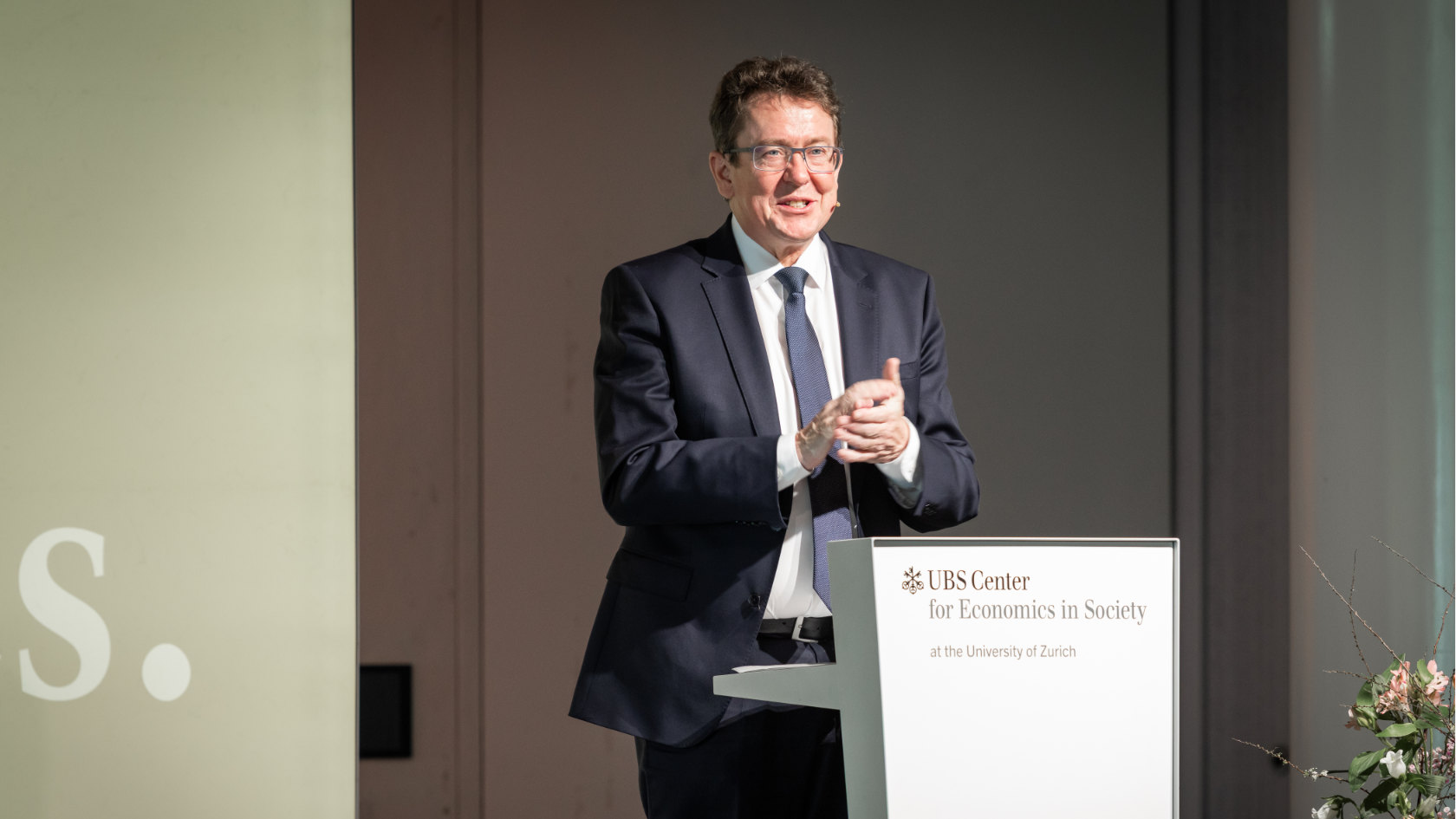
    Switzerland is facing new challenges, but its economic strength is based on clear success factors such as personal responsibility, decentralization, innovative strength and international networking. In his keynote speech, Minister of Economic Affairs Albert Rösti impressively emphasized these key points. Referring to historical roots and current risks, he made it clear that prosperity is not a sure-fire success. Instead of relying on statism, regulatory clarity and a return to proven principles of economic freedom are needed.

    Tariff shocks and negotiating skills
    State Secretary Helene Budliger Artieda provided insights into global economic negotiations and emphasized: “The latest US tariffs came as a surprise. But Switzerland remains capable of acting because it diversifies its trade relations broadly and actively maintains them.” Openness towards partners such as the EU, the USA and China is not arbitrary, but a strategic necessity. The resilience of the Swiss economy is based on this broad foundation and a clear view of geopolitical realities.

    Robust foundations, prudent restraint
    Several panels made it clear that Switzerland has a strong institutional framework, but must remain vigilant. Economist Gunther Schnabl and former CFO Serge Gaillard warned against softening the debt brake and urged fiscal discipline. At the same time, they praised the level of political debate in direct democracy, which enables broad participation in fundamental economic issues.

    Economic model between global players and SMEs
    Switzerland’s strength lies not only in multinational corporations, but also in regionally rooted SMEs. According to historian Tobias Straumann, this combination ensures innovative strength and stability. Representatives such as Suzanne Thoma (Sulzer) and Urs Furrer (SGV) called for practical solutions for securing skilled workers and fewer regulatory hurdles. The new basis for negotiations with the EU offers opportunities, but must be implemented wisely.

    Vigilance is not a contradiction to strength
    Switzerland has a strong foundation, but this requires care. Institutional stability, a high capacity for innovation, foreign trade openness and political sovereignty make the location fit for the future. The economic panel sends a clear signal: self-confidence yes, complacency no. If you want to strengthen Switzerland, you have to use the room for maneuver wisely instead of relying on supposed certainties.

  • Securing the supply of raw materials for the energy transition

    Securing the supply of raw materials for the energy transition

    Minerals and metals such as copper, lithium and rare earths are essential for energy transition technologies, including batteries, electromobility and renewable energies. However, increasing demand is being met by limited production locations, which is making supply more difficult due to geopolitical tensions and export restrictions. Consumer countries are responding with industrial policy measures and international cooperation to avoid bottlenecks.

    Switzerland’s special role
    Swiss industry mainly imports semi-finished products and components from the EU, which reduces its direct dependence on raw material producers. Nevertheless, Switzerland is not immune to global supply risks. The Federal Council has therefore developed measures to ensure a stable supply of raw materials in the long term.

    Options for action to ensure security of supply
    The Federal Council’s report identifies key measures. The foreign trade policy focuses on the expansion of bilateral trade agreements and increased dialogue with international partners, particularly the EU. At the same time, the focus is on sustainability through the diversification of supply sources, the promotion of the circular economy and sustainable procurement practices. In the area of research and innovation, the development of new recycling technologies and alternative materials is supported.

    In addition, close dialogue with industry is recommended in order to identify supply risks at an early stage and manage them in a targeted manner. Deepening relationships with political, economic and scientific partners should form the basis for a reliable supply of raw materials.

    Sustainable management and circular economy
    A key recommendation of the report is to promote the sustainable use of minerals and metals. The life cycle of raw materials should be given greater consideration, for example through recycling and strengthening the circular economy. These approaches not only contribute to security of supply, but also make an important contribution to environmental protection.

  • 62. Meeting of the EEA in the European Economic Area

    62. Meeting of the EEA in the European Economic Area

    The EEA Joint Parliamentary Committee serves as a platform for dialogue between the parliaments of the EEA/EFTA states (Norway, Iceland and Liechtenstein) and the EU. Switzerland, a member of EFTA but not of the EEA, plays an observer role on this committee. This enables the Swiss delegation to follow important developments in the EEA and actively participate in debates on foreign and economic policy issues.

    Focus of the talks
    The meeting will centre on current developments in the European Economic Area. In particular, it will focus on the functioning of the EEA Agreement, European security and competitiveness, as well as the priorities for EEA and Norwegian grants to reduce social and economic disparities. Another focus will be on relations between Switzerland and the European Union, on which the Swiss delegation will inform the Committee.

    Swiss delegation
    The EFTA/EU delegation is represented by National Councillor Thomas Aeschi (SVP, ZG) as Chairman, Councillor of States Damian Müller (FDP, LU) as Vice-Chairman and National Councillors Hans-Peter Portmann (FDP, ZH) and Nicolas Walder (Greens, GE).

    Significance for Switzerland
    Participation in the Committee enables Switzerland to keep abreast of European developments and maintain important contacts. Particularly in the areas of competitiveness and international cooperation, the observer role offers a valuable insight into topics that are also of central importance to Switzerland.

    The meeting in Oslo strengthens networking between Switzerland and the EEA states and the EU. Switzerland’s observer role emphasises the importance of the EEA for Swiss foreign and economic policy and enables it to participate in relevant debates.

  • Swiss economy facing global challenges

    Swiss economy facing global challenges

    Europe, including Switzerland, is lagging behind in terms of global economic growth, partly due to increasing bureaucratisation, which is slowing down innovation. Yu points out that technology giants based in the USA and China in particular, such as Google and Nvidia, contribute significantly to the economic growth of their regions. In contrast, Europe tends to lag behind in the digital transformation, which leads to a dangerous dependence on traditional industries.

    Although Switzerland has successful global market leaders in the pharmaceutical, banking and food industries, the increasing focus on compliance and regulations has fostered a risk-averse culture that prevents innovation, according to Yu. To counteract this, Swiss companies need to align themselves more closely with innovation centres such as Silicon Valley or the Chinese technology market.

    One concrete example of such an orientation is Novartis, which is expanding its research centre in the USA. Yu argues that although Switzerland is geographically located in Europe, its companies should think and act globally in order to remain competitive.

    For Swiss economic policy, this means making Switzerland a more attractive location for investment in start-ups and technology, reducing bureaucracy and not repeating the same mistakes as other countries. By diversifying and controlling risk in all markets, Swiss companies can strengthen their position and prevent a loss of prosperity.

  • Fabian Streiff becomes Head of the Office for Economic Affairs – Hans Rupp Head of the Office for Employment

    Fabian Streiff becomes Head of the Office for Economic Affairs – Hans Rupp Head of the Office for Employment

    In the coming years, the economic challenges will continue to increase. Competition among locations is intensifying, while the world of work is changing rapidly. The digital transformation, more flexible and location-independent working models, as well as the labour shortage pose major challenges for companies, the labour market and the entire economy. In order to be prepared for these in the best possible way, the existing economic and labour market policy competences in the currently broadly structured Office of Economic Affairs and Labour (AWA) will be strengthened organisationally. Therefore, at the request of the Department of Economic Affairs, the Government Council decided last year to transfer the AWA into two independent offices as of 1 January 2024: an Office for Economic Affairs (AWI) and an Office for Labour (AFA).

    The AWI will be responsible for location promotion, economic policy, work permits, working conditions, housing promotion and national economic supply. The AFA will be responsible for the labour market, unemployment insurance and the unemployment fund.

    Hans Rupp with many years of operational and strategic leadership
    Hans Rupp will be the new head of the Labour Office. After studying at the University of Zurich, the 57-year-old gained professional experience in various organisations and companies. Most recently he was managing director of building and housing cooperatives and in the real estate sector. In addition to these operational tasks, Hans Rupp has held various mandates in the area of strategic management. He has many years of experience in operational and strategic management. Among other degrees, Hans Rupp holds an Executive MBA from the University of Zurich.

    Fabian Streiff: From Head of Location Promotion to Head of the Office of Economic Affairs
    Dr. Fabian Streiff will be Head of the Office of Economic Affairs. After completing his studies in geography and economics at the University of Zurich, the 39-year-old first worked as a consultant in the fields of strategy development, sustainability issues and economic promotion before earning his doctorate in economic geography and regional development at the University of Bern. He then headed up location promotion in Basel-Stadt before becoming Director of Healthcare Innovation / DayOne at BaselArea.swiss. Since December 2020, Dr Fabian Streiff has been head of location promotion for the Canton of Zurich at the Office of Economic Affairs and Employment.

    Dr Fabian Streiff and Hans Rupp will take up their posts on 1 January 2024.

    Source: zh.ch

  • Canton of Zurich to get new law on location promotion

    Canton of Zurich to get new law on location promotion

    The Government Council of the Canton of Zurich wants to strengthen the competitiveness of the business and innovation location with a new Location Promotion and Business Relief Act. The essential goals and principles of location promotion are anchored in the law. In addition, an already existing regulation for the administrative relief of companies will be integrated.

    The corresponding bill was drafted by the Department of Economic Affairs and passed by the cantonal government at its meeting in May for the attention of the cantonal council, the cantonal state chancellery informs in a statement. “Our goal is to further develop the Canton of Zurich as an economically, ecologically and socially sustainable location for business, research and innovation with a variety of attractive jobs,” Director of Economic Affairs Carmen Walker Späh is quoted as saying. The new law should make it possible to take measures adapted to economic developments.

    In future, the consequences of regulations are to be examined both for companies and for the business location as a whole. Responsibility for the regulatory impact assessment is transferred to the Directorate of Economic Affairs.

    The new law also contains a provision that enables the canton to quickly participate in federal programmes to support the economy. “With the new law, we will be able to decide as quickly as possible on financial aid to companies in the event of a possible future crisis with the participation of parliament,” Walker Späh explains.

  • Mountain cantons insist on imputed rental value

    Mountain cantons insist on imputed rental value

    The intergovernmental conference of the mountain cantons of Uri, Obwalden, Nidwalden, Glarus, Appenzell Innerrhoden, Graubünden, Ticino and Valais (RKGK) is against the Federal Council’s plan to abolish imputed rental value for second homes as well. It would result in a loss of income of around CHF 200 million a year, explains the RKGK in a press release. On the other hand, the RKGK has no objections to the planned abolition of the imputed rental value for main apartments.

    The mountain cantons have already been hit by the Second Home Act of decisive economic effects, writes the RKGK. In contrast to the Federal Council, the mountain cantons see further need for action here. Specifically, provisions are to be changed, “the application of which leads to objectively negative results or leaves insufficient scope for innovative solutions”.

    The RKGK is also calling for improvements to the message passed by the Federal Council on electricity supply with renewable energies. Among other things, the mountain cantons want to have extended the current maximum water rate. With electricity prices rising as a result of climate policy, the electricity companies are still “in a position to pay today’s water rates without any problems,” argues the RKGK.

    Furthermore, the RKGK criticizes the approach to the Postal Organization Act: Here the Federal Council has pushed ahead with a message without waiting for the results of an expert commission it has set up itself. However, the responsible commission in the Council of States has postponed its deliberations until the results have been presented. “Against this background, it cannot be tolerated in any way if Swiss Post continues to dismantle its services in the run-up to the political discussion,” says the RKGK.

  • Vial industrial park in Domat / Ems is expanded

    Vial industrial park in Domat / Ems is expanded

    The former sawmill area in Domat / Ems has been expanded into an industrial park since 2017. Hamilton was the first company to settle there in 2017. The corner parcel in the northeast of the area is now to be sold to LJH Immo AG, the government of the canton of Graubünden informs in a message . It has already approved the draft of a corresponding sales contract for the Domat / Ems community for an area of 6,477 square meters.

    LJH Immo AG is preparing the plot for the settlement of a total of four companies. The real estate company will invest between CHF 12 million and CHF 15 million for this, according to the announcement. According to her, the companies not named are four export-oriented companies "which develop profitable, innovative high-tech products or systems".

    By settling on this parcel, the workforce of the four companies is to be increased from 85 to 140 in the medium to long term, thus creating around 55 full-time positions. "The direct and indirect added value generated by the project is of great economic importance for the canton of Graubünden," emphasizes the government in the communication.

  • Appenzell Ausserrhoden is the most liberal canton in Switzerland

    Appenzell Ausserrhoden is the most liberal canton in Switzerland

    In this year's edition of the Avenir Suisse Freedom Index, a total of 33 civil and economic indicators were evaluated, the think tank informs in the presentation of the ranking of the Swiss cantons. Liechtenstein, which was included for the first time this year, made it from scratch to the top spot. Liechtenstein was able to collect 70 points across all indicators.

    The canton of Appenzell Ausserrhoden has only one point less. Avenir Suisse wrote in a press release on the current Freedom Index that he was “overshadowed by long-time front runners Aargau and last year's winner Schwyz”. This year, however, "he succeeded in making his breakthrough to the top of the Swiss cantons". The canton was able to score points in terms of both economic and civil liberties. In the presentation, the analysts highlight, among other things, the low tax burden of an average family, the decentralization and liberal solutions in homeschooling.

    With a rise above eight ranks to eleventh place, the canton of St.Gallen has made the biggest leap forward year-on-year, the analysts explain in the presentation. St.Gallen has made progress in particular with regard to public safety, and the canton has once again achieved top marks with the Public Information Act and the debt brake. As a shortcoming, the analysts chalk the canton to a burqa ban and a mandatory church tax for companies.

    The sixth-placed canton of Jura has the best values for civil liberties in the freedom ranking. Last year's front runner, Schwyz, was able to maintain its top position in Switzerland this year, at least in terms of economic indicators. Overall, the canton of Schwyz achieved fourth place in the freedom index this year.

  • Discounts for research strengthen locations

    Discounts for research strengthen locations

    "With the Swiss tax reform and AHV financing (TRAF), instruments for tax relief for research and development activities were introduced at the beginning of 2020," explains BAK Economics in a press release . The economic research institute has examined the effects of these concessions on the tax burden of companies in the individual cantons.

    According to the results, they reduce the effective average tax burden of a company on the Swiss average from 13.5 to 12.2 percent, explains BAK Economics. Very research-intensive companies could even reduce their exposure by an average of 4.3 percentage points to 9.2 percent. For the cantons, the benefits for spending on research and development (R&D) represented an internationally accepted substitute for the tax privileges abolished by the TRAF in addition to promoting innovation.

    With the flexible implementation of the requirements by the cantons, the ranking of the cantons in the tax burden for very research-intensive companies has shifted, explains BAK Economics. The low-tax cantons of Nidwalden and Obwalden continued to occupy the top positions here. "However, some high-tax cantons with a generous design of the R&D instruments can significantly reduce their burden," writes BAK Economics.

    Specifically, “the bottom three in ordinary taxation”, Bern, Zurich and Aargau, “for companies with very high R&D intensity towards the middle of the ranking”. The canton of Geneva has the highest average tax burden for companies with high R&D expenditure.

  • WIPO Limmattal will not take place again until 2021

    WIPO Limmattal will not take place again until 2021

    The Organizing Committee (OC) of the Limmattal Economic Podium has decided to cancel the next event planned for November 2020, according to a media release. The reasons are the "uncertain development of the coronavirus pandemic, the lack of planning security and concern for the health of the participants". The decision was made together with the main sponsors AXA , UBS Switzerland AG , energie360 ° , maneth stiefel AG and the Umwelt Arena Schweiz .

    “We ran through all the scenarios. The decision was anything but easy for us, "OC President Fredi Pahr is quoted in the message. In it, WIPO also informs that the organizers had consulted with the sponsors and partners and that the majority of those questioned were in favor of rejection. “WIPO lives from networking – keeping your distance is difficult. We very much regret the cancellation, but the health of our participants has top priority, ”says Pahr.

    The next WIPO event will therefore take place in November 2021. The exact date should be set in the coming days. The program planned for 2020 and with it the topic of "Limitless" will remain topical in the coming year. “We hope that we can win Federal Councilor Guy Parmelin again for the keynote. The clarifications are in progress ”, informs the WIPO, which was founded and is being carried out by the three patronage associations IHV Industrie- und Handelsverein Dietikon , Schlieren Chamber of Commerce ( WKS ) and the Association for Industry, Services and Trade Spreitenbach ( IDH ).