Tag: Wohnen

  • How the Wolf site in Basel is becoming a residential neighbourhood

    How the Wolf site in Basel is becoming a residential neighbourhood

    The relocation of freight handling to the harbour area freed up a 16-hectare site near Basel SBB station. SBB has been pursuing the vision of a mixed neighbourhood here for years, combining living, working and leisure. The urban development plan is based on a design by Christ & Gantenbein and EM2N. The central element is a large courtyard that stretches from east to west, shields against noise and links public and private uses as a green boulevard.

    Two faces “Janusproject
    The Paris-based firm Experience, together with M-AP Architects from Lausanne, won the competition for the MF02 construction site. Their “Janus” project responds to the contrasts between the railway side and the inner courtyard with two architectural languages.

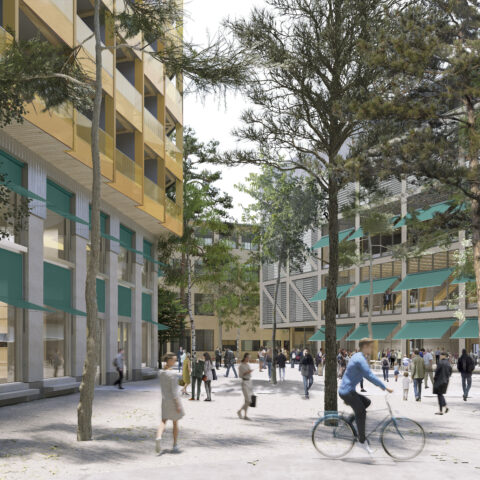
    A horizontal ribbon façade with striking concrete frames stretches towards the track side, conveying a powerful image to passing trains. Towards the courtyard, a finely structured façade with staggered balconies and greenish decorated surfaces appears.
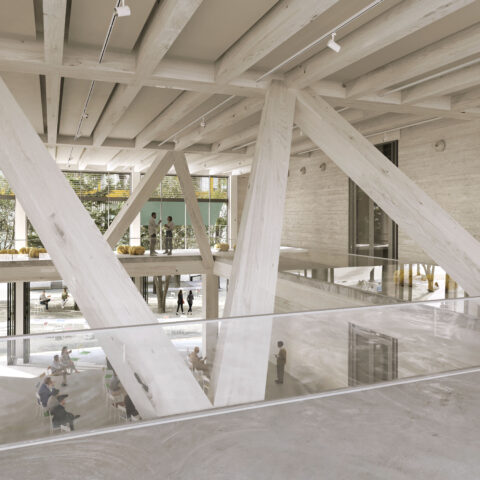
    The construction method follows a hybrid approach of concrete skeleton and timber construction. The floor plans are compactly organised, with a clear separation between bedrooms, wet rooms and spacious living areas. Only the lack of privacy in the ground-floor flats was criticised.

    Noise protection as a design element “Binariaproject
    The “Binaria” project by Basel-based ARGE Parabase and Confirm won the competition for the MF03 construction site. It counters the street noise with a robust north façade made of reused trapezoidal sheet metal and protruding acoustic elements. In contrast, a transparent, green glass façade with balconies and plant troughs opens up to the courtyard side.
    The multi-storey passageway connecting the courtyard and the street is particularly striking. The circular ventilation grille made of sound-absorbing panels makes a strong architectural statement here. Inside, linear floor plans allow for flexible living concepts from 2.5 to 5.5-room flats. Sustainability is characterised by reused beams, recycled concrete and re-used wood.

    Pilot character with high standards
    Both winning projects pursue innovative approaches to noise protection, the flexibility of the flat layouts and the use of recycled materials. The roofs are used for photovoltaics and rainwater management, the façades are partially planted or fitted with integrated solar technology. Energy is generated from renewable sources, while shading and evaporation provide thermal insulation in summer. Special attention is paid to reversible construction. Constructions are to be screwed together instead of glued in order to facilitate subsequent reutilisation or material cycles.

    Milestones and prospects
    The new buildings in the west of the site will be realised in the first stage, with construction scheduled to begin in 2028. A second stage with a city logistics hub and additional uses will follow from 2031. Even before completion, SBB will open the site for interim use. The listed 2,000 m² railway hall will be used for sports activities, for example. The Wolf site will thus become a pilot project for urban housing construction that answers questions about noise protection, sustainability and socially mixed housing on a large scale. For Basel, this is not just an urban planning experiment, but a decisive step towards more affordable living space and a higher quality of urban life.
  • Energy location with future potential

    Energy location with future potential

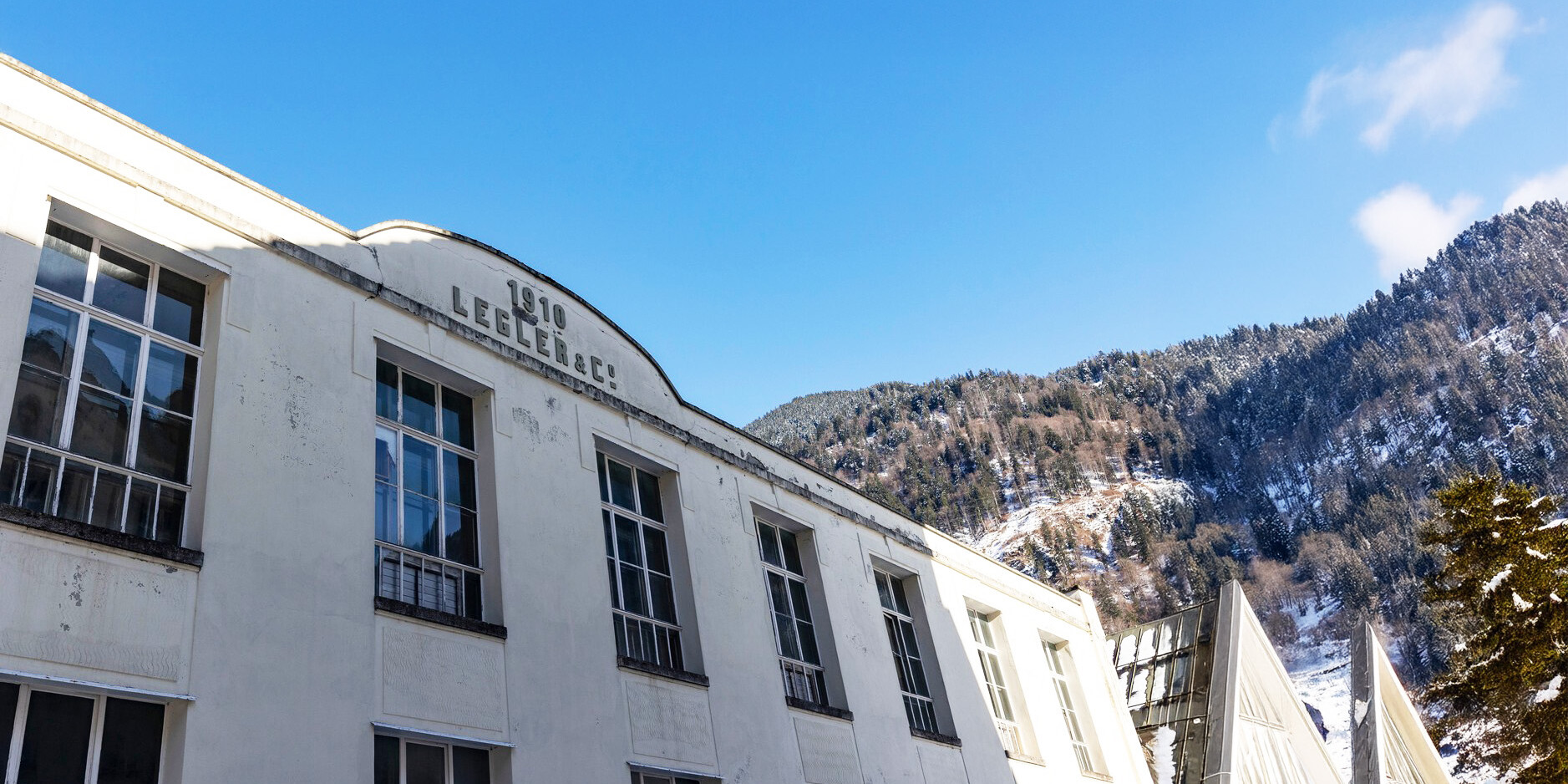
    With the purchase of the former Legler site by Hochdruckkraftwerk Diesbach AG and the simultaneous participation of the municipality of Glarus Süd, a new chapter has begun for the traditional factory site in Glarnerland. The operator of the local hydroelectric power plant has secured the site, including the power plant centre. At the same time, the municipality is acquiring agricultural land from the previous owner and will become the largest shareholder with a 40% stake.

    Energy meets site development
    The acquisition not only serves to preserve the historic power plant, but also opens up new opportunities for long-term site development. “We can offer areas ranging from 50 to several 1,000 square metres,” says Chairman of the Board of Directors Weber-Thedy.

    The municipality of Glarus Süd has secured two seats on the Board of Directors and an important land reserve of almost 30,000 square metres of agricultural land, which is earmarked for replacement measures or ecological compensation areas. The municipality is thus creating space for future developments.

    Long-term perspective with interim utilisation
    The potential of the Legler site is undisputed, but a new use takes time and requires careful planning. The aim is a mixed-use development with residential and office space that fits in with the landscape and the municipality. The first steps towards realisation are not expected before the next ten years.
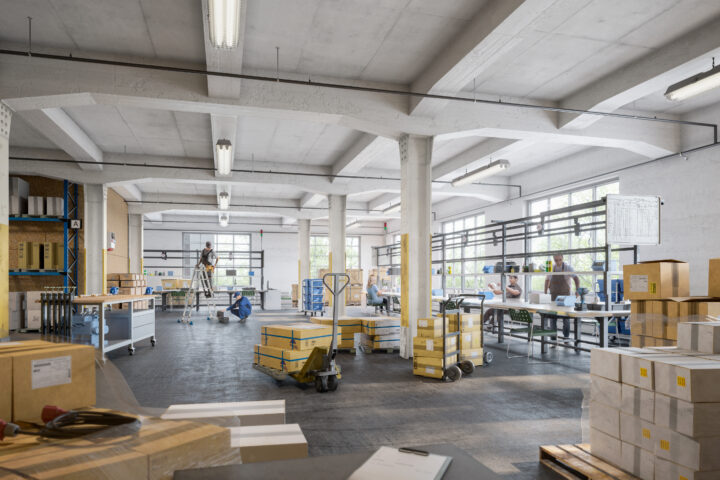
    Until then, the site will be put to sensible interim use. The large halls will be rented out as storage space. They can be divided up flexibly, even if they are only suitable for certain purposes due to structural restrictions.

    Sustainability as a guiding principle
    The high-pressure power plant is focussing on environmentally friendly energy production and will renovate the plant to the latest standards in 2025. Earlier discussions about the expansion were postponed in favour of a sensitive approach to the landscape, but the roar of the Diesbach Falls is to be preserved.

    A boost for the Glarus region
    The acquisition of the Legler site is more than just a change of ownership. It is an example of forward-looking site development, supported by local energy production, public participation and a long-term perspective. The municipality of Glarus Süd is actively committed to the development of the site and at the same time minimises the risk of a prominent property falling into disrepair.

    The combination of energy infrastructure, property development and public involvement makes the project a beacon for the region and a role model for comparable sites in Switzerland.

  • Affordable living in Zug

    Affordable living in Zug

    The canton of Zug and the city of Zug suffer even more than other cantons and cities from a lack of living space. The canton of Zug has the lowest vacancy rate in the country at 0.2% for the fourth year in a row. The lack of supply and the persistently high demand are leading to strong competition for the few advertised rental flats: the re-letting period is record-breakingly short. There are plenty of affluent tenants moving in and out who are prepared to pay ever higher rents¹.

    Because asking rents are now 50% higher than the Swiss average, complaints that rental flats are no longer affordable have spread far into the middle classes². Even those with normal household incomes who want to move or relocate to the canton have little chance of accessing the housing on offer.

    In this context, the question arises as to what profit-orientated owners who have or would like to develop housing stock in the canton and city of Zug can contribute to the provision of housing for broad sections of the population.

    How should affordable housing be defined?
    The first question is how “affordable” housing should be defined. There is an object-orientated, a market-orientated and a target group-orientated approach³. Affordable housing can be defined as housing rents that are calculated using the maximum fixed investment costs for a residential property. For this calculation to work for yield-orientated owners, a consensus is needed on what constitutes a sensible limit for investment costs. The market-oriented approach categorises low-priced residential rents in certain quantiles of market rents. This requires a consensus on which quantiles are affordable. Finally, affordable housing rents are defined as those that are financially viable for tenants. This requires a consensus that households should not spend more than a third of their gross income – or more generously, their taxable income – on rent, for example.

    Room for manoeuvre via the subject-oriented approach
    The approach based on financial affordability is the most meaningful for a broad-based housing supply. Unlike the approach based on investment costs, this approach recognises that many people in the canton of Zug earn more than in other cantons and can therefore afford higher rents (Fig. 1). However, unlike the approach using the quantiles of market rents, it is not based on the willingness to pay of those moving in and out, but on the real income of the population. This approach helps to target the needs of specific income groups.

    An affordable flat for a person from the lower middle class living alone, who earns between 70 and 100% of the median income, should therefore cost between CHF 1,400 and 1,900 in the city of Zug. How much living space is offered for the price is decided by the provider based on his assessment of the marketability of a flat. Because affordability is based on the unit price of the flat and not the price per square metre, yield-oriented investors have more leeway to integrate affordable housing into their profitability calculations.

    Optimising the distribution of existing affordable housing
    Building flats takes a long time and is often associated with uncertain planning processes. Owners and investors are also not free to decide where and how much additional living space they want to realise. Owners have direct options for action with their portfolio: they can contribute to supplying the wider population if they optimise the distribution of their vacant rental flats. Every change of tenant offers the opportunity to consider the most suitable tenant in line with the “best owner principle”. Owners can instruct lettings teams to maximise the affordability of rental properties that are affordable to the middle class and choose the tenant who can least afford the property – assuming a full salary, for example. Letting teams simply need a matrix that shows them the maximum rental prices affordable for the middle class (or the targeted income group) for each number of rooms. If a vacant flat in the corresponding price range becomes available, the rule would apply.

    Conclusion
    In order to ease the situation in the housing market, the lengthy tasks of reducing barriers to housing construction and developing a cross-party understanding of how affordable housing is defined and how its provision should be regulated must be tackled. In the meantime, yield-orientated owners can make a contribution by approaching the provision of affordable housing with a subject-orientated approach that fits into their market logic. In doing so, they also remain fair to the legitimate interests of their direct stakeholders.

  • The former cantonal hospital becomes an urban oasis

    The former cantonal hospital becomes an urban oasis

    The winning project by Credit Suisse Investment Foundation and HRS Real Estate AG was selected as part of a two-stage competition process. It combines public space, commerce, gastronomy and various forms of housing to create a neighbourhood that will be lively around the clock.

    Living, working and recreation combined
    The development plan allows for a balanced mix of uses, making the neighbourhood attractive for different target groups. There are plans for 272 flats, 50% of which will be affordable, as well as a boutique hotel in the listed south wing of the old hospital. Additional areas for catering, commerce and public services will create a diverse offering. The “Süd-See Hub” construction area in particular is geared towards public uses and is set to become a popular meeting place.

    Open space design takes centre stage
    The “Süd-See Zug – für üs alli” concept focuses on open spaces to make the neighbourhood more attractive. The “Stadthof” as a central square opens up to the lake and connects the old town with the water. A public roof garden, green courtyards and squares offer additional space for recreation and quality of stay. The lakeside terrace and the park promote biodiversity and create a connection to nature.

    A well thought-out process
    The detailed development phase begins once the building lease has been signed. The Credit Suisse Investment Foundation, together with HRS Real Estate AG, will assume responsibility for the realisation of the architectural competition. This exciting project illustrates how a historic site can be transformed into a lively and inviting environment through innovative solutions and planning. The transformation of the former Zug Cantonal Hospital will not only enrich the architectural landscape of the city, but will also make an essential contribution to the quality of life of the population and further strengthen Zug’s position as a sought-after place to live and work.

  • “Vision 2040 “AROVA HALLEN in Flurlingen

    “Vision 2040 “AROVA HALLEN in Flurlingen

    One step on a long journey has been taken: all those involved in the consultation process have signed the utilisation and development concept (NEK) for the AROVA HALLEN site. The Cantonal Office for Spatial Development ARE accompanied the upstream informal process in an advisory capacity without a signature. This means that the planning realisation can be addressed and discussed.

    Culturally unique and economically viable
    The AROVA HALLEN site is currently registered in the regional structure plan as a workplace area and is clearly differentiated from others by its historic building fabric. This represents both an obligation and an opportunity. The aim of the NEK is to put the site on a sustainable and economically viable footing and thus provide a forward-looking response to the challenges of spatial development in the Weinland region.

    Goals and visions for a mixed neighbourhood
    The main objective of the NEK is to maintain and strengthen the location as a place to work and to value the architectural heritage. The plan is for high-quality internal development that brings living and working closer together. “Vision 2040” envisages the creation of around 250 new flats by 2040 without reducing the existing 400 jobs. The focus is on modern forms of living and working as well as a lively neighbourhood with moderate traffic, complementary specialist shops and restaurants.

    Working and living in harmony
    The NEK thus follows the idea of mixed utilisation – living and working are moving closer together. Due to the historic building fabric, the site is particularly suitable for moderately disruptive businesses and services. The “Vision 2040” target image shows how the site can be developed into a modern business park that reduces mutual emissions and creates a lively neighbourhood.

    Current developments and plans
    In addition to the long-term goals, there are numerous current measures to strengthen the image and identity of the site. By focussing on the preferences of potential tenants, additional space has already been let. Interim uses and temporary events are also planned for the future. Following the fire in the beautiful WERKHALLE, the damage was repaired and a meeting point for tenants and their customers is to be created on the ground floor.

    Coordination and information
    The AROVA HALLEN utilisation and development concept is closely coordinated with the settlement development strategy of the municipality of Flurlingen. Further information and the final report can be downloaded at www.arovahallen.ch.

  • Hot months, hot heads: disputes between neighbours

    Hot months, hot heads: disputes between neighbours

    Between March and June, there are particularly many crackling noises in the neighbourhood. According to Alexandra Pestalozzi, legal expert at AXA-ARAG, complaints about neighbours increase in the warmer months when there are a lot of people outside. Construction projects, noisy animals and unkempt gardens are the most frequent triggers for conflicts.

    In 2023, AXA-ARAG received 0.7 percent fewer reports of neighbour disputes than in the previous year. A decrease of around four per cent was also recorded in the first six months of 2024. Despite this decrease, disputes over construction projects remain a central point of conflict, accounting for around one fifth of all reported cases.

    Consideration and communication are key
    The summer months bring many challenges: noise emissions from construction projects or noisy animals such as dogs and cockerels often lead to disputes. In such cases, Alexandra Pestalozzi recommends first seeking a discussion with the neighbour and, if necessary, involving the administration or a legal advisor.

    Watering plants can also lead to trouble. Excessive watering can lead to damage to the neighbour’s balcony or building. In such cases, the duty of care and consideration applies, both under tenancy law and under neighbouring law. Respectful behaviour and clear agreements can avoid many conflicts.

    Barbecuing on the balcony and in the garden
    Barbecuing on the balcony or in the garden is generally permitted, but can also lead to disagreements. Alexandra Pestalozzi points out that certain types of barbecues may be prescribed in rented flats and that the house rules and tenancy agreement should be checked in advance. A general ban on barbecuing by neighbours is not possible, but here too a discussion should be sought in the event of conflicts.

    Procedure in the event of a conflict
    In the case of planned construction or planting projects, it is advisable to talk to the neighbours in advance in order to avoid potential conflicts. Should disputes nevertheless arise, Pestalozzi advises discussing them over a coffee and looking for solutions together. If this is not enough, a neutral third party, the administration or mediation can be called in. In some cases, it may also be necessary to involve a legal adviser.

    In conclusion, Alexandra Pestalozzi emphasises the importance of communication and consideration in order to ensure harmonious coexistence in the neighbourhood. Respectful interaction and adherence to common rules make a significant contribution to minimising conflicts and promoting a peaceful neighbourhood.

  • Swiss birth rate at historic low

    Swiss birth rate at historic low

    The Federal Statistical Office has published the figures on natural population movements in Switzerland for 2023. The number of births reached a historic low. Between 2021 and 2023, the number of live births fell by more than 10 % to 80,024 births. Natural population growth amounted to just 8,200 people, around half the average of the last ten years. The total fertility rate reached 1.33 – an unprecedented figure in Switzerland.

    Birth trends: detailed analysis
    The decline affects both children of Swiss and foreign nationality. The births of Swiss children fell by 8 %, while the births of children of foreign nationality fell by 5 %. The number of third children fell particularly sharply (over 11%). The decline mainly affects younger mothers: the drop was over 30% for teenagers and women under 25, while women over 45 gave birth to more children.

    Causes of the decline in the birth rate
    The causes of the decline in the birth rate in Switzerland are multi-layered and complex. One major factor is individualisation and the associated changes in lifestyles. More and more people are turning away from traditional family models and looking for meaning and fulfilment outside of parenthood.

    Economic costs also play a significant role. High housing costs, childcare expenses and opportunity costs resulting from loss of income are a burden for many families. These financial burdens make it difficult for many couples to decide in favour of having children.

    Another important aspect is the housing crisis. The shortage of affordable housing makes it difficult for young families to find suitable accommodation, which is an additional obstacle to starting a family.

    Geopolitical uncertainties and so-called eco-anxiety are also contributing to the decline in birth rates. Many people are worried about the future and have ecological concerns that negatively influence their decision to have children.

    Finally, family policy also plays a role. In an international comparison, Switzerland offers less generous family support. Other countries, such as France, support families more strongly and thus also promote the birth rate.

    A decline in the birth rate has a significant impact
    The decline in the birth rate could have a significant impact on various areas. One area particularly affected is the labour market. The existing labour shortage could become even more acute, making Switzerland more dependent on immigration to meet the demand for labour.

    The social security system could also suffer from the decline in the birth rate. Rising life expectancy coupled with falling birth rates could lead to considerable imbalances in the social security systems. This could jeopardise the financial stability of pension and healthcare systems in the long term.

    The property market would also be affected. Demand for smaller homes could increase, while large, remote houses could become less attractive. This would lead to a shift in demand, with centrally located and easily accessible small flats being favoured. At the same time, the need for public infrastructure, such as schools, could decrease, while the demand for childcare facilities may increase to better support the needs of working parents.

    Rebound in births in 2024?
    The initial figures on births in 2024 do not suggest a change in trend. Between January and April 2024, 24,300 babies were born, a stable figure compared to 2023. It is likely that birth rates will stabilise at this low level.

    The decline in the birth rate in Switzerland is a complex phenomenon with far-reaching consequences. Comprehensive measures and forward-looking planning are required to meet the challenges. This affects not only the economy, but also social cohesion and the organisation of our living spaces.

  • Affordability of housing in Switzerland

    Affordability of housing in Switzerland

    The affordability of housing is currently at the centre of political and public attention. According to the Federal Statistical Office, prices for the “Housing and energy” category of the national consumer price index rose by an annual average of 9.3 per cent between 2020 and 2023, well above the general inflation rate of 5.6 per cent. This development has intensified political calls for more affordable housing and greater support for tenant households.

    Stable trend in affordability
    The analysis of the affordability of housing costs – i.e. the ratio of housing costs to gross income – shows a stable trend over the last 20 years. Despite rising rents and property prices in real terms, the average burden ratio for Switzerland as a whole has remained constant at around 20 per cent of gross income, well below the limit of 30 per cent that is considered affordable. However, a breakdown of the burden ratio according to various household characteristics indicates a certain deterioration in affordability for mobile households – i.e. households that have recently moved into a flat. Single-person households and households in densely populated regions, which often have a high level of housing consumption, are subject to an above-average burden.

    Costs of subsidised housing already exceed those of subsidised housing
    Subsidised housing is used more frequently than subsidised housing at all levels of government. The estimated direct costs of object support currently amount to around CHF 88 million. In addition, there are indirect costs such as lost interest, rental and building lease income, which are estimated at CHF 560 to 830 million per year. Subject assistance, which mainly takes the form of social welfare and supplementary benefits, already costs CHF 1.7 billion a year. Despite higher overall costs, subject assistance does not prove to be significantly more expensive per supported household compared to object assistance.

    Advantages of subject assistance as a housing policy instrument
    Comprehensive subject assistance could improve the accuracy of Swiss housing policy. The study shows that the “supplementary benefits” model would require state support of around CHF 1.45 billion, with 12.6 per cent of Swiss households being eligible. A model like the one in Basel-Stadt, which only supports households with children, would cost just under CHF 700 million and cover 3.6 per cent of households. These costs would be only slightly higher than those of the current property subsidy.

    Cost-benefit ratio crucial
    The study suggests that the introduction of nationwide subject aid could substantially improve the targeting of housing policy. Although subject aid may be more expensive, it has a better cost-benefit ratio. The possibility of tailoring subsidies to target groups, situations and needs makes subject aid an efficient and effective housing policy instrument. The financial outlay depends heavily on the practical organisation of the system, and fears of possible price pressure on the housing market are only justified under certain conditions.

  • Potential for transformation despite development delay in Basel

    Potential for transformation despite development delay in Basel

    The study conducted by Sotomo shows that Basel has experienced subdued growth momentum over the last ten years, particularly in comparison with cities such as Zurich, Geneva and Bern. With only six per cent growth in the housing stock since 2012, Basel brings up the rear among the eight largest Swiss cities. Only a small proportion of flats were built after 1990, which suggests a delayed development dynamic.

    Demographic challenges and opportunities
    The study also emphasises that Basel is the only city in the study that does not have a birth surplus, which indicates a weak population dynamic. The comparatively low proportion of young adults and families and the high proportion of older households reflect a demographic challenge that also influences the development of the labour market.

    Despite these challenges, the study emphasises that new-build flats do not necessarily lead to higher rents in existing flats. On the contrary, they could even revitalise the market for affordable flats in older buildings. This points to untapped opportunities in urban planning and development.

    The potential of “Klybeck Plus
    One particularly striking example of untapped potential is the planned “Klybeck Plus” urban quarter. This area is to be built on a former industrial site and offers space for flats for 8,500 people and 7,500 jobs. similar to Basel’s Gundeli or Geneva’s Le Pâquis neighbourhood, “Klybeck Plus” could offer a lively mix of living and working and at the same time be as green as Basel’s Gellert district.

    The study emphasises that, despite current challenges, Basel has considerable potential that can be exploited through strategic planning and innovative development concepts. The results are a wake-up call for urban planners, developers and political decision-makers to mobilise the available resources and reposition Basel as a dynamic and future-oriented city.

  • Maaglive a green heart for Zurich West

    Maaglive a green heart for Zurich West

    In the heart of Maaglive, on the former Maag site, a multifaceted centre is expected to be created by the end of 2028. Consisting of the historic K building, a modern residential tower, a cultural pavilion and lively open green outdoor spaces, a new neighbourhood life will be created here.

    Maaglive focuses on neighbourhood revitalisation and new standards in urban development. The existing K building is and will remain a meeting point with catering and cultural facilities and co-working areas, while the cultural pavilion offers space for art and encounters. The residential tower complements the offer with living, working and catering space.

    The infrastructure on the neighbourhood square is tailored to the needs of residents, visitors and children and ensures a lively atmosphere. Events that attract residents and visitors alike will also take place here. The neighbourhood square is therefore a lively meeting place for the community. This green and traffic-free public area invites people to sit down, meet and play, surrounded by native trees. It connects the neighbourhood with the surrounding network of footpaths and cycle paths and serves as a natural extension of the urban living space, helping to reduce heat in the surrounding area.

    Maaglive combines sustainability with urban living. Thanks to flexible construction methods and the use of renewable energy sources, the new buildings fulfil the highest energy standards. The use of hybrid timber construction methods in the residential building emphasises the commitment to environmentally friendly design and positions Maaglive as a pioneer in sustainable urban development.

  • Residents of Eastern Switzerland would reduce living space

    Residents of Eastern Switzerland would reduce living space

    Nikola Vukovic and Raphael Dietrich have developed options for easing the housing market in Eastern Switzerland in their final thesis for the Master’s degree programme in Real Estate Management at OST – Ostschweizer Fachhochschule. “The Swiss population lives too generously,” Vukovic and Dietrich are quoted as saying in a corresponding OST press release. However, according to the findings of the two researchers, many residents of Eastern Switzerland would be prepared to reduce their living space.

    Specifically, 43 per cent of 379 participants in a survey as part of the master’s thesis stated that they could do without living space. A guest room or a hobby room were particularly frequently rated as unnecessary. However, alternatives are needed, “such as a central guest room that would be easy to rent in the flat block,” explains Vukovic.

    The Master’s students have also identified a high level of willingness among the population to move into a smaller flat. However, the problem here is that there are not enough small flats available, according to the press release. The price can also be an obstacle: “Nobody would give up a four-room flat for 1,000 francs for a smaller flat that costs the same or more,” says Vukovic.

    Urban centres could be eased by moving to more rural regions. In the survey, around 95 per cent of respondents indicated a willingness to do so. “However, the respondents would not move without conditions,” explains Dietrich. “Incentives would have to be created to encourage people to move away from urban centres.”

  • Avobis sees positive trend in residential yield property for 2024

    Avobis sees positive trend in residential yield property for 2024

    In its Outlook 2024, real estate service provider Avobisanticipatesa favourable trend for residential yield properties. The forecast for 2024 is consistently positive, according to a press release. According to the forecast, the attractiveness of residential investment property is likely to increase again in anticipation of lower interest rates and due to positive fundamental factors, and buyers are likely to show greater interest. This is expected to lead to a revitalisation of liquidity on the transaction market.

    Despite a revitalised market dynamic, general price increases are not foreseeable in the near future. Institutional investors, who have supported the buyer side in recent years, could increasingly act as sellers. This is also due to the increased sustainability requirements. According to Avobis, environmentally conscious reorganisation of portfolios is leading to properties being sold and more sustainable properties being acquired instead.

    This could also be accompanied by a certain degree of volatility. Such market conditions would create opportunities that could be of interest to attentive investors. In the current market environment, residential property reportedly offers a wide range of attractive investment opportunities, from simple buy-to-rent models to construction and promotion through to the realisation of profitable usage concepts.

  • Thun’s step into the vibrant future

    Thun’s step into the vibrant future

    The area along the picturesque River Aare, which stretches between the bustling city centre and Lerchenfeld, holds a vibrant future for the city of Thun. The Tryber development will create a new, mixed-use and sustainable district that promises a wide range of possible uses. The special feature here is the deliberate retention of local qualities such as existing jobs, existing buildings and the favourable location, while the new forms of use are being introduced gradually and thoughtfully.

    A lively mix of regional businesses, culture, local recreational opportunities, gastronomy and mixed residential construction is being created in the Tryber. This mix not only revitalises the district itself, but also contributes to the vitalisation of the entire city and creates a new, vibrant sub-centre that enriches Thun as a whole.

    The foundations for this transformation from a pure workplace area to a lively, mixed district were laid in the “STEK 2035 urban development concept”, which identified the Thun-Nord area as one of four premium development priorities. Cantonal planning has given the area top priority. An important step towards planning and development security was taken with the start of work on the revision of the ESP Thun North structure plan. This structure plan forms an essential spatial and urban planning basis for the larger, as yet undeveloped areas of the Tryber Quartier.

    The development is a long-term endeavour that will gradually create an interesting mix of residential, commercial and leisure space on an area of 110,000 m2 . Where ammunition was once manufactured, a space for living, working and relaxing is now being created.

    The central company behind this project, RUAG Real Estate Ltd, is planning to revitalise the area along Uttigenstrasse in the Thun North development focus (ESP) and create a completely new sub-centre. An integral part of this development is the opening up of Uttigenstrasse, which has been reopened to traffic after a long break of 40 years. The planned new “Thun Nord” S-Bahn stop is also an important element in improving access to the site.

    RUAG Real Estate Ltd has a sustainable vision for the development of the Tryber. It is not intended to be an abrupt change, but a gradual transition that makes the most of the existing building fabric and only creates something new where it is absolutely necessary. Innovative concepts such as co-working spaces, pop-up uses and other interim uses are being considered in order to create a “trendy quarter”.

    RUAG Real Estate Ltd’s ambitious revitalisation of the Patronenfabrik visibly marks the start of the guided Tryber development. Around 1,000m2 of light-flooded and freely divisible office and studio space is being created in a stately historic building directly on Uttigenstrasse and in the immediate vicinity of the future S-Bahn station.

    The S-Bahn station in particular will not only position the Tryber as a local link between Thun’s city centre and Lerchenfeld, but will also increase its accessibility and attractiveness beyond the region towards Bern, the Mittelland and even as far as Valais. The coordinated planning between RUAG Real Estate AG and the planning department of the City of Thun ensures that the Tryber project will proceed in harmony with the other planned developments in the Thun North ESP and lays the foundation for a dynamic, well-connected and vibrant community that will take root in Thun in the coming years.

  • Future-oriented neighbourhood management: cultivating an active living space

    Future-oriented neighbourhood management: cultivating an active living space

    It is essential to involve all relevant actors in the neighbourhood design process to promote social sustainability. This includes both residential and commercial tenants. The creation of activity and meeting zones not only strengthens social cohesion but also provides a platform for business synergies.

    Added value through neighbourhood activation
    The active management of a community increases the attractiveness and value of the neighbourhood, which has a positive effect on the marketing of vacant spaces. At the same time, sustainable social hubs are created that strengthen the sense of community.

    Pioneers in nationwide implementation
    Initial projects in various neighbourhoods in Switzerland show the success of this approach. For example, a pop-up event was launched in Winterthur that combined gastronomy and culture for six weeks. Due to the great popularity, this concept will be further expanded and also implemented in Zurich for the coming winter.

    A young but promising discipline
    Although community management is still quite new as a field, it is seen by experts as a promising and as yet untapped area. “We see great potential in this approach and want to develop and promote it,” say industry experts. I hope this paraphrase meets your needs and offers a new perspective on the subject.

  • Home ownership is becoming more expensive

    Home ownership is becoming more expensive

    Prices for residential property continued to rise in the second quarter of 2023, theFederal Statistical Office(FSO) informs in a statement. The residential property price index it collects rose by 1.2 per cent quarter-on-quarter and currently stands at 115.9 points. In a year-on-year comparison, the experts at the FSO observed an increase of 2.4 per cent. The base of the index was fixed at 100 points in the fourth quarter of 2019.

    Prices of condominiums increased by 1.6 per cent quarter-on-quarter and by 2.1 per cent year-on-year. Single-family homes saw a 0.7 per cent quarter-on-quarter and 2.7 per cent year-on-year increase. The property price index for single-family homes closed the quarter at 117.4 points. Its counterpart for condominiums was slightly lower at 114.6 points.

    In the quarter under review, prices for single-family houses rose most strongly in urban communities outside conurbations or in a small conurbation, at 3.4 per cent. In contrast, prices in urban municipalities of large agglomerations and in intermediate municipalities remained largely unchanged compared to the previous quarter. In the case of owner-occupied flats, the FSO experts observed rising prices in all municipality types in a quarterly comparison. The strongest increase, 2.4 per cent, was for condominiums in urban municipalities of a medium-sized agglomeration.

  • Halter plans high-rise in St.Gallen

    Halter plans high-rise in St.Gallen

    The Schlieremer construction company Halter AG is developing plans for the redevelopment of a quarter on the edge of St.Gallen’s city centre. According to a media release, a new high-rise building with high-quality architecture is planned on the Bogenstrasse site next to Kreuzbleiche. The investment costs amount to around 60 million Swiss francs.

    The planned building is to be sustainable. According to Halter, there will be below-average land consumption per capita and a minimum number of parking spaces. The building will be supplied with district heating and will also produce energy via photovoltaic systems. The new high-rise building will mainly be used for condominium and rental living. Gastronomy will be located on the ground floor. Team offices with divided areas, such as meeting rooms and co-working zones, are also planned in the new high-rise.

    “The broad utilisation concept will create a versatile place for working, living, gastronomy and culture for a mixed public,” project initiator Rolf Geiger of Halter AG is quoted as saying. The added value for the neighbourhood and the city includes the newly created public square, which will be landscaped as much as possible.

    The special use plan procedure is to be carried out in 2024 and provides for public participation. Another year is planned for the building permit procedure, followed by realisation.

    “Building inner development offers a great opportunity to make our city fit for the future. All those involved in the project want to take advantage of this opportunity with a high-quality development that combines the tried and tested with the new,” councillor Markus Buschor of the Planning and Construction Directorate is quoted as saying.

  • New business card for Sursee

    New business card for Sursee

    Möbel Ulrich AG and Truvag AG, which have been based in Sursee for around 60 years, are jointly planning an office, commercial and residential building on the Ulrich site between Ringstrasse and Pilatusstrasse, which will complement and revitalise the existing furniture store. The project, called ALEA, is intended to become the new calling card for the location: The plan is to build 70 affordable rental flats with between 2.5 and 4.5 rooms using timber construction. In addition, there will be 2400 square metres of commercial and 1600 square metres of retail and restaurant space. The project scores not least with its central location directly at the railway station.

    The approximately 49-metre-high CO2-neutral timber construction was developed by the planning consortium Leuenberger Architekten AG from Sursee and Deon AG from Lucerne. The flats will have visible wooden beams and partly also wooden walls. The environmentally friendly material is breathable, insulating, very stable and load-bearing. In ancient Greek, ALEA means “warmth and protection” – these features should be visible and tangible for the future residents and employees. For fire protection reasons, only the façade design had to do without domestic and sustainable wood.

    But ALEA also does justice to its Latin meaning with its cube shape. The lower part of the building comprises three storeys – this is integrated into the slope. The silhouette is thus visible at a height of around 41 metres. While the upper part of the building is intended for residential use, the base area is available for offices, shops, commerce and gastronomy. A walkway creates a safe and fast pedestrian connection between the Kotten quarter and the railway station. All squares and connections in the new building are open to the public.

    The carefully thought-out traffic concept is intended to keep motorised individual traffic to a minimum: to this end, sharing services for cars, bicycles and e-scooters are planned. Accordingly, the parking garage will be equipped with a minimum number of parking spaces. The rental price structure is also intended to offer incentives for a life without a car. Generous parking spaces for bicycles have been designed to encourage non-motorised traffic.

    ALEA combines living and working.

    So that the tenants do not live anonymously, togetherness and mixing are to be promoted: A public square with a restaurant on the same level as the railway station creates meeting opportunities with various seating options around the building. The residents also have access to a green roof terrace for common use. Furthermore, several green terraces are planned.

    It is important to the initiators, who have strong regional roots, that “Surse residents build for Surse residents”:

    Not only were the partners chosen to carry out the construction work based on regional roots, but preference was also given to people who live or work in Sursee when renting out the apartments. In addition, Truvag AG, with around 80 employees, will relocate its headquarters to the new building. With the building planned by Möbel Ulrich AG and Truvag AG, the two traditional companies want to create added value for Sursee and enrich the area. The construction costs are expected to be in the double-digit millions.

  • Schlieren votes for construction of retirement centre

    Schlieren votes for construction of retirement centre

    After the vote on Sunday, 12 March, the retirement centre Wohnen am Stadtpark can be built in Schlieren. The new building in the middle of the city will replace the Sandbühl Centre for the Elderly. According to a media release, Schlieren’s voters approved the loan of CHF 44,317,000 for the project with a vote of 76.59 per cent.

    “The electorate already clearly approved the sale of the Sandbühl retirement centre in 2019,” Manuela Stiefel, head of the finance and real estate department, was quoted as saying. “With this second yes, we can now tackle the implementation-“

    The new building is described in the city’s statement as “an attractive facility in the centre of Schlieren”. It is to offer contemporary and affordable flats for older people. Occupation of the new premises is planned for 2027.

    Residents at the Zentrum Wohnen am Stadtpark will be able to live in their own flats in a mobile and self-determined manner and, depending on their needs, take advantage of services such as nursing and care, meals, cleaning or laundry services, according to the statement. They also do not have to move to another care facility if more intensive care is needed. An important goal of the city of Schlieren’s age strategy has thus been achieved.

    The turnout in the referendum on 12 March was only 22.12 per cent, according to the minutes of the electoral office. Of 9033 voters, 1998 cast a vote. Of the 1991 valid votes, 1525 were in favour and 466 against.

  • The transformation of the Papieri site

    The transformation of the Papieri site

    The Papieri site in Biberist, Solothurn, can look back on a long industrial history: Its existence began in 1862 as the site of the “Papieri” paper mill. After almost 150 years, the factory ceased operations in 2011, most recently owned by the international paper group SAPPI. Subsequently, HIAG from Zurich acquired the 60,000 square metre site – with the aim of creating a lively and diverse quarter.

    However, the industrial spirit that is strongly anchored here is not to be lost: The “Papieri” is to continue to be used for commercial and industrial purposes. The location and general conditions of the area are still ideally suited for this. The site can be reached in a few steps from Biberist Ost railway station. In addition, it is served by the bus stops Biberist Emmenbrücke and Biberist Derendingenstrasse (BSU). Attractive pedestrian and bicycle connections are also planned for the medium term.
    HIAG has worked out a sustainable development strategy in close consultation with the canton, municipalities and other stakeholders. As early as 2013, an urban planning study was carried out in collaboration with five architectural firms. The findings of this study commission formed the basis for the master plan, which was completed in 2015 in consultation with the municipality of Biberist. The partial zone plan revision is currently underway. This is currently undergoing a cantonal preliminary examination.

    The long-term planning envisages a division of the site into two parts: The “West” area near the Biberist East railway station comprises about one third of the total area and is to become an area open to the public with quiet commerce, services, leisure, culture and housing. No concrete residential projects are planned yet. But: “The future usage regulations allow for a residential share in the western area,” says Dominik Ulrich, project developer of HIAG Immobilien Schweiz AG. The eastern area towards Derendingen, on the other hand, will be transformed into a workplace area for the manufacturing industry.

    nightnurse.ch

    Access to the publicly accessible western area of the site is already from the southwest. In future, the triangular Papier-Platz will mark the beginning of the site. The square is enclosed by the striking existing building at Fabrikstrasse 1, which will be made fit for the planned transitional uses by mid-2023: On the ground floor, spaces between 160 and 1000 square metres will be rented to commercial and service providers. The rooms on the upper floors are ideally suited for commercial and storage space as well as studios. Offices are also available in the neighbouring building. “The transitional use of Building 1 is planned for up to ten years. The goal is to establish uses that will last in the long term,” explains Ulrich. The dismantling of the machinery was a prerequisite for opening up the area. The machines were successfully sold in recent years and transferred to new owners.

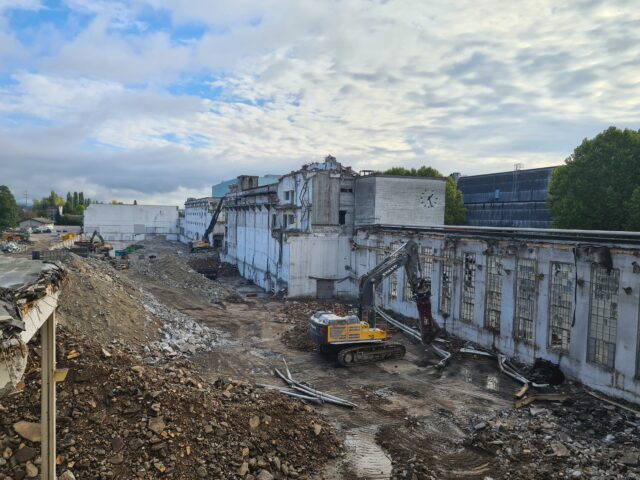
    The centre of the area, and thus the centre, is the square by the canal: Demolition work is currently underway here to create open spaces and breakthroughs in the hall structures. So far, 17,000 tonnes of material have already been removed. HIAG attaches great importance to sustainability: 14,000 tonnes of it will be processed into granulate on site and reused. The deconstruction work is scheduled to be completed by the end of this year. From mid-2023, the construction of a new modern building is planned, which will offer around 15,000 square metres of usable space for trade, production and offices. The first tenants are expected to move in by the end of 2024. According to Ulrich, concrete negotiations are currently underway with prospective tenants.

    Demolition work is currently underway in the middle of the site.
  • Maaglive makes Zurich West even more attractive

    Maaglive makes Zurich West even more attractive

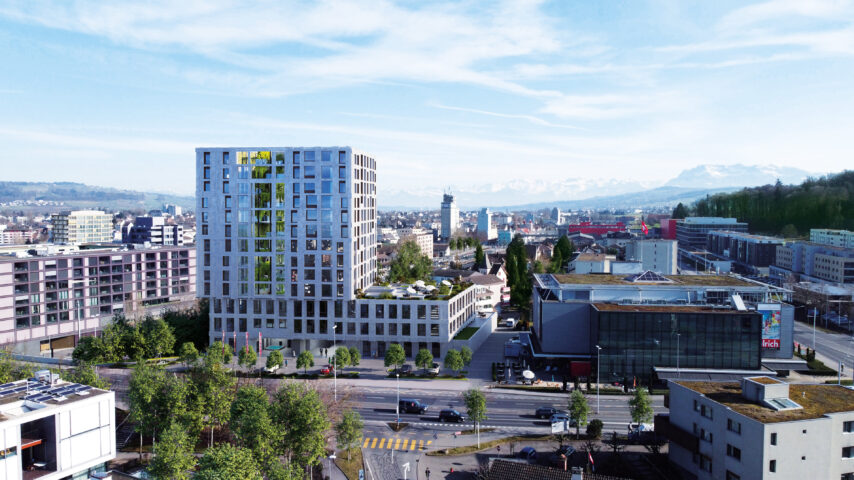
    Up to now, the Maag site has been characterised mainly by office use. The large-scale Maaglive project will give Zurich West a versatile and green centre with various uses by 2027. An ensemble of three buildings is planned: a residential tower with a roof garden and loggias, a four-storey cultural centre and the existing Building K, which will be renovated and converted.

    Building K will be protected as a historic monument – after all extensions have been removed. In the future, it will offer operational synergies with the neighbouring Kulturpavillon with a foyer, restaurant and bar as well as a market hall and book café. Wooden constructions provide for an attractive interior of the culture pavilion.
    The residential tower is characterised by flexible usage possibilities, with the residential area predominating. Office space and rooms for events complete the offer. A co-working space with café and wine bar will be incorporated into the two-storey base.

    The visualisation shows the town square near the tower.

    At the highest point of the tower – next to the green roof garden – residents will have access to a library and a communal kitchen. Public-oriented uses are planned for the ground floors. An area of around 6000 m2 is planned for the flats, 3000 m2 for the cultural and event area, and a further 3000 m2 for studios, co-working and gastronomy.

    The centre of the area is formed by the neighbourhood square, which is planted with up to 80 high-stemmed native trees and extends over 4000 m2 . The canopy of foliage thus created is intended to provide the square with the quality of stay that has been lacking up to now. Open spaces and additional green areas with seating as well as various play and rest areas will also provide more life on the site during the day. At the same time, this will optimise the microclimate and reduce the heat that accumulates in summer. The latter is a particular problem in the city centre. Maaglive also counters this with pavement structures that offer a certain degree of retention as well as heat reduction. The entire construction project focuses on circular building and the use of resource-efficient building materials.

    The historic Lichtstrasse and the Maschinenstrasse will be opened up to the public. In addition, new pedestrian and bicycle paths will be created. The project is the brainchild of the Berlin architectural firm Sauerbruch Hutton. Hager Landschaftsarchitekten is responsible for the landscape architecture. The owner of the site, Swiss Prime Site, has already submitted the building application. Realisation will begin in the 3rd quarter of 2024 at the earliest. If everything goes according to plan, Maaglive should be ready for occupation in the 3rd quarter of 2027.

    The cultural pavilion is intended to become a lively meeting place for art, the creative industries and the population.
  • Tägi invites you to the Bauen+Wohnen trade fair

    Tägi invites you to the Bauen+Wohnen trade fair

    The leisure, sports and event center Tägi in Wettingen invites you to the Bauen+Wohnen Aargau trade fair again this spring after a two-year break. According to the press release , it will take place from Thursday, April 7th to Sunday, April 10th and will present offers for everything to do with building, living, gardening and energy. More than 180 exhibitors present products and services in four halls as well as on Tägerhardstrasse, the Tägi forecourt and in the event arena. There are also several specialist lectures in the Limmatraum on topics such as light, heat pumps, kitchen planning or solar power.

    The fair is open on Thursday and Friday from 1 p.m. to 8 p.m. and on Saturday and Sunday from 10 a.m. to 6 p.m. There is paid parking on the circus meadow.

    This weekend the Tägi also opens the mini golf season. The 18-hole mini golf course is open daily from 1 p.m. to 8 p.m. Provided the weather is nice and allows the game to play.

  • Station area Wettingen becomes a residential area

    Station area Wettingen becomes a residential area

    Under the aspect of living and working directly on the track, the SBB has announced an architectural competition for the design of their area at the railway station in Wettingen . According to the press release, the results are now available. They can be viewed in an exhibition in the foyer of the Tägi Wettingen until Tuesday, March 8th.

    The winning project is called Stadtlaube and, according to the SBB announcement at Wettingen station, envisages two long, five-storey residential buildings with service, retail and catering areas on the lower floors and a four-storey service building with public-oriented uses. The historical railway buildings are preserved.

    The two buildings to the west of the station form a boundary opposite the track field and thus create living and recreation space in a central location, according to the project announcement. The entrance areas and partly open-plan staircases are intended to provide a view of the railway tracks. There will be small squares and a play street in front of the house entrances. Flexible 2.5 to 4.5 room apartments with private outdoor areas and communal roof terraces are planned.

    A four-storey service building with shops and restaurants is planned to the east of the residential buildings and embedded in the historic station buildings. According to the announcement, the protected individual objects Lokremise, goods shed, station building and turntable will be preserved.

    The winning team of the architectural competition consists of Burkard Meyer Architects from Baden AG, ASP Landscape Architects from Zurich, MWV Civil Engineers from Baden, Leimgruber Fischer Schaub from Ennetbaden AG, Mühlebach Partner from Winterthur and Scherler AG from Lucerne.

  • Swiss Prime Quartier Riverside is ready for occupancy

    Swiss Prime Quartier Riverside is ready for occupancy

    In Zuchwil, the new residential and work area Riverside is now ready for occupancy. According to a press release , the first tenants will move into the Widi Huus and Sulzer Huus in October. The project of the Swiss Prime Investment Foundation is characterized by modern energy supply and traffic management as well as recreational opportunities. It was also developed by the Swiss Prime Investment Foundation in Olten as a “living space”. As a location in the country with all the amenities of an urban place. The new Riverside district combines living and working. The Aare in turn connects nature with the city. The quarter has direct access to the river.

    According to Jérôme Baumann, President of the Board of Trustees of the Swiss Prime Investment Foundation, “120 apartments have already been rented. Only a few are available. ”The apartments offer a lot of quality of life. The Solothurn architect Benedikt Graf from gsj architects and agps architecture was quoted as saying that the choice of materials was "extremely careful". The heat generation for heating and water takes place sustainably via a groundwater heat pump. Natural cooling is in operation in summer.

    All apartments are designed according to the guidelines of Procap Switzerland and are wheelchair accessible. There are individual charging stations for e-vehicles at the visitor parking spaces. The parking spaces in the underground car park can also be equipped with a charging station. All five houses of the first stage should be occupied by autumn 2022.

  • ImmoScout24 reports record price for condominiums

    ImmoScout24 reports record price for condominiums

    The prices for condominiums in Switzerland rose by 1.8 percent in August compared to the previous month. The prices for single-family houses have risen by only 0.1 percent. This is shown by the current Swiss Real Estate Offer Index , which is collected by ImmoScout24 in cooperation with the real estate consultancy IAZI AG.

    The market for condominiums is becoming more and more expensive , according to the press release. At the end of August, 7916 francs were charged per square meter, 1.8 percent more than a month earlier. A typical apartment with 100 square meters is advertised for an average of around 790,000 francs in Switzerland. That is a new record.

    The prices for single-family houses rose by only 0.1 percent in August, but according to ImmoScout24 they are “at a dizzying height”. The square meter price is 7048 francs. For a typical Swiss single-family home with around 160 square meters of living space, the average asking price is over 1.1 million francs. The prices can be significantly higher in better locations.

    The supply is scarce, the market has dried up. Martin Waeber, COO of Scout24 is quoted as saying that sellers were waiting in view of the rising prices. “Only a strong increase in construction activity or a decline in demand, for example due to rising mortgage interest rates, could reduce the price pressure on the residential property market,” Waeber continued. However, neither is currently foreseeable.

    According to the index, asking prices for rental apartments fell by an average of 0.5 percent in August, with significant regional differences.

  • Residential locations in the countryside are becoming more attractive

    Residential locations in the countryside are becoming more attractive

    Swiss people rarely move. And when they do, in half of all relocations the new place of residence is only five kilometers away from the old one. The average distance is 13 kilometers. This is shown by a representative survey of the house and living situation in Switzerland by Swiss Life .

    As the life insurance group explains in a press release , almost 60 percent of homeowners and 25 percent of tenants have been living in their current home for ten years or more. At the same time, however, for around 30 percent of those surveyed, the desire to live in the countryside or at least with a terrace increased during the pandemic.

    Around two thirds of homeowners have felt more quality of life and more self-determination since buying their own home. 37 percent said that they were completely satisfied with their current living situation, especially those who owned their own home. 15 percent are moderately or not at all satisfied. Most of them lack space or a garden, or they are bothered by noise and environmental pollution.

    Over 60 percent of those who can imagine buying their own home in the next five years expect that this would improve their quality of life. But only 21 percent of them are actively looking for a home of their own.

    Requirements for the ideal place to live in terms of costs, equipment and security vary depending on the language region. In addition, a garden is central in the country, and there is a connection to local public transport in the city. If this is perceived as good, the willingness of commuters to move decreases.

  • Sedimentum cooperates with bonacasa

    Sedimentum cooperates with bonacasa

    Many elderly people need to live independently in their own four walls for as long as possible, Sedimentum writes in a press release . The young company from Zug has developed a sensor that automatically calls for help in the event of a fall. Sedimentum is now teaming up with bonacasa for a pilot project. The Solothurn-based company, which specializes in living with services, will equip various of its residential units with the sensors.

    Sedimentum's fall sensors are mounted on the ceiling like a lamp, the company said in the press release. The sensor works without a camera and microphone, but is able to detect a fall. In such a case, the sensor independently requests help, for example from Spitex or the concierge service. In this way, both the physical security and the privacy of the residents of the apartment are protected, writes Sedimentum.

  • Elderly apartments in Bergdietikon are to be modernized

    Elderly apartments in Bergdietikon are to be modernized

    The Foundation for Age-Appropriate Living in Bergdietikon (AGW) built the facility in Schlittental 25 years ago according to the then modern standards of equipment and technology. The Bergdietikon municipality made the area available at the time. Today demands and needs have evolved. That is why the Board of Trustees wants to analyze the situation by examining not only the mix of apartments and the standard of construction, but also the question of pricing and, last but not least, the individual types of housing that are particularly suitable for handicapped people, as stated in a communication . A proposal for the renovation of the building to meet contemporary needs should be available by the end of the year.

    The rental apartments, which, unlike in old people's homes, are offered without services, are "a little old" and no longer meet today's standards. Some of the total of 18 apartments could therefore no longer be rented out despite the overall clear demand.

    In order to determine the real needs, residents and interested parties should be asked about their ideas. But one thing is certain: services such as those offered in old people's homes or larger institutions are not economically viable.

    The residential building for age-appropriate living is located directly in the center of Bergdietikon. The post office, the center, the Volg store, the cemetery and the bus stop can be reached in a few minutes, the foundation describes the property. And adds: With a distant view of the Limmat Valley and a view of the hilly landscape on the mountain side.