Tag: Wohnhochhaus

  • DGNB certificate for deconstruction in Switzerland

    DGNB certificate for deconstruction in Switzerland

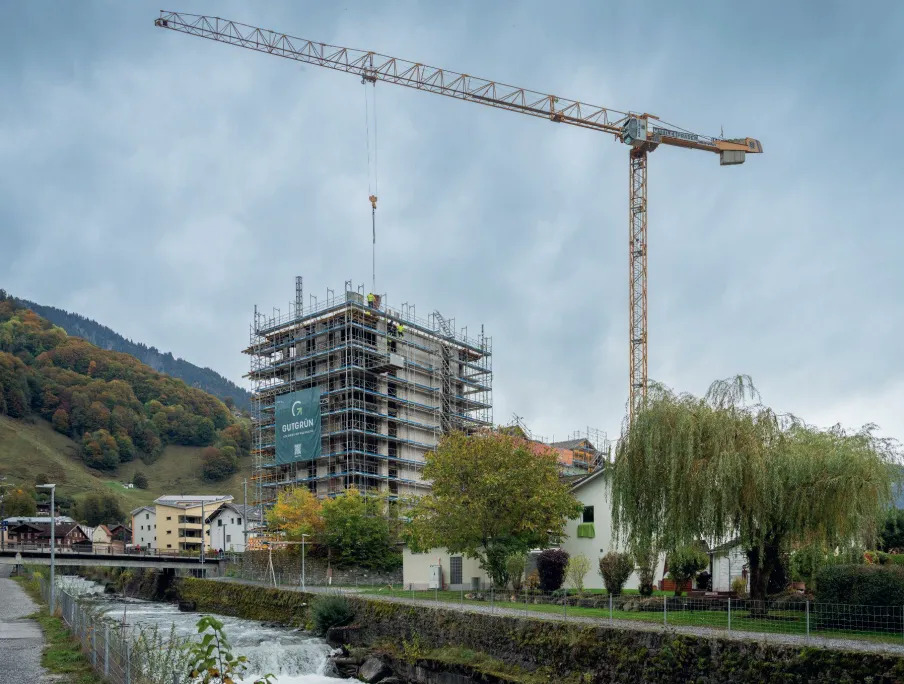
    The grain silo tower from 1939 was demolished, but its concrete was not disposed of. In the nearby concrete plant, the material was processed according to a specially developed formula and 75 to 95 percent of it was reused as recycled material in the new building. Around 60 percent of the new building consists of the old tower. The client is Gutgrün AG from Chur, which deliberately refrained from making short-term profits in order to consistently implement the sustainability concept.

    52 apartments, three certificates
    The project comprises 37 rental apartments on eleven floors in the new residential tower and 15 loft apartments in the renovated historic mill building. The architects from Ritter Schumacher have recorded all the materials used in a building resource passport. A forward-looking approach that makes future life cycles transparent today. The project was awarded three DGNB certificates for this achievement. DGNB Platinum for the demolition, DGNB Gold for the new tower and DGNB Gold for the refurbishment of the old building.

    Fire protection reinvented
    The 30-metre-high photovoltaic façade poses a problem for conventional fire protection regulations. They require partitions on every floor to prevent fire from spreading from floor to floor. This would have interrupted the façade and significantly reduced its efficiency.

    The PV surface is not interrupted anywhere by windows and is continuous from the floor to the roof. Specialist planners, contractors and the insurance company worked together to develop a tailor-made solution. Fire cannot reach the façade from the inside and the façade cannot reach the apartments.

    Alliance instead of conflict
    The project was built using the alliance model. The client, planners and contractors sat around the table together right from the start. Problems from construction practice were thus incorporated directly into the planning. The basic attitude was one of trust and fairness rather than pure risk hedging. One detail also testifies to the unconventional spirit: the graffiti that adorned the vacant building was retained as decorative elements in the stairwell.

    A signal for the industry
    There was not a single objection to the conversion project. This is unusual for a construction project of this size. Grüsch Mill shows that circular construction also works in a peripheral region and that sustainability is not a contradiction to economic viability.

  • New high-rise project boosts housing supply near the station

    New high-rise project boosts housing supply near the station

    Pensimo Management AG, based in Zurich, has acquired a building site from ABB in Oerlikon through its investment foundations Turidomusand Pensimo. According to a press release, the company plans to build a complex with 500 apartments, including a high-rise building and commercial premises, on the north side of Oerlikon railway station on the newly designed Max-Frisch-Platz.

    “We are very pleased with the acquisition of this property,” said Stefanie Krautzig, transaction manager at Pensimo, in the press release. “This is a very rare investment opportunity for a development project of this size in such a central location.” The building regulations for Neu-Oerlikon, which were partially revised in 2022, provide a good basis for planning and developing the area. “In order to evaluate an architectural solution for this central and prominent location that is attractive to the public and future residents, we will launch a competition among teams of planners,” said Krautzig.

    Construction is expected to begin in 2029. The seller, ABB, is also pleased with the sale of the former industrial site and is convinced that “this will contribute to the further development of Zurich Oerlikon into a lively and diverse neighbourhood,” said Nora Teuwsen, Chair of the Executive Board of ABB Switzerland.

  • Rankstrasse residential tower block

    Rankstrasse residential tower block

    In order to make optimal and sustainable use of the limited space on Rankstrasse, Basel’s “1000 ” residential construction program is based on a widely advertised, anonymous architectural competition. 78 teams showed interest, 15 selected projects were submitted and competed for the best solution. The expert jury was ultimately won over by “Miranda” by Zurich-based studio DIA, Haller Ingenieure and Hefti Hess Martignoni.

    Sustainability integrated into the architecture and social fabric
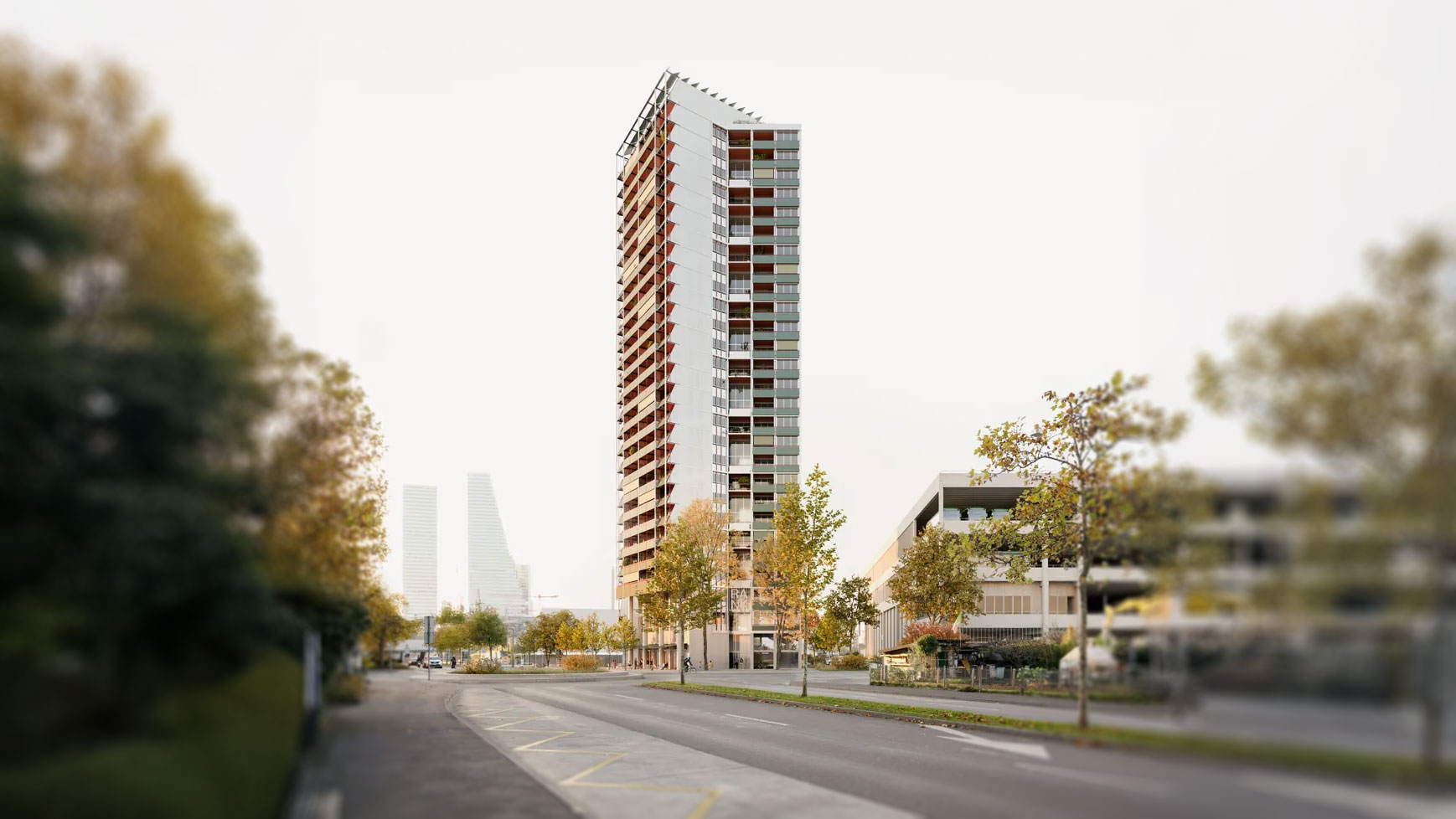
    The 88-metre-high building will provide over 100 new rental apartments based on the “Mietvertrag Plus” model, which is affordable and bound by income and occupancy rules. The outstanding feature is the innovative neighborhood concept. Three floors are connected vertically, creating inclusive meeting zones for diverse groups of tenants. The apartments have a compact and functional design, enable economical use of space and meet high ecological and economic standards. Green outdoor areas, communal spaces and resource-conserving construction methods underline the sustainability claim. The city is thus proactively committed to responsible, socially integrative urban growth.

    New benchmark for living on the outskirts of the city
    With “Miranda”, Basel-Stadt is launching a further development on the eastern outskirts of the city. The high-rise marks a striking prelude to future neighborhood developments and sets an architectural example of openness. The earliest start of construction is 2028, preceded by a development plan and public information. The focus on community, mixing, sustainability and architectural quality positions the project as a reference for modern, urban construction in Switzerland.

  • Between innovation and reality

    Between innovation and reality

    In the middle of the Zurich conurbation, the new H1 residential tower towers above the Zwhatt site. With a height of 75 meters and 24 storeys, the building is a visible marker for the Regensdorf skyline and for hybrid construction methods between concrete and wood. Despite its striking red hue and eye-catching façade, the interior is dominated by natural and neutral materials. The architecture remains restrained, the structure classic. Three solid base storeys and a central concrete core support the building, while timber columns, timber-concrete composite ribbed ceilings, lightweight façades and solar panels ensure resource efficiency.

    The HBV structure allows for a high degree of prefabrication and a significant reduction in gray energy. Compared to conventional solid buildings, 20% of emissions are saved, a total of around 670 tons of CO₂ over a life cycle of 60 years. The horizontally positioned photovoltaic modules serve as a brisesoleil and generate around 155,000 kWh of electricity per year, which covers around 36% of the apartments’ energy requirements.

    Quality of living, community and urban density
    At the base of the H1, three-sided arcades connect the building to the neighborhood and ensure an urban quality of living. Inside, a clear, modular structure ensures compact, flexible apartments. 156 units are organized around the central core and are reached via short, bundled access routes. There is space for community halfway up the building with a two-storey meeting room, a launderette and spectacular views. The wooden elements create a pleasant indoor climate, while exposed beams and clay surfaces ensure a cozy atmosphere.

    Sustainability and the ambivalence of the high-rise principle
    H1 is a project of transition. The high proportion of wood reduces the CO₂ profile, but does not make the use of concrete superfluous. The climate-friendly construction method, local raw materials such as beech wood from the Jura or clay and the focus on renewable energy make sustainable construction a reality. Nevertheless, the high-rise building remains an ambivalent concept. The densification saves space, but the statics and fire protection still force hybrid constructions.

    In terms of urban planning, the Zwhatt site represents a new development perspective for Regensdorf. The silhouette of H1 and other towers characterizes the skyline. The quarter combines living, working and open spaces and stands for an urban development that remains flexible and adaptable.

    The H1 residential tower exemplifies change in the construction industry. It combines advanced timber hybrid technology, a high degree of prefabrication and urban integration. H1 is thus a “building of transition”, a step towards net zero, but also a reflection of the challenges and potentials facing sustainable residential construction in urban centers today.

  • First construction phase in Unterfeld Süd in Baar starts in 2025

    First construction phase in Unterfeld Süd in Baar starts in 2025

    The owners Ina Invest and Estella Invest and the developer Implenia decided in favour of a digital project competition in which a digital 3D model was submitted instead of physical models. This made the jury process much easier, as different levels and elements could be flexibly combined and analysed. The winning design for the first construction phase, a combination of the proposals from Enzmann Fischer Partner AG and ORT AG, impressed with its innovative floor plans and a well thought-out design of the open space that harmoniously combines living and working.

    Open space design as the key to the attractiveness of the neighbourhood
    The Unterfeld Süd neighbourhood will be enhanced by generous open spaces, which
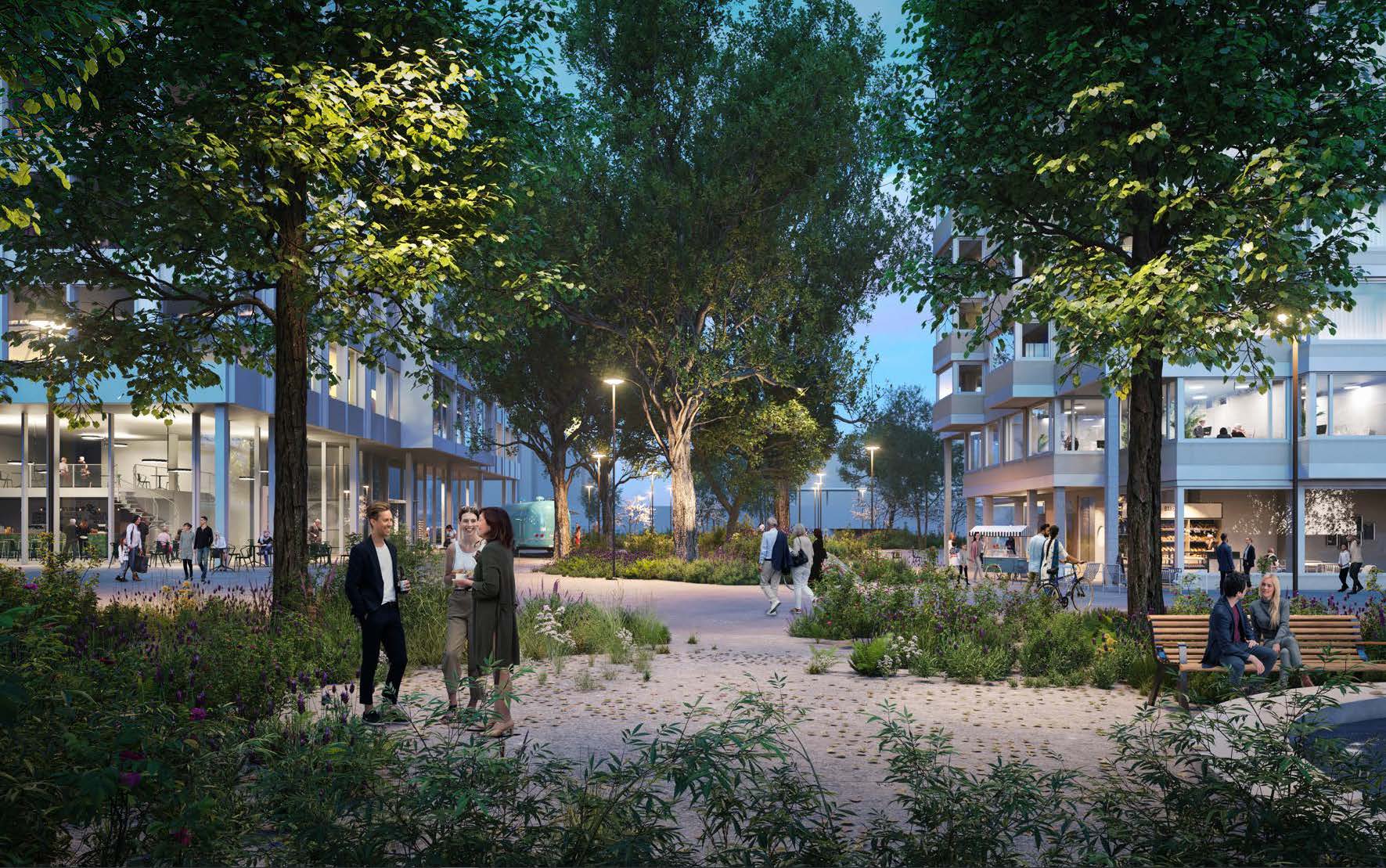
    extend along the Stampfibach stream. An ecologically valuable green space is being created here that offers a wide range of uses. The central arrival square at the S-Bahn station will be transformed into an inviting place to meet and linger thanks to tall trees and green islands.

    High-rise building with a view to the future
    The 60-metre residential tower block in the first phase is impressive not only for its height, but above all for its well-thought-out floor plans and flexible room layouts. The generous windows offer impressive views from every flat, while the bay windows on the façade allow residents to enjoy both the outside and the inside of their own flat.

    Commercial building as a centre for dynamic companies
    The adjoining commercial building also focuses on flexibility. Two glazed inner courtyards create islands of light that can be used as break areas. With its flexible room structure, the building offers space for a wide range of uses – from small offices to larger rental spaces for anchor tenants.

    The second phase will provide affordable housing and flexible commercial space
    The second construction phase, the planning of which is already at an advanced stage, will focus on affordable rental flats and owner-occupied flats. The inner courtyard of the planned perimeter block development in the second phase will create opportunities for retreat and public meeting spaces in equal measure. The buildings along Nordstrasse are deliberately designed to minimise noise pollution. A referendum on the second stage will also be held in Baar in 2025.

    Sustainable architecture and flexible usage concepts
    The architecture of the buildings reflects the vision of a future-oriented neighbourhood. The combination of flexible living, versatile commercial space and well thought-out open spaces creates a lively and attractive cityscape. Particularly noteworthy is the combination of living and working, which is supported by well thought-out spatial concepts and attractive outdoor areas.