Tag: Wohnquartier

  • Building lease flats create new living space in Altstätten

    Building lease flats create new living space in Altstätten

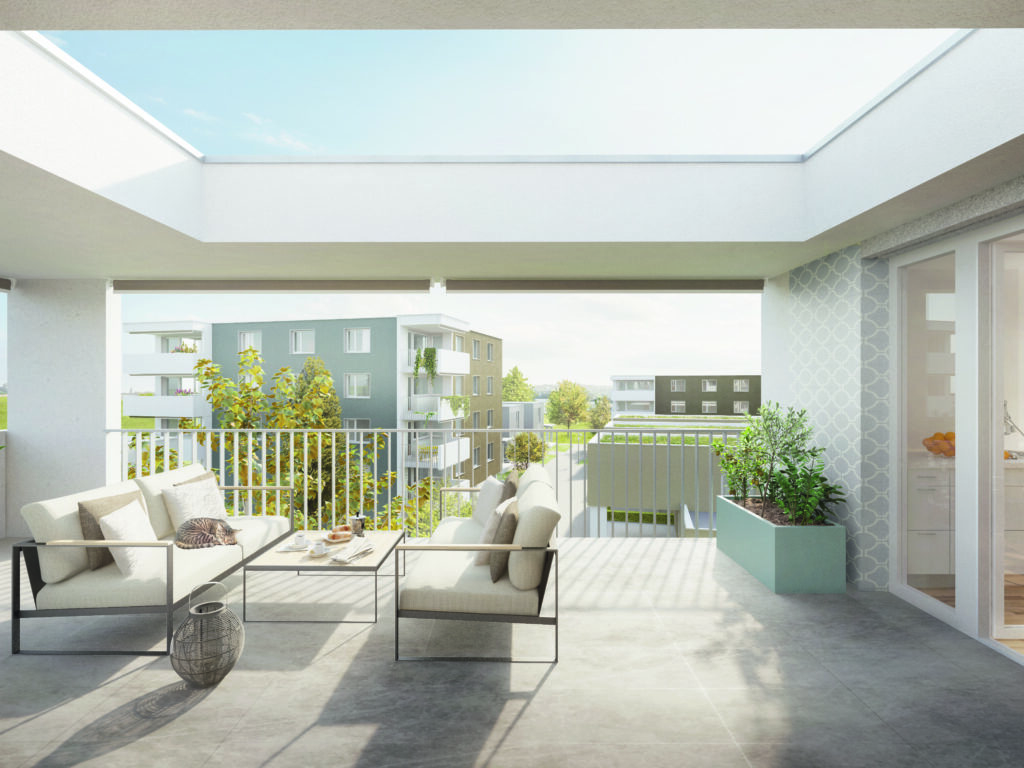
    Halter AG is implementingtheTresTerrä project in collaboration with the Catholic denomination of the canton of St. Gallen, owner of the project, andSchlieremerTend AG, partner for communication and marketing. As part of this, Halter will undertake the construction of ten residential buildings on the Guter Hirte site in Altstätten, which will provide affordable living space in the future, according to a press release. The ground-breaking ceremony and official start of construction for the project have now taken place.

    “Tres Terrae stands for a place where living, open space and neighbourhood come together,” says a statement from Halter. “The aim is to create lasting quality of life that offers people a home for the long term.”

    Three building complexes are planned, which will be located around a central communal square and connected by a network of paths. A total of 37 freehold flats will be built in the buildings, ranging from 2.5-room to 5.5-room flats. Central meeting areas will provide space for interaction and community, according to the project description.

    In order to reduce the equity requirement and facilitate financing, the flats will be sold under building law. The flats are expected to be ready for occupancy in 2028.

  • New residential neighbourhood brings dynamism to Spreitenbach

    New residential neighbourhood brings dynamism to Spreitenbach

    The Tivoli Garten neighbourhood is revitalising the municipality of Spreitenbach, according to a press release. People have been able to move in there since mid-July and by mid-September more than 500 residents had already taken advantage of this, according to the municipality, citing figures from the residents’ services.

    The largest group are the 226 people (45 per cent) who have moved to Tivoli Garten from the canton of Zurich. This is followed by 121 people (24 per cent) from the canton of Aargau, 89 people (18 per cent) who have moved within Spreitenbach, 49 people (10 per cent) from other cantons and 22 people (4 per cent) who have moved to Tivoli Garten from abroad.

    Tivoli Garten offers a total of 445 rental flats (1.5 to 5.5 rooms) and small commercial spaces on an area of 15,000 square metres. A communal garden with a playground serves as a meeting place for the residents.

  • Strategic milestone for Zofingen

    Strategic milestone for Zofingen

    The 27,636 square metre site near Zofingen railway station was home to the traditional Swissprinters print shop until 2024. Following its closure, Ringier Areal AG sold the western section to Turidomus, while the eastern section remains in Ringier’s ownership. In recent years, Ringier, together with the town of Zofingen and the Basel architectural firm Christ & Gantenbein, had already developed the strategic basis for the conversion. The development is now building on this.

    Diversity and sustainability in the centre
    The “Areal West” is a site of strategic importance. The location opposite the old town and directly behind the railway station offers ideal conditions for a new, urban residential district. Over 300 flats for different lifestyles and household sizes are to be built on five building plots. From compact flats to family flats.

    The project development is based on the Swiss Sustainable Building Standard. A climate-friendly neighbourhood square, green open spaces that reduce heat islands and photovoltaic systems are planned. District heating is also planned in order to keep the neighbourhood’s carbon footprint low from the outset.

    Study commission to specify
    A study commission is planned for 2026 to specify the urban integration and the specific design of the housing on offer. The aim is to create a lively neighbourhood that not only provides housing, but also creates a sense of community and identity. Depending on the process, construction could start from 2028, with first occupancy from 2030.

    Experience with transformations
    Reference projects such as the Ziegeleipark in Horw/Kriens, the Reitmen neighbourhood in Schlieren and Zwhatt in Regensdorf show that the Group understands complex transformation processes. With the “Areal West” in Zofingen, the group is continuing in this vein. The aim is to transform the industrial past into a future-proof, sustainable neighbourhood.

  • A new landmark at the Rhine Falls with great potential

    A new landmark at the Rhine Falls with great potential

    The goal was clearly defined. A third of the 900,000 annual Rhine Falls tourists were to be lured to the other side of the river and attracted to the “Rhyfall Village” area. “Rhyfall Village”, or “RIVI” for short, is the name of the new neighbourhood. With a mix of gastronomy, art and shopping, the area will become a centre of attraction – not only for tourists, but also for the local population.

    The site and its future
    The “RIVI”, once the site of industrial production, is undergoing a reorganisation. The neighbourhood is characterised by two striking high-rise buildings, one of which was acquired by Helvetia. These offer living space with impressive views and space for catering, office and retail areas.

    Potential and challenges
    The visionary project met with broad approval in the region. Beat Hedinger, Managing Director of Schaffhauserland Tourismus, saw the village at the time as a “colourful mosaic piece” in the overall tourism picture. The rooftop restaurant with a view of the Alps in particular promised to be a special highlight. Hedinger also recognised the challenge of skilfully bridging the distance between the Rhine Falls basin and the site.

    Felix Tenger, Mayor of Neuhausen, is optimistic that the “RIVI” will revitalise the centre of Neuhausen and also strengthen the retail trade. Building director Martin Kessler also saw great potential to turn the site into a meeting place that creates synergies with existing facilities and increases the attractiveness of the entire region.

    Good connections and creative solutions
    The site’s location scored highly thanks to its proximity to the Rhine Falls and good public transport connections. The Badische Bahnhof Neuhausen railway station is located directly next to the site and numerous bus connections and over 200 parking spaces are available to visitors. Visitors can travel in comfort between the Rhine Falls basin and the Rhyfall Village on the Rhyfall Express tourist train.

    A project with vision
    Rhyfall Village is more than just another residential neighbourhood in Neuhausen. Whether rooftop restaurant, promenade or art gallery – the RhyTech site stands for a modern, versatile and vibrant future in the immediate vicinity of one of Switzerland’s most impressive natural wonders.

  • Change on the Wellisareal

    Change on the Wellisareal

    The Wellisareal is located at the northern entrance to Willisau, next to the historic town centre, directly on the main traffic axis and near the railway station. It covers an area of 30,000 square metres.

    in 1927, Orgelbau AG, a company specialising in the manufacture of church organs, settled in the then still largely undeveloped “Grundmatt” at the gates of the old town of Willisau. With the founding of Wellis AG in 1931 as a subsidiary of the organ factory, the eventful history of furniture production took its course. Wellis AG specialised in designer furniture and was internationally known under the label “Team by Wellis”.

    As the company grew, the factory site developed into its current size by the 1980s. Furniture companies are still based on the site today.

    The northern part of the Wellis site belongs to Foroom Immobilien AG. It has concluded a long-term purchase agreement with GKA Immobilien AG. The southern part is owned by the Tolusso family. This is also where the stone industry Tolusso AG is located. Together, the owners want to develop the area into a residential and commercial quarter in the coming years. Due to the central and convenient location as well as the size of the site, the development and future use of the area is of high public interest.

    Three renowned planning teams from Lucerne, Zurich and Basel were consulted for the test planning. The concept of the Basel architects Herzog & de Meuron was the most convincing. It envisages transforming the area into an “open, lively living and working space”. The site is to be further developed in individual stages, building on existing structures and thus growing organically and in line with demand. Individual industrial buildings are to be preserved.

    The project by Herzog & de Meuron was further developed and should pave the way for the partial zoning change and the development plan that would be necessary for a transformation of the site. After the planning and a public circulation, the voters are to decide on the partial zoning change in autumn 2024. If everything goes according to plan, the earliest possible start of construction is 2025.

  • Ziegler-Areal auf dem Weg zum Wohnquartier

    Ziegler-Areal auf dem Weg zum Wohnquartier

    Das Ziegler-Areal soll gemäss heutiger Planung zu einem vielfältigen Quartier mit Schwerpunkt Wohnen entwickelt werden. Seit der Spitalbetrieb auf dem Areal im Jahr 2015 eingestellt wurde, sorgt die Stadt Bern als Grundeigentümerin mit verschiedenen Zwischennutzverträgen für Leben und Vielfalt auf dem Gelände. Insgesamt steht heute eine Nutzfläche von rund 23’000 Quadratmeter zur Verfügung.

    So betreibt die Firma ORS Service AG im Auftrag des Staatssekretariats für Migration (SEM) das einstige Bettenhochhaus als Empfangs- und Verfahrenszentrum. Der Kanton Bern zeichnet als Mieter der Räumlichkeiten des Renferhauses verantwortlich und stellt diese der Medizinischen Fakultät der Universität Bern zur Verfügung. Büroräumlichkeiten und eine Wohnung sind im Haus Bellevue untergebracht. Zur Wohnnutzung dient auch das Personalhaus 2 sowie das Wohnhaus Kirchbühl.

    Der Verein Boulissima betreibt im Personalhaus Ost/West eine IndoorBoule-Anlage, während der Verein Ziegler-Freiwillige im Personalrestaurant ein Begegnungszentrum für Quartierbewohnende und Asylsuchende geschaffen hat. Ansonsten wird das Gebäude vom Hostel77, der Geschäftsstelle des Vereins «Helvetiarockt», als Studentenwohnheim und von der Quartierküche Ziegler genutzt. Hierbei handelt es sich um die erste Quartierküche der Stadt Bern, die seit dem Beginn des Schuljahres 2019/20 insgesamt 19 Tagesschulen und Kitas mit Mahlzeiten versorgt.

    Das Leitbild für die Entwicklung des Ziegler-Areals wurde in Partizipation mit den verschiedenen Anspruchsgruppen erarbeitet. Auf Grundlage dieses Leitbilds wird eine Areal- und Nutzungsstrategie entwickelt. Diese soll den zuständigen politischen Gremien Anfang 2023 zur Beschlussfassung vorgelegt werden. Die Volksabstimmung zur Planungsvorlage dürfte frühestens 2028 stattfinden.

    Das Areal grenzt direkt an die Gemeinde Köniz an. In unmittelbarer Umgebung liegen der Naherholungsraum Gurten und dessen Talstation. Das Gelände ist durch die Buslinien 19, 22 und 29 bereits heute gut erschlossen. Ein mögliches zukünftiges Wohnareal soll sich sorgfältig in sein Umfeld einfügen und dank vielfältigen Nutzungen – die sich mitunter aus den der-zeitigen Zwischennutzungen ergeben können – zu einem belebten Ort werden.

  • Spinning mill, girls' home and soon residential area

    Spinning mill, girls' home and soon residential area

    The Emmenhof is located in the center of Derendingen and looks back on a varied history: It began 150 years ago with the establishment of a cotton spinning mill. In 1897 a girls' home was also built. In 1932 there was another change of ownership: when Scolari AG moved in, the Emmenhof served as a pasta production facility until 1973. From then on, various SMEs settled on the 50,000 m² area. Even today there are around 100 companies that have their offices or warehouse here. The area, which has so far only been built on in the southern part, is characterized by its own hydropower plant, the striking factory and the former manufacturer's villa.

    Emmenhof Immobilien AG has planned a fundamental transformation of the area: by 2030, a new quarter with residential offers, leisure facilities, various office and commercial space as well as a catering concept is to be built here. In addition to the preservation of some detached historical buildings, several new buildings are planned. A total of 270 apartments are planned, the construction of which is based on the history of the area.
    Access to the new quarter is marked on the south side by the “Wollturm” with ten floors, an underground car park entrance and a visitor parking lot in front of it. This entrance is followed by the “cotton yard”, which is framed by two buildings and closed off by the historic factory building. The “Garnwerk”, “Turbinenhaus” and “Därberei” buildings are being built in the north of the site. Generous green areas and direct access to the Emmen Canal and the Schluchtbach give the quarter a natural character.

    The development of the area is planned in six stages. The first stage has already been completed and includes the “Spindelgut” project in the southwest. The new building, designed by the architects Liechti Graf Zumsteg, consists of three wings with 14 apartments.

    Emmenhof Energie AG is the area's electricity producer. This enables tenants and owners to obtain sustainable energy: from photovoltaic systems that are installed on the roofs of the new buildings and from hydropower. Hot water and heating get into the houses by means of district heating.

  • Küttigen: Former tree nursery as a residential area

    Küttigen: Former tree nursery as a residential area

    The "Baumgarten" is being built in a sunny south-west location with a view of the Aare and Central Switzerland. 143 rental and owner-occupied apartments as well as 20 terraced houses are planned.

    The development consists of three building areas with different living space concepts. Ffkb Architects, Zurich, designed the row houses in the lower part of the residential area. The bark-brown houses in the central area of the building were designed by ERP Architects in Baden. And Frei Architekten, Aarau, is responsible for the red-red houses in the northern part.

    Thanks to their clever geometry, the multi-family houses should fit into the park-like landscape. Large gaps between the structures should allow maximum views and sun exposure for the individual apartments.

    The houses will be built in hybrid construction with load-bearing interior walls and non-load-bearing facade elements. Wood is used as a common denominator for the exterior walls of all house types. On the one hand, because the client works in the timber construction industry. On the other hand, in order to pay tribute to the character of the former tree nursery area and to pick up on its history.

    The planning of the surroundings should also combine the various construction areas into a large whole. Hager Partner, Zurich, also takes up the themes of the former tree nursery. Part of the tree population will be preserved.

    Markstein was entrusted with the building trust mandate and the marketing of the new building project by the client Rombach Immobilien. The real estate service provider will accompany it until it goes into operation at the beginning of 2023 and has already started the market launch of the property.

    The building permit was in place at the end of January 2021, and construction work began in mid-March 2021.

  • A residential area to feel good

    A residential area to feel good

    With this project, Steiner AG is creating living space for young people, singles, couples, families and senior citizens. In the new quarter there will be attractive housing offers, private retreats and communal meeting areas. Numerous green areas with playgrounds and playgrounds invite you to spend a lot of time outside. At first glance, the many green and recreational areas as well as the bright apartments catch the eye: "We have placed great emphasis on open, well-lit interiors with a beautiful view, which ensure a pleasant, feel-good climate, peace and relaxation," says Stefan Gabriel, Team Leader Real Estate Development at Steiner AG. «The apartments are barrier-free, functional and can be flexibly furnished. Private gardens and community gardens invite you to linger and round off the multi-generational living in the quarter. "

    Here, a fallow industrial area is being transformed into a new place to live in the countryside. Existing listed buildings such as the barn and the Alte Post are carefully integrated and revitalized for living and common areas. This project aims to create a comfortable living area that will enrich Fischbach-Göslikon.

    Contemporary renovation
    Steiner AG sees its project as a symbol of the connection between the past and the future of Fischbach-Göslikon. “The listed barn is an important cultural and historical witness in the community and in the neighborhood – a building that needs to be preserved. The barn is being gently but modernly renovated and used for new purposes. A day-care center with 16 places and a workshop are to be built on the ground floor. A common room for various occasions, such as birthdays or family celebrations, is planned on the upper floor. The room can also be rented by the public, ”says Gabriel.

    Start of construction in 2022
    The start of construction on the first stage is scheduled for 2022. The overall project, which consists of three stages and should be completed by 2032, will one day include 165 residential units in 10 apartment buildings and 46 row single-family houses. Due to the current design plan, there must be an interval of four years between building applications. Gabriel concludes: “We are now expecting the building permit for the first stage to become legally binding. We are pleased about the excellent cooperation with the authorities and everyone involved. This is an important prerequisite for such a project to be implemented successfully. "

    The 165 residential units are all very bright.
  • Investors from Glarus develop the Kartoni district

    Investors from Glarus develop the Kartoni district

    As early as 2013, the municipality of Glarus declared the Kartoni-Areal and Untere Allmeind areas in Glarus to be key development areas as part of their structure planning, the project company Kartoni Quartier AG informed in a message. A mixed living and working area with private, semi-private and public open spaces is to be created here. A footbridge for pedestrians and bicycles across the Linth will connect the quarter directly to the train station and the center of Glarus.

    The project management team at Sutter Projects, in cooperation with the municipality of Glarus, has now been able to win two local investors for the implementation of the project. One of these is the Glarus Pension Fund . It is described in the communication as a guarantor for “a sustainable and far-sighted project that does not allow real estate speculation”.

    On the other hand, Sutter and the community were able to get Trümpi Immobilien AG enthusiastic about the project. The Glarus real estate company is "a local partner who understands project development and construction from the ground up," the press release said.

    Together with Robert Sutter's Immolmpuls AG, the investors have now founded the Kartoni Quartier AG project company. She will take over the implementation of the construction plans on the Kartoni site. According to the announcement, Kartoni Quartier AG has already acquired all the properties in the area from the previous owners.