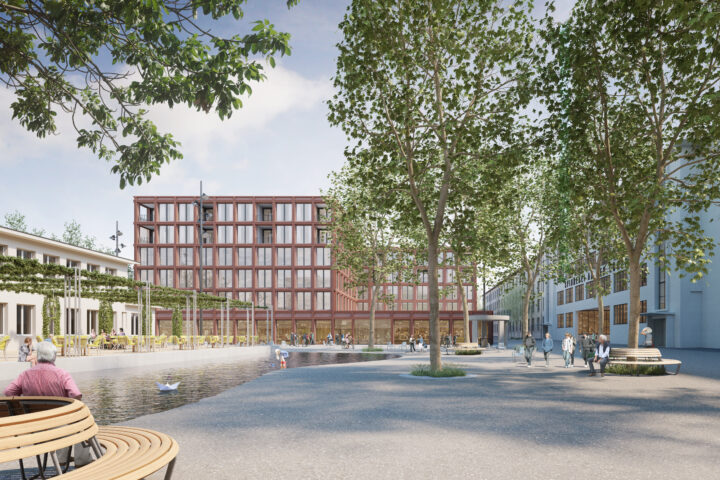
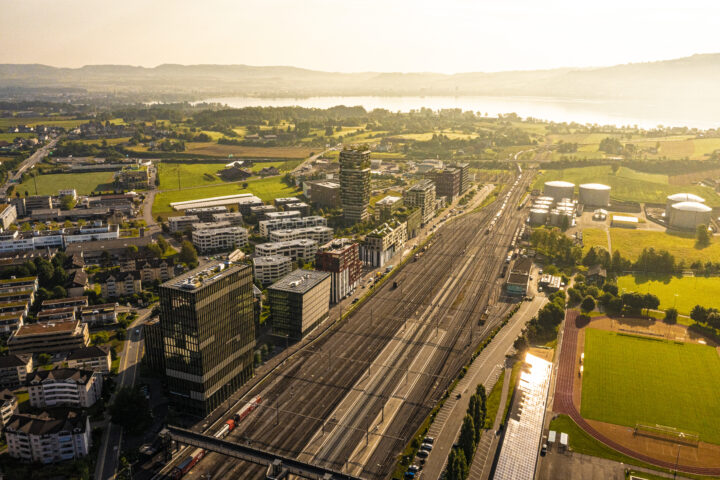
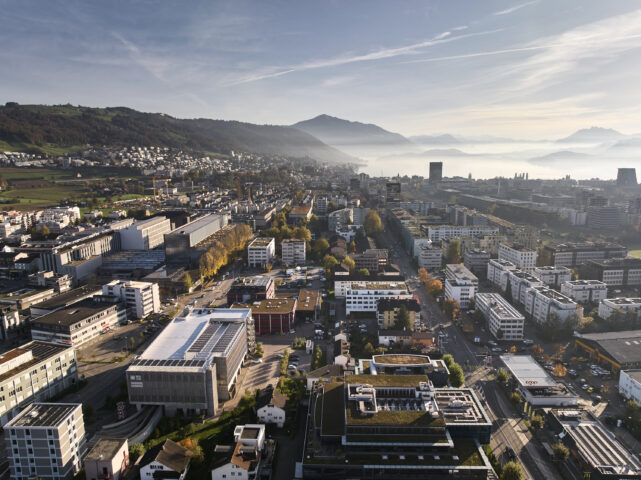
The Schlieren-based real estate and construction company Halter is transforming the Clochettes site in the Champel district of Geneva. As part of the project, Halter was commissioned by Baloise to carry out the energy-efficient renovation, conversion and addition of storeys to three residential buildings from the 1970s. According to the press release, a total of 70 existing apartments will be modernized by January 2029 and 15 new apartments will be created by adding two more floors. The work will start in May and will take place while the apartments are occupied.
As part of the refurbishment, Halter will replace the technical systems and refurbish the façades. Heat recovery and the installation of photovoltaic systems are also planned, according to the project description. The aim is to obtain a Minergie renovation label.
The architectural design by the Grenier Coretra architecture firm maintains continuity with the existing buildings and harmonizes with the neighbouring residential complex. The new apartments will offer a variety of floor plans and room concepts tailored to modern living.
New areas for residents and neighborhood-related uses will be created on the first floor of the buildings. The outdoor areas will also be enhanced with wooded areas to promote quality of life and biodiversity.
The Klybeck site in the border triangle of Basel is to become a modern neighbourhood on the banks of the Rhine. According to a press release, the planning partners Canton Basel-Stadt, Swiss Life and Rhystadt have initiated the klybeckplus indicative project, which forms the basis for the utilisation planning.
The approximately 30-hectare site is to become a mixed neighbourhood with residential complexes, commercial buildings and parks. The aim is to create living space for 8,500 people. According to the plans, a third of the flats will be made available to the public for rent at cost. In addition, 7500 jobs are to be created. The two owners, Swiss Life and Rhystadt, will invest 3 billion Swiss francs in the renovations, according to the press release.
“The finalised indicative project, as it is now available, offers a good basis for realising the enormous potential of the site and creating significant and, above all, long-term added value for the population and the entire region,” Christian Mutschler from Rhystadt is quoted as saying in the press release. Jürgen Friedrichs from Swiss Life adds: “The indicative project shows how the diverse objectives from residential to open space can be combined while at the same time ensuring structural, spatial planning and economic feasibility.” District President Conradin Cramer is convinced that the project will create an “attractive new part of the city for the well-being of the population”.
Cham Swiss Properties is planning an urban ensemble with the construction of the Rocket high-rise and the three Tigerli residential buildings in Winterthur’s Lokstadt. Rocket & Tigerli, as the property company is calling the construction project, will offer space for 300 rental flats in future, 30 per cent of which will be in the affordable segment, according to a press release. The ensemble with the 100-metre high-rise building will therefore not only shape the Winterthur skyline, but also alleviate the city’s housing shortage.
A building permit was already granted by the city of Winterthur in April 2025, albeit with several conditions. For example, the city demanded that the planned hotel use in the “Rocket” be abandoned in favour of the construction of rental flats. As a result of the revision, the construction company is now planning 5,000 square metres of extra living space and is dedicating the ground floor to publicly accessible retail and restaurant space instead of a hotel check-in. The top floor will also be converted with a viewing room and an area for events and catering.
despite the challenges posed by the conversion, the architect is confident:
“A public zone in a residential building brings challenges in terms of privacy and security. But we are confident that we will be able to implement a good solution so that the entire population can enjoy the view from a height of 100 metres,” Thomas Aebischer, CEO of Cham Swiss Properties, is quoted as saying in the press release.
The sustainability concept of the high-rise building has also been improved: instead of a timber hybrid construction, Rocket will now be realised with CO2-equivalent alternatives that offer advantages in terms of cost-effectiveness, plannability and material availability. Certification according to the SNBS Gold standard remains planned.
The building permit is expected to become legally binding in 2026, with construction scheduled to begin in mid-2027. Completion is expected in 2030.
Overall, there is sensible development potential in 30% of the existing settlement areas, which could provide space for 2 million new residents and 1.1 million jobs if a realization rate of 70% is achieved.
The study, carried out by Sotomo on behalf of Urbanistica, suggests that sustainable inner-city development can only succeed if density and settlement quality are combined. Pure densification in locations with good traffic and infrastructure is not enough. Rather, improved local amenities, more green spaces, suitable quiet areas and a differentiated mix of uses must ensure quality of life and social acceptance.
Agglomerations as focal points and areas of opportunity Although cities such as Bern and Zurich have the highest potential per area, the greatest absolute potential lies in the agglomerations. Up to 870,000 people could find new living space there through internal development alone. Municipalities such as Schwerzenbach, Opfikon and Vernier lead the ranking in terms of their development potential.
Challenges in terms of settlement quality At the same time, the study reveals considerable quality deficits, particularly in agglomerations and cities. Problems include an unbalanced mix of uses, noise and insufficient greenery in urban areas as well as a lack of local amenities and access to recreational areas in peripheral zones. There are structural and social deficits, particularly in monofunctional commercial areas and parts of western Switzerland.
Practical application and new business areas For investors and planners, the study offers a precise “treasure map” for identifying clearly usable properties and areas down to zone level. This facilitates strategic decisions and minimizes investment risks. In addition, the data supports the argumentation towards authorities and the population, which can accelerate the process of planning and approval procedures.
The upgrading of existing sites opens up major opportunities for the construction and real estate industry. The transformation of monofunctional commercial areas into lively, mixed neighborhoods is considered a model for success and an important response to the housing shortage and rising construction costs.
Internal development as the key to sustainable growth The study focuses on the fact that internal development is not just a question of space, but above all a question of quality. By concentrating on already developed areas, infrastructure costs can be reduced and urban sprawl curbed. The challenge remains to create social acceptance for redensification and to remove structural barriers. This is a prerequisite for sustainable and liveable urban development in Switzerland.
This study therefore provides a promising, data-based foundation for future urban and regional development in line with the Swiss Spatial Planning Act.
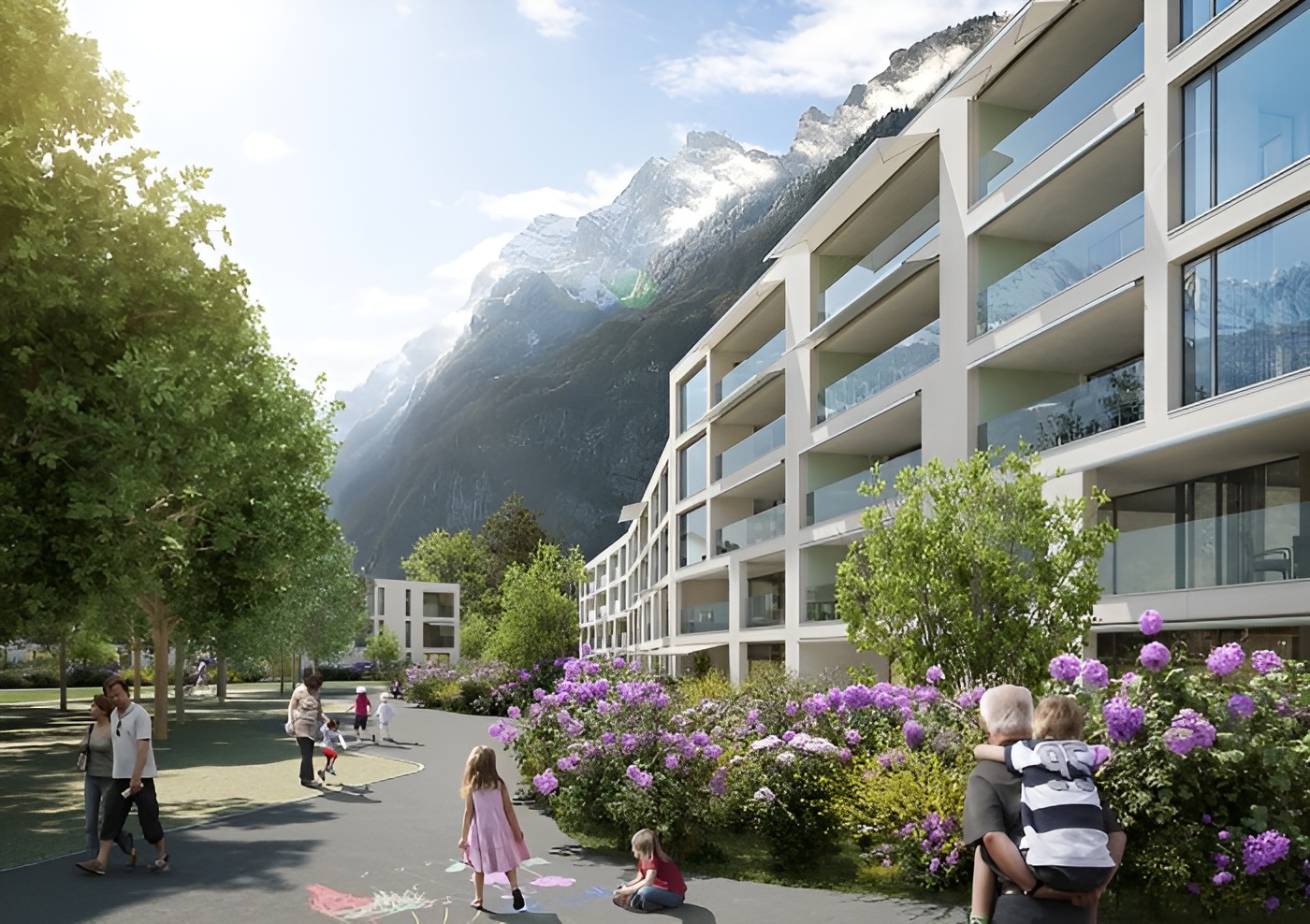
On the 16,000 m² “Feld” site in Näfels, the municipality of Glarus Nord is realising a pioneering residential development together with FT3 Architekten AG. A total of ten apartment blocks with around 98 flats are being built in three rows of buildings. The flats are between 1½ and 5½ rooms in size and are aimed at people at all stages of life – from singles and families to senior citizens. The diverse range of apartments is intended to promote a social mix and revitalise the neighbourhood.
Quiet inner courtyard as the centrepiece of the development The special geometry of the plot results in a diamond-shaped arrangement of the buildings, which enclose a green inner courtyard measuring around 6,800 m². It acts as the centre of the car-free development and offers space for people to meet and relax – protected from the noise of the surrounding traffic routes. The staggered residential buildings also provide a rhythmic structure and create architectural quality as well as optimal sunlight for the flats.
Car-free and central access A central feature of the project is its consistently traffic-free design. Access and all parking facilities are bundled at a central point, keeping the entire residential area free of motorised traffic. This increases safety, creates attractive, liveable open spaces and meets the current requirements for residential and urban development.
Signal for site development and building culture Municipal president Fritz Staub sees Erlenpark as a strong signal for municipal development. Shortly after the overall revision of the NUP II land use planning came into force, the project is an example of how high-quality, space-efficient residential construction projects can be realised in the canton of Glarus. The ground-breaking ceremony took place in April 2025 and the first construction phase will be completed by summer 2027, followed by the second and third phases by autumn 2028.
Modern construction with high standards The planning and realisation by FT3 Architekten AG follows a clear architectural approach. Towards the street, the buildings appear closed and compact, while they open up towards the inner courtyard with generous balconies. The staggering of the storeys supports the natural lighting and gives the buildings a clear structure. Erlenpark is thus a successful example of modern, high-quality construction in the Glarus region. A project with a signal effect for site development in rural centres.
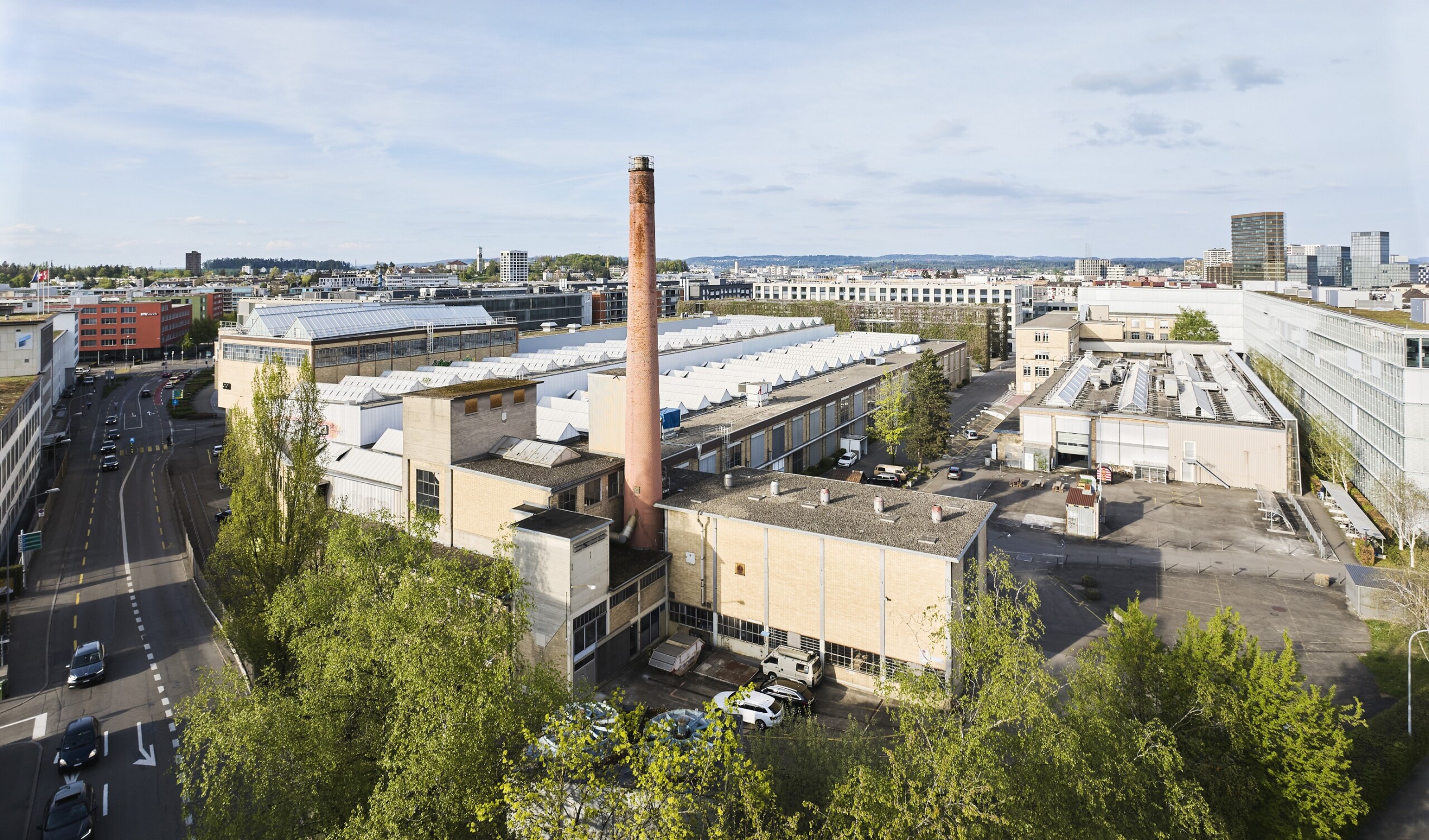
The purchase of the 25,500 m² ABB site by the City of Zurich for a net CHF 106 million is more than just a land purchase. It is a strategic decision with a long-term impact. Thanks to the urban development contract concluded in 2021 and the special building regulations that come into force in 2025, Zurich can shape the future on a centrally located piece of the city. With high density, mixed uses and consistent citizen participation.
Transformation through participation A key success factor is the early and transparent involvement of residents, associations and neighbourhood organisations. The needs of the neighbourhood were directly incorporated into the participatory strategy process. This turned an industrial site into an urban development concept with a high level of social acceptance. Urban planning thus not only gains space, but also trust.
Mix of uses as a driver of innovation The utilisation concept envisages three new construction zones and three existing areas. A mix of non-profit housing, neighbourhood supply, creative commercial use and publicly accessible open spaces is planned. The House for Culture and Circular Economy is a flagship project for innovative urban utilisation. The combination of culture, sustainability and economic activity makes the site a catalyst for new value creation models in urban areas.
Temporary use as an impetus for location quality Before construction work begins, halls and open spaces are used temporarily in a targeted manner. A strategy that brings life to the neighbourhood, promotes social contacts and creates identity even before construction begins. Interim uses are increasingly recognised as a success factor for the attractiveness of locations and resilience in transformation areas.
Public-private partnership with a role model function ABB remains anchored in Oerlikon with 500 jobs and supports the development. The project shows how forward-looking urban development can work constructively with private owners. A model that can be transferred to other urban conversion sites. The combination of urban management and entrepreneurial willingness to co-operate points the way forward.
MFO-West is not an isolated case, but an exemplary model for the urban transformation of former industrial sites. Those who invest in such development areas can help shape new urban qualities. From social integration and innovative utilisation concepts to sustainable value creation. In times of housing shortages, climate targets and new forms of mobility, sites like MFO-West are the key to the city of tomorrow.
Together with Markus Müller, you have been co-heading the location promotion of the Canton of Zurich for over 15 months. What insights have you gained? Zurich stands out within Switzerland due to its economic size. This also means that we are not only heavily involved in cantonal issues, but are also active on the national and, in some cases, international stage. For example, we promote Switzerland as an AI location or share our findings on AI applications in the economy with international partners.
At the same time, I find the close cooperation between business, science and administration as well as politics to be expedient when it comes to creating sustainably attractive framework conditions.
Could you give us a brief overview of the current priorities of location promotion in the Canton of Zurich? The central focal points are:
As just mentioned, the development of attractive, long-term location factors. Through close dialog with business and science, we identify trends at an early stage and provide targeted impetus for location development.
Promoting innovation and strengthening our key sectors of finance, ICT, life science, food, clean and high-tech.
Maintaining and strengthening the diversity of the industry structure. In this context, we also support companies that want to locate here – from the search for a location to obtaining permits.
Our projects, programs and initiatives are based on these three pillars.
What are the long-term visions of the cantonal location promotion department with regard to location development? The attractiveness of a business location depends on a number of different location factors. These range from target group-friendly regulations and digital government services to strong innovative power and the sustainable design of economic areas.we are pursuing the goal of being an attractive, leading and future-oriented innovation and business location with international appeal for companies and the population.
Zurich is one of the most expensive places to live in the world. The high real estate prices and rents are also becoming an increasing burden for companies. What can location promotion do about this? We are committed at various levels not only to the attractiveness and prosperity of the economic area, but also to a high-quality and excellent quality of life. In this respect, the availability of living space also plays a role. One concrete application can be found, for example, in our Innovation Sandbox for artificial intelligence. In the current phase, we are supporting the use of AI in planning applications. We hope that the results will help us to find ways of reducing the building backlog and streamlining the building permit process.
Housing subsidies are also located at official level. It promotes the provision of affordable rental apartments with attractive loans.
The ageing population is affecting the real estate sector and the labor market. What significance does this fact have for the canton of Zurich and how can you respond to it? The topic of demographic shifts and the widening labor market gap has been on our minds for some time at various levels. Over the next few years, many experienced workers will retire – this will increase the competition for talent.
On the one hand, we are working on various projects in the area of recruiting and retaining skilled workers and labor market participation. At the same time, we are currently developing new overarching approaches to demographics that will have a longer-term impact. One thing is clear: tackling the challenge of demography must be approached from a systemic perspective, meaning that many parties and stakeholders need to be brought to the table.
How do you see the role of the canton in the Greater Zurich Area economic region? The Greater Zurich Area is one of the most innovative business locations in Europe – and the canton of Zurich plays a central role in this. As a leading innovation location, we create the framework conditions that companies need to develop successfully. Ultimately, the other cantons within the Greater Zurich Area also benefit from our strong position.
As the economic engine of Switzerland, the Canton of Zurich is also the largest provider of funds for the Greater Zurich Area as a business location. At the same time, our Chief Executive Officer, Government Councillor Walker Späh, is President of the Board of Trustees of the Greater Zurich Area Business Location. The Canton of Zurich is also actively represented in the Greater Zurich Area economic region by the two cities of Winterthur and Zurich. This allows us to optimally represent our interests and coordinate the activities of the Greater Zurich Area as a business location with our own.
How does the cooperation with other cantons within the Greater Zurich Area business location work? What joint projects are currently underway? Cooperation within the organization of the Greater Zurich Area business location focuses primarily on issues relating to relocation. We work very closely with other cantons in various other constellations and committees. For example, in the Zurich metropolitan area, but also on a smaller spatial level, such as in the Limmat Valley. However, not all cantons are always members of the Greater Zurich Area business location.
Current cooperation projects include the 2nd phase of the Innovation Sandbox for Artificial Intelligence, which also includes the aforementioned building permit project, and the repositioning of the Limmatstadt regional location promotion program, in which we are thinking beyond the cantonal borders in functional areas and looking for solutions.
The Basel-based insurer Baloise has completed the study contract for the urban development of the Dreispitz site in Dietikon, according to a statement from the city of Dietikon. The Westspitz neighbourhood is to be built there. The design plan process will begin in summer 2025 and run until the end of 2027, with the building permit procedure and project planning scheduled for 2028/2029. The construction phase is set to last from 2030 to 2032, with completion and occupation scheduled for 2032/2033.
According to the press release, the consortium Penzel Valier in Zurich and ROBERTNEUN, based in Berlin, was unanimously recommended by an independent jury as the winning project for further development. The jury was appointed by Baloise as the owner and leaseholder of the site. The project, known as Westspitz Dietikon, meets the urban planning requirements of the city of Dietikon, supports its development strategy and provides new impetus for an urban, sustainable neighbourhood, it added.
Westspitz Dietikon is located at the intersection of Badenerstrasse and Überlandstrasse. In the coming years, Westspitz is set to grow into a lively, mixed and well-connected neighbourhood. The neighbourhood consists of 80 to 90 percent residential space. Compact residential units for smaller households and larger flats for families are planned, as well as communal areas and noise-protected outdoor spaces. The ground floor zones along Badenerstrasse are to be enlivened by small-scale commercial spaces that meet the needs of residents and the surrounding neighbourhoods, the report continues.
Technical and economic challenges The conversion of commercial buildings into residential space requires considerable structural adjustments. Building depths, lighting conditions and infrastructure pose challenges that require high levels of investment. At the same time, conversion can be economically attractive if the rental potential for residential space is higher than that of office space. Creative concepts such as modular building elements or alternative living models such as co-living can facilitate realisation.
Legal hurdles and political factors Building regulations, zoning plans and the NIMBY phenomenon (Not In My Back Yard) can delay or prevent projects. Early dialogue with authorities and residents can help to minimise resistance. In addition, politicians are increasingly willing to adapt the regulatory framework in order to facilitate conversions.
Innovative practical examples Successful projects such as the conversion of the Rennbahnklinik in Muttenz or the pilot project on the former ZWHATT industrial site in Regensdorf show that sustainable living space can be created through flexible concepts, reduced construction costs and intelligent space solutions.
Future prospects Conversions offer great potential for overcoming the housing shortage and for resource-saving urban development. Success requires innovative planning, political support and a co-operative approach between investors, authorities and the population.
The owners Ina Invest and Estella Invest and the developer Implenia decided in favour of a digital project competition in which a digital 3D model was submitted instead of physical models. This made the jury process much easier, as different levels and elements could be flexibly combined and analysed. The winning design for the first construction phase, a combination of the proposals from Enzmann Fischer Partner AG and ORT AG, impressed with its innovative floor plans and a well thought-out design of the open space that harmoniously combines living and working.
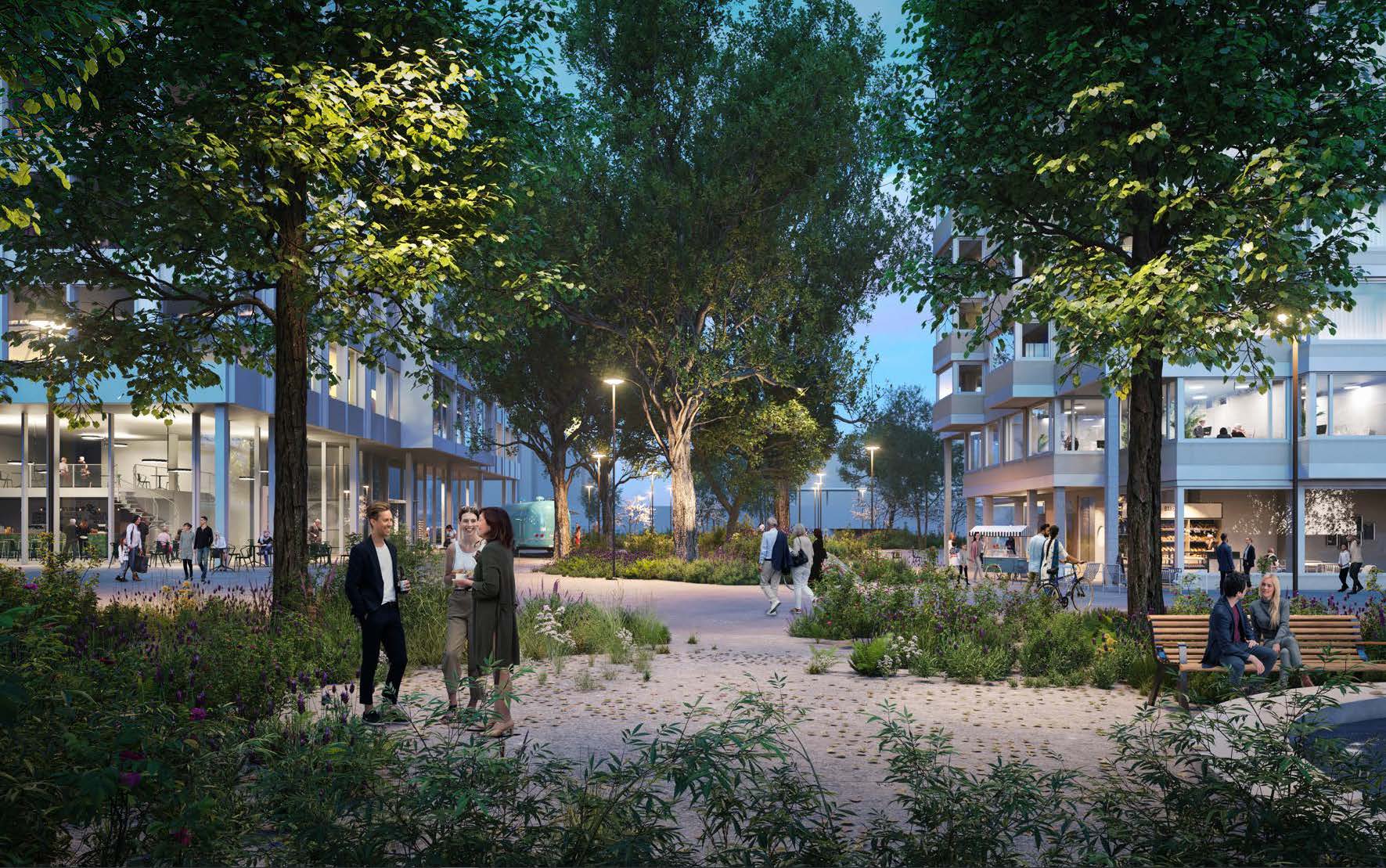
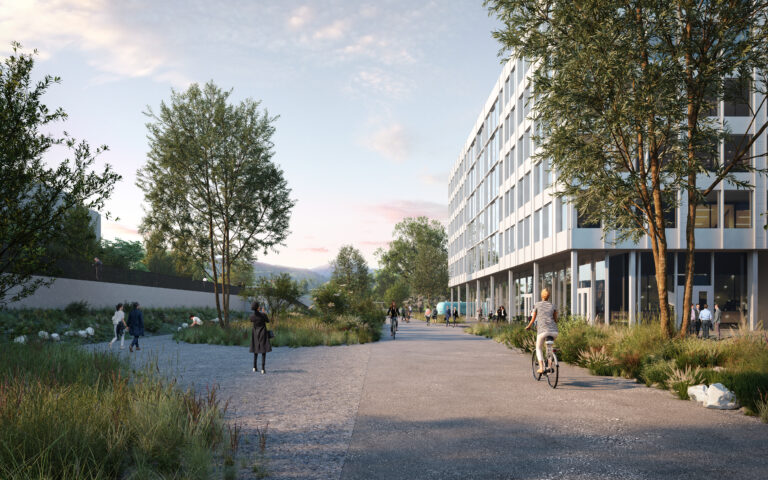
Open space design as the key to the attractiveness of the neighbourhood The Unterfeld Süd neighbourhood will be enhanced by generous open spaces, which extend along the Stampfibach stream. An ecologically valuable green space is being created here that offers a wide range of uses. The central arrival square at the S-Bahn station will be transformed into an inviting place to meet and linger thanks to tall trees and green islands.
High-rise building with a view to the future The 60-metre residential tower block in the first phase is impressive not only for its height, but above all for its well-thought-out floor plans and flexible room layouts. The generous windows offer impressive views from every flat, while the bay windows on the façade allow residents to enjoy both the outside and the inside of their own flat.
Commercial building as a centre for dynamic companies The adjoining commercial building also focuses on flexibility. Two glazed inner courtyards create islands of light that can be used as break areas. With its flexible room structure, the building offers space for a wide range of uses – from small offices to larger rental spaces for anchor tenants.
The second phase will provide affordable housing and flexible commercial space The second construction phase, the planning of which is already at an advanced stage, will focus on affordable rental flats and owner-occupied flats. The inner courtyard of the planned perimeter block development in the second phase will create opportunities for retreat and public meeting spaces in equal measure. The buildings along Nordstrasse are deliberately designed to minimise noise pollution. A referendum on the second stage will also be held in Baar in 2025.
Sustainable architecture and flexible usage concepts The architecture of the buildings reflects the vision of a future-oriented neighbourhood. The combination of flexible living, versatile commercial space and well thought-out open spaces creates a lively and attractive cityscape. Particularly noteworthy is the combination of living and working, which is supported by well thought-out spatial concepts and attractive outdoor areas.
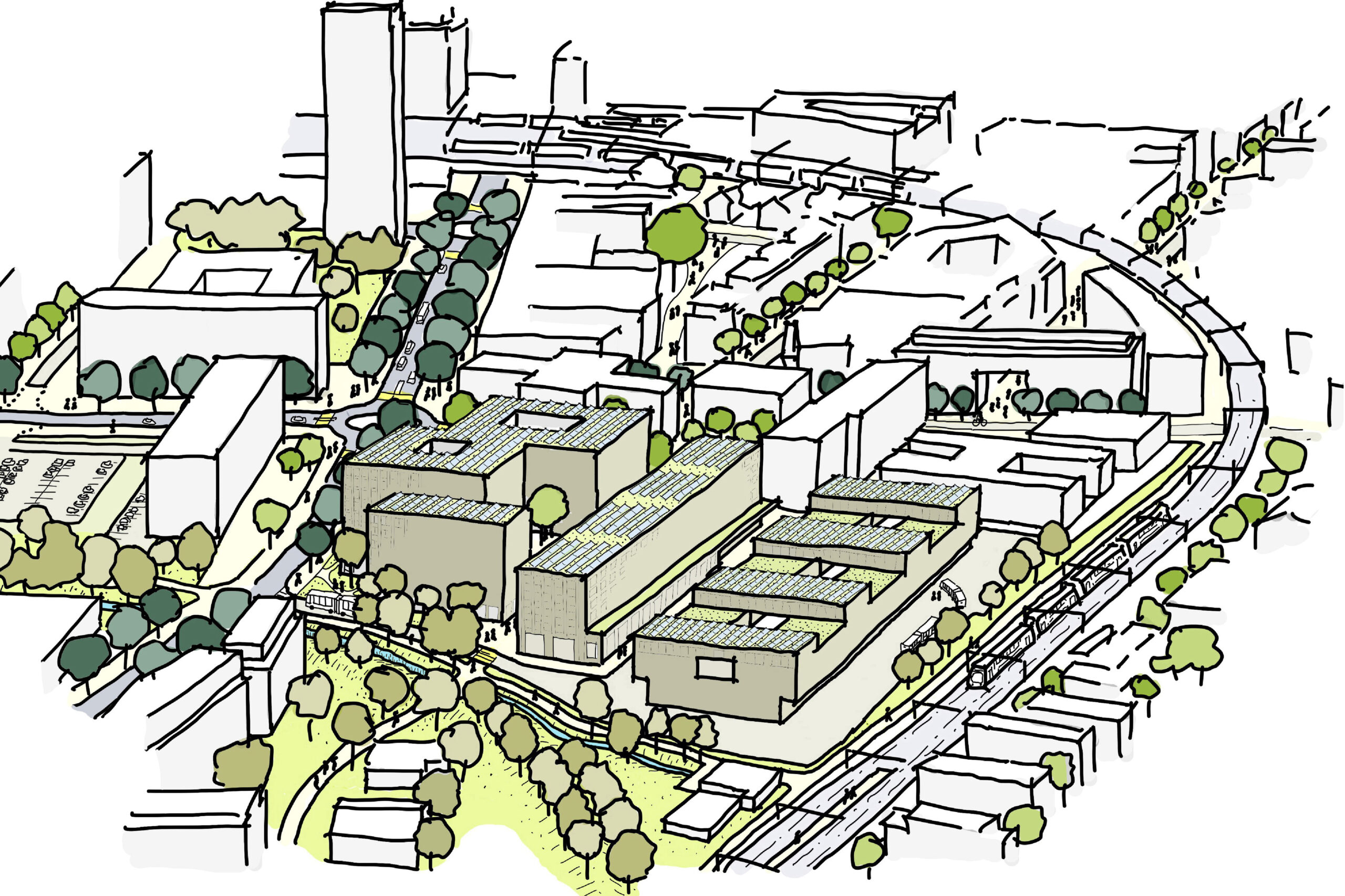
The “An der Aa” project aims to repurpose and densify the ZVB site. Key elements include increasing the living and working space, a modern infrastructure for public transport and emergency services and opening up the neighbourhood to the local population. Of the planned flats, 40% are to be offered at an affordable price in order to meet the demand for affordable housing in Zug.
Infrastructure for mobility and emergency services In the centre of the new district, a state-of-the-art building will be constructed to house the Zug rescue service and the cantonal administration. The proximity to the new ZVB main base will enable synergies, for example in vehicle maintenance. The new infrastructure will meet the increasing demands of public transport and rescue services and contribute to future-proof mobility.
Focus on quality of life The site is being densified and ecologically upgraded. The Siehbach stream will be uncovered and a barrier-free footpath integrated. Green spaces and public squares will enliven the neighbourhood and provide space for recreation. The Schleifendamm will be secured as a biodiversity-rich oasis for plants and animals and contribute to the quality of life in the neighbourhood.
Legitimisation and broad support Work on the “An der Aa” project has been ongoing for 14 years, involving various stakeholders from politics, administration and the public. With 81.3% approval in March 2024, the people of Zug have given their support to the development plan. Construction is scheduled to begin in 2025 and be completed by 2032. Thanks to this broad support, the neighbourhood will become a flagship for innovative urban development in Zug.
Future prospects The project will change the face of Zug and meet the growing demand for residential and commercial space. The new infrastructure will create capacity for a significantly higher volume of public transport passengers and secure the operation of the emergency services.
The cantonal structure plan regulates the main features of the desired spatial developments. It sets out in text and on maps how the cantons and municipalities should develop.
The need for more affordable living space is recognised by politicians and the canton: In addition to “conventional” flats, flats for families, affordable flats and flats for the elderly are also being built in the various areas.
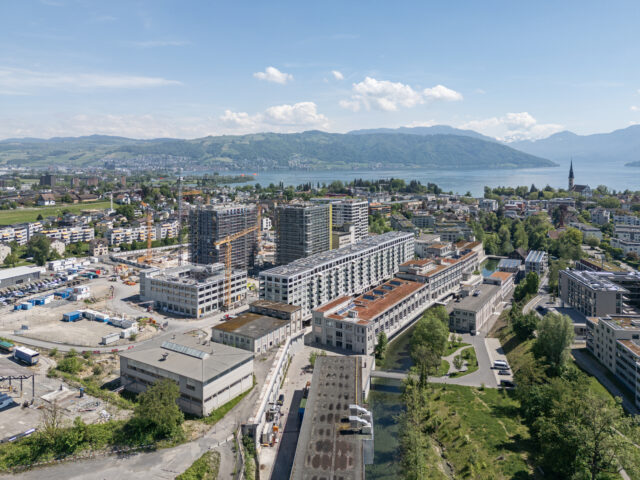
A wide variety of site developments are taking place across almost the entire perimeter of the “valley communities”. In addition to the sites, the traffic situation is also being further developed and adapted to the increased utilisation: Examples range from the conversion of bus stops to bypasses to relieve the burden on Cham town centre. This also includes car-sharing concepts, such as at the Papieri site in cooperation with AMAG.
A lot is also happening in public transport. In future, the Papieri site in Cham is to receive an express bus via the bypass motorway and the Unterfeld Süd site will have a bus stop in the neighbourhood.
Sustainability plays a decisive role in new projects in particular. The Zug area plays a pioneering role in this respect. The Papieri site in Cham was honoured with the prestigious Watt d’Or award from the Swiss Federal Office of Energy. This emphasises the site’s initiative in the field of renewable energies. A climate-neutral district is being created here that relies entirely on renewable energy sources and covers 75% of its energy requirements on site. The innovative technologies contributing to the high level of energy self-sufficiency include hydroelectric power plants and photovoltaic systems. Geothermal energy is used for heating and cooling.
The sustainability certificate, awarded by the Swiss Sustainable Building Council to Suurstoffi in Rotkreuz, recognises the sustainable construction methods and holistic planning of the project. The award proves that the highest standards in terms of energy efficiency, mobility and biodiversity have been met. The projects show that Zug not only assumes ecological responsibility, but also serves as a model for forward-looking urban development in Switzerland. By utilising innovative concepts and technologies, the canton of Zug is positioning itself as a pioneer in the sustainable design of urban living spaces.
The other sites are also impressive. The construction of a high-rise building in timber construction is planned on the Tech Cluster site. The “lighthouse project” called “Project Pi” envisages the construction of an innovative residential tower block. With a height of 80 metres, the plan is to build one of the tallest timber high-rises in Switzerland with affordable flats.
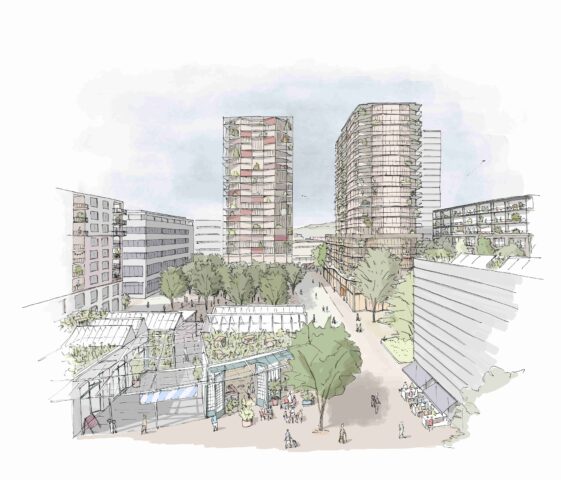
Baar – Unterfeld Süd A mixed-use neighbourhood with around 400 residential units and around 1,000 workplaces is planned for the Unterfeld Süd area. The basic structures were defined by representatives of the population of Baar together with experts under the leadership of the municipality. The development plan for the first of three construction phases was put to the people of Baar for a vote on 22 September 2024. The plan was approved with 74 per cent of votes in favour.
The realisation of the first stage includes the high-rise building at the Baar Lindenpark light rail station and the neighbouring commercial building. These will be transferred to a joint development plan. The earliest possible start of construction of the first stage is planned for 2025. The remaining building plots will be developed in parallel and realised in subsequent construction phases. According to current planning, Implenia’s project will be completed in 2029, provided the subsequent plans are approved by the relevant authorities and construction proceeds according to plan.
Hinterberg South (Städtler Allmend) The Hinterberg Süd site in the Städtler Allmend employment area in Cham will become a new, lively and easily accessible working and shopping centre for the local population. It offers attractive space for new companies to set up shop and ground-floor uses for the neighbourhood. The upper floors of the office buildings offer flexible spaces that can be customised to the individual needs of future companies.
Publicly accessible uses such as a restaurant, café or bakery are located on the ground floors. They offer workers, shoppers, visitors and passers-by various consumption options and contribute to the revitalisation of the area and the entire neighbourhood. The four buildings surround a public square – the actual centrepiece of the site, which is open to the general public as a place to meet and spend time.
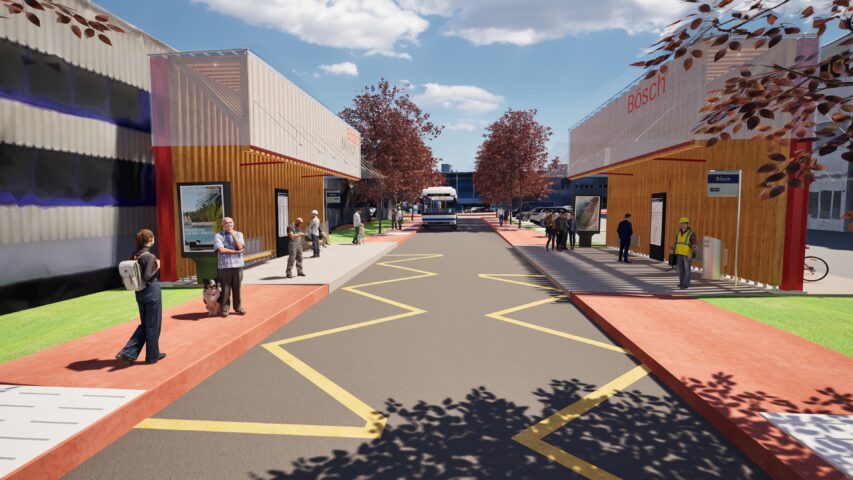
Bösch Hünenberg In order to meet the requirements of a growing service and commercial area, the infrastructure needs to be adapted. The Bösch area should become more attractive for workers and companies and offer space for 6,000 jobs in future. This densification is provided for in the cantonal structure plan. It is binding for the municipality of Hünenberg. The vision is for the Bösch area to develop into a modern and urban place of work that is attractive to investors. To this end, space is to be created through structural densification, which can also lead to an increase in jobs. A holistic landscape design and well-organised mobility will ensure a better quality of life in Bösch. New leisure, supply and catering facilities ideally complement everyday working life in Bösch. On 9 December 2024, the municipal assembly will decide on the road credit of CHF 2.9 million to finance the first stage of the implementation of the operating and design concept in Bösch.
LG Zug Due to its size and prominent location, the LG site is of central importance for the urban perception and urban character of Zug. A lively urban district with a convincing architectural design is to be created on the site of the former industrial area. With the necessary development plan, the planning and building law of the Canton of Zug ensures high-quality development and realisation.
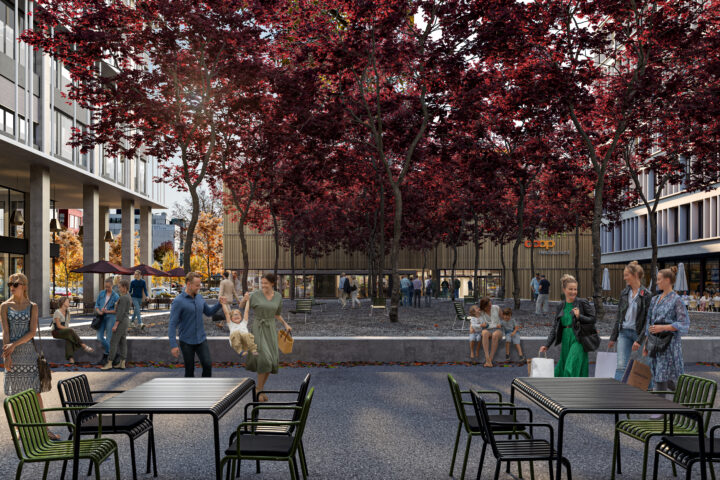
Papieri Cham The Cham Group is developing a new residential and working neighbourhood with industrial charm on the Papieri site. Directly on the River Lorze, the distinctive existing buildings of the former paper factory are being supplemented with striking new buildings and realised in a sustainable way. A new meeting place with supra-regional appeal is being created here, where past and present go hand in hand. A new urban district with around 1,000 flats and 1,000 jobs is being built in several stages over eleven hectares on the site of the former paper factory. It is not being built on a greenfield site, but in the midst of buildings steeped in history: The conversion of characteristic existing buildings preserves the connection to the past – the industrial roots of the neighbourhood remain tangible.
They are complemented by striking new buildings, including five tower blocks with impressive views. The new neighbourhood directly on the Lorze offers an attractive mix of commercial space, flats, lofts, workplaces, studios, open spaces and public-oriented uses. All of this on a sustainable and well-balanced site that maintains – and continues to write – its own history.
The Papieri site creates new foundations for an energy-efficient, climate-neutral and sustainable society. It is a pioneering project throughout Switzerland.
Spinning mill on the Lorze Many threads once ran together in the largest spinning mill in Switzerland. The construction of the spinning mill on the River Lorze shaped the development of Baar in the middle of the 19th century. A new, lively neighbourhood with shops, cafés and other local businesses is being created around the historic spinning mill building, which characterises the public pedestrian zone. In addition to family flats and affordable flats, there will also be flats for the elderly. These will be complemented by vegetable gardens, green façades and shady trees.
Suurstoffi The Suurstoffi site was the first site in Switzerland to be awarded the DGNB platinum certificate for sustainable neighbourhoods in planning and construction by the Swiss Sustainable Building Council (SGNI). The DGNB certification confirms that Zug Estates has realised a prime example of sustainable site development with the Suurstoffi site in Rotkreuz. It meets the comprehensive quality requirements of the DGNB certification system, which includes criteria such as energy efficiency, CO2 emissions, life cycle assessment, grey energy, flexibility of use and recyclability of the materials used. The Suurstoffi site is one of the first lighthouse projects of the last 10 years. This also includes the “XUND” health education centre, for which one of the last buildings is currently being completed.
Tech Cluster From June 2018 to May 2019, five renowned Swiss and one Austrian team took part in an overall performance study to explore how affordable living in a high-rise building can be made possible using state-of-the-art construction methods and sustainable materials. At the same time, a study contract was drawn up for an overall urban development concept for the surrounding area of the city of Zug between Baarerstrasse, Göblistrasse, Industriestrasse and Mattenstrasse.
The Tech Cluster Zug builds on the preliminary investments made by V-Zug and other companies in the Metall Zug Group. Its potential lies in the diverse relationships and synergies between the future users. These will transform the current factory site into an innovative and exciting part of the city of Zug.
The abolition of the imputed rental value, a tax that is unique in Europe, is in danger of failing once again. There is broad agreement in both councils that the system needs to be reformed. However, its implementation remains highly controversial. The issues of property tax for second homes and the debt interest deduction in particular are causing conflict.
In its third deliberation on Thursday, the Council of States maintained the abolition of the imputed rental value for primary residences only. It also maintained its position on the debt interest deduction. In future, deductions of up to 70 per cent of taxable property income should remain permitted. The National Council, on the other hand, is calling for a complete system change and also wants to exempt second homes from tax.
Tourism cantons put the brakes on The majority rejection in the Council of States is primarily due to the concerns of the tourism cantons. They fear a considerable loss of revenue due to the abolition of the imputed rental value for second homes. The proposal of a property tax to compensate for this has met with resistance there. “We need to focus on primary residences,” emphasised Martin Schmid (FDP/GR). The introduction of a property tax would present “extremely high hurdles”, as it would require a constitutional amendment with a double majority.
Realistic collapse of the bill The collapse of the bill seems increasingly likely. Even the abolition of the imputed rental value for primary residences is facing headwinds. The tenants’ association has already announced a referendum. Its president, Carlo Sommaruga (SP/GE), criticised the bill as a “tax giveaway for rich homeowners” that does not solve the inequality between tenants and owners.
Doubts are also growing within the centre-right parties. Pascal Broulis (FDP/VD) warned that the bill would unnecessarily complicate the tax system. The National Council must first decide on the bill again before a possible conciliation conference could follow. However, there is currently no majority solution in sight.
Once again this year, EXPO REAL conducted a survey among its participants. Of the 516 exhibitors and visitors surveyed, 91 percent consider digitalisation to be a very important or important topic, followed by interest rate policy and energy solutions for neighbourhoods. Stefan Rummel, Managing Director of Messe München, emphasises: “EXPO REAL 2024 is not only dedicated to the important topics of the future in the conference programme, but also in the new ‘Transform & Beyond’ exhibition area.”
Changing types of use and investor interests The survey also shows that new types of use are gaining in importance. For 70 per cent of respondents, the residential sector is in first place, followed by care properties and data centres, which have become much more relevant. Interest from future-oriented investors such as pension funds and family offices also remains high.
Focus on affordable housing Another key issue is the creation of affordable housing. 95 per cent of respondents see building in existing buildings as a decisive factor, closely followed by the cost of land and serial construction. These topics will also take centre stage at this year’s EXPO REAL, with a special exhibition and practical examples.
Europe remains attractive Globally, Europe remains a key market for property investment, with 81 per cent of votes. Western Europe and the D-A-CH region are seen as particularly important future markets. The USA and the Asia-Pacific region also continue to offer potential.
The survey for EXPO REAL 2024 makes it clear that the transformation of the real estate portfolio and digitalisation are key factors for the future of the industry. With diverse discussions and new exhibition formats, EXPO REAL from 7-9 October will address the pressing challenges and offer space for exchange and solutions.
The housing shortage in the city of Zurich is alarming. With a vacancy rate of just 0.06%, there is a massive need for new living space. This is precisely where a non-partisan initiative comes in, calling for the building regulations to be amended so that existing buildings can be extended across the board. This measure could help to quickly create additional living space and counteract the enormous pressure on the Zurich housing market.
Timber construction as an ideal solution for adding storeys Timber construction is particularly suitable for adding storeys due to its low dead weight. Compared to solid building materials, timber allows existing buildings to be extended without putting a significant strain on the structures below. This means that even multi-storey extensions can be realised without the need for extensive structural reinforcements. Wood also scores highly thanks to its outstanding energy properties, which leads to significant savings in heating costs.
Synergy of space gain and energy efficiency Storey extensions not only offer additional living space, but also the opportunity to renovate the entire building envelope and optimise its energy efficiency. This improves the energy efficiency of the entire building, which leads to lower operating costs in the long term. The newly created space, which is generally of high quality and therefore easy to let, helps to amortise the investment in the extension and energy-efficient refurbishment.
Initiative meets with broad support The initiative “More living space by adding storeys – neighbourhood-friendly and sustainable” has already met with broad support. More than 4,000 signatures were submitted before the collection deadline, which emphasises the great interest of the population in this solution. The implementation of this initiative could be an important step towards effectively counteracting the housing shortage in Zurich and at the same time promoting sustainable building practices.
Around 56% of the world’s population currently lives in cities, a figure that is set to rise to 70% by 2050. This urbanisation brings with it numerous challenges, including increasing demands on space and land use as well as conflicting objectives between different sectors. Forward-looking planning is essential in order to make cities, rural areas and the areas in between fit for the future. BAU 2025 will show what answers already exist and where new approaches need to be developed.
Blurring boundaries between urban and ruralareas Traditionally, urban and rural areas were defined by clear geographical and functional boundaries: cities as centres of population, industry and services and the countryside as an agricultural area. However, these boundaries are becoming increasingly blurred and the challenges facing urban and rural areas and the space in between are becoming more and more similar. Issues such as demographic change, necessary infrastructure, mobility and sustainable spatial planning and settlement development affect all regions equally.
Spatial planning and spatial development The tasks of spatial planning and spatial development are central to the sustainable design of our living spaces. These range from sustainable land use and the avoidance of land sealing to the promotion of social integration and quality of life. The “New Leipzig Charter” serves as a policy document of the National Urban Development Policy and offers guidelines for innovative and sustainable solutions in urban planning and neighbourhood development. The digital transformation and changing demands on consumption and mobility require a new mix of production, work and living in favour of vibrant neighbourhoods.
Transformation of existing buildings The adaptation and upgrading of existing buildings is a key future task for the construction industry. Intelligent concepts for the flexible conversion and continued use of existing buildings help to preserve cultural identity and minimise emissions. Examples of this include the conversion of former industrial sites into vibrant urban districts and inner development in rural areas, which revitalises and uses existing buildings. Innovative projects combine public infrastructure and social services, promote the sustainable use of resources and revitalise town centres.
Ecological transformation as an investment in the future The ecological transformation of our cities and rural areas is a genuine investment in the future. It leads to climate-friendly living conditions and offers economic added value for everyone involved. Architects, interior and landscape architects and urban planners combine ecological, social, economic, functional and design aspects and support the harmonisation of individual interests with the common good. Prof. Lydia Haack, President of the Bavarian Chamber of Architects, emphasises the importance of “ClimateCultureCompetence” and the responsibility of members to drive forward the ecological transformation in planning and construction.
Affordable housing Affordable housing is crucial for stabilising local communities and the economy. The creation of 400,000 homes per year, as agreed in the coalition agreement, contrasts with the decline in residential building permits. New strategies for repurposing existing buildings, such as office buildings or hospitals, as well as innovative forms of housing that focus on community and openness, are approaches to creating affordable housing and promoting social interaction.
New formats and processes Sustainable development in urban, spatial and regional planning requires new processes, methods and tools in order to be able to react quickly to current challenges. The rapid digitalisation and technological progress of the last 20 years require dynamic processes that need to be continuously adapted. Scenario development and innovative participation formats promote new ways of co-design and acceptance. Best practices and scalable impulses will be presented at BAU 2025, as will the necessary product and system innovations.
The average rent burden of all households in Switzerland is between 17% and 27.8%, depending on the definition of the ratio approach. The analysis shows that the assessments of the unaffordability of housing vary considerably depending on the measurement approach chosen: The proportion of households for whom housing is unaffordable ranges from 6.7% to 26%. These differences emphasise the need for a differentiated view of the housing cost burden.
Influence of income class and household type The differentiation of households by income class and household type has a considerable influence on the rent burden. Households in the lowest income quintile spend up to 51% of their disposable income on gross rent, while households in the top quintile pay a maximum of 17.2%. Single households over 65 in the lowest income quintile are particularly badly affected, with a rent burden of up to 64%.
Ratio approach as the preferred method The ratio approach, which measures the housing cost burden as a proportion of income, is considered more practicable than the theoretically optimal residual income approach. The differentiated ratio approach, which varies by income class and household type, allows a more accurate assessment of housing affordability and is more applicable than pure rental cost benchmarks. Granular data on population, income and housing support this differentiated analysis.
Need for a clear definition and further research The concept and objectives of affordable housing planning must be clearly defined. Owners and developers can only create targeted offers if precise thresholds for different household types and income brackets are available. Future research should focus on determining appropriate thresholds and clarifying which specific components of housing costs and income should be considered in the affordability analysis.
Optimising pricing to encourage investment Differentiated pricing based on actual incomes can reduce vacancy and letting risks and encourage investment in new housing. The application of a differentiated ratio approach provides a solid basis for assessing housing affordability in Switzerland and contributes to the creation of sustainable and affordable housing.
The affordability of housing is currently at the centre of political and public attention. According to the Federal Statistical Office, prices for the “Housing and energy” category of the national consumer price index rose by an annual average of 9.3 per cent between 2020 and 2023, well above the general inflation rate of 5.6 per cent. This development has intensified political calls for more affordable housing and greater support for tenant households.
Stable trend in affordability The analysis of the affordability of housing costs – i.e. the ratio of housing costs to gross income – shows a stable trend over the last 20 years. Despite rising rents and property prices in real terms, the average burden ratio for Switzerland as a whole has remained constant at around 20 per cent of gross income, well below the limit of 30 per cent that is considered affordable. However, a breakdown of the burden ratio according to various household characteristics indicates a certain deterioration in affordability for mobile households – i.e. households that have recently moved into a flat. Single-person households and households in densely populated regions, which often have a high level of housing consumption, are subject to an above-average burden.
Costs of subsidised housing already exceed those of subsidised housing Subsidised housing is used more frequently than subsidised housing at all levels of government. The estimated direct costs of object support currently amount to around CHF 88 million. In addition, there are indirect costs such as lost interest, rental and building lease income, which are estimated at CHF 560 to 830 million per year. Subject assistance, which mainly takes the form of social welfare and supplementary benefits, already costs CHF 1.7 billion a year. Despite higher overall costs, subject assistance does not prove to be significantly more expensive per supported household compared to object assistance.
Advantages of subject assistance as a housing policy instrument Comprehensive subject assistance could improve the accuracy of Swiss housing policy. The study shows that the “supplementary benefits” model would require state support of around CHF 1.45 billion, with 12.6 per cent of Swiss households being eligible. A model like the one in Basel-Stadt, which only supports households with children, would cost just under CHF 700 million and cover 3.6 per cent of households. These costs would be only slightly higher than those of the current property subsidy.
Cost-benefit ratio crucial The study suggests that the introduction of nationwide subject aid could substantially improve the targeting of housing policy. Although subject aid may be more expensive, it has a better cost-benefit ratio. The possibility of tailoring subsidies to target groups, situations and needs makes subject aid an efficient and effective housing policy instrument. The financial outlay depends heavily on the practical organisation of the system, and fears of possible price pressure on the housing market are only justified under certain conditions.
The study ” Living space utilisation from an individual perspective ” conducted by the Zurich University of Applied Sciences(ZHAW) revealed that 70 percent of those surveyed are not prepared to downsize their living space. Among those living in so-called empty nests, i.e. with empty rooms of fledged children, only 26 per cent feel that their home is too big. An excess of two rooms, i.e. two more rooms than the number of people living in the household, is considered ideal by the respondents, according to a statement from the ZHAW. According to the study, only 42 per cent of respondents willing to move are prepared to reduce the number of rooms. 32 per cent do not want to deviate from their expectations regarding housing costs.
“It turns out that the combination of moving and downsizing – i.e. two drastic changes at the same time – is particularly challenging,” Selina Lehner, co-head of the study, is quoted as saying. “If there is also a lack of important incentives, this decision is often postponed.” Only one in three people surveyed believe that older couples or single people in flats that are too large should give up their living space for younger families. According to the ZHAW, the fact that the new rent for smaller flats is often more expensive than the existing rent in the larger flat plays a role here.
The home office is gaining in importance. 61 per cent of those surveyed stated that they wanted to set up a home office in the future. This is because “an external office, for example, is not as attractive as an office within your own four walls,” says study co-leader Holger Hohgardt.
In the midst of the dynamic development of the north of Zurich, a showcase project is being created that meets the demands of a growing city. The existing Luchswiese housing estate, characterised by its green garden city atmosphere and three four-storey apartment blocks, will be replaced by a variety of living space and educational facilities. The winning project “Pergola” by Blättler Heinzer Architektur and KOLLEKTIV NORDOST Landschaftsarchitekten is characterised by a careful densification that preserves the garden city character while creating modern living and learning space.
The use of prefabricated timber construction systems will create 76 flats that will appeal to families in particular thanks to their diversity. The integration of four kindergartens with childcare infrastructure and a multi-purpose hall for the day school in the western building block directly adjacent to the school grounds emphasises the innovative concept of the development. This organic combination of housing and education creates a harmonious ensemble that is complemented by flowing green spaces and green roof terraces.
The winning project “LYNX” by Parameter Architekten and Rosenmayr Landschaftsarchitektur for the neighbouring Luchswiesen school complex is faced with a growing need for school space. The city is planning a significant extension here by 2028, which will provide new space for 750 children. Inspired by Max Kollbrunner’s original architecture, the extension combines old and new elements and integrates a triple sports hall as well as modern classrooms and childcare facilities. The resource-conserving construction method, including the use of photovoltaic elements and timber in skeleton construction, underlines the city’s commitment to sustainable development.
This project is an impressive illustration of how creative urban planning and close collaboration between different stakeholders can find solutions to the challenges of urbanisation. The Luchswiese housing estate and the Luchswiesen school complex are a forward-looking model for living and learning together in Zurich.
The “ALTO” project, initiated by the property company HIAG, fits seamlessly into the urban transformation of Zurich Altstetten, a district that is changing from an industrial to a lively residential and working area. The plan is for an 80-metre-high residential building that is characterised by its integration into existing structures and its sustainable construction.
The ground floor of the new building will be used for commercial purposes and open to the public, while the first floor will serve as a social centre for residents with communal spaces, a roof garden and studios. In addition, modern flats will be built on the 25 floors above, reflecting the new urban lifestyle in Altstetten.
In addition to the residential use, the neighbourhood will be further enhanced by the project. The Shedhalle, formerly part of the Fiat garage, will be converted into a food market with an attractive range of fresh produce and will take on the function of a local supplier. There are also plans to construct an urban loggia, which will serve as a public meeting place that incorporates the community concept and emphasises the urban quality of the area.
Sustainability plays a central role in the development of the “ALTO” construction project. The use of resource-conserving materials and the design of permeable open spaces emphasise the commitment to environmentally friendly urban development. As the first residential tower block in the canton of Zurich, the façade will be fitted with photovoltaic panels throughout, allowing tenants to benefit from the electricity they generate themselves. An innovative mobility concept, which provides for a significant reduction in parking spaces, rounds off the future-oriented overall concept.
With completion scheduled for spring 2026, the “ALTO” construction project will not only offer new living space in Zurich Altstetten, but will also serve as a showcase project for sustainable urban development and social coexistence.
The vacancy rate for flats in the canton of Zurich has reached a new low. With a vacancy rate of just 0.53 per cent, availability has fallen further below the previous year’s already low figure of 0.61 per cent. Flats with up to three rooms are particularly scarce, while larger units tend to remain unoccupied. The greatest challenges exist in the urban centres of Zurich and Winterthur as well as in the Zurich Oberland.
In the city of Zurich, almost no flats are unoccupied – the rate is a marginal 0.06 per cent. Even among new builds, of which 2,900 units were completed, only seven flats were not immediately occupied. Winterthur also recorded an all-time low vacancy rate of 0.19 per cent, despite the completion of around 400 flats in new development projects.
The decline in the vacancy rate signals a discrepancy between the expansion of housing supply and rising demand. Although construction activity is continuing, it is not keeping pace with demand. Net housing production remains below the long-term average.
The challenge of providing sufficient living space to meet demand remains in the canton of Zurich. The current figures emphasise the need to further intensify construction activity and find innovative solutions to create more living space.
The situation on the housing market in the canton of Zurich requires continued and intensified efforts on the part of all stakeholders. Striking a balance between supply and demand remains a key task for the coming years in order to effectively tackle the housing shortage.
The city of Winterthur is tackling one of the four individual projects in the development of the Obertor site. The buildings at Obertor 11, 13 and 17, which were previously used by the city police, are to be extensively renovated and converted into new office, commercial and residential space. The properties will remain in municipal ownership and will be subject to the cost rent, the city administrationannounced in a press release. The costs for the structural remodelling are estimated at CHF 16.2 million in total.
The two four-storey buildings at Obertor 11 and 13, which were built before 1850, will be returned to their original use. Commercial space will be created on the ground floor and a total of seven flats will be realised on the upper floors. In addition to an energy-efficient refurbishment and the renewal of all building services installations, a new staircase and lift core is planned in the buildings. In addition, “the façades will be adapted to the new use where necessary”, writes the city administration.
The property at Obertor 17 is a rococo villa dating back to 1764, which has served as a police station since its renovation in 1947. Now the original room layout is to be restored and the building shell repaired. Inside, “new office space will be created, which will allow the historic interior to be emphasised again”. The Haus zum Adler is also to undergo an energy-efficient refurbishment and the renewal of the building services installations. Fire protection and earthquake safety are also to be improved.
The property sector faces the challenge of reducing its carbon footprint. While institutional investors have already made progress, Fredy Hasenmaile points out that the next step is to consider grey energy – the energy used to construct properties and their materials. Previous efforts have focused mainly on the operational phase of properties, but including grey energy in the calculations could revolutionise the understanding of sustainability in construction.
In his analysis, Hasenmaile also points to a problematic misallocation of living space in Switzerland, caused by the current tenancy law, which leads to a large discrepancy between asking rents and existing rents. Older households in particular remain in flats that are too large, as moving to smaller units is financially unattractive. This leads to inefficient utilisation of living space and an increasing housing shortage.
The study by Raiffeisen Switzerland identifies enormous potential for improving the allocation of living space: if flats were distributed in such a way that each household had just one more room than people, 170,000 flats could be saved. This would not only alleviate the problem of housing shortages, but would also save considerable amounts of grey energy.
In view of the expected increase in new rents and the resulting increase in disincentives, which also lead to vacancies and low tenant mobility, Hasenmaile appeals to the need to address the causes of this misallocation under tenancy law and to find innovative solutions for a more effective transfer of living space.
Switzerland is experiencing a remarkable dynamic in its housing market. According to a comprehensive analysis by Dani Steffen and his team at Lucerne University of Applied Sciences and Arts, specific regions such as Zurich, Geneva and central tourist areas are experiencing a striking housing shortage. This contrasts with more relaxed markets such as the Jura or Ticino, where there is an oversupply of rental flats. These regional disparities are illustrated by a nationwide vacancy rate of 1.15 per cent, which shows a worrying decline since 2020.
Steffen emphasises that the lack of housing is not just a local phenomenon, but a nationwide one, despite regional differences. With the constantly growing population and the trend towards single households, the demand for living space remains constantly high, while residential construction activity is stagnating. This discrepancy between supply and demand is exacerbated by a combination of regulatory hurdles, geographical restrictions and economic factors such as inflation and interest rate rises.
The study also highlights the rental burden, which on average accounts for around 20 per cent of the household budget, with lower income groups being significantly more burdened. Steffen points out that despite high rents in cities such as Zurich and Geneva, rental costs remain relatively stable in relation to income. This indicates a certain regional balance, although accessibility for lower income groups remains a challenge.
In the future, the need for age-appropriate housing will increase in order to cater for the ageing population. Steffen emphasises the need to motivate older people to downsize their homes in order to create more space for families and relieve pressure on the housing market. However, this process requires sensitive approaches, as housing is a very emotional issue.
Overall, the study shows that Switzerland is facing significant challenges in the area of housing construction, which require careful consideration of both the regional characteristics and the different needs of the population groups.
Nach der Stilllegung des Rigips-Areals in Heimberg öffnet sich eine seltene Gelegenheit zur Neugestaltung. Das Projekt «Louelipark» nimmt diese Chance wahr und zielt auf ein ausgewogenes Quartier, das Wohn-, Gewerbe- und Freiräume intelligent kombiniert, wodurch Heimberg an Attraktivität und Mehrwert gewinnt.
Hinter dem ambitionierten Vorhaben stehen die Berner Pensionskasse und die Frutiger AG. Ihre Vision? Die Transformation des ehemaligen Industrieareals in bis zu 300 Wohneinheiten, ergänzt durch Gewerbeflächen, die insgesamt ca. 4.000 Quadratmeter umfassen und Platz für etwa 100 Arbeitsstellen bieten. Obwohl der Schwerpunkt nicht auf Handelsbetrieben liegt, werden Handwerksunternehmen, Büros und produzierende Gewerbebetriebe in den Räumlichkeiten eine neue Heimat finden.
Die strategische Lage des Areals, nur einen Steinwurf vom Heimberger Bahnhof entfernt und direkt an der Stockhornstrasse gelegen, stellt sowohl für Anwohner als auch für Geschäftstreibende eine unschlagbare Lage dar. Dank seinen grosszügigen Aussenräumen und den unterschiedlichen Nutzungsmöglichkeiten weist das Quartier Zentrumsqualität auf und stellt damit einen Mehrwert für die Nachbarschaft und die ganze Gemeinde dar. Das Herzstück bildet der grosse Quartierpark, der zwischen dem Gewerbebau und den Wohnbauten liegt. Entlang des Loueligrabens bietet er Erholungsraum, Spielflächen und Plätze zum Verweilen. Das durchlässige und grüne Quartier bietet seinen Bewohnenden höchste Lebensqualität und ein naturnaher Lebensraum für Tiere. Im Betrieb nutzt der Louelipark erneuerbare Ressourcen, Photovoltaikanlagen produzieren vor Ort Strom und die Wärme wird aus dem Grundwasser gewonnen.
Weiter hervorzuheben ist der partizipative Ansatz: In der Phase der öffentlichen Mitwirkung konnten diverse Stakeholder ihre Meinungen und Anregungen in den Planungsprozess miteinbringen.
Die kantonale Vorpüfung ist der kommende Planungsschritt. Voraussichtlich im Sommer 2024 wird das Projekt öffentlich aufgelegt. Die anschliessende Abstimmung über die Überbauungsordnung ist ca. im Frühjahr 2025 vorgesehen. Der «Louelipark» markiert einen Meilenstein in Heimbergs Entwicklung, wobei eine hohe Lebensqualität und nachhaltige Werte im Mittelpunkt stehen.
Insgesamt verdeutlicht das Projekt einen fortschrittlichen Ansatz in der Gemeindeentwicklung von Heimberg, indem es Wohn-, Gewerbe- und Freiflächen ideal miteinander verknüpft und so zur Steigerung der allgemeinen Lebensqualität beiträgt.
The STEK 2035 identifies the core themes of urban development and organises them into five strategic areas: Living, working, mixed-use areas and centres, landscape and open spaces as well as urban space and mobility. Specific measures and fields of action are identified for the implementation of these strategies.
The strategy is designed as a steering instrument for urban development. It serves as a basis for future neighbourhood, area and landscape developments, for the coordination of settlements and transport and for the careful and attractive design of public spaces and open spaces. It also forms the basis for the revision of the basic building and planning regulations (revision of the building regulations and the zoning plan).
The “Housing” strategy shows Thun a clear way to make the future housing supply attractive, diverse and contemporary and to revitalise neighbourhoods so that a good social mix can be promoted. This involves identifying areas with particularly high development potential and others where the focus is on preserving historical and particularly valuable qualities.
As the eleventh largest city in Switzerland with a population of around 45,000, Thun is enjoying growing popularity. This is not least due to the many green spaces and the special character of the city. The different atmospheres of the neighbourhoods create a unique cityscape that harmoniously combines urban, suburban and rural elements.
The “Working” strategy creates the framework conditions for the further development of trade, industry and work. With a view to stronger development in the service sector, the city places particular emphasis on mixed areas that offer space for both housing and jobs. Certain areas are explicitly earmarked for labour-intensive uses or even the military. The city of Thun plays an important role as a regionally significant employment location for both the surrounding municipalities and the entire Oberland region.
Another building block of Thun’s urban development is the “Mixed areas and centres” strategy. The focus here is on making the city centre more attractive. Mixed-use areas that combine living, working and leisure are of central importance. Thun’s city centre, with its good accessibility and concentration of services, forms the heart of the city and is a model for other diverse and lively mixed-use areas. To complement the city centre, attractive secondary centres are being promoted and existing supply locations developed in a targeted manner. At the same time, Thun attaches great importance to strengthening the neighbourhood centres, which are indispensable for providing the population with basic services.
The “Landscape and open spaces” strategy underlines the desire to strike a balance between settlement development and the protection of ecologically valuable areas. The preservation of cultivated land, the protection of habitats and access to green spaces take centre stage. Particular attention is paid to the networking of green spaces in order to preserve nature and protect special landscapes such as Strättlighügel or Haslimoos.
To summarise, it can be said that the importance of public green and open spaces in the midst of high-quality inner-city development is steadily increasing. The STEK 2035 emphasises this and considers open spaces to be indispensable for high-quality urban development. This supports Thun’s aspiration to be a sustainable and liveable city with a comprehensive quality of life.
Cantonal Development focus areas (ESP) With the “ESP Thun Nord” and the “ESP Thun Bahnhof”, the city of Thun has two hotspots from the “Programme of Economic Development Focus Areas of the Canton of Bern”. With this initiative, the Canton of Bern aims to create favourable conditions for economic development at selected locations. By coordinating interests with a spatial impact, new jobs with regional or supra-regional appeal are made possible at attractive locations. In the city of Thun, the “ESP Thun Nord” is of the greatest importance, as around half of this 62-hectare site is a conversion area. The aim is to convert this land from military and military-related use to private use in the medium to long term. The short-term focus is on construction site B5, where the new research site of the Swiss Federal Laboratories for Materials Science and Technology (Empa) will be located, as well as the new “Thun Nord” railway station, which will ultimately serve as a local mobility hub. This project will create a new district in the north of Thun.
Attractive site developments for industry and commerce The “Raum 5” site in Steffisburg is the second large area in the Thun economic region to be developed as a work zone. With an innovative concept, the project should fulfil the high demands of investors and users. In a very well-developed location, directly next to the BLS railway station and in close proximity to the A6 motorway feeder road, a high-density commercial development with optimal environmental design and aesthetic design is to be created. The project is a holistically conceived property project based on a clear sustainability concept. A business park is also being built in Spiez. In addition to the future depot for PostBus Bernese Oberland, various commercial enterprises will one day move into the Angolder site. In a very good location close to the A8 motorway, a commercial development is being built that is optimally integrated into the surrounding area and initially comprises two buildings. The project has been planned in such a way that the development can be expanded at a later date, thus creating opportunities for other companies to settle here.
Residential space from urban to natural The majority of the construction projects described below include residential space. Almost the entire perimeter of the Thun economic area is covered by site developments of varying sizes. In the urban environment, attractive flats are being built on Bernstrasse in Thun in the immediate vicinity of Thun city centre. In addition, the Bostudenzelg, Freistatt and Siegenthalergut projects include various larger residential developments in Thun’s outer neighbourhoods. In other beautiful residential communities in the Thun economic region, such as Thierachern, Uetendorf, Heimberg, Steffisburg and Spiez, developments of around 30 residential units or more will be built over the next few years. These projects all have the great advantages of the Thun region in common. In addition to excellent transport links, residents can enjoy beautiful surroundings, diverse recreational areas, Lake Thun and the mountains in the immediate vicinity.
Concerns about affordable housing have spilled over from urban centres to mountain regions since the coronavirus pandemic: the unbroken demand for second homes, the shortage of building land intended by the Spatial Planning Act and the price spiral in the old legal housing stock fuelled by the Second Homes Act are contributing to the fact that affordable housing for skilled workers and families is becoming scarcer and residential mobility is decreasing.
Against the backdrop of rising construction and financing costs, the question arises as to whether the provision of affordable (rental) housing in the Alpine region can be encouraged through cooperative planning processes. To this end, dialogue processes that have proven their worth in large-scale projects with professional developers and institutional investors in the lowlands must be adapted to smaller projects by private owners.
The first prerequisite for a successful dialogue with owners is for municipal councils to clarify where they stand and what they want: The broadest possible political consensus is needed on what characterises the municipality as a residential location, which target groups it wants to appeal to, what the municipality can offer these target groups and how the housing supply should be supplemented.
The second prerequisite is that municipal councils communicate to property owners which planning law decisions are pending in the short, medium and long term, and how opportunities for action are changing. The aim is not to dictate a direction to landowners willing to build, but to clarify with as many owners as possible who would be willing to activate building land and planning reserves or invest in residential construction under what conditions.
A major challenge here is communicating the complex planning and planning law requirements and processes, which are difficult for laypeople to understand, and the emotionally demanding and controversial debate about zoning out and market interventions.
Another challenge is the small-scale social structure in many mountain communities: Management boards and owners know each other, there are previous histories. In smaller municipalities in particular, written surveys or joint information and discussion events with neighbouring municipalities can defuse misunderstandings and mistrust somewhat.
Finally, municipalities must find ways to better understand and involve second home owners. Although relationships are strained in many places, surveys and focus groups show that around a third of second-home owners from Switzerland and abroad would be willing to contribute to the provision of housing for locals and skilled workers.
The prerequisite is that municipalities involve second-home owners on an equal footing, prepare investment-ready projects and take risks. Information events on community development and a regular exchange with interested (also non-organised) second home owners help to build relationships and create trust.
The third prerequisite for a successful dialogue with owners is that all stakeholders involved are willing to make compromises in order to create affordable living space that meets the needs of locals and newcomers. This is exemplified by the conversion of existing buildings in protected sites, where goodwill and pragmatism are needed to defuse conflicts of interest and find viable solutions.
Cooperative planning processes rarely run smoothly: they require good preparation, political capital and a willingness to engage in dialogue. They do not create planning certainty. However, a clear focus and a strong commitment to finding joint solutions increase the chances that private owners will be able to contribute to the provision of affordable housing in mountain areas.
The properties of the Canton of Basel-Stadt at Hirtenweg 16 to 28 in Riehen have won this year’s international prize for sustainable architecture, the cantonal finance department informs in a statement. Every year, the Faculty of Architecture of the University of Ferrara and the building materials company Fassa Bortolo award the prize to projects “that are geared to the needs of people and serve as role models in the careful use of natural resources”, it continues. In this year’s competition, the cantonal properties prevailed over numerous other projects from all over the world.
The international jury was particularly impressed by two aspects of the properties in Riehen. One was the socially acceptable densification of living space. Of the five buildings already on the plot, the canton renovated three. The remaining two were demolished and replaced by three new buildings. This almost doubled the number of flats from 32 to 63.
On the other hand, the resource-saving solid wood construction method was the decisive factor in the project realised by the project team Harry Gugger Studio AG, Erne AG Holzbau and Fontana Landschaftsarchitektur. The wooden modules were prefabricated in a production hall and then assembled on site within a very short time. During the entire construction work, the residents of the properties were able to stay on site. Residents of the deconstructed buildings moved into an already completed new building before their old house was demolished.
Wir verwenden Cookies zur Unterstützung und Verbesserung unserer Dienste. Mit der Nutzung dieser Website erklären Sie sich mit der Verwendung von Cookies einverstanden. Weitere Informationen finden Sie in unserer Datenschutzerklärung.