Tag: Wohnraumnachfrage

  • Canton of Zurich continues to grow

    Canton of Zurich continues to grow

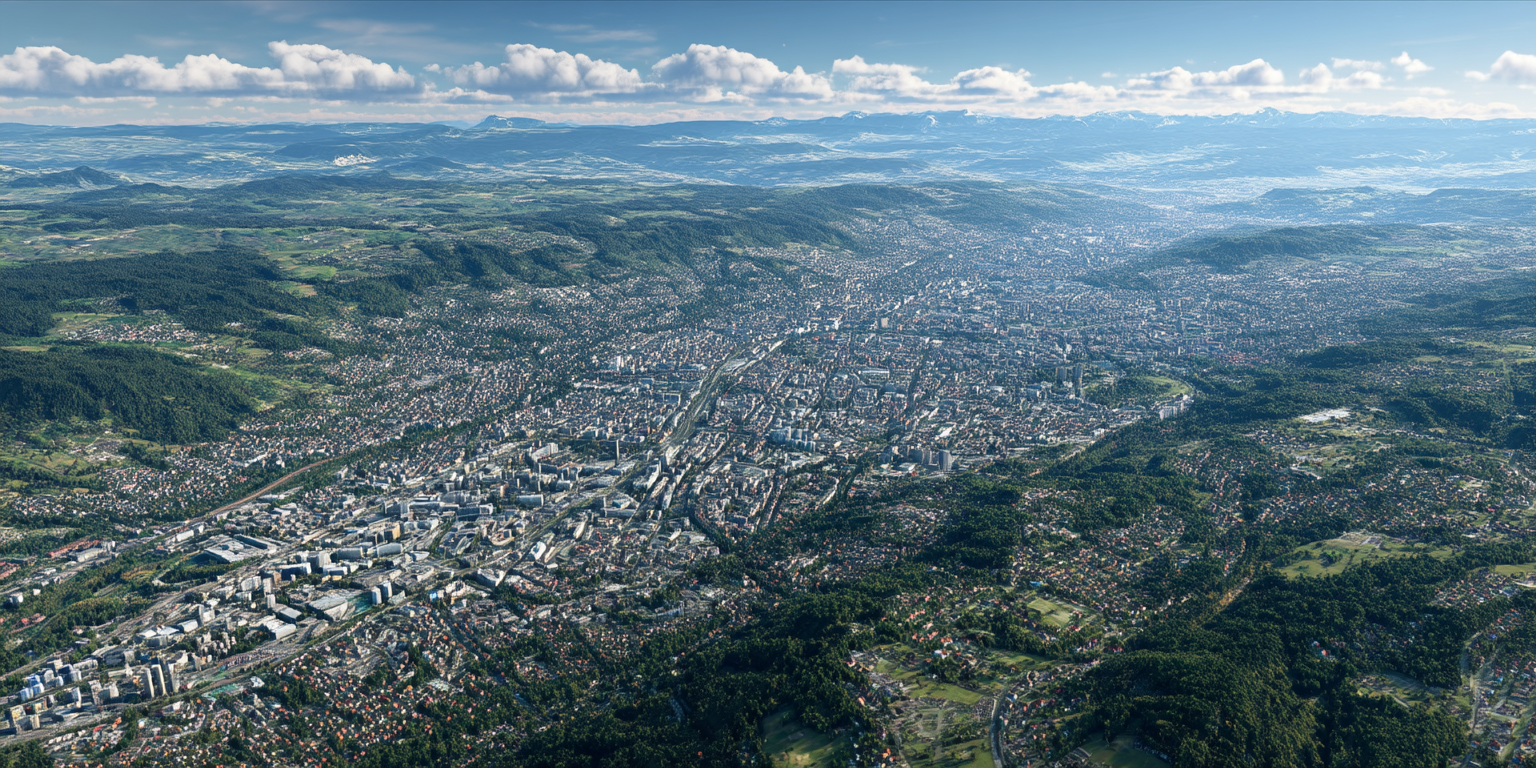
    The canton of Zurich continues to grow, but the major growth spurt of recent years is over for the time being. At the end of 2025, the civil resident population was 1,628,081 – an increase of just under 13,000 residents or 0.8 per cent compared to the previous year. Apart from the coronavirus years, this is the smallest increase since 2005 and thus a clear sign of a phase of more moderate momentum.

    Immigration most important growth driver
    Population growth continues to be driven primarily by immigration from abroad. Over 80 per cent of the increase is attributable to people of foreign nationality settling in the canton for the first time. Although net migration from abroad has fallen slightly compared to the previous year, it has returned to roughly the same level as before the war in Ukraine. The internal migration balance with the other cantons remains slightly negative and has hardly changed for several years. Zurich is losing about as many people within Switzerland as it is gaining.

    Births and deaths
    The birth balance accounts for less than a fifth of growth. Although initial estimates show a slight increase in births and a slightly lower number of deaths, the overall surplus remains low. This confirms the trend that the population is growing primarily “from the outside”, while the demographic momentum within the country is levelling off.

    Cities and small municipalities are growing the fastest
    The spatial picture is divided into two parts. Cities with a population of over 10,000 account for more than two thirds of growth. The city of Zurich alone accounts for almost a third of the cantonal increase, growing by 4,008 people. It was followed by Dübendorf and Uster, while Winterthur recorded the weakest growth since the turn of the millennium with an increase of 355 people.

    Relative to the size of the municipality, however, the small municipalities recorded the strongest growth. Flaach, Hüntwangen and Wila recorded growth rates of between 4 and a good 5 per cent, underlining the fact that even rural municipalities in the canton can benefit from the influx.

    Regions are shifting
    All regions in the canton are growing, but at different rates. Weinland and Furttal are leading the way with growth rates of 1.1 and 1.0 per cent respectively. Twice as high as in the Winterthur region, which will bring up the rear in 2025. While the areas close to the city in the north and east have recently seen above-average growth, the city of Zurich and the Limmat Valley are now above the cantonal average, while the Glattal and the Winterthur region are falling behind.

    Foreign population strongly characterised by Europe
    At the end of 2025, around 472,000 people of foreign nationality lived in the canton. This represents 29 per cent of the total population. Their number continues to grow, albeit at 1.5 per cent, the slowest rate since the introduction of full freedom of movement with the EU in 2007. Almost two thirds come from an EU or EFTA country, over 80 per cent from Europe.
  • Where real estate loses its appeal

    Where real estate loses its appeal

    The cantons with the greatest demographic risks include Ticino, Bern, Neuchâtel, Jura, Appenzell Ausserrhoden, Nidwalden, Obwalden, Graubünden, Glarus and Schaffhausen. They account for around 23 percent of the total mortgage volume in Switzerland and are therefore anything but peripheral regions. At the same time, they are structurally less well equipped for the future.

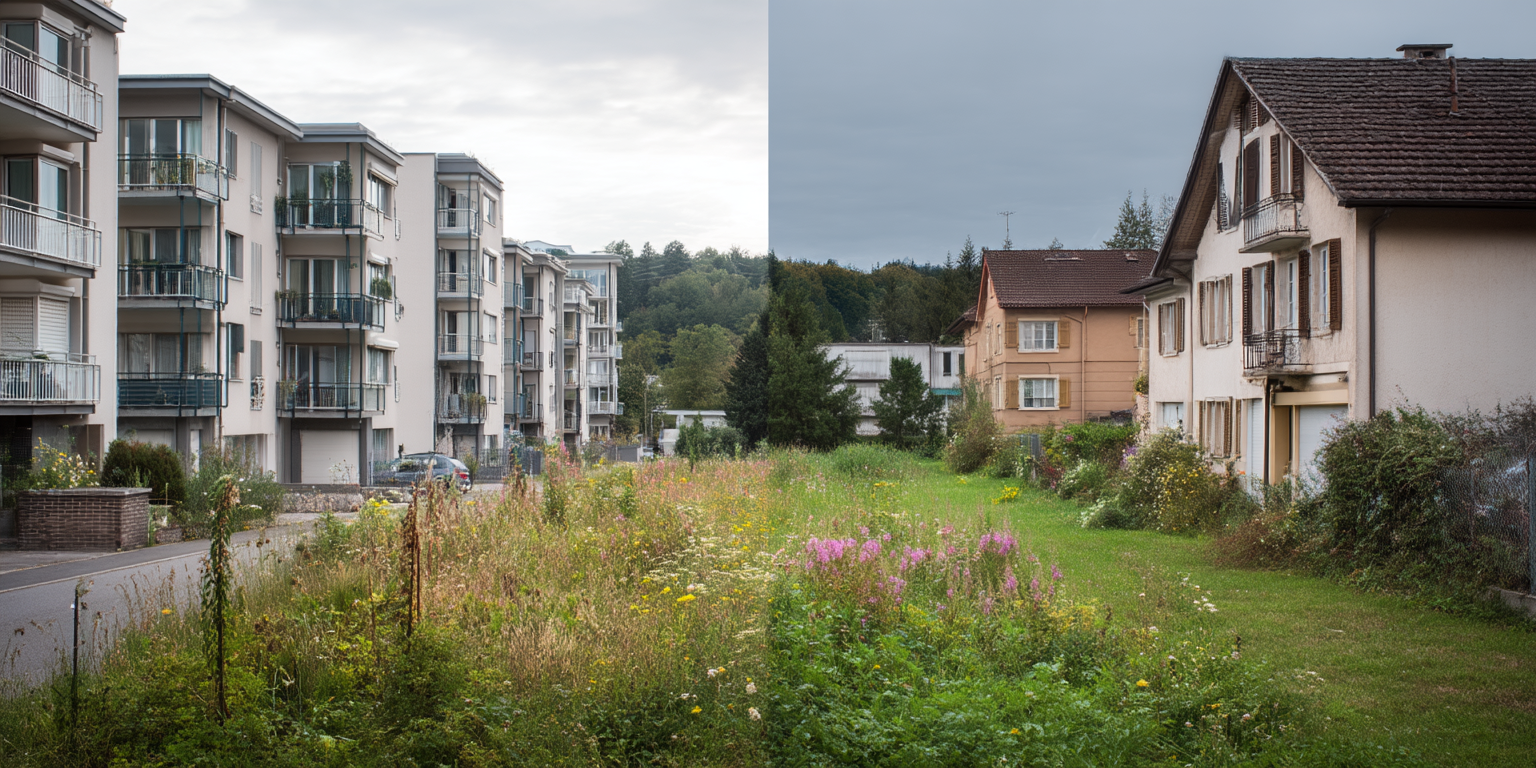
    The core of the problem lies in the age structure. Population growth is taking place primarily in the over 65s. People who rarely move and hardly ever demand additional living space. At the same time, the number of working people, i.e. those households that typically buy their own home or enter into new tenancies, is falling. The result is less demand, more patience when selling and growing price markdowns. This is particularly noticeable in markets with many single-family homes and vacation properties, for example in parts of Ticino, Graubünden or the Jura.

    Demographics beat price fantasy
    The study outlines a market that is likely to diverge significantly over the next 20 years. While owners in many of the cantons concerned still expect prices to continue to rise, demographics paint a different picture. If hardly any young households move in and immigration remains weak, the surge in demand that justifies today’s valuations will not materialize.

    For owners, this means longer holding periods, higher sales risks and, depending on the location, more significant price falls. Older single-family homes in peripheral communities that no longer meet the expectations of new generations of buyers in terms of energy efficiency and quality are particularly exposed. Where there is a lot of supply on the market at the same time, for example from estate situations, price pressure can increase rapidly.

    Booming cantons as a counterbalance
    On the other hand, there are the growth cantons of Zurich, Vaud, Lucerne, Geneva, Thurgau, Aargau, St. Gallen, Valais, Fribourg, Zug and Basel-Stadt. According to the analysis, they are expected to absorb almost 86 percent of future population growth. Two thirds of the mortgage volume is already concentrated in these cantons, and the trend is rising.

    This is where immigration meets economic dynamism, urban centers and strong labor markets. For the real estate market, this means sustained high demand, stable to rising prices and lower structural risks, despite digitalization, the interest rate turnaround and increasing regulation. The polarization between “loser” and “winner” cantons is therefore likely to intensify further.

    Consequences for banks and investors
    For banks, insurance companies and pension funds, the demographic perspective is more than just a footnote. In many portfolios, regional risks have so far been inadequately reflected. Regional institutions with a strong focus on their home canton in particular bear increased cluster risks in shrinking regions. Especially if a large proportion of the portfolio consists of single-family homes in rural locations.

    It is not only location, condition and affordability that count, but also the question of how many potential buyers will still be there in 10, 15 or 20 years’ time. If you want to manage mortgages and real estate investments in the long term, you need to systematically consider demographics, housing demand and the local economic structure together.

    What owners can do now
    For owners in the affected cantons, it is worth taking a sober look at their own property in terms of location, target group, energy status and possible conversion. Those who actively manage, modernize and think about alternatives at an early stage have a clear advantage over those who simply hope that prices will continue to rise.

    The market is not tilting across the board. Housing will remain scarce in many cities in the “loser” cantons, while rural areas will come under greater pressure. The decisive factor will be how precisely market participants understand the differences within a canton and how quickly they adapt their strategies to the new demographic reality.