Tag: Wohnraumnutzung

  • People aged 55 and over moving house could ease pressure on the housing market

    People aged 55 and over moving house could ease pressure on the housing market

    The moving patterns of the ‘Best Ager’ generation – those aged between 55 and 74 – are becoming increasingly important for a functioning housing market in Switzerland, as shown by the new Helvetia Housing Report, according to a press release from Helvetia Baloise. The study was conducted by the insurer in collaboration with the Sotomo research institute in Zurich.

    When this age group moves house, they usually relocate to less central areas or, increasingly, abroad. This frees up larger, centrally located flats, which are subsequently occupied by families much more frequently. According to the study, this helps to distribute existing housing more efficiently across different stages of life.

    Furthermore, emigration abroad increased by almost 50 per cent between 2014 and 2024. At the same time, moves within one’s own municipality remain comparatively rare. It is only from the age of 75 that the trend reverses: older people then move more frequently back to well-connected, central locations.

    “Additional moves by this age group make an important contribution to better utilisation of living space,” says Michael Hermann, Managing Director of Sotomo. This dynamic is driven in particular by the moving behaviour of foreign ‘Best Agers’, whose likelihood of moving is 50 per cent higher than that of Swiss nationals. However, this trend is being held back by the so-called lock-in effect: homeowners move significantly less often – their likelihood of moving is over 60 per cent lower than that of tenants. According to the report, however, the often-discussed influence of affordable existing rents is significantly lower than assumed and is not the decisive factor behind the low mobility of older households.
  • Potential and challenges of new living concepts

    Potential and challenges of new living concepts

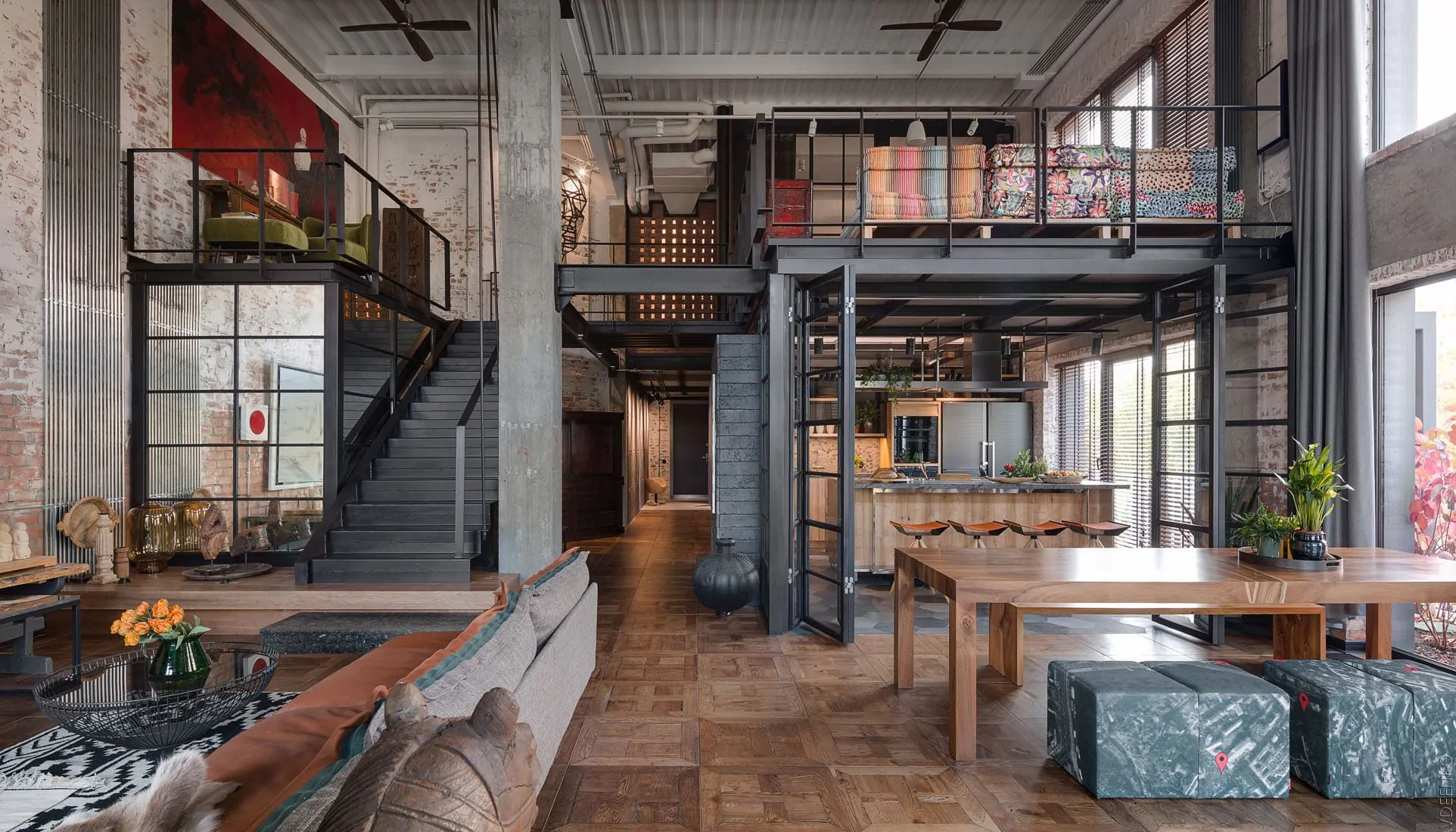
    The focus is on self-built residential units, which are often built in large halls and are shared by groups or individuals. Residents attach importance to sustainable and individualised living, foregoing excessive private space and sharing communal areas instead.

    The projects analysed in Zurich and Bern show that these types of housing use significantly less living space per person than the Swiss average. The high degree of flexibility in the interior design allows for individual customisation, but also entails high time and financial costs.

    Legal framework and challenges
    Clear but flexible framework conditions and supportive guidance from property developers and authorities are crucial for the successful implementation of these concepts. Building law hurdles and financing issues in particular require customised solutions to make such projects economically viable.

    Innovative niche solutions with potential
    Although these forms of communal living currently represent a niche, they offer exciting approaches for a more sustainable and diversified use of living space. However, their long-term potential for the affordable housing market remains to be seen.

    The study was conducted by the OST and FHNW universities of applied sciences in collaboration with the BWO, the Solidarity Fund Foundation, the Migros Culture Percentage and other partners. It is part of the research focus areas “Affordable housing” and “Adapting the housing stock to changing needs”.

  • Using living space more efficiently through innovative collaboration

    Using living space more efficiently through innovative collaboration

    (CONNECT) Researchers at OST – Ostschweizer Fachhochschule want to optimize the use of living space through better collaboration. Their project WOGE – Wohnzukunft gestalten supports people who want to downsize their living space with local offers for moving, renovating or finding new flatmates, explains OST in a press release. For WOGE, the OST researchers are working together with the spatial development office Planteam S(plan:team) from Lucerne. The project is also supported by the Swiss Innovation Promotion Agency(Innosuisse) and the Federal Office for Housing.

    WOGE is to be implemented as a pilot project in Aarau, Köniz BE and St.Gallen. The project will kick off next year in the cantonal capital of Aargau. The results from Aarau will then be evaluated and optimized in the Bernese municipalities of Köniz and St.Gallen. Plan:team intends to offer the experience gained from the pilot municipalities to other municipalities as part of its consulting activities.