Tag: Wohnungsbau

  • Federal Council wants to accelerate residential construction

    Federal Council wants to accelerate residential construction

    According to its communication, the Federal Council is examining measures to accelerate residential construction. With its report of 22 April 2026, it is responding to five postulates from the National Council and Council of States. It is part of the federal government’s housing shortage action plan. The Federal Council has instructed the Federal Department of the Environment, Transport, Energy and Communications to submit a consultation draft by the end of 2026.

    One of these measures should create the legal basis for a national interest in housing construction. Such a legal basis would then take precedence over, for example, the protection of the townscape or listed buildings. The Federal Council is also having the restriction of the right of appeal for private individuals and the admissible complaints examined. In addition, the procedural costs for objections that are proven to be an abuse of rights could be imposed on the objectors, namely if the objection is clearly aimed solely at preventing or delaying a project.

    However, the sovereignty for planning and building authorisation procedures lies with the cantons. The Federal Council can therefore only recommend that they introduce a digital authorisation procedure and set binding deadlines in order to speed up the process. The Federal Council also recommends that planning applications should only be published once they are complete. It also points out that many licensing authorities do not have sufficient staff or expertise to process complex dossiers.

  • The Sonnenhof is to reinvent Bülach’s centre

    The Sonnenhof is to reinvent Bülach’s centre

    The Sonnenhof site is centrally located between Bahnhofstrasse and Schaffhauserstrasse and covers a good 20,000 square metres. Today, the site is dominated by a shopping centre from the 1970s, other commercial and residential buildings and a large sealed car park. It is precisely this structure that is now to be fundamentally changed.

    The plan is to create a new, mixed-use district with a public passageway, green courtyards and squares, businesses, restaurants and a cultural and meeting centre. The existing shopping centre will not disappear, but will be modernised and integrated into the new structure.

    Urban densification
    At the heart of the project are around 240 rental flats in various price categories and with different floor plans. In addition, there are around 12,000 square metres for commercial, cultural and public uses on the ground floors and in the passages.

    In terms of urban planning, the project focuses on density and orientation. Four taller buildings will mark the site and give it a clearly recognisable address. The design plan allows for a maximum building height of 55 metres on the north-eastern corner. This shows how clearly the Sonnenhof will stand out from the previous scale.

    Open space instead of tarmac
    The message is particularly strong in the outdoor space. Where heat-retaining pavement dominates today, unsealed surfaces, trees, courtyards and climate-resistant planting will improve the microclimate in future. Rainwater will be able to seep away and evaporate, roofs will be greened and supplemented with photovoltaics.

    The project also aims to reorganise traffic flows. Most of the above-ground parking spaces will be moved to the underground car park, while paths and squares will be designed primarily for pedestrians and cyclists. Nevertheless, around 450 car parking spaces will remain on the entire site.

    Culture as part of the development
    The combination of property development and public use is striking. The planned KUBEZ cultural and meeting centre at Sonnenhof will not only be built, but will also create a regional meeting place for culture, education and leisure. The project is being developed in collaboration with the town of Bülach and neighbouring municipalities.

    This is what makes the Sonnenhof more than just a classic development. The site should not only provide living space, but also create a new centre that expands the everyday life of the town and strengthens the connection between the railway station, town centre and neighbourhood.

    A long road to the new centre
    Sonnenhof is still a planning project. the private design plan is due to be submitted in 2026, with approval scheduled for 2027. The first stage could start in 2029 and be completed in 2031, with overall completion scheduled for 2034 according to the project status.

    This shows the true scale of such projects. The transformation of a central site requires not only capital and design power, but above all time, procedures and political coordination. If Sonnenhof succeeds, Bülach will not simply gain new flats. The town will gain a new piece of urbanity.

  • Whoever blocks, pays

    Whoever blocks, pays

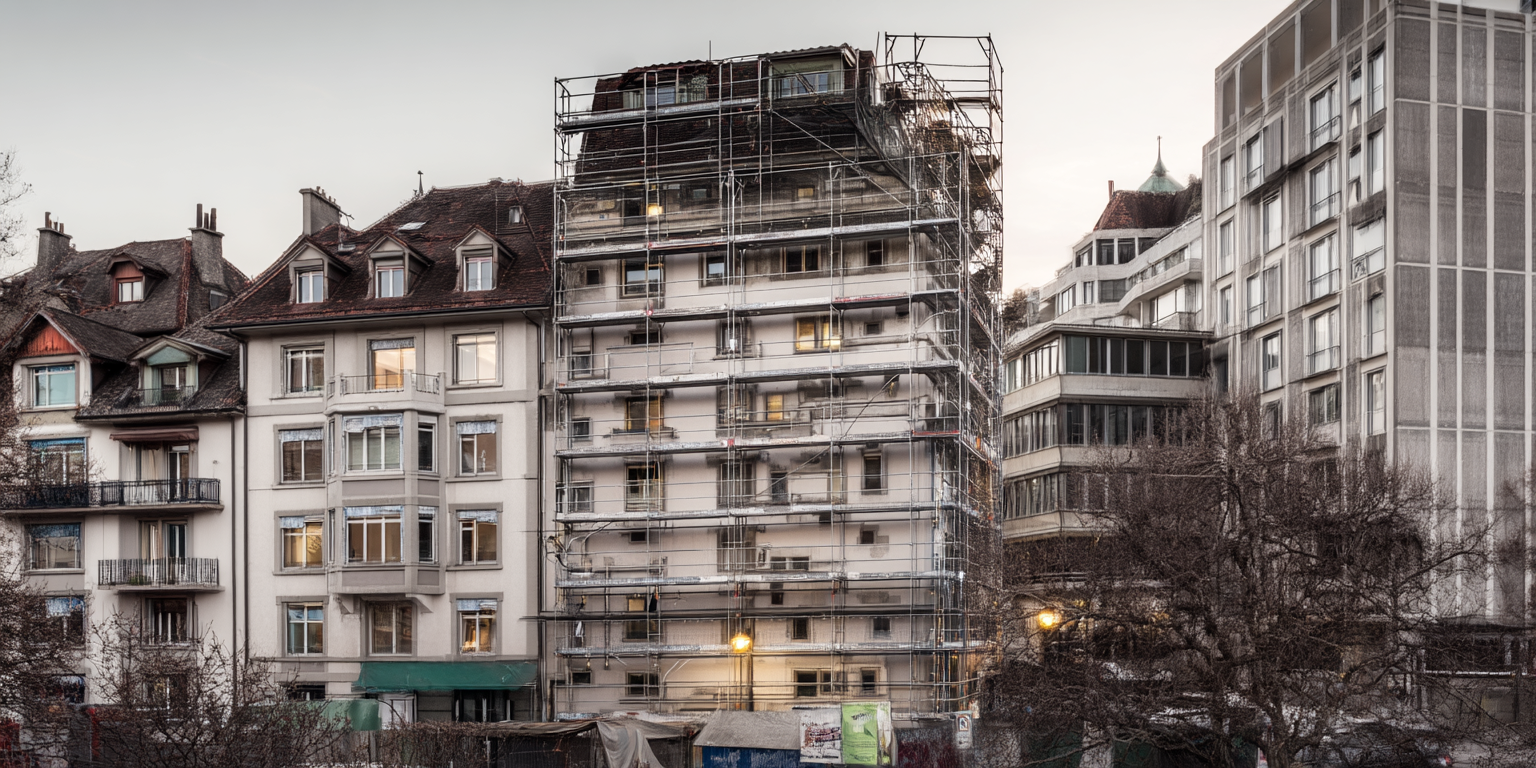
    The majority of building permit procedures in Switzerland take place within reasonable time limits. However, there are exceptions and these have a serious impact. Objections and appeals can block projects for years or prevent them altogether. Today, even people who are not directly affected by a project can lodge an objection, for example because they don’t like the color of the neighbor’s planned façade. This is one of the structural weaknesses that the Federal Council is now addressing.

    Housing construction becomes a national objective
    The strongest lever in the reform package lies in the Spatial Planning Act. Housing construction as part of inward settlement development is to be enshrined there as a national interest. This sounds technical, but has a concrete effect. When weighing up interests, housing construction would be given more weight than the protection of the townscape or listed buildings. Projects that currently fail due to local protection interests would have a better chance of being realized.

    Objections with consequences
    Anyone who raises objections improperly, i.e. with the sole aim of delaying a project, should in future bear the procedural costs. The Federal Council is considering a legal obligation for the cantons to impose such costs on objectors. At the same time, the right of private individuals to appeal to the Federal Supreme Court is to be restricted. However, the Federal Council rejects flat-rate fees for rejected appeals. Access to legal protection should not depend on your wallet.

    The limits of the federal government
    Despite the political will, the federal government’s scope for intervention is limited. Building permit procedures are the responsibility of the cantons. The federal government cannot impose binding deadlines for cantonal procedures or the obligation to introduce digital approval processes. It recommends that the cantons introduce such measures on their own responsibility, as they have a demonstrably accelerating effect in the long term. The Swiss Construction Industry Association supports this approach and is calling for leaner processes while maintaining a high level of planning quality.

    Consultation
    The reform report fulfills five postulates from the National Council and Council of States and is part of the federal government’s housing shortage action plan. DETEC has now been instructed to draw up a consultation draft by the end of 2026. It is likely to be years before concrete legislative changes come into force.

  • When architectural monuments pack their suitcases

    When architectural monuments pack their suitcases

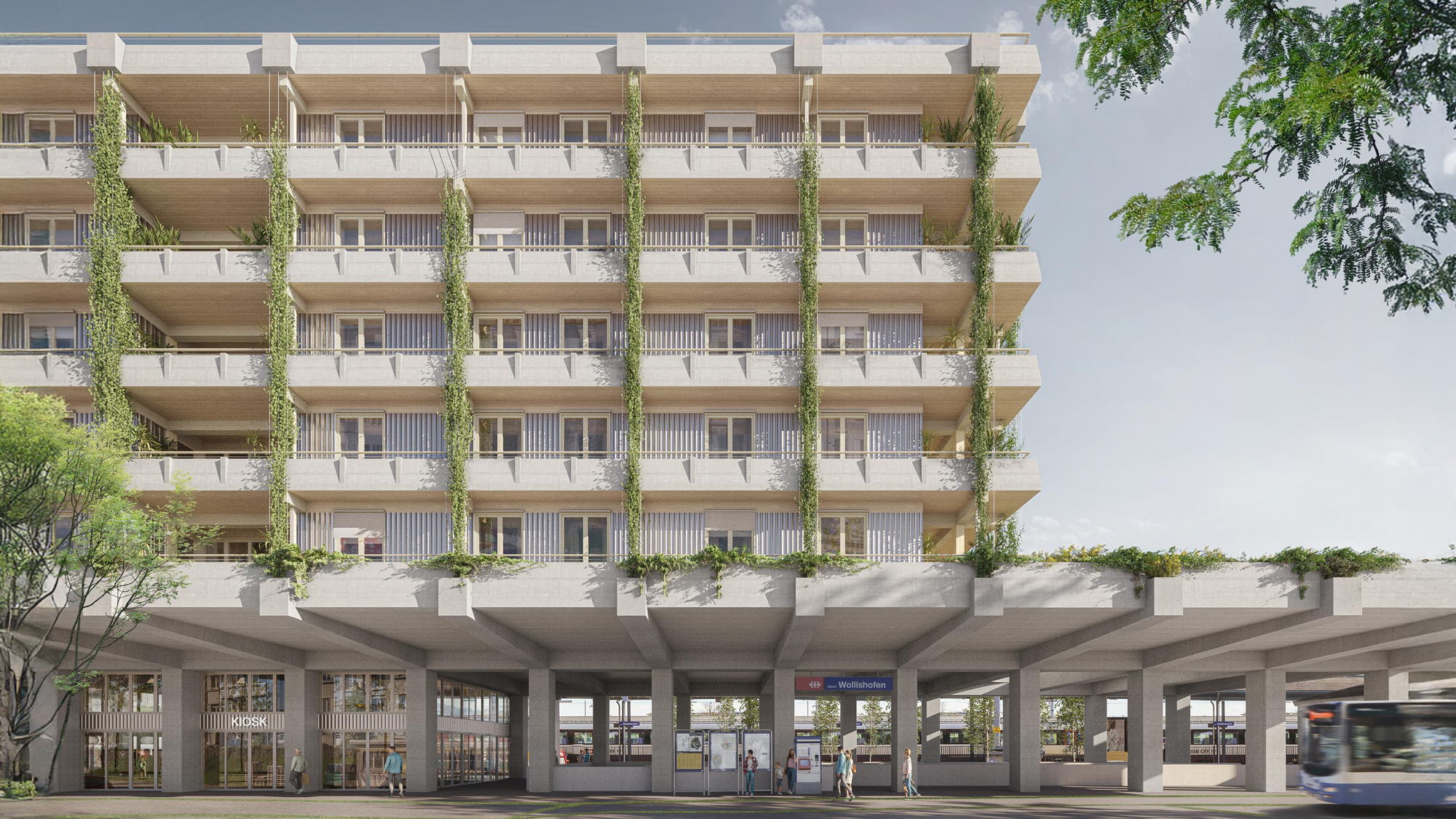
    Two apartment buildings with 57 apartments ranging in size from 2.5 to 5.5 rooms are being built on a 6500 square meter site to the north of the historic station building. Commercial and restaurant space is planned on the first floors, as well as a small commercial building and an underground garage with 59 car and 92 bicycle parking spaces. A park-like open space with a playground will be created between the two buildings.

    Less, but social
    The project has become smaller. SBB originally planned four buildings with 90 apartments, a third of which would be affordable. However, the signal box next to the station building must remain, which means that an entire building is no longer needed. Of the remaining 57 apartments, 20 are to be offered at affordable prices. This corresponds to 35 percent and is even slightly higher than the original quota.

    Switzerland’s last goods shed
    What residential construction demands requires space. Four existing buildings have to make way, including the goods shed from 1928, designed by Meinrad Lorenz, SBB’s chief architect at the time, one of only four buildings of this type in the whole of Switzerland. Following the demolition of the identical shed in Heerbrugg, the one in Wollishofen is the last remaining example of its kind. It is listed in the cantonal inventory of listed buildings.

    A wooden building packs its bags
    Nevertheless, the goods shed will not disappear. It will be dismantled into individual parts, professionally refurbished and rebuilt at the Zurich Oberland Steam Railway Association in Bauma an der Töss. There it will be made accessible to the public and given a museum function as part of the “Bauma 2020 depot area” project. The approval documents for the dismantling are already largely in place.

    History repeats itself
    This move is not the first in the history of Wollishofen station. The current station building was once the first station building in the city of Zug, built in 1864 and moved stone by stone to Lake Zurich in 1897. What was forced by the scarcity of building materials in the 19th century is now a deliberate act of preservation. Wollishofen is thus writing another chapter in an unusual building history.

  • Five stones, 220 apartments, one future

    Five stones, 220 apartments, one future

    The Brisgi has roots. In the 1940s, the site was home to a shanty town for up to 1500 employees of the former BBC industrial group. Many of them were guest workers with their families. In the 1960s, a high-rise building and two apartment blocks followed, which still stand today and are carefully embedded in the new development. What was once a workers’ housing estate is now becoming a modern urban building block.

    Three sponsors, one goal
    The project is backed by three non-profit organizations that are jointly developing the 6.5-hectare site: Wohnbaustiftung Baden, Logis Suisse AG and Graphis Bau- und Wohngenossenschaft. Each will take over one of the three buildings and design them independently. The rents are calculated to cover costs. Profit is not the goal, but affordable living is.

    Wood, concrete and sun
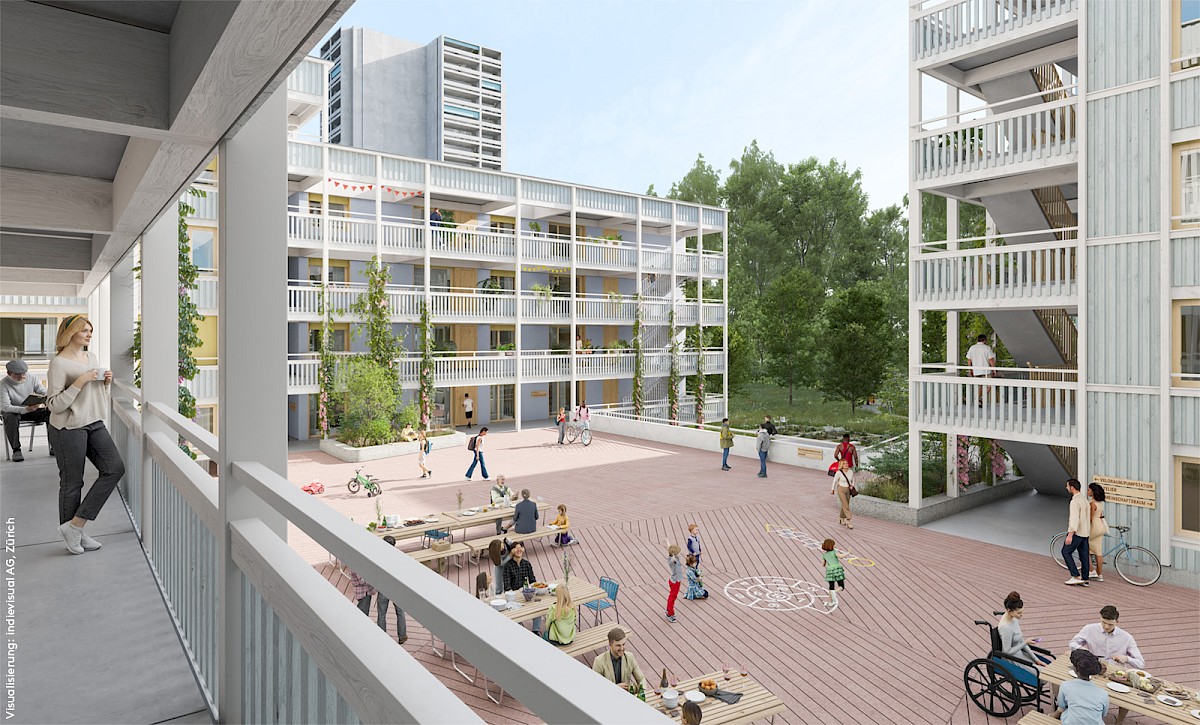
    Nine five- to six-storey buildings, pergolas, green inner courtyards and a central square will characterize the future Brisgi. The hybrid construction method combines wood and concrete. Concrete only where it is really needed. Solar panels will produce electricity on around half of the roofs and the site will be connected to the district heating network of Regionalwerke Baden. The aim is to achieve the gold certificate of the Swiss Sustainable Building Standard.

    Values carved in stone
    Five stones, found during the excavation of the building pit and engraved by a stonemason, represent the self-image of the development. Common ground, the future, sustainability, affordability and living. City President Markus Schneider, who carried the stone with the inscription “Future”, summed up the 14 years of planning work: “Now the lively Kappi is becoming even livelier. A neighborhood within a neighborhood is being created here.” The five stones will be clearly visible in the development in future.

    Milestones on schedule
    After years of objections and a planning process since 2012, things are now picking up speed. The building permit for all three courtyard buildings was granted in April 2025 and construction started on schedule in the fall of 2025. Letting will start in the second half of 2027, with occupancy scheduled for the first half of 2028. The design architects are the Baden-based firm Meier Leder Architekten together with the Zurich firm Müller Sigrist, whose “Kandalama” project was chosen as the winning project in 2016.

  • Major contracts are boosting the building construction business both at home and abroad

    Major contracts are boosting the building construction business both at home and abroad

    In a press release, the property and construction services provider Implenia has announced that it has secured numerous building contracts in Switzerland and Germany. These contracts have a total value of 310 million Swiss francs and will be carried out between 2026 and 2028.

    In Vevey, Vaud, on the shores of Lake Geneva, Implenia is acting as the main contractor for the new Jardins en Ville district, building 182 owner-occupied flats. The project is complemented by commercial space, a two-storey car park and a central green space. The PEFC/FSC-certified timber structure is set to meet the Minergie-Eco and CECB A/B standards. Also in Switzerland, Implenia is building eight Minergie-certified apartment blocks in Payerne (VD) comprising 107 climate-friendly homes. The project was previously developed by Implenia and subsequently sold to investors.

    Implenia is also creating sustainable housing in Germany: in Frankfurt, twelve energy-efficient residential buildings with around 160 passive house units are being built in the city’s “first climate protection district”. In Munich, following a successful pre-construction phase, the company is building a multi-family residential building with 186 flats and complementary commercial uses as part of a joint venture. In Nuremberg, three buildings featuring 76 rental flats, as well as space for a nursery, commercial premises and an underground car park, are being constructed using a timber-hybrid construction method. In Jena, a further residential quarter is also being built using timber construction. In Mannheim, Implenia is constructing a turnkey residential complex using a timber-hybrid construction method at BUGA Park, comprising a total of 225 residential units.

    Further contracts relate to the justice sector as well as education, research and pharmaceuticals: Implenia is constructing operational and production buildings for the prison in Siegburg. In addition, the extended shell of an administration building using timber construction is being built for Flensburg University of Applied Sciences. In German-speaking Switzerland, Implenia is undertaking additional construction work, including the redevelopment of a former industrial site and projects for the pharmaceutical industry.

  • Rent cap eats its own children

    Rent cap eats its own children

    Since the Housing Protection Ordinance came into force in Basel-Stadt in May 2022, planning applications for rental apartments have plummeted by 76 percent. in 2024, only 151 new-build apartments were completed in the city canton, less than a quarter of the long-term average. While Zurich recorded a 20 percent increase in building applications in the same period, construction activity in Basel effectively came to a standstill.

    No renovation, buildings fall into disrepair
    Regulation not only slows down new construction, it also paralyzes the renewal of existing buildings. Craft businesses are complaining about a lack of orders; individual companies are looking for work 40 kilometers away in Fricktal. Necessary energy-efficient renovations are not being carried out and properties are falling into disrepair. This ultimately affects the tenants themselves and thwarts any claim to climate protection.

    Geneva 40 years of regulation, 40 years behind
    Geneva has had one of the strictest tenant protection laws in Switzerland since 1983. The result is sobering. 83.5 percent of residential buildings over 40 years old have never been comprehensively modernized, compared to 47.6 percent in Basel and 41.3 percent in Zurich. New tenants in Geneva pay an average of 30 percent more per square meter than existing tenants. Strict tenant protection therefore primarily protects those who already have an affordable apartment. Not those who are looking for one.

    The real problem, too little supply
    If you want to reduce rents, you have to increase supply. This means faster approval procedures, more densification, more replacement new builds and extensions and fewer objections. The Zurich Cantonal Council has already drawn up two counter-proposals that focus on better framework conditions rather than bans. This is the right direction.

    What Zurich needs to decide
    The housing market in the canton of Zurich is under pressure, that is real. But a rent cap does not solve the problem, it exacerbates it. Basel and Geneva are not a theory, but a living warning. On June 14, Zurich has the choice of learning from its mistakes or repeating them.

  • Building a house from plastic waste

    Building a house from plastic waste

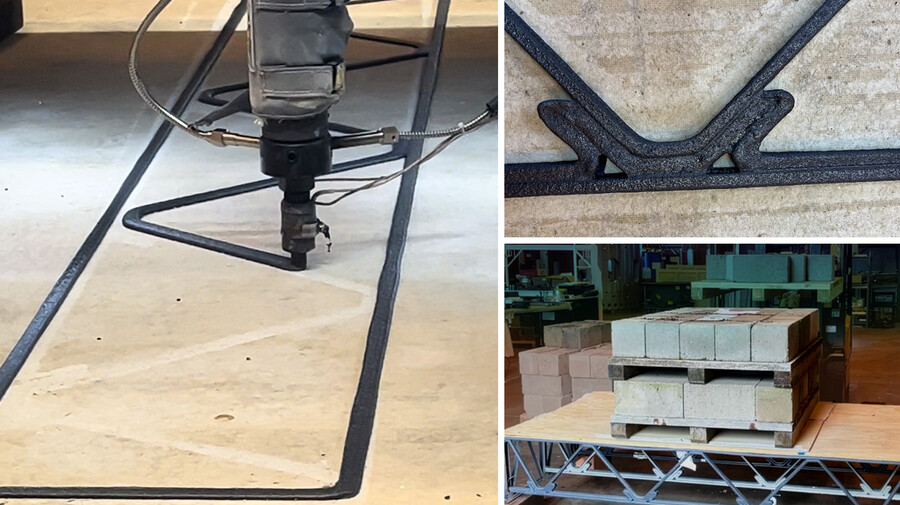
    Today’s PET bottle could be part of a floor beam tomorrow, as a load-bearing element. A research team at the Massachusetts Institute of Technology is investigating how recycled plastic can be shaped into load-bearing components using large-format 3D printing. The focus is on a beam system that has been specially developed and tested for use in residential construction.

    Plastic trusses instead of wood
    The new beams look familiar at first glance, as they are based on the geometry of classic wooden trusses. A frame with diagonal struts absorbs and distributes forces, a construction method that has been tried and tested for decades. What is new is the material and production. A composite of recycled PET and glass fibres is used for printing, which provides rigidity and stabilizes the pressure behaviour. Each beam measures around 2.4 m long, around 30 cm high and a good 2.5 cm wide, weighing only around 6 kg and therefore significantly less than a comparable wooden beam. The production time is short, less than 13 minutes per component is sufficient for printing.

    Load test under practical conditions
    In order to test its suitability for everyday use, the team assembled four beams in parallel and screwed them together with a wood-based panel to form a floor frame measuring approximately 1.2 by 2.4 m, a common grid dimension in the USA. The surface was then gradually loaded with sandbags and concrete weights, while the deflection was continuously measured. Up to a load of around 140 kg, the deformation remained well below the limits permitted by US building regulations. Only when the total load exceeded 1,800 kg did the construction fail, the beams buckled and broke. This indicates that the rigidity is generally sufficient to meet the relevant requirements in residential construction.

    Lightweight, modular, quick to assemble
    In addition to the load-bearing capacity, the low weight is a key advantage of the system. The plastic beams can be transported using a pickup truck, which simplifies logistics and handling on the construction site. Assembly follows the principle of classic timber frames. The elements are screwed together on site and joined to form a load-bearing skeleton. In the long term, the concept is aimed at modular house frames in which the floor, walls and roof consist of standardized, printed components. This approach is particularly interesting for regions where wood is scarce or expensive.

    Plastic waste as a raw material for a billion houses
    The project was triggered by the enormous global demand for housing. AJ Perez from the MIT School of Engineering points out that around one billion new houses will be needed by 2050. A demand that can hardly be met with wood alone without clearing gigantic areas of forest. Instead, existing waste streams should be used. Disposable plastics such as bottles or food packaging will be given a second life as a construction product. The aim is to create components that are lighter, more durable and more sustainable than conventional alternatives.

    Costs, standards, long-term behavior
    Despite the promising results, the technology is still in its infancy. The actual costs on an industrial scale, the adaptation of standards and approval processes and the long-term behavior of the components under weathering, UV radiation and changing loads are still unclear. Nevertheless, the project opens up exciting prospects for planning, development and the construction industry. 3D-printed supporting structures made from recycled plastic could change the material mix in building construction. Provided that cost-effectiveness and durability can be convincingly demonstrated.

  • ABB cashes in and Oerlikon builds

    ABB cashes in and Oerlikon builds

    ABB is selling a site of around 7,000 square meters near Zurich-Oerlikon railroad station to real estate service provider Pensimo. The sale will result in an operating gain on disposal of around CHF 290 million before taxes in the first quarter of 2026. ABB no longer needs the site as a strategic land reserve and is taking this step to enable the further development of the Neu-Oerlikon district.

    Around 500 apartments, a high-rise building and commercial space are planned for the site. Over the next few years, the former industrial area is to be transformed into a mixed-use district with housing, services, workplaces and cultural and commercial facilities. Due to high land prices, rents are expected to be rather high. At best, individual apartments at cost rents are conceivable, for example as part of a densified site development.

    New ABB headquarters in Oerlikon
    ABB is expanding its presence in Oerlikon at the same time as selling the land. The Group is planning a new headquarters in the immediate vicinity, into which around 500 employees are expected to move in 2031. The project comprises a renovated, listed existing building and a new six-storey timber composite construction designed by Christ & Gantenbein.

    With a gross floor area of around 10,800 square meters, modern working environments including an auditorium, lounge and cafeteria, foyer and exhibition area as well as recreation and fitness areas will be created. The investment volume is around 80 million Swiss francs. ABB CEO Morten Wierod emphasizes the company’s commitment to Switzerland and the city of Zurich. Mayor Corine Mauch speaks of an even more “colorful and lively” district around Oerlikon station in the future.

    Strong final quarter of 2025
    ABB made significant operational gains in the final quarter of 2025. Comparable sales rose by 9 percent to 9.05 billion US dollars. Order intake developed particularly dynamically, increasing by 32 percent on a comparable basis to USD 10.32 billion, exceeding the USD 10 billion mark in a quarter for the first time.

    The operating EBITA margin improved from 16.6% to 17.6%, while adjusted net profit rose by 29% to USD 1.27 billion. For the full year 2025, net profit increased to USD 4.73 billion, around 20% more than in the previous year. The dividend is to be increased from CHF 0.90 to CHF 0.94 per share; at the same time, ABB is announcing a further share buyback program.

    Outlook and new buyback program
    For the first quarter of 2026, ABB expects comparable sales growth of 7 to 10 percent and a further increase in the margin. For the year as a whole, management expects growth of 6 to 9 percent and slightly higher profitability. Analysts see particularly strong drivers in the data center business and in the Electrification division, where orders increased by around a third.

    In addition, ABB is launching a new share buyback program with a volume of up to USD 2 billion, which is scheduled to run until January 27, 2027. A previous program of up to 1.5 billion US dollars has expired. This strengthens the attractiveness of the share and signals confidence in the company’s own earning power.

    ABB share at record level
    The figures and outlook were rewarded with price gains on the stock market. ABB shares rose by 8.46 percent to 66.38 Swiss francs, reaching a new all-time high of 67.22 Swiss francs. The strong order intake, the improved margin, the increased dividend and the larger share buyback program clearly exceeded the previously cautious expectations.

    For the Zurich-Oerlikon site, the combination of the sale of land, the construction of the new Group headquarters and the planned development of the district means a significant structural change. From an industrial site to a dense, urban residential and working district, with high investments, but also with the prospect of further rising rents.


  • More living space from the system

    More living space from the system

    The construction and real estate industry is under pressure. Construction costs are rising, there is a shortage of skilled workers, the population continues to grow and climate targets set clear limits for CO₂ emissions. Serial construction provides answers to these challenges.

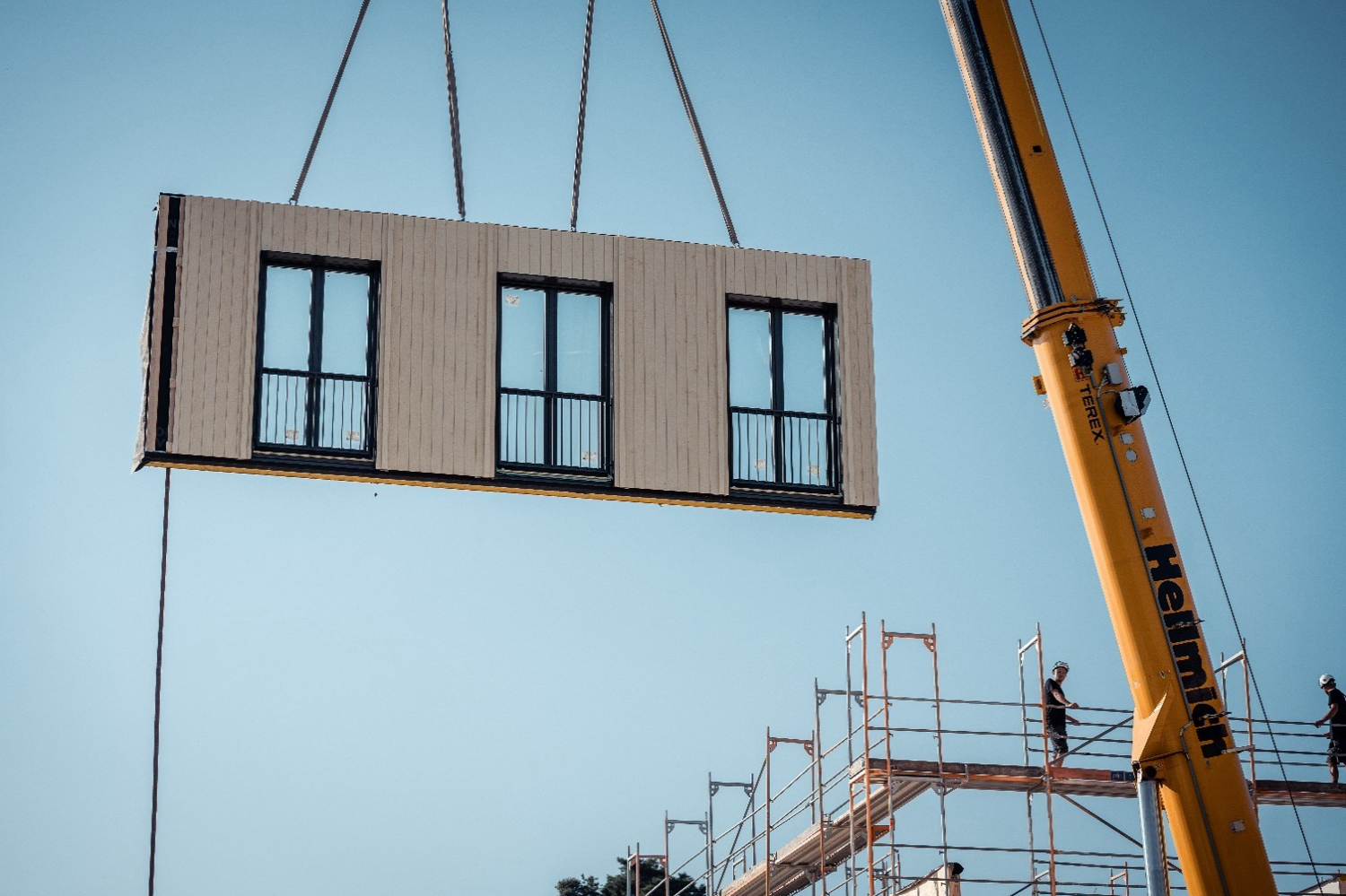
    Thanks to industrial prefabrication and standardized processes, construction times are shortened, workflows are more predictable and projects are more economical. The construction site becomes an assembly site, with less noise, less impact on the neighborhood and higher quality workmanship.

    What serial construction is all about
    Serial construction sees the building as a product, not as a one-off prototype. A system is intensively developed, thought through and used in many projects. Elements are largely created in the factory and assembled on site. This allows for precise costs and continuous improvement based on experience. Classic problem areas such as connections, thermal and sound bridges can be specifically mitigated.

    From prefabricated buildings to the “Teslamoment
    Serial construction methods have a long history, from the early timber systems of the 1920s to the “Göhnerbauten” in Switzerland and prefabricated housing estates in the East. The efficiency was high, the design quality often not and the image still suffers today.

    The topic is currently experiencing a new wave. Hybrid systems combine room modules and 2D elements, offer more flexibility for different plots and regulations and are bringing architecture and urban planning back on board. Projects such as the student-oriented “Woodie” in Hamburg show that serial construction and architectural quality do not have to be mutually exclusive.

    Strengths: Time, costs, quality, climate
    Serial systems shorten construction times and increase cost certainty. Because components and details are standardized, budgets and deadlines can be set early and reliably.

    At the same time, industrial production opens up new scope for sustainability. Specifications for CO₂ reduction, material selection and energy efficiency can be consistently written into the system. Material passports and platforms are used to document installed components, making them visible as a resource for subsequent conversions or dismantling.

    Acceptance determines the future
    The big challenge is perception. In many people’s minds, serial construction stands for monotonous architecture and social problem districts. As long as current projects are only partially convincing in terms of design, this skepticism will persist.

    To be widely accepted, buildings need to deliver more than just efficiency. Good floor plans, a high quality of stay, differentiated outdoor spaces and careful integration into the urban space. Standardization should be seen as the basis on which diversity is created.

    Serial construction can become a central component of the building turnaround, faster, more plannable, more resource-efficient and circular. The technical prerequisites are in place, as are successful pilot projects.

    Whether the approach experiences its “Tesla moment” now depends on whether the industry and cities manage to combine industrial processes with high quality living and design and thus show that repetition does not mean uniformity, but can be the basis for sustainable, diverse neighborhoods.

  • Building objections Federal Council wants to crack down harder

    Building objections Federal Council wants to crack down harder

    A study commissioned by the Federal Office for Housing and the Federal Office for Spatial Development shows that objections and appeals are the most common reason why residential construction projects are delayed or even prevented. This drives up costs, slows down construction activity and contributes to the worsening housing shortage. Particularly problematic are cases in which objections do not serve to protect public interests, but primarily secure private advantages or are used as a means of exerting pressure. For example, when money is demanded for the withdrawal of an appeal

    New rules against abuse of the law
    The motion “Sanction abusive building objections” is intended to instruct the Federal Council to create a basis for obliging objectors without an interest worthy of protection or with a clear intention to abuse the law to pay costs and, if necessary, damages. The Federal Council is prepared to examine the existing possibilities for sanctions and to sound out the extent to which it can provide guidelines in the Spatial Planning Act on the legitimacy of objections and the consequences of abusive objections based on Article 75 of the Federal Constitution. The specific structure of the procedures should remain with the cantons, but within a federal legal framework

    Delicate demarcation and open risks
    Legal experts point out how difficult it is in practice to clearly qualify an objection as abusive. Financial compensation for the withdrawal of an appeal can be legitimate, for example, if neighbors give up views, peace and quiet or other positions. In addition, stakeholders such as the Swiss Heritage Society warn that stricter hurdles and threats of sanctions could weaken the protection of townscape and monuments. Especially in cantons without the right of appeal, where neighbors often act as the final protective authority. Parliament will therefore have to perform a balancing act. Speed up procedures and curb abuse without devaluing legitimate objections and democratic participation.

  • Residential development in Wädenswil reaches important milestone

    Residential development in Wädenswil reaches important milestone

    Halter AG has reached an important milestone in the AuPark project in Wädenswil, the Schlieren-based property developer announced in a post on LinkedIn. Specifically, the first stage of the development was handed over to the client Swiss Life Asset Managers on schedule. The second stage should be completed by 30 March next year.

    In the AuPark project, five apartment blocks and commercial buildings with a total of 300 flats are being built around the eponymous central AuPark. The client, Swiss Life Asset Managers, is having some of the flats built as affordable housing. The first 120 flats are now available to their new residents with the completion of the first phase. A number of commercial spaces were also completed in the first phase. Coop will be setting up a branch on one of them.

  • Zurich agglomeration needs new buildings

    Zurich agglomeration needs new buildings

    The Zurich agglomeration is the only one in Switzerland where the population is growing faster than the housing stock. This was revealed by a study conducted by the Zurich research institute Sotomo on behalf of Fürschi Züri.

    The housing stock in the Lausanne conurbation has grown by 10.0 per cent since 2016, in Geneva by 8.9 per cent and even in Winterthur by 8.5 per cent. In Zurich, the figure was only 7.8 per cent. Within the Zurich agglomeration, the labour market region of Kloten saw above-average growth of 10.9 percent, Uster-Dübendorf 8.6 percent and Limmattal 8.4 percent.

    The agglomeration is lagging behind, particularly in terms of new builds, with growth of 3.8 per cent. Only the Basel agglomeration is lower at 2.7 per cent. Lausanne has 5.5 per cent more new builds and Winterthur 5.3 per cent.

    Zurich, on the other hand, is ahead with an increase of 4.5 per cent in replacement new builds. However, Zurich is also the agglomeration in which replacement new builds create the lowest number of new flats with a factor of 2.8 and the smallest new living space with a factor of 3.4. Even Winterthur achieves a factor of 3.4 for the number of flats and 3.7 for floor space. Lausanne leads the field with a factor of 6.5 for the number of apartments and 5.9 for floor space, followed by Geneva with 6.1 for the number of apartments and 5.6 for floor space.

    There are considerable differences within the Zurich agglomeration. The labour market region of Kloten has a factor of 4.3 for the number of flats. The fewest new flats are being created in Küsnacht-Meilen with a factor of 2.2. In the city of Zurich, the factor for the number of flats is 2.3.

    Young people and families are the main direct beneficiaries of new builds. The majority of residents of new builds come from the municipality (Zurich agglomeration 41 per cent, Winterthur 50 per cent) or from the agglomeration (Zurich 39 per cent, Winterthur 11 per cent). Newcomers from abroad mainly move into existing flats; in the agglomeration, they make up 23 per cent of all newcomers to existing flats.

    Completely renovated flats are generally more expensive than new builds. Newly occupied existing flats in sought-after locations are just as expensive as new builds, and even more expensive in Geneva. New builds do not drive up the prices of neighbouring existing flats either.

    The Zurich conurbation is dependent on new construction, concludes study author Michael Hermann. “New buildings are the key to ensuring that Zurich remains an attractive place to live for everyone,” he is quoted as saying in a press release from Fürschi Züri.

    “Blocking renovations and new builds is counterproductive,” adds Raphaël Tschanz, Director of the Zurich Chamber of Commerce(ZHK). “Without new builds, young adults and families will be displaced.”

    Fürschi Züri is an initiative of the ZHK and like-minded organisations and individuals.

  • Federal Council simplifies construction procedures

    Federal Council simplifies construction procedures

    To date, many construction projects and urban developments have been delayed due to the rigid direct application of the Federal Inventory of Sites worthy of Protection (ISOS). In Zurich in particular, thousands of apartments are blocked, as the example of Brunaupark shows. The Federal Council wants to simplify and speed up the processing and approval of residential projects with a new regulation. In future, the ISOS requirements will only apply directly in cases where the townscape is actually affected. This will significantly reduce the number of complex procedures and numerous projects can be realized more quickly.

    In future, cantons and municipalities will be given more leeway and clear boundaries as to when direct application of ISOS is really necessary. The conservation objectives of the inventory will be formulated more openly, which will enable inward settlement development while still protecting building culture.

    Solar installations are easier to approve
    The new measures also make it easier to install solar installations on new buildings. In future, an ISOS review will only be required for existing buildings. The federal government is thus taking account of the requirements of the energy transition and strengthening planning and legal certainty for future-oriented construction projects.

    Consensus at the round table
    The reform was developed at a broad-based round table with representatives from the federal government, cantons, cities, municipalities, business and civil society. The regulatory adjustments are to be made by fall 2026. At the same time, the processes for applying the ISOS inventory will be improved so that conflicts can be identified and resolved at an early stage.

    Prominent critics and supporters from politics and heritage protection welcome the new regulations. It is a sensible compromise between protection and development. Direct application remains possible for important monuments, but will no longer prevent important innovation projects in future.

    New momentum for residential construction
    The new rules give cantons and municipalities the necessary flexibility to combine resource protection and building culture. Residential construction projects such as Brunaupark could be approved and realized much more quickly in future. The Federal Office of Culture, Department of the Environment and Department of Economic Affairs have been tasked with implementing the new principles in order to address the increased demand for housing and the challenges of the energy transition in a holistic manner.

  • Swiss housing market continues to tighten

    Swiss housing market continues to tighten

    Die aktuelle Situation erinnert an die Jahre 2014 bis 2016, als eine längere Phase massiver Angebotsknappheit herrschte. Heute ist klar, dass kein kurzfristiger Ausgleich zu erwarten ist. Der Wohnungsbau bleibt auch in den kommenden Jahren hinter dem Wachstum der Haushalte zurück. Damit gehört die Schweiz erneut zu den europäischen Ländern, in denen sich die Wohnraumfrage zu einem zentralen Standortthema entwickelt.

    Belastung für Haushalte mit tiefer Kaufkraft
    Besonders stark trifft es Haushalte im unteren Einkommenssegment und des unteren Mittelstands. Während bestehende Mietverträge für rund 80 Prozent dieser Haushalte noch erschwinglich sind, zeigt sich auf dem aktuellen Markt ein deutlich anderes Bild. Nur gut 40 Prozent der neu angebotenen Wohnungen liegen in einem preislichen Rahmen, den diese Gruppen tragen können. In Regionen wie St. Moritz sowie in den urbanen Zentren und Agglomerationen fehlen passende Angebote nahezu vollständig.

    Wohnkosten steigen spürbar
    Ein Szenario aus dem Monitor verdeutlicht die Problematik. Würden alle Haushalte mit tiefer bis mittlerer Kaufkraft umziehen, stiege die durchschnittliche Wohnkostenbelastung von 29,1 auf 35,7 Prozent des Einkommens. Damit würde Wohnen für breite Teile der Bevölkerung klar zu einer finanziellen Überlastung. Bereits jetzt ist der Anteil der Mieterhaushalte, die ihre Wohnkosten nicht mehr im Budget halten können, von 2,6 auf 2,8 Prozent gestiegen. Noch moderat, aber mit klarer Tendenz nach oben.

    Fehlanreize auf der Angebotsseite
    Der Druck auf den Markt wird zusätzlich durch Investitionsmuster verschärft. Viele Investoren setzen auf Ersatzneubauten oder umfassende Sanierungen. Das stützt zwar die Bauwirtschaft, trägt aber kaum zur dringend nötigen Erweiterung des Bestands bei. Neue, bezahlbare Wohnungen kommen damit kaum auf den Markt. Entsprechend öffnet sich die Schere weiter zwischen günstigen Bestandes-Mieten und hohen Angebotsmieten, was die Verknappung zementiert.

    Bedeutung für Politik und Wirtschaft
    Die neue Analyse des BWO rückt die Frage der Wohnkosten im Verhältnis zum Einkommen in den Vordergrund. Für die kommenden Jahre bleibt absehbar, ohne strukturelle Ausweitung des Wohnungsangebots wird die Kluft zwischen Nachfrage und Angebot weiter wachsen. Für Wirtschaft, Gesellschaft und Immobilienbranche gehören damit innovative Wohn- und Baukonzepte ebenso zu den Schlüsselthemen wie regulatorische Anreize, um bezahlbaren Wohnraum effektiv zu sichern.

  • Densification and residential construction over railway tracks

    Densification and residential construction over railway tracks

    Centrally located railroad station areas in particular have enormous untapped potential. The redevelopment of railway yards is an urban development strategy that is already being used successfully around the world, for example in major cities such as London, New York and Vienna. In Swiss cities, too, this option is increasingly becoming the focus of debates on sustainable densification and innovative urban development.

    Political initiatives and reactions
    Josef Dittli, a member of the Council of States, has submitted a motion calling on the Federal Council to examine concepts and processes for the use of space above railway tracks. The focus here is particularly on technical and legal feasibility as well as sustainable integration into the existing urban structure. The Federal Council responded positively and sees great potential for residential construction in central locations in the track areas. The business is now being discussed in the Council of States and promises new impetus for urban development projects.

    Similar initiatives are also being promoted at cantonal level, for example by the FDP in Zurich, with the aim of making better use of the space available in urban areas and improving the quality of life.

    Opportunities and challenges
    The realization of such construction projects requires innovative processes and interdisciplinary cooperation between authorities, rail transport companies, construction companies and urban planners.

    Central to this are

    • Ensuring the functionality and safety of rail traffic
    • Sustainable and energy-efficient construction methods
    • Integration with existing infrastructure and the cityscape
    • Legally clear and transparent processes for planning and planning permission

    The use of space above railway tracks offers a promising answer to the challenges of urban densification and the creation of living space. With political initiatives at various levels and the positive attitude of the Federal Council, this potential could be tapped in a meaningful way in the future and future-oriented urban development projects could be realized.

  • Switzerland needs faster approval procedures

    Switzerland needs faster approval procedures

    The housing shortage in Switzerland continues to worsen. Although construction activity has increased slightly compared to previous years, the pace is not sufficient to meet the rising demand. Forecasts show that only 42,000 new apartments will be built in 2025, around 20 percent less than would be necessary to ensure a stable supply. In view of strong immigration, growing domestic demand and low vacancy rates in urban regions, this will lead to noticeably rising rents and growing pressure on the housing market.

    BWO study reveals problems
    On July 1, 2025, the Federal Office for Housing published a comprehensive study on the causes of long planning and approval procedures and the increasing number of objections. The results clearly show that the procedures are often too complex, too lengthy and prone to delays due to objections, which are not always in the public interest. At the same time, the study also shows that there are ways to speed up procedures without undermining environmental or monument protection. It thus confirms what the SBC has been emphasizing for years: the bottlenecks in residential construction cannot be resolved without legal adjustments.

    SBCcalls for decisive action
    The SBC sees the results of the BWO study as a clear mandate for politicians. Now is the time to tackle reforms consistently and thus trigger investment. Developers and investors need planning and legal certainty in order to implement projects and bring urgently needed living space onto the market. “Time is of the essence. We must act now to stem the housing shortage,” says the association.

    Specifically, the SBC is advocating the following measures

    1. Faster planning and approval procedures
    Acceleration and streamlining of processes at cantonal and municipal level.
    Restriction of objections to vested interests worthy of protection.
    Curbing abusive objections, for example through procedural costs or liability for damages in the event of delays.

    2. Adapted spatial planning principles
    Increasing the utilization figures, for example by adding additional storeys.
    Reduction of boundary distances in order to use existing areas more efficiently.
    Creation of additional mixed zones for living and working in order to promote lively neighborhoods.

    3. Fair balancing of interests between residential construction and monument protection
    Balanced weighting of housing requirements and protection interests.
    Direct application of ISOS (inventory of Swiss sites worthy of protection) only in federal procedures directly related to the protection of the townscape.
    Early clarification of the trade-off between monument protection and densification in the structure plan and in building and zoning regulations.

    Political support available
    There are various initiatives in the national parliament that address precisely these points. They enjoy broad support across party lines. The SBC therefore calls for this work to be quickly translated into concrete legislative changes. This is the only way to simplify procedures, eliminate legal uncertainties and resolve blockages.

    Housing construction as a task for society as a whole
    The creation of sufficient living space is not just a task for the construction industry, but a challenge for society as a whole. Cities and municipalities need reliable instruments to meet demand without losing valuable time in lengthy procedures. At the same time, it is important to maintain a balance between high-density construction, ecological requirements and the protection of local landscapes.

    The BWO study gets to the heart of the matter. Switzerland needs structural reforms so that living space can be created more quickly again. The SBC welcomes the clear findings and calls for politicians and the administration to take responsibility now. Without reforms, the housing shortage threatens to increase further in the coming years, with all the negative consequences for tenants, families and the competitiveness of Switzerland as a business location.

  • Microfactories with AI are changing housing construction

    Microfactories with AI are changing housing construction

    The recent wildfires in Southern California have devastated thousands of hectares of land and destroyed over 16,000 buildings. This is exactly where Cosmic’s microfactory in Pacific Palisades comes in. It produces modular wall panels with millimeter precision, which are delivered and assembled directly to the construction site. This reduces the construction time by up to 70 percent. By 2027, 100 new houses are to be built that are fireproof, energy-efficient and self-sufficient in terms of water supply.

    Technology as a driver of construction
    The core of the solution is the combination of ABB’s IRB 6710 industrial robot, the RobotStudio® digital twin software and Cosmic’s AI-supported Building Information Model (BIM). This allows construction processes to be fully digitally simulated, optimized and monitored in real time. Computer vision systems continuously analyze production, detect errors and ensure consistent quality. By integrating robotics, automation and AI, the entire process, from approvals to production and assembly, is bundled into one end-to-end platform.

    Sustainability and cost reduction
    The benefits are not just speed and precision. Houses from the microfactory are fireproof, equipped with solar panels and battery storage and are self-sufficient in water thanks to recycling systems. The price is between 550 and 700 dollars per square meter, well below the usual costs in Los Angeles of 800 to 1,000 dollars. At the same time, material waste is decreasing while construction quality is increasing. For many homeowners who struggle with underinsurance and high reconstruction costs after disasters, this means real relief.

    Growth potential in the construction industry
    Experts predict that the global market for construction robots will grow by 20 percent annually until 2030. The cooperation between ABB and Cosmic demonstrates how this dynamic can be implemented in an automated, local, sustainable and cost-efficient manner. This not only opens up a new path for disaster relief, but also a model for future residential construction worldwide.

  • Densification changes cities

    Densification changes cities

    The study “Construction activity and displacement”, carried out by ETH Zurich on behalf of the Federal Office for Housing, shows that over the last two decades, settlement development in Switzerland has clearly been inward-looking. New housing is being built in urban areas, primarily through replacement construction and the conversion of industrial and commercial zones, rather than on greenfield sites. In cities such as Basel, a quarter of new flats were built on former industrial sites.

    More flats despite fewer new builds
    Although the number of newly built residential buildings is falling slightly, the net number of flats continues to increase. This is due to the efficiency of densification. In Basel, Geneva and Lausanne, up to twice as many new units are being built per demolished flat than in Bern or Zurich. Densification is thus becoming the central lever for creating living space in densely populated areas.

    Who is being displaced?
    The downside of densification can be seen in the social composition of the neighbourhoods affected. In Zurich in particular, long-term tenants often lose their homes due to demolition or total refurbishment. Those who have to move out often have a significantly lower income, up to 40 per cent less than the average. In contrast, households with above-average incomes move into new builds.

    Migration and income as a risk factor
    The study also reveals structural disadvantages. Asylum seekers, refugees and people of African descent are disproportionately affected by displacement. This means that structural densification particularly affects those who are most dependent on affordable housing and who often can no longer find it in the same municipality. Nevertheless, a considerable proportion of those affected, up to 64 per cent, manage to stay within their municipality.

    Cities in transition – socially balanced?
    From a spatial planning perspective, densification is sensible and necessary. However, it not only changes the cityscape, but also the social structure of neighbourhoods. The challenge in the coming years will be to shape change in such a way that it does not lead to social division, but to mixed, resilient cities with living space for everyone.

  • How the tenants’ association is sabotaging housing construction

    How the tenants’ association is sabotaging housing construction

    At first glance, the tenants’ association’s initiative, for which the collection of signatures began on June 3, 2025, sounds like a good thing: lower rents, more protection for tenants, more say. But if you don’t allow yourself to be dazzled by fine-sounding titles, you’ll realize that this initiative combats symptoms – and cements the causes.

    Of course, rising asking rents are a real burden, especially in urban centers. But the impression that this is a conspiracy on the part of landlords falls short of the mark. The figures are clear: according to the Federal Office for Housing, there is an annual shortage of up to 10,000 apartments – with a simultaneous increase in households of around 50,000 units. The fact that asking rents are rising is not surprising – it is the result of growing excess demand.

    And this is precisely the problem with the initiative. It wants to correct pricing administratively instead of eliminating the structural bottlenecks on the housing market. Capping yields may seem popular in the short term, but in the long term it deprives residential construction of important investment incentives. Private investors – including pension funds and insurance companies – are currently responsible for a large proportion of new construction activity. Curtailing their profitability scares off capital and risks a further shortage.

    The myth of the yield-hungry investor is a false one. More than half of rental apartments in Switzerland belong to pension funds, insurance companies or pension schemes – in other words, ultimately to the population itself. Anyone who cuts their returns is jeopardizing our retirement provision. The housing market is not a playground for socially romantic experiments, but a complex system that has to reconcile supply and demand. Anyone who undermines this mechanism is not solving any problems – they are exacerbating them.

    The right of first refusal for non-profit housing is also tricky. It effectively means expropriation with a bureaucratic detour – and a further step towards a state-controlled housing market. I warn against this: such an intervention may be ideologically motivated, but in practical terms it will mainly result in delays and inefficiency. Non-profit housing construction is justified, but it is no substitute for the market-driven volume that we urgently need.

    Instead, we need realistic solutions. SVIT Switzerland has formulated 20 specific demands in its housing agenda: faster and coordinated approval procedures, a reduction in objections, promotion of redensification and space-efficient housing. Tenancy law itself must also become more differentiated: It protects existing tenants too much and not enough those who are urgently looking for an apartment. This is neither fair nor efficient.

    In short: the housing shortage will not be solved by more regulation, but by more apartments. Anyone who hinders new construction, whether out of ideological conviction or a false sense of justice, ultimately only widens the gap between supply and demand – and thus harms the very people they claim to be protecting.

  • Government council against housing protection initiative

    Government council against housing protection initiative

    The cantonal initiative “Protect affordable housing – stop vacancies” aims to control rent increases through state intervention and restrict conversions to condominiums. This would allow municipalities to introduce an authorisation requirement for renovations, conversions and changes of use. However, the cantonal government sees the initiative as problematic: “Rent caps are counterproductive in the long term,” explains Carmen Walker Späh, Director of Economic Affairs.

    Experience from Geneva: a warning example
    The cantonal government refers to the situation in Geneva, where there are strict rent controls and authorisation requirements. There, it has been shown that new construction activity is declining significantly, while a considerable price difference has developed between existing and new rents. This regulation means that many people are staying in the same flat for a record-breaking length of time, which is exacerbating the housing shortage.

    Danger for energy-efficient renovations and high-density construction
    The government council also sees the danger that a rent cap could reduce the motivation for important renovations and energy-efficient renovations. This could have a negative impact on the quality of living and the condition of many properties. According to the cantonal government, the planned measures also encroach on property rights and increase the administrative burden due to complex authorisation procedures.

    New strategies to promote residential construction
    Instead of rent controls, the cantonal government is focussing on increased construction activity to relieve the market. A framework credit for cantonal housing promotion is to be doubled to CHF 360 million in order to specifically strengthen non-profit housing construction. In addition, a counter-proposal to the “More affordable housing in the canton of Zurich” initiative will further support the creation of affordable housing.

    With these measures, the cantonal government is pursuing a long-term price-curbing approach aimed at combating the housing shortage through increased construction activity and targeted housing promotion. The rejection of the housing protection initiative reflects the aim of improving the housing situation without interfering with the economic freedom rights of property owners.

  • How nonsensical regulations are slowing down residential construction

    How nonsensical regulations are slowing down residential construction

    In Swiss cities, rental flats are scarce and expensive, and there are many reasons for this. One decisive factor is the increasingly long waiting time between planning application and building permit. The number of waiting days has increased by around 12 per cent on average across Switzerland in the last ten years. Whereas a decade ago, building applications still took an average of 118 days to be approved, today the figure is already 133 days.

    The cantons of Geneva, Fribourg and Basel-Stadt are particularly affected, where it takes up to 188 days to review a planning application. The waiting time in the canton of Zurich is also considerable at 152 days. These delays are a symptom of more far-reaching problems in the Swiss construction industry.

    Nonsensical regulations act as a brake
    Architects and experts see nonsensical building regulations as a key obstacle to the rapid construction of new rental flats in urban centres. Peter Sturzenegger, owner of the architectural firm Isler Architekten AG in Winterthur, cites the multiple length allowance (MLZ) as an example. This regulation stipulates that the boundary distance must be increased for buildings over 14 metres in length, which has made many construction projects impossible. In Winterthur, it is planned to abolish this regulation by the end of 2025, but in other cities such as Zurich, the future of this rule remains uncertain.

    Outdated laws and their consequences
    Another example of outdated building regulations is the orientation of living spaces in the canton of Zurich. The Planning and Building Act requires that the majority of living spaces must not face north-east or north-west in order to maximise daylight and prevent mould growth. However, Pascal Müller from Müller Sigrist Architekten AG argues that this regulation is no longer appropriate in the context of today’s urban conditions, such as noise pollution and climate change.

    In addition to the legal hurdles, Müller also criticises the role of the courts. The large number of court rulings and judgements creates uncertainty for building owners, as they constantly change the regulations and significantly restrict the scope for planners.

    Monument protection and energy-efficient refurbishment
    Aargau architect Daniel Huber emphasises the restrictive requirements for monument protection and the complex requirements for energy-efficient refurbishment as further obstacles. For him, the inconsistent implementation of building regulations, which depends heavily on the interpretation of the responsible authorities, is particularly problematic.

    The mass of regulations as a central problem
    The Swiss Federation of Master Builders sees the growing number and complexity of building regulations as the biggest challenge. Jacqueline Theiler, Head of Communications at the association, explains that the increasing density of regulations and the associated appeal procedures considerably lengthen the building permit process. The over-interpretation of existing noise regulations by the Federal Supreme Court is particularly problematic.

    The association is now pinning its hopes on swift changes to the law by parliament in order to get the faltering housing construction back on track and realise the urgently needed flats in Switzerland.

  • Largest 3D-printed housing estate being built in Texas

    Largest 3D-printed housing estate being built in Texas

    In the Wolf Ranch community in Georgetown, Texas, 100 single-storey houses are being built using the Vulcan printer from ICON. This 3D printer builds the houses layer by layer from a special concrete mix that is robust and weather-resistant. The construction process saves time and labour while creating walls that can withstand extreme weather conditions.

    Resilience and modern challenges
    The solid concrete walls of the houses not only offer excellent protection against extreme weather conditions, but also provide excellent insulation. This construction proves particularly useful in hot summer months, as the interiors remain cool and the air conditioning systems are relieved. However, the thick walls also pose challenges: the signal strength of wireless networks is impaired, which is why many residents rely on meshed routers.

    Building revolution
    The Wolf Ranch homes, known as the “Genesis Collection”, are available for between 450,000 and 600,000 dollars, and a quarter of the units have already been sold. The project demonstrates the potential of 3D printing to change the construction industry for good. ICON already built its first 3D-printed house in Austin in 2018 and is even planning to use the technology on the moon as part of NASA’s Artemis programme in the future.

    3D printing on the upswing worldwide
    3D printing in the construction industry is also picking up speed in Germany. the first 3D-printed detached house was opened in Beckum in 2021, and further projects, such as the publicly subsidised apartment block in Lünen, are in the pipeline. These developments show that 3D printing is becoming increasingly important worldwide and will potentially shape the future of construction.

  • Easier building in noisy areas

    Easier building in noisy areas

    As part of the revision of the Environmental Protection Act, the UREK-N would like to simplify building in noise-polluted areas. In principle, at least half of the noise-sensitive rooms in new homes should have a window that complies with the noise limits. Relaxations are possible if controlled ventilation systems are installed or a quiet, private outdoor space is available. These regulations are intended to create a balance between densification and noise protection.

    Positions of the National Council and the Council of States
    The Council of States proposes that the limit values no longer have to be complied with at any open window in flats with controlled ventilation. However, the UREK-N considers the National Council’s version to be more balanced, as it offers a pragmatic solution to the housing shortage. The committee emphasises that building permits will only be granted if the buildings meet stricter noise protection requirements and measures to limit noise emissions are still prescribed.

    No reduction in noise protection regulations in aircraft noise areas
    The UREK-N dispenses with specific aircraft noise limits and agrees with the Council of States. This means that no further legal amendments should be necessary to allow construction near airports. The Commission does not envisage any additional restrictions for municipalities with regard to lowering the speed limit.

    Remediation of contaminated sites and VOC steering levy
    In the area of remediation of contaminated sites, the UREK-N maintains that owners must pay for the costs of investigating and remediating private playgrounds and gardens. The committee also requests that alternatives to the VOC incentive tax be examined and calls for an in-depth analysis by the Federal Council.

    Geoinformation Act and energy research
    The UREK-N has decided to refer the draft amendment to the Geoinformation Act back to the Federal Council for a thorough review. In the area of energy research, the aim is to harmonise the credit period of the SWEETER programme with the four-year period of validity of the ERI Dispatch.

    Approval of the electricity reserve
    The Commission supports the amendment to the Electricity Supply Act without a dissenting vote and emphasises the importance of a secure electricity supply even in extreme situations. It will examine the concept of the electricity reserve in depth and analyse various options in order to guarantee security of supply while minimising the environmental impact and costs.

    The UREK-N also recommends that the Federal Council provide stronger incentives for the formation of local electricity communities and relieve them of grid utilisation fees. The meeting took place under the chairmanship of National Councillor Christian Imark and partly in the presence of Federal Councillor Albert Rösti.

  • Zurich buys site for urban housing estate in Witikon

    Zurich buys site for urban housing estate in Witikon

    The city of Zurich has acquired a site for social housing in the Witikon neighbourhood. According to a press release, the city purchased the Harsplen site from the Swisscanto Investment Foundation for a sum of CHF 210 million. With the 30,300 square metre plot of land, Zurich acquired development plans for a residential area with 370 units. The costs totalled 211.28 million Swiss francs.

    The acquisition will be the first urban development on the eastern edge of Witikon. The housing development is in line with the goal of increasing the proportion of non-profit rental housing to one third by 2050. The construction project fulfils the requirements for urban housing construction and the corresponding sustainability requirements. According to the development plans for municipal housing construction, living space for around 700 people can be created here. The city council is regulating the associated building and zoning regulations in order to ensure optimal transport links to the site.

  • Basler Baubranche in der Krise – Appell an die Regierung

    Basler Baubranche in der Krise – Appell an die Regierung

    Die Basler Baubranche, vertreten durch Oscar Elias, CEO der Stamm Bau AG, richtet einen dringenden Appell an die Regierung, um auf die wachsenden Herausforderungen im Wohnungsbau aufmerksam zu machen. In einem persönlichen Schreiben an Regierungsrat Kaspar Sutter verdeutlicht Elias die Sorgen der Branche, die durch das neue Wohnschutzgesetz und einen deutlichen Rückgang von Sanierungs- und Umbauprojekten stark betroffen ist.

    Die Stamm Bau AG, die 2023 ihr 180-jähriges Bestehen feiert, hat ihren Sitz in Arlesheim, erhält jedoch die Mehrheit ihrer Aufträge aus Basel. Elias betont, dass insbesondere Sanierungsprojekte, die für zwei Drittel des Umsatzes der Firma verantwortlich sind, durch das Wohnschutzgesetz komplett zum Stillstand gekommen seien. Dies führt zu einer signifikanten Planungsunsicherheit, wodurch Projekte unberechenbar und risikoreich werden.

    Der Brief beleuchtet die Notwendigkeit eines Handlungsbedarfs, da die Baubranche bereits die negativen Auswirkungen des Gesetzes auf die Wirtschaft und den Arbeitsmarkt spürt. Elias äußert seine Bedenken, dass die momentane Situation die Bausubstanz der Stadt und den Wohnungsmarkt gefährdet. Er fordert von der Regierung eine Lockerung der Regularien für Wohnen und Bauen, eine Einschränkung der Einsprachemöglichkeiten sowie Anreize für mehr Sanierungen und die Schaffung von neuem Wohnraum.

    Die Reaktion des Mieterverbands und des Kantons deutet darauf hin, dass eine Anpassung der Praxis und eine aktivere Information über das Wohnschutzgesetz notwendig sind, um die Investitionsbereitschaft der Eigentümer wiederherzustellen. Der Kanton Basel-Stadt ist aktuell mit der Evaluation der Auswirkungen des Wohnschutzes beschäftigt, und Regierungsrat Sutter signalisiert in seiner Antwort an Elias die Bereitschaft, bei Bedarf Korrekturen vorzunehmen.

    Für Elias und die Basler Baubranche ist jedoch klar: Es besteht dringender Handlungsbedarf, um die Herausforderungen im Wohnungsbau zu meistern und die Planungssicherheit für Eigentümer und Investoren wiederherzustellen.

  • Zurich is a stronghold of long-term tenants

    Zurich is a stronghold of long-term tenants

    Regulations on the rental property market protect tenants from rent increases. In contrast to the almost 25 per cent increase in asking rents, existing rents have remained relatively unchanged since 2008, explains Zürcher Kantonalbank(ZKB) in a press release. According to the ZHK’s surveys, the city of Zurich is a stronghold of long-term tenants. On average, tenants here have been living in their flat for ten years, with 15 per cent even staying for 20 years.

    “Strict rent regulations make the situation easier for existing tenants, but they also create financial disincentives,” Ursina Kubli, Head of Property Research at ZKB, is quoted as saying. “Tenants stay in their flats even though they are too small, too big or no longer suitable for other reasons.” Kubli proposes better framework conditions for residential construction as a solution: “A growing supply would dampen the increase in asking rents and thus also slow down the further drifting apart of asking and existing rents.” For this year, the experts at ZKB expect asking rents to grow by 3.5 per cent across Switzerland.

    The ZKB experts expect prices for owner-occupied homes to ease slightly. Across Switzerland, price growth should still be 1 per cent this year and 0.5 per cent next year. In the canton of Zurich, growth of 2 per cent is forecast for this year and 1 per cent for next year. “Excessive prices, as we saw during the pandemic, are no longer being paid,” explains Kubli. “The price-performance ratio has to make sense – this applies to both good and bad locations.”

  • Höhn + Partner AG moves into the future: Newly founded Hoehnpartner AG

    Höhn + Partner AG moves into the future: Newly founded Hoehnpartner AG

    In the split-off and newly named company Hoehnpartner AG, the services of an architectural office and a total contracting company continue to be offered. The remaining part of the business of Hoehn + Partner AG will henceforth concentrate on property trading.

    The newly founded Hoehnpartner AG is a medium-sized company specialising in the construction of residential property. It has emerged from the many years of experience and expertise of Hoehn + Partner AG, which was active in the fields of architecture, total contracting as well as project development and financing. In order to meet current market requirements, the decision was made to reorganise the company, with architecture and total contracting working even more closely together. The focus is on the development, design and implementation of residential building projects, with a small proportion of commercial buildings also being included. Höhn + Partner AG will take a back seat.

    The existing management team will remain on board, while young employees will be given the opportunity to develop and advance. Hoehnpartner AG strives for continuous renewal with its own and grown resources in order to meet the demands of the market. In doing so, flexibility is strived for while maintaining the same level of quality. Most of the approximately 25 employees from the areas of architecture, project and construction management are now transferring to the new Hoehnpartner AG.

  • Construction industry gets fewer orders

    Construction industry gets fewer orders

    Incoming orders in the construction industry were 8.1 percent lower in the first quarter of 2023 than in the same quarter of the previous year, the Swiss Association of Master Builders(SBA) informed in a statement. It assumes that this decline will have a negative impact on construction activity over the next one to two years. The SBC attributes the decline in new orders to higher interest rates and construction costs as well as a slowdown in economic growth.

    In residential construction, the SBC believes that lower construction activity could lead to a shift from a housing surplus to a housing shortage. As countermeasures, the association calls for “a bundle of practice-oriented measures”. Specifically, the communication mentions, among other things, curbing objections and shorter objection periods as well as reducing “overregulation” in structure plans and laws. Housing promotion should be based on market economy criteria and not on state intervention.

    In the short term, the SBC sees a positive outlook for the construction industry. Although turnover in the main construction sector in the first quarter was 150 million francs or 3.1 per cent lower than in the same quarter of the previous year, the SBC is forecasting a slight increase in turnover in the second quarter. For the second quarter, however, the construction index compiled by SBC in collaboration with Credit Suisse forecasts turnover growth of 1.1 percent.

    The shortage of skilled workers remains one of the biggest challenges facing the industry. At the Construction Industry Day on 30 June in Lugano, the SBC wants to show solutions here.

  • Loanboox now enables real estate financing

    Loanboox now enables real estate financing

    The Zurich start -up Loanboox enters the brokerage of loans for housing cooperatives, real estate funds and companies. The financing expert Patrick Zurfluh is joining the company as Head of Real Estate Financing, according to a press release .

    The first pilot transactions have already been completed, including a housing cooperative from the canton of Zurich. By processing via Loanboox, the borrower was able to save 20 percent of the financing costs and more than halved her expenses.

    As Head of Real Estate Financing, Patrick Zurfluh wants to advise and support real estate companies in the future. Before that, he worked for the Raiffeisen and Credit Suisse banks as a real estate financing specialist. “It struck me that real estate financing should be made simpler and more cost-efficient. That’s why I’m with Loanboox now,” he is quoted as saying in the media release.

    Loanboox has been brokering loans from investors to public sector borrowers for five years. All parties can view and organize their documents and communications as well as deadlines via the Loanboox digital money and capital market platform. Municipalities, cities and large companies have received 2,500 loans through Loanboox to date. The company is also open to partnerships with associations and organizations.