Tag: zhaw

  • Construction site safety and flood protection for major Winterthur project

    Construction site safety and flood protection for major Winterthur project

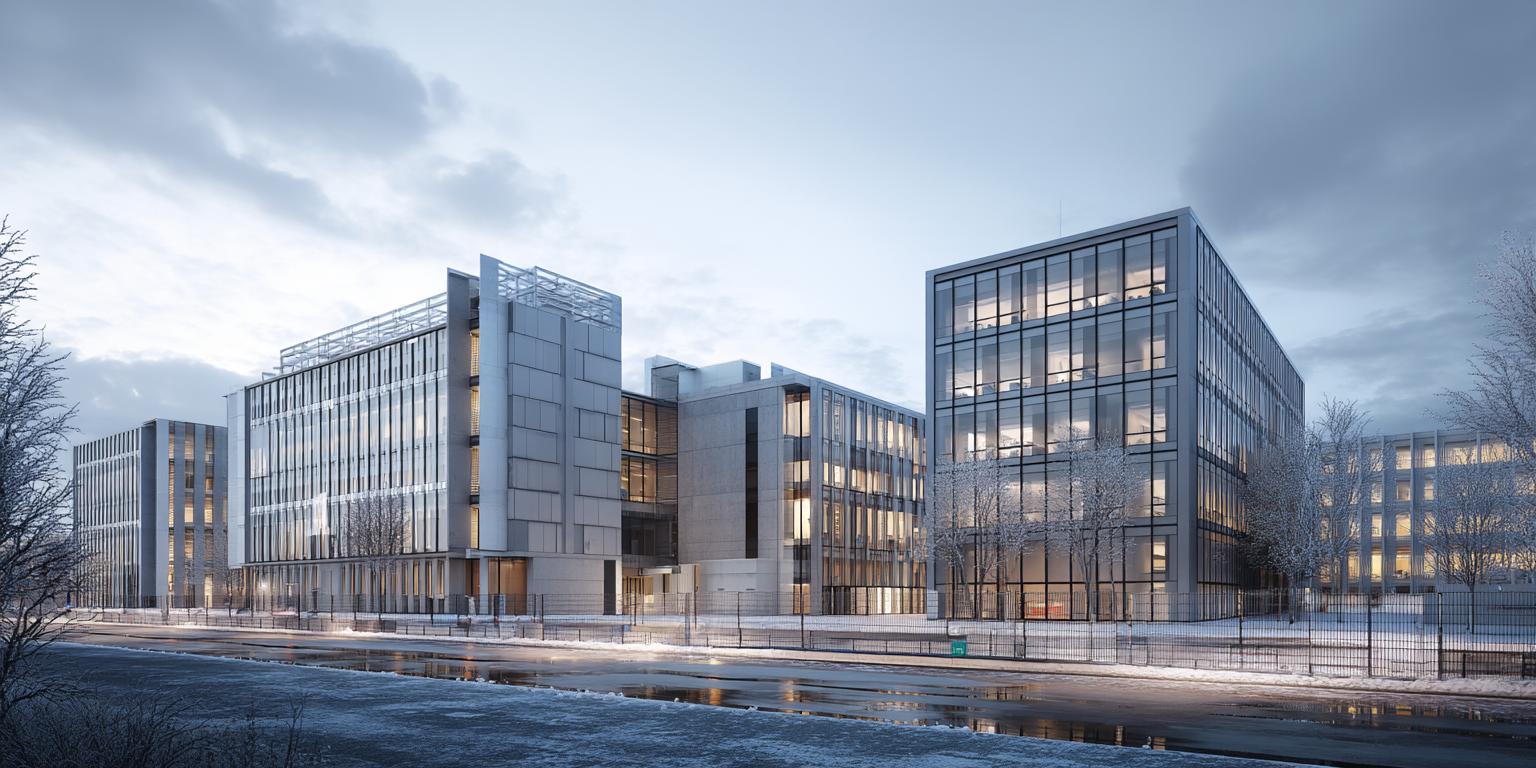
    Outsec AG has won the tender to provide security support for the construction of the new Campus T of the Zurich University of Applied Sciences in Winterthur, the security company from Dietikon announced in a press release. According to the statement, outsec will be responsible for construction site security and flood protection over the next four years. The security company was already involved in the interface coordination of the project during the planning phase.

    “The complexity of this project lies not only in the size or the construction phases, but also in the proximity to existing infrastructure and the crossing of a flowing body of water,” said Robin Hüttenmoser, operational manager at outsec, in the press release. “Flood protection must be guaranteed at all times, especially during the construction period – this is where we make an important contribution with targeted monitoring and early alerts.”

    Outsec’s tasks include access control, coordination of deliveries and area control along the changing construction site zones. For flood protection, the company monitors the water-bearing systems and is also responsible for triggering the alarm in the event of flooding. “With this campus, the ZHAW not only offers students and researchers new perspectives, but also gives us as a security provider the opportunity to demonstrate our digital and networked expertise,” says outsec Managing Director René Leuenberger. In addition to its headquarters in Dietikon, the company has locations in Winterthur, Baden AG and Wallisellen ZH.

  • First use of CPC concrete slabs in building construction

    First use of CPC concrete slabs in building construction

    The Zurich University of Applied Sciences(ZHAW) is using the CPC concrete slabs (Carbon Prestressed Concrete) it has developed for the first time in building construction. This refers to concrete slabs that are reinforced with prestressed carbon. According to a press release, an innovation laboratory has been created in Winterthur from these innovative components, which functions as an information and event centre for sustainable construction. The carbon concrete panels are not only recyclable, they also have a significantly lower impact on the environment than conventional reinforced concrete during production. “Thanks to the new lightweight construction method in concrete, we reduce the CO2 footprint by a factor of two to four and save up to 75 per cent material compared to conventional construction methods,” Josef Kurath, co-founder of CPC AG, a spin-off of the ZHAW, and developer of the carbon concrete panels, is quoted as saying in the press release.

    The carbon concrete panels used for this purpose are currently being manufactured, processed, cut to the millimetre and assembled into building elements at Holcim ‘s first CPC plant in Germany. This preliminary work saves time during assembly on site, as there is no need for time-consuming on-site reinforcement work. “This results in much shorter construction times, which is a particular advantage for urban construction sites,” continues Kurath. Extensions or changes to buildings are also possible at any time. “Our carbon concrete construction system works in a similar way to Lego, but like a modern version of it, with customised components.” And CPC even has advantages over conventional building materials in the event of dismantling: 90 per cent of the processed material can be reused.

  • ZHAW weiht Laborgebäude für Lebensmittelforschung ein

    ZHAW weiht Laborgebäude für Lebensmittelforschung ein

    Die ZHAW zieht ihre Lebensmittelforschung an einem Ort zusammen. Dafür hat die Hochschule mit Hauptsitz in Winterthur ein neues Laborgebäude auf dem Campus Reidbach in Wädenswil eingerichtet, informieren Bau- und Bildungsdirektion des Kantons Zürich in einer gemeinsamen Mitteilung. Das von der Tuwag Immobilien AG errichtete Gebäude wurde am 23. August von Baudirektor Martin Neukom, Bildungsdirektorin Silvia Steiner sowie ZHAW-Rektor Jean-Marc Piveteau und Heiner Treichler, CEO der Tuwag Immobilien AG, eingeweiht.

    In das neue Gebäude wird vor allem das Institut für Lebensmittel- und Getränkeinnovationen der ZHAW einziehen. Seine Mitarbeitenden und Studierenden können künftig unter einem Dach die gesamte Wertschöpfungskette von Lebensmitteln erforschen. Dabei soll in Wädenswil „nicht nur geforscht und gelehrt, sondern auch produziert, analysiert, degustiert und verpackt“ werden, heisst es in der Mitteilung.

    Namensgeberin des Laborgebäudes ist die 1842 geborene und 1906 gestorbene Wädenswiler Geschäftsfrau im Biergewerbe Elisabeth Weber-Hauser. Der Kanton Zürich hat die Räumlichkeiten von der Tuwag Immobilien AG für 20 Jahre gemietet. In Mieterausbau und Ausstattung hat der Kanton zudem rund 48 Millionen Franken investiert.

  • One app brings all means of transport together

    One app brings all means of transport together

    MixMyRide wants to promote alternatives to the privately used car and therefore networks all means of transport with a mobility app. Until now, trams, bicycles and carpooling had to be booked separately. With the help of data on public transport, dynamic data on carpooling and bikesharing, and intelligent algorithms, mobility demand and supply are now to be coordinated. The app was developed by a Switzerland-wide consortium consisting of institutes from the ZHAW School of Engineering and the Scuola universitaria professionale della Svizzera italiana (SUPSI). The WinLab of the city of Winterthur, the mobility service provider BePooler, the transport consultant Citec and the Lugano Living Lab were also involved in the development.

    Combining modes of transport optimally
    The mobility app primarily serves as a journey planning system based on artificial intelligence algorithms developed in-house. The app shows different means of transport for the desired trip by determining optimal combinations of route segments based on the available mobility services, which include walking and cycling routes – either by private bike or bikesharing – as well as e-scooters. In addition, once a ride has been found, MixMyRide also enables the booking and organisation of the ride by mediating between people looking for or offering a ride.

    Testing effectiveness in real life
    The app is available until February 2024 and covers the regions of Lugano, Geneva and Winterthur/Zurich. It is now being tested for a year. The ZHAW researchers have supported the development of the app in terms of design and functionality and are the local contact for the test phase in the Winterthur/Zurich region. They are also leading the evaluation, including conducting and analysing surveys. “The test phase enables us to evaluate the potential for behavioural change through MixMyRide and to estimate any effects on overall energy consumption and CO2 emissions,” explains Uros Tomic from the ZHAW Institute for Sustainable Development.

    Testers wanted for MixMyRide
    Anyone interested can download and test the MixMyRide app from the iOS App Store or the Android Play Store at any time. If volunteer app users also take part in the surveys and any group interviews, they will help to understand the impact of the app on mobility behaviour and may be entered into prize draws.

    Further information: mixmyride.com/en

  • Challenges are the mother of invention

    Challenges are the mother of invention

    Representative façade made of used materials
    The task: Simple, used everyday materials and components are to be used for the façade of a prominent administrative building at Zurich’s main railway station. At the same time, the client, who was actually represented at the workshop, wanted to use the replacement of the façade to give the property a representative expression.

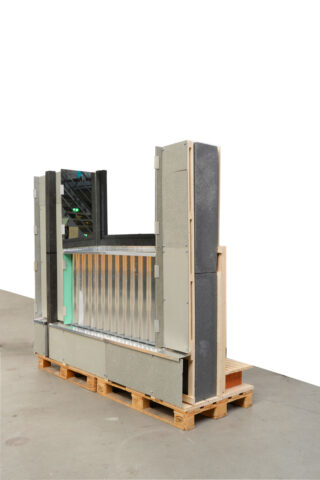
    The students are to create a design for the façade in small groups from the used material provided. They are to discuss and develop urban planning, constructive and atmospheric aspects. And finally, they are to build a section of the façade in original size. The students are supported and guided by ZHAW lecturers and international experts.

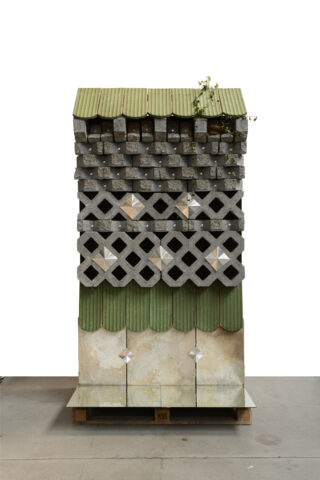
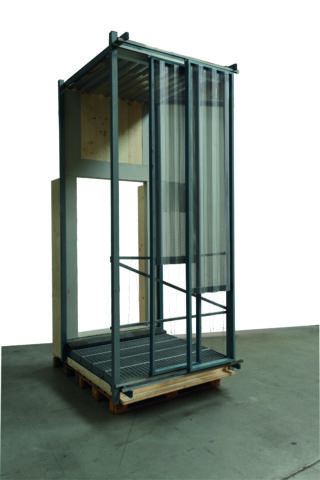
    The materials store contains various used or leftover components. Each group is given a different material as a starting point for their design idea: mirrors, steel grids, grass pavers, roof tiles, profiled sheets or glass-fibre reinforced plastic.

    Creative solutions
    The challenging task of giving the property an attractive and representative design expression with simple, used everyday materials leads to surprising results: The students reinterpret lawn paving stones into artistic stylistic elements.

    Turf stones are reused and transformed into artistic stylistic elements.

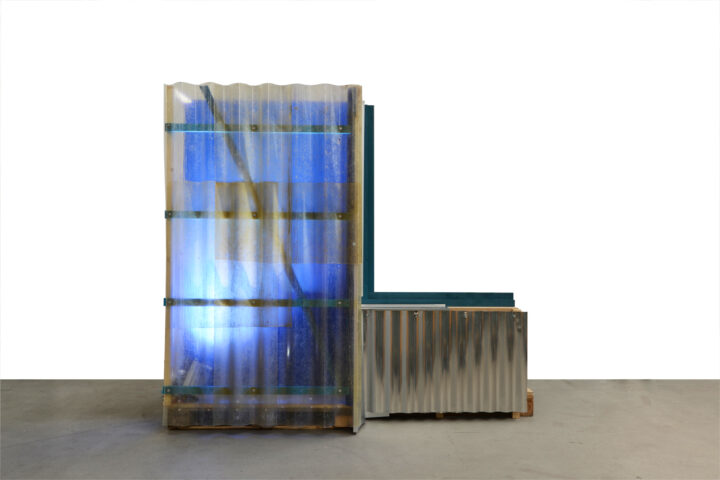
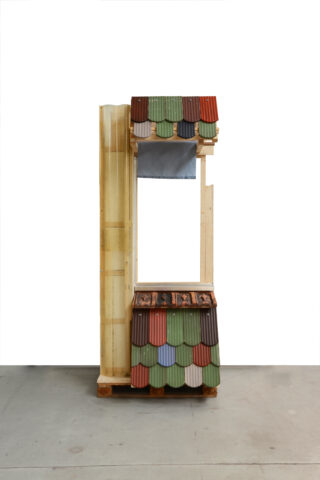
    They backlight plastic panels that simultaneously create a thermal buffer. They arrange roof tiles with varying reliefs and finishes to create animated surfaces.

    Backlit plastic panels create a thermally insulating buffer layer.

    In order to breathe homeliness into the sober administrative building, a group of students combines French balconies with galvanised stair treads, which also provide support for a green façade.

    Roof tiles with varying reliefs and paintwork become animated surfaces.

    Another group uses mirrors from the recently demolished Winterthur Cantonal Hospital as slanted window reveals, giving the façade a surreal, playful appearance.

    French balconies with galvanised stair treads provide cosiness and offer support for a green façade.

    Appreciation for the existing building stock
    The search for qualities in the seemingly worthless changes the students’ view of the existing building stock. Some students take the assignment so seriously that they question it: Is a replacement of the existing façade elements, as it is envisaged in reality, necessary at all? Can it be possible to preserve the existing façade and retrofit it for the new use? In their project, a group of students proposes to renovate the existing façade and to leave the scaffolding required for this on the building later – in order to create new living spaces in the outdoor area.

    Mirrors as diagonally inserted window reveals give the façade a surreal, playful appearance.

    Along the way, a realisation also grows during the workshop week. The architecture of reuse can indeed produce a variety of architectural attitudes and forms of expression – but they are all based on a common foundation: the respectful and careful treatment of existing buildings.

    The existing façade is to be renovated. The scaffolding used for this purpose will remain on the building after the renovation and create new living spaces in the exterior.
  • ZHAW researchers successfully apply quantum computers in practice

    ZHAW researchers successfully apply quantum computers in practice

    Quantum computers not only know the state 0 and 1, but can represent several states between 0 and 1 through so-called qubits – analogous to bits of classical computers – and thus calculate many possible results simultaneously. However, qubits are susceptible to errors, for example due to external influences such as temperature fluctuations or electromagnetic radiation. But internal processes can also cause miscalculations, since the qubits only remain in a stable state for a short time. This is why the smallest possible algorithms are needed, with which quantum computers can calculate results as quickly as possible before the qubits become unstable.

    Exploiting the strength of quantum computers in a targeted way
    So far, there has mainly been theoretical work on how these advantages of quantum computers can be used in the field of quantum machine learning. However, this computer technology has hardly ever been applied in practice. ZHAW researchers have now, for the first time, chosen a new method with which quantum computers can achieve more precise results for complex problems. “Using a hybrid approach, we implemented the most complex part of an algorithm in a quantum computer, while still allowing a classical computer to calculate the remaining part,” explains ZHAW researcher Kurt Stockinger. The machine learning algorithm used here is used to classify objects. Since quantum computers are particularly strong in highly complex calculations, but offer no advantage over classical computers in simple tasks, a combination of both systems could actually be an efficient solution.

    Tested with quantum computers from IBM
    The ZHAW researchers conducted their experiments with a total of five data sets and had the calculations performed by quantum and classical computers and compared the results with each other. To do this, they used the option of docking directly onto an IBM quantum computer. In this way, they could simulate the calculation and have it actually performed by a quantum computer. The approach was tested, among other things, on the so-called iris data set, which contains information on flowers and is used to classify individual flower species. And indeed, the hybrid method led to more accurate results. “We were thus able to show that classical machine learning problems can be solved better by the hybrid approach than with classical computers,” Stockinger summarises the result.

    Optimising neural networks with quantum computers
    The ZHAW researchers also used neural networks because they can recognise complex patterns within large amounts of data on several layers. The team led by Kurt Stockinger and Rudi Füchslin used a weather dataset with many interdependent parameters such as humidity, air pressure or temperature and fed it into a neural network to obtain the result “rain” or “sunshine” at the end. “We implemented a certain layer of this network in the quantum computer. This makes it possible to calculate and look at several dependencies at the same time. This makes it possible to make much more accurate weather forecasts,” Stockinger describes the advantage of the method. “However, research here is still in its infancy, as further investigation is needed into how neural networks can be implemented most effectively in a quantum computer.”

    Diverse possibilities for industry and science
    “We have now moved from theory to application. This means that the technology is now also becoming interesting for companies,” says Stockinger. Many companies are also already showing great interest in the advantages of quantum computing, also with a view to the possibilities in security technology. “Banks in particular have a strong interest in this technology, as their encryption methods could be cracked by quantum computers,” explains the ZHAW researcher. The technology can also be used in many other areas, such as in the development of new and improved materials or medicines. “These are the same areas of application as for machine learning, with the crucial difference that quantum computers can deliver faster and more accurate results,” Kurt Stockinger sums it up.

  • Switzerland and UAE discuss city of the future

    Switzerland and UAE discuss city of the future

    On March 21 at the Expo in Dubai , the Swiss pavilion brought together experts from universities in Switzerland and the United Arab Emirates, private companies and public actors under the motto “Smart Connected Cities”. It is about intelligent solutions for the management of water, mobility and other challenges in cities that are becoming increasingly dense. Some of these projects have already been implemented in Switzerland and could be imitated in the Middle East/North Africa (MENA) region.

    The event was organized by the University of Applied Sciences in Western Switzerland ( HES-SO ). It is the Leading House MENA officially commissioned by the Swiss State Secretariat for Education, Research and Innovation . Its goal is to promote scientific cooperation between Switzerland and the countries of the MENA region.

    During implementation, the HES-SO worked together with Swissnex , the Swiss Embassy in the UAE and the Swiss Business Hub Middle East . “International cross-technology cooperation that offers networked solutions for the exponentially growing demand of a growing population and the associated densification of living spaces are the only way to master the challenges,” says Dante Larini, project manager of Swissnex in the Swiss pavilion, in a press release quoted. “The event showed us how much and how seamlessly technology can transform the way cities are managed and the daily lives of their residents.”

    Josef Spillner from the Zurich University of Applied Sciences ( ZHAW ) gave a keynote speech on the opportunities and risks of cyber-physical spaces. The cooperation between the ZHAW and the private university of the Emirate of Sharjah ( Sharjah University ) was also presented at the event.

  • New parcel logistics should relieve cities

    New parcel logistics should relieve cities

    A new pilot project by the Swiss innovation agency Innosuisse is testing an alternative distribution system for parcel shipments in Zurich. It is intended to reduce delivery traffic in cities. A media release from the Zurich University of Applied Sciences ( ZHAW ) quoted the Federal Office for Spatial Development, according to which the volume of parcels will increase by 75 percent by 2040 due to the growing online trade and the freight traffic will increase by 37 percent as a result.

    The ZHAW Institute for Sustainable Development in Winterthur is leading this project. Companies such as H&M , Zalando and Ikea are involved. In addition to the city of Zurich, the project partners are also Swiss Post , DPD and Cargo Sous Terrain . The desired solution provides for the interaction of three distribution centers, so-called hubs. The project also aims to provide cities with assessment criteria that they can use to find suitable locations.

    “Today every truck drives through town once and distributes the goods. With a hub in the city center, from which the fine distribution takes place, you can bundle much better, ”Maike Scherrer from the ZHAW is quoted as saying. A digital backbone based on artificial intelligence is to organize the shipment allocation to different means of transport in such a way that as few transport kilometers as possible are driven. Free transport capacities can be auctioned online. It is important that the distance to the home address is short so that the parcel recipients can walk to the Microhub as much as possible.

  • Holcim realizes a new concrete structure

    Holcim realizes a new concrete structure

    Holcim built the cantilever bridge called Bridge to the Future at its Hüntwangen plant. The company describes the filigree concrete platform for the acceptance of excavated material in a press release as “one of the most climate-friendly structures in the world”. This bridge was created in close cooperation with CPC AG from Andelfingen and the fiber composite materials ( FRP ) specialist group at the Zurich University of Applied Sciences ( ZHAW ).

    For this bridge, the concrete slab technology from CPC was used and further optimized. The company, founded in 2013, produces particularly filigree, stable and durable concrete slabs and components that are reinforced with pre-stressed carbon fibers (carbon prestressed concrete, CPC) instead of corrosive steel. This can save up to 75 percent of material and thus also CO2. This technology was developed and patented in a research collaboration between the ZHAW and the Silidur company from 2010. As stated in the press release, Holcim has since acquired a stake in CPC AG “as proof of its trust in CPC technology”.

    According to the information, Holcim used its clinker-free cement Locarbo for the Bridge to the Future. Compared to conventional cement, this has 63 percent fewer CO2 emissions. From this, Holcim has developed a high-strength recycled concrete. Its carbon footprint has been reduced from 210 to 138 kilograms of CO2 per cubic meter.

    FVK supported Holcim with feasibility and load-bearing tests as well as statics calculations. “This project is a highlight for us,” says FVK manager Josef Kurath. The individual material properties are “reflected in a unique way and optimally used”.

  • Building for the ZHAW in Winterthur

    Building for the ZHAW in Winterthur

    2021 Eulachpassage castling
    In summer 2020, the ZHAW Health Department will move from the Eulachpassage to the new Adeline Favre building on the Sulzer site. The ZHAW School of Engineering will temporarily use the space in the Eulachpassage as a Rochade building, while the new Technikumstrasse campus will be built over the next few years.

    2023 laboratory building RD
    A unique center for food and beverage technology will be built on the Reidbach campus in Wädenswil by summer 2023. The new building not only unites the ZHAW Institute for Food and Beverage Innovation in one place, but also the entire value chain of the food industry. In the future, food and beverages will be researched here, from raw materials to the market.

    Construction time: 2019-2023
    Architecture: Leutwyler Partner Arch.

    2024-2034 Campus T
    The ZHAW School of Engineering is getting a new, attractive campus with a park on the Technikumstrasse site in Winterthur. The buildings and green space required for this will be implemented in four stages by 2035.

    The first includes the two new laboratory buildings TT (2024) and TL (2027), with laboratory, teaching and office space as well as a cafeteria and a public park with access to the Eulach. In the longer term, all buildings around the main building by Theodor Gohl (1878), which is worthy of protection, and the east building by Hermann Fietz (1908) are to be replaced by new buildings. For the second stage, the renovation and densification of the building complex with the east and chemical building TE / TZ (2029) is planned.

    In the third stage, the historic main building TH (2032) will be renewed and expanded to the south. In the final fourth stage, the physics building is to be replaced by the new laboratory building TP (2035), provided that the old building by Hans Suter (1960) is removed from the inventory of buildings worthy of protection.

    2025 Shedhalle Reidbach
    The ZHAW has been renting the former factory premises of the Wädenswil AG cloth factory since 1999. As soon as the so-called shed halls have been converted, they will be used from 2025, for example, as a new university library as well as learning and common rooms for students from the ZHAW Department of Life Sciences and Facility Management.

    Construction period: 2023-2025

    2033-2034 Rochade Eulachpassage and meander
    In the long term, the ZHAW Department of Applied Linguistics will settle on the Eulachpassage and make room in the meander for the ZHAW School of Management and Law, which is to expand entirely on the St.-Georgen-Platz campus.

  • KREIS house in Feldbach opens

    KREIS house in Feldbach opens

    An open day will take place on September 4th to mark the opening of the KREIS House . From 1 p.m. to 6 p.m., the Synergy Village in Feldbach, on which the research project of the Zurich University of Applied Sciences ( ZHAW ) is located, is accessible to all interested parties. You can try out the construction techniques of the KREIS house yourself. There will also be a market with sustainable local products.

    Efficient resource-to build the climate and sufficiency building was in May this year started . With this project, the ZHAW Department of Life Sciences and Facility Management ( LSFM ) wants to show how circular economy can be implemented on a reduced living space of 40 square meters. As the ZHAW writes in its invitation, everything in this house is in circulation – from the building materials to the nutrients from the wastewater for fertilizing the roof garden.

    Research is constantly developing new, recyclable technologies, materials and concepts for use in buildings, according to the LSFM project description. But the path from basic research to broad application is a long one. Therefore, the KREIS house is providing a room to try out these new technologies and materials. With their feedback, visitors contribute to improving it.

    In future, the ZHAW will be offering regular visits. They can be viewed online, as can dates for regular workshops on specific cycle issues. The overnight stays in the KREIS Haus are currently fully booked. The LSFM is also available for individual and cycle-oriented construction advice.

  • Canton sets design plan for ZHAW campus

    Canton sets design plan for ZHAW campus

    The Technikumstrasse campus of the ZHAW in Winterthur will be comprehensively renewed within 15 years, explains the building department of the Canton of Zurich in a message . New buildings and more open space are to be created in four stages. At the same time, the Eulach will be renatured in the area of the technical center. In the first phase, two new laboratory buildings are to be built and a public park is to be set up on the Eulach.

    The corresponding design plan was published from April 6 to June 8, 2020. 31 objections were received against him, mainly in questions of urban integration, the scope, development and nature conservation, informs the building management. Another 18 objections related to the renaturation of the Eulach and the definition of the water area.

    The design plan and the water area have been revised based on the objections and have now been set, the message continues. Both documents and the reports on the objections have been publicly available for 30 days since February 26 and can be viewed on the Internet . If no legal remedies are taken, they will come into force at the end of March this year. Then the city of Winterthur could issue the building permit for the first stage.

  • Swiss cities are getting smarter

    Swiss cities are getting smarter

    Thanks to digitization, networking, participation and efficiency, a smart city should contribute to a higher quality of life and more sustainability. This is how most Swiss cities explain the concept of the Smart City, according to a study by the Zurich University of Applied Sciences ( ZHAW).

    The ZHAW carried out the study for the first time this year and was supported by several partners. A total of 84 Swiss cities and municipalities took part. According to the results, more than half of them rate the topic of smart cities as important or very important and are actively involved in it. At the end of 2020, however, only 23 cities had a developed smart city strategy. According to the ZHAW, this number is likely to increase in the coming years. For example, a strategy is already being developed for seven cities.

    The ZHAW has examined the development of intelligent cities using nine dimensions. The cities surveyed had a total of 329 existing projects in these dimensions. Most of the projects – 98 in total – are part of the Smart Governance dimension. City apps or chatbots, for example, make it easier to access information relevant to administration. This category also includes digital building permits or the digital notification of relocation.

    There are also 76 projects in the Smart Energy and Environment dimension. Certification as an energy city was mentioned here particularly often. Many projects aim to promote renewable energies and conserve resources. But intelligent power grids and lighting systems are also in focus in several cities.

    According to the ZHAW, most smart city projects are initiated within the administration, by energy suppliers or by politics. The cities are often based on other cities at home and abroad. However, many cities would like more support overall from the federal government and the cantons.

  • ZHAW researchers and Zühlke are making solar systems cheaper

    ZHAW researchers and Zühlke are making solar systems cheaper

    When building your own photovoltaic system, planning and bureaucracy costs are often more expensive than purchasing the electricity-generating modules. The researcher Franz Baumgartner from the Zurich University of Applied Sciences has dealt with this problem. According to a press release , he is using modern technology to reduce planning costs. Baumgartner, head of the energy and environmental technology course at the ZHAW School of Engineering, is quoted as saying: "With small photovoltaic systems on single-family houses, only a fifth of the costs are now attributable to the modules themselves." The planning of the system and the administration are now similarly expensive necessary documentation.

    Baumgartner and the ZHAW Institute for Energy Systems and Fluid Engineering, in collaboration with the Schlierem-based innovation specialist Zühlke , started at precisely this point. According to the press release, Baumgartner got to know the use of HoloLens glasses in the medical sector and wants to use their advantages in photovoltaics.

    “Up to 15 working hours per system are required for the administrative work,” says Baumgartner. Building applications, fire protection plans and approvals help to drive up costs. It is easier to save money with more efficient processes than with cheaper modules. According to Baumgartner, part of the solution could be the HoloLens. During measurements on flat roofs, for example, the HoloLens glasses show the assembly points of planned systems with an accuracy of two centimeters and then create a virtual image of the system.

    Baumgartner: "In addition to its potential for documenting the entire process, it has a great advantage: it can measure, plan, offer and demonstrate the system to end customers from a single source." Baumgartner: "Because of the high wages, the system will first pay off in Switzerland."

    ZHAW researcher Baumgartner wants to expand its application to all types of flat roofs and covered parking spaces. "We are in the process of formulating a project application for the Federal Office of Energy and have already received positive signals from Bern."

  • Implenia hands over new campus to ZHAW Gesundheit

    Implenia hands over new campus to ZHAW Gesundheit

    The ten-year project for the conception, development and construction of the new campus for the Department of Health at the Zurich University of Applied Sciences ( ZHAW ) was completed on schedule on July 1st and is now ready for occupancy. Developer and general contractor Implenia has handed the new building over to the owner SISKA Immobilien AG. As the tenant of the house on Katharina-Sulzer-Platz in Winterthur, the ZHAW can now prepare the building, which Implenia has built in accordance with the Minergie standard, with a rental area of around 19,200 square meters for teaching and research.

    The facility will remain closed to the public until the end of July 2020. The "Haus Adeline Favre", named after a midwife from the Val d'Anniviers, will accommodate over 2000 students and around 300 employees from August. The largest Swiss education and research center for occupational and physiotherapy, midwives and nursing will open its doors with an official ceremony on August 28, 2020. An open day will take place on September 26, 2020.

    According to the media release , the building was designed by pool architects from Zurich. The area of the property was completely built over, there are six above and two underground floors with classrooms and practice rooms, employee offices, an outpatient clinic and simulation center as well as a cafeteria. Adrian Wyss, Head of Development Division at Implenia: “At the Adeline Favre house, Implenia successfully brought together its specialists from various disciplines, especially from the Development and Buildings Divisions, and the group's integrated business model was fully implemented. The clear ideas of the tenant Canton of Zurich and the good cooperation between the teams and the authorities also made the project a success. "