Tag: zirkulaeres Bauen

  • Swiss construction project focuses on sustainable earthen architecture abroad

    Swiss construction project focuses on sustainable earthen architecture abroad

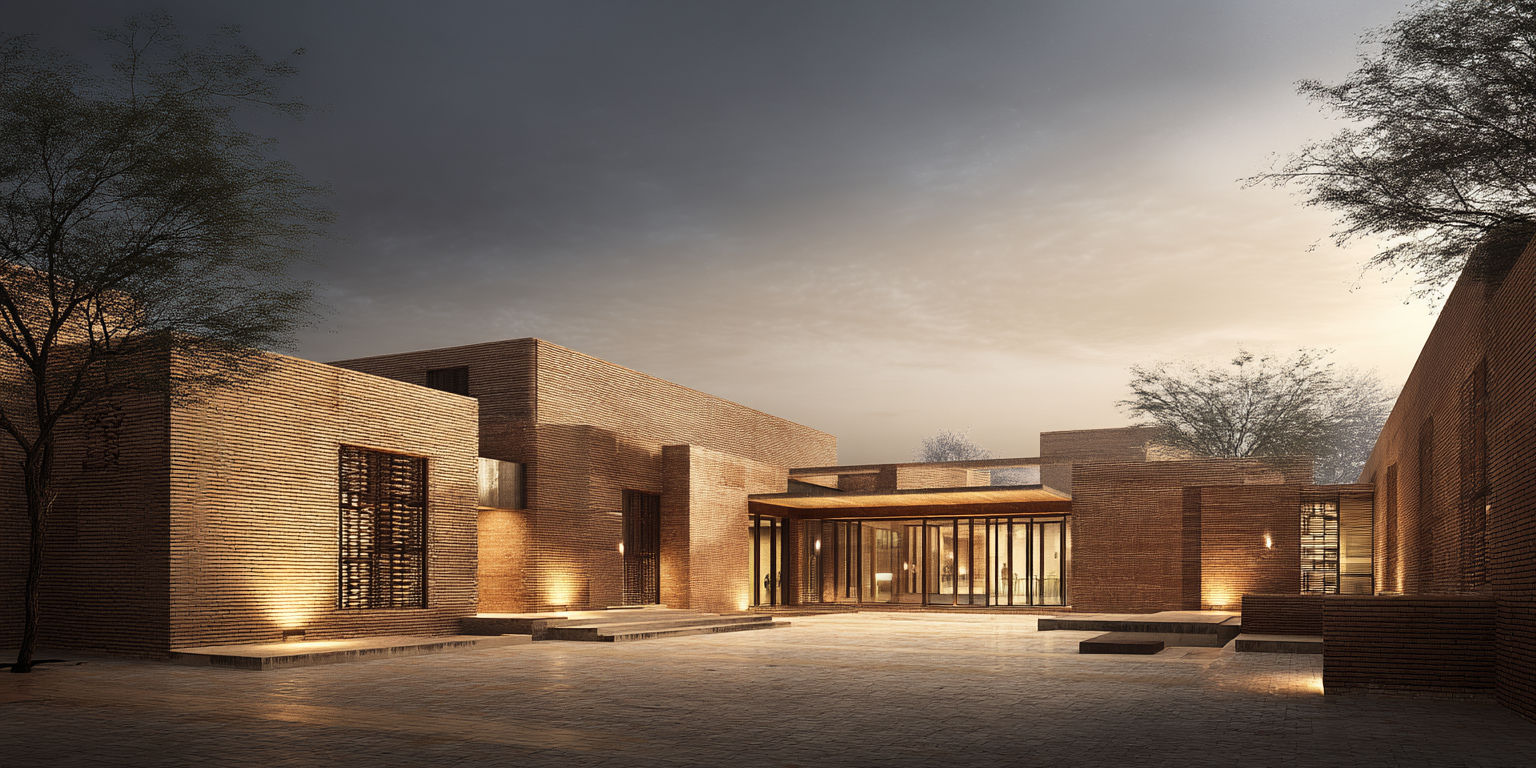
    The go-ahead has been given for the construction of the new Swiss Embassy in the Cameroonian capital, Yaoundé, and according to a press release, Dietikon-based Oxara AG is playing a key role in the project. The public building will be constructed using pressed clay bricks. Oxara is supplying its Oxabrick Loko stabiliser for the red raw material, which is available in abundance locally.

    The design for the embassy building is by the Basel-based architectural firms Caesar Zumthor Architekten and Nord Architekten and comprises an office block, a residence and a connecting building, all grouped around a courtyard. The buildings are to be constructed sustainably using local resources.

    On its website, Oxara – a company founded in 2019 – has launched a series reporting on the progress of the construction work. “In West Africa, clay is perceived as a sign of poverty and rurality, whilst concrete dominates in cities as a status symbol,” Oxara’s project manager Jonathan Ensslin is quoted as saying there. “It therefore sends a strong signal that the new Swiss embassy is being built with clay.”

    Oxara’s non-toxic mineral activator transforms clay into a stable and water-repellent building material. According to the company, this makes clay construction faster, less labour-intensive and scalable. At the same time, it is circular and low-carbon.

    Tests in the Oxara laboratory had shown that the material is well suited for use with Oxabrick Loko. However, the laboratory results could not initially be replicated on site. With the help of local materials researcher Berardin Beauderic Kenne Diffo, who had already got to know Oxara during his PhD at the Swiss Federal Institute of Technology Zurich, the mixing ratios were adjusted. A test wall comprising around 7,000 clay bricks is currently being completed. Construction work on the new embassy is then set to begin.

  • Think circular, reprint wood

    Think circular, reprint wood

    Stricter regulations on the energetic use of waste wood mean that large quantities of wood waste can no longer simply be incinerated, but can still be recycled. The “Experimental and Digital Design and Construction” department at the University of Kassel is working with Buro Happold to develop a 3D printing process that converts waste wood particles into load-bearing wall components. The project is being funded as part of the “Zukunft Bau” program of the Federal Institute for Research on Building, Urban Affairs and Spatial Development.

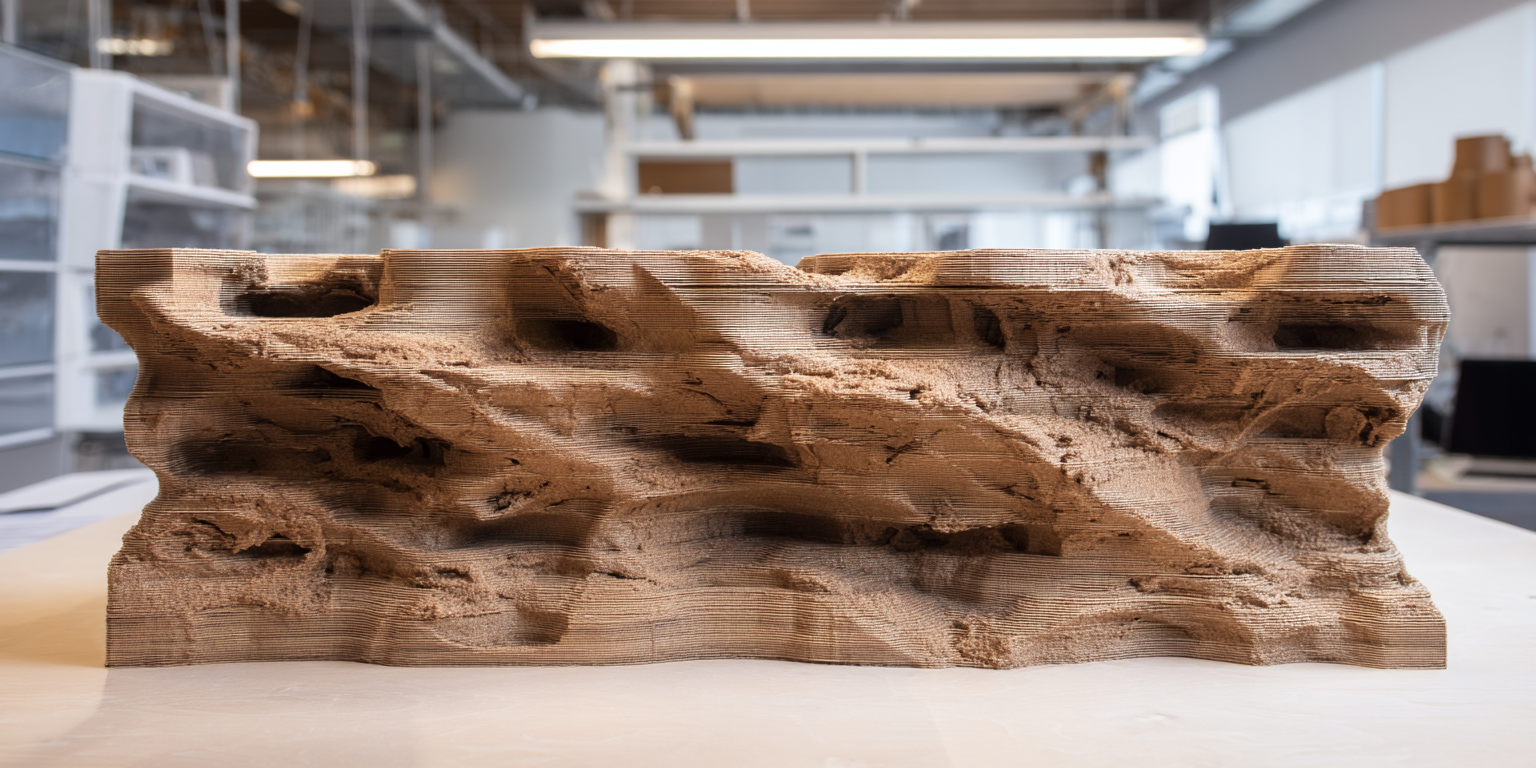
    the focus is on a bio-based printing material made from shredded waste wood particles, which mainly originate from secondary material flows from the wood industry – i.e. from post-consumer wood. Industrial partners process the material and mix it with biogenic binders to create a paste-like mass that can be extruded with robotic support.

    lightweight components from the 3D printer
    The result is clearly different from the familiar 3D concrete printing process. The mass of wood particles and binder is applied in layers on a scale of 1:1 and forms lightweight but stable components. Flat wall structures are possible, as are freely curved geometries that can be precisely adapted in terms of construction and architecture.

    the current Rafa 2.0 project phase will run for 18 months and builds on the previous Rafa project, in which the researchers fundamentally investigated the suitability of waste wood particles for additive manufacturing. Material formulations are now being refined, the extrusion process optimized and the components tested under laboratory conditions, with the aim of achieving an end-to-end digital manufacturing process through to the full-scale prototype.

    load-bearing, fire-resistant and circular
    For the concept to work in practice, the printed elements must do more than just show shape. Load-bearing capacity, rigidity and fire protection properties that meet the requirements of interior construction are required. The project partners see an initial field of application in modular wall systems that can be easily assembled, dismantled and reused elsewhere.

    this principle fits in with circular building approaches, in which building components are not disposed of at the end of their life cycle, but are transferred to new uses. The components can be dismantled by type because no components containing harmful substances are used. This is a prerequisite for closed material cycles in timber construction.

    digital planning as a key technology
    Digital planning plays a central role. Buro Happold is responsible for computational design and structural planning and uses simulations to predict the structural behavior of the components. Geometries are optimized so that material is only used where it is structurally necessary – resource efficiency becomes a design task.

    “We turn waste into an opportunity, reclaimed wood is turned into high-performance components through digital design and additive manufacturing,” says Shibo Ren from Buro Happold, describing the approach. Away from linear consumption and towards a circular, data-based construction practice that closely interlinks robotics, engineering and design.

    practical prospects
    In the short term, the process aims to use less material and reduce emissions compared to concrete-based 3D printing technologies. In the long term, it could open up new markets for bio-based additive construction methods. Especially where low weight, deconstructability and architectural freedom are required.

    whether and how quickly the approach becomes commercially viable depends on scaling, standards and acceptance in construction practice. Technically, however, the project already shows that circular construction does not begin with recycling, but with design. Where materials, processes and life cycles are rethought.
  • From material to strategy – circular thinking in construction

    From material to strategy – circular thinking in construction

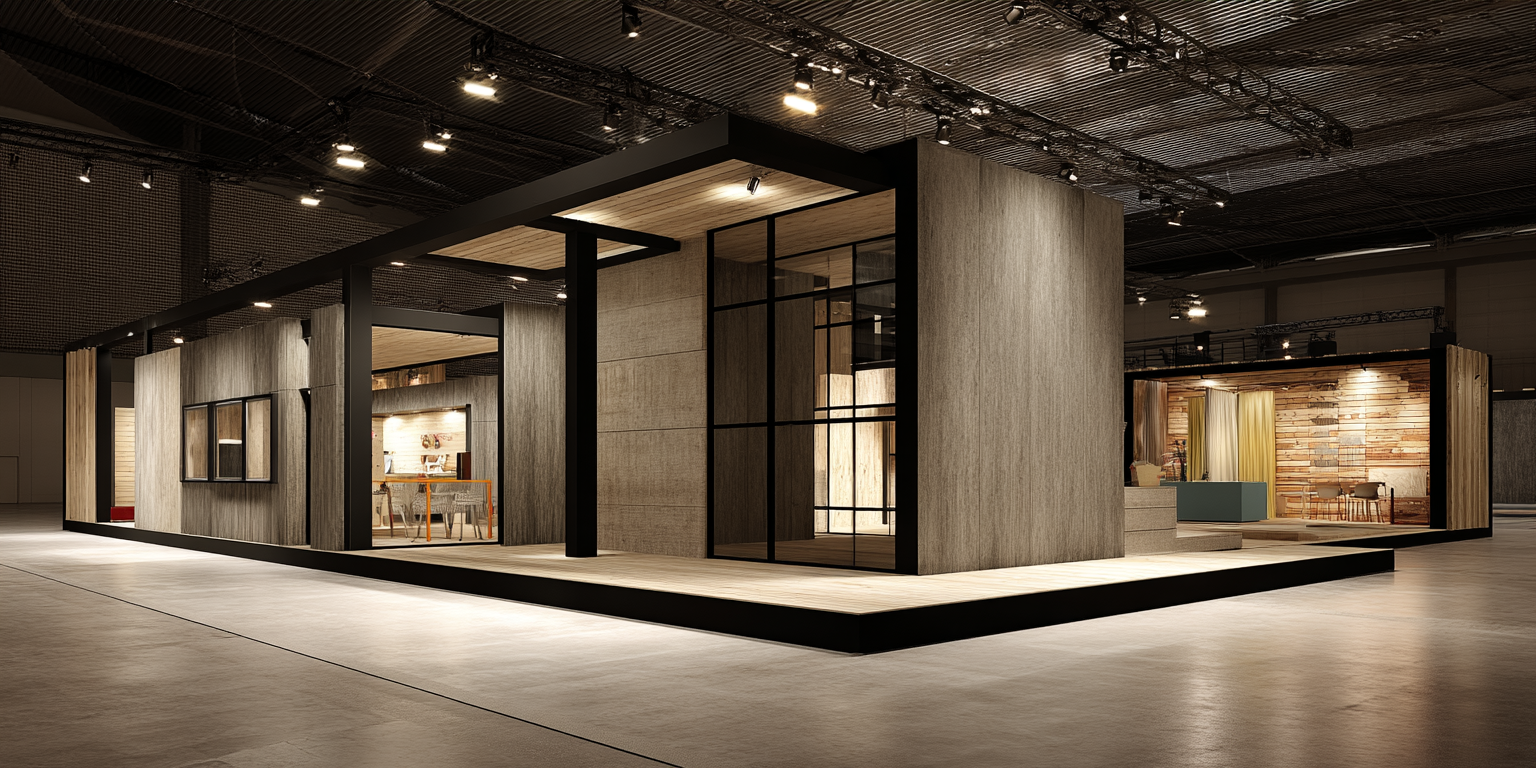
    This year’s Swissbau is focusing participants’ attention on the topic of circular economy and materials as one of seven key themes. With a total of 35 keynote sessions, panel discussions, themed events and practical solutions, it is the most prominent theme at the leading trade fair for the Swiss construction and real estate industry after digitalisation and collaboration, which has 38 events. Overall, the content on offer is grouped around seven key themes.

    Swissbau 2026 will take place in Basel from 20 to 23 January under the motto “Setting new impulses together”. On 24 January, the new Trend World in Hall 1.2 of the exhibition centre will still be open.

    The programme, with the main theme of circular economy and materials, will start on Tuesday, 20 January, with the themed event “Faster, cheaper, more sustainable: modularisation and prefabrication make construction projects better”. Speakers include Konrad Graser from the Zurich University of Applied Sciences, Fabian Franke from ERNE Holzbau, MOD founder and CEO Marc Beermann, and Tom Van Mele from VAULTED.

    On Wednesday, 21 January, the keynote session “Building without materials – what does circular design need?” is scheduled. In this session, speakers from Lucerne University of Applied Sciences and Arts will use concrete examples to show how existing materials can be transferred to further cycles of use using new methods. Contributions will also come from Basler Bauteilbörse, Bau-Teilen GmbH and Flumroc AG.

    A practical talk will highlight the technical and architectural aspects of wood as a material, while another will examine the possibilities and limitations of the circular economy using the example of laboratory buildings. The panel will discuss whether concrete can become “the game changer of the construction revolution”. The main event on Thursday, 22 January, will be the event on the topic of “The circular economy in practice – how can we solve conflicting goals together?”

  • Circular building with reeds

    Circular building with reeds

    The residential building by Marina Rosa and Jacobus van Hoorne, designed by Gilbert Berthold, architect and research assistant at BFH, deliberately stands out in a single-family housing estate on Lake Neusiedl. It combines a consistent timber construction with a striking thatched roof and thus relies on local, renewable raw materials with a low ecological footprint. The numerous awards, from the client prize of the Central Association of Austrian Architects to the architecture prize of the province of Burgenland and the newcomer prize “House of the Year”, underline the exemplary character of the project.

    Reeds as a high-performance building material
    Jacobus van Hoorne, originally a particle physicist at CERN, took over his father’s reed cutting and thatching business and developed it into an innovation laboratory. Together with Berthold, he developed a roof structure that met strict fire protection requirements and was officially approved through real fire tests. A milestone for reed in new buildings, even in densely populated areas. The gently curved roof surfaces follow the material logic. Each additional degree of inclination extends the service life of the roof, the construction makes the qualities of the natural material visible and legible.

    Geometry, material and space as a unit
    The floor plan of the house follows an S-shape resulting from the rotation of the central living space. At its heart is a two-storey, light-flooded atrium that opens onto the garden and is closely linked to the outside space via terraces. Compactly organized functional spaces create scope for spacious recreation areas. The interplay between the thatched roof and the natural oak façade connects the building and the landscape. The roof becomes a design-defining element and a contemporary interpretation of traditional craftsmanship.

    Real-life laboratory for bio-based materials
    For Gilbert Berthold, the project marked the start of his self-employment and at the same time a real testing ground for sustainable construction. Today, the house serves as a home, study object and exhibition space all in one. It provides data on energy efficiency, indoor climate and the long-term behavior of bio-based building materials. In the context of the BFH, it fits in with research into plant-based materials such as straw, flax, hemp and mycelium and shows that reeds can be used not only as an insulating material, but also in a leading architectural role.

    Symbol of a regenerative building culture
    The project illustrates how circular building with regional resources can already be implemented today. It shows students and professionals that regenerative architecture is not a vision of the future, but a built reality. With reeds as a strong symbol for a building culture that rethinks nature, technology and society.

  • Circular construction as the new standard in the canton of Zurich

    Circular construction as the new standard in the canton of Zurich

    The Canton of Zurich ‘s Real Estate Office and Building Construction Office is systematically integrating the principles of circular construction into its processes with the help of the Circular Hub as a platform for the circular economy. This initiative goes back to the circular economy strategy published in 2024. According to a Circular Hub press release, the Community of Practice format entitled “KreislaufLAB – Planning and Building for Zurich’s Future” was established for this purpose. The aim is to sustainably anchor the necessary knowledge in the existing roles of cantonal property management. According to the project description, Circular Hub has taken on the conception, moderation and impact measurement of the format in close collaboration with cantonal managers. Internal anchoring is also supported by a communication strategy.

    Expertise and practical examples should make it easier to plan and implement circular construction. Specifically, topics such as deconstruction, material selection and life cycle thinking play a central role. “This creates a lively network in which knowledge is shared and anchored in concrete application aids. This is how impact can become visible,” is how Circular Hub describes its approach.

    Specifically, there will be five interactive workshops combining expert input, panel discussions and practical group work. As a result, practical tools and application aids will be developed. Internally, the process will be flanked by bulletins and a closing event, among other things. Ultimately, an impact assessment will provide information on how competences have been developed and the principles of the cycle have been anchored.