Tag: ZKB

  • Rise in Swiss asking rents continues

    Rise in Swiss asking rents continues

    The Homegate rent index for asking rents is compiled by the real estate marketplace Homegate in cooperation with Zürcher Kantonalbank (ZKB). It measures the monthly, quality-adjusted change in rents for new and re-let flats based on current market offers. Compared to the previous month, the index increased by 0.5 points in May and now stands at 121.2 points (plus 0.4 percent). Compared to the previous year, asking rents rose by 3.1 per cent across Switzerland.

    Change in the cantons
    With the exception of the canton of Fribourg (minus 0.2%), asking rents also rose everywhere at the cantonal level. However, the canton of Fribourg recorded a new high in April and March this year, which puts the slight decline in May into perspective. In the remaining cantons, asking rents rose by up to 3.6 per cent in the canton of Schwyz, which clearly reached a new high. The coming months will show to what extent this is a temporary effect. In the cantons of Uri (2.6 per cent), Nidwalden (2 per cent) and Zug (1.9 per cent), asking rents also rose significantly last month. At the same time, the canton of Zug was the only canton to record a negative development compared to the previous year (minus 1 per cent), which can primarily be explained by the comparatively strong fluctuations in asking rents in this canton. The strongest increases in asking rents over the last twelve months were in Uri (7.8 per cent) and Schwyz (6.9 per cent). This is accompanied by fluctuating, but nevertheless rising prices.

    Change in the cities
    A similar picture emerges at the level of the cities surveyed. With the exception of the city of Bern (minus 0.3 per cent), prices for advertised rental flats have risen between 0.5 per cent (Basel) and 1.6 per cent (Zurich). Compared to May last year, asking rents have risen by more than one per cent in all eight cities surveyed, led by Zurich (10 per cent) and Lugano (7.7 per cent). When looking at the asking rents in the cities, it is also noticeable that most of them rose more strongly in May than in the corresponding cantons. The only exceptions are Bern (with falling asking rents in May at city level) and Lucerne (cantonal prices rose by around twice the city prices). This indicates that urban demand remains high.

    Quality adjustment method
    The development of asking rents in Switzerland is adjusted for the different quality, location and size of the flats. The advantage of this so-called hedonic method is that the real rental price development for new and re-let flats is shown on Homegate. The Homegate rent index is the oldest quality-adjusted rent index in Switzerland and is considered a reference source for real estate professionals for determining the price of rental properties.

    The data for all cantons and cities since the start of the survey can be found in the latest release in the news section of SMG Swiss Marketplace Group AG. The next Homegate Rental Index is expected to be published on 18 July 2023.

  • Build faster – thanks to virtual reality

    Build faster – thanks to virtual reality

    One of the main reasons for the decline in construction activity is the complex and lengthy approval procedures. According to the ZKB study, it takes an average of 140 days from planning application to building permit in the country, which is 67 percent more than in 2010. It takes even longer in densely populated areas in particular: 500 days in the canton of Geneva and 330 days in the canton of Zurich, with this figure more than doubling since 2010. The increase in appeals and objections also lead to delays and blocked projects.

    To solve these problems, the globally unique virtual reality (VR) solution from the Swiss PropTech company HEGIAS helps. Communication between the various stakeholders is improved through the use of VR, as all parties involved see and thus understand the same thing. Also, the imagination is less challenged by the authorities, and thus more correct urban planning decisions can be made.

    Build faster, cheaper and more sustainably
    With the immersive solution, complex approval procedures can be reduced, as authorities and politicians can view the planned buildings from any perspective and at any time of day throughout the year in a realistic VR environment. This saves time, money and reduces the need for expensive and environmentally harmful façade samples or elaborate physical architectural models as well as 1:1 mock-ups.

    HEGIAS VR also facilitates and speeds up the assessment of listed buildings, as for example HEGIAS VR was successfully used by Implenia in the Lokstadt in Winterthur. The VR models can also show neighbours how shadows cast or the position of the sun would affect their property at any time of day throughout the year. VR thus enables faster, cheaper and more sustainable construction.

    More info: www.hegias.com

  • Swiss asking rents are already rising again

    Swiss asking rents are already rising again

    The Homegate rent index for asking rents is collected by the real estate marketplace Homegate in cooperation with the Zürcher Kantonalbank (ZKB). It measures the monthly, quality-adjusted change in rental prices for new and re-let apartments based on current market offers. The index shows a slight increase of 0.3 points compared to the previous month at 118.1 points (plus 0.3 percent compared to the previous month). Compared to the previous high of June 2022, the index has increased by almost 0.2 percent. In a year-on-year comparison, asking rents across Switzerland have risen by 2.3 percent.

    Change in the cantons
    Looking at the cantons, it is again striking that in August compared to the previous month, only a few cantons showed major changes in asking rents, while the majority of cantons only saw changes of 0.5 percent or less. Only in the cantons of Geneva (1 percent), Bern (0.7 percent) and Obwalden (0.7 percent) have advertised rents increased by more than this mark. It is striking that asking rents have risen in all cantons without exception, especially in the mountain regions: Nidwalden (6.5 percent), Obwalden (4.6 percent) and Graubünden (4.1 percent). A total of eleven cantons recorded an increase compared to the previous year, which is higher than the national average of 2.3 percent.

    change in the cities
    In the surveyed Swiss cities, meanwhile, there were clear changes in August. These are more than 0.5 percent in five out of eight cases. In August alone, asking rents in Lucerne (1.1 percent), Bern (1.1 percent) and Geneva (1 percent) increased by a good one percent. In all three cases, however, this increase also accounts for a considerable part of the increase compared to the previous year, which is around 1.5 percent for each of the three cities. The situation is different in Zurich or Basel: While the asking rents in August changed only minimally compared to July, both cities recorded significant growth compared to the previous year of 5.6 percent in Zurich and 2.9 percent in Basel.

    Method of quality adjustment
    The development of asking rents in Switzerland is corrected for the different quality, location and size of the apartments. The advantage of this so-called hedonic method is that the real rental price development for new apartments and apartments to be rented again is shown on Homegate. The Homegate rental index is the oldest quality-adjusted rental price index in Switzerland and is considered a reference source for real estate professionals to determine the price of rental properties.

  • Innovation at the Dübendorf airfield

    Innovation at the Dübendorf airfield

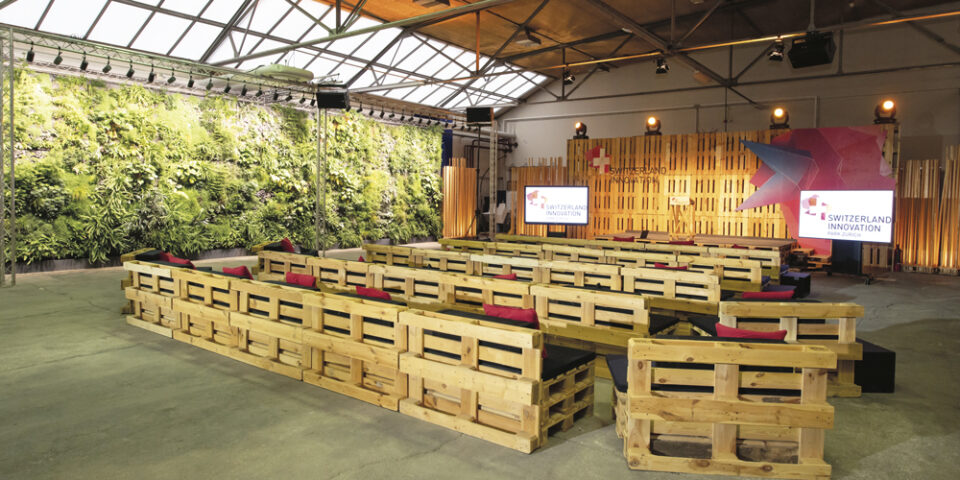
    The airfield area in Dübendorf is to be developed further. Among other things, a new platform for research, development and innovation is being created here with the Zurich Innovation Park. It is intended to promote cooperation and exchange between science and business – and thus support the implementation of research results in marketable products and services. According to the BAK study, the Zurich Innovation Park should create around 10,000 jobs and an annual added value of around CHF 1.9 billion.

    The Zurich Innovation Park Foundation is responsible for setting up and running it. It was founded in September 2015 by the Canton of Zurich, ETH Zurich and ZKB. The canton of Zurich, the three local communities of Dübendorf, Volketswil and Wangen-Brüttisellen and the federal government are developing the area together.

    The jointly developed synthesis report of the project partners forms the basis for the development of the area. This also shows how the Dübendorf airfield area should be presented overall in the future, which uses are planned and how these are spatially distributed. The area will be divided into four sub-areas:

    A first area is reserved for the Zurich Innovation Park, in which research is to be carried out in particular in the areas of mobility, robotics, aviation, space travel and advanced manufacturing & materials. In the second sub-area, the innovation park and a research, test and works airfield overlap to form an aviation cluster. In the third sub-area, the uses with high security requirements – the federal base of the Air Force and the Skyguide air traffic control center – can be further developed independently. In the fourth sub-area there are further aviation infrastructures. Nature conservation also plays a central role there. A continuous circular route around the airfield will also be created for the general public.

    The government council submitted three proposals to the cantonal council for further planning and implementation work. The cantonal government is requesting 97.45 million francs for the gradual development of the innovation park and 8.2 million francs for the planning of a research, test and works airfield.

    The cantonal council could decide on these templates by 2023. Renovation of the existing buildings is planned from 2023. Then the first building applications should be submitted. The implementation of the first buildings could therefore start from around 2024/2025.

    The Zurich Innovation Park aims to promote cooperation and exchange between science and business.
  • ZKB offers mortgages for non-profit housing developers

    ZKB offers mortgages for non-profit housing developers

    The Zürcher Kantonalbank is offering a new mortgage for housing cooperatives at favorable financing conditions. According to a press release , non-profit property developers benefit from a reduced interest rate of up to 0.5 percent. This applies both to the extension of existing loans and to a new mortgage.

    The basic requirement for the granting of the ZKB WohnPlus mortgage is that the apartment rents from the housing developer are at least 15 percent below the market rents. “We want to use this to maintain and promote non-profit and affordable housing,” Patrick Bühlmann, corporate customer advisor at Zürcher Kantonalbank, is quoted as saying in the press release. Because in the cities, above all Geneva and Zurich, rising rents are leading to a lack of affordable living space.

    In addition, applicants must meet 29 criteria, seven of which are basic criteria. If the applicant meets a further 14 criteria in stage 1, he will receive a maximum interest rate reduction of 0.3 percent. In order to receive the full 0.5 percent, he must meet a total of 21 requirements based on the United Nations Sustainable Development Goals ( SDG ), the Swiss Sustainable Building Standard ( SNBS ) and the ten guiding principles for non-profit housing in Switzerland.

    If level 1 is initially reached in a construction project, the property developer can prove further criteria later on. In this way, the bank wants to create an incentive “to make further improvements in terms of social performance even during the term”.

  • Asking rents remain stable in April

    Asking rents remain stable in April

    The monthly rental index collected by the digital real estate marketplace Homegate in cooperation with the Zürcher Kantonalbank ( ZKB ) was stable in April. According to the media release , asking rents in Switzerland rose minimally by 0.2 percent. The index now stands at 117.4 points. Asking rents rose the most in the last month, at around 1.7 percent, in the canton of Nidwalden. They have fallen significantly in the canton of Zug by around 2 percent. In the other cantons, asking rents also remained stable in April, with fluctuations of less than 1 percent.

    In the cities surveyed, too, the development of asking rents was similarly stable as at the cantonal level. According to the announcement, the biggest change was in Zurich, where asking rents rose by 1 percent. This continues a development of the last five months, in which asking rents there increased by 4.3 percent. Lugano reports the lowest value among the cities at 0.5 percent. Despite the decline in April, Lugano still recorded an increase of 2.1 percent compared to the previous year. However, Homegate reports that it is a long way from the peak in July 2016.

    When recording the rental price changes for the rental index, the rental prices are corrected for different quality, location and size of the apartments, the communication explains. This makes it possible to record the actual rental price development.

    Homegate was founded in 2001 and is a division of SMG Swiss Marketplace Group AG .

  • ZKB facilitates investments in the Zurich airport region

    ZKB facilitates investments in the Zurich airport region

    The Zürcher Kantonalbank now issues the tracker certificate FRZ Flughafenregion Zürich. This means that those willing to invest can simultaneously rely on 22 different companies that have a connection to the Zurich airport region. The financial product is now traded on the SIX Swiss Exchange .

    As the location developer FRZ Flughafenregion Zürich announced in a press release , the composition of the block of shares was determined by ZKB. They selected Swiss companies with a market capitalization of more than CHF 500 million that are based in the canton of Zurich and benefit from the airport. In addition, they must bear the ZKB rating “Market weight” or “Overweight” before admission.

    “The tracker certificate emphasizes the economic importance of the region,” says Peter Arnold, Head of Communications & Business Development at the FRZ Zurich Airport Region. FRZ is probably one of the first organizations in the world to promote locations to take such an initiative. The share package is an important element in ongoing location marketing.

    According to FRZ, the design of the financial product is based on the assumption that airport regions will grow at an above-average rate. Accordingly, the companies operating in this region should have above-average potential.

  • Asking rents remain largely stable

    Asking rents remain largely stable

    The monthly rental index collected by the digital real estate marketplace homegate.ch from the TX Group in cooperation with the Zürcher Kantonalbank increased by 0.3 points to 116.7 points in January compared to December 2021, homegate.ch explains in a corresponding statement . The analysts explain that the asking rents in most cantons have not increased at all or only slightly. On average, however, there is an increase of 0.26 percent.

    The analysts registered above-average increases of 1.45 and 3.85 percent in the cantons of Nidwalden and Zug in the reporting period. In contrast, asking rents in the cantons of Graubünden, Valais, Schaffhausen and Geneva were between 2.01 and 0.08 percent lower than in December 2021.

    In contrast, the analysts observed rising rents almost everywhere in the cities surveyed. The only exceptions were St.Gallen and Lucerne. Here, the asking rents were 0.77 and 0.40 percent lower than in December 2021. The city of Bern showed the highest increase in a monthly comparison with 0.96 percent.

    When recording the rental price changes for the rental index, the rental prices are corrected for different quality, location and size of the apartments, the communication explains. This makes it possible to record the actual rental price development.

  • Asking rents continue to rise

    Asking rents continue to rise

    The monthly rent index compiled by the digital real estate marketplace homegate.ch from TX Group in cooperation with Zürcher Kantonalbank rose by 0.17 points to 116.1 points across Switzerland in November compared to October, explains homegate.ch in a corresponding message . The analysts write that the index has already exceeded its high in October. Over the past twelve months they have observed an increase in asking rents of 0.96 percent.

    In the month under review, rents rose in most of the cantons, the press release explains. The analysts observed the strongest growth of 2.33 percent in the canton of Graubünden. In Zug and Schwyz, too, asking rents rose at an above-average rate of 2.04 and 0.59 percent. In the cantons of Nidwalden and Neuchâtel, on the other hand, asking rents in November were 0.49 and 0.81 percent lower than in October.

    In terms of cities, the analysts point to striking declines in asking rents in Zurich (-0.82 percent) and Geneva (-0.79 percent). The asking rents in Lausanne and Lucerne rose the most in comparison to October, at 0.30 percent each.

    When recording the rental price changes for the rental index, the rental prices are corrected for different quality, location and size of the apartments, is explained in the communication. This makes it possible to record the actual rental price development.

  • French-speaking Swiss live louder

    French-speaking Swiss live louder

    At every third residential address in Geneva, people have to endure a noise level of more than 60 decibels. It is as loud as a lawnmower ten meters away, according to a press release . This noise can still be heard even with the windows closed.

    On the other hand, people in German-speaking Switzerland live the most quietly, namely in the cities of Bern, Winterthur and Aarau, as the real estate research of Zürcher Kantonalbank lists. For its analysis, the financial institute examined every residential building in Switzerland for its exposure to road noise.

    It also came out that the street noise leads to rent discounts of 320 million francs annually. Geneva has the highest rent reduction with CHF 40 million, Zurich follows in second place with a financial loss of CHF 28 million.

    Because even if Zurich is in the middle in terms of noise pollution, thousands of apartments along the main traffic arteries are still affected by a high noise level, according to the press release. “So street noise will remain a burning issue in housing policy in the canton of Zurich.”

    According to real estate research by Zürcher Kantonalbank, prices for private homes will also rise this year. Prospective buyers can expect 6 percent more, and in the canton of Zurich even an increase of 7.5 percent. The demand for one’s own four walls in the corona pandemic is driving.

    Searchers find fewer and fewer advertisements in the relevant property search portals on the Internet. According to a press release, the number of sales advertisements in the canton of Zurich on the Homegate brokerage platform has fallen by more than 30 percent since 2019. Reason: Brokers can find buyers with less effort through their own channels.

    The demand for property is currently so high that “some of the apartments have already been sold before construction begins”. Often all it takes is just setting up a construction board. Prospective buyers should therefore be put on the lists of broker companies, advises Ursina Kubli, Head of Real Estate Research at Zürcher Kantonalbank, according to a media release.

  • Construction activity is declining

    Construction activity is declining

    According to the real estate barometer of Zürcher Kantonalbank ( ZKB ) for the second quarter of 2021, the number of projected apartments in planning applications has decreased by 23 percent compared to 2018. According to the ZKB analysts, this is related to high vacancy rates in peripheral regions, to which investors would have reacted accordingly. In urban centers with low vacancy rates, construction activity is picking up again in some cases, according to the barometer.

    Lausanne and Zurich are cited as examples. In the cantons of Geneva and Basel-Stadt, however, the analysts have observed a decline in construction activity. They attribute this to the high regulatory hurdles typical of urban areas and the scarcity of building land. Overall, however, the analysts state that “new apartments are increasingly being planned where the demand for living space is high”.

    In the canton of Zurich, the desire for one's own four walls, which has been intensified by the pandemic, is further explained in the barometer. According to him, house prices have increased by 5.5 percent over the previous year and 2.9 percent over the previous quarter. At the same time, the analysts see a shrinking of the offers advertised on real estate portals. They explain this with the fact that many properties are marketed by regional brokers or are already sold before construction begins. For this year and the following, the analysts are assuming excess demand in the residential property market across Switzerland.

  • Homeownership prices are rising sharply

    Homeownership prices are rising sharply

    In 2020, home ownership prices rose by 5 percent across Switzerland and by 4 percent in the canton of Zurich. Ursina Kubli, Head of Real Estate Research at Zürcher Kantonalbank ( ZKB ), sees one reason for this in the low mortgage interest rates. They are an important financial incentive to buy your own home, she is quoted in a ZKB press release , which summarizes the current issue of the ZKB specialist magazine " Immobilien aktuell ". On the other hand, the supply is scarce, "because the construction industry is still concentrating on rental apartments, while many older people willing to sell are hesitant to sell them." And thirdly, the personal living situation has become increasingly important in the pandemic.

    Despite the precarious economic situation and the corresponding uncertain prospects for the labor market, there are still many willing to buy when there is a shortage of supply. This allows the conclusion that the wage segments relevant for the home sector have so far been little affected by the economic slowdown.

    Because people over the age of 60 currently own more than half of all single-family houses and condominiums and even more than 80 percent of multi-family houses in the canton of Zurich, the ZKB expects an additional supply on the real estate market in the coming years and decades. Gaining more living space by reallocating vacant office space is attractive, but often proves to be a "resinous niche strategy" due to regulatory hurdles.

    As a result of the pandemic, the micro-location of a property is becoming increasingly important. Sunlight is one of the most important factors. Thanks to extensive computing power at 100 million geographical points, the ZKB real estate research team succeeded for the first time in evaluating the actual duration of sunshine at a wide variety of places. One result: the city of Zurich is clearly surpassed by other Swiss cities in the winter months.

  • Homeownership prices are rising sharply

    Homeownership prices are rising sharply

    In 2020, home ownership prices rose by 5 percent across Switzerland and by 4 percent in the canton of Zurich. Ursina Kubli, Head of Real Estate Research at Zürcher Kantonalbank ( ZKB ), sees one reason for this in the low mortgage interest rates. They are an important financial incentive to buy your own home, she is quoted in a ZKB press release , which summarizes the current issue of the ZKB specialist magazine " Immobilien aktuell ". On the other hand, the supply is scarce, "because the construction industry is still concentrating on rental apartments, while many older people willing to sell are hesitant to sell them." And thirdly, the personal living situation has become increasingly important in the pandemic.

    Despite the precarious economic situation and the corresponding uncertain prospects for the labor market, there are still many willing to buy when there is a shortage of supply. This allows the conclusion that the wage segments relevant for the home sector have so far been little affected by the economic slowdown.

    Because people over the age of 60 currently own more than half of all single-family houses and condominiums and even more than 80 percent of multi-family houses in the canton of Zurich, the ZKB expects an additional supply on the real estate market in the coming years and decades. Gaining more living space by reallocating vacant office space is attractive, but often proves to be a "resinous niche strategy" due to regulatory hurdles.

    As a result of the pandemic, the micro-location of a property is becoming increasingly important. Sunlight is one of the most important factors. Thanks to extensive computing power at 100 million geographical points, the ZKB real estate research team succeeded for the first time in evaluating the actual duration of sunshine at a wide variety of places. One result: the city of Zurich is clearly surpassed by other Swiss cities in the winter months.

  • Asking rents continue to rise

    Asking rents continue to rise

    The monthly rent index compiled by the digital real estate marketplace homegate.ch from TX Group in cooperation with Zürcher Kantonalbank closed at 115.6 points in February. Compared to the previous month, the prices for advertised rents have risen by an average of 0.17 percent, explains homegate.ch in a corresponding message. At the beginning of the year, too, prices had risen by an average of 0.17 percent. An increase in rental prices of 0.96 percent has been observed over the past twelve months.

    In a monthly comparison, rents have risen in most cantons, writes homegate.ch. The sharpest increase in asking rents was registered in February in the canton of Schaffhausen, at 1.37 percent. In Zug and Glarus, asking rents also increased at an above-average rate of 0.84 and 0.69 percent, respectively. On the other hand, declines were measured in the cantons of Graubünden, Geneva and Ticino with values between -0.48 percent and -0.19 percent.

    Homegate.ch makes different developments in the cities. The biggest increase was measured in a month-on-month comparison with 0.78 percent in Lugano. The asking rents in Lucerne and St.Gallen each increased by 0.20 percent compared to January. In Lausanne, Geneva and Bern, however, rents fell between 1.18 and 0.49 percent.

    In the quality-adjusted recording of rental price changes for the rental index, the rental prices are corrected for the different quality, location and size of the apartments. This makes it possible to record the actual rental price development, it says in the message.

  • Rents rose in August

    Rents rose in August

    In August, asking rents in Switzerland rose by 0.26 percent. The upward trend is particularly confirmed in the annual analysis with a plus of 0.88 percent. This is shown by the current rental price index figures from homegate.ch and Zürcher Kantonalbank ( ZKB ). It measures the monthly, quality-adjusted change in rental prices based on current market offers.

    The rental price development in the canton of Thurgau is striking, according to a media release from the real estate marketplace homegate.ch. The rent there rose by 0.71 percent, almost three times the Swiss average. The canton of Valais also shows a noticeably higher value with a plus of 0.62 percent. In the cantons of Zurich, Glarus, Appenzell Ausserrhoden and Appenzell Innerrhoden, apartment hunters are confronted with rents that have risen by 0.50 percent, in Schaffhausen it is plus 0.49 percent. On the other hand, Geneva recorded the steepest decline with a minus of 1.48 percent. The rent index is only stagnating in the cantons of Basel-Stadt and Schwyz.

    The cities of Geneva (-2.43 percent) and Lugano (-1.41 percent) recorded a large decline. In contrast, asking prices in the city of Zurich rose (+1.31 percent). Only in the city of Basel does the rent index remain unchanged.