The global economy is at the beginning of a profound transformation. Artificial intelligence has the potential to stimulate growth on a historic scale by 2035. Globally, up to 15 per cent additional GDP growth could be achieved, in Western Europe up to 13.8 %. However, for this boost to become a reality, transparent, ethically supported framework conditions are needed to create trust in the technology. Companies and countries are called upon to actively help shape the social and regulatory framework.
The pressure to transform is increasing Switzerland is well positioned to play a key role internationally. 84% of CEOs in Switzerland introduced AI technologies in their companies last year, a sharp increase on the previous year. At the same time, the study shows that USD 7.1 trillion in value creation will be redistributed worldwide in 2025 alone. For companies in Switzerland, now is the time to rethink business models, utilise potential and strategically develop innovation-friendly locations.
Growth areas along basic human needs Growth in the future will no longer take place along traditional industry boundaries. Instead, new ecosystems will emerge, for example in the areas of mobility, housing, food, energy and communication. In these networks, technology providers, utilities and industrial companies are working together on integrated solutions. Investing in this cross-sector cooperation at an early stage can open up new value chains and secure locational advantages.
Climate change as a counterforce The positive potential of AI is offset by the burden of climate change. By 2035, there is a threat of a global decline in GDP of up to 7 %. At the same time, energy requirements will increase due to data-intensive AI applications. Targeted increases in efficiency, for example in buildings or production processes, can reduce CO₂ emissions and conserve resources. The challenge lies in taking a systemic approach to climate protection and digitalisation.
Linking technological innovation and sustainable development will determine the attractiveness of tomorrow’s business locations. Those who invest in trustworthy AI applications, form cross-sector alliances and at the same time assume ecological responsibility will position themselves in the competition for future markets. Switzerland has the potential to become a globally relevant centre of innovation if politics, business and society actively and jointly shape change.
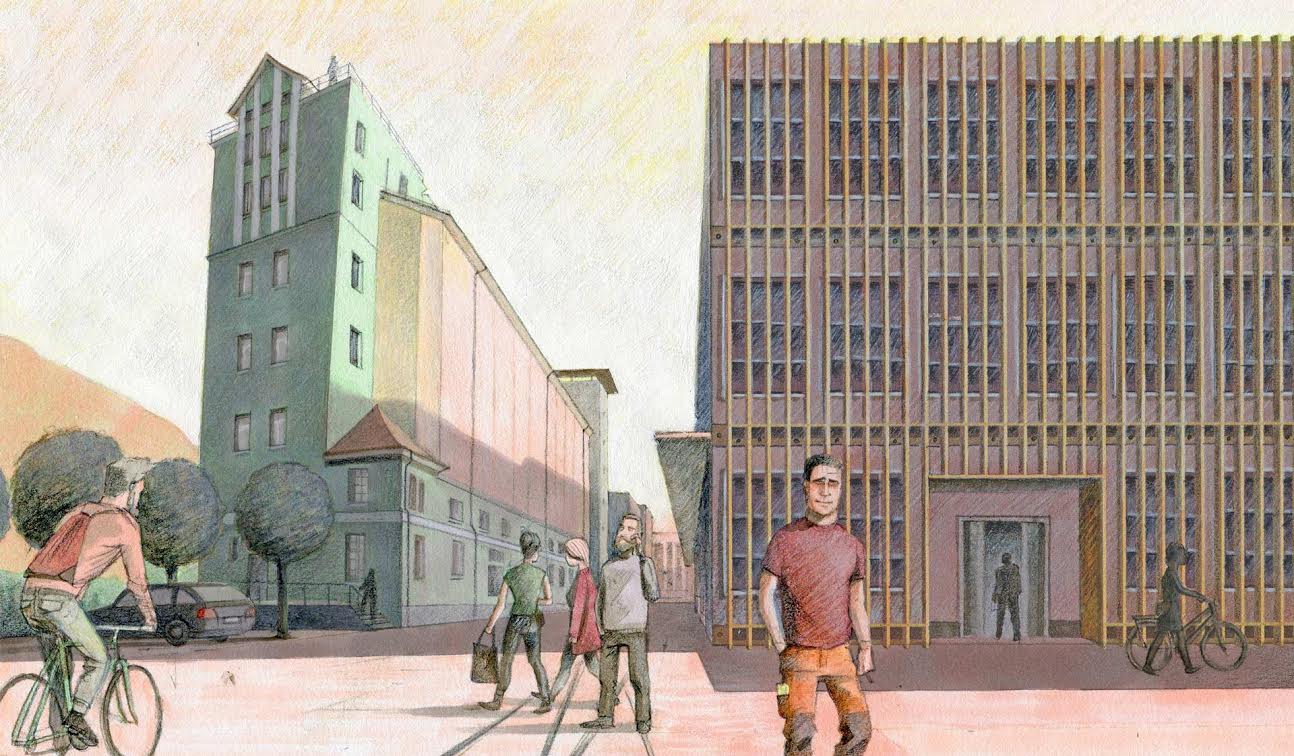
Werkmatt Uri is one of the last large land reserves in the Uri valley floor. The first industrial uses with a direct railway connection were already established here during the First World War. The listed grain stores designed by architects Eduard Züblin and Robert Maillart in 1912/13 are particularly characteristic. These buildings will be preserved as landmarks and converted into an exhibition centre and art warehouse. The canton is investing in infrastructure to further develop the area between the new Altdorf cantonal railway station and the future Altdorf South motorway junction.
Optimum location and economic impetus Uri is strategically located on the most important European north-south axis with the Gotthard Base Tunnel and the A2 motorway. The immediate proximity to the Altdorf intercity railway station and a modern bus concept promote the accessibility of Werkmatt. The improved accessibility provides impetus for economic and residential projects. With “Vena”, “Cubo” and “Strickermatte”, private investors have realised modern residential developments within walking distance.
Development with vision Kässbohrer Schweiz AG has already recognised the added value of Werkmatt and relocated its headquarters to Altdorf in 2019. The new service building has created 30 qualified jobs in the areas of administration, sales, service, training, final assembly and production of special vehicles, mainly snow groomers. Werkmatt AG is also developing an innovative utilisation concept for building plots 9 and 13. The plans include a multifunctional centre with a business hotel with 80 rooms, co-working spaces, commercial and cultural spaces, restaurants and fitness and recreation areas.
Targeted planning for sustainable growth As the owner, the canton of Uri is striving for a win-win situation with the future owners, users and investors in the area. The plots are to be sold and built on gradually over the next few years. The canton is developing the Werkmatt Uri site in a coordinated manner so that sustainable economic uses are created in the interests of the region as a whole. To this end, it is drawing up guidelines – including those relating to workplace density. The neighbourhood design plan serves as a planning instrument for investors and companies wishing to build on the site, which is binding on the owner and defines the parcel of land. It sets guidelines regarding utilisation, design and infrastructure.
Success through co-operation Werkmatt Uri is an example of coordinated and sustainable site development. Companies benefit from a committed administration, short decision-making processes and needs-orientated solutions. The region expects the project to provide long-term economic impetus and create more than 1,000 jobs. Werkmatt Uri is therefore much more than just an industrial area, it is an economic driver and an attractive location for forward-looking companies.
The transformation of the energy sector brings challenges. Renewable energies such as photovoltaics do not provide a constant supply of electricity, but are subject to weather conditions and times of day. The power supply must therefore become more flexible in order to utilise production peaks and compensate for bottlenecks. This is precisely where automated building systems come in. They control consumption and feed-in intelligently and reduce the load on the grid.
Predictive control for maximum efficiency An innovative algorithm developed by Empa analyses energy availability and user behaviour in order to optimally control energy consumption. For example, surplus solar energy is prioritised or stored instead of overloading the grid. At the same time, comfort is maintained. Hot water or heating are available exactly when they are needed.
Successful practical test in the NEST building The algorithm was tested under real conditions in a pilot project in Empa’s NEST building. A photovoltaic system, battery storage, a heat pump and a charging station for electric vehicles were used. The results show that CO2 emissions were reduced by more than 10 per cent without compromising user comfort. The building was also able to communicate independently with the grid in order to absorb peak loads.
Digitalisation as a prerequisite for scalable solutions The study shows that intelligent energy control is a key building block for a sustainable energy future. In order for such solutions to be used across the board, consistent digitalisation is required. At the same time, it must be ensured that the IT infrastructure remains sustainable. Empa researchers are therefore already investigating ways of using old smartphones as control units for building automation.
The future of energy supply lies in the networking of intelligent systems. Through predictive management, buildings can not only cover their own energy requirements, but also actively contribute to grid stability.
The canton of Zurich and SBB have jointly initiated a pilot project that uses automated vehicles to supplement existing public transport. The focus is on trialling automated mobility solutions designed to improve access to S-Bahn stops in a flexible and cost-effective manner, particularly in rural areas.
Pilot region Furttal The Furttal was selected as a pilot region due to its ideal settlement structure and existing public transport network. The population is to benefit from an expanded mobility offer, which will include minibuses in regular service or on-demand at a later stage. The aim is to gain practical insights for future business models and framework conditions.
Focus on safety and innovation The automated vehicles, which will be tested from spring 2025, are equipped with sensors and are monitored centrally. Safety is the top priority: during the test phase, safety drivers will accompany the vehicles before the controls are fully automated.
Next steps and funding In the coming months, the technology will undergo final calibration to ensure safe operation. The population of the Furttal valley will be actively involved in the project and will be able to gain initial insights at an information event in January. The project is being financed by the Canton of Zurich with CHF 3.8 million and SBB with CHF 5 million over five years. The pilot project is an important step towards innovative and sustainable public transport. With its focus on rural regions and new forms of mobility, it sets standards for the future of public transport in Switzerland.
Quantum computers could fundamentally change our understanding of problem solving and calculations in the near future. However, the technology still faces a crucial hurdle – the error-proneness of quantum bits, which are the central building blocks of quantum computers. Google has now reached a significant milestone with its latest success in quantum error correction.
Researchers at Google’s Quantum Artificial Intelligence Lab have managed to combine 97 error-prone quantum bits into one logical quantum bit that has a significantly lower error rate. This is an important step on the way to error-tolerant quantum computers that could perform complex calculations in the future.
Challenges of quantum error correction The biggest challenge for quantum computers is the high probability of errors during computing operations. In current systems, the probability of error is between 0.01 and 1 per cent, depending on the operation. As quantum computers potentially require thousands of calculation steps, this means that the possibility of errors increases exponentially. Without effective error correction, the advantages of quantum computers would be almost impossible to utilise in practice.
The Google researchers developed a method in which quantum information is distributed across several quantum bits. Measurement bits ensure the stability of the states without directly changing the information. This redundant approach, which is also used in classical computers, led to the formation of a more robust logical quantum bit.
A decisive advance – but not yet the goal Google was able to achieve a critical error threshold by reducing the error rate of a 97-qubit quantum bit system to half that of a 49-qubit system. This progress is highly rated by experts and can be compared to the groundbreaking results of 2019, when Google demonstrated for the first time that quantum computers can outperform conventional computers in certain tasks.
Despite this promising development, quantum research still faces huge challenges. The next step is to perform basic computing operations with the stabilised logical quantum bits. In the long term, these stable bits will be used to enable complex and fault-tolerant calculations.
Fault-tolerant quantum computers and their application Although the progress made so far is impressive, there is still a long way to go before quantum computers are able to solve really complicated problems. It is estimated that around 1457 physical quantum bits are needed to achieve an error rate of 1 in 1,000,000 – a minimum requirement for solving simple problems.
For complex challenges such as breaking modern encryption methods, even thousands of logical quantum bits are required. Therefore, further progress in quantum error correction and more efficient algorithms are urgently needed to reduce the required number of physical quantum bits.
A clear path ahead The current results from Google and other research groups form a solid basis for the development of the quantum computers of the future. While many technical hurdles remain, recent advances are making the goal of a powerful, fault-tolerant quantum computer more tangible. Whether and how the technology will become established in practice remains to be seen, but the outlook is now clearer than ever before.
Around 56% of the world’s population currently lives in cities, a figure that is set to rise to 70% by 2050. This urbanisation brings with it numerous challenges, including increasing demands on space and land use as well as conflicting objectives between different sectors. Forward-looking planning is essential in order to make cities, rural areas and the areas in between fit for the future. BAU 2025 will show what answers already exist and where new approaches need to be developed.
Blurring boundaries between urban and ruralareas Traditionally, urban and rural areas were defined by clear geographical and functional boundaries: cities as centres of population, industry and services and the countryside as an agricultural area. However, these boundaries are becoming increasingly blurred and the challenges facing urban and rural areas and the space in between are becoming more and more similar. Issues such as demographic change, necessary infrastructure, mobility and sustainable spatial planning and settlement development affect all regions equally.
Spatial planning and spatial development The tasks of spatial planning and spatial development are central to the sustainable design of our living spaces. These range from sustainable land use and the avoidance of land sealing to the promotion of social integration and quality of life. The “New Leipzig Charter” serves as a policy document of the National Urban Development Policy and offers guidelines for innovative and sustainable solutions in urban planning and neighbourhood development. The digital transformation and changing demands on consumption and mobility require a new mix of production, work and living in favour of vibrant neighbourhoods.
Transformation of existing buildings The adaptation and upgrading of existing buildings is a key future task for the construction industry. Intelligent concepts for the flexible conversion and continued use of existing buildings help to preserve cultural identity and minimise emissions. Examples of this include the conversion of former industrial sites into vibrant urban districts and inner development in rural areas, which revitalises and uses existing buildings. Innovative projects combine public infrastructure and social services, promote the sustainable use of resources and revitalise town centres.
Ecological transformation as an investment in the future The ecological transformation of our cities and rural areas is a genuine investment in the future. It leads to climate-friendly living conditions and offers economic added value for everyone involved. Architects, interior and landscape architects and urban planners combine ecological, social, economic, functional and design aspects and support the harmonisation of individual interests with the common good. Prof. Lydia Haack, President of the Bavarian Chamber of Architects, emphasises the importance of “ClimateCultureCompetence” and the responsibility of members to drive forward the ecological transformation in planning and construction.
Affordable housing Affordable housing is crucial for stabilising local communities and the economy. The creation of 400,000 homes per year, as agreed in the coalition agreement, contrasts with the decline in residential building permits. New strategies for repurposing existing buildings, such as office buildings or hospitals, as well as innovative forms of housing that focus on community and openness, are approaches to creating affordable housing and promoting social interaction.
New formats and processes Sustainable development in urban, spatial and regional planning requires new processes, methods and tools in order to be able to react quickly to current challenges. The rapid digitalisation and technological progress of the last 20 years require dynamic processes that need to be continuously adapted. Scenario development and innovative participation formats promote new ways of co-design and acceptance. Best practices and scalable impulses will be presented at BAU 2025, as will the necessary product and system innovations.
The conversion of the energy system requires considerable quantities of raw materials such as copper and aluminium. One promising approach to saving these resources is the transition from low voltage to medium voltage in renewable energy production. The Fraunhofer Institute for Solar Energy Systems ISE has identified enormous savings potential through higher system voltages, particularly for large-scale photovoltaic power plants, and is planning initial pilot projects and a broad market launch.
Advantages of higher system voltages Increasing the system voltage from 800 VAC to 1,500 VAC reduces the cable cross-section by around 75 per cent. This makes installation and connection easier, which reduces installation costs. Andreas Hensel, Group Manager “High Power Electronics and System Technology” at Fraunhofer ISE, emphasises the potential savings: “Now that PV module costs have fallen by 90 percent since 2010, installation and balance-of-system components now offer the greatest savings levers.”
In addition, the output of the subsystems can be increased by switching to medium voltage. At a voltage of 1,500 V, 10 to 12 MVA are already possible in one transformer instead of the 3 to 5 MVA that are common today. This reduces the number of transformers and switchgear required, which further reduces construction and installation costs.
Technological advances and initial successes Progress in medium-voltage technology has been made possible by the development of highly blocking silicon carbide components with high switching speeds. SiC components up to 3.3 kV are now ready for the market. In the “MS-LeiKra” project, Fraunhofer ISE developed and successfully commissioned the world’s first MS-PV string inverter in 2023. The inverter achieves an output voltage of 1,500 VAC with an output of 250 kVA. “Technologically, the course has been set and it is now a question of who will be the first players in this promising market,” says Christian Schöner, Project Manager “Medium Voltage” at Fraunhofer ISE. A first photovoltaic pilot system based on this inverter is already being planned.
Cooperation for the breakthrough In April, a European consortium was formed that brings together representatives from all trades involved in a large-scale PV power plant. The aim is to jointly investigate and overcome the technological and standardisation requirements for the leap to medium voltage. “As a powerful consortium, we can tackle the existing hurdles together and achieve optimisation for the entire power plant,” explains Christian Schöner.
Future prospects and areas of application Large-scale PV power plants are just the beginning. Medium-voltage technology also offers potential for charging infrastructures, industrial grids, large heat pumps, battery storage systems, electrolysers and wind turbines. In addition to considerable material, cost and space savings, higher system voltages also enable new system architectures for renewable hybrid power plants. These can be linked together via the medium voltage and thus ensure an efficient and sustainable energy supply.
You are the Director of Spatial Planning for the City of Zurich. Can you give us an overview of your responsibilities? Together with my staff, as director of the office I help plan the future of the city of Zurich. In order to make the most of the opportunities offered by a city in transition, we have specialist departments such as architecture and planning, including archaeology, monument preservation, the architectural history archive and a competence centre for geoinformation. The exchange gives us a very precise view of Zurich – from its prehistory to 2040.
What are the goals of urban and spatial development in Zurich and what roles do you play in site and area development? We not only want to maintain the high quality of life in the city of Zurich, but also expand it. It should be able to improve selectively, both ecologically and socially sustainably. This requires suitable utilisation planning instruments – and we are in charge of developing and refining them.
The municipal structure plan for settlement, landscape, public buildings and facilities is essential in this regard. We use it to specify which areas are suitable for building densification. We also designate areas for the provision of public open spaces as well as for communal public buildings and facilities – such as for primary schools or sports facilities. It is also an important coordination tool, as it shows how building density must be coordinated with transport and the supply of renewable energy, and it sets guidelines for other spatial aspects of environmentally and socially compatible urban development.
What challenges does urban development face compared to other Swiss cities and what advantages does Zurich offer? Zurich shares many challenges with other cities in Switzerland and Europe. The focus is on growth and the associated demand for living space, whereby affordable housing in particular must be secured in the city. Demographic change and the pluralisation of lifestyles are leading to a variety of housing types and housing needs – which we need to address.
In addition to socio-spatially compatible densification, the climate is a key issue. Around a quarter of all CO2 emissions come from the building sector. Urban planning and architecture today must be climate and environmentally friendly, conserve resources and preserve landscapes. In addition to climate protection, we need to curb heat island effects. What we no longer have, unlike other cities, are vacant industrial sites for conversion. Density reinforces the various interests in land and buildings in a city. In addition, as the economic engine of Switzerland, Zurich is under particular public scrutiny. Planning decisions require political discussion – participation is demanded. If there is no debate, a number of new buildings are appealed.
What are the most important construction projects in Zurich and how do they contribute to the city and spatial development? I include planning in this. For example, the Josef site, the Schlachthof site, the Wollishofen lakeside and the Papierwerd site. They are important for Zurich’s urban development due to the previously mentioned shortage of space. This results in the challenging task of utilising these sites sustainably and efficiently in terms of planning. The city is also building itself – particularly affordable housing. The Leutschenbach and Tramdepot Hard housing estates alone will offer over 550 flats. In the case of Thurgauerstrasse or the Koch site, the city is allocating building land to non-profit housing developers.
In connection with such large-scale projects, it is important to plan the associated social infrastructure. In particular, the provision of sufficient school space and cultural buildings such as the theatre and opera house are important for the city as a whole. In addition to the site developments and buildings mentioned above, the updating of the high-rise guidelines and the revision of the building and zoning regulations are among the most important tasks entrusted to Zurich’s urban planning department. The aim of these planning instruments is to find a way of dealing with monument protection, the inventory and the ISOS and to reconcile this with the planned building developments.
Which areas in Zurich are particularly attractive for companies and why? This is highly dependent on the size and type of company; each company defines its own individual requirements for the choice of location. For a corporation that wants to develop and expand its own site in the long term, other locations are certainly considered attractive than for an SME that aims to develop within the neighbourhood.
In principle, all neighbourhoods in Zurich are attractive, as there are good public transport connections everywhere. There has been a positive development here compared to recent years and decades – Zurich no longer has a real “periphery”.
Where do you still see development potential and how could this be tapped? There is potential in cooperation with neighbouring municipalities. One of the special features of spatial planning is that it does not end at the city boundary, even if this boundary means a political change. Examples of this are the Limmat region or the Glattal with its shared public transport service. In these areas, it is important to coordinate planning across borders in order to secure the services and networking of the neighbourhoods.
There is also potential in coordinating with the canton or federal government on issues such as noise and ISOS. Federal or cantonal regulations have a major impact in a city like Zurich. I see great potential in closer coordination with the association of cities.
How is Zurich positioning itself in the area of mobility development and planning? In the municipal structure plan, the focus for urban mobility is on efficient and well-developed public transport and the further development of functional and attractive urban and street spaces. We are striving for a city of short distances. Neighbourhood centres will be strengthened and new ones developed. It will become more attractive for residents to shop locally, and retailers will open new shops in the neighbourhood as they can count on customers.
The mobility figures show that the urban population is increasingly relying on bicycles and public transport. The city is specifically promoting walking and cycling in particular. The city provides targeted advice to companies and property managers through the “Impuls Mobilität” programme.
Has the pandemic brought about changes in Zurich’s planning? Public spaces have become more important during the coronavirus pandemic. Especially for children and young people, who are dependent on open spaces in their immediate neighbourhood. On the whole, individual transport modes such as walking, cycling and driving have become more important, while public transport has been avoided due to the potential risk of infection. It is important to take the positive effects of the pandemic, such as the use of bicycles and the smoothing of traffic peaks through increased working from home, into the future.
The pandemic and mobile working have brought about changes whose effects on urban planning we will only see in a few years’ time. In Zurich, neighbourhood centres in particular are also benefiting from the home office trend. During the pandemic, quick access to shopping, healthcare facilities, sports centres, restaurants and green spaces that did not require public transport was key. More attention must be paid to the need for liveable urban spaces in the future.
What factors make Zurich an attractive place to live? Zurich is attractive and offers a high quality of life. There are many reasons for this: For example, the wide and attractive range of childcare and cultural facilities, attractive open spaces, educational centres, good infrastructure and high architectural quality. The location by the lake and the proximity to nature are also attractive. Despite lively building activity, the urban neighbourhoods have not lost their identity. In my opinion, this is a great strength of our city.
How do you envisage the ideal development of the city of Zurich? What would be the core elements? Ideal is the wrong phrase in this context; there is no such thing as ideal development. Rather, urban planning is dynamic and is significantly influenced by political decisions. It must continuously respond to current and future socio-spatial and ecological concerns. It is important that we have a common vision of what Zurich should be and how it should develop in the future. The municipal structure plan formulates a target image, from differentiated structural densification and sufficient open spaces for recreation to the city’s centres and infrastructure. Below this, there are countless smaller levels, projects and events that are part of the city in transition. Zurich has a lot of potential that needs to be secured and utilised through urban planning. Not overnight, but for future generations of Zurich residents.
The vision of parallel digital universes, known as the metaverse, is increasingly becoming a real possibility for industrial companies. The concept, coined by Neal Stephenson, is no longer just a science fiction scenario, but is taking shape in initiatives such as the iguversum from igus, which is building a bridge to a new way of selling and engineering. This advanced technology, supported by artificial intelligence and big data, could reach a market value of several trillion dollars by 2030.
The Industrial Metaverse enables companies to transfer physical technologies into 3D models and bring international teams together in virtual spaces. This allows them to plan and simulate plants and machines more efficiently than ever before. Siemens’ Digital Native Factory in Nanjing is a pioneer with its digital twin approach, which has significantly improved the accuracy of factory planning and productivity. Similarly, igus uses the iguversum to guide customers and sales staff through virtual worlds in which products and solutions can be experienced interactively.
The future of the industrial metaverse promises collaboration without geographical boundaries, where global teams carry out entire projects as avatars in the digital world, eliminating the need for physical meetings and traditional means of communication. This not only leads to a more vivid visualisation of projects, but also to faster and more efficient project implementation.
In addition to optimising product development processes, the metaverse also enables innovative after-sales service concepts. Technical training could take place in an immersive environment that allows lifelike learning and interaction with digital twins of real objects.
Augmented reality, familiar from games such as Pokémon Go, represents the next stage of development. This technology allows engineers to project 3D models from the metaverse into their real environment and thus assess the compatibility of planned machines with their surroundings.
However, the challenge remains to increase awareness and understanding of the industrial metaverse. A survey by TeamViewer shows that many people are not yet informed about the technology. Further education is therefore needed to realise the full potential of this revolutionary digital transformation.
Bostudenzelg is one of the last contiguous undeveloped building zones in the city of Thun. For the site, half of which is owned by the city and half by Frutiger AG and the Bernese Pension Fund (BPK), the owners have developed a joint vision for modern living. The innovative residential project creates urgently needed living space for all generations, realising the city’s development goals in an exemplary manner.
Unique “open space” as a vision The basis of the site development is the indicative project, which is based on the winning “open space” project that emerged from the ideas competition (SIA 142). The centrepiece is a spacious park around which the buildings are arranged in a ring, which is intended to promote a communal feeling of living “in the countryside”. The residential project attaches great importance to careful integration into the neighbourhood as well as good networking and design of the outdoor spaces, which are freed from motorised traffic.
High-quality internal development Great importance is attached to the interaction between the buildings and the open space as well as the economical use of the land. Different building heights will bring accents and dynamism to the neighbourhood design and highlight the entrances to the new area.
An attractive and lively residential quarter The residential project focuses on versatile and socially mixed forms of housing for all needs. In addition, the project offers space for other possible uses such as a kindergarten or daycare centre, a retirement and nursing home as well as public spaces and a neighbourhood meeting point. Commercial space and non-profit housing are also part of the plans. This mix of uses will make the residential neighbourhood more attractive and revitalise it.
Mobility and traffic concept Great attention is being paid to aspects of sustainability and future-oriented and environmentally friendly mobility. The new development regulations call for a mobility operating concept that offers solutions to reduce the volume of traffic and thus improve the quality of life in the neighbourhood.
Involvement of the public The appropriate involvement of the neighbourhood population and other interest groups is a major concern for the planning partners throughout the entire process. To date, the public has had the opportunity to submit their opinions and suggestions on the new development plan as part of the public consultation process. At the same time, the focus is on early and close cooperation with potential non-profit building rights holders. Further participatory development formats for the site are planned in connection with the granting of building rights and based on the participation concept.
Further steps Following the public consultation process and the preliminary review by the canton, the new development regulations will be published.the process for allocating the urban building plots under building rights has also been started. The next step is to prepare the architectural competitions. At the same time, Frutiger AG and the Bernese Pension Fund are pressing ahead with the development of their construction project. Implementation will take place in several stages.
Conclusion This project in Thun is an example of how careful, partnership-based and integrated planning as well as future-oriented and innovative development of a residential construction site can bring concrete added value to the surrounding neighbourhoods by ensuring a high level of urban planning quality for the buildings and outdoor spaces and ensuring appropriate involvement of the population, interest groups and partners.
Switzerland, already known as a leading blockchain hub and home to major players in blockchain and cryptocurrencies, also recognises the potential that these technologies offer. Switzerland has an open attitude towards digital assets and blockchain technology in general. This could help establish the country as a preferred destination for companies looking for new locations to benefit from the emerging industry.
In light of recent challenges in the crypto space, such as the collapse of the crypto exchange FTX in the US, many companies are considering alternative locations. Here, Switzerland offers a promising opportunity by positioning itself as a safe and attractive location for the crypto industry. However, other countries, most notably France, are already actively attracting crypto companies and developing regulatory solutions to provide them with an optimal environment.
Switzerland, as a respected blockchain hub, should not underestimate the competition in this dynamic sector. It is crucial that Switzerland continues to build on its pioneering role in order to position itself optimally for digital financial products and blockchain technology in the future. In the coming months, the Swiss Blockchain Federation will continue to work to raise awareness of these developments among policymakers, regulators, the media and other key players.
Under the motto “Get things done”, the Sustainability Days presented trends, concrete solutions in the form of innovative products and services as well as strategies and outlooks in the four congress and exhibition formats SmartSuisse, Re’ Summit, Future-Proof Infrastructure and MUT – Environmental Technology Exhibition during 28 and 29 March 2023. “We are delighted that the Sustainability Days, with their 15 thematic focal points around sustainability, have been so well received. In the future, our goal is to establish ourselves as the central platform for a sustainable future in the areas of smart city, corporate sustainability, environmental technology and infrastructure,” says Julien Rousseau, Brand Director of the Sustainability Days, with satisfaction.
Food for thought from national and international voices On 28 March, Marco Lambertini, Special Representative and former Director General of WWF International, was among those who kicked off the congress series with a total of over 170 speakers. He pleads for the initiation of a profound change of our economic model in order to become a nature-friendly society and to decouple development from environmental destruction. Keynote speaker and architect Thomas Rau also emphasises the need for change as quickly as possible. For him, one important way to do this is the circular economy. In his opinion, we have to rethink the value chain, towards a value preservation chain. In a finite world, material must be seen as something that is only used temporarily and then returned to the cycle of things.
The political perspective on the topic of sustainability also played a major role. For example, the Swiss city presidents Stefanie Ingold (Solothurn), Beat Jans (Basel), Michael Künzle (Winterthur), Barbara Thalmann (Uster) and Beat Züsli (Lucerne) discussed the goal of climate-neutral cities. There was agreement that climate protection in this context was not an alibi exercise. This shows, among other things, what measures and considerations are already underway or being considered. Cities certainly have a role model function, as they often have more resources at their disposal. Regula Rytz, former member of the National Council and President of the Green Party of Switzerland, took a look at the topic “Sustainable Technology: between real transformation and progress myths” as a historian. According to her, new challenges in environmental policy need new forms of sustainable technology – and it needs pioneering spirit for real transformation. In his keynote speech, Pekka Timonen, Mayor of Lahti, presented the success story of the traditional industrial city. This is how Lahti has become Finland’s leading green city and a pioneer among Europe’s sustainable cities.
Other keynotes and sessions focused on climate change as such. The Secretary General of the UN organisation WMO, Petteri Taalas, gave an impressive presentation on climate change and the associated climate catastrophes and future scenarios with a global impact. He said that action must be taken now if the worst effects of climate change are to be prevented in this century. And Prof. Dr. Reto Knutti, Professor of Climate Physics at the ETH Zurich and speaker at the Re’ Summit, organised jointly with sun21, shares this view. According to him, only a complete shift away from fossil fuels and net zero emissions before 2050 can limit climate change. The obstacles are not primarily of a technical and economic nature, but a collision of identities and the question of how to respond to the challenges. A new feature of SmartSuisse was the expansion of the main topics to include health, which met with lively interest. At the Health Podium, for example, experts from the field discussed whether health data is the new gold under the aspect of data security vs. data use.
Cross-sectoral meetings Another highlight was the networking dinner party on Tuesday evening. Over a three-course meal in a relaxed atmosphere, participants of all formats came together to talk to each other across sectors, to exchange ideas and to discuss. They were guided through the evening in an entertaining way by stand-up comedian and magician Michel Gammenthaler and by “The Blackouts”, who showed with their LED show how art and technology can be used to convey a message and inspire people. Also a guest was the Swiss adventurer and visionary Bertrand Piccard, who told of his round-the-world flight in a solar plane without fuel during his appearance. A pioneer in viewing ecology through the lens of profitability, he is now an advocate for renewable energies and clean technologies.
Concrete solutions to touch and try out The accompanying exhibition offered ample opportunity for professional exchange as well as networking. 72 suppliers presented their solutions and innovations and were able to make important contacts with visitors as well as other participants. “SmartSuisse is an important meeting place for SBB to exchange ideas with other experts, to further develop our projects and to generate new ideas. This is entirely in keeping with the Smart City Lab Basel motto ‘network, develop, test, experience’”, says Smart City Lab Basel, SBB AG.
There were also exciting things to experience at the exhibition: The exhibitor SAAM (Swiss Association for Autonomous Mobility) presented the teleoperated driving project initiated by SwissMoves as part of SmartSuisse and offered visitors the opportunity to ride in a vehicle controlled from Fribourg on a test track. Also part of the exhibition was the MUT – Environmental Technology Exhibition, which catered to the professional audience of the Swiss environmental technology sector. “The meeting of the cleantech industry at the MUT shows the need to promote ecological and pragmatic solutions,” says Andreas Knecht of Mokesa AG, which was an exhibitor at the Environmental Technology Fair.
Virtual discussion: sustainable infrastructure projects On 28 March, the Future-Proof Infrastructure virtually discussed the challenges that infrastructure projects have to face in order to achieve sustainability, such as financial and political resilience. For this, the virtual congress brought together key international stakeholders, investors and infrastructure experts. The discussions made clear that there is a huge inancing deficit in infrastructure investments in all sectors and that there is an urgent need to tackle climate change by improving sustainable infrastructure outcomes. Solutions for financing infrastructure were addressed by the FAST-Infra panel, among others, which aims to unlock private investment in valuable infrastructure. Also discussed was how project preparation institutions can bring to light important infrastructure projects in countries with limited access to financial and technical resources. The partner of the format is the Global Infrastructure Basel Foundation (GIB). The second edition of the Sustainability Days is scheduled to take place in Basel from 9 to 11 April 2024.
Climate change is causing summer temperatures to rise in Switzerland. This is particularly apparent in densely built cities with extensive sealed surfaces. Buildings and their surroundings must be designed to offer a comfortable quality of life in the climate of the future. ewz’s new white paper on ‘Climate-conscious building’ offers an overview of this topic. The publication serves as a knowledge base and inspiration for construction in the context of climate change and is free to download here.
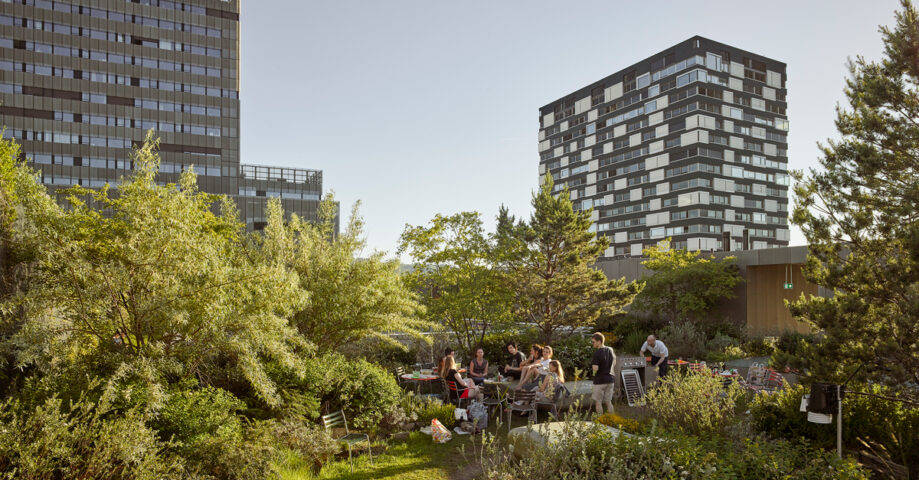
Focus on cities Green spaces with shady trees and cold air corridors intended to bring cooling are often either entirely absent or inadequate, meaning heat islands form in urban areas – where temperatures can be up to ten degrees higher at night than in surrounding areas. A catalogue of measures tailored to each specific location is needed to counteract this heat island effect. Important principles for eco-friendly urban planning and building include building position and sizing, green areas, facades and roofs, and shading.
Copyright Roland Bernath
Moderate window proportions It’s not just exterior spaces that need to be planned and built in a climate-conscious way, but also the buildings themselves. To keep interiors as cool as possible when external temperatures rise, parameters such as building orientation, window surface areas and the building’s retention capacity are critical, starting at the design stage. Solid ceilings and floors, for example, store heat due to their mass and the room temperature rises more slowly. Windows also need special attention. Large-scale glazing is beneficial in that it lets abundant natural daylight into the interior and keeps solar heat input high in winter. In summer, however, this heat is undesirable. It is therefore recommended to avoid floor-to-ceiling windows as far as possible, and to strike a balance between aesthetics and comfortable temperatures. A window proportion of up to 30 per cent in residential buildings and up to 40 per cent in office buildings is a benchmark.
Ventilation and cooling During long periods of hot weather, even a well-planned building heats up. It is extremely effective to dissipate the accumulated heat at night. This can be achieved by cross-ventilation, for example. Even better is to design a building that develops a chimney effect. Ventilation flaps in the façade – adjacent to the windows, for example – allow cool outside air to enter the interior and then discharge through an opening in the roof by way of the stairwell. Solutions like this entail no or minimal additional costs and work more efficiently than air conditioning units.
Unlike residential buildings, today’s office buildings are often equipped with cooling systems. This is due to the high internal loads produced by users and IT infrastructure, not to mention the high proportion of glass in the façades. There are office buildings whose requirements for cooling and heating energy are now already identical. By 2100, office buildings could require up to ten times more energy for cooling than for heating, depending on climatic developments. This would presumably increase operating costs significantly and make it more difficult to operate buildings economically.
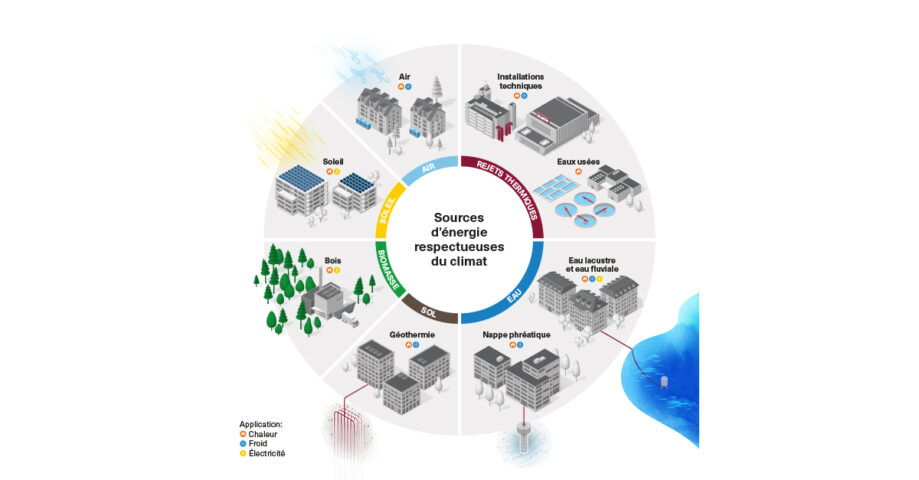
An array of local energy sources Environmentally friendly passive cooling is ideal for meeting the basic cooling requirements of office and residential properties. Known as free cooling, there are various energy sources in Switzerland that are suitable for this.
Geothermal heat accessed via probes is often used. In winter, thermal energy from the ground is used as a heat source, while in summer it serves also for cooling, because required temperatures are significantly below room temperatures. Lake water is another particularly suitable energy source, as the many Swiss lakes provide a valuable thermal storage mass. Because their shores are often densely populated, the lake water can be efficiently used to supply numerous buildings.
Whether it comes from geothermal probes, lake water or other sources, it is crucial that cooling uses as little energy as possible. So it’s a good idea for building owners, investors and architectural specialists to discuss this issue with an energy service provider such as ewz as early as possible and see which options are feasible. This enables the construction of buildings that can offer high comfort levels even in the hot summers of the future, without placing an additional burden on the environment.
Environmentally friendly heating remains important It is important to bear in mind that the cooling energy needed for residential buildings is relatively low compared to the heating required. Decarbonisation of heat supply must therefore remain a priority in order to achieve net zero. Sustainable heating is not a problem nowadays, with various technically mature and economically attractive renewable heating systems available.
The ‘Climate-conscious building’ white paper provides in-depth information, detailed insights and a range of best-practice examples highlighting specific solutions for tackling this issue. The new white paper is free to download for all interested parties.
Quantum computers will help build new kinds of platforms for drugs and revolutionise drug development at the same time. Quantum encryption will also completely revolutionise internet banking. Whether there will still be many traditional banks then is a question you can answer for yourself. Banks, however, are a fundamental part of the real estate industry. The revolution is coming fast, and there are very likely to be losers.
Quantum computing will completely revolutionise the entire IT and IoT by 20 years and data processing will become faster by a factor of 1,000. A computing task that takes 24 hours today will take less than 2 minutes in 20 years. For special tasks, quantum computers will be available that will be 100,000 times faster. In other words, they will be able to solve tasks that cannot be solved today. This is the revolution that will completely change the world of work. Those who master the technology will be able to play in the industry, those who neglect it will have problems. This means preparing tomorrow’s workforce for the quantum future. Since quantum computers have arrived in industry more than 5 years ago, medium and larger SMEs also have to deal with the topic, and that is demanding. Waiting is not an option.
It is crucial that future employees understand the programming differences between traditional and quantum systems. With traditional computing, thanks to well-defined firmware (operating and basic software) today, it is not necessary to know how the hardware of a computer works. The programmer needs to understand how to use it. In the emerging quantum computing industry, with its mix of implementation strategy and hardware types, the situation is reversed. In the absence of standardised hardware and associated quantum firmware, future programmers need to know how quantum computers work when they design their software applications. Using the necessary quantum circuits requires a special understanding of mathematics and physics to formulate questions and interpret answers from the quantum process. Those who understand some modern mathematics will have huge advantages.
The next 10 years will bring significant advances in quantum computing. IBM has just demonstrated with Spectrum Fusion 2.2 where the journey will lead. Corresponding infrastructures must be ensured on future sites. In addition to trained personnel in sufficient numbers, this also includes a secure power supply and an existing connection to the international high-performance fibre optic network. Those who cannot ensure these factors should not believe that their site is ready for the industry of the future and can have fatal consequences for the invested capital.
Was ist eigentlich ein „lebenswertes Gebäude“? Früher waren Häuser einfache Gebäude, in denen Menschen vor allem geschlafen und gegessen haben. Heute muss ein Gebäude mehr können: „Wir wollen uns darin wohlfühlen, zur Ruhe kommen, ohne Barrieren fortbewegen und am besten nachhaltig leben. Es schafft nicht nur einen Raum, sondern muss zu den Nutzern und deren Bedürfnissen passen – und zwar heute und in Zukunft. Erst dann sprechen wir von einem lebenswerten Gebäude“, erläutert Sören Eilers.
Gebäude werden in der Gegenwart für die Zukunft errichtet Dabei haben sich die Anforderungen allein in den vergangenen 15 Jahren stark gewandelt: Die Denkweise der Menschen hat sich verändert, zudem herrschen regionale Unterschiede, wenn es um die Frage geht, was ein zeitgemäßes Gebäude ausmacht. Werden mancherorts nur noch Passivhäuser errichtet, so liegt der Fokus andernorts beispielsweise auf freien Lernkonzepten und offenen Räumen. Für Planer und Architekten bedeutet das, dass sie weit vorausdenken müssen. „Gebäude werden in der Gegenwart für die Zukunft gebaut, für die nächsten 30 bis 50 Jahre Nutzungszeit“, erklärt Marco Sperling. „Wir müssen in unserer heutigen Planung also bereits die Nutzungsmöglichkeiten für in ein paar Jahrzehnten bedenken. Dabei ist jedoch fast immer das Budget der limitierende Faktor.“
Damit nicht genug. Neben den vom Auftraggeber gesteckten Rahmenbedingungen gibt es diverse gesetzliche Anforderungen, Normen und Verordnungen, die einzuhalten sind. Dabei sind sich die unterschiedlichen Regelwerke längst nicht immer einig. „Es gibt in Deutschland fast nichts, das nicht geregelt ist. Die Rahmenbedingungen der Auftraggeber sind oft verhandelbar, bei gesetzlichen Vorgaben ist das weitaus schwieriger“, weiß Sperling aus Erfahrung. Damit am Ende alle Wünsche, Bedürfnisse, Anforderungen und Vorschriften unter einen Hut gebracht werden können, ist eine intensive Abstimmung mit allen Beteiligten unerlässlich: „Der Abstimmungsbedarf wächst ständig und ist sogar in Zertifizierungsprozessen verankert. Das ist auch durchaus sinnvoll, damit es am Ende ein gutes Gebäude wird. Es gilt in jedem Fall: Je besser die Abstimmung von Beginn an, desto besser das Ergebnis!“ So werden im Idealfall alle fachbeteiligten Planer für Haustechnik, Statik, Tragwerk etc., die Verarbeiter, aber auch Nutzer und Auftraggeber sowie deren Interessensvertreter eingebunden.
According to astatement by Mobimo Holding AG , the Lucerne-based real estate company booked rental income of CHF 60.0 million in the first half of 2022. In a year-on-year comparison, this corresponds to growth of 7.4 percent. Mobimo attributes the increase to the acquisition of new properties. In addition, the company was able to reduce its vacancy rate by 0.2 percentage points to 4.6 percent compared to the end of 2021.
At CHF 3.8 million, income from developments and the sale of properties was well below the previous year's figure of CHF 54.4 million. Here, the sale of a major project shaped the result, explains Mobimo. The operating result therefore fell year-on-year from CHF 115.4 million to CHF 81.4 million. At CHF 63.5 million, corporate profit was CHF 20.2 million lower than in the first half of 2021.
Mobimo was able to post a revaluation gain of CHF 29.0 million for its own investment properties under construction. The company writes that the demand for home ownership remains high. In Meggen LU, Mobimo sold 30 newly built apartments in the reporting period. Of a further 38 apartments under construction in Horgen ZH, 29 apartments have already been reserved, according to the announcement.
Mobimo sees itself well positioned for the future. The company is currently developing six projects with a total volume of CHF 370 million, writes Mobimo. In addition, twelve condominium projects are planned with a total volume of CHF 640 million.
The Gramazio Kohler research group at the Swiss Federal Institute of Technology in Zurich ( ETH ) and the Obuchi Lab – T_ADS at the University of Tokyo are exhibiting an installation as part of the Collaborative Constructions architectural project. The project in the municipal pottery of the Japanese city of Tokoname goes back to an initiative of the two universities and the Swiss embassy in Japan.
It is the first project of Vitality.Swiss, the Swiss public diplomacy program on the way to Expo 2025 in Osaka . The exhibition will be held in several cities of Aichi Prefecture as part of the Aichi Triennial Art Festival. According to an embassy announcement, it was officially opened on the occasion of the national holiday on August 1st and can be visited until October 10th.
Gramazio Kohler Research, led by Matthias Kohler and Fabio Gramazio, presents a three-story timber frame structure that revitalizes the long history of skilled timber construction in Japan through Swiss design and technology. It reinterprets carpentry in the age of robotics, without metal parts, nails, screws or fasteners. Her work has been exhibited at the Center Pompidou, the Venice Biennale and the Guggenheim Museum in Bilbao, among others.
The Obuchi Lab – T_ADS around Yusuke Obuchi exhibits a gate-like structure with numerous pottery chains through which pottery is actually steamed, which also cools the air. They were created through human-machine interactions. Obuchi projects explore innovative, inclusive and collaborative construction methods. They are known worldwide for their creative use of technology.
To person Christoph Lang has been Managing Director of the business network FRZ Flughafenregion Zürich (FRZ) since it was founded in 2012. This currently includes over 750 companies and 14 cities and communities. The lawyer and location and business promoter par excellence keeps the FRZ on course for expansion – in the region and beyond. The 68-year-old is also a member of the municipal council in Rickenbach in the canton of Zurich, where he is responsible for the areas of finance, security and transport.
Mr. Lang, how has the business network FRZ Flughafenregion Zürich (FRZ) developed over the past few years? The airport region has developed very well. At the beginning, in 2012, we had 49 members. In the meantime, this number has increased more than tenfold. We count over 750 companies. What makes me particularly happy: In the meantime, we have been able to grow from 8 to 14 cities and communities. Finally, the communities of Volketswil and Bachenbülach joined. The towns and communities recognize that we are only strong together and that this will make the region better known. It is becoming more attractive both for company settlements and for new residents. You can see that in Bülach, for example. The city has grown from around 14,000 to 23,000 inhabitants in the last 15 years. Thanks to the Bülach Nord development with the Glasi Areal, the number of inhabitants will soon rise to around 30,000.
What are the advantages of the FRZ? The company members have realized that they receive a lot of knowledge and important information from the many FRZ events. The annual real estate summit in particular is very popular and is always a top-class and exciting event. The NZZ stated that the real estate summit had positioned itself as one of the most important real estate events in Switzerland. The other networking events also contribute to the fact that on the one hand there are many new settlements and on the other hand there is good cooperation and management among each other. A good example is the marketing success of the billion-dollar project The Circle at Zurich Airport, where over 85 percent of the space has now been marketed – and this despite the corona pandemic. This is a trend that was not expected two or three years ago. According to the latest information from the Circle, they are in contact with new interested parties. In general, we still have around ten percent of office vacancies in the region. Nevertheless, the rentals show us how attractive this space is. Incidentally, this is similar in the airport regions around the world: people want to live and work there. Accessibility is still the be-all and end-all.
What is your definition of the Zurich airport region today? This is the region with around 20 towns and communities around Zurich Airport. However, the Zurich airport region in a broader sense stretches as far as the Rhine, close to Winterthur and Uster. Actually, the Zurich Oberland, the Furttal and the Limmattal are also part of it. You can also see it this way: the airport region is everywhere where people are exposed to aircraft noise, then the canton of Thurgau and central Switzerland are part of it. Air traffic brings with it a certain amount of noise pollution – but also jobs and other advantages. In the future – perhaps in 20 years – aircraft will be significantly quieter. Then aircraft noise will no longer be an issue. I am firmly convinced of that.
How is the airport doing at the moment and what are the future business prospects? The airport has had two difficult years due to the corona pandemic. However, we already had good numbers on certain days in autumn 2021. In October, for example, Edelweiss Air had an occupancy rate of 90 percent. The desire to travel increases. I reckon that the average occupancy this year will be over 70 percent. Of course, this depends on other regions, whether and to what extent the previous travel restrictions are relaxed due to the development of the health and safety situation. I am confident that in 2024 passenger numbers will return to pre-corona levels. The airport invests a great deal in its development, up to one million Swiss francs a day. The entire region benefits from this. Many companies from the airport region have worked on the construction of the circle.
And what about the sustainability aspects? I hope that the path of sustainability will be consistently pursued. This is possible with more efficient aircraft and alternative fuels. It is very important to me that we as a network, as a region and as a society make our contribution to achieving the global climate goals.
What goals is the FRZ pursuing with the 2022-2025 strategy? Within this strategy, information and communication technology (ICT) is very important. For example, we have HP, Isolutions, Microsoft and SAP in the region. Google has its largest location outside of the United States in Zurich. Many data centers are being built in the airport region, almost as many as single-family homes. My vision is that the airport region will become a global ICT hub.
In February 2022 you launched a so-called "tracker certificate" for the Zurich Airport Region via ZKB. Why? There are several thoughts behind this. The airport region has many good and attractive companies, so issuing such a financial product makes sense. If you select 15 to 20 of these successful companies, this results in a very interesting growth profile. The companies contained in the financial product grow and perform above average. Furthermore, it is about advertising for the Zurich airport region. We are the only location and business promoter in Switzerland to have launched such an initiative. For these reasons, we dared to take this step together with the Zürcher Kantonalbank. Now, of course, there is some economic uncertainty because of the unrest in Ukraine. But when the markets have calmed down again, the companies in the ZKB tracker certificate will also show an upward trend.
The FRZ will celebrate its tenth anniversary in 2022 (…) (…) We are very proud that we can celebrate this anniversary with our more than 750 members and the city and community representatives. We will organize something special on the occasion of the Economic Forum, which will again take place in the Salto Natale tent. We were able to win Roland Brack, a very successful guru in online trading, as a keynote speaker. Gian-Luca Bona, longtime CEO of Empa, will honor us as the second keynote speaker.
Where will the FRZ be in ten years? We will continue to be the most personal and digital network in Switzerland. We want to continue to successfully develop the location so that it attracts companies and people. Should I pause for a moment when I am no longer current, I will certainly be happy to attend as many FRZ events as possible. FRZ Zurich Airport Region – that’s my big circle of friends. We want to successfully implement the already mentioned strategy 2022-2025 and of course also grow with the FRZ. For example in the area of sponsoring, where we currently earn around half a million Swiss francs a year. My goal for 2025 is to reach the million mark in this segment and then achieve a total turnover of between three and five million with FRZ. We are currently turning over two million Swiss francs.
Where do you see room for further real estate projects? There are still a multitude of options. I'm thinking of Bachenbülach or the Glasi area in Bülach, as well as the towns and communities to the east of the airport region. There are 15 to 20 major construction projects in the region with a construction volume of over 100 million francs. Everything that is possible from the construction zone is being built over in the area. In Switzerland we have an annual population growth of 40,000 to 50,000. In a few years, Switzerland will have ten million inhabitants. Many of them want to live in an area that is easily accessible. This is particularly important for younger employees. The pressure on the conurbations remains unchanged, that can be clearly seen. Considerations must be made here in Switzerland: What are we going to do with the peripheral regions? It is important to me that the infrastructures in peripheral regions are preserved and are not threatened by emigration. One of my initiatives would be closer cooperation with the Lower Engadine region via the miaEngiadina organization. This is very strong in the digital field. This is an attractive area to work in and perhaps there is also an opportunity for more companies to settle in this unique region of Switzerland.
Thank you, Mr. Lang, for the interesting discussion.
Location promoters maintain a network that ranges from companies to educational and research institutions, specialist organizations and public institutions to creative personalities. On the one hand, they promote the location through image campaigns, trade fair appearances and through personal contact with investors. On the other hand, they are committed to innovation, support company settlements, support SMEs and start-ups and thus promote continuous development, the variety of industries and the innovative strength of a business location.
In Switzerland, around 300 people carry out the work of location promoters. There is currently no recognized professional qualification and no uniform training. The Swiss Association for Location Management (SVSM) is in the process of defining the job profile and coordinating and standardizing the training. In doing so, it relies on cooperation with universities, technical colleges and consulting firms.
Immo!invest spoke to two experienced professionals to find out which talents and qualities are advantageous for the job of location promoter, where the challenges lie and what they advise for those starting their careers.
To person Albert Schweizer has been head of real estate for the city of Schlieren since 1998 and has also been the promoter of the location since 1999. He completed an apprenticeship as a craftsman, obtained a diploma in real estate management in the very first SVIT training and completed his master's degree in real estate management at the FHS St. Gallen in 2004 as a real estate economist. From 1984 to 1998, Schweizer built up the management/purchase/sale department at a larger general contractor in eastern Switzerland. Today he is a founding member (2001) and board member of the SVSM as well as a board member of Bio-Technopark Schlieren, Start-Smart-Schlieren, IG Rietbach and Healthtechpark Zurich-Schlieren.
How does your day-to-day work look like, described in five sentences? In my job as Head of Real Estate and Location Promotion for the city of Schlieren, a high level of flexibility is required above all. Since I work in a cluster system, I constantly delegate tasks to those responsible. In addition, I oversee up to 15 parallel projects that require a lot of my time and attention. For this reason, I am not always immediately available at short notice.
What training is suitable for practicing the profession of location promoter? I have a master's degree in real estate from the St. Gallen University of Applied Sciences. I have also been active in the real estate scene for around 40 years. Basically, I am of the opinion that general training in the real estate sector is very well suited to working as a municipal location promoter.
Which talents and qualities are important? Far-sightedness, sustainability and especially perseverance are certainly of great advantage. You have to like people and real estate and you are forced to do all the required work from A to Z yourself.
What do you value most about your job? The work in the background and the chance to be able to make a difference personally.
Where do you see the biggest challenges? Like so many professions, ours will change completely and become more digital. You need a very large network. Internationality and the associated languages will be a major topic in the future.
In your opinion, how else will the job profile of location promoters change in the future? I think that in future there will be a need for uniform vocational training, or at least one course for the profession of location promoter with a corresponding qualification.
What advice would you give to young professionals in order to successfully gain a foothold in their profession? Above all, young real estate professionals should look at job advertisements from location promoters and continue their education.
What milestones and highlights have you achieved and experienced in your professional life so far? I was able to make a significant contribution to the fact that the city of Schlieren can look back from 650 company settlements in 2000 to 1200 in 2021. This pleasing development also created around 5,000 new jobs. In the city of Schlieren, I was able to successfully and sustainably introduce the biotechnology, start-up funding and medical/healthtech clusters.
To person Mario Epp completed his Masters in International Affairs and Governance at the University of St. Gallen (HSG) in 2018. After his internship at the Swiss Embassy in Baku, he worked as a project manager at Limmatstadt. Most recently, he was a campaign employee for the FDP before the Uri native took over his current job as project manager for location promotion for the canton of Uri in December 2021.
What training is suitable for practicing the profession of location promoter? The activity as a location promoter covers a wide range. That's why a generalist education, like the one I was able to enjoy at the University of St. Gallen (HSG) in International Affairs and Governance, is a great advantage. In my opinion, there is no such thing as perfect training: you don't learn how to promote a location during your studies, but through practice. I consider economic affinity, good project management skills and sociability to be key requirements.
What do you value most about your job? The diversity and in more ways than one: You meet a wide range of personalities with different backgrounds from all sectors. The field of activity is just as varied: it ranges from site visits with those interested in relocating to networking events to economic policy analyses. Hardly any day is like the other. Above all, I am convinced that Uri as a business location is wrongly underestimated. For the benefit of the population and economy of Uri, I can contribute to making even better use of the canton's potential. I really appreciate doing such a meaningful job.
Where do you see the biggest challenges? This certainly includes focusing on the essentials. The inquiries and concerns that are brought to the location promotion are just as varied as the profession. Assessing and prioritizing what is most likely to benefit the Uri location is a challenge.
In your opinion, how will the job profile of location promoters develop and change in the future? With the emerging global minimum taxation, Switzerland is losing a location argument that should not be underestimated. But fortunately, Switzerland and especially Uri have other convincing locational advantages. As a result, I assume that competition for new business in Switzerland will intensify. In addition, fueled by digitization and the home office trend, soft factors such as the quality of living and leisure time are increasingly becoming the focus. However, soft factors are more difficult to convey. I therefore assume that the role of location promoter will become even more important and that the profession will continue to gain importance as a result.
What advice would you give to young professionals in order to successfully gain a foothold in their profession? Knowing the trade of the location promoter is one thing. But what is just as important: Passion for your location. Without this passion, it will be difficult to attract companies and people to the location. I'm lucky here: I have strong ties to my home canton. That makes it easier to get people interested in the attractive Gotthard canton.
What milestones and highlights have you achieved and experienced in your professional life so far? The Uri Startup Week, which will take place for the first time in autumn, should certainly be highlighted here. In this way, the location promotion wants to inspire young companies and knowledge workers for the Uri location and emphasize its advantages. Another highlight is my work for the Swiss embassy in Baku, where I gained insights into diplomacy for a year and was also able to inform Azerbaijanis about Switzerland and get them excited about our country.
Das Einfamilienhaus erweist sich einmal mehr als Wohntraum Nummer 1 in der Schweiz. Bei Personen im Alter von 25 bis 30 Jahren ist der Wert mit 64 Prozent am höchsten. Stehen soll es auf dem Land. Ländliche Gegenden bleiben mit 48 Prozent Zustimmung auch in diesem Jahr die bevorzugte Wohnumgebung. 90 Prozent der Menschen, die auf dem Land leben, wollen auch in Zukunft dortbleiben. Bei der Stadtbevölkerung zeigt sich ein anderes Bild: Nur 65 Prozent der Befragten erachten die aktuelle Wohnumgebung als den bevorzugten Wohnort. Finanzielle Gründe sind die am meisten genannte Hürde (40%), die gegen einen Umzug spricht. Der Arbeitsweg bleibt trotz vermehrtem Home-Office der zweitwichtigste Hinderungsgrund.
Kosten und Aussenbereich dominieren bei der Wahl eines Zuhauses – nicht das Home-Office Wichtigstes Kriterium bei der Wahl einer Wohnung resp. eines Hauses bleiben die Wohnkosten, gefolgt vom Aussenbereich. Neu abgefragte Kriterien wie das separate Zimmer für Home-Office oder ökologische Faktoren werden kaum als entscheidend genannt, aber von rund der Hälfte der Befragten zumindest als wichtiges Kriterium angesehen. Eine Lademöglichkeit fürs E-Auto, Service-Dienst-leistungen oder Luxuseinrichtung spielen bei der Wahl eines Zuhauses kaum eine Rolle. Bezüglich der Lage soll die Traumimmobilie ruhig (66%) und naturnah (66%) stehen. Zudem ist eine gute Anbindung an den öffentlichen Verkehr (51%) gefragt. Hier hat sich im Vergleich zum Vorjahr wenig verändert. Die Nachbarschaft wird von 41 Prozent der Befragten als besonders wichtig angegeben und liegt damit neu auf Rang 4 – zwei Plätze höher als letztes Jahr. Und auch die Nähe zur medizinischen Versorgung gewinnt einen Platz auf Kosten der Nähe zur Kinderbetreuungsstätte oder der Schule.
Traum vom Eigenheim ungebrochen, scheitert aber meist an Angebot und Finanzierung Knapp die Hälfte der Befragten (46%) träumt von einer (weiteren) eigenen Wohnimmobilie. Dabei hat sich der Wunsch bei den jüngeren Befragten im Vergleich zum Vorjahr noch einmal verstärkt. Besonders ausgeprägt ist er nach wie vor bei der heutigen Mieterschaft: 62 Prozent träumen davon, ein Eigenheim zu kaufen. Schwierigkeiten bereiten das knappe Angebot (58%) und die hohen Preise (49%). Hinzu kommen strenge Finanzierungskriterien, welche einer Überhitzung des Immobilienmarktes vorbeugen sollen, aber zunehmend in Kritik geraten. 50 Prozent der Befragten beurteilen die geltenden Kriterien als nicht mehr der heutigen Realität entsprechend und sagen, dass der Kauf auch mit weniger Einkommen möglich sein sollte. «Die Immobilienpreise sind im Vergleich zu den Löhnen überdurchschnittlich gestiegen, was mit den starren Finanzierungsregeln dazu führt, dass sich mittlerweile Neukäufer ihre erste Immobilie erst mit 44 Jahren leisten können. Jüngeren Familien und Paaren wird das Wohneigentum dadurch unter anderem auch systembedingt verwehrt», so Martin Tschopp, CEO von MoneyPark.
Landleben macht zufrieden, Eigentum noch zufriedener Glücklich ist, wer bereits ein Eigenheim hat. Zwei Drittel der Eigentümerinnen und Eigentümer geben an, sehr zufrieden zu sein, während es bei den Mieterinnen und Mietern nur ein Drittel ist. Die Zufriedenheit korreliert mit den Wohnkosten: Zwei Drittel der Eigentümerinnen und Eigentümer wenden weniger als 20 Prozent ihres Einkommens fürs Wohnen auf, während dies bei den Mieterinnen und Mietern nur für einen Drittel gilt. Die Auswertung zeigt zudem, dass Bewohnerinnen und Bewohner ländlicher Regionen eine signifikant höhere Zufriedenheit mit der aktuellen Wohnsituation (58% sind sehr zufrieden) aufweisen als Agglomerations- und Stadtbewohnerinnen und -bewohner (45% resp. 41%). Zudem fällt in der Deutschschweiz (53%) die Zufriedenheit deutlich höher aus als in der Westschweiz (40%) – mit Höchstwerten in der Ostschweiz (61%) und Tiefstwerten in der Genferseeregion (39%).
Hohe Zufriedenzeit hält vom Verkauf ab Wer ein Eigenheim besitzt, möchte dieses auch gerne behalten. Nur drei Prozent der befragten Eigentümerinnen und Eigentümer möchten ihre Immobilie in den nächsten drei Jahren verkaufen. Weitere 15 Prozent planen den Verkauf in vier bis acht Jahren. Ein Blick auf die Altersgruppen zeigt, dass insbesondere Eigentümerinnen und Eigentümer bis zum 40. Altersjahr (24%) und Pensionierte (23%) Verkaufsabsichten hegen. Was primär von einem Verkauf abhält, ist die Zufriedenheit mit der aktuellen Wohnsituation (73%). Auch der Wunsch, das Eigenheim in der Familie weiterzugeben (31%), die emotionale Verbundenheit (30%) und die Annahme, dass der Wert der Immobilie weiter steigen wird (16%), lassen die Befragten von einem Verkauf absehen. Über ein Drittel der Befragten (37%) würde eine geerbte Immobilie vermieten und ein weiteres knappes Drittel (29%) würde sie selbst bewohnen. Für einen Verkauf würde sich nur ein knappes Fünftel (19%) entscheiden. «Dass Immobilien eine attraktive Kapitalanlage darstellen, hat sich auch bei Privatpersonen herumgesprochen. Dass deshalb geerbte Liegenschaften oft vermietet und nicht verkauft werden, führt zu einer zusätzlichen Verknappung des Angebots an Wohneigentum», so Dr. Roman H. Bolliger, CEO von alaCasa.ch.
Jede/r Zweite hat in den letzten beiden Jahren substanziell ins Eigenheim investiert Seit dem Ausbruch der Corona-Pandemie anfangs 2020 hat knapp die Hälfte der befragten Eigentümerinnen und Eigentümer (47%) mehr als CHF 10’000.- ins Eigenheim investiert. Jede fünfte Investition (20%) stand unter dem Einfluss der Pandemie. Entweder wurde investiert, weil das Eigenheim wichtiger geworden ist, oder weil aufgrund der Corona-Einschränkungen Geld gespart und so ins Eigenheim investiert werden konnte. Dass das private Draussen wichtiger geworden ist, zeigen sowohl die getätigten wie auch die geplanten Investitionen deutlich: In keinen anderen Bereich wurde häufiger investiert als in den eigenen Garten respektive Aussenbereich (32%). Bäder (28%) und Küchen (27%) belegen die Plätze 2 und 3, dicht gefolgt von Maler- und Gipserarbeiten (26%) sowie neuen Bodenbelägen (25%). Und es geht weiter: 54 Prozent der Eigentümerinnen und Eigentümer planen in den nächsten drei Jahren substanziell in ihr Zuhause zu investieren. Die Bedeutung der Pandemie nimmt dabei ab: Nur für sieben Prozent der geplanten Investitionen ist sie der Auslöser. Dabei zeigt sich bei Solaranlagen eine starke Zunahme von 9 auf 17 Prozent. Auch Ladestationen für Elektroautos, Fassadenrenovationen, neue Fenster und Türen sowie Investitionen in Heizung, Lüftung und Klima werden vermehrt geplant. «Investitionen ins eigene Zuhause sind ein ausgezeichnetes Beispiel dafür, weshalb der ganzheitliche Blick auf Eigenheim, Versicherung und Vorsorge so wichtig ist. Investitionen können den Wert einer Liegenschaft steigern oder einfach Freude machen. Im Fall von werterhaltenden Arbeiten lassen sich zudem Steuervorteile realisieren, da diese Kosten abzugsfähig sind. So oder so ist der investierte Betrag aber nicht mehr bar verfügbar. Das gilt es beispielsweise bei der Pensionsplanung zu bedenken. Und natürlich empfehlen wir nach jeder grösseren Investition, die Versicherung zu überprüfen – egal, ob bei einer Photovoltaik-Anlage oder bei einer neuen Gartenlaube», so Ralph Jeitziner, Leiter Vertrieb Schweiz, Helvetia Versicherungen.
Grüne Hypotheken werden als attraktiv angesehen, aber es fehlt an Wissen Es bleibt abzuwarten, ob die aktuell vieldiskutierte Abhängigkeit von fossilen Brennstoffen zu einem weiteren Investitionsschub in energetische Massnahmen führen wird. Heute profitieren nur sieben Prozent der befragten Eigentümerinnen und Eigentümer von einer grünen Hypothek oder einem entsprechenden Abschlag bei den Hypothekarzinsen. Knapp ein Fünftel der befragten Eigentümerinnen und Eigentümer (18%) weiss nicht, ob das Eigenheim die Kriterien für eine grüne Hypothek erfüllt. Nur elf Prozent geben an, dass sich ihre Immobilie qualifiziert. Von ihnen und von all jenen, die bereits eine grüne Hypothek haben, würden 63 Prozent bei einer Verlängerung (wiederum) eine grüne Hypothek wählen.
Über die Wohntraumstudie Die Wohntraumstudie von MoneyPark, alaCasa und Helvetia Versicherungen ist die grösste unabhängige Untersuchung zur Zufriedenheit und zu den Wünschen der Schweizer Bevölkerung bezüglich ihrer Wohnsituation. Seit 2015 geht die Studie einmal im Jahr der Frage nach, wie die «Wohnträume» in der Schweiz konkret aussehen. Befragt wurden 1’001 Personen mit Wohnsitz in der Schweiz mittels repräsentativer Online-Umfrage im Februar 2022. Die integrale Studie finden Sie unter www.moneypark.ch/wohntraumstudie
Kontakt Medienanfragen: MoneyPark Medienstelle press@moneypark.ch 044 200 75 65
Über MoneyPark MoneyPark ist der führende Spezialist für Hypotheken und Immobilien in der Schweiz und beschäftigt über 300 Mitarbeitende. Das junge Fintech bietet mit der Kombination aus persönlicher Beratung und wegweisender Technologie umfassende und massgeschneiderte Hypotheken- und Immobilienlösungen. Dabei unterstützt MoneyPark seine Kundinnen und Kunden mit unabhängiger Expertise – von der Suche über die Finanzierung, während der Eigentumsphase und beim Verkauf von Immobilien. Für die Finanzierung hält MoneyPark mit Hypothekar- und Vorsorgeangeboten von mehr als 150 Anbietern, darunter Banken, Versicherungen und Pensionskassen, die grösste Finanzierungsauswahl an einem Ort bereit. Die unabhängige Beratung erfolgt entweder in einer der schweizweit mehr als 20 Filialen oder ortsunabhängig via Telefon oder online. Institutionellen Investoren bietet MoneyPark ganzheitliche Hypothekarlösungen dank einem Setup aus leistungsfähigem Vertrieb und effizienter Portfoliobewirtschaftung.
Über alaCasa.ch alaCasa.ch ist ein unabhängiges Expertennetzwerk für Wohnimmobilien und engagiert sich seit über 20 Jahren für eine hohe Dienstleistungsqualität rund ums Wohneigentum. Partner von alaCasa.ch sind professionelle Immobilienexperten für Eigentumswohnungen und Einfamilienhäuser. Sie zeichnen sich aus durch eine fundierte Ausbildung und eine langjährige Berufserfahrung. Dadurch können sie ihre Kunden kompetent und sicher bei Fragen rund um ihre Liegenschaft unterstützen. alaCasa-Partner sind unabhängig, etabliert und verfügen über eine tadellose Reputation.
Über Helvetia Helvetia Versicherungen mit Sitz in St. Gallen hat sich seit 1858 zu einer erfolgreichen internationalen Versicherungsgruppe mit über 12 000 Mitarbeitenden und mehr als 7 Millionen Kundinnen und Kunden entwickelt. In der Schweiz ist Helvetia die führende Schweizer Allbranchenversicherung. Seit jeher ermöglicht sie ihren Kundinnen und Kunden, Chancen wahrzunehmen und Risiken einzugehen – Helvetia ist für sie da, wenn es darauf ankommt. Helvetia ist als beste Partnerin überall dort präsent, wo Absicherungsbedürfnisse entstehen, mit Versicherungs-, Vorsorge- und Anlagelösungen aus einer Hand sowie einfachen Produkten und Prozessen. Mit ImmoWorld bietet Helvetia ihren Kundinnen und Kunden eine umfassende Immobilienplattform kombiniert mit persönlicher Beratung in allen finanziellen Belangen rund um Suche, Kauf, Besitz und Verkauf eines Eigenheims. Dabei behalten die Expertinnen und Experten stets auch Versicherung und Vorsorge im Blick.
To person dr Jens Vollmar is Head Division Buildings/Country President Switzerland and a member of the Executive Committee at Implenia AG. He is also Vice-President of Swiss Development and a member of the board of the umbrella organization «Bauen Schweiz». The 37-year-old studied at the University of St. Gallen (HSG) and the University of California in Berkeley and has a doctorate in Accounting and Finance. He is also a lecturer in the areas of construction & real estate management and mergers & acquisitions (mergers and takeovers) at the HSG.
Which factors are important for the further successful development of the real estate market in our country from the point of view of Swiss Development? From our point of view, the market parameters, i.e. the so-called fundamental data, continue to support the positive development of the Swiss real estate market in the short and medium term. We see important drivers such as population growth, low interest rates or the unemployment rate at a stable and good level. However, the real estate itself is also important for healthy development. In addition to the location of a property, the focus is on the quality of the investments. In doing so, we understand quality not only as the materialization, but rather the optimal balancing of the needs of all stakeholder groups. A property today must have the desired flexibility and adaptability for users and owners. But the deadline within which a property can be put on the market is also important. As an association, we are committed to greater planning security, faster approval processes and streamlining and standardization of planning legislation. In this context, we strive to sensitize the actors involved to these issues.
What influence does climate change and the associated overheating of cities have on construction projects? The frequency and intensity of heat waves are increasing and are already a reality. In addition, spatial planning calls for more dense building towards the inside, which contributes to the additional warming of the cities. As a direct result, temperatures in the unair-conditioned or uncooled interior spaces of properties will rise in the summer. We have to face this challenge. Our members work accordingly on technical and structural solutions. This includes, for example, thermal simulations in the early development phase or the option of activating floor heating for cooling. We are also seeing increased demand for greening buildings.
Online trade is booming, which is likely to have an impact on commercial ground floor uses. How do you assess the future of these uses? The uses of the ground floor actually pose major social and urban planning challenges for the municipality, urban planners, investors and project developers. Different uses are increasingly converging: Today, working, living and leisure time can no longer be separated from each other. The separation of uses provided for in zoning plans and in the building and zoning regulations is difficult to reconcile with this trend. From our point of view, new, flexible zoning based on alternative criteria is worth examining – this could make ground floor uses more attractive again.
Are there already changes? Yes, we are registering the advancement of innovative ground floor formats such as showrooms or parcel pick-up points. In the future, the restrictions on motorized private transport that are being asked for more and more, the creation of pedestrian zones and the discussion about wider sidewalks are likely to change the outdoor spaces of properties and quarters in the long term and thus also influence the use of ground floors. However, in our opinion, the latter should be defined in a needs-based manner, taking into account use and the environment, and not have to follow rigid legal requirements. In the long term, flexibility should also be a decisive point for ground floor uses.
What factors influence the decision to convert/refurbish or build a new building? In the past, replacement buildings were a big topic. However, we believe that the conversion and renovation market will show the strongest growth in the future. Especially with regard to the increasing sustainability considerations. Energy and space efficiency as well as regulatory requirements play an important role here. Various factors are relevant for a decision about new construction or conversions or a change of use: recording the condition of the building and where a property is in the life cycle, analyzes of location and local market development, financial/economic parameters or also the consideration of the property utilization reserves.
« inflexible complicate regulations the building at Duration »
What efforts is Swiss Development making in digitization? The planning and realization of buildings and infrastructure still have a strong unique character today. Topics such as industrialization, productivity and digitization are essential for Switzerland's competitiveness in the field of development. Thanks to the use of BIM and 3D printers, digital construction progress control or the use of drone or robotic technology, planning security in terms of costs, quality and deadlines can be greatly optimized. In our opinion, unification and standardization as well as simplification in application are very important here. Development Switzerland, together with the member companies, examines possible contributions to the promotion and improvement of standards and their application. We anticipate a decade that will transform our industry in terms of digitization and productivity like never before.
Today, new buildings must be energy-efficient and preferably completely recyclable. How are these aspects taken into account in Development Switzerland? Sustainability and ESG strategies are more relevant than ever in the real estate industry. Our members have long recognized these market needs and implemented them in their organization and range of services. For example, many companies already have sustainability departments. The greatest leverage is not in new buildings, but in spatial and energy-related renovations of existing properties. Development Switzerland always takes a holistic view of issues relating to energy sustainability, resource efficiency and the circular economy. This means that we try to take economic, social and ecological aspects into account in a balanced way. Our members work with start-ups, developers and research institutions to support and drive rapid market launch of innovative ideas.
Agricultural land is still being built over in Switzerland. Do you think this is necessary? No, the focus is clearly on inward settlement development. Various legal advances, such as the revision of the Spatial Planning Act of 2013, restrict the development of cultivated land in favor of densification. In addition, the conversion of agricultural areas into building zones is usually only possible by means of area compensation or exchange. In general, it can be said that the utilization reserves in the cities and agglomerations are still very high. For the creation of living and working space, these usage reserves should be realized in advance.
What's the problem with this? Less restrictive legal requirements would be desirable. The value-added tax, for example, makes it difficult or sometimes impossible to realize utilization reserves. But there are many other inflexible regulations that make building in existing buildings almost insurmountable challenges. Development Switzerland is working with the industry to sensitize decision-makers, authorities and politicians to this topic. We advocate more discretion so that good solutions can be developed taking into account the situation and user needs.
Do you think the repeatedly forecast real estate bubble in Switzerland is a serious scenario? The ongoing low-interest policy of the central banks and the market development make investing in real estate attractive. There are few investment alternatives that have a similar risk/return profile. Switzerland has also learned from the mistakes of the past and is in a much better position today than it was at the beginning of the 2000s – for example against the background of more restrictive mortgage lending. However, the noticeably louder calls for a return to a normalized monetary policy show that this situation can also change in Switzerland. Rising interest rates too quickly and the associated refinancing hurdles could lead to a fall in market values, which in turn would have an impact on capital requirements. Accordingly, Switzerland would do well to continue its stable monetary and interest rate policy and to think in scenarios. The more robust the business models and financing, the less our economy is exposed to risks. As an association, we are very confident about the short and medium-term future.
V-Zug employs around 2000 people at the Zug location. A few years ago, the former subsidiary of Metall Zug – Metall Zug is still the largest shareholder – was faced with an all the more serious decision: Where should production be in the future? The choices were a land reserve in Risch-Rotkreuz or moving abroad. In the end, the decision was made in favor of the previous location in Zug; a strong commitment with a vision: on the 80,000 m2 site, the production of V-Zug and other Metall Zug subsidiaries will be concentrated on around a third of the total area. In the coming years, a tech cluster is to be built on the free space. When completed, the area will offer around 3,000 jobs and living space for 300 people. The goal is an actual ecosystem of innovative technologies and services. The future users should come from areas such as cleantech, simulation technology or sensor technology or be related to the core competencies of Metall Zug – i.e. building technology, kitchen, food and cleaning.
Climate neutrality as a goal Now the idea of such a cluster is neither new nor groundbreaking. On the other hand, the goal that Metall Zug has set itself for the realization is innovative: the area should be largely energy self-sufficient. Therefore, together with the local energy supplier, a separate energy system, the so-called Multi Energy Hub, is being implemented. The various areas of the energy sector and industry are linked – a holistic approach in which the areas interact and are connected to one another. Thanks to this sector coupling, the Tech Cluster Zug is not only supplied with energy, but also generates some of it itself. The area will have its own power grid for medium and low voltage. Several water networks with different temperatures enable the generation of cold and heat from the groundwater. The waste heat from industrial production is used to heat the apartments on the one hand and the seasonal groundwater and earth storage tanks on the other. In addition, comprehensive photovoltaics ensure a further step towards CO2 neutrality. Incidentally, the Tech Cluster Zug will be car-free: An intelligent mobility and parking system – the Mobility Hub Zug Nord – is intended to create sustainable solutions for urban areas.
Global scarcity of resources The prices of many building materials are currently skyrocketing. This will not change this year either – insulating materials, steel, everything will become more expensive and scarce. Construction prices are rising accordingly and threaten to make many projects unprofitable. In addition, the emerging countries in particular are currently asking for a lot of material and are buying the market empty. So the situation will continue to worsen. In the long term, only improved project planning with a greater focus on reusability can help, because circular economy and resource protection already begin in the planning phase. If entire buildings, parts of buildings and building materials can be recycled or found a subsequent use, this not only reduces the material requirement, but also contributes to greater sustainability at the same time. It is important to think big about Cradle to Cradle in the future.
Sustainability not only through energy savings in the usage phase The German construction industry in particular has an urgent need to catch up when it comes to sustainability. In the Netherlands there is already a CO 2 cap per square meter of new construction. With the new government with green participation, it is quite conceivable that such a cap will also become the new guideline in Germany. In addition, disposal costs will remain a major issue and will increase proportionately. Due to the still immature framework conditions for recycling processes and the low landfill capacities, waste is becoming a further driver of construction costs. This shows how important it will be in the future to use building materials and building parts for a long time and to reuse them later – as is already possible in modular construction by refurbishing reused modules. The circular economy should therefore be the focus of the project early on in the planning.
Digitization and AI also in construction In order to increase sustainability across the entire industry and to counteract the scarcity of resources, both planning and production must be optimized. Both must become more intelligent overall and network. The use of “artificial intelligence” is ideal for this. It supports construction projects, for example, through generative design, proactive problem detection and the avoidance of delays and cost overruns. But it also has to be used in production. An example: Digitizing the cut leads to less offcuts and waste. Thanks to good advance planning and the use of an AI, the remaining material from a cut can be used for further use in other future projects. This not only saves material, but also additional work steps and thus increases the efficiency of the entire production process. After all, residual materials are also resources.
Industrialized manufacturing as in the automotive industry The advance of digitization within the construction industry also enables the use of semi- or fully automated processes. They reduce sources of error and make production more efficient. Affordable living space can be optimally realized with robot-supported construction processes in connection with the necessary digital management of the construction data – from planning to construction site. In view of the acute shortage of skilled workers, which will not be solved in the next few years, this development is the logical consequence. Daiwa House Modular Europe will also rely on automated processes in the already planned German gigafactory.
These four trends should encourage the construction industry to rethink. In addition, there are a number of other changes such as a generational change in the ranks of managers as well as political and social change. Builders are now open to standardized building solutions. Modularly planned and built buildings offer a short construction time and high quality thanks to around 90 percent prefabrication in the factory. In the residential, care, hotel and education segments in particular, there are similar needs despite the different locations – so not every building has to be a prototype.
Two researchers from the Urban Energy Systems Lab at the Swiss Federal Laboratories for Materials Testing and Research ( Empa ) have created a self-learning algorithm for heating thermostats. According to an Empa report , it can be integrated into conventional intelligent or smart thermostats via a cloud connection and regulate the room temperature in a predictive manner.
"The potential is enormous," says Felix Bünning, co-founder of the Empa spin-off viboo, which markets this algorithm. "Our experiments at NEST have shown that energy savings of between 26 and 49 percent can be achieved with this approach."
To create a model of the building, building data such as valve positions and room temperature measurements from just two weeks are sufficient. In combination with forecasts for the local outside temperature and global solar radiation, the algorithm then independently calculates the ideal amount of energy required to heat or cool the building up to twelve hours in advance.
According to the information, a first partner is the Danish company Danfoss . The internationally active thermostat manufacturer is currently testing in a pilot project together with viboo how high the savings potential is in conventional existing buildings. In addition, the start-up is already in talks with other industrial partners. For example, it will integrate the algorithm directly into the central building automation system in a Zurich office building.
Aepli Metallbau normally builds metal construction for others – especially modern and energy-efficient facades made of glass and metal. The company's major projects include the HSG Learning Center in St. Gallen, the Basel Biozentrum and the Quadrolith in Baar. Today the family business, which has been based in Gossau for 108 years, has around 200 employees.
The previous headquarters on Industriestrasse is reaching its capacity limits despite extensions and the production halls spread over three locations. The third generation of the company's boss, Roman Aepli, decided to build a new headquarters. This is being built on the Sommerau-Nord site – right next to the Gossau motorway junction. Aepli was able to buy the 100,000 square meter land from the Migros Ostschweiz cooperative around two years ago.
The office building and a two-part production hall can be found on 35,000 square meters. The office building has five floors and a glass facade that tapers from top to bottom. This builds on the protruding and recessed Aepli Air Control facade elements. This is to ensure maximum energy efficiency. Photovoltaic systems on the flat roof of the production hall ensure sustainable electricity production. An underground car park with 166 parking spaces offers space for the service vehicles.
In this way, not only can Aepli Metallbau's production be bundled in one place, but the long-term future of the company in Gossau can also be ensured, as Roman Aepli says. Investments in the latest production technologies and digitization are planned. The automation in particular will take up a lot of space, which is why Sommerau-Nord is the ideal location. Thanks to the planned production lines, new processes are to be optimized, thereby increasing efficiency and quality.
The new building is the largest investment in the company's history. It is planned that production on the Sommerau can start in autumn 2022. The office space should also be ready for occupancy at the beginning of 2023.
Of the remaining 65,000 square meters of land, Aepli has kept 6,000 square meters as a reserve. The rest of the land was divided into three parcels and sold to three companies: The new owners are Huber Kunststoff AG, the powder coater Gema Switzerland GmbH and the cooperative butcher shop St. Gallen and the surrounding area.
But there are not only changes in the location, but also in the management: Since January 1, 2021, the new management team has consisted of long-term employees Matthias Elmer (Managing Director), Michael Röthenmund (Technical Director), Thierry Knöpfel (Head of Sales) and Marcel Rechsteiner (Head of Finance and HR). Aepli is concentrating on his duties as Chairman of the Board of Directors and on realizing the new company headquarters.
The Tech Cluster Zug (TCZ) is a commitment to Switzerland as an industrial location: "Currently, four large new buildings have already been built for the consolidation of V-ZUG or are in the process of being developed," says CEO Beat Weiss, not without pride. There were a number of hurdles to overcome: “On the one hand, there are building law restrictions. The industry often has to react quickly to new circumstances. On the other hand, we also want to be attractive to third parties, although they don't want to wait five years for building permits. But the high utilization and high density on the area also presented us with some challenges. " Every new building must be compatible with the city, neighborhood and neighborhood.
So far, this has been an excellent success, especially since the development plan for the Zug Tech Cluster has been accepted without dissenting votes in the Grand City Council. There were no objections later either. The road to this goal was long: "It took five years to get the current planning law – from 2013 to 2018. But to this day, every new building application is, in spite of everything, a productive discussion with neighbors, the Zug Cityscape Commission and urban planning." Cooperation with well-known architects such as Diener & Diener from Basel, who, among other things, have realized the entrance building on the Novartis Campus, is definitely beneficial.
Three new major customers in Zug For Weiss, it is exciting to bring all of the different interests under one roof: “A current key element is the Mobility Hub, which we are currently building. These include a multi-storey car park with around 600 potential electric parking spaces with options to switch to public transport or non-motorized traffic as well as shops and bistro space. This new infrastructure is located on the northern periphery of the city of Zug, which will be developed via the new connection axis to the motorway from mid-2021. " Such traffic management also contributes to the urban location advantages, which in turn attract more and more skilled workers to central Switzerland. The small area, the proximity to nature, but also the uncomplicated way of solving problems would make the city of Zug particularly attractive. This is also reflected in three new major projects that are being implemented for third parties: “There is SHL, for example. So far, it has exclusively produced in Taiwan and now wants to set up European production – not least because of the coronavirus. " It manufactures auto-injectors for insulin pumps and until now only had its main office in Zug. The second project concerns VZ DepotBank, which is part of the asset center in Zurich and accommodates a large part of its workplaces, particularly in the IT services sector, in the tech cluster. “Finally, we have the co-working space provider Westhive, who, after Zurich and other cities, is now also actively involved in our work,” says Weiss happily.
Last year, the Swiss Master Builders Association ( SBV ) carried out a representative survey on the expectations of the Swiss up to 2040. According to the results, the majority of the country’s residents are in favor of densifying urban space, the SBV informed in a statement on the survey. At the same time, the need for more spacious and sustainable living space is registered.
For the SBV, the construction industry can make a decisive contribution to the implementation of these ideas. Already today, every dismantled apartment is being replaced by two new ones with a total of three times the building area, writes the association. At the same time, however, the SBV is calling for regulatory obstacles to be removed when renovating the building stock. Specifically, the communication mentions the simplification of building permit processes and the acceleration of complaint procedures. The SBV also sees a need for action in noise protection and homeland security.
The SBV supports the CO2 Act with its building program. When it is implemented, new replacement buildings should be promoted more intensively, as these represent the most efficient solution in terms of energy technology, writes the association. For peripheral regions and mountain areas, the SBV proposes creating framework conditions, technology and transport infrastructure that can attract working residents or keep them in the region.
The almost complete study on the situation and future of the Swiss construction industry by PwC Switzerland was revised and updated in March in view of the Covid-19 pandemic and its economic effects. There was a clear change in future expectations. The assessments “since Covid-19” were derived from the additional feedback and these were compared with the original assessment “before Covid-19”, according to a press release from PwC Switzerland on the study . Only 58 percent of the 130 companies participating in the study are now positive (92 percent before Covid).
PwC Switzerland names its study “Make change, take with you what has been tried and tested”. Among other things, it says: “Only those who differentiate win. Creativity and a pioneering spirit are required. The construction industry is facing a paradigm shift towards more differentiation through networked collaboration. Digitization in particular offers interesting opportunities for this. It reduces interfaces, increases the quality of the planning and management processes and promotes the reduction of error costs and idle times in construction. "Covid-19 is likely to drive the" demolition of silo structures in the construction industry and the upcoming reorganization of rigid thought patterns. "
"Even before the crisis, it became clear that a paradigm shift was required in order to survive in construction – even though the Swiss construction industry will continue to play a major role in many areas of life in the future," said Roland Schegg, Director and Head of Consulting at Family businesses & SMEs at PwC Switzerland.
87 percent of companies see an opportunity in digitization, but only 62 percent give it a high priority. The use of digital technologies began years ago, according to PwC. But he is mostly limited to administration, marketing, communication or drawing the plans. It is necessary to digitize construction and operation as well. In particular, the planning and execution processes, which are often separated today, could be intelligently linked.
The construction industry in Switzerland contributes around 15 percent to the gross domestic product. Around 330,000 full-time positions are located in civil engineering. That corresponds to a third of all employees in the industrial sector.
Energie Zukunft Schweiz and Holzfeuerungen Schweiz ( SFIH ) are promoting wood heating systems with a new climate bonus. This is intended to reward those who replace the fossil fuels oil or gas with local wood. Because, according to a press release , previous funding programs are aimed primarily at small residential buildings and not at industrial and commercial buildings, this premium is aimed at medium-sized and large heating systems.
“Thanks to the generous climate bonus from the funding program and the simple handling of Energy Future Switzerland, this gap has now been closed. And that is the same for the whole of Switzerland, ”says the announcement. This would mean that medium-sized and large wood heating systems would be “not only the most climate-friendly, but also the most economical variant”. Heating with wood protects the climate, promotes local added value and contributes to a healthy forest. This program is regulated by the Federal Office for the Environment ( FOEN ).
The subsidy amounts to 18 cents per kilowatt hour or 1.80 francs per liter of oil or cubic meter of natural gas saved. Energie Zukunft Schweiz calculates that “with correctly dimensioned heating” this corresponds to 360 francs per kilowatt of power. For example, for a block of flats with ten apartments, the investment costs could be reduced by 70 percent. According to Energie Zukunft Schweiz, the savings for large heating systems with an output of more than 200 kilowatts, for example for community buildings, industrial companies and large office buildings, are particularly interesting.
Previs Vorsorge is responsible for the new development in St.Gallen, according to a media release from the pension fund. The wooden superstructure will consist of two buildings with space for 110 rental apartments. The focus is on future viability and sustainability.
Certified wood and recycled concrete are used as building materials. Since the components are prefabricated, the construction time can also be reduced. It will be possible to move in as early as autumn 2021. There are numerous different apartment sizes available to those interested, from studios to 5.5 rooms.
A roof system contributes solar power, in principle the apartments are supplied with 75 percent renewable energy via district heating. There is a car sharing service available to residents, and they can also charge their electric cars in underground parking spaces. In addition, they can read their personal electricity consumption in real time via a so-called smart home system. A green space will be created between the two buildings, which will contribute to biodiversity with birdhouses and insect hotels.
Interested parties already have the opportunity to view the apartments in advance using VR (virtual reality) glasses.
Wir verwenden Cookies zur Unterstützung und Verbesserung unserer Dienste. Mit der Nutzung dieser Website erklären Sie sich mit der Verwendung von Cookies einverstanden. Weitere Informationen finden Sie in unserer Datenschutzerklärung.