Author: immoinv_redakteur

  • Efficiency boost for hydrogen

    Efficiency boost for hydrogen

    Electrolysis, the splitting of water into hydrogen and oxygen using electricity, is a tried and tested process, but is not yet fully utilised in terms of energy technology. Although the theoretical voltage required is 1.23 volts, in practice 1.5 to 1.6 volts are often necessary. This discrepancy is costly and slows down economic utilisation.

    A research team led by Franz Geiger has now identified a central cause. Before oxygen is released, the water molecules must rotate on their axis in order to align their oxygen atoms with the electrode. Only then can the oxygen evolution reaction take place. This rotation requires a considerable amount of energy comparable to that which holds water molecules together in a liquid state.

    Visualisation using laser technology
    This insight was made possible by a new type of analysis method, phase-resolved second harmonic generation. Using this laser technology, the researchers were able to observe in real time when and how many molecules change their orientation. This data provides a precise energetic quantification of the rotation for the first time. A milestone for the further development of more efficient electrolysis processes.

    Particular attention was paid to the haematite electrode, an inexpensive iron oxide that, despite its promising properties, has so far suffered from low efficiency. The new analysis now reveals where there is potential for optimisation.

    Basic pH value as a lever for increasing efficiency
    Another key factor is the pH value of the solution. The study shows that an alkaline environment, i.e. a pH value above 9, significantly reduces the energy required for molecule rotation. This significantly increases the efficiency of the oxygen evolution reaction. Electrolysis hardly takes place below this threshold.

    This realisation opens up new perspectives for industrial hydrogen production. In combination with targeted catalysts and advanced cell materials, electrolysis plants can be operated more economically and with fewer resources in future.

  • A global centre for artificial intelligence

    A global centre for artificial intelligence

    A key component of this initiative is the new Alpine supercomputer, which was put into operation at the Swiss National Supercomputing Centre in Lugano in February 2024. With over 10,000 graphics processors, it is one of the most powerful computers in the world and offers Swiss scientists an infrastructure that was previously only available to the largest technology companies.

    AI development with a focus on specialised industries
    Instead of developing general AI models, Switzerland is focussing on industry-specific solutions, particularly in the fields of robotics, medicine, climate science and diagnostics. EPF Lausanne has already published a medical AI model that is specifically tailored to the healthcare sector.

    Open and transparent AI models
    The organisation deliberately focuses on transparency and open source. In contrast to the proprietary models of large corporations, Switzerland’s new large language models should be comprehensible to everyone. This applies to the data used as well as the training methods and results.

    Research for digital sovereignty
    ETH Vice President for Research, Christian Wolfrum, emphasises the importance of Switzerland’s digital independence: “Science must take on a pioneering role so that AI is not left to multinational corporations alone. This is the only way we can guarantee independent research and digital sovereignty.”

    Large computing volume for ambitious goals
    The plan is to utilise ten million GPU hours on the Alpine supercomputer within the next 12 months. This corresponds to an enormous computing power, as the same volume would have to work continuously for 1,100 years with one GPU. Switzerland is thus setting new standards in AI research.

    AI for industry and administration
    The initiative is intended to benefit not only science, but also Swiss companies, start-ups and public administrations. Swisscom CTO Gerd Niehage sees the initiative as an important building block for Switzerland’s digital future: “It accelerates the digital transformation and creates new skills that our country needs to play a leading role in the field of generative AI.”

    International collaboration and networking
    To drive their research forward, ETH Zurich and EPFL are working closely with the Swiss Data Science Centre and around a dozen other Swiss universities and research institutes. The initiative is also part of the European AI Excellence Network, which comprises around 40 leading AI research centres in Europe.

    The initiative is thus sending out a clear signal. Switzerland is positioning itself as a leading global hub for the development of transparent and responsible AI technologies
    AI technologies.

  • From raindrop to power source

    From raindrop to power source

    In future, water that falls through pipes can do more than just flow away. It can generate electricity. Researchers at the National University of Singapore have developed a method to generate electrical energy using a so-called “plug flow”, a steady stream of drops. In initial laboratory tests, it has already been possible to power 12 LEDs for 20 seconds using only artificially generated rain. The decisive factor here is the separation of electrical charges when the droplets hit a polymer-coated pipe wall.

    The efficiency of this system is remarkable. More than 10 % of the energy of falling drops is converted into electricity. A multiple compared to conventional water systems. The output can be scaled by connecting several tubes in parallel. An approach with potential for urban rain management concepts or as a backup system in solar plants.

    Electricity from friction
    In addition to flow technology, the triboelectric effect also opens up new ways of generating energy. Triboelectric nanogenerators (TENG) convert the kinetic energy of raindrops into electricity through the contact and separation of two materials. In solar systems, these generators can be integrated on the surface without impairing light transmission. This generates additional energy when it rains. An ideal addition for days with little sunshine.

    In the laboratory, 50 to 100 watts per square metre have already been generated, which corresponds to around a third of the maximum output of modern PV modules. According to the Fraunhofer Institute, this technology will soon be ready for the market.

    Prospects for architecture, energy and mobility
    The applications extend far beyond solar roofs. In the future, clothing, shoes or façades with TENG coatings could also generate electricity with every movement or drop of rain. This opens up new possibilities for decentralised power supply, building technology and energy self-sufficient systems, especially in urban regions with high rainfall frequency.

  • Prof Nora Dainton takes over as Head of the FHNW Institute of Digital Construction

    Prof Nora Dainton takes over as Head of the FHNW Institute of Digital Construction

    Prof Nora Dainton takes on dual responsibility as interim head of the institute. She heads the Institute of Digital Construction and at the same time remains head of the MSc in Virtual Design and Construction programme. This combination enables a close integration of research, teaching and strategic development. “I look forward to actively shaping the future of digital construction together with our students and colleagues,” she emphasises.

    Prof. Dainton has been working at the institute since 2021 and is shaping the content and strategic direction of the VDC Master’s programme. A degree programme that focuses on digital processes in construction and real estate.

    Bridging the gap between research and practice
    One of Prof. Dainton’s key concerns is applied research in close collaboration with practice partners. As a link between industry, teaching and research, she wants to actively support the digital transformation in the construction industry. The focus here is on new planning and construction processes, innovative forms of organisation and digital tools that increase efficiency, sustainability and quality in the construction process.

    Her cross-institutional role within the university also enables her to contribute to the further development of the departments and university development at a strategic level.

    Handover with perspective
    Prof. Dainton succeeds Prof. Manfred Huber, who has built up and shaped the Institute of Digital Construction with great commitment over eight years. From August 2025, Prof Huber will take on a new management role as Director of the Department of Engineering & Architecture at Lucerne University of Applied Sciences and Arts.

    The transition marks a new phase for the institute, which is positioning itself as a regional, national and international driving force for digital transformation in the construction industry.

  • Real estate monitoring 2025

    Real estate monitoring 2025

    The residential construction balance will be lower than expected in 2025. Replacement new builds and extensions are increasingly replacing traditional new builds on greenfield sites. Although the number of building permits rose in 2024, net additions due to demolition projects will remain limited. The canton of Zurich is particularly affected, where only 73% of new construction projects actually lead to more living space.

    At the same time, the supply rate for rental flats has fallen to a historic low of 3.7 %. Demand clearly exceeds supply in almost all regions.

    Price increases due to boom in demand
    The reduction in interest rates and the rising net wealth of households are stimulating demand for residential property, particularly in the upper price segment. Transaction prices are continuing to rise. The momentum is particularly pronounced in Central Switzerland. An increase of 3.6 % for condominiums and 3.8 % for single-family homes is forecast for 2025. Rents on offer will also rise, albeit at a more moderate rate ( 1.7 %), while existing rents are likely to fall slightly due to the lower reference interest rate.

    Office space market stable with regional impetus
    Developments in the office segment are more subdued. Following moderate employment growth of 1.1 % in 2024, demand for space is expected to slow slightly in 2025. Although construction activity rose by 51.5 % in nominal terms, this was due to a small number of major projects. Growth across the board is significantly lower.

    Asking rents rose by an average of 2.4 %, in major centres by as much as 4.4 %. In Zurich and Geneva, prime rents fell slightly, while Bern saw an increase of 5.3 %.

    Building construction Trend reversal and renovation as the key
    After six years of decline, a new phase of growth in building construction will begin in 2024, with an expected increase of just under 5 % in 2025. The renovation sector in particular is becoming a growth driver ( 7.2 %), driven by the shortage of building land, the energy transition, tax incentives and the high need for renovation.

    Investment in apartment blocks is rising significantly, while traditional single-family house construction continues to decline. Investment activity is increasingly focussing on inner-city densification, renovation of existing buildings and energy-efficient refurbishments.

    Intermediate spurt with uncertainties
    The economic environment remains volatile. The Swiss economy is expected to grow by 1.3 % in 2025, driven by consumption and construction investment. Global trade continues to suffer from geopolitical tensions and customs conflicts, which is weighing on the export industry with the exception of the pharmaceutical sector.

    Inflation remains low ( 0.3 %), the key interest rate cut to 0.25 % is supporting the economy, but could exacerbate deflationary tendencies. At the same time, the labour market is cooling. Population and household growth is slowing, which could have an impact on demand for housing in the medium term.

  • Zug as a global centre for blockchain technology

    Zug as a global centre for blockchain technology

    The Canton of Zug is supporting the establishment of the “Blockchain Zug – Joint Research Initiative” with a financial commitment of around CHF 40 million. This innovative cooperation project between the University of Lucerne and Lucerne University of Applied Sciences and Arts aims to develop Crypto Valley into an international centre for blockchain research. The Cantonal Council gave the go-ahead for the project in February 2024.

    New research institute at the University of Lucerne
    A central component of the initiative is the establishment of a Zug Institute for Blockchain Research at the University of Lucerne. With nine new chairs, an interdisciplinary research environment will be created to analyse the social, economic and legal aspects of blockchain technology. HSLU is contributing its expertise from the fields of computer science, finance and engineering, thus creating a unique synergy between technological innovation and a humanities perspective.

    Lighthouse project with international appeal
    The aim of the initiative is to establish Zug as a global centre for blockchain research. Finance Director Heinz Tännler emphasises the importance of this project: “Blockchain has the potential to transform many areas of our lives. With this initiative, we are ensuring that we are at the forefront of this development.” This is not only an investment in the technology of the future, but also a strategic measure to strengthen Zug as a business location.

    Technology meets society
    Unlike many purely technological research projects, the “Blockchain Zug – Joint Research Initiative” takes a broad approach. In addition to the technical foundations, the effects on the economy, politics and society are also being analysed. This emphasises the unique character of the project, which not only aims to drive innovation, but also to understand and shape social transformations.

    Long-term perspective and sustainable funding
    The initiative is designed for the long term. After five years of start-up funding from the Canton of Zug, the research network is to be placed on a sustainable financial footing. An external evaluation after three years will determine the way forward.

  • ETH Zurich provides the key to the energy transition in the power grid

    ETH Zurich provides the key to the energy transition in the power grid

    Europe’s electricity grid is based on alternating current and a precise rhythm that was previously dictated by large power plants with heavy turbines. With the phasing out of coal and nuclear power, these clock generators are increasingly disappearing. What sounds like a technical side note is actually a key challenge of the energy transition. Without a stable frequency, there is a risk of power outages and system instability.

    Because wind and solar systems supply direct current, inverters are needed to convert this into alternating current that is compatible with the grid. Until now, these have passively followed the existing cycle. However, with the elimination of traditional power plants, a paradigm shift is needed. In the future, inverters will have to be grid-forming themselves, a challenge that ETH Zurich has successfully met.

    Algorithm instead of shutdown
    Under the leadership of Prof Florian Dörfler, a research team at ETH Zurich has developed a revolutionary control system for inverters. This prevents systems from switching off automatically in the event of grid faults such as voltage dips. Instead, they remain connected to the grid, actively stabilise the frequency and independently limit their power output. A protective mechanism that avoids overloads and supports the grid at the same time.

    The solution is purely software-based and therefore directly suitable for industrial use. Initial practical tests in the laboratory have been successful. A patent application has been filed for the new algorithms and they could soon be integrated into industrial control systems.

    Roadmap for the energy transition
    ETH’s innovative approach has the potential to become the backbone of the future power supply. Decentralised, flexible, stable, an electricity grid that is no longer supported by a few large central power plants, but by thousands of intelligently controlled solar and wind power plants.

    Industrial partners are invited to work together with ETH students on the realisation, for example through Master’s theses in companies. This creates a direct transfer of knowledge from research to industry and ultimately to Europe’s electricity grids.

    The contribution to the energy transition is considerable. The solution increases grid security, reduces the risk of blackouts and makes the transition to renewable energies technically feasible. A key building block for a resilient, sustainable energy future.

  • Pfanner & Frei AG takes over re.com Elektroanlagen AG

    Pfanner & Frei AG takes over re.com Elektroanlagen AG

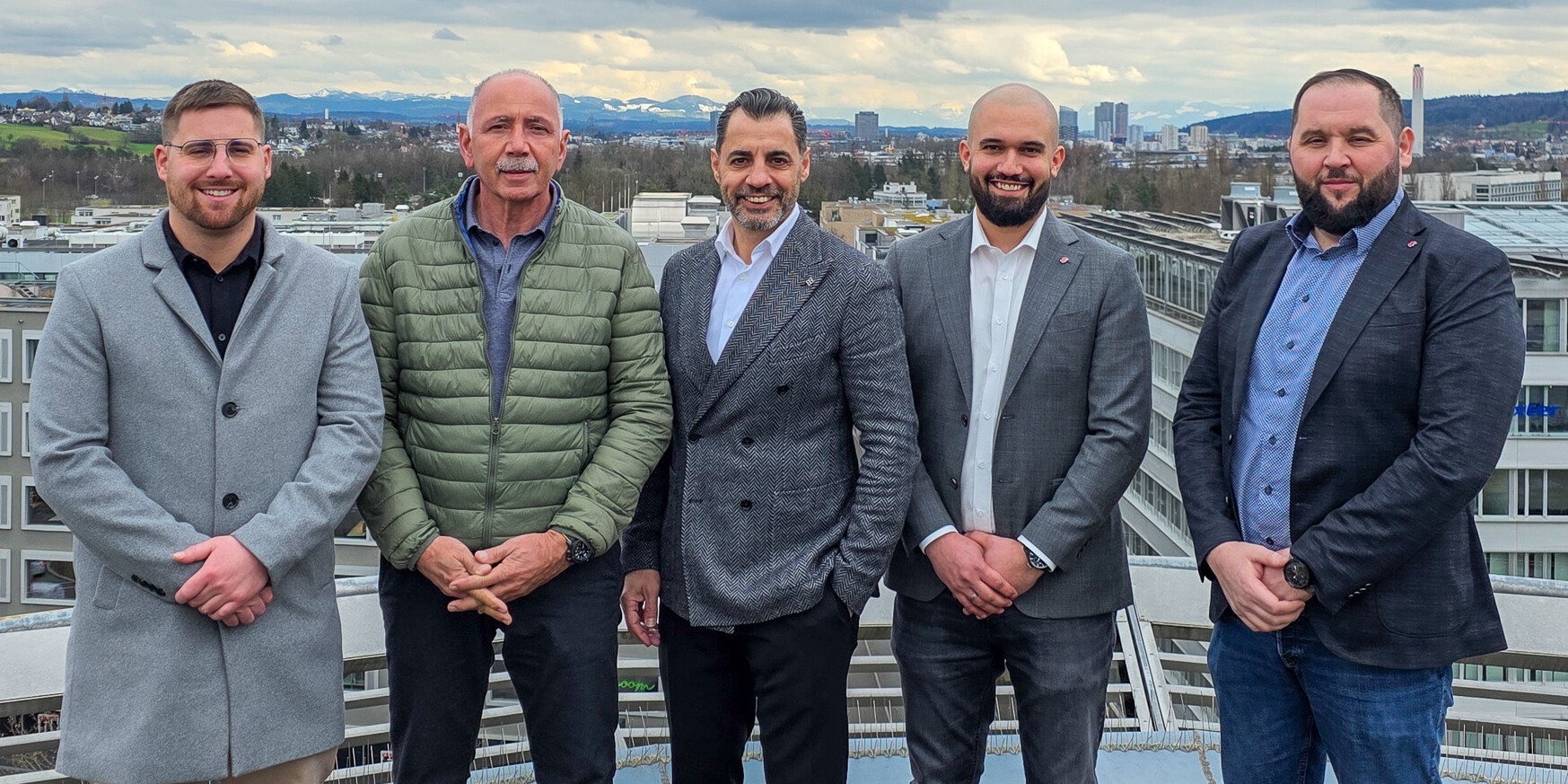
    Pfanner & Frei AG, founded in 1913, is a company deeply rooted in the Swiss electrical industry and is characterised by comprehensive services in the areas of classic electrical installations, modern e-mobility solutions and smart home technologies. Under the management of Enis Bajra and Timo Wenger, Pfanner & Frei AG has established itself as an innovative and reliable partner with a strong commitment to quality and customer satisfaction.

    Re.com Elektroanlagen AG, an integral part of the Zurich electrical landscape since 2001, is known for its high-quality services and strong commitment to innovation and technological development. With the acquisition by Pfanner & Frei AG, re.com will continue to operate as an independent company, but with increased co-operation in various technical and operational areas.

    “re.com is known for its excellent reputation in the Zurich region. Leading this professional company into the future is our heart’s desire,” agree the new partners Enis Bajra and Timo Wenger.

    “After 25 years, the time has come to hand over the company to a new generation. The match between the two corporate cultures and market orientations is ideal for ensuring the long-term succession of my life’s work,” says Romeo Raffaele.

    Romeo Raffaele, the founder of re.com Elektroanlagen AG, sees the partnership with Pfanner & Frei AG as an ideal opportunity to place the company in the hands of a new generation while continuing the company’s values and quality standards. Enis Bajra will take over as Chairman of the Board of Directors and the Executive Board, while the long-standing Managing Director Alex Stanzani will continue to manage the day-to-day operations.

    This partnership is an exemplary approach for the long-term safeguarding and further development of both companies and strengthens their position in a dynamically growing market. Employees, customers and business partners can continue to rely on the proven quality and professionalism of re.com, which will now be further expanded with the additional resources and expertise of Pfanner & Frei AG.

  • Resource-efficient building with wood

    Resource-efficient building with wood

    The manual production of wooden shingles in the Alpine region has inspired researchers at Empa and ETH Zurich to develop a new approach. They developed a process in which wooden sticks made from split wood are processed into material panels. In contrast to conventional processing, low-quality hardwood can also be used. The aim is to produce panels with mechanical properties that come close to those of solid wood.

    Energy and material efficiency through chipless processing
    In traditional shingle production, logs are split along the fibre. A process with minimal energy consumption and virtually no waste. This principle is now being transferred to industrial applications. Thanks to a two-stage splitting process and a newly developed device with a multi-bladed splitting head, several wooden sticks can be produced simultaneously, even from hardwood species that were previously mainly burnt.

    Artificial intelligence for wood sorting
    A central element of the new process is the use of artificial intelligence to evaluate the wood sticks. A line camera captures high-resolution images of each stick, which are analysed by a neural network. This allows important properties such as stiffness to be determined independently of the type of wood, shape or size. In future, this data-based selection should enable a targeted arrangement of the rods in order to further optimise the mechanical properties of the panels.

    Boards for load-bearing components with potential
    Even without sorting, the first demonstrators show high resource efficiency and good mechanical properties. The researchers see great potential in the process for load-bearing components in the construction industry. Challenges still exist in terms of bonding, scaling and the predictability of material properties. Nevertheless, the process offers promising prospects for the use of wood in a changing construction industry.

    Research is strategically bundled
    The project is part of the “Mainstreaming Wood Construction” initiative, which promotes the increased use of wood in construction. A new research centre is planned as part of this initiative. The “Center for Wood Materials and Structures” is intended to combine the expertise of Empa and ETH Zurich and provide new impetus for wood processing along the entire value chain.

  • DC technology as the key to the energy transition

    DC technology as the key to the energy transition

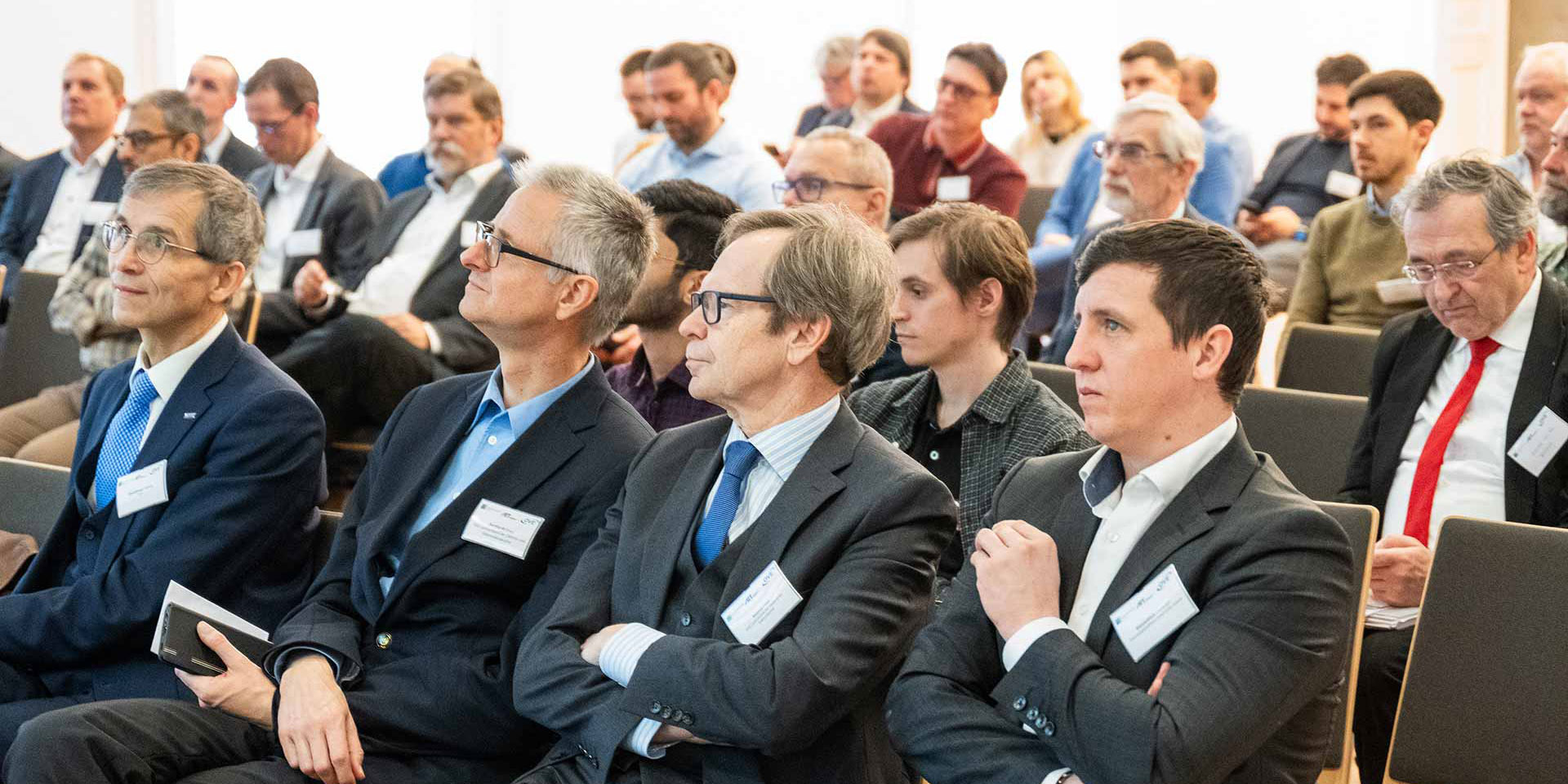
    Direct current is gaining strategic importance. The OVE DC Day 2025, organised in cooperation with the Smart Grids Austria technology platform, brought together around 80 international experts. Key topics included so-called DC microgrids, local energy grids that network renewable energies, storage systems and consumers on a direct current basis.

    These systems enable significantly more efficient energy distribution, for example in buildings, data centres, industry and self-sufficient island grids. Their potential is also evident in electromobility, for example through the direct coupling of charging infrastructure with renewable power generation.

    Focus on standardisation and safety
    In addition to specific fields of application, technical and normative aspects were also discussed. The speakers presented experiences from ongoing DC pilot projects, new regulatory frameworks and progress in standardisation. It was particularly emphasised that parallel projects are essential in order to create robust standards for DC technology.

    Inspiration from the industry
    With keynote speeches by Yannick Neyret (Schneider Electric) and Friederich Kupzog (AIT) as well as expert contributions from well-known companies, the DC Day offered a high-calibre overview of current developments. The focus was on practical insights from the industry and targeted dialogue between experts. An ideal basis for accelerated knowledge transfer.

    Direct current as an accelerator of the energy transition
    A highlight was the panel discussion with leading figures from the industry, including representatives from Siemens, Eaton, AIT, Schneider Electric and the Fraunhofer Institute. Under the moderation of Karl-Heinz Mayer (Eaton), it became clear that DC systems are ready for widespread use. Provided that standardisation and safety develop at the same time as the technology.

  • Project planning credit for Lucerne theatre rejected

    Project planning credit for Lucerne theatre rejected

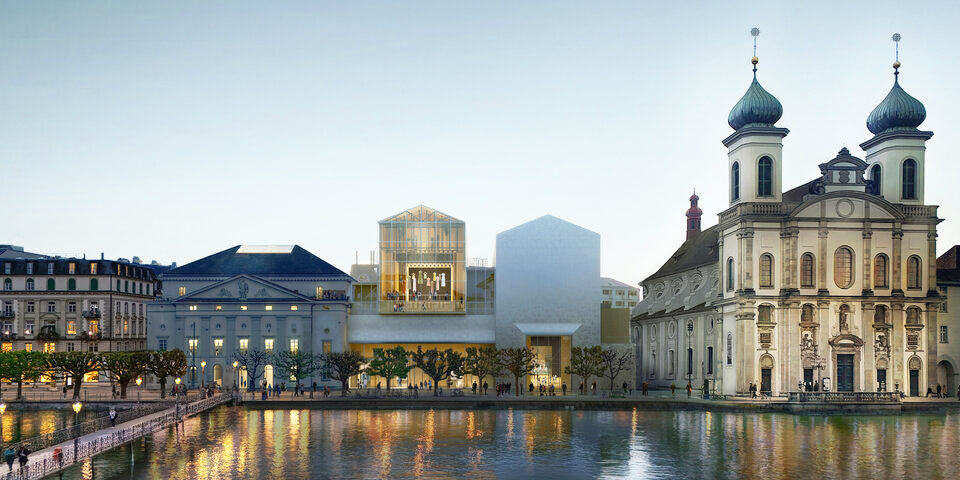
    With 15,033 votes against compared to 10,914 votes in favour, the project planning loan for the planned Lucerne Theatre was clearly rejected on 9 February 2025. The turnout was 49.67 per cent. The result spells the end for the “überall” project by Ilg Santer Architekten, which was intended as a new stage for music, spoken word and dance theatre.

    City Council expresses disappointment
    The City Council notes the vote with great regret. The planned further development of the Lucerne Theatre cannot be realised with this decision. City President Beat Züsli emphasises: “We have always said that there is no Plan B. What happens next is completely open. This result is a great disappointment for Lucerne’s culture.”

    The location and construction volume of the planned theatre in particular were repeatedly criticised in the public debate. Nevertheless, it is still too early to draw any definitive conclusions. The city council intends to carefully evaluate the results of the vote together with the partner organisations involved.

    Consequences for cultural policy
    The rejection of the loan presents the city of Lucerne with new challenges. The previous plans have been halted and it remains unclear how the future of Lucerne’s theatre can be shaped. Nevertheless, the city council emphasises the importance of dealing constructively with the vote: “It is now our joint task as a city community to find a new solution for theatre culture in Lucerne.”

    Despite the defeat, the city council would like to thank everyone who was involved in the project. The existing partnerships will continue to be cultivated and the impact of the result of the vote on cultural policy will be carefully examined.