Author: immovestuser

  • Building technology planner S2B starts in Baden in January

    Building technology planner S2B starts in Baden in January

    From the beginning of the year, the company for building planning from heating and ventilation to plumbing and electronics, S2B Plan AG , will start advising customers. This means that the city of Baden will be the first planning company to combine all building technology trades under one roof, according to the start-up's media release. This is a novelty for the city. Because so far there has been no planning office in Baden for the full range of building technology. This niche is now being filled. For building projects, S2B Plan AG draws up all plans for heating, ventilation, plumbing and electronics from a single source. An analysis of the building technology is also offered for existing buildings.

    The company was only founded on December 1st by the Baden residents Christoph Barth, Daniel Burger and Thomas Schmutz. According to the announcement, the planned start in September had to be postponed. The corona pandemic thwarted the bill. Because suddenly the economic and social situation changed. Nothing has changed in the founding project, it says there.

    The team will now be available for customer advice from January. With the move into the offices at Badstrasse 34 in Baden on December 1st, the S2B Plan AG website and the entry on LinkedIn were activated.

  • LEDcity makes lighting intelligent

    LEDcity makes lighting intelligent

    The Zurich cleantech start-up LEDcity has further developed its intelligent lighting solutions with the lamps called Halbautonom +. The light sensors integrated in it allow the light intensity to be continuously and locally adapted to requirements. This is made possible by the integration of a radar and light sensor as well as a radio module in each individual light source. This is how the lamps can communicate with each other, according to a press release from the start-up company. According to her, her system saves up to 90 percent of energy consumption.

    This lighting system, optimized with the help of artificial intelligence, can be configured via an app. "The integration of the battery-free and wireless light switch into the luminaire network enables us to switch between lighting scenarios and to override and dim the automatically suggested lighting", Samuel Stroppel from the Dübendorf facility service provider gammaRenax is quoted as saying. "This expands the possibilities for use in training rooms enormously." Since November 2020, the conference rooms of this LEDcity customer have been illuminated by the semi-autonomous + lighting solution.

    The start-up based in Technopark Zurich is working on the further development of a fully autonomous solution that no longer needs to be initially configured, the message goes on to say. In the future, the luminaires could use the data they have collected to autonomously order a replacement if a lamp fails or even support security personnel.

  • Jaisli-Xamax is rebuilding the traditional Beyer company in Zurich

    Jaisli-Xamax is rebuilding the traditional Beyer company in Zurich

    The employee newspaper Brilli's News of Jaisli-Xamax AG in Dietikon took the renovation of the traditional Zurich company Beyer Uhren & Juwelen for its 260th anniversary as an opportunity for an interview with Managing Director René Beyer. Under the title “Time for something new”, Beyer reports on the good cooperation with the construction management from Palmieri and the team from Jaisli-Xamax responsible for all electrical aspects. This “well-rehearsed team” carried out an initial renovation nine years ago and has now completed the renovation for the company's anniversary in the summer.

    Beyer is quoted as saying: “This is not the first conversion with the Jaisli-Xamax AG team. Not only for renovations, but also for various maintenance work during the year, I can count on the reliable specialists in your company. ”What he appreciates about the cooperation is that he knows all of the specialists personally. At Jaisli-Xamax AG there is a family atmosphere and togetherness. "It is important to me to have a competent partner on board who also 'ieferet' and not just 'laferet'", Beyer continues.

    As to the motivation for the total renovation, Beyer says that he has to think about handing over the business to the next generation and therefore wanted to equip the watch and jewelery boutique with a special feel-good atmosphere. Beyer: "That may sound like a flat marketing strategy, but in the end it is really what we can offer customers in contrast to the numerous online providers."

  • VoltWALL wins Boldbrain competition

    VoltWALL wins Boldbrain competition

    According to a report from ticino online, voltWALL is the main winner of this year's Boldbrain Startup Challenge . The start-up from Lugano with branches in New York, Rome, Sydney and Tel Aviv has developed a modular energy storage system called xBlade. Its areas of application range from charging electric cars in the garage to industrial solutions and solar parks.

    The company convinced the jury of the Ticino start-up competition that it would create jobs in the canton, according to a message on startupticker.ch. The first prize is endowed with 40,000 francs. In addition, the University of Italian Switzerland awards voltWALL a full scholarship worth 52,000 francs. In addition, the winner also received one of the special prizes from the Boldbrain sponsor Hemargroup.

    The two young companies Finar Module Tech and 4Devices Medical each won CHF 30,000 as second and third place. Finar developed an energy-saving LED lamp that has already been tested by Osram and Henkel. 4Devices builds miniature medical machines. Your first is a stent, which is designed to improve surgery on children with hydrotherapy. The start-ups WYTH and UNIVERSUS-OS followed , each receiving 10,000 francs in prize money. UNIVERSUS-OS also received the audience award.

    The Boldbrain Startup Challenge is organized by the Ticino innovation agency Fondazione Agire and the USI's Center for the Promotion of Business Start-ups. The competition is supported by the Ministry of Finance and Economics and the Ticino Cantonal Bank BancaStato .

  • Juice Technology and Athlon electrify vehicle fleets

    Juice Technology and Athlon electrify vehicle fleets

    Juice Technology AG and Athlon Germany GmbH are promoting the electrification of car fleets. The manufacturer of charging stations and software based in Cham and the Düsseldorf leasing provider and fleet manager have jointly developed a mobile charging station. It should make charging company vehicles as convenient as possible in different situations.

    The Juice Booster 2 could cover all areas of application, explains the founder and CEO of Juice Technology, Christoph Erni, in a press release : as a mounted wallbox, as a mobile charging station and as a type 2 charging cable for public charging stations. "The Juice Booster 2 is the ideal charging option, especially for field staff, sales and transport services who usually cover long distances through supraregional areas of use and cannot charge at home or in the company every evening", says André Girnus, Managing Director of Athlon Germany same passage quoted. "With Juice Technology we have found an innovative partner to equip our customers in the best possible way."

    The charger is compatible with all electric cars with type 1 and type 2 connections. According to the company, the integrated DC and AC fault detection effectively triggers at the prescribed value. As a result, the supply line does not require an additional expensive FI-B circuit breaker. With a cable length of five meters and a theft-proof adapter lock, the electric car can be parked flexibly for the charging process.

    In addition, the TÜV-certified Juice Booster 2 is the world's first mobile charging station with up to 22 kilowatts that corresponds to the currently valid IEC 62752 standard and enables one to three-phase charging of e-vehicles with up to 32 amperes. The mobile charger is also ideal for international use.

  • City of Zurich wants to reduce heat

    City of Zurich wants to reduce heat

    The city of Zurich is reacting to the heat waves of the past summer and wants to arm the city for future temperature-related stresses. On the one hand, measures are planned to be implemented in new construction projects. And on the other hand, the principle of the sponge city is to be implemented in pilot projects, as can be seen in a communication.

    This principle was developed to minimize flooding. To this end, rainfalls in the city are to be held back like a sponge and only gradually channeled into the water and groundwater. However, this principle is also intended to reduce global warming in Zurich. To this end, part of the Giessereistrasse in Zurich has been converted in a pilot project. For the sponge city principle, many factors such as the gradient of the road, the road surface, permeable curbs and lockable mud collectors must be taken into account. The aim is to ensure that rainwater only runs into the sewer system in winter. In the rest of the year, it should be diverted into the vegetation, where it slowly evaporates and thus contributes to cooling. At the end of the structural work, nine new trees have now been planted.

    The project, which will cost 680,000 francs, is currently designed for the period up to 2024. The Zurich University of Applied Sciences (ZHAW) ensures scientific monitoring.

  • Empa presents three innovation awards

    Empa presents three innovation awards

    The Eidgenössische Materialprüfungs- und Forschungsanstalt ( Empa ) has honored three of its groundbreaking projects and achievements with the Empa Innovation Award. The prize, endowed with CHF 5,000, has been awarded every two years since 2006. In doing so, Empa honors the efforts of its researchers to build further bridges between science and business with applied, market-oriented research.

    According to a press release by Empa, the first prize goes to the novel tissue adhesive technology Nanoglue. It was developed by researchers at the Particles-Biology Interactions Laboratory at Empa in St.Gallen in collaboration with the Nanoparticle Systems Engineering Lab at the Swiss Federal Institute of Technology in Zurich . Their radically new approach uses the wound-healing properties of inorganic nanoparticles. The inexpensive materials could be manufactured on a large scale. The “unique technology” is now being brought to market maturity by the Zurich start-up anavo medical , which has yet to be founded.

    The transparent face mask from the Hello Mask project by Empa and the Swiss Federal Institute of Technology in Lausanne ( EPFL ) also received an award. It consists of a fine membrane with a pore size of around 100 nanometers. This membrane allows air to pass through, but holds back viruses and bacteria. “The fully see-through mask was developed primarily with the aim of improving the relationship between caregivers and patients,” says researcher Joshua Avossa. The Geneva start-up HMCare has been working on the market launch of the Hello Mask from Empa and EPFL since 2020. It should be available in mid-2021.

    The software platform Urban Sympheny for planning sustainable energy systems is the third winner. The Empa spin-off of the same name, based in Dübendorf, helps planners to identify optimal solutions for their location and their customers. The goal is energy and cost efficiency. The innovative platform was developed in Empa’s Urban Energy Systems department. Last year Venture Kick awarded Urban Sympheny 50,000 francs.

  • Window manufacturer 4B wins innovation award

    Window manufacturer 4B wins innovation award

    4B AG , based in Hochdorf, is one of the winners of the Innovation Award 2020/21, which was presented for the first time by the Swiss Institute for Quality Tests ( SIQT ). The award is based on the number of patents held by Swiss companies between 2017 and 2019. The jury took into account data from both the Swiss Patent Office and those from foreign patent offices. The winners of the prize are companies or research institutions that “have an above-average score” in their segment or in a CPC class (Cooperative Patent Classification), explains the SIQT in a press release.

    4B AG is continuously developing new products and services. For this purpose, the window manufacturer operates its own innovation department with product management, development and a test laboratory. One of the company’s developments is a threshold-free balcony door. However, 4B also researches the topic of intelligent windows, for example. “Windows are currently becoming more and more intelligent and will be able to carry out increasingly smart functions in the future,” the company explains in a press release . Intelligent windows should, for example, increase energy efficiency and simplify the handling and maintenance of windows.

    4B is owned by the Bachmann family and was created in 1896 from the joinery of the same name. The company employs more than 660 people and most recently achieved annual sales of around 170 million francs.

  • Trafigura invests in H2 Energy

    Trafigura invests in H2 Energy

    The Dutch commodity trading giant Trafigura , with a branch in Geneva, is investing heavily in the Zurich-based H2 Energy Holding . In a first step, the company has committed, according to its media release , to provide 62 million dollars. 20 million of this will flow into H2 Energie AG as a capital contribution. This is intended to support the development of the production, storage and distribution of green hydrogen for filling stations and industrial customers.

    Trafigura, one of the world’s largest traders in fossil fuels, will provide the remaining 40 million dollars to set up and finance a 50:50 joint venture, H2 Energy Europe, based in Zurich. It aims to bring green, hydrogen-based ecosystems to the markets. In addition, it will invest in hydrogen infrastructure and in projects that work with hydrogen throughout Europe, with the exception of Switzerland.

    H2 Energy has developed “a successful business model that is present in every part of the hydrogen value chain,” said Jeremy Weir, Executive Chairman and CEO of Trafigura, in the press release. “And by providing fuel cell solutions on a large scale, they have created a demand for hydrogen.” Now Trafigura will contribute its ability to further develop traditional supply chains and open up new markets.

    The joint focus is on the profitable decarbonization of various sectors, says H2 Energy boss Rolf Huber. “The joint venture with Trafigura will enable the partners to carry out the planned projects across Europe. In addition, it will enable us to further develop fuel cell applications for the transport sector on land and at sea, but also for stationary applications. “

  • Axpo goes to Greece

    Axpo goes to Greece

    The Swiss energy producer Axpo will in future have a permanent branch in Greece. According to a press release , the company wants to offer services to Greek customers and partner companies there. That ranges from risk management to support with market access. Axpo will therefore be active in Greece across the entire energy supply chain. The Athens office is headed by Vasileios Machias, the newly appointed Country Manager. Axpo reports that he has more than 16 years of experience in international energy trading and has worked for numerous large energy trading companies such as EDF and Gazprom.

    Domenico De Luca, Head of Trading and Sales at Axpo, is quoted in the press release: “We know the importance of local market knowledge for our customers. So I am all the more pleased that Vasileios Machias has joined Axpo and will manage the newly established branch in Greece. ”Axpo will support its customers in the transition to a low-carbon economy with tailor-made services.

    The plan is to work with non-state electricity producers in the use of renewable energies. In addition, according to the announcement, Axpo will support local energy providers with the supply of liquidity to cover their market risks.

    According to its own information, Axpo has 5,000 employees working for customers in 40 countries in Europe, North America and Asia in order to offer innovative energy solutions based on the latest technology.

  • Association for sustainable building is founded

    Association for sustainable building is founded

    The newly created Association for Sustainable Building Biological Building (VNBB) aims to make the construction industry more sustainable and climate-friendly. To this end, knowledge and skills are to be promoted and integrated into vocational training.

    As stated in a press release, the non-profit organization was initiated by Dr. Thea Rauch-Schwegler from the Baubioswiss Association over the past few years. Timber construction Switzerland , building envelope Switzerland , JardinSuisse , Lignum – Holzwirtschaft Schweiz and the Swiss Association of Painters and Plasterers have joined as founding members. Its new office in Wallisellen is also the seat of the VNBB. The management of the VNBB office is advertised. New club members and partners are expressly welcome.

    In 2019, the examination regulations for the advanced specialist examination for experts in healthy and sustainable building were recognized by the State Secretariat for Education, Research and Innovation. In this way, according to the VNBB, “the gap in higher vocational training in the field of sustainable building can be closed”. The first preparatory course for the diploma will start in 2022. At the same time, professional associations have also recognized the importance of the topic and decided to tackle the issue of sustainability in vocational training together.

  • Senozon helps dealers choose a location

    Senozon helps dealers choose a location

    Location and traffic optimization are the core business of the Zurich company Senozon . According to a media release, interested parties can now order a map free of charge online that shows, for a specific postcode area, where pedestrians are particularly frequent during the day. Also included is a map with the pedestrian frequencies of people between 18 and 65 years of age with a medium or high household income.

    The spin-off from the Swiss Federal Institute of Technology Zurich ( ETH ) receives numerous inquiries for individual locations, for which this free data product now provides answers: “In times of the Corona, it is even more important for retailers and their advisors to choose the locations cleverly. We are making a contribution with these cards, ”says Senozon sales manager Phillip Kousz.

    Senozon also offers other products for a fee, such as areas that cover several postal codes, absolute pedestrian frequencies, other socio-demographics, daily frequencies and catchment areas. The simulation enables not only an analysis of the current situation, but also precise prognoses of the future.

    According to the announcement, the basis for the simulations of Senozon are mainly publicly available statistics. The company enriches them by comparing them with real measured values. Sources such as traffic counts, apps and statistics from Google and telecom providers are used for this. The great advantage of the method is that it includes the population of a country including its socio-demographics. "For the first time, this allows target group-specific evaluations and studies with full anonymity."

  • Ceneri Base Tunnel receives the green light

    Ceneri Base Tunnel receives the green light

    The New Railway-Alpen-Transversale ( NEAT ) is largely completed. The Federal Office of Transport ( FOT ) has issued the permit for the scheduled operation of the Ceneri base tunnel, it writes in a message . This means that the tunnel will be available for scheduled passenger and freight trains from the timetable change on December 13th.

    The Ceneri Base Tunnel was inaugurated on September 4th. Since then, around 5,800 commercial passenger and freight trains have been run through the tunnel in a trial run.

    The 15 kilometer long tunnel is the third of the three large base tunnels that were built as part of the NEAT. It also enables direct connections between Lugano and Locarno. These form a central element of the Ticino S-Bahn.

    The Lötschberg Base Tunnel with a length of 35 kilometers was the first of the three large tunnels to go into operation in 2007, the Gotthard Base Tunnel with a length of 57 kilometers followed in 2016. The almost 20 kilometers long Simplon Tunnel has been in operation since 1906. Switzerland now has two flat rail routes through the Alps.

  • Ticino excellence

    Ticino excellence

    Mr De Vecchi, could you briefly tell us your company's history?
    It all started at the turn of the 50s and 60s when my mentor and teacher Franco Dell'Oro took over his parents' company, who had been marketing equipment for bars and restaurants since the 30s / 40s. The leap comes with the takeover of the exclusive Gaggia, the renowned brand of coffee machines, for the whole of Switzerland. This opened the doors for us beyond the Gotthard and gave us the opportunity to offer our other products throughout the country. That means fittings for public spaces, industrial steel kitchens, bespoke joinery and much more.

    And when did you come to the company?
    I came to the company in my early twenties in my twenties. I never left and took over after Mr. Dell'Oro passed away in the early 2000s. Since then, I've done nothing but follow the founder's line: the accuracy of Swiss service combined with the quality of Italian furniture and design items, certainly the best in the world. Among these, I can mention well-known brands such as Carimati 1919 that we have a stake in.

    It is said that architects value you because you are able to realize any idea from them, even the most creative. What is your secret?
    Nothing but the know-how that has accumulated over all the decades in which styles, trends and materials have changed in the hotel and restaurant industry. With a structure that can build everything to measure, we can meet the needs of customers and architects. Our craftsmen can work on any material, be it wood, stone, steel or wrought iron.

    Which famous architects have you worked with?
    It is my honor to mention, among the many excellent professionals with whom we have worked, Mario Botta, with whom we set up the Parco Saroli restaurant at the headquarters of what was then Banca del Gottardo in Lugano and that of the Tenero National Sports Center and recently too the rooms have established the restaurant of the Fiore di Pietra on Monte Generoso. In addition, we will shortly complete the work on the interior of the new Stalvedro motorway service area, also a Botta project. Another consolidated collaboration exists with the architect Bruno Huber, with whom we founded the restaurant of the Lugano Casino together with the famous interior designer Italo Rota and later the adjoining Restaurant Seven and its disco lounge. We also worked with the architect Huber to furnish several Novotel and Ibis hotels in the Accor chain throughout Switzerland.

    Franco Dell'Oro is also very present in Switzerland with prestigious tasks. Can you name one of them?
    One recognition that we were very pleased with is the one we received from Migros for setting up some of its restaurants in Zurich, including the one at the cooperative headquarters. The famous American chain Kentuky Fried Chicken (KFC) recently entrusted us with the mandate of general contractor for the furnishing of their restaurants in Lausanne and Bern. We have been present on the other side of the Gotthard for decades, for example we have created several Mövenpick and Marché restaurants. To mention large groups again, we also did some work on the manor house. We recently built the restaurant at Muralto SBB train station, the brand new Caffè Locarno. Without forgetting the LAC in Lugano, where we created the entrance areas, or the Artisa Vip Lounge in the Lugano hockey stadium.

    Do you also work abroad
    Certainly. The latest creations include the Vanini chocolate and ice cream parlors in Vienna, London, Barcelona and Mallorca. Abroad, however, we work mainly through our subsidiary Carimati, with whom we have created various restaurants and hotels around the world. For example, we founded the Just Cavalli restaurant in Miami, Florida with her and the great interior designer Italo Rota.

    Not bad for a small company born in Viganello …
    An enormous satisfaction for a small company in Lugano with around ten employees. Today we can say that we are able to carry out types of work ranging from the typical Ticino grotto to the large international fast food chain. And I'll tell you more: There are many private customers who contact us after seeing our installations in public places and entrust us with the furnishing of their houses, from the living area to the bedroom to the kitchen. ■

    Interiors of the Novotel in Paradiso, a project by Franco Dell'Oro with the architect Bruno Huber.
  • Cross-generational district "Parco San Rocco", old people's home "Marigold Hotel"

    Cross-generational district "Parco San Rocco", old people's home "Marigold Hotel"

    The Coldrerio retirement home in the New Intergenerational District bears the signature of Architetti Tibiletti Associati Studios, winner of the 118 participants in the competition. Her project “Marigold Hotel” proposes a solution that takes into account both the needs of the third and fourth age as well as our new way of life, more individual than in the past and with weak family ties, therefore with a lower inclination to care for the elderly, often left alone. Thinking about the architecture of new retirement homes means taking into account socio-demographic change and the growth of the elderly population, as well as developing the need to develop prevention and active aging in order to promote the preservation of the autonomy and physical independence of the elderly for as long as possible.

    The Casa San Rocco di Morbio Inferiore Foundation, in agreement with the municipalities of Coldrerio and Vacallo, has set itself the goal of creating two generation houses for the elderly and expanding the Morbio Inferiore location to a total of 259 beds. The three generation houses will be part of the future “Parco San Rocco” and offer services that are not only accessible to residents, but also to the public. They transform retirement homes into a place of care and well-being for all age groups: from childhood to fourth age. Of the three future houses in the park, the only one that has already defined the spaces and services is that of Coldrerio.

    The project
    The location of the competition, where the future “Marigold Hotel” will be built, is located near one of the three historical centers of Coldrerio, which are characterized by a number of public and school buildings. The intervention area is located in a green, central and valuable area, even if it is currently without identity and recognizability. It includes the parish hall, the kindergarten as well as the elementary school and sports equipment. Some existing public and private buildings will have to be demolished for the construction of the New Intergenerational District.

    The design concept includes the creation of a meeting room for the community, a connection between these new public buildings
    blici, in synergy with each other. This meeting room is defined by the harmonious arrangement of three volumes, the retirement home, a multi-purpose center and a home for self-sufficient elderly people, which are built in such a way that they can be integrated into the urban situation by repairing their parts. The aim is to put a whole back together that enhances the place, to create a square and a garden that help improve the quality of life in the neighborhood and promote social integration.
    le and cross-generational.

    The new district caters to a wide audience of users (students, singles, families, early retirees, retirees, people with reduced mobility, etc.). The sector includes a new old people’s home with 79 beds on the ground floor, which is characterized by publicly accessible services (bakery, multipurpose rooms, outdoor terraces, hairdresser, doctor’s office, etc.), on the upper floors from the guest rooms a center for health prevention (exercise room, special equipment , Physiotherapy, occupational therapy and podiatry) and an Alzheimer’s ward with its own garden; a new multi-purpose center, the ground floor of which houses the party and event room, the youth center, the kindergarten and, on the upper floors, the after-school services, the playroom and the classrooms for the afternoons
    School, multi-purpose rooms and administrative rooms; Finally, the sector includes a new independent structure with 8 apartments for the elderly, sharing a laundry and multipurpose room, open to the garden and facing the new mineral square, characterized by a piece of water that flows into the Located in the middle of the new building.

    The green areas
    Particular attention has been paid to the maintenance of the outdoor areas by including elements to carry out activities for all ages: near the stationery, the green space is dedicated to relaxation and accessible to all; On the other hand, near the primary school, equipment and games for children are offered in the green area. The green area in front of the new multi-purpose center is dedicated to the conference area. Finally, the area next to the retirement home will include pools for garden and vegetable gardens.

    These 4 green spaces are linked by a path that creates a link between the different generations, encouraging the cross-generational nature of the sector.

    Energy considerations
    The buildings meet the Minergie standards and take sustainability criteria into account. ■

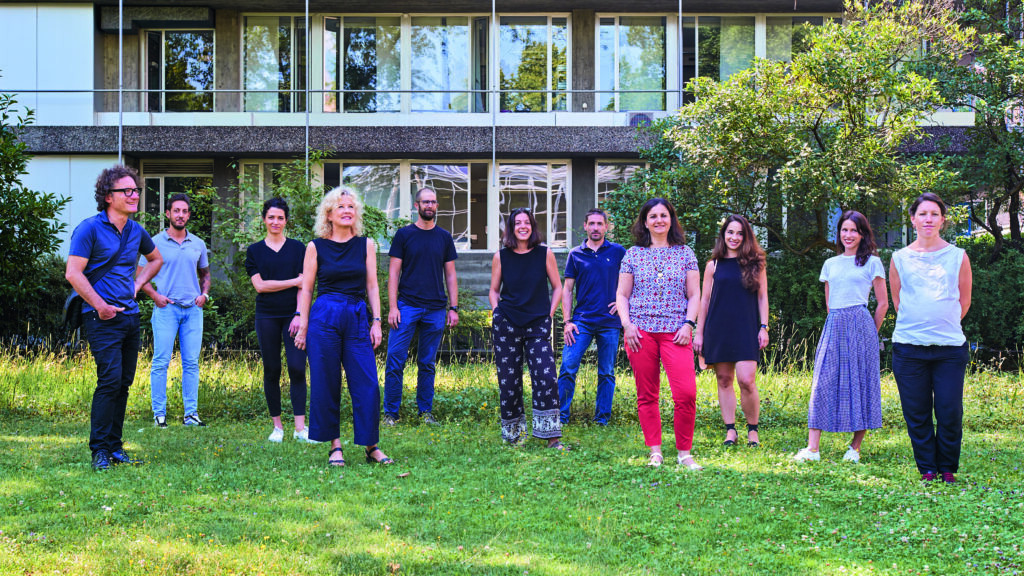
    Architetti Tibiletti Associati SA. From left Stefano Tibiletti, Marco Torri, Elisa Cherubini, Catherine glasses Tibiletti, Tobias Biegger, Benedetta De Rosa, Davide Gatti, Giovanna Grandi, Laura Martinez dell’Olmo, Carlotta Fumagalli, Maddalena Corti.
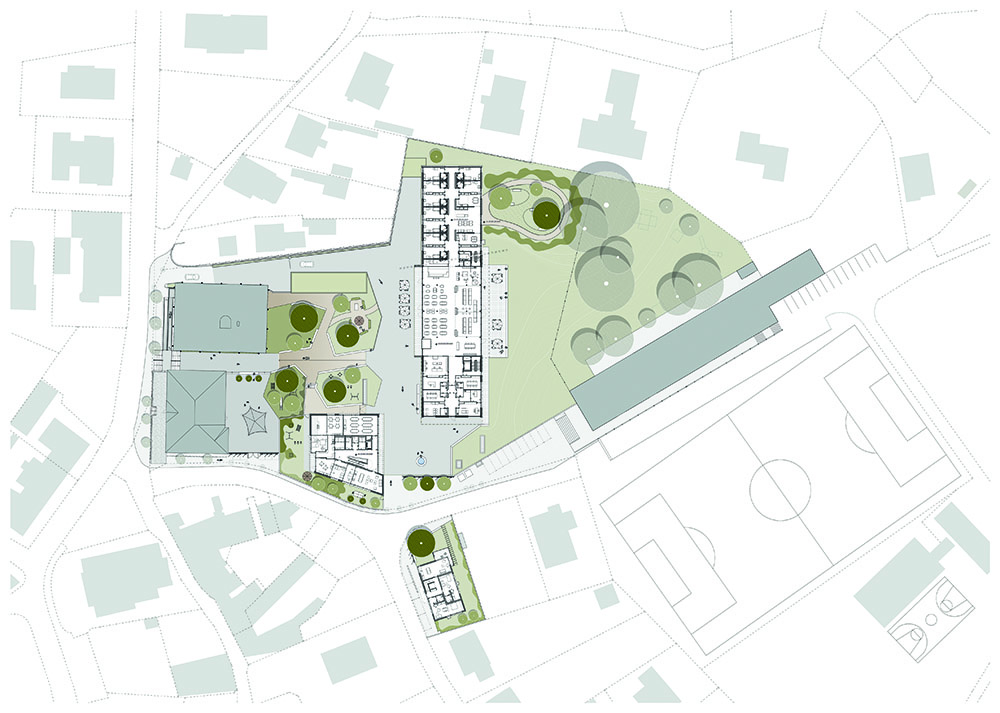
    Coldrerio Intergenerational Quarter: Plan of the external layout.
  • "The canton invests 360 million in public works"

    "The canton invests 360 million in public works"

    What exactly does the logistics department of the DFE do?
    The logistics department mainly deals with the management of real estate assets in the canton of Ticino. We are talking about assets of around CHF 2 billion. We manage, optimize and develop every aspect of the real estate portfolio’s life cycle. In practice, our work ranges from logistical planning to feasibility studies, project management, implementation and maintenance of the built asset. The logistics department also takes care of all purchases for the public administration, for example – to stay up to date – from disinfectants to masks to school supplies.

    Let’s focus on the real estate sector: can you give us some numbers?
    For the canton’s real estate assets, around 360 million francs are expected to be invested in buildings over the next four years, including new buildings and renovations of existing properties. In 2019, the cantonal parliament voted on a framework design loan of 60 million francs, which will enable the planning of various administrative and school buildings through competitions. This year the State Council granted Parliament an additional framework loan of CHF 100 million for the planned maintenance of public buildings for the next 6 years.

    In summary, it can be said that the canton will invest a lot of money in the form of public works in the Ticino economy over the next few years. Definitely a breath of fresh air in times of the coronavirus crisis …
    This is a very important message for the cantonal economy. What we are experiencing is a moment when the residential sector tends to decline and it is the public institution that can partially compensate for the planned loss with various projects and investments. The crisis was foreseen, but with the Covid-19 pandemic, it worsened. This countercyclical public investment should help offset part of the decline in private residential investment expected in the coming years. The investments include the construction of new buildings and the planned maintenance of our buildings as well as complete renovations and partial renovations. These are investments that give businesses and professionals in our region work.

    Can you give us some examples of these new projects?
    Among the main works we currently have open competitions for the technical center of the textile sector in Chiasso, the shooting range of Ceneri, the school sector of Mendrisio, the judiciary sector of Lugano as well as a parallel study mandate for the new museum. the natural history of Locarno. In addition, there is the competition for the renovation of Locarno Pretorio and a triple grammar school in Bellinzona (to be published at the end of the year).
    In parallel to the competitions, the new Mendrisio emergency center, the ICEC school center in Bellinzona and the expansion of the secondary schools in Viganello will be completed.

    When you return to the new technical center of the textile industry in Chiasso, can you illustrate the history of this long-awaited project in a little more detail?
    This is all due to the fact that what is now the Viganello headquarters of the College of Clothing and Fashion Design (STA) has reached the end of its life cycle and must be demolished.
    Alternative locations were analyzed through feasibility studies. After these analyzes, the decision was made in favor of Chiasso because of its proximity to the “Valley of Fashion” of Mendrisiotto, where many clothing companies are based. In addition, the location near the railroad favors the mobility of students in public transport. A reality is building near traffic junctions, which is developing all over Switzerland. In addition, the Chiasso area, where the Textile Technical Professional Center is being built, could be expanded to include more educational content and become a real training center.

    And what about the new shooting range in Monte Ceneri that has been talked about for over a decade?
    The new multifunctional training and shooting center of Monte Ceneri is an important, special and unique project with an expected investment of around 55 million francs. A very important project stemming from the desire to create a centralized cantonal structure where the police can conduct their training and where the mandatory shots of military service can be held, eliminating today’s open firing ranges that cause problems Environment and noise. In fact, the shooting range will be completely covered and in an area where some military and police activity has already been concentrated. The announced competition offers detailed specifications for every aspect, from technology to landscape to acoustics. This is a unique and quite innovative project as there are only a few smaller underground shooting ranges in Switzerland.

    Are there any other major projects in sight besides the ones mentioned?
    One of them is certainly the restructuring of the judicial offices in Lugano, which includes the restructuring of the current courthouse and the expansion of the space in the current headquarters of EFG Bank, the so-called “Palazzo Botta”. For this project, the canton is planning an important investment in the purchase and renovation of the EFG bank building and the renovation of the current courthouse, which will take a few years. It is a very important project both for the canton, which can use a prestigious and high-quality building with an important surface in the center of Lugano and near the current headquarters to concentrate its activities, and for the city.

    What kind of renovation is planned for this prestigious building?
    It is a highly flexible building in a good state of preservation, which enables the rooms to be rearranged without major interventions. The exterior will most likely not be touched while the interiors will be partially rearranged. The main intervention will take place on the ground floor, where some courtrooms will be created.

    Are you also planning to invest in Bellinzona?
    The parallel study mandate for the SBB workshop area, jointly funded by the canton, the municipality of Bellinzona and the Swiss Federal Railways, has now ended. The point is to define the development of this sector, in which administration and school rooms as well as an innovation center are available to the canton. The results of the parallel study mandate were presented in the last few weeks. It is a modern district that was designed taking into account the issues of sustainability, generation generation and slow mobility with the aim of offering living and working spaces. It is also intended to build the headquarters of the Ticino network of the Swiss Innovation Park. This is an ambitious project whose planning work, which will begin shortly, will include a multi-year implementation.

    What are the prospects for the canton’s real estate assets?
    I think that we as public actors have to ensure sustainable development, i. H. The balance between architectural, environmental, social and financial criteria so as to ensure the overall quality of our buildings. We must also think about the transformation of work and the use of land, especially the administrative ones. According to two studies that we carried out in cooperation with SUPSI, with regard to the use of rooms in the school and administrative environment, an increase in intelligent working from home is expected on the one hand and an increase in the available space for staff working with more agile working methods will work in the office, and consequently different work and aggregation rooms that are shared. Even after the coronavirus pandemic, the distance between one employee and another is sure to change. The current minimum area per employee will likely be revised upwards. The open spaces that have become so popular in recent years will probably be transformed into various workplaces, with meeting and exchange rooms that follow a horizontal work organization perspective and are no longer just pyramidal. In practice, there will be fewer on-site workspaces, but with more space for each individual employee, this will likely lead to a reduction in office needs. The surfaces associated with the training will be changed according to the new didactic solutions, which will lead to more flexible spaces that will lead to a rethinking in traditional classrooms. ■

  • New large storage system should help stabilize the network

    New large storage system should help stabilize the network

    CKW and Axpo are responding to the expansion of volatile renewable energies. In 2021 you will be implementing a battery storage system in Rathausen which, according to a CKW announcement , can be used for three different markets at the same time for the first time. On the one hand, the system can provide electricity when it is needed, thereby breaking the peak loads. On the other hand, it should help Swissgrid to keep the voltage in the grid stable. Ultimately, it helps to quickly balance out differences between the supply of electricity and demand at any time.

    The system consists of two large batteries, each weighing 50 tons, and each housed in a 12 meter long container. It has an output of 6.25 megawatts. That is enough to supply 15,000 households with electricity for one hour.

    The system will be installed from mid-2021 and integrated into CKW's medium-voltage network.

  • Limmattal Spital is allowed to acquire additional areas

    Limmattal Spital is allowed to acquire additional areas

    After the vote on Sunday, the Limmattal Hospital Association has several years of planning security for future extensions and additions to the Limmattal Hospital . With 87.1 percent, those eligible to vote from the eleven supporting communities of the hospital association voted in favor of the purchase of the Sandbühl property in Schlieren. According to a media release , the property, which consists of three parcels, is directly adjacent to the existing hospital area with an acute hospital, care center and rescue service base in the northeast. This enables future-oriented, forward-looking and sustainable planning of the Limmattal health center, it says. Those eligible to vote followed the unanimous vote of the delegates' meeting on September 23 with their yes to long-term site planning. The purchase price is around CHF 15 million.

    The Limmattal Hospital ensures basic medical care for over 77,000 patients every year. With the new building from October 2018, it has 188 beds, eight operating theaters and eight intensive care places. According to the announcement, 1480 employees from 49 nations are currently working in the hospital.

  • Dormitory of the Franklin University, Sorengo

    Dormitory of the
    Franklin University, Sorengo

    The student residence of the Franklin University of Sorengo represents the last phase of a larger project and completes the street front and the Piano di Quartiere.

    The new facility, designed by the award-winning Flaviano Capriotti Architetti, will contain many innovative functions designed to enhance the campus: modern, well-located student apartments with 1, 2 and 4 bedrooms, two underground parking levels, one of which is a multifunctional hall, and a bright and spacious fitness center , special areas for
    Undergraduate and graduate research services, an art gallery, offices, medical and counseling services, and more.

    The project
    The building is located on a sloping plot of land, closely related to the surrounding landscape: the Ticino Alps and Lake Lugano. It combines two architectural blocks with different functions, thus creating independent but interconnected spaces that are only connected by perspective views: the volume of communal and educational spaces and the volume of university residences. The luminous body, which develops in a sinuous shape on the ground floor, welcomes the communal and educational rooms.

    The building has a public character and is reflected in the urban context by referring to it. First it supports the living volume, it extends seamlessly towards the center of the property and then recovers the main facade and stands like a large lantern in the volume of the multifunctional room.

    The living volume is linked to the volume previously built on the property to restore the original C-shaped courtyard. Distribution is via open balconies overlooking the private inner garden. The courtyard provides a large open space for students to relax and interact with classmates.

    The entire complex is optimized for full use of the rooms by people with disabilities.

    An external staircase cuts the property lengthways and connects Via Ponte Tresa with the historical route of Via San Grato along the green inner courtyard.

    Two underground garages complete the entire project.

    materials
    The satined and semi-transparent U-glass material used for the construction discreetly shows the vitality of the university's conference rooms, which are to become an urban meeting point and symbol of the university complex. A semi-public open space, a small "square", a meeting point and a place of exchange in close relation to the functions surrounding it.

    The living structure consists of a massive volume of pigmented and printed concrete. It is four stories high and houses student housing units. It has a more private and introverted character and relates in a classic way to the urban context, creating a compact street frontage.

    The facade is perforated by identical windows
    They occasionally scale them in size, but are rigidly arranged according to a grid. As the pictures show, this spectacular structure will be a landmark of the Sorengo community and have a facade that is reminiscent of the edge of a book and thus symbolizes education and learning. ■

  • Who is or what is a location manager?

    Who is or what is a location manager?

    It often happens that members of the Governing Council of the Swiss Association of Locations are asked what exactly a location promoter is and what its business is. The answer, which is not entirely satisfactory, is always: it depends. Since there is no recognized professional qualification for the approximately 300 people working as real estate developers in Switzerland, much less uniform training or a qualification profile. There are a variety of professional names and roles: location promoter, business promoter, location manager, marketing by location, regional marketing, regional development, to name a few, but the list is not exhaustive. In fact, it does not include the myriad of colleagues in the areas with which the site manager works closely: tourism, real estate, architecture, construction, research, administration and the public sector, culture, gastronomy, etc. At the theoretical level, there seems to be a clear distinction which actually disappears in practice.

    Realize the potential and then implement it
    And it is precisely in this interface between the most diverse sectors that the promoter or promoter of locations is located and in most cases – yes, women are gaining ground – often with diverse skills in other sectors such as sociology, economics, architecture, marketing or real estate sales. The modern event organizer combines these and other skills and fulfills the task that is often assigned to him by politics – at the local or international level. You, who read this magazine, are most likely active in one of the areas mentioned, so that you can best assess the many qualities and knowledge that a site promoter should possess. Everyone agrees on one point: There is a common denominator for all project sponsors, everyone wants to know the potential of their field of action in order to then develop and realize it. And this is a somewhat straightforward answer to the question originally asked.

    Promote professionalism
    The ASLM, the umbrella organization that brings together location and business promoters in Switzerland, is not satisfied. The association, founded in 1998, now has around 90 members. It tries to find answers to the questions mentioned above and for this purpose promotes the interdisciplinary exchange of information and experience as well as the connection between teaching, research and practice. The ASLM is fully committed to promoting professionalism in the area of location management. In cooperation with various higher education institutions, the association organizes courses and training modules on this topic, and several members are also speakers in the various training and refresher courses. The ASLM is also at the political level in the service of professionalism in order to achieve a recognized professional personality, the figure of the "location manager". The tasks of the ASLM include answering questions about location management.

    The network of contacts is essential
    However, the main role of the ASLM is the liaison between its members. Location development, location marketing, business development, real estate projects, spatial planning: As already mentioned, these and other topics are part of the daily activities of location promoters. Complex sectors that overlap and for which it is not always easy to keep an overview and to have the connections and contexts
    feels right. This is precisely why the exchange of experience, the professional network and close cooperation between the various industries are becoming increasingly important. The ASLM offers its members the opportunity to expand their network, to take care of the interdisciplinary exchange and to use the synergies between location promotion, economic development, spatial planning and real estate development. In addition, ASLM members can take advantage of short free consultations on aspects of site management and site development offered by members of the ASLM Board of Directors.

    Awards for innovative projects
    Every year in spring, the ASLM organizes the location management day, on which location managers, business promoters, experts from the real estate sector and representatives of municipalities, cities and cantons meet to listen to interventions on reference cases and to discuss industry-specific topics, exchange experiences and expand them Your network of contacts. ASLM has been giving the coveted ASLM Awards to innovative projects in the field of location development, location marketing and business promotion since 2007. The awards are intended to reward the diversity and quality as well as the innovative strength of projects in the field of location development, location marketing and business promotion. Since 2017, ASLM has also been organizing a visit to the Expo Real in Monaco, which will take place at the beginning of October. With around 42,000 visitors and 2,000 exhibitors, Expo Real is the largest European exhibition for the real estate and location sector. The initiative includes a return trip by bus, a visit to the exhibition with selected meetings, an aperitif and an exclusive network at the Swiss stand “Swiss Circle”. ■

    • André Gassmann is a member of
      Managing Director of ASLM and Head of Communication and Marketing for the municipality of Emmen; Alexandra Vogel heads the office of the Swiss branch association ASLM.

    contacts

    Swiss Association
    for location management SVSM
    Office
    Ricketwilerstrasse 135
    8352 Ricketwil (Winterthur)
    T: 058 255 08 88
    info@svsm-standortmanagement.ch
    www.svsm-standortmanagement.ch

  • All players in the industry must be ready for change

    All players in the industry must be ready for change

    What exactly is Building Information Modeling?
    Literally translated, BIM means modeling construction information, which is a fairly precise definition. In addition to the digital planning and execution of projects, BIM also enables the data required for the work to be determined and reused. It's about working with three-dimensional models that are nothing more than visually represented databases. It sounds more complicated than it is, but in fact it's just a new way of working. If we used to have two-dimensional plans, now we have
    mo three-dimensional digital building models. It is important that everyone involved has access to the same data or is referred to in another way as the Single Source of Truth (Ed.). This ensures that the data stored in the databases is always up-to-date, correct and relevant for further processing. And that is exactly the biggest advantage.

    Why did SBB choose BIM for construction projects?
    In BIM we see an important potential for data processing and the entire value creation process. SBB expects a significant decline in investments in the planning, construction and management of real estate. This also applies to all of the railway infrastructure it owns.

    We can also make an important contribution to reducing CO2 emissions as we can use the data we collect to simulate how the company will develop in the next 20, 25 years and beyond. Since projects can be compared, they can be learned and transparency can be created over the entire life cycle.

    How is BIM used in the construction of the Letzitur tower?
    The Letziturm was one of the first SBB Immobilien buildings to be constructed using BIM-based working methods and practices. It is also a training project related to the management phase. Planning and executing a project of this magnitude will be completed in ten years, but managing the building will take at least four times longer. For example, we will use the experience of the last tower to try out materials. We are working on obtaining planning approvals through the collaboration platforms. We have learned a lot and can use it to optimize planning and implementation. From our point of view, this is an important first step.

    "One can no longer bear it alone as an owner."

    What conclusions can you draw from using BIM today?
    We recognized the potential of BIM for SBB very early on and actively promoted its development through the BIM @ FFS program set up for this purpose. We have made important progress since then. This program is based on four interlinked pillars: development, experimentation, approval and concrete involvement of the sector. We share all of our knowledge and experience at events with our partners, collect comments and observations, which we then integrate into the development process. We involve our community in this way. You can no longer build on your own, you need close cooperation between the parties. This is also reflected in the skills of the employees. On the part of the employees, we have clearly identified a great desire for mutual learning. The result is inspiring and instructive for everyone.

    What are the advantages?
    It goes without saying that data-powered designing and building is changing the way we work with our partners and how we develop projects with them that are now completed faster and more securely. Of course, only if everyone involved is willing to take over the system. An additional benefit, as mentioned earlier, is "A Source of Truth". Company data is stored in a structured way, is always up-to-date and can be found quickly. This means that the annoying and constant searching for and checking of data is largely eliminated. Compared to the past, communication is also more targeted and performance-oriented. Project groups can find solutions faster, visualize open problems and problems directly in the three-dimensional model and work out variants and alternatives more easily. This helps to understand each other.

    Are there any disadvantages?
    BIM is often only associated with the technological aspect. Of course, it would be nice to fly over the construction site with glasses that show us augmented reality. However, if the underlying data is incorrect, then the most advanced technology is useless. The data has to be correct, so we need a new way of working precisely. There are only two types of data: right or wrong. Today not everyone is ready to use new technologies and methods. However, all operators in the industry must be willing to change and do their part to make things work.

    What could be the reason why BIM has not yet established itself in Switzerland?
    Many associate BIM with the use of the latest software or the latest database technology. This is often necessary, but it is not enough on its own. In order to be able to use BIM successfully, we have to change the way we think and work. In the BIM environment, we often talk about collaborative project teams developing solutions together. This process takes time, but the trend gives me hope for the best. We also have to do our part as public sector clients in order to drive this development forward and to promote the use of BIM in the awarding of contracts, as we did for the Letziturm project, for example.
    What are SBB's goals when using BIM?
    We currently have around twenty pilot projects for which we provide background information. We also experiment with a variety of methods, technologies, and techniques. The knowledge gained from these projects flows into the development process. Thanks to regulations and standards, we can also take international basic elements into account. This way we are sure to keep up with the times. This knowledge is specifically given back to the industry. For confederate companies, the use of BIM will be mandatory for the construction of buildings in accordance with the federal digital strategy from 2021 and for infrastructure from 2025, as a lot still needs to be worked out in this area. This is our stated goal.

    SBB and the BIM Letziturm project
    Thanks to the renovation of the existing commercial and industrial areas, a new urban area is being created along the tracks between the Zurich-Altstetten and Hardbrücke stations. The Letziturm, a six-storey building east of the warehouse that has been declared a historical monument, defines a first urban horizon, which together with the two residential towers adapted to the height of Letzibach D forms a core of three tall buildings.

    Construction began that year. The 178 residential units, consisting of apartments with 1.5 to 7.5 rooms, should be ready from autumn 2022. On the ground floor there are two main entrances and two commercial rooms, each of which offers a view of the future. Square and in the SBB workshops. In between are the ground floors of four larger, two-story residential units, which offer a combination of work and living spaces and, if desired, can be directly connected to the public space.

    Both the smaller and the larger residential units are housed in the base building. Apartments with 2.5 to 4.5 rooms are planned above the 7th floor, where there is a common room. ■

  • Living history – the Palazzo Poncini is being renewed

    Living history – the Palazzo Poncini is being renewed

    The history of this majestic building began in 1845 when the parish priest of Agra, Don Alberto Poncini, decided to build the family house on a spacious plot with a large garden. The use remained unchanged for several decades until, in the first half of the 20th century, the Palazzo Poncini was converted into a hotel that housed relatives who visited the patients of the nearby sanatorium of the “Deutsche Heilstätte” foundation, where tuberculosis was treated became. Agra, the highest town of the Collina d’Oro (550 meters above sea level), is characterized by an ideal air for heliotherapy treatments, the therapeutic concept of which was based precisely on the air quality and the sun. Treatments abandoned after the discovery of penicillin by deciding to close the sanatorium and convert the nearby hotel into a vacation home for young people until it was finally closed in the early 1980s.

    The rest is current: a few years ago the architects Bruno Huber and Angelo Renzetti, both established specialists, fell in love with the place and decided to take over the property, which was practically intact in its original form, with its grandiose structures and agricultural buildings. Outbuildings where everything was made at the time to provide guests with natural products. In fact, on the hillside downstream of the building, there are important areas where fruit and vegetables were grown, while a large heated greenhouse ensured production year-round.

    Back to the origins
    At this point, the desire of the two Ticino architects to get closer to nature becomes a project to revitalize the Palazzo Poncini according to the most modern living standards while at the same time keeping intact the external structure, which is now a protected architectural asset. Work has already started and 18 apartments are under construction, all of which differ from each other because they are derived from the original structure. And all in direct contact with nature. Indeed, the palace will be surrounded by gardens following a new vision of native greenery, in which spices and medicinal plants visible from the balconies and windows will be grown, albeit for purely decorative purposes. Residents also have access to a large communal leisure area with swimming pool and summer kitchen, where they can spend their free time with friends.

    The architect Bruno Huber explains to us: “The new residential address aims to propose a type of house that is characterized by a strong bond with nature, which is very present in Agra. The architectural intervention is not limited here to the realization of the artifacts, but also extends to an integrated concept of the coexistence of nature and buildings ». The palace rests on the old core of Agra and opens up to the valley and the fields that are planted with vines and vegetables, all strictly organic. The connection with nature will not only be visual: a free shop offers the opportunity to buy vegetables and fresh fruit produced on the property zero kilometers away, as well as honey produced in the nearby fields. The same goes for wine: interspecific vines are planted that require very few treatments, and the grapes are vinified on site for the palace.

    In the green with maximum comfort
    Bruno Huber again: “The Palazzo not only wants to be tied to the strong nature that surrounds it, but also to act as a bridge between the past and the future, and under the guise of the past a heart beats that looks to the future of life”. Starting with the parking lots, all underground and with charges for electric cars. Directly from the parking lot you have access to the cellars, which become real pantries next to the garage. And when you think about the future of food supply, there are some cold rooms in the entrance hall in combination with the residential units for receiving the “grocery delivery”: the courier places the purchases in the air-conditioned compartment of the person who placed the order. After returning after work, shopping is done.

    The ecological sustainability will also be maximized and a centralized collection for composting is planned, which will then be reused in the vegetable gardens and in the two old restored greenhouses for the production of the first fruits. The building, insulated according to the strict regulations in force, is heated by a heat pump and in summer the floors are cooled to ensure a high level of comfort in all seasons. Very low energy consumption is expected, which will have a positive effect on the cost of the condominiums.

    The remodeling of Palazzo Poncini is part of a larger renovation project of the entire annexed property, in which the old rural structures are being renovated. The first phase, which will end in connection with the building, will be the creation of a small “charming” hotel with 18 mini-apartments. In the other volumes is the wine shop with wines made in the hills. The area is dedicated to catering for tastings and dinners or events related to the production of Collina d’oro wines. ■

    Bruno Huber in brief

    Bruno Huber completed his architecture studies at the Polytechnic Zurich in 1982. After several stages in Switzerland and abroad, he joined his father Alex, with whom he worked until 1992. He later opened an independent studio with his brother Matteo, urban architect. and continues its activity by participating in numerous national and international competitions. He was a member of various international architecture juries and has created industrial, administrative and residential buildings in Europe, Australia and the USA. Bruno Huber Architetti also deals with aspects of interior architecture and design.

  • New elementary school and gym

    New elementary school and gym

    The new elementary school will be built in an area that is now the soccer field, playground and kindergarten. The name of the project that won the first prize for design
    and that sees as head of the Bonetti and Bonetti architects studio in collaboration with the architect Fabio Regazzoni is «Pivot», for the specifications described below.

    The project manages to precisely organize a now rather fragmented space that is intelligently reconfigured thanks to a convincing arrangement of volumes that can create high-quality public spaces.

    The intent of the designers was to reaffirm the public value of the sector and restore correct relationships with the large scale of the landscape (the “promontory” with the church and the great)
    free noro in the west) and with the small scale of the more immediate context: the network of pedestrian paths towards the hill, the kindergarten and the core, the slope in the north.

    The project
    The fitness studio building on Kantonsstrasse announces the public sector and acts as a fulcrum – a “fulcrum” – between the two proposed reference areas: the arrival area with parking spaces and the one in relation to the large emptiness of the ground floor, that houses the school square.

    The new primary school, more distant and more discreet, redesigns the foot of the promontory on which the Kindergarten and the Church of S. Biagio are located, while the new urban warehouses help complete the eastern front of the arrival square and form a fifth towards it the private buildings near the competition site.

    The long and narrow building of the new school extends over two levels and, thanks to its low height, offers a clear view of the core and the church.

    The school square offers a generous horizontal area that extends over the entire length of the site from north to south. The paved play area and a green area that is open for various purposes find their place in this room. A pedestrian ramp leads to the kindergarten in the direction of the hill to the north.

    The high school building, which looks like a structure suspended from eight columns, is organized on two levels to respond to different needs: that of the football club on the ground floor and that of the school in the basement. The decision to bury the gym limits the volumetric impact of the construction while allowing a harmonious relationship with the school and the adjacent schools
    Centon canton road. This volume with a sleek and abstract language enters into a dialogue with the size of the landscape and against the backdrop of the Magliaso promontory dominated by the church of San Biagio.

    The building is expressed in a powerful structure that lifts a roof to reveal part of the ground floor to the public. This creates a spacious portico in which the football bar and access to the fitness studio are located. In the basement there is the gym, changing rooms, storage rooms and all contents closely related to the gym.

    The city warehouses are located on the eastern edge of the arrivals area. The building consists of a simple volume that directs its entrances to the square in continuity with the existing one. The vehicle is accessed via an independent connection to the cantonal road.

    The school consists of a repeating reinforced concrete structure that defines a modular opening into which a window is inserted, made up of a large solid glass element and a narrow opening panel. The frames are made of metal.

    Energy considerations – Minergie
    In view of the large areas of glass and the heavy presence of people, a system with full air heating and internal temperature control was proposed. The calf
    Passive heat due to the strong presence of people, devices and, to a small extent, the solar contribution makes a significant contribution to compensating for the total heat losses. In the summer months, solar heat can be disadvantageous and requires careful balancing and control, which is achieved through a low energy transfer factor of the glass (g <0.30) and controlled sun protection according to the orientation of the facades and solar radiation.

    The project includes covering with photovoltaic modules on an indicative surface of around 750 m2.

    The acoustics of the rooms are regulated by special sound-absorbing elements that also contain the LED lighting. ■

  • "Valascia is the cathedral of Leventina"

    "Valascia is the cathedral of Leventina"

    As an Ambrì fan, it must be an incredible satisfaction to be able to shape the history of this glorious sports club.
    In tackling this reconstruction project, I realized that Valascia today can be interpreted as the “cathedral” of Leventina, in the sense that it gathers an identity that comes from afar. This identity has not yet been fully expressed, but when I heard the south curve roar, there is something anthropological in which the origins of man are felt, the need for collective encounter, the need to claim one’s own identity. Therefore, objectively, there is not only the sporting side, but something that affects the relationship between people and their country. For this reason, the reconstruction had to take place first in the place where the old Valascia stood, because here is this spirit. We must therefore ensure that it does not remain an isolated structure with the risk that it only lives on weekends. It therefore deserves the effort to make it a multipurpose space; at least on purpose, then it will be life to determine its use and use. It was an opportunity to try to add structure that can bring the valley to life.

    Will it be recognizable as a Botta project in the sense that it bears a characteristic mark of your architectural style?
    It is not important that it is recognizable as my project, even if the architectural language is always the same. What is important is that it has a meaning for wellbeing and that it is clear in the reading. Well, it shouldn’t be what it risked, this is an anonymous shack where hockey is played, like most Swiss stadiums that look like supermarkets. I tried to make the artifact easier to read while highlighting the individual parts. Hence articulating the interiors to ensure that those who pass the autobahn also recognize that there is an event taking place here and that it is neither a sideshow, nor a market, nor a simple warehouse. Because if you add a suburban shed, you’re not doing much service to landscape culture.

    Is the work going according to plan? Will the new Valascia be ready for the next championship in 2021/22?
    This depends on adherence to our program, which is, however, linked to seasonal weather conditions. In practice, it depends on how much snow falls. We went well in the first year because we were able to work long hours in the winter months and then start again in February / March. Now it all depends on the weather and this damn Covid, because now we can no longer rely solely on planning. This is also a sign of our fragility as a civilization. Up until a few years ago it seemed that technology could do anything, now we’ve seen that it doesn’t.

    The new Stalvedro petrol station on the southern Gotthard portal also bears your signature in Leventina. What kind of project did you develop there?
    It is certainly a more modest structure than the new Valascia. Basically, it is a gas station for refueling with a small shop and a refreshment area. In short, it is the typical motorway parking lot with associated services.

    On an architectural level, I wanted to give those who drive on the freeway a signal that stands out from the usual petrol station roofs. So I thought of a zigzag roof inspired by the shape of a lightning bolt. Perhaps the user gets curious and stops for gasoline and a coffee. On the other hand, these structures have a temporary connotation, also due to the fact that the state concession provides for an administration of 25 years.

    It is unlikely that there will be anyone to destroy a Botta, even in 25 years …
    Why not! It would be normal too. Buildings are like men, they have to be born, but they also have to die at some point. I am not in favor of indefinite storage. If it is correct that a church lasts 200 years, it is also correct that a gas station lasts a few years.

    In practice, there will be a botta along both directions of the motorway, both when entering Ticino and when leaving Ticino. A good sign for our canton …
    It is so, but it was neither thought nor sought. It is a pure case of life. Not everything can be programmed and life occasionally leads to these coincidences that were neither imaginable nor programmable.

    Do you have further projects in the pipeline in Ticino?
    I have a construction site in Ticino that has been in operation for 10 or 12 years. This is the 4th phase of the Tenero Sports Center, during which the large gym and the rooms for the administration of the complex will be completed. The expansion work was carried out gradually because, as a good Swiss, you are not taking the longest step. But now there is a very strong demand and hence the need arose for this new gym and a new canteen for 400 meals. The work is expected to be completed in 2023.

    And do you have major projects at stake in Central Switzerland and the rest of the world?
    In Switzerland, I’m working on the new Baden spa, which will be inaugurated next year. This is a very extensive project that affects an entire historical area of the city on the banks of the Limatt, exactly where the ancient Roman baths stood 2000 years ago. We are now finishing the walk along the river. Internationally, there is a large church in Seoul in South Korea, which is now almost completed. Also in Asia I have the project for another museum at Tsinghua University in Beijing, which was unfortunately slowed down by the Covid pandemic.

    Spas, museums, theaters, banks, casinos, libraries, religious buildings, now even an ice rink … you’ve reached it all. Still have a dream in the drawer that you haven’t been able to draw?
    I prefer structures with direct and permanent participation, hence houses, schools, museums, places of worship. Places that satisfy the need for duration, that have a constant and are not at the mercy of the moment. When I think of it, I still lack a hospital, but it’s a very complex machine. It is a very sensitive subject, but also fascinating, because not only is there persistence and cyclical hospitalization, but it also contains the idea of pain, the confrontation with illness. But I would have to live 500 years to be able to achieve anything I want!

    Finally, can you briefly remind us of your masters, the great architects who inspired you?
    If I had been born in the 17th century, my teacher would surely have been Borromini. Given that I was born in post-Bauhaus culture at the turn of the two wars, my reference points are the great architects of the generation before me, hence Le Corbusier, Louis Kahn and Carlo Scarpa. I consider them masters of what they have represented for architecture and because I also had the privilege of knowing and working with them.

    And among the young architects, who do you like?
    There’s a lot of excitement, but in architecture we have to make age differences. Do you think Louis Kahn started work at the age of 50? It’s relatively late at our work. My case is extraordinary because I was lucky enough to do an apprenticeship with Tita Carloni in Lugano between the ages of 15 and 18. It must be taken into account that an architect usually leaves the training between the ages of 25 and 30. Then it takes another ten years before he begins to “understand”. And that’s why architects generally live long lives (laughs) … The prospects of seeing their own finished realization are always very far away. Among the so-called “young people”, however, what I like most is the Japanese Tadao Ando, who, although not very young, is young in his expression. Instead, there is a whole generation between mine and the next that has been swallowed up a bit in the vortex of globalization, and architecture has suffered a lot too. There is indeed a continual flattening of models and languages. It is enough to observe how glass and steel have now become routine. On the other hand, I believe that architecture is something else that is not the form, but the values of the space that determine its quality. At this point we are a little orphaned because after the great masters there were no more points of reference. ■

  • Switzerland must accelerate the energy transition

    Switzerland must accelerate the energy transition

    Switzerland has set itself less ambitious goals for the energy transition up to 2020 and is likely to achieve them. This is shown by the third monitoring report by the Federal Office of Energy ( SFOE ). After that, the new renewable energies achieved an electricity production of 4186 gigawatt hours in 2019. The SFOE writes in a press release that the target of 4400 gigawatt hours in 2020 is within reach. But if the guideline value of 11,400 gigawatt hours is to be achieved in 2035, the annual additions must amount to an average of 451 gigawatt hours, one and a half times as much as in the past decade.

    The final energy consumption per capita is similar: the reduction target of minus 16 percent by 2020 compared to 2000 was already achieved in 2016. By 2019, minus 19.1 percent was achieved. But if the benchmark for 2035 of minus 43 percent is to be achieved, then the average annual decline would have to be minus 2.2 percent. In the past decade it was only minus 1.4 percent.

    The Energy Perspectives 2050+ published at the same time by the SFOE came to the conclusion that if Switzerland continued with the existing practice, it would fall far short of its climate target in the long term. Switzerland has committed itself to reducing its CO2 emissions to net zero by 2050. But with a “keep it up” it comes to a reduction in CO2 emissions of 30 percent compared to 2020.

    However, the Energy Perspectives 2050+ assume that Switzerland can achieve its climate target with the technologies that are already available or currently being developed. The investment requirement would be only 8 percent higher than a continuation of the previous practice, according to a BFE announcement . If the current practice were retained, a total of CHF 1,400 billion would have to be invested in energy infrastructure, systems, devices and vehicles by 2050. If the net zero climate target is to be achieved, it would be a good 1,500 billion Swiss francs.

  • The first free space solar system from EKZ is on the grid

    The first free space solar system from EKZ is on the grid

    EKZ 's Algibicos solar power plant near the southern Spanish city of Murcia started operations on Tuesday, according to a media release . This means that the Zurich-based energy company's first large open-space solar power plant has gone online.

    On an area of 85 hectares, it will produce a little over 90 gigawatt hours of electricity per year. This corresponds to the annual consumption of more than 20,000 households. With over 300 days of fine weather, the area was one of the sunniest in all of Europe. In addition, the yield is increased by movable solar panels that are oriented towards the sun.

    "Compared to Swiss systems, around twice as much electrical energy can be generated," said Jean-Marc Degen, senior project manager at EKZ Renewables, in the press release. In addition, plants of this size are hardly feasible in Switzerland. The meanwhile low production costs and the sunny location enabled profitable operation, even without state feed-in tariffs.

  • Single-family houses are becoming more expensive

    Single-family houses are becoming more expensive

    According to a report from the Federal Statistical Office ( FSO ), the Swiss residential property price index (IMPI), which was determined for the first time, closed at 100.8 points in the third quarter of 2020. Compared to the previous quarter, this corresponds to growth of 0.2 percent. In a year-on-year comparison, the analysts of the FSO measured an increase in prices of 2.6 percent. The base value of the index was set at 100 points in the fourth quarter of 2019.

    With regard to the changes compared to the previous quarter, the analysts identify opposing developments in single-family homes and condominiums in the quarter under review. The prices for single-family homes had risen by 1.1 percent in a quarterly comparison. By contrast, prices for condominiums were 0.6 percent lower in the quarter under review than in the previous quarter.

    The analysts had observed particularly significant increases in the prices for single-family houses of 2.6 and 2.2 percent in the urban communities of the large agglomerations and the rural communities. The most significant declines in prices for condominiums were registered in the intermediate and rual communities, each with minus 1.1 percent.

  • The cantonal institute for economy and trade is renewed

    The cantonal institute for economy and trade is renewed

    In the context of architecture competitions for school subjects, we are often confronted with projects that prove the architectural development of the post-war period. Sometimes they are interesting objects, others less so, even if the questions that arise are the same.

    How do you react to an architecture that is so close to us in times and ways of thinking? This is how you solve energy gaps without distorting your face. What are the best ways to expand the spaces without losing the original concept and features?

    These are some of the questions architects Corecco and Canevascini faced in order to solve what they really like about these architectures, what gaps to fill, and what transformations may have cracked the architectural balance.

    The buildings and the landscape
    The former Bellinzona barracks, designed by architects Jäggli, Brunoni, Beretta-Piccoli and Tallone in the early 1950s and converted into a business school in the 1980s, has various valuable elements that serve as design cornerstones. The most general is found in the high quality landscape of the place where the complex has been carefully inserted and strengthened over time by interventions of absolute value, among which the public bathroom stands out, the great work of architects Aurelio Galfetti, Flora Ruchat, Ivo Trumpy.

    A river route, an extensive green area defined by public buildings, the view of medieval Bellinzona and the north-opening landscape of the valley form the background to the surroundings of the institute. Then there is the possibility of strictly assembling the volumes individually, but to be softened by the slight oscillations of the angles that define the concatenation. Finally, the compositional and structural accuracy of the individual parts, the tracing of details or constructive solutions that give the whole thing continuity, even with extremely different volumes. For example, think of the shape of the roof: two partitions that do not touch and form a light cut; Solution adopted and suitable both in the main building and in the outbuildings. This severity is also a facade theme that is repeated with different but similar rhythms along all of the main views.

    Here are the answers to the first questions. Intervening in these buildings must be done with respect, defending their volumetric integrity and the appearance of details. Do not destroy the individual parts of the complex to accommodate the new spaces required – even if some of them are of lesser value – and do not transform the open but refined structural aspect of the facades.

    These assumptions initially lead to an energetic renovation of Block A, the main building of the complex. It is mainly solved internally thanks to the creation of a system
    modular insulated and functional for the passage of the facility and for shelves and cupboards that are useful for classrooms. The thickness of this element corresponds to the need to dissolve the thermal bridge of the building elements of the facade inwards. The part of the window has a new design compared to the original, which corresponds to the need for natural ventilation of the premises according to the new thickness of the profiles.

    The project
    The three phases of the project, the refurbishment of two existing blocks and the addition of a new building, were carried out while the school remained active and the more than 1,300 students did not have to be evicted. This is a condition set by the competition. The extension, now in the final phase of construction, is a long body lifted off the ground and connected to the main block by the two stairs between the ground floor and the first level. The location clarifies the design of the parking spaces and the service buildings, which are now arranged in a disorderly manner, and ultimately brings the school along the river, no longer as a back, but as a privileged background.
    The structural rigor, which is externally emphasized by the blades supporting the panel and the vertical rhythm of the facade elements, is the solution that architecturally connects the new building with the existing one. The fundamental difference is the pronounced horizontal dimension as opposed to the verticality of the elevations of the original complex.

    The main level mainly houses 12 classrooms to the west and work, break (for students and teachers) or service rooms to the east. A large multi-purpose room is planned in the north, which will serve as the main meeting room within the entire school complex. Large traffic areas connect the new rooms with dimensions that are suitable for the high number of users.

    The renovation and expansion took place in three steps at a total cost of 34.4 million francs: in the first phase the classrooms and the institute (block A) in the second phase the offices and the documentation center (blocks D and P) and the third level with Expansion.
    Materials Constructively, the architecture of the extension is resolved by a reinforced concrete structure that is isolated on the outside and supported by upturned pillars at the level of the entrances to the ground floor. The language of the building is resolved in the main elevations with large glass surfaces that look towards the floodplains of the river, while in the top views the cladding reflects what was done for the front elements of the floors in zinc-titanium foil, which in the Color oxidized is dark. The rhythm of the main façades mixes solid glazing with opaque doors that can be opened for ventilation, making the change of interiors with different contents homogeneous and abstract.

    Energy standards
    The renovation work met the requirements of the Minergie building standards. It was not possible to apply for certification as a single point was not paid for, controlled ventilation. The extension instead has Minergie standards and certifications. ■

  • Edilgroup #unitipercostruire

    Edilgroup #unitipercostruire

    Tradition and innovation are the two basic concepts of the project that led to the founding of Edilgroup, the most important retailer for building products and materials in Ticino. With eight operational offices, a commercial and administrative headquarters distributed throughout the canton and around eighty employees, the new player in the regional construction scene is recognized as a competent and reliable partner of architects, companies and craftsmen in the industry.

    Most impressive, however, is the 230 years of experience on construction sites, which the three companies from which the Edilgroup emerged brought with them as dowries: Ghielmimport SA, Taiana SA and Wullschleger SA. Until a few months ago, competitors decided with foresight and realism to contribute with the best know-how to the success of an unprecedented entrepreneurial initiative in order to meet the challenges of a competitive and demanding market in the market which there will be opportunities to be seized.

    Between tradition and innovation
    Innovative, of course, but how? The warehouses are set up to ensure the necessary visibility of the products. Customers can rely on professional advice. An important contribution is also expected from the marketing office, whose strategies include the use of the most important modern communication tools.

    “We have defined new goals between ecological sustainability and technological innovation and integrated digital, financial and planning tools. It’s not just about competitiveness – says Oliviero Milani, CEO of Edilgroup – but also about diversifying the offer, expanding skills and specializing in offering excellent solutions in order to find the balance between quality and price. The person is at the center of our thoughts and actions, because only with strong, competent human capital can it be shown that we believe in the values that identify us and that we can really achieve our goals. Our motto #unitipercostruire not only represents the union of three historical companies in the cantonal panorama, but above all means to bundle forces and work together with customers and suppliers in order to offer the best professional advice, excellent service and innovative quality solutions. “. ■

  • deltaVERDE

    deltaVERDE

    premise
    deltaZERO is “a group of designers from the fields of architecture and urban planning who want to build buildings and cities for the man of the 21st century”. The group is a leader in the planning of zero-emission buildings in Switzerland and has developed a number of self-advertised prototype buildings to directly test the systems proposed in the studio's projects.

    In 2008 the deltaZERO building in Paradiso proposed a new standard for low-energy buildings of the future, which is characterized by flexibility and transparency. This was followed by deltaROSSO, a prototype building, a rental building for mixed residential and administrative purposes, which was awarded the special prize of the Swiss Solar Agency in 2019 for the best multi-family house with positive energy

    Now the "test bench" is represented by the DeltaVERDE complex, in which the properties already proposed in the previous prototypes are further developed.

    properties
    The complex with 5,000 m2 and 86 parking spaces is characterized by two habitable volumes that stand on a base that serves as a garage, storage and technical room.

    The property, which belongs to the shareholders of deltaZERO, benefits from a building permit that has grown in the judgment.

    In accordance with the DeltaZERO philosophy, the building was developed in such a way that it has the following features:
    – Respect for the environment, therefore no higher emissions into the atmosphere and energy production than consumption
    – higher than consumption
    – Maximum flexibility thanks to a modular design concept with the resulting possibility of changing the destination and partitions according to market requirements; Thanks to the removable radiant floor with deltaZERO concepts, transformation is easy at any time
    -high living comfort with ventilation
    continuous, large hot and cold radiation surfaces with consequently reduced temperature delta in the distribution
    ne, filtered and ionized air, home automation

    location
    Chiasso is a town a few kilometers from the Lugano and Como lakes and close to its numerous tourist attractions. It is the ideal place for those who want to live in peace and at the same time want to be connected to local and international transport and service networks.

    deltaVERDE is located in Via Sottopenz, only a few steps away from the historic center and in the middle of the green of the Penz hill park with its shady and relaxing paths that offer opportunities for relaxation in nature.

    The location is strategic from a logistical point of view: in a few minutes on foot you can reach the train station, the central square of the municipality and all services. The location therefore meets the requirements of a young clientele who want a life without constant use of the car, even when the motorway is nearby.

    innovation
    Integration of energy saving and energy generation technologies.

    Implementation of new concepts aimed at ensuring the flexibility of the destination and the use of the spaces according to the constantly changing needs of the contemporary user.

    The most modern technological systems contain no emissions and no consumption, maximum flexibility and high comfort and consequently guarantee the stability of the commercial value of the property in the long term.

    Positive energy
    deltaVERDE produces more energy than it consumes thanks to:
    -A construction that pays attention to mass and optimal thermal insulation
    – energy generation with two reversible heat pumps
    – Solar collectors and photovoltaic modules integrated into the building envelope

    Comfort
    – optimal lighting guaranteed by large windows
    – clean air thanks to ventilation
    Continuation with air filtration and ionization
    – Summer cooling and dehumidification
    – thermal activation of the roof mass
    – Home automation and the ability to quickly adapt the electrical system to the needs of the user thanks to the removable raised floor

    flexibility
    Choosing a construction system that makes it possible to divide the spaces according to the needs of the user and adapt them to the needs of residence and work in constant transformation throughout the life cycle of the building.

    The rooms can therefore accommodate apartments, offices or mixed solutions and can easily be modified; Each floor can be divided into a flexible number of units as required.

    Low costs
    Despite the exceptional properties of the building in terms of technology, comfort and materials used, we intend to bring to the market, through a linear and modular project, residential and / or administrative spaces of the highest quality in a building with positive energy, the cost of which is the average local market correspond . This design philosophy leads to a long-term preservation of the value of the building, despite the climate change and the changes in user needs, which are characteristic of our society in a rapid and constant transformation. ■