Author: immovestuser

  • "Because of the Corona crisis, all investment projects will probably be put on hold"

    "Because of the Corona crisis, all investment projects will probably be put on hold"

    Mr. Allemann, there has been a structural change in the Swiss hotel industry for a long time, with a trend towards larger hotels. Nevertheless, almost 90 percent of the hotels have fewer than 55 beds. How are these companies responding to this change?

    The biggest problem are businesses with ten to twenty rooms and 15 to 30 beds. These houses are struggling to be profitable. Many small businesses, however, have a very large share of the catering industry, some of which generate over eighty percent of sales. The hotel industry is not part of the main business there.

    Hotel guests are becoming more and more demanding. How can the aging hotels keep up with this trend?

    This is actually a problem. We have many plants in Switzerland that were built at the end of the 19th century and the beginning of the 20th century. These often have fewer than thirty rooms and are very entertaining. If you are in destinations that are no longer as attractive today, such as transit routes, this is an aggravating circumstance. Missing frequencies then automatically lead to profitability problems and pent-up maintenance.

    Does the operation of a hotel require high investments?

    Yes, because the hotel industry is very investment-intensive. A hotel should be completely renovated after thirty to forty years. Depending on how trend-oriented or traditionally timeless a hotel is architecturally positioned with its furnishings in the market, shorter renewal cycles are necessary, especially for the rooms.

    Do the hotels generally have the necessary financial resources to carry out the necessary renovations and refurbishments?

    In principle, investments should be financed from cash flow. In recent decades this has become increasingly difficult for many companies, also because of the various crises. At the moment, of course, especially because of the Corona crisis. In the luxury sector, there are often patrons who have either fallen in love with the house or with the region and are ready to invest in hotel properties. They see the motivation of their investments not only in economic terms, but as an «A-fonds-perdu-contribution. In this way, their hotel operations achieve their extraordinary positioning in the market. I see the critical segment in the middle-class hotels, which because of insufficient occupancy or insufficient positioning are unable to make the necessary investments or can only generate them through borrowing.

    Does your association financially support the renovation of hotels?

    No, this is not the association's task; we would not have the resources to do so either. The association has the competence to offer and supports its members to be competitive. We have built up a network of specialized consulting firms that can support our members in a wide variety of subject areas. We also work very closely with the Swiss Hotel Association (SGH), which has the specific financing expertise.

    This means?

    The SGH is a federal instrument to promote the accommodation industry. Subordinate to the banks and subsidiary to private donors, it can grant loans for investment projects to hotels in tourist areas and health resorts.

    What other challenges need to be tackled?

    Succession arrangements are particularly difficult for companies with an investment backlog and / or over-indebtedness. This is practically impossible within the family or cannot be expected of the children. Since the second home initiative was adopted, it is practically no longer possible to convert hotel properties. Demolition is not an option, especially for listed properties. Complete renovations or partial re-use are also very costly due to the requirements of monument protection. So there is still hope of finding a patron. Unfortunately, these are not just in front of the door. If the substance of the house is still intact and there is potential for demand in the destination, I see the merger of several companies as an alternative to cross-company cooperation as an opportunity out of this dilemma. For example, by bundling purchasing, costs can be saved and more sales can be achieved with joint marketing activities.

    What advice would you give a hotelier: renovate, demolish or try to get a loan?

    Look, one criterion is the existing building fabric, especially for hotels from the turn of the century. However, if only the shell is historical, this hotel hardly offers guests any incentives to stay here. Keeping a house steeped in history alive takes a lot of personal commitment. First of all, it is important to deal with the era of hotel construction. This requires a certain affinity with the history of the hotel. This also has to be told. So you need someone who is willing to renovate the establishment of the company gently and with great sensitivity and to bring it up to the state of today's guest needs. ■

  • Seamless mineral coverings in warm colors

    Seamless mineral coverings in warm colors

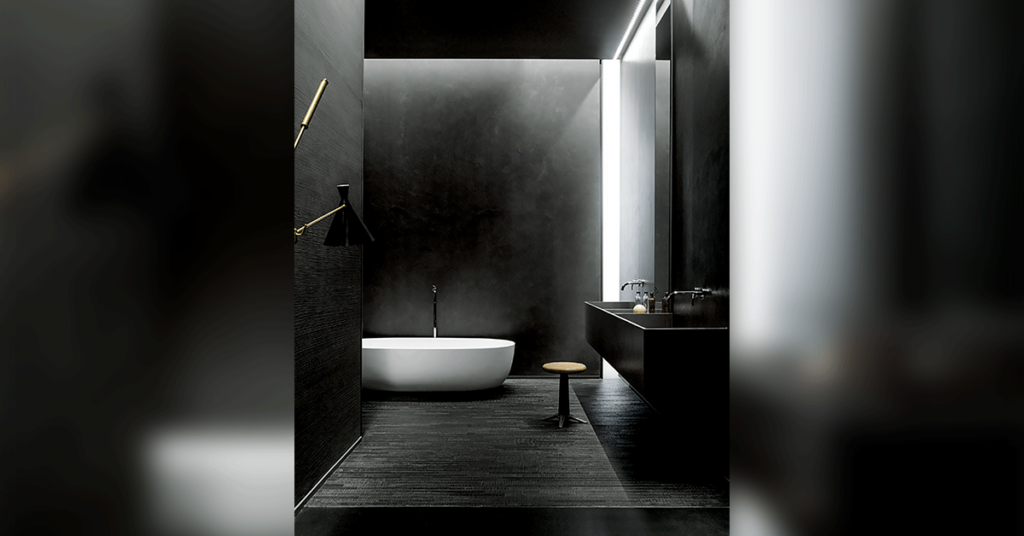
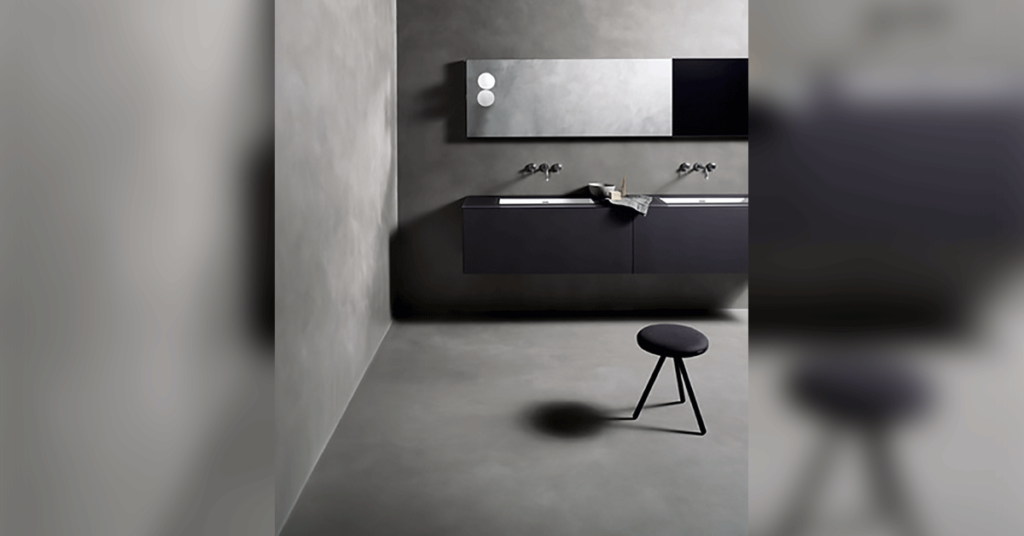
    Emilio Stecher AG has opened a new, innovative exhibition for interior design. In addition to their well-known domestic and foreign natural stones, they also show ceramic and artificial stones today. What particularly fascinates me, however, are the seamless mineral coverings, which are particularly eye-catching in the homely atmosphere with their warm colors. To show such a new product is rather unusual for a traditional natural stone company. How did that happen?

    My son Emilio junior, the fourth generation of our company, completed a stage in the construction chemicals company Kerakoll in Sassuolo, Italy. This company distinguishes itself with its Green Label especially for ecological products. Its CEO and owner in the person of Gianluca Sghedoni has already been entrepreneur of the year in Italy twice. Emilio then enthusiastically told me about “Kerakoll Design House”.

    Why did you agree to your son and turn the finished plans for your exhibition completely upside down?

    Actually, it is not a classic stone. I then drove to Modena with my project manager Luigi Gioiello, who was in charge of this exhibition, to visit this fascinating exhibition in particular. Mr. Gioiello designed the exhibition based on his vast experience, precisely with the architect's wishes, which he advises on a daily basis. The people in charge at Kerakoll explained the philosophy and the entire 10-year development period to us: The atmosphere of the Warm Collection is the result of exclusive and sophisticated research into textures, surfaces and colors in the unmistakable style of the star architect and designer Piero Lissoni. Mr Gioiello was delighted. It was the icing on the cake, which was actually still missing in his finished concept. He was happy to redraw everything and integrated this excellent product in perfect harmony with our traditional stones.

    But I also see structures and various surface treatments. How about that?

    It is correct, it is also from smooth layers like silk to irregular, naturally grained surfaces. And finally, it is also a guaranteed visual experience: from the mineral grains to the refinement of the classic "handmade" by the processor to the reaction effects of the light, which creates a fascinating and elegant atmosphere.

    Can “Kerakoll Design House” be used anywhere, in wet and dry areas for new buildings and renovations?

    It is a classic product for exclusive interior design. Since it applies 2-3.5 mm depending on the product, it is the ideal solution in the field of renovations. Existing healthy surfaces can be coated with it. Especially for buildings from the 60s or 70s, which were often equipped with panels, which were made with asbestos
    containing construction adhesives have been added, there is no need for laborious picking out and disposal with special contamination. The thin application and the subsequent seamless appearance create completely new rooms in a state-of-the-art outfit. It is ingenious that wet rooms can also be equipped. The dream of every architect to design rooms or bathrooms without joints can be realized here. "Kerakoll Design House" is a product that also integrates our natural stones and can therefore be combined in an innovative way. A new interior design style is born.

    Is the processing demanding and expensive and which craftsmen do it?

    In fact, it is not a product that is sold based on price. In general, the product is used by experienced stucco workers, plasterers or specially trained painters.

    After around four years, what kind of assessment can you draw of successfully completed properties? What do your customers, architects and users say about it? Was your concept of the integrated exhibition understood? Are the only 10 colors of the "Kerakoll Design House" sufficient for the high demands of today's discerning customers?

    We have received a very good response from our customers and visitors. Our excellent advice, which is really also competent, also contributes to this, and this is very much appreciated by the visitors. The 10 warm and appealing colors are a comprehensive design project, which can also be combined with various surface treatments. The various products such as “Cementoresina”, “Cementoex”, “Cementocrudo”, additional continuous Microresina wall surfaces, which Wallcrete, Wallpaper and Microresina Wall and, thanks to the individual handwriting of the user, have special notes, make the product never seem boring. On the contrary, the additional decorative coatings such as paint, patina, decor up to the Invisible skirting allow huge combination options, which are perfectly coordinated in the “Warm Collection” color palette. This just leads to a total work of art, which the signature of Pie-
    ro Lissoni and from the very experienced stucco
    dear Mr. Antonio Pungitore (who has many years of experience in restoration and plastering
    Work can look back) has been implemented excellently by our customers. Nevertheless, each object is individual and could always be combined to suit the customer's taste. ■

    Emilio Stecher

  • Coop verwandelt den Basler Märthof in ein Boutique-Hotel

    Coop verwandelt den Basler Märthof in ein Boutique-Hotel

    Im ersten Halbjahr 2021 soll im historischen Gebäude des Märthofs in Basel das Boutique-Hotel Märthof eröffnen. Die Eigentümerin, die Coop Immobilien AG, hat das Architekturbüro Burckhardt + Partner mit der umfassenden Renovation beauftragt. Geführt wird das Hotel nach der Eröffnung von der zu Coop gehörenden Bâle Hotelgruppe. Sie betreibt bereits die Hotels Pullman Basel Europa an der Clarastrasse sowie das Victoria am Centralbahnplatz und das Hotel Baslertor in Basel-Muttenz.

    Das Gebäude des Märthofs entstammt dem 19. Jahrhundert und bestand ursprünglich aus fünf einzelnen Häusern, die 1981 zu einem Gebäudekomplex zusammengeführt wurden. Die freiwillige Denkmalpflege Basel wehrte sich Anfang der 70er-Jahre gegen den geplanten Warenhaus-Neubau, der anstelle des alten Gebäudes vorgesehen war. Der Abbruch wurde 1976 in einer Volksabstimmung abgelehnt. Nun soll ein Hotel der oberen 4-Sterne-Kategorie entstehen, wobei die Fassade mit einem neuen Anstrich in ihrer jetzigen Form erhalten bleibt. Das Mauerwerk selber bleibt unverändert – auch die Natursteinpartien werden nur gereinigt.

    Laut Coop-Mediensprecherin Rebecca Veiga sollen im neuen Boutique-Hotel die Stilepochen der ehemals fünf bestehenden Gebäude unverkrampft und spielerisch vermischt werden. «Verspielte Motive des Neubarocks und die funktionale Gestaltung der Geschäftsfassade aus dem Jahre 1927 treffen im Inneren des Gebäudes auf die lineare 80er-Jahre-Struktur», sagt Veiga.

    Offene Übergänge und eine freundliche Atmosphäre
    Auf die insgesamt 68 geplanten Zimmer, davon acht Suiten und acht Juniorsuiten, werden Stehleuchten, Wandleuchten, Sessel und weiteres Mobiliar individuell verteilt – kein Zimmer wird exakt wie das andere aussehen. Die Zimmer erhalten unterschiedliche Farbschemen und widerspiegeln die Geschichte vom jeweiligen Gebäudeteil, in dem sie sich befinden. Die Farben sind abwechslungsreich und sollen nicht polarisieren – sodass sie das ganze Jahr hindurch auf die Gäste angenehm wirken.

    Des Weiteren sind ein Fitnessraum, eine Bibliothek, ein Res-
    taurant sowie eine Bar auf der Dachterrasse im 6. Stock mit 55 Sitzplätzen vorgesehen – und eine weitere im Erdgeschoss. Alle funktionalen Räumlichkeiten sind analog einer starken Wirbelsäule um den Erschliessungskern des Hauses angeordnet und stossen von innen nach allen drei Aussenseiten. Die Übergänge der unterschiedlichen Nutzungsflächen im Erdgeschoss sind offen gestaltet, sodass es als Fläche ohne Unterbrüche wahrgenommen wird.

    Eine helle und freundliche Atmosphäre empfängt den Gast im Standardzimmer. Der Raum wird mit Ausnahme der abgeschlossenen Dusche und einem separaten WC grosszügig offen gestaltet. Nebst der eingebauten Schrankzeile im Eingang sind alle Möbelstücke freistehend. Sanfte Rundungen gemäss dem Gesamtkonzept des Hauses werden auch im Zimmer durchdekliniert.
    Die Aussenbestuhlung und die grossen Fenster verbinden das Gebäude mit dem Marktplatz. «Die einmalige Lage und das lebendige Geschehen am Marktplatz soll nach innen spielen und umgekehrt», sagt Veiga. Das Boutique-Hotel will internationale wie auch lokale Gäste ansprechen und durch Restaurant und Bar entlang der Eisengasse als Treffpunkt für die lokale Bevölkerung und die Hotelgäste dienen. ■

  • Rental prices also rise in the Corona crisis

    Rental prices also rise in the Corona crisis

    As a result of the corona pandemic, an escape from the cities to the countryside or to rural residential areas was expected in the real estate sector because of the supposedly lower risk of infection there compared to overcrowded cities. That has not happened so far. On the contrary, according to the press release on the half-year report prepared by homegate.ch in collaboration with Zürcher Kantonalbank ( ZKB ), cities in particular continue to be very attractive.

    Throughout Switzerland, asking rents have risen by 0.4 percent since the beginning of the year. The slight downward trend of previous years has thus ended and was already broken in mid-2019. The higher rents are particularly evident in the cantons of Geneva with a plus of 4.5 percent, Jura with 1.7 and Uri with 1.5 percent. This trend can also be seen in most of the other cantons, with a few exceptions such as in the cantons of Obwalden and Nidwalden with minus 0.5 percent each, Graubünden and Basel-Land (-0.4 percent) and Ticino (-0.3 percent ). They are still suffering from the weakness in rent trends over the past few years. Vacancies are recorded in many rural cantons and municipalities.

    The half-yearly balance points to the robust rental price development in the cities of Geneva (+3.8 percent) and Zurich (+1.4 percent). This contradicts the expectations regarding the effects of the Corona crisis. However, the report points out, the rental situation could change for another reason, but one caused by Corona. The influx from abroad is likely to decrease and this can lead to downward pressure on rental prices in the case of vacancies, especially in many rental apartment projects that have been started due to the high influx of people to date.

  • Energiedienst Group remains on course for growth

    Energiedienst Group remains on course for growth

    According to a communication from Energiedienst Holding AG , the Swiss-German Energiedienst group achieved operating income of 532 million euros in the first half of 2020. In the same period of the previous year, 49 million euros less had been generated. The company attributes the growth primarily to higher prices in the sales business and increased electricity trading volumes.

    Negative effects on the capital market, however, would have reduced the operating result (EBIT) year-on-year by 1 million euros to 12 million, said Energiedienst in the press release. Adjusted for non-operating effects, however, EBIT rose by 8 million to 24 million euros. "Operationally, the Energiedienst Group is doing better in the first half of 2020 than in the same period of the previous year", Jörg Reichert, CEO of Energiedienst Holding AG, is quoted in the announcement. "But the pandemic is not leaving the Energiedienst Group unaffected." The group expects that it will not be able to achieve its originally targeted operating result of 41 million euros for the year as a whole.

    In terms of profit for the period, a year-on-year decline of 6 million to 8 million euros had to be accepted. According to the announcement, the background to this is a negative performance of the company's securities. It reduced the financial result year-on-year by 5 million euros to a loss of 3 million euros.

    "The Energiedienst Group has been one of the first integrated energy companies in Germany and Switzerland to be climate-neutral since January 2020," explains Reichert. This climate neutrality is "the foundation of their business activities", it says in the announcement. According to her, the group was able to win several large business customers in the six months under review “thanks to its climate neutrality”.

  • Calatrava embellishes Chicago with a new sculpture

    Calatrava embellishes Chicago with a new sculpture

    The Zurich architect Santiago Calatrava, who comes from Valencia, Spain, designed an idiosyncratic sculpture for the park in front of the River Point building in Chicago. It is a 8.8 meter high red leaf formation. "The outwardly extending spiral made of overlapping, leaf-like elements winds in a spiral from very large at the base to very small to the outer edge of the sculpture," says the media release .

    River Point is a 52-story building that contains offices, but also a convention center and the shopping malls often found in American skyscrapers. It stands in the park of the same name on the banks of the Chicago River and belongs to the companies Ivanhoé Cambridge, Hines and Levy Family Partners. The huge work of art will be installed in the coming weeks.

    “I feel honored that my work was chosen to be integrated into the cityscape of Chicago, a city that looks back on an impressive tradition of urban art and architecture,” Calatrava is quoted as saying, and photos can be seen on his website . The international architect, whose company Santiago Calatrava GmbH is based in Zurich, is known for many unique buildings and structures, such as the Milwaukee Museum of Art, the so-called Oculus Station of the Century in New York City and the Peace Bridge in Calgary, Canada.

    "This downright spectacular new addition to the fascinating and renowned public works of art at River Point Park is another example of how unbelievably special this office building really is with its first-class furnishings and extensive offerings for the city, its residents and our tenants," says Jonathan Pearce, Vice President of Ivanhoé Cambridge.

  • PriceHubble takes over Checkmyplace

    PriceHubble takes over Checkmyplace

    PriceHubble takes over 100 percent of the shares in Checkmyplace GmbH , according to a media release . According to co-founder Markus Stadler, the company wants to strengthen its position in the German-speaking area. "We can now also offer multinational real estate companies in the DACH region additional added value," he says.

    PriceHubble makes it possible to gain useful knowledge for the valuation of real estate from large amounts of data. For example, it includes data on the location, the neighborhood or noise pollution in the assessment. The data is evaluated and clearly presented with the help of big data analytics and artificial intelligence. PriceHubble is aimed at all parties in the real estate value chain, such as real estate portals, banks, asset managers, insurance companies, real estate investors and private individuals.

    Checkmyplace delivers services and products based on various data and supports professional users in the real estate industry in working more efficiently. After completion of the takeover, the company will appear under the name PriceHubble Austria.

    PriceHubble was founded in 2016. The Zurich-based company already has locations in Paris, Berlin and now also in Vienna. As a result of the takeover, over 70 employees work for the company.

  • E-mobility is one of the Swiss winners from the crisis

    Despite the Corona crisis, a total of 17 percent more electric vehicles hit the streets in Switzerland in the second quarter of the year than in the same quarter of the previous year. The plug-in hybrids recorded massive growth of 186 percent. In contrast, new registrations of all-electric cars fell by 12 percent. These are the main results of the current edition of the " E-Mobility Sales Review Q3 2020 " from PwC Autofacts and the strategy consultancy from PwC , Strategy & .

    "During the crisis, the development of e-mobility proves that the path towards a strategically important market segment is not only being pursued, but is even being accelerated," comments Andreas Schlegel, automotive expert and director at Strategy & Switzerland . "With this tailwind, the charging infrastructure in Switzerland in particular should now be further expanded."

    The current strong growth in plug-in hybrids could be an indication that Swiss consumers are not yet completely convinced of the practicality and range of pure e-cars, according to a media release . At the same time, it is now important for manufacturers to advance the technical development of batteries and thus create additional arguments for e-mobility.

    In the same period, conventional drive technologies with diesel and gasoline recorded a significant drop in sales of 57.9 percent in Europe. In contrast, the European mobility segment remained comparatively unaffected by the lockdown measures: In the first half of the year, the number of newly registered e-vehicles in the ten markets examined rose by 25.6 percent. Plug-in hybrids saw a strong increase of 121 percent in new registrations. Across Europe, all-electric cars experienced an increase of 35 percent.

    According to Schlegel, electric vehicles have proven to be an "island of stability" during the crisis. “Whether this trend is sustainable will only be shown when government subsidies expire.” Now retailers have to react and approach customers in a fundamentally different way than in traditional sales with combustion engines. mm

  • Graubünden luxury residences should be vacant less often

    Graubünden luxury residences should be vacant less often

    The University of Applied Sciences of Graubünden has examined how the added value of luxury residences that are often vacant can be improved. In this context, the Institute for Tourism and Leisure ( ITF ) investigated the question of how their owners can become convinced renters. In Graubünden they have been “neglected”, writes the FH in a press release . However, because the trend is moving from overnight stays in a hotel to one's own holiday home, this clientele should not be neglected.

    However, the existing data is too thin for a needs analysis. Therefore, in their study, the researchers examined the willingness to rent similar prestige properties. In the global yacht charter market, they identified high administrative hurdles as well as psychological motives as an obstacle to renting out. These include encroachments on privacy and limited flexibility in personal use.

    The most important finding from this needs analysis, however, is "that both the rental of superyachts and luxury residences are a matter of trust". So that the potential of the often vacant luxury properties in the high-priced Alpine destinations can be used, "all tasks that arise must be managed by a coordinator role". It is your job to guarantee that all service participants work together as smoothly as possible. “The rest then comes naturally, because satisfied landlords generate satisfied tenants,” says the message.

  • Axpo President calls for a sliding market premium

    Axpo President calls for a sliding market premium

    In a joint guest commentary for the “Tages-Anzeiger”, two leading representatives of the Swiss energy industry take a hard line against the Federal Council's plans to implement the Energy Strategy 2050. “Switzerland has the wrong instruments for promoting renewable energies. We have a suggestion on how this can be changed, ”write Thomas Sieber, Chairman of the Board of Directors of the energy company Axpo , and Gianni Operto, President of AEE Suisse , the umbrella organization for renewable energies and energy efficiency.

    The proposal can be summarized in two words: Moving market premium. The Federal Council proposes a model with investment contributions for the energy law revision. The amounts are fixed in advance. From the authors' point of view, the problem is that it will hardly be possible to determine the most economically efficient contribution amount. Either there is unnecessary over-funding or too little funds are budgeted, which leads to the shutdown of plants that are no longer profitable. The sliding market premium, for which a “broad alliance of the Swiss energy industry” advocates, is already being used successfully in other countries. Production capacities would be put out to tender in a competition. "Those interested with the lowest offers are guaranteed a minimum remuneration for the electricity produced over a certain period of time – but only if the market price does not cover this." The sliding market premium supports precisely and only as much as necessary. It is therefore not a subsidy, but a fair price tag for a central service.

    Since the expansion of renewable capacities in Switzerland is currently not profitable for electricity suppliers, Swiss energy suppliers and institutional investors invested abroad. At the end of 2019, the expansion of renewable capacities financed in this way had increased to 11.5 terawatt hours, almost a fifth of the total annual production in Switzerland.

  • Administrative court slows down the innovation park

    Administrative court slows down the innovation park

    The cantonal administrative court is withdrawing the legal basis for the planned construction of the Zurich Innovation Park. As the court wrote in a statement on Tuesday, with a ruling on July 8th, it revoked the cantonal building department's ruling on the cantonal design plan for the innovation park.

    Such a design plan is only possible for specific individual buildings or individual systems. The design plan for the innovation park with its perimeter of 36 hectares and a total usable area of up to 410,000 square meters does not fall below that. The “special purpose of promoting innovation” does not change anything. "Due to its dimensions and the intended uses, the design plan does not create a project-related, but a general construction zone," says the message.

    The canton has thus exceeded its competencies: Only the municipalities are responsible for defining general building zones. “That is why the cantonal design plan is not available for the intended planning.” In addition, the judges believe that the design plan violates the cantonal framework plan because most of the site is in the cantonal agricultural zone.

    The building management set the design plan on August 9, 2017. Two residents appealed to the cantonal building course court, but were rejected. Its decision is now also overturned by the administrative court. An appeal can now be made to the Federal Supreme Court against the judgment of the Administrative Court.

    The idea of an innovation park in Zurich on the site of the Dübendorf military airfield was the inspiration behind the creation of the Switzerland Innovation Parks . While such parks in Aargau, in the greater Basel area, in Biel, in western and central Switzerland are already making good progress, the idea generator is now in danger of failing. The Zurich government had already applied for a loan of CHF 217.6 million in 2018 for the construction, development and support of the innovation park in Dübendorf.

  • Reconstruction displaces new construction

    Reconstruction displaces new construction

    Overall, the construction industry barely moved in 2019. According to the provisional figures from the Federal Statistical Office ( BFS ), an increase in construction investments in civil engineering of 3.9 percent offset a decline in building construction of 0.9 percent.

    There was a change from new buildings to renovations and expansions. Investments in new civil engineering buildings fell by 6.9 percent, while investments in conversions and expansions rose by 13.2 percent. In building construction, too, investments in renovations and extensions rose by 1.6 percent, while investments in new buildings fell by 2.0 percent.

    This switch to renovations was particularly pronounced among public clients: Last year they invested 8.8 percent more in renovations and extensions and 7.2 percent less in new buildings. Private clients invested 2.2 percent more in conversions and expansions than in 2018, but 1.4 percent less in new buildings.

  • Canton Police of St.Gallen runs on hydrogen

    Canton Police of St.Gallen runs on hydrogen

    "Ecological and sustainable action by the organizations has long since ceased to be desirable, but is expected," said the St.Gallen cantonal police in introducing a report on the authority's latest achievement. Specifically, the canton police now want to meet their responsibility for the environment by using a hydrogen car. So far, a total of 20 electric vehicles have been used by the St.Gallen canton police.

    The new Hyundai Nexo, like electric cars, does not emit any harmful emissions, the press release said. Fast refueling and a range of 600 kilometers per tank are named as further advantages of the hydrogen car.

    However, there are currently hardly any hydrogen filling stations in the region, explains the canton police. She identified Osterwalder St.Gallen AG as currently the only operator of a hydrogen filling station in Eastern Switzerland. The newly acquired Hyundai Nexo is therefore to be assigned to the traffic instruction stationed in St.Gallen.

  • Axpo places green bond via Loanboox

    Axpo places green bond via Loanboox

    Axpo has placed a so-called green bond via the digital capital market platform of the Zurich fintech Loanboox , according to a media release . The fixed-interest bond of CHF 133 million has a term of seven years.

    Axpo intends to use the net proceeds from the bond to invest in renewable energies. The company highlights wind energy and photovoltaic projects. Overall, Axpo wants to use the Green Bond to “strengthen its position as the largest Swiss producer of renewable energies” and expand its group of investors, it is said.

    According to Loanboox, Axpo is the first issuer to place a green bond entirely digitally via the debt capital market platform. "This first bond is proof that our digital process creates added value for all market participants," says Philippe Cayrol, CEO of Loanboox. "We are proud and happy to work with innovative customers and partners to create new standards in terms of transparency, pricing and allocation in the primary market – in Switzerland and Europe," he adds.

  • Virtual real estate fair Home-E-Fair starts

    Virtual real estate fair Home-E-Fair starts

    The idea for the Home-E-Fair was born out of necessity, according to a media release. Because the real estate trade fair season has so far completely fallen into the water due to the Covid 19 crisis. Georges Luks, CEO and Delegate of the Board of Directors of Zurich Sotheby's International Realty , explains how the idea came about to replace trade fairs with a physical presence with a virtual one: “In the home office, it became clear to us that such a trade fair could actually be virtual without any problems can take place. With Crowdhouse we were able to set up this pilot project in a short time. We believe that this model will also be relevant in the future and are motivated to set up further virtual trade fairs on an even larger scale. "

    At the five-day virtual trade fair from July 22nd, interested parties can log into the trade fair platform from home, study real estate offers, and exchange ideas with consultants via live or video chat. In addition, as at every real estate fair, a number of roundtables and lectures are offered.

    At the fair, the partners Zurich Sotheby's International Realty and Crowdhouse complement each other in real estate, from condominiums to multi-family houses, in which Crowdhouse specializes. Ardian Gjeloshi, founder and Chairman of the Board of Directors of Crowdhouse: "Both Zurich Sotheby's International Realty and Crowdhouse speak to the same target group – but from different perspectives: living and investing."

  • ABB Switzerland modernizes SBB locomotives

    ABB Switzerland modernizes SBB locomotives

    As part of the new order, 18 SBB locomotives of the latest generation will be modernized with traction converters from ABB, according to a press release. The Zurich-based and internationally active technology group has its Swiss headquarters in Baden and manufactures traction converters in its plant in Turgi AG. In 2014, ABB received an order from SBB to modernize locomotives with traction converters. With the follow-up order now received, ABB will modernize the entire Re 460 fleet. These are the locomotives of most intercity trains.

    SBB is implementing a modernization program for the fleet, which will extend its service life by 20 years. The new traction converters and additional technical measures can save around 30 gigawatt hours of energy annually, "that's five gigawatt hours more than originally expected," says ABB. According to the report, these energy savings correspond to the “average electricity consumption of 10,000 Swiss households”. For this purpose, the power electronics based on the technology of the 90s are being replaced by energy-efficient, water-cooled IGBT traction converters (insulated-gate bipolar transistor). This retrofit and cooling systems operated with water instead of oil can reduce energy consumption.

    "We are pleased that we are a partner in this major modernization project in the Swiss home market with our drive solution and that we are working closely with SBB to ensure that the vehicles continue to be operated in an energy-efficient manner," said Robert Itschner, Country Managing Director at ABB Switzerland.

  • UBS and iptiQ launch new insurance

    UBS and iptiQ launch new insurance

    UBS joins forces with iptiQ , a subsidiary of reinsurer Swiss Re . Together they are testing a new insurance solution specially designed for UBS's mortgage customers in Switzerland. The offer is accessible via the iptiQ digital platform, according to a communication . Initially, it will be tested for around six months from July 15. Then it should be optimized based on feedback.

    "Protecting yourself against unforeseen events is of central importance for every homeowner," says UBS Switzerland boss Axel Lehmann. "We are pleased to be able to offer our mortgage customers, in cooperation with the Swiss Re subsidiary iptiQ, an innovative offer with which they can cover personal risks quickly and easily."

    Cooperations between banks and insurance companies are already successful in many countries, UBS states in its announcement. In Switzerland, the bank still sees untapped potential in this area.

  • Swiss Prime Site Solutions is developing a new quarter

    Swiss Prime Site Solutions is developing a new quarter

    Swiss Prime Site Solutions is developing a new “living space” for the Swiss Prime Investment Foundation, as stated in a press release by Swiss Prime Site Solutions . The foundation stone for the Riverside project was laid on July 10, 2020. The development is under the motto "Urban living – surrounded by nature". Construction work will begin in the northwest, where the area is located directly on the Aare and closest to the city of Solothurn. From there, the new quarter will develop in further construction stages to the south and east.

    "Anyone who lives and works in the Riverside has, in addition to a chic apartment or a modern workplace with modern infrastructure, a multi-faceted quarter including local recreation on the Aare that meets the highest demands," explains Anastasius Tschopp, CEO of Swiss Prime Site Solutions. He speaks of a "lighthouse project for our client Swiss Prime Investment Foundation (SPA) and at the same time important for the entire Solothurn region".

    Initially, 140 rental apartments are to be built directly on the banks of the Aare. The first tenants should be able to move in in winter 2021. More than 280 Swiss pension funds are both financiers and investors in the SPA. "We are currently carrying out the sixth emission for the SPA," said Tschopp. The subscription period lasts until July 22, 2020. The development program of the customer SPA currently amounts to around CHF 600 million and includes projects and real estate across Switzerland.

  • Porta Samedan is built with recycled building material

    Porta Samedan is built with recycled building material

    The new Porta Samedan shopping center is being realized by Migros Ostschweiz and Pfister Immobilien AG . During these days, the concreting of the floors of the new building is taking place, according to a media release . When it comes to building materials, the partners rely on the circular economy. Recycled products are used for both concrete and cement.

    The one main component in concrete is cement. This comes by train from the Holcim plant in Untervaz GR to the Upper Engadin, where Montebello produces the recycled concrete on site. The Holcim product Susteno is used. According to the information, this is the only resource-saving cement in Europe in which the fine proportion of mixed granulate from demolished buildings is used as an additive, which cannot be used in concrete production. Holcim can completely close the building material cycle with Susteno, as this material would otherwise have to be dumped.

    The other main component in concrete are the aggregates. "Here we rely on recycling: instead of natural gravel, we use demolition material from the region," explains Flurin Wieser from the Engadin construction company Montebello.

    "The Porta Samedan development shows that the building materials industry, with innovative products and solutions, is playing an increasingly important role in the transition to the circular economy and is making a significant contribution to a sustainably built future," said Philippe Rey, Head of Cement Sales German-speaking Switzerland at Holcim Switzerland.

    Porta Samedan is scheduled for completion in 2021. Among other things, it will house the first Migros supermarket in the Engadine.

  • Pandemic slows the housing market

    Pandemic slows the housing market

    The coronavirus pandemic has left its first traces on the housing market, writes SVIT Switzerland in a message on the current online housing index ( OWI ). It is determined every six months by the Association of the Real Estate Industry in cooperation with the Zurich School of Economics ( HWZ ).

    According to the current OWI, the number of advertisements for rental apartments placed on Swiss real estate marketplaces increased by 4 percent year-on-year to around 380,000 rental apartments between April 2019 and March 2020. A simultaneous decrease in the number of days on the market indicates a further increase in demand for rental apartments, explains SVIT.

    However, the lockdown officially ordered in March to contain the coronavirus pandemic led to a 31 percent decline in the number of advertisements across Switzerland compared to the first half of March, SVIT further informs in the press release. “Despite this massive drop in supply”, the time on the market only fell by just under 5 days or 12 percent. This means that "the demand has also decreased by more than a third," writes SVIT.

    In the twelve largest cities in Switzerland, the decline was "even more striking", explains the real estate industry association. In Lugano, the number of advertisements fell by 75 percent in the reporting period, while in Bern, Zurich and Winterthur there were 40 percent fewer advertisements than in the first half of March. A simultaneous only below average decrease in the time on the market shows that “the demand has collapsed even more or has come to a complete standstill,” writes SVIT. The association assumes that there could possibly be a catch-up effect in the second half of this year.

  • Solar offensive should create thousands of jobs

    Solar offensive should create thousands of jobs

    Many jobs have already been destroyed throughout Switzerland by the Corona crisis, others are in danger. The Swiss Energy Foundation ( SES ) sees the increased use of renewable energies, especially solar power, as a means of counteracting this. The SES has commissioned a study on this at the Zurich University of Applied Sciences ( ZHAW ) in Wädenswil ZH. According to the press release on this, a “courageous solar offensive” can create thousands of new jobs in a short period of time. Jürg Rohrer, author of the study and head of the Renewable Energy Research Group at the ZHAW, states: "If we equip the most easily usable areas with solar systems, we need around 14,000 additional jobs." A total of 12,000 of them would be in the Installation of photovoltaic systems, which employees can carry out after only a short training period. In 2000, specialist planners required more specialist knowledge, for which, depending on their previous education, they would need around six months of further training.

    The package of measures of the Energy Strategy 2050, which was adopted in a referendum in May 2017, provides for more energy efficiency and renewable energies to be used in the future energy supply. However, the implementation has so far only got off to a slow start. The SES proposal, which should also be included in the consultation on the revision of the Energy Act, should help to compensate for this deficit. Felix Nipkow, Head of Renewable Energies at SES, mentions a threefold benefit of the initiative: “Investing in solar energy now helps to achieve the climate goals, creates new jobs and strengthens the security of supply in the electricity sector.” The new Energy Act will only be able to come into force in a few years. A solar offensive would trigger investments today and create new jobs quickly. In this way, photovoltaics will become a job engine.

  • Hans Eberle AG produces its own green electricity

    Hans Eberle AG produces its own green electricity

    Around 10 percent of the electricity consumption of the metal goods factory Hans Eberle AG has come from in-house production since this summer. According to the company's media release, the heating, cooling, ventilation and lighting of the new company building, which was also completed this summer, are powered by clean energy from the newly installed hydropower screw in Ortsbach. The Francis turbine that was used earlier "got out" in 2014 after more than 100 years of operation, as the company reports. With this investment, Hans Eberle AG wants to underline its commitment to the sustainable use of resources and make a contribution to climate protection.

    Hans Eberle AG, together with other members of the cooperative, uses the Ennendaner Ortsbach to produce its own electricity. The water is led from the Linth into the Ortsbach and has a constant flow of three cubic meters of water per second, which is quite sufficient for electricity production. The use of water power from the Ortsbach has a long tradition in Ennenda; it used to be used in the textile industry for weaving fabrics.

  • RVBW plans to use four e-buses

    RVBW plans to use four e-buses

    Four electric buses will be operating on RVBW Line 5 from March 2021. They will transport passengers between Baldegg via Baden train station to Ennetbaden. The new buses are equipped with innovative technology from ABB Switzerland. The canton of Aargau announced this in a media release as the customer for the public transport services.

    The project will be carried out in close cooperation with ABB. The Federal Office of Energy has classified it as a flagship project worth supporting. The drive technology is developed at the ABB site in Turgi. The charging station is also from ABB. The batteries are produced in Baden.

    A charging station will be installed at each of the two terminal stops. There buses can be charged in up to six minutes. The canton is contributing almost 1.5 million francs to the investment costs for the charging infrastructure.

    RVBW line 8 between Neuenhof and Wettingen has been operated with an electric bus on a trial basis for two years since mid-December 2019. On these two lines, the RVBW wants to gain initial operational experience with the use of e-buses. In the future, RVBW intends to operate all city bus routes electrically. The switch from internal combustion to electric motors is to take place gradually.

  • Swiss Life takes over Glattzentrum

    Swiss Life takes over Glattzentrum

    As part of the focus on the company's core areas, Migros is giving up real estate management. The association has now sold its Glatt shopping center in Wallisellen to Swiss Life . The buyer will take over the Glattzentrum “as part of its asset management activities for third-party customers”, explains Migros in a corresponding communication . According to her, the partners have agreed not to disclose the purchase price.

    Swiss Life will take over the shopping center with unchanged rental contracts and will continue to develop it in the long term, the announcement further explains. The Glattzentrum is "one of the pioneers in Switzerland when it comes to the combination of shopping, adventure and meeting point," Stefan Mächler, Head of Investments at Swiss Life, is quoted there as saying. "We want to strengthen this market position in the future and we are convinced that the Glattzentrum is a very attractive investment property in the medium to long term." The Migros stores located in the Glattzentrum are to be continued unchanged and with long-term rental agreements.

  • Canton Schaffhausen wants to use the Rhine power station itself from 2030

    Canton Schaffhausen wants to use the Rhine power station itself from 2030

    The canton of Schaffhausen wants to take over the Rhine power station near Neuhausen itself in ten years. The concession for the power plant, which was built in 1948 and commissioned in 1950, expires at the end of 2030. Rheinkraftwerk Neuhausen AG (RKN) has applied for the extension of the water rights concession granted 80 years ago by the cantons of Schaffhausen and Zurich. However, the Schaffhausen government council, in coordination with the canton of Zurich, does not want to extend this, but rather declare the so-called reversal for the plant at the Rhine Falls and take over the plant itself. According to the canton's media release , this must be communicated to the previous operator ten years in advance, specifically by December 27, 2020.

    District President and Energy Director Martin Kessler explains the procedure: “At the end of the concession, the canton will have the unique opportunity to take over the power plant. The economic and energy-political potential of the power plant is very interesting for the canton of Schaffhausen and offers considerable opportunities. Incidentally, the continuation of the hydropower plant corresponds to the energy strategy of the federal government and the canton and also makes sense from a climate policy perspective. "

    This means that the added value resulting from the power plant remains in the canton. The RKN currently uses 29.9 cubic meters per second and produces around 45 gigawatt hours of energy per year. The energy production costs are extremely cheap at 2.9 cents.

  • Swarm should enable intelligent charging stations

    Swarm should enable intelligent charging stations

    With Pico, the company smart-me has developed a new charging station for electric vehicles. This connects to the cloud via the local WLAN or cellular network. This makes the station intelligent and can, for example, easily be coupled with a solar system, as a message shows. The operator can decide for himself when and at what price vehicles can be charged at the station.

    Overall, Pico should make the installation of charging stations more attractive. As a result, previously undeveloped areas should also receive a charging infrastructure. In addition, electric cars are good buyers of locally produced solar power, emphasizes smart-me.

    To finance the mass production of the charging station, smart-me started a swarm financing campaign on Kickstarter on July 8th. The company wants to collect over 50,000 francs.

  • Griesser is the darling of architects

    Griesser is the darling of architects

    Griesser AG received the Architect's Darling award in the sun and weather protection category. As can be seen from a press release by the company from the St.GallenbodenseeArea, it has won the golden phoenix for the second time. In 2018, too, she was victorious in the first prize awarded at the time.

    "The award is confirmation that we are convincing on the market with our products and services," said Urs Neuhauser, CEO of Griesser AG, in the announcement. "We owe the excellent assessment of the architects and planners primarily to our customers, whose projects we have grown to, and to our around 1,300 employees who work daily for the quality of our products and our innovative strength."

    More than 400 architects and planners from Switzerland were interviewed for the award of the Architect's Darling Prize. For the determination of the winners in several categories, the aspects of product selection, price-performance ratio, product quality, innovation and optics or design were decisive, as Griesser informs. The Swiss construction documentation is an information platform for construction products, architecture projects and expert profiles.

  • BaselArea cantons submit a joint economic report

    BaselArea cantons submit a joint economic report

    Successful business needs good framework conditions. This is not only the case at the moment in the three cantons of the BaselArea. “They will continue to develop their strength in the future,” says the media release on the joint report by Basel-Stadt, Basel-Landschaft and the Jura. The report gives an optimistic view of the future of the changes that have also been triggered by the effects of the Corona crisis and lockdown, failure and future redesign of the international division of labor and delivery routes. The regional economy has repeatedly shown in the past that it is able to react to change and develop positively.

    The three cantons have been working closely together on economic policy for years. It was therefore only natural for the governments to prepare a joint economic report. This is now happening for the first time. Basel-Stadt and Basel-Landschaft published the last economic report in 2016.

    On the basis of this analysis, future opportunities and challenges were developed and named. Above all, they want to work together on state innovation funding and location promotion. This means that more can be achieved than with the previous individual activities of each canton.

    The Basel Area Business & Innovation association is at the center of the future coordinated approach. It is already financially supported jointly by the three cantons. With the range of services offered by Basel Area and the Switzerland Innovation Park Basel Area (SIP), the region wants to create an attractive environment for companies, research and innovation in which research and development, service providers and investors find the prerequisites for international communication and marketing.

    The second additional report analyzes the effects of COVID-19 on the business location Basel-Stadt.

  • Electric vehicles are good for Zurich

    Electric vehicles are good for Zurich

    A study commissioned by the canton and the city of Zurich compared the overall eco-balances of various vehicles and drive types. The results show that battery-powered vehicles generally enable a significant reduction in greenhouse gas emissions per kilometer, provided they are fueled with low-CO2 electricity. However, electric vehicles are not yet perfect either. Their manufacture, for example, causes particulate matter emissions outside of Switzerland in particular.

    As part of the study, the Zurich Mobility Environment Index (ZMU) was created, which weights the environmental indicators specifically for Zurich. The results of the ZMU show that the overall environmental pollution in urban areas can be reduced most effectively with battery electric vehicles.

    The results are intended to form a basis for decision-making in the vehicle policy of the city and canton of Zurich. According to the information, the city council wants a consistent conversion of the vehicle fleet to alternative drives. This change is already under way. For example, ERZ Disposal + Recycling Zurich has been using electric delivery vans to empty waste bins on public land since July 2019. In April 2020, ERZ also put the first electrically powered waste collection vehicle into operation.

  • Implenia hands over new campus to ZHAW Gesundheit

    Implenia hands over new campus to ZHAW Gesundheit

    The ten-year project for the conception, development and construction of the new campus for the Department of Health at the Zurich University of Applied Sciences ( ZHAW ) was completed on schedule on July 1st and is now ready for occupancy. Developer and general contractor Implenia has handed the new building over to the owner SISKA Immobilien AG. As the tenant of the house on Katharina-Sulzer-Platz in Winterthur, the ZHAW can now prepare the building, which Implenia has built in accordance with the Minergie standard, with a rental area of around 19,200 square meters for teaching and research.

    The facility will remain closed to the public until the end of July 2020. The "Haus Adeline Favre", named after a midwife from the Val d'Anniviers, will accommodate over 2000 students and around 300 employees from August. The largest Swiss education and research center for occupational and physiotherapy, midwives and nursing will open its doors with an official ceremony on August 28, 2020. An open day will take place on September 26, 2020.

    According to the media release , the building was designed by pool architects from Zurich. The area of the property was completely built over, there are six above and two underground floors with classrooms and practice rooms, employee offices, an outpatient clinic and simulation center as well as a cafeteria. Adrian Wyss, Head of Development Division at Implenia: “At the Adeline Favre house, Implenia successfully brought together its specialists from various disciplines, especially from the Development and Buildings Divisions, and the group's integrated business model was fully implemented. The clear ideas of the tenant Canton of Zurich and the good cooperation between the teams and the authorities also made the project a success. "