Author: immovestuser

  • Canton of Bern plans major construction in the Bernese Seeland

    Canton of Bern plans major construction in the Bernese Seeland

    The Road Traffic and Navigation Office has had its headquarters on Schermenweg in Bern for decades. The buildings there have structural defects and are in a condition that makes it impossible to completely renovate them without interrupting operations. In addition, there is a second location in Ostermundigen, where the canton pays over one million francs a year in rent.

    Move three times or build once
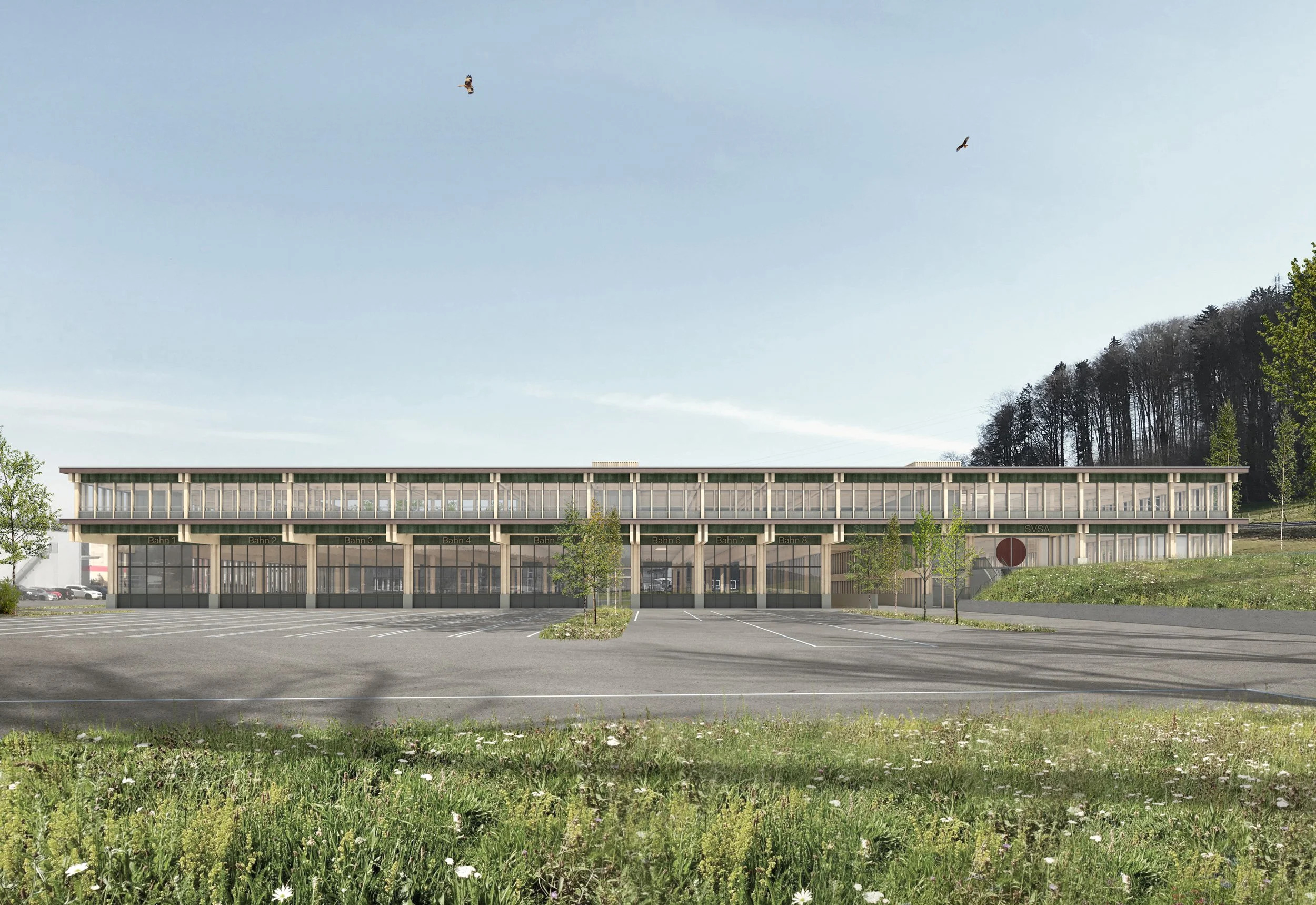
    The decision was made in favor of a new building. All three locations will be closed and the approximately 400 employees brought together in a single location. The new building on the Buechlimatt in Münchenbuchsee offers space for offices, test centers and the entire customer operations on one site. Vehicle registrations, driving tests, administrative processes: everything under one roof for the first time in decades.

    One competition, one winner, one timber construction
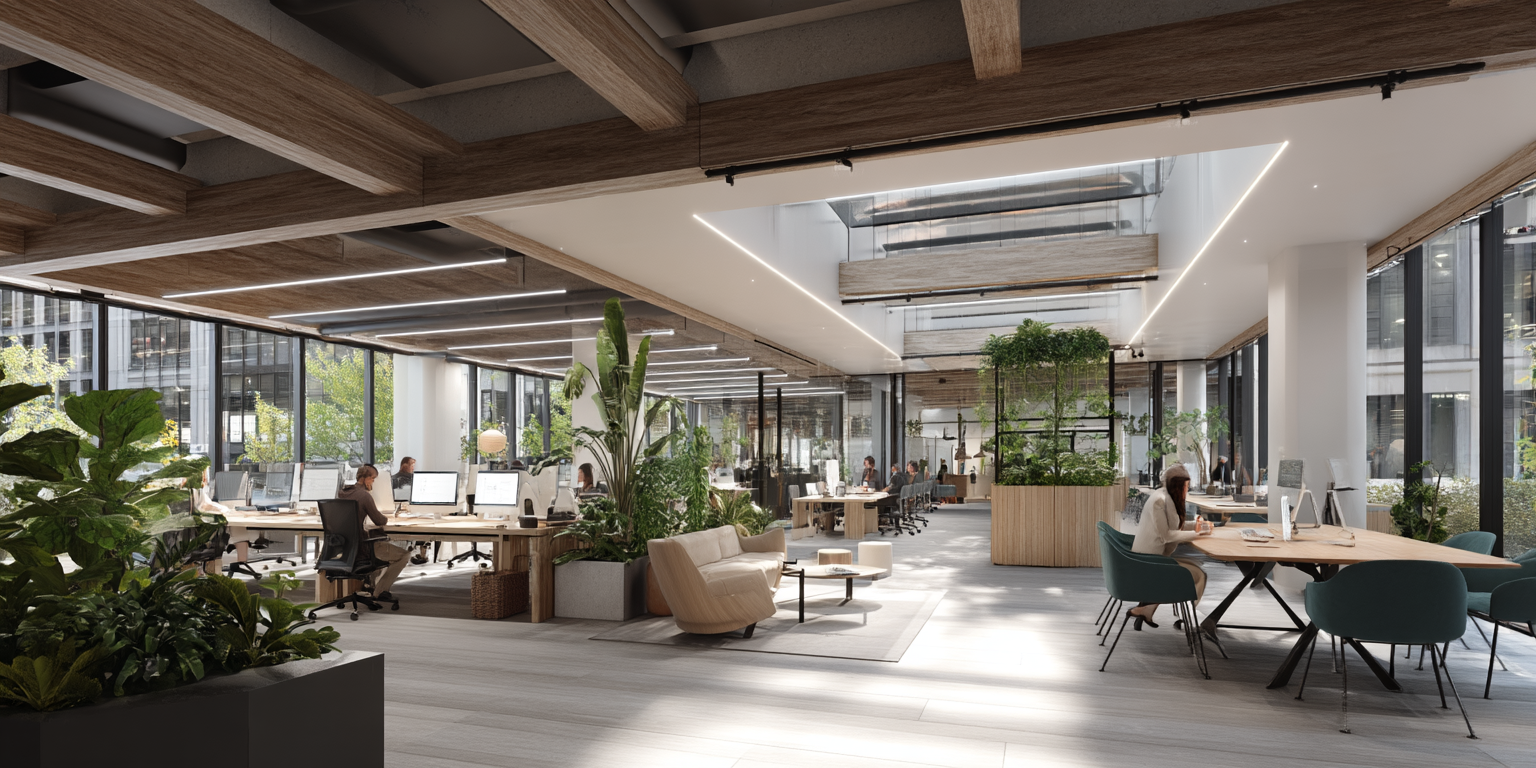
    in 2021, the canton announced an open project competition. Thirty teams submitted designs, and the Zurich planning team from Studiomori Architektur and KNTXT Architekten won over the jury. Their project bears the programmatic name “One for all”. It is based on a low-maintenance timber construction that blends organically into the rural outskirts of Münchenbuchsee. Not a statement made of concrete and glass, but a building that makes the Canton of Bern’s climate strategy visible. Wood as a building material reduces the CO2 balance over the entire life cycle.

    The politicians decide
    In April 2026, the Bernese government applied to the Grand Council for a commitment credit of 132.9 million francs. The latter is expected to make its decision in autumn 2026. The fact that the amount has risen from around CHF 104 million at the time to CHF 132.9 million since the 2021 competition phase is likely to raise questions in parliament. Construction costs and increased planning requirements are the main reasons. If you offset the rental costs and the renovation backlog, the business case for the new building is clear.

    Move in 2031 at the earliest
    If the parliamentary deliberations go according to plan, the building application will be submitted in mid-2026 and construction will begin in 2028, with commissioning planned for 2030 to 2031. For Münchenbuchsee, this means a new workplace center with several hundred employees on the edge of the village. For the canton of Bern, it means the end of a long period of administrative restructuring. And for the Swiss construction industry, the project exemplifies a trend that will gain momentum in 2026. Public buildings made of wood, built for the next generation.

  • 11. May on which Switzerland crosses its borders

    11. May on which Switzerland crosses its borders

    Since the ecological footprint was first recorded in 1961, Switzerland’s Overshoot Day has moved forward by more than seven months, from the end of December to mid-May. If the entire world population lived like Switzerland, it would need the resources of 2.8 Earths in 2026. Switzerland’s ecological footprint is 4.15 global hectares per person, while the available biocapacity is just 1.48 hectares. The gap is growing.

    Housing as an underestimated driver
    Housing is one of the strongest drivers of the Swiss overshoot, alongside mobility, food and imported goods. Between 1990 and 2021, living space in Switzerland increased by 54%, while the population only grew by 31%. Individual changes in behavior can only achieve around 20 percent of the savings. The big levers lie elsewhere.

    Buildings as raw material stores
    The building sector is responsible for over 40 percent of global greenhouse gas emissions. In addition to the operating energy for heating, cooling and electricity, it is primarily gray energy that determines how large a building’s footprint really is. It includes all energy from the extraction of raw materials to processing and dismantling. As long as demolition is cheaper than recycling, the potential of the circular economy remains untapped.

    Regulation is tightening
    The legal framework is tightening. The Climate and Innovation Act has been in force since January 2025 and creates incentives for the replacement of fossil heating systems and energy efficiency measures. The MuKEn 2025, adopted in August 2025, define limit values for gray energy in new buildings for the first time and increase the requirements for photovoltaics and renewable heating systems. However, they will only become binding once the cantons incorporate them into their energy laws.

    System change instead of symbolic policy
    The message of Overshoot Day is clear: small adjustments are not enough. Scalable solutions are needed in energy, mobility, materials management and site development. As a cross-sector industry, the construction and real estate sector can have an impact in all of these areas if data is recorded precisely, materials are documented and circular processes are standardized. Buildings as raw material stores instead of landfill suppliers – that is the direction.

  • Swiss wood to become mandatory

    Swiss wood to become mandatory

    Swiss forests produce 10.4 million cubic meters of wood every year, of which just 5 million is consumed. However, a total of 10 million cubic meters of wood ends up on Swiss construction sites. The rest comes from abroad because it is much cheaper. A resource potential that is lying idle, although the demand is there.

    What the National Council is calling for
    National Councillor Daniel Ruch (FDP/VD), a forestry contractor from Vaud by profession, has submitted a motion to amend the Forest Act. In future, Swiss wood should be used in buildings that are subsidized with federal funds, without incurring additional costs for the building owners. The National Council has accepted the motion, now the ball is in the Council of States’ court.

    The Federal Council puts the brakes on
    Federal Councillor Martin Pfister, who represented the convalescing Environment Minister Albert Rösti in the debate, opposed direct subsidies. The federal government already promotes sustainable wood in its own buildings and facilities. There has been a legal basis for this since the 2017 revision of the Forest Act, and there is no scope for new subsidies in view of the tight federal finances, and distortions of competition should be avoided.

    Not a new topic, but new pressure
    Back in 2021, the National Council adopted a similar motion on the complete value chain of the timber industry by 151 votes to 29, also against the will of the Federal Council. Individual cantons such as Thurgau and Zug have already integrated wood promotion into their legislation at cantonal level. The pressure to act is growing.

    What is at stake
    Wood is the only completely renewable building material in Switzerland. Those who use it consistently strengthen regional value creation, reduce transport emissions and protect the forest from ageing. Whether the Council of States supports the motion or puts the brakes on it will determine whether this logic is finally enshrined in law.

  • Electric bus marks a new chapter in regional transport

    Electric bus marks a new chapter in regional transport

    STI Bus AG, based in Thun, has put its first electric bus into service. According to a press release, it has been operating in Grindelwald since 15 April.

    The company has thoroughly prepared its staff for the transition to electric mobility. Staff have been trained in the technical fundamentals, high-voltage systems and energy-efficient driving with electric buses. These training sessions are ongoing.

    STI Bus AG plans to put three more electric buses into service in Grindelwald and two in Thun before the end of this year. By November, all STI depots will also be equipped for depot charging. A further 16 electric buses will follow next year. By 2036, the entire fleet of over 100 regular service vehicles is set to be electrified.

    “The first electric bus is an important milestone – but above all a promise,” says Jürg Lehmann, Managing Director of STI Service AG and E-Mobility Project Manager, in the press release. The company promises employees, passengers and the region to “continue to develop mobility responsibly”.

    According to Patrick Fankhauser, the switch to electric mobility demonstrates how the company intends to shape the mobility of the future. “Electric mobility is a conscious investment in the environment and in the quality of life in our region for both current and future generations,” the Director of STI Holding AG is quoted as saying.

  • The city shapes the traffic and the traffic shapes the city

    The city shapes the traffic and the traffic shapes the city

    Researchers from ETH Zurich and the University of Wisconsin-Madison have correlated geoinformation data from 30 major cities worldwide with traffic congestion data. For the first time, they were able to demonstrate not just correlations, but genuine cause-and-effect relationships between urban changes and traffic flow. The study was published in April 2026 in the journal “Nature Communications”.

    Three factors, one traffic jam
    The research team led by first author Yatao Zhang distinguished three dimensions. The structure of the road network, the spatial form of the city and the function of individual areas, i.e. whether people live, shop or work there. Surprisingly, it is not only the road network that determines the flow of traffic. An urban sprawl structurally generates more traffic. The concentration of leisure activities in a neighborhood drives up weekend traffic. Mixed-use developments, on the other hand, bring living and working close together, shorten commuting distances and reduce the volume of traffic. “Traffic is created by what people do, not just by the existence of roads,” Zhang sums it up.

    Singapore versus Zurich
    An international comparison shows major differences. In Singapore, residential areas are clearly separated from the service center and structural changes have a direct impact on commuter flows. In Zurich, this link is much weaker because apartments are spread across the entire city and commutes are shorter and more diverse. Such differences can now be systematically measured and compared for the first time.

    What this means for planning
    ETH Professor Martin Raubal, who supervised the study, sees great potential for urban and transportation planning. The new method makes it possible to forecast how an intervention, such as the construction of a large shopping center, will affect traffic in the medium term. Cities could use it to better simulate measures before they are implemented. However, more in-depth detailed analyses are still needed before concrete recommendations can be made in Zurich or other cities.

    Data from open sources
    Open Street Map was the main source of data, supplemented by traffic congestion data from Here Technologies, which is updated every five minutes worldwide. For Los Angeles alone, the congestion values of over 18,000 road sections were included in the analysis. The fact that such a study is based on publicly accessible geodata makes the approach reproducible and scalable.

  • Zurich bundles economic development in one law

    Zurich bundles economic development in one law

    The road was long. The Department of Economic Affairs has been developing the legal basis since 2020, the consultation process began in 2022 and the Cantonal Council approved it by 114 votes to 59 in the fall of 2025. On April 30, 2026, the cantonal government put the Location Promotion and Business Relief Act into force on July 1, 2026. What was previously piecemeal now has a clear legal home.

    What the law bundles together
    The law brings together six central areas of responsibility under one roof: location development, strengthening innovative capacity, supporting established companies, attracting new businesses, location promotion and external economic relations. At the same time, the previous law on administrative relief will be repealed and fully integrated. This will put an end to a double-track race between two separate sets of regulations.

    The pressure behind it
    Energy shortages, a lack of skilled workers, the OECD minimum tax and the unresolved relationship with the EU are putting pressure on Zurich as a business location. Legally enshrined location promotion should increase the canton’s ability to react and ensure that measures can be implemented quickly and in a targeted manner. The law also provides a basis for the canton to quickly participate in federal crisis support programs.

    Business relief as the centerpiece
    The previous coordination office will be upgraded to a specialist office for business relief. In future, it will systematically examine all new and amended cantonal laws and ordinances for their impact on companies. The so-called regulatory impact assessment has a clear objective: business-friendly regulations and digitally processed enforcement that saves time and effort.

    Zurich as a role model
    Zurich is thus positioning itself as a canton that does not leave economic competitiveness to chance. Carmen Walker Späh, Director of Economic Affairs, played a key role in shaping the law, which is one of the last major projects of her twelve years in office. It will be launched on July 1, 2026, when Walker Späh is already completing her year as President of the Government.

  • Modernised wastewater treatment plant enhances water protection and energy efficiency

    Modernised wastewater treatment plant enhances water protection and energy efficiency

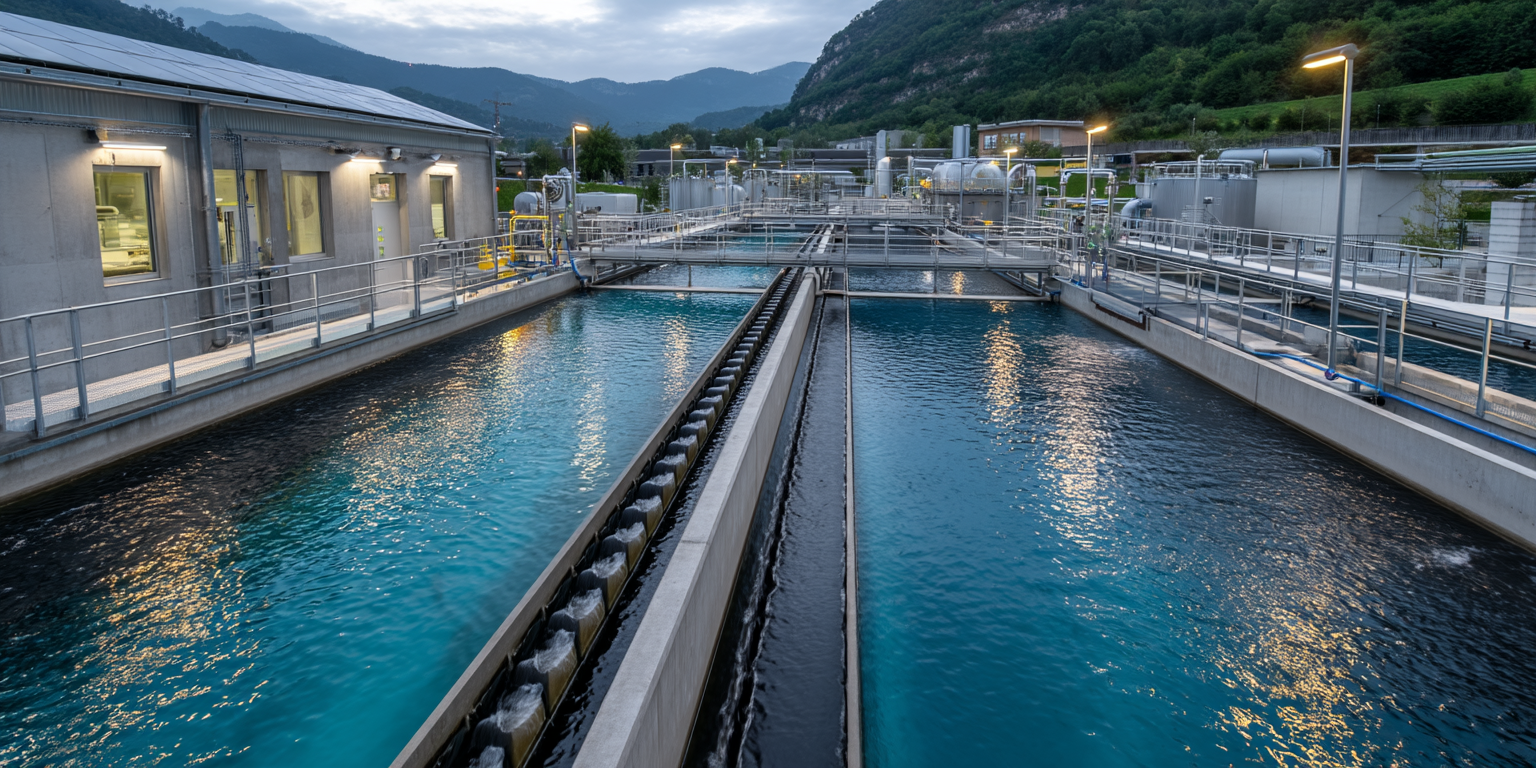
    The refurbishment and expansion of the Basel Wastewater Treatment Plant have been completed. The wastewater treatment plant was officially inaugurated on 17 April. One of the region’s most important infrastructure facilities had been thoroughly modernised and expanded whilst remaining in operation since 2019. It is now one of the most modern facilities of its kind in Europe. Over the weekend of 18 and 19 April, the public can see it for themselves during the open days.

    According to a statement from the Canton of Basel-Stadt, the aim of the project was to significantly improve treatment performance, adapt the plant to future requirements and make a long-term contribution to water protection. It is now state-of-the-art and ensures legally compliant operation for several decades. It is designed to have a capacity sufficient for 520,000 residents until 2050. It can also receive pre-treated industrial wastewater from the ARA Chemie.

    Following the modernisation, the Basel WWTP is now also equipped for nitrogen removal and features a treatment stage for reducing micropollutants. This is complemented by sludge digestion and photovoltaic systems. Furthermore, biogas is produced from sewage sludge digestion and more waste heat is fed into the district heating network.

    The operator of the Basel wastewater treatment plant is Prorheno AG. The parliaments of the two Basel cantons approved CHF 325.1 million for the plant’s refurbishment. The final accounts are not yet available.

  • People aged 55 and over moving house could ease pressure on the housing market

    People aged 55 and over moving house could ease pressure on the housing market

    The moving patterns of the ‘Best Ager’ generation – those aged between 55 and 74 – are becoming increasingly important for a functioning housing market in Switzerland, as shown by the new Helvetia Housing Report, according to a press release from Helvetia Baloise. The study was conducted by the insurer in collaboration with the Sotomo research institute in Zurich.

    When this age group moves house, they usually relocate to less central areas or, increasingly, abroad. This frees up larger, centrally located flats, which are subsequently occupied by families much more frequently. According to the study, this helps to distribute existing housing more efficiently across different stages of life.

    Furthermore, emigration abroad increased by almost 50 per cent between 2014 and 2024. At the same time, moves within one’s own municipality remain comparatively rare. It is only from the age of 75 that the trend reverses: older people then move more frequently back to well-connected, central locations.

    “Additional moves by this age group make an important contribution to better utilisation of living space,” says Michael Hermann, Managing Director of Sotomo. This dynamic is driven in particular by the moving behaviour of foreign ‘Best Agers’, whose likelihood of moving is 50 per cent higher than that of Swiss nationals. However, this trend is being held back by the so-called lock-in effect: homeowners move significantly less often – their likelihood of moving is over 60 per cent lower than that of tenants. According to the report, however, the often-discussed influence of affordable existing rents is significantly lower than assumed and is not the decisive factor behind the low mobility of older households.

  • Energy cooperative strengthens its brand and increases investment

    Energy cooperative strengthens its brand and increases investment

    The transition from EBM to Primeo Energie is now complete: at their annual general meeting on 15 April 2026, the delegates approved the change of name from EBM to Primeo Energie Genossenschaft. The company has been operating under the Primeo Energie brand since 2019. According to a press release, the name change is intended to ensure that the umbrella brand is also visible in the cooperative’s name in future and to avoid misunderstandings.

    Prior to this, the delegates had approved the annual accounts and the management report of the Primeo Energie Group. Operating profit (EBIT) rose to CHF 127 million in 2025. In the previous year, it had stood at CHF 124 million. Profit grew from CHF 91 million to CHF 109 million over the same period. In total, Primeo Energie invested CHF 187 million in energy infrastructure. This figure is set to rise to CHF 220 million in the current year.

    The contribution to the energy fund was doubled from CHF 2 million to CHF 4 million. CHF 3.1 million from the fund was allocated to grant applications, primarily for connections to district heating networks. Support is now also being provided for the conversion of photovoltaic systems with direct feed-in to self-consumption. The co-operatively organised company therefore expects an increase in applications. A further CHF 500,000 was made available for grants to charitable institutions.

    Gilbert Fuchs and Carmen Gerber-Balmelli were re-elected to the Board of Directors for a further term until 2030. Thomas Ernst was newly elected to the board. Long-standing Vice-President Urs Grütter stepped down.

  • Condominiums remain in demand even with record supply

    Condominiums remain in demand even with record supply

    The latest Online Home Market Analysis by ImmoScout24, in collaboration with the Swiss Homeowners Association and the Swiss Real Estate Institute, analyses the advertisements for condominiums in 2025. According to a press release, a new high has been reached with around 101,000 advertised properties – the highest since the survey began in 2016. At the same time, the growth in supply has slowed significantly. At the same time, the average advertising period has been reduced by eight days to 84 days, which indicates that demand for condominiums is increasing again compared to the previous year.

    The study cites the changed interest rate environment in particular as a reason for this: falling financing costs and easier mortgage lending in some cases are making home ownership more attractive than rental properties. In addition, the need for a secure long-term living situation is becoming more important again.

    “The fact that condominiums are selling more quickly again despite the large supply is a clear sign. Swiss people want to live within their own four walls. Fortunately, the dream of home ownership is still realisable for many people,” Markus Meier, Director of the Swiss Homeowners’ Association, is quoted as saying.

    There is also a uniform regional trend: In all major regions, the insertion period is shorter than in 2024, with condominiums continuing to sell particularly quickly in Central Switzerland (61 days), Zurich (64 days) and the Geneva region (65 days). A particularly dynamic development in demand can be seen in Ticino, where the time it takes to place an advertisement has been significantly reduced by 22 per cent despite a sharp increase in the number of listings (10 per cent).

    ImmoScout24 is an online property marketplace operated by the SMG Swiss Marketplace Group. SMG Swiss Marketplace Group AG combines the digital marketplaces of TX Group, Ringier and Mobiliar.

  • Cross-border heat supply moves closer to reality

    Cross-border heat supply moves closer to reality

    The Basel-based utility company IWB and Stadtwerke Weil am Rhein are examining the options for a joint, cross-border heat supply. A feasibility study has already demonstrated the technical feasibility of supplying the city in the German state of Baden-Württemberg with heat from Basel from mid-2028, according to a press release.

    The feasibility study has been running since May 2025 and the companies have been sounding out potential consumers for their interest in such a heating network since March 2026. The heat required in the area between the Rhine and the A5 motorway would be supplied by IWB, which should already be 80 percent CO2-neutral by the time of delivery. Once the results are available by the middle of the year, a decision will be made on realisation and possible investment plans, according to the press release.

  • From the construction group to the top of the railway

    From the construction group to the top of the railway

    After twelve years on the Board of Directors, ten of them as Chairwoman, Monika Ribar leaves behind an institution that has changed. The term limit ended her commitment, not her will. Together with her, Vice-Chairman Pierre-Alain Urech, Georg Kasperkovitz and Clara Millard Dereudre are leaving the Board.

    A lateral entrant with a system
    André Wyss was born in 1967, completed an apprenticeship as a chemical technician, studied economics part-time and furthered his education at Harvard Business School. Before joining Implenia as CEO in 2018, he was responsible for around 40,000 employees at Novartis. He brings 40 years of management experience in the construction, property and pharmaceutical industries to his new role. He has already been a member of the SBB Board of Directors since August 2024, so the handover went smoothly.

    Construction meets rail
    What seems like an unusual career move at first glance makes sense on closer inspection. SBB is not only a railway operator, it is also one of the largest property owners in Switzerland. Wyss has first-hand knowledge of complex infrastructure projects, sustainable construction and the political framework conditions in Switzerland. This is precisely why the Federal Council saw him as the right candidate.

    Stable course, new impetus
    Wyss has clearly communicated what he wants: to further develop SBB as the modern and sustainable backbone of Switzerland, focussing on stability and innovation. For its part, SBB is pursuing the goal of being climate-neutral by 2030. This is precisely where Wyss and the new composition of the Board of Directors come in.

    Four new members strengthen the Board
    Four new members were elected to the Board of Directors at the same time as Wyss: Anna Barbara Remund, Dino Cauzza, Dominique Pierre Locher and Maria-Antonella Bino. They are intended to complement the Board professionally and bring new impetus without changing course. The Board of Directors was constituted directly after the Annual General Meeting in Berne.

  • Research project develops global corrosion index for construction applications

    Research project develops global corrosion index for construction applications

    Sky-Frame from Frauenfeld and the WITG are jointly investigating whether a global corrosion index can be developed on the basis of available weather and climate data. This project is being supported with an innovation cheque from Innosuisse. The maximum funding amount of CHF 15,000 from the Swiss Innovation Agency is a credit for a preliminary study. It enables ideas, idea studies and analyses of innovation and market potential to be commissioned from a Swiss research partner and collaboration with this partner to be tested.

    The WITG is contributing its expertise in corrosion and the evaluation of material properties to the project with Sky-Frame. According to a press release, the first step involves linking real project locations with available climate databases and systematically analysing existing empirical values from the application. Taking into account factors such as proximity to the sea, wind direction and project-specific microclimate conditions, this will result in an initial, scientifically sound approach to risk classification.

    “This project is an example of how innovation ideas do not have to be in the realm of ‘rocket science’ in order to be funded,” says the WITG. Instead, they should offer the company a sustainable benefit and future added value and include a risk component during implementation and thus the possibility of failure.

  • Investment secures funding for a major wind energy project

    Investment secures funding for a major wind energy project

    aventron AG has acquired a significant stake in the Sur Grati wind farm in the canton of Vaud, according to a press release. The wind farm is operated by the project company VOé éole SA. In addition to aventron, the energy supplier SIE SA, based in Crissier (VD), and the Vaud municipalities of Premier, Vallorbe and Vaulion also hold stakes in the company.

    Aventron’s entry finalised the shareholder structure and the financing of the project company. This followed a positive ruling by the Federal Supreme Court in May 2025 regarding the wind farm’s building permits; the wind farm is scheduled to come online at the end of 2027.

    VOé, which has been developing the project for several years, is a regionally based energy supplier and is contributing its local networks. Aventron brings experience in the construction and operation of wind farms in several European countries. “Together, we are realising one of the largest wind energy projects in Switzerland. In doing so, we are supporting the federal government’s energy strategy and strengthening security of supply, particularly in winter,” said Eric Wagner, CEO of Aventron.

    The wind farm is located on the Jura mountain range in northern Vaud and is currently under construction. Six wind turbines with a total capacity of 25.2 megawatts are planned. The facility is expected to produce around 45 gigawatt hours of electricity annually, which corresponds to the demand of approximately 11,000 households. Once completed, Sur Grati is set to be the second-largest wind farm in Switzerland.

  • The Federal Council plans to tighten the rules on property purchases by foreign buyers

    The Federal Council plans to tighten the rules on property purchases by foreign buyers

    On 15 April, the Federal Council launched a consultation on the revision of the Federal Act on the Acquisition of Real Estate by Persons Abroad (BewG). According to a press release, the consultation will run until 15 July. The aim is to further restrict access to the Swiss property market.

    The Federal Council justifies the tightening of the so-called Lex Koller, among other things, with the strained situation on the housing market. Consequently, third-country nationals – that is, nationals of countries outside the EU and EFTA – will in future require authorisation to purchase primary residences in Switzerland. If they move away, they will be required to sell their property within two years.

    Stricter rules are also planned for the purchase of commercial property. Whilst purchases for personal use will still be possible without a permit, purely financial investments – such as for letting or leasing – will no longer be permitted.

    In addition, the Federal Council intends to further restrict the purchase of holiday homes and residential units in aparthotels by persons abroad. To this end, the cantonal authorisation quotas are to be reduced and, in future, all such transactions will count towards these quotas.

    It is also proposed that persons abroad should no longer be permitted to acquire listed shares in residential property companies or regularly traded shares in property funds and property SICAVs.

  • Infrastructure project boosts efficiency and safety in flight operations

    Infrastructure project boosts efficiency and safety in flight operations

    Construction of new infrastructure for general aviation in the West Zone at Zurich Airport began on 14 April. Plans include a terminal building with a hangar and a dedicated apron area. According to a press release, the facility is scheduled to open in spring 2028.

    The new facility is designed to accommodate larger aircraft types and will also provide space for passenger handling and offices. Its proximity to the heliport is also expected to reduce transfer times. In addition, car parks for staff and passengers will be built, along with access via an extended Rohrstrasse.

    Flughafen Zürich AG is investing around CHF 100 million in the project. The new building is part of the development of the approximately 16.8-hectare Zone West, which is earmarked for apron extensions, logistics, and aircraft and airport maintenance, amongst other things.

    With the new building, the airport is responding to changing requirements in the field of general aviation. The existing infrastructure in the east has reached the end of its life cycle and can no longer meet the demand for hangar space, particularly for larger aircraft.

    Furthermore, the project is linked to the planned runway realignment at Zurich Airport. This is intended to reduce the number of runway crossings by landing and taking-off aircraft, thereby enhancing flight safety.

  • Ticino economic area between energy, housing and investment

    Ticino economic area between energy, housing and investment

    [smartslider3 slider=”52″]

    At the 108th immoTable Ticino in Savosa, representatives from the real estate industry, energy, planning and investment discussed the future of the Ticino economic region. The focus was not only on individual projects, but also on the fundamental question of how Ticino can continue to develop as a modern business and real estate location.

    The discussion made it clear that Ticino today is much more than just a vacation and second-home region. A high quality of life, strategic location and exciting development potential meet challenges in terms of processes, living space, mobility and regional cooperation.

    Roberto Fantoni from Volta RE showed how much the energy market has changed. While the feed-in tariff for photovoltaic electricity has fallen massively in recent years, new models for property owners, municipalities and site developments are emerging in the form of energy communities, virtual associations and local electricity communities. The new CLE models from 2026 in particular could have a lasting impact on the real estate market. At the same time, it became clear that owners and administrations are increasingly looking for solutions that reduce energy costs, improve the energy efficiency of buildings and simplify investments.

    Monique Bosco-von Allmen from CASSI focused on the issue of housing. She made it clear that Ticino is lagging far behind the rest of Switzerland in terms of non-profit housing construction and that the discussion about affordable housing, demographic change and sustainable forms of housing is becoming increasingly important. The topics discussed included gentrification, rising rental costs, the low proportion of non-profit housing and the question of how politicians, municipalities and private stakeholders can work together to promote new housing models. At the same time, it was emphasized that housing is much more than just a roof over one’s head, but is closely linked to social balance, intergenerational dialogue and quality of life.

    Manuel Gamper from Leading Investors presented Ticino from the perspective of national and international investors. Ticino remains attractive, but finds itself in a more demanding market environment that requires significantly more professionalism, data competence and strategic thinking. Particularly important are predictability, speed, larger volumes and a professional ecosystem along the entire real estate value chain. At the same time, it became clear that Ticino, despite its limited market size, has interesting returns and considerable development potential if projects are of high quality, flexible and long-term.

    The future of the Ticino economic region will not be decided by individual construction projects or investments alone, but by cooperation, quality, innovation and the ability to think about economic development, energy, mobility and housing together.

    The next immoTable will take place on June 18, 2026 at the StartUp Space in Schlieren.

  • Ticino at a glance – opportunities, pressure and dynamics

    Ticino at a glance – opportunities, pressure and dynamics

    The canton, with around 360,000 inhabitants, 100 municipalities and an area of 2,812 square kilometres, has positioned itself as a research and innovation-oriented region. In the EU’s Regional Innovation Scoreboard 2025, Ticino ranks 6th out of 241 European regions, just behind Zurich in Switzerland. According to BAK Economics, the cantonal GDP grew by 0.6 per cent in 2024. An increase of around 1.1 per cent is expected for 2025. The unemployment rate as at January 2026 was 3.3 per cent, slightly above the Swiss average of 3.2 per cent.

    This development is important for the property industry because innovation alone does not guarantee a location’s attractiveness. The decisive factor is whether research, entrepreneurship and urban quality come together spatially. With USI, SUPSI, the Switzerland Innovation Park Ticino and the Boldbrain accelerator, the canton has a solid innovation infrastructure. At the same time, the construction industry and market development are under pressure. Construction output fell by 0.2 per cent across Switzerland in December 2025, with an above-average decline in Ticino. Rising construction costs, political uncertainties and complex authorisation procedures are exacerbating the pressure on supply and project calculations in the medium term.

    The property market presents a varied picture. The vacancy rate in Ticino fell from 2.08 per cent in 2024 to 1.92 per cent in June 2025, the sharpest decline of all the major regions, but still almost twice as high as the Swiss average of 1.0 per cent. At the same time, asking rents fell by 5.6 per cent in 2024/2025 according to ReMPA. The only region in Switzerland to see a decline, while the national average rose by 2.4 per cent.

    The spatial structure remains a challenge. Lugano with 63,600 inhabitants, Bellinzona with 45,300, Locarno with 16,400 and Mendrisio with 15,100 form different sub-regions with their own profiles. Topography, scarce space and demographic pressure also play a role. The FSO forecasts a decline in the labour force of 45,000 people by 2050. The approximately 78,800 cross-border commuters support the labour market, but their number has fallen slightly for the first time. Against the national trend of 411,000 cross-border commuters throughout Switzerland. If you want to invest in Ticino, you won’t get far by simply analysing from afar from Zurich or Basel. You need local partners, market knowledge and an understanding of the specific sub-regions.

    At the same time, this mixed situation offers potential. The proximity to northern Italy, the Gotthard Base Tunnel, the role as the southern portal of the Gotthard corridor and the high quality of life. At 85.2 years, Ticino has the second-highest life expectancy in Europe, creating conditions that are rarely found elsewhere. If innovation strategy, land policy, mobility and project development can be coordinated more closely, Ticino can significantly strengthen its position as an economic and property region. It is not whether the potential is there, but how consistently it is translated into reality.

  • BIM and digital twins the digital partners of buildings

    BIM and digital twins the digital partners of buildings

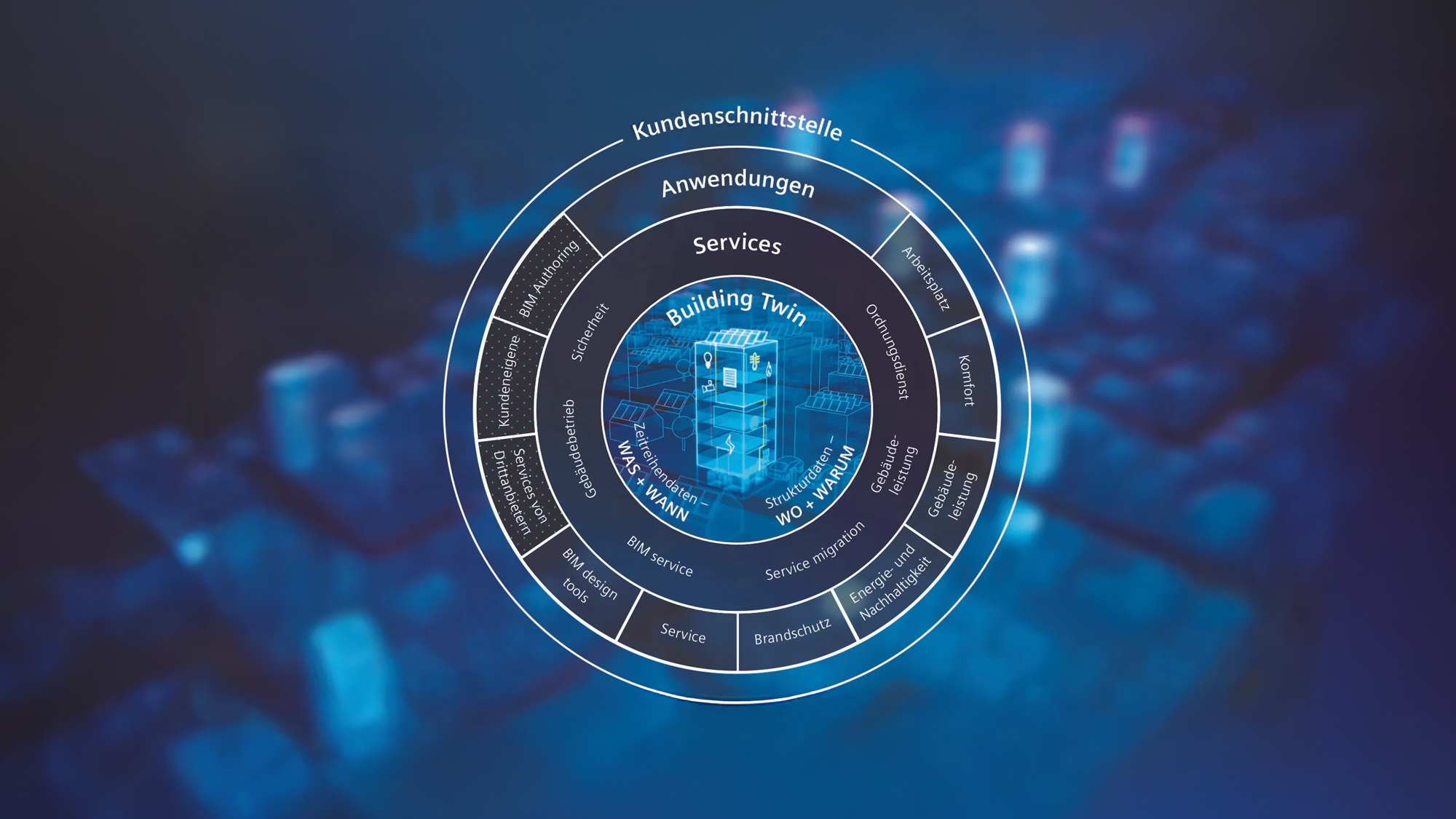
    BIM, Building Information Modelling, replaces static 2D plans with a shared, digital building model in which architecture, technology and costs interact in real time. All components are recorded as BIM objects with dimensions, services, prices, warranty and maintenance information, from the brickwork to the door, from the sensor to the pump.

    Instead of sending plans back and forth, everyone involved works in the same 3D model, recognises collisions early on and experiences the building virtually before the first excavator rolls in. This reduces the risk of errors, makes deadlines easier to plan and lays the foundation for clear budgets instead of later addenda.

    From the BIM model to the building twin
    The digital twin is created from the BIM model during operation. The building twin, which takes over up to 95 per cent of the planning information and links it with live data from the building. It forms the “single source of truth” for areas, technology and sensors and visualises performance, occupancy and comfort levels in real time.

    Cloud-based building twin platforms enable buildings to be monitored virtually, scenarios to be simulated and new applications to be scaled quickly, from energy monitoring to user-centred service suites with AI analytics. This transforms the rigid plan into a learning system that evolves with the requirements of operators, tenants and cities.

    Added value in operation instead of just on the construction site
    Around 80 per cent of a building’s life cycle costs are incurred during operation. This is precisely where BIM, in combination with digital twins, has the greatest leverage. Facility managers access maintenance cycles, operating instructions, manufacturer and warranty data in the 3D model, plan conversions precisely and reduce downtimes and journeys.

    Structured product and live data allow predictive maintenance, bundled procurement or automated reactions such as closing blinds in the event of severe weather warnings. At the same time, the transparent database supports ESG goals, decarbonisation and the circular economy, from energy and water tracking to the valuable reuse of materials in dismantling.

    Digital ecosystems as a model for the future
    Digital twins connect buildings, campuses and neighbourhoods to form intelligent ecosystems in which energy, use and mobility are coordinated. They provide insights into comfort, health, utilisation and emissions and help to manage net-zero strategies, new working environments and mixed-use urban building blocks based on data.

    For owners and operators, BIM and digital twins are thus becoming market differentiators. Those who understand their own portfolio digitally can better prioritise investments, manage risks and prove the return on investment of refurbishments, conversions and services. In an industry caught between decarbonisation pressure and user expectations, they are becoming the key to transforming properties from static objects into adaptive, future-proof infrastructures.

  • Rethinking building, Freiburg is looking for pioneers

    Rethinking building, Freiburg is looking for pioneers

    From 2029, new limits for greenhouse gas emissions and requirements for gray energy in the construction industry will apply in Switzerland. Defined by the revision of the cantons’ model regulations in the energy sector. The pressure on the construction industry is growing. Those who do not invest in new processes and materials today risk expensive adjustments under time pressure tomorrow. The canton of Fribourg has recognized this and is acting with foresight. As early as 2023, it adopted a roadmap for the circular economy that prioritizes structural changes in the construction industry.

    Innovation along the entire value chain
    The theme of this year’s call is “Rethinking construction, towards circular and environmentally friendly systems”. We are looking for projects that reduce the ecological footprint of buildings right from the planning phase, through local bio-based materials, deconstructable construction systems or digital tools for material tracking. The Swiss Charter for Circular Construction, which is supported by twelve leading organizations from the construction and real estate industry, clearly formulates the goal: “By 2030, the proportion of non-renewable primary raw materials should fall to 50 percent of the total mass.”

    Collaboration as a prerequisite
    Lone wolves have no chance here. Each project submitted must involve at least three companies, the majority of which must be based in the canton of Fribourg. Academic partners such as the School of Engineering and Architecture HTA-FR can be involved to ensure knowledge transfer and reproducibility of the solutions. Nicolas Huet from INNOSQUARE emphasizes that the challenges of circularity must be overcome and that innovation must take place jointly.

    Funding with personal responsibility
    The NRP funding covers a maximum of 65% of the total budget, the rest is covered by the participating companies, 10% in cash and 25% as personal contributions. This structure is not an obstacle, it is the program. It ensures that only projects that the companies really support are submitted. Alain Lunghi, Deputy Director of the WIF, sees foresight as the key to the competitiveness of Fribourg companies.

    Submit now
    Projects can be submitted individually or as part of a consortium via www.promfr.ch/de/nrp. The call is supported by the Economic Development Agency WIF, the Fribourg Chamber of Commerce and Industry, the HTA-FR and the INNOSQUARE innovation platform. The deadline is September 9, 2026. Anyone who sees the construction turnaround as an opportunity still has time to act.

  • Whoever blocks, pays

    Whoever blocks, pays

    The majority of building permit procedures in Switzerland take place within reasonable time limits. However, there are exceptions and these have a serious impact. Objections and appeals can block projects for years or prevent them altogether. Today, even people who are not directly affected by a project can lodge an objection, for example because they don’t like the color of the neighbor’s planned façade. This is one of the structural weaknesses that the Federal Council is now addressing.

    Housing construction becomes a national objective
    The strongest lever in the reform package lies in the Spatial Planning Act. Housing construction as part of inward settlement development is to be enshrined there as a national interest. This sounds technical, but has a concrete effect. When weighing up interests, housing construction would be given more weight than the protection of the townscape or listed buildings. Projects that currently fail due to local protection interests would have a better chance of being realized.

    Objections with consequences
    Anyone who raises objections improperly, i.e. with the sole aim of delaying a project, should in future bear the procedural costs. The Federal Council is considering a legal obligation for the cantons to impose such costs on objectors. At the same time, the right of private individuals to appeal to the Federal Supreme Court is to be restricted. However, the Federal Council rejects flat-rate fees for rejected appeals. Access to legal protection should not depend on your wallet.

    The limits of the federal government
    Despite the political will, the federal government’s scope for intervention is limited. Building permit procedures are the responsibility of the cantons. The federal government cannot impose binding deadlines for cantonal procedures or the obligation to introduce digital approval processes. It recommends that the cantons introduce such measures on their own responsibility, as they have a demonstrably accelerating effect in the long term. The Swiss Construction Industry Association supports this approach and is calling for leaner processes while maintaining a high level of planning quality.

    Consultation
    The reform report fulfills five postulates from the National Council and Council of States and is part of the federal government’s housing shortage action plan. DETEC has now been instructed to draw up a consultation draft by the end of 2026. It is likely to be years before concrete legislative changes come into force.

  • Hybrid is the new normal

    Hybrid is the new normal

    77% of Swiss companies now rely on hybrid working models. That is more than twice as many as before the pandemic. In Germany, 79% of companies offer hybrid working, while the proportion of employees working from home remains stable at between 23% and 24%. At the same time, the analysis of job advertisements, a reliable seismograph for medium-term corporate decisions, shows that hybrid working has been consistently communicated as a working model in around 20% of German and 15% of Swiss job advertisements since 2023.

    Recalibration, not capitulation
    Yes, the average time spent working from home has fallen slightly. In Switzerland from 1.36 to 1.15 days per week, in Germany from 1.0 to 0.85 days. Anyone who sees this as the end of flexibilization is misreading the data. Only 4 to 5 percent of German companies are considering doing away with the home office completely. 74 percent plan to retain hybrid models, while 11 percent even want to increase flexibility. Adjusting entrepreneurial thinking, not turning back.

    Rethinking the office
    The real question is not how many days someone spends in the office. It is why someone should come to the office. 75 percent of employees see the office as a better place for social interaction, 58 percent for networking and career development, 49 percent for creative interaction. The office is changing from an obligatory place to a meeting point for things that don’t work remotely. CBRE speaks of the “office as an attractor”, a place that must offer tangible added value in order to justify the journey. Globally, office occupancy has now recovered to 53%, the highest level since March 2020.

    What companies need to do now
    The data is clear, as are the areas for action. 72% of the companies surveyed have set themselves the goal of improving office space utilization. 66 percent want to sustainably improve the office experience. In other words, spaces that enable collaboration instead of hindering it. Concepts that make team days meaningful and a corporate culture that makes presence attractive rather than enforcing it. Anyone who views the office as a mere cost problem is missing the real strategic question. What value does it create for people and the organization?

    Flexibility as a competitive factor
    Hybrid working has long been more than just an HR issue. It is a factor in the battle for skilled workers. Companies that credibly embrace flexibility have a measurable advantage in recruiting. The ISG study on the future of the Swiss workplace shows that employee experience has become a key lever, from collaboration and onboarding to the availability of space. Hybrid working is the new normal and those who strategically shape it now will position themselves as employers of the future.

  • Solar cells that camouflage themselves

    Solar cells that camouflage themselves

    Nature shows us how it’s done. The Morpho butterfly produces its intense blue wing sheen not through pigments, but through three-dimensional microstructures that refract and reflect light. Researchers at Fraunhofer ISE have transferred this principle to photovoltaic modules. A vacuum process applies a similar surface structure to the cover glass or flexible films. Depending on the fine structure, this produces modules in a wide range of colors, from brick red to anthracite. The result is called MorphoColor®.

    Patterns directly into the module
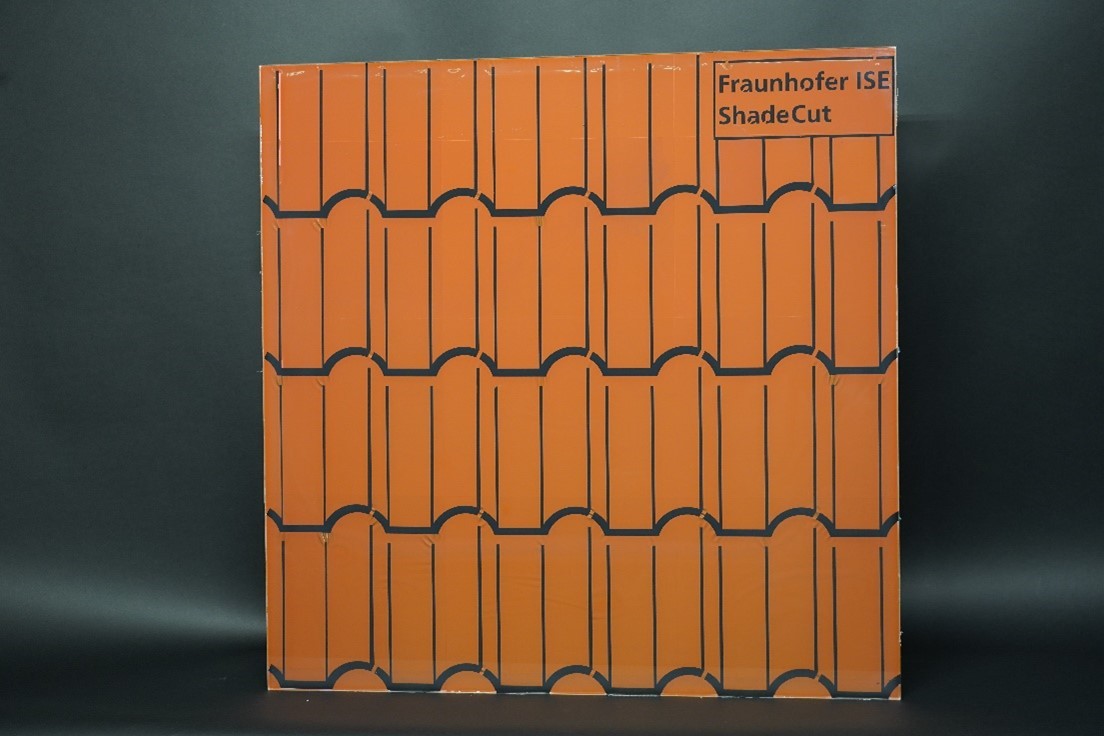
    New is the “ShadeCut” technology, which provides colored films with transparent cut-outs and thus integrates complex patterns and motifs directly into solar modules. A laser or a CAD-controlled cutting process applies the desired motif to the film, whether it is a brick structure, masonry or a company logo. The technology works with all standard photovoltaic and solar thermal modules and can be used both as a flexible embedding film and as a backsheet film. The colored modules achieve around 95 percent of the output of a comparable uncoated module.

    The end of the monument protection dilemma
    Until now, building-integrated photovoltaics has often failed due to aesthetic requirements. Listed buildings and conservation areas in Switzerland and Germany in particular posed major hurdles. In several German federal states, monument protection has already been relaxed, provided that modules match the color of the building envelope. Modules can imitate brickwork or roof tiles deceptively realistically and fit in perfectly in terms of color, says Dr. Martin Heinrich, group leader at Fraunhofer ISE. An Innosuisse project at HSLU in the Viscosi town of Emmenbrücke has already produced a demo façade in 78 shades of color.

    BIPV on the verge of a breakthrough
    The market for building-integrated photovoltaics is growing rapidly. Globally, it is estimated to be worth around 85.9 billion dollars by 2034, compared to 28.3 billion in 2026. In Switzerland, the registration procedure for façade systems has simplified the approval process since this year, which has given a clear boost to demand for aesthetic façade solutions. The first commercial tandem modules with a BIPV focus are expected in 2026 for niche markets. Fraunhofer ISE estimates the total potential of PV on buildings at around 1,000 GWp by 2045.

    What was created in the laboratory in Freiburg is now being applied to roofs and façades via a Swiss partner.

  • Zurich reinvents itself

    Zurich reinvents itself

    Government Councillor Carmen Walker Späh openly stated that many good ideas never make it to the market. It is not a lack of creativity, but a lack of the right support at the right time. The canton of Zurich has therefore taken the step this year of joining the international “MIT REAP” program. The aim is to channel funding in a more targeted manner, network players more closely and systematically promote scaling. Zurich has already established itself as a hotspot in the fields of AI, robotics, life sciences and the new space economy. The task now is to secure this lead.

    Nothing works without people
    Markus Müller, Co-Head of Location Promotion, put it in a nutshell with a quote from medtech entrepreneur Andy Rihs: “Nothing works without people.” Capital alone does not build a future. What makes Zurich strong is the ability to bring together new ideas with the right know-how and the right capacities. Zurich should take on a leading role in the new space economy. According to Müller, innovation is what turns “good” into “leading” in the long term.

    You can’t think about the future alone
    Futurologist Martina Kühne gave the guests three ideas to take away with them. Think beyond tomorrow, develop visions of the future in the majority and shape the future together. Every vision of the future is like a piece of gymnastics equipment on which you can let your mind run wild. Anyone who does this can develop ideas for a possible and desirable future. Because, according to Kühne, the future doesn’t just happen.

    Collaboration as a catalyst
    The ETH spin-off Sevensense shows how this theory translates into practice. in 2021, the young start-up impressed ABB with its 3D vision technology for autonomous robots. Today, around 80 percent of the autonomous robots sold by ABB come from Sevensense. Proof of how effective the combination of established capital and fresh inventive spirit can be.

    Organs in space, muscles in the lab
    Prometheus Life Technologies is even more daring. The start-up uses weightlessness in space to grow organs in three dimensions. This was made possible by a parabolic flight program at the Innovation Park, in close collaboration with the Center for Space and Aviation at the University of Zurich. No less ambitious is Muvon, which is working with the ZHAW on an automated method for muscle regeneration using the body’s own cells. If it can be scaled up, it could be used to treat stress incontinence, which affects a significant proportion of women over 40 in Europe.

    A platform that innovates itself
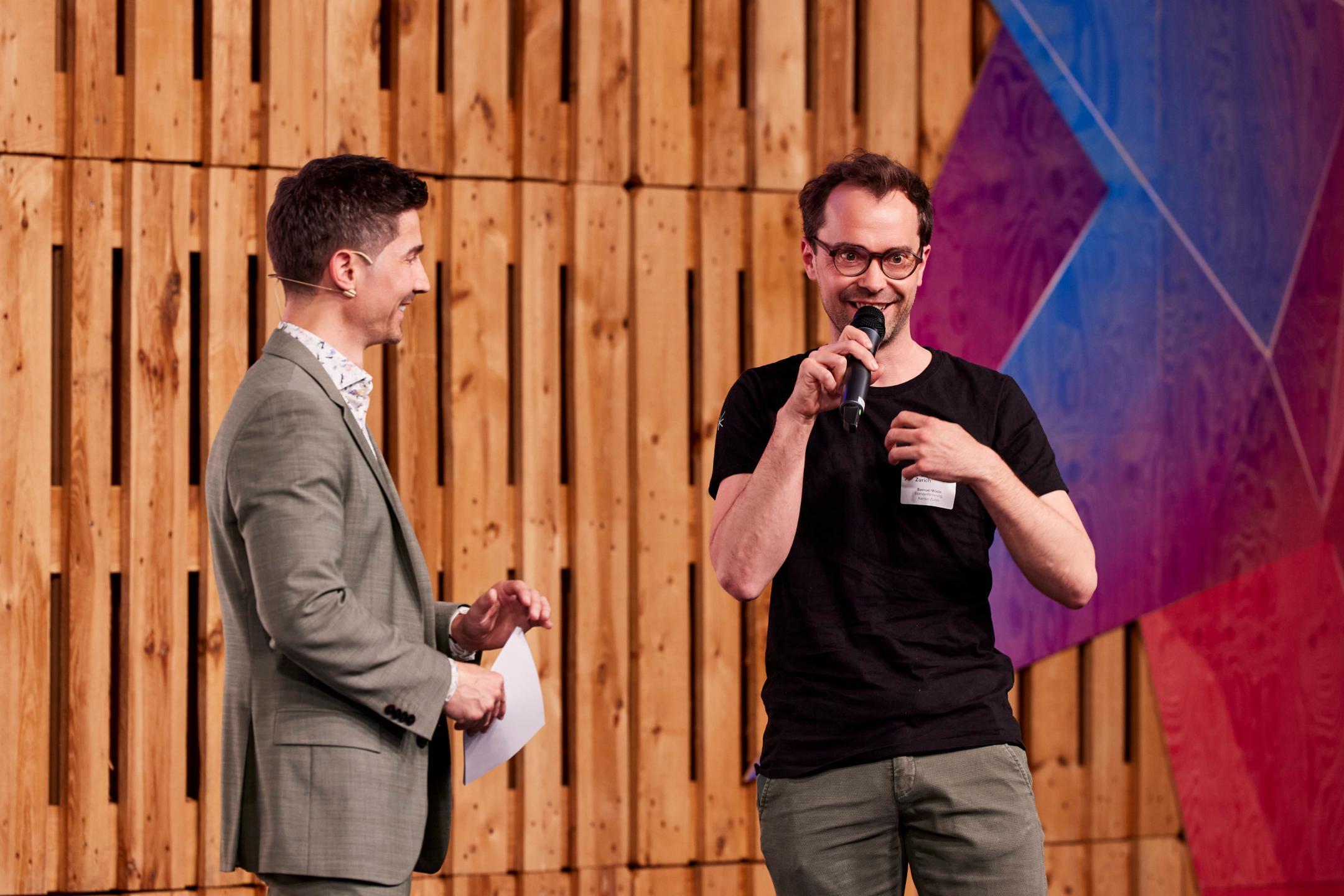
    Samuel Mösle, Co-Head of Location Promotion, drew a clear line in the final discussion. The three start-ups presented are at the limits of the imaginable future. The innovation platform will become more interactive and networked in future with the support of artificial intelligence. After five years, the initiative has reached the end of its own start-up phase. Samuel Mösle sums it up precisely: “It doesn’t just say innovation on it, it also has innovation in it.”

  • More AI does not solve data problems

    More AI does not solve data problems

    The mistake begins with the investment
    It’s a familiar pattern: a company recognizes the potential of artificial intelligence, looks at solutions, chooses a tool – and gets started. The expectation is that the new technology will somehow solve existing data problems. The reality: It doesn’t. It makes them more visible.

    This is no coincidence. It is the consequence of a wrong sequence.

    Data is collected – but not made usable
    Data is available in most real estate companies. Property data, tenant data, operating figures, maintenance histories – they exist. The problem is not its absence, but its condition. They are scattered across systems, inconsistently maintained, inconsistently defined or simply cannot be linked to one another. There are sometimes three different versions of the same key figure – in three different systems.

    Anyone who sets up an AI model under these conditions will not get any answers. What you get is output that reinforces existing uncertainties – automatically and at high speed. AI recognizes patterns in data. If the data is inconsistent, the model learns from the inconsistency. If it is incomplete, it operates on an incomplete basis.

    A new layer of complexity
    What is created in practice is not a gain in efficiency. It is a new layer of complexity: AI outputs that nobody trusts. Departments that manually check results. Projects that come to a standstill. A lot of effort, little effect, growing frustration.

    The fatal thing is that many companies react to this with the next tool upgrade. The cycle starts all over again.

    A data hub is not a tool – it is a structure
    The solution does not lie in better models. It lies in a structural decision: the creation of a common, harmonized database. A data hub is not another system that is added to the existing IT landscape. It is the opposite – it replaces fragmentation with central availability. It integrates distributed data sources, breaks down silos and inconsistencies and creates the basis for scalable AI applications and automated reporting.

    The decisive factor is not where the data is stored. What matters is how it can be used: uniformly defined, quality-assured, accessible for different use cases. Only on this basis can AI deliver what it promises.

    Data quality is not preliminary work – it is an ongoing task
    Even with a data hub, a central challenge remains: Data quality is not a one-off cleansing project before go-live. It is a continuous process. Anyone who sees data quality as a preliminary project will realize after the launch that the real problem is only just beginning.

    The database is supplemented by a data catalog: It transparently documents which data exists, where it comes from and how reliable it is. It creates a common language that connects specialist departments and technology – and gives control back to the organization.

    In the webinar: From the database to scalable AI
    In our free webinar “The optimal AI architecture: How data hub, data quality and data catalog make the difference”, we show how real estate companies can tackle this transformation in concrete terms – from data architecture and quality assurance to the productive use of AI. With practical insights, concrete solutions and time for your questions.

    Register now for free

  • 300 apartments are being made fit – no one has to move out

    300 apartments are being made fit – no one has to move out

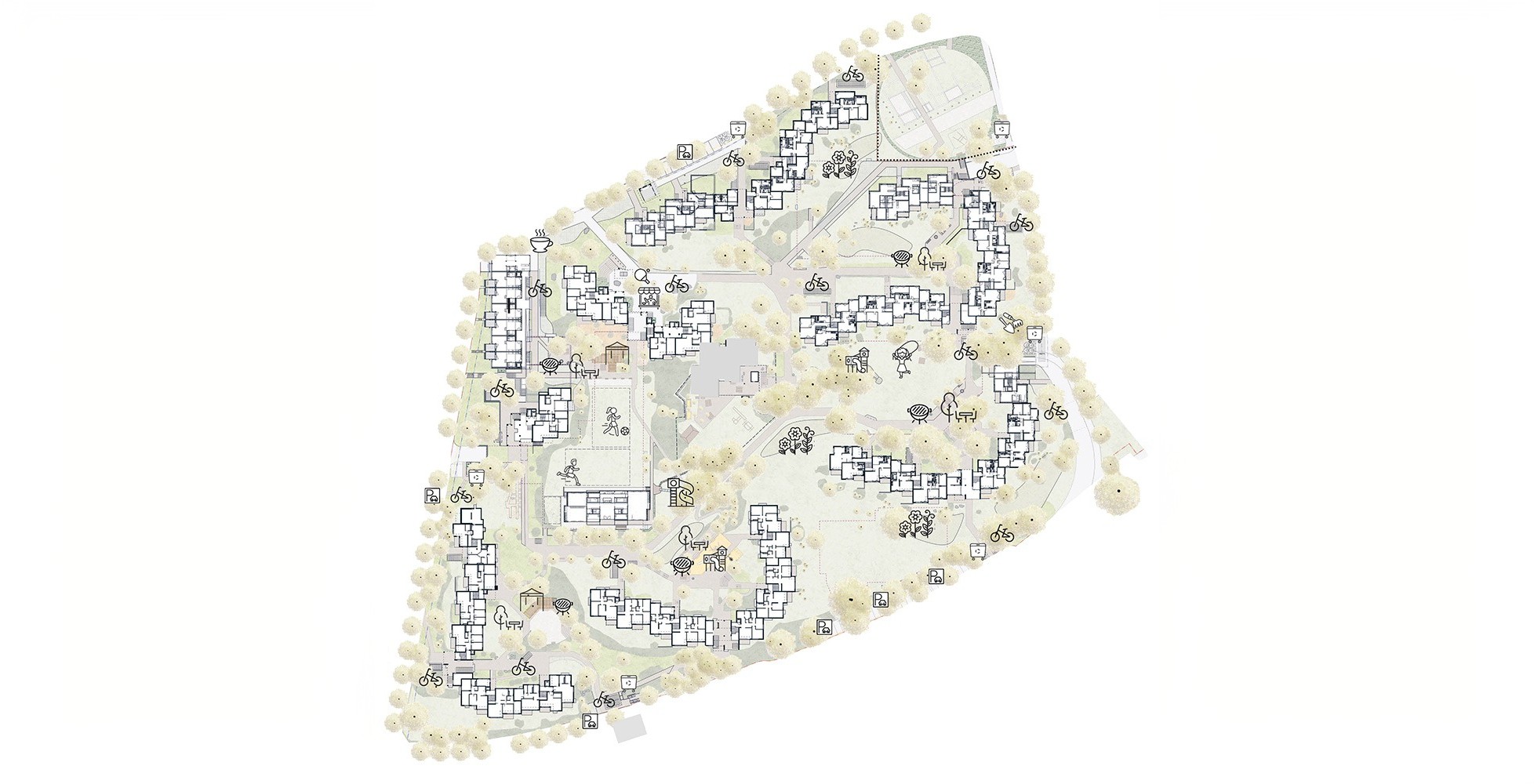
    Built in three stages between 1974 and 1990, the “Untere Bühl” still characterizes the old town center of Oberwinterthur today. The complex is considered worthy of protection and some of the buildings are still largely in their original condition. Some of them were already renovated in 2015, and the others are now being renovated. The planning application has been approved and construction is scheduled to start at the beginning of 2027.

    Nobody has to leave the field
    What makes the project stand out is its social consistency. As the asset manager of the AXA Investment Foundation, BNP Paribas designed the refurbishment from the outset in such a way that all tenants can remain in their apartments. The tenants were involved at an early stage, including workshops on outdoor space and design. “Our tenants have been an integral part of the development for years,” says Pascal Messmer, Asset Manager at BNP Paribas. This attitude runs through the entire project.

    Extensions that don’t impose themselves
    For the extension, AXA is relying on bernath widmer architects, who emerged victorious from a cooperative test planning process. The majority of the extensions and new buildings are made of wood and deliberately reflect the character of the existing buildings. Around 80 barrier-free apartments with 1 to 3 rooms will be created. An addition to the existing apartments, most of which are large today. Residential studios, communal areas and a commercial space are planned on the first floor.

    Park remains and becomes more lively
    The park-like outdoor space with communal gardens, playgrounds and the kindergarten from 1977 will be retained. The landscape architecture firm ghiggi paesaggi is taking Fred Eicher’s original open space concept and developing it further. New planting and green roof areas strengthen biodiversity and create habitats for small animals and insects. Greenery is planned on some of the roofs of the new buildings. The central pavilion is to be used by the public in future, for example as a daycare center.

    Into the future in stages
    The project will be implemented in stages, probably up to 2028, with the aim of creating a real estate portfolio with net-zero emissions by 2050. Winterthur is not only gaining refurbished existing buildings, but also 80 new apartments in a mature settlement that knows who it is.

  • Investment foundation raises fresh capital for residential property

    Investment foundation raises fresh capital for residential property

    According to a press release dated 4 May, the Vertina Real Estate Investment Foundation is raising fresh capital until 6 July 2026. The target volume is set at between 60 and 80 million Swiss francs. This may be increased if there is sufficient demand. The funds are earmarked for additional property investments as well as for ongoing and planned developments.

    The capital raising is taking place after the foundation has fully and sustainably invested the funds entrusted to it as part of its seventh capital issue. Following the completion of four transactions in the first quarter of 2026, the portfolio currently comprises 13 properties, including four near-new existing properties, a new-build that is almost complete, and eight project developments. Upon completion of all ongoing projects, a market value of around CHF 350 million is expected. As at 31 March 2026, the residential share stands at 99 per cent.

    Launched in May 2022, the Vertina Investment Foundation invests directly in near-new residential properties in Switzerland that meet high sustainability standards. To this end, the foundation cooperates with the Markstein Group, a property services provider covering portfolio management, construction management, transaction management and marketing. The foundation focuses on providing marketable housing with the lowest possible environmental impact. With a consistent value creation approach, the investment strategy aims to generate stable and reliable long-term returns for investors.

  • Acquisition makes interior fit-out projects more efficient and regionally focused

    Acquisition makes interior fit-out projects more efficient and regionally focused

    Obrist interior AG, based in Lucerne, has announced in a press release that it has acquired the American company Display Craft Manufacturing Co. of Baltimore, Maryland. The acquisition will increase production capacity for the North American market.

    Local manufacturing will make project execution more sustainable and efficient, according to the company, which specialises in high-end shopfitting and interior design. This means fewer transport and freight routes, simpler logistics and packaging, and shorter project lead times. The expansion of market activity in the US is a response to the high demand from luxury and premium brands, which have a strong presence there, for short delivery times, rapid response times and close collaboration with local production partners.

    Corrado Tona, CEO of Obrist Interior America Inc., will take charge of operational management: “We are gaining a strong local team, expanding our manufacturing expertise and getting even closer to our customers. This strengthens our competitiveness and enables us to serve the US market, which we have actively developed in recent years, in an even more targeted manner,” he is quoted as saying. According to owner Stefan Slamanig, the existing presence in the US will be deepened and the Obrist brand strengthened across the entire value chain.

    Display Craft Manufacturing Co. has been a supplier of retail displays and solutions for shopfitting and interior design for more than 75 years. The manufacturing company has 40 employees, who will be integrated “into the values and quality standards of Obrist interior”.

    The acquisition is accompanied by an expansion of capacity, combined with reduced reliance on external suppliers, greater flexibility, cost optimisation and increased strategic resilience. Solutions for customers and projects can be implemented in a more economically and environmentally efficient manner. The new production site also offers opportunities for employees at the Swiss locations.

  • Umwelt Arena presents new exhibition on micro-apartments

    Umwelt Arena presents new exhibition on micro-apartments

    According to an announcement, the Umwelt Arena in Spreitenbach is presenting a pioneering living concept with the new exhibition “Micro-apartment – 50 m2 for 4 people”. Sustainable, affordable living is one of the major challenges of our time, it continues. With a concrete example, the Umwelt Arena shows that intelligent spatial planning, multifunctionality and energy-efficient construction are not visions of the future, but reality.

    Visitors learn how the project is created, which solutions are implemented and what impact micro-apartments have on sustainability, it continues. The show flat demonstrates how space for a family of up to four people can be created on around 50 square metres without any loss of comfort. Through space planning and multifunctional furnishing, the living room can be transformed into a bedroom at the touch of a button and the children’s room can become an office or playroom if required.

    The 1:1 scale model flat can be viewed during short guided tours. They take place twice a day at 2 pm and 3.30 pm.

    Guided tours for companies, clubs and schools can be booked on request, according to the Umwelt Arena. The topic of micro-living can be chosen as the focus of the two guided tours Sustainability in Everyday Life and Building and Modernising.

  • Regional companies in the spotlight at the Central Switzerland awards ceremony

    Regional companies in the spotlight at the Central Switzerland awards ceremony

    Obrist interior is the winner of the Prix SVC Zentralschweiz 2025. Founded in 1895, the SME from Inwil specialises in high-quality shopfitting and interior design. According to a statement from the Swiss Venture Club(SVC), it employs around 120 specialists worldwide to realise exceptional interiors for luxury brands, business premises and private homes. As Urban Camenzind, jury president and economic director of the canton of Uri, emphasised at the award ceremony, the expert jury was “impressed by the successful combination of traditional craftsmanship and state-of-the-art technology. Working closely together, customer advisors, project managers, planners and production specialists process a wide variety of materials such as wood, metal and glass into high-quality shop and interior fittings – true works of art, created in Central Switzerland for the global market.”

    Second place went to the Axon Active Group from Lucerne. It supports companies and organisations in various industries with scalable digital solutions to transform and optimise their business processes. The company is characterised by agility, sustainability and customer proximity, according to the SVC jury.

    Third place went to Schiltrac Fahrzeugbau. The company from Buochs builds customised special transporters for various applications, from agricultural and municipal vehicles to fire engines. According to the SVC, Schiltrac is known for its high manufacturing quality and flexibility.

    The other winners were Stadler Form from Zug and Impact Acoustic from Lucerne. Stadler Form optimises the indoor climate with its humidifiers, dehumidifiers and aroma diffusers. Impact Acoustic develops recyclable products that improve room acoustics in offices, restaurants, hotels and public buildings.