Author: immovestuser

  • A panorama of the digital property industry

    A panorama of the digital property industry

    PropTech stands for digital, technological and data-based solutions that improve, automate or transform processes, products or business models in the property sector. These include software platforms, AI analyses, smart building systems, digital transaction models, data-based refurbishment and valuation tools, energy optimisation solutions and immersive technologies such as 3D visualisations, augmented reality and digital twins. PropTech thus spans the entire life cycle of a property. From planning and development to management, refurbishment and transaction.

    Blurred boundaries of the term
    With the growing awareness of PropTech, the desire of many start-ups to be part of this field is also growing. Companies from neighbouring areas such as FinTech, GreenTech, Bau-Tech, InsurTech or generic software providers are increasingly positioning themselves as PropTech, even if real estate is only a peripheral topic. As a result, tools are subsequently framed as property solutions and the sector appears larger in maps, reports and rankings than it actually is in the narrower sense. The PropTech Map Switzerland thus not only shows the strength of the ecosystem, but also its conceptual vagueness.

    Clusters, categories and regional hotspots
    The map reveals a clear geographical concentration. PropTech companies are particularly densely represented in the regions of Zurich, Zug, Lausanne and Basel. These are all locations with universities, technology parks and a high economic density. Many companies are spin-offs from ETH and EPFL, which emphasises the strong research and technology focus of the Swiss scene. In terms of content, the map spans a broad spectrum from asset management, construction and development to digital marketplaces, rental and sales platforms, 3D and smart building technologies, energy and climate tools, blockchain applications, financial platforms and specialised software services.

    Growth, internationalisation and more professionalism
    The continuously increasing number of entries shows that dozens of new companies are added every year, along with established market players that are digitally expanding their business model and international providers that are tapping into the Swiss market. Many PropTechs have long been operating beyond national borders and are scaling their solutions into European and global markets. At the same time, the ecosystem is professionalising. The PropTech Map not only depicts logos, but also the thematic orientation and positioning of the companies. The map thus becomes a central point of orientation for investors, property companies, administrations and universities.

    You can find the PropTech Map Switzerland here

  • Proptech in the life cycle

    Proptech in the life cycle

    Planning, development and financing
    In this phase, land and building ideas are analysed, evaluated and financed. Proptechs provide market and location data, automated valuations and ESG analyses so that investors and owners can make faster and more informed decisions. Digital platforms connect project developers, financiers and consultants, reduce media disruptions and make risks, returns and carbon effects visible at an early stage.

    Construction and creation
    This is about the efficient realisation of the project. Proptech solutions provide support with BIM models, digital construction planning, schedule and cost controlling and construction site monitoring. This reduces planning errors, makes supplements more transparent and optimises the use of materials. Digital collaboration tools connect architects, contractors and clients in real time and create a clean database for subsequent operation.

    Operations and services
    Operations determine how economical and attractive a property really is. Proptechs provide platforms for letting, management, facility management and user services. Sensor technology and IoT make consumption visible and enable predictive maintenance. New services are emerging for owners, managers and users, from digital tenant portals and booking systems to smart building functions that increase convenience and efficiency.

    Refurbishment and conversion
    The greatest leverage lies in existing buildings. Proptech tools provide support in analysing the condition, calculating scenarios and prioritising refurbishments. They show which measures offer the greatest energy, financial and regulatory benefits. Data-based refurbishment roadmaps help owners to plan investments over the years and optimise the use of subsidies. At the same time, digital models enable better planning of conversions and densification.

    Decarbonisation and demolition
    Decarbonisation runs through all phases, but requires its own instruments. Proptech solutions record CO² emissions over the entire life cycle, simulate net zero paths, compare building portfolios and provide reports for taxonomy, climate and ESG reporting. When dismantling, digital material passports and cycle data help to preserve materials instead of disposing of them. This increasingly turns the life cycle into a material cycle.

    Proptech is shifting the focus over the entire life cycle of a property. Away from individual decisions and towards end-to-end, data-based management. Digital solutions connect separate phases and players. They make costs, risks and emissions visible at an early stage. This makes it easier to plan and prioritise investments. Life cycle thinking becomes an ongoing optimisation process for economic efficiency, user experience and climate targets. The construction and property industry has been thinking in terms of life cycles for years. Proptech is now making these concepts data-based and scalable.

  • Horw is growing upwards, 14 storeys at the railway station

    Horw is growing upwards, 14 storeys at the railway station

    Three striking new buildings with inner courtyards are being built between the railway station and Ebenaustrasse. The municipality is planning an eight-storey building at the roundabout, a 14-storey high-rise to the south of it as a vertical accent and an eight-storey longitudinal building facing Ebenaustrasse. The new bus station will be located in between, closer to the railway line than today and much more convenient for all those who change buses every day.

    “Janus” favours greenery and glass
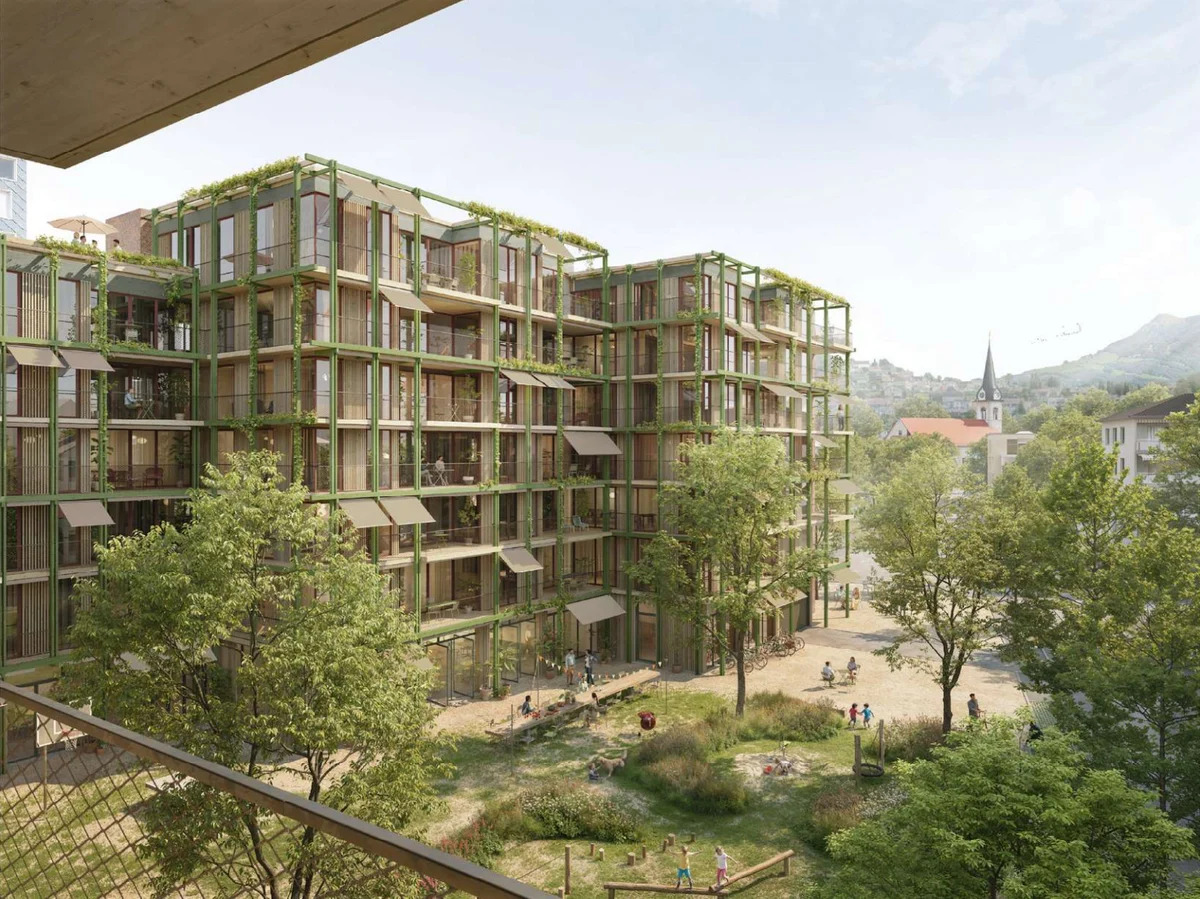
    Further east, along Ebenaustrasse and Ringstrasse, the municipality has held an architectural competition. The winning project is called “Janus” and envisages five largely glazed, six- to seven-storey apartment blocks, surrounded by trees and connected by a shared forecourt. The buildings appear bright and open, the ensemble creates urban quality without anonymity.

    Commercial yes, but how much?
    At least 20 per cent of the space in the new buildings is to be used for commercial purposes. This is envisaged by the municipality, and not just on the ground floor, but up to the third or fourth floor. The property owners take a critical view of this. They point to a lack of demand and draw on their experience with the previous “Horw centre” open space concept. The municipal council is willing to talk, but reserves the right to add further storeys if necessary.

    Part of a big picture
    The railway station project is embedded in the overall “Horw Mitte” project, which covers around 12 hectares and plans 1,000 new flats and 800 new jobs in the long term. A large part has already been realised to the west of the tracks, while the eastern part is now catching up. Over two decades, the municipality is thus developing a former peripheral area into a compact, well-developed centre.

    Residents’ Council has the floor
    The bus station was already approved by the Residents’ Council on 27 March 2026, with construction not due to start until 2028 at the earliest. The vote is still pending for the Part East development plan. This requires the approval of the cantonal government of Lucerne and a referendum-free conclusion. It is also still unclear who will bear the planning costs. So there is still a lot to be clarified before the construction cranes move in.

  • Zurich is still going strong, but for how much longer?

    Zurich is still going strong, but for how much longer?

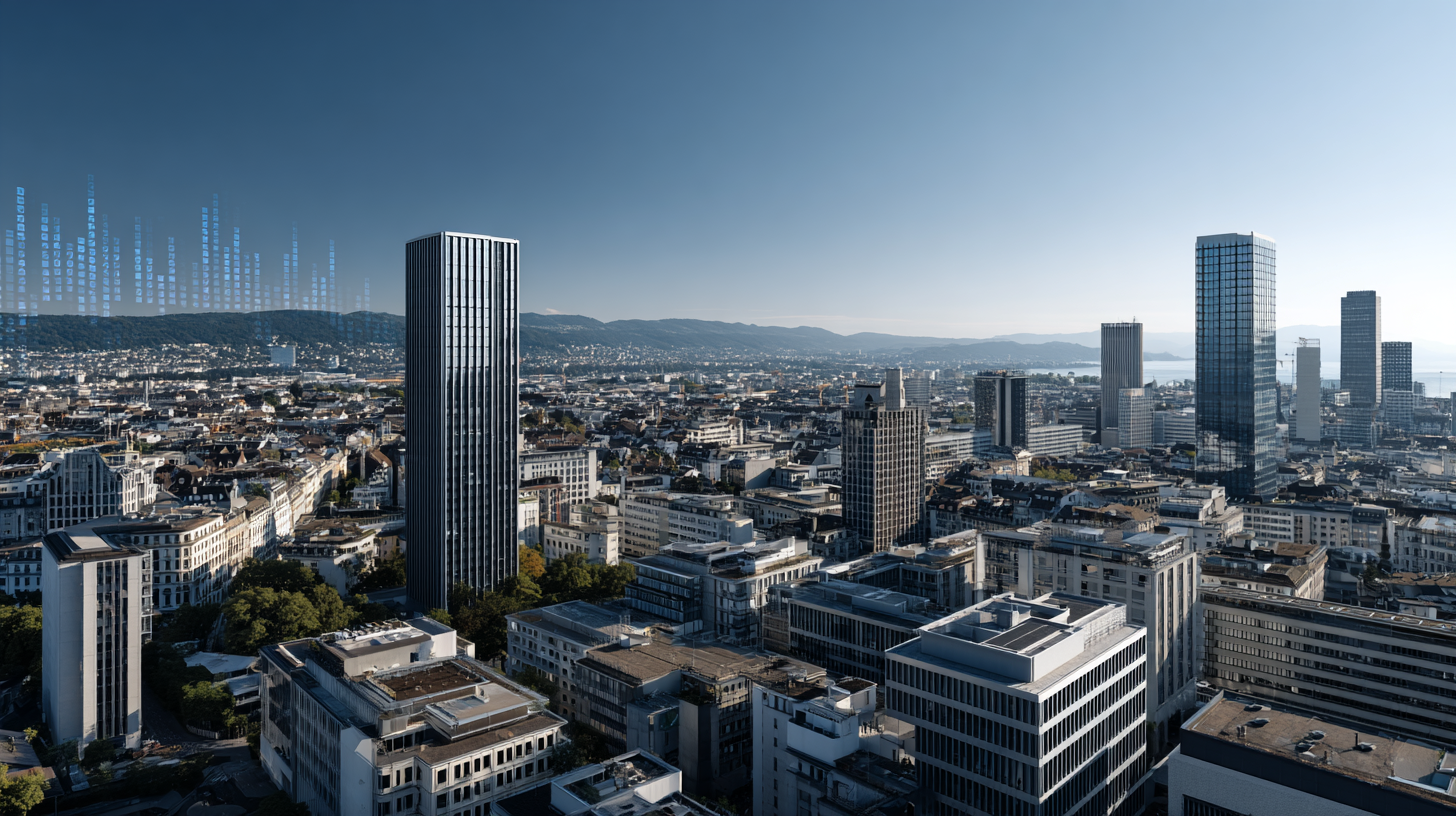
    The Zurich financial centre employs over 102,000 full-time positions at the end of 2024, 44,000 of which are in the banks alone. With a gross value added of CHF 32.8 billion, the sector generates more than one sixth of Zurich’s total economic output. The banks also cover around 30 per cent of the financing requirements of companies and households throughout Switzerland. These are not just abstract figures, they are the economic basis of an entire metropolitan region.

    Half the city’s coffers from one sector
    The study conducted by management consultants Oliver Wyman on behalf of the Zurich Banking Association makes one figure particularly clear. Around half of corporate taxes in the city of Zurich come from banks and insurance companies. With 10 per cent of jobs, they generate 16 per cent of value added, which is far above average productivity. Zürcher Kantonalbank also distributed a record amount to the canton and municipalities for 2025.

    Fewer banks, more jobs
    The number of banks operating in the Zurich region has fallen from 94 to 78 since 2015. Despite this, employment has risen steadily, with above-average growth since 2017. Bank-related service providers such as fintechs, asset managers and consulting firms have created jobs where traditional institutional structures have been dismantled. The sector is consolidating, but not shrinking.

    Regulation as a sticking point
    CBA Managing Director Christian Bretscher poses the crucial question. What happens if the framework conditions gradually deteriorate? He calls the planned increased capital requirements for UBS “incomprehensible”. The association is calling for targeted banking regulation with a sense of proportion, not blanket tightening that could force internationally active institutions out of Zurich. Swiss banks already contribute 5 per cent to national GDP and directly employ around 158,000 people.

    What is at stake
    The Zurich financial centre is in direct competition with London, Singapore and Frankfurt. Special regulatory burdens or tax deteriorations affect not only the banks, but the entire city economy. Anyone who draws 50 per cent of corporate taxes from a single sector has an interest in ensuring that this sector remains, grows and invests. This is not a lobby statement, this is arithmetic.

  • UBS halts payouts, investors wait up to three years

    UBS halts payouts, investors wait up to three years

    Since 25 March 2026, UBS Real Estate has suspended the redemption and issue of units of the UBS Euroinvest Immobilien fund. The liquid assets are no longer sufficient to fulfil investors’ redemption requests. The fund manages net assets of around 400 million euros, invests primarily in European office properties and already had several properties in the process of being sold. According to the German Investment Code, the suspension applies for up to 36 months.

    Three closures in three months
    The UBS fund is the first commercial property fund to close between 2008 and 2012 since the major fund crisis. Previously, two funds specialising in residential property had already closed. Wertgrund WohnSelect D in January and Fokus Wohnen Deutschland in February 2026 due to high redemption requests, faltering property sales and a lack of liquidity.

    Ten billion withdrawn
    Since January 2025, investors have withdrawn a net total of around ten billion euros from open-ended German property funds. Rising interest rates, weak transaction markets and ongoing property devaluations have eroded confidence. Property sales often take longer than six months due to restrictive bank financing, which puts a structural strain on liquidity. The rating agency Scope expects further cash outflows in 2026.

    Bafin doubts the risk class
    Bafin boss Mark Branson issued a public warning in March 2026. Small funds in particular could not rule out further closures. The supervisory authority also fundamentally doubts the previous risk classification of these products. What was sold to investors for years as a conservative, liquid investment turned out to be much more cumbersome than expected during the crisis.

    What investors need to check now
    Anyone invested in such funds should closely monitor liquidity reports and sales processes for the properties held. A redemption stop particularly affects those who are dependent on their capital in the short term. Anyone wishing to make a new investment should carefully check the fund size, property quality and holding periods. The crisis clearly shows that openness is not a sign of quality if the market for the properties behind it remains closed.

  • Control centre of the electrical industry

    Control centre of the electrical industry

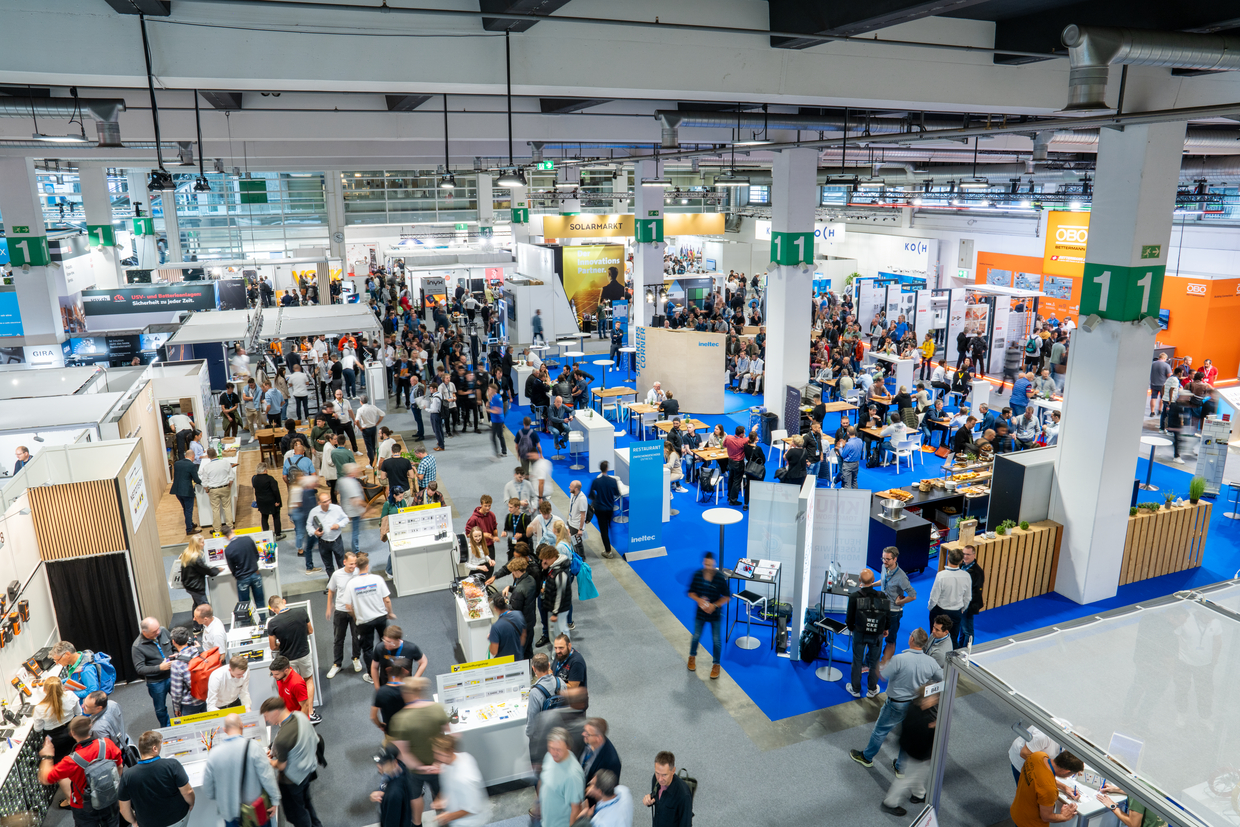
    Due to strong demand, Ineltec 2026 will now occupy Halls 3 to 6, with new brands, an expanded specialist lighting area with its own themed marketplace and presentations in the Speakers Corner on Level 1. Level 2 is roughly the same size and layout as 2024 and offers space for personal dialogue and networking. Exhibition Director Noëlle Marti puts it in a nutshell: companies that were still hesitant in 2024 will be there in 2026.

    EIT.swiss as national backing
    A newly concluded partnership agreement with the umbrella organisation EIT.swiss deepens the interaction between industry knowledge and trade fair expertise. Director Simon Hämmerli and Exhibition Director Noëlle Marti are jointly responsible for specialist topics, visitor communication and sustainable industry development. Young talent tours, further training programmes and knowledge transfer ensure a depth of content beyond the traditional exhibition area.

    Focus instead of wastage
    By focussing on two exhibition days, Ineltec is deliberately focusing on efficiency. An economically relevant location and a national trade audience without wastage. The seven specialist areas range from electrical engineering and building automation to e-mobility, infrastructure, IT solutions and tools. For managers and specialists from the building and installation sector, the trade fair is the densest industry meeting point in Switzerland in 2026.

    Secure your stand location now
    The trade fair team is currently working intensively on stand locations. Interested companies can register and reserve their stand at ineltec.ch. Anyone who was there in 2024 knows that two days are enough to make contacts, see innovations and prepare decisions. Anyone still hesitating risks watching from the sidelines in autumn.

  • The dirtiest business on the Swiss property market

    The dirtiest business on the Swiss property market

    In the Swiss Mittelland region, one owner initially turned down the offer. The offer was far above the market price and he was suspicious of the buyer. A day later, the same man turned up at the door with cash, a mid-six-figure sum as a “deposit”. The owner became weak. The trail of this deal led directly into the milieu of a suspected Lucerne money laundering travel agency and to people with close links to an Albanian cocaine boss who has been in custody in Albania since autumn 2024.

    The pattern is always the same
    CH Media recently documented dubious property transactions from several cantons. The pattern repeats itself. Owners are approached directly, the purchase offers are massively inflated and the time pressure is enormous. Those who agree often find that the new owners immediately leave the property empty or sell it on at a much higher price. One flat in central Switzerland stands empty for over a year after such a deal, redeemed to an anonymous property company, the owner apparently in a position to leave an investment of over a million francs lying idle.

    Illicit labour as a second money channel
    It is not only drug money that flows into properties. Illicit money from the construction sector also ends up there. The pattern is ingenious. A criminal entrepreneur receives one million francs for a new building through the bank in the normal way. Thanks to illegal labour, the project only costs him 700,000 francs. He “hides” the remaining 300,000 francs with false invoices from bogus companies that issue fictitious receipts in return for a commission of around five per cent. These companies do not keep any accounts and are usually already bankrupt by the time the authorities enquire. The result is a profit of CHF 300,000 at the expense of the general public and construction workers.

    The market remains silent, the price rises
    It is estimated that over a third of all money laundering cases worldwide are related to property transactions. Switzerland is considered particularly attractive internationally because the market is stable and regulation has long been patchy. Lawyer Fabian Teichmann, a money laundering expert, puts it in a nutshell: “If you’re smart, you’d rather buy four properties for five million each than one for 20 million. It’s less conspicuous.” The direct side effect is overpriced purchases that drive up prices for everyone.

    The law is following suit, slowly
    On 26 September 2025, the Swiss parliament passed a revision of the Anti-Money Laundering Act. Real estate agents are now also subject to due diligence obligations and must join a recognised self-regulatory organisation. The catch with this law is that transactions of less than five million francs remain outside the scope of the obligation. Entry into force is planned for the second half of 2026. Anyone who buys four properties worth four million each today will remain under the radar for the time being.

  • The Learning Factory is forging new links between industry, research and education

    The Learning Factory is forging new links between industry, research and education

    The Swiss Federal Institute of Technology Zurich (ETH) is planning to establish the ETH Learning Factory Zug within the Tech Cluster Zug – an industrial and innovation hub operated by Metall Zug AG. According to a press release, the Learning Factory will enable students, vocational trainees and experts from research and industry to work together on real-world challenges facing industry and society.

    The project is supported by ETH, the Canton and City of Zug, and a total of nine Zug-based companies. The Learning Factory will focus on topics such as industrial automation and digitalisation, sustainable systems and digital learning. Around 20 full-time positions are planned on-site for operations, teaching and research. The new learning and working environment is set to include modern workshops, digital learning spaces and meeting areas for interdisciplinary collaboration.

    The first phase is scheduled to last ten years and will cost a total of around 110 million Swiss francs. The Canton of Zug intends to contribute 55 million Swiss francs to the funding, and the City of Zug 27.5 million Swiss francs. Further contributions will come from business partners and from services provided by ETH.

    Political decisions still need to be made before implementation can begin. In addition to resolutions by the Cantonal Council and the Grand Municipal Council, a referendum is planned in the city of Zug. If approved, the refurbishment could begin in 2027, with commissioning planned for 2029.

  • 3D-printed concrete stores CO2 and reduces resource consumption

    3D-printed concrete stores CO2 and reduces resource consumption

    Researchers at the Structural Engineering Laboratory of the Swiss Federal Laboratories for Materials Science and Technology (Empa) are working on the development of concrete elements produced using a 3D printer. According to a press release, the building elements are stable without traditional steel reinforcement and are virtually cement-free. The material is designed to store carbon dioxide as it cures.

    The research is being carried out as part of the European CARBCOMN project (Carbon-negative compression dominant structures for decarbonised and de-constructable concrete buildings). Alongside Empa, researchers from the Swiss Federal Institute of Technology Zurich (ETH) and the Empa spin-off re-fer in Seewen, as well as other European partners, are involved in the development.

    The material for 3D printing is derived from recycled industrial waste, such as steel slag. Geometrically optimised shapes are produced using a special process. Iron-based shape memory alloys (Fe-SMA) from re-fer are used as reinforcement. To cure this concrete, carbon dioxide is injected into a combustion chamber, where it chemically bonds with the concrete mixture. “We are combining unique expertise here – 3D printing, structural performance and our speciality: iron-based shape memory alloys,” Empa researcher Moslem Shahverdi is quoted as saying in the press release. “On the one hand, we use digital manufacturing methods to build in a resource-efficient manner. On the other hand, we are replacing conventional cement with binders that have a lower carbon footprint.” The concrete components are also designed so that they can be dismantled after use and reused elsewhere.

    Launched in 2024, the four-year project is funded under Horizon Europe and brings together eleven leading research institutions and architectural firms from across Europe. According to the press release, these include Ghent University, Darmstadt Technical University, the University of Patras in Greece, as well as Zaha Hadid Architects from London, Mario Cucinella Architects from Bologna, and the companies Tesis from Penta di Fisciano in Italy, orbix from Genk, and incremental 3D from Innsbruck.

  • 47 million for a new heart in the Bernese Oberland

    47 million for a new heart in the Bernese Oberland

    The overall project will cost 47 million francs. Financing is being provided by a newly established site development company in which four partners are participating. The city of Thun is granting a mortgage-backed, interest-free loan of 16 million francs and is also guaranteeing a cantonal loan of 10 million francs as part of the new regional policy. Empa itself is investing CHF 16 million in laboratories and a technical center, while Halter AG is contributing CHF 5 million as a development partner. Once the project is completed, the company will be transferred to investors.

    Building permit is available
    The way was not clear. Objections delayed the process by around a year. The building permit for construction site B5 in Thun North has now been granted, with construction set to begin in spring 2027 and completion scheduled for the end of 2029. The city parliament will decide on the loan on 30 April 2026. A clear yes is needed to keep to the schedule.

    Empa in Thun since 1994
    The Swiss Federal Laboratories for Materials Science and Technology has been conducting research in the field of high technology and materials in Thun since 1994. The new building is not a relocation, but an expansion. Mayor Raphael Lanz puts it in a nutshell. Empa secures highly qualified jobs in research and development in the long term, generates regional added value and strengthens Thun as a location for technology and innovation in the Canton of Bern.

    From barracks site to urban quarter
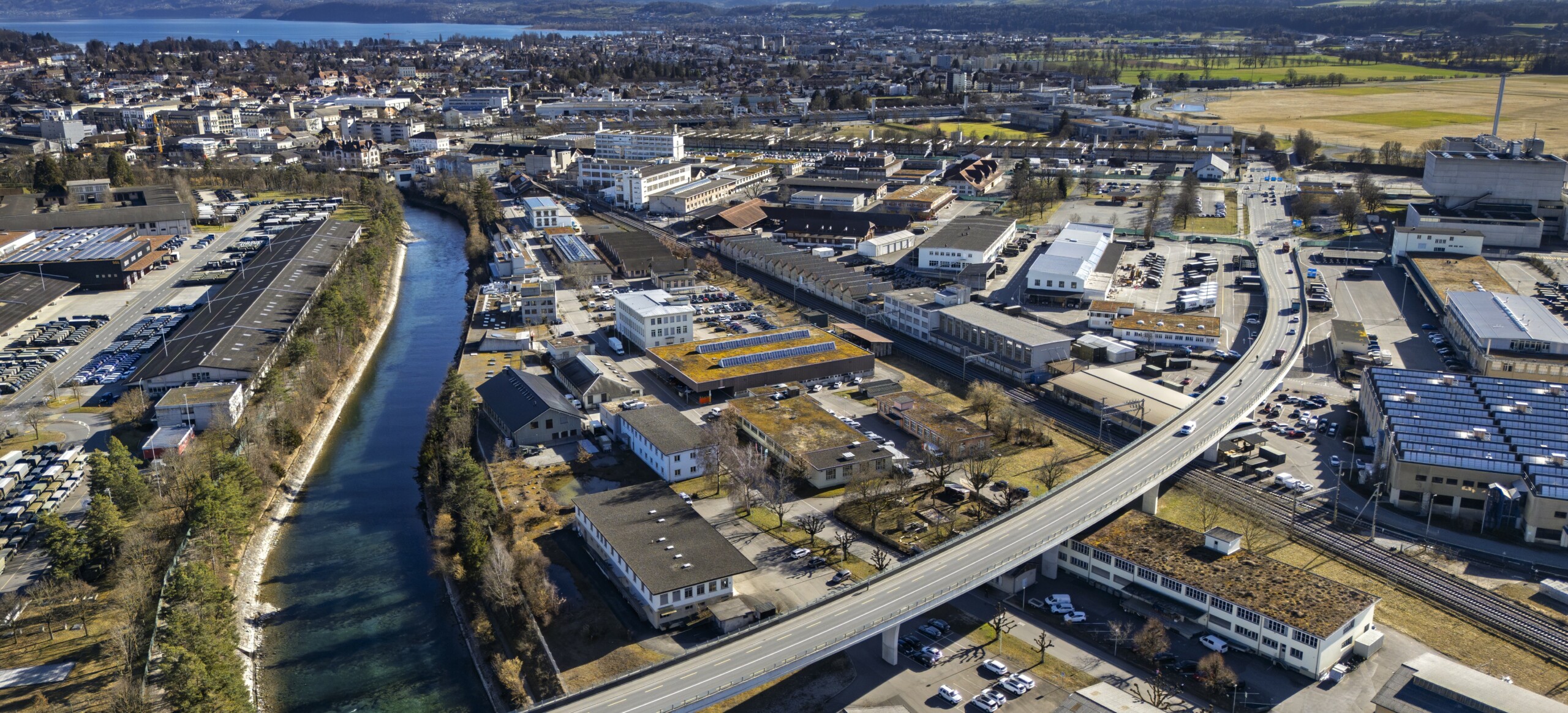
    Thun North is the largest urban development project in the Bernese Oberland. On the 60-hectare site, research companies, businesses and housing are replacing military use. in the long term, 6,500 jobs are to be created; around 2,300 are already located there today. A new Thun Nord S-Bahn stop is included in the federal parliament’s 2035 expansion plan and will connect the district directly to long-distance transport.

    Halter as a lever
    It is no coincidence that Halter AG is contributing CHF 5 million to the project as a development partner for construction site B5. The company won the project competition in 2022 together with Bauart Architekten and Balliana Schubert Landschaftsarchitekten. The composition shows the concept. Private capital and the public sector are pulling together, and the location is sharing the risk because it is thinking about the return.

    What counts now
    April 30 is the date that decides everything. If the city parliament approves the loan, planning gets underway. If the loan fails, the entire timetable is thrown into disarray. This would be a setback for Thun North and a location issue for Empa. The city has already paid its share of the bill. Now it’s up to parliament.

  • Major project to boost rail capacity in the Zurich area in the long term

    Major project to boost rail capacity in the Zurich area in the long term

    According to a press release, SBB has begun work on upgrading the line between Zurich and Winterthur to four tracks throughout. As part of the ‘MehrSpur Zurich-Winterthur’ project, SBB is constructing a new tunnel, upgrading several stations and carrying out further improvements.

    SBB and the construction firms involved have now started work on upgrading the stations at Wallisellen, Dietlikon, Bassersdorf and Winterthur Töss. This includes widening platforms, constructing new and modified underpasses, and building footbridges and bridges. Work in Bassersdorf is due to be completed by 2030, in Wallisellen and Dietlikon by 2031, and in Töss by 2034.

    The Brütten Tunnel is set to be 9 kilometres long. Tunnel boring is scheduled to begin in 2029, with the tunnel due to open in 2037.

    The expansion is expected to cost a total of 3.3 billion Swiss francs. This major project, together with other initiatives such as the expansion of Zurich Stadelhofen station, is set to significantly improve rail services in the Greater Zurich area.

  • New district heating network makes efficient use of waste heat and water from the Rhine

    New district heating network makes efficient use of waste heat and water from the Rhine

    According to a press release, energy supplier AEW Energie AG is investing 8 million Swiss francs in the construction of a district heating network in Augst, in the canton of Basel-Landschaft. According to the company, this sends “a clear signal regarding the implementation of the energy strategy and the consistent expansion of renewable heating solutions”.

    Waste heat from the generators at the existing Augst hydroelectric power station and water from the Rhine are to be used for district heating. It is stated that, via a 1.3-kilometre-long district heating network, the connected buildings will receive CO2-free energy from the start of the 2026/2027 heating season.

    Three heat storage tanks, each with a capacity of 15,000 litres, will ensure a secure supply and reliable, stable operation even during peak loads. According to the press release, the plant’s thermal output is 2 megawatts and is expected to deliver a heat output of 4,400 megawatt-hours once fully operational. This is expected to save 1,200 tonnes of CO2 annually.

    At the start of the construction project with the ground-breaking ceremony on 16 March 2026, the company announced that it was creating a replacement for the AEW Contracting plant in Pratteln, which had been operated using wood pellets and oil. “With the Augst heating network, we are making optimal use of existing energy sources from our own infrastructure and making an important contribution to the decarbonisation of the region’s heat supply,” said Dr Raffael Schubiger, Chairman of the Board of Directors of AEW Energie AG and Kraftwerk Augst AG.

    According to David Gautschi, Head of Production at AEW, the Augst heating network exemplifies how existing energy infrastructure and natural resources can be efficiently combined.

  • District heating networks are becoming increasingly important for urban energy supply

    District heating networks are becoming increasingly important for urban energy supply

    Researchers at Lucerne University of Applied Sciences and Arts (HSLU) are working on the development of seasonal thermal energy storage systems. In an era of global warming, thermal networks are becoming increasingly important for cooling densely built-up cities. This involves circulating water from lakes or rivers through pipe systems to cool buildings; these same systems are then used for district heating in winter. To drive the development of such systems forward, the university organised an event to share experiences. According to a press release, the 22nd IGE Seminar of the Institute for Building Technology and Energy (IGE) took place on 11 March 2026. Representatives from Thermische Netze Schweiz,WWZ Energie AG (Zug), Wien Energie GmbH and the City of Zurich, with their CoolCity Zurich project, also took part in the presentations and discussions.

    At HSLU, flexible heat storage systems are being developed that adapt to changing conditions. Researchers led by Timotheus Zehnder demonstrated how firewood can be used more efficiently in wood-fired systems thanks to flue gas cooling and condensation. Three speakers presented thermal networks for heating and cooling supply in Zug, Zurich and Vienna.

    Dieter Kissling from the ifa Institute for Occupational Medicine raised an interesting point: office temperatures were adjusted in the 1960s to suit the needs of men (21 to 22 degrees Celsius). However, it has been shown that women are more productive at 26 to 27 degrees Celsius. With a higher proportion of women in the workforce, it is worth considering whether room temperatures should be adjusted.

    The diversity of topics demonstrated that climate change poses further challenges. The 23rd IGE Seminar has already been scheduled for 10 March 2027.

  • Swiss construction project focuses on sustainable earthen architecture abroad

    Swiss construction project focuses on sustainable earthen architecture abroad

    The go-ahead has been given for the construction of the new Swiss Embassy in the Cameroonian capital, Yaoundé, and according to a press release, Dietikon-based Oxara AG is playing a key role in the project. The public building will be constructed using pressed clay bricks. Oxara is supplying its Oxabrick Loko stabiliser for the red raw material, which is available in abundance locally.

    The design for the embassy building is by the Basel-based architectural firms Caesar Zumthor Architekten and Nord Architekten and comprises an office block, a residence and a connecting building, all grouped around a courtyard. The buildings are to be constructed sustainably using local resources.

    On its website, Oxara – a company founded in 2019 – has launched a series reporting on the progress of the construction work. “In West Africa, clay is perceived as a sign of poverty and rurality, whilst concrete dominates in cities as a status symbol,” Oxara’s project manager Jonathan Ensslin is quoted as saying there. “It therefore sends a strong signal that the new Swiss embassy is being built with clay.”

    Oxara’s non-toxic mineral activator transforms clay into a stable and water-repellent building material. According to the company, this makes clay construction faster, less labour-intensive and scalable. At the same time, it is circular and low-carbon.

    Tests in the Oxara laboratory had shown that the material is well suited for use with Oxabrick Loko. However, the laboratory results could not initially be replicated on site. With the help of local materials researcher Berardin Beauderic Kenne Diffo, who had already got to know Oxara during his PhD at the Swiss Federal Institute of Technology Zurich, the mixing ratios were adjusted. A test wall comprising around 7,000 clay bricks is currently being completed. Construction work on the new embassy is then set to begin.

  • The circular economy is gaining in importance in the construction and civil engineering sectors

    The circular economy is gaining in importance in the construction and civil engineering sectors

    According to a press release, INDUNI & CIE AG has developed solutions to promote the reuse of reinforced concrete from existing buildings. The three-stage approach covers the demolition, transport and storage of materials before reconstruction begins.

    In the first stage, concrete elements are crushed during the demolition of buildings in such a way that they are already suitable for later reuse. The parts are then transported to various storage sites in the Lake Geneva region using the company’s own logistics. Finally, the concrete elements are integrated into new projects by the company’s structural and civil engineering teams.

    INDUNI is also supporting Matériuum’s 10th anniversary. The Geneva-based association for the protection of natural resources helps to “promote the reuse of building materials” and “support the transition to a circular economy”, writes INDUNI in a further statement. The company thus makes it clear that it intends to “continue its commitment to more responsible and circular construction”.

    Founded in 1917 and based in Lancy, INDUNI & CIE AG is active in building construction and civil engineering in French-speaking Switzerland.

  • Confidence in Swiss property is growing

    Confidence in Swiss property is growing

    According to a press release from EY Switzerland, 98 per cent of property investors continue to view the Swiss property market as attractive. The Zurich-based audit and advisory firm reports this in its latest “Property Investment Market Trend Barometer”. Last year, only 93 per cent expressed a positive interest.

    For the study, EY surveyed 96 experts and investors who have been actively involved in the Swiss property market in recent years. Of those surveyed, 35 per cent of investors rated the Swiss market as “very attractive” last year; in the new survey, this figure had risen to 46 per cent. Nine out of ten respondents believe that new-build activity can be significantly boosted by simplified, digitalised planning permissions. Three-quarters see digitalisation as a driving force, yet only 16 per cent already use artificial intelligence for their business operations.

    Residential property remains in vogue in the top nine centres (Basel, Bern, Geneva, Lausanne, Lugano, Lucerne, St Gallen, Zurich and Zug), whilst demand is lower in rural areas. Demand for office and logistics properties has risen in the centres. Office properties in particular are in greater demand, with a ratio of 58 per cent to 48 per cent (2025). In the logistics sector, the trend remained virtually unchanged: 51 per cent to 52 per cent (2025).

    “Geopolitical uncertainties – such as US tariffs, international trade conflicts, the war in Ukraine or global financial market risks – are having an increasing impact on the Swiss property market as exogenous disruptive factors, particularly in centres with a strong international focus,” says Daniel Zaugg, Sector Leader Real Estate, Construction & Building Materials at EY in Switzerland, quoted in the press release. “These effects are reinforcing existing trends towards regional polarisation by widening the gap between highly internationalised markets such as Geneva and Zurich and more domestically oriented regions. Nevertheless, Switzerland remains a politically and economically stable location overall – and in uncertain times even positions itself as a ‘safe haven’ for capital.”

  • Partnership drives smart urban development in the region

    Partnership drives smart urban development in the region

    The City of Thun and the Smart Regio Thunersee association have signed a cooperation agreement. According to a press release, the collaboration will be guided by the Smart City Thun vision.

    “The partnership aims to drive innovation in a targeted manner, use resources efficiently and further develop the city of Thun and the Thunersee region as an attractive place to live and do business,” said Councillor Andrea de Meuron, Head of the Finance, Resources and Environment Department, in the press release.

    The Smart City project, developed as early as 2021/22, aims to make Thun “liveable, progressive and resource-efficient”. Digitalisation is to be used to increase the efficiency of services. At the same time, there is also a desire to bring together the various forces within society.

    The agreement now concluded is intended to strengthen selected innovation and networking formats. As concrete projects, Thun-based SMEs are planning to use cargo bikes for inner-city transport; an information day on this will take place on 2 June 2026. In the autumn, the focus will be on the circular economy in construction. “We don’t just want to discuss smart projects, but actually initiate and implement them, working closely with the city and the local community,” says Markus van Wijk, President of the Smart Regio Thunersee association.

  • Climate project establishes CO2 storage within the building materials cycle

    Climate project establishes CO2 storage within the building materials cycle

    According to a press release, the climate protection programme run by zirkulit Beton AG in Kloten has now been officially registered as a project aimed at increasing carbon sequestration capacity. This makes it the first project for CO2 storage in circular concrete to be approved by the FOEN in Switzerland. The programme comprises several CO2 storage facilities operated in partnership with concrete manufacturers at various locations across Switzerland.

    As part of the programme, biogenic CO2 is captured from Swiss biogas plants, transported to recycled concrete plants and, there, brought into contact with granulate from demolition concrete in the storage facilities developed by zirkulit. The CO2 reacts with the cement paste contained in the concrete aggregate to form calcium carbonate and is thereby permanently bound in a mineral form. This aggregate is then used to produce circular concrete.

    “This creates a permanent carbon sink within a durable building material,” says zirkulit Beton AG, “a key lever on the path to net-zero in the building sector.” This underscores its commitment to actively contributing to the transformation towards a circular and climate-friendly construction industry.

    The programme is financially supported by the Klimarappen Foundation. Together with the partners of zirkulit Beton AG, it is funding the project as one of five national pilot projects for negative emission technologies and carbon capture and storage. Klimarappen is providing a total of 50 million Swiss francs for this purpose. Funding is provided under a multi-year supply contract for the CO₂ removals achieved through the programme.

  • The city is exploring new approaches to reducing waste and resource consumption

    The city is exploring new approaches to reducing waste and resource consumption

    The Government Council of Basel-Stadt is currently reviewing a pilot project with the Bern-based start-up Pretty Good aimed at the more systematic collection and repair of used or only slightly damaged everyday items. This is evident from a responseto a motion tabled in the Grand Council.

    The cantonal government refers to pilot projects carried out in Bern and Zug with Pretty Good. Their results showed that such an approach brings environmental benefits and is economically viable. However, these projects are not yet financially self-sustaining. This would also be the case for a pilot project in Basel. The cantonal government will therefore seek to bring further investors on board.

    If a pilot project goes ahead in Basel, the local second-hand goods and repair sector is to be involved. The aim is to build up a strong network of repair shops and sales outlets.

    Waste Management Recycling in the City of Bern and Pretty Good launched a pilot project in 2023, under which functional and slightly damaged everyday items could be handed in at two of the city’s waste collection centres. Of these, 74 per cent were refurbished, and almost 84 per cent of those were subsequently sold. A large proportion of the items were electronic goods. The project was supported by the industry association Swico, the Berner Kantonalbankand the Burgergemeinde Bern.

    Pretty Good is organised both as an association based in Langnau i.E. and as a limited liability company based in Bern. Following the pilot in Bern, the project was expanded to other locations in the canton of Bern and in Zug.

    The Basel Cantonal Government responded to a motion tabled by SVP member of the Grand Council Beat K. Schaller and other members of the Grand Council.

  • New building standard defines climate neutrality across the entire life cycle

    New building standard defines climate neutrality across the entire life cycle

    The Minergie Association, based in Basel, has introduced the Minergie Net Zero Standard for new builds and building renovations. It has now presented the standard at an event in Zurich.

    Until now, there have been no specific guidelines for building owners, planners, local authorities and companies on “constructing buildings whose carbon footprint is truly zero over their entire life cycle”, says Fabian Peter, Lucerne cantonal councillor and president of Minergie, in a press release. Minergie Net Zero offers a transparent and credible framework.

    According to the press release, Minergie Net Zero buildings generate “very low greenhouse gas emissions over their defined 60-year life cycle”. Regarding the procedure, it states that once the life-cycle emissions have been determined, the carbon stored in the building is deducted from the remaining emissions. This improves the carbon footprint in line with the Climate Act. For the remaining emissions, a balance is created using negative emission certificates.

    To achieve net-zero by 2050 as a country, “avoidance” alone does not go far enough as a measure. With Minergie Net-Zero, this could be achieved as early as 2026, albeit “with very high requirements”, says Andreas Meyer Primavesi, Managing Director of the Minergie Association. “We factor in grey emissions. And are therefore significantly stricter than the laws coming into force in the next few years,” he is quoted as saying. The canton of Basel-Stadt is aiming for net-zero by 2037, whilst many institutions want to be there by 2040.

    According to the information provided, Minergie is the Swiss building standard for comfort, efficiency and climate protection for new builds and renovations. The three well-known building standards – Minergie, Minergie-P and Minergie-A – can be extended to include the ECO designation.

  • Start of construction marks an important step for renewable electricity generation

    Start of construction marks an important step for renewable electricity generation

    According to a press release, Kraftwerk Meiental AG celebrated the start of construction of the Meiental power station in the municipality of Wassen with an official ground-breaking ceremony on 11 March. The actual construction work began back in September. Work is currently underway on the penstock and the new power station control centre.

    The power station utilises water from the Meienreuss. This is collected at an altitude of 1,317 metres and channelled through a 3,250-metre-long penstock to the new hydroelectric power station, which is situated at an altitude of 1,100 metres in Fedenbrügg. With a capacity of 10 megawatts, the power station is expected to generate around 34 gigawatt-hours of electricity per year. It is scheduled to come into operation at the end of 2028.

    A total of 40 million Swiss francs is being invested. The canton of Uri and the municipality of Wassen anticipate additional tax revenue, whilst the canton and the Corporation of Uri expect water rights fees of half a million Swiss francs per year. “We are utilising our local hydropower, strengthening regional value creation and, at the same time, making an important contribution to a climate-friendly energy supply,” Uri State Councillor and Director of Public Works Hermann Epp is quoted as saying in the press release.

    Kraftwerk Meiental AG is owned by the cantonal energy supplier energieUri AG, the canton and the Corporation of Uri, as well as the municipality of Wassen.

  • Local energy cooperatives are driving the expansion of solar energy

    Local energy cooperatives are driving the expansion of solar energy

    Since the start of the year, owners of solar panels have been able to sell their surplus electricity locally via local electricity communities (LEG). The City of Zurich’s electricity utility (ewz) offers a straightforward way to do this with its new product, ewz.solarquartier.

    According to a press release, 130 such electricity communities are already feeding their surplus electricity into the grid. In return, they receive a guaranteed purchase price of 14 centimes per kilowatt-hour. Already 6,000 customers are purchasing this electricity from ewz.

    The product is designed to promote the use of roof space for solar installations. “With our LEG product ewz.solarquartier, we have created a further economic incentive to ensure that solar installations are not simply built, but that high returns can be achieved in the long term,” Corinne Pellerin, Head of Market and Customers at ewz, is quoted as saying in the press release. The local use of the electricity also reduces the load on the grid.

    The Allgemeine Baugenossenschaft Zürich (ABZ) is already feeding in the surplus electricity from all its installations. “Thanks to the LEG solution from ewz.solarquartier, it was clear to us that we would register all 28 photovoltaic installations in our housing estates within the city limits,” says Eliane Hurni, Head of Buildings and Environment and a member of the Executive Board at ABZ.

    In total, there are currently almost 2,900 photovoltaic systems installed in the city, with a peak output of almost 100 megawatts. They produce around 80 gigawatt-hours of electricity per year. By 2040, production is set to rise to 500 gigawatt-hours.

  • Weather conditions and impairment charges are weighing on business performance

    Weather conditions and impairment charges are weighing on business performance

    According to a press release, BKW generated revenue of CHF 4,543.6 million in 2025. In the previous year, the figure stood at CHF 4,772.3 million, representing a decline of 4.8 per cent. The decline in operating profit before interest and taxes was significantly more pronounced. In 2025, BKW posted a profit of CHF 561.0 million, compared with CHF 789.9 million the previous year. Net operating profit fell from CHF 550.4 million the previous year to CHF 351.1 million in 2025.

    BKW attributes the decline partly to a value adjustment on its stake in the Wilhelmshaven coal-fired power station on the North Sea coast of Lower Saxony. This adjustment amounts to CHF 113.7 million at the operating profit level and CHF 90.9 million at the net profit level. BKW holds a 33 per cent stake in the power station.

    Secondly, the weather-related decline in electricity generation from hydro and wind power weighed on the result in the Energy Solutions business segment. Even before the impairment charge, this was down 18.6 per cent on the previous year. The result of the Power Grid business segment, at CHF 130.6 million, was 7.0 per cent below that of the previous year.

    In contrast, the result of the Infrastructure & Buildings business segment rose significantly by 40.6 per cent to CHF 80.0 million. Revenue for the business segment remained constant at CHF 1.98 billion.

    BKW expects earnings of between CHF 650 million and CHF 750 million for 2026.

  • Graubünden builds bigger, more expensive, longer

    Graubünden builds bigger, more expensive, longer

    128 construction sites do not mean relief, but concentration. Instead of many small interventions, the focus in 2026 will be on complex infrastructure projects that require more manpower, longer construction times and higher budgets. Traffic light systems will be used at 67 of the 128 construction sites to guide traffic through in an orderly fashion. The Graubünden Civil Engineering Office has set clear priorities.

    La Punt freed from through traffic
    The largest project is the La Punt bypass in the Engadin. In future, a 584-metre-long tunnel will run under the village center and a 55-metre-long bridge will cross the Inn. The total costs amount to 80 million Swiss francs and the construction period is eight years until 2033. After the ground-breaking ceremony in September 2025, the preliminary cuts in the Arvins area will be made in 2026. It is a relief for La Punt and a leap in quality for the Engadin.

    New tunnel for the Surselva
    Between Disentis and Curaglia, a new 500-metre-long tunnel will replace the dilapidated Las Ruinas tunnel and its two galleries. The work will take three years and traffic will remain in operation throughout the construction period. As the new tunnel runs directly next to the existing one in some places, night-time closures are unavoidable. An intervention that requires consideration, but is necessary.

    malix five years of work before completion
    On the Julierstrasse between Chur and Malix, the signs are pointing to the finale. The section lies in a landslide area and has been stabilized, widened and straightened over five years. The final work should be completed by July. As a visible sign of the new start, the section will be given a cycle lane. A project that was born out of necessity and ends up as a modern stretch of road.

    infrastructure as an investment
    Graubünden’s 2026 construction season shows that infrastructure is not a matter of course. Operating 1360 kilometers of cantonal roads through alpine terrain, landslide areas and flood zones requires continuous investment. Fewer construction sites, larger projects – this is not a cost-cutting exercise, but a strategic decision for sustainable quality.

  • Rent cap eats its own children

    Rent cap eats its own children

    Since the Housing Protection Ordinance came into force in Basel-Stadt in May 2022, planning applications for rental apartments have plummeted by 76 percent. in 2024, only 151 new-build apartments were completed in the city canton, less than a quarter of the long-term average. While Zurich recorded a 20 percent increase in building applications in the same period, construction activity in Basel effectively came to a standstill.

    No renovation, buildings fall into disrepair
    Regulation not only slows down new construction, it also paralyzes the renewal of existing buildings. Craft businesses are complaining about a lack of orders; individual companies are looking for work 40 kilometers away in Fricktal. Necessary energy-efficient renovations are not being carried out and properties are falling into disrepair. This ultimately affects the tenants themselves and thwarts any claim to climate protection.

    Geneva 40 years of regulation, 40 years behind
    Geneva has had one of the strictest tenant protection laws in Switzerland since 1983. The result is sobering. 83.5 percent of residential buildings over 40 years old have never been comprehensively modernized, compared to 47.6 percent in Basel and 41.3 percent in Zurich. New tenants in Geneva pay an average of 30 percent more per square meter than existing tenants. Strict tenant protection therefore primarily protects those who already have an affordable apartment. Not those who are looking for one.

    The real problem, too little supply
    If you want to reduce rents, you have to increase supply. This means faster approval procedures, more densification, more replacement new builds and extensions and fewer objections. The Zurich Cantonal Council has already drawn up two counter-proposals that focus on better framework conditions rather than bans. This is the right direction.

    What Zurich needs to decide
    The housing market in the canton of Zurich is under pressure, that is real. But a rent cap does not solve the problem, it exacerbates it. Basel and Geneva are not a theory, but a living warning. On June 14, Zurich has the choice of learning from its mistakes or repeating them.

  • Who pays, who lives, who benefits?

    Who pays, who lives, who benefits?

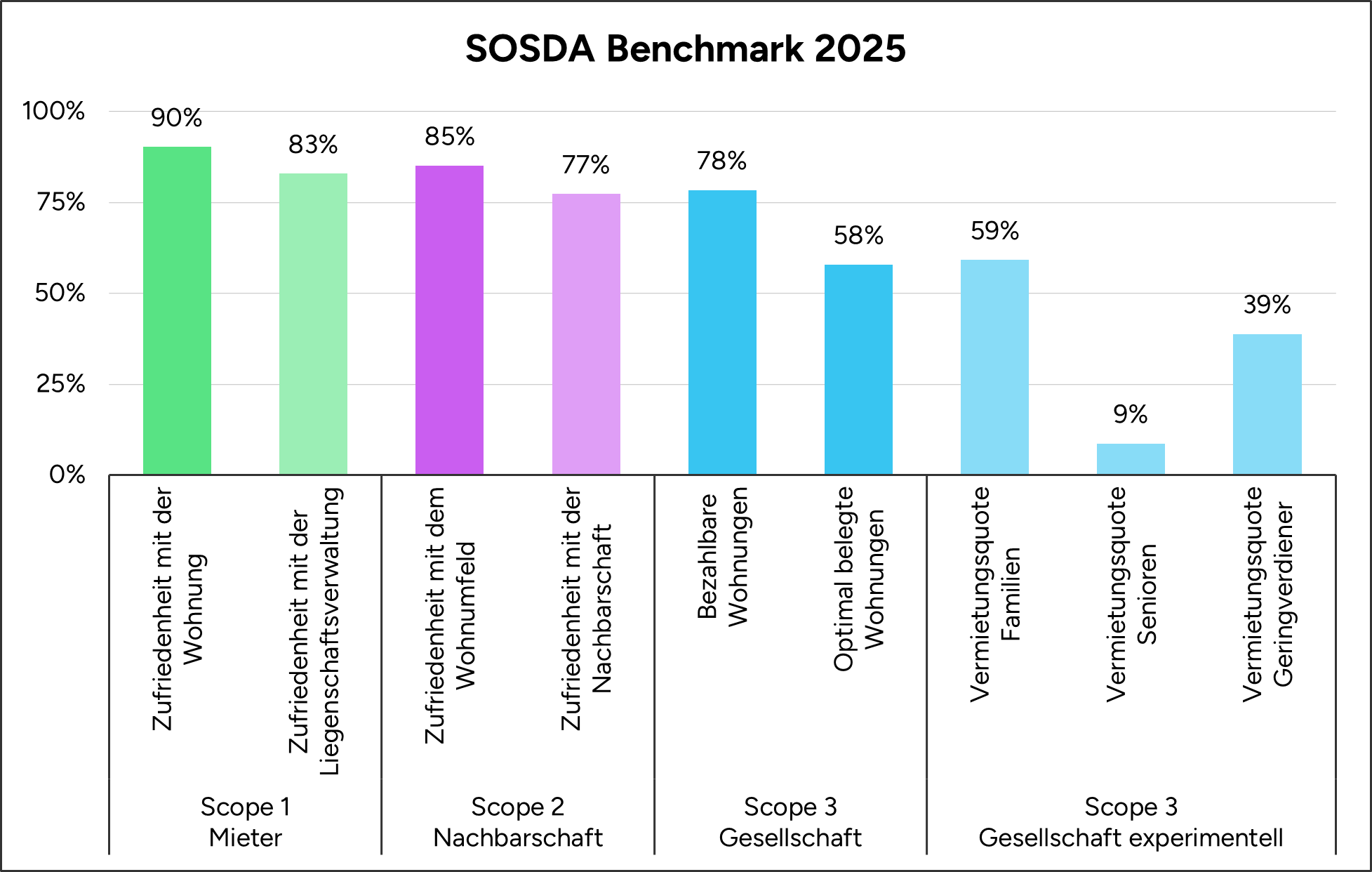
    The SOSDA framework developed by Zimraum and Stratcraft records the social performance of residential real estate along nine key figures in three scopes: tenants, neighborhood and society. The data pool comprises 30 portfolios with around 68,500 apartments from 17 owners. These include pension funds, investment foundations, listed funds and non-profit housing developers. A database that allows comparisons to be made for the first time.

    Affordability is holding up better than expected
    78 percent of the apartments in the data pool are considered affordable according to the SOSDA definition. The net rent accounts for less than a third of the monthly taxable median income in the respective municipality. Even in the new-build segment, this figure is 58 percent. In institutional portfolios, 48 percent of new-build apartments reach this threshold. This contradicts the widespread view that new construction and affordability are fundamentally mutually exclusive.

    High satisfaction, solid management quality
    Tenant satisfaction is remarkably high. 90 percent of respondents are somewhat to very satisfied with their apartment. 83 percent also give their property management good marks. The residential environment is also impressive. 85 percent are satisfied with their neighborhood, 77 percent rate the neighborhood conditions positively. Quality is obviously not a product of chance in the Swiss housing market.

    Family apartments remain under-occupied
    When it comes to occupancy efficiency, the benchmark reveals a structural weakness. Only 58 percent of apartments fulfill the “room minus 1” rule. For family apartments with four or more rooms, this proportion drops to 41 percent. Although non-profit portfolios perform slightly better than institutional portfolios when it comes to family apartments, the difference remains small. This is a clear area for optimization for all market participants.

    Letting practice under the magnifying glass
    For the first time, the benchmark also documents to whom apartments are actually let. The range is considerable. Depending on the portfolio, between 46 and 100 percent of family apartments went to households with children. Only 9 percent of apartments were rented to senior citizens. The proportion of affordable apartments that went to low-income households varied between 30 and 50 percent. The database is still limited, but the direction is clear. Social performance can no longer be ignored in the future.

  • Successful job coaching from SVIT Zurich!

    Successful job coaching from SVIT Zurich!

    SVIT Zurich actively supports job searches in the real estate sector. Applicants are not left to their own devices: On request, they can receive targeted support when entering the real estate industry. An experienced real estate professional accompanies them as a personal coach, analyzes their initial situation together and defines effective measures for a successful job search. In this way, participants acquire additional skills that improve their application chances in the long term.

    The job placement service is free of charge for members and non-members alike, provided they have completed or are currently attending the “Career changer assistant in real estate management and marketing” or “Real estate management clerk” course at SVIT Zurich in Oerlikon. With this offer, the association is making an active contribution to combating the shortage of skilled workers and at the same time ensuring that the candidates placed have a sound basic education in the industry at SVIT Zurich.

    More and more members are making use of this qualified specialist resource – with consistently positive feedback. They benefit from the opportunity to build up new team members according to their needs and deploy them in the long term. In addition, many candidates bring valuable additional skills from their previous professional life.

    Interested parties can register by sending an e-mail to diana.waly@svit.ch. SVIT Zurich has an official permit from the Canton of Zurich for private employment agencies.

    Further information on the process and application videos of current candidates can be found at the following link:

    https://www.svit.ch/de/svit-zuerich/themen-services/einstieg-die-immobilienbranche-bewerbungsvideos-quereinsteiger

  • That’s what it’s all about: usage and operating concepts as the key to needs-based sports facilities

    That’s what it’s all about: usage and operating concepts as the key to needs-based sports facilities

    From a competition venue to a facility for leisure and exercise
    Over the last five decades, the sporting behaviour of the population – whether on an individual basis or in organized sport – has changed dramatically. New training habits, a significant rise in population figures, increasing professionalization in club sport and changing social needs have led to facilities having to perform significantly better today than they did 50 years ago. This also includes aspects such as gender and age equality, which are now taken for granted.

    Accordingly, at the beginning of every infrastructure project, the focus should not be on the structural solution, but on the question of a suitable utilization and operating concept (including a profitability analysis). All too often, however, a planner is hastily commissioned before the project fundamentals and dependencies on other institutions and projects have been identified. The result is then the development of volumetric options, but not strategic options for the communities concerned. As a specialist in strategic utilization and operational concepts, BPM Sports has more than 20 years of experience in this field.

    So what characterizes a good utilization and operating concept? In principle, it comprises three key levels:

    • Strategic-conceptual: purpose, target groups, offer, business case, strategy, sponsorship
    • Operational-conceptual: Maximum utilization and use with added value
    • Operational: staffing requirements, maintenance, visitor management, self-financing of maintenance

    At the strategic level, the question of the raison d’être – the purpose of the facility – must be answered. This needs to be sharpened and clearly defined for all stakeholders. The better this is done, the easier it will be to communicate with taxpayers and the parties ultimately involved in the planning.

    The key elements include

    Political leadership: sports facility projects require broad support. Perceptible, continuous and strong political leadership is therefore essential.

    Addressed target groups: The user groups and their needs must be identified. This includes recording routines and expectations, but also future developments. Frequencies and capacities derived from this are key to optimally utilizing the facility for both users and operators.

    Sharpened offer: The available space and functionalities are formulated in a targeted manner, with a focus on energy and personnel costs. These are based on the formulated needs, with a direct impact on the follow-up costs of a facility.

    Construction costs vs. follow-up costs: The latter are (too) often overshadowed and only tend to come into focus in a later project phase. An early consideration of the follow-up costs is helpful to ensure the financial viability of a system.

    System strategy: An effective lever for predicting operating costs and earnings potential. Particularly in the case of seasonal facilities such as outdoor pools or ice sports facilities, complementary or supplementary offers can increase income and influence resource requirements.

    Operator model: There is a wide variety of models here. Different organizational forms (administrations, public limited companies, private-public partnerships) offer different advantages, whereby PPPs have become increasingly established in recent years and offer new opportunities, especially for less profitable club and popular sports.

    Other success factors at operational and conceptual level are

    Utilization: Generating high utilization is a challenge. This is because it does not always go hand in hand with profitability due to the different purchasing power of the target groups and unavoidable wear and tear. Checkrooms and loading areas are also a decisive factor. If they were neglected during construction to save money, this has a negative impact on capacity and therefore on maximum utilization.

    Staff: Employees of sports facilities are identification factors. In order to optimally promote this potential, it is important to keep operating routes short and clear and to design efficient work processes. This can be ensured with the appropriate layout of the facility and the individual rooms.

    Conclusion: A utilization and operating concept for sports facilities is a complex interplay of strategic, operational and economic factors. Correctly compiled and applied, it forms the basis for the long-term success and profitability of a facility.

    BPM Sports is a specialist for public sports infrastructures operating throughout Switzerland and based in Bern. With over 20 years of experience in consulting, monitoring and supporting a wide range of sports facility projects and operations, the company, founded in 2006 by owner Rainer Gilg, is one of the leading service providers in this field.

  • New production facility strengthens international industrial location

    New production facility strengthens international industrial location

    The new global Toblerone competence center in Bern now covers 90 percent of global demand for the iconic triangular chocolate. Guy Parmelin officially inaugurated the expanded plant on March 10. “We are incredibly proud of the new Toblerone production line and the modernization of logistics and infrastructure,” said plant manager Thomas Kauffmann in a press release.

    Mondelēz International, the Chicago-based parent company of Bern-based Mondelez Schweiz Production GmbH and Mondelez Schweiz GmbH in Opfikon, has invested 65 million Swiss francs in the installation of this new, state-of-the-art production line. This is one of the largest investments in the company’s chocolate production network in the past ten years.

    “If there is one product that represents Switzerland worldwide, it is chocolate,” said Parmelin in his speech, according to the press release. “And Toblerone has a very special place among Swiss chocolates.” It is “a symbol of Swiss identity and quality par excellence. Identity and quality. As President of the Swiss Confederation and Minister of Economic Affairs, I am therefore particularly pleased that around 90 percent of Toblerone production will continue to be made here in Bern on this new production line.”

    Toblerone is exported from Switzerland to more than 120 countries around the world. As Mondelēz emphasizes, the iconic 118-year-old brand is well positioned to grow globally in the premium segment, benefiting from its high brand awareness and leadership position in the World Travel Retail business. “We have always been proud to manufacture here in Switzerland,” said Iain Livingston, President for Toblerone and World Travel Retail. “The investment underlines our strong commitment to the site and is a key milestone on our journey to lead global growth in the premium chocolate segment.”

  • Historic Spa District gets a new perspective for use

    Historic Spa District gets a new perspective for use

    Verenahof AG, based in Baden, wants to revitalize the building complex in Baden’s Spa District. To this end, it concluded a contract with the city on February 5. According to a press release, this forms the basis for the development and use of the complex and is intended to provide planning security.

    Verenahof AG has developed a utilization concept in collaboration with the city and the cantonal monument preservation authorities. This envisages combining assisted living for older people with cultural offerings and publicly accessible uses. The technical feasibility has already been examined. Now a building application and a cost estimate are to be drawn up within twelve months under the management of Verenahof AG.

    “The concept for services in the areas of prevention, rehabilitation and healthy ageing is a perfect fit for this historically valuable location for Baden,” said Markus Schneider, Mayor of Baden, in the press release. “The Spa District has been investing in health since Roman times – it is important for Baden and the region that this offering continues to be expanded in the future.”

    The complex has been vacant since the closure of the Verenahof, Bären and Ochsen hotels in 1987 and 2004. It has been under national protection since 2019. As the owner of Verenahof AG, the Bad Zurzach Baden Health Promotion Foundation has examined several uses, including for a rehabilitation clinic. These possible uses came up against the economic and structural framework conditions as well as the requirements for the preservation of historical monuments.