Author: immovestuser

  • The City of Biel believes it is on track to meet its climate targets despite the obstacles

    The City of Biel believes it is on track to meet its climate targets despite the obstacles

    In light of ongoing global warming, the City of Biel has been pursuing a comprehensive climate strategy since 2020. At that time, the City Council adopted the relevant climate regulations. Now, for the first time, the city has published a report taking stock of developments to date – with data-related delays of around two years.

    The key finding from the Department of Construction, Energy and the Environment is that Biel is essentially on track to meet its targets. Greenhouse gas emissions have fallen steadily in recent years and are currently slightly below the reduction pathway set out in the climate regulations. According to emissions monitoring, emissions in 2023 amounted to around 174,000 tonnes of CO2 equivalents – a decrease of approximately 34 per cent compared to 2010. At the same time, the share of renewable energy in total energy consumption rose to 39 per cent.

    Looking to the future, however, it is emphasised that further reductions will be more challenging. Particular challenges exist in urban buildings as well as in the transport and heating sectors.

    Furthermore, emissions from transport and heating are falling only slowly. The share of electric vehicles, currently at 13 per cent, is set to rise. Moreover, many fossil fuel heating systems are still being installed, which, due to their long service life, jeopardise the achievement of climate neutrality by 2050.

    Against this backdrop, the city emphasises the central role of the public: the general consensus is that climate targets can only be achieved through their active engagement and the use of existing funding and advisory services.

  • Robotics in the construction industry is gaining in importance thanks to new investment

    Sika, the Baar-based specialist group, has invested in Mesh AG once again following its 2022 investment. The start-up Mesh specialises in robotic construction, reinforcement and formwork and, according to a statement from Sika, has completed a funding round totalling €2.9 million. Alongside Sika, participants included ABB Robotics and the Shimizu Corporation from Tokyo.

    MESH was founded in 2022 as a spin-off from the Swiss Federal Institute of Technology Zurich. With partners such as Sika, Mesh developed the first robotic process between 2019 and 2021 that enables complex shapes to be produced without formwork. “In robot-assisted production, it doesn’t matter whether something is straight or curved: complexity comes at no extra cost,” explains Mesh CEO and co-founder Ammar Mirjan in an interview published by Sika. “This gives architects and building clients new creative freedoms.”

    According to Sika, over a million reinforcement elements have already been installed in Switzerland using Mesh technology. These solutions have been used in demanding large-scale projects such as the new Gotthard Road Tunnel, amongst others.

    “Through our investment in Mesh, we are investing in one of the world’s most innovative technologies for robot-assisted manufacturing in industrial series production,” Sika’s Head of Construction, Ivo Schädler, is quoted as saying in the press release. “Combined with our materials expertise, we are creating new opportunities for significant improvements in efficiency, quality and sustainability in the construction industry.”

    According to Ammar Mirjan, the partnership with Sika and other international industry leaders marks “a decisive turning point for Mesh on its journey from regional innovator to global technology provider”. He describes the funding round as a key milestone in driving growth by combining digital manufacturing with advanced material solutions “and jointly tapping into new business potential around the world”.

  • Trust company expands offering with industry software for construction SMEs

    Trust company expands offering with industry software for construction SMEs

    Gewerbe-Treuhand AG, based in Lucerne, is expanding its range of industry software. According to a press release, the company is now offering AbaBau software from Abacus Business Solutions AG for SMEs in the ancillary construction industry.

    The company in Thalwil ZH is a subsidiary of Abacus Research AG. It develops this specialised software with an expert team of 80 employees.

    As an Abacus partner, Gewerbe-Treuhand not only organises the distribution of the construction software, but also supports the SMEs that use it with the practical and process-optimising introduction and implementation in practice.

    Companies using the software also have the option of calling in their fiduciary partner in the event of staff shortages or temporary substitutions for administrative tasks, according to the press release.

    Gewerbe-Treuhand is already a sales partner of Abacus Research AG in 2019. The new partnership with Abacus Business Solutions builds on this collaboration.

  • Zurich Soft Robotics installs a Solskin façade on the KELLER Diamant building

    Zurich Soft Robotics installs a Solskin façade on the KELLER Diamant building

    Zurich Soft Robotics GmbH has deployed its Solskin technology on the KELLER Diamant building owned by KELLER Pressure AG in Winterthur, marking its largest façade project to date. A total of around 3,500 movable modules were installed, which adjust to the position of the sun. As Zurich Soft Robotics writes in a blog post, this can increase energy generation by up to 40 per cent compared to standard static solutions. At the same time, Solskin provides effective shading whilst maintaining natural light levels.

    The starting point for the project in Winterthur was the high level of solar radiation on the south-facing façade and the correspondingly increased cooling requirements within the building. The adaptive façade is designed to reduce energy consumption whilst improving working conditions.

    Installation was modular and relatively quick: individual units could be fitted in less than an hour. With this project, the company demonstrates that the technology can also be implemented on an industrial scale.

    Zurich Soft Robotics GmbH was founded in 2022 as a spin-off from the Swiss Federal Institute of Technology Zurich (ETH) and is based at Technopark Zurich.

  • Strategic reorientation with a focus on energy and technology

    Strategic reorientation with a focus on energy and technology

    BKW is announcing a change in its Group Executive Board: On 1 April this year, Margarita Aleksieva will take over from Philipp Hänggi as Head of the Energy Production business area, the Bern-based energy supplier announced in a press release. At the same time, Aleksieva will join the BKW Group Executive Board. The designated Head of Business Area is currently Head of the Wind & Solar business unit at BKW.

    “Renewable energy production is very close to my heart”, Aleksieva is quoted as saying in the press release. “I am therefore all the more pleased to be able to play an active role in shaping the energy transition on the BKW Group Executive Board.” Before joining BKW, Aleksieva held “various management positions at international energy companies”, including Alpiq, according to the press release.

    Philipp Hänggi, who joined BKW in 2014, is stepping down from the Group Executive Board after six years as Head of Energy Production. According to the press release, he intends to focus on strategic tasks in the future, particularly in the areas of nuclear energy and radioactive waste disposal, and “increasingly devote himself to topics relating to artificial intelligence”. Hänggi was already involved in the design and utilisation of artificial intelligence at BKW during his time on the Group Executive Board.

  • New foundation to bring SMEs forward

    New foundation to bring SMEs forward

    Lucerne performs solidly in national competitiveness rankings. In terms of innovative strength, however, the canton ranks at the bottom. Those who fail to address this shortfall risk losing out in the competition between locations in the long term. This finding is the starting point for the planned Lucerne Innovation Foundation and for the special credit that the cantonal government is now applying for.

    The foundation as the linchpin
    The new foundation is not intended to create a parallel structure, but rather to coordinate existing partner organizations and better network their offerings. The focus is on companies in the early stages of development. In other words, where the need is greatest and resources are scarcest. In addition to coordination, the foundation can also co-finance specific implementation projects such as feasibility studies. The foundation board should consist of at least five members, and a four-year performance agreement ensures planning security.

    24 million with a clear earmarking
    One million of the requested 24 million francs will flow into the foundation’s capital. The remaining CHF 23 million is earmarked for the foundation’s services in the years 2026 to 2029. Lucerne is thus positioning itself as a canton that does not wait for federal funding, but acts itself. In addition to national programs such as those of Innosuisse, which support SME innovation throughout Switzerland.

    Part of a larger reorganization
    The foundation is embedded in the canton’s broader location promotion package. In January 2026, the cantonal council approved a package of measures worth around CHF 300 million per year. This was in response to the OECD minimum taxation, which reduces previous tax advantages. The Lucerne innovation contribution alone comprises CHF 110 to 160 million per year for companies that invest in research and development. The Lucerne Innovation Foundation is therefore not an individual measure, but part of a coordinated offensive.

    Referendum in September
    The Cantonal Council has already approved the overarching Location Promotion Act. However, the voters have the final say. The vote is scheduled for September 2026, with entry into force in October 2026. However, the foundation can already be established on the basis of the current legal foundations. The go-ahead does not have to wait for the referendum.

  • PropTech remains invisible and indispensable

    PropTech remains invisible and indispensable

    Mr. Schwyter, you are one of the pioneers of the Swiss PropTech scene. How did your journey in the digital real estate market begin?
    After my time at Homegate, I asked myself how I wanted to use my knowledge further. The digitalization of the real estate industry was an obvious choice. Before the pandemic, however, hardly anyone was interested in this topic. It was Covid-19 that gave it a huge boost. From then on, digitalization was widely accepted and I found my place in the PropTech scene.

    What early experiences at Homegate still shape your view of PropTech today?
    Above all, the joy of experimenting and developing new approaches together. We wanted to create solutions that would advance the industry as a whole. This attitude is still with me today. Being open, working in an interdisciplinary way and testing boldly.

    How digital is the Swiss real estate industry really, if you leave out the marketing jargon?
    Pom’s Digital Real Estate Index has been below five on a scale of zero to ten for years. This clearly shows that the sector has a lot of potential for improvement. There is progress, but not a continuous digitalization push. Overall, we are more at the beginning of a professional digital transformation.

    Where does Switzerland stand in an international comparison? Pioneer or laggard?
    Switzerland has around 480 PropTech companies, which are small but qualitatively strong and diverse. Germany is significantly higher with more than 1,200 companies. We have areas where we are very good and others where there is potential for expansion. Overall, I would describe us as a solid, well-developed ecosystem.

    In your opinion, which PropTech segments are the most advanced?
    Platform solutions in the broad sense, i.e. not just marketplaces such as data platforms, service platforms and ecosystems. This is where we see the greatest professionalization and maturity.

    What kind of startups do you think will be the first to disappear and why?
    Startups that only cover one isolated process step and cannot be integrated. Real estate companies need solutions that combine several process steps or can be easily integrated into existing systems. Silo products will hardly be viable in the future, neither technically nor economically.

    Where do you see obstacles to digitalization in Swiss real estate companies?
    The industry is highly fragmented. A company with 20 or 30 employees is already considered large. Many have neither internal IT skills nor a budget for larger digitalization projects. This also means a lot of work for providers. Instead of five major customers, you have hundreds of small ones. This structure slows down digitalization.

    Which three megatrends will shape the PropTech landscape in the coming years and why?
    Clearly data, sustainability and artificial intelligence. Data is the basis for every well-founded decision. Sustainability is not possible without data, especially with ESG, and AI is a trend that is highly polarizing. However, the impact only comes when the data quality and organization are right.

    Are there technologies that have long been ready for the international market but have not yet arrived in Switzerland?
    No. Everything that is internationally relevant is generally available in Switzerland in high quality. The challenge lies not in the technology, but in its consistent application and integration.

    What does it take for administrations to become more open to technology and more courageous?
    A clear digitalization strategy, because without a target image, any tool introduction is pure actionism. Companies need to understand that digitalization is a cultural and transformation process and not an IT project. Employees need to be supported and motivated, especially in an environment with high staff turnover.

    How can you recognize the quality of a PropTech company?
    The team. The key question is: do the people have the skills, perseverance and openness to really implement an idea? Markets change, products change and only a strong team can support this change. The team is therefore more important than the idea.

    Which approaches manage to map the entire life cycle?
    Not individual all-in-one products, but integrated cycles. When condition analysis, refurbishment planning and facility management are linked via clean data flows, for example, a genuine life cycle is created. Integration is the key.

    In which phases do you see the greatest untapped potential?
    Clearly in the area of construction technology. How we build, what materials we use, how planning and construction processes work – major changes are imminent here. We are already much further ahead in terms of operations and marketing.

    Are the regulatory framework conditions more of a driver or a brake?
    Startups want fewer hurdles and some things have been improved. However, issues such as the tax treatment of founder shares remain complex. Overall, we should reduce regulation. Innovation does not come from new regulations, but from entrepreneurial freedom.

    What political steps would be necessary for the sector to digitalize faster?
    I am clearly in favour of less government. The real estate industry will digitize itself for economic reasons. If companies can win more mandates and improve quality with the same employees, they will use digital solutions. Without any new political requirements.

    What cultural and organizational stumbling blocks do you encounter most often?
    The misconception that digitalization is a tool issue. In reality, it’s about processes, collaboration and roles. Many underestimate the cultural change. High staff turnover also makes it difficult to establish a digital culture.

    Which developments will irreversibly change the industry?
    Anything that simplifies or automates repetitive tasks and thus creates productivity gains. Whether you call this digitalization or efficiency enhancement is irrelevant. AI is one component, but not the only one.

    If you had to found a new PropTech today, in which area would it be?
    Probably in the area of marketing, because there is a lot of creative potential there. At the same time, I would like to see existing solutions grow more strongly. We have enough good providers, we don’t necessarily need any more.

    Where will PropTech Switzerland be in 2030?
    PropTech will be indispensable, but not in the spotlight. It’s not “sexy” like climate or energy issues. PropTech doesn’t make the headlines, but it ensures that the industry functions digitally, data-based and efficiently. This is precisely why PropTech will play a central role in the long term.

  • How digital systems are reorganizing urban development

    How digital systems are reorganizing urban development

    Modern cities must simultaneously manage transportation, energy supply, housing, infrastructure, administration and climate adaptation. This is despite a growing population and increasingly scarce resources. Smart city approaches see the city as an ecosystem in which mobility, energy, buildings, climate and governance are interlinked. Sensors, data rooms and digital platforms create transparency, provide real-time information and improve the basis for long-term decisions. The decisive factor is not the digitalization of individual silos, but the interaction of systems.

    Switzerland in the top international group
    Zurich has held a top position in the IMD Smart City Index for years and once again leads the global rankings in 2025. Geneva and Lausanne are also in the top 10, underlining the strength of the Swiss approach with high data quality, well-developed infrastructure and a strong research landscape. At the same time, medium-sized cities such as St. Gallen, Winterthur and Lugano are developing their own smart city strategies, data platforms and pilot projects. Often with a focus on mobility, administration and energy.

    International role models and different approaches
    Singapore is regarded as a reference for integrated national digital strategies in which mobility, energy, administration and health are linked via data and platforms. Copenhagen combines smart city technologies with a consistent sustainability policy and low-emission mobility, while Helsinki scores with extensive open data approaches and digital administration. Cities such as Dubai, London and Amsterdam have different priorities. From large infrastructure programs to data-driven mobility and data-ethical governance. What they have in common, however, is a clear political will and long-term strategies.

    Governance, data and federal reality
    Smart city is only partly a question of technology. Without resilient data spaces, clarified responsibilities, data protection rules and transparent decision-making processes, projects remain piecemeal. In federal Switzerland, municipalities, cities, cantons and the federal government also have to coordinate their roles. For many municipalities, Smart City therefore primarily means process modernization, cross-departmental cooperation and a new understanding of urban development. UrbanTech and PropTech combine administration, real estate management, energy and mobility systems. The closer these systems are linked, the greater the leverage for sustainable urban development.

    Technology as a means, not an end
    The most successful smart cities in the world are not characterized by the number of sensors they have, but by the way they deal with complexity. They use technology in a targeted way to improve quality of life, resilience and efficiency. They embed digital solutions in social and ecological goals. Smart City is therefore less an IT project than an urban development project in which technology remains a tool. The decisive factor is how cities use data and digital systems to make smarter, more inclusive and more sustainable decisions.

    What exactly is a smart city?
    Smart city – precisely defined:

    A smart city is a city that uses digital technologies, data and networked systems to improve quality of life, sustainability, efficiency and participation. It integrates energy, mobility, buildings, administration and the environment into a common data and organizational model and uses this information to intelligently manage services, infrastructure and urban planning.
    The decisive factor is not the technology itself, but the ability to use it responsibly, safely and purposefully in the interests of the entire population.

    Smart cities promise efficiency, sustainability and better urban services. At the same time, they harbor risks that need to be carefully addressed. The following areas are particularly critical:
    Data protection and surveillance

    Sensors, cameras, mobility data and networked infrastructures generate huge amounts of data about the population’s behavior, movements and usage. Without clear rules, this can lead to a risk of surveillance, whether by the state or the private sector.

    The power of algorithms
    When data-based systems control decisions, for example in transport, administration or energy use, there is a risk of non-transparent or difficult-to-understand processes. A lack of explainability or unverifiable models can weaken public trust.

    Democratic control
    Smart city decisions are often made at the interface between the administration, technology providers and infrastructure operators. Critics warn that important urban development decisions could increasingly be influenced by technical systems or private companies.

    Social inequality
    Digitalization is expensive. Cities with fewer resources run the risk of falling behind. A “digital divide” can also emerge within a city. Between those who can use all services and those who remain excluded. Be it for financial, technical or social reasons.

    Complexity and dependency
    The smarter a city, the more dependent it is on digital systems, platforms and external technology partners. Outages, cyberattacks or technical disruptions can have significant consequences for infrastructure, security or supply.

    Lack of standards and governance
    Without clear governance models, isolated solutions, incompatible systems and unclear responsibilities arise. This can negate efficiency gains and make long-term investments more difficult.

    International smart city gadgets that have made headlines
    Smart lamp posts, networked street lamps (Barcelona, Los Angeles, London)
    Smart lanterns with sensors for traffic, noise, weather, air quality and parking lot detection.
    They caused a stir because they are disguised as harmless infrastructure but collect large amounts of data.
    – Symbol for “visible invisible” smart city technology.

    “Quayside Project” Sidewalk Labs sensor masts (Toronto)
    Alphabet/Google planned a district with a fully sensorized environment.
    Temperature, movement, mobility, waste, energy – everything was to be measured in real time.
    – Stopped after criticism of data protection. Discussed worldwide.

    “Lampposts-as-a-Platform” (Singapore)
    Singapore equipped lampposts with cameras, microphones and IoT modules as infrastructure for autonomous driving and safety systems.
    – Internationally renowned for AI-based monitoring and efficiency.

    Smart waste bins, solar-powered waste containers (Bigbelly, New York, Berlin, Vienna)
    Compact waste, report fill levels and sometimes serve as Wi-Fi hotspots.
    – Was in the headlines because some models were able to secretly collect data (“WLAN tracking”).

    Intelligent parking spaces, sensor parking spaces (San Francisco, Amsterdam)
    Ground sensors report free parking spaces in real time.
    – Known for the SFpark project, which measurably reduced traffic.

    Autonomous delivery robots (London, Tallinn, San Francisco)
    Robots that transport food and parcels.
    – Media excitement because they are considered “new road users” on the sidewalks.

    AI-based traffic lights (Hangzhou, Tel Aviv, Los Angeles)
    Cameras and AI control traffic lights dynamically, reducing congestion times by up to 30 %.
    – The “City Brain” system from Alibaba in Hangzhou has become particularly well known.

    Drone programs for rescue and logistics (Rwanda, Dubai, Zurich)
    Drones deliver medicines, defibrillators and medical supplies.
    – Known for Zipline (Rwanda) and medical drone logistics in Switzerland.

    Smart benches with charging function and sensors (Prague, New York, Dubai)
    Solar modules charge smartphones, integrated sensors measure environmental values.
    – Viral because they combine design, energy and technology.

    Holographic citizen information and AR maps (Seoul, Tokyo, Shanghai)
    Interactive AR displays for navigation, participation or administration.
    – The first prototypes were celebrated at trade fairs and shared globally.

    Sound Traffic Light, noise radar systems (Paris)
    Cameras and microphones measure vehicles that are too loud and automatically trigger fines.
    – Great media coverage due to privacy vs. noise abatement.

    Robot police and autonomous security vehicles (Dubai)
    Dubai was one of the first cities to present “Robocop”-like surveillance robots.
    – Global media topic, futuristic and controversial at the same time.

    Top 20 Smart Cities 2025 – International ranking

    1.Zurich (Switzerland)
    Outstanding combination of quality of life, digital administration, mobility and energy efficiency.

    2.Oslo (Norway)
    Leading in climate protection, autonomous mobility solutions and digital governance.

    3.Singapore (Singapore)
    Smart nation as a guiding principle of the state, fully integrated mobility & administration.

    4.Geneva (Switzerland)
    International governance, smart mobility management, high urban service quality.

    5.Copenhagen (Denmark)
    World leader in sustainable urban development and networked mobility planning.

    6.Lausanne (Switzerland)
    Strong research (EPFL), innovative urban planning, mobility and energy data spaces.

    7.Helsinki (Finland)
    Open data, digital administration and one of the highest transparency standards in the world.

    8.London (United Kingdom)
    Mobility data, AI pilot zones, sharing economy and world-leading GovTech scene.

    9.Abu Dhabi (UAE)
    Massive digitization of administration, smart mobility & automated infrastructure.

    10.Amsterdam (Netherlands)
    Pioneer in data ethics, circular economy and citizen-oriented smart city projects.

    11.Stockholm (Sweden)
    Strong IoT infrastructure, energy efficiency, digital access to public services.

    12.Seoul (South Korea)
    Smart governance, AI traffic light systems, highly connected city infrastructure.

    13.Dubai (UAE)
    One of the most technology-driven cities in the world: autonomous transportation, 3D printing, GovTech.

    14.Vienna (Austria)
    Excellent administration, smart living, social innovation and urban resilience.

    15.Barcelona (Spain)
    Urban sensor technology, mobility platforms, open data movement and civic tech.

    16.Prague (Czech Republic)
    Rise in Europe: smart mobility, digital administration, open data initiatives.

    17.Tokyo (Japan)
    Autonomous mobility, robotics, smart infrastructure on a megacity scale.

    18.Tallinn (Estonia)
    E-government world champion, blockchain-based administration, digital identity.

    19.Canberra (Australia)
    Digital administration and mobility systems at a very high level.

    20.Vancouver (Canada)
    Sustainable urban planning, smart mobility, strong tech and innovation scene.

  • Hydrogen can do a lot, but not everything

    Hydrogen can do a lot, but not everything

    The Fraunhofer ISI analyzed 774 individual statements as part of a meta-fact check and condensed them into 77 core statements. The result was not a new opinion paper, but a synthesis of the current state of knowledge. The result is nuanced, but the key points are unambiguous. Lead author Nils Bittner puts it in a nutshell: hydrogen can have an enormous impact where there are no equivalent alternatives. Where such alternatives do exist, its use costs valuable resources and time.

    The efficiency bottleneck
    The basic problem lies in physics. Green hydrogen is produced by electrolysis. Depending on the process, this requires around 50 to 60 kWh of electricity per kilogram. Compression, transportation and reconversion swallow up further energy. In the end, often only a fraction of the kilowatt hours originally used remain. Heat pumps and battery-powered vehicles therefore use the same electricity many times more efficiently.

    Where H₂ remains indispensable
    Nevertheless, there are areas in which hydrogen has no viable alternative. The steel industry needs it to reduce iron ore, the chemical industry as a raw material for ammonia and methanol. Aviation, shipping and heavy goods transport can hardly be directly electrified. Hydrogen is the fuel of choice here. There is also currently no comparable alternative for the seasonal long-term storage of energy over weeks and months. In Switzerland, this assessment is in line with the federal government’s hydrogen strategy, which envisages H₂ primarily for high-temperature process heat and transport sectors that are difficult to decarbonize.

    The chicken-and-egg problem is slowing down the ramp-up
    A functioning hydrogen economy requires infrastructure such as pipelines, cavern storage facilities and electrolysis plants. However, companies only invest when the supply is secured and network operators only build when there is sufficient demand. This chicken-and-egg problem is slowing down the market ramp-up considerably. The Fraunhofer ISI therefore recommends concentrating on industrial clusters instead of a nationwide network extending into residential areas.

    Imports only solve half the problem
    Germany will have to import up to 80 percent of its hydrogen requirements. Transportation over long distances usually requires conversion into ammonia or liquid hydrogen, with further energy losses. This creates new global supply chains instead of fossil dependencies. Switzerland will not become self-sufficient in hydrogen either. The cantons of Basel-Stadt and Basel-Landschaft adopted a joint hydrogen strategy for the first time in February 2026 and calculate a demand of 0.4 to 3.4 percent of total energy requirements for 2050, concentrated on industry and heavy goods vehicles.

  • Three exceptions to planning security for Bremgarten

    Three exceptions to planning security for Bremgarten

    Bremgarten began the overall revision of its land use planning over seven years ago. Regulations and documents were revised in several stages, always with the involvement of the population. In October 2024, the municipal assembly approved the revision, followed by approval from the cantonal government in December 2025. Two appeals lodged against this were both rejected.

    Rezoning as the centerpiece
    The most important measure in the settlement area is the rezoning of the Oberebene area from a pure work zone to a new residential and work zone. At the same time, a core zone for the development of the station area will be established and the Oberebene work zone will be strengthened as an economic focus of regional importance. This creates scope for investment and urban development.

    New regulations for cultural land and the old town
    The cultural land plan establishes binding overarching open spaces and water areas. This includes the water and migratory bird reserve of national importance. The regulations for building in the old town were also reviewed and clarified. An important signal for property owners and investors who need planning security.

    Three points still open
    The government council sent back three amendments. The non-protection of two properties at Birrenbergstrasse 10 and Glärnischweg 5/7 and the proposed deletion without replacement of a paragraph on roof breakthroughs in the building and usage regulations. In November 2025, the city council had already secured a loan of 200,000 francs for the reprocessing.

    Municipality to decide in June
    The municipal assembly will meet again on June 11, 2026. This is when the three rejected items are to be finally resolved. Bremgarten is nearing the end of a long planning process and the start of a new phase of urban development.

  • 80 centimeters slow down 63 million project

    80 centimeters slow down 63 million project

    The secondary school community of Arbon applied for an exemption permit for the planned Lärche school center. Specifically, this concerns the attic storey, which is 4 meters high instead of the 3.2 meters stipulated in the building regulations. The maximum permissible overall height of 16 meters is nevertheless undercut at 15.5 meters. A technical borderline case, not a fundamental problem.

    One man, one objection
    Architect Gustav Maurer has lodged an objection to the application for exemption. He describes the project, which emerged from a competition, as a “proven planning error” and considers it irresponsible in view of the global economic situation. Maurer claims that the required construction volume could be realized for CHF 43 million. This is around 20 million less than the credit of 62.9 million francs approved by the people.

    Timetable is faltering
    The secondary school authorities wanted to submit the building application in November. Due to the objection and the resulting legal uncertainty, this deadline is beginning to waver. If the process is delayed, there is a risk of follow-up costs in the millions due to rising construction prices, longer planning times and postponed building approvals.

    Clear words from the school president
    Secondary school president Robert Schwarzer finds clear words. Maurer has been opposing almost everything that is to be built in Arbon for years. The right to object is undisputed as a fundamental right, but what is being practiced here is an “expression of harassment and arbitrariness”. The objector seemed to be indifferent to the potential multi-million euro follow-up costs.

    Support from the population
    The project has democratic legitimacy. Almost 60 percent of voters were in favor of the 62.9 million loan in September 2025. The ground-breaking ceremony was planned for September 2026, with occupancy scheduled for the 2028/29 school year. Whether this timetable holds will now be decided by the Legal Service. Not at the ballot box.

  • What was considered a bargain becomes a billion-euro project

    What was considered a bargain becomes a billion-euro project

    When the city of Zurich announced the renovation of the armory on the barracks site in Zurich-Aussersihl, it still sounded like a manageable project. The initial cost estimate was around 55 million francs. Today, a figure of just under 200 million francs is on the table that makes even experienced city parliamentarians sit up and take notice. A multiplication that needs to be explained.

    Dilapidated fabric drives up costs
    The main driver is the fabric of the building itself. The historic arsenals are in a far worse condition than originally assumed. Pollutant remediation, structural interventions and monument conservation requirements add up to a cost that was simply underestimated in advance. Added to this are increased construction costs and an expanded usage concept that requires higher technical standards.

    Culture, commerce and community
    What is to be created after the renovation has substance. The city council is planning a mixture of cultural use, small businesses and publicly accessible spaces. A lively meeting place in the middle of Zurich-Aussersihl. The social mix is an explicit part of the concept. The aim is to enhance the barracks area as a whole, not just the arsenals themselves.

    Long road to opening
    The timetable is ambitious and the history of the project calls for caution. The renovated arsenals should be ready for occupation in 2034 at the earliest. Until then, the municipal council will need to approve a loan, an approved construction project and a smooth construction process. In Zurich, experience shows that these three factors rarely all work smoothly at the same time.

    Monument obliges
    The arsenals are part of the protected barracks area. An ensemble that makes the city’s history visible. Demolition is out of the question. If you want to preserve historic buildings, you have to be prepared to pay for them. The question is not whether, but how the city finances this task and communicates it transparently, comprehensibly and with clear added value for all Zurich residents.

  • Owner-occupied rental value not until 2029

    Owner-occupied rental value not until 2029

    In the fall of 2025, the Swiss population voted clearly in favor of abolishing the imputed rental value. The fictitious rental income that homeowners have had to declare as taxable income for decades, even though not a single franc flows in, has thus become politically obsolete. However, it took the Federal Council until the end of March 2026 to set a date for its entry into force and it ended up in 2029.

    Mountain cantons put the brakes on
    After the vote, Federal Councillor and Finance Minister Karin Keller-Sutter still mentioned 2028 as the earliest possible date. The mountain cantons, including Valais, pushed for 2030, as they need time to introduce a new tax on second homes to compensate for their tax losses. The year 2029 is the result of this trial of strength.

    70 million franc hole
    The canton of Valais alone is expecting tax losses of over 70 million francs as a result of the reform. The new property tax for second homes is intended to close this gap. But its implementation is complex. Cadastral values are outdated and the definition of second homes for private use is unclear. The question of whether the municipalities or the canton will levy the new tax is still open.

    Homeowners are outraged
    The Valais homeowners’ association campaigned strongly for the abolition of the tax during the referendum campaign. Association director Reinhard Meichtry commented on the Federal Council’s decision, saying that he initially believed it was an April Fool’s joke and that the decision was “absolutely unacceptable”. Meichtry announced that he would apply to the Federal Council for a rejection and also doubted the seriousness of the communicated tax loss figures.

    What applies now
    The current system will remain unchanged until the end of 2028. Owners continue to declare the imputed rental value and can deduct mortgage interest and maintenance costs. Anyone planning major renovations or mortgage adjustments should make strategic use of this transition phase, as most of these deductions will no longer apply when the system changes in 2029.

  • Five stones, 220 apartments, one future

    Five stones, 220 apartments, one future

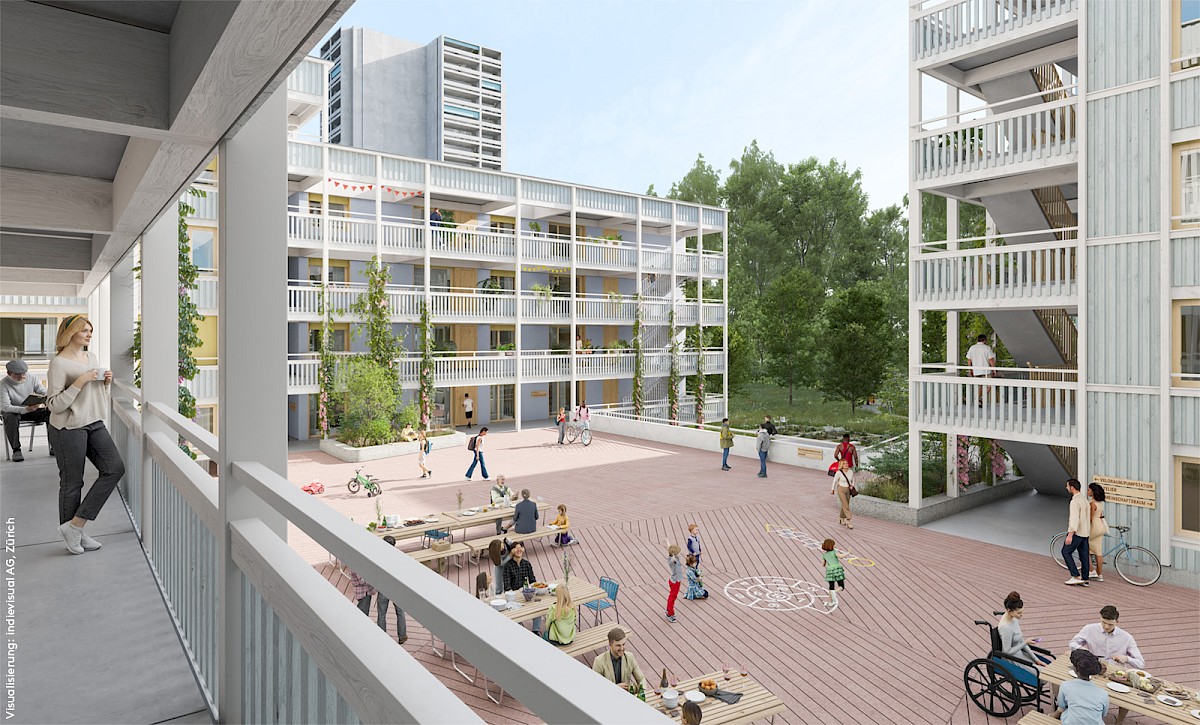
    The Brisgi has roots. In the 1940s, the site was home to a shanty town for up to 1500 employees of the former BBC industrial group. Many of them were guest workers with their families. In the 1960s, a high-rise building and two apartment blocks followed, which still stand today and are carefully embedded in the new development. What was once a workers’ housing estate is now becoming a modern urban building block.

    Three sponsors, one goal
    The project is backed by three non-profit organizations that are jointly developing the 6.5-hectare site: Wohnbaustiftung Baden, Logis Suisse AG and Graphis Bau- und Wohngenossenschaft. Each will take over one of the three buildings and design them independently. The rents are calculated to cover costs. Profit is not the goal, but affordable living is.

    Wood, concrete and sun
    Nine five- to six-storey buildings, pergolas, green inner courtyards and a central square will characterize the future Brisgi. The hybrid construction method combines wood and concrete. Concrete only where it is really needed. Solar panels will produce electricity on around half of the roofs and the site will be connected to the district heating network of Regionalwerke Baden. The aim is to achieve the gold certificate of the Swiss Sustainable Building Standard.

    Values carved in stone
    Five stones, found during the excavation of the building pit and engraved by a stonemason, represent the self-image of the development. Common ground, the future, sustainability, affordability and living. City President Markus Schneider, who carried the stone with the inscription “Future”, summed up the 14 years of planning work: “Now the lively Kappi is becoming even livelier. A neighborhood within a neighborhood is being created here.” The five stones will be clearly visible in the development in future.

    Milestones on schedule
    After years of objections and a planning process since 2012, things are now picking up speed. The building permit for all three courtyard buildings was granted in April 2025 and construction started on schedule in the fall of 2025. Letting will start in the second half of 2027, with occupancy scheduled for the first half of 2028. The design architects are the Baden-based firm Meier Leder Architekten together with the Zurich firm Müller Sigrist, whose “Kandalama” project was chosen as the winning project in 2016.

  • Largest solar power plant in the canton of Zurich goes into operation

    Largest solar power plant in the canton of Zurich goes into operation

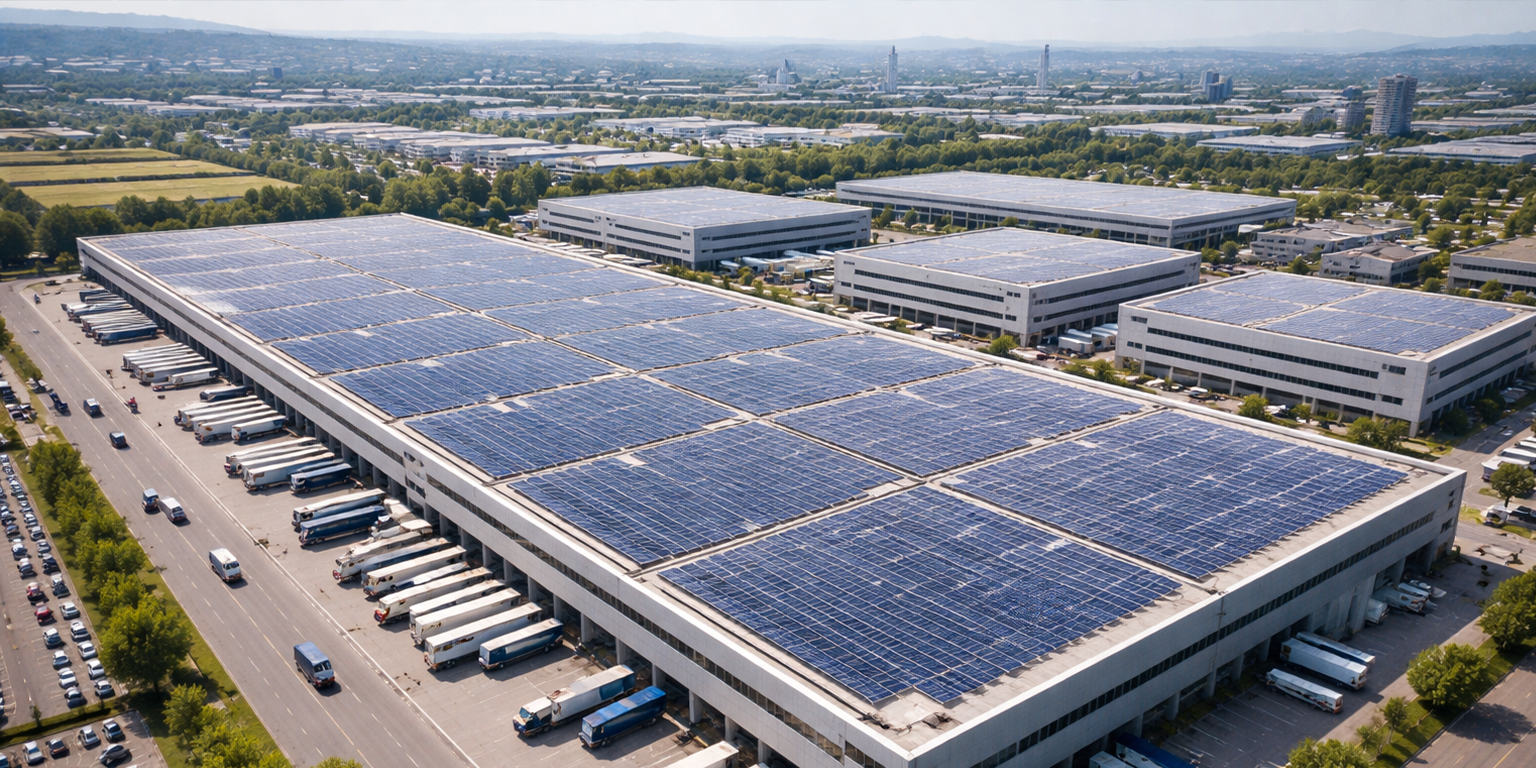
    According to EKZ, the largest solar power plant in the canton of Zurich has come into operation on the roofs of the Embraport logistics centre. Since mid-March, 9,500 solar panels have been generating electricity across a roof area of around 20,000 square metres, with a total output of up to 4.5 megawatts, EKZ states in a press release. The plant is expected to produce around 4 gigawatt hours of solar power annually.

    “We are proud that we have transformed unused roof space here into the largest solar power plant in the canton of Zurich within just a few months,” Paul Sidler, Head of Renewable Energy at EKZ, is quoted as saying in the press release. “This strengthens security of supply with local, sustainable electricity.” EKZ has realised the plant as part of its solar contracting model. Under this arrangement, Zürcher Freilager AG, as the owner and operator of Embraport, merely provides the roof space. EKZ is responsible for planning, financing, construction, operation and maintenance.

    Around half of the solar power generated at Embraport is to be consumed directly within the logistics centre itself. “Our tenants benefit from CO2-free energy, which they can purchase on attractive terms, thereby making their businesses more sustainable,” says Jean-Claude Maissen, CEO of Zürcher Freilager AG, in the press release. EKZ will offer the other half to its own customers.

    The system is also set to be expanded later this year. EKZ plans to install further modules with a total capacity of around 1 megawatt on the new buildings currently under construction on the site. A large-scale battery with a capacity of 2 megawatt-hours is also planned.

  • New CEO to drive strategic development

    New CEO to drive strategic development

    The Board of Directors of Repower AG, based in Brusio, Graubünden, has appointed Michael Roth as its new CEO. According to a press release, he will take up the post on 1 June 2026, succeeding Roland Leuenberger, who is moving to the energy producer Axpo.

    Roth has headed Repower’s Production & Grid division since 2022. Prior to this, the 51-year-old spent nine years as Director of Engadiner Kraftwerke and ten years at the City of Zurich Electricity Works (ewz). “In recent years, he has demonstrated leadership, strategic insight and strong operational expertise at Repower,” said Barbara Janom Steiner, Chair of the Board of Directors.

    The CEO-designate lives in the Engadin, holds a degree in electrical engineering from ETH Zurich and has a Master’s degree in business law from the University of St. Gallen. “I look forward to further developing Repower together with our employees during this important phase,” he is quoted as saying.

    A successor is being sought to head the Production & Grid division; the process has already been initiated.

  • Aargau Verkehr is relying on its own electricity supply for its electric buses

    Aargau Verkehr is relying on its own electricity supply for its electric buses

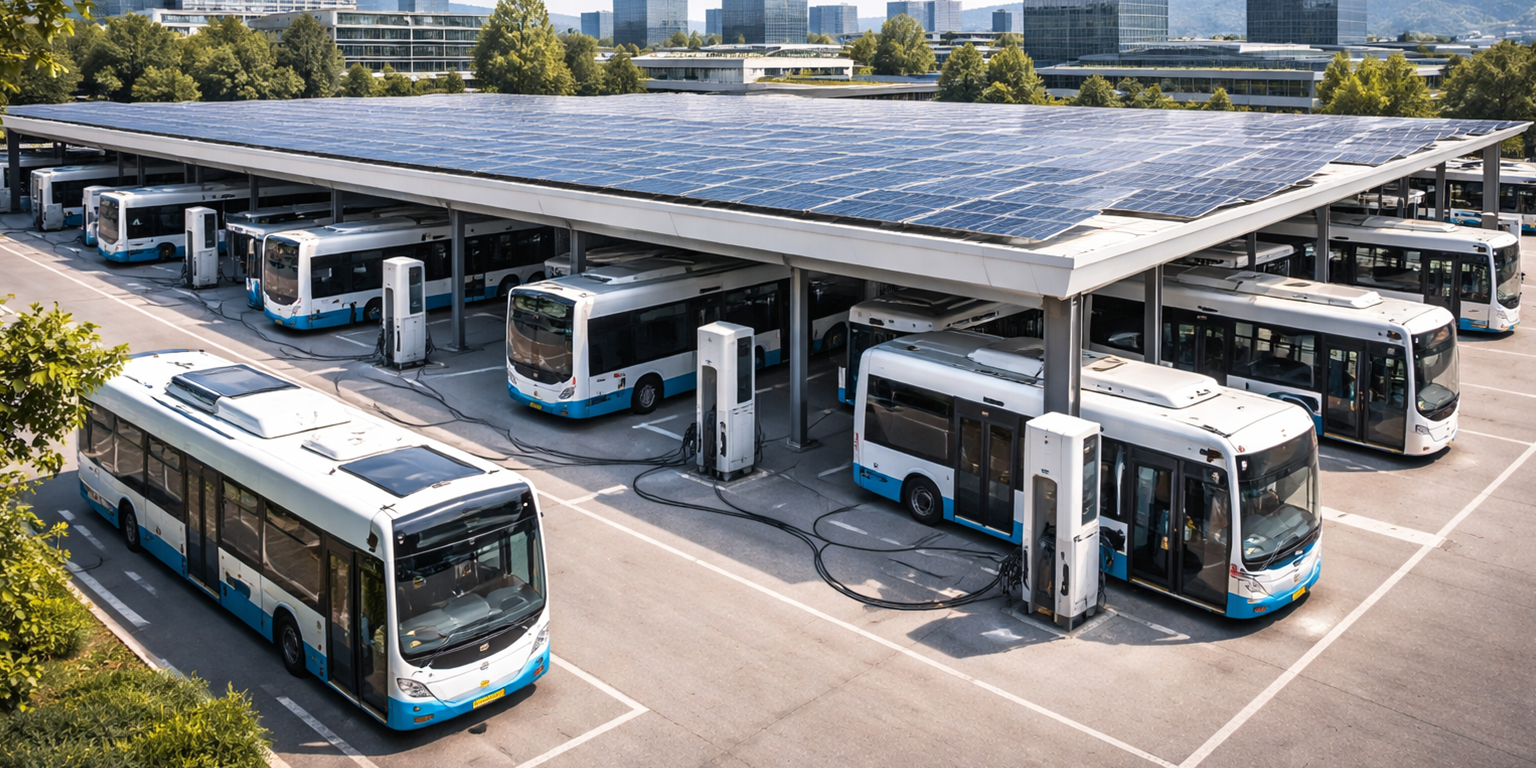
    Aargau Verkehr AG (AVA), in collaboration with energy services provider AEW Energie AG (AEW), has installed a photovoltaic system on the site of the bus depot in Fahrwangen. According to a press release, the system was commissioned in March. From October, it is expected to be fully operational and to generate some of the charging power required for the electric buses that will be based there in future.

    The investment in the solar system itself amounts to around 100,000 Swiss francs. The electrical infrastructure and grid connection for the solar system and the charging infrastructure cost a further 60,000 Swiss francs.

    “The system is an important step towards self-sufficiency in electricity,” Mathias Grünenfelder is quoted as saying in the press release. “Even though we will only be able to make full use of the solar power with the new vehicles from 2026 onwards, the decision was clear: electricity demand is rising – and we want to meet it as sustainably as possible,” said the Deputy CEO and Head of Major Projects at Aargau Verkehr AG.

  • Lake Zurich to heat university campus

    Lake Zurich to heat university campus

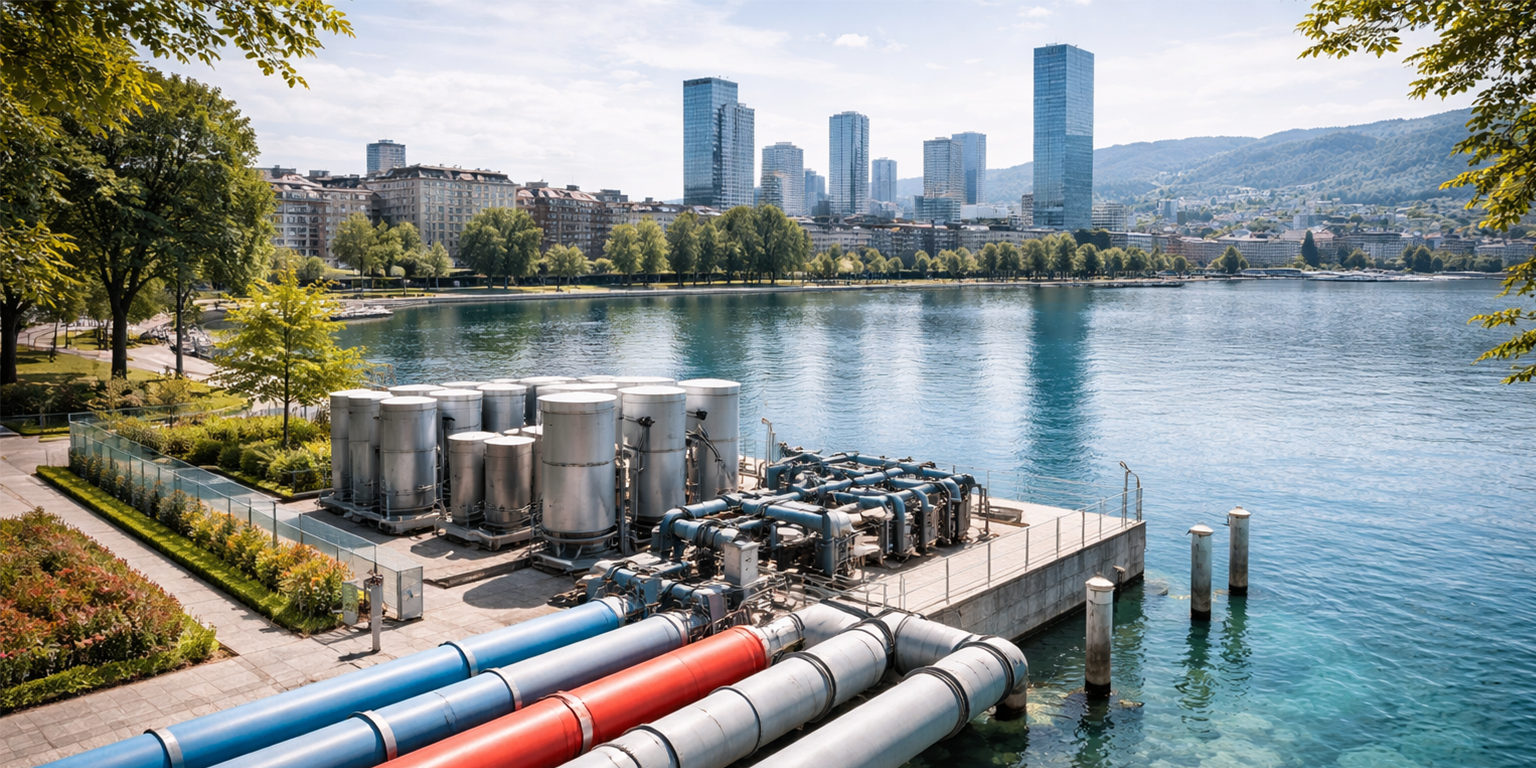
    Energie 360° will implement the University Campus Energy Network. From 2037, the University Hospital of Zurich, the University of Zurich, the Swiss Federal Institute of Technology Zurich and Zurich Stadelhofen railway station are to be heated and cooled using energy from Lake Zurich, according to a statement from the Zurich-based energy supplier. According to the statement, Energie 360° is investing around 40 million Swiss francs in the energy network.

    The project involves the construction of a lake water plant in the Tiefenbrunnen area. Construction of the plant is scheduled to begin in summer 2034. From there, the lake water will be channelled via the planned second Riesbach tunnel of the SBB to Zurich Stadelhofen station and the university campus. The water will then flow into the Limmat.

    “The lake serves as an energy source for climate-friendly air conditioning and heating in the university district,” Energie 360° CEO Romeo Deplazes is quoted as saying in the press release. “In this way, we are making an important contribution to the transformation of the city of Zurich from fossil fuels to renewables.”

  • Expansion of the district heating network strengthens the energy supply in Baden and Ennetbaden

    Expansion of the district heating network strengthens the energy supply in Baden and Ennetbaden

    According to a press release, Regionalwerke AG Baden is set to expand its district heating network. Construction work is set to begin in the coming months. With targeted development between Sonnenbergstrasse, Postplatz and Schlösslistrasse, a further step towards a climate-friendly heating supply will be taken. The energy supplier and the local council aim to gradually replace fossil fuels and sustainably increase energy efficiency, thereby strengthening the local infrastructure and making Ennetbaden a more attractive, forward-looking place to live.

    The connection of the municipality is to take place in two construction phases. The first phase is scheduled from 20 April to 7 June and concerns the Schiefe Brücke and the bridgeheads in Baden and Ennetbaden. The second phase of development, expected to run from 8 June to 31 October, will take place along Sonnenbergstrasse. During the construction period, there may be temporary changes to traffic routing and diversions for bus services.

    The municipality of Ennetbaden, Regionalwerke AG Baden, Regionalen Verkehrsbetriebe Baden-Wettingen, and specialist departments of the City of Baden and the Canton of Aargau have collaborated on the planning of the construction works and the traffic management plan. The heat supply is scheduled to commence this coming winter.

  • The outlet in Landquart is set to be significantly expanded

    The outlet in Landquart is set to be significantly expanded

    Walo Bertschinger AG, based in Dietikon, is involved in the expansion of the Landquart Fashion Outlet. According to a press release, the shopping centre, which has a village-like atmosphere, is being expanded by 5,000 square metres to accommodate 14 new shops, a new restaurant and a four-storey car park. Walo is responsible for the various paving and surfacing works. The new section of the Fashion Outlet is scheduled to open in April 2026.

    According to Walo, a total of 12,900 square metres of base course and 2,600 tonnes of surfacing will be used in the underground car park and outdoor areas. In the outdoor area, 900 metres of kerbs will also be laid and 67 manhole covers installed. The bus stop will also be paved with heavy-duty paving stones over an area of 630 square metres.

    The central design element is the “high-quality paving of the pedestrian zone in the mall area, which characterises the centre’s alpine village design”, according to Walo’s press release. There, the company is laying 150 square metres of row paving, 200 square metres of edging slabs made of Onsernone granite, and 1,500 square metres of porphyry slabs.

  • New housing concept combines independence with support services

    New housing concept combines independence with support services

    bonacasa AG is implementing one of its residential building management solutions for the first time in French-speaking Switzerland, in collaboration with the Vaud-based pension fund vitems and the Bern-based turnkey contractor Losinger Marazzi. The three partners have developed the Arbora estate in Crissier, comprising 63 accessible flats for older people, which is currently under construction and will be ready for occupancy in September 2026.

    According to a statement from bonacasa, no residential complex was originally planned for this site. However, thanks to the bonacasa living concept, “a satisfactory contractual solution was found in collaboration with the authorities and the owner”. Bonacasa living is one of five operational solutions offered by the Oensingen-based company. Each of these includes a basic package featuring a 24-hour emergency call system, access to a service centre and an app.

    Building on this, offers and services from the other four modules – such as an on-site social concierge available every weekday, weekly entertainment and activities, sports and health programmes, and à la carte services – can be added, as can structural adaptations in line with bonacasa’s so-called Smart Building Standards.

    According to the information provided, the new bonacasa living concept is already being implemented at other locations in Switzerland and demonstrates that age-appropriate living does not necessarily mean a care home, but can also work within the standard housing market. “Many people want to continue living independently in their own homes as they get older,” says Ivo Bracher, Chairman of the Board of Directors. “Our approach combines modern living with flexibly bookable services, thereby creating a solution that works for residents as well as for property partners and local authorities.”

    Bonacasa is one of five finalists in the Prix SVC Aargau Solothurn, which is being held for the first time this year. This means that Switzerland’s ninth most important economic region now has its own awards ceremony. The award will be presented by the SME network Swiss Venture Club (SVC) from Stettlen, Bern, on 6 April 2026 at the Emil Frey Classic Center in Safenwil, Aargau, to outstanding and forward-looking companies.

  • District heating project boosts energy supply in Adligenswil

    District heating project boosts energy supply in Adligenswil

    On 17 March, EBL Energie Rigi broke ground on the first phase of the expanded district heating network. A new main pipeline will in future connect the Halti-kon energy centre with the existing district heating network in Adligenswil, Lucerne. This will enable the outdated heating plant in Adligenswil to be replaced. According to a press release, EBL Energie Rigi is thus laying the foundations for a long-term, reliable and renewable heat supply in the region. At the same time, this is intended to meet the growing demand for new district heating connections in Adligenswil and ensure long-term security of supply for all customers. According to current plans, the construction period will be around two years.

    Those attending the ground-breaking ceremony included the Vice-Chair of the Municipal Council, Felicitas Marbach, and members of the Board of Directors of EBL Fernwärme Rigi AG. “Today’s ground-breaking ceremony is far more than the start of a construction project – it is a visible sign of a shared energy future. With the new main pipeline between Haltikon and Adligenswil, we are laying the foundations for a reliable, renewable and regionally anchored heat supply,” said Philipp Zgraggen, Managing Director of EBL Energie Rigi, according to the press release.

    EBL Energie Rigi brings together the expertise of three subsidiaries of EBL (Genossenschaft Elektra Baselland), based in Liestal: EBL Fernwärme Rigi AG supplies Küssnacht am Rigi, Greppen and Adligenswil with CO2-neutral district heating. EBL Energiezentrum Rigi AG produces electricity and heat from regional waste wood and wood residues. EBL Pellets Rigi AG manufactures wood pellets from regional wood residues.

  • Change at the helm of a major business network

    Change at the helm of a major business network

    According to a statement, Hansjörg Brunner is stepping down as president of WirtschaftsPortalOst (WPO). The owner and CEO of Fairdruck AG, based in Sirnach, Thurgau, has chaired the Wil Greater Area Business and Economic Association since its foundation in May 2019. Brunner had previously chaired both the Hinterthurgau SME Trade Association and the Thurgau Trade Association. He served as a member of the Thurgau Cantonal Council and the National Council for the FDP.

    The Executive Board is proposing Marc Flückiger as the new president to the delegates’ meeting on 23 April. The 44-year-old grew up in Thurgau and lives in Wil. A trained cheesemaker, he worked at Züger Frischkäse AG, most recently as a member of the extended management team. Since 2014, he has been co-owner and managing director of SYGMA AG Liegenschaftenbetreuung in Wil, which employs around 170 people. He served as a member of the Wil City Council for the FDP and has been a member of the St. Gallen Cantonal Council since 2024.

    “As WPO President, I would be delighted to contribute my experience and my network in business, politics and association work, and to devote my full energy to our region,” Flückiger is quoted as saying in the press release.

  • The Swiss market for battery storage is growing rapidly

    The Swiss market for battery storage is growing rapidly

    The roll-out of battery storage systems is accelerating. This is according to Swissolar’s Battery Monitor 2026. According to the report, 896 storage systems were installed in Switzerland by the end of 2024. The Swiss Solar Energy Association expects a further 555 storage systems to have been connected to the grid in 2025. This means that by the end of 2025, there are likely to have been 1,451 storage systems connected to the grid.

    For the current year, Swissolar even expects the number of new installations to double to 1,010. This would bring the total number of installed storage systems to 2,461.

    Currently, storage capacity is increasing particularly behind the grid connection point, i.e. in households and in agricultural and commercial enterprises. This is expected to rise to 2.5 gigawatt-hours by the end of 2026. At the end of 2025, the figure stood at just 1.5 gigawatt-hours.

    The expansion of battery storage within the electricity grid is also increasing. Companies have already announced an expansion of over 4 gigawatt-hours by 2030.

    Matthias Egli highlights the significance of this for the energy transition. “Battery storage makes an important contribution to an electricity system with a high proportion of renewable energy,” the Managing Director of Swissolar is quoted as saying in the press release on the Battery Monitor. “It helps to use solar power efficiently, relieve the strain on the electricity grids and reduce overall costs.”

  • The energy sector remains stable despite structural change

    The energy sector remains stable despite structural change

    According to a press release, Primeo Energie AG achieved a generally positive result in 2025. The Basel-Landschaft-based energy supplier, headquartered in Münchenstein, generated turnover of 1.8 billion Swiss francs. This is 392 million less than in the previous year. Profit rose from 91 million to 109 million Swiss francs.

    The Energy Solutions division made a significant contribution to this profit growth. In France, Primeo Energie acquired 120,000 new private customers. The Swiss electricity business returned to a slight profit for the first time in years.

    In the Grid and Services division, Primeo Energie is feeling the impact of the decline in electricity consumption in industry and private households, as well as the rise in decentralised self-generation. Consequently, less electricity was transmitted.

    The Heating and Industrial Solutions division was expanded with new and extended district heating networks, for example in the Lower Wiggertal, Muttenz, Aesch and the Birstal. However, the mild weather put pressure on sales.

    The Production division remained stable thanks to diversification into hydro, solar and wind power and its presence across six countries.

    In 2025, Primeo Energie divested itself of activities lacking critical mass or with low profitability. These included wind farms in Norway and the electric mobility division in Switzerland.

    In the current year, the company intends to expand its electricity business in Switzerland and its activities abroad.

  • Major contracts are boosting the building construction business both at home and abroad

    Major contracts are boosting the building construction business both at home and abroad

    In a press release, the property and construction services provider Implenia has announced that it has secured numerous building contracts in Switzerland and Germany. These contracts have a total value of 310 million Swiss francs and will be carried out between 2026 and 2028.

    In Vevey, Vaud, on the shores of Lake Geneva, Implenia is acting as the main contractor for the new Jardins en Ville district, building 182 owner-occupied flats. The project is complemented by commercial space, a two-storey car park and a central green space. The PEFC/FSC-certified timber structure is set to meet the Minergie-Eco and CECB A/B standards. Also in Switzerland, Implenia is building eight Minergie-certified apartment blocks in Payerne (VD) comprising 107 climate-friendly homes. The project was previously developed by Implenia and subsequently sold to investors.

    Implenia is also creating sustainable housing in Germany: in Frankfurt, twelve energy-efficient residential buildings with around 160 passive house units are being built in the city’s “first climate protection district”. In Munich, following a successful pre-construction phase, the company is building a multi-family residential building with 186 flats and complementary commercial uses as part of a joint venture. In Nuremberg, three buildings featuring 76 rental flats, as well as space for a nursery, commercial premises and an underground car park, are being constructed using a timber-hybrid construction method. In Jena, a further residential quarter is also being built using timber construction. In Mannheim, Implenia is constructing a turnkey residential complex using a timber-hybrid construction method at BUGA Park, comprising a total of 225 residential units.

    Further contracts relate to the justice sector as well as education, research and pharmaceuticals: Implenia is constructing operational and production buildings for the prison in Siegburg. In addition, the extended shell of an administration building using timber construction is being built for Flensburg University of Applied Sciences. In German-speaking Switzerland, Implenia is undertaking additional construction work, including the redevelopment of a former industrial site and projects for the pharmaceutical industry.

  • Sawdust is said to keep the fire at bay

    Sawdust is said to keep the fire at bay

    Researchers at the Swiss Federal Institute of Technology Zurich (ETH) and the Swiss Federal Laboratories for Materials Science and Technology (Empa) have developed an insulation material made from sawdust that can be used for fire-resistant interior fittings, according to a press release.

    The composite consists of sawdust and the mineral struvite, a crystalline, colourless ammonium magnesium phosphate. During their work, the researchers had to overcome the difficulty of binding the materials to the sawdust particles during the struvite crystallisation process. They succeeded in doing so using an enzyme extracted from watermelon seeds. The crystallised mineral fills the voids in the sawdust. The resulting material is pressed into boards and dried at room temperature.

    Initial tests show that the composition has similar fire-retardant properties to conventional cement-bonded chipboard. Tests carried out in collaboration with the Polytechnic University of Turin revealed that the struvite-sawdust boards take three times longer to catch fire than spruce wood. However, during the process, inorganic material forms which inhibits the spread of flames.

    To scale up the process and put the new material into use, it is important to reduce production costs. Currently, producing the binder from the mineral is more expensive than polymer binders or cement. This could change with the development of a further recycling loop: struvite accumulates in large quantities in sewage treatment plants. “We could use these deposits as a raw material for our building material,” says Ronny Kürsteiner, a researcher in the Wood-Based Materials group at ETH, in the press release.

    The study has been published in the journal Chem Circularity.

  • Network Switzerland elects new members to the board

    Network Switzerland elects new members to the board

    According to a press release, the Netzwerk Standort Schweiz has renewed its board. Christina Doll and Andreas Zettel were elected to the board on 18 March. Christina Doll has been the business development officer for the town of Schlieren since 2025. Prior to this, she spent around ten years helping to develop the Zurich Airport region, amongst other roles. Andreas Zettel has been Head of Business Development since 2015 and Deputy Head of Lucerne Economic Development since 2020.

    The two new members replace Albert Schweizer and Jasmina Ritz. Schweizer was Schlieren’s first location promoter and co-founded Netzwerk Standort Schweiz – then known as the Swiss Association for Location Management – in 1998. He has also been a member of its board since 2007. Jasmina Ritz was the first Managing Director of Limmatstadt AG, the cross-cantonal location promotion agency in the Limmat Valley. She has also been a member of the board of Netzwerk Standort Schweiz since 2022. Since the beginning of March, she has been Managing Director of SwissFoundations, the association of Swiss grant-making foundations.

    The spring event organised by Netzwerk Standort Schweiz also addressed the changing landscape of location competition. “Whilst major economic blocs are putting pressure on one another through tariffs, massive support programmes and technological races, and military conflicts are creating new uncertainties, location competition is also entering a new phase,” Remo Daguati, President of Netzwerk Standort Schweiz, is quoted as saying in the press release.

    Vassiliki Riesen, Head of Economic and Location Promotion in Köniz, highlighted the consequences for Switzerland’s largest agglomeration municipality. She demonstrated how location promotion initiatives can respond to different stakeholder groups whilst also collaborating with numerous partners within the municipality and the canton.

    André Guedel, Director of International Business Development at KPMG, highlighted how the new competition is affecting Switzerland as a business location through both taxation and subsidies, and how companies are responding to this.

    Netzwerk Standort Schweiz is the umbrella organisation for location and business promotion agencies. Its current membership of around 110 comprises organisations active in location promotion, regional marketing, business development, site development, spatial planning and the property sector.

  • Renovation project focuses on the circular economy and reducing CO2 emissions

    Renovation project focuses on the circular economy and reducing CO2 emissions

    According to its press release, Sika is participating as a funding partner in the three project phases – Exploration (2026), Synthesis (2027) and Transfer (2028) – of ETH’s Living Lab HIL. These phases will lay the groundwork for the refurbishment, energy-efficiency upgrade and extension of the teaching and research building for architecture and civil engineering (HIL) on the Hönggerberg campus. The major project is scheduled for completion by 2035.

    According to ETH, the need for renovation and the changed spatial requirements clearly called for a complete refurbishment involving demolition down to the load-bearing structure. Instead, the university intends to treat the existing building with greater care and focus on CO2 reduction, digitalisation and the circular economy. It is developing the construction project internally, drawing on knowledge and insights from its own teaching and research and working with industry partners.

    In this “globally unique flagship project”, as Sika describes it, the Baar-based specialty chemicals company for construction and industry is contributing more than just financial support. The project’s funding also encompasses an active and close technical exchange between Sika and the ETH project teams. This is facilitated through the ETH Foundation.

    Sika aims to help “drive the transformation towards sustainable construction methods”, says Patricia Heidtman, Head of Innovation and Sustainability. “The Living Lab HIL offers a unique platform that actively links research and practice and tangibly accelerates innovation.”

    Industry and science must act together to achieve climate targets, says Mathias Kohler, ETH Professor of Architecture and Digital Fabrication. “In cooperation with Sika, we are testing new solutions in the Living Lab HIL that will be implemented during the renovation phase of the ETH building from 2030 onwards.”

  • Insurance group strategically expands its property business

    Insurance group strategically expands its property business

    According to a press release, the Vaudoise Insurance Group, based in Lausanne, has acquired a majority stake in Procimmo Group AG of Renens and now holds 92.27 per cent of the voting rights. Vaudoise Insurance has held a 20 per cent stake in the Procimmo Group since 2021 through its subsidiary Vaudoise Asset Management AG.

    With the acquisition of Procimmo and that of Berninvest AG in 2017, Vaudoise has been able to further expand its real estate activities and, in the words of Jean-Daniel Laffely, CEO of the Vaudoise Group, become one of the key players in investment solutions. “This allows us to further expand an already strong growth area: real estate asset management for third parties,” Jean-Daniel Laffely is quoted as saying.

    Procimmo sees potential for the group’s further development in the “support of an institutional investor that shares its values”; in particular, the subsidiary Procimmo SA stands to benefit from Vaudoise’s “solidity and long-term vision”. According to Arno Kneubühler, CEO of Procimmo SA, Vaudoise is regarded as “the best owner after almost five years of partnership”. Vaudoise’s community roots and values guarantee stability and a sustainable vision. At the same time, Procimmo has the freedom to develop further “as an external platform with its own philosophy and leadership”.

    The closing of the sale is scheduled for early July 2026, subject to prior approval from the relevant authorities.