Category: Business

  • Analysis and outlook for construction prices

    Analysis and outlook for construction prices

    The Construction Price Index 2023 reveals a complex dynamic in Swiss building construction, with moderate price increases influenced by a mix of international market conditions, currency effects and local economic factors. The industry faces challenges, including a changing labour market and declining construction activity, which require strategic adjustments. The report provides key insights for property industry management professionals to make informed decisions and anticipate future developments.

    The analysis of material prices for building construction shows a differentiated development: while the KBOB material price index only recorded a slight increase of 0.6 per cent in November 2023 compared to the previous year, a look at individual materials reveals significant differences. For example, prices for reinforcing steel fell sharply by 28 per cent, while fresh concrete and bricks saw price increases of 9.5 and 36 per cent respectively. These price developments reflect a normalisation of international market prices and the effects of the appreciation of the Swiss franc, which reduced import costs for building materials. However, this was offset by rising energy and fuel prices, which affected the cost of materials.

    The situation on the labour market in the construction industry and wage trends remain of strategic importance. Following a temporary increase in job vacancies in spring, the rate stabilised at 2.1% in the third quarter of 2023 and thus remains above the ten-year average. Demographic trends are intensifying the challenges facing the construction industry, which is contributing to continued upward pressure on wages.

    Construction activity, particularly in the area of residential and office space, has declined continuously since 2021. Investment in new building permits has fallen compared to the average values of the last five years, which is due to high financing costs and a subdued economic outlook. These developments could lead to increased price competition and impact profitability in the construction sector.

  • Global real estate as a strategic opportunity – new cycle imminent

    Global real estate as a strategic opportunity – new cycle imminent

    Despite the challenges posed by interest rate hikes over the past two years, the global property market remains an attractive field for investors. Although there has been a marked correction in property prices internationally, the core market segment is robust and promises attractive returns. The expectation of interest rate cuts, particularly internationally, emphasises this opportunity, especially for investors with a focus on the Swiss market, by offering a chance for improved diversification and higher returns.

    The adjustment in property prices combined with a decline in transaction activity has caused valuations to fall in many markets – by up to 30%. Despite these developments, letting profiles remain stable and demand positive, with a few exceptions such as the US office sector. With interest rates expected to fall, we forecast that financing rates will return to below equity yields later this year, with property yields offering attractive spreads over government bonds.

    A diversified global property portfolio offers protection against local market downturns and minimises regional risks. Property markets around the world do not move completely in sync, which presents a unique opportunity for investors to optimise their portfolio. In addition, the different duration and phase of property cycles in different markets enables strategic investment and divestment decisions.

    Increasing digitalisation and the need for data centres illustrate the importance of a global approach to real estate investment in order to benefit from such emerging trends. The Swiss market alone offers little opportunity to invest in such specialised segments at an institutional level. In addition, the higher liquidity of international markets compared to the Swiss market offers advantages in terms of returns and market adaptability.

    Long-term comparisons between the KGAST index for Swiss funds and the international NFI-ODCE index for US funds show a significant outperformance of US property, underlining the benefits of global diversification. In view of the impending interest rate cuts and the potential market turnaround in various international property cycles, investors have a strategically favourable time to benefit from the current market corrections and position themselves for future growth. Investing in global property therefore appears to be a wise decision to expand portfolio diversification, gain access to growth markets and benefit from attractive entry prices.

  • Differentiated development of asking rents in Switzerland at the beginning of the year

    Differentiated development of asking rents in Switzerland at the beginning of the year

    At the beginning of the year, the Swiss property market recorded a mixed trend in asking rents. While the Homegate rent index reports a slight increase of 0.3 per cent at national level, the cantonal and urban data reveals a mixed picture. For example, the canton of Schwyz saw a decline of 2.6 per cent, while Nidwalden recorded an increase of 3.7 per cent. Zurich also recorded a slight decline in asking rents for the first time in months.

    This index, which is calculated in cooperation between Zürcher Kantonalbank and the property marketplace Homegate, is based on the hedonic method, which measures changes in rents taking into account the quality, location and size of the flats. In January, the index rose by 0.4 points to 125.6, which corresponds to a monthly increase of 0.3 per cent. Compared to the previous year, asking rents rose by 1.9 per cent nationwide.

    Cantonal fluctuations were particularly pronounced in January, with changes of over 6 percentage points. While some cantons such as Valais and Appenzell recorded an increase, others such as Glarus and Basel-Stadt experienced a decline. Despite the slight decline in the canton of Zurich since August 2023, the canton still shows considerable year-on-year growth of 7.1 per cent.

    In the cities, Lausanne and Lugano saw a decrease in asking rents, while Zurich and Bern experienced an increase. With annual growth of 11.5 per cent, Zurich remains at the forefront of rental price development among the cities surveyed. Geneva, Lucerne and Berne also recorded significant increases.

    The rental index serves as an important reference source for property professionals in order to realistically reflect the price development of rental properties. The latest data emphasises the importance of taking a differentiated view of the market in order to fully capture and understand the dynamics of asking rents in Switzerland.

  • Swiss economy facing global challenges

    Swiss economy facing global challenges

    Europe, including Switzerland, is lagging behind in terms of global economic growth, partly due to increasing bureaucratisation, which is slowing down innovation. Yu points out that technology giants based in the USA and China in particular, such as Google and Nvidia, contribute significantly to the economic growth of their regions. In contrast, Europe tends to lag behind in the digital transformation, which leads to a dangerous dependence on traditional industries.

    Although Switzerland has successful global market leaders in the pharmaceutical, banking and food industries, the increasing focus on compliance and regulations has fostered a risk-averse culture that prevents innovation, according to Yu. To counteract this, Swiss companies need to align themselves more closely with innovation centres such as Silicon Valley or the Chinese technology market.

    One concrete example of such an orientation is Novartis, which is expanding its research centre in the USA. Yu argues that although Switzerland is geographically located in Europe, its companies should think and act globally in order to remain competitive.

    For Swiss economic policy, this means making Switzerland a more attractive location for investment in start-ups and technology, reducing bureaucracy and not repeating the same mistakes as other countries. By diversifying and controlling risk in all markets, Swiss companies can strengthen their position and prevent a loss of prosperity.

  • Swiss economy optimistic about the future

    Swiss economy optimistic about the future

    At the start of 2024, the KOF Business Situation Indicator for Switzerland recorded a slight decline, influenced primarily by the slowdown in foreign demand, which is particularly affecting the export industry. Nevertheless, there is cause for hope: companies from various sectors are increasingly positive about their expectations for the near future.

    The lack of demand is particularly noticeable in the manufacturing industry, with more than half of the companies surveyed reporting an inadequate order situation. Although the Swiss franc remains strong, this pressure does not appear to be on the same scale as in 2015. Nevertheless, export prospects are better than in the autumn of the previous year.

    Even though the hospitality industry, wholesalers and financial and insurance service providers are reporting a slight deterioration in their business situation, the situation in the construction, project planning and retail sectors remains stable. The service sectors are even reporting a slight improvement.

    Forecasts for business development over the next six months are more positive overall. Confidence is rising in the manufacturing industry and among service providers in particular. While wholesalers have softened their scepticism, retailers and financial service providers remain cautious.

    Despite the intention to continue hiring staff, companies are now planning to increase their workforce less frequently than at the start of 2023. The difficulty of finding suitable staff remains, although the situation has eased slightly.

    In terms of wage development, companies are expecting a moderate increase in gross wages of less than 2% in the coming year. This reflects a general trend towards lower wage increases.

    There are mixed signals with regard to price trends: while general inflation expectations are falling, companies in some sectors, particularly in the service sector, manufacturing and construction, are planning to increase their sales prices.

    The results of the KOF Economic Surveys are based on the responses of around 4,500 companies from the manufacturing industry, the construction industry and the most important service sectors, which corresponds to a response rate of around 62%.

  • Increase in vacancy rates on the Swiss office market

    Increase in vacancy rates on the Swiss office market

    The latest surveys by CBRE show that the available office space in Switzerland grew to 1.82 million square metres in the third quarter of 2023, which corresponds to 3.8 percent of the total stock. The peripheral office markets, which are located away from the five largest office locations – Zurich, Geneva, Basel, Bern and Lausanne – are particularly affected. There has been a significant increase in available space here, with the region around Zurich Airport and the Limmat Valley, for example, achieving an availability rate of 13.3 per cent.

    Meanwhile, demand for office space in central locations remains high. Tenants are increasingly focussing on aspects such as good accessibility, sustainability and high-quality fit-out by the landlord. The availability of office space in Zurich’s city centre fell to 2.7 percent in the same quarter, and even to 2.0 percent in Zurich’s CBD.

    The decline in overall demand is influenced by various factors. On the one hand, the increased supply of office space has outstripped construction activity and thus the completion of new projects. On the other hand, the cooling economic situation has led to a fall in demand. This trend has so far been masked by strong economic growth and high take-up of space, which has offset the increase in home office activity. However, the subdued demand is now making itself felt in the form of higher vacancy rates, which represents a challenge for property management.

  • Revolutionary investment strategy for commercial rental deposits

    Revolutionary investment strategy for commercial rental deposits

    At a time when the focus is on adding value to capital, the new solution brings a breath of fresh air to the management of rental deposits. The innovative solution, which was developed in collaboration with leading asset managers and banks, enables companies to invest their rental deposits efficiently while providing the necessary security for landlords.

    The CEO: “It’s time for capital to work for the company and not destroy value over time. With our solution, companies can quickly move from costly rental deposits to profitable investments.”

    A 1999 study by the Federal Office for Housing states: “For the tenant, rent deposits are de facto a kind of “forced saving” on terms that he cannot influence. It is therefore appropriate to look for a new alternative to rent deposits”.

    Traditionally, rent deposits have been seen as a cost for companies that primarily ties up liquidity. Now, companies can seamlessly transition from cost to revenue. The ability to quickly and easily convert rent deposits into secure and profitable investments dusts off the previous understanding of antiquated deposit accounts and allows them to shine in a new light. The company provides both tenants and landlords with a smart match tool.

    According to a study conducted by the Federal Housing Office in 1999, rental deposits were previously regarded as an inflexible form of compulsory savings without tenants having any influence.

    In order to be able to offer the best possible investment strategy for rental deposits, the company co-operates with renowned partners in the field of custodian banks and asset management.

  • Part-time work has an impact on pensions and AHV financing

    Part-time work has an impact on pensions and AHV financing

    Part-time work is on the rise in Switzerland, especially among women. The Federal Statistical Office (FSO) reports that around 30 per cent of single women without children will be working part-time in 2022, compared to only 15 per cent of men. This way of working not only affects individual income and pension benefits, but also the financing of the pay-as-you-go AHV system.

    A study by UBS economists entitled “Part-time work: effects on pension provision” highlights the fact that part-time work leads to reduced pension benefits and reduced savings capacity. This particularly affects single people without children, whereby the resulting pension gap is often disproportionate to the reduction in workload. For couples, on the other hand, part-time work in conjunction with income-dependent childcare subsidies can have less dramatic effects.

    The UBS study “AHV 2030 – Labour market scenarios for the fiscal sustainability of the AHV” shows that a change in labour market participation has a direct impact on the AHV funding gap. Increasing female labour market participation could slightly reduce this gap, while reduced male participation would widen the gap. A higher labour force participation of older workers would also have a positive effect.

    Future developments in the labour market and social trends such as a better work-life balance or increased childcare by men could make further structural reforms to the AHV necessary. The UBS economists emphasise that changes in the labour market alone are not enough to close the AHV funding gap.

  • Stefan Walter new Director of FINMA

    Stefan Walter new Director of FINMA

    Following his election by FINMA’s Board of Directors, Stefan Walter’s appointment as Director of the authority has now been approved by the Federal Council. Mr Walter’s impressive career includes significant experience in financial market regulation, including leading the development of supervision for global systemically important banks at the European Central Bank. In his previous role as Secretary General of the Basel Committee, he played a key role in coordinating global regulatory reform negotiations following the global financial crisis.

    A German national with a Master’s degree in International Banking and Finance from Columbia University, Stefan Walter, 59, brings a deep understanding and extensive knowledge of financial market supervision. He succeeds Urban Angehrn, who stepped down in September 2023 for health reasons. Birgit Rutishauser will continue in the role of FINMA Director on an interim basis until Walter takes office on 1 April.

    Walter’s appointment is seen as an important step for FINMA to strengthen its position as the leading regulator in the financial sector. His extensive experience will help to further develop Swiss financial market regulation and establish it at an international level.

  • Property market remains attractive

    Property market remains attractive

    The Swiss property market remains attractive for 98 per cent of property investors, EY Switzerland reports in a press release. The auditing and consulting firm based its findings on the latest edition of its annual “Real Estate Investment Market Trend Barometer”. For this, EY Switzerland surveyed a representative cross-section of 96 companies.

    “According to investors, the high level of attractiveness can be attributed to the stable economy, persistently high demand and the fact that Switzerland remains a lucrative location despite the geopolitical changes,” Daniel Zaugg, Sector Leader Real Estate at EY in Switzerland, is quoted as saying in the press release. “According to the respondents, the Swiss National Bank’s interest rate hikes will also have no substantial short-term impact on the market value of investment properties.” 96 per cent of those surveyed expect inflation to remain below 3 per cent this year.

    Within the property market, residential property is becoming more attractive. Interest here has risen from 93 per cent in the two previous years to 96 per cent this year. Fewer investors want to invest in office, logistics and healthcare properties than in the previous year, at 39, 42 and 45 per cent respectively. Only 16 per cent of respondents expressed interest in space for food retailers and specialist stores.

    Sustainability criteria are playing an increasingly important role for a large majority of respondents when selecting investment properties. Investors also predict that demographic changes and climate change will have an increasing influence on the property market in the future.

  • Swiss Sustainable Finance offers property investors a guideline

    Swiss Sustainable Finance offers property investors a guideline

    In its SSF Spotlight section,Swiss Sustainable Finance has published a guide for companies, banks, funds and private individuals who invest directly in sustainable real estate in Switzerland. Against the backdrop of the major contribution that the building sector must make to achieving the Swiss net-zero target by 2050, it offers guidance and recommendations for action.

    For example, it explains the most important frameworks for sustainability assessment and reporting, ESG (Environment, Social, Governance) and the UN Sustainable Development Goals (SDGs), and provides specific examples for the property sector. The publication also provides an introduction to the current and planned regulatory framework in Switzerland and the EU. It also provides an overview of national and international certifications, quality seals, benchmarking and monitoring instruments that measure the sustainability profile of property with regard to ESG factors, for example.

    According to the association, the benefits of a sustainable investment strategy could outweigh the costs involved “and ultimately have a positive impact on society, the environment and the valuation of the property portfolio”. A four-step approach is recommended for investors seeking guidance on implementing a sustainability strategy.

    This begins with strategy development and a portfolio assessment. In a second step, an action plan is formulated with specific improvement measures for the property portfolio. This is followed by continuous evaluation based on the predefined targets. Finally, transparency should be created by regularly communicating performance indicators and progress to stakeholders.

  • Enerdrape receives fresh capital for geothermal solution

    Enerdrape receives fresh capital for geothermal solution

    Enerdrape announces the successful completion of a seed financing round totalling CHF 1.3 million. The Ecublens-based company has launched the world’s first prefabricated geothermal panel technology. According to a press release, Swiss investors, including Après-Demain via the GeneRActions Planet initiative and Romande Energie, played a key role in the seed round.

    Established by Margaux Peltier, Alessandro Rotta Loria and Lyesse Laloui as a spin-off from the Swiss Federal Institute of Technology Lausanne(EPFL), the company intends to strategically utilise this fresh injection of capital to drive forward the development and commercialisation of its geothermal panel technology. These panels act as heat exchangers. They absorb both geothermal and ambient energy. A heat pump circulates this energy throughout the building. In principle, these wall panels are also suitable for tunnels and underground stations, for example.

    “This financial injection of CHF 1.3 million is proof of our investors’ confidence in enerdrape’s mission and potential. It will allow the company to expand its operations, improve its product range and strengthen its team with new talent,” said Margaux Peltier, CEO and co-founder of enerdrape.

    “With its innovative geothermal panel technology, enerdrape has the potential to revolutionise the energy sector and we congratulate Margaux on her ground-breaking invention,” Thierry Mauvernay, President and shareholder of Apres-demain SA, the leading investor in the seed round, is quoted as saying.

  • Sika generates record sales

    Sika generates record sales

    Sika generated record sales of 11.24 billion Swiss francs in the 2023 financial year, the global speciality chemicals company for construction and industry announced in a press release. This corresponds to year-on-year growth of 7.1 per cent. In the press release, Sika emphasises the former construction chemicals business of the BASF Group acquired in the previous year as a growth driver. Due to the successful integration of the MBCC Group, Sika anticipates annual synergy effects totalling 180 to 200 million Swiss francs.

    All regions also contributed to the record sales with double-digit growth rates in local currencies. At 15.2 per cent, sales in local currencies grew most strongly in the Asia/Pacific region. In the EMEA and Americas regions, growth rates of 14.8% and 14.9% respectively were realised. The Global Business segment increased its sales in local currencies by 10.0 per cent. Strong devaluations of almost all currencies against the Swiss franc resulted in a negative currency effect of 7.4 per cent.

    “Sika has once again demonstrated its resilience over the past twelve months,” said Thomas Hasler, CEO, in the press release. “Thanks to our well-functioning business model, high innovative strength and the great commitment of our 33,000 employees worldwide, we have grown strongly and gained market share even in a challenging year.” Sika will communicate the full report for the financial year 2923 on 16 February.

  • Avobis sees positive trend in residential yield property for 2024

    Avobis sees positive trend in residential yield property for 2024

    In its Outlook 2024, real estate service provider Avobisanticipatesa favourable trend for residential yield properties. The forecast for 2024 is consistently positive, according to a press release. According to the forecast, the attractiveness of residential investment property is likely to increase again in anticipation of lower interest rates and due to positive fundamental factors, and buyers are likely to show greater interest. This is expected to lead to a revitalisation of liquidity on the transaction market.

    Despite a revitalised market dynamic, general price increases are not foreseeable in the near future. Institutional investors, who have supported the buyer side in recent years, could increasingly act as sellers. This is also due to the increased sustainability requirements. According to Avobis, environmentally conscious reorganisation of portfolios is leading to properties being sold and more sustainable properties being acquired instead.

    This could also be accompanied by a certain degree of volatility. Such market conditions would create opportunities that could be of interest to attentive investors. In the current market environment, residential property reportedly offers a wide range of attractive investment opportunities, from simple buy-to-rent models to construction and promotion through to the realisation of profitable usage concepts.

  • Fixed-rate mortgages overtake the former favourites

    Fixed-rate mortgages overtake the former favourites

    In Switzerland, there was a veritable run on variable Saron mortgages after the interest rate turnaround. However, the former favourites no longer seem as attractive as before.

    Interest rates for Swiss fixed-rate mortgages have been on a downward trajectory since mid-June 2023. According to the mortgage index of the Swiss online comparison service Moneyland, ten-year fixed-rate mortgages are currently quoted at 2.31 per cent – the lowest level since May 2022.

    The downward trend intensified after the Swiss National Bank (SNB) surprisingly announced a pause in interest rates in September. As a result, fixed-rate mortgages are no longer more expensive than variable-rate Saron mortgages, which previously accounted for a large proportion of new business, for the first time since October last year.

    Today, fixed-rate mortgages are significantly cheaper than Saron mortgages for all maturities. Two-year fixed-rate mortgages are currently 0.35 percentage points, five-year mortgages 0.42 percentage points and ten-year mortgages 0.30 percentage points cheaper than their variable-rate counterparts.

    Experts agree that interest rates in Switzerland appear to have peaked. The majority of market observers assume that the SNB will leave key interest rates unchanged at the next meeting and in the first quarter of 2024 and could only announce interest rate cuts in mid-2024.

    The property specialists at Moneypark also reported that over 90 per cent of mortgage providers surveyed in Switzerland expect the SNB to leave the key interest rate unchanged at 1.75 per cent at its next meeting. Over the next three months, interest rates are likely to remain stable for shorter terms of up to five years, while longer terms are expected to see more volatility and a trend towards lower interest rates.

  • National Council against nationwide introduction of mandatory rental forms

    National Council against nationwide introduction of mandatory rental forms

    On Tuesday, the Grand Chamber rejected the initiative by former National Councillor Natalie Imboden (Greens/BE) – by 116 votes to 71 with 4 abstentions. A bourgeois majority from the SVP, FDP and Centre Party prevailed. The parliamentary initiative is now dead.

    Michael Töngi (Greens/LU) argued unsuccessfully that the rental form requirement would improve transparency in the rental sector. Today, prices are often increased when tenants change – resulting in a “far too high return”. By systematically disclosing the amount of the previous tenant’s or landlord’s rent, tenants would be able to defend themselves more easily against abusive rents.

    Philipp Matthias Bregy (centre/VS) stated on behalf of the majority of the committee that the cantons are already free to introduce a form for the initial rent of the previous tenant for their canton. Regulating the question of forms at federal level would contradict the idea of federalism.

    “All in all, the proposal creates more bureaucracy,” says Bregy. Tenants already have legal instruments at their disposal to contest the initial rent. He also pointed out that even in the cantons with mandatory forms, there had been no fall in rents or increased transparency.

  • Federal Council draws up new regulation for permissible net yield

    Federal Council draws up new regulation for permissible net yield

    Der Nationalrat hat der Landesregierung am Dienstag den entsprechenden Auftrag erteilt. Dies, indem er mit 130 zu 61 Stimmen bei 3 Enthaltungen eine Motion des Bündner Ständerats Stefan Engler mit dieser Forderung annahm.

    Der Mitte-Politiker argumentierte, Marktbeobachter gingen davon aus, dass der Referenzzinssatz weiter ansteigen werde. Kürzlich erhöhte ihn das Bundesamt für Wohnungswesen (BWO) auf 1,75 Prozent.

    Seit 1986 gelte der Grundsatz, dass ein Ertrag aus Mietobjekten dann zulässig sei, wenn dieser 0,5 Prozent über dem Referenzzins liege. Das Bundesgericht habe aber 2020 zwei Praxisänderungen vorgenommen. Unter anderem habe es bestimmt, dass der Ertrag den Referenzzinssatz neu um zwei Prozent übersteigen dürfe, wenn der Referenzzins zwei Prozent oder weniger betrage.

    Bei einem Anstieg des Referenzzinssatzes auf über 2 Prozent werde sich die Frage stellen, ob der bei der Berechnung der Nettorendite zulässige Zuschlag zum Referenzzins direkt wieder auf 0,5 Prozent zu reduzieren sei. Es sei besser, so Engler, wenn der Bundesrat diese Frage auf politischem Weg kläre, als diese für Mieter- und Vermieterschaft wichtige Frage den Gerichten zu überlassen.

    Rot-Grün dagegen
    Der Bundesrat war einverstanden mit der Annahme der Motion, welcher der Ständerat bereits im September zugestimmt hatte. «Gouverner, c’est prévoir», sagte Bundesrat Guy Parmelin am Dienstag im Rat. Regieren heisse Vorausschauen.

    Steigt der Referenzzinssatz um 0,25 Prozentpunkte, können die Vermieter die Mieten um 3 Prozent anheben. Voraussetzung dafür ist bei langjährigen Mietverhältnissen aber, dass auch die früheren Senkungen weitergegeben wurden.

    Eine rot-grüne Minderheit im Nationalrat argumentierte am Dienstag, im Text der Motion werde schon eine bestimmte Richtung für die Neuregelung vorgegeben. Dies in dem Sinne, dass die Interessen der Vermieter in den Vordergrund gestellt würden. Sie scheiterte aber mit ihrem Antrag, die Motion abzulehnen.

  • The industrial revolution in the digital age

    The industrial revolution in the digital age

    At the beginning of October 2023, a remarkable shift began in the mortgage market. The benchmark rates for three- and five-year fixed-rate mortgages fell below the Saron rate. Ten-year mortgages followed suit in early November, with the average rate for these falling from 3.11% in June to 2.39% in December.

    Stability for Saron mortgages
    The Saron mortgage, which has remained stable since the Swiss National Bank (SNB) decided to leave the key interest rate at 1.75% in September, is currently at 2.63%.

    Results of the mortgage provider survey
    A survey of 50 mortgage providers revealed that over 90% expect the SNB to leave the key interest rate unchanged on 14 December 2023. Providers forecast stable interest rates for shorter terms of up to five years, while longer terms are expected to see more volatility and a downward trend in interest rates. The biggest concerns of those surveyed are inflation, a possible recession and the economic situation in Europe.

    Recommendations for mortgage holders

    • Switching to fixed-rate mortgages may be worthwhile at present, as they are more favourable than Saron mortgages.
    • Long-term fixed-rate mortgages are still recommended for customers looking for planning and budget security.
    • If flexibility is required, variable-rate mortgages or a combination of Saron and fixed-rate mortgages could make sense.
    • Comprehensive advice that takes various financial aspects into account is essential for a sustainable financing decision.

    Conclusion: These developments in the Swiss mortgage market emphasise the need for careful and informed decision-making for mortgage borrowers, especially in a rapidly changing interest rate environment.

  • Distressed debt will further strengthen the trend towards private debt financing

    Distressed debt will further strengthen the trend towards private debt financing

    While in the past the financing needs of property investors were primarily covered by traditional bank loans (real estate loans), banking regulation has created scope for alternative financing models. As a result, there is unlikely to be a major wave of purchases of non-performing loans (NPLs). This is because the capital structure of financing is completely different today than it was during the financial crisis, as the banks’ senior share is significantly lower. Back then, it was worthwhile for NPL specialists to buy large NPL portfolios from the banks at a discount and realise them because valuable collateral was available. Today, however, mezzanine financing is under water because activity on the transaction market has decreased enormously.

    In the increasingly fragmented financing landscape, we see a growing need for advice on refinancing. This is because a number of standstill agreements with financiers are expiring in the current market shakeout phase. In the course of refinancing negotiations, project developers and portfolio holders are finding that they are unable to fulfil additional requirements. At the latest when companies with high debt ratios present their annual financial statements for 2023, we therefore assume that further market participants could run into acute difficulties.

    In this situation, we expect more products to come onto the market: both in the form of non-performing loans that are sold and in the form of properties that serve as collateral. However, the turnaround in interest rates means that supply and demand on the transaction market have not yet come together for long stretches. Many market participants are acting cautiously and there is a lack of liquidity on the market. As a result, it is becoming increasingly difficult for investors to find an exit for non-performing exposures.

    At the same time, it can be observed that increasingly strict regulatory requirements and valuation specifics (rating, equity backing) mean that certain industry segments, submarkets or projects are hardly being financed by banks, or only at very unfavourable conditions. Banks typically adopt a pro-cyclical market behaviour. Economic downturns lead to lower corporate profits and therefore to rating downgrades. The capital backing required by banks increases, leaving little room for manoeuvre for new business. In addition, after the expiry of fixed interest rates, there are more risky loans on the books whose property income can no longer generate the higher interest rates. Anti-cyclical investment and financing strategies are very difficult to implement in this phase. It is precisely in this situation that alternative, entrepreneurial financing partners are becoming increasingly important.

    As we pointed out in a study at the beginning of the year, the trend towards B2B and private debt financing will therefore continue to strengthen, although this growth will take place almost exclusively in the B2B sector for regulatory reasons.

    The high financing volumes and customised structures require professional management and controlling. Efficient real estate private debt funds will therefore play a key role in the expected market growth in the private debt financing segment. Providers who can handle the entire process from origination to reporting and repayment have an advantage here.

    Source graphic: Barings Bank, PGIM RE, Bayes Business School, London; Empira – own calculation and presentation as at December 2022.

  • Adaptation strategies for property professionals in a changing world

    Adaptation strategies for property professionals in a changing world

    The effects of the global pandemic are still being felt years later and have led us into a new reality. This requires property investors to re-evaluate their strategies in order to position themselves in a balanced way while remaining disciplined and flexible in responding to changing market conditions.

    The pandemic led to unprecedented, globally synchronised economic shutdowns, followed by a rapid restart. This resulted in a return of inflation, labour market bottlenecks and rising interest rates. At the same time, geopolitical upheavals, including conflicts in oil regions and the emergence of national industrial and environmental policies, are reshaping the global landscape.

    Against this backdrop, property investors should expect subdued growth in the USA, moderate growth in Europe and an adjustment to a new economic normal in China in 2024. These developments favour a focus on quality stocks, including in the technology sector, and a cautious stance towards government bonds as central banks are expected to start cutting interest rates.

    Political developments will also play an important role and could harbour both opportunities and risks for the global markets. Investors should therefore be prepared to adjust their market strategies accordingly and consider capital protection strategies.

    The next decade will be characterised by the ongoing development of artificial intelligence, a changing Chinese economy, the energy transition and persistently high levels of debt. These factors will have a far-reaching impact and offer investors new opportunities, particularly in sectors that benefit from technological innovation.

    In this new world, it is more important than ever for investors to have a clear plan, invest in a balanced way and remain flexible. Lessons from the past emphasise the value of diversification and the importance of patience and adaptability in an ever-changing environment.

  • ABB invests 500 million euros in electrification

    ABB invests 500 million euros in electrification

    ABB and the European Investment Bank(EIB) have signed a financing agreement for a loan totalling 500 million euros, ABB announced in a press release. The Zurich-based technology company intends to use the funds to develop semiconductor-based circuit breakers, environmentally friendly switchgear and technologies to improve efficiency and automation in buildings. The funds will be channelled into corresponding research by ABB in Switzerland, Germany, Italy, the Czech Republic, Finland, Norway, Poland and other European countries.

    “Electrification is crucial in the fight against climate change,” EIB Vice-President Ambroise Fayolle is quoted as saying in the press release. “With our loan to ABB, we are supporting a company with a long history of developing electrical products and a strong commitment to promoting practical solutions that make the European economy greener.”

    The new power distribution solutions are intended for use in functional buildings, industrial operations and microgrids, for example. The development and commercialisation of technologies is a high priority in ABB’s growth strategy. Last year, the company invested around 1.67 billion dollars, or around 4 per cent of its consolidated sales, in research and development.

  • A new force in the Swiss property fund market

    A new force in the Swiss property fund market

    The Admicasa Real Estate Fund, which specialises in high-quality properties in prime locations, aims to achieve attractive entry prices, appreciation potential and high cash flow yields. In the current market environment, the fund is thus positioning itself as a promising investment opportunity.

    First successful acquisitions
    Just one day after its launch, the fund management company, which is supervised by FINMA, succeeded in acquiring three properties in the centre of Yverdon VD for around CHF 25 million. These properties, located directly at Yverdon railway station, comprise almost 3,000 square metres of usable space, ten flats and commercial space with first-class tenants and generate rental income of almost CHF 1.1 million.

    Significance of the transaction and future plans
    This transaction, which generates a gross yield of 4.3 per cent, underlines the strategic expertise of Admicasa Fund Management. CEO Peter Csoport emphasises the success in difficult market conditions and points to further attractive real estate properties already in the acquisition pipeline.

    Network and network effect
    Serge Aerne, Chairman of the Board of Directors of the Admicasa Group, emphasises the importance of the comprehensive network. This enables the fund to draw on the Admicasa Group’s interdisciplinary expertise and relationships in the areas of construction, capital and pensions, which benefits investors.

  • Andermatt Swiss Alps receives loan of 125 million Swiss francs

    Andermatt Swiss Alps receives loan of 125 million Swiss francs

    According to a press release, Andermatt Swiss Alps AG has concluded a syndicated loan of CHF 125 million with a consortium of Swiss banks led by UBS subsidiary Credit Suisse (Switzerland) Ltd. The term is four years. The lenders can extend the credit facilities twice by one year.

    According to the information provided, the loan will be used to refinance existing debt financing and to finance operations. It is also intended to enable further investment in the development of Andermatt as a destination.

    “The first-time financing through a syndicated loan is a vote of confidence in the successful development and market positioning as well as the promising prospects of our company,” CEO Raphael Krucker is quoted as saying. The transaction was led by CFO Melina Marty and accompanied by Advestra as legal advisor.

  • Asking rents on the rise throughout Switzerland

    Asking rents on the rise throughout Switzerland

    The monthly rental index compiled by the digital property marketplace Homegate in collaboration with Zürcher Kantonalbank closed at 123.8 points in October. Compared to the previous month, the index rose by 0.4 per cent overall, Homegate reported in a press release. A year-on-year increase of 4 per cent was observed across Switzerland.

    In a year-on-year comparison, rents rose in all cantons, Homegate reports. At 7.5 per cent, they rose the most in Glarus. This was followed by Valais, the two (combined) cantons of Appenzell, Zurich, Schaffhausen and Schwyz with increases of between 6.9 and 5.3 per cent. The eight Swiss cities included in the index also recorded year-on-year increases in asking rents.

    Compared to September, rents rose in most of the cantons and six of the eight cities included in the index. The experts from Immobilienmarktplatz and Kantonalbank only observed a slight decline in asking rents in the cantons of Obwalden, Nidwalden and Schwyz as well as in the cities of Geneva and St.Gallen. Within the cantons, rents rose the most in Glarus, Schaffhausen and Uri. In the cities, the highest increases were observed in Zurich, Geneva, Bern and Lugano.

    Homegate is a division of SMG Swiss Marketplace Group AG. This combines the digital marketplaces of TX Group, Ringier and Mobiliar.

  • Burkhalter Group acquires C2B ELECTROTECHNIQUE

    Burkhalter Group acquires C2B ELECTROTECHNIQUE

    The Burkhalter Group is taking over the Valais-based electrical company C2B ELECTROTECHNIQUE Sàrl(C2B), the Zurich-based building technology specialist announced in a press release. No details of the purchase price are provided. The company, which specialises in traditional installations, industrial installations and switchgear construction services, is expected to provide Burkhalter with additional market share.

    Once the takeover has been completed, C2B will be merged with Grichting & Valterio Electro SA, which belongs to Burkhalter and is based in the Valais capital of Sion, and will operate as its branch office from the start of 2024, Burkhalter announced. The location in Martigny and the management of the company by the previous owners will remain in place. The 26 employees of C2B will also be taken over.

    According to Burkhalter, the new acquisition generates annual sales of around CHF 4.5 million. The Group intends to continue to pursue its strategy of gaining additional market share by acquiring other electrical engineering companies.

  • Prices for condominiums on the rise

    Prices for condominiums on the rise

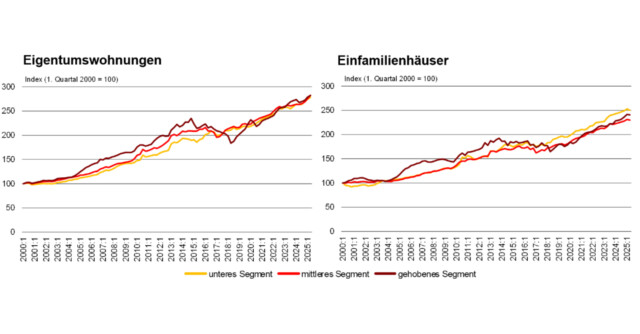
    Prices for residential property developed differently in October, the SMG Swiss Marketplace Group reports in a press release on the current Swiss Real Estate Offer Index. The SMG Swiss Marketplace Group brings together the digital marketplaces of TX Group, Ringier and Mobiliar.

    Specifically, prices for condominiums rose by 0.7 per cent in October after a pause in September. The experts at SMG Swiss Marketplace Group have observed a year-on-year increase in prices of 2.1 per cent. By contrast, prices for single-family homes were 0.3 per cent lower in October than in September. In a year-on-year comparison, prices were 0.2 per cent lower.

    “The continued growth in asking prices for condominiums is remarkable considering that the supply of available condominium units has increased significantly since the beginning of the year,” said Martin Waeber, Managing Director Real Estate at SMG Swiss Marketplace Group, in the press release. “The housing market has also seen a slight increase in the supply of existing properties in recent months, which has contributed to the stabilisation of prices for single-family homes.”

    Asking rents rose by 0.4 per cent in October compared to the previous month. A year-on-year increase of 2.7 per cent was observed. The experts at SMG Swiss Marketplace Group attribute the increase to the continuing shortage of supply in the centres.

  • Memox acquires 2.8 million euros

    Memox acquires 2.8 million euros

    Proptech company Memox has successfully closed a Series A financing round, raising €2.8 million in capital. According to a media release, the financing round was led by Swiss Prime Site and 41 Group as well as other key players from the real estate, technology and investment banking sectors. Zurich-based Memox intends to use the sum raised to expand its positions in the so-called DACH region.

    Memox specialises in the design of meeting and conference rooms as well as the organisation of conferences in the business world. In doing so, experience as well as innovations after the Corona pandemic have been incorporated into Memox’s offers. Following the successful launch of 14 new rooms in the first half of 2023, Memox’s portfolio now comprises a total of 31 rooms in six locations in three cities. Memox is now active in Zurich, Basel and Frankfurt. The company’s operations currently generate annual revenues of €7 million, Memox announced in the statement.

    “Memox is already preparing a second round of financing to fund further market entries in Germany and Switzerland,” Dirk Reiner, CEO at Memox, is quoted as saying in the release. “With the current trends in the working world and in the real estate environment, Memox is ideally positioned to conquer the market.”

  • Neue Immobilienfonds-Initiative in der Schweiz

    Neue Immobilienfonds-Initiative in der Schweiz

    Die Avobis Invest AG hat kürzlich den Start ihrer ersten eigenen Immobilienfonds-Initiative, den Avobis Real Estate Funds SICAV, angekündigt. Der Fokus dieses Fonds liegt auf dem Erwerb von hochwertigen Wohnimmobilien in der Schweiz, die für langfristig stabile Erträge sorgen. Ein besonderes Augenmerk wird auf neuwertige Immobilien gelegt, die sowohl modernen Bau- als auch Umweltschutzgesetzen entsprechen. Durch diese strenge Auswahl wird gewährleistet, dass in den nächsten 5 bis 10 Jahren keine zusätzlichen Investitionen für die Immobilien anfallen.

    Das Hauptziel des Avobis Swiss Residential Fund besteht darin, Immobilien zu erwerben, die jünger als acht Jahre sind oder kürzlich renoviert wurden. Diese Immobilien liegen in wirtschaftlich starken Regionen der Schweiz mit solidem Bevölkerungswachstum und guter Anbindung an den öffentlichen Verkehr. Der Hauptinvestitionsfokus liegt auf Wohngebäuden in den wirtschaftlichen Zentren der Schweiz, ausgenommen Tessin und Genf.

    In Bezug auf das Finanzziel plant der Fonds, innerhalb von fünf Jahren ein Volumen von rund CHF 500 Millionen zu erreichen. Mit der starken Unterstützung der Avobis Group AG, die über ein umfangreiches Netzwerk und ein erfahrenes Management-Team verfügt, sind die Chancen hoch, dieses Ziel zu erreichen.

    Interessenten sollten beachten, dass die Zeichnungsfrist für den Fonds vom 30. Oktober 2023 bis zum 24. November 2023 läuft. Dabei wird ein Emissionsvolumen von CHF 50 Millionen angestrebt, wobei die Ausschüttungen voraussichtlich mehr als 3% betragen werden. Die Fondsführung obliegt der PvB Pernet von Ballmoos AG, während die Avobis Invest AG das Asset Management und den Vertrieb übernimmt. Als Depotbank wurde die Banque Cantonale Vaudoise ausgewählt.

    Es ist zu betonen, dass der Avobis Swiss Residential Fund sich speziell an qualifizierte Anleger in der Schweiz richtet und keine Börsennotierung des Anlagevehikels vorgesehen ist.

  • Energie Ausserschwyz increases capital for district heating expansion

    Energie Ausserschwyz increases capital for district heating expansion

    In a media release,Energie Ausserschwyz announced the result of a capital increase of CHF 25.5 million completed at the end of September to expand the district heating network. The investors are the main shareholder EW Höfe AG and the 100-member Ausserschwyz Energy Cooperative.

    With the new funds, the energy provider is initially aiming for an accelerated expansion in the direction of Pfäffikon, it says. District heating pipelines are to be laid to the Ausserschwyz Cantonal School in Pfäffikon and to the centres of Lachen and Altendorf. Further expansion plans for the existing district heating network concern additional areas at the energy provider’s headquarters in Galgenen.

    On the initiative of Energie Ausserschwyz, a district heating network has been under construction in the districts of March and Höfe since 2021. From the energy centre, properties in Galgenen, Siebnen, Lachen, Altendorf and Pfäffikon are to receive their heat from renewable sources such as wood chips and biomass. In 2023, district heating infrastructure worth 20 million Swiss francs was installed. Further expansion plans call for total investments of 15 million francs in 2024.

    With the capital increase, Energie Ausserschwyz is also reacting to the inflation in construction costs, interest rates and raw material prices, the company says. “The business model of district heating means that considerable upfront investments have to be made in the expansion of the network before heat can flow and be sold. The higher the inflation, the more cost-intensive these upfront investments are

  • Neustark expands into the EU

    Neustark expands into the EU

    Neustark has opened a commercial plant for the permanent storage of CO2 in demolition concrete together with the construction and recycling company Heim. In the plant, more than 1000 tonnes of biogenic CO2 can be removed from the atmosphere and bound annually, informs the Bern-based ClimateTech company in a statement. The CO2 mineralised in demolition concrete comes mainly from MVV’s biowaste fermentation plant in Dresden-Klotzsche.

    “According to the Intergovernmental Panel on Climate Change, negative emissions are indispensable in order to achieve our net zero targets,” Johannes Tiefenthaler, founder and co-CEO of neustark, is quoted as saying in the press release. The young Bernese company has developed a method for this, in which demolition concrete is transformed into a corresponding sink for CO2 emissions. “New also in Germany, which is a big step for neustark, but above all for the entire CO2 removal market,” Tiefenthaler says.

    In neustark’s technology, CO2 is converted into limestone, which is bound to the pores and surface of the concrete granulate. The granulate carbonated in this way can then be used in road construction or for the production of recycled concrete. In the twelve large-scale plants currently operated by neustark in Switzerland and Germany, around 5000 tonnes of CO2 are bound each year.

    Neustark has set itself the goal of expanding its annual capacity to 1 million tonnes of CO2 by 2030. To this end, 15 additional plants are planned in the DACH region and in France. Another major step is the adoption of the technology in Holcim‘s recycling plants.