Category: Business

  • JuCoin opens European headquarters in Baar

    JuCoin opens European headquarters in Baar

    By the end of 2025, JuCoin plans to expand the current nine-strong team in Baar to 100 employees, with space for up to 400 employees in total. The focus is on recruiting local talent to ensure both cultural proximity and a deep understanding of the market. The location will be led by CEO Kenny Dan and COO Hugo Teo, who bring extensive experience in the fintech and cryptocurrency sector.

    Setting the regulatory course
    A key objective is to obtain the MiCA license, which ensures compliance with EU regulations and enables the legal acceptance of clients throughout the EU. In this way, the company aims to create a secure, compliant and trustworthy trading environment for the European market.

    Broad-based ecosystem
    With the new location, the company is bringing its extensive service and product portfolio to Europe. This includes the blockchain infrastructure JuChain, the social platform JuChat, the entertainment platform JuGame and the hardware solution JuOne. The company is already active in over 30 countries worldwide and serves more than 12 million users.

    Significance for Crypto Valley
    The move underscores Switzerland’s role as a global innovation hub in the field of blockchain and cryptocurrencies. Baar is thus not only gaining a new employer with international appeal, but also an impetus for the further development of Crypto Valley as a leading competence center for digital financial technologies.

  • Capital increase planned for three property funds

    Capital increase planned for three property funds

    Procimmo SA is planning to increase the capital of its Real Estate SICAV. Specifically, three sub-funds of the investment company with variable capital are to be increased by a total of CHF 170 million. All three capital increases are to take place after the publication of Procimmo’s annual results on 30 September.

    The fund management of the Industrial sub-fund has planned a capital increase of around 100 million francs, Procimmo announced in a press release. The Procimmo Real Estate SICAV – Industrial fund focuses on industrial, commercial and logistics properties. It currently holds gross assets of CHF 2 billion.

    According to a separate press release, the fund management of the Residential sub-fund is planning to increase its assets by 30 million francs. The Procimmo Real Estate SICAV – Residential fund currently holds gross assets of around CHF 505 million, three quarters of which are invested in properties in Lausanne and Geneva.

    For the Residential PK sub-fund, the fund management company is planning a capital increase of CHF 40 million, Procimmo announced in a third press release. The Procimmo Real Estate SICAV – Residential PK fund currently has around CHF 520 million invested mainly in residential property in French-speaking Switzerland.

    Founded in 2007, Procimmo SA operates as a real estate asset manager at its headquarters in Renens as well as in Zurich and Geneva. The company has been part of Procimmo Group AG since 2017. The Zug-based group of companies, which is listed on the BX Swiss, offers investment and services in the property sector.

  • Prices for residential property remain stable

    Prices for residential property remain stable

    “Residential property prices go on holiday in July”, ImmoScout24 headlines a press release on the current ImmoScout24 Purchase Index. It is compiled monthly by the property marketplace belonging to SMG Swiss Marketplace Group AG in collaboration with IAZI, a consultancy specialising in real estate. According to the current index, prices for single-family homes in July remained at the previous month’s level. Prices for condominiums rose by just 0.1 per cent.

    According to the experts at ImmoScout24 and IAZI, prospective buyers are increasingly looking at energy efficiency as well as price and location when choosing a property. “Those who pay attention to sustainable construction methods or invest in energy-efficient modernisation and solar panels will benefit in the long term and even twice over,” explains Martin Waeber, Managing Director Real Estate at SMG Swiss Marketplace Group, in the press release. In addition to lower electricity and heating costs, Waeber cites a comparatively stable property value: “Market data shows that energy-efficient houses and flats are less susceptible to price fluctuations”.

    From a regional perspective, only the greater Zurich region and eastern Switzerland are clearly bucking the trend for single-family homes, with an increase of 1.2 per cent and a decrease of 0.9 per cent respectively. In the case of owner-occupied flats, Northwestern Switzerland is cited as the “upward outlier” with an increase of 2.3 per cent. The biggest drop in prices for condominiums was recorded in Central Switzerland with 1.1 per cent.

    ImmoScout24 is a division of SMG Swiss Marketplace Group AG. This combines the digital marketplaces of TX Group, Ringier and Mobiliar.

  • A decisive vote for Switzerland

    A decisive vote for Switzerland

    On September 28, 2025, the Swiss people will vote on the abolition of the imputed rental value. The imputed rental value is a notional income that owners of owner-occupied properties must declare in their tax return. This value corresponds to around 60 to 70 percent of the rent that could be earned for the property. The abolition of the imputed rental value is linked to the introduction of a new property tax on second homes in order to compensate for potential tax losses for the cantons.

    Linked decisions and cantonal differences
    The vote on the abolition of the imputed rental value is closely linked to the introduction of a cantonal property tax on second properties. This tax is subject to a mandatory referendum, which means that the imputed rental value will only be abolished if the people and cantons approve the new tax. The voting results could vary greatly between the cantons, as the impact varies greatly from canton to canton.

    The Central Board of the Swiss Federation of Master Builders has decided to abstain from voting, as the pro and contra arguments are balanced from a national perspective. Almost 1.4 million households in Switzerland would be affected by the abolition, which corresponds to around a third of all households. The reduction in tax revenue is estimated at CHF 1.7 billion per year1.

    Effects on renovations and tax deductions
    The abolition of the imputed rental value would also mean that deductions for maintenance costs such as energy-related renovations for owner-occupied residential property would no longer apply at federal level. However, at cantonal level, deductions for dismantling costs for replacement new builds, expenses for monument preservation and energy-saving measures would remain permissible. It remains uncertain to what extent the lack of deductibility will actually lead to a reduction in renovations, as the tax burden for property owners would also fall thanks to the abolition of the imputed rental value.

    Property tax on secondary properties
    The introduction of property tax on secondary properties is intended to help the cantons compensate for any tax losses. Each canton can decide for itself whether it actually introduces this tax and to what extent. The abolition of the imputed rental value has been the subject of political debate for decades and has so far survived every attack. in 2017, parliament made a new attempt to abolish the imputed rental value4.

    A hotly contested vote
    The vote on the abolition of the imputed rental value and the introduction of property tax on second homes is likely to lead to a hotly contested vote. The bill is linked to the Federal Act on the System Change in Home Ownership Taxation. Only if the constitutional amendment is approved by the people and the cantons in the referendum can the bill for the change in the system of residential property taxation and thus the abolition of imputed rental value taxation come into force.

    The Swiss Homeowners’ Association has already decided to vote in favor of the proposal. The abolition of the imputed rental value tax is considered to be long overdue. The “Eigenmietwert-Nein” committee also recommends a Yes vote on the bill to abolish the imputed rental value tax.

  • New tool simplifies the reuse of radiators

    New tool simplifies the reuse of radiators

    Together with Zirkular GmbH, also based in Basel, and the Institute for Building Technology and Energy at the HSLU in Horw, the cooperatively organised Basler Bauteilbörse aims to facilitate the reuse of radiators. However, this requires an early assessment of their heating performance – which is often difficult due to differences in size, design and materials.

    This is where the user-friendly tool called RadiatorCheck, which the three initiators are working on with the help of Innosuisse ‘s Innovation Booster – Circular Building Industry, should help. It is designed to enable even non-professionals to catalogue radiators and estimate their heating output precisely and easily on site.

    This includes identifying common radiator types, creating and validating a thermal model, developing a user-friendly interface and testing the tool for accuracy and ease of use. The end goal is a working prototype that will assist professionals in the efficient assessment and reuse of radiators.

    According to a project description from Innosuisse, the Excel-based tool is based on practical data and experience from Zirkular GmbH and Bauteilbörse. It is supported by thermal modelling from Lucerne University of Applied Sciences and Arts. “By simplifying the documentation, evaluation and cataloguing of existing radiators, their life cycle can be extended, thereby reducing the extraction of raw materials, emissions from new production and construction waste,” it continues. “This enables more resource-efficient practices and supports a low-emission, circular built environment.”

  • Demand for single-family homes remains high

    Demand for single-family homes remains high

    “Single-family homes remain very popular,” is how ImmoScout24 introduces a press release on the current ImmoScout24 Purchase Index. It is compiled monthly by the property marketplace, which belongs to SMG Swiss Marketplace Group AG, in collaboration with IAZI, a consultancy specialising in real estate. Compared to May, prices for single-family homes have risen by 0.8 per cent. In a year-on-year comparison, they have risen by 3.6 per cent.

    At 0.2 per cent, prices for owner-occupied flats rose much more slowly than prices for single-family homes. However, they had risen significantly by 0.8 per cent in May. Year-on-year, prices for condominiums rose by 4.5 per cent.

    The press release cites the current favourable financing conditions following the Swiss National Bank’s return to zero interest rates as a driver of demand. “For prospective buyers, now is a favourable time to consider the step into home ownership, especially with a view to planning security,” explains Martin Waeber, Managing Director Real Estate at SMG Swiss Marketplace Group.

    From a regional perspective, the rise in prices for owner-occupied flats was primarily driven by a significant increase in Central Switzerland. Above-average price increases for single-family homes were recorded in June in the regions of Lake Geneva, north-west Switzerland and eastern Switzerland.

    ImmoScout24 is a division of SMG Swiss Marketplace Group AG. This combines the digital marketplaces of TX Group, Ringier and Mobiliar.

  • Price development with a split picture

    Price development with a split picture

    According to the latest analyses by Fahrländer Partner Raumentwicklung (FPRE), prices for condominiums rose by 1.7 per cent in the second quarter of 2025 compared to the previous quarter. The middle segment was particularly hard hit with an increase of 2.5 per cent. The lower ( 1.5 %) and upper segments ( 1.2 %) also recorded price increases. A year-on-year comparison shows significant growth, particularly in the regions of Basel ( 9.1 %), Zurich ( 7.9 %) and southern Switzerland ( 7.7 %).

    Single-family homes with stable development
    The situation is different for single-family homes. Compared to the previous quarter, prices have largely stagnated (-0.6 %). The change in the individual segments remains moderately negative, -1.1 per cent in the lower, -0.6 per cent in the middle and -0.4 per cent in the upper market segment. Over the course of a year, however, the average increase is 2.5 per cent.

    Demand exceeds supply
    The sustained demand for housing continues to be met with restrained construction activity. FPRE therefore expects prices to continue to rise over the next twelve months, both for condominiums and single-family homes. Central locations in particular are likely to benefit more. Stefan Fahrländer, Partner at FPRE, summarises: “The demand for residential property remains high, which is reflected in rising prices in almost all regions of Switzerland.”

  • The builder’s lien – an (almost) uncontrollable risk

    The builder’s lien – an (almost) uncontrollable risk

    Requirements for registration
    Any contractor who has supplied work and materials or labour alone on a property can register a builder’s lien directly on the property (see Art. 837 ZGB). This provides the contractors, who are usually only paid afterwards, with a means of security. A contractual relationship between the contractor and the landowner is not necessary. Nevertheless, the claim for registration of a lien is always directed against the landowner. The right of registration cannot be contractually waived in advance.

    In principle, works that are directly connected with the building and cause a physical change to it are entitled to a lien. However, the legislator and case law have extended the authorised work to include demolition work, scaffolding, securing excavations and the like. Suppliers of building materials without installation services, on the other hand, are not protected unless they are materials specially manufactured for the work (otherwise unusable). Furthermore, the lien must be entered in the land register within four months of completion of the work (“last hammer blow”).

    The procedure
    The procedure consists of several stages. Firstly, the court at the location of the building plot decides on the provisional entry in summary proceedings. The requirements for provisional registration are very low; the contractor only has to show that he has carried out or will carry out work on this property that is subject to a lien and that the registration deadline has been met. The definitive claim must then be enforced in ordinary proceedings within a period set by the court so that the lien is definitively recognised. Otherwise the entry will be cancelled. In this case, the registering entrepreneur must fulfil significantly higher standards of proof.

    Options for action for the landowner
    A registered builder’s lien is a serious risk for the landowner. In the worst case – if the builder’s lien is permanently registered – the property may be forced to be realised. However, even provisional registration often leads to difficulties in the sale of residential units or plots of land because the banks are unwilling to provide a financing guarantee. There are various options available to counter this risk: Firstly, the owner can settle the claim asserted, which can lead to unjustified double payments in the case of subcontractor relationships. Secondly, there is the option of redeeming the lien, both in definitive and provisional proceedings, by providing sufficient security – for example in the form of an irrevocable bank guarantee or by depositing a sum of money. If the landowner is not in a direct contractual relationship with the contractor, it is advisable to involve the actual debtor (e.g. seller, technical contractor, general contractor, etc.) in the proceedings by means of a so-called third-party notice.

    Conclusion
    The building contractor’s lien is an effective means of security in favour of the service providers involved in the construction. For the affected property owners, it is advisable to seek legal advice at an early stage, consistently observe deadlines and quickly take suitable measures to protect their interests.

  • 1.47 billion in venture capital invested in Swiss start-ups in the first half of the year

    1.47 billion in venture capital invested in Swiss start-ups in the first half of the year

    In the first half of 2025, CHF 1.47 billion flowed into Swiss start-ups, an increase of 36 per cent compared to the previous year. This is the third-best result since measurements began. However, growth was driven by a small number of startups that raised large sums from international investors. The number of financing rounds fell for the third time in a row to 124, which corresponds to a decline of ten per cent.

    Biotech as a growth driver
    The biotech sector in particular produced a strong result. It set a new record with an inflow of CHF 705 million in capital. The previous record of CHF 436 million from 2021 was clearly surpassed. The reasons for this success lie in highly qualified start-up teams and technological developments based on excellent research.

    Recovery in ICT and fintech
    The recently weakening ICT and fintech sectors were also able to recover. General ICT start-ups recorded investment growth of 86 per cent to CHF 247 million. Fintech companies received CHF 153 million, which corresponds to an increase of 93 per cent. The number of transactions remains low, which indicates continued investor selectivity.

    Swiss startup ecosystem remains resilient
    Despite the uncertain market environment, the Swiss startup ecosystem is able to produce internationally competitive companies. One example of this is Sygnum Bank, which became Unicorn in the first half of 2025. The bank, which specialises in digital assets, was valued at over 1 billion dollars, a signal of the potential of innovation outside of the healthcare sector.

    Gloomy outlook among investors
    A broad-based survey shows that expectations for the coming twelve months are subdued. Fundraising and more difficult exit opportunities are of particular concern. International trade barriers, on the other hand, only play a subordinate role. Access to capital is likely to remain challenging for many start-ups, despite individual success stories.

  • BRUGG Pipes opens production in the USA

    BRUGG Pipes opens production in the USA

    BRUGG Pipes is about to deliver the first pipe rings for its CALPEX PUR-KING flexible pipe system, announced the Kleindöttingen-based company, which is part of BRUGG Group AG in Brugg, in a press release. The pipe rings were manufactured in the new production hall of BRUGG Pipes and Rovanco Piping Systems in Joliet in the US state of Illinois. In April last year, BRUGG Pipes and Rovanco agreed to set up a joint venture in Joliet to start production in the USA.

    The partner companies have invested around 20 million dollars in the new plant. Under the management of Pirim Dahinden from Switzerland, between 3,000 and 5,000 feet of the CALPEX PUR-KING pipe system will be produced there each year. BRUGG Pipes specialises in the production of pipe systems for liquids, gases and heat.

    “With the new production facility in the USA, we are increasing planning security for our customers, reducing delivery times and transport costs and are also not affected by potential US tariffs,” said Martin Rigaud, CEO of BRUGG Pipes, in the press release. “This gives us a decisive competitive advantage in the current market situation.” According to BRUGG Pipes, around 80 per cent of the raw materials processed in the new plant come from the USA.

  • Trèfle-Blanc the 400 million euro project gets underway

    Trèfle-Blanc the 400 million euro project gets underway

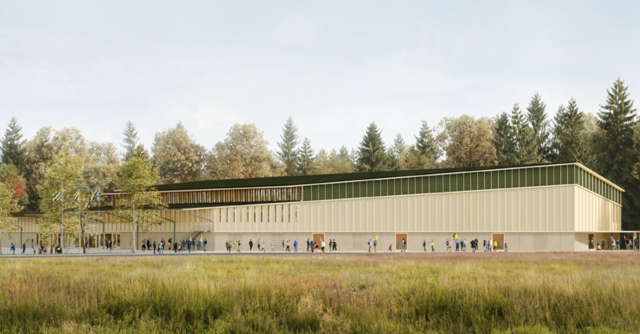
    The question of the actual costs of the Trèfle Blanc project caused speculation in the run-up to the project. Estimates ranged from 275 to 400 million francs. Now the Geneva government is providing clarity with the submission of a comprehensive investment bill. The initial discrepancy is not the result of a change of plan or “salami-slicing”, but of the detailed breakdown of the various funding sources and project phases.

    Initially, a credit of CHF 275.5 million will be submitted to the Grand Council for approval. This sum primarily covers the construction of two ice rinks (232 million), supplemented by costs for outdoor facilities (7.9 million), the tram connection (over 9 million), contingencies (9.3 million) and inflation (8.3 million). If this loan is approved by parliament, it could still be subject to a referendum if necessary.

    However, this sum does not represent the total costs for the canton, as CHF 17 million has already been spent on preliminary studies. This means that the total costs borne by the state to date already amount to CHF 293 million.

    Why it is 400 million
    The confusion surrounding the CHF 400 million is cleared up when the park-and-ride car park is included. This car park, whose construction will begin before the rest of the infrastructure, will provide 928 parking spaces for cars and 244 for motorbikes. It will cost an estimated CHF 99 million, a sum that is not directly requested by parliament. It will be financed by the Car Park Foundation, an autonomous public-law institution, which will borrow 75 million francs with the approval of the state, while the rest will come from its own funds. The repayment of this loan is secured in the long term by the income from the P R.

    The financing architecture
    It is essential to add this CHF 99 million to the total cost of the Trèfle Blanc project. Regardless of the source of financing used, this is public money, as the car park foundation is part of the public sector, similar to the Geneva utilities or the Geneva University Hospitals. This can also be seen in the consolidated financial statements of the Canton of Geneva. As the Presidential Department of the State Council confirms, everything is interconnected. A successful referendum against the 275 million loan would bring the entire project, including the P R, to a halt.

    The transparency in the cost breakdown of the Trèfle-Blanc project now creates the basis for an informed debate and paves the way for the realisation of this important infrastructure project, which will have a significant impact on Geneva.

  • Terminating a tenancy: Between arbitration, extension and eviction

    Terminating a tenancy: Between arbitration, extension and eviction

    Arbitration hearing Termination of rental apartment
    If the landlord terminates the rental apartment, the tenant can contest the termination with the conciliation authority within 30 days of receipt and request an extension. If the parties cannot agree on a settlement, the conciliation authority can submit a proposal for a decision or issue the tenant with authorization to file a complaint with the tenancy court.

    Extension of the tenancy
    If the termination is valid, the conciliation authority usually proposes an extension of the tenancy for a maximum of four years for residential premises. Art. 272a of the Swiss Code of Obligations stipulates when an extension is excluded. In addition, the Federal Supreme Court has repeatedly confirmed that the tenant must provide evidence of concrete efforts to find a replacement property before the arbitration hearing. Without concrete search efforts, there is no entitlement to extension.

    In the case of a final extension, the tenancy ends definitively and no further extension is possible. On the other hand, the tenant can request a second extension up to 60 days before the first one expires. If the landlord wants a final extension, this must be explicitly stated in the agreement, otherwise a first extension applies.

    Expulsion order
    If the parties agree on a definitive move-out date, the landlord should insist on an expulsion order in the settlement. This allows the landlord to request expulsion directly from the municipal authorities if the tenant does not move out on the agreed date.

    Recommendations for landlords
    If an extension is ruled out, it may still make sense for the landlord to grant a short final extension. This can avoid lengthy court proceedings with a corresponding “cold extension”. In an agreement, the landlord should ensure that a last extension is clearly formulated and insist on an expulsion order.

  • CH Media joins property portal

    CH Media joins property portal

    The capital increase at Newhome leads to a redistribution of shares. The 19 participating cantonal banks reduce their stake to 39.25 %, Next Property AG with 536 companies in the property sector now holds 23.35 %, AXA 17.4 % and CH Media joins as a new shareholder with 20 %. The aim is to strengthen the platform as a leading regional property portal in the long term.

    Media power meets property expertise
    The investment brings together two different but complementary areas of expertise. While Newhome has many years of experience in digital marketing and platform operation, CH Media contributes its media market power and regional roots. This combination is intended in particular to further expand the visibility and relevance of the platform in the market.

    A strategic step into a growth market
    CH Media is thus further expanding its activities in the digital classifieds business. In addition to job portals, the property sector is now also being tapped into as an attractive growth area. CEO Michael Wanner sees the investment as a consistent element of the corporate strategy and emphasises the potential to expand the user base.

    Fairness and partnership
    The existing shareholders expressly welcome CH Media’s investment. It remains clear to them that Newhome should grow as a transparent and fair property portal, without selling data, without interfering in transactions and without one-sided pricing. The common goal is to sustainably expand the portal in the service of users.

    Strengthening under its own steam
    CH Media’s participation is an example of a new phase in the digital property market. Platforms that are supported by cooperation between media companies and industry players are gaining in importance. Newhome is positioning itself as a regionally rooted, independent alternative and is sending out a clear signal against monopolisation in the online property business.

  • Climate fund Stadtwerk Winterthur awards grants

    Climate fund Stadtwerk Winterthur awards grants

    The Stadtwerk Winterthur climate fund is awarding 70,000 Swiss francs for environmentally friendly projects this year, according to a press release. The climate fund has been supporting climate protection, energy efficiency and CO2 reduction projects since 2007.

    Next Gas GmbH, based in Kloten, will receive a sum of 30,000 Swiss francs. It develops biogas reactors for small and medium-sized farms. This utilises the potential of liquid manure to generate decentralised heat and electricity. The funding will be channelled into a pilot project in which Next Gas’s fermentation process will be tested during ongoing operations.

    A pilot project organised by the Soily association will be supported with CHF 20,000. Here, a special compost with an ideal mixture of microorganisms is being tested on farms in the Winterthur region. A test field of 50 square metres will initially be set up for this purpose.

    SimpleTrain GmbH, based in Wallisellen, offers an online platform for international train journeys. The expanded platform will also enable bookings for routes that were previously not connected. With the support of Klimafonds Stadtwerk Winterthur, specific routes such as the one from Winterthur to Barcelona via Lyon will be offered. SimpleTrain is also receiving support totalling CHF 20,000 for the project.

    The fund is financed in part by voluntary contributions from electricity customers amounting to 2 centimes per kilowatt hour consumed. For an average household of four, this amounts to CHF 8 per month, according to the press release.

  • A fund to strengthen vocational training

    A fund to strengthen vocational training

    In 2024, the cantonal vocational training fund made a total of CHF 23.1 million available. A strong signal for the importance of vocational training. Of this, 22.2 million went towards inter-company courses, qualification procedures and further training for vocational trainers. These measures relieve the burden on training companies, promote the quality of training and increase the attractiveness of the apprenticeships on offer.

    Stimuli for new paths in education
    17 innovative projects were specifically supported with CHF 0.9 million. These include the Zurich careers fair, apprenticeship competitions in the Zurich Oberland and new training company alliances in the IT and catering sectors. Social integration projects such as practical days for refugees also received support. This diversity shows that the fund not only supports tried-and-tested projects, but also actively promotes new, forward-looking formats.

    Stable fund with growing appeal
    Despite high expenditure, the Vocational Training Fund remains financially stable. At the end of 2024, it had a solid balance of CHF 15.4 million. This financial cushion ensures continuous support for vocational education and training, even in economically challenging times. In addition, the Zurich model is gaining attention beyond the canton’s borders and is increasingly regarded as best practice for other German-speaking regions of Switzerland.

    Social support for the dual system
    “Vocational education and training offers prospects, orientation and stability in a dynamic environment,” emphasises Ruth Köfler-Apitzsch, Head of the Office. The fund is a reliable partner for all those who are committed to strong basic education and thus to a stable foundation for the Swiss labour market.

  • Robust market in Lucerne

    Robust market in Lucerne

    The commercial property market in the canton of Lucerne is proving resilient, even in the international context of economic uncertainty. Switzerland’s gross domestic product grew by 1.3 per cent in 2024 and is expected to rise to 1.5 per cent in 2025. The canton of Lucerne benefits from its broadly diversified economic structure with strong sectors such as construction, finance and services.

    Bottleneck meets demand
    Demand for office space remains high, fuelled by continued employment growth in the service sector. At the same time, the construction volume of around CHF 50 million is well below the long-term average. This reluctance to construct new buildings is further reducing supply, causing rents to rise moderately but continuously – by an average of 10 per cent since 2015.

    Structural change weighs on
    Despite stable consumption indicators, the market for retail space remains under pressure. Online retail, changing consumer behaviour and geopolitical uncertainties are putting pressure on even highly frequented locations. Falling asking rents point to a prolonged period of weakness – there is currently no recovery in sight.

    Solid basis, new risks
    At less than one per cent, the vacancy rate for industrial space is well below the national average. Demand is stable and projects such as new business parks in Lucerne and the surrounding area are signalling momentum. However, trade tensions, particularly with the USA, could slow down this trend and cause a slowdown in the medium term.

    Plenty of potential, but growing pressure
    The new study by Luzerner Kantonalbank and Wüest Partner paints a differentiated picture. Office and industrial space is benefiting from Lucerne’s attractiveness as a location and the strong domestic economy. Retail space, on the other hand, remains the problem child. Future developments will be largely determined by international conditions.

  • KOF between crises, AI and a clear stance

    KOF between crises, AI and a clear stance

    2024 was a year of significant upheaval. The KOF Swiss Economic Institute at ETH Zurich responded with new formats, expanded methods and a clear positioning that is evidence-based, independent and relevant. The weakening German economy and geopolitical uncertainties, such as the election of Donald Trump, also influenced the forecasts for Switzerland. The KOF favoured scenarios over rigid forecasts and adapted its forecasting model to current requirements.

    Third-party funding, data and dynamism
    In the intensified competition for third-party funding, KOF is focussing on practical, data-oriented research. Projects are becoming larger and international co-operation is increasing. At the same time, the claim remains clear: KOF remains an independent voice with scientific depth. With the expansion of the KOF Lab, the institution is creating space for cross-sector analyses on monetary policy, health and social inequality and is specifically promoting young talent.

    Utilising potential with a sense of proportion
    Both Sturm and Gersbach see great opportunities in AI, but not an overnight revolution. Rather, it is about continuous productivity gains, flanked by smart regulation. The KOF itself uses modern methods, but remains cautious about hypes. Research that has an impact is the goal, not technology for technology’s sake.

    Open questions for 2025
    Looking ahead to the new year, the directors see key challenges in analysing tariffs, non-tariff trade barriers and geopolitical tensions. The lessons from the collapse of Credit Suisse have not yet been fully learnt and the future of banking regulation also remains an issue. The KOF observes, analyses and remains clear in its stance, fact-based, forward-looking and independent.

  • May shows minimal increase in rents

    May shows minimal increase in rents

    The property platform homegate.ch has published its monthly rental index in collaboration with Zürcher Kantonalbank (ZKB ). According to a statement, the index rose by 0.1 per cent compared to the previous month to 130.5 points. This means that advertised rents “took a breather” in May.

    Compared to the previous year, advertised rents rose by 1.7 per cent across Switzerland. Depending on the region, an increase in advertised rents of more than 5 per cent was recorded.

    The results show clear differences between cantons and cities. At cantonal level, “consistently rising asking rents were observed for the first time in a long time” in a year-on-year comparison, according to the press release.

    The cantons of Zug (up 7.1 per cent) and Nidwalden (up 6.9 per cent) were the most affected by rising rents over the past twelve months. According to the press release, the values there are also higher compared to the previous month – in Zug by 1.4 per cent and in Nidwalden by 1.1 per cent. However, the month-on-month increase was highest in the canton of Graubünden and the two cantons of Appenzell (plus 1.5 per cent). In contrast, the canton of Schwyz recorded price reductions, as in the previous month. With a decrease of 2.1 per cent, asking rents there are returning to the level of December 2024, according to the report.

    Among the cities, the Greater Zurich Area is considered the most constant, as it was in May 2024. Asking rents have risen “relatively steadily” by a total of 4.4 per cent. In contrast, Geneva recorded a year-on-year decline – prices were 0.6 per cent lower than in the previous month of May. The highest price increase was recorded in the city of Lugano with a significant rise of 5.2 per cent. However, this development can be attributed to a selective decline in May 2024.

    Homegate is a division of SMG Swiss Marketplace Group AG. This combines the digital marketplaces of TX Group, Ringier and Mobiliar.

  • Zurich convinces as a business location

    Zurich convinces as a business location

    According to a survey of over 400 companies in the canton of Zurich conducted by the Office of Economic Affairs, 82% rate the location positively, with 22% rating it as “very satisfied” and 60% as “fairly satisfied”. This high level of approval is primarily based on three factors: the excellent transport infrastructure, the high quality of life and the availability of well-trained specialists. Economic stability and political reliability were also cited as locational advantages.

    Infrastructure impresses
    Of the 24 location factors assessed, infrastructure (71%) and quality of life (55%) were mentioned most frequently as plus points. The labor market followed with 43%. On the other hand, 90% of companies consider the cost environment, in particular rents, wages and regulations, to be a clear disadvantage. Similarly, 64% criticize the tax environment. Zurich ranks last in Switzerland in terms of corporate tax burden.

    One in four companies planning to relocate
    A quarter of the companies surveyed have thought about moving out of the canton of Zurich in the last five years or have concrete plans to do so. The main driver is the high tax burden. According to statistics, over one percent of Zurich companies relocate to other cantons every year. This trend is in line with the assessment of many companies.

    Well positioned in European comparison
    The results are also reflected in a comparative European study by the Office of Economic Affairs. In comparison with other European economic regions, Zurich is particularly impressive due to its educational landscape, economic performance and quality of life. The study sees a need for action in areas such as labor market dynamics, innovation promotion and regulatory density.

    Location with strengths – but under pressure
    The canton of Zurich remains a leading business location with excellent infrastructure, a high quality of life and a competent labor market. At the same time, feedback from companies clearly indicates that the cost and tax environment needs to be adjusted in order to stop migration trends and ensure long-term competitiveness. For decision-makers, this means actively developing location policy before the strengths are overshadowed by structural weaknesses.

  • Parliament approves new IOM headquarters in Geneva

    Parliament approves new IOM headquarters in Geneva

    On 14 June 2025, the National Council approved an interest-free federal loan for the renovation of the headquarters of the International Organization for Migration by 166 votes to 2. The decision followed a yes vote by the Council of States in March. The IOM, as part of the UN system, plays a leading role in global migration policy. The current site in Geneva’s Morillons district dates back to the early 1980s and does not meet energy, functional or security standards.

    Investment of strategic importance
    Parliament’s approval came despite the fact that the IOM recently announced that it would be cutting around 20 percent of the approximately 1,000 jobs in Geneva. The background to this is a freeze on aid from the USA, one of the organization’s main donors. However, Foreign Minister Ignazio Cassis emphasized in the Council that the construction project was sensibly dimensioned, even with a reduced workforce of around 600 employees in future. With this commitment, Switzerland is pursuing a clear host state policy strategy to strengthen International Geneva in the long term.

    Financing structure and timetable
    The loan of CHF 44.7 million granted by the federal government is interest-free and is to be repaid within 50 years. The funds will flow to the FIPOI (Real Estate Foundation for International Organizations), which is responsible for the project. The Canton of Geneva is contributing an additional CHF 21.6 million. This means that the federal government and the canton are covering around two thirds of the total costs. Parliament had already supported a preliminary project in 2022 with CHF 5.7 million for planning work. Construction is scheduled to start in January 2026 and the building is expected to be occupied in 2029.

    Geneva as a strategic location for international organizations
    The Confederation’s support is to be seen as part of the overarching host state policy. Geneva is currently home to more than 40 international organizations and is considered one of the most important multilateral locations worldwide. Switzerland aims to further consolidate this role. Not least in an increasingly competitive environment for international headquarters. Modernizing the infrastructure is a key means of retaining organizations such as the IOM in Geneva in the long term.

    Signal of continuity despite uncertainties
    By clearly approving the construction of the new IOM headquarters, Switzerland is once again acknowledging its role as a host state for international organizations. Despite geopolitical uncertainties and internal cutbacks at the IOM, the project sends a strong signal of Switzerland’s attractiveness as a location and its reliability. An aspect that is equally important for specialists and managers in diplomacy, international organizations and the construction industry.

  • Condominiums are more expensive than single-family homes

    Condominiums are more expensive than single-family homes

    ImmoScout24 introduces a press release on the current ImmoScout24 Purchase Index by stating that the trend towards home ownership is continuing. It is compiled monthly by the property marketplace, which belongs to SMG Swiss MarketplaceGroupAG, in collaboration with IAZI, a consultancy specialising in real estate. The current purchase index for May shows an increase in prices compared to April for both condominiums and single-family homes.

    At 0.8 per cent, prices for owner-occupied flats rose much more sharply across Switzerland than prices for single-family homes (0.3 per cent). However, the experts have identified significant differences within the individual regions. “The choice is currently particularly large in the Lake Geneva region,” Martin Waeber, Managing Director Real Estate at SMG Swiss Marketplace Group, is quoted as saying in the press release. “By contrast, supply is tightest in the greater Zurich region, one of the three most populous areas in Switzerland.”

    In the greater Zurich region, prices for single-family homes have risen particularly sharply by 3.9 per cent month-on-month. Eastern Switzerland is at the other end of the scale. Here, prices fell by 2.1 per cent compared to April. Eastern Switzerland, on the other hand, led the way with a 2.7 per cent increase in condominiums. The Mittelland brought up the rear here with a fall of 0.7 per cent.

    ImmoScout24 is a division of SMG Swiss Marketplace Group AG. This combines the digital marketplaces of TX Group, Ringier and Mobiliar.

  • Holiday apartment market in the Alpine region shows stable demand despite price decline

    Holiday apartment market in the Alpine region shows stable demand despite price decline

    The UBS Alpine Property Focus 2025 evaluates the development of the holiday apartment market in the Alpine region. Five Swiss destinations top the price ranking. Engadin/St.Moritz GR takes first place with at least 22,300 francs per square metre. The top 5 are completed by Verbier VS, Zermatt VS, Gstaad BE and Andermatt UR. Prices for Alpine holiday flats rose by 2.3 per cent last year amid high demand.

    The emergence of hybrid forms of work after 2020 triggered the current high demand, according to a press release from UBS. Alpine holiday flats have become around 30 per cent more expensive since 2020. The year 2024 saw subdued price increases in the Alpine region. Prices in French and Italian destinations rose by an average of 4 per cent and in Swiss locations by 3 per cent. In Austria, they fell by 3 per cent.

    “In the short term, the price trend in the Alpine region is likely to weaken further over the next few quarters,” says Maciej Skoczek, property economist at UBS and lead author of the study. Alpine holiday flats are in high demand, but the subdued economic outlook and inflation are weighing on households, says the economist.

    The study assesses the prospects for Swiss property positively. In the face of geopolitical turbulence, this property is very popular as a safe investment. Lower mortgage interest rates and a low supply of holiday flats are also supporting Swiss prices.

    The study sees risks for the holiday apartment market in regulatory intervention: The relaxation of the Second Homes Act is likely to ease the supply situation, while the planned tightening of the Lex Koller will regulate property purchases for foreigners more strictly, according to UBS. These interventions will dampen the price trend in the luxury segment.

  • Property fund launches new capital increase

    Property fund launches new capital increase

    The fund management of Swiss Prime Site Solutions is preparing a new short-term capital increase for the Akara Swiss Diversity Property Fund PK (Akara Diversity PK ). The Asset Management Division of Zug-based property company Swiss Prime Site announced in a press release that not all subscriptions were taken into account in the 14th capital increase completed in mid-May due to high demand. To rectify this situation, Swiss Prime Site Solutions intends to raise a further CHF 85 million. The subscription period for the 15th capital increase begins on 11 June and ends on 20 June.

    The Akara Diversity PK is restricted to tax-exempt pension funds, social security and compensation funds domiciled in Switzerland and investment funds consisting of such funds. The new capital increase will be carried out while safeguarding the subscription rights of existing shareholders. The ownership of 25 existing shares entitles the holder to acquire one new share at the issue price of CHF 1148. If not all subscription rights are utilised, new investors will be eligible. The fund units are to be paid out on 27 June.

    Swiss Prime Site Solutions intends to use the new funds raised to expand the fund’s property portfolio and finance ongoing projects. If possible, the debt ratio should also be further reduced, according to the press release.

  • AI-based weather forecasts for energy and agriculture

    AI-based weather forecasts for energy and agriculture

    The Zurich-based start-up Jua.ai has closed a Series A financing round totalling over 9 million Swiss francs, according to an article on startupticker.ch. The financing round was led by Ananda Impact Ventures and Future Energy Ventures and supported by existing investors such as 468 Capital and Promus Ventures. Jua plans to use the funding to accelerate the market launch of its Earth Intelligence Platform. This will enable more accurate weather forecasting to help energy traders make faster and more profitable decisions.

    The platform is powered by Jua’s artificial intelligence (AI) model EPT-2.0 and is designed to significantly outperform the weather forecasting performance of conventional numerical weather models and AI models from large technology companies. Precise weather forecasts are particularly important for sectors such as energy, agriculture, aviation and shipping. The AI-based earth simulation is intended to provide a consistent and physically simulating platform to enable reliable decisions in various sectors in the face of increasing weather extremes and weather changes.

    Jua 2024 has already secured around 13 million Swiss francs in its seed financing round. As part of this year’s capital increase, Marvin Gabler, co-founder and architect of EPT-2.0, has now been appointed as the new CEO. He succeeds Andreas Brenner, who has led Jua since its foundation in 2022. With Gabler at the helm, the company intends to focus on scaling its platform in the energy sector and expanding into new markets. “With our Earth Intelligence Platform, we have transformed the world’s most advanced Earth simulation into a real-world decision engine,” Gabler is quoted as saying in the article. “This is a fundamental step towards shaping our planetary future.”

  • Investment plans weaken in 2025, record high in 2026

    Investment plans weaken in 2025, record high in 2026

    According to the latest KOF Investment Survey, Swiss companies are planning to increase their gross fixed capital formation by 2.9% in nominal terms in 2025 compared to the previous year. This means that the expected growth is not only below the historical average, but also below the forecasts of the last survey in autumn 2024. Construction investment in particular, which has been the main driver of Swiss investment activity to date, is expected to increase by 4.5%, but is showing a noticeable slowdown compared to expectations from the previous year. Equipment investment is expected to grow by 2.2% and research expenditure by 2.5%.

    In the services sector, optimism has dampened noticeably. Instead of the previously forecast growth of 4.7 percent, companies are only expecting an increase of 3.1 percent. In the construction industry, fixed asset investments are even forecast to fall by 1.1%, a significant correction compared to the previously expected stagnation. In manufacturing, on the other hand, the outlook remains largely stable, with a forecast increase of 1.4%.

    Tariff announcement weighs on investment security
    A key reason for the subdued expectations is the US tariff announcement from April 2025, which envisages a tariff rate of 31% for Swiss imports into the USA. With the help of a quasi-experimental analysis, the KOF was able to show that the announcement had a noticeable effect on investment decisions. Companies that completed their questionnaire after April 2 reported an increase in reduced investment plans. Before the announcement, around 30 percent of companies were planning to reduce their investment in equipment. After the announcement, this proportion rose to 35%, while the proportion of companies with unchanged plans fell from 40% to 36%.

    Similar patterns can be seen in construction investment, while research expenditure appears to have remained largely unaffected. Companies that were already planning expansion investments stuck to their plans. In contrast, many companies that had not previously planned any changes scaled back their plans, a clear indication of the increased uncertainty.

    Significant increase in investment uncertainty
    The certainty of investment realization also deteriorated following the customs announcement. The proportion of companies that rate their investment plans as more uncertain rose from 12% to 22%. At the same time, the proportion of those who did not notice any change in security fell from around two thirds to 56%. The proportion with an improved security assessment remained constant at around 21%.

    Focus on rationalization and climate investments
    The changed environment has influenced companies’ investment motives. Expansion investments, traditionally risky, are increasingly viewed with caution. Instead, the idea of rationalization is gaining in importance. The role of environmental and climate protection investments is also growing. While 60% of companies took corresponding measures last year, 69% intend to invest in climate protection and adaptation to extreme weather conditions over the next three years. This is despite the fact that almost a third of companies state that they are not currently directly affected by climate change. At the same time, the proportion of companies that see the transition to more climate-friendly standards as an opportunity has fallen from 42% to 39%. The proportion of those who see it as a risk, on the other hand, has risen to 28%.

    Optimistic forecasts for 2026
    The picture for 2026 is completely different. Never before since the KOF surveys began have so many companies planned to increase their investments. 28% of the companies surveyed are planning to invest more in equipment, while the figure for construction investment is as high as 29%. At the same time, the proportion of companies expecting a decline has fallen significantly to just 14%. Companies from the manufacturing and service sectors are particularly optimistic.

    Opportunities and risks at a glance
    The KOF analysis underlines the high adaptability of Swiss companies. While geopolitical risks such as US customs policy are leading to investment cuts and uncertainty in the short term, many companies are focusing on growth and climate investments in the long term.

  • New findings from 45,000 building permits

    New findings from 45,000 building permits

    The white paper “Retrofitting the Future, The Costs, Timelines, and Strategies Shaping Swiss Real Estate”, which was produced in collaboration with E4S, combines comprehensive data analyses with practical recommendations for action. The aim is to paint a realistic picture of renovation activity in Switzerland. The researchers have systematically investigated the dynamics of renovations, both in terms of speed and costs as well as the type of projects.

    Findings from 45,000 building permits
    By analyzing more than 45,000 building permits issued, the report provides a detailed overview of the actual pace of renovation in Switzerland for the first time. The results show that positive trends are definitely emerging. At the same time, however, it is clear that only a small proportion of renovations are directly aimed at improving energy efficiency. This means that the transition to more climate-friendly buildings has so far remained incomplete.

    Strategic importance of real estate funds
    A central aspect of the report is the role of real estate investment vehicles (REIVs) in achieving the climate targets by 2050. In order to achieve these targets, REIVs must mobilize an average of 13 percent of their net assets, or CHF 28.3 billion, for energy improvements. However, the study points to major differences between the individual market players when it comes to implementing these investments. Some will have to go far beyond the average requirement.

    New tools for well-founded decisions
    The white paper is part of a series of CRML initiatives designed to provide decision-makers with a solid data basis.

    PRESS Scoresa comprehensive ESG rating system for over 126 Swiss real estate funds that takes environmental and social criteria into account.

    PRESS Index: The first sustainable stock market index based on ESG performance metrics, creating transparency in the real estate sector.

    ES Score Whitepaper: An in-depth analysis of 20,000 buildings managed by REIVs to identify regional differences and prioritize investments.

    These tools have a common goal, they make change in the real estate sector measurable and highlight areas for action that often remain hidden. This creates a basis on which decision-makers can not only react, but also proactively steer.

    Focus on future-oriented strategies
    “By combining current data and project typologies, we can move from a theoretical and retrospective view to a concrete and prospective reading of ongoing changes,” explains Dr. Nathan Delacrétaz, one of the authors of the report. Together with his colleagues, Professors Eric Jondeau and Fabio Alessandrini, he makes it clear that it is not enough to simply manage the status quo for existing buildings.

    The researchers emphasize that REIVs will have to focus more on three strategic approaches in future: adapting their portfolios through targeted acquisitions and sales, renovating existing buildings and developing new, energy-efficient properties. The targeted upgrading of underperforming properties will also play a key role in improving the sector’s energy balance in the long term.

    Quantitative basis for the real estate turnaround
    The white paper provides a rare insight into the actual dynamics of renovation and construction activities in Switzerland. It makes it clear that building permits are a key indicator of progress towards climate neutrality, but also a warning. Only if these renovations are specifically geared towards energy efficiency and climate neutrality can the targets set be achieved.

  • Loss of rent in Zurich only a temporary burden

    Loss of rent in Zurich only a temporary burden

    The Swiss Life REF (CH) ESG Swiss Properties real estate fund generated net income of CHF 30.3 million in the first half of the 2024/25 financial year, which ended on March 31, 2025, Swiss Life Asset Management Ltd announced in a press release. Net income of CHF 27.4 million was reported. The net asset value per unit fell from CHF 113.73 at the end of the 2023/24 financial year to CHF 112.37.

    In addition to rental income, the sale of five properties with a market value of around 60 million francs also contributed to the solid result. A capital gain of around CHF 2.9 million was realized here. The fund also benefited from a residential portfolio acquired in July 2024, whose net profitability was around 0.4 percentage points higher than the profitability of the existing portfolio.

    However, the loss of a major tenant in Zurich had a negative impact on the result. Specifically, the rent loss rate rose to 3.8% as a result. However, the affected space has already been re-let with effect from October 2025.

    Swiss Life Asset Manager intends to further optimize the current income and expenses of its real estate fund in the second half of the current financial year. The asset manager, which is part of the Swiss Life Group, has no plans for major property sales or a capital increase.

  • Profit increase thanks to favorable procurement and fewer reserve requirements

    Profit increase thanks to favorable procurement and fewer reserve requirements

    Stadtwerk Winterthur closed its 2024 financial year above expectations. According to its press release, the reasons for this are the lower market prices for the procurement of gas and lower expenses for the winter reserve prescribed by the federal government. This resulted in a turnover of CHF 311 million and a profit of CHF 26 million.

    There were fewer burst pipes in the water network and the operation of the waste recycling plant was largely uninterrupted. In district heating, significantly less oil and gas had to be purchased to cover consumption peaks. In addition, the number of customers connecting to the heating networks increased. As a result of the financing of the municipal pension fund approved by the Winterthur electorate, previous provisions were released.

    With regard to the challenges in the present and future, the municipal utility cites rising costs for operating resources and external services in all business areas and the increasing shortage of qualified staff. At the same time, the increasing self-production of solar power by private individuals and companies is reportedly a challenge, as this means that they are purchasing less electricity from Stadtwerk Winterthur. In addition, the quantities purchased are more difficult to predict, as they are more dependent on the weather.

    The energy supplier will incur high costs due to the renewal of the waste incineration plant as well as the conversion and expansion projects for the wastewater treatment plant and the heating networks. This will require a large framework credit, which is expected to be voted on at the end of next year. In addition, complex preparations for the legal and financial consolidation of the heating networks are underway. Stadtwerk Winterthur is also increasingly concerned with the costs of environmental regulations and measures to increase energy efficiency.

  • New study emphasises the importance of new replacement construction for relieving housing pressure

    New study emphasises the importance of new replacement construction for relieving housing pressure

    “Unloved but necessary replacement new builds” is the title of Raiffeisen Switzerland ‘s study “Real Estate Switzerland – 2Q 2025“. According to the study, replacement new builds create an average of four new flats for every demolished flat. “Despite criticism, there is often no alternative to replacement construction in order to combat the housing shortage without further urban sprawl, as gentler forms of densification, such as conversions and extensions, are not sufficient to maximise the use of scarce building land,” Raiffeisen Switzerland’s Chief Economist Fredy Hasenmaile is quoted as saying in a press release issued by the banking group on the study. He recommends paying “greater attention to social and ecological compatibility” in order to maintain social acceptance of new replacement construction.

    According to the authors of the study, the situation on the rental housing market remains characterised by excess demand. Falling interest rates could boost construction activity, according to the press release. “However, it is questionable whether the high construction levels of the past can be achieved again even under negative interest rates, as regulatory hurdles and the very limited availability of building land continue to dampen the potential,” says Hasenmaile.

    The study identifies an increase in demand on the owner-occupied property market as a result of falling interest rates. The banking group’s experts have also observed a rising demand for office space. This is due to employment growth and an increased office presence. “After several years of rather mixed prospects, the outlook for office properties has recently brightened noticeably,” says Hasenmaile.

  • IPO launched for North American business

    IPO launched for North American business

    Holcim’s new North American company Amrize is to be traded on the stock exchange for the first time on 23 June. This has now been announced by the Zug-based building materials group. The necessary authorisations have now been granted.

    Holcim announced at the Investor Day in March 2025 that the business in the north of the American continent was to be spun off. The background to this is the US government’s investment programmes worth billions over the next eight to ten years, the potential of which Holcim intends to fully exploit through its Chicago-based subsidiary.

    Shareholders will receive one Amrize share for each Holcim share held. The spin-off will be tax-neutral in Switzerland and tax-free in the USA. The Amrize shares will start trading on the same date on both the New York Stock Exchange and in Zurich. There they will be included in the Swiss Market Index (SMI) and the Swiss Leader Index (SLI).

    The company has reportedly secured debt financing of USD 3.4 billion in the form of bonds, a USD 2 billion credit facility and a USD 2 billion commercial paper programme. In addition, Amrize has a bridge loan of 1.7 billion dollars.

    With over 1,000 locations and 19,000 employees, Amrize will become the largest provider of construction solutions focussing exclusively on the North American market. According to Holcim’s NextGen Growth 2030 strategy, Amrize will realise a number of smaller acquisitions from an estimated total capital allocation capacity of CHF 18 to 22 billion by 2030. Excess capital will be used for large strategic acquisitions and share buybacks. The operational headquarters will be in Chicago, while the company’s registered office will remain in Zug.