Category: Energy

  • Alpiq increases profit with lower revenue

    Alpiq increases profit with lower revenue

    Alpiq benefited from the high demand for flexible electricity production in Switzerland and Europe in 2023. At CHF 8,420 million, the Lausanne-based energy supplier achieved a significantly lower total operating performance than in the previous year (CHF 14,899 million), reflecting the decline in electricity prices on the market. However, net profit rose from CHF 172 million to CHF 820 million, according to a press release.

    The power plant portfolio with its flexible Swiss hydropower plants and gas-fired combined-cycle power plants in Italy, Spain and Hungary contributed the largest share of Group earnings before interest, taxes and levies at CHF 1,040 million. At CHF 1184 million, this was 150 per cent higher than the previous year.

    Energy and certificate trading brought in a total of CHF 54 million in 2023, while the origination business – the marketing of third-party electricity production – generated CHF 169 million.

    Alpiq will continue to focus on the production of electricity in the future, even when it is scarce due to the switch to renewable energies. “Our very good result gives us the opportunity to continue to invest heavily in urgently needed winter production and additional storage facilities,” Alpiq CEO Antje Kanngiesser is quoted as saying in the press release. in 2022 and 2023, Alpiq invested a total of CHF 316 million in maintaining, renewing and increasing the efficiency of its power plant portfolio.

  • UZH tackles energy centre at Irchel campus

    UZH tackles energy centre at Irchel campus

    UZH has started planning the first energy centre of the anergy network on the Irchel campus. According to a press release, the first phase will focus on planning the energy centre for Cluster 4, for which UZH is working with the international engineering company J. Willers Engineering, which is based in Rheinfelden AG and specialises in high-tech buildings and infrastructure. Commissioning is planned for 2028.

    UZH is still one of the top 20 energy consumers in Zurich. However, it is striving to play a pioneering role in sustainable operation. To this end, the university wants to organise its energy consumption in a way that conserves resources and make a significant contribution to reducing CO2 emissions.

    To this end, the heating and cooling requirements of the campus are to be covered by four energy centres and corresponding geothermal probe fields by 2050. Ultimately, the aim is for UZH to be able to cover its heating requirements with waste heat from cooling production. This waste heat is to be fully utilised and stored seasonally.

    UZH cites low life cycle costs, high operational and supply reliability and ease of maintenance as the main objectives of this project. Finally, the conceptual basis for the other planned energy centres is to be developed in this first phase.

  • Canton of Bern favours solar energy along its roads

    Canton of Bern favours solar energy along its roads

    Two consortia from the cantons of Zurich and Basel were selected from among the applicants, which impressed with their expertise and innovative approaches. The awarding of the projects to the consortium of Elektrizitätswerke des Kantons Zürich (EKZ), Helion AG and mha gmbh as well as the consortium of Industrielle Werke Basel (IWB) and TNC Consulting AG (TNC) marks a decisive step towards promoting renewable energies in the region.
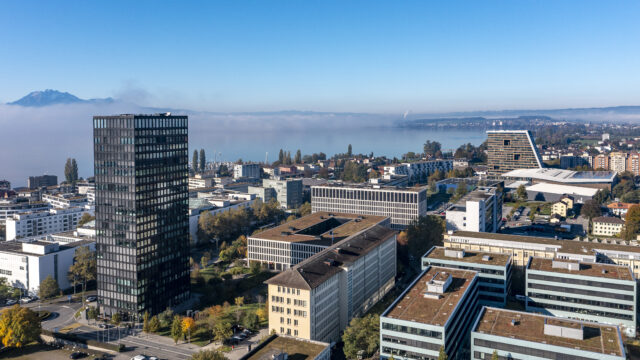
    In particular, the initiative of the EKZ-Helion-mha consortium to erect large-scale solar carports at cantonal motorway service stations represents a double innovation.

    In addition to producing clean energy, these carports help to reduce the use of air conditioning by providing shade. With a planned capacity of almost 8.5 megawatts, they are aiming to realise ten photovoltaic systems and are also exploring the possibility of installing solar panels on noise barriers, retaining walls and a bridge.

    The IWB-TNC consortium is focussing on the installation of almost 1.8 megawatts of photovoltaic systems in the Bernese Oberland region, distributed across various structures such as retaining walls and bridges. The feasibility of these projects is ensured by comprehensive studies.

    The first planning steps for these pioneering solar installations will begin in April 2024, underlining the canton’s commitment to the national Energy Strategy 2050 and to achieving the net-zero target by 2040. This selection process emphasises the Canton of Bern’s desire to take a leading role in the implementation of energy solutions and at the same time promotes the participation of local stakeholders in the energy transition.

  • New ways of dealing with grey energy and housing allocation

    New ways of dealing with grey energy and housing allocation

    The property sector faces the challenge of reducing its carbon footprint. While institutional investors have already made progress, Fredy Hasenmaile points out that the next step is to consider grey energy – the energy used to construct properties and their materials. Previous efforts have focused mainly on the operational phase of properties, but including grey energy in the calculations could revolutionise the understanding of sustainability in construction.

    In his analysis, Hasenmaile also points to a problematic misallocation of living space in Switzerland, caused by the current tenancy law, which leads to a large discrepancy between asking rents and existing rents. Older households in particular remain in flats that are too large, as moving to smaller units is financially unattractive. This leads to inefficient utilisation of living space and an increasing housing shortage.

    The study by Raiffeisen Switzerland identifies enormous potential for improving the allocation of living space: if flats were distributed in such a way that each household had just one more room than people, 170,000 flats could be saved. This would not only alleviate the problem of housing shortages, but would also save considerable amounts of grey energy.

    In view of the expected increase in new rents and the resulting increase in disincentives, which also lead to vacancies and low tenant mobility, Hasenmaile appeals to the need to address the causes of this misallocation under tenancy law and to find innovative solutions for a more effective transfer of living space.

  • Accelleron gets electricity from the roof in Baden

    Accelleron gets electricity from the roof in Baden

    According to a press release, Accelleron Industries AG has inaugurated the city’s largest photovoltaic system at its headquarters in Baden in the presence of Mayor Markus Schneider. The system was put into operation in December. It is spread across four roofs of company buildings with 2533 modules and a capacity of 1 megawatt peak output and is expected to produce around 1 gigawatt hour per year. According to the company, this corresponds to the annual energy requirements of 400 households or 150 journeys around the world in an electric car. Accelleron now covers 10 per cent of its annual electricity requirements in Baden with green energy, the statement continues.

    “As a leading company in the turbocharger industry, Accelleron is committed to decarbonisation and is making a positive contribution to sustainability,” said Herbert Müller, President of Accelleron’s High Speed Division and Co-Managing Director of the subsidiary Turbo Systems Switzerland. With this project, Accelleron Switzerland is playing a pioneering role in the use of renewable energies, Müller continued. Markus Schneider was the guest of honour at the inauguration ceremony. “I would like to thank Accelleron as an important Baden-based company for this commitment to renewable energies. This is exactly the kind of project we need on the roofs of companies in Baden,” Schneider is quoted as saying.

    According to the company press release, it took less than eight months from the internal project approval to the commissioning of the plant in December 2023. Although the project is still in an early operating phase, important insights have already been gained, such as the effects of snow conditions on electricity production with solar installations, according to Accelleron.

  • A total of 5 million roofs are suitable for generating electricity

    A total of 5 million roofs are suitable for generating electricity

    More than half of Switzerland’s total roof area – 5 million roofs in total – is suitable for the installation of solar/photovoltaic systems. According to a press release from the Swiss Federal Institute of Technology in Lausanne(EPFL), this is the result of a doctoral thesis on the expansion of solar installations in Switzerland. As a result, more than two thirds of Swiss cities and municipalities could become energy self-sufficient.

    As part of her doctoral thesis, Alina Walch analysed the potential of renewable energy systems. In collaboration with Martin Rüdisüli, an expert in energy system modelling at the Swiss Federal Laboratoriesfor Materials Science and Technology(Empa) in Dübendorf ZH, she developed and compared two scenarios for the expansion of photovoltaics in Switzerland in order to achieve or even exceed the targets of Energy Strategy 2050.

    “We carried out the research together, with me contributing my knowledge of photovoltaic modelling and Martin Rüdisüli contributing his experience in evaluating various scenarios for the expansion of this form of energy as part of the energy transition,” Walch is quoted as saying.

    The two strategies analysed were the preference for large flat roofs, for example on industrial buildings, and a balanced generation of electricity by installing solar cells on the roofs of all residential buildings. Walch’s conclusion: “The best option is a compromise between the two strategies – one that utilises the potential of both industrial and residential roofs.”

    As part of its Energy Strategy 2050, the federal government is aiming for a rapid expansion of solar/photovoltaic systems. the aim is to generate 35 terawatt hours (TWh) of electricity from renewable energies (excluding hydropower) by 2035 and 45 TWh by 2050.

  • Canton of Lucerne wants to accelerate the expansion of renewables

    Canton of Lucerne wants to accelerate the expansion of renewables

    The cantonal government of Lucerne has presented its draft legislation on the expansion of electricity production from renewable energies. The amendment to the Cantonal Energy Act provides for better utilisation of roof surfaces to generate solar power.

    According to a press release, new buildings will no longer be required to generate only a portion of the electricity they require themselves, but will have to “adequately utilise” the electricity generation potential of the roof surface. Electricity generation requirements are also proposed for existing buildings, as they in particular have “immense potential for electricity generation”.

    This is in the interest of a rapid expansion of locally produced renewable energy, according to District President Fabian Peter: This will “not only enable us to achieve our climate targets, but also increase our energy supply security”. After all, photovoltaic systems on roofs in the canton could generate a total of 2.4 terawatt hours of solar power. According to the figures, this is more than double the current electricity consumption of all private households.

    Photovoltaic systems will now also be allowed to be installed on another roof within a certain group of buildings, for example on stables, haylofts, commercial buildings or school grounds. This is the government council’s response to a frequently expressed concern from the public consultation. This took place from 15 December to 6 April 2023.

    The majority agreed with the general thrust, objectives and principles of the new regulations. This amendment to the Cantonal Energy Act is expected to be on the agenda for the upcoming May session of the Cantonal Council.

  • Solar folding roof a milestone for Appenzell I.Rh

    Solar folding roof a milestone for Appenzell I.Rh

    At the recent open day of the wastewater treatment plant (WWTP) in Appenzell I.Rh., the latest project – an ingenious solar folding roof – attracted around 200 interested visitors. This innovative system demonstrates the combination of energy efficiency and environmental protection by covering 80% of the ARA’s energy requirements and minimising the formation of algae in the clarifiers.

    In his speech, Ruedi Ulmann, the client of the project, emphasised the importance of the project for the regional energy and climate strategy and highlighted the support of the Grand Council. The solar folding roof, whose design both optimises technical operation and reduces the environmental impact, was blessed by the parish priest Lukas Hidber.

    The solar folding roof impresses with its lightweight construction, which allows unrestricted access to the system and protects it from the weather thanks to intelligent control software. The resulting longer service life of the modules and the reduction in algae growth lead to a reduction in operating costs. The innovative use of solar and biogas technologies at the Appenzell I.Rh. wastewater treatment plant is a pioneering example of the effective utilisation of renewable energies at municipal facilities.

  • St.Gallen energy provider heats with waste heat from industry

    St.Gallen energy provider heats with waste heat from industry

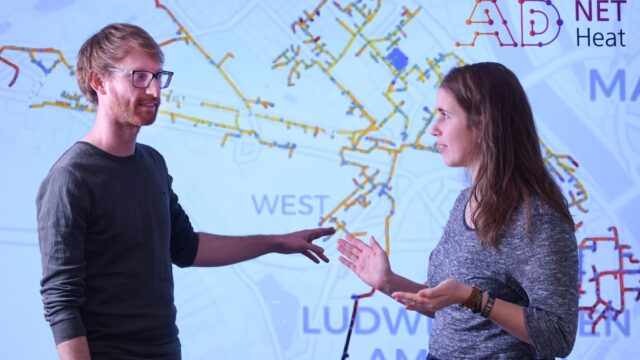
    According to a press release from St.Gallen’s municipal utilities, the heating network of energienetz GSG AG will use industrial waste heat to provide environmentally friendly heating. To this end, the energy supplier energienetz GSG, which was founded at the end of September 2018 by the cities of St.Gallen, Gossau and Gaiserwald and St.Gallisch-Appenzellische Kraftwerke AG(SAK), is building a low-temperature heating network in the west of the city of St.Gallen that uses waste heat from industrial and commercial enterprises to supply properties with heating or cooling. In this way, fossil fuels can be saved and CO2 emissions reduced, according to the press release. Further areas are to be developed in the coming years.

    Waste heat is generated in many processes, such as the cooling of products and rooms, in data centres and in the manufacturing industry. Some companies use it themselves, but some generate more than they can utilise internally. The low-temperature heat network, also known as the anergy network, utilises the surplus energy to heat or cool the surrounding properties.

    The city of St.Gallen and SAK each hold a 47.4 per cent stake in the initiator and operator of energienetz GSG, while the municipality of Gaiserwald holds a 5.2 per cent stake. The aim is to supply a large part of the area between St.Gallen Winkeln, Gossau Mettendorf and Gaiserwald with heating and cooling from industrial waste heat by 2050.

    “In this way, we can substantially reduce CO2 emissions in the perimeter, utilise local resources and increase energy efficiency in the companies,” says Simon Schoch, Managing Director of energienetz GSG and Head of Technical Sales at St.Gallen Stadtwerke.

  • Uster Technologies focusses on clean electricity

    Uster Technologies focusses on clean electricity

    Uster Technologies, a company specialising in textile quality control, only uses electricity from 100% renewable energy sources at its headquarters in Uster, according to a press release. The press release on LinkedIn also states that electricity consumption in the production facilities and offices has been falling since 2019 thanks to investments to increase energy efficiency and energy-saving measures by employees.

    “Our internal awareness campaign has led to a reduction in energy consumption. Employees are increasingly following the guidelines for saving energy at their workplace,” Daniel Schlegel, Logistics Manager at Uster Technologies in Switzerland, is quoted as saying. Schlegel also gives employees tips on how to save electricity by taking simple steps. For example, he recommends switching off the PC or laptop at the end of the day instead of leaving it in standby mode. More energy can also be saved by reducing screen brightness and ambient light.

    The awareness-raising campaign run by the company’s management is also looking at ways to save energy through intelligent lighting and heating. “We are on the right path to a more sustainable operation. We are measuring and analysing our energy consumption in order to learn from this and make further improvements,” Schlegel is quoted as saying.

    Uster Technologies only published a bulletin on sustainable management in the textile industry in November 2023. It is intended to provide practical tips and specific industry knowledge in all areas of the textile value chain. In particular, yarn manufacturers are to be informed about which recycled materials they can use in the production of their fibres.

  • Piston machine to generate more electricity from waste heat

    Piston machine to generate more electricity from waste heat

    The Swiss Federal Laboratories for Materials Science and Technology(Empa) has awarded its former doctoral student Andyn Omanovic an Entrepreneur Fellowship. It is intended to contribute to the development of a new type of reciprocating machine that can be used to increase the generation of electricity from waste heat, Empa explained in a press release. The project will be realised by etavalve GmbH from Zurich, which was founded by Omanovic and hydraulics expert Wolfgang Schneider as a spin-off from Empa and the Swiss Federal Institute of Technology in Zurich(ETH).

    Currently, the conversion of waste heat into electricity is mainly carried out using turbines. However, turbines are “particularly effective for high temperatures and for power requirements of several hundred megawatts”, explains Omanovic in the press release. “But for temperature ranges of around 500 to 900 degrees, where waste heat is generated irregularly, and up to the power range of several megawatts, our reciprocating engine is better suited.”

    The start-up has already found a partner for an initial practical test in the form of energy supplier IWB in Basel. By the beginning of 2025, etavalve aims to have developed a pilot machine that IWB will use in the process of converting biomass into biochar. The lean gas produced during pyrolysis contains methane and gaseous pollutants and must be incinerated as required by law. An initial small series of piston machines for the combustion of lean gases is to follow shortly afterwards.

  • Energie 360° builds climate-friendly energy centre in Dällikon

    Energie 360° builds climate-friendly energy centre in Dällikon

    The energy supplier Energie 360° has been granted a licence by the municipality of Dällikon to build a climate-friendly energy network. According to a press release, Dällikon will be the third municipality in the Furttal valley, alongside Regensdorf and Buchs, to have an energy network that is supplied with CO2-neutral energy from the Green data centre in Dielsdorf.

    The planned energy network is fuelled by the conversion of waste heat from energy-intensive mainframe computers into useful energy. By eliminating fossil heating systems, the municipality expects to reduce CO2 emissions by 3,000 tonnes. “The project offers us the opportunity to drive forward the energy transition,” says municipal president René Bitterli in the press release.

    The population of Regensdorf had approved the necessary land purchase. Construction is scheduled to start there in autumn 2024. The centre is expected to supply climate-friendly energy to public buildings and properties owned by private parties in Dällikon from autumn 2027. Regensdorf and Buchs are to receive their energy from there from autumn 2026.

    In addition to the planning, Energie 360° has taken on the financing, construction and operation. The energy supplier has announced that it will be approaching homeowners and administrations in the coming weeks to inform them about the conditions for a connection.

  • The Ark and CleantechAlps are looking for start-ups for smart energy utilisation

    The Ark and CleantechAlps are looking for start-ups for smart energy utilisation

    CleantechAlps, the cluster of cleantech companies in Western Switzerland, and The Ark, a foundation for innovation in Valais, are organising the second pitch contest for smart energy start-ups. The competition will take place on 30 August as part of the Smart Energy Events on the Energypolis Campus in Sion, the organisers announced in a press release. Interested start-ups have until 7 June to apply online to take part.

    We are looking for start-ups that were founded after 2014 and are active in the energy sector. A jury is responsible for pre-selecting the young companies that will ultimately take part in the competition. At the pitch contest itself, the start-ups compete for the best idea, the best short presentation and the audience award. All three awards come with prize money of CHF 5,000 each. In addition, the competition offers participants “a unique opportunity to present their company in the best possible light and meet important players in the industry”, write the organisers.

  • Large number of exhibitors for BAU 2025

    Large number of exhibitors for BAU 2025

    Last year saw the fourteenth round of competitive tenders aimed at increasing energy efficiency in various sectors. With the approval of 77 new projects, which were funded with a total of CHF 17.9 million, 2023 set a new standard in the history of this initiative. This development is also reflected in the total number of project applications submitted, which rose by around 30% year-on-year to 126. A simplified and accelerated approval procedure, which was introduced at the end of 2021, contributed significantly to this increase.

    Total funding in 2023 amounted to CHF 33 million, spread across eight programmes and 77 projects, with a cost-benefit ratio of 3.1 centimes per kWh including implementation costs. The energy savings made possible by these initiatives are estimated at around 62 gigawatt hours per year. This corresponds to the consumption of around 14,000 Swiss households and emphasises the potential of these measures to reduce energy consumption.

    The spectrum of funded projects ranges from the renovation of commercial kitchen and refrigeration systems to the optimisation of production processes by replacing electrical drives in industry. This shows the range of approaches to improving energy efficiency covered by the calls for proposals.

    A special submission round for projects with higher investment costs will be continued for 2024 in order to promote targeted large-scale investments in energy efficiency. Project applications can be submitted on an ongoing basis and completely digitally, with specific deadlines applying for larger projects with a funding volume of more than two to a maximum of six million francs.

    These developments emphasise the increasing importance of energy-efficient measures in the Swiss economy and the role of competitive tenders as a key instrument for promoting these efforts. The continuous adaptation and expansion of the programme signals a strong commitment to reducing energy consumption and supporting sustainability goals in real estate management and beyond.

  • Primeo Energie signs contract for Aesch heating network

    Primeo Energie signs contract for Aesch heating network

    According to a press release, the energy supplier Primeo Energie from Münchenstein signed the contracts necessary for the construction and operation of the new heating network with the municipality of Aesch on Friday, 9 February. Aesch and Primeo Energie support the federal government’s Energy Strategy 2050 and have the common goal of decarbonising heating energy, the press release continues. The future heating network in Aesch with its new wood-fired heating centre is one measure to achieve this.

    “We are delighted to have taken another important step towards decarbonising our heat supply in the region and in the municipality of Aesch in particular by signing this contract,” said Cédric Christmann, CEO of Primeo Energie.

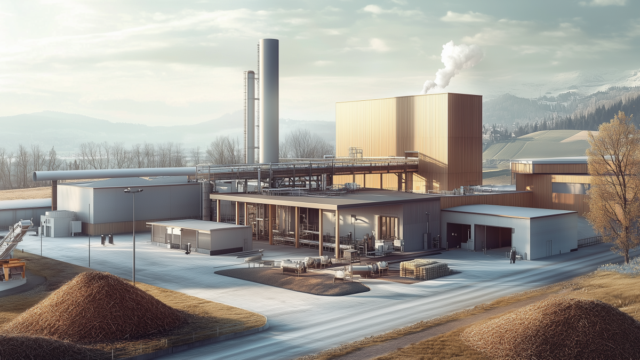
    The future heating network will be fed by the new heating centre in Aesch. The wood chips will come from the municipality’s own forest district and the region. The short transport route should result in low CO2 emissions.

    According to the press release, construction of the centre is scheduled to start in spring. It should be completed by autumn 2025. Work on the new heating pipes has already begun. According to Primeo, the first heat deliveries are expected from autumn 2025.

    In a first step, the new heating network will supply new buildings in the north of Aesch. It is then planned to extend the network to the rest of the municipality in several stages. Existing heating networks will then be connected to the new district heating network.

  • Wind energy sets production record

    Wind energy sets production record

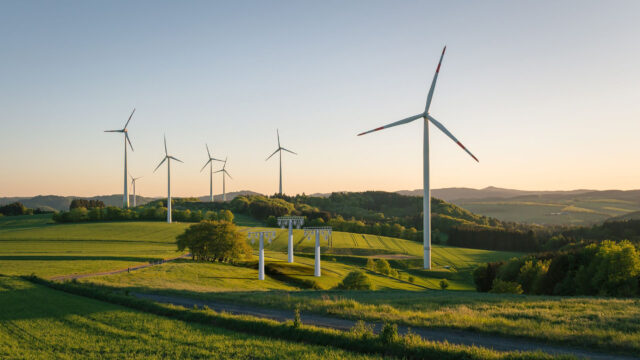
    The 47 wind turbines in Switzerland with a total installed capacity of 100.45 megawatts generated a combined 168.5 gigawatt hours of electricity in 2023. This exceeded the previous year’s record of around 153 gigawatt hours by 12.5 per cent, Suisse Eole reported in a press release. A lot of electricity was generated in the winter months in particular, according to Lionel Perret, Managing Director of the industry association: “All records were beaten in November and December”.

    The good wind power production in the reporting year was mainly due to the winter storms observed since autumn. For example, the annual production of the Peuchapatte wind farm in the canton of Jura was 43 per cent higher than expected at 17.1 gigawatt hours. “Wind turbines produce electricity up to a wind speed of 150 kilometres per hour,” explains Perret. “Only with even stronger and longer-lasting gusts of wind do the blades turn out of the wind.”

    According to Suisse Eole, the strong winter winds in Switzerland should be better utilised. The industry association writes that the country ranks last in Europe with a 0.3 per cent share of wind energy in total electricity consumption. According to Perret, the long planning and authorisation procedures are to blame for this. “The wind farms alone, which are now being built a little faster thanks to the Windexpress, can supply household electricity for around 500,000 people,” says the Managing Director of Suisse Eole.

  • BASE initiative to increase energy efficiency

    BASE initiative to increase energy efficiency

    The Servetia initiative from BASE – Basel Agency for Sustainable Energy aims to help Swiss companies achieve greater energy efficiency and has launched the Servitisation model for this purpose, according to a press release. For companies, energy costs have a significant impact on profitability, which makes energy efficiency an important opportunity, the press release continues. By optimising energy consumption, companies can not only reduce their costs, but also lower their CO2 emissions, achieve their sustainability goals and prepare for future energy regulations.

    Servetia presents an innovative approach to overcoming these challenges through servitisation. The underlying model, also known as Energy Efficiency-as-a-Service (EaaS), shifts the focus from owning energy systems to utilising the services they provide, such as heating or cooling, without the need for capital investment. The solution providers retain ownership of the systems and take care of implementation, operation, maintenance and upgrades.

    By working with BASE, the Enterprise for Society Centre(E4S) and the Fondation Valery, Servetia provides access to these cutting-edge technologies. Using BASE’s extensive experience, tools such as standardised contracts and financial analyses have been developed to support the introduction of the model.

    Over the past year, Servetia has built up a partner network that includes solution providers from energy technologies to metering and digitalisation, financiers, public institutions and companies in order to exploit the full potential of servitisation in Switzerland, according to the press release.

  • Pratteln is supplied with climate-neutral heat

    Pratteln is supplied with climate-neutral heat

    The cooperative Elektra Baselland(EBL) has entered into a far-reaching agreement with the energy and property service provider Getec Switzerland to supply heat to the greater Pratteln area. According to a press release, waste heat from the nearby Getec Park.Swiss industrial park at the Schweizerhalle site will be utilised for this purpose. This energy source is to be combined with existing resources from the waste heat from the Rhine sewage treatment plant, wood from local forests and recycled wood to supply residential, office, commercial and public buildings with heat. “The possible scope of services is pretty much in line with demand,” Markus Vögele, Project Manager at EBL, is quoted as saying in the press release.

    Waste heat from Getec Park.Swiss, which is operated by Getec, is to be channelled into the collaboration to the tune of at least 26.5 gigawatt hours of electricity per year. This corresponds to the heating requirements of around 4500 households. By processing this amount of heat in the EBL district heating centre, 8300 tonnes of CO2 are to be saved each year. In the long term, the amount of heat is to be doubled.

    “We are delighted that, together with EBL, we will be able to supply Pratteln with climate-neutral heat from the Schweizerhalle area in future and thus make an active contribution to reducing CO2 emissions,” explains Urs Zimmerli, CEO of Getec Switzerland.

  • Exnaton and sunvigo develop new electricity tariffs for prosumers

    Exnaton and sunvigo develop new electricity tariffs for prosumers

    An environmentally conscious population is looking for energy security with the prospect of cost savings. According to a press release, the Zurich-based software company Exnaton and the Cologne-based energy supplier sunvigo want to offer so-called prosumers – customers who both produce and consume electricity – an innovative tariff. Sunvigo offers an electricity contract that can be purchased from the solar system provided by the company at a fixed price of 16 cents per kilowatt hour. Such a contract runs for 20 years, after which ownership of the solar system is transferred to the homeowner. If the self-produced electricity from their own roof is not sufficient, sunvigo customers also benefit from favourable conditions on the European Power Exchange EPEX. For the combination of self-production and dynamic residual electricity tariffs, sunvigo relies on the PowerQuartier billing platform from Exnaton, a spin-off of the Swiss Federal Institute of Technology in Zurich(ETH).

    To present their joint project to the general public, Exnaton and sunvigo are inviting the public to a webinar entitled “Smart prosumer tariffs as the key to energy independence” on 29 February from 10 a.m. to 11 a.m., according to the press release. Information on the project will be available at the E-World trade fair in Essen from 20 to 22 February.

  • City of Zurich plans to invest 300 million in renewables

    City of Zurich plans to invest 300 million in renewables

    The city of Zurich should also be able to invest in renewable energies in the future. According to a press release, the city council is therefore proposing a framework credit of 300 million Swiss francs. Among other things, this is intended to finance the expansion of existing hydropower plants and the re-licensing of hydropower plants, alpine photovoltaic plants and wind farms. The framework credit should also enable the city to invest in companies that plan, build or operate renewable energy plants.

    It should also be possible to use the funds for investments by the city of Zurich’s energy supplier ewz in the expansion of renewable energies abroad. France, Germany, Norway and Sweden are currently the focus countries of ewz’s involvement abroad.

    This is the fourth framework credit for the expansion of renewable energies since 2008 and is intended to enable ewz to remain competitive. After the city parliament, the electorate will decide on the framework credit.

  • Meyer Burger and Otovo cooperate in the distribution of solar systems

    Meyer Burger and Otovo cooperate in the distribution of solar systems

    Meyer Burger, a manufacturer of solar panels and solar modules based in the canton of Bern, has entered into a strategic partnership with Otovo. According to a press release, the aim is to combine the expertise of the solar system manufacturer with the experience and marketing of Otovo’s sales platform. This symbiosis will enable both companies to utilise their individual strengths to serve the European solar market more effectively and offer consumers a wider choice, according to the press release. Otovo is headquartered in Norway and enables the distribution of solar systems across Europe.

    “With this partnership, we are actively preparing for a resilience scenario in Germany,” said Gunter Erfurt, CEO of Meyer Burger, in the press release. “Buying a solar system at fair prices with Meyer Burger modules will then be almost as easy as ordering everyday items online.”

    “Promoting European products together with a renowned company like Meyer Burger is a great benefit for everyone who wants to drive forward the energy transition. Meyer Burger’s modules are a top product that we can bring to consumers’ roofs in the shortest possible time with the help of our strong digital network of installers and the right policy framework,” comments Artur Schreiber, Managing Director Germany at Otovo, on the partnership.

    The agreement between the two companies was concluded in accordance with the European Union’s Net Zero Industry Act (NZIA).

  • 3D thermography Increasing the efficiency of urban construction planning

    3D thermography Increasing the efficiency of urban construction planning

    Night-time thermographic flights are used to analyse the entire urban area from the air in order to create a 3D thermal imaging model of the urban infrastructure. This model is intended to provide valuable insights into the energy efficiency of the buildings and provide property owners with exclusive data about their buildings. The aim is to precisely determine the need for refurbishment by recognising insulation weaknesses.

    The flights are part of the CATCH4D research project, which focusses on climate adaptation through thermography and heat mapping. This research initiative, led by the Institute for Regional and Urban Development Research in cooperation with the City of Dortmund, uses aerial thermography to assess the condition of urban building insulation and identify acute renovation needs.

    The images not only provide a basis for effective climate protection measures, but also open up the possibility of extensive applications. The spectrum of possible uses ranges from monitoring forest fires to estimating the yield of solar installations. Data protection is a top priority: Personal data cannot be captured due to the image resolution.

    The project, financially supported by Google.org, demonstrates the importance of interdisciplinary collaboration for urban development and climate protection. The combined 3D thermographic aerial images, which were developed in collaboration with Anhalt University of Applied Sciences, enable a new dimension of data collection and analysis for the property sector and urban planning.

  • Integration of photovoltaics in building façades

    Integration of photovoltaics in building façades

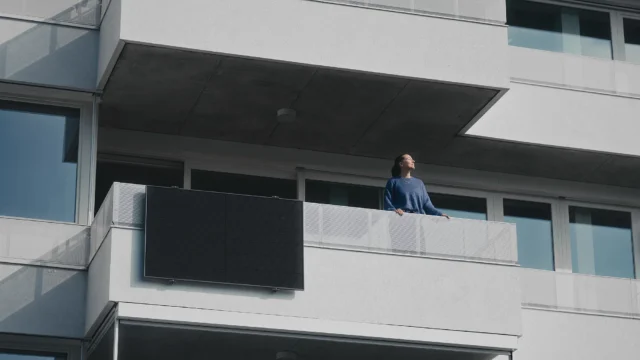
    The German government has set itself the goal of drastically increasing the share of solar energy in energy consumption by 2030, which is only possible by utilising innovative technologies and tapping into new PV potential. A key element of this strategy is the effective utilisation of building façades for photovoltaics. Despite the obvious benefits, the potential of façade PV has so far remained largely untapped, mainly due to the challenges of cost, complexity and aesthetics.

    To overcome these hurdles, the Center project, funded by the German Federal Ministry for Economic Affairs and Climate Protection and coordinated by the Fraunhofer Institute for Solar Energy Systems ISE, brings together the expertise of leading industrial companies and research centres. The aim is to develop practicable and cost-efficient standard solutions for the integration of photovoltaic systems into building envelopes. This initiative promises to remove the technical and economic barriers that stand in the way of the widespread use of façade PV.

    Successful examples of the integration of PV into building façades, such as the town hall in Freiburg and the OWP 12 office building in Stuttgart, already demonstrate the potential of this technology. These projects demonstrate that PV elements not only contribute to electricity generation, but can also offer other benefits such as sound insulation, weather protection and climate regulation within the buildings.

    The centre aims to deliver ground-breaking results within the next two years and plans to publish its findings in the form of a VDI guideline. This should promote the use of building-integrated photovoltaics and make a significant contribution to achieving the German government’s climate targets. The participation of experts from all areas of the solar industry and the construction sector underlines the holistic approach of the project, which aims to accelerate the solarisation of the building envelope and thus take a decisive step towards a more sustainable future.

  • Neustark achieves triple-digit growth

    Neustark achieves triple-digit growth

    Neustark generated sales totalling USD 10 million in the 2023 financial year, the Bern-based company specialising in the permanent storage of CO2 (Carbon Dioxide Removal, CDR) announced in a press release. This corresponds to year-on-year growth of 250 per cent. “In 2023, we successfully rolled out our innovative technology in Switzerland and abroad,” said Valentin Gutknecht, co-CEO and co-founder of Neustark, in the press release. “We were thus one of the first CDR providers to demonstrate that our business model of permanent CO₂ removal works both commercially and ecologically.”

    Neustark opened its first storage site in Germany in the past financial year. In the current financial year, ClimateTech plans to open a further 20 locations, including in Austria. Neustark currently has 14 capture and storage sites with a total annual capacity of 5,000 tonnes of CO2. This week, the company reached a new milestone, according to the press release: “The 1000th tonne of CO2 has been permanently removed.”

    The company, which was founded in 2019, aims to increase its total capacity to 1 million tonnes of CO2 per year by 2030. Neustark is also investing in new technologies to achieve this. The press release mentions the development of mobile plants that can be used more easily by construction material recyclers.

  • Hasliberg rejects IWB’s alpine solar plant

    Hasliberg rejects IWB’s alpine solar plant

    The Käserstatt alpine solar plant near the Meiringen-Hasliberg ski resort will not be built. As reported by the municipality of Hasliberg, 296 voters voted against the project at the municipal assembly on 31 January, with only 106 in favour. The turnout was 53 per cent. The farming community of Hasliberg, as the landowner, and the Meiringen-Hasliberg mountain railways had previously spoken out in favour of the project.

    The project planners led by the Basel-based energy supplier IWB regret the decision, according to a press release. They are completing the planning work and want to analyse the background to the vote.

    According to the technical report, the solar plant was to generate a total of 21.6 gigawatt hours of electricity per year at an altitude of 1,900 to 2,100 metres above sea level and an area of around 60,000 square metres with 31,960 solar modules. Of this, 45 per cent would have been generated in the winter months. Investments totalling 44 million Swiss francs were planned. Construction should have started this year and been completed in 2028.

  • Pioneering solar initiative in Glarus

    Pioneering solar initiative in Glarus

    The authorisation granted by the Glarus cantonal government under energy law enables Swisspearl AG to significantly expand its large-scale solar installation on the roofs of its production halls. With an impressive total output of 3100 kilowatts (kW), this system will not only be the largest of its kind in the canton, but will also be able to cover up to 50 per cent of the company’s electricity requirements. The decision to waive an annual levy of around CHF 30,000 is due to the innovative and exemplary nature of the project, which is considered to be pioneering for similar large-scale systems in the industry.

    The promotion of the photovoltaic system by waiving the fee reflects the endeavours of the canton and the company to be leaders in the use and expansion of renewable energy sources. This project not only represents a significant contribution to achieving the national energy targets, but also serves as an inspiring example for other companies to accelerate the transition to more sustainable energy sources.

    With the realisation of the photovoltaic plant, the canton of Glarus is reaffirming its commitment to a more environmentally friendly and sustainable future. Swisspearl AG demonstrates how companies can actively contribute to reducing their carbon footprint while increasing their energy efficiency. This initiative marks a decisive step forward in regional energy policy and sets new standards for the integration of renewable energies in industrial production.

    The approval of the photovoltaic plant in Niederurnen by the Glarus cantonal government represents a significant milestone in the pursuit of a more sustainable and energy-efficient economy. Swisspearl AG exemplifies the potential of industry to play a pioneering role in ecological change and emphasises the importance of innovative energy solutions for the regional and national economy.

  • EPFL researchers make electricity from glass panes

    EPFL researchers make electricity from glass panes

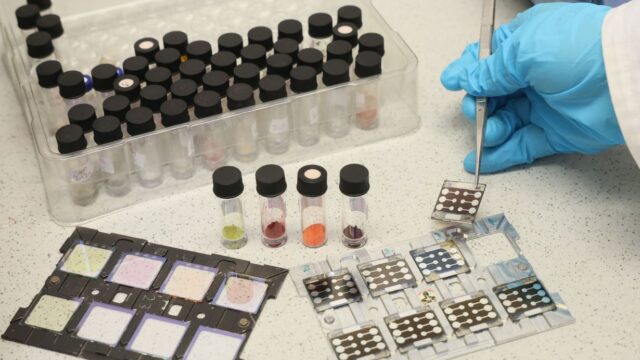
    Scientists at the Swiss Federal Institute of Technology Lausanne(EPFL) have developed an innovative way of producing photoconductive circuits. These are printed directly onto a glass surface using an ultra-fast femtosecond laser. This new technology is translucent and requires a single material. It could one day be used to generate energy, according to a press release from EPFL.

    What happens when tellurite glass is exposed to femtosecond laser light? This is the question that Gözden Torun from the Galatea Laboratory at EPFL, in collaboration with scientists from Tokyo Tech in Japan, was trying to answer in her dissertation when she made a discovery that could one day turn windows into light sensors made from a single material, according to the press release.

    By studying how atoms in tellurite glass rearrange themselves when exposed to fast pulses of high-energy femtosecond laser light, scientists discovered the formation of nanoscale crystals of tellurium and tellurium oxide, two semiconductor materials, etched into the glass exactly where the glass had been exposed. An important discovery, a semiconductor material exposed to daylight can generate electricity.

    “Since tellurium is a semiconductor, we wondered whether it was possible to print permanent patterns on the surface of tellurite glass that could reliably induce electricity when exposed to light, and it turned out that yes,” Yves Bellouard, director of the Galatea laboratory at EPFL, is quoted as saying. “An interesting aspect of this technique is that no additional materials are needed in this process. All you need is tellurite glass and a femtosecond laser to produce an active photoconductive material.”

  • Aarau Climate Prize goes to AEW Energie AG

    Aarau Climate Prize goes to AEW Energie AG

    AEW Energie AG has won the Aarau Climate Prize 2023. The prize is awarded annually by the city council of Aarau for particularly innovative achievements, exceptional commitment or extensive projects that contribute to sustainability, explained AEW Energie in a press release. The Aargau-based energy service provider was honoured for its measures for progressive and sustainable mobility management within its own company.

    AEW Energie has set itself the goal of becoming CO2-neutral by 2040 at the latest. To achieve this, the energy service provider is focussing on CO2-neutral electricity production from hydropower, photovoltaics and wind power. However, a considerable proportion of emissions are currently generated by the mobility of the company’s employees.

    AEW Energie has also developed and implemented a series of measures in this area as part of the move from the high-rise building in Obere Vorstadt to the Aeschbach neighbourhood. On the one hand, working from home was made more flexible. On the other hand, sustainable mobility for employees was supported, for example through the provision of shared bicycles, bicycle parking spaces and electric pool cars. The various initiatives were largely driven by Nicola Ruch, Head of Business Development at AEW and Mobility Management Project Manager.

    “We are delighted to receive the climate prize from the city of Aarau,” said AEW CEO Marc Ritter in the press release. “Although we have not yet implemented everything planned with mobility management, the award recognises what we have achieved so far and we see the climate prize we have received as a great motivation to continue to consistently pursue our CO2 targets.”

  • 3S Swiss Solar Solutions opens second production site in Worb

    3S Swiss Solar Solutions opens second production site in Worb

    The second production site has been opened at 3S Swiss Solar Solutions AG. In Worb, the Thun-based manufacturer of solar modules is focussing on the production of TeraSlate systems. According to a press release, the G12 cells installed in these systems deliver more power, are more efficient and have improved aesthetically. Delivery of the first modules is planned for the end of January 2024.

    The company has invested over 10 million Swiss francs for further growth. At the heart of “Europe’s most modern solar module production” is a 200-tonne laminator in which glass, solar cell strings and special plastic films are pressed into robust modules under heat, according to the press release. This production step is carried out under vacuum and plays a key role in creating a durable, bubble-free encapsulation.

    “The highest quality, the best service, sustainable solutions – that’s what makes the Swiss location possible for us and at the same time we have a very central location in Europe,” owner and CEO Patrick Hofer-Noser is quoted as saying. According to the press release, the new production plant is a further step towards the future generation of 3S solar modules. The plant is geared towards larger quantities and the use of larger cell formats. The nominal capacity is estimated at 250 megawatts per year.

    In future, the new site will also be used for training and education programmes as well as for company representation in order to relieve the pressure on the bursting headquarters. “Due to the enormous growth in recent years, our possibilities in Gwatt are more than exhausted and the premises are no longer sufficient for the current number of employees,” says Patrick Hofer-Noser.

  • Oiken and Studer Innotec develop virtual power plant

    Oiken and Studer Innotec develop virtual power plant

    According to a press release , the Valais energy supplier Oiken and Studer Innotec are launching an innovation project to utilise photovoltaic systems and battery storage for the general power supply through a virtual power plant. The aim is to make the best possible use of and optimise variable and unplanned electricity generation in private homes or neighbourhoods. The project, which is financially supported by The Ark Foundation, is being developed in collaboration with the Icare Institute in Sierre VS. The test phase will begin in 2024.

    The aim of the project is to bring together small energy producers with the combined output of a large power plant to create a virtual power plant (VPP), according to the press release from Oiken. The accelerated development of decentralised and unplanned energy generation from photovoltaic systems (PV systems) in “residential power plants” is fundamentally changing the management and control of the electricity grid.

    According to solar statistics, PV systems with a total capacity of 4.7 gigawatts were installed in 2022, producing 3.8 terawatt hours or 6.7 per cent of Switzerland’s electricity consumption. The proportion of solar energy generated already exceeds the proportion of other energy sources such as gas, hydropower or biomass during the day in summer.

    At a local level, such as single-family homes, the aim is to improve self-consumption and optimise the feeding of electricity back into the grid by making the best possible use of batteries. At the next level up, such as a neighbourhood, the project focuses on the development of intelligent energy management for several systems. At the level of the region or the DSO (distribution network operator), the aim is to evaluate and combine local flexible power generation using a VPP solution.