Category: Energy

  • Regional butcher’s shop focuses on sustainability and short transport routes

    Regional butcher’s shop focuses on sustainability and short transport routes

    Metzgerhuus Stadt und Land AG in Füllinsdorf is working at almost full capacity. According to Managing Director Raffael Jenzer, the small regional butcher’s shop already processes around 30 cattle, 30 calves, 70 pigs and 20 sheep every week. The transport routes are short: the animals come from over 300 farms in the Basel region. The meat is used by 13 butchers in the region and over 125 direct-marketing farms.

    The Metzgerhuus, which opened in June 2025, also includes a self-service shop that is open every day. It offers 500 products from regional suppliers. In addition, the Metzgerstübli has already hosted around 80 events with over 1000 visitors. The first cookery courses have also been successfully launched.

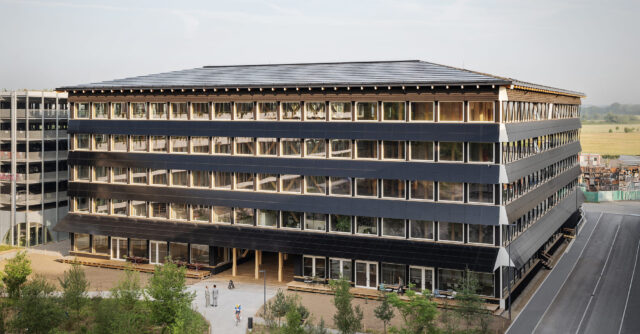
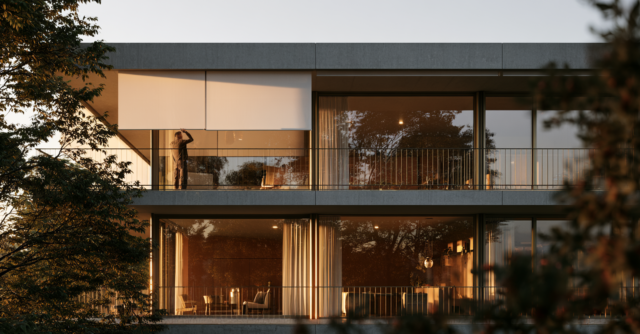
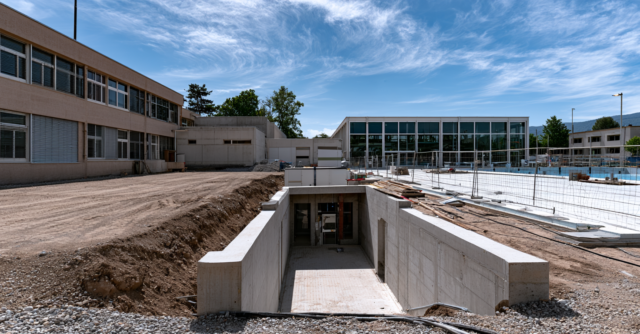
    The Metzgerhuuse building itself is a power station. Thanks to its solar façade, solar modules on the roof, heat recovery and heavy insulation, it produces more energy than it consumes. It is therefore Minergie A-certified.

    The small regional butcher’s shop was founded by five butcher families from Baselland and Basel-Stadt, the Butchers’ Association of Basel and the Basel Butchers’ and Farmers’ Co-operative, who together raised CHF 4 million in capital. They no longer wanted to drive the region’s cattle to the Mittelland for slaughter.

    The two cantons of Basel supported the project with 2.5 million francs as part of the regional development project “Genuss aus Stadt und Land” (PRE). 120 lenders supported the Metzgerhuus with a total of almost 1 million francs. Anyone who still wants to support the Metzgerhuus financially today can buy so-called solar shopping vouchers: For 1,000 francs, interested parties can invest in solar modules; the proceeds are paid back in vouchers for meat.

  • Study shows high regional value creation by energy companies

    Study shows high regional value creation by energy companies

    Repower commissioned Hanser Consulting to analyse how much added value the Graubünden-based energy supplier generates compared to energy companies outside the canton. In its study, the consulting firm puts the additional added value of the Repower Group for the canton at around CHF 144 million for the year 2024. According to its press release, Repower presented the results to the Graubünden cantonal parliament at an information event on 23 April 2026.

    Hanser Consulting summarises the main findings as follows: Firstly, due to the Repower Group’s headquarters in Graubünden, more than twice the added value per kilowatt hour of electricity produced from Graubünden hydropower remains in Graubünden compared to companies outside the canton. Secondly, this would result in “many other advantages” for the Graubünden economy, particularly with regard to the diversity of the labour market, tax revenues for the canton and municipalities and the inclusion of local suppliers for headquarters activities.

    “Against the backdrop of the Graubünden hydropower strategy and the pending home cases in the coming years, the question of how the use of hydropower is organised in the long term and where the associated added value is generated is becoming increasingly important,” writes Repower. “The study aims to provide a factual basis for discussion.” As Repower emphasises, although the company paid for the study and provided the necessary basis, it had no influence on the methodology or results.

    Repower employs around 500 people in Graubünden and operates along the entire value chain, from production to the grid and supply to trading. The largest shareholders are Elektrizitätswerke des Kantons Zürich (38.49 per cent), the canton of Graubünden (27 per cent) and UBS’s Clean Energy Infrastructure Switzerland fund (23.04 per cent).

  • The grid becomes Switzerland’s bottleneck

    The grid becomes Switzerland’s bottleneck

    By 11 votes to 0 with 2 abstentions, the Energy Committee of the Council of States adopted the amendment to the law to speed up the expansion and conversion of the electricity grids. The committee has thus made it clear that the expansion of the grid infrastructure should no longer be treated as a political sideshow.

    This is more than just a technical step. The Commission expressly emphasises the outstanding importance of a domestic, renewable energy supply and demands that the legal framework conditions finally reflect this importance. The electricity grid is thus being transformed from a companion into the strategic backbone of energy policy.

    Overhead lines before underground cables
    The Commission emphasises one key point. Transmission grid lines should primarily be realised as overhead lines. Underground cables remain the exception and should only be considered in special cases. However, this principle should not apply in construction zones.

    The political priority is thus visibly shifting towards speed and feasibility. The more complex the balancing of interests, the longer procedures take. This is precisely where the bill wants to start and streamline planning processes.

    More room for manoeuvre when replacing
    The focus on existing buildings is particularly relevant. In the coming years, a large part of the grid infrastructure will reach the end of its service life. According to Swissgrid, structural bottlenecks are already noticeable today and two thirds of the 6,700 kilometre-long transmission grid is over 40 years old.

    The Commission therefore wants to facilitate the replacement of existing high-voltage and extra-high-voltage lines, including on existing or directly neighbouring routes. This principle should now also apply to parts of the distribution grid above 36 kV. This is a signal with an impact. Not every grid expansion begins on a greenfield site. Much is decided by replacing the existing grid more quickly.

    The silent hurdle of the energy transition
    There is also a detail with a major impact. In future, transformer stations will also be possible outside the building zone under certain conditions if no suitable location can be found within the building zone. This also shows where the energy transition gets stuck in everyday life. Often not because of the strategy, but because of the land.

    The proposal therefore hits a sore spot. Switzerland has accelerated the production of renewable energy, but the grid is threatening to become a bottleneck. If procedures continue to take years, it is not a lack of ideas that will slow down the turnaround, but a lack of lines.

  • Change of ownership to accelerate growth in the geothermal market

    Change of ownership to accelerate growth in the geothermal market

    The investment company Dundee AG has acquired Bohrfix Erdsonden AG, according to a press release. The company is one of the most established and successful independent providers of geothermal probe drilling in Switzerland, with around 240,000 meters drilled annually and 1150 boreholes worldwide.

    With the new owner, the drilling company will have a slightly different management structure. Effective immediately, Hans Rosenberger, Chairman of the Board of Directors of Dundee AG, is Chairman of the Board of Directors of Bohrfix Erdsonden AG. Sascha Jordi will continue to manage the company operationally. Jordi has been a drilling foreman since 1998 and has worked as a project manager at Bohrfix Erdsonden AG since June 2025. Vinzenz Schönenberger will remain Commercial Director and Delegate of the Board of Directors. Despite the change in management structure, all existing employees will be retained. Nothing will change operationally for customers and clients.

    “With the acquisition of Bohrfix Erdsonden AG, we are investing in a company with an excellent market position, an experienced team and great growth potential in the geothermal and renewable energy sector. We are looking forward to this exciting partnership,” Hans Rosenberger is quoted as saying.

    The background to the takeover is the decision by the previous owner Alban Berisha to concentrate fully on the further development of his investment and real estate portfolio. The new owner plans to further develop the market-leading position of Bohrfix Erdsonden AG and also to invest in growth, technology and personnel in the future.

  • Takeover strengthens position in the European energy market

    Takeover strengthens position in the European energy market

    In a press release, BKW announced the acquisition of the French energy company Volterres SAS. Volterres SAS operates a network of over 100 solar, wind and hydroelectric power plants and enables the tracking of electricity flows in real time. Volterres supplies more than 2 terawatt hours of electricity annually to companies and public organisations.

    The acquisition fits seamlessly into BKW’s existing strategy for France. The company had already previously expanded its activities in the country, including a contract to optimise 200 megawatts of battery capacity. BKW also markets numerous third-party wind, solar and battery projects in France and manages an annual renewable production of over 1 terawatt. With Volterres, BKW now covers the entire energy value chain.

    Strategically, the acquisition is an important step within Solutions 2030, according to the press release. With this focus, BKW is concentrating on the Energy Solutions, Power Grid and Infrastructure & Buildings business areas and positioning itself along the entire value chain of the energy transition. The aim is to achieve EBIT (earnings before interest and taxes) of over CHF 1 billion by 2030. France plays a key role in this.

    “France is a strategically important market for us. With the integration of Volterres, we are strengthening our position not only there, but in the entire European market and are further developing our portfolio of flexible energy solutions,” said Stefan Sewckow, Executive Vice President Energy Markets.

    BKW, based in Bern, is an internationally active energy and infrastructure company. Its range of services extends from engineering and consulting to building technology and the construction and operation of energy and supply grids.

  • Management change in the energy division of a large utility company

    Management change in the energy division of a large utility company

    Vertina Investment Foundation invested a total of CHF 74.3 million in four new-build projects in the first quarter of 2026. The fresh capital comes from the capital increase in the fourth quarter of 2025, according to a press release.

    The construction projects are located on properties in Oberglatt ZH, Kloten ZH, Seon AG and Zurich. These selected locations are characterised by good infrastructure connections and a solid market environment, according to the press release. After completion, the market value of the four properties will amount to CHF 131 million. This will increase the value of the total portfolio of the Vertina Residential investment group to CHF 350 million.

    In total, Vertina’s property portfolio consists of 13 properties with varying degrees of construction progress. The start of construction on four further projects is planned for the current financial year. As recently announced, Vertina will raise new capital of between CHF 60 and 80 million for this purpose in the second quarter.

  • 11. May on which Switzerland crosses its borders

    11. May on which Switzerland crosses its borders

    Since the ecological footprint was first recorded in 1961, Switzerland’s Overshoot Day has moved forward by more than seven months, from the end of December to mid-May. If the entire world population lived like Switzerland, it would need the resources of 2.8 Earths in 2026. Switzerland’s ecological footprint is 4.15 global hectares per person, while the available biocapacity is just 1.48 hectares. The gap is growing.

    Housing as an underestimated driver
    Housing is one of the strongest drivers of the Swiss overshoot, alongside mobility, food and imported goods. Between 1990 and 2021, living space in Switzerland increased by 54%, while the population only grew by 31%. Individual changes in behavior can only achieve around 20 percent of the savings. The big levers lie elsewhere.

    Buildings as raw material stores
    The building sector is responsible for over 40 percent of global greenhouse gas emissions. In addition to the operating energy for heating, cooling and electricity, it is primarily gray energy that determines how large a building’s footprint really is. It includes all energy from the extraction of raw materials to processing and dismantling. As long as demolition is cheaper than recycling, the potential of the circular economy remains untapped.

    Regulation is tightening
    The legal framework is tightening. The Climate and Innovation Act has been in force since January 2025 and creates incentives for the replacement of fossil heating systems and energy efficiency measures. The MuKEn 2025, adopted in August 2025, define limit values for gray energy in new buildings for the first time and increase the requirements for photovoltaics and renewable heating systems. However, they will only become binding once the cantons incorporate them into their energy laws.

    System change instead of symbolic policy
    The message of Overshoot Day is clear: small adjustments are not enough. Scalable solutions are needed in energy, mobility, materials management and site development. As a cross-sector industry, the construction and real estate sector can have an impact in all of these areas if data is recorded precisely, materials are documented and circular processes are standardized. Buildings as raw material stores instead of landfill suppliers – that is the direction.

  • Electric bus marks a new chapter in regional transport

    Electric bus marks a new chapter in regional transport

    STI Bus AG, based in Thun, has put its first electric bus into service. According to a press release, it has been operating in Grindelwald since 15 April.

    The company has thoroughly prepared its staff for the transition to electric mobility. Staff have been trained in the technical fundamentals, high-voltage systems and energy-efficient driving with electric buses. These training sessions are ongoing.

    STI Bus AG plans to put three more electric buses into service in Grindelwald and two in Thun before the end of this year. By November, all STI depots will also be equipped for depot charging. A further 16 electric buses will follow next year. By 2036, the entire fleet of over 100 regular service vehicles is set to be electrified.

    “The first electric bus is an important milestone – but above all a promise,” says Jürg Lehmann, Managing Director of STI Service AG and E-Mobility Project Manager, in the press release. The company promises employees, passengers and the region to “continue to develop mobility responsibly”.

    According to Patrick Fankhauser, the switch to electric mobility demonstrates how the company intends to shape the mobility of the future. “Electric mobility is a conscious investment in the environment and in the quality of life in our region for both current and future generations,” the Director of STI Holding AG is quoted as saying.

  • Modernised wastewater treatment plant enhances water protection and energy efficiency

    Modernised wastewater treatment plant enhances water protection and energy efficiency

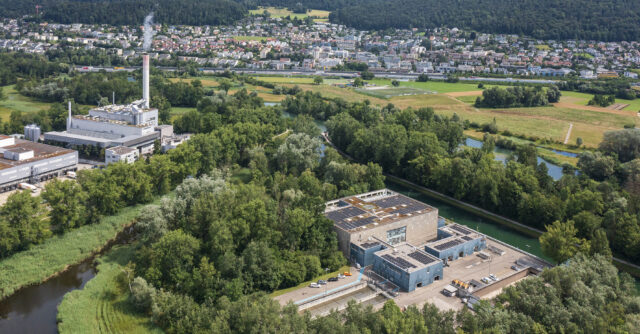
    The refurbishment and expansion of the Basel Wastewater Treatment Plant have been completed. The wastewater treatment plant was officially inaugurated on 17 April. One of the region’s most important infrastructure facilities had been thoroughly modernised and expanded whilst remaining in operation since 2019. It is now one of the most modern facilities of its kind in Europe. Over the weekend of 18 and 19 April, the public can see it for themselves during the open days.

    According to a statement from the Canton of Basel-Stadt, the aim of the project was to significantly improve treatment performance, adapt the plant to future requirements and make a long-term contribution to water protection. It is now state-of-the-art and ensures legally compliant operation for several decades. It is designed to have a capacity sufficient for 520,000 residents until 2050. It can also receive pre-treated industrial wastewater from the ARA Chemie.

    Following the modernisation, the Basel WWTP is now also equipped for nitrogen removal and features a treatment stage for reducing micropollutants. This is complemented by sludge digestion and photovoltaic systems. Furthermore, biogas is produced from sewage sludge digestion and more waste heat is fed into the district heating network.

    The operator of the Basel wastewater treatment plant is Prorheno AG. The parliaments of the two Basel cantons approved CHF 325.1 million for the plant’s refurbishment. The final accounts are not yet available.

  • Energy cooperative strengthens its brand and increases investment

    Energy cooperative strengthens its brand and increases investment

    The transition from EBM to Primeo Energie is now complete: at their annual general meeting on 15 April 2026, the delegates approved the change of name from EBM to Primeo Energie Genossenschaft. The company has been operating under the Primeo Energie brand since 2019. According to a press release, the name change is intended to ensure that the umbrella brand is also visible in the cooperative’s name in future and to avoid misunderstandings.

    Prior to this, the delegates had approved the annual accounts and the management report of the Primeo Energie Group. Operating profit (EBIT) rose to CHF 127 million in 2025. In the previous year, it had stood at CHF 124 million. Profit grew from CHF 91 million to CHF 109 million over the same period. In total, Primeo Energie invested CHF 187 million in energy infrastructure. This figure is set to rise to CHF 220 million in the current year.

    The contribution to the energy fund was doubled from CHF 2 million to CHF 4 million. CHF 3.1 million from the fund was allocated to grant applications, primarily for connections to district heating networks. Support is now also being provided for the conversion of photovoltaic systems with direct feed-in to self-consumption. The co-operatively organised company therefore expects an increase in applications. A further CHF 500,000 was made available for grants to charitable institutions.

    Gilbert Fuchs and Carmen Gerber-Balmelli were re-elected to the Board of Directors for a further term until 2030. Thomas Ernst was newly elected to the board. Long-standing Vice-President Urs Grütter stepped down.

  • Investment secures funding for a major wind energy project

    Investment secures funding for a major wind energy project

    aventron AG has acquired a significant stake in the Sur Grati wind farm in the canton of Vaud, according to a press release. The wind farm is operated by the project company VOé éole SA. In addition to aventron, the energy supplier SIE SA, based in Crissier (VD), and the Vaud municipalities of Premier, Vallorbe and Vaulion also hold stakes in the company.

    Aventron’s entry finalised the shareholder structure and the financing of the project company. This followed a positive ruling by the Federal Supreme Court in May 2025 regarding the wind farm’s building permits; the wind farm is scheduled to come online at the end of 2027.

    VOé, which has been developing the project for several years, is a regionally based energy supplier and is contributing its local networks. Aventron brings experience in the construction and operation of wind farms in several European countries. “Together, we are realising one of the largest wind energy projects in Switzerland. In doing so, we are supporting the federal government’s energy strategy and strengthening security of supply, particularly in winter,” said Eric Wagner, CEO of Aventron.

    The wind farm is located on the Jura mountain range in northern Vaud and is currently under construction. Six wind turbines with a total capacity of 25.2 megawatts are planned. The facility is expected to produce around 45 gigawatt hours of electricity annually, which corresponds to the demand of approximately 11,000 households. Once completed, Sur Grati is set to be the second-largest wind farm in Switzerland.

  • Ticino economic area between energy, housing and investment

    Ticino economic area between energy, housing and investment

    [smartslider3 slider=”52″]

    At the 108th immoTable Ticino in Savosa, representatives from the real estate industry, energy, planning and investment discussed the future of the Ticino economic region. The focus was not only on individual projects, but also on the fundamental question of how Ticino can continue to develop as a modern business and real estate location.

    The discussion made it clear that Ticino today is much more than just a vacation and second-home region. A high quality of life, strategic location and exciting development potential meet challenges in terms of processes, living space, mobility and regional cooperation.

    Roberto Fantoni from Volta RE showed how much the energy market has changed. While the feed-in tariff for photovoltaic electricity has fallen massively in recent years, new models for property owners, municipalities and site developments are emerging in the form of energy communities, virtual associations and local electricity communities. The new CLE models from 2026 in particular could have a lasting impact on the real estate market. At the same time, it became clear that owners and administrations are increasingly looking for solutions that reduce energy costs, improve the energy efficiency of buildings and simplify investments.

    Monique Bosco-von Allmen from CASSI focused on the issue of housing. She made it clear that Ticino is lagging far behind the rest of Switzerland in terms of non-profit housing construction and that the discussion about affordable housing, demographic change and sustainable forms of housing is becoming increasingly important. The topics discussed included gentrification, rising rental costs, the low proportion of non-profit housing and the question of how politicians, municipalities and private stakeholders can work together to promote new housing models. At the same time, it was emphasized that housing is much more than just a roof over one’s head, but is closely linked to social balance, intergenerational dialogue and quality of life.

    Manuel Gamper from Leading Investors presented Ticino from the perspective of national and international investors. Ticino remains attractive, but finds itself in a more demanding market environment that requires significantly more professionalism, data competence and strategic thinking. Particularly important are predictability, speed, larger volumes and a professional ecosystem along the entire real estate value chain. At the same time, it became clear that Ticino, despite its limited market size, has interesting returns and considerable development potential if projects are of high quality, flexible and long-term.

    The future of the Ticino economic region will not be decided by individual construction projects or investments alone, but by cooperation, quality, innovation and the ability to think about economic development, energy, mobility and housing together.

    The next immoTable will take place on June 18, 2026 at the StartUp Space in Schlieren.

  • Solar cells that camouflage themselves

    Solar cells that camouflage themselves

    Nature shows us how it’s done. The Morpho butterfly produces its intense blue wing sheen not through pigments, but through three-dimensional microstructures that refract and reflect light. Researchers at Fraunhofer ISE have transferred this principle to photovoltaic modules. A vacuum process applies a similar surface structure to the cover glass or flexible films. Depending on the fine structure, this produces modules in a wide range of colors, from brick red to anthracite. The result is called MorphoColor®.

    Patterns directly into the module
    New is the “ShadeCut” technology, which provides colored films with transparent cut-outs and thus integrates complex patterns and motifs directly into solar modules. A laser or a CAD-controlled cutting process applies the desired motif to the film, whether it is a brick structure, masonry or a company logo. The technology works with all standard photovoltaic and solar thermal modules and can be used both as a flexible embedding film and as a backsheet film. The colored modules achieve around 95 percent of the output of a comparable uncoated module.

    The end of the monument protection dilemma
    Until now, building-integrated photovoltaics has often failed due to aesthetic requirements. Listed buildings and conservation areas in Switzerland and Germany in particular posed major hurdles. In several German federal states, monument protection has already been relaxed, provided that modules match the color of the building envelope. Modules can imitate brickwork or roof tiles deceptively realistically and fit in perfectly in terms of color, says Dr. Martin Heinrich, group leader at Fraunhofer ISE. An Innosuisse project at HSLU in the Viscosi town of Emmenbrücke has already produced a demo façade in 78 shades of color.

    BIPV on the verge of a breakthrough
    The market for building-integrated photovoltaics is growing rapidly. Globally, it is estimated to be worth around 85.9 billion dollars by 2034, compared to 28.3 billion in 2026. In Switzerland, the registration procedure for façade systems has simplified the approval process since this year, which has given a clear boost to demand for aesthetic façade solutions. The first commercial tandem modules with a BIPV focus are expected in 2026 for niche markets. Fraunhofer ISE estimates the total potential of PV on buildings at around 1,000 GWp by 2045.

    What was created in the laboratory in Freiburg is now being applied to roofs and façades via a Swiss partner.

  • District heating from wastewater to decarbonise the municipality

    District heating from wastewater to decarbonise the municipality

    The energy company CKW, part of the Axpo Group, has been awarded the contract for the prequalification of the planned district heating network in Richterswil. With the district heating network, which is central to the municipality’s energy and climate concept, the energy company wants to launch a long-term partnership for decarbonisation, according to a press release.

    The energy network will mainly be operated using waste heat from the Richterswil wastewater treatment plant (WWTP). Additional heat production for peak load and security coverage will be evaluated in the future. The aim is for commercial enterprises and residents to benefit from an economically attractive offer. “We are delighted to have been awarded the contract and are convinced that we can plan an economical and sustainable heat supply in Richterswil,” Angela Krainer, Head of Energy at CKW, is quoted as saying in the press release.

    In future, CKW will be responsible for the entire project planning of the heat network. The collaboration between the municipality and the company is to be concretised in the summer and the next project steps are to be taken in autumn 2025.

  • New director to drive the energy supplier’s strategic development

    New director to drive the energy supplier’s strategic development

    The Board of Directors of Regio Energie Solothurn has appointed Martin Bucher as Director, thereby confirming him in his role. According to a press release, Bucher had already taken over the operational management of the regional energy supplier in July 2025 and has successfully led the company. It was particularly his high level of technical expertise, his strategic clarity and his inclusive and goal-oriented leadership that enabled Bucher to stand out in a multi-stage selection process involving over 100 candidates.

    Before joining Regio Energie Solothurn last year, Bucher gained many years of management experience in the energy and finance sectors, including at energy supply companies and in management consultancy. The new director thus combines technical, regulatory and business management expertise, which enables him to further develop Regio Energie Solothurn in a sustainable manner, the statement said.

    Regio Energie Solothurn supplies the city of Solothurn and surrounding municipalities with electricity, gas, district heating and water. The public-law company is wholly owned by the city of Solothurn. The mayor, Stefanie Ingold, serves as chair of the board of directors by virtue of her office.

  • Lucerne cantonal government plans to set up a foundation for innovation

    Lucerne cantonal government plans to set up a foundation for innovation

    The Canton of Lucerne intends to establish the Innovation Lucerne Foundation. To this end, the Cantonal Government has now submitted a request for a special grant to the Cantonal Council. This comprises CHF 1 million in endowment capital and CHF 23 million to fund the foundation’s activities between 2026 and 2029.

    This foundation forms part of Lucerne’s location strategy, which aims to strengthen the canton’s competitiveness. According to the statement, the background to this is that whilst the Canton of Lucerne ranks in the top third in national competitiveness rankings, it consistently ranks lower in terms of its innovative strength. And “without strengthening its innovative strength, the Canton of Lucerne risks further losses in competitiveness”, the analysis states.

    The foundation is intended to counteract this and focus on supporting Lucerne as a hub for innovation and start-ups, with a particular emphasis on SMEs. As a key player, it is to coordinate the established partner organisations “and ensure that their services are better integrated, become better known and achieve greater impact”. In addition, the foundation can co-fund implementation projects such as feasibility studies.

    From 2026, the Canton of Lucerne intends to invest a total of between 250 and 300 million Swiss francs annually in “business- and population-oriented measures” to promote the region. Voters will be able to vote on these regional development measures in September 2026.

  • Schlieren is modernising its maintenance depot

    Schlieren is modernising its maintenance depot

    Schlieren Town Council has allocated 2.229 million Swiss francs for the refurbishment and modernisation of its municipal works site. According to a statement from the City Council, the city’s growth and increasing demands on public services make modernisation necessary. Key parts of the facilities have become too old and need to be replaced in order to meet legal standards for fire safety and occupational safety. The modernisation will also prevent structural damage and ensure proper operation in the long term.

    The works yard site houses the waste collection, building services, gas and water supply, green space maintenance and administration departments of the Works, Supply and Facilities Division. Due to the city’s ongoing growth, it is necessary to create the conditions to meet increasing demands on public services.

    The plans include replacing the gas heating system with an environmentally friendly heat pump system and refurbishing the roof surfaces. To increase capacity, the storage areas in the green space maintenance, gas and water supply, cloakroom and staff lounge sections are to be expanded.

    Parts of the project will include the modernisation of the ventilation and summer heat protection in the administration building, as well as the expansion of the charging infrastructure for the city’s electric vehicle fleet, it is reported.

    The awarding of construction contracts by a building commission appointed by the city council has already begun. The municipal council will now decide on the installation of a high-performance photovoltaic system.

  • Energy supplier boosts profits despite lower turnover

    Energy supplier boosts profits despite lower turnover

    The AEW Group has had a successful financial year in 2025. According to a press release, the Aargau-based energy supplier achieved total revenue of 833.1 million Swiss francs. This is 4.2 per cent less than in the previous year. At the same time, operating profit before interest and taxes increased by 24.4 million to 131.4 million Swiss francs. The adjusted net profit stands at 159.7 million Swiss francs. The canton can expect a dividend of 53.0 million Swiss francs.

    The company attributes this growth to one-off effects. These included not only the efficient management of the energy business but also the early sale of own-generated electricity on the power exchange, as well as the strong performance of the Leibstadt Nuclear Power Plant (KKL) decommissioning and disposal fund, the Axpo dividend and a write-down in the power plant portfolio. AEW holds a 5.4 per cent stake in KKL.

    Investments stood at 94.3 million, slightly above the previous year’s figure (93.0 million).

    “Operationally, 2025 was a very good year for AEW,” CEO Marc Ritter is quoted as saying in the statement. “Our organisation has picked up pace and, at the same time, demonstrated that it can perform effectively even in a very challenging and dynamic market environment.”

  • Winter electricity from the Alps is performing above average

    Winter electricity from the Alps is performing above average

    The Madrisa Solar power plant generated around 1.5 gigawatt hours of electricity during the first winter half-year, from October to March. This means that production exceeded expectations, as Repower AG states in a press release. During its first winter of operation, around 3,600 solar modules were in operation, which corresponds to approximately 20 per cent of the planned total capacity.

    The plant, which was the first alpine solar power plant in Switzerland to feed electricity into the grid, is located above Klosters at around 2,000 metres above sea level and is specifically designed for winter electricity production. Following the first snowfall, output rose by around 15 per cent thanks to the so-called albedo effect. The bifacial modules also utilise light reflected from the snow cover.

    The electricity generated is used, amongst other things, directly to power the Klosters-Madrisa mountain railways. In combination with existing installations, more energy was produced during the first winter than was required to operate the winter season. With its output to date, Madrisa Solar has comfortably met the minimum production requirement of 500 kilowatt-hours per installed kilowatt of capacity stipulated under the national Solarexpress scheme.

    The second construction phase is scheduled to begin in early May. Once completed, around 70 per cent of the plant is expected to be connected to the grid. Full commissioning is planned for the end of 2027. The developer of the alpine plant is Madrisa Solar AG, in which Repower, the Zurich Cantonal Electricity Works (EKZ) and the municipality of Klosters hold stakes.

  • Railway station heating plant switched to wood pellets

    Railway station heating plant switched to wood pellets

    Industrielle Werke Basel(IWB) is making progress with the decarbonisation of district heating. According to a press release, they tested the two new boilers of the wood pellet plant at the Bahnhof heating plant in March. With an output of 30 megawatts, it is expected to generate around 95 gigawatt hours of district heating per year.

    The switch from natural gas to wood pellets will save around 23,000 tonnes of CO2 per year. This corresponds to a 9 per cent reduction in total CO2 emissions from district heating in Basel. “With the new wood pellet plant, IWB is making an important contribution to the decarbonisation of district heating and to achieving the net-zero target of the Canton of Basel-Stadt,” said Evelyn Rubli, Head of the Heating Division, in the press release.

    The area surrounding the heating plant will be open to the public as a green space in future. The city gardening department plans to start landscaping it in the autumn.

    IWB wants to have completely converted its district heating to waste heat and renewable energy sources by 2035. The next step is to convert the Volta district heating power plant. IWB will also rely on large heat pumps in future. ProRheno’s Basel wastewater treatment plant is a possible location.

  • Hydropower project on the Grimsel enters the implementation phase

    Hydropower project on the Grimsel enters the implementation phase

    According to a press release, the Board of Directors of Kraftwerke Oberhasli AG (KWO), based in Innertkirchen, has approved an investment of 300 million Swiss francs in the construction of the new Grimsel 4 pumped-storage power station. The plant will enable the water from the two reservoirs, Räterichsboden and Grimsel, to be used to ensure grid stability. The concession and planning permission have already been granted.

    Grimsel 4 consists of an underground power station between the two lakes. Two reversible pump-turbines, each with a discharge capacity of 35 cubic metres per second and an installed capacity of 84 megawatts, pump water up into Lake Grimsel as required or use it to drive the turbines as it flows into Lake Räterichsboden. The water tunnel between the two lakes is around 1,200 metres long and has a diameter of 6 metres. The access tunnel to the power station is around 1,800 metres long.

    Construction will begin in June and is scheduled for completion in February 2032. Excavation work for the power station will commence in early 2028.

    KWO was founded in 1925. It currently operates 13 hydroelectric power stations and eight reservoirs. BKW holds a 50 per cent stake in the company. The municipal utilities of Basel (IWB), Bern (ewb) and Zurich (ewz) share the remaining half equally.

  • New partnership drives innovation in heat storage systems

    New partnership drives innovation in heat storage systems

    Cowa Thermal Solutions has announced its global partnership with Innova. Under the terms of the partnership, Innova, an Italian company based near Turin, will integrate Cowa’s phase-change material (PCM)-based thermal storage technology into its own heat pump systems. According to a statement from the spin-off of the Lucerne University of Applied Sciences and Arts, founded in 2019 and based at Technopark Lucerne, this collaboration enables “a new generation of solutions that combine compact design, high comfort and sustainable technology”.

    According to the information provided, this cooperation builds on technical validations and assessments that have confirmed the suitability of Cowa’s PCM for Innova’s heat pump systems. According to Cowa, the tests demonstrated the high performance and efficiency of the integrated solution.

    Innova, for its part, is responsible for the design, development and manufacture of the systems. The Piedmont-based company specialises in modern solutions for heating, cooling, hot water and indoor air quality, and supports its global clientele in replacing fossil fuel heating systems with sustainable alternatives.

  • Succession planning launched at regional utility

    Succession planning launched at regional utility

    There is to be a change at the helm of Industriellen Betriebe Interlaken AG. According to a statement, CEO Helmut Perreten has informed the Board of Directors that he intends to step down from his role in mid-2027. He plans to pursue a career outside the energy sector thereafter.

    The search for a successor will begin in the coming months. The early announcement of the change will allow for a careful and structured succession plan, the statement said. The Board of Directors regrets but respects the decision.

    Perreten has been CEO of IBI since 2015. Prior to that, the trained mechanic and mechanical engineer was Head of the Oberland region at BKW Energie AG and, before that, Managing Director of the Grindelwald Electricity Works.

    In 2025, IBI sold a total of 96 million kilowatt-hours of electricity, 35.9 million kilowatt-hours of gas and 1.8 million cubic metres of water.

  • Municipal energy supplier is systematically expanding its infrastructure and district heating network

    Municipal energy supplier is systematically expanding its infrastructure and district heating network

    The Zurich City Electricity Works generated turnover of 1.44 billion Swiss francs in 2025, according to a statement from ewz. This represents an increase of CHF 11 million year-on-year. Operating expenses rose by CHF 64 million to CHF 1.02 billion over the same period. This was driven by the integration of the district heating network of Entsorgung Recycling Zürich (ERZ-Fernwärme) and additional energy procurement. A profit of CHF 303 million was reported, compared with CHF 391 million in the previous year.

    “This strong result is primarily attributable to energy sales on the open market, a profit from the marketing of wind power production abroad and the targeted use of funds,” ewz Director Benedikt Loepfe is quoted as saying in the statement. “The successful integration of district heating, involving over 100 additional employees, impressively demonstrates our company’s adaptability.”

    In the reporting year, ewz also invested CHF 244 million in networks, power stations and shareholdings. That is CHF 48 million more than in the previous year, the energy supplier writes. “Capital requirements will rise massively over the next ten years so that the necessary investments of over CHF 3 billion can be made,” explains Loepfe. “ewz’s current strong financial position enables us to make these investments in the future of energy and security of supply in the coming years using our own funds.” CHF 80 million of this year’s profit will be transferred to the city.

  • Winterthur is turning to solar power from the local area

    Winterthur is turning to solar power from the local area

    Since the start of the year, residents of Winterthur have been able to sell their own solar power to their local community. To do so, they must register their solar installation with a local electricity community (LEG) run by Stadtwerk Winterthur. The municipal utility currently offers 155 such LEGs across the city, according to a statement from Winterthur City Council. This means that around seven in ten households in Winterthur have the opportunity to purchase solar power from their neighbourhood.

    Of the 2,500 photovoltaic systems installed across the city, 535 are currently registered with the 155 existing LEGs. Anyone wishing to register their own system or purchase electricity from an LEG can do so via the leghub.ch platform. It is also possible to set up your own LEG via the platform.

    The federal government is promoting the purchase of solar power from the neighbourhood by offering a discount on the grid usage component of the electricity price. The price of LEG solar power is therefore up to 15 per cent lower than the standard electricity price. In the press release, Stefan Fritschi, Head of Winterthur’s Department of Technical Services, highlights a further advantage of electricity communities: “LEGs also enable tenants and homeowners without their own system to access locally produced solar power”.

  • Start-up is driving the electrification of industrial processes

    Start-up is driving the electrification of industrial processes

    SolidWatts has announced the completion of a seed funding round. The Vaud-based start-up, founded in late 2022, has raised 1.8 million Swiss francs. According to a press release, existing investors Evercurios VC (Athens), Kickfund (Basel) and Axel Carbon Capital (Milan) have continued their support. New investors include Uni.Fund and Investing for Purpose, both based in Athens, Loggerhead Ventures from Thessaloniki, and the British investor Almanac Ventures.

    In developing his solid-state high-frequency platform, SolidWatts CTO and founder Dr Markus Aicheler, then a postdoctoral researcher at CERN, drew inspiration from the Geneva-based nuclear research centre’s pioneering work in high-frequency (HF) solid-state technology. Whilst CERN uses this technology for scientific applications, the scientist recognised its potential to replace fossil fuels in industry. HF enables high-power dielectric heating “with an efficiency and scale that make it suitable for direct use in conventional fossil fuel-based processes for the first time”, according to the start-up, which is supported by the Swiss Climate Foundation, in the press release.

    “This investment is a huge endorsement of our mission to fundamentally transform the industry’s energy consumption,” Aicheler is quoted as saying. “It enables us to bring HF technology up to the power and efficiency levels that the industry actually needs.” The seed funding will be used to scale up the SolidWatts platform to higher power levels and to carry out pilot projects with industry partners and customers who are actively seeking to reduce their energy consumption and costs through the electrification of heating processes.

    “SolidWatts is shaping the future of industrial resilience,” says George Georgiadis, partner at Evercurious VC and representative of the investor group. “Its technology boosts efficiency and offers a clear path away from dependence on fossil fuels.” The group is backing “an innovator founded in Europe and equipped for the world”.

  • The City of Biel believes it is on track to meet its climate targets despite the obstacles

    The City of Biel believes it is on track to meet its climate targets despite the obstacles

    In light of ongoing global warming, the City of Biel has been pursuing a comprehensive climate strategy since 2020. At that time, the City Council adopted the relevant climate regulations. Now, for the first time, the city has published a report taking stock of developments to date – with data-related delays of around two years.

    The key finding from the Department of Construction, Energy and the Environment is that Biel is essentially on track to meet its targets. Greenhouse gas emissions have fallen steadily in recent years and are currently slightly below the reduction pathway set out in the climate regulations. According to emissions monitoring, emissions in 2023 amounted to around 174,000 tonnes of CO2 equivalents – a decrease of approximately 34 per cent compared to 2010. At the same time, the share of renewable energy in total energy consumption rose to 39 per cent.

    Looking to the future, however, it is emphasised that further reductions will be more challenging. Particular challenges exist in urban buildings as well as in the transport and heating sectors.

    Furthermore, emissions from transport and heating are falling only slowly. The share of electric vehicles, currently at 13 per cent, is set to rise. Moreover, many fossil fuel heating systems are still being installed, which, due to their long service life, jeopardise the achievement of climate neutrality by 2050.

    Against this backdrop, the city emphasises the central role of the public: the general consensus is that climate targets can only be achieved through their active engagement and the use of existing funding and advisory services.

  • Zurich Soft Robotics installs a Solskin façade on the KELLER Diamant building

    Zurich Soft Robotics installs a Solskin façade on the KELLER Diamant building

    Zurich Soft Robotics GmbH has deployed its Solskin technology on the KELLER Diamant building owned by KELLER Pressure AG in Winterthur, marking its largest façade project to date. A total of around 3,500 movable modules were installed, which adjust to the position of the sun. As Zurich Soft Robotics writes in a blog post, this can increase energy generation by up to 40 per cent compared to standard static solutions. At the same time, Solskin provides effective shading whilst maintaining natural light levels.

    The starting point for the project in Winterthur was the high level of solar radiation on the south-facing façade and the correspondingly increased cooling requirements within the building. The adaptive façade is designed to reduce energy consumption whilst improving working conditions.

    Installation was modular and relatively quick: individual units could be fitted in less than an hour. With this project, the company demonstrates that the technology can also be implemented on an industrial scale.

    Zurich Soft Robotics GmbH was founded in 2022 as a spin-off from the Swiss Federal Institute of Technology Zurich (ETH) and is based at Technopark Zurich.

  • Strategic reorientation with a focus on energy and technology

    Strategic reorientation with a focus on energy and technology

    BKW is announcing a change in its Group Executive Board: On 1 April this year, Margarita Aleksieva will take over from Philipp Hänggi as Head of the Energy Production business area, the Bern-based energy supplier announced in a press release. At the same time, Aleksieva will join the BKW Group Executive Board. The designated Head of Business Area is currently Head of the Wind & Solar business unit at BKW.

    “Renewable energy production is very close to my heart”, Aleksieva is quoted as saying in the press release. “I am therefore all the more pleased to be able to play an active role in shaping the energy transition on the BKW Group Executive Board.” Before joining BKW, Aleksieva held “various management positions at international energy companies”, including Alpiq, according to the press release.

    Philipp Hänggi, who joined BKW in 2014, is stepping down from the Group Executive Board after six years as Head of Energy Production. According to the press release, he intends to focus on strategic tasks in the future, particularly in the areas of nuclear energy and radioactive waste disposal, and “increasingly devote himself to topics relating to artificial intelligence”. Hänggi was already involved in the design and utilisation of artificial intelligence at BKW during his time on the Group Executive Board.

  • Hydrogen can do a lot, but not everything

    Hydrogen can do a lot, but not everything

    The Fraunhofer ISI analyzed 774 individual statements as part of a meta-fact check and condensed them into 77 core statements. The result was not a new opinion paper, but a synthesis of the current state of knowledge. The result is nuanced, but the key points are unambiguous. Lead author Nils Bittner puts it in a nutshell: hydrogen can have an enormous impact where there are no equivalent alternatives. Where such alternatives do exist, its use costs valuable resources and time.

    The efficiency bottleneck
    The basic problem lies in physics. Green hydrogen is produced by electrolysis. Depending on the process, this requires around 50 to 60 kWh of electricity per kilogram. Compression, transportation and reconversion swallow up further energy. In the end, often only a fraction of the kilowatt hours originally used remain. Heat pumps and battery-powered vehicles therefore use the same electricity many times more efficiently.

    Where H₂ remains indispensable
    Nevertheless, there are areas in which hydrogen has no viable alternative. The steel industry needs it to reduce iron ore, the chemical industry as a raw material for ammonia and methanol. Aviation, shipping and heavy goods transport can hardly be directly electrified. Hydrogen is the fuel of choice here. There is also currently no comparable alternative for the seasonal long-term storage of energy over weeks and months. In Switzerland, this assessment is in line with the federal government’s hydrogen strategy, which envisages H₂ primarily for high-temperature process heat and transport sectors that are difficult to decarbonize.

    The chicken-and-egg problem is slowing down the ramp-up
    A functioning hydrogen economy requires infrastructure such as pipelines, cavern storage facilities and electrolysis plants. However, companies only invest when the supply is secured and network operators only build when there is sufficient demand. This chicken-and-egg problem is slowing down the market ramp-up considerably. The Fraunhofer ISI therefore recommends concentrating on industrial clusters instead of a nationwide network extending into residential areas.

    Imports only solve half the problem
    Germany will have to import up to 80 percent of its hydrogen requirements. Transportation over long distances usually requires conversion into ammonia or liquid hydrogen, with further energy losses. This creates new global supply chains instead of fossil dependencies. Switzerland will not become self-sufficient in hydrogen either. The cantons of Basel-Stadt and Basel-Landschaft adopted a joint hydrogen strategy for the first time in February 2026 and calculate a demand of 0.4 to 3.4 percent of total energy requirements for 2050, concentrated on industry and heavy goods vehicles.