Category: Residential

  • Relocation creates development opportunity with lake view

    Relocation creates development opportunity with lake view

    Because it no longer meets the current requirements for a modern health centre, Lucerne Cantonal Hospital will be relocated to Schenkon together with the Seeblick nursing home. According to a statement, the canton, as the owner, and the city of Sursee want to plan an attractive future for the 47,000 square metre site.

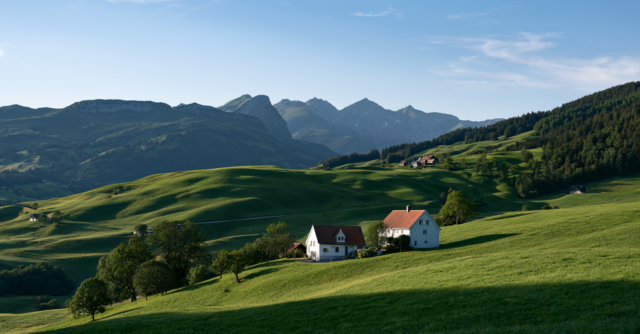
    Initial assessments indicate that the site is suitable for mixed-use development with residential and commercial premises. This would allow for the creation of residential facilities for families, couples, singles and senior citizens, with services and restaurants completing the site. The site, located above Lake Sempach, is in close proximity to the old town of Sursee and already has good access to various modes of transport.

    “The move opens up a unique opportunity to repurpose the previous location in Sursee,” said Reto Wyss, member of the cantonal government, in the announcement. “This attractive site with lake views in a good location is to be rezoned for this purpose. The next planning steps will show what is feasible and where.” The planning phase for the new neighbourhood is set to begin in spring 2026, when the hospital starts to move. Various meetings with the local population and interest groups are planned. The site is expected to be vacant from 2034 and could be redeveloped. The possibility of incorporating the existing building fabric is also being considered.

  • New high-rise project boosts housing supply near the station

    New high-rise project boosts housing supply near the station

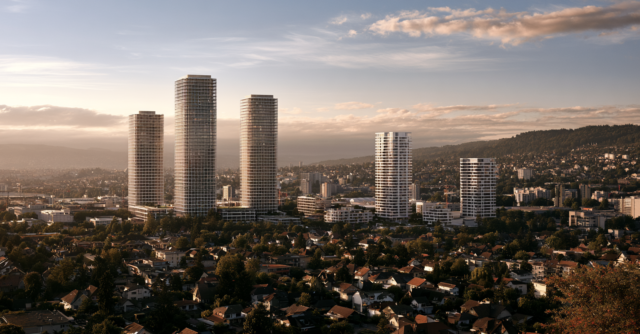
    Pensimo Management AG, based in Zurich, has acquired a building site from ABB in Oerlikon through its investment foundations Turidomusand Pensimo. According to a press release, the company plans to build a complex with 500 apartments, including a high-rise building and commercial premises, on the north side of Oerlikon railway station on the newly designed Max-Frisch-Platz.

    “We are very pleased with the acquisition of this property,” said Stefanie Krautzig, transaction manager at Pensimo, in the press release. “This is a very rare investment opportunity for a development project of this size in such a central location.” The building regulations for Neu-Oerlikon, which were partially revised in 2022, provide a good basis for planning and developing the area. “In order to evaluate an architectural solution for this central and prominent location that is attractive to the public and future residents, we will launch a competition among teams of planners,” said Krautzig.

    Construction is expected to begin in 2029. The seller, ABB, is also pleased with the sale of the former industrial site and is convinced that “this will contribute to the further development of Zurich Oerlikon into a lively and diverse neighbourhood,” said Nora Teuwsen, Chair of the Executive Board of ABB Switzerland.

  • Building lease flats create new living space in Altstätten

    Building lease flats create new living space in Altstätten

    Halter AG is implementingtheTresTerrä project in collaboration with the Catholic denomination of the canton of St. Gallen, owner of the project, andSchlieremerTend AG, partner for communication and marketing. As part of this, Halter will undertake the construction of ten residential buildings on the Guter Hirte site in Altstätten, which will provide affordable living space in the future, according to a press release. The ground-breaking ceremony and official start of construction for the project have now taken place.

    “Tres Terrae stands for a place where living, open space and neighbourhood come together,” says a statement from Halter. “The aim is to create lasting quality of life that offers people a home for the long term.”

    Three building complexes are planned, which will be located around a central communal square and connected by a network of paths. A total of 37 freehold flats will be built in the buildings, ranging from 2.5-room to 5.5-room flats. Central meeting areas will provide space for interaction and community, according to the project description.

    In order to reduce the equity requirement and facilitate financing, the flats will be sold under building law. The flats are expected to be ready for occupancy in 2028.

  • Rankstrasse residential tower block

    Rankstrasse residential tower block

    In order to make optimal and sustainable use of the limited space on Rankstrasse, Basel’s “1000 ” residential construction program is based on a widely advertised, anonymous architectural competition. 78 teams showed interest, 15 selected projects were submitted and competed for the best solution. The expert jury was ultimately won over by “Miranda” by Zurich-based studio DIA, Haller Ingenieure and Hefti Hess Martignoni.

    Sustainability integrated into the architecture and social fabric
    The 88-metre-high building will provide over 100 new rental apartments based on the “Mietvertrag Plus” model, which is affordable and bound by income and occupancy rules. The outstanding feature is the innovative neighborhood concept. Three floors are connected vertically, creating inclusive meeting zones for diverse groups of tenants. The apartments have a compact and functional design, enable economical use of space and meet high ecological and economic standards. Green outdoor areas, communal spaces and resource-conserving construction methods underline the sustainability claim. The city is thus proactively committed to responsible, socially integrative urban growth.

    New benchmark for living on the outskirts of the city
    With “Miranda”, Basel-Stadt is launching a further development on the eastern outskirts of the city. The high-rise marks a striking prelude to future neighborhood developments and sets an architectural example of openness. The earliest start of construction is 2028, preceded by a development plan and public information. The focus on community, mixing, sustainability and architectural quality positions the project as a reference for modern, urban construction in Switzerland.

  • New residential neighbourhood with a focus on families and community building

    New residential neighbourhood with a focus on families and community building

    According to a statement, the jury of the Canton of Basel-Stadt has decided that the design by the two Basel-based architectural firms Clauss Kahl Merz Atelier für Architektur Städtebau and Truwant Rodet will be implemented. The planned residential development at Riehenring 120 on the former site of Exhibition Hall 3 will comprise 170 affordable flats.

    Exhibition Hall 3 is currently used by Basler Verkehrs-Betriebe (BVB) as a garage for electric buses. This temporary use will end in 2028. After that, the canton plans to develop this centrally located area into a vibrant residential and living space by 2031. The plans primarily include large, family-friendly flats and a small number of small flats. In addition, a double kindergarten, a daycare centre and commercial premises are planned, as well as 200 parking spaces for tenants and other people from the neighbourhood.

    The winning project impressed the jury “with its high quality of living and its contribution to the surrounding neighbourhoods”. Part of the car park will be built above ground. This will create two additional outdoor areas on the roof for tenants, which can also be used as planting gardens.

    At the same time, according to the canton, this will make construction more resource-efficient: as less ground needs to be excavated, there will be “no energy-intensive excavation and less building material will be used. In addition, the project as a whole focuses on environmentally friendly construction by reusing various components from the existing Exhibition Hall 3 and the former BVB garage in Rank.”

  • Cooperative housing for new Basel city district

    Cooperative housing for new Basel city district

    According to a press release, Basler Wohngenossenschaft (BWG)and Vivanta AG, a subsidiary of UTILITA Anlagestiftung für gemeinnützige Immobilien, will begin construction of two residential buildings on the Wolf site in Basel in 2028. They emerged as the winners of the competition in spring 2025 with a unanimous jury vote. Now, as the owner of the site at the former freight station, SBB has granted building rights for two construction plots. BWG plans to build around 150 cooperative apartments. Vivanta’s proposal envisages around 120 affordable residential units.

    SBB is developing a new urban quarter on around 160,000 square metres of the Wolf site. The first stage of development will begin in 2028 with the two aforementioned buildings in the western part of the site. The winning project, Janus, by the architectural firms M-AP from Lausanne and Experience from Paris, will be implemented for the new MF02 building. The new MF03 building, with the project name Binaria, is the work of Parabase GmbH from Basel and Confirm AG from Zurich.

    The jury reports for the two buildings on the MF02 and MF03 construction sites make it clear that, in addition to architectural, social and economic project requirements, recyclability and resource conservation were also key evaluation criteria. They state: “Repairability, maintenance and future dismantling (design for disassembly) must be ensured through the selection of suitable materials and their assembly.”

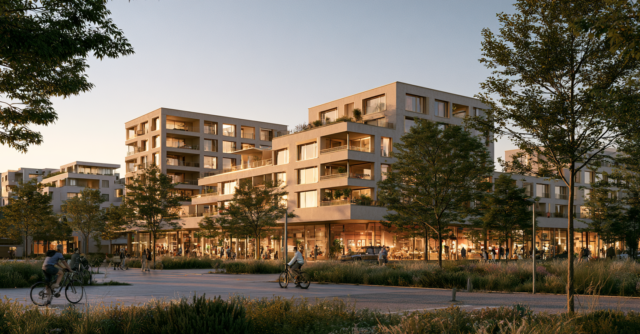
    According to the project description, a perimeter block development is intended to create urban living quality. Green spaces and open spaces will be designed according to the sponge city principle. They are intended to enable a pleasant microclimate and natural rainwater management. According to the tender, the renewable energy sources available on the construction site, such as heat recovery from wastewater, geothermal probes and photovoltaic systems, are to be “used to their full extent”.

  • Pension funds focus on sustainable living

    Pension funds focus on sustainable living

    Vertina Investment Foundation, based in Baden, has received subscriptions totalling CHF 74.3 million for its Vertina Wohnen investment group. The target volume was CHF 50 million. This investment group focuses on the development and realisation of sustainable residential properties in Switzerland. Its residential share currently stands at 99 per cent.

    According to a press release, the proceeds from the issue will be an important component in financing and realising two residential projects in Zurich and Kloten (ZH) and in acquiring further properties. “This combination strengthens the portfolio base, expands investment opportunities and supports the long-term growth of the investment foundation,” the press release states.

    In the wake of this successful capital raising, the investor base has grown to 47 pension funds. “The high demand confirms our long-term value creation strategy and our active, holistic management approach,” said Marco Uehlinger, Chairman of the Foundation Board. “We are convinced that this will create sustainable added value for our investors.”

  • Wolf-Areal Basel affordable apartments

    Wolf-Areal Basel affordable apartments

    SBB is pressing ahead with the transformation of the former Wolf freight station into an urban living and working quarter. As with the Volta Nord project, former railroad areas are being opened up for living, working and leisure.

    from 2028, around 270 apartments will be built on two building plots in the heart of the site, specifically positioned in the affordable segment.

    low-cost rent and contemporary forms of housing
    The Basler Wohngenossenschaft is planning around 150 cooperative apartments, while Vivanta is planning around 120 additional affordable units. All apartments will be built according to the cost-rent principle, which allows for moderate rents in the long term.

    the concepts are based on contemporary forms of living for different phases of life, from families to singles to older people. Communal areas and meeting zones are intended to strengthen neighborhood life and promote social networking.

    Non-profit partners with a clear mission
    BWG and Vivanta pursue an explicitly non-profit mission. To secure affordable living space while maintaining high quality and sustainability standards. The projects should demonstrate that ecological construction methods are compatible with affordable rents.

    building rights as a development instrument
    Building plots are allocated on the basis of a partnership-based building rights agreement developed jointly by SBB, the Federal Office for Housing and the Swiss Housing Association. This model creates reliable conditions for non-profit developers and accelerates the realization of affordable housing in city centers.

    with the development of the Wolf site, SBB is continuing to pursue its strategy of opening up areas that are no longer required for operational purposes for modern urban use and making a substantial contribution to affordable housing.