Category: Regions

  • Growth in premiums and fees in the half-year under review

    Growth in premiums and fees in the half-year under review

    The Swiss Life Group reports an operating profit of CHF 903 million for the first half of the year. In a year-on-year comparison, this corresponds to growth of 3 per cent in local currency, the internationally active insurance group from Zurich reported in a press release. At CHF 602 million, however, net profit was CHF 30 million lower than in the first half of the previous year. Swiss Life cites a year-on-year increase in tax expenses of CHF 36 million as the reason for this.

    “We were able to further expand both our insurance and fee business and achieved a higher operating profit”, Group CEO Matthias Aellig is quoted as saying in the press release. Specifically, Swiss Life increased its own premium income by 5 per cent in local currency to CHF 12.1 billion. At the same time, fee income rose by 2 per cent in local currency to CHF 1.27 billion. “We also significantly increased net new money inflows in the investment business for third-party clients and our solvency remains strong,” explains Aellig. “With these results, we have made a successful start to our Swiss Life 2027 corporate programme and are on track.”

    In the Swiss Life 2027 programme, the Group has set itself the goal of increasing its result in fee-based business to over CHF 1 billion per year by 2027. A result of CHF 392 million was achieved in the half year under review. Swiss Life has set a target range of 17 to 19 per cent for the return on equity in 2027. In the half year under review, the return on equity was 17.6 per cent.

  • Acquisition of land in Meggen

    Acquisition of land in Meggen

    The acquired plot on Neueggweg is practically undeveloped and, according to the zoning plan, is in residential zone C. The location is quiet, yet well developed, an advantage for future residents. According to the current planning status, Mobimo will realise a condominium development with around 70 residential units on the site. The project volume amounts to around CHF 120 million. The start of construction is dependent on a mandatory design plan obligation. Completion of the development is scheduled for the end of 2032.

    Development pipeline and market environment
    With the purchase of the site, the company is substantially expanding its development pipeline for the coming years. Demand for residential property in good locations around Lucerne remains consistently high. The municipality of Meggen is one of the most sought-after residential locations in Central Switzerland and, in addition to its proximity to the city of Lucerne, scores highly for its attractive location and quality of life. Lake Lucerne, the local recreational area around Meggen and the municipal infrastructure further strengthen the location.

    Project objectives and outlook
    The new development not only offers new living space, but also provides urban development opportunities thanks to the design plan. The process gives architectural firms the opportunity to contribute innovative housing solutions and modern, needs-orientated spatial concepts. The planning takes into account both the desire for attractive green spaces and the requirements for residential density and sustainability.

    Several planning steps are still required before the planned completion at the end of 2032. The exact start of construction depends on the development and finalisation of the design plan. The occupancy date will be communicated promptly based on the official procedures and marketing.

    The project in Meggen will create new living space, further develop the location and expand the company’s commitment to attractive, sustainable living in Central Switzerland.

  • Between innovation and reality

    Between innovation and reality

    In the middle of the Zurich conurbation, the new H1 residential tower towers above the Zwhatt site. With a height of 75 meters and 24 storeys, the building is a visible marker for the Regensdorf skyline and for hybrid construction methods between concrete and wood. Despite its striking red hue and eye-catching façade, the interior is dominated by natural and neutral materials. The architecture remains restrained, the structure classic. Three solid base storeys and a central concrete core support the building, while timber columns, timber-concrete composite ribbed ceilings, lightweight façades and solar panels ensure resource efficiency.

    The HBV structure allows for a high degree of prefabrication and a significant reduction in gray energy. Compared to conventional solid buildings, 20% of emissions are saved, a total of around 670 tons of CO₂ over a life cycle of 60 years. The horizontally positioned photovoltaic modules serve as a brisesoleil and generate around 155,000 kWh of electricity per year, which covers around 36% of the apartments’ energy requirements.

    Quality of living, community and urban density
    At the base of the H1, three-sided arcades connect the building to the neighborhood and ensure an urban quality of living. Inside, a clear, modular structure ensures compact, flexible apartments. 156 units are organized around the central core and are reached via short, bundled access routes. There is space for community halfway up the building with a two-storey meeting room, a launderette and spectacular views. The wooden elements create a pleasant indoor climate, while exposed beams and clay surfaces ensure a cozy atmosphere.

    Sustainability and the ambivalence of the high-rise principle
    H1 is a project of transition. The high proportion of wood reduces the CO₂ profile, but does not make the use of concrete superfluous. The climate-friendly construction method, local raw materials such as beech wood from the Jura or clay and the focus on renewable energy make sustainable construction a reality. Nevertheless, the high-rise building remains an ambivalent concept. The densification saves space, but the statics and fire protection still force hybrid constructions.

    In terms of urban planning, the Zwhatt site represents a new development perspective for Regensdorf. The silhouette of H1 and other towers characterizes the skyline. The quarter combines living, working and open spaces and stands for an urban development that remains flexible and adaptable.

    The H1 residential tower exemplifies change in the construction industry. It combines advanced timber hybrid technology, a high degree of prefabrication and urban integration. H1 is thus a “building of transition”, a step towards net zero, but also a reflection of the challenges and potentials facing sustainable residential construction in urban centers today.

  • Windows as power stations

    Windows as power stations

    One solution relies on special films that direct visible light specifically to the edge of the glass pane. There, PV strips, often made of high-performance material such as GaAs, absorb the light and convert it into electricity. Solar cells are only needed at the edge, which saves material and resources. The view is retained and the window remains transparent.

    Using cholesteric liquid crystals, a research team at Nanjing University has developed a prototype that achieves an optical efficiency of over 18% and delivers stable values under real conditions. For a typical window with a height of two meters, there is a strong concentration of light at the edge zone. The coating can be produced industrially and is suitable for large façades.

    Transparent tandem cells
    The EU project CitySolar presents another innovation. Two combined PV layers (halide perovskite at the top, organic at the bottom) extract energy from different light spectra while allowing visible light to pass through. This means that the room brightness and view remain unchanged, the window “looks like a window” but produces electricity.

    With an efficiency of 12.3% and 30% transparency, a new record has been set for transparent PV modules. The structure is suitable for office and residential buildings as well as high-rise buildings with large glass fronts.

    Future and potential
    Researchers and industry partners are working on even higher efficiencies and better production methods. Challenges exist in balancing transparency and efficiency and in integrating them into existing construction processes. However, projects such as those from ZEISS or the international CitySolar consortium clearly show how great the market potential is.

    Transparent solar cells and intelligent glass surfaces are paving the way for buildings that partially cover their own electricity requirements. Windows as power plants are within reach and will play a decisive role in shaping the energy transition in urban areas.

  • Ground-breaking ceremony for SBB plant in Arbedo-Castione

    Ground-breaking ceremony for SBB plant in Arbedo-Castione

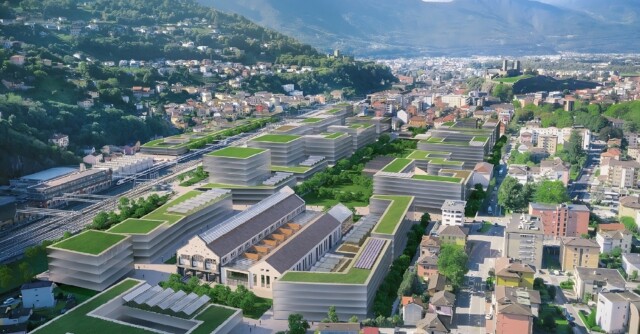
    The new SBB plant, officially called Nuovo stabilimento industriale ferroviario (NSIF), replaces the existing plant in Bellinzona, which no longer meets the maintenance requirements of modern multiple units. The new facility creates space for 360 full-time jobs and 80 apprenticeships and specializes in the future maintenance and repair of Giruno, ETR and FLIRT-TILO multiple units. The high degree of automation and the focus on electromechanical work make the facility the most modern SBB industrial plant in Europe.

    SBB CEO Vincent Ducrot was particularly proud at the ground-breaking ceremony. The canton of Ticino is an extremely important region for SBB, which is investing in jobs, expertise and technology with this project. The new site covers an area of 150,000 square meters, equivalent to more than 20 football pitches, and also sets an example for sustainability with a green roof and integrated solar panels.

    Sustainability and major construction progress
    Work began back in June 2025 with the establishment of the construction site, excavation and foundation work as well as initial measures for the future train washing facility. The expansion of the railroad infrastructure is running in parallel. New points, additional tracks and modern control technology will ensure an optimal connection to the network. SBB attaches great importance to ecological compensation; 8.4 hectares of high-quality crop rotation areas are being compensated for at alternative locations in Ticino.

    The new plant will go into operation in stages from mid-2028. The relocation of the existing Bellinzona plant to Arbedo-Castione will give the region and its employees a sustainable future. The new SBB plant stands for innovation, growth and sustainable development in a strategically important region for Switzerland.

  • Efficiency in timber construction thanks to statics

    Efficiency in timber construction thanks to statics

    Timber frame construction scores highly as a sustainable alternative to concrete. However, there is a problem with structural planning. Walls with windows were previously considered “statistically invisible” due to a lack of reliable data on load-bearing behavior. Planning, use of materials and costs suffered as a result.

    Large-scale tests for greater material and cost efficiency
    In order to close this knowledge gap, Empa, the Bern University of Applied Sciences and ETH Zurich launched a joint research project, supported by the FOEN and industrial partners. In Empa’s construction hall, wooden walls are deliberately subjected to extreme horizontal loads, generating valuable data on the load-bearing capacity of walls with window openings. The aim is to use the horizontal bracing values of such elements reliably in everyday engineering in the future.

    Less concrete, more wood
    The findings are being incorporated into a new, simple computer model. The initial results show that walls with windows also make a significant contribution to bracing. This reduces the need for steel anchors and concrete cores and cuts the amount of material, time and costs involved in timber construction. In the long term, this results in more economical and ecological buildings.

    Cooperation between research and industry
    The focus is on the practical suitability of the new model. In close dialog with industry partners, the complex research model is translated into an applicable solution for planning practice. This benefits planners, investors and residents alike.

    With new test procedures and calculation models for window walls, the research project is taking timber construction a step further towards greater efficiency, resource conservation and innovation.

  • New building strengthens Solothurn cantonal police force

    New building strengthens Solothurn cantonal police force

    The tasks of the police have become more diverse. Technology and society are changing rapidly. Legal requirements are becoming increasingly complex. KAPO Solothurn needs new structures to be able to react to this. Well-trained employees and ongoing training are more important than ever. Sufficient equipment is also a basic requirement for efficient work today.

    Lack of space, outdated infrastructure
    The existing infrastructure no longer meets current requirements. Many services work in cramped and unsuitable rented premises. There is a lack of special rooms for training and modern investigations. Forensics and the education and training service are particularly affected. Employees therefore have to move to external premises. This complicates processes and costs time.

    The new building as a solution
    A central unit for the police is being built at the Oensingen site. More than 150 employees from eleven different services will work under one roof in future. This will create better communication and shorter distances. Cooperation with the nearby heavy traffic control center will also be simplified. The new building offers enough space for current and future teams. Modern working and training conditions ensure greater efficiency and motivation.

    The focus is on training and quality
    A new on-site training center simplifies the training of police officers. Forensic technology will have modern laboratories and examination rooms. This increases the quality of work and improves conditions for everyone.

    More efficiency, lower costs

    The new structures will simplify processes and reduce costs. The internal synergies and proximity to the SVKZ lead to shorter deployment times. This makes the jobs for the police more attractive and increases their effectiveness.

    Facts, figures and outlook
    The building is planned to cost around 85 million francs. The floor space amounts to a good 10,400 m². The building offers rooms for all important police services. It has special training areas, laboratories and 204 parking spaces. Completion and occupation are scheduled for 2031. Luna Productions from Deitingen delivered the winning project in the competition. The costs are constantly being reviewed and optimized.

    The new building will position the Solothurn cantonal police for the future. Better working conditions, more efficient processes and modern technology will ensure that police work can continue to develop flexibly.

  • Fraunhofer ISE Testlab sets standard for inverters

    Fraunhofer ISE Testlab sets standard for inverters

    With the increasing expansion of renewable energies, the rotating masses of conventional power plants, which previously ensured a stable voltage and frequency, are no longer present in the grid. Grid-forming inverters must take over this task and reliably stabilize the grid even in critical situations such as frequency changes or short circuits. Until now, however, there has been a lack of a uniform definition and standardized verification procedures for these systems.

    GFM Benchmark test procedure
    In the GFM Benchmark project, Fraunhofer ISE invited leading manufacturers to test their devices in the laboratory. Seven companies provided inverters with different outputs and development statuses. The test procedure was developed together with German transmission grid operators and simulates various grid situations. In addition to normal operation, it also includes extreme situations such as phase jumps and short circuits in the grid.

    While many devices react similarly under clearly defined requirements, there are still clear differences under more complex conditions. The ISE team was therefore able to provide manufacturers with valuable tips for optimization and highlighted the need for further development.

    Paving the way for standardization and market integration
    The project results have been directly incorporated into European standardization work and the VDE FNN note “Grid-forming properties”. For the first time, the new test guideline provides a recognized framework for the practical testing and certification of grid-forming systems. This is particularly relevant as a new market for instantaneous reserve will be launched in Germany from 2026, in which battery storage systems with suitable certification, for example, will receive additional revenue opportunities.

    Market maturity, best practice and industry dialog
    The market analysis and test data provide a solid basis for decision-making for manufacturers, grid operators, investors and standards bodies. The certification measurements that are now possible will accelerate the market entry of new, stabilizing inverters. In addition, Fraunhofer ISE supports the transfer of European requirements into national regulations and supports the industry with best practice guidelines.

    Fraunhofer ISE has set a milestone with the test procedure for grid-forming inverters. This will not only make the energy transition in Europe safer, but also measurably faster.

  • Oil heating out, house value up?

    Oil heating out, house value up?

    Simon Lüthi from Wüest Partner recommends renovating the house as soon as possible. Any time is the right time for the environment. Economically, it is particularly attractive if subsidies, tax savings and lower ancillary costs additionally support the increased market value.

    Energy efficiency as a value factor
    The demand for energy-efficient properties is increasing. Investors, funds and pension funds are paying attention to sustainability, often for regulatory reasons. Investments in energy efficiency increase the value of real estate in the long term. This is particularly the case when renovation and modernization coincide.

    Tenancy law and urban regions
    Energy-efficient refurbishment is also worthwhile in cities. The market there is particularly responsive to sustainable improvements. Refurbishment also protects against future legal requirements. However, local tenancy law regulations can restrict the possibilities for apportionment.

    Replacing the heating system is a sensible step
    If you need to replace your heating system anyway, you should switch from an oil system to a heat pump or district heating. A heating system replacement is usually due every 25 years anyway and covers the repairs at the same time. For many homeowners, simply replacing the heating system is the most economically attractive option.

    Homeowners should start with a heating system replacement if the building envelope is intact. If the envelope is in need of renovation, it is worth combining the renovation of the roof, façade and windows with the replacement of the heating system.

    Regulations, subsidies and expert opinions
    Regulation is becoming stricter. The aim is to achieve a climate-neutral building stock by 2050. Subsidies and tax benefits make refurbishment profitable. If you are unsure, consult an expert for planning.

    Financing and grey energy
    Banks often offer more favorable mortgages for sustainable properties. In future, the focus will also shift to efficient cooling and the reuse of building components. Grey energy, i.e. the production energy contained in the building, is becoming increasingly important.

    Replacing oil heating is a real added value. It offers lower heating costs and a higher house value, for today and tomorrow.

  • New agenda to strengthen cooperation in the Limmat Valley

    New agenda to strengthen cooperation in the Limmat Valley

    At its Annual General Meeting on 28 August 2025, Limmatstadt AG acknowledged its role as a driving force in regional development. According to a press release, the conclusion of the reorganisation process has sharpened the future mandate for regional location promotion.

    A clear vision has been defined in collaboration with the region’s stakeholders. It is crystallised in the formulation “Together we are shaping a strong Limmat Valley and creating space for more”. Through close cooperation and a consistent focus on the needs of all stakeholder groups, interests can be bundled and projects can be initiated and supported to sustainably promote the successful development of the Limmat Valley.

    Against this background, Limmatstadt AG is taking on a more active role. The development of a joint regional and digital agenda and the Limmat Valley communication channels project are now being launched. Both are intended to increase the visibility of regional offerings and further promote cooperation in the Limmat Valley.

    As part of this realignment, the revised brand identity “Limmattal. Room for more.” was also presented. It is intended to strengthen the region’s identity as a dynamic living and economic area.

    Jasmina Ritz and Josef Bütler have stepped down from the Board of Directors for professional reasons. Roger Bachmann, the mayor of Dietikon, was newly elected. Limmatstadt AG expects his expertise and regional ties to provide valuable impetus.

  • New Regional Policy NRP in Switzerland

    New Regional Policy NRP in Switzerland

    Holistic support for structural change
    The economic importance of tourism in the target regions is strengthened with innovative product and infrastructure developments. Co-operations and new, strategically positioned products increase regional added value and open up additional sources of income. The aim is to optimally utilise the potential of individual destinations and provide new impetus for sustainable development.

    Digitalisation as the key to competitiveness
    Digitalisation is now an integral part of every funding strategy. The NRP supports projects in the area of digital transformation, promotes strategies to raise awareness and networking and thus strengthens the connectivity of even remote regions. This ensures that innovation and value creation are increasingly possible regardless of geographical location disadvantages.

    Partnership and synergy as a success factor
    Targeted interaction with other federal funding policies is a prerequisite for the effectiveness of the NRP. The partnership-based implementation of projects and the harmonisation of different development strategies promote added value and contribute to the sustainable solution of regional challenges. In this way, location promotion is promoted in a comprehensive and forward-looking manner.

    Financial incentives for sustainable growth
    The NRP provides extensive structural and financial impetus through global contributions and targeted funding, thereby increasing the competitiveness and attractiveness of regions and opening up new development opportunities.

    The New Regional Policy is more than just a funding instrument. It creates future prospects for regions that were previously overshadowed by the major centres. Its programmes and strategies are the key to sustainable structural change and the development of strong, resilient locations in Switzerland.

  • New solar plant boosts renewable energy production in the Alpine region

    New solar plant boosts renewable energy production in the Alpine region

    Swisspower AG has received approval from the canton of Graubünden for the construction of the Alpin Parsenn large-scale photovoltaic plant. According to a government press release, the decision is subject to conditions, although these are not specified.

    Swisspower AG is acting as the overall project manager. It represents Energie Wasser Bern(ewb), Industrielle Werke Basel(IWB) and Elektrizitätswerk Davos AG(EWD).

    The project, which until recently ran under the name Parsenn Solar, was approved by the Davos electorate on December 17, 2023. According to its press release from November 2024, Swisspower expected to receive the cantonal building permit before the end of last year; the ongoing work was fully geared towards the start of construction in summer 2025.

    According to the cantonal government, the solar plant will be built at an altitude of 2,500 meters in the Parsenn ski area, which already has an infrastructure and covers an area of almost 14 hectares. With 1493 module tables, it will produce around 12.1 gigawatt hours of electricity per year. In the earlier announcement, there was still talk of more than 10 gigawatt hours, which will supply around 2,200 four-person households in future. Logistical access will be provided via existing access roads. The use of helicopters and walking excavators for minimally invasive installation is also planned.

    Swisspower, based in Zurich, was founded in 2000 as a joint venture between Swiss municipal and public utilities that supply their areas with electricity, natural gas, heat and drinking water. The alliance is supported by 22 shareholder partners from all over Switzerland.

  • Small cities are increasingly interested in the smart city

    Small cities are increasingly interested in the smart city

    The Zurich University of Applied Sciences (ZHAW), based in Winterthur, has published the Swiss Smart City Survey 2024. The report shows that small cities in particular are investing in smart solutions, according to a press release. The ZHAW survey also recorded an increase in the number of respondents.

    A total of 403 smart city projects were reported by the participating cities and municipalities in the survey. Specifically, these include categories such as Smart Governance, Smart Environment, Smart Mobility, Smart People, Smart Living and Smart Economy. 97 projects fall into the Smart Environment category, most of them in the field of photovoltaics. This is twice as many as in 2022.

    However, the report still shows great potential for development. The topic of smart cities is being actively addressed in 29% of the cities surveyed, while 18% are still in the initial phase. “Many cities are not yet in a defined smart city development phase – a clear sign that there is enormous development potential here,” said Vicente Carabias, Head of Sustainable Energy Systems and Smart Cities at the ZHAW, in the press release. “At the same time, the survey shows that more and more cities are embracing the topic of smart cities. The data from the Swiss Smart City Survey highlights the high market potential for science and companies, which can play an active role in the development of smart infrastructures.”

  • Small cities drive smart transformation

    Small cities drive smart transformation

    In the current survey, 403 projects from 124 cities were recorded, with digitalization and sustainability being the most important topics. Most initiatives relate to the smart environment, in particular renewable energies such as photovoltaics and resource-saving technologies. This dynamic underscores the transformation that Swiss cities are striving to achieve in order to reduce their carbon footprint and create innovative living spaces.

    Commitment and growth opportunities for small cities
    The number of participating cities has increased significantly. More and more municipalities are formulating their own smart city strategies, appointing responsible parties and working on pilot projects for digital transformation. Nevertheless, the survey shows that almost 80 percent of cities have not yet implemented fully developed processes and are only in the early stages of development. This is a strong signal of existing development potential and market opportunities for players from business and science.

    Governance, participation and infrastructure
    The key dimensions include smart governance, citizen engagement and co-creation. The increase in projects in digital citizen services and smart infrastructure, such as resource conservation or smart mobility, points to the need to expand and strengthen internal organizational competencies within city administrations.

    Market potential and next steps
    The authors of the study emphasize that the dynamics of smart city initiatives are high, but that there is still room for improvement in terms of design and organization. The market potential for companies and research is correspondingly high. Smart infrastructure and innovative projects offer numerous opportunities for cooperation and investment.

    Small cities as drivers of the smart future
    Small Swiss cities are proving to be the driving force behind the smart city transformation. With growing commitment, a clear focus on sustainability and digitalization and an increasing number of concrete projects, they are gaining in importance and creating new opportunities for a sustainable and networked urban landscape.

  • Information event for senior citizens looking for accommodation – A cooperation project between SVIT Zurich and the city of Uster for residents of the city of Uster

    Information event for senior citizens looking for accommodation – A cooperation project between SVIT Zurich and the city of Uster for residents of the city of Uster

    In einem Pilotprojekt hat sich der SVIT Zürich zusammen mit der Stadt Uster das Ziel gesetzt, im digitalen Zeitalter dieser Altersgruppe eine geeignete Unterstützung anbieten zu können. Im Zentrum steht eine enge Zusammenarbeit mit den Amtsstellen (z. B. Sozialdienste, Gesundheits- und Beratungsstellen) und dem Immobilienverband auf mehreren Ebenen:

    1. Informations- und Beratungsangebote
    Eine zentrale Anlaufstelle als Teil der «Fachstelle Alter» soll älteren Menschen unterstützen, sich über den aktuellen Wohnungsmarkt einen Überblick zu verschaffen und sich für Wohnungssuche «parat» zu machen.  Dabei gibt es einiges zu beachten, gerade, wenn wie so oft die letzte Wohnungssuche schon Jahrzehnte zurückliegt. Bei diesem Punkt kommt der SVIT Zürich ins Spiel und organisiert für Interessierte Seniorinnen und Senioren nützliche Informations- oder besser ausgedrückt «Aufklärungsveranstaltungen», welche auf die «Dos and Don’ts» der Wohnungssuche hinweisen. 

    Im «SVIT Zürich World-Cafe», werden die Besucher in 3 Gruppen an grossen Blocktischen eingeteilt. Bei Kaffee und Kuchen werden wichtige Schwerpunkte erläutert und besprochen. 

    • Ausfüllen eines Interessenformulars mit den nötigen Beilagen / Selektion der Mieter aus Sicht der Verwaltung 
    • Wie und wo suche ich nach geeigneten Wohnungen / Realitäts-Check der 

    gewünschten Wohnung (inkl. Suchprofil erstellen) 

    • Wo der Verband während der aktiven Suche unterstützen kann (Coaching) und 

    weshalb wir keine Wohnungen auf dem Präsentierteller anbieten können.  

    Die erste Veranstaltung dieser Art findet am 18. September 2025 im Gemeinderatssaal der Stadt Uster Stadt: 

    Infos unter:
    https://www.svit.ch/de/svit-zuerich/event/informationsveranstaltung-fuer-seniorinnen-und-senioren-auf-der-wohnungssuche

    2. Best Practice-Leitfaden für Senioren zum Vorgehen bei Vermietungsprozessen
    Vermietungsprozesse sind heute weitgehend standardisiert und auf Effizienz getrimmt. Grössere Liegenschaftsverwaltungen setzen stark auf Tempo und vergeben Wohnungen an den ersten Mieter, der passt. Kleinere Liegenschaftsverwaltungen und private Vermieter nehmen sich zwar manchmal mehr Zeit, aber auch sie wollen möglichst schnell vermieten. Wer seine Chancen bei der Wohnungssuche erhöhen möchte, muss sich sehr gut vorbereiten und bereit sein, schnell zu entscheiden. Die Vorbereitung lohnt sich, weil Wohnungsbewerbungen bei den meisten Verwaltungen ähnlich ablaufen.  

    In Kooperation mit der Stadt Uster (Fachstelle Alter) und dem SVIT Zürich entstand 

    Im Februar 2025 eine hilfreiche Anleitung speziell für Senioren: 

    Leitfaden unter:
    https://www.svit.ch/sites/default/files/2025-02/Wohnungssuche%20ohne%20Umwege.pdf

    3. Prävention und Langfristigkeit
    In einer geplanten Kampagne „Wohnen im Alter“ – sollen ältere Menschen ermutigt werden, rechtzeitig über einen Umzug nachzudenken, denn eine frühzeitige Planung erleichtert den Wohnsuchprozess für den Lebensabend enorm. 

  • Whitepaper “Sustainable building concepts”

    Whitepaper “Sustainable building concepts”

    The authors of the white paper are calling for a paradigm shift. Planning, building and operating should be understood as a coherent, holistic process. Buildings are seen as dynamic systems that serve people, the environment and the economy in equal measure. Even in the early planning phase, a forward-looking automation strategy creates the basis for energy-efficient, comfortable and long-lasting operation.

    Building automation delivers tangible added value
    Digital control of lighting, air conditioning, heating and ventilation as well as the targeted use of sensor technology measurably reduces resource consumption and improves the indoor climate. This has a positive impact on operating costs, user comfort and compliance with ESG criteria – a significant advantage for investors, operators and users.

    Focus on people
    The white paper attaches great importance to the human factor: modern buildings should contribute to health and productivity and meet individual needs. Aspects such as air quality, thermal comfort and acoustics are becoming more important. Thanks to digital technologies – from sensors to personalized room profiles – adaptive and user-friendly working and living environments are becoming feasible.

    Circular economy and digital infrastructures as the future standard
    Building automation supports the economical use of energy and water and facilitates the implementation of circular building concepts. Cloud-based platforms, IoT sensors and IP-based networks create space for smart functions such as desk sharing or asset tracking and increase the value of real estate in the age of digital transformation.

    Comfort, sustainability and value enhancement
    The white paper impressively demonstrates that holistic building automation not only ensures greater comfort and cost efficiency, but is also indispensable for sustainable, health-promoting and value-stable properties.

    The whitepaper is available for download at: www.siemens.ch/raumautomation

  • ETH spin-off teaches the construction industry how to save money

    ETH spin-off teaches the construction industry how to save money

    The ETH spin-off is making its mark on the grounds of Innovation Park Zurich. A three-and-a-half-ton dumper truck is presented at customer demos with the specially developed hybrid drive. The construction industry is facing enormous challenges in view of the three gigatons of CO₂ emissions produced by its machines worldwide. The hybrid drive enables a reduction of 30 to 50 percent in fuel consumption and emissions. A revolution for construction companies facing increasingly strict environmental regulations.

    Efficiency and development as an ongoing task
    The pressure to innovate is high. In order to remain competitive and meet future requirements, the team is constantly working on further developments and optimizing the technology for various applications. Cooperation with construction and machinery companies ensures practical solutions, while the location in the IPZ pavilion offers ideal conditions for research and development.

    From prototype to series production
    Following intensive collaboration with partners, series production is imminent. This means that the innovative hybrid drive will soon be widely used and make a significant contribution to decarbonization and cost reduction in the construction industry. The technology combines power and flexibility with ecological responsibility. A model that will give the Swiss construction industry a new boost.

    The company impressively demonstrates how technological innovations master the balancing act between efficiency, economy and sustainability. The path to the future of construction leads via intelligent drives.

  • Switzerland needs a new awareness of its industry

    Switzerland needs a new awareness of its industry

    With an export share of over 80%, the manufacturing industry contributes around 18% directly to Switzerland’s gross domestic product. With industry-related services, the share rises to more than 25 percent or CHF 230 billion annually. Industry not only ensures high added value and low youth unemployment, but also directly and indirectly finances infrastructure, education and social security.

    Global trade relations are indispensable
    Current US punitive tariffs of 39% on Swiss goods threaten exports and thus fundamental pillars of economic performance. Switzerland’s prosperity and crisis resilience are traditionally based on open, reliable and comprehensive trade relations, especially with the EU as the most important sales market. The rapid ratification of the Bilaterals III and new free trade agreements is key to breaking down barriers and securing long-term competitiveness.

    Further develop framework conditions
    Low unemployment and the continued strength of the industry are based on factors such as the dual education system, lean bureaucracy, flexible short-time working and a liberal economic order. Extending the duration of short-time work and maintaining the liberal labor market are key instruments in this regard.

    Need for political action
    The industry needs a policy that takes its economic importance seriously. The “Swiss export nation” model will remain successful if companies can pursue innovative paths and politicians consistently provide the reliable framework conditions for this. This must be done without blockades and with a clear focus on maintaining international competitiveness.

    Secure industrial strength politically
    Switzerland must become aware of its industrial strengths and develop them further with courage. Only with better networking, political will to make decisions and optimal framework conditions can the international success of industry be secured in the long term.

  • Densification and residential construction over railway tracks

    Densification and residential construction over railway tracks

    Centrally located railroad station areas in particular have enormous untapped potential. The redevelopment of railway yards is an urban development strategy that is already being used successfully around the world, for example in major cities such as London, New York and Vienna. In Swiss cities, too, this option is increasingly becoming the focus of debates on sustainable densification and innovative urban development.

    Political initiatives and reactions
    Josef Dittli, a member of the Council of States, has submitted a motion calling on the Federal Council to examine concepts and processes for the use of space above railway tracks. The focus here is particularly on technical and legal feasibility as well as sustainable integration into the existing urban structure. The Federal Council responded positively and sees great potential for residential construction in central locations in the track areas. The business is now being discussed in the Council of States and promises new impetus for urban development projects.

    Similar initiatives are also being promoted at cantonal level, for example by the FDP in Zurich, with the aim of making better use of the space available in urban areas and improving the quality of life.

    Opportunities and challenges
    The realization of such construction projects requires innovative processes and interdisciplinary cooperation between authorities, rail transport companies, construction companies and urban planners.

    Central to this are

    • Ensuring the functionality and safety of rail traffic
    • Sustainable and energy-efficient construction methods
    • Integration with existing infrastructure and the cityscape
    • Legally clear and transparent processes for planning and planning permission

    The use of space above railway tracks offers a promising answer to the challenges of urban densification and the creation of living space. With political initiatives at various levels and the positive attitude of the Federal Council, this potential could be tapped in a meaningful way in the future and future-oriented urban development projects could be realized.

  • Construction industry at the center of future flood protection

    Construction industry at the center of future flood protection

    The intensity of heavy precipitation increases as temperatures rise. Warmer air stores more moisture, which can be discharged in a short time. Local thunderstorms in particular trigger massive surface runoff that cannot seep away or be absorbed by the sewage system. Cellars, underground garages and streets are thus regularly flooded, even far away from rivers or lakes.

    According to analyses by the Mobiliar Lab, 62% of all buildings in Switzerland are already potentially affected. Two thirds of all flood damage in the last ten years is due to surface runoff and the trend is continuing upwards, especially in urban areas.

    Structural measures with major benefits
    The key lies in prevention. Property protection measures such as raised light wells, sloping ramps at underground garage entrances, water-resistant building materials or targeted terrain adjustments prevent damage and offer an exceptionally good cost-benefit ratio. Many cantons provide financial support for such investments.

    Building technology also holds considerable potential. In future, intelligent systems could use environmental data and precise weather forecasts to automatically activate mobile protective elements. A flexible addition where permanent structural solutions cannot be implemented.

    Construction industry as a key player
    The construction industry is involved in every construction project in Switzerland and is therefore indispensable for the widespread implementation of such protective measures. Only through close cooperation between planners, architects, construction companies and building technicians can decentralized solutions be implemented on a large scale.

    The Mobiliar Lab for Natural Risks therefore calls on the construction industry to play an active role. Not just as an implementer of contracts, but as a strategic partner in the fight against the consequences of climate change. With innovative strength, practical experience and responsibility for the built environment, the industry can make a significant contribution to ensuring that flood damage remains insurable in the future.

  • Planned stock market listing to strengthen market presence

    Planned stock market listing to strengthen market presence

    The fund management company of Swiss Prime Site Solutions AG(SSPS), an asset manager for real estate solutions based in Zug, is considering listing the SPSS Investment Fund Commercial(SPSS IFC) on the SIX Swiss Exchange, according to a press release. According to the company, the SPSS IFC invests with a focus on commercial real estate in economically established locations throughout Switzerland. The company plans to list by the end of 2025, thereby strengthening its market presence, opening up access to new investors and promoting the fund’s liquidity in the long term. The listing will be accompanied by Zürcher Kantonalbank as sole lead manager.

    According to the press release, the listing is subject to market conditions, approval of the amendments to the fund contract by the Swiss Financial Market Supervisory Authority(FINMA) and approval of the listing application by the SIX Swiss Exchange. The SPSS IFC will be open to all investors once the amendments to the fund contract have been approved as a public fund. Until then, it will only be accessible to qualified investors. On the SIX Swiss Exchange, the fund is to be included in the SXI Real Estate Broad and SXI Real Estate Funds Broad indices in future.

    In the run-up to the planned listing, the company has already been able to expand its portfolio and thus prepare for the further development of the fund. “With the funds from the last capital increase, we have optimally expanded the portfolio with two attractive light industrial properties, sustainably strengthened the equity base and consistently aligned the product with the requirements of a stock exchange listing,” says Maximilian Hoffmann, CIO Funds at SPSS.

  • Discussion about security of supply and dependence on nuclear power

    Discussion about security of supply and dependence on nuclear power

    The Gösgen nuclear power plant(KKG) is modernizing its feed water system. It has therefore been off the grid since the end of June. The resumption of electricity production has now been delayed by a further six months, according to a statement.

    KKG blames this on the increasing safety requirements. The system needs to be strengthened at certain points. It also needs more time to provide evidence to the authorities. The KKG can only be restarted once the Swiss Federal Nuclear Safety Inspectorate(ENSI) has given its approval. The KKG is therefore expected to be able to return to the grid at the end of February 2026, according to the press release.

    The operators expect a loss of production during these eight months amounting to almost 6 terawatt hours and a loss of revenue of 500 million Swiss francs, Alpiq writes in a press release.

    Alpiq is the largest single shareholder with 40 percent and expects a loss of earnings of CHF 200 million. Axpo is the second-largest shareholder with 25 percent, followed by the city of Zurich with 15 percent, Axpo subsidiary CKW with 12.5 percent and Energie Wasser Bern(ewb) with 7.5 percent. On top of this, the shareholders must now procure the missing electricity on the free market in order to meet their supply obligations.

    KKG covers a good tenth of Switzerland’s electricity consumption. Critics of nuclear power such as the Swiss Energy Foundation SES point out the risks of centralized power generation. “Dependence on individual nuclear power plants represents a cluster risk for the secure supply of electricity,” Managing Director Nils Epprecht is quoted as saying in an SES press release. “We would do well to shift our electricity production to many decentralized, renewable plants as quickly as possible.”

  • SMG prepares billion-euro IPO

    SMG prepares billion-euro IPO

    SMG combines leading online marketplaces in the areas of real estate, cars, classifieds and auctions. Thanks to this broad positioning, the company has been able to continuously expand its market position in recent years. In the first half of 2025, revenue rose by 14.4% to CHF 161.5 million. Adjusted earnings before interest, taxes, depreciation and amortization rose by 34% to CHF 87.6 million, bringing the margin to 54.3%. This strong profitability supports the targeted valuation.

    Owners and prospects
    The largest shareholders are the TX Group (31%), Ringier (29.5%), Mobiliar (29.5%) and the US investor General Atlantic (10%). They are likely to be among the main beneficiaries of a successful IPO, as will SMG’s management. The IPO is intended to secure long-term growth, strategic flexibility and investments in the further development of the platforms.

    Challenges in the environment
    While SMG is growing with its digital marketplaces, the parent companies in the traditional media business are facing structural changes. The IPO is therefore also seen as a signal of the increasing importance of the digital focus. Although critical voices point to the company’s high market power, the IPO is also seen as an opportunity to strengthen SMG’s position in international competition.

    It remains to be seen whether the IPO will be a complete success for everyone involved. What is clear, however, is that SMG is setting the course for the next development phase.

  • New paving blocks reduce CO2 emissions in construction

    New paving blocks reduce CO2 emissions in construction

    CREABETON, a building materials company based in the canton of Lucerne and a subsidiary of Müller-Steinag Baustoff AG, has developed a new series of cement-free paving blocks in collaboration with the start-up Oxara. According to a press release, the new concrete blocks produce 30 percent less CO2 emissions than conventional paving blocks.

    The new product is available in three variants. In addition to the standard paving block version, water-permeable or grass paving blocks can also be laid. Instead of conventional cement, the material uses the Oulesse binder developed by Oxara, a spin-off of the Swiss Federal Institute of Technology in Zurich(ETH).

    “With these products, we are responding to the growing demand for climate-friendly construction solutions,” said Hendrix Müller, CEO of the Müller-Steinag Group, in the press release. “Our collaboration with Oxara enables us to offer our customers more sustainable alternatives – today, not in a few years’ time.” Martin Bodmer, Head of Operations at Oxara, is convinced that the collaboration with CREABETON can scale up his company’s sustainable developments.

  • New energy park brings the energy transition to life

    New energy park brings the energy transition to life

    The Grisons University of Applied Sciences (FHGR) has set up the new Grischa Energy Park on the Kuhrerhof and in the Rheinmühle in Chur. The park is intended as an experience and research center in the field of energy and environmental research, according to a press release.

    Embedded in an agricultural environment, work on photovoltaics, small-scale hydropower, wood gasification, wind power and biogas will come together at one location. The aim is to show the general public how renewable energies can be generated, stored and used. “At the Grischa Energy Park, the energy transition goes from an abstract concept to a tangible reality”, explains Steffi Giaracuni, project manager at the Institute for Multimedia Production at the Grisons University of Applied Sciences, in the press release. “Here, people can see, hear and feel how renewable energies are created – and how we can integrate them into our everyday lives together.”

    In the first implementation phase, work on the topics of wood, water and sun will be presented, followed by biogas, wind power and innovative digital communication tools by 2026.

    The project is supported by the UAS Graubünden, the Swiss Federal Office of Energy, the Klima Grischa Foundation and other regional partners. On August 28, experts from the fields of energy policy, innovation promotion, urban development, local energy solutions and agriculture will be answering questions from the public about Switzerland’s energy future at a science café.

  • New training program for real estate professionals launched

    New training program for real estate professionals launched

    Real estate company Naef Holding SA has launched its in-house training program, the Naef Acedémie. As Naef reports in a LinkedIn post, the six-month program aims to train the next generation of real estate professionals. The first cohort of the program will start in autumn. Interested parties can apply now via Jobup.

    The Naef Académie combines practical work with theoretical modules under the guidance of Naef experts. The aims of the program include introducing students to key professions in the real estate industry, supporting career transitions and initial work experience, and attracting talent from various institutes. The programme includes introductions to Naef’s services such as administration, condominium development and accounting, individual mentoring and personalized coaching.

    Naef is already established in the largest French-speaking cities in Switzerland and is active in all areas of the real estate sector. With its subsidiaries, Naef also offers various services in the areas of real estate valuation, construction and architectural project management.

  • Modernization boosts urban mobility in Zurich

    Modernization boosts urban mobility in Zurich

    The Rigiblick funicular is currently being modernized and is due to resume operations in the autumn. In addition to the new vehicles, which have been jointly developed by Verkehrsbetriebe Zürich, Garaventa, Milani Design and CWA, new train ropes will also be in use. Fatzer AG, based in Romanshorn, manufactured and delivered the high-performance ropes. They have now also been installed, according to a statement from the BRUGG Group, to which Fatzer belongs.

    The two 32-millimetre-thick hauling ropes are each 480 meters long and weigh 1.9 tons. “With around 160 journeys per day and a travel time of just two minutes without stopping, the strain on the ropes is high. The high level of stress requires the highest material quality in order to ensure reliable operation with maximum safety,” reads the press release on the train ropes of the “symbol of urban mobility and quality of life”, which is also part of Zurich’s cultural heritage.

    The Performa rope from Fatzer has been specially developed for urban applications. The rope features plastic profiles between the strands, creating an “almost cylindrical surface structure”. This significantly reduces vibrations and noise. The company also points out the durability of the ropes.

  • Swiss electricity supply 2050 on the brink of major expansion

    Swiss electricity supply 2050 on the brink of major expansion

    The electrification of transportation, heating and industry will drive electricity consumption from 56 terawatt hours today to around 75 terawatt hours per year. At the same time, 23 terawatt hours will be lost from nuclear power plants. The EDGE research network has calculated that Switzerland can achieve its target of 45 terawatt hours from new renewable energies, but only with a strong expansion of photovoltaics and wind power.

    Expansion of photovoltaics and wind energy
    Photovoltaics would have to quadruple its capacity from the current 6.4 gigawatts to almost 27 gigawatts. Wind power would need to be expanded more than 80-fold, from 0.1 to 8.4 gigawatts by 2050. Wind energy plays a key role, particularly in winter. The researchers emphasize that this expansion would hardly be possible without subsidies.

    Dependence on the European electricity market
    The Electricity Act limits winter imports to a maximum of 5 terawatt hours. Strict implementation would significantly increase investments and costs. More wind and solar power plants would be needed and the price of electricity could double. Restricting EU electricity trading by 70 percent would require additional wind capacity and further increase costs. EDGE researchers therefore see access to the European electricity market as crucial.

    Investments flow abroad
    More than half of Swiss investments in renewable energy projects currently flow abroad, primarily to Germany, France and Italy. Only around one percent remains in Switzerland. The reason for this is the limited opportunities for realization in Switzerland. Wind energy projects in particular are financed by Swiss investors abroad.

    Costs of the energy transition
    The transformation to net zero will result in rising prices for fossil fuels, goods and services. For Swiss households, this means annual consumption losses of 0.6 to 1 percent, depending on the scenario. If emissions are not offset abroad, the burden will increase further. At the same time, the researchers emphasize that the costs of unchecked climate change would be significantly higher.

    Switzerland can achieve its energy targets by 2050, but only with a massive expansion of photovoltaics and wind energy, close European market integration and targeted investments. The challenge remains to reconcile security of supply, climate targets and costs.

  • Federal Council strengthens agenda for location attractiveness

    Federal Council strengthens agenda for location attractiveness

    The international environment remains volatile. The USA is questioning trade relations and distancing itself from the OECD minimum tax reform, while the EU is focusing on competitiveness and reducing bureaucracy. For Switzerland, this means risks, but also opportunities. Its stable framework conditions, open economy and excellent research landscape continue to provide advantages in global competition.

    Improved location conditions are key
    The Federal Council is intensifying its economic policy agenda and prioritizing measures that reduce companies’ production costs. In addition, alternative sales markets are to be developed and legal and planning security strengthened. Important successes include the new free trade agreement with India and the conclusion of negotiations with Mercosur.

    Relief for companies
    Switzerland has created a key instrument in the form of the Corporate Relief Act (UEG), which is now to be implemented consistently. New burdens are to be avoided, existing regulations reviewed and simplified in a targeted manner. The evaluation of selected areas of regulation plays a central role in this.

    Focus on short-time work and export promotion
    The Federal Council is currently examining swiftly effective measures for short-time work compensation. An extension of the benefit period from 18 to 24 months within a framework period is being discussed. At the same time, the need for additional steps in export promotion is being analyzed in order to protect Swiss companies in a challenging environment.

    Although around 10 percent of Swiss goods exports are affected by additional US tariffs, the Federal Council does not expect a recession comparable to the financial crisis or the pandemic. An economic stimulus program is therefore not considered necessary. However, the analysis of the economic situation will be continued on an ongoing basis so that targeted action can be taken if necessary.

  • SMEs fight for skilled workers and rely on flexibility

    SMEs fight for skilled workers and rely on flexibility

    Despite rising unemployment figures, the labor shortage remains the dominant concern for SMEs. According to the latest AXA labor market study, 44% of companies had great difficulty filling vacancies, while a further 40% struggled with recruitment problems at least to some extent. Highly specialized specialists and managers are particularly in demand and difficult to find. At the same time, increasing staff shortages are causing further stress.

    Competition from the state and corporations
    Two thirds of SMEs feel under pressure from large companies and state institutions in the competition for talent. While SMEs score points with values such as team spirit, closeness and appreciation, they remain at a disadvantage when it comes to wages, career opportunities and pensions.

    Team spirit beats specialist knowledge
    Insufficient specialist knowledge is considered the most common recruitment problem. Nevertheless, the study shows that soft factors are often decisive. Almost three quarters of companies prefer applicants with better teamwork skills to candidates with stronger but less compatible specialist knowledge. Reliability and honesty are among the most sought-after qualities.

    Diversity as a goal without clear implementation
    More than half of SMEs state that they consider diversity to be important. However, concrete measures remain the exception, with only 45 percent having introduced corresponding programs. Particularly in the area of recruitment, diversity often remains a non-binding goal without strategic anchoring.

    Employees with more power
    The study shows a clear shift in negotiating power in favor of employees. Two thirds of SMEs see their employees in a stronger position. Higher wage demands, demands for flexible working hours and changed behavior characterize the situation. Larger SMEs in particular are clearly observing this development.

    Flexibility as a response
    More than half of the companies surveyed are responding with flexible working time models and part-time options. Individual solutions for workloads, additional benefits and social services complement the strategies. Although salary increases play a role, they remain secondary to flexibilization.

    Outlook and succession issues
    Despite the challenges, 91% of SMEs are optimistic about the future. Economic uncertainties, changing customer requirements and the lack of young talent are a cause for concern. Succession planning in particular remains critical. 44% of companies rate the search for suitable solutions as difficult.