Category: Regions

  • How much of the past can densification tolerate?

    How much of the past can densification tolerate?

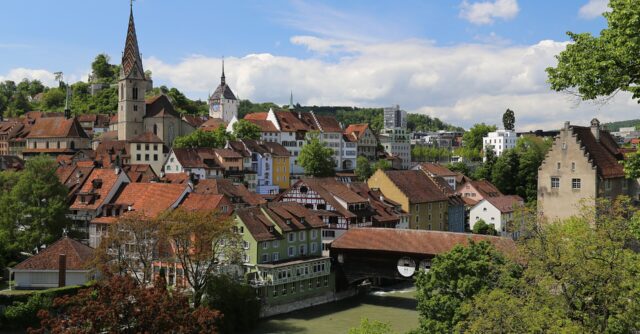
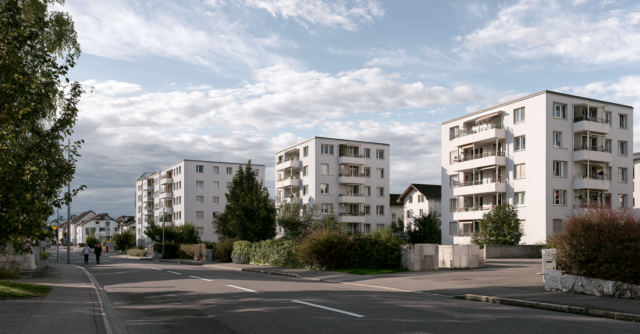
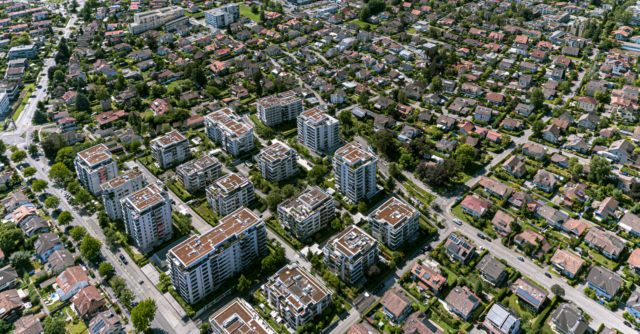
    The Brunnergut estate was built in two stages in the mid-1950s and early 1960s and marked the transition to the functionalist, automotive city. As one of Winterthur’s first residential ensembles with underground parking, it replaced the Villa Malabar and reshaped an entire inner block between Lindstrasse, Kreuzstrasse, Sulzbergstrasse and St. Georgenstrasse. The 1954 planning application itself sparked a fierce controversy. Early debates about density, traffic and cityscape, as they occupy the entire agglomeration today

    in 2016, the city of Winterthur added Brunnergut to the inventory of buildings worthy of protection, followed by its entry in the cantonal inventory of listed buildings of supra-municipal importance in 2018. This made it clear that the estate was not only considered everyday architecture, but also an ensemble with architectural and socio-historical significance that should be taken into account in any further planning

    Legal ping-pong over protection
    With the cantonal dismissal in 2024, the building department wanted to relax the protection status again. Based on an expert opinion from the cantonal monument preservation commission and subsequent additions. The Zurich Heritage Society challenged this, and the Building Appeal Court demanded a supplementary or top-level expert opinion during the proceedings and criticized gaps in the expert assessment

    At the same time, the Winterthur city council planned to remove Brunnergut from the municipal inventory. The Zurich Heritage Society lodged another appeal against this. In its decision of November 6, 2025, the Building Appeals Court has now ruled that the city is unlawfully relying unilaterally on the KDK report and that the facts of the case have not been sufficiently clarified for the property to be removed from the inventory. The judges demanded an expert opinion from an independent expert who had not previously been involved. A clear signal for higher requirements for the justification of de-protection decisions

    More than just a technical issue of monument preservation
    The criticism focuses not only on formal deficiencies, but also on gaps in content. Imprecise plans, insufficient discussion of the qualities identified in the inventory sheet and an insufficient appreciation of the social and economic-historical significance. Specifically, the court criticized the fact that the role of the estate as an early example of dense, car-oriented post-war modernism and as part of Winterthur’s settlement history was not seriously included in the comparison with other estates

    For urban planning and the real estate industry, Brunnergut is therefore far more than an isolated case. The procedure shows how strongly inventory decisions must be legally and professionally underpinned today if they are to survive in an environment of housing shortages, pressure to densify and politically heated debates about objections and heritage protection

    What the case means for future projects
    The Zürcher Heimatschutz sees the decision as a strengthening of the inventory concept. Inventories are not mere lists, but planning instruments that must meet high standards before they can be dismantled. For cities like Winterthur, this means that anyone wishing to subsequently remove protection must transparently explain why arguments relating to building culture, urban development and social history outweigh the interests of densification, renewal or returns

    For investors, owners and planners, this increases the importance of well-documented surveys and early involvement of heritage conservation. Especially in the case of post-war housing estates, which were long regarded as “ordinary” existing buildings. Brunnergut shows that the second half of the 20th century is increasingly understood as part of the architectural heritage and that the path to conversion or replacement construction will in future often lead via independent expert reports and carefully balanced conservation concepts

  • Training offensive for networked building technology

    Training offensive for networked building technology

    The sfb is the first university of applied sciences in Switzerland whose Building Automation HF course has successfully completed the recognition procedure of the State Secretariat for Education, Research and Innovation (SERI). “This guarantees the highest quality, state-recognized qualifications and training that meets the current requirements of the industry,” said sfb Director Dorothea Tiefenauer in a press release. The demands placed on modern buildings are constantly increasing, it continues. The sfb – College of Technology and Management can now respond even better to the great demand for qualified specialists thanks to the recognition of the course.

    According to the description, the course content is consistently geared towards practice. Knowledge of energy efficiency, building IT, networked systems and modern automation solutions is taught. The aim is to qualify students for the planning and implementation, but also the operation and maintenance of complex, smart networked buildings. According to sfb, this range creates the basis for sustainable and long-term economical building solutions. For companies, this development of expertise means a decisive competitive advantage, it says. Graduates are specialists who are not only proficient in current technologies, but can also actively shape the digital transformation.

    The course takes students who have completed relevant vocational training to complete their thesis in six semesters. Graduates are ultimately awarded the title of qualified building automation technician HF. The sfb organizes information events to provide an insight into the content and structure of the course. Both individuals and companies are invited to attend.

  • Railroad modernization in the sensitive Alpine region

    Railroad modernization in the sensitive Alpine region

    STRABAG AG is carrying out the outstanding renovation work on the Zentralbahn line between Meiringen and Brienzwiler in the Bernese Oberland. The narrow-gauge line runs on a single track along the Hasliaare, which is part of the Aare flood plain. Out of consideration for several nature conservation areas, “maximum precision for logistics and coordination” is required for the new construction, according to a press release. Preparatory work began in March 2025 and the ten-week intensive phase has been underway since October 2025.

    Heavy rainfall events had repeatedly occurred in the area, causing the railroad embankment and superstructure to flood, resulting in damage to the railroad infrastructure and adjacent cultivated land. STRABAG already carried out track construction work there in 2022 and 2023 (lots 1 and 3). The modernization project will now be completed with a total reconstruction of the challenging middle section of lot 2 over a length of 2600 meters and in the middle of the Sytenwald nature reserve. This involves raising the railroad embankment. To allow surface and slope water to drain away, a continuous planned drainage system will be installed along the route. The area along the Hasliaare will receive a new flood protection wall.

    According to the press release, the “tight space conditions and local lack of redundant construction slopes in certain sections between the Hasliaare, the railroad line and several nature conservation areas” are a special construction feature, which requires special precautions for ecology and landscape protection. On the one hand, STRABAG is building 30 new foundations for the catenary masts on the side facing away from the river, and on the other, 37 crossings are to ensure the ecological continuity of the terrain. This means protection for wildlife and small animals when crossing the section.

    A particularly challenging component is the new construction of the Hüsenbach bridge made of ultra-high-strength and durable fiber-reinforced concrete (UHPC). During bridge construction, special consideration was given to the trout population present there at spawning time.

  • Million-euro financing accelerates autonomous construction site technology

    Million-euro financing accelerates autonomous construction site technology

    Venture capital firms from three continents have invested in Gravis Robotics: The spin-off of the Swiss Federal Institute of Technology in Zurich, founded in 2022, has raised 23 million dollars in an early financing round, according to its information.

    The round was led by the venture capital companies IQ Capital from London and Zacua Ventures from San Francisco. Pear VC from Palo Alto, California, Imad Ventures from the Saudi Arabian capital Riyadh, Sunna Ventures from Miami and the Zurich-based company Armada Investment as well as the globally active cement manufacturer Holcim from Zug also participated.

    Gravis Robotics offers autonomous earthmoving machines that combine artificial intelligence, machine vision and human interfaces to increase throughput, reduce waste and improve safety on construction sites, whether the operators are in the cab or coordinating the work remotely.

    With the recent funding, Gravis now has the technology, partnerships and global distribution channels across the industry to drive the adoption of true autonomy on a large scale, the company said. In addition, it also announced “a wave” of new industry partnerships. For example, Gravis Robotics has partnered with Taylor Woodrow in the UK on a major infrastructure project at Manchester Airport, carrying out the first autonomous excavation work on a major active construction site in the country. There are also agreements with Holcim and the South Korean company HD Hyundai.

    The fastest route to autonomy is through increasing productivity, CEO Dr. Ryan Luke Johns is quoted as saying. “By providing operators with real-time 3D intelligence and the ability to seamlessly switch between autonomy and advanced control, we are covering more of the work, accelerating the application and creating the data pipeline needed to learn new skills from the industry’s most challenging tasks. The company considers it an advantage to have its Zurich headquarters “at the heart of the renowned robotics and automation ecosystem”.

  • Construction industry sets an example in terms of quality, innovation and tradition

    Construction industry sets an example in terms of quality, innovation and tradition

    Maulini SA was awarded the Prix SVC Genève 2025 on 27 November, according to a press release. Founded in 1910, the company employs around 270 people. It is active in the construction of new residential, industrial and administrative buildings as well as the renovation, transformation and insulation of listed and contemporary buildings in Geneva and the region. The company has also been offering services as a general contractor for ten years.

    The jury of the Prix SVC was impressed by the history of the family business with its four generations and the commitment of the teams and management. “In a sector where it is not easy to anchor innovation in everyday life, we have been able to observe the development of a family business that consistently endeavours to ensure its impact and sustainability,” said jury president Sophie Dubuis in the press release. “This award recognises its strong local roots, its innovative spirit and its excellence.”

    This is the third time that the Swiss Venture Club(SVC) has awarded the Prix SVC Genève. More than 700 guests from business, politics, society and the media attended the award ceremony at the Bâtiment des Forces Motrices in Geneva. The aim of the event was to “highlight the entrepreneurial diversity of the region”, according to the press release.

    The other finalists included watch supplier Fiedler SA in Carouge GE, landscaper Jacquet SA and the La Colline physiotherapy group in Geneva, as well as Pneus Claude SA in Satigny GE.

  • Electrochemical breakthrough in the fight against contaminated sites

    Electrochemical breakthrough in the fight against contaminated sites

    According to a press release, researchers at the Swiss Federal Institute of Technology in Zurich(ETH) have achieved a breakthrough in the remediation of contaminants such as DDT and lindane. These are persistent organic pollutants, or POPs. These are toxic chemicals that were widely used in the 1940s to 1980s. They degrade very slowly and can now be found in the food chain of humans and animals. The university team led by Bill Morandi, Professor of Synthetic Organic Chemistry, has now developed a novel electrochemical process that completely dehalogenates these environmental toxins and binds them in harmless salt. The remaining organic hydrocarbons can be fed into the circular economy and thus serve as valuable raw materials for the chemical industry.

    “We wanted to solve one of the biggest environmental problems of the last century. It is unacceptable to leave the dirt to future generations,” Alberto Garrido-Castro, electrochemistry specialist and former postdoc in the group, is quoted as saying in the press release. The ETH team sees the remediation of such contaminated sites in soil, water and landfills as one of the major unresolved issues in environmental protection. The degradation of these chemicals using electrochemical processes has been investigated for some time. According to the press release, the ETH researchers have now achieved the decisive breakthrough with the use of alternating current in electrolysis. “It splits the halogen atoms into harmless salts such as NaCl (common salt) and produces valuable hydrocarbons at the same time,” explains Morandi. The hydrocarbons are benzene, diphenylethane or cyclododecatriene. Chemicals that are used in the production of plastics, paints or coatings and therefore contribute to a sustainable circular economy.

    An important prerequisite for implementation is that the new process can be applied not only to pure substances, but also to mixtures of contaminated soil, earth or sludge. The researchers are considering mobile systems that can be used on site, which would eliminate the need to transport these hazardous substances. A prototype has already been successfully tested.

  • Future area in the north of Basel creates living and working space

    Future area in the north of Basel creates living and working space

    The Klybeck site in the border triangle of Basel is to become a modern neighbourhood on the banks of the Rhine. According to a press release, the planning partners Canton Basel-Stadt, Swiss Life and Rhystadt have initiated the klybeckplus indicative project, which forms the basis for the utilisation planning.

    The approximately 30-hectare site is to become a mixed neighbourhood with residential complexes, commercial buildings and parks. The aim is to create living space for 8,500 people. According to the plans, a third of the flats will be made available to the public for rent at cost. In addition, 7500 jobs are to be created. The two owners, Swiss Life and Rhystadt, will invest 3 billion Swiss francs in the renovations, according to the press release.

    “The finalised indicative project, as it is now available, offers a good basis for realising the enormous potential of the site and creating significant and, above all, long-term added value for the population and the entire region,” Christian Mutschler from Rhystadt is quoted as saying in the press release. Jürgen Friedrichs from Swiss Life adds: “The indicative project shows how the diverse objectives from residential to open space can be combined while at the same time ensuring structural, spatial planning and economic feasibility.” District President Conradin Cramer is convinced that the project will create an “attractive new part of the city for the well-being of the population”.

  • Advantages of intelligent building systems

    Advantages of intelligent building systems

    Porter, telephone operator and elevator operator – three examples of professions that used to be essential for the operation of buildings, but are now largely extinct. Access control, telecommunications, lifts and many other areas have long been automated. With digitalization, real estate is increasingly developing in the direction of “smart buildings”. A look at building automation shows what benefits this can bring and to what extent it also poses challenges.

    Networking trades
    Digitalization enables building automation to combine previously largely autonomous trades into a networked system. Continuous data exchange and optimized processes increase convenience for users as well as energy efficiency. In practice, however, this integrated approach is still associated with certain challenges, says Turan Babuscu, Head of Automation at Siemens Switzerland. “The coordination between the trades often takes place too late in a construction project.” This concerns, for example, the definition of interfaces and the clarification of responsibilities – topics that should be discussed as early as possible in the planning phase. “Only if integral collaboration is clearly defined from the outset can digitalization develop its full potential,” emphasizes Babuscu.

    Greater efficiency, more comfort
    The benefits of successful integrated building automation can be seen in operational efficiency, for example. If data is systematically recorded and evaluated, energy consumption can be reduced, faults detected at an early stage and needs-based maintenance cycles developed. The technical building systems thus require less energy and have a longer service life – two aspects that are of interest to owners and operators for both ecological and economic reasons.

    To ensure that all building services are networked and coordinated in a building automation system, the topic must be included at an early planning stage. (Photo: Siemens Switzerland)

    For users, on the other hand, the focus is primarily on the greater convenience that integrated building automation allows. One example of this is the adjustment of room temperature, lighting and air quality according to use, time of day and occupancy, resulting in a healthier and more productive indoor climate.

    AI provides support
    Babuscu predicts that the networking of different systems within a building will continue to increase in the coming years. “This requires open, secure protocols such as BACnet/SC or KNX Secure, which enable obstacle-free, encrypted communication between the trades and the cloud services.” And what about artificial intelligence (AI)? “It already has a firm place in building automation,” says Babuscu. “Many systems use learning algorithms to understand the building’s behaviour and optimize it automatically.” This development is set to continue. In future, AI is likely to increasingly make decisions itself, for example by determining the best operating strategy or the optimum time for maintenance. It is important that the use of AI is transparent, comprehensible and safe in order to gain the acceptance of those involved.

    Further information:
    https://www.swissbau.ch/de/c/vorteile-von-intelligenten-gebaeudesystemen.74100

  • Building objections Federal Council wants to crack down harder

    Building objections Federal Council wants to crack down harder

    A study commissioned by the Federal Office for Housing and the Federal Office for Spatial Development shows that objections and appeals are the most common reason why residential construction projects are delayed or even prevented. This drives up costs, slows down construction activity and contributes to the worsening housing shortage. Particularly problematic are cases in which objections do not serve to protect public interests, but primarily secure private advantages or are used as a means of exerting pressure. For example, when money is demanded for the withdrawal of an appeal

    New rules against abuse of the law
    The motion “Sanction abusive building objections” is intended to instruct the Federal Council to create a basis for obliging objectors without an interest worthy of protection or with a clear intention to abuse the law to pay costs and, if necessary, damages. The Federal Council is prepared to examine the existing possibilities for sanctions and to sound out the extent to which it can provide guidelines in the Spatial Planning Act on the legitimacy of objections and the consequences of abusive objections based on Article 75 of the Federal Constitution. The specific structure of the procedures should remain with the cantons, but within a federal legal framework

    Delicate demarcation and open risks
    Legal experts point out how difficult it is in practice to clearly qualify an objection as abusive. Financial compensation for the withdrawal of an appeal can be legitimate, for example, if neighbors give up views, peace and quiet or other positions. In addition, stakeholders such as the Swiss Heritage Society warn that stricter hurdles and threats of sanctions could weaken the protection of townscape and monuments. Especially in cantons without the right of appeal, where neighbors often act as the final protective authority. Parliament will therefore have to perform a balancing act. Speed up procedures and curb abuse without devaluing legitimate objections and democratic participation.

  • All the world’s buildings in a 3D model

    All the world’s buildings in a 3D model

    The GlobalBuildingAtlas comprises around 2.75 billion digital building models, making it the most comprehensive collection of spatially explicit building data to date. It includes all buildings for which suitable satellite images were available in 2019. The 3D models have a spatial resolution of 3×3 meters and are therefore around 30 times finer than previous global data sets. The atlas was developed by a team led by Prof. Xiaoxiang Zhu, holder of the Chair of Data Science in Earth Observation at TUM, which combines remote sensing, artificial intelligence and data-driven urban research in a global approach

    Detailed 3D models and global coverage
    Of the 2.75 billion entries, standardized LoD1 3D models are available for around 2.68 billion, which depict the basic shape and height of the buildings in simplified geometry. This allows volumes to be calculated, urban structures to be analyzed and settlement patterns to be compared worldwide. Of particular importance is the systematic coverage of previously underrepresented regions such as Africa, South America and rural areas, which are now captured with the same accuracy as dense metropolitan areas

    Tool for planning, climate and risk
    The data makes it possible to examine growth dynamics in fast-growing cities, identify high-density neighborhoods with potentially strained living space and determine infrastructure requirements more precisely. Researchers and administrations can thus develop indicators that show where the expansion of transport, energy and water networks, additional housing or climate adaptation measures are particularly urgent. At the same time, the GlobalBuildingAtlas creates a globally standardized reference system that allows analyses of urbanization, energy consumption and disaster risks on a comparable data basis.

  • Circular building with reeds

    Circular building with reeds

    The residential building by Marina Rosa and Jacobus van Hoorne, designed by Gilbert Berthold, architect and research assistant at BFH, deliberately stands out in a single-family housing estate on Lake Neusiedl. It combines a consistent timber construction with a striking thatched roof and thus relies on local, renewable raw materials with a low ecological footprint. The numerous awards, from the client prize of the Central Association of Austrian Architects to the architecture prize of the province of Burgenland and the newcomer prize “House of the Year”, underline the exemplary character of the project.

    Reeds as a high-performance building material
    Jacobus van Hoorne, originally a particle physicist at CERN, took over his father’s reed cutting and thatching business and developed it into an innovation laboratory. Together with Berthold, he developed a roof structure that met strict fire protection requirements and was officially approved through real fire tests. A milestone for reed in new buildings, even in densely populated areas. The gently curved roof surfaces follow the material logic. Each additional degree of inclination extends the service life of the roof, the construction makes the qualities of the natural material visible and legible.

    Geometry, material and space as a unit
    The floor plan of the house follows an S-shape resulting from the rotation of the central living space. At its heart is a two-storey, light-flooded atrium that opens onto the garden and is closely linked to the outside space via terraces. Compactly organized functional spaces create scope for spacious recreation areas. The interplay between the thatched roof and the natural oak façade connects the building and the landscape. The roof becomes a design-defining element and a contemporary interpretation of traditional craftsmanship.

    Real-life laboratory for bio-based materials
    For Gilbert Berthold, the project marked the start of his self-employment and at the same time a real testing ground for sustainable construction. Today, the house serves as a home, study object and exhibition space all in one. It provides data on energy efficiency, indoor climate and the long-term behavior of bio-based building materials. In the context of the BFH, it fits in with research into plant-based materials such as straw, flax, hemp and mycelium and shows that reeds can be used not only as an insulating material, but also in a leading architectural role.

    Symbol of a regenerative building culture
    The project illustrates how circular building with regional resources can already be implemented today. It shows students and professionals that regenerative architecture is not a vision of the future, but a built reality. With reeds as a strong symbol for a building culture that rethinks nature, technology and society.

  • Bassersdorf plans the next growth step

    Bassersdorf plans the next growth step

    Today, around 90 people work at the Pöschen, Gmeindwisen site on over 90,000 square meters. Over the next 20 years, 600 to 800 new jobs are to be created there and living space for around 1,200 people.
    With the further conversion of all plots, additional space for 100 to 200 more jobs and around 300 more residents is planned. The basis for this is the rezoning to a five-storey residential and commercial zone with a design plan obligation, which has been legally binding since February 2024. The development will take place in stages over several decades, with existing businesses retaining their place.

    Traffic, public transport and “low-car” concept
    The focus of the dialog with the population was on traffic. Questions were asked about parking, access and the future of the bus station. The planning team emphasized the clear focus on public transport. The district is not intended to accommodate through traffic, residents’ cars will be parked in underground garages and no new park-and-ride areas are planned. Despite the development of the area, the planned bypass will remain possible. Those responsible expect to attract a younger, more public transport-oriented population.

    Green spaces, neighborhood life and phasing
    The approximately 50 attendees were particularly positive about the generous green and open spaces, squares and connecting paths. The winning project structures the area into clearly recognizable neighbourhoods, with a noise-shielding block along Zürichstrasse, workplace-oriented uses towards the tracks and diverse residential areas in between. This structure facilitates implementation in stages. Complete realization is expected in ten to fifteen years.

    Political backing and participation
    Mayor Christian Pfaller and the landowners reaffirmed their support for the winning project and the long-term development of a diverse, sustainable district. As the municipality does not own any land itself, it is reliant on a cooperative approach with the owners. A school building is not required. Kindergarten and daycare facilities are planned, which the municipality intends to buy into. With the 2022 building and zoning regulations, the electorate approved the transformation to a mixed zone in principle, but at the same time anchored a design plan obligation. The current consultation event is part of this communication process. The feedback will now be incorporated into the indicative project, which will form the basis for the public design plan, which is expected to be discussed again next year.

  • Switzerland rethinks electric mobility

    Switzerland rethinks electric mobility

    The principle is familiar from smartphones. A transmitter coil transmits energy to a receiver coil via a magnetic field without the need for a plug. In the case of electric cars, this means that all you have to do is park and the charging process starts automatically. In the “INLADE” pilot project, Empa and energy supplier Eniwa AG tested this technology for the first time under everyday Swiss conditions. The project was supported by the Swiss Federal Office of Energy and the cantons of Zurich and Aargau.

    Practical test passed
    Even in snow, rain and slight parking deviations, inductive charging achieves an efficiency of around 90 percent, comparable to the classic cable. AMAG and other partners equipped existing vehicles with receiver coils and integrated interfaces for charging management. Following extensive safety tests, the vehicles were granted individual approval for Swiss roads. They are among the world’s first electric cars with an inductive system that are suitable for everyday use.

    Mobile storage for the energy transition
    The real revolution lies in the potential. Electric cars are stationary for an average of 23 hours a day. If they were automatically connected to the grid during this time, their batteries could compensate for fluctuations in the electricity grid and stabilize renewable energies. Bidirectional charging, i.e. feeding electricity back into the grid, also works inductively. Vehicles are connected more frequently without users having to take any active steps. This makes every parking space a potential hub of a decentralized energy system.

    Economically attractive
    Intelligent charging reduces electricity costs, especially when charging during the day when photovoltaic systems feed a lot of energy into the grid. The combination of convenience, efficiency and grid integration makes inductive charging a promising building block for the mobility of tomorrow.

  • Swiss office market under pressure

    Swiss office market under pressure

    The available office space in Switzerland remains at 2.12 million square meters. A stable figure on the surface. However, this conceals a worrying trend. At 425,000 square meters, the average quarterly take-up in 2025 is significantly below the previous year (2024: 540,000 m²). This corresponds to a decline of around 21 percent. Companies are hesitating, making slower decisions or withdrawing from letting processes.

    No employment – costs are rising
    The reason for this lies in the weak labor market dynamics. Employment growth in typical office sectors has shrunk from an already meagre 0.3% in 2024 to 0.1% in the third quarter of 2025. The situation in industry is particularly dramatic. Here, job losses intensified from minus 0.2 percent (2024) to minus 1.1 percent (2025). High American import duties and a strong Swiss franc are an additional burden on Swiss companies. The planned tariff reduction could provide relief, but has yet to prove its worth.

    Maintaining centers, periphery under pressure
    The spatial polarization on the office market is intensifying. Availability remains low in the five largest Swiss centers, with the exception of Basel. In the city centers, the rates average 3.7 percent, in the surrounding urban areas 3.6 percent. The suburbs, on the other hand, are struggling with a vacancy rate of 9 percent. This shows an east-west divide. The suburbs of western Switzerland have seen significantly more new construction activity than German-speaking Switzerland.

    Risks for 2026
    If take-up remains at this low level, the vacancy rate threatens to rise in the coming year. Today’s stability could quickly become tomorrow’s brakes if employment growth and entrepreneurial willingness to invest do not return.

  • The real estate sector is a support for the canton and the citizens

    The real estate sector is a support for the canton and the citizens

    Innovative’ housing projects that are economically, environmentally and socially sustainable could help stimulate the economy in Ticino.

    The conditions for becoming a landlord are becoming increasingly restrictive, and proportionally fewer families can afford to buy property. In Ticino, it is not only families belonging to the economically weaker segment of the population that have to cope with too many expenses to pay rent and ancillary costs. Inevitably, many families ask the State for financial support. By activating an active policy in favour of moderately rented housing we could create the conditions to reduce the demands on the state.

    Private actors in the real estate sector could play an active and decisive role in this direction, as is already the case in other parts of Switzerland, bringing a public benefit while reducing the vacancy rate in the medium term.

    By planning the renovation, refurbishment and conversion of existing buildings in a coordinated and careful manner, we could reduce land consumption by improving the housing stock and, at the same time, have a better social impact in respect of the environment.

    More attention and a sense of individual responsibility towards the community could lead to savings on the part of the state, which is currently under pressure to find solutions and meet citizens’ needs.

    More awareness of the advantages of sharing spaces and services would lead to an increase in quality of life and savings. By optimising expenditure on housing, families could better cope with increases in the cost of living, including healthcare costs.

    Among the many possibilities is the development of public utility housing (which can be non-profit corporations, foundations, housing cooperatives) with rents based on actual costs, taking advantage of funding from the
    Federal funding and sureties. These projects should mainly focus on renovations of existing buildings, realising quality projects, optimising space so that, if possible, there is less consumption of floor space per inhabitant.

    In order for the costs of realising housing projects, as mentioned above, also starting from existing buildings, to be low, it is important that the land cost is not excessive. To be reasonable, the cost of land should be around 20 per cent, or if in central areas 25 per cent, of the total cost. Often in urban areas this is the biggest obstacle.

    The housing stock in Ticino is old. Many owners have not invested in renovations, even with low mortgage rates, and when they decide to sell, the economic demands are too high to create income housing with rents affordable to a large segment of the population. It should not be forgotten that the effort rate for housing should not exceed 33% of the income of a family belonging to the upper-middle class of the population. This rate should not exceed 25% if it is in the lower social stratum. Properties for sale, therefore, are often purchased by developers with specific targets who do not always realise projects that correspond to the needs or economic possibilities of families taking into account that wages are low compared to the rest of Switzerland and that the population is ageing faster.

    The instrument of surface rights, mainly used for commercial real estate projects, is little used in Ticino for housing projects. Yet it could help to find alternative solutions to develop ‘innovative’ projects. It could be very interesting both for the owner of the land, who would regularly receive a rent (ground lease fee) and at the end of the contract would come back to decide how to use the property, and for the landowner, who would develop his project with his own capital according to his needs without having to find funds to buy the property, which is perhaps located in a well-serviced area. Not needing capital to buy the land, many more families would have the means to invest in housing to live in.

    North of the Alps, municipalities or other public authority actors lease out their property by putting bonds on it for private individuals, including Anonymous Societies, to invest capital in specific projects including adequate and affordable housing.

    There are also other avenues that could be pursued. The Soliterra Foundation could be of help if it were a project developed by a non-profit housing project developer, in fact, its aim is to promote the construction of affordable housing throughout Switzerland. This is done in particular through the purchase of land and the granting of surface rights to it. The Soliterra Foundation gives financial support to small or young residential housing cooperatives, in particular for the purchase of properties with existing buildings or for approved new construction projects. But what makes the Soliterra Foundation special? The land can be bought back as soon as the financial situation is stable and the loan capital has been sufficiently repaid. The costs for the land right are low because they correspond to the reference interest rate plus a surcharge for administrative costs and a 50% inflation adjustment.
    The formula is similar to that of the federal government’s revolving fund, which thanks to loan repayments, which are not a cost to the state because they are remunerated, over time funds are again available to buy more property and thus promote new housing projects of public benefit.

    Restructuring the housing stock in Ticino to meet the needs of all generations could bring new opportunities whose benefits would extend to the community. The whole of society would benefit.

  • Hydrogen plant in Seewen suspended – market development remains crucial

    Hydrogen plant in Seewen suspended – market development remains crucial

    According to a press release, ebs Wasserstoff AG is suspending its project to produce hydrogen at the site of the surfacing plant in Seewen. The reason given for the decision is that sales and profitability are currently insufficient. However, the market situation is being monitored. Should demand increase, the project could be resumed.

    The Schwyz-based energy supplier ebs Energie AG holds a 60 per cent stake in ebs Wasserstoff AG, the road and civil engineering company A. Käppeli’s Söhne AG Schwyz holds a 25 per cent stake and the Basel-based energy supplier IWB holds a 15 per cent stake. Together, they submitted a planning application for a production plant in Seewen in 2022.

    According to a breakdown by ebs, the plant would produce hydrogen with a capacity of 5 to 6 megawatts for up to 100 lorries a day. This would have been sufficient for 11.1 million lorry kilometres per year and would have saved 7.8 million kilograms of CO2. The investment costs were estimated at CHF 16.8 million.

    Some of the hydrogen could also have been fed into the gas grid by ebs Erdgas Biogas AG. The waste heat from the electrolysis process could have been utilised in the surfacing plant.

  • Positive market trend strengthens portfolio development

    Positive market trend strengthens portfolio development

    The listed real estate fund Swiss Life REF (CH) ESG Swiss Properties recorded a significant increase in total income of CHF 121.5 million for the 2024/2025 financial year, compared to CHF 57.6 million in 2023/2024, according to a statement from Swiss Life. The return on investment was 5.1 per cent.

    The reason for the positive performance is the 2.4 per cent net change in the market value of its properties. As at 30 September 2025, the fund held a total of 194 portfolio properties with a market value of CHF 3,233 million. The fund only recorded a decline in net income, which is mainly due to higher income taxes.

    The net asset value (NAV) per unit increased to CHF 116.65, which corresponds to an increase of 2.6 per cent compared to the previous year. The total distribution for 2024/2025, which will take place on 28 November 2025, amounts to CHF 2.70 per unit (CHF 58.3 million in total), with realised income of CHF 2.71 per unit (CHF 58.5 million in total). In relation to the market price, the distribution yield is therefore 2.03 per cent; in relation to the NAV, it is 2.31 per cent.

    The fund’s portfolio grew by one residential property in 2024/2025, while eight smaller properties were sold. These transactions led to a net capital gain totalling CHF 6.1 million and, thanks in part to the positive changes in the market value of the properties, to a reduction in the leverage ratio to 20.6 per cent (2024: 22.1 per cent). The total return in the reporting period was 14.8 per cent.

  • Walensee: Steep face solar project to be cancelled

    Walensee: Steep face solar project to be cancelled

    The rock face on the north side of Lake Walen will not receive a solar installation in the foreseeable future. As the project partners EKZ and SAK write in a press release, they are no longer pursuing the Felsenstrom solar project.

    The electricity suppliers of the cantons of Zurich, St.Gallen and Appenzell justify their decision on the one hand with delays in the authorisation process. Adjustments to the project as a result of objections would require a new public enquiry. Secondly, the installation of free-hanging modules on the steep face would be challenging, complex and time-consuming.

    The project partners therefore no longer expect to be able to complete the project by the end of 2030. However, this would be a prerequisite for it to be able to benefit from the facilitations and subsidies under the Solar Express programme.

    The plant would be built at the former Schnür quarry. The solar modules with an area of 44,000 square metres should generate around 12 gigawatt hours of electricity per year, according to the public building notification from September 2024.

  • New heating centre strengthens energy supply in Villmergen

    New heating centre strengthens energy supply in Villmergen

    After around two years of construction and CHF 15 million invested, the AEW heat network in Villmergen provides sustainable heat for local companies, as detailed in a press release. The heat network, which combines renewable heat from regional waste wood and wood from cascade utilisation with modern storage and control technology, strengthens regional supply security as part of the Energy Strategy 2050, according to the press release.

    At the centre of the heating centre is an efficient waste wood boiler with an output of 2,000 kilowatts. A further waste wood boiler, heat pumps and a peak load boiler are also planned, which will generate a total output of up to 10,000 kilowatts.

    A modern heat storage tank with a volume of 160,000 litres will ensure operational efficiency, while a photovoltaic system with an annual output of 220 megawatt hours (MWh) will produce sustainable electricity. 145 MWh of the electricity produced is used for the plant’s own consumption. Using power-to-heat technology, the system converts surplus electricity into heat and thus adapts to fluctuations in the energy system. This leads to particularly efficient energy utilisation, while at the same time supporting the stability of the power grid, explains AEW.

    Once completed, the heating centre will supply up to 14,500 MWh of heat per year and cover the needs of around 700 single-family homes. This will save around 710,000 cubic metres of natural gas and 1,500 tonnes of CO2 per year, explains Daniel Wernli, Head of Heat Production at AEW.

    From planning to construction and operation, AEW has deliberately commissioned companies from the region. The local population will also be involved: in spring 2026, AEW will organise an open day at the heating network and explain how sustainable heat is produced from regional wood.

  • Startups provide impetus for a sustainable energy future

    Startups provide impetus for a sustainable energy future

    The Energy Startup Day took place on November 19 at the Kultur & Kongresshaus Aarau. The event offered start-ups the opportunity to present themselves and make contacts. Several presentations were also on the program. And finally, five start-ups were awarded prizes.

    Borobotics AG, based in Technopark Winterthur, won the Jury Award and with it an Energate PR & Event Package. The company is working on a new type of geothermal drill for use in urban areas. The first of two Swissolar Awards went to SmartHelio from Prilly VD for its artificial intelligence-based software for the use of photovoltaic systems. The start-up won a Swissolar Marketing & Event Package. The second Swissolar Award, and with it a Swissolar Event Package, went to Synergi Solutions from Helsinki. The Finnish start-up has developed an app to optimize energy consumption.

    Voltiris from Epalinges VD won the Audience Award and with it a Communication Package from Zurich University of Applied Sciences (ZHAW), Electrosuisse and Swisspower. Voltiris develops modules for agrivoltaics in greenhouses. And the Investor Award went to SensorXSolutions, which won the SICTIC (Swiss ICT Investor Club) prize, which is equivalent to an invitation to an investor event. The young company from Sarnen has developed intelligent systems for detecting and handling gases such as methane in order to curb the greenhouse effect.

    The organizers welcomed a total of around 230 participants. ZHAW, Electrosuisse and Swisspower organized the event and were supported by numerous partners.

  • Expansion of growth markets through regional production

    Expansion of growth markets through regional production

    Sika intends to grow further in the Middle East. With this in mind, the specialty chemicals company for the construction and industrial sectors has acquired the Saudi Arabian company Gulf Seal. It manufactures bitumen waterproofing membranes in the capital Riyadh. According to a press release, this offering optimally complements Sika’s sealing technologies already available in the region.

    According to the Saudi company Gulf Seal, which was founded 20 years ago, it works with the “most modern French technology”, which is sourced from its sister company Axter France. This makes Gulf Seal the only certified manufacturer of waterproof bitumen membranes in the Middle East with European CE certification.

    Sika expects Gulf Seal’s production plant and the established export channels to the countries of the Gulf Cooperation Council (GCC) to significantly strengthen its own market position in these growth markets. In Saudi Arabia itself, this acquisition strengthens Sika’s ability to deliver major construction projects related to Saudi Arabia’s Vision 2030, the 2034 FIFA World Cup and ongoing urbanization.

    “Gulf Seal’s established market position and local production capabilities, combined with Sika’s broad product range and global expertise, offer exciting opportunities for further growth in the GKR region,” said Christoph Ganz, Sika’s Regional Manager EMEA. “We look forward to welcoming the Gulf Seal team to the Sika family.”

  • New building to replace outdated shopping center

    New building to replace outdated shopping center

    A feasibility and potential study has shown that the Migros shopping center in the “Im Funken” area in Zofingen is outdated in terms of use and operation. According to a statement from the town of Zofingen, partial preservation is not an option, so a new replacement building is now to be planned. This new building is at the heart of the plans for a “mixed quarter for shopping, living and working”, which is being planned by Migros Aare, the city of Zofingen and the real estate company Zofimmo AG.

    Now that a “first milestone” has been reached with the study, “viable and concrete projects” are to be developed by several teams through a study contract. In a subsequent step, these are then to be legally secured through corresponding municipal planning instruments or a design plan.

    The results of the study commission should be available by the end of 2026, with construction starting in 2029 at the earliest. During the possible construction phase, a temporary facility would allow shopping to continue. On completion of the work, residential space is to be created on the existing parking lot by the railroad tracks. In addition to commercial space, residential space is also planned for the green part of the site opposite the old town – but the green character is to be retained.

  • Restoration brings Eaumorte Bridge back into the townscape

    Restoration brings Eaumorte Bridge back into the townscape

    The construction company MAULINI SA, based in Satigny, informs in a LinkedIn post about the completion of the restoration of the Eaumorte Bridge. The bridge between Avully and Cartigny was built in the mid-19th century and is considered one of the oldest in the canton of Geneva. Work began on June 2, 2025 and was completed at the end of October. The municipality of Avully described the bridge as being in an “advanced state of deterioration” before the restoration began.

    MAULINI carried out all the work, including the restoration, the removal of vegetation, the reconstruction of the stones according to the original and the design of the access to the bridge. According to the company, “the work consisted of repointing the stones with historic mortar, creating a new superstructure and installing a parapet made of local wood to give the bridge back its original stability and charm”. The aim of the restoration was to make the bridge accessible again for pedestrians, bicycles and horses. MAULINI worked together with the engineering firm EDMS from Petit-Lancy GE on this project.

    Founded in 1910, MAULINI SA specializes in building construction and civil engineering. This includes in particular projects for the construction of apartment buildings, industrial and administrative buildings as well as restoration projects such as the Conservatoire de Musique de Genève. The company is one of the five finalists for the Prix SVC Genève 2025, which will be awarded on November 27, 2025 at the Bâtiment des Forces Motrices in Geneva.

  • 27 years of commitment to Schlieren’s transformation

    27 years of commitment to Schlieren’s transformation

    Albert Schweizer has been shaping the economic development of the city of Schlieren since 1998, i.e. for over 27 years. During this time, he has not only located companies and organized space, but also led dialogues between business, politics and administration. Always with a clear philosophy, networks and trust instead of blind optimization of figures.

    “Schlieren has grown rapidly, but in a controlled manner, with location promotion that is not just based on figures, but on networks and trust,” is an apt description of Albert Schweizer’s approach. A classic industrial city has become a dynamic technology location.

    From industry to biotechnology
    Schweizer’s ability to consistently turn opportunities into projects made all the difference. He organized spaces, untied knots, launched festivals and created the conditions for companies to settle and grow in Schlieren. The transformation of former industrial wasteland into centers of biotechnology and medical technology is particularly impressive. A strategic change that repositioned Schlieren.

    Well-deserved retirement
    Albert Schweizer will take his well-deserved retirement next spring 2026. This will mark the end of an era for the city of Schlieren, but his mark will remain – in the networks he has built up, in the projects he has initiated and in the culture of location promotion that he has helped to shape.

    “We are proud of how Schlieren has developed,” says Mayor Markus Bärtschiger, paying tribute to Albert Schweizer’s achievements.

    Albert Schweizer’s retirement marks the departure of not only an experienced location promoter, but also the architect of modern Schlieren. His award is a well-deserved finale to an influential career that shows that sustainable development comes from people – people who not only manage the economy, but also build trust.

  • ImmoTable Basel – Of superclusters, new bridges and the path out of digital antiquity

    ImmoTable Basel – Of superclusters, new bridges and the path out of digital antiquity

    [smartslider3 slider=”51″]

    Christof Klöpper, CEO of Basel Area Business & Innovation, kicked things off. He painted a picture of a region that is far more than “just” a pharmaceutical location. Although the life sciences supercluster remains a global leader, the innovation ecosystem has diversified.

    Supported by the three cantons of Basel-Landschaft, Basel-Stadt and Jura, the organization focuses on international start-ups and a public-private partnership that is strongly driven by industry. Klöpper’s message was clear: the task is not just classic location promotion, but the active provision of innovation infrastructure for an ecosystem that is constantly growing.

    Basel-Stadt and the 500 million lever
    Julian Kamasa from the Office of Economy and Labor underlined how the canton of Basel-Stadt intends to further expand its position as a leading innovation location, supported by around 800 life sciences companies and numerous start-ups. At the heart of this offensive is the new “Basel location package”, with which the canton will take on a pioneering role throughout Switzerland from 2025.

    With an annual budget of 150 to 500 million francs, targeted investments will be promoted. 80% of the funds will flow into an innovation fund that rewards research and development activities at the location in particular. The remaining 20 percent supports social and ecological goals such as parental leave or climate protection measures.

    The core message is clear. Those who conduct substantial research in Basel benefit the most. The canton wants to use this financial leverage to consolidate its position as a leading European healthcare location, build up targeted tech expertise and transform the economy towards a circular economy. The great potential of urban transformation areas plays a key role in this.

    An urban planning liberation
    The presentation by Marko Kern (SBB) and Marc Février (Canton of Basel-Stadt), who presented the winning project for the new Margarethenbrücke bridge and platform access, took a concrete turn. A key project for future mobility. In view of the massive increase in passenger numbers due to the SBB expansion phase 2035 and the desire for more space for streetcar and bicycle traffic, the old bridge needs to be replaced.

    Following a study commission process, in which the listed SNCF hall posed a particular challenge, the project by Penzel Valier AG won out. It envisages a slender, elevated bridge with a green roof. This creates more space for all road users and integrates a new, barrier-free streetcar stop in the middle of the bridge.

    The benefits of the project are manifold. It improves the transfer at the SBB railroad station, relieves the Centralbahnplatz, optimizes the bicycle and pedestrian connections between Gundeldingen and the city centre and creates clear added value in terms of urban development with over 11,000 new bicycle parking spaces and additional green spaces. The costs in the low to mid three-digit million range are being borne jointly by the federal government and the canton, and the project is a prime example of successful cooperation.

    Out of the “digital antiquity
    Isabel Gehrer (pom+) held up a critical mirror to the industry. Her presentation “From digital antiquity to the industry of the future” showed the discrepancy between Switzerland as a world champion of innovation and a construction and real estate industry that provocatively remains in “digital antiquity” in terms of digital maturity.

    While Switzerland once again takes first place in the Global Innovation Index 2025 and Basel is home to three of the top 10 investors in Roche, Novartis and Syngenta, the real estate industry invests significantly less in innovation than other sectors. Only BIM has really caught on.

    Gehrer referred to Bill Gates’ concept of the “Green Premium”. Sustainable solutions must become so efficient that they no longer cost a premium. She cited the automotive industry as an example of success, where battery costs have fallen by 80 percent since 2010, making electric cars suitable for mass production.

    Her approach comprises four points. Securing research infrastructure through better networking between universities and industry, increasing research and development intensity, mobilizing venture capital for PropTechs and conducting strategic foresight in order to use transformation areas such as Klybeckplus as experimental spaces. Her appeal to the industry: “Let’s make it real.”

    Real Estate Award 2026
    To conclude the ImmoTable, Mara Schlumpf turned her attention to the coming year. The next Real Estate Award will take place on October 22, 2026 at Trafo Baden and will bring together around 300 decision-makers from the industry. The gala combines award ceremonies with top-class networking. Outstanding projects and companies will be honored in five categories, such as sustainability, digital, marketing, project development & innovation and the real estate personality of the year. The target group includes project developers, real estate and construction companies, investors, politicians and the media. For partners, the award offers exclusive visibility and access to a first-class network.

    The immoTable event impressively demonstrated that Basel has the capital, the infrastructure and the political will to change. Now it is up to the real estate industry itself to use the funds and areas provided with the necessary innovative spirit and to take the leap from digital antiquity into the future.

  • Between stability, housing protection and growth pressure

    Between stability, housing protection and growth pressure

    Current mood in the Basel real estate industry
    The current situation is ambivalent. On the one hand, Basel enjoys great economic stability and a strong real economic basis, as current market analyses confirm. On the other hand, the shoe is on the other foot when it comes to the actual production of living space. In an international comparison with Paris, San Francisco or London, for example, the cost of housing is still moderate in relation to wages in Basel. But the mood is gloomy. Housing production is not doing well. This is not so much due to a lack of investors, but rather to complex planning processes and home-made hurdles.

    The challenge of housing protection
    A central topic of the debate is Basel’s “housing protection”. The law, originally intended to ensure the social compatibility of renovations and protect tenants, is proving to be an obstacle to investment in practice.

    The criticism is that although the housing protection is well-intentioned, it actually reduces supply. If refurbishments become uneconomical due to excessive requirements, they simply do not take place. Although adjustments have already been made to the ordinance, for example to facilitate energy-efficient renovations, the uncertainty remains. Fewer new apartments are coming onto the market, while immigration continues. This is exacerbating the very shortage that was supposed to be combated. Anyone looking for an apartment today, whether due to family matters, a job change or a move, will find a dried-up market and high prices. The regulation thus protects the existing stock, but puts those who want to enter the market at a disadvantage.

    Lessons for other cantons
    A look across the border shows that Basel currently serves more as a warning than a role model in terms of regulation. The introduction of strict protective provisions is reminiscent of past mistakes (interest rate and regulatory policy 40 years ago). The lesson for other cantons is therefore that supply should not be artificially reduced when it is increasing.

    Another phenomenon is the conversion of office space. What was hardly conceivable four years ago due to yield expectations has suddenly become attractive due to rising interest rates and changing office markets. However, these transformations usually do not create affordable living space, but rather high-priced offers.

    Basel in the Switzerland of 10 million
    Switzerland is growing and Basel is growing with it. The city has enormous potential in the form of former industrial sites (e.g. Klybeck Plus) and transformation areas. Investors would be willing to develop and densify these areas. But the problem is the length of time involved. Planning processes, such as the one for the Klybeck site, take 5 to 6 years before construction can even begin.

    For a Switzerland with 10 million inhabitants, there is no alternative to inner densification. Compromises have to be found, as was the case with the “climate cardinals” initiative. Areas over 30,000 m² should be allowed to be built on more densely, but must meet strict ecological and social criteria. It is important to understand the investor side here, especially pension funds. These manage trust funds for retirement provision and cannot simply cross-subsidize living space. Planning security is the hardest currency here.

    Future and solutions
    What does the future look like? Above all, the sector is calling for acceleration and flexibility. As in Germany, we should discuss the planning turbo and mechanisms would be needed to drastically shorten approval procedures. The real estate of the future must be flexible. What is an office today must be able to be an apartment tomorrow and perhaps an office or logistics space the day after tomorrow. Fragmented monostructures are no longer in keeping with the times. The fear of growth must give way to a desire for design. Quality is created through good internal densification and a mix of uses, not through stagnation.

    The means and the capital would be available to alleviate Basel’s housing shortage. What is lacking is a regulatory environment that enables rather than prevents investment and a planning process that keeps pace with the speed of social change.

  • Generation change at suissetec with Dennis Reichardt

    Generation change at suissetec with Dennis Reichardt

    Dennis Reichardt has been involved in the association for almost two decades and, as an entrepreneur with 120 employees in the heating, ventilation, air conditioning and plumbing sectors, brings a strong practical focus to the table. His “idée suisse” combines the ambition to position suissetec as a driver of energy efficiency and renewable solutions with a clear commitment to cooperation across all language regions.

    With a focus on quality, promoting young talent and cohesion, Reichardt wants to lead the association in a phase in which building technology plays a key role in achieving climate targets and decarbonizing the building stock. For the industry, this means continuing along the same path, but with an even stronger focus on innovation, the development of skilled workers and an integrated systems approach.

    Continuity through honorary presidency and rolling planning
    With the transition of Daniel Huser to the honorary presidency, suissetec remains closely linked to a leader who has shaped the association for over eleven years and consistently promoted cross-trade thinking. His leadership style, which is interdisciplinary, cooperative and focused on the overall benefit of the industry, forms a frame of reference for the new presidency.

    At the same time, the gradual renewal of the Board of Directors ensures institutional stability. With clearly planned handovers of office and term limits, know-how is passed on continuously without slowing down the impetus for renewal. In this way, suissetec is positioning itself as an association that thinks long-term, plans ahead in terms of personnel and at the same time remains open to new faces and perspectives.

  • Norman Gobbi points to sustainability in Ticino

    Norman Gobbi points to sustainability in Ticino

    Mr. Gobbi, you have recently been in charge of construction in Canton Ticino. What are your first priorities in this area?
    “In my new role as head of the Construction Division, which I have held since September 1, the priority is to initiate contacts with all the main players in the construction sector in Ticino, in order to understand their view of the current situation and prospects-short, medium and long term.”

    How do you intend to make spatial planning in Ticino more sustainable, particularly in the delicate balance between densification and landscape protection?
    “The canton of Ticino has a very different geographic conformation than the highland cantons. Everything is concentrated in the few square meters of the valley floors, which were already heavily anthropized during the 20th century: this makes it very difficult to reconcile all the functions that the territory has to perform, while ensuring the highest possible degree of sustainability and quality of life. The key lies in forward-looking planning, as well as the patience to remedy, step by step, the mistakes inherited from the past.”

    What role does climate change play in your building policy? Are there concrete plans for climate-resilient building in the canton?
    “Ticino stretches from 200 to over 3,000 meters above sea level and is therefore particularly exposed to the effects of climate change. The State Council is aware of this and has included mitigation of these phenomena among the goals of its long-term program.”

    What is your position on promoting the use of wood and modular construction in public building?
    “More than 50 percent of our canton’s land area is covered by forests. So our interest in promoting the use of this abundant and high-quality resource is obvious. The state is there and will play its part in this area: I also expect creative impulses from our Academy of Architecture and, of course, increasing sensitivity from the private sector.”

    Housing space in Ticino is becoming increasingly scarce and expensive. What strategies will you adopt to create affordable housing?
    “Our constitution entrusts the management of these issues, first and foremost, to the municipalities: I consider this a wise choice, since local authorities have an in-depth knowledge of what is happening on the territory and can therefore react promptly to changes in the housing context. That said, the canton is following the issue very closely and is ready to take regulatory action where it is appropriate to do so.”

    How will it work with municipalities to ensure consistent and uniform spatial planning?
    “The new Federal Law has completely changed the paradigm, and Ticino has incorporated it into its Master Plan: it is clear that-for the reasons related to the conformation of the territory I mentioned-the issue of densification is particularly delicate for our canton. The implementation of this strategy will require a broad debate both among institutions and within society as a whole.”

    In German and French-speaking Switzerland, economic promotions are very active. How much energy does the canton and individual districts, respectively, economic regions invest in positioning, and what are they doing concretely?
    “Ticino is constantly working to position itself as a dynamic region that is open to innovation. We are just under two hours from the economic hubs of Zurich and Milan, and in the future we can aspire to accommodate realities that want to remain connected to the dynamism of these metropolises without necessarily having to suffer the disadvantages in terms of quality of life.”

    What lessons do you draw from your time as safety director for your new role in the construction industry?
    “Attention to safety is a ‘mindset,’ and it helps in all situations in life-especially in professions where people risk serious or even fatal injuries. So it will be a priority for me to strengthen awareness on these issues and try to strive for a construction industry where people can work without ever having to fear for their safety.”

    How do you manage the transition from a heavily safety-focused area to a more technical one?
    “Our militia system encourages us to be ‘enlightened amateurs,’ avoiding overspecialization and maintaining an awareness that the work of the state is not made up of watertight compartments, but of interconnected organs that must work in constant dialogue.”

    Do you see your new role as a long-term task or rather as a temporary solution until the end of the legislature in 2027?
    “As I have said many times, land management is my great passion after institutions.”

  • Power from the parquet floor

    Power from the parquet floor

    Instead of oak, which is becoming increasingly scarce, the project relies on poplar wood, a fast-growing, climate-tolerant deciduous tree that has hardly been used in the parquet market to date. Using “green chemistry” and the incorporation of lignin from the paper industry, the soft poplar wood is compressed and hardened so that its mechanical properties and surface quality are comparable to oak parquet

    This development addresses two challenges at once. Securing the supply of wood under climate change conditions and substituting petroleum-based floor coverings with bio-based, recyclable products. For manufacturers, this also opens up the possibility of transforming regional, previously “second-rate” wood species into high-quality design flooring

    Parquet sensor and energy source
    The second innovative step lies in the integration of piezoelectric functionality. If the wood is elastically deformed when walking, electrical voltage is generated that is too low in its natural state to be of practical use. By embedding Rochelle salt, a by-product of wine production with a strong piezoelectric effect, in a specially structured wood matrix, a hybrid structure is created that delivers significantly higher voltages and yet remains recyclable

    This “salt-in-wood” technology enables parquet slats that act as sensors themselves. They recognize footfall, presence or movement patterns and can generate enough energy to supply wireless sensors or signals locally

    Applications from smart homes to airports
    In the short term, the researchers are targeting sensor applications in smart homes, such as access monitoring on doors and windows or presence-dependent lighting and climate control. In the medium term, the focus is shifting to highly frequented areas such as airports, train stations, shopping centers and cultural venues such as the Tanzhaus Zürich, where millions of steps per year offer considerable potential for energy conversion

    The big challenge now lies in scaling. Material processes, sensor integration, durability and costs must be industrialized in such a way that “Piezo-Parkett” is transformed from a demonstrator into a market-ready product family. A goal that is receiving a boost from industry partnerships and awards such as the nomination for the “Evergreen Prize for Innovation”.

  • Zurich readjusts housing and transport policy

    Zurich readjusts housing and transport policy

    The counter-proposal to the “More affordable housing” initiative is adopted with around 51% of votes in favor. The credit for cantonal housing subsidies increases from CHF 180 million to CHF 360 million. This will provide cooperatives and non-profit developers with additional funds to realize projects in the affordable segment without directly interfering with ownership contracts

    The actual pre-emption initiative was clearly defeated with almost 60 percent of votes against, although the housing shortage is widely recognized. Voters thus accepted the diagnosis of a tight market, but rejected the instrument of a systematic right of first refusal for the municipalities as too much of an encroachment on freedom of ownership and contract

    Canton takes over the speed sceptre
    The mobility initiative is accepted with just under 57% in favor and establishes 50 km/h as the rule on main traffic routes, while 30 km/h remains possible on short stretches and in justified exceptional cases. In future, it will no longer be Zurich and Winterthur but the canton that decides on speed limits on main roads. A change of power that sets tight limits on urban traffic policies

    As a result, voters will strengthen cantonal control of motorized traffic and weaken municipal attempts to implement noise and safety goals more broadly by means of 30 km/h speed limits. For planners and investors, this means more regulatory clarity at the network level, but less scope for neighborhood-related traffic and urban development policy experiments

    Digital rights and premium reduction fail
    The initiative “For a fundamental right to digital integrity” received little support with around 25% of votes in favor. The more moderate counter-proposal was also rejected with a good 55% voting against. Neither an explicit right to a “mobile phone-free life” nor additional constitutional guarantees against surveillance and data analysis were convincing. The canton is therefore not given a constitutionally enhanced mandate in the digital space

    The increase in cantonal premium reductions was also rejected, although around CHF 1.3 billion already flows into this pot today. The No to an additional CHF 50 million per year signals fiscal restraint and leaves low-income households caught between rising healthcare costs and stagnating transfer payments

    Signals for the housing market and planning
    For housing construction in the canton of Zurich, the package means more subsidies, but no new coercive instruments under planning law such as a general right of first refusal. Municipalities and cooperatives must therefore focus their strategies more on cooperation, mobilizing building land and accelerating approval procedures rather than on direct market intervention

    Overall, the vote shows an urban-rural tension. The housing shortage is recognized, but financial incentives and cantonal control are preferred to far-reaching interventions in property rights or everyday mobility. For the real estate industry, planning and politics, this opens up a field in which the implementation of increased housing subsidies becomes a decisive lever.