Category: Graubünden

  • DGNB certificate for deconstruction in Switzerland

    DGNB certificate for deconstruction in Switzerland

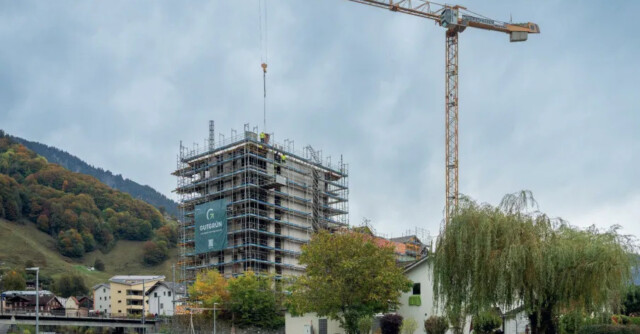
    The grain silo tower from 1939 was demolished, but its concrete was not disposed of. In the nearby concrete plant, the material was processed according to a specially developed formula and 75 to 95 percent of it was reused as recycled material in the new building. Around 60 percent of the new building consists of the old tower. The client is Gutgrün AG from Chur, which deliberately refrained from making short-term profits in order to consistently implement the sustainability concept.

    52 apartments, three certificates
    The project comprises 37 rental apartments on eleven floors in the new residential tower and 15 loft apartments in the renovated historic mill building. The architects from Ritter Schumacher have recorded all the materials used in a building resource passport. A forward-looking approach that makes future life cycles transparent today. The project was awarded three DGNB certificates for this achievement. DGNB Platinum for the demolition, DGNB Gold for the new tower and DGNB Gold for the refurbishment of the old building.

    Fire protection reinvented
    The 30-metre-high photovoltaic façade poses a problem for conventional fire protection regulations. They require partitions on every floor to prevent fire from spreading from floor to floor. This would have interrupted the façade and significantly reduced its efficiency.

    The PV surface is not interrupted anywhere by windows and is continuous from the floor to the roof. Specialist planners, contractors and the insurance company worked together to develop a tailor-made solution. Fire cannot reach the façade from the inside and the façade cannot reach the apartments.

    Alliance instead of conflict
    The project was built using the alliance model. The client, planners and contractors sat around the table together right from the start. Problems from construction practice were thus incorporated directly into the planning. The basic attitude was one of trust and fairness rather than pure risk hedging. One detail also testifies to the unconventional spirit: the graffiti that adorned the vacant building was retained as decorative elements in the stairwell.

    A signal for the industry
    There was not a single objection to the conversion project. This is unusual for a construction project of this size. Grüsch Mill shows that circular construction also works in a peripheral region and that sustainability is not a contradiction to economic viability.

  • Graubünden builds bigger, more expensive, longer

    Graubünden builds bigger, more expensive, longer

    128 construction sites do not mean relief, but concentration. Instead of many small interventions, the focus in 2026 will be on complex infrastructure projects that require more manpower, longer construction times and higher budgets. Traffic light systems will be used at 67 of the 128 construction sites to guide traffic through in an orderly fashion. The Graubünden Civil Engineering Office has set clear priorities.

    La Punt freed from through traffic
    The largest project is the La Punt bypass in the Engadin. In future, a 584-metre-long tunnel will run under the village center and a 55-metre-long bridge will cross the Inn. The total costs amount to 80 million Swiss francs and the construction period is eight years until 2033. After the ground-breaking ceremony in September 2025, the preliminary cuts in the Arvins area will be made in 2026. It is a relief for La Punt and a leap in quality for the Engadin.

    New tunnel for the Surselva
    Between Disentis and Curaglia, a new 500-metre-long tunnel will replace the dilapidated Las Ruinas tunnel and its two galleries. The work will take three years and traffic will remain in operation throughout the construction period. As the new tunnel runs directly next to the existing one in some places, night-time closures are unavoidable. An intervention that requires consideration, but is necessary.

    malix five years of work before completion
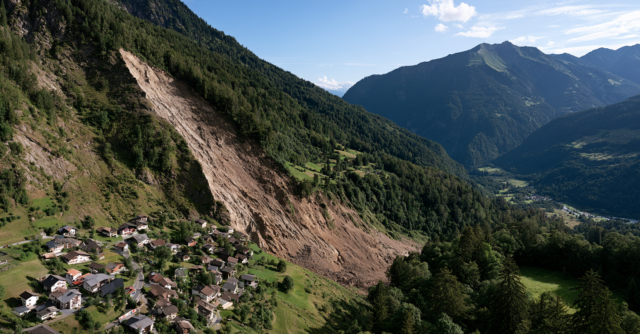
    On the Julierstrasse between Chur and Malix, the signs are pointing to the finale. The section lies in a landslide area and has been stabilized, widened and straightened over five years. The final work should be completed by July. As a visible sign of the new start, the section will be given a cycle lane. A project that was born out of necessity and ends up as a modern stretch of road.

    infrastructure as an investment
    Graubünden’s 2026 construction season shows that infrastructure is not a matter of course. Operating 1360 kilometers of cantonal roads through alpine terrain, landslide areas and flood zones requires continuous investment. Fewer construction sites, larger projects – this is not a cost-cutting exercise, but a strategic decision for sustainable quality.

  • Solar power plant above Klosters commences partial operation

    Solar power plant above Klosters commences partial operation

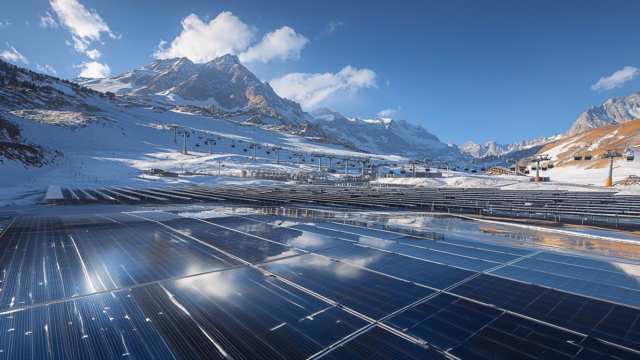
    The first 15 per cent of Madrisa Solar feeds electricity into the grid. According to a press release, the first 500 solar tables are fitted with 3,000 bifacial solar modules. The electricity will be used to power the neighbouring Klosters-Madrisa mountain railways.

    The solar power plant at 2,000 metres above Klosters Dorf is set to achieve an output of 11 megawatt peak when fully built on an area of 150,000 square metres with around 20,000 solar modules. Of the 17 gigawatt hours of electricity, 40 per cent will be generated in the winter months between October and March. Commissioning of the entire plant is scheduled for autumn 2027. By autumn 2026, 50 to 60 percent of the output should already be available.

    Madrisa Solar AG is a joint venture between Repower, EKZ and the municipality of Klosters, each of which holds a one-third stake. Madrisa Solar is the first solar power plant of the national solar express to feed electricity into the grid.

  • New solar plant boosts renewable energy production in the Alpine region

    New solar plant boosts renewable energy production in the Alpine region

    Swisspower AG has received approval from the canton of Graubünden for the construction of the Alpin Parsenn large-scale photovoltaic plant. According to a government press release, the decision is subject to conditions, although these are not specified.

    Swisspower AG is acting as the overall project manager. It represents Energie Wasser Bern(ewb), Industrielle Werke Basel(IWB) and Elektrizitätswerk Davos AG(EWD).

    The project, which until recently ran under the name Parsenn Solar, was approved by the Davos electorate on December 17, 2023. According to its press release from November 2024, Swisspower expected to receive the cantonal building permit before the end of last year; the ongoing work was fully geared towards the start of construction in summer 2025.

    According to the cantonal government, the solar plant will be built at an altitude of 2,500 meters in the Parsenn ski area, which already has an infrastructure and covers an area of almost 14 hectares. With 1493 module tables, it will produce around 12.1 gigawatt hours of electricity per year. In the earlier announcement, there was still talk of more than 10 gigawatt hours, which will supply around 2,200 four-person households in future. Logistical access will be provided via existing access roads. The use of helicopters and walking excavators for minimally invasive installation is also planned.

    Swisspower, based in Zurich, was founded in 2000 as a joint venture between Swiss municipal and public utilities that supply their areas with electricity, natural gas, heat and drinking water. The alliance is supported by 22 shareholder partners from all over Switzerland.

  • New energy park brings the energy transition to life

    New energy park brings the energy transition to life

    The Grisons University of Applied Sciences (FHGR) has set up the new Grischa Energy Park on the Kuhrerhof and in the Rheinmühle in Chur. The park is intended as an experience and research center in the field of energy and environmental research, according to a press release.

    Embedded in an agricultural environment, work on photovoltaics, small-scale hydropower, wood gasification, wind power and biogas will come together at one location. The aim is to show the general public how renewable energies can be generated, stored and used. “At the Grischa Energy Park, the energy transition goes from an abstract concept to a tangible reality”, explains Steffi Giaracuni, project manager at the Institute for Multimedia Production at the Grisons University of Applied Sciences, in the press release. “Here, people can see, hear and feel how renewable energies are created – and how we can integrate them into our everyday lives together.”

    In the first implementation phase, work on the topics of wood, water and sun will be presented, followed by biogas, wind power and innovative digital communication tools by 2026.

    The project is supported by the UAS Graubünden, the Swiss Federal Office of Energy, the Klima Grischa Foundation and other regional partners. On August 28, experts from the fields of energy policy, innovation promotion, urban development, local energy solutions and agriculture will be answering questions from the public about Switzerland’s energy future at a science café.

  • Chur West the gateway to the future

    Chur West the gateway to the future

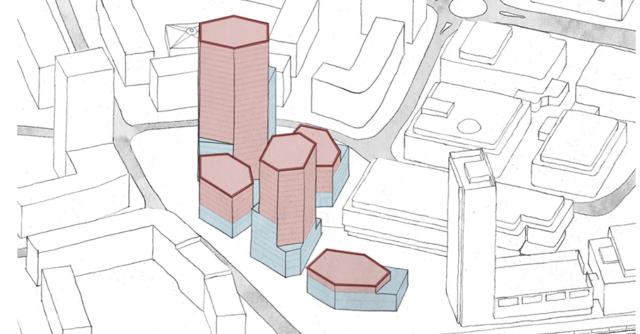
    The declared aim was to create an urban, lively and attractive neighbourhood that offers new living and working space for over 400 people. Given the shortage of housing in Chur, this is a pioneering development for families, couples and individuals.

    The unanimously selected winning project by the team led by Duplex Architekten, Gersbach Landschaftsarchitektur and IBV Hüsler Verkehrsplanung is characterised by a bold urban planning vision. Five buildings of different heights, including two striking high points, define the new neighbourhood. This “density in height” is not only an architectural statement, but also enables generous public open spaces that will significantly shape the identity of the new neighbourhood. Diversely designed streets, alleyways and sequences of squares run through the area and create a harmonious balance between public encounters and private retreats.

    A milestone for Chur
    A high-calibre jury of planning experts and representatives of the owners examined the five submitted designs in detail and unanimously decided in favour of the design by Duplex Architekten, a choice that was also endorsed by Chur’s city council. The winning project not only impressed with its clear urban planning approach, but also with its innovative transformation of the former industrial site into a lively urban centre.

    Particularly noteworthy is the striking architectural design language, which is not only aesthetically pleasing but also promises the highest quality of living. Furthermore, the diverse open and green spaces create a unique coexistence of public and private areas, giving the site a forward-looking identity. Finally, the excellent networking ensures that the neighbourhood is optimally connected to public transport and forms a seamless link to the surrounding districts.

    From vision to reality
    The winning project is currently on public display in the entrance area of Chur Town Hall and will be submitted to the newly constituted Design Advisory Board for assessment. The winning team will then further concretise the design. In the coming years, once the neighbourhood plan has been completed, the specific construction projects will be submitted and realised. Chur West will then not only be a new neighbourhood, but a vibrant, inviting gateway that redefines the city and actively shapes its future.

  • Construction of a solar plant at 2000 metres

    Construction of a solar plant at 2000 metres

    Construction of the Madrisa Solar project by Repower, Elektrizitätswerke des Kantons Zürich(EKZ) and the municipality of Klosters has begun, according to a joint announcement by the partners. A solar plant with a production capacity of 12 megawatts is being built at an altitude of around 2000 metres above Klosters. It is expected to supply around 17 gigawatt hours of electricity per year. Over 40 per cent of this will be generated in winter. The electricity produced will be purchased by EKZ for customers in its own supply area and the Klosters-Madrisa mountain railway.

    After the population of the municipality of Klosters voted in favour of Madrisa Solar in October 2023, the first preparatory work began in autumn 2024. Predominantly regional companies were commissioned with the planning and realisation of Madrisa Solar. Around 15 per cent of the plant should be in operation by the end of 2025. Full commissioning is planned for the end of 2027.

    “After an intensive planning phase and a challenging approval process with many parties involved, we are very pleased with the start,” said Michael Roth, Head of Production & Grid at Repower and member of the Executive Board. Paul Sidler, Head of Renewable Energies at EKZ, describes Madrisa Solar as “a further commitment to a secure and sustainable electricity supply in Switzerland. This complex pioneering project also makes an important contribution to the urgently needed winter electricity.”

  • Innovation campus in the heart of the Engadin

    Innovation campus in the heart of the Engadin

    The Engadin is known for its cultural diversity and breathtaking nature. At the same time, the region is increasingly focussing on innovation and sustainable development. The InnHub La Punt is a place where research, entrepreneurship and education come together.

    The centre offers a wide range of uses over an area of 7,700 square metres. These include workshop and classrooms, coworking workspaces, an auditorium with 250 seats, a sports training infrastructure, a spa, a restaurant with bar and lounge, a sports shop, a tourist information centre, 44 hotel rooms and 8 tourist flats. The multifunctional premises create a dynamic environment for innovation and interdisciplinary dialogue.

    Construction begins in spring 2025
    Following a comprehensive planning phase in which the concept was further refined, construction of the InnHub La Punt will begin in spring 2025. The municipality issued the building permit in autumn 2023. The existing buildings will be demolished first, followed by the excavation and construction of the underground car park by summer 2026. The shell will be completed by mid-2027 before the interior work begins. The opening is scheduled for the end of 2028.

    In parallel with the municipality of La Punt Chamues-ch’s future projects, including the road bypass and the renaturation of the Chamuerabach stream, the InnHub will create a new centre that will revitalise the town and provide new impetus.

    Sustainability as a central building block
    A key component of the project is its sustainable approach. The building is being constructed from local wood, granite and lime mortar and is an example of the circular economy and ecologically responsible construction. “The InnHub is a matter close to my heart, as I have lived in the Engadin for years. It is an example of sustainability and innovative construction methods,” emphasised architect Norman Foster in a video message.

    The operation of the campus is also designed to be sustainable. The initiators, including Caspar Copetti, are not focussing on short-term profits, but on long-term positive effects for the region. The InnHub is intended to create new jobs, promote year-round tourism and establish an innovation ecosystem in the Engadin.

    New impetus for the economy and the community
    The InnHub La Punt will not only attract companies, start-ups and skilled workers, but also facilitate strong networking with the local population. The municipality of La Punt Chamues-ch sees the project as an important step for the further development of the region. “The campus will create a cultural and social meeting point in our village. The projects that are being created here will inspire future generations to come to La Punt,” says mayor Peter Tomaschett.

    In addition to the long-term effects for the region, the InnHub offers an InnHub PopUp even before its completion, which can be used as a co-working and event venue for locals, holiday guests and professionals until it opens.

    A milestone for the Engadin
    The InnHub La Punt combines innovation, sustainability and community in a unique way. With a clear focus on responsible development, it will radiate far beyond the Engadin and serve as a model for sustainable innovation centres in the Alpine region. The combination of state-of-the-art architecture, innovative working environments and regional roots makes the InnHub a forward-looking project that will provide new impetus for the Grisons as a business location.

  • Photovoltaic system wins sustainability award

    Photovoltaic system wins sustainability award

    Solnow AG has received one of the three sustainability prizes awarded annually by the Beverin Nature Park, Viamala Tourism and the Viamala Region at this year’s MUMA, Viamala Tourism announced in a press release. Specifically, the young company from Zillis-Reischen was honoured with the prize in the Innovation category for its photovoltaic in-roof system at the exhibition of tradespeople from the Graubünden districts of Avers, Rheinwald and Schams. The prize for tourism and the audience award went to the Bachhuus project from Hinterrhein GR and the Val Schons pump track project in Andeer respectively.

    “Bricks off, Solnow on” is how Solnow AG describes its business model. The fully recyclable photovoltaic in-roof system is installed instead of tiles or other roof cladding and can also be operated in alpine conditions. It therefore makes an important contribution to a sustainable and regional energy supply, writes Viamala Tourism in the press release.

  • Researcher investigates solar reflection for better yields

    Researcher investigates solar reflection for better yields

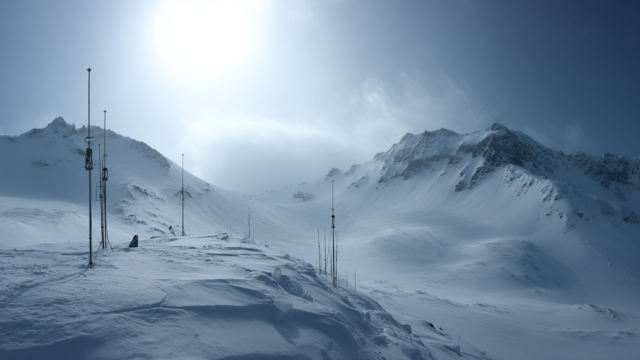
    SLF researcher Anja Mödl investigates how snow-covered terrain reflects sunlight. Her findings should make photovoltaic systems more efficient. The measurements take place in Meierhoftälli near Davos at around 2,400 meters above sea level.

    The researcher uses sensors to examine the sunlight reflected by the snow cover. According to the press release, the majority of sunlight is reflected by the snow in the direction of incidence. Sunlight is thus largely reflected in the direction of other mountain slopes.

    The snow surface reflects different wavelengths to different degrees. The intensity of certain wavelengths thus becomes stronger over time than in the originally incident light. Mödl is investigating how spectra differ at different locations.

    The measurements should enable photovoltaic systems to generate electricity even more effectively. Optimally positioned systems should then also be able to use the light reflected from neighboring slopes.

    The sensors measure wavelengths between 340 and 2500 nanometers. Photovoltaics only use the range between 500 and 1100 nanometers. According to Mödl, the larger spectrum makes it possible to gain further insights into rock warming and snow melting.

    Measurements are also planned for the coming season. “In order to make a well-founded statement, I need to record data under different conditions,” says the researcher.

  • Engineering solutions for the protection of habitats in the Alps

    Engineering solutions for the protection of habitats in the Alps

    The Alps are a dynamic landscape that has always been characterised by natural hazards such as avalanches, rockfall and debris flows. However, with climate change and rising average temperatures, important parameters such as the snow line and the stability of mountain slopes are changing. These changes threaten the safety and stability of settlement areas and require innovative solutions to protect habitats in the Alps.

    Civil engineers as key players
    The Institute of Civil Engineering in the Alps plays a central role in the development of protective measures against natural hazards. The training of future civil engineers focusses in particular on the increasing threats posed by climate change. The expertise of specialists from the field is utilised in order to develop practical and effective solutions.

    Research and innovation
    In its research, the institute concentrates on selected sub-areas in order to develop innovative solutions in a targeted manner. One promising project is the use of wood wool to stabilise slopes and banks. These mats prevent erosion, promote plant growth and decompose into humus after successful growth. This offers both technical and ecological advantages and has already been tested in successful pilot trials.

    Wood wool machines
    Another area of research is wood wool machines, which are used to stabilise embankments. These bundles of natural materials offer technical and ecological advantages over conventional wooden machines. In collaboration with the University of Applied Sciences of Southern Switzerland, work is being carried out to quantify these advantages in order to create a solid basis for application.

    Securing the future through collaboration
    Close collaboration between research and practice is crucial in order to meet the challenges in the Alps. With its innovative solutions, the Institute of Construction in the Alps makes an important contribution to safeguarding habitats and to the sustainable development of Alpine regions.

  • Disentis/Mustér gets large-scale photovoltaic system

    Disentis/Mustér gets large-scale photovoltaic system

    Axpo Solutions AG from Baden and Bergbahnen Disentis AG are planning to realise a large-scale photovoltaic plant with a capacity of over 10 megawatts peak in the Grisons municipality of Disentis/Mustér. The two partner companies are currently founding the power plant company Ovra Solara Magriel AG, based in Disentis/Mustér, to construct and operate the plant. The project, which is based on Article 71a of the Energy Act, the so-called Solar Express, has now received the approval of the government of the canton of Graubünden, the cantonal administration announced in a press release. The voters of Disentis/Mustér had already given the plan the green light in 2023.

    The plant is to be built on an area already used for tourism at an altitude of around 2100 metres above sea level. The plan is to install 20,750 solar panels on an area of around 13.5 hectares. The operators expect an annual electricity production of around 14.6 gigawatt hours, of which around 5.4 gigawatt hours will be generated in winter.

  • Graubünden supports digital innovation in timber construction

    Graubünden supports digital innovation in timber construction

    The canton of Graubünden is promoting the digital transformation of the construction process in prefabricated timber construction. Specifically, the cantonal government is providing up to CHF 666,131 for the SmartFlow System project from QUADRIN AG. The QUADRIN timber construction system, which belongs to Uffer in Surses, enables the construction of customised timber buildings from modular components.

    Uffer wants to digitalise QUADRIN in order to “meet the growing demand for increasingly large-volume temporary buildings”, explains the cantonal government in a press release on its funding decision. The total investment costs for SmartFlow System are estimated at around CHF 1.61 million.

    In the SmartFlow System project, Uffer wants to combine existing digitalised elements of its modular system, such as the planning of components and the control of production machines, and add further digital elements. To this end, the company plans to introduce digital tools for process control, quality assurance and increased efficiency. The use of mixed reality, which combines natural and artificial perception, is also planned to minimise errors in the construction process.

    According to the government of the canton of Graubünden, the project “brings an innovative, sustainable approach to the construction industry”, which could serve as a model for future process developments and motivate other members of the industry to “launch similar initiatives”. The funds for QUADRIN AG are being provided in accordance with the law to promote digital transformation in Graubünden.

  • Expansion of the power supply in Graubünden

    Expansion of the power supply in Graubünden

    Graubünden-based Repower AG has announced an expansion of its distribution area. As the Poschiavo-based electricity producer, distribution system operator and energy trader announced in a press release, additional municipalities in the Misox region and the Calanca Valley will receive their electricity from Repower from 2027.

    According to the expansion plans, Buseno and Cama as well as the electricity company Media Mesolcina Energia, which supplies the municipalities of Grono, Lostallo and Soazza, will be supplied by the Repower subsidiary Moesano SA based in Grono.

    The reason for this is the high electricity tariffs in the Moesa. According to the press release, they are among the highest in Graubünden. The timing of the switch is linked to the energy supply contracts, which do not expire until the end of 2027. Repower plans to minimise costs in the aforementioned municipalities as early as 2026 by supporting the purchase of electricity to the tune of 5 centimes per kilowatt hour.

    “As Repower produces the electricity it supplies in its own power plants, the production costs form the basis for the energy tariff,” it says. It guarantees electricity consumers a “long-term stable electricity price that is not exposed to volatile markets”.

  • Hybrid small power plant promotes green energy in Graubünden

    Hybrid small power plant promotes green energy in Graubünden

    NewGreenTec AG has installed one of its hybrid wind-solar small power plants on the roof of the Plantahof. In future, it will contribute to the sustainable power supply of the agricultural training centre in the canton of Graubünden and eastern Switzerland. According to the start-up company, it will also enable pupils and teachers to experience the technology first-hand and expand their knowledge of renewable energies.

    “We are delighted to be promoting the sustainable development of agriculture in Graubünden with this project,” said Frido Stutz, Managing Director of NewGreenTec AG, in a company press release. “The combination of wind and solar energy is a pioneering step towards an environmentally friendly and stable power supply throughout the day and year.”

    NewGreenTec also recognises this as a symbol of the potential for a sustainable future: “With the power of wind and sun, the Rhine Valley is set to become another example of successful innovation in green energy supply.” The company’s first small power plant on an industrial building was put into operation in January 2023.

    The hybrid device combines solar panels, a small wind turbine and storage technology in a single unit and was developed in collaboration with Swiss universities of applied sciences. The wind turbines, which rotate around a vertical axis, are independent of the wind direction and virtually noiseless.

  • Start of construction for alpine solar plant in Klosters

    Start of construction for alpine solar plant in Klosters

    The Madrisa Solar alpine solar power plant can be built. According to a press release, Madrisa Solar AG, the client, has decided to go ahead with the construction. The plant will be built near the Klosters-Madrisa mountain railway at an altitude of 2,000 metres above sea level.

    The south-facing plant will have an output of 12 megawatts and is expected to generate 17 gigawatt hours per year, enough to supply 3500 households. The electricity will be purchased by EKZ, based in Dietikon ZH, and the Klosters-Madrisa mountain railway company. In addition to the cantonal energy supplier from Zurich, the Graubünden-based energy supplier Repower and the municipality of Klosters each hold a one-third stake in Madrisa Solar AG.

    “For us, Madrisa Solar is a further commitment to the energy transition,” said Paul Sidler, Head of Renewable Energies at EKZ, in the press release. “As a pioneering project, the Alpine solar plant will strengthen security of supply in winter in the future.”

    “The decisive factors for the positive decision were the ideal location, the great support of the municipality of Klosters, the partnership with EKZ and the good cooperation with the cantonal authorities and environmental protection organisations,” adds Repower CEO Roland Leuenberger.

    According to municipal president Hansueli Roth, Klosters is building on its previous commitment: “As an energy town, Klosters wants to make a contribution to the expansion of renewable energies with its participation in Madrisa Solar in addition to its existing use of hydropower (for over 100 years) and thus fulfil its shared responsibility as a tourist municipality with high winter energy consumption.”

  • Customised processes support bridge renovation in Chur

    Customised processes support bridge renovation in Chur

    The AS Chur Süd consortium, consisting of METTLER PRADER AG and Cellere Bau AG, has commissioned STRABAG to replace the bridge edge beams as part of the renovation of the Sommerau subway in Chur. The timber construction department of the Schlieren-based construction company was tasked with developing a customised method for the formwork, explained STRABAG in a press release. “With our experience, we found the right solution,” Dominic Graf, timber construction foreman at STRABAG AG, is quoted as saying.

    Specifically, the work was made more difficult by the limited space available, which, among other things, did not allow for a conventional substructure for the formwork. The STRABAG timber construction team solved this problem by reinforcing the formwork panels with flat steel. Fire hoses were inserted into the gaps. The hoses, filled with compressed air, hold the panels in a stable position during concreting.

    According to the press release, the first bridge edges have now been completed to the complete satisfaction of the master builders on site. According to STRABAG, the other construction phases are currently being realised according to plan with the help of this technically demanding but ideally suited solution.

  • Former monastery in Davos reopens as a hotel

    Former monastery in Davos reopens as a hotel

    Davos Klosters Mountains completes the refurbishment of Joseph’s House. The former nunnery and sanatorium has been converted into a three-star superior hotel over the past 18 months. On 26 December, Joseph’s House will reopen in its new use as a hotel. The renovated rooms and suites as well as the rooms for events can already be booked, the owner, which belongs to Davos Klosters Bergbahnen AG, announced in a press release.

    Davos Klosters Mountains took over Joseph’s House, which had previously been used by nuns of the Dominican order, in 2007. During the remodelling into a hotel, the bathrooms on each floor were replaced by wet rooms in the individual rooms. The external appearance of the early 20th century building, on the other hand, was “only subtly refreshed”, writes Davos Klosters Mountain. In addition to 71 rooms, four suites and a flat, the hotel also has a wellness area, a fitness room and rooms for seminars and events. A total of CHF 20 million was invested in the renovations.

  • Green light for alpine solar plant

    Green light for alpine solar plant

    The Graubünden-based energy supplier Repower, the municipality of Klosters and Klosters-Madrisa Bergbahnen AG want to jointly construct an alpine solar power plant at the mountain railway. Voters in the municipality of Klosters approved the project on 22 October 2023.

    According to a press release, the Graubünden government has now also approved the construction of the system by Madrisa Solar AG. The site is already well developed thanks to the existing tourist infrastructure and is connected to the power grid.

    The plant in the Züg area is to comprise 25,000 solar modules at an altitude of around 2,000 metres and an area of 156,821 square metres, with a total output of 10.8 megawatt peak. Electricity production is expected to exceed 15,000 megawatt hours.

    The mountain railways already operate five solar installations with an annual output of 294 megawatt hours. These cover up to 20 per cent of their own electricity requirements.

  • ZHAW validates yield calculations for alpine solar systems

    ZHAW validates yield calculations for alpine solar systems

    Researchers at the ZHAW have verified the accuracy of the PVSyst software’s calculations on the yield of alpine solar plants. The Swiss Federal Office of Energy recommends this software as part of the expansion of alpine solar plants, the ZHAW explains in a press release. The results of the research showed “that the approach proposed by the federal government makes sense and that the yields tend to be underestimated”, the press release explains.

    For the validation, the ZHAW researchers carried out a large number of measurements on the Totalp in Davos GR in the winter months of 2023/24 using a flexible, multi-row miniature system. The measurement data largely matched the data collected at the same time from the existing test facility at the same location. In contrast, the yields calculated using the PVSyst simulation tended to be lower across the board.

    The researchers attribute this to the albedo values from Meteonorm used by the software. Albedo is a value for the proportion of sunlight reflected from the ground. At the same time, the research was able to show that backside irradiation on a bifacial solar panel increases the yield by around 25 to 35 per cent.

  • Canton can build Graubünden University of Applied Sciences Centre

    Canton can build Graubünden University of Applied Sciences Centre

    Construction of the new Chur University of Applied Sciences Centre can begin in spring 2025. According to a recent press release, the cantonal building construction office received the building permit from the city of Chur at the beginning of June.

    The fact that the city was able to give the green light just three months after submitting the planning application was due to its quality, according to the responsible city councillor Sandra Maissen: “The canton’s largest construction project was well and comprehensively prepared. Thanks to the excellent cooperation between the canton and the city of Chur, the planning application was processed very quickly.”

    According to cantonal master builder Andreas Kohne, the realisation can now be tackled according to schedule. This schedule envisages the ground-breaking ceremony and thus the official start of construction in late autumn 2024. The actual start of construction should then be in spring. If everything goes according to plan, the new Graubünden University of Applied Sciences Centre should open in 2028. Initial demolition work on the Pulvermühle site in Chur and the rerouting of the Mühlbach stream began a few weeks ago.

  • Albula Tunnel celebrates opening

    Albula Tunnel celebrates opening

    The Rhaetian Railway(RhB) celebrated the official opening of the new Albula Tunnel on 8 June. The event was attended by over 300 invited guests from the railway industry, politics, business and tourism, the RhB reported in a press release. The guest of honour was Albert Rösti, Head of the Federal Department of the Environment, Transport, Energy and Communications. The opening ceremony was complemented by a public event on 9 June at the north and south portals in Preda and Spinas.

    The 5860 metre long new Albula Tunnel will replace the old connection between Preda and Spinas, which was opened in 1903. The old tunnel is now a UNESCO World Heritage Site and is to be converted into a safety tunnel in the future. Twelve cross-connections have been created between the two tunnels for this purpose.

    In 2010, RhB decided in favour of building a new tunnel instead of repairing the old one after a thorough examination. “The decisive arguments in favour were the relatively low cost difference, hardly any timetable-relevant restrictions during the construction phase and the significantly higher safety level of a new facility,” according to a RhB brochure on the tunnel project. High quality and sustainability are cited as further advantages in favour of the new construction. A total of CHF 407 million was invested in the tunnel, which took ten years to complete. The first scheduled train through the new tunnel is due to run on 12 June.

  • Opening of the liug.innovation centre in Chur

    Opening of the liug.innovation centre in Chur

    The liug.innovation centre in Chur has been handed over for use. The centre is planned, owned and operated by Liechtenstein-based ITW Ingenieurunternehmung AG. According to the company, Mayor Urs Marti and Victor Zindel, Head of Regional Management/Economy Contact Centre of the City of Chur, took part in the opening ceremony.

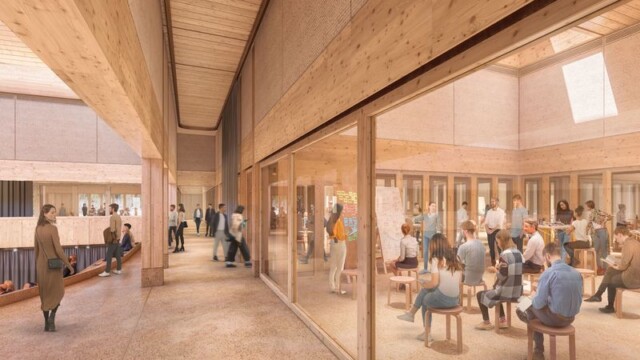
    ITW describes the semi-circular building with integrated piazza by Chur architects Bearth & Deplazes as Chur’s new landmark. It is modelled on a Roman amphitheatre. Its Rhaeto-Romanic name Liug means place or square: “A place for innovation, a place for encounters,” said liug project manager and member of the management team, Oliver Bossi, in a press release.

    According to its own advertising, the liug.innovation centre offers 11,200 square metres of space for work, research, workshops, education, congresses, laboratory activities, fitness, events, catering and services. Equipment and layouts can be changed and utilised on a modular basis. A total of up to 300 workstations could be created there.

    In a video, Bossi explains that the difference between the liug.innovation centre and conventional buildings is “certainly the mix of renowned and young companies that will have space here”. In addition, the liug.innovation centre will be partially open to the public. According to him, the project represents another milestone for ITW in the canton of Graubünden.

  • New 4-star resort “La Sassa” impresses in Münstertal

    New 4-star resort “La Sassa” impresses in Münstertal

    Val Müstair is currently experiencing an increase in overnight stays and has no hotels in the upmarket 4-star segment. “La Sassa” aims to fill this market niche and both preserve existing jobs and create new ones.

    The resort is to be realised in three stages. It will offer hotel rooms, serviced holiday flats, a reception, a restaurant, a public spa and wellness area and a sports equipment shop. Once all stages have been completed, 320 beds are planned in six buildings.

    In contrast to other resorts, “La Sassa” is focussing on nature-based tourism. The resort is primarily intended for active people and families who appreciate the nature of the Swiss nature park and are prepared to make a longer journey for this experience.

    The architecture is based on the characteristics of Val Müstair. Regional, high-quality building materials will be used, which should ensure authenticity and a high quality of stay.

    Domenig Immobilien AG is investing CHF 30 million in the project in the first construction phase. The flats will be sold as managed second homes that can only be occupied by the owner for a limited period of time. The rest of the time they will be rented out, with the owners receiving a return.

    A village square in the centre of the resort will serve as a meeting zone for guests and locals. This will create an authentic and dynamic public space with a high quality of stay.

    “La Sassa” offers an ideal base for discovering Val Müstair and neighbouring areas such as the Engadin and South Tyrol. The region is characterised by its diverse nature, fresh mountain air and unique local culture.

  • The next step towards realising the vision of the Davos medical campus

    The next step towards realising the vision of the Davos medical campus

    The new research building “Research II” marks a step forward in the masterplan for the Davos medical campus designed by OOS. This plan aims to establish Davos as a centre of innovation with research activities, particularly in the fields of allergies, asthma and cardiology. Various structural measures have been undertaken to date, including the reorganisation of existing buildings and the introduction of a new therapy and catering wing.

    The Research II building creates additional space for various research activities and complements the existing campus building, which already serves as a training campus and research laboratory with offices. In addition, Research II offers space for external partners who benefit from the expertise and innovative atmosphere. Research II will thus be used by a large number of different institutions to pool their strengths with the aim of translational research.

    The project was developed taking into account the diverse requirements of various research projects such as CK-CARE, Cardio-Care and Davos BioSciences. The architecture and interior fittings were designed to be flexible and modular in order to facilitate future changes of use. Particular attention was paid to incorporating the needs of all users into the planning process, using a fixed budget as a guideline.

    The design is kept as flexible as possible to allow for a variety of uses. Although the building is currently designed for offices and laboratories, other uses can also be easily integrated. In addition, the interior design allows for flexible division into up to three separate areas.

    Aesthetically, “Research II” integrates seamlessly into the existing medical campus. One striking element is the cascading staircase that runs vertically through the building and encourages encounters between users. In addition, the use of shared labs and shared facilities encourages dialogue between different user groups and reduces investment costs. The BSL-2 laboratories are flexible and tailored to the needs of the users.

    Overall, “Research II” not only expands the capacities of the Davos Medical Campus, but also helps to realise the vision of the master plan step by step.

  • Davos Dorf – future scenario with added value

    Davos Dorf – future scenario with added value

    Initial situation and partnership
    The municipality of Davos, the Rhaetian Railway, Davos Klosters Bergbahnen and the Konsum Davos property cooperative have joined forces in a project competition. The aim is to make the centre of Davos Dorf more modern, barrier-free and traffic-friendly.

    The winning project:
    “Davoser Schlitten

    The winner of the competition is the “Davoser Schlitten” design, which plans a relocation of the railway station, 550 public parking spaces in an underground car park and a barrier-free transport hub. This design is to serve as the basis for a masterplan.

    Infrastructure and living space
    The project includes a new railway station building, several bus stops, a taxi rank and space for bicycles. In the area of the current Parsenn car park, primary residences of a cooperative and warm guest beds are planned. The old railway station is to make way for residential and commercial buildings.

    Sustainability and quality of life
    The project places great emphasis on sustainability and aims to improve the quality of life of the local population by providing affordable living space. A park will be created in the area of Seehofseeli and St. Theodul Church.

    Timetable and public participation
    Further planning phases will follow based on the master plan. The people of Davos will vote on the project at the end of 2024. If the result is positive, the project planning work will continue and the sub-projects will be implemented.

    Statements and public participation
    Key stakeholders such as Reto Branschi, Davos Tourism Director, and Christian Florin, Head of RhB Infrastructure, are positive about the project. The local population is kept informed throughout the entire process and can have their needs incorporated into the planning.

  • Hamilton Bonaduz AG is making targeted investments in its future development

    Hamilton Bonaduz AG is making targeted investments in its future development

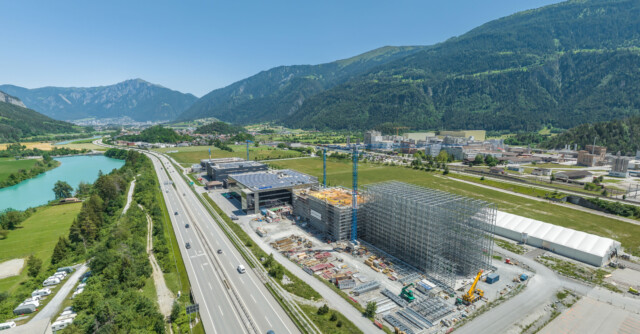
    The renowned Domenig Architekten have once again been commissioned to design and realise the project. Construction work is in full swing along the A13 motorway and in the immediate vicinity of the “1.0” building, which went into operation in 2018. The nine-storey building will be connected to the existing complex by a four-storey intermediate wing. The outstanding component of this new building is the 40 metre high-bay warehouse, which offers space for a total of 12,000 Euro pallets. The existing fully automated, rail-guided transport system will be expanded and the intralogistics will be seamlessly linked to the existing systems of building “1.0”.

    The modern appearance of this high-tech building is characterised by intelligent glass with an electrochromic coating. This glass, together with metal and photovoltaic panels, emphasises the vision of the Hamilton brand. The innovative glass façade darkens independently when exposed to direct or indirect sunlight and only allows 1% of the light energy to pass through when completely darkened. In order to generate and utilise electricity independently, a total of 5,400 m² of photovoltaic panels are installed on the roof and façade. In addition, heat energy and moisture from the ventilation system are recovered by a heat exchanger. The modern energy concept is rounded off by the use of a groundwater heat pump, which is operated by a heating network in Domat/Ems. The building will receive the coveted Minergie A certification.

    In keeping with the “Hamilton 1.0” project, the new building is being planned in detail from start to finish with the help of Building Information Modelling (BIM). BIM is a holistic working method for the integrated planning, construction and management of buildings. All relevant data is modelled digitally and all parties involved work synchronously with the same information.

    With “Hamilton 2.0 “, the BIM process is even continued consistently in the implementation phase: For the first time, the digital 3D BIM model is used exclusively, making conventional paper plans on the construction site obsolete.

  • New era of healthcare in architectural brilliance

    New era of healthcare in architectural brilliance

    With a history dating back to the 19th century, the Graubünden Cantonal Hospital has established itself as a trusted centre for medical care. The new building is proof of the centre hospital’s commitment to keeping pace with the changing needs of patients.

    The architectural design of the new building is characterised by bright, open spaces that not only create a pleasant environment, but also encourage interaction between medical staff and patients. State-of-the-art operating theatres, diagnostic facilities and outpatient treatment rooms are designed to ensure optimal results and maximum comfort for patients. The architecture reflects the latest standards in hospital planning to meet the most demanding medical requirements.

    The new building has been designed with a strong focus on sustainability and energy efficiency. Modern technologies for energy generation, waste reduction and environmentally friendly materials help to minimise the ecological footprint.

    An integral part of the Graubünden Cantonal Hospital is its highly qualified medical staff, who also work in the new building. Doctors, nurses, therapists and support staff work hand in hand to ensure holistic care at the highest level. The close co-operation between the specialists not only promotes effective treatment, but also the exchange of knowledge and innovations.

  • Kengo Kuma in Vals more than architectural innovation

    Kengo Kuma in Vals more than architectural innovation

    Kengo Kuma, an architect known for the artistic fusion of buildings with their surroundings, has realised a building in Vals that can be interpreted as a homage to nature. The building rises organically out of the landscape and almost appears to be interwoven with the mountains. This approach of fusion is a constant theme in Kuma’s work and reaches its peak here.

    The architectural style is based on the traditional timber construction of the region, but with a modern twist. The façade combines stone, wood and glass in a way that captures light and shadow. As a result, the building changes its appearance depending on the time of day and weather, creating a dynamic atmosphere.

    Another notable element of the project is the close collaboration with the local community. This participatory approach has resulted not only in an aesthetically pleasing building, but also one that meets the needs and sense of identity of the locals. In Vals, the building stands not only as an architectural landmark, but also as a place that represents the community and its identity.

    Inside, the building fascinates with its careful use of natural materials such as wood and stone, which create a warm, welcoming atmosphere. The design is conceived in such a way that the boundaries between indoor and outdoor space almost disappear. Large windows provide breathtaking views of the surrounding mountain landscape, while at the same time promoting an inner calm and harmony.

    Functionally, the building significantly expands the village’s social and cultural offerings. It not only houses public meeting rooms and exhibition spaces, but also provides space for local art and gastronomy. In this way, regional culture is effectively integrated into the design and the building becomes a lively centre for the community.

    Finally, Kuma’s new building in Vals is not only an architectural achievement, but also a testament to the possibility of a profound connection between people, nature and the built environment. Through this seamless integration and the strong involvement of the local community, Kuma has created a monument that is significant not only locally, but far beyond its borders. It reminds us that architecture can be emotionally resonant as well as functional, and emphasises the need to take a holistic approach to modern design.

  • Cooperative planning processes for more affordable housing in mountain areas

    Cooperative planning processes for more affordable housing in mountain areas

    Concerns about affordable housing have spilled over from urban centres to mountain regions since the coronavirus pandemic: the unbroken demand for second homes, the shortage of building land intended by the Spatial Planning Act and the price spiral in the old legal housing stock fuelled by the Second Homes Act are contributing to the fact that affordable housing for skilled workers and families is becoming scarcer and residential mobility is decreasing.

    Against the backdrop of rising construction and financing costs, the question arises as to whether the provision of affordable (rental) housing in the Alpine region can be encouraged through cooperative planning processes. To this end, dialogue processes that have proven their worth in large-scale projects with professional developers and institutional investors in the lowlands must be adapted to smaller projects by private owners.

    The first prerequisite for a successful dialogue with owners is for municipal councils to clarify where they stand and what they want: The broadest possible political consensus is needed on what characterises the municipality as a residential location, which target groups it wants to appeal to, what the municipality can offer these target groups and how the housing supply should be supplemented.

    The second prerequisite is that municipal councils communicate to property owners which planning law decisions are pending in the short, medium and long term, and how opportunities for action are changing. The aim is not to dictate a direction to landowners willing to build, but to clarify with as many owners as possible who would be willing to activate building land and planning reserves or invest in residential construction under what conditions.

    A major challenge here is communicating the complex planning and planning law requirements and processes, which are difficult for laypeople to understand, and the emotionally demanding and controversial debate about zoning out and market interventions.

    Another challenge is the small-scale social structure in many mountain communities: Management boards and owners know each other, there are previous histories. In smaller municipalities in particular, written surveys or joint information and discussion events with neighbouring municipalities can defuse misunderstandings and mistrust somewhat.

    Finally, municipalities must find ways to better understand and involve second home owners. Although relationships are strained in many places, surveys and focus groups show that around a third of second-home owners from Switzerland and abroad would be willing to contribute to the provision of housing for locals and skilled workers.

    The prerequisite is that municipalities involve second-home owners on an equal footing, prepare investment-ready projects and take risks. Information events on community development and a regular exchange with interested (also non-organised) second home owners help to build relationships and create trust.

    The third prerequisite for a successful dialogue with owners is that all stakeholders involved are willing to make compromises in order to create affordable living space that meets the needs of locals and newcomers. This is exemplified by the conversion of existing buildings in protected sites, where goodwill and pragmatism are needed to defuse conflicts of interest and find viable solutions.

    Cooperative planning processes rarely run smoothly: they require good preparation, political capital and a willingness to engage in dialogue. They do not create planning certainty. However, a clear focus and a strong commitment to finding joint solutions increase the chances that private owners will be able to contribute to the provision of affordable housing in mountain areas.