Category: Espace Mittelland

  • District heating project in Bern utilises the River Aare as an energy source

    District heating project in Bern utilises the River Aare as an energy source

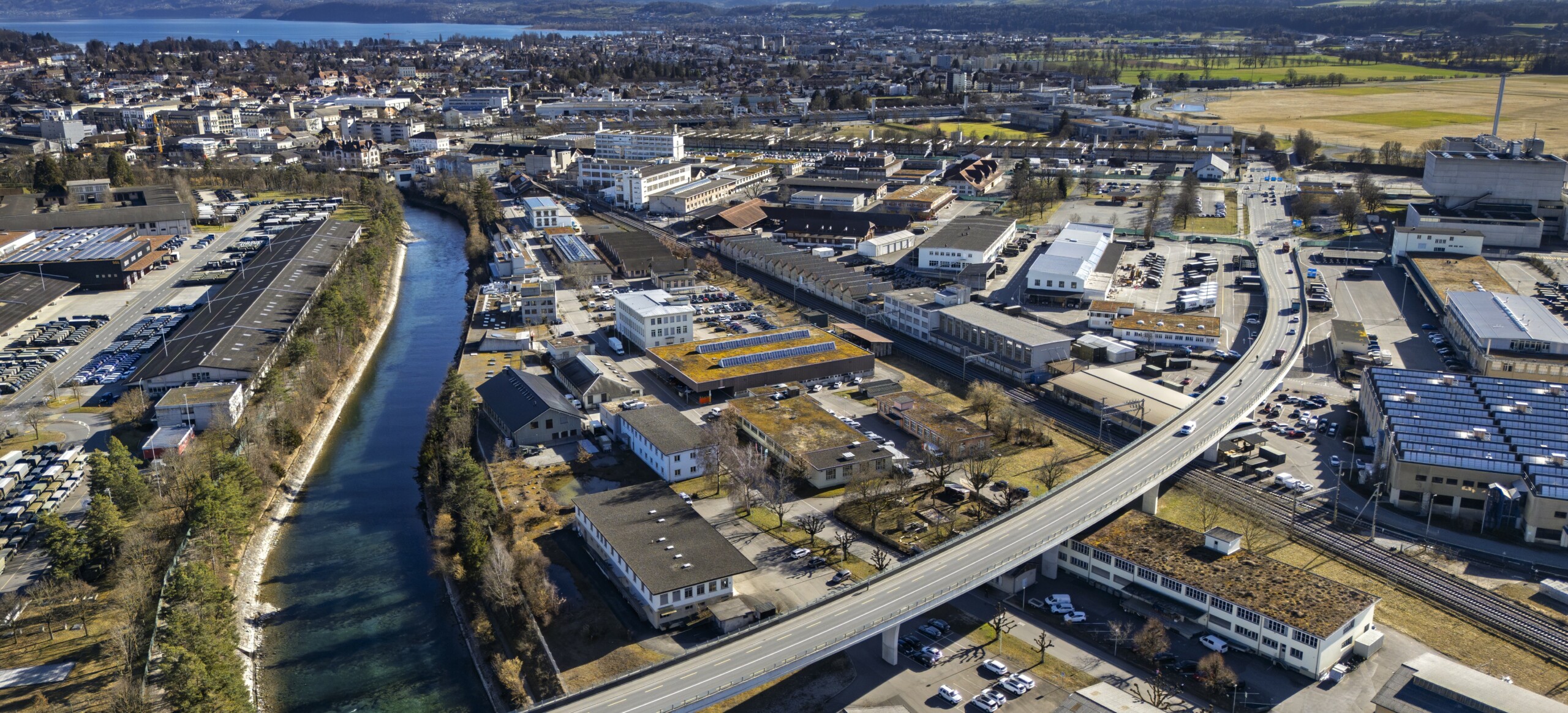
    Energie Wasser Bern wants to supply the north-east of Bern with climate-friendly heat. To this end, the Bernese energy supplier is planning to build a corresponding heat production infrastructure, ewb announced in a press release. One of the sources of heat will be the water from the River Aare.

    Specifically, ewb wants to draw water from the Aare on the western bank at Engehalde and channel it into an existing cavern. Heat is to be extracted from the water here, which will then be transported to a new Aare Wyler energy centre to be built on the eastern side of the river. Properties in neighbourhoods adjacent to the energy centre could then be heated with district heating from the energy centre’s heat pumps. Ewb is also considering setting up a second, smaller Aare Engehalde energy centre on the west side of the river. It could supply the Tiefenau area with district heating.

    The company has already submitted a licence application to the Office for Water and Waste of the Canton of Bern for the construction of a catchment structure and the extraction and return of water from the Aare, explains ewb. The company expects a decision in spring 2026. In the meantime, a precise location for the planned Aare Wyler energy centre is to be found.

  • Takeover secures jobs and orders in Freiburg

    Takeover secures jobs and orders in Freiburg

    Burkhalter is stepping into the breach at Etablissements Techniques Fragnière SA, based in Bulle, which has run into financial difficulties. The Zurich-based building technology specialist will take over the business and employees at ETF’s sites in Bulle and Givisiez, Burkhalter announced in a press release. Specifically, 117 employees, including 32 apprentices, will be taken on under the same conditions that apply to them at ETF. Burkhalter intends to use them to fulfil the majority of ETF’s orders at the two Fribourg sites.

    Burkhalter has founded the two companies Bul Elec SA and Fri Elec SA for the takeover. They are intended to strengthen the building technology company’s presence in the canton of Fribourg. In addition, Burkhalter is “now in a position to offer its customers in the canton of Fribourg the entire portfolio of electrical engineering services”, according to the press release. Laurent Murith and Frédéric Bourguet will take over the management of the new companies. Both were previously branch managers at the respective ETF locations.

  • Sustainable construction projects launched in Germany and abroad

    Sustainable construction projects launched in Germany and abroad

    Implenia, the construction and property company based in the Glattpark district of Opfikon, has won several tenders for building construction contracts. According to a press release, the contracts have a total volume of 160 million Swiss francs.

    The company will construct the new office building of the Swiss National Science Foundation(SNSF) in Bern. The sustainable building will be constructed using local timber and recycled concrete in accordance with the Swiss Sustainable Building Standard (SNBS). Implenia has also been awarded several contracts in Germany.

    In Mainz, Implenia, together with its partners Gemünden and Apleona, was awarded the contract to construct a new 10,000 square metre research building for TRON. The research institute develops new diagnostics and active ingredients for immunotherapeutic treatments.

    In Leipzig, Implenia and its partner GP Günter Papenburg AG are building a seven- to eight-storey residential development on nine connected properties. In addition to 202 residential units, many commercial and ancillary premises are to be built. The buildings will be constructed as low-energy buildings in accordance with the Efficiency House 55 standard and the entire complex will be handed over on a turnkey basis.

    Three residential buildings with 101 units are being built in Munich, which should be ready for handover by 2026. Implenia will also realise a further stage of an ongoing project in Heilbronn and has been commissioned with a pre-construction phase in Siegburg.

  • Kerzers inaugurates district heating

    Kerzers inaugurates district heating

    Groupe E inaugurated its new district heating plant in Kerzers with open days on 15 and 16 November. According to a press release, the plant will have a capacity of 31 megawatts when completed and can therefore generate 61,000 megawatt hours of heat per year. The heat will be supplied to over 90 households, vegetable growers, the Papiliorama and public buildings.

    The plant will be heated to 90 per cent with wood chips from the region. This will save around 9000 tonnes of CO2.

    It is the third-largest district heating plant of the Fribourg energy supplier after the one in Fribourg and in the Entre-deux-Lacs region.

  • Neue Regelungen für Kreislaufwirtschaft treten Anfang 2025 in Kraft

    Neue Regelungen für Kreislaufwirtschaft treten Anfang 2025 in Kraft

    Der Bundesrat hat beschlossen, die Mehrzahl der Gesetzesänderungen aus der parlamentarischen Initiative Schweizer Kreislaufwirtschaft stärken mit Wirkung zum Jahresbeginn 2025 in Kraft zu setzen. „Die Revisionen des Umweltschutzgesetzes (USG), des Energiegesetzes (EnG) und des Bundesgesetzes über das öffentliche Beschaffungswesen (BöB) schaffen einen übergeordneten gesetzlichen Rahmen für die Stärkung der Kreislaufwirtschaft in der Schweiz“, schreibt der Bundesrat in einer entsprechenden Mitteilung. Die neuen Regelungen sollen es ermöglichen, Materialkreisläufe zu schliessen und die Kreislaufwirtschaft bei Produkten und Gebäuden stärken.

    Dafür werden wichtige Grundsätze gesetzlich verankert. So werden Wiederverwertung und Wiederverwendung künftig grundsätzlich Vorrang vor der Verbrennung haben. Die Kantone sind angewiesen, Grenzwerte für die graue Energie bei Neubauten und wesentlichen Erneuerungen bestehender Gebäude festzulegen. Der Bundesrat bekommt die Kompetenz eingeräumt, Vorgaben zum ressourcenschonenden Bauen zu machen und Anforderungen für Produkte und Verpackungen vorzugeben.

    Mit Ausführungsbestimmungen verbundene Gesetzesänderungen sollen zu einem späteren Zeitpunkt in Kraft treten. Sie werden vom Bundesrat in den nächsten beiden Jahren in die Vernehmlassung geschickt. Dazu gehören die Bestimmungen zur Einführung einer schweizweit geltenden Busse für Vermüllung (Littering) sowie die Bestimmungen zu Ausnahmen vom Siedlungsabfallmonopol.

  • Prices for property in Bern remain on an upward trend

    Prices for property in Bern remain on an upward trend

    “Living in the canton of Bern remains expensive” is the headline of the Berner Kantonalbank(BEKB)’ s latest property barometer. It is compiled every six months by BEKB in collaboration with the Zurich-based property service provider IAZI. According to the autumn 2024 edition, prices for flats and houses in the canton of Bern have risen by 3.3% year-on-year.

    Asking rents are also on an upward trend. The experts at BEKB and IAZI point to strong population growth in the canton coupled with low new construction activity as the background to rising rents and prices on the housing market. “The unemployment rate in the canton remains at a historically low level and the number of job vacancies is steadily increasing,” the press release also states. As long as this remains the case, the housing market is not expected to ease.

    Within the individual regions of the canton, experts have observed a normalisation of price dynamics in tourist regions. Prices in the Oberland regions and especially Obersimmental-Saanen have been strongly driven by the second-home market in recent years. A stabilisation was registered here at the end of the third quarter of 2024. In Oberaargau, on the other hand, prices rose by an average of 3.9 per cent year-on-year. The experts attribute this to a shift in demand for residential property to regions with comparatively moderate price levels.

  • Innovation network in medical technology

    Innovation network in medical technology

    The medtech sector in the canton of Jura is growing steadily. A current map from Basel Area Business & Innovation already lists 67 companies, start-ups and other facilities in 24 municipalities. The sector is particularly well represented in Delémont and Courroux.

    The 14 companies in the cantonal capital include young companies such as 3D Precision and Galien Plus as well as traditional firms such as Humard Automation and Willemin-Macodel. In Courroux, the Jura branch of the Switzerland Innovation Park Basel Area forms the core of the growing sector, which already comprises 17 companies, start-ups and institutions. Not only is a branch of the Centre Suisse d’électronique et de microtéchnique(CSEM) represented here, but also the start-up accelerator DayOne Tech, which supports selected start-ups for twelve months. Four companies are based in Glovelier and Porrentruy, and three in Bassecourt and Courgenay.

    The industry is increasingly networking with each other. The Medtech Congress, which will be held for the third time on October 30 by DayOne at the Switzerland Innovation Park Basel Area in Courroux, will also contribute to this. Visits to companies in the region are on the agenda for the following day.

    The DayOne Tech support program is already entering its fourth round. Altiscreen is developing portable devices for the rapid detection of drugs. Amarastesia is working on components that can be used to open body cavities with as few after-effects as possible for patients. OrthoSens is developing intelligent implants for orthopaedics that will provide surgeons with real-time data.

    The Canton of Jura is one of the sponsors of Basel Area Business & Innovation together with the two cantons of Basel. The location promoter supports companies and start-ups in the region and is committed to attracting more companies to the area.

  • Boost My Startup Challenge 2024

    Boost My Startup Challenge 2024

    The Bern-based ClimateTech company Neustark has won this year’s Boost My Startup Challenge. According to a press release, Neustark came out on top against five other competitors in the competition organized by the consultancy firm WSP from Lucerne and the major Zurich bank UBS. The Bern-based company, a spin-off of the Swiss Federal Institute of Technology in Zurich(ETH), was recognized by the judges for its CO2 mineralization technology. According to the company, the process converts carbon dioxide into limestone, which is bound to the pores and surface of concrete granulate. The granulate carbonated in this way can then be used in road construction or for the production of recycled concrete. As Neustark forecasts, the company wants to store a total of 1 million tons of carbon dioxide from the air by 2030.

    The challenge now won gives the Bern-based company access to WSP’s teams, offices and customer network as well as support from UBS Growth Advisory. In addition, the company can benefit from funding, either from UBS Growth Advisory or from WSP.

  • Solar park project completed five months earlier than planned

    Solar park project completed five months earlier than planned

    Nexans Switzerland has commissioned its new solar park at the Cortaillod site five months ahead of schedule. It consists of ten individual systems, each of which was installed on a different roof. These independent units were then connected together to form a higher-level system. According to a statement from the cable manufacturer, this required adaptations to the specific architectural and structural features.

    This approach made it possible to completely avoid interfering with production activities at the site during the installation work. “The result: a 100 per cent successful commissioning, almost five months earlier than planned.”

    Since the summer of 2023, a team of Groupe E Greenwatt specialists from the Boudry NE site has installed over 4,000 solar modules, each with a capacity of 430 watts, “under demanding technical conditions”. The solar park has a total output of 1.7 megawatts. Together with a 700 kilowatt system previously installed by Groupe E, Nexans now achieves a self-consumption rate estimated at over 90 per cent.

    “This strategic partnership supports our goal of continuing to reduce our environmental footprint and develop our business sustainably, and strengthens our energy resilience,” Nexans Switzerland CEO Marco Spinelli is quoted as saying. “Even without these plants, Nexans only consumes electricity that comes 100 per cent from renewable sources, and has done so since the beginning of the year.”

  • Relocation and continuation of services

    Relocation and continuation of services

    Cilander is selling its properties in Herisau. Following the sale of the eastern part of the site to Rico Sicherheitstechnik AG, the western part will now be taken over by Herold Taxi AG, Cilander announced in a press release. The textile company had ceased production in Herisau following the takeover of strategic assets by the Chargeurs Group in July. The newly created SENFA-CILANDER Switzerland AG, headquartered in Herisau, will continue parts of the business under the umbrella of Chargeurs and in particular maintain production in Lützelflüh BE.

    Herold Taxi AG, currently based in St.Gallen, will move to the newly acquired site. “After a long search, we are delighted to have found a location that supports our growth for the benefit of our private and public customers,” said Managing Director Samuel Holenstein in the press release. “We look forward to continuing our history in Herisau and being there for our customers.” However, the services in St.Gallen will continue to be offered around the clock.

  • Expansion of the photovoltaic system in Schönenwerd

    Expansion of the photovoltaic system in Schönenwerd

    Fashion Fish is investing in the expansion of solar energy, taking the next step towards greater sustainability. As the Schönenwerd-based outlet for designer items informs in a press release, the expansion of the photovoltaic (PV) system on the roofs of the six-storey former Bally production building includes a further 335 solar modules with an output of 140 kilowatt peak. In total, the area equipped with PV modules has increased by 664 square meters.

    According to the press release, the company has been taking steps towards more sustainable energy use for years. According to Managing Director Robert Meier, heating energy is generated via district heating. Electricity requirements have been covered by PV systems since 2020.

    The installation of the first system on the shed roofs has already achieved high peak outputs. An expansion to the east and west at the beginning of 2024 led to a balance in output throughout the day. By the end of August, energy production had amounted to more than 47 megawatt hours of electricity.

    The aim of the investment is to ensure that the majority of stores cover their energy requirements with solar power. This is also to the benefit of customers, for example through cooling ventilation in the summer months. “Thanks to the measures we have taken, we have been able to drastically reduce Fashion Fish’s CO2 emissions in recent years and offset the energy consumption of our air conditioning and ventilation systems with our own solar power,” Robert Meier is quoted as saying. The decision to expand the plant coincides with the company’s 20th anniversary year.

  • Future-oriented urban development in Bern

    Future-oriented urban development in Bern

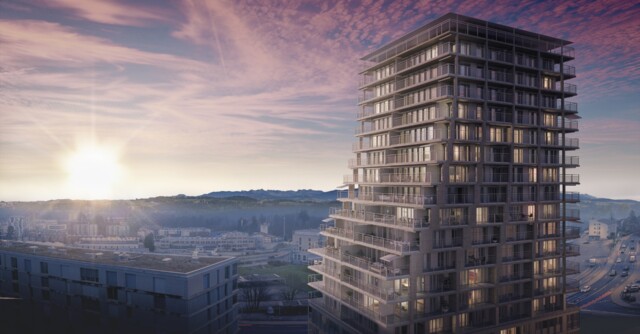
    Wankdorfcity 3 is located on a 34,000 square metre site in the north of Bern. An urban living space is being created here that goes beyond mere residential use. With this project, property developer IMMOFONDS is creating a dense neighbourhood that offers both living space and contact points for commercial and leisure activities. The direct connection to public transport creates a lively ecosystem characterised by interaction and exchange.

    Efficient planning and rapid approval
    The complexity of the planning for this project required innovative approaches and close collaboration between the responsible architects, urban planners and authorities. Gabriela Theus, Managing Director of Immofonds Asset Management AG, explains: “The efficient processing by the City of Bern and the collaborative partnership between all parties involved led to approval in accordance with building law without any objections – a record-breaking success throughout Switzerland.”

    Social and ecological sustainability
    Social sustainability is a key component. The creation of meeting places, communal spaces and outdoor areas will encourage interaction between residents. The planned urban garden and the varied open spaces characterise a place of togetherness.

    Diversity in living space
    In order to accommodate different lifestyles, the project offers a variety of living arrangements. From small flats and tiny houses to family-friendly townhouses and multifunctional communal areas – there is something for every target group. This diversity ensures a lively neighbourhood that meets the needs of its users.

    Innovative strength in urban development
    Wankdorfcity 3 is based on the innovative concept of the sponge city, which promotes sustainable water management in urban areas. Landscape architect Maurus Schifferli explains that rainwater is stored in special systems so that it can be released again in a targeted manner. This principle helps to regulate the local climate and shows how modern urban planning can combine resource conservation with aesthetics.

    Outlook for the next steps
    The final building permit marks the start of the realisation phase. The flats and the associated services and commercial space will be ready for occupation in stages from 2027. In the coming years, Wankdorfcity 3 will not only contribute to the quality of life in Bern, but will also serve as an innovative example of modern urban development throughout Switzerland. This pioneering project signals a new era of urban living that combines intergenerational living, inclusivity and sustainability.

  • Apartments in Locle presented for older people

    Apartments in Locle presented for older people

    The renovated apartments in the heart of Locle were developed for older people and people with reduced mobility. The thirteen residential units, which are under the AE label, offer affordable rents that meet the requirements of AVS and AI supplementary benefits. In addition, residents have access to supervision services that enable assisted living.

    Central location and comprehensive range of services
    The building is ideally located in the center of Locle, in close proximity to pharmacies, stores, restaurants and public transport. In addition to the apartments, residents also have access to a communal room that offers the opportunity to socialize.

    Ceremonial award and great interest
    During the official part of the event, the building was ceremoniously awarded the AE label. Representatives of the canton of Neuchâtel, the town of Locle and the architect of the project, Sareg SA, were present to present the project and its significance for the region. Numerous visitors took the opportunity to view the apartments and find out more about what is on offer.

    Successful presentation of an important residential project
    The project in Locle is an important step in the implementation of the cantonal strategy to create a total of 1,800 assisted living apartments for older people and people with reduced mobility by 2030. The open day offered a successful insight into the future of assisted living in the canton of Neuchâtel.

  • Energy contract signed for sustainable neighbourhood in Romont

    Energy contract signed for sustainable neighbourhood in Romont

    Granges-Paccot-based energy supplier Groupe E and KAAB have signed an energy contract for the La Maillarde neighbourhood in Romont. According to a press release, the 40-year contract covers the supply and utilisation of internal waste heat, the provision of a microgrid infrastructure and the installation of solar modules. Groupe E will supply energy to the site on behalf of KAAB, which will ensure the operation, maintenance and financing of the systems.

    Heat is supplied via the district heating network of the municipality of Romont. The network managed by Groupe E is mainly fuelled by wood chips from local forestry and waste heat from the roasting systems at the Nespresso plant. A gas-fuelled auxiliary heating system is provided for long periods of cold weather.

    The electrical system is controlled by the neighbourhood’s own microgrid. This is fed by a photovoltaic system with an output of one megawatt. It generates around one gigawatt hour of electricity per year.

    The La Maillarde neighbourhood, which is owned by KAAB, was used by the multinational company Tetra Pak until 2016. From 2025, watch manufacturer Rolex will set up shop there, creating around 250 new jobs in the region. The final La Maillarde project envisages an area of 40,000 square metres. Currently, 19,000 square metres are in use.

  • EnBW acquires enersis to promote digital twins in the energy sector

    EnBW acquires enersis to promote digital twins in the energy sector

    Energie Baden-Württemberg AG(EnBW) has acquired the two sister companies enersis Suisse AG from Bern and enersis Europe GmbH from Kleinmachnow near Berlin, which specialize in digital twins in the energy sector, according to a press release. EnBW is thus strengthening its own technological and digital expertise, particularly with regard to digitalized distribution grids, so-called smart grids, according to the press release. “We identified smart grids early on as a field of innovation that is of strategic importance to us,” EnBW’s Head of Innovation Jürgen Stein is quoted as saying.

    For such smart grids, enersis offers its customers digital twins as a software-as-a-service solution. EnBW describes this as a central competence within the innovation field of smart grids. This is because such twins make it possible to create a digital image of distribution grids that is fed with various energy data in real time. Distribution grids will face additional challenges in the course of the energy transition if numerous small decentralized generation plants are integrated into the low-voltage grid. “An application like this helps us to expand and operate our infrastructure more intelligently,” says Stein.

    Enersis will continue to operate independently as a wholly-owned subsidiary of EnBW. The parties have agreed not to disclose the purchase price. All enersis employees will be taken over and both locations will be retained. The EnBW and enersis teams will work together over the next few months to ensure a successful integration.

  • World first: Intelligent plant care for indoors and outdoors

    World first: Intelligent plant care for indoors and outdoors

    “This year, Boum has ensured blooming balconies and terraces for over 1000 customers,” says Boum in a post on LinkedIn. The company, which was founded in 2021 as a spin-off from the University of Bern, has developed an intelligent system consisting of a solar panel, water tank, sensors and an app that autonomously maintains green balconies and terraces. Due to the positive feedback on its product, Boum has decided to “further develop the system for indoor use”, according to the article.

    After more than a year of development, Boum has now launched the plant care system for greening living rooms and offices. The substrate for the plants was adapted to provide the optimum soil moisture for indoor plants. The accuracy of the water supply has been improved with an additional safety valve. The tank and pots are connected “simply and inconspicuously” using additional tubing and discreet cable ducts.

    The app can detect whether the system is outdoors or indoors and provide appropriate care instructions. It also lets you know when the water tank needs to be refilled. “As of today, Boum is the smart plant care system for indoors and outdoors,” writes Boum on LinkedIn. “Everywhere where people want their lives to flourish.” According to company founder Matthias Erb, the intelligent plant care system is “a world first that makes greening indoor spaces simple and elegant from today”.

  • New energy supplier for Uettligen

    New energy supplier for Uettligen

    CKW has taken over the Uettligen heating network with effect from 27 August 2024. According to a press release, the energy supplier from Central Switzerland, which is part of the Axpo Group, intends to expand its decarbonisation strategy. The plants of the heating network north of Bern will continue to be maintained on behalf of CKW by the previous operator and main shareholder a energie AG from Schüpfen BE. Due to an adjustment in a energie’s strategy and the pending further expansion of the heating network, a buyer for the heating network was reportedly being actively sought.

    The acquisition of the Uettligen heating network joins the existing CKW portfolio of district heating networks such as Schüpfheim LU and Meggen LU. According to the press release, CKW will focus on modernising the plants and expanding the district heating network.

    “CKW is looking forward to the collaboration and is proud to be able to continue and further develop the well-functioning Uettligen district heating network,” said Rafael Mesey, Head of New Energies at CKW. “With CKW AG, we will have a reliable and strong partner for our customers in the heating network in the future,” adds Christian Cappis, the outgoing Chairman of the Board of Directors of the Uettligen heating network.

  • Successful drilling of Haute-Sorne geothermal project completed

    Successful drilling of Haute-Sorne geothermal project completed

    A pilot project for deep geothermal energy is underway in Haute-Sorne. The initiators, Geo-Energie Suisse and Geo-Energie Jura, have announced that the first borehole has been drilled. According to a press release, it took less than three months to explore the subsurface at a depth of 4000 meters. The borehole ran completely through the sediments and penetrated deep into the crystalline bedrock.

    This provides geological data on the underground in the Swiss Jura arc between Geneva and Basel. “From a scientific point of view, this is a great opportunity to significantly improve our knowledge of the geology of the Jura. Until now, the deep underground has only been described in such detail at a very localized level at a national level.”

    Strict environmental safety precautions apply to the project. There has been no damage or water ingress during ongoing construction work, and noise pollution has been kept to a minimum.

    In the view of Geo-Energie Suisse and Geo-Energie Jura, this step paves the way for innovative future prospects for a sustainable energy supply. The data will provide geological insights into the use of geothermal energy to generate electricity and heat. The first success was celebrated on August 28, 2024. Employees, operational, technical and scientific partners and political representatives were invited to the event.

    The site is suspended while the data is evaluated and the project progress is planned. Tests in the borehole and a geophysical campaign are scheduled for early 2025. The exploration phase is scheduled until the end of 2025.

  • Innovations for the Swiss energy system

    Innovations for the Swiss energy system

    The RECIPE consortium has been awarded the contract for the 2023 round of the SWiss Energy Research for the Energy Transition(SWEET) funding program, the Swiss Federal Office of Energy(SFOE) announced in a press release. The call for proposals was entitled Critical Infrastructures, Climate Change and Resilience of the Swiss Energy System and was launched by the SFOE in collaboration with the National Center for Climate Services(NCCS). RECIPE is made up of the Swiss Federal Institutes of Technologyin Zurich(ETH) and Lausanne(EPFL), the University of Applied Sciences and Arts Northwestern Switzerland(FHNW) and the Lucerne University of Applied Sciencesand Arts (HSLU) as well as the business partners Swisscom, Infras and Zoï. The ETH is in charge of the project.

    As part of SWEET, RECIPE will analyze the dangers that threaten the Swiss energy infrastructure as a result of the restructuring of the energy system and climate change. At the same time, the associated risks for the economy, society, resources and the ecosystem will be examined. Based on this, RECIPE intends to develop measures to increase resilience and draw up specific recommendations for stakeholders.

    SWEET was set up to promote innovations that can make a significant contribution to implementing the Energy Strategy 2050 and achieving Switzerland’s climate targets. The program, which runs until 2032, is managed by the SFOE and carries out rolling calls for proposals on key topics of the energy strategy and long-term climate strategy. Only projects from consortia are funded. In the case of RECIPE, the funding program covers CHF 8 million of the total budget of CHF 10.5 million.

  • Striking building for Bern

    Striking building for Bern

    Schmidlin Architekten impressed the jury, chaired by Thomas Hasler, with its self-confident, modern architectural language. The free-standing new building sets clear accents and brings added value to the city of Bern by enriching the public space. The replacement for the 1984 extension, which was in need of renovation, will enable the Kunstmuseum Bern to strengthen its role as a cultural hub. By combining architectural quality and public accessibility, the museum will become a central place of exchange.

    Extensive architectural competition and transparent selection
    The international competition started in July 2022 with 148 applications and was held in two stages. 39 teams were selected to take part, 11 of which further developed their proposals. In the end, the jury decided in favour of the project by Schmidlin Architekten, which stood out thanks to its innovative approach and strong integration into the urban environment.

    Exhibition of the competition projects
    From 23 August to 24 November 2024, the Kunstmuseum Bern will be showing the designs from the architectural competition. The exhibition provides an overview of the winning project and all other entries submitted. Admission is free.

  • Home ownership is becoming more expensive

    Home ownership is becoming more expensive

    Prices for residential property continued to rise in the second quarter of 2024, theSwiss Federal Statistical Office(SFSO) reported in a press release. The residential property price index it collects rose by 1.1% quarter-on-quarter and currently stands at 117.5 points. Year-on-year, the experts at the FSO have observed an increase of 1.4 percent. The index base was fixed at 100 points in the fourth quarter of 2019.

    Prices for condominiums rose by 0.9% quarter-on-quarter and by 1.7% year-on-year. Single-family homes rose by 1.2% quarter-on-quarter and 1.0% year-on-year. The property price index for single-family homes closed the quarter at 118.6 points. Its counterpart for condominiums was slightly lower at 116.5 points.

    According to the FSO experts, prices for single-family homes rose in all types of municipalities during the quarter under review. They observed the strongest increase of 2.3 percent in the category of rural municipalities. In this category, prices for condominiums also rose particularly sharply by 2.7%. In contrast, prices for condominiums in the urban municipalities of a large conurbation fell by 0.3%.

  • Urban forests are the backbone of biocities

    Urban forests are the backbone of biocities

    Jerylee Wilkes-Allemann, Senior Scientist in the Department of Forest Sciences at the School of Agricultural, Forest and Food Sciences at Bern University of Applied Sciences(BFH), argues that more attention should be paid to urban forests in urban planning. “These urban forests form the link between rural regions and urban areas,” the researcher is quoted as saying in a BFH article.

    Their diverse services for the ecosystem make them the “backbone of biocities”, the cities of the future. In these cities, green spaces act as central elements of holistic design. Trees and groups of trees, avenues, parks and urban forests provide cooling and thus counteract urban heat islands. They provide oxygen and at the same time filter pollutants from the air. They also provide recreational areas. This is why it is particularly important to protect and maintain forests close to cities, which make up around 18 percent of Switzerland’s forest cover.

    According to the expert, integrating trees into urban planning requires political will. But “unfortunately, the benefits and value of urban forests are still not recognized by many cities”. Trees and groups of trees are often “perceived as a burden, appear to be in the way and are removed”.

    In view of the great demand for living space, they also have a difficult time. However, she is convinced that urban forests are also possible in new construction projects: “In new buildings, existing trees should be integrated into the planning from the outset. This makes far more sense than first cutting down trees and then planting them again.”

  • New offices and meeting rooms completed in Bern

    New offices and meeting rooms completed in Bern

    The remodelling and renovation of the offices and meeting rooms at the Halter construction company’s Bern site have been completed. They were realised by Integral design-build AG, part of the Halter Group in Schlieren, within six months. The keys were handed over last week, according to Integral’s LinkedIn page. “By using recyclable materials such as wood, glass and metal, we have created a space that not only minimises our ecological footprint, but also reflects our values of sustainability and aesthetics,” it continues.

    The Halter site in Bern is growing and with it the “need for a larger and more inspiring working environment”, according to a Halter press release. Since the beginning of March this year, an additional 600 square metres of the former Denner site have been rented at the location in the House of Religions realised by Halter. The conversion phase, including dismantling, began in November 2023 and was successfully completed in July 2024. The expansion has increased capacity from 40 to 58 workstations. There are now also additional touchdown workstations and meeting rooms with modern equipment. The move has been successfully completed and the premises have already been filled with life.

    A particular highlight of the remodelling is the impressive staircase, which connects the two floors and creates an open and dynamic working atmosphere, according to the Halter press release.

    The Halter Group comprises a total of ten companies. The head office is in Schlieren, with further locations in Münchenstein BL, Bern, Kriens LU, Lausanne, St. Gallen and Geneva.

  • Strabag builds roads in the Weitblick district of Solothurn

    Strabag builds roads in the Weitblick district of Solothurn

    The Schlieren-based construction company Strabag is carrying out work in the future Weitblick district of Solothurn to create a network of roads and paths as well as all utility lines. According to a press release, the new Weitblick district in Solothurn will be completed by 2036. The district will provide living space for around 1,700 people and accommodate the same number of jobs. There will be a new park and recreational space. Thanks to Weitblick, the city of Solothurn will be able to create new living space and space for new life in a central location, in the existing district structures and at the gates of the old town, the press release continues.

    According to the press release, Strabag has been involved in the project since the start of construction. In April 2023, Strabag teams began road construction work in the northern part of the site. Last September, Strabag laid the surface for the first road in Weitblick. After a construction break, the final work is now in full swing and the job will be completed in this part of Weitblick in the next few weeks. Construction work in the southern part of the Weitblick site is currently in full swing, according to Strabag.

    The subsoil in this area is also difficult to build on due to the high groundwater level. Sheet piling, bored piles and a lowering of the groundwater level were therefore necessary. All special civil engineering work was carried out by Strabag. The trenches for the utility lines are currently being excavated and the access roads for the Weitblick site are being constructed.

  • Punkt Rufer supports Bern in the circular economy

    Punkt Rufer supports Bern in the circular economy

    Punkt Rufer is developing a program for the Civil Engineering Department of the City of Bern(TAB). According to a press release from the Bern-based consultancy firm for corporate and sustainability development, the two-year project consists of five modules aimed at strengthening the circular economy in future construction projects and existing infrastructure. According to a post on LinkedIn by Philipp Rufer, Owner & Managing Partner of Punkt Rufer AG, the collaboration focuses on knowledge transfer, a lean innovation process and pilot projects derived from this.

    As part of the sustainable development of the city of Bern, the city administration wants to act as a role model and pursue the goals of Agenda 2030 in all areas. This includes a resource-conserving local and regional economy that functions in a circular economy. Punkt Rufer accompanies the project from the initiation, through the conception, development and implementation of a selected circular economy strategy. After implementation, the TAB employees receive final support with the aim of creating a motivated attitude towards the circular economy.

  • Industrial site in Serrières becomes Neuchâtel Innovation Park

    Industrial site in Serrières becomes Neuchâtel Innovation Park

    In collaboration with the Caisse cantonale d’assurance populaire and the Etablissement cantonal d’assurance et de prévention, the State and the City of Neuchâtel have acquired an industrial complex on Rue des Usines in Serrières. The aim is to develop and operate a new innovation centre there. To this end, the public limited company Usinnove SA was founded, in which the state holds a 40% stake and the City of Neuchâtel 20%. The remaining shares are held by CCAP and ECAP. The industrial complex covers an area of 7,000 m² and can create almost 400 new jobs.

    Central role of Microcity SA
    The new site will be managed and operated by Microcity SA. A centre of excellence for diagnostics and related technologies is to be set up, serving as a hub for companies in the fields of diagnostics and automation. Part of the complex will be converted into a business centre equipped with laboratory infrastructure and offering a collaborative project environment for large companies, SMEs and start-ups.

    Strengthening the Neuchâtel innovation cluster
    The acquired industrial complex is intended to further strengthen Neuchâtel’s position in the Swiss Innovation Park. The Serrières site offers potential for the expansion of Neuchâtel’s innovation cluster and will secure an industrial location in the long term. Neuchâtel will thus expand its offering and consolidate its position as an innovation centre.

    Strategic use of old buildings
    The purchase of the industrial complex is part of the state’s strategy to utilise old buildings for light industrial activities. This policy aims to bring start-ups, SMEs, large companies and research centres together on one site in order to meet the economic challenges facing the canton. Similar projects have already been realised at the sites Rue Jaquet-Droz 7 in Neuchâtel and Hôtel-de-Ville 7 in Le Locle, which are also home to cutting-edge applied research activities.

    An important step for Neuchâtel
    The acquisition of the industrial complex in Serrières and the planned transformation into an innovation centre are an important step for the economic development of Neuchâtel. The close cooperation between the state, the city and institutional partners will strengthen the region and create the basis for future innovations.

  • Energie Wasser Bern plans to expand the heating networks in Köniz

    Energie Wasser Bern plans to expand the heating networks in Köniz

    Energie Wasser Bern is planning to expand its existing network of heating networks in the municipality of Köniz. The two new thermal networks in the Köniz districts of Niederwangen and Wabern near Bern will also supply parts of the city of Bern with climate-friendly heat. The conditions for realisation are currently being examined. A final decision on realisation is expected to be made next year, ewb announced in a press release.

    The new Niederwangen heating network will be supplied by the existing ewb Forsthaus and Rehhag energy centres in Bern. Independent heat generation using energy from surplus water is planned for the Bern-Wabern heating network. The expansion of the climate-friendly heat supply supports the plans of the city of Bern and the municipality of Köniz to reduce their own greenhouse gas emissions to net zero by 2045 at the latest.

    The Bernese energy supplier is assuming operational and financial responsibility for the project. The municipality of Köniz is supporting the project by creating the best possible conditions. In particular, the municipal administration is responsible for coordinating construction and spatial planning activities and informing the residents of Köniz. A corresponding cooperation agreement is to be signed at the end of this year.

  • Helvetia places property fund on the stock exchange

    Helvetia places property fund on the stock exchange

    The Helvetia (CH) Swiss Property Fund was listed on the SIX Swiss Exchange on 25 June as planned, Helvetia Asset Management AG announced in a press release. The fund was included in the SXI Real Estate Broad and SXI Real Estate Funds Broad indices on the stock exchange. The successful placement brought the fund a total capitalisation of around CHF 890 million.

    The investment manager, which is part of the Helvetia Group, launched the fund, which focuses on high-quality residential property, in 2020. It currently has 46 properties in various locations, diversified in terms of age and tenant structure. Their market value totalled CHF 1.072 billion as at the end of March.

  • Building cooperatives should act more confidently

    Building cooperatives should act more confidently

    Association President Daniel Burri welcomed around 100 delegates and guests to the 13th ordinary delegates’ meeting of Wohnen Schweiz on 20 June at the Landhaus Solothurn, the association of building cooperatives reported in a press release. Everyone agreed that cooperative housing construction is more necessary than ever due to the housing shortage, according to the press release. Those responsible should therefore be “more self-confident”.

    In a video message, Federal Councillor Guy Parmelin acknowledged the important role played by non-profit property developers in the creation of affordable housing. Parmelin cited densification, streamlining procedures and the provision of more affordable housing as the key to solving the housing problem. Association President Burri called for “these statements to be followed by concrete action and for the instruments of indirect housing promotion, in particular the Fonds de Roulement, as well as the work of the associations to be strengthened”. In particular, Wohnen Schweiz wants to defend itself against planned cuts to the federal government’s performance agreements with the umbrella organisations.

    The wohnen malters cooperative was honoured with the Swiss Housing Foundation’s recognition award at the delegates’ meeting. The company, which is based in Malters LU, received the award, worth CHF 10,000, for the refurbishment of the Oberfeld property in Malters.

  • HIAG wins cleantech company Grensol as tenant

    HIAG wins cleantech company Grensol as tenant

    The property company HIAG has been able to secure another cleantech company as a tenant for its Papieri site in Biberist. According to a press release, Grensol AG recycles valuable low-emission resources such as hydrogen, carbon black, metals and glass from end-of-life vehicles. By recycling in the circular economy, the company also avoids waste incineration and landfill, which emit pollutants. On 19 June, Grensol was awarded the W.A. de Vigier Award, one of the most coveted sponsorship prizes in Switzerland, for its commitment. Grensol will build its first pilot plant in Switzerland on an area of 860 square metres on the Papieri site.

    “We are delighted that Grensol AG is the second clean-tech company to decide to build its innovative plant on our Papieri site,” said Raphael Schibli, the responsible asset manager at HIAG, in the press release. “This shows that the Papieri site offers ideal conditions for companies from various industries to develop.”

    The start-up Librec AG had already established itself on the site. The company specialises in the recycling of electric batteries.