Category: Bern

  • Canton of Bern plans major construction in the Bernese Seeland

    Canton of Bern plans major construction in the Bernese Seeland

    The Road Traffic and Navigation Office has had its headquarters on Schermenweg in Bern for decades. The buildings there have structural defects and are in a condition that makes it impossible to completely renovate them without interrupting operations. In addition, there is a second location in Ostermundigen, where the canton pays over one million francs a year in rent.

    Move three times or build once
    The decision was made in favor of a new building. All three locations will be closed and the approximately 400 employees brought together in a single location. The new building on the Buechlimatt in Münchenbuchsee offers space for offices, test centers and the entire customer operations on one site. Vehicle registrations, driving tests, administrative processes: everything under one roof for the first time in decades.

    One competition, one winner, one timber construction
    in 2021, the canton announced an open project competition. Thirty teams submitted designs, and the Zurich planning team from Studiomori Architektur and KNTXT Architekten won over the jury. Their project bears the programmatic name “One for all”. It is based on a low-maintenance timber construction that blends organically into the rural outskirts of Münchenbuchsee. Not a statement made of concrete and glass, but a building that makes the Canton of Bern’s climate strategy visible. Wood as a building material reduces the CO2 balance over the entire life cycle.

    The politicians decide
    In April 2026, the Bernese government applied to the Grand Council for a commitment credit of 132.9 million francs. The latter is expected to make its decision in autumn 2026. The fact that the amount has risen from around CHF 104 million at the time to CHF 132.9 million since the 2021 competition phase is likely to raise questions in parliament. Construction costs and increased planning requirements are the main reasons. If you offset the rental costs and the renovation backlog, the business case for the new building is clear.

    Move in 2031 at the earliest
    If the parliamentary deliberations go according to plan, the building application will be submitted in mid-2026 and construction will begin in 2028, with commissioning planned for 2030 to 2031. For Münchenbuchsee, this means a new workplace center with several hundred employees on the edge of the village. For the canton of Bern, it means the end of a long period of administrative restructuring. And for the Swiss construction industry, the project exemplifies a trend that will gain momentum in 2026. Public buildings made of wood, built for the next generation.

  • 47 million for a new heart in the Bernese Oberland

    47 million for a new heart in the Bernese Oberland

    The overall project will cost 47 million francs. Financing is being provided by a newly established site development company in which four partners are participating. The city of Thun is granting a mortgage-backed, interest-free loan of 16 million francs and is also guaranteeing a cantonal loan of 10 million francs as part of the new regional policy. Empa itself is investing CHF 16 million in laboratories and a technical center, while Halter AG is contributing CHF 5 million as a development partner. Once the project is completed, the company will be transferred to investors.

    Building permit is available
    The way was not clear. Objections delayed the process by around a year. The building permit for construction site B5 in Thun North has now been granted, with construction set to begin in spring 2027 and completion scheduled for the end of 2029. The city parliament will decide on the loan on 30 April 2026. A clear yes is needed to keep to the schedule.

    Empa in Thun since 1994
    The Swiss Federal Laboratories for Materials Science and Technology has been conducting research in the field of high technology and materials in Thun since 1994. The new building is not a relocation, but an expansion. Mayor Raphael Lanz puts it in a nutshell. Empa secures highly qualified jobs in research and development in the long term, generates regional added value and strengthens Thun as a location for technology and innovation in the Canton of Bern.

    From barracks site to urban quarter
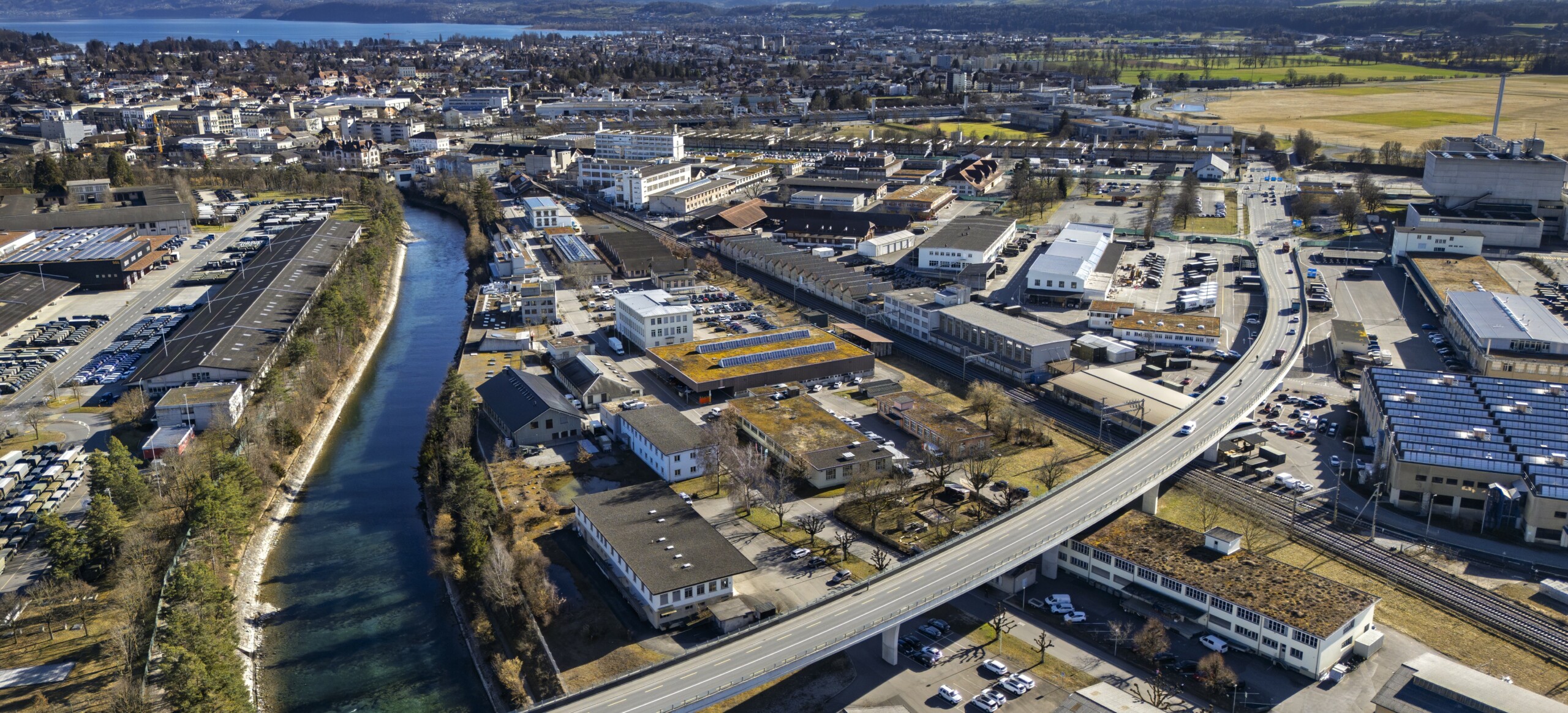
    Thun North is the largest urban development project in the Bernese Oberland. On the 60-hectare site, research companies, businesses and housing are replacing military use. in the long term, 6,500 jobs are to be created; around 2,300 are already located there today. A new Thun Nord S-Bahn stop is included in the federal parliament’s 2035 expansion plan and will connect the district directly to long-distance transport.

    Halter as a lever
    It is no coincidence that Halter AG is contributing CHF 5 million to the project as a development partner for construction site B5. The company won the project competition in 2022 together with Bauart Architekten and Balliana Schubert Landschaftsarchitekten. The composition shows the concept. Private capital and the public sector are pulling together, and the location is sharing the risk because it is thinking about the return.

    What counts now
    April 30 is the date that decides everything. If the city parliament approves the loan, planning gets underway. If the loan fails, the entire timetable is thrown into disarray. This would be a setback for Thun North and a location issue for Empa. The city has already paid its share of the bill. Now it’s up to parliament.

  • New production facility strengthens international industrial location

    New production facility strengthens international industrial location

    The new global Toblerone competence center in Bern now covers 90 percent of global demand for the iconic triangular chocolate. Guy Parmelin officially inaugurated the expanded plant on March 10. “We are incredibly proud of the new Toblerone production line and the modernization of logistics and infrastructure,” said plant manager Thomas Kauffmann in a press release.

    Mondelēz International, the Chicago-based parent company of Bern-based Mondelez Schweiz Production GmbH and Mondelez Schweiz GmbH in Opfikon, has invested 65 million Swiss francs in the installation of this new, state-of-the-art production line. This is one of the largest investments in the company’s chocolate production network in the past ten years.

    “If there is one product that represents Switzerland worldwide, it is chocolate,” said Parmelin in his speech, according to the press release. “And Toblerone has a very special place among Swiss chocolates.” It is “a symbol of Swiss identity and quality par excellence. Identity and quality. As President of the Swiss Confederation and Minister of Economic Affairs, I am therefore particularly pleased that around 90 percent of Toblerone production will continue to be made here in Bern on this new production line.”

    Toblerone is exported from Switzerland to more than 120 countries around the world. As Mondelēz emphasizes, the iconic 118-year-old brand is well positioned to grow globally in the premium segment, benefiting from its high brand awareness and leadership position in the World Travel Retail business. “We have always been proud to manufacture here in Switzerland,” said Iain Livingston, President for Toblerone and World Travel Retail. “The investment underlines our strong commitment to the site and is a key milestone on our journey to lead global growth in the premium chocolate segment.”

  • Renovation combines functionality, comfort and alpine location

    Renovation combines functionality, comfort and alpine location

    Heller Gastro AG will open its newly renovated and converted Eiger Lodge Grindelwald on 19 December 2025. The work centred on the renovation of the Eiger Lodge “Easy”, the older of the two buildings that form part of the Eiger Lodge. It was modernised between April and December. According to a press release, the investment volume totalled 4.5 million Swiss francs. The two hotel sections “Easy” and “Chic”, located directly beneath the north face of the Eiger, offer a total of 220 beds.

    according to the statement, 70 per cent of the order volume was carried out with local companies, while the remaining 30 per cent was carried out with companies from Bern and the Bernese Oberland. The new breakfast area now offers more space and large window fronts with mountain views. New kitchen facilities are intended to simplify processes behind the scenes. The reception and entrance area has also been completely refurbished. A sauna has been installed on the upper floor. An adjoining terrace is still under construction. The communal showers, which are part of the “Easy” multi-bed, double and family rooms, have also been completely renovated.

    The hotel has been the base for numerous mountain enthusiasts since the 1990s under the name Mountain Hostel. in 2015, it was taken over by Heller Gastro and renamed the Eiger Lodge. The company also operates the Eiger Mountain & Soul Resort Grindelwald on site.

  • Railroad modernization in the sensitive Alpine region

    Railroad modernization in the sensitive Alpine region

    STRABAG AG is carrying out the outstanding renovation work on the Zentralbahn line between Meiringen and Brienzwiler in the Bernese Oberland. The narrow-gauge line runs on a single track along the Hasliaare, which is part of the Aare flood plain. Out of consideration for several nature conservation areas, “maximum precision for logistics and coordination” is required for the new construction, according to a press release. Preparatory work began in March 2025 and the ten-week intensive phase has been underway since October 2025.

    Heavy rainfall events had repeatedly occurred in the area, causing the railroad embankment and superstructure to flood, resulting in damage to the railroad infrastructure and adjacent cultivated land. STRABAG already carried out track construction work there in 2022 and 2023 (lots 1 and 3). The modernization project will now be completed with a total reconstruction of the challenging middle section of lot 2 over a length of 2600 meters and in the middle of the Sytenwald nature reserve. This involves raising the railroad embankment. To allow surface and slope water to drain away, a continuous planned drainage system will be installed along the route. The area along the Hasliaare will receive a new flood protection wall.

    According to the press release, the “tight space conditions and local lack of redundant construction slopes in certain sections between the Hasliaare, the railroad line and several nature conservation areas” are a special construction feature, which requires special precautions for ecology and landscape protection. On the one hand, STRABAG is building 30 new foundations for the catenary masts on the side facing away from the river, and on the other, 37 crossings are to ensure the ecological continuity of the terrain. This means protection for wildlife and small animals when crossing the section.

    A particularly challenging component is the new construction of the Hüsenbach bridge made of ultra-high-strength and durable fiber-reinforced concrete (UHPC). During bridge construction, special consideration was given to the trout population present there at spawning time.

  • Modern logistics construction focuses on efficiency and sustainability

    Modern logistics construction focuses on efficiency and sustainability

    Transstahl AG, which belongs to Pestalozzi, is to be able to transport long and bulky goods even more efficiently and flexibly throughout Switzerland in future. The Pestalozzi Group is therefore building a new logistics center in Pieterlen, for which the ground-breaking ceremony has now been held, according to a press release. In addition to representatives from Pestalozzi and Transstahl, Beat Rüfli, Mayor of Pieterlen, and Simon Enderli, Head of Location Promotion for the Canton of Bern, as well as other guests also took part in the ceremony.

    The logistics center will be 100 meters long, 30 meters wide and 12 meters high. An energy-efficient heating system is planned, as well as a photovoltaic system and charging stations for electric trucks and cars. A large proportion of the materials used come from the Pestalozzi Group, which specializes in steel technology and building services.

    “With this ground-breaking ceremony, we are investing in the development of our group of companies and making a clear commitment to Switzerland as a business location and to working in partnership with municipalities and regions,” Matthias Pestalozzi is quoted as saying in the press release. He is the owner and Delegate of the Board of Directors of the Pestalozzi Group.

  • New brochures promote the use of Bernese wood

    New brochures promote the use of Bernese wood

    The cantonal platform of the Bernese forestry and timber industry, Lignum Holzwirtschaft Bern, aims to promote awareness of the forest and encourage demand for local timber. To enable authorities and administrations to use forests sustainably, the association of Bernese forest owners, the Bernese Sawmill Association, the Swiss Timber Construction Section Bern and Bernese Oberland, the Master Carpenters’ Association Bern and Bernese Oberland and Holzenergie Canton Bern has published a series of brochures entitled “Forest and Wood Compass”. The practical documents were compiled with the support of the Wyss Academy for Nature, Lignum Holzwirtschaft Bern explains in a press release.

    The “Forest and Wood Compass” series is divided into an overview brochure and three topic-specific brochures. The overview brochure is entitled “Forest and Wood Compass for Bernese Regions”. The three topic-specific brochures deal with regional wood in public buildings, efficient forestry structures and financial incentives to secure certain forest services. All brochures can be downloaded at lignumbern.ch/wald-holz-kompass/.

    The mandate for Lignum Holzwirtschaft Bern is managed by Volkswirtschaft Berner Oberland.

  • Campus in Biel/Bienne celebrates laying of foundation stone

    Campus in Biel/Bienne celebrates laying of foundation stone

    On 6 May, the foundation stone was laid for the new Biel/Bienne campus of Bern University of Applied Sciences on the former Feldschlösschen site near Biel railway station. An education and research centre for around 2,350 students and lecturers is to be built here by 2028, the Canton of Bern ‘s Department of Construction and Transport announced in a press release. Together with the federal government and a private partner, the Canton of Bern is raising around CHF 400 million for the construction of the new campus.

    The Bern University of Applied Sciences will unite its Departments of Engineering and Information Technology as well as Architecture, Wood and Construction at the Biel/Bienne campus. According to the press release, the open architecture of the new site will promote interdisciplinary exchange and creative collaboration. The campus is designed as a cloverleaf of three building wings around a common centre.

    “An inspiring environment is being created here that focuses on openness, interdisciplinarity and high standards of infrastructure and quality,” said Cantonal Councillor Christoph Neuhaus, Director of Construction and Transport of the Canton of Bern, in the press release. “The new campus is being built as a modern timber construction – a project that stands for sustainable, climate-friendly construction.” Glenda Gonzalez Bassi, Mayor of Biel/Bienne, sees the future campus “as a central location for the development of our region, for the education of our young generation and for attracting the talent that our economy needs now more than ever.”

  • Historical technology meets modern research

    Historical technology meets modern research

    Researchers from the Mechanical Systems Engineering department of the Swiss Federal Laboratories for Materials Science and Technology (Empa) in Dübendorf have been involved in the construction of a water pumping wheel in Steffisburg. According to a press release, the construction became necessary after the Zulg was lowered by two meters to protect the village from flooding. The Mühlebach stream, which had supplied Steffisburg’s businesses with water energy for centuries, was in danger of drying up, as was the surrounding ecosystem.

    The challenge was to adapt the plant to the requirements near Steffisburg. “With a minimum Zulg outflow of one cubic meter per second, it must feed at least 125 liters of water into the Mühlebach,” Silvain Michel, project manager at Empa, is quoted as saying in the press release, “and even with lower inflows, at least 100 liters per second must still be pumped in order to preserve the biotopes.”

    The model for the water pumping system was the pumping wheel developed by Walter Zuppinger in 1849. The water wheel, whose efficiency was scientifically confirmed in extensive tests in 2016, has already been used in the Glattfelden project installed by Empa.

    In the current project in Steffisburg, the water wheel was modified again and fitted with a separate drive wheel. In addition to Empa, the EKZ design office in Thun and CFD-Schuck GmbH were involved in the technical implementation.

  • Heat from a depth of 2000 meters planned

    Heat from a depth of 2000 meters planned

    The Federal Office for Buildings and Logistics (BBL) has announced an exploratory borehole for a planned geothermal project in Magglingen. Provided the necessary credit approval from the Federal Assembly and drilling permits from the cantonal authorities are obtained, deep water should be detected at a depth of around 1,500 to 2,300 meters.

    According to a press release, “several potential deep water reservoirs” are suspected there, which are to be used for a geothermal plant at the Magglingen National Sports Center of the Federal Office of Sport (FOSPO). The plant could supply heat there from 2029.

    This was preceded by underground investigations in 2023 by the FOBL. These were intended to help obtain a “geological image of the subsoil that is as precise as possible”. The exploration step that has now been announced is intended to further clarify whether the deep water is suitable for the economic use of a geothermal plant in the event of positive evidence.

    Seismic investigations are the basis of many geothermal projects to clarify the exact location of the deep water and because key figures such as water temperature, water volume and flow rate are lacking. The planned exploratory drilling reduces uncertainties and project risks.

  • Bern-Wabern heating network promotes energy transition and CO2 reduction

    Bern-Wabern heating network promotes energy transition and CO2 reduction

    The energy company Energie Wasser Bern(ewb) and the municipality of Köniz want to make a contribution to reducing CO2 emissions and achieving the climate policy goals of Köniz and Bern with the Bern-Wabern energy network, according to a press release.

    The ewb Board of Directors decided to build the Bern-Wabern heating network on March 7, 2025, based on the “great interest” of the population as determined by a survey. Construction of the production facilities is scheduled to start in 2027. The first heat supply is expected from 2028.

    Specifically, the heat production concept envisages using the energy from surplus water from the Schönau pumping station for thermal use. The production facilities will be installed in the existing heating center of the Morillon residential complex on Bondelistrasse.

    With the cooperation agreement that has now been signed, the heating and cooling supply in Wabern will be the responsibility of ewb, which is also responsible for the operational and financial responsibility for the construction.

    The heating network could help to promote the energy transition and climate protection. The sustainable energy project will create a replacement for many oil and gas heating systems in Wabern and the neighboring districts of Bern. “In densely built-up areas, a heating network is often the only solution for heating buildings with renewable energy in a CO2-free and economical way,” says Hansueli Pestalozzi, a local councillor in Köniz.

  • Company from Rapperswil BE wins prestigious business award

    Company from Rapperswil BE wins prestigious business award

    Gasser Ceramic has won this year’s Prix SVC Espace Mittelland. The family-run company based in Rapperswil in the Bernese Seeland produces tiles for roofs and façades as well as bricks and photovoltaic systems integrated into roof tiles. With around 200 employees, ten production lines and six kilns at four locations, the winning company is one of the leading Swiss companies in this sector, according to a statement from the Swiss Venture Club(SVC).

    “Nobody can get past Gassers,” jury president Jürg Schwarzenbach is quoted as saying in a statement from his laudatory speech. “During the jury’s visit, we felt the enthusiasm for the products and the pride of the employees in working for this traditional company.”

    Platit AG from Selzach followed in second place. The company manufactures high-tech systems for PVD coating. Its machines are used to emboss five-figure coins and gold medals and to coat the hinges and dials of luxury watches. Over 650 Platit coating systems are installed worldwide. The company also has branches in Europe, America and Asia.

    Third place went to Schwob AG from Burgdorf. The long-established company develops and manufactures high-quality table and bed linen for hotels, restaurants, clinics and residences with around 240 employees in its own Jacquard weaving mill. Schwob has five of its own laundries and 30 local partner laundries for cleaning. Schwob exports to facilities around the globe. Megasol Energie from Deitingen SO, a developer of solar modules and assembly systems, and Olwo, a production, trading and service company in the timber industry from Worb BE, were honoured with a diploma.

    The award ceremony took place in front of 1,300 guests in the Kursaal Bern. “The Prix SVC is far more than just an award,” said Reto Portmann, President of the SVC organising committee. “This prestigious event symbolises entrepreneurial spirit, innovative strength and the courage it takes to be successful in our dynamic and competitive world.”

  • Bernapark strengthens support for SMEs

    Bernapark strengthens support for SMEs

    The Centre for Innovation and Digitalisation (ZID) at ZID Bernapark AG is repositioning itself. Originally founded as a catalyst for early-stage start-ups, the centre’s scope of action will in future include SMEs and start-ups at all stages, the ZID announced in a press release. “The new strategy is an important step for the ZID”, Hans-Ulrich Müller, Chairman of the Board of Directors of ZID Bernapark AG, is quoted as saying. “It creates the basis for sustainable growth and strengthens our position as an innovation hub for SMEs in Espace Mittelland.”

    The ZID’s programmes are designed to offer practical solutions for current challenges in companies. In terms of content, the focus is on artificial intelligence, digital transformation and succession planning. In the first step of the transformation, the two formats KMU Update and KMU Upgrade will be introduced. KMU Update offers free networking formats such as skill share lunches and input workshops. KMU Upgrade is designed as a fee-based format for specific realisations.

    At the beginning of the year, the Swiss Venture Club also relocated its office to the ZID. The ZID is thus “expanding access to one of the largest SME networks in Switzerland”, according to the press release. “We are creating a platform that not only connects SMEs and start-ups, but also provides them with concrete tools for digital transformation,” explains Martin Hofer, Interim Managing Director of the ZID. “Our programmes are designed to implement innovations in a practical and efficient manner.”

  • Your opinion counts! – Creating living space together

    Your opinion counts! – Creating living space together

    One of the measures “B 2.1” aims to increase the level of knowledge about the prevalence and nature of objections and their effect on the approval process for construction projects. The Federal Office for Spatial Development and the Federal Office for Housing commissioned Dr Joëlle Zimmerli (Zimraum GmbH) and Dr Christian Brütsch (Stratcraft GmbH) to conduct the survey in order to create an empirical basis for reducing obviously abusive objections and speeding up procedures.

    Target groups of the survey

    • Lawyers who advise building owners or work at a court or in a licensing authority.
    • Clients, developers, architects and planners with experience in informal claims, objections and complaints.
    • Clients, developers, architects and planners who are willing to contribute case studies.

    Links for participation

    The links to the survey and the case studies can be found here:

    Survey: https://zimraum.limequery.com/267822?lang=de
    Case studies: https://zimraum.limequery.com/681486?lang=de

    Please allow approx. 20 minutes to complete the survey and approx. 15 minutes per case study. The survey and case studies can be completed anonymously and are open until 31 March 2025.

    Your support is needed
    We look forward to your participation and thank you in advance for your valuable time and commitment. With your help, we can create an empirical basis for measures to speed up authorisation processes and deal with abusive objections.

    Together we can pave the way for more living space! Thank you very much.

  • Berner Kantonalbank focusses on climate-friendly mortgages

    Berner Kantonalbank focusses on climate-friendly mortgages

    Berner Kantonalbank wants to significantly reduce greenhouse gas emissions from its mortgage portfolio by 2030. To this end, BEKB is supporting energy-efficient refurbishments with the introduction of myky mortgages, BEKB announced in a press release. They are based on the renovation calculator of the myky online platform.

    “Our customers benefit from preferential conditions when renovating their homes in an environmentally friendly way”, BEKB CEO Armin Brun is quoted as saying in the press release. “At the same time, we as a bank are promoting the reduction of CO2 emissions in our market area.” By 2030, emissions from financed residential properties are to be reduced by 45 per cent and those from other properties by 35 per cent.

    The myky platform was launched at the end of 2021 by BEKB together with Energie Wasser Bern and Gebäudeversicherung Bern. The start-up specialises in practical tips and tools to support homeowners. In addition to BEKB, 16 other cantonal banks are currently involved, represented by NNH Holding AG.

  • District heating project in Bern utilises the River Aare as an energy source

    District heating project in Bern utilises the River Aare as an energy source

    Energie Wasser Bern wants to supply the north-east of Bern with climate-friendly heat. To this end, the Bernese energy supplier is planning to build a corresponding heat production infrastructure, ewb announced in a press release. One of the sources of heat will be the water from the River Aare.

    Specifically, ewb wants to draw water from the Aare on the western bank at Engehalde and channel it into an existing cavern. Heat is to be extracted from the water here, which will then be transported to a new Aare Wyler energy centre to be built on the eastern side of the river. Properties in neighbourhoods adjacent to the energy centre could then be heated with district heating from the energy centre’s heat pumps. Ewb is also considering setting up a second, smaller Aare Engehalde energy centre on the west side of the river. It could supply the Tiefenau area with district heating.

    The company has already submitted a licence application to the Office for Water and Waste of the Canton of Bern for the construction of a catchment structure and the extraction and return of water from the Aare, explains ewb. The company expects a decision in spring 2026. In the meantime, a precise location for the planned Aare Wyler energy centre is to be found.

  • Sustainable construction projects launched in Germany and abroad

    Sustainable construction projects launched in Germany and abroad

    Implenia, the construction and property company based in the Glattpark district of Opfikon, has won several tenders for building construction contracts. According to a press release, the contracts have a total volume of 160 million Swiss francs.

    The company will construct the new office building of the Swiss National Science Foundation(SNSF) in Bern. The sustainable building will be constructed using local timber and recycled concrete in accordance with the Swiss Sustainable Building Standard (SNBS). Implenia has also been awarded several contracts in Germany.

    In Mainz, Implenia, together with its partners Gemünden and Apleona, was awarded the contract to construct a new 10,000 square metre research building for TRON. The research institute develops new diagnostics and active ingredients for immunotherapeutic treatments.

    In Leipzig, Implenia and its partner GP Günter Papenburg AG are building a seven- to eight-storey residential development on nine connected properties. In addition to 202 residential units, many commercial and ancillary premises are to be built. The buildings will be constructed as low-energy buildings in accordance with the Efficiency House 55 standard and the entire complex will be handed over on a turnkey basis.

    Three residential buildings with 101 units are being built in Munich, which should be ready for handover by 2026. Implenia will also realise a further stage of an ongoing project in Heilbronn and has been commissioned with a pre-construction phase in Siegburg.

  • Neue Regelungen für Kreislaufwirtschaft treten Anfang 2025 in Kraft

    Neue Regelungen für Kreislaufwirtschaft treten Anfang 2025 in Kraft

    Der Bundesrat hat beschlossen, die Mehrzahl der Gesetzesänderungen aus der parlamentarischen Initiative Schweizer Kreislaufwirtschaft stärken mit Wirkung zum Jahresbeginn 2025 in Kraft zu setzen. „Die Revisionen des Umweltschutzgesetzes (USG), des Energiegesetzes (EnG) und des Bundesgesetzes über das öffentliche Beschaffungswesen (BöB) schaffen einen übergeordneten gesetzlichen Rahmen für die Stärkung der Kreislaufwirtschaft in der Schweiz“, schreibt der Bundesrat in einer entsprechenden Mitteilung. Die neuen Regelungen sollen es ermöglichen, Materialkreisläufe zu schliessen und die Kreislaufwirtschaft bei Produkten und Gebäuden stärken.

    Dafür werden wichtige Grundsätze gesetzlich verankert. So werden Wiederverwertung und Wiederverwendung künftig grundsätzlich Vorrang vor der Verbrennung haben. Die Kantone sind angewiesen, Grenzwerte für die graue Energie bei Neubauten und wesentlichen Erneuerungen bestehender Gebäude festzulegen. Der Bundesrat bekommt die Kompetenz eingeräumt, Vorgaben zum ressourcenschonenden Bauen zu machen und Anforderungen für Produkte und Verpackungen vorzugeben.

    Mit Ausführungsbestimmungen verbundene Gesetzesänderungen sollen zu einem späteren Zeitpunkt in Kraft treten. Sie werden vom Bundesrat in den nächsten beiden Jahren in die Vernehmlassung geschickt. Dazu gehören die Bestimmungen zur Einführung einer schweizweit geltenden Busse für Vermüllung (Littering) sowie die Bestimmungen zu Ausnahmen vom Siedlungsabfallmonopol.

  • Prices for property in Bern remain on an upward trend

    Prices for property in Bern remain on an upward trend

    “Living in the canton of Bern remains expensive” is the headline of the Berner Kantonalbank(BEKB)’ s latest property barometer. It is compiled every six months by BEKB in collaboration with the Zurich-based property service provider IAZI. According to the autumn 2024 edition, prices for flats and houses in the canton of Bern have risen by 3.3% year-on-year.

    Asking rents are also on an upward trend. The experts at BEKB and IAZI point to strong population growth in the canton coupled with low new construction activity as the background to rising rents and prices on the housing market. “The unemployment rate in the canton remains at a historically low level and the number of job vacancies is steadily increasing,” the press release also states. As long as this remains the case, the housing market is not expected to ease.

    Within the individual regions of the canton, experts have observed a normalisation of price dynamics in tourist regions. Prices in the Oberland regions and especially Obersimmental-Saanen have been strongly driven by the second-home market in recent years. A stabilisation was registered here at the end of the third quarter of 2024. In Oberaargau, on the other hand, prices rose by an average of 3.9 per cent year-on-year. The experts attribute this to a shift in demand for residential property to regions with comparatively moderate price levels.

  • Boost My Startup Challenge 2024

    Boost My Startup Challenge 2024

    The Bern-based ClimateTech company Neustark has won this year’s Boost My Startup Challenge. According to a press release, Neustark came out on top against five other competitors in the competition organized by the consultancy firm WSP from Lucerne and the major Zurich bank UBS. The Bern-based company, a spin-off of the Swiss Federal Institute of Technology in Zurich(ETH), was recognized by the judges for its CO2 mineralization technology. According to the company, the process converts carbon dioxide into limestone, which is bound to the pores and surface of concrete granulate. The granulate carbonated in this way can then be used in road construction or for the production of recycled concrete. As Neustark forecasts, the company wants to store a total of 1 million tons of carbon dioxide from the air by 2030.

    The challenge now won gives the Bern-based company access to WSP’s teams, offices and customer network as well as support from UBS Growth Advisory. In addition, the company can benefit from funding, either from UBS Growth Advisory or from WSP.

  • Relocation and continuation of services

    Relocation and continuation of services

    Cilander is selling its properties in Herisau. Following the sale of the eastern part of the site to Rico Sicherheitstechnik AG, the western part will now be taken over by Herold Taxi AG, Cilander announced in a press release. The textile company had ceased production in Herisau following the takeover of strategic assets by the Chargeurs Group in July. The newly created SENFA-CILANDER Switzerland AG, headquartered in Herisau, will continue parts of the business under the umbrella of Chargeurs and in particular maintain production in Lützelflüh BE.

    Herold Taxi AG, currently based in St.Gallen, will move to the newly acquired site. “After a long search, we are delighted to have found a location that supports our growth for the benefit of our private and public customers,” said Managing Director Samuel Holenstein in the press release. “We look forward to continuing our history in Herisau and being there for our customers.” However, the services in St.Gallen will continue to be offered around the clock.

  • Future-oriented urban development in Bern

    Future-oriented urban development in Bern

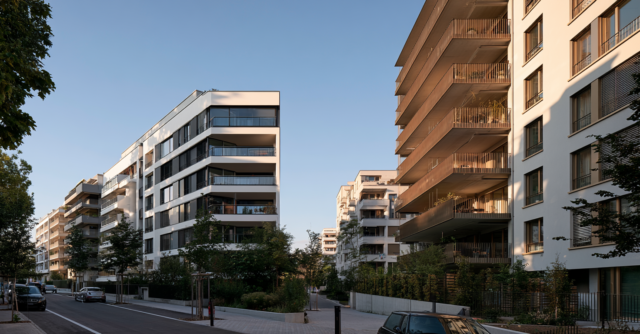
    Wankdorfcity 3 is located on a 34,000 square metre site in the north of Bern. An urban living space is being created here that goes beyond mere residential use. With this project, property developer IMMOFONDS is creating a dense neighbourhood that offers both living space and contact points for commercial and leisure activities. The direct connection to public transport creates a lively ecosystem characterised by interaction and exchange.

    Efficient planning and rapid approval
    The complexity of the planning for this project required innovative approaches and close collaboration between the responsible architects, urban planners and authorities. Gabriela Theus, Managing Director of Immofonds Asset Management AG, explains: “The efficient processing by the City of Bern and the collaborative partnership between all parties involved led to approval in accordance with building law without any objections – a record-breaking success throughout Switzerland.”

    Social and ecological sustainability
    Social sustainability is a key component. The creation of meeting places, communal spaces and outdoor areas will encourage interaction between residents. The planned urban garden and the varied open spaces characterise a place of togetherness.

    Diversity in living space
    In order to accommodate different lifestyles, the project offers a variety of living arrangements. From small flats and tiny houses to family-friendly townhouses and multifunctional communal areas – there is something for every target group. This diversity ensures a lively neighbourhood that meets the needs of its users.

    Innovative strength in urban development
    Wankdorfcity 3 is based on the innovative concept of the sponge city, which promotes sustainable water management in urban areas. Landscape architect Maurus Schifferli explains that rainwater is stored in special systems so that it can be released again in a targeted manner. This principle helps to regulate the local climate and shows how modern urban planning can combine resource conservation with aesthetics.

    Outlook for the next steps
    The final building permit marks the start of the realisation phase. The flats and the associated services and commercial space will be ready for occupation in stages from 2027. In the coming years, Wankdorfcity 3 will not only contribute to the quality of life in Bern, but will also serve as an innovative example of modern urban development throughout Switzerland. This pioneering project signals a new era of urban living that combines intergenerational living, inclusivity and sustainability.

  • EnBW acquires enersis to promote digital twins in the energy sector

    EnBW acquires enersis to promote digital twins in the energy sector

    Energie Baden-Württemberg AG(EnBW) has acquired the two sister companies enersis Suisse AG from Bern and enersis Europe GmbH from Kleinmachnow near Berlin, which specialize in digital twins in the energy sector, according to a press release. EnBW is thus strengthening its own technological and digital expertise, particularly with regard to digitalized distribution grids, so-called smart grids, according to the press release. “We identified smart grids early on as a field of innovation that is of strategic importance to us,” EnBW’s Head of Innovation Jürgen Stein is quoted as saying.

    For such smart grids, enersis offers its customers digital twins as a software-as-a-service solution. EnBW describes this as a central competence within the innovation field of smart grids. This is because such twins make it possible to create a digital image of distribution grids that is fed with various energy data in real time. Distribution grids will face additional challenges in the course of the energy transition if numerous small decentralized generation plants are integrated into the low-voltage grid. “An application like this helps us to expand and operate our infrastructure more intelligently,” says Stein.

    Enersis will continue to operate independently as a wholly-owned subsidiary of EnBW. The parties have agreed not to disclose the purchase price. All enersis employees will be taken over and both locations will be retained. The EnBW and enersis teams will work together over the next few months to ensure a successful integration.

  • World first: Intelligent plant care for indoors and outdoors

    World first: Intelligent plant care for indoors and outdoors

    “This year, Boum has ensured blooming balconies and terraces for over 1000 customers,” says Boum in a post on LinkedIn. The company, which was founded in 2021 as a spin-off from the University of Bern, has developed an intelligent system consisting of a solar panel, water tank, sensors and an app that autonomously maintains green balconies and terraces. Due to the positive feedback on its product, Boum has decided to “further develop the system for indoor use”, according to the article.

    After more than a year of development, Boum has now launched the plant care system for greening living rooms and offices. The substrate for the plants was adapted to provide the optimum soil moisture for indoor plants. The accuracy of the water supply has been improved with an additional safety valve. The tank and pots are connected “simply and inconspicuously” using additional tubing and discreet cable ducts.

    The app can detect whether the system is outdoors or indoors and provide appropriate care instructions. It also lets you know when the water tank needs to be refilled. “As of today, Boum is the smart plant care system for indoors and outdoors,” writes Boum on LinkedIn. “Everywhere where people want their lives to flourish.” According to company founder Matthias Erb, the intelligent plant care system is “a world first that makes greening indoor spaces simple and elegant from today”.

  • New energy supplier for Uettligen

    New energy supplier for Uettligen

    CKW has taken over the Uettligen heating network with effect from 27 August 2024. According to a press release, the energy supplier from Central Switzerland, which is part of the Axpo Group, intends to expand its decarbonisation strategy. The plants of the heating network north of Bern will continue to be maintained on behalf of CKW by the previous operator and main shareholder a energie AG from Schüpfen BE. Due to an adjustment in a energie’s strategy and the pending further expansion of the heating network, a buyer for the heating network was reportedly being actively sought.

    The acquisition of the Uettligen heating network joins the existing CKW portfolio of district heating networks such as Schüpfheim LU and Meggen LU. According to the press release, CKW will focus on modernising the plants and expanding the district heating network.

    “CKW is looking forward to the collaboration and is proud to be able to continue and further develop the well-functioning Uettligen district heating network,” said Rafael Mesey, Head of New Energies at CKW. “With CKW AG, we will have a reliable and strong partner for our customers in the heating network in the future,” adds Christian Cappis, the outgoing Chairman of the Board of Directors of the Uettligen heating network.

  • Innovations for the Swiss energy system

    Innovations for the Swiss energy system

    The RECIPE consortium has been awarded the contract for the 2023 round of the SWiss Energy Research for the Energy Transition(SWEET) funding program, the Swiss Federal Office of Energy(SFOE) announced in a press release. The call for proposals was entitled Critical Infrastructures, Climate Change and Resilience of the Swiss Energy System and was launched by the SFOE in collaboration with the National Center for Climate Services(NCCS). RECIPE is made up of the Swiss Federal Institutes of Technologyin Zurich(ETH) and Lausanne(EPFL), the University of Applied Sciences and Arts Northwestern Switzerland(FHNW) and the Lucerne University of Applied Sciencesand Arts (HSLU) as well as the business partners Swisscom, Infras and Zoï. The ETH is in charge of the project.

    As part of SWEET, RECIPE will analyze the dangers that threaten the Swiss energy infrastructure as a result of the restructuring of the energy system and climate change. At the same time, the associated risks for the economy, society, resources and the ecosystem will be examined. Based on this, RECIPE intends to develop measures to increase resilience and draw up specific recommendations for stakeholders.

    SWEET was set up to promote innovations that can make a significant contribution to implementing the Energy Strategy 2050 and achieving Switzerland’s climate targets. The program, which runs until 2032, is managed by the SFOE and carries out rolling calls for proposals on key topics of the energy strategy and long-term climate strategy. Only projects from consortia are funded. In the case of RECIPE, the funding program covers CHF 8 million of the total budget of CHF 10.5 million.

  • Striking building for Bern

    Striking building for Bern

    Schmidlin Architekten impressed the jury, chaired by Thomas Hasler, with its self-confident, modern architectural language. The free-standing new building sets clear accents and brings added value to the city of Bern by enriching the public space. The replacement for the 1984 extension, which was in need of renovation, will enable the Kunstmuseum Bern to strengthen its role as a cultural hub. By combining architectural quality and public accessibility, the museum will become a central place of exchange.

    Extensive architectural competition and transparent selection
    The international competition started in July 2022 with 148 applications and was held in two stages. 39 teams were selected to take part, 11 of which further developed their proposals. In the end, the jury decided in favour of the project by Schmidlin Architekten, which stood out thanks to its innovative approach and strong integration into the urban environment.

    Exhibition of the competition projects
    From 23 August to 24 November 2024, the Kunstmuseum Bern will be showing the designs from the architectural competition. The exhibition provides an overview of the winning project and all other entries submitted. Admission is free.

  • Urban forests are the backbone of biocities

    Urban forests are the backbone of biocities

    Jerylee Wilkes-Allemann, Senior Scientist in the Department of Forest Sciences at the School of Agricultural, Forest and Food Sciences at Bern University of Applied Sciences(BFH), argues that more attention should be paid to urban forests in urban planning. “These urban forests form the link between rural regions and urban areas,” the researcher is quoted as saying in a BFH article.

    Their diverse services for the ecosystem make them the “backbone of biocities”, the cities of the future. In these cities, green spaces act as central elements of holistic design. Trees and groups of trees, avenues, parks and urban forests provide cooling and thus counteract urban heat islands. They provide oxygen and at the same time filter pollutants from the air. They also provide recreational areas. This is why it is particularly important to protect and maintain forests close to cities, which make up around 18 percent of Switzerland’s forest cover.

    According to the expert, integrating trees into urban planning requires political will. But “unfortunately, the benefits and value of urban forests are still not recognized by many cities”. Trees and groups of trees are often “perceived as a burden, appear to be in the way and are removed”.

    In view of the great demand for living space, they also have a difficult time. However, she is convinced that urban forests are also possible in new construction projects: “In new buildings, existing trees should be integrated into the planning from the outset. This makes far more sense than first cutting down trees and then planting them again.”

  • New offices and meeting rooms completed in Bern

    New offices and meeting rooms completed in Bern

    The remodelling and renovation of the offices and meeting rooms at the Halter construction company’s Bern site have been completed. They were realised by Integral design-build AG, part of the Halter Group in Schlieren, within six months. The keys were handed over last week, according to Integral’s LinkedIn page. “By using recyclable materials such as wood, glass and metal, we have created a space that not only minimises our ecological footprint, but also reflects our values of sustainability and aesthetics,” it continues.

    The Halter site in Bern is growing and with it the “need for a larger and more inspiring working environment”, according to a Halter press release. Since the beginning of March this year, an additional 600 square metres of the former Denner site have been rented at the location in the House of Religions realised by Halter. The conversion phase, including dismantling, began in November 2023 and was successfully completed in July 2024. The expansion has increased capacity from 40 to 58 workstations. There are now also additional touchdown workstations and meeting rooms with modern equipment. The move has been successfully completed and the premises have already been filled with life.

    A particular highlight of the remodelling is the impressive staircase, which connects the two floors and creates an open and dynamic working atmosphere, according to the Halter press release.

    The Halter Group comprises a total of ten companies. The head office is in Schlieren, with further locations in Münchenstein BL, Bern, Kriens LU, Lausanne, St. Gallen and Geneva.

  • Punkt Rufer supports Bern in the circular economy

    Punkt Rufer supports Bern in the circular economy

    Punkt Rufer is developing a program for the Civil Engineering Department of the City of Bern(TAB). According to a press release from the Bern-based consultancy firm for corporate and sustainability development, the two-year project consists of five modules aimed at strengthening the circular economy in future construction projects and existing infrastructure. According to a post on LinkedIn by Philipp Rufer, Owner & Managing Partner of Punkt Rufer AG, the collaboration focuses on knowledge transfer, a lean innovation process and pilot projects derived from this.

    As part of the sustainable development of the city of Bern, the city administration wants to act as a role model and pursue the goals of Agenda 2030 in all areas. This includes a resource-conserving local and regional economy that functions in a circular economy. Punkt Rufer accompanies the project from the initiation, through the conception, development and implementation of a selected circular economy strategy. After implementation, the TAB employees receive final support with the aim of creating a motivated attitude towards the circular economy.