Category: Basel

  • Digital intelligence in construction

    Digital intelligence in construction

    “Planning is already highly digitalized, construction less so and operations more so,” explained Alex Walzer from the FHNW. A lot of information still gets lost between the project phases. This is a problem, particularly with regard to the circular economy. Walzer sees great potential in the consistent use of data. Learning from projects, designing buildings based on data, standardizing processes. But without a clean data basis and precise questions, even artificial intelligence remains ineffective.

    Consistent data with Lakeup
    Michal Rzinski from Bond BIM presented the Lakeup platform, a system for life cycle data management. It is designed to enable building owners and real estate organizations to use data in a structured way over the entire life cycle of a building. From the definition of requirements to ordering and evaluation, Lakeup creates data consistency and transparency.

    According to Rzinski, the focus is on people. “We want to pick up specialist planners, engineers and decision-makers in equal measure.” One example is provided by the University Hospital Basel, where AI agents automatically classified 25,000 data records, the basis for later applications. The platform has a modular structure, from specialist planning tools to corporate solutions.

    Virtual bathrooms and real decisions
    Things got practical with Patrick Marti from Hegias Vision. His platform combines 3D visualization with real-time data in bathroom renovation. Using an iPhone, rooms can be scanned, objects automatically recognized and designed in a digital environment. Customers can immediately see what their bathroom could look like, including materials, lighting moods and real product data.

    Together with BMS, Hegias is enabling a new, interactive consultation process. “People used to leave the showroom with a block full of product names, now they leave with a link to their dream bathroom,” says Ilona Lupart from BMS. The room scanner makes it easier to get started, speeds up decisions and increases satisfaction.

    People at the heart of digitalization
    In the final round, everyone agreed that automation cannot replace people. “AI should relieve the burden on advisors, not replace them,” emphasized Marti. Walzer emphasized that AI is particularly strong where large amounts of data are analysed or supply chains are optimized. Nevertheless, specialist knowledge, reflection and further training are still required.

    Rzinski added that Lakeup was deliberately designed to cover different levels of expertise, from data specialists to management. Lupart added that training, involvement and communication are key to reducing skepticism. Openness is more important than age: even 90-year-olds have used VR glasses enthusiastically.

    New skills and outlook
    Walzer sees a change at the FHNW. “Students today are working more collaboratively and critically with technology.” In addition to technical skills, soft skills, communication, understanding of interfaces and teamwork are increasingly in demand.

    Marti and Rzinski announced that they will continue to expand their platforms in the future. More automation, better user guidance and deeper integration of AI into existing processes. Walzer dares to look ahead “In ten years, AI will work as naturally in the background as electricity from the socket. The goal will have been achieved when building is fun again thanks to technology.”

  • Rankstrasse residential tower block

    Rankstrasse residential tower block

    In order to make optimal and sustainable use of the limited space on Rankstrasse, Basel’s “1000 ” residential construction program is based on a widely advertised, anonymous architectural competition. 78 teams showed interest, 15 selected projects were submitted and competed for the best solution. The expert jury was ultimately won over by “Miranda” by Zurich-based studio DIA, Haller Ingenieure and Hefti Hess Martignoni.

    Sustainability integrated into the architecture and social fabric
    The 88-metre-high building will provide over 100 new rental apartments based on the “Mietvertrag Plus” model, which is affordable and bound by income and occupancy rules. The outstanding feature is the innovative neighborhood concept. Three floors are connected vertically, creating inclusive meeting zones for diverse groups of tenants. The apartments have a compact and functional design, enable economical use of space and meet high ecological and economic standards. Green outdoor areas, communal spaces and resource-conserving construction methods underline the sustainability claim. The city is thus proactively committed to responsible, socially integrative urban growth.

    New benchmark for living on the outskirts of the city
    With “Miranda”, Basel-Stadt is launching a further development on the eastern outskirts of the city. The high-rise marks a striking prelude to future neighborhood developments and sets an architectural example of openness. The earliest start of construction is 2028, preceded by a development plan and public information. The focus on community, mixing, sustainability and architectural quality positions the project as a reference for modern, urban construction in Switzerland.

  • Roche site development Basel

    Roche site development Basel

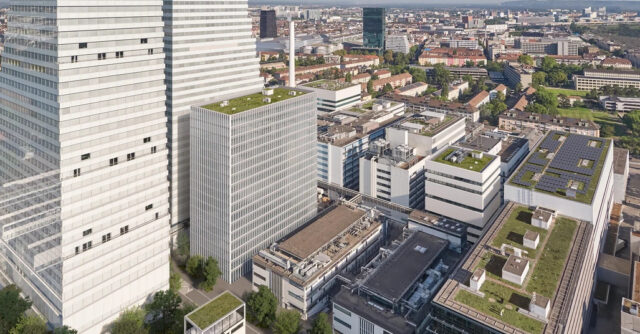
    The first development phase of the Roche site was completed at the end of 2023, and now a new stage follows. One of Europe’s most important research infrastructures will be built on the north site by 2030. The core project is Building 12, a 72-metre-high research and development building with space for around 450 researchers. The new building will replace the outdated infrastructure and create optimal conditions for developing novel active ingredients from basic research to production maturity. With an investment volume of around 500 million Swiss francs, Building 12 will become the central interface between research and clinical development.

    At the same time, the Institute of Human Biology in Building 92 will be expanded into a new center for biological model research. Around 100 million francs are being invested in the modernization and conversion. The aim is to link academic and industrial research in order to make complex human cell models usable for drug development.

    Production is also undergoing a fundamental overhaul. State-of-the-art facilities for the development and commercialization of synthetically produced active ingredients will be built in buildings 50 and 51 by 2028. A new era of pharmaceutical process innovation will be ushered in here with a modular design, digital control and high energy efficiency. The investment framework for these projects is around CHF 570 million.

    Sustainable urban development on the south site
    Parallel to the research on the north side, Roche is pursuing a long-term sustainable development strategy on the south site. The site on the Rhine is being redesigned in close consultation with Basel politicians. The revised development plan provides for generous green spaces, ecological networking along the banks of the Rhine and integration into Solitude Park. Old building structures will be gradually dismantled and building materials reused according to the principle of the circular economy.

    The Canton of Basel-Stadt is actively supporting this process. The cantonal government and the Grand Council support the approach of upgrading the southern area in terms of urban development without providing for public thoroughfares or expropriation. This means that the site will remain within the company’s own control, but will be opened up in the future through landscaping connections and new open space concepts.

    Signal for Switzerland as a business location
    Since 2015, Roche has invested around eight billion Swiss francs in its Swiss sites and over 33 billion in national research and development. In Basel alone, further facilities for research, production and infrastructure will be built by 2029, including a new underground heating and cooling center to ensure security of supply for the entire site. The construction work on the north and south sites is emblematic of sustainable, resource-conserving site development that combines business, the city and science.

    The next few years will be characterized by intensive construction phases, urban planning coordination and technological innovations. With the ongoing development of the site, Roche is not only strengthening Basel as a pharmaceutical location, but is also sending out a strong signal of its long-term commitment to Switzerland as a place for cutting-edge research, sustainable architecture and shaping the urban future.

  • Startups that are turning construction upside down

    Startups that are turning construction upside down

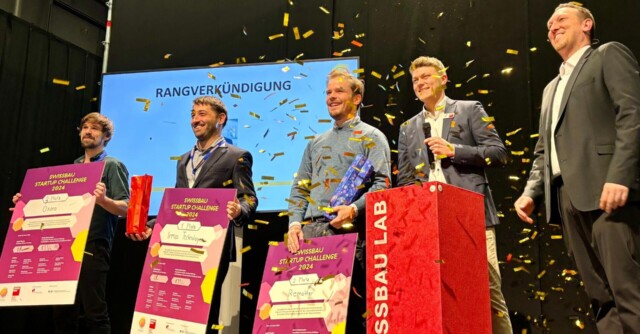
    Tobias Hofmeier (Swissbau) and Moritz Kistenmacher (Startup Academy) provided the framework for young companies to gain visibility, access to partners and a professional environment. Startups made up almost half of the 70 or so partners in the Swissbau Lab Innovation Village. A clear signal of the importance of entrepreneurial innovation for Swissbau.

    For Swissbau, start-ups are not a marginal phenomenon, but a core element of the innovation program. Under the motto “Setting new impulses together”, the aim was to tackle challenges such as climate targets, resource efficiency, productivity pressure and a shortage of skilled workers together. These topics are key and innovation is the key to startups continuing to bring speed and the courage for radically new approaches.

    As part of the challenge, the Startup Academy Switzerland provided particularly close support to young companies from the construction and real estate industry. Some startups that were still pitching in the Innovation Lab a few years ago are now present at the trade fair with larger stands. It is precisely this development, from early prototype to established market player, that sets the Challenge in motion and has an impact far beyond the trade fair dates.

    Politics and location promotion as a tailwind
    The importance of this was underlined by the welcoming address from Cantonal Councillor Kaspar Sutter, Head of the Department of Economic, Social and Environmental Affairs of the Canton of Basel-Stadt. The canton was the patron of Swissbau and supports companies in switching to circular business models with Basel Circular. The fact that the Circular Award was presented here for the first time was logical and makes it clear that the circular economy and climate targets are now at the heart of construction policy.

    Sutter emphasized how strongly Basel is geared towards promoting innovation and with programs that provide concrete support for companies and industries. His message has an impact beyond Swissbau. Start-ups are central to every economic ecosystem; without them, new fields of technology would be almost inconceivable. A similar situation is emerging in the construction industry. The industry can only cope with technological and regulatory change if new players with fresh ideas join it.

    The canton of Baselland is also consciously focusing on innovation with its location promotion. Thomas Kübler, Head of Location Promotion Baselland, spoke at the finale about framework conditions that should make it easier for start-ups to grow and scale. The repeated partnership in the Swissbau Startup Challenge shows that networks are not only established here selectively, but that long-term ecosystems are built up. A basis from which the industry also benefits after the trade fair.

    Construction is central to the Swiss economy, but causes high CO₂ emissions and large amounts of waste. Basel-Stadt is pursuing an ambitious net-zero target of 2037. Such targets permanently increase the pressure and demand for solutions such as those presented by the finalists and further developed in projects and pilot applications.

    Six finalists, six answers to the construction turnaround
    The six start-ups in the final were Aconitum Swiss, Benetics, Impact Build, Moduvo, Planlabs and Talpa Inspection. They represented different levers of transformation, from digital process optimization to circular materials and rethought construction site communication.

    What they have in common is their approach to improving construction and real estate practice in a tangible way and achieving less waste, more efficiency and better data. The ideas on stage at the Swissbau Lab are not visions in a vacuum, but solutions that can already be integrated into projects, construction sites and planning offices today, where they are already having an impact.

    Interiors without plastic
    Aconitum Swiss has developed a biological material made of polymer collagen that does not require plastic and therefore reduces energy, resources and waste. The aim is to provide permanently healthier solutions for people and the environment. Founder Dr. Vlada Snus goes one step further and uses recycled leather and upcycled building materials such as broken concrete, sand, recycled glass and old roof tiles to produce porous acoustic panels. These panels improve room acoustics, filter air pollutants, viruses and bacteria and help regulate temperature and humidity. The system is recyclable, reduces plastic consumption and is already being used in B2B business in Switzerland, Europe and the Middle East – with potential for further expansion.

    Construction site communication without paperwork
    Benetics tackled a perennial issue on construction sites: communication and documentation. Instead of clipboards, paper plans, notes and chaotic chat histories, the start-up relies on a cloud-based platform with a smartphone app. The person responsible speaks their instructions into their cell phone, an AI automatically structures the information and stores clear tasks in the system under task, responsibility, deadline, necessary steps and photos.

    This is a particular advantage in an international industry. Employees receive their tasks in their own language. This reduces the administrative workload, errors caused by misunderstandings are reduced and the data flows cleanly into existing systems. This has already been demonstrated in the use cases presented, and in future even more construction sites can benefit from the fact that the people on site can concentrate more on what really matters – building.

    Robotics and earth material
    Impact Build is rethinking building components from the material basis. The ETH start-up wants to produce wall elements without traditional formwork, using robot-assisted production and local resources. The “impact printing” process shoots dense masses of excavated material and rubble onto each other at high speed so that the layers bond over the entire surface and load-bearing elements are created.

    The components produced in this way can be cut to size, detailed, coated and modularly combined. They regulate humidity and temperature, are inherently fire-resistant and acoustically effective, and all this with lower material, labor and transport costs. With the Circular Award behind it, Impact Build is now strengthening its position to bring mobile robot factories close to construction sites, reduce emissions and gradually roll out the model internationally.

    Circular interior walls
    Moduvo has set its sights on the plaster wall as a disposable product. The aim is to make interior walls recyclable without completely turning the practice on its head. The start-up developed prefabricated, wood-based wall systems that are quick to assemble and just as easy to convert or reuse. Ideal for offices with frequently changing layouts. The system is complemented by a timber stud construction kit that can be processed in a similar way to traditional drywall construction. Craftsmen do not have to learn any completely new techniques, but the rules of the game are fundamentally changed with less waste, less gray energy and better life cycle costs. The startup is therefore well positioned to respond to current and future regulations on the circular economy and climate protection and to make new and existing buildings fit for future requirements.

    Building services at the touch of a button
    Planlabs starts where a lot of planning time and material is tied up, such as in technical building services. The cloud-based platform automates the planning of ventilation, heating/cooling and electrical systems. All systems are taken into account simultaneously with real manufacturer components, local standards, automatic dimensioning and collision checks. The aim is less oversizing, better coordinated systems and significantly reduced planning time. Variants can be run through quickly and sustainability targets can be defined more precisely. What was presented in the final gives planners more freedom for concept work and quality and creates the basis for future projects to be planned in a more robust, resource-efficient and better documented way.

    Early warning system for corrosion damage
    Talpa Inspection is developing a new type of inspection probe that can be used to detect corrosion damage to concrete structures at an early stage before it becomes a safety-relevant problem. The spin-off team from ETH Zurich is replacing time-consuming, selective on-site measurements and paper protocols with a digital process. The probe systematically records condition data, which is visualized in a 3D digital twin of the structure. This allows the risk of corrosion to be precisely localized and infrastructure operators know where and when they need to intervene in order to renovate bridges and other structures in a targeted manner and extend their service life. Winning the Swissbau Startup Challenge gave Talpa Inspection additional impetus to put this technology into practice on a broader scale.

    Countdown 2030
    Countdown 2030 is an association of experts from the construction industry around the startups. At its heart is the “Reduction Roadmap Switzerland”. It derives national and sector-specific quotas from a global CO₂ budget, which are to be broken down to municipal level. This allows municipalities to align construction projects and local development with the climate budget. Denmark serves as a role model. There, binding life cycle assessment obligations and ambitious reduction paths have already led to innovation, material substitution and conversions. The message from the Swissbau Lab is that without clear CO₂ quotas, sensible regulation and the interaction between politics, administration and the market, the turnaround in construction will not succeed. However, they open up new scope for the very solutions that were on show in the final.

    Circular Award Circularity as a guiding principle
    The Circular Award, powered by Basel Circular, was presented for the first time at Swissbau as an award specifically for circular business models. Basel Circular, a partnership between the Canton of Basel-Stadt and other funding institutions, supports companies in the transition from linear to circular models.

    Project manager Stefanie Sendes made it clear at the finale that the construction sector is responsible for the largest share of waste generation in Switzerland. Her point remains valid: the circular economy is much more than just recycling. Reuse, reparability, modular products and sufficiency along the entire value chain are crucial, and this is precisely where many of the start-ups presented come in.

    The 2026 winners
    The Circular Award went to Impact Build, an award that underlines the potential of robotically manufactured components made from recycled materials. Here, resource conservation, industrial scalability and design quality come together directly and create a basis for concrete projects in the coming years.

    In the Swissbau Startup Challenge itself, third, second and first place were awarded. Impact Build secured third place, Benetics came second with its AI-supported construction site communication and Talpa Inspection was the main winner of the final. This order remains a snapshot, but the real race will only begin once the solutions have proven themselves on the market.

    In the end, the Swissbau Startup Challenge proved to be much more than just a stage for pitches. It functioned as a laboratory for the construction turnaround and as a meeting place for startups, established companies, politics and administration. The fact that the construction industry is the winner applies not only in retrospect to the days of the trade fair, but above all when the innovations presented now find their way into the everyday lives of planners, contractors and operators.

  • New Center for Social Sciences

    New Center for Social Sciences

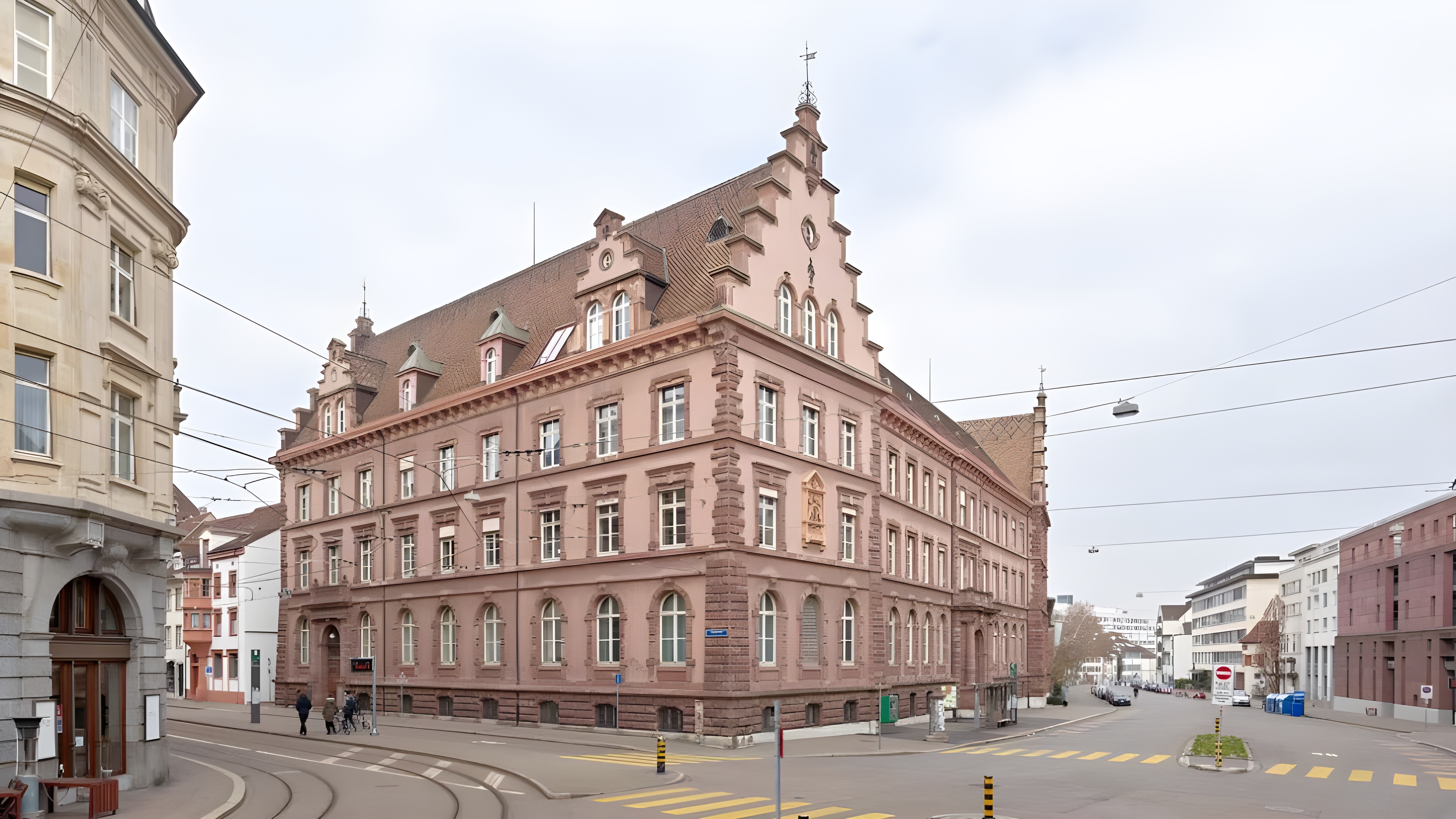
    The Alte Gewerbeschule, once built in the German Neo-Renaissance style, will remain architecturally and culturally significant following its extensive renovation. The Canton of Basel-Stadt is investing around 63 million francs in the renovation, which is based on strict monument protection regulations and current standards for accessibility and energy efficiency. Specialist departments and general planners are working closely with the cantonal monument preservation authorities to preserve the façade, interior and historical details.

    With the renovation, eight university departments, the dean’s office and central services will be concentrated at Petersplatz, which will strengthen academic dialog and the use of shared resources. The UVB Social Sciences will have a new, modern library in the inner courtyard and attractive learning and working areas on the mezzanine floor. This will create a university center for the humanities and cultural sciences with a high quality of stay and optimal infrastructure.

    Refurbishment under the banner of sustainability
    Construction work began in November 2025 and will last until summer 2029. The building will be modernized in terms of energy efficiency, made earthquake-proof and contaminated sites will be removed. The new interior design combines functionality and monument protection. Characteristic building elements will be restored and the technical infrastructure and flexibility of use will be brought up to the level of a modern campus. It is being carried out under the leadership of the cantonal monument preservation authorities and specialized architects, accompanied by federal expert committees, in order to ensure maximum protection of the historical substance.

    The Alte Gewerbeschule Basel will be an innovative bridge between academic excellence and historical identity. A strong signal for the future of urban learning.

  • Klybeckquai and Westquai as a hinge between the city and the future

    Klybeckquai and Westquai as a hinge between the city and the future

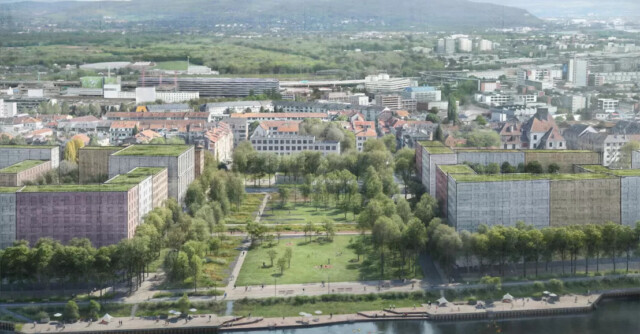
    Klybeckquai and Westquai have been among the most vibrant places in Switzerland for over a hundred years. This is where the city meets the port, the Rhine, the river Wiese and three countries. The ongoing modernization of the port infrastructure, in particular the relocation of the port railroad to the Südquai, opens the door to the urban transformation of this striking urban area. This will create unique opportunities for the Klybeck and Kleinhüningen districts. They are gradually moving closer to the Rhine and the River Wiese and gaining in quality of life and amenity. Urban growth, social diversity and sustainable integration.

    At the heart of the new development concept is the consistent expansion of the Klybeck district towards the Rhine. The plans include a variety of affordable apartments, neighborhood-friendly uses and spacious perimeter block developments that strengthen the urban climate with green courtyards. The striking neighborhood park, which will develop from the Ackermätteli, and an extended, widened Rhine promenade will connect the neighborhood even more closely with the river and offer space for encounters, leisure, recreation and nature. The barrier of the former railroad tracks will disappear, but the traces of industrial history will be preserved as an identity. The focus on pedestrian and bicycle traffic as well as a new streetcar line promote sustainable, future-proof neighborhood mobility.

    Westquai space for the future
    Westquai will initially remain an industrial and commercial zone, but will gradually develop into a new urban hotspot from 2030. The innovation area between the port, the Rhine and the border triangle offers space for work, urban production, leisure, gastronomy, culture and a variety of green and open spaces. The future use should remain open in order to be able to react flexibly to social developments. Existing buildings will be preserved as far as possible in line with the net zero target for 2037.

    More greenery, more opportunities, more quality of life on the waterfront
    With the expansion of the natural and open spaces by 20,000 m², half of the site now comprises high-quality green areas. A substantial contribution to the biotope network and urban climate. The new district park and the two-kilometre-long Rhine promenade make the river a tangible experience for the city’s population. The strengthened open space fulfills central requirements of urban development and will become the social heart of Basel’s urban network.

    Klybeckquai and Westquai will create urban life on the waterfront. Basel is using the interface between past and future, industry and innovation to give the city a new face on the Rhine.

  • Wolf-Areal Basel affordable apartments

    Wolf-Areal Basel affordable apartments

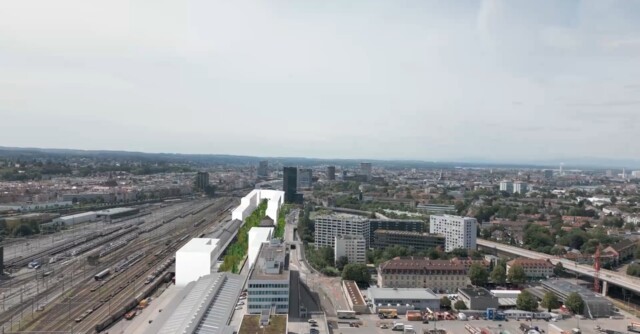
    SBB is pressing ahead with the transformation of the former Wolf freight station into an urban living and working quarter. As with the Volta Nord project, former railroad areas are being opened up for living, working and leisure.

    from 2028, around 270 apartments will be built on two building plots in the heart of the site, specifically positioned in the affordable segment.

    low-cost rent and contemporary forms of housing
    The Basler Wohngenossenschaft is planning around 150 cooperative apartments, while Vivanta is planning around 120 additional affordable units. All apartments will be built according to the cost-rent principle, which allows for moderate rents in the long term.

    the concepts are based on contemporary forms of living for different phases of life, from families to singles to older people. Communal areas and meeting zones are intended to strengthen neighborhood life and promote social networking.

    Non-profit partners with a clear mission
    BWG and Vivanta pursue an explicitly non-profit mission. To secure affordable living space while maintaining high quality and sustainability standards. The projects should demonstrate that ecological construction methods are compatible with affordable rents.

    building rights as a development instrument
    Building plots are allocated on the basis of a partnership-based building rights agreement developed jointly by SBB, the Federal Office for Housing and the Swiss Housing Association. This model creates reliable conditions for non-profit developers and accelerates the realization of affordable housing in city centers.

    with the development of the Wolf site, SBB is continuing to pursue its strategy of opening up areas that are no longer required for operational purposes for modern urban use and making a substantial contribution to affordable housing.

  • Basel becomes the building site of the future

    Basel becomes the building site of the future

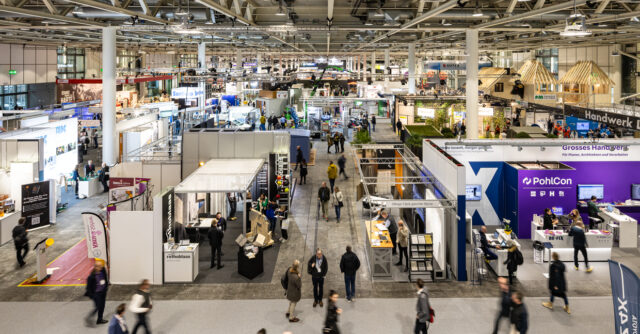
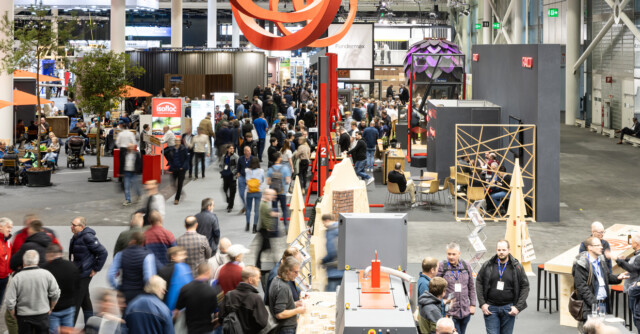
    When the doors to Swissbau 2026 open tomorrow, Messe Basel will be transformed into a vibrant center of the construction and real estate industry. 592 exhibitors and partners will showcase products, systems and ideas for sustainable building and modern living.

    Hans Wicki, member of the Council of States and President of the umbrella organization Bauenschweiz, opens the trade fair with the Globus Basel lighthouse project as an example of sustainable renovation. Accompanied by representatives from politics and business, the industry demonstrates how professional expertise, climate targets and building practice can be combined.

    Experience craftsmanship live
    In Hall 1.0, the focus is on a real construction project. A two-storey house is being built in front of visitors’ eyes. Over 15 craft businesses will be demonstrating their skills, from woodworkers to solar installers, from tile layers to plasterers. The project makes tangible what building culture means in everyday life.

    Right next door, a cooperation with the Swiss Painting and Plastering Contractors’ Association SMGV brings color into play. Decorative plaster textures, live training sessions by two Swiss master craftswomen and the “Swiss Prize for Plaster and Paint” exhibition – a marketplace full of ideas and dynamism.

    Sharing knowledge, shaping change
    The Swissbau Focus and Swissbau Lab platforms create space for dialog. Here, experts discuss the circular economy, climate adaptation and digital change in the construction process. High-caliber speakers and practical examples provide food for thought and show how the future can be implemented in concrete terms.

    Whether in specialist forums or in direct discussions, knowledge transfer remains at the heart of the trade fair. All events are included in the admission price. A clear plus for trade visitors.

    Rooms for inspiration
    Design lovers and interior professionals will find new inspiration in the Trend World Interior Design (Hall 1.2). Bathroom innovations, surfaces, light and materials combine to create an atmospheric world of experience. Like Swissbau Focus, the hall will also remain open on Saturday, providing space for encounters outside the working week.

    Looking to the future
    Swissbau 2026 is more than just a trade fair. It is a showcase for progress, a laboratory for solutions and a place where the industry and society work together on the construction of tomorrow.

  • Where the construction and real estate world is building its future

    Where the construction and real estate world is building its future

    Swissbau 2026 is more than just a trade fair. It is a seismograph of an industry in upheaval. Climate change, the energy crisis, scarcity of resources and a shortage of skilled workers are coming up against the rapidly advancing digitalization of the construction and real estate industry.

    the focus is on questions that will determine the future viability of a company today. How can we plan and build in a circular way? How can buildings become more energy-efficient and resilient? And how can digital tools be used to make processes simpler, more transparent and more collaborative? From design to operation.

    At the same time, there is growing pressure to visibly implement sustainable answers in projects, processes and products. Swissbau brings these topics together in a shared experience space where strategies, solutions and practical examples come together.

    focal points and highlights
    The trade fair sets clear focal points in terms of content. These include climate and energy, circular economy and materials, digitalization and collaboration as well as architecture and quality of life in the built environment. These topics will be presented in a practical and condensed manner in stage formats, guided tours and live demonstrations.

    highlights include premieres of new systems, materials and technologies that bring resource-saving construction and energy-optimized buildings to life. Live demos will show how digital planning, model-based collaboration and robotic production are changing the construction site and what opportunities this presents for efficiency, quality and occupational safety.

    how digital is Swissbau?
    Digitalization is no longer a stand-alone area, but runs as a common thread through the entire Swissbau. The focus is on end-to-end processes, from digital planning and BIM-supported collaboration to data rooms that connect planning, construction and operation.

    Platforms, tools and applications that make building data usable and thus contribute to more efficient project management, better decision-making and smarter operation will be presented at the trade fair. The physical trade fair will be complemented by an expanded digital presence that offers a program overview, streams of selected formats and extended dialogue opportunities before and after the trade fair days.

    The result is a hybrid knowledge and networking platform that goes far beyond the classic trade fair visit and enables companies to make their digitalization journey visible and think ahead.

    swissbau Focus Stage for dialog
    Swissbau Focus forms the heart of the trade fair in terms of content. In curated talks, panels and specialist events, associations, companies, universities and authorities discuss key issues relating to the future of the construction and real estate industry.

    The focus here is on framework conditions, strategies and specific responsibilities. How is the regulatory framework developing? What incentives are needed for climate-friendly and circular construction? What role do the public sector, real estate sector and industry play in the interplay?

    The character of the event is deliberately dialog-oriented. The focus is on exchange rather than frontal presentations, on controversial perspectives rather than one-sided product messages. This makes Swissbau Focus a place for managers and experts to sharpen their positions, form alliances and gain impetus for their own strategy

    Swissbau Lab and live craftsmanship
    While Swissbau Focus focuses on discourse, Swissbau Lab brings innovations to life. In a mixture of workshop, stage and laboratory, start-ups, established industry partners and educational institutions present new solutions. From digital tools and circular materials to pioneering construction processes.

    Formats such as the Main Stage, the Speakers Corner and thematic sessions focus on short, condensed inputs, best practices and direct exchange with the participants. This creates a field for experimentation in which new ideas can be tested, discussed and further developed. Close to practice, open to criticism and cooperation.

    At the same time, Treffpunkt Handwerk shows how much the building trade itself is changing. A two-storey timber house will be built live and companies will demonstrate work processes, tools and materials in operation. Digitalization, prefabrication and precision will be directly visible here, from smart tools to networked construction sites.

    Training, networking and safety
    A central concern of Swissbau 2026 is securing the next generation of skilled workers. Professional and industry associations, schools and training providers use the platform to showcase training paths, specializations and career opportunities. As well as to strengthen the dialog between young talent, companies and educational institutions.

    Networking runs through the entire trade fair. Lounge areas, themed meeting points and curated events offer space to initiate projects, deepen partnerships and forge new coalitions around the topics of climate, energy, digitalization and security.

    The topic of safety is broadly understood. From occupational safety on the construction site to building safety and resilience through to stable, trustworthy digital infrastructures. Swissbau 2026 shows that if you want to shape the future of construction, you not only need good products, but above all strong networks, shared knowledge and the courage to break new ground

    Trade fair dates and address
    Tuesday to Friday, January 20 to 23, 2026:
    9 a.m. to 6 p.m.
    All halls

    Saturday, January 24, 2026:
    9 a.m. to 4 p.m.
    Hall 1.2 and Hall 1.0 South
    Trend World Interior Design and Swissbau Focus
    www.swissbau.ch

  • Location policy in transition

    Location policy in transition

    Basel-Stadt has responded to international developments in the area of tax and location promotion with a revision of the Location Promotion Act, which was clearly approved by the Grand Council and the electorate in 2025. At the heart of Basel’s location package are two funds into which the cantonal government can pay between CHF 150 and 500 million annually, depending on the canton’s financial situation. 80 percent of the funds will flow into the promotion of innovation and 20 percent into the areas of society and the environment. A maximum of 300 million Swiss francs will already be allocated in the current year.

    Social added value through parental leave
    One component is support for voluntary parental leave that goes beyond the legal requirements. Companies that voluntarily grant their employees parental leave that goes beyond the statutory provisions can be reimbursed for up to three weeks of additional salary costs for mothers and fathers. This regulation strengthens the compatibility of work and family life and promotes a modern, inclusive work culture. A factor that is becoming increasingly important in the international competition between locations.

    Energy transition as a locational advantage
    The environmental section of the programme supports companies in Basel City that make targeted investments in decarbonization and energy efficiency in the canton and in Switzerland. Contributions are granted based on CO² savings achieved or energy saved. The canton can cover up to 40 percent of the investment costs of implemented measures. The reduction of the emission intensity of direct greenhouse gas emissions worldwide is also eligible for funding. The Basel location package complements and reinforces the other measures of the cantonal climate protection strategy with the goal of net zero by 2037. Basel-Stadt is thus setting standards throughout Switzerland for a practice-oriented climate policy that combines responsibility with economic rationality.

    Innovative strength from Basel for Switzerland
    The most important part of the Basel location package is the area of innovation. Here, the Canton of Basel-Stadt contributes to the personnel expenses of Basel-based companies for research and development. Depending on their size, companies benefit from graduated subsidy rates of up to 28% and additional contributions for depreciation on equipment for research and development and high-tech production. The canton also supports companies’ expenditure on clinical trials in Switzerland. This strengthens the canton’s profile as a leading innovation location and life sciences hub in Europe.

    A new balance between business and society
    The Basel location package is more than just a funding program. It is a strategic course-setting exercise to harmonize competitiveness, sustainability and social responsibility. The close involvement of business and politics has created a model that radiates beyond Basel – as an example of modern, future-oriented location promotion.

  • Renewable heating with district heating

    Renewable heating with district heating

    District heating is an important part of Basel’s climate strategy. Over 6,500 households and businesses are now supplied with environmentally friendly heat via 130 kilometers of district heating pipes. This is largely generated by using waste heat from the waste incineration plant and wood-fired power stations, which significantly reduces CO² emissions. By 2037, the network will grow to 180 kilometers and supply a large part of the city. The cycle works efficiently by heating hot water centrally, transporting it to customers, collecting it there and feeding it back into the plants.

    Innovative production
    A master plan forms the basis for ensuring that only renewable sources and waste heat are used to generate heat from 2035 onwards. IWB is relying on a large heat pump, which will use and label waste heat from wastewater treatment, to meet the increase in heat sales resulting from customer growth.

    Decarbonization and coordinated expansion
    The political mandate is clear. The canton of Basel-Stadt must become climate-neutral by 2037. IWB is investing over 450 million Swiss francs in the expansion of the district heating network and the associated infrastructure. At the same time, the gas network will be decommissioned in stages. For gas-heated properties, the transition will be planned early and transparently. The owners are informed at least three to four years before the shutdown and can apply for subsidies to replace the heating system. An interim solution can also be used to bridge the gap until district heating is connected.

    Planning the network expansion is a logistical and organizational feat. The expansion of district heating is coordinated with road renovations, greening, the renewal of electricity and water pipes and traffic planning measures. In densely populated districts, optimized construction times and efficient work processes are crucial. From planning to implementation, the Department of Construction and Transport, IWB and Basler Verkehrs-Betriebe work in partnership and in close coordination.

    Attractive connection solutions for owners
    Whether individual, multiple or shared connections, district heating can be obtained according to customer requirements. Cooperative connection models are becoming increasingly important, particularly in Basel’s city center, but also in densely populated districts. In the case of multiple connections, neighboring buildings are connected via house-to-house lines; in the case of community connections, several properties share a central heating station, which saves space and costs. Each property remains technically independent, but benefits from attractive conditions and efficient operation.

    Basel as a role model for the urban heat transition
    With the ambitious expansion of district heating and the gradual phasing out of fossil fuels, Basel-Stadt is focusing on a climate-friendly heat supply in the urban environment. The combination of renewable production, intelligent grids, coordinated expansion and cooperative connection models makes the transformation a successful example of a sustainable energy policy. For Basel, the region and Switzerland.

  • A new giant reorganizes the insurance market

    A new giant reorganizes the insurance market

    Since December 5, 2025, it has been clear that Helvetia and Baloise will only operate together as Helvetia Baloise Holding Ltd, listed on the SIX and with the abbreviation HBAN. Baloise has been legally merged into Helvetia, but the new brand is deliberately presented as a joint project with two strong roots. The last day of trading in Baloise shares marked a historic cut. Just three days later, the new Helvetia Baloise shares were traded for the first time.

    The merger will create an insurer that will change the industry through its sheer size. With over 22,000 employees, a gross premium volume of around CHF 20 billion and more than two million customers in Switzerland alone, Helvetia Baloise is the largest all-lines insurer in the country. A market share of around 20 percent is a clear statement: this group wants to play an active role in shaping the rules of the game in the Swiss insurance market.

    Power, markets and billions
    There is a clear rationale behind the merger: bundling synergies, reducing duplication and increasing clout. Helvetia Baloise is announcing annual cost synergies of around CHF 350 million, in addition to existing efficiency programs. For the capital markets, the message is as clear as it is attractive. Dividend capacity is set to increase by around 20 percent by 2029.

    For the market, this means a new pole of stability and competition. Such a large player can invest in technology, digitalization and new products in a way that smaller providers find more difficult. At the same time, there is growing pressure on other insurers to follow suit, forge alliances or occupy niches. The merger is therefore more than just a corporate deal. It is a signal of an imminent reorganization in the Swiss insurance market.

    Between new beginnings and job cuts
    The flip side of the synergies is the announced job cuts. Over the next three years, 2,000 to 2,600 jobs are to be cut, primarily in areas where duplicate structures currently exist, in administration, IT and the back office. The Group is emphasizing that the reduction will be as socially responsible as possible, with natural fluctuation, early retirement and internal transfers. For many employees, the merger means uncertainty, reorientation or parting.

    At the same time, Helvetia Baloise is making a clear commitment to Basel as a location. The Group remains anchored in the city on the Rhine and is positioning itself as an important employer and economic anchor in the region. Which locations will be strengthened, merged or scaled back will be communicated step by step, a long integration process that will be felt for years to come.

    What will change for customers
    Many things will remain stable for customers for the time being. Existing insurance contracts will continue to run under the agreed conditions, and the merger does not give rise to an extraordinary right of termination. In legal terms, rights and obligations will automatically be transferred to Helvetia Baloise. Initially, this should hardly be noticeable in everyday life.

    In the medium term, however, the picture is likely to change. Product ranges will be harmonized, duplicate offers will be eliminated and the more attractive or more efficient offer will be continued. The aim is to create leaner, more comprehensible product lines and a broader, standardized offering from a single source. From household contents to motor vehicle and buildings insurance. The Group intends to outline exactly what this new modular product system will look like as part of further integration communication and at an investor day in April 2026.

    A new beginning withan open outcome
    The merger of Helvetia and Baloise is more than just a balance sheet transaction, it is a new beginning with an open outcome. For Switzerland as an insurance center, the new giant brings strength, speed and investment power. For employees, it means both opportunities in a larger organization and the risk of losing their jobs. And for customers, it promises a more focused, modern offering in the long term if the Group succeeds in translating its size into tangible added value.

  • Expansion of Basel SBB West station

    Expansion of Basel SBB West station

    Basel SBB station has long since reached its limits. Over 140,900 people use it every day, and the trend is rising. With the Basel SBB West project, the partners are preparing the station for this development. A comprehensive extension is planned in the west of the site, where the train stop will be moved further west in future and additional access to urban traffic will be created. Two closely linked sub-projects form the core, the Margarethen platform access and the new construction of the Margarethen Bridge.

    The new passenger bridge for the Margarethen platform access is to run parallel to the existing Margarethen Bridge. It will be around 16.5 meters wide, have stairs, escalators and lifts and provide access to all platforms. To make this possible, SBB is extending several platforms to the west and adapting the track layout. The project thus responds to the expected growth in rail traffic and at the same time relieves the existing passerelle at the main station.

    Linking rail and city
    In addition to rail planning, urban integration plays a central role. The canton of Basel-Stadt is planning a new multimodal transportation hub to the west of the station, at the Markthalle site. Here, the transfer between train, streetcar, bus and bicycle is to become even more efficient in future. This reorganization will relieve the overcrowded Centralbahnplatz and enable a more balanced traffic regime in the city center.

    The Margarethen platform access is more than just a bridge. It will become a link between the new urban traffic axes and the rail network. It offers space, light and orientation. Features that are particularly important in highly frequented traffic zones.

    A new Margarethen Bridge with a signal effect
    The second sub-project is dedicated to the renewal of the Margarethen Bridge. The existing bridge is owned by SBB and only meets current safety requirements for heavy goods traffic with restrictions. In addition, it does not meet the future requirements of SBB and the canton on both the rail and road sides. The new bridge will therefore not only be structurally more efficient, but also significantly wider – 27 meters compared to 16.3 meters today. This will create space for a barrier-free streetcar stop in the middle of the bridge as well as wider footpaths and cycle paths.

    A temporary auxiliary bridge is planned during the construction period. The possibility of integrating this temporary structure into the new building at a later date is being examined. This solution should minimize construction interruptions and ensure urban mobility during the entire implementation phase.

    The winning project by Penzel Valier
    In the spring of 2025, an assessment panel of independent experts and representatives from SBB and the canton evaluated the proposals of six interdisciplinary planning teams as part of a study commission. The contract was awarded to Penzel Valier. Their design impresses with a generous, flexibly expandable roof that spans both the new streetcar stop on Margarethenbrücke and the platforms. This creates a hall-like space that characterizes the western part of the station.

    The roof fulfills several functions at the same time. It brings daylight onto the platforms, protects against the weather and allows the installation of photovoltaic systems and greenery. In terms of urban planning, this creates a harmonious link between the SBB station, the listed SNCF hall and the adjacent Gundeldingen and St. Johann districts.

    The SNCF hall itself will be retained in the context of the French part of the station and in its function as a platform canopy. This was a key concern of the conservation authorities. The hall will be moved to the west to create space for the new track layout.

    Planning, financing and time horizon
    The Margarethen platform access is part of the 2035 national rail expansion phase. The federal government has already approved the planning and preliminary project planning. While the Margarethen platform access is financially secured, the funds for the implementation of the new Margarethen Bridge are still being decided. Both projects can be built technically independently of each other, but should be realized at the same time if possible.

    The planning requirements are high. They take into account ongoing rail operations, the protection of historic buildings and integration into the dense city traffic. Construction is currently scheduled to start in 2034 at the earliest. The project volume for both project elements (platform access and bridge) is estimated to be in the low to mid three-digit million range.

    More than infrastructure – a new entrance for Basel
    Basel SBB West will not only provide the city with a strategically important transportation hub, but also a new entrance to the city. The relocation of train traffic to the west will create space for clearer traffic routing, a better quality of stay and greater safety for cyclists and pedestrians. In future, travelers will experience shorter routes, generous spaces and intuitive orientation.

    The interaction between trains, streetcars, buses and bicycles will become more efficient, more sustainable and more pleasant. At the same time, the project forms the structural foundation for future expansions such as the possible Basel SBB underground station. In its entirety, Basel SBB West thus stands for a new generation of railroad stations – open, networked and future-proof.

  • The fifth generation of the Basel agglomeration program

    The fifth generation of the Basel agglomeration program

    New impetus for space and transport
    The program marks a decisive step in the joint planning of landscape, settlement and transport across national borders. Germany, France and Switzerland are pulling together to make mobility in the tri-national area more efficient, safer and more climate-friendly. In the coming years, eleven new transport hubs will be built along the tri-national S-Bahn and Basel-Stadt is investing in a fully electrified bus fleet. Around 200 million francs have been earmarked for the upgrading of municipal streets and the promotion of pedestrian and bicycle traffic.

    Mobility with a future
    In essence, it is about more than just infrastructure. The agglomeration program is a coordinated response to the complex mobility needs of a region that uses busy international transport routes on a daily basis. The integrated planning of public transport, private transport, footpaths and cycle paths is intended to reduce traffic congestion and CO² emissions. The priority is to develop a sustainable transport system that increases the quality of life and attractiveness of the location.

    Broad political support
    Esther Keller, member of the cantonal government and President of Agglo Basel, emphasizes the success of the cross-border cooperation, which has been in existence for over 15 years. Isaac Reber, Director of Construction in Basel, sees the large number of small and medium-sized projects as the backbone of progress. Jean-Marc Deichtmann from Saint-Louis and Marion Dammann from Lörrach also emphasized the strategic horizon. This ranges from multimodal platforms to citizen participation that strengthens climate protection and spatial quality.

    Looking ahead to the sixth generation
    Work has already begun on the 6th generation agglomeration program. Submission to the federal government is planned for 2029, with the construction phase starting in 2032. The Agglo Basel association is continuing the coordination and ensuring that space, transport and landscape in the border triangle are not considered separately, but as a coherent project for the future.

  • ImmoTable Basel – Of superclusters, new bridges and the path out of digital antiquity

    ImmoTable Basel – Of superclusters, new bridges and the path out of digital antiquity

    [smartslider3 slider=”51″]

    Christof Klöpper, CEO of Basel Area Business & Innovation, kicked things off. He painted a picture of a region that is far more than “just” a pharmaceutical location. Although the life sciences supercluster remains a global leader, the innovation ecosystem has diversified.

    Supported by the three cantons of Basel-Landschaft, Basel-Stadt and Jura, the organization focuses on international start-ups and a public-private partnership that is strongly driven by industry. Klöpper’s message was clear: the task is not just classic location promotion, but the active provision of innovation infrastructure for an ecosystem that is constantly growing.

    Basel-Stadt and the 500 million lever
    Julian Kamasa from the Office of Economy and Labor underlined how the canton of Basel-Stadt intends to further expand its position as a leading innovation location, supported by around 800 life sciences companies and numerous start-ups. At the heart of this offensive is the new “Basel location package”, with which the canton will take on a pioneering role throughout Switzerland from 2025.

    With an annual budget of 150 to 500 million francs, targeted investments will be promoted. 80% of the funds will flow into an innovation fund that rewards research and development activities at the location in particular. The remaining 20 percent supports social and ecological goals such as parental leave or climate protection measures.

    The core message is clear. Those who conduct substantial research in Basel benefit the most. The canton wants to use this financial leverage to consolidate its position as a leading European healthcare location, build up targeted tech expertise and transform the economy towards a circular economy. The great potential of urban transformation areas plays a key role in this.

    An urban planning liberation
    The presentation by Marko Kern (SBB) and Marc Février (Canton of Basel-Stadt), who presented the winning project for the new Margarethenbrücke bridge and platform access, took a concrete turn. A key project for future mobility. In view of the massive increase in passenger numbers due to the SBB expansion phase 2035 and the desire for more space for streetcar and bicycle traffic, the old bridge needs to be replaced.

    Following a study commission process, in which the listed SNCF hall posed a particular challenge, the project by Penzel Valier AG won out. It envisages a slender, elevated bridge with a green roof. This creates more space for all road users and integrates a new, barrier-free streetcar stop in the middle of the bridge.

    The benefits of the project are manifold. It improves the transfer at the SBB railroad station, relieves the Centralbahnplatz, optimizes the bicycle and pedestrian connections between Gundeldingen and the city centre and creates clear added value in terms of urban development with over 11,000 new bicycle parking spaces and additional green spaces. The costs in the low to mid three-digit million range are being borne jointly by the federal government and the canton, and the project is a prime example of successful cooperation.

    Out of the “digital antiquity
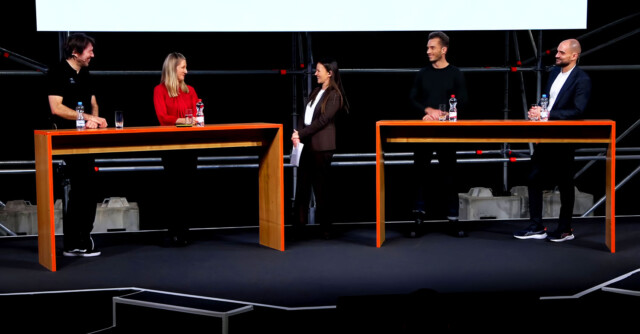
    Isabel Gehrer (pom+) held up a critical mirror to the industry. Her presentation “From digital antiquity to the industry of the future” showed the discrepancy between Switzerland as a world champion of innovation and a construction and real estate industry that provocatively remains in “digital antiquity” in terms of digital maturity.

    While Switzerland once again takes first place in the Global Innovation Index 2025 and Basel is home to three of the top 10 investors in Roche, Novartis and Syngenta, the real estate industry invests significantly less in innovation than other sectors. Only BIM has really caught on.

    Gehrer referred to Bill Gates’ concept of the “Green Premium”. Sustainable solutions must become so efficient that they no longer cost a premium. She cited the automotive industry as an example of success, where battery costs have fallen by 80 percent since 2010, making electric cars suitable for mass production.

    Her approach comprises four points. Securing research infrastructure through better networking between universities and industry, increasing research and development intensity, mobilizing venture capital for PropTechs and conducting strategic foresight in order to use transformation areas such as Klybeckplus as experimental spaces. Her appeal to the industry: “Let’s make it real.”

    Real Estate Award 2026
    To conclude the ImmoTable, Mara Schlumpf turned her attention to the coming year. The next Real Estate Award will take place on October 22, 2026 at Trafo Baden and will bring together around 300 decision-makers from the industry. The gala combines award ceremonies with top-class networking. Outstanding projects and companies will be honored in five categories, such as sustainability, digital, marketing, project development & innovation and the real estate personality of the year. The target group includes project developers, real estate and construction companies, investors, politicians and the media. For partners, the award offers exclusive visibility and access to a first-class network.

    The immoTable event impressively demonstrated that Basel has the capital, the infrastructure and the political will to change. Now it is up to the real estate industry itself to use the funds and areas provided with the necessary innovative spirit and to take the leap from digital antiquity into the future.

  • Between stability, housing protection and growth pressure

    Between stability, housing protection and growth pressure

    Current mood in the Basel real estate industry
    The current situation is ambivalent. On the one hand, Basel enjoys great economic stability and a strong real economic basis, as current market analyses confirm. On the other hand, the shoe is on the other foot when it comes to the actual production of living space. In an international comparison with Paris, San Francisco or London, for example, the cost of housing is still moderate in relation to wages in Basel. But the mood is gloomy. Housing production is not doing well. This is not so much due to a lack of investors, but rather to complex planning processes and home-made hurdles.

    The challenge of housing protection
    A central topic of the debate is Basel’s “housing protection”. The law, originally intended to ensure the social compatibility of renovations and protect tenants, is proving to be an obstacle to investment in practice.

    The criticism is that although the housing protection is well-intentioned, it actually reduces supply. If refurbishments become uneconomical due to excessive requirements, they simply do not take place. Although adjustments have already been made to the ordinance, for example to facilitate energy-efficient renovations, the uncertainty remains. Fewer new apartments are coming onto the market, while immigration continues. This is exacerbating the very shortage that was supposed to be combated. Anyone looking for an apartment today, whether due to family matters, a job change or a move, will find a dried-up market and high prices. The regulation thus protects the existing stock, but puts those who want to enter the market at a disadvantage.

    Lessons for other cantons
    A look across the border shows that Basel currently serves more as a warning than a role model in terms of regulation. The introduction of strict protective provisions is reminiscent of past mistakes (interest rate and regulatory policy 40 years ago). The lesson for other cantons is therefore that supply should not be artificially reduced when it is increasing.

    Another phenomenon is the conversion of office space. What was hardly conceivable four years ago due to yield expectations has suddenly become attractive due to rising interest rates and changing office markets. However, these transformations usually do not create affordable living space, but rather high-priced offers.

    Basel in the Switzerland of 10 million
    Switzerland is growing and Basel is growing with it. The city has enormous potential in the form of former industrial sites (e.g. Klybeck Plus) and transformation areas. Investors would be willing to develop and densify these areas. But the problem is the length of time involved. Planning processes, such as the one for the Klybeck site, take 5 to 6 years before construction can even begin.

    For a Switzerland with 10 million inhabitants, there is no alternative to inner densification. Compromises have to be found, as was the case with the “climate cardinals” initiative. Areas over 30,000 m² should be allowed to be built on more densely, but must meet strict ecological and social criteria. It is important to understand the investor side here, especially pension funds. These manage trust funds for retirement provision and cannot simply cross-subsidize living space. Planning security is the hardest currency here.

    Future and solutions
    What does the future look like? Above all, the sector is calling for acceleration and flexibility. As in Germany, we should discuss the planning turbo and mechanisms would be needed to drastically shorten approval procedures. The real estate of the future must be flexible. What is an office today must be able to be an apartment tomorrow and perhaps an office or logistics space the day after tomorrow. Fragmented monostructures are no longer in keeping with the times. The fear of growth must give way to a desire for design. Quality is created through good internal densification and a mix of uses, not through stagnation.

    The means and the capital would be available to alleviate Basel’s housing shortage. What is lacking is a regulatory environment that enables rather than prevents investment and a planning process that keeps pace with the speed of social change.

  • Basel Area has developed into a life sciences supercluster

    Basel Area has developed into a life sciences supercluster

    Specifically, Basel Area Business & Innovation works on the one hand to attract foreign companies that are expanding to the Basel region. On the other hand, the non-profit organization supports innovative start-ups in their foundation. In both areas of activity, the focus is on the region’s leading industries of life sciences, healthcare technology and production technology.

    As a third pillar, Basel Area Business & Innovation operates the Switzerland Innovation Park Basel Area, which is also home to its own accelerator programs BaseLaunch and DayOne. At its three locations on the Main Campus in Allschwil, the Novartis Campus in Basel and in the canton of Jura, the Innovation Park offers a large number of start-ups a state-of-the-art infrastructure and a wide range of services so that they can concentrate on research and promising projects.

    The Basel Area has undergone enormous economic development in recent decades. The constant transformation of the business location has been decisive. Silk ribbon production in the 19th century gave rise to the chemical and pharmaceutical industries. At the end of the 20th century, the chemical and pharmaceutical industries finally went their separate ways and the pharmaceutical companies Roche and Novartis subsequently left their mark on the location. Over the past 20 years, small, agile biotech start-ups and private research institutions have enriched the ecosystem. Today, the Basel Area is regarded as Europe’s most important location for pharma and biotech and as an actual life sciences supercluster, in which the healthtech and medtech sectors are also strongly represented.

    The Basel Area’s life sciences ecosystem currently consists of more than 800 companies, over 1,000 research groups and around 35,000 specialists. It is unique in Europe that the entire value chain is represented in the Basel Area. From basic research at university institutes to the further development of innovations in the laboratory by start-ups or the research and development departments of established pharmaceutical companies through to the market launch, production and distribution of medicines.

    The Basel Area also offers the opportunity to conduct clinical trials at local hospitals and to be supplied with active ingredients by various pharmaceutical suppliers. CDMO Lonza, Bachem, Primopus, Celonic, Corden Pharma and ten23 health are all present in the Basel Area. There are also plenty of local service providers that are necessary for the functioning of the life sciences industry, for example in the areas of logistics, consulting and ICT.

    The academic landscape has developed in parallel with the growth of the industry. While the University of Basel has long focused on life sciences, the Department of Biosystems Science and Engineering at ETH Zurich was added a few years ago. It expands the research capacities of privately financed institutes such as the Friedrich Miescher Institute, Roche’s Institute of Human Biology and the Botnar Institute of Immune Engineering.

    Finally, the infrastructure is another ace up the Basel Area’s sleeve. Additional laboratory space has been created in recent years, and more will follow in the coming years. Companies that need laboratories can now choose from numerous providers such as Superlabs, iCITY Reinach, Tech Park Basel or Switzerland Innovation Park Basel Area. Office space with meeting rooms is also easy to find, whether in a coworking area, a dedicated office or an open-plan office.

    In short, the Basel Area boasts a uniquely high density of companies and specialists in the life sciences sector. No other location in the world has so much to offer in so little space.

    Find out more:
    www.baselarea.swiss
    www.baselsupercluster.com

  • Basel is building the future with responsibility

    Basel is building the future with responsibility

    Mr. Hess, you have been involved in the Basel economic region for many years in various roles. What milestones or formative developments have you particularly remembered during this time?
    Today, politics and administration are much more interested in the needs of the economy than when I started working for the canton. Visible examples of mutual trust are the site developments by Novartis, Roche and Lonza and the multi-billion euro investments by these and other companies at the location. In addition to nurturing existing companies, Basel-Stadt has also massively increased its promotion of innovation. Since 2024, almost 68 million francs have been invested over eight years in nine programs in the areas of life sciences, digital innovation and the sustainable economy. The latest addition is the Basel location package. Depending on the budget situation, the canton is investing between 150 and 500 million francs per year in strengthening the attractiveness of the location. Almost all of the money goes to companies in Basel.

    Basel is considered one of the most dynamic business locations in Switzerland.
    How do you assess the current economic situation in the canton of Basel-Stadt?
    Thanks to our industry structure, Basel-Stadt is doing well economically. The erratic economic policy of the USA has hardly left any traces, even if it does pose challenges for our companies. The current position of the location can be seen, for example, in the cantonal competitiveness indicator of UBS, where Basel-Stadt is again in second place of all Swiss cantons this year. Or the triple A rating that the rating agency S&P has once again awarded the canton. Both encourage us to continue on our chosen path – as an innovative and reliable partner to the economy.

    What is the current focus of location promotion for urban areas and residential construction?
    The cantonal development plan envisages a population and employment target of 220,000 by 2035. People need living space, but also areas to work and ideally short distances between home and work. We strive to provide companies in the canton of Basel-Stadt with sufficient available high-quality space as a locational advantage. A particular focus here is on securing production space and an optimized supply of space for scale-ups.

    What are the challenges posed by a shortage of space and high demand? How is Basel-Stadt solving these?
    A major challenge in Basel-Stadt is the competition for space in the limited space available due to cantonal and national borders. We often hear from those involved in real estate project development that it is not a problem to build upwards in Basel. It is also important to make optimum use of the potential of the transformation sites in order to create more space for living and working areas.

    What are the most important findings from the Basel location package for site development?
    The Basel location package is attractive for site developers and investors, as taxable companies in Basel-Stadt that spend on research and development, parental leave, climate protection and energy efficiency can receive substantial subsidies. This facilitates the establishment and promotes the growth of companies on sites in the canton.

    How does the canton of Basel-Stadt accompany and support the transformation of industrial sites into modern residential and working quarters?
    Through an active and systematic exchange with companies and landowners. At the AWA, we not only know about a company’s confidential, potential development steps, but can also provide the company with the necessary development sites.

    What role do investors and developers play for Basel today?
    Both play an important role. They invest in underutilized, partially derelict land in order to develop it and generate substantial added value for Basel as a location. However, transformation sites are also in the public eye due to their size. All parties involved must take this responsibility into account.

    How does the promotion of start-ups and life sciences contribute to real estate development?
    A concrete example: the canton has been operating the Tech Park Basel for 14 years. We offer small-scale laboratory and office space there at attractive rental conditions. Start-ups that outgrow Tech Park Basel then look for larger spaces on commercial terms. We are therefore producing a pipeline of mature, well-financed startups (mostly biotechs) for the benefit of the private, unsubsidized real estate market.

    What future trends do you see for Basel up to 2030, particularly with regard to digitalization and new forms of work?
    Job quality is much more important today than it used to be. Digitalization could further drive the flexibilization of space rental. Our experience shows that some companies are looking for rental space where, for example, a meeting room can be booked flexibly via an app. Although Basel has a healthy supply of office space, it is still not so easy to find this type of space through real estate agencies.

    They will enter a well-deserved retirement in the next few years.
    What skills are particularly important for your succession?
    Skills are important. But personal qualities are even more important. These include entrepreneurial thinking, enthusiasm, a willingness to learn, perseverance and the joy of working together in a great team to develop the site every day. I have a bit of a problem with the term “retirement” anyway. I love my work as a “public entrepreneur” and would like to remain involved in areas that are important to me personally even after I leave my current position in May 2027.

  • Education cluster Polyfeld Muttenz

    Education cluster Polyfeld Muttenz

    The canton of Basel-Landschaft is combining the BBZ BL, the Muttenz grammar school and the Zentrum für Brückenangebote into a joint secondary II campus at Polyfeld. Stage 1 focuses on the dismantling and conversion of the existing tower, which has been gutted from top to bottom, decontaminated and completely dismantled in the core area. The core walls, staircases, floor slab and foundations were removed in a controlled manner over an area of around 20 by 20 meters.

    To ensure that the slender tower remained stable during the conversion and new construction, temporary bracing with heavy steel frames was installed on each floor. At the same time, the new construction of the building core and the construction of the new main staircase, which is to become a design center of the BBZ as a freely suspended prefabricated construction in exposed concrete, began.

    Exposed concrete, workshop building and triple sports hall
    All new buildings in stage 1 will be constructed in high-quality exposed concrete, with a project-specific formwork and concreting concept for uniform surfaces. The workshop building, which is around 55 meters long and 26 meters wide, is being built in three stages so that walls, columns, earthquake walls and ceilings can be constructed in parallel on each floor.

    The new triple sports hall will have a complex supporting structure made of pre-stressed prestressed concrete beams, which will be assembled in stages, provisionally supported and pre-stressed after the ceiling has been concreted. This allows the hall to be flexibly divided into three smaller units at a later date. An external spiral staircase with specially developed formwork provides an architectural accent. The adjoining assembly hall and canteen is a prefabricated construction, combining exposed concrete with a composite timber ceiling and functionally linking the different parts of the building.

    Life science training building in the Polyfeld
    Parallel to the cantonal campus project, the Polyfeld is being given an additional focus with a new life science training center. The Basel district council has approved a contribution of around two million francs for this. Around CHF 1.7 million for the construction of the new training location at Birsfelderstrasse 46 and around CHF 390,000 for special laboratory equipment. The new building will have a net floor area of around 19,500 square meters. Cantonal funding will be provided for an eligible floor space of around 1,400 square meters.

    The project is sponsored by the Aprentas training association, which intends to combine its existing locations on Lachmattstrasse and in Schweizerhalle in the new building. Aprentas, which originally emerged from the Novartis environment, offers inter-company courses for EFZ training in chemistry, biology and chemical and pharmaceutical technology. The cantonal funding strengthens Muttenz as a life science training location and complements the Polyfeld secondary school campus with a clearly profiled, practice-oriented training infrastructure for regional industry.

  • Basel Economic Area – Facts and Figures

    Basel Economic Area – Facts and Figures

    Living and working in the Basel region means being part of one of the most dynamic metropolitan areas in Europe. Between the pharmaceutical campus, architectural icons and growing start-up ecosystem, the region is a powerful driving force in Switzerland. The Basel metropolitan region is one of the most powerful business locations in the country. With an exceptionally high export rate and internationally leading companies in the life sciences, medtech, chemicals and ICT sectors. Over 30,000 people work here in the research, development and production of future technologies.

    A new era of value creation is emerging in the Basel region with sites such as uptownBasel and Klybeckplus, which are networked, climate-conscious and internationally oriented. Companies find short distances to research, talented people find new professional horizons and the location promotion programs of the cantons of Basel-Stadt and Basel-Landschaft, as well as Basel Area, accompany companies from the idea to expansion. Whether promoting innovation, developing skilled workers or ESG-compliant new construction projects, the region makes targeted investments in sustainable growth.

    Did you know that..

    • an urban quarter is being created on the bi-cantonal Dreispitz site that combines working, living and culture in a new way?
    • the Klybeckplus site is being developed according to the SNBS standard and will provide space for 15,000 people to live and work?
    • the BaseLink site in Allschwil is attracting worldwide attention as a center for biomedical research?
    • Basel is one of the world’s top regions for life sciences?
    • innovative energy solutions from the region are contributing to the decarbonization of Switzerland?
    • start-ups from all over the world settle here because of the proximity to cutting-edge research and capital?

    Where business and quality of life go hand in hand
    Basel is strong because of its cross-border thinking. The tri-national cooperation with Alsace and South Baden creates a cross-border economic area with a high level of innovation. The region benefits from international connections via EuroAirport, efficient rail logistics and links to the world’s oceans via the Swiss Rhine ports. Behind the scenes, there are dedicated location promotion agencies that assist companies with relocating, finding space, obtaining permits and networking. From start-ups to industrial groups – Basel offers everything from a single source. Basel is not an either-or. Basel is the whole. The future is being created here today.

    The Basel economic area in figures

    Basel-Stadt

    ECONOMY – KEY FIGURES
    Businesses16’000
    Leading sectorsChemicals/pharmaceuticals, life sciences, financial services, trade, logistics, healthcare
    Jobs / employees200’000
    Employees 1st sector (agriculture)100
    Employees 2nd sector (industry/construction)34’000
    Employees 3rd sector (services)166’000
    GDP per capita in CHF (2022)209’782
    Unemployment rate (2024)3,7%
    Start-ups founded1’304 (2024)

    REAL ESTATE – KEY FIGURES
    Vacancy rate apartments0,9%
    Vacancy rate office/commercial properties1%
    Residential units in planning/construction11’000
    Office and commercial properties in planning/construction10-15 projects per year
    New construction projects40-50
    Average construction costs for commercial properties in CHF3’000 – 4’800/m²

    LOCATION – KEY FIGURES
    Area in km²37
    Population (2024)207’515
    Population growth compared to previous year0,58%
    Districts Number3
    Municipalities Number3
    Housing units138’000
    Universities4
    Stops Regional and long-distance public transportationover 100

    Basel-Land

    ECONOMY – KEY FIGURES
    Company21’700
    Leading sectorsMechanical engineering, chemicals/pharmaceuticals, food industry, trade, healthcare
    Jobs / employees142’000
    Employees 1st sector (agriculture)1’000
    Employees 2nd sector (industry/construction)28’400
    Employees 3rd sector (services)112’100
    GDP per capita in CHF (2022)77’693
    Unemployment rate (2024)2,3%
    Start-up foundations1’000 -1’200
    REAL ESTATE – KEY FIGURES
    Vacancy rate apartments1,2%
    Vacancy rate office/commercial properties1%
    Residential units in planning/constructionapprox. 2,000 per year
    Office and commercial properties in planning/construction12-18 projects per year
    New construction projects30-45
    Average construction costs for commercial properties in CHF2’200 – 3’800/m²
    LOCATION – KEY FIGURES
    Area in km²518
    Population (2024)303’285
    Population growth compared to previous year0,70%
    Districts Number5
    Municipalities Number86
    Housing units140’000
    Universities1
    Stops Regional and long-distance public transportationapprox. 215
  • Basel plans consistently climate-friendly and future-oriented

    Basel plans consistently climate-friendly and future-oriented

    Ms. Keller, how do you rate the progress made so far in sustainable urban development and what are your priorities for the coming years?
    We have already done a lot – but there is still a lot to do! We have set an important course with our urban climate master plan and climate protection strategy as well as the associated action plan. In particular, we are taking a comprehensive approach to greening and unsealing as well as reducing CO2 emissions. In addition to reducing direct emissions from operations, my department is also concerned with indirect emissions from the construction of buildings. We are currently examining new approaches here, such as an incentive tax on indirect emissions from construction. We are densifying and converting existing buildings and want to simplify the construction of existing buildings in future by amending the law. These are the guidelines for how we want to promote sustainability in urban development over the next few years.

    What measures are you taking to strengthen building culture in Basel and promote high-quality, sustainable construction?
    Building culture is very important to us: the people of Basel should feel comfortable in their city. Of course, this is also a key basis for achieving the climate targets, which is why a forward-looking building culture is extremely important. A high level of building culture creates identification and quality of life. Both the preservation and further development of existing buildings, the maintenance of traditional building methods and the use of sustainable technologies and buildings make a significant contribution to this. Building culture is sustainable and sustainable planning must become an integral part of building culture. Incidentally, this is also very well illustrated in our “Basel Compass”, where building culture is mentioned and addressed as one of the first points.

    What contribution can the Department of Construction and Transport make to the circular economy in order to achieve the goal of net zero by 2037?
    Basel-Stadt has an ambitious strategy to promote the circular economy in the construction sector. This means that we want to design buildings and construction products in such a way that they can be used for as long as possible and are made from reused or recycled materials. An important focus is on continuing to build and use existing buildings instead of demolishing and rebuilding them. This not only reduces waste, but also cuts the greenhouse gas emissions that are normally generated during the production of new building materials. New buildings should also increasingly be constructed in such a way that they can be dismantled and made available as building material for the next structure at the end of their useful life (design for disassembly). Basel-Stadt also promotes the use of recycled materials in the construction process, such as recycled asphalt for road surfaces. We are working to create a legal framework to facilitate circular construction and we are investing in the infrastructure needed for the reuse and recycling of building materials. For example, the canton has set up its own building materials warehouse: Cantonal deconstruction material is recorded in an online construction parts catalog and made available for reuse in other projects. With these measures, we not only want to improve our carbon footprint, but also promote innovation in the construction sector.

    What are the next steps in the “green asphalt” project and how do you assess the climate protection potential of this innovation?
    The use of green asphalt on road construction sites in Basel is developing well. Within the city, green asphalt has been used on at least eight larger and smaller construction sites. Examples include Burgfelderstrasse, Freiburgerstrasse and the Eselweg. Further projects are currently underway in which the use of green asphalt is planned. However, green asphalt does not directly reduce CO2 emissions. However, thanks to biochar, green asphalt binds more CO2 from the atmosphere than it releases during production. In this way, we can reduce the climate impact of road construction. However, it is not yet a sure-fire success. There are still critical manufacturers and associations. We must continue to seek dialog and highlight the opportunities.

    What are currently the biggest challenges in maintaining and modernizing the public infrastructure in Basel?
    The challenges are many and varied. One key aspect is the need to regularly renovate existing infrastructure such as roads, bridges and streetcar tracks in order to ensure a reliable supply of water and energy. At the same time, IWB is expanding the district heating network by a total of 60 kilometers by 2037 on behalf of the canton of Basel-Stadt. This requires close coordination with the other renovation work in order to minimize the impact on residents and at the same time take the opportunity to redesign the urban climate and active transport. After all, climate change is also a challenge. On the one hand, we need to prepare the city for heat waves and extreme weather events. To avoid heat islands, we need to unseal asphalt surfaces and create green and water areas in public spaces. On the other hand, the canton has set itself an ambitious climate protection target of net zero by 2037. We are therefore increasingly focusing on renovating buildings and converting existing buildings, for example, and are focusing on sufficiency, reducing grey energy and minimizing operating energy consumption.

    To what extent is digitalization, for example with new apps for passengers, part of your strategy to increase the attractiveness of public transport in Basel?
    Digitalization is very important for public transport. Passengers want to use the app to find out about timetables or any service disruptions and also buy their tickets conveniently. Digitalization is also key when it comes to sharing and combining different vehicles. Many of us combine our streetcar or bus journey with a rental vehicle: depending on where we live, we take a rented bike, scooter or car to the stop or from there to our destination. The majority of us already book or pay for these rental vehicles digitally. The aim must be to have digital solutions that conveniently connect all these services. The big breakthrough has not yet been achieved; there are many players and challenges along the way. But we are working on solutions.

    What are currently the biggest challenges in cross-border coordination with the canton of Baselland and neighboring countries with regard to public transport?
    In our region, we are all used to crossing cantonal or national borders every day. Accordingly, we also plan a lot of things together across borders in the region – especially when it comes to mobility. Many streetcar and bus lines operate both in the Basel region and in Basel. We also have two cross-border streetcar lines – one from Basel to St. Louis (F) and one from Basel to Weil am Rhein (D). These are very successful and are well used, but financing the maintenance and operation of the sections in the neighboring countries is a challenge. However, the biggest challenge at the moment is probably not so much coordination within the region, but the fact that we as a region are sometimes not sufficiently recognized by the federal government. The current discussions surrounding the urgently needed rail expansion in Basel demonstrate this. I am grateful that we in the region are all pulling together and fighting for a tri-national S-Bahn that is worthy of the name. A continuous S-Bahn system has great potential for shifting journeys from road to rail.

    What is your concrete timetable for converting the entire bus fleet to electric drive by 2027 and what challenges still remain?
    This conversion is in full swing and on track. Around half of BVB buses are already electric. Basler Verkehrs-Betriebe will convert its entire bus fleet to e-buses by 2027. BVB is thus making a significant contribution to helping Basel achieve its ambitious climate targets.

    You are heavily networked in national bodies. What trends or best practices from other cities and regions inspire you for Basel in particular?
    The exchange with other cities is always enriching. They all struggle with the same challenges, such as conflicting objectives in tight spaces. I am watching the pilot tests with autonomous public transport services in other cities with interest. As President of the Urban Mobility Conference, it is important to me that we set the right course in this area at an early stage and are equipped for new challenges such as autonomous vehicles. Such new developments should be a win-win situation for all sides. However, this requires certain framework conditions.

    Is there anything you would like to see in Basel? Something from other cities around the world that has impressed or inspired you?
    When you look at Asian cities, you are sometimes impressed by the speed at which projects are realized, especially in building construction and civil engineering. On the other hand, I am very grateful that we have democratic processes in Switzerland, which are lengthy but ensure that people are involved and can have an influence. I am convinced that this participation – whether via parliament or directly via the population – is a key to greater acceptance and therefore also to social cohesion.

  • Opening ceremony: Innovations in the finishing trade – Globus Basel flagship project

    Opening ceremony: Innovations in the finishing trade – Globus Basel flagship project

    Switzerland is being transformed in order to achieve the goals of energy, climate, circular economy and densification. The finishing and building envelope industry and its professions are crucial to this and are making the building stock fit. With a turnover of 36 billion, it is the strongest sector in the construction industry. Bauenschweiz’s core group for the finishing trade and building envelope would like to focus on this at the opening. This is exemplified by the completely renovated Globus Basel property, which will open at the end of 2025. In addition to a look at the project, guests will discuss the importance of the finishing trade, the further development of skilled workers and the needs of entrepreneurs and young professionals in the market.

    Program (as of 23.10.2025)

    10.15 a.m.Introduction with short clip on GAG at Globus Basel
    10.17 a.m.Welcome by moderator Sonja Hasler
    10.20 a.m.Discussion with Bauenschweiz President Hans Wicki, Member of the Council of States, and Home Group President Peter Meier
    10.30 a.m.Message of welcome from Cantonal Councillor Esther Keller, Head of the Building and Transport Department of the Canton of Basel-Stadt
    10.40 a.m.Moderated discussion with project managers “Globus Basel – from urban planning challenges to lighthouse project”
    Andrin Sennhauser, Confirm
    Jean-Luc von Aarburg, Miller & Maranta
    10.55 a.m.Panel discussion with Beat Hanselmann, President of Gebäudehüllenplaner, National Councillor Sandra Sollberger, entrepreneur and SMGV board member and sister duo Ladina and Alisa Oppliger, Gold and Silver Swisskills 2025 in façade construction
    11:30 a.m.Apéro riche

    Further information can be found here:
    LINK

  • Roche continues to invest in the future of research in Basel

    Roche continues to invest in the future of research in Basel

    Building 12 will be completed by 2029 and will provide space for around 450 researchers. It will act as a link between early research and clinical development, enabling new active ingredients to be applied more efficiently. The flexible space concept and state-of-the-art laboratory infrastructure promote interdisciplinary collaboration and technological innovation.

    A commitment to Switzerland
    Roche has already invested around eight billion Swiss francs in the expansion of its Swiss sites since 2015. Building 12 will extend the Basel innovation axis and further consolidate Switzerland’s position as a leading research location within the Group. According to site manager Jürg Erismann, the building is a “clear commitment to Basel and to Swiss research expertise”.

    Architecture and dimensions
    The 72-metre-high Building 12, designed by Herzog & de Meuron, will unite previously dispersed research areas under one roof. Laboratories and open work zones for a new generation of drug development will be created on 32,200 square meters. Completion is planned for the end of 2029.

    Strategic importance
    With the combination of science, technology and architecture, Roche is focusing on accelerating development processes and sustainably strengthening the site. Of the more than 40 billion Swiss francs invested across the Group in the last ten years, around a quarter has been invested in Switzerland. A clear signal of the continued innovative strength of the Basel campus.

  • Swissbau 2026 creates new synergies

    Swissbau 2026 creates new synergies

    Collaboration has always been the defining theme of Swissbau: meeting in person, acting together, helping each other move forward. For the next edition in January 2026, the trade fair organizer is increasingly focusing on positive synergies. Joint development is not only practiced in the Swissbau Focus & Lab collaboration platforms, the exhibition areas of the trade fair have also moved closer together both spatially and thematically. This is particularly evident in the newly staged Hall 1.2, which provides an atmospheric stage for the entire interior design sector.

    Trend world interior design for design enthusiasts
    Newly positioned in Hall 1.2, the Swissbau public will encounter a world of bathroom innovations, trendy surfaces, atmospheric lighting and high-quality contract furnishings. The shared level for interior design offers space for discoveries and an in-depth exchange with renowned manufacturers and new brands. The highlight: the new Trend World in Hall 1.2 is also open on Saturday. Thanks to the Swissbau Focus with partner lounges, info points and events, the weekend visit leads directly to the Trend World via escalators.

    Experience the trade up close
    Swissbau’s eye-catchers in Hall 1.0 on the first floor are undoubtedly two real construction projects that are being built and developed in parallel by various trade businesses. In a steel hall, metalworkers, electricians, gate and door builders demonstrate their skills. In the two-storey residential building, woodworkers, plasterers and tilers can be seen at work. Both buildings will be completed on the construction site after Swissbau. The “Treffpunkt Handwerk” has even more to offer: In addition to playful activity areas and a forum with practical topics, craft businesses and topic-specific exhibitors will be presenting themselves in the surrounding area. A spacious BauBeiz invites you to talk shop.

    Benefit from the exchange with experts
    Swissbau Focus in Hall 1.0 and Swissbau Lab in Hall 1.1 are the best examples of an interdisciplinary dialog on current challenges and future trends in the industry.
    Leading associations, institutions and universities will contribute their positions to the Swissbau Focus event platform. Trade visitors can discover and try out suitable products and market-ready solutions in the Swissbau Lab. Visitors will also benefit from an enlarged Swissbau Workshop, where they can scrutinize innovative applications in practice. Participation in the extensive program in the Swissbau Focus and Lab is included in the admission ticket. Event registrations are easy to complete on the Swissbau website and should not be missed in any trade fair preparation for an optimal gain in know-how.

    A colorful marketplace for plaster and paint
    A new-born cooperation with the Swiss Painting and Plastering Contractors’ Association SMGV offers insights into innovative techniques, high-quality materials and sustainable solutions in the creative sector in Hall 1.1. With its presence at the multi-industry trade fair, the association aims to position itself more strongly with architects, planners and other construction professionals. Highlights of the themed area include the “Swiss Prize for Plaster and Paint” exhibition and award ceremony on January 22 in the Swissbau Focus, live training sessions by two newly crowned Swiss champions for the WorldSkills in Shanghai, the “SMGV-Marktblitz Spezial” industry get-together on January 21 and 23 and a “Maler-Gipser-Stübli” for personal discussions. The SMGV training centers will present practical examples of their diverse industry sectors. In the painter-plasterer workshop, experienced craftsmen will show how facades are designed with decorative plaster structures.

    Valuable partnerships
    Before exhibitors and partners take command of the halls on Tuesday morning and unveil their innovations, Swissbau will be opened by Bauenschweiz, the umbrella organization of the Swiss construction industry. In discussions with people from politics and business, the core group of the finishing trade and building envelope, as the industry with the highest turnover, will focus on its importance, needs and further development at the opening ceremony. The continued relevance of Swissbau in 2026 is also demonstrated by renowned partnerships. The Swiss Society of Engineers and Architects (SIA), the Swiss brand LAUFEN and the new partner Abacus Business Solutions are making a major commitment and contributing their specialist expertise to the trade fair’s offering.

    Swissbau under new management
    Rudolf Pfander has been at the helm of Swissbau for 25 years and has successfully led it into the modern era. In order to take on new tasks for MCH Exhibitions & Events after the 2026 edition, he handed over the reins to his deputy Tobias Hofmeier in September. The 36-year-old from Lörrach has been in charge of Swissbau project management and the successful development of the Swissbau Focus and Lab collaboration platforms since 2020. Rudolf Pfander emphasizes: “Tobias is the perfect successor for Swissbau. He knows the needs of exhibitors, partners and visitors inside out and is also aware of the future development opportunities for the trade fair.”

    Swissbau 2026 – the leading platform for the construction and real estate industry in Switzerland

    Exhibition duration, opening hours
    20.- January 23/24, 2026
    Tuesday to Friday, 9 a.m. to 6 p.m
    Saturday additional day Interior Construction and Swissbau Focus, Hall 1.2 and Hall 1.0 South, 9 a.m. to 4 p.m

    Buy a ticket or redeem a voucher
    swissbau.ch/ticket

    Register for events
    swissbau.ch/events

    All information
    swissbau.ch

    Organizer
    MCH Exhibitions & Events GmbH, Swissbau, CH-4005 Basel

  • Switzerland Innovation Park Basel Area Main Campus

    Switzerland Innovation Park Basel Area Main Campus

    The site extends over 115,000 square meters, structured around a central park that acts as a social and creative heartbeat, promoting communication and creating encounters. The striking main buildings, Main Campus HQ, HORTUS, ALL, SCALE, HOPE, Swiss TPH, ALBA Haus, Innovation Garage, Holiday Inn Express and the parking garages, create a visionary structure. Each building is more than just space. HORTUS is a prime example of the circular economy and sustainable urban development, ALL combines flexible working and laboratory landscapes in a new architectural idea, SCALE and HOPE are aimed at growing biotech and medtech industries, while Swiss TPH and ALBA Haus combine expertise in public health and research.

    Sustainability and community
    The cluster offers more than just space. Radically sustainable construction, energy recovery from photovoltaics, green roof landscapes and a self-regenerating campus park set new standards for urban development. With coworking, intellectual exchange zones and gastronomy, innovations are created in everyday life. Up to 8,000 workplaces will be created on the site and supplemented with sports, educational and leisure facilities.

    The Botnar Institute of Immune Engineering
    In 2027, the Botnar Institute of Immune Engineering (BIIE) will move into a new building on the campus. Endowed with one billion dollars by the Fondation Botnar, BIIE will focus on international immune-based research and therapies, especially for children and adolescents. As an anchor tenant in the ALL building, the institute will attract up to 300 researchers, putting Basel on the global map for cutting-edge research. The decision in favor of Basel was made against major international applicants from the USA, England, Israel and Singapore and underlines the importance of the research cluster in the region.

    Innovation, networking and prospects
    More than 100 companies, universities and international teams from biotech, digital health and medtech are working here on the challenges of tomorrow. Accelerator programs such as BaseLaunch, open community platforms and physical proximity establish a dynamic workspace in which knowledge transfer is lived directly. One third of the usable space is reserved for start-ups and founders and the link between science and entrepreneurial practice is promoted.

    The Switzerland Innovation Park Basel Area Main Campus brings a new quality of collaboration, spatial concept and scientific excellence. Basel’s vision of becoming a model city for circular innovation and applied research can become a reality here, internationally visible and locally rooted.

  • Review: Swissbau Community Event at uptownBasel

    Review: Swissbau Community Event at uptownBasel

    “Enkelfähig” is the order of the day. Hans-Jörg Fankhauser, host of the Swissbau Community Event at uptownBasel, emphasized: “It’s not about what we do today, but what we can achieve tomorrow.” The term “enkelfähig” stands for his responsible site development, in which digital technologies and sustainable strategies are used to enable long-term change and create an environment worth living in for future generations. When it comes to collaboration, he relies on “new work” with strong partners.

    Quantum technology & AI: a new chapter in innovation
    AI has already changed reality. Hans-Jörg Fankhauser (uptownBasel) emphasized the disruptive opportunities offered by artificial intelligence and quantum computing. The technologies open up almost limitless possibilities for innovations in architecture, energy planning and building technology.

    Re-use of building materials: trust as a success factor
    Kevin Rahner (Schnetzer Puskas Ingenieure AG) shed light on the challenges of reusing building materials. The central question: “On-site” or recycling? Without clear standardization, reuse will not prevail. Genuine innovation requires trust and structured processes.

    Intelligent energy supply for sustainable buildings
    Sascha Wyss (Primeo Netz AG) explained that a stable transmission grid only works if production and consumption are in balance. Modern buildings require intelligent networking, redundancy and flexibility in order to ensure a sustainable energy supply.

    Experience practice & networking
    After the presentations, participants were able to experience the uptownBasel building Pioneer and the uptownBasel substation live. A subsequent networking aperitif provided the perfect opportunity to exchange ideas with experts from the sector.

    [smartslider3 slider=”49″]

    Further information
    swissbau.ch

  • Swissbau 2026 provides strong impetus

    Swissbau 2026 provides strong impetus

    Die Trendwelt Innenausbau in Halle 1.2 bleibt auch am Samstag geöffnet. Tobias Hofmeier begrüsst Ausstellerinnen und Fachpublikum als neuer Messeleiter.
    Aussteller der Swissbau 2026 erhalten in diesen Wochen ihren Platzierungsvorschlag. Keine einfache Aufgabe für die Messeverantwortlichen – gibt es doch sehr viel Neues an der nächsten Ausgabe. Das Team der Swissbau hat die beliebte Mehrbranchenmesse mit neuen Ideen gespickt, um grosse und kleine Marken für eine Teilnahme zu begeistern.

    Treffpunkt Handwerk mit «Swissness»
    In Halle 1.0 bietet ein lebendiger Treffpunkt für das Handwerk dem vielfältigen Wirtschaftszweig eine starke Lobby. Highlight der 2500 Quadratmeter grossen Fläche ist der Bau eines doppelstöckigen Holzhauses und einer modernen Stahlhalle von verschiedenen, parallel arbeitenden Gewerken. Zum Austausch und Fachsimpeln bietet die BauBeiz ausreichend Platz. Berufsstolz steht hier hoch im Kurs, genau wie auf den spielerischen Aktionsflächen daneben.

    Neue Kooperationen für mehr Vielfalt
    Nicht nur in Halle 1.1 führt eine neugeborene Kooperation mit dem Schweizerischen Maler- und Gipserunternehmer-Verband SMGV zu verschiedenen Inszenierungen. Live-Demos, Trainings, Veranstaltungen sowie Ausstellung und Auszeichnung des renommierten «Schweizer Preis für Putz und Farbe» mobilisieren die kreative Branche und bieten Herstellern ein attraktives Umfeld zur Produktpräsentation.

    Eine neue Plattform für den Innenausbau
    Die grösste Veränderung betrifft die designorientierte Trendwelt, die von Halle 2.2 in die modernere Halle 1.2 umzieht. Messeleiter Rudolf Pfander erzählt: «Die Trendwelt Bad wird auf den Innenausbau erweitert. Aussteller profitieren von einem hochwertigen Ambiente sowie neuen Synergien der Bereiche Bad, Boden/Wand/Decke, Licht, Büro- und Objekteinrichtung auf einer gemeinsamen Ebene.» Ein zusätzlicher Vorteil: Nur die Trendwelt hat am Samstag für unter der Woche ausgelastete Fachbesucher sowie private Eigentümerinnen und Bauherren geöffnet.

    Swissbau unter neuer Führung
    Seit 25 Jahren leitet Rudolf Pfander die Geschicke der Swissbau und führte sie erfolgreich in die Neuzeit. Um nach der Ausgabe 2026 neue Aufgaben bei MCH Exhibitions & Events zu übernehmen, übergibt er bereits diesen September die Nachfolge an seinen Stellvertreter Tobias Hofmeier. Der 36jährige Lörracher lenkt seit 2020 das Swissbau Projektmanagement sowie die erfolgreiche Entwicklung der Kollaborations-Plattformen Swissbau Focus und Lab.

    Breites Angebot an Präsenzen
    Vom Individualstand über die All-In-Theke bis zur Neuheiten-Demonstration im Swissbau Lab: Wer an der Swissbau 2026 präsent sein möchte, kann aus einer Vielzahl an Teilnahmemöglichkeiten wählen. Tobias Hofmeier und sein Team freuen sich über jede Kontaktaufnahme. Er präzisiert: «Unsere Kunden können sicher sein, dass wir ihre Bedürfnisse an erste Stelle setzen und gemeinsam eine passende Präsenzmöglichkeit finden».

    Unterstrichen wird die anhaltende Relevanz der Swissbau durch namhafte Partnerschaften. Der Schweizerische Ingenieur- und Architektenverein SIA, die Schweizer Marke LAUFEN sowie der neue Partner Abacus Business Solutions engagieren sich an der Swissbau 2026 in grossem Umfang und bringen ihre Expertisen ein.

    Swissbau 2026 – die führende Plattform der Bau- und Immobilienwirtschaft in der Schweiz

    Messedauer, Öffnungszeiten
    20.- 23./24. Januar 2026
    Dienstag bis Freitag, 9 bis 18 Uhr
    Samstag Zusatztag Innenausbau in Halle 1.2, 9 bis 16 Uhr

    Weitere Informationen
    swissbau.ch

  • Basel-Stadt tests CO2-neutral concrete in pedestrian zones

    Basel-Stadt tests CO2-neutral concrete in pedestrian zones

    The Department of Construction and Transport of the Canton of Basel-Stadt is currently trialling new furniture for Basel’s pedestrian zones in Birkenstrasse and Göschenenstrasse. According to a press release, CO2-neutral and cement-reduced concrete is being tested for their production. The new benches are also equipped with small tables and mounting options for awnings, while the plant troughs for large shrubs will provide shade in future. During the one-year test phase, residents will be able to provide ongoing feedback.

    As the furniture in the meeting zones needs to be both robust and durable, it has so far mainly been made of concrete. However, the cement binder usually contained in concrete causes high CO2 emissions during production. The new materials currently being developed are intended to solve this problem. On the one hand, a CO2-neutral concrete mixed with biochar is being used. This stores CO2 and thus permanently removes it from the atmosphere. On the other hand, a mixture of conventional and cement-free concrete is being tested. A mineral binder made from crushed concrete and clinker rubble is intended to reduce the proportion of cement and thus also CO2 emissions.

    There is also enough space in the new plant troughs for shrubs up to five metres high or larger climbing plants. For example, an ironwood tree and a wisteria, both of which are considered climate-resistant, are now being planted. The rest of the troughs can be planted by the residents themselves.

    Since 2002, over 90 meeting zones have been set up in Basel’s residential neighbourhoods. The background to the new furniture is the residents’ desire for more opportunities for greenery and shade as well as a better quality of life in the zones.

  • HORTUS sets a new benchmark for sustainable construction

    HORTUS sets a new benchmark for sustainable construction

    With HORTUS, a building has been created on the Main Campus of the Switzerland Innovation Park Basel Area that is set to set new standards in sustainable construction. The project was developed by SENN, Herzog & de Meuron and ZPF Ingenieure. HORTUS is not only conceptually designed for climate compatibility, according to those involved, it will offset its gray energy within a generation and then be operated as an energy-positive building.

    The core of the concept is a consistent reduction in the use of energy in construction and operation. Materials such as clay, wood and waste paper were processed with minimal use of resources. A basement was deliberately omitted. At the same time, a photovoltaic area of around 5,000 m² on the façade and roof ensures maximum energy generation.

    Circular economy at component level
    Particular attention is paid to reusability. Every element used was planned with a second use in mind. HORTUS thus follows the principles of the circular economy down to the last detail. Prefabricated clay-wood elements, manufactured directly on site in a field factory, enable efficient dismantling or reuse.

    Natural materials ensure a balanced indoor climate, supported by a green inner courtyard designed by renowned landscape architect Piet Oudolf.

    Infrastructure for innovation
    The building offers around 10,000 m² of usable space, primarily for companies from the ICT and life sciences sectors. The office space was already fully let when it opened. The only space still available is in the coworking area. This is aimed at start-ups, project teams or individual users who want to benefit from the proximity to one of the largest life sciences ecosystems in Europe.

    The coworking space and the office areas have shared kitchens, a garden and IT infrastructure. On the first floor, catering facilities and a fitness area complement the infrastructure. The aim is to combine innovation and everyday life in one place.

    Part of a larger development site
    It is not the first building on the campus. The Main Campus HQ is already in operation. Other buildings, ALL, HOPE and SCALE, are under construction or in the planning stage. By 2029, Allschwil will be home to Switzerland’s largest innovation park, with a focus on life sciences, digital health and industrial transformation.

    With currently around 1,200 employees in 92 companies and 12 research groups, the site is already an important center for applied research and development in Switzerland.

  • Basel SBB West sets new standards

    Basel SBB West sets new standards

    Das gemeinsame Projekt von SBB, Bund und Kanton Basel-Stadt zielt auf einen Ausbau des Bahnhofs Basel SBB mit höherer Kapazität und verbesserten Verbindungen in Richtung Westen. Kernstücke sind zwei Grossprojekte, die neue Margarethenbrücke und der Perronzugang Margarethen. Ein interdisziplinäres Gremium hat Ende Mai 2025 das überzeugendste Konzept im Rahmen eines Studienauftrags gekürt.

    Das Siegerprojekt des Zürcher Teams Penzel Valier bringt eine innovative architektonische Lösung. Ein leichtes, ausgedehntes Dach überspannt künftig Tramhaltestelle und Perrons. Es schafft nicht nur eine neue Bahnhofshalle mit hoher Aufenthaltsqualität, sondern bietet auch Platz für Begrünung und Photovoltaik.

    Verbindung von Funktion und Gestaltung
    Die neue Brücke und der Perronzugang fügen sich harmonisch in das städtische Umfeld ein. Dank schlanker Tragwerke können die Anschlüsse zu den umliegenden Quartieren tief gehalten werden. Die Halle SNCF, ein denkmalgeschütztes Element, bleibt erhalten und wird sorgfältig in das neue Gefüge integriert.

    Ein differenziertes Wärmemanagement und die geplante Flexibilität bei späteren Erweiterungen zeigen, das Projekt denkt in Etappen und bietet langfristige Perspektiven für die Mobilität der Region.

    Umsetzung in Etappen, mit Fokus auf Qualität
    Die neue Infrastruktur wird frühestens ab 2034 realisiert. Grund dafür ist die komplexe Ausgangslage. Neben dem laufenden Bahn- und Stadtverkehr sind auch denkmalpflegerische Auflagen und ein möglicher zukünftiger Tiefbahnhof zu berücksichtigen.

    Beide Teilprojekte, die Brücke und der Zugang, können unabhängig gebaut werden, doch Bund, Kanton und SBB streben eine gemeinsame Umsetzung an. Die voraussichtlichen Kosten liegen je Projekt im dreistelligen Millionenbereich. Während der Zugang Margarethen bereits finanziert ist, steht die Finanzierung der Brücke noch aus.

    Neue Mobilitätsdrehscheibe mit Symbolkraft
    Mit Basel SBB West entsteht nicht nur zusätzliche Bahninfrastruktur, das Projekt schafft neue Räume für Stadtentwicklung, nachhaltige Mobilität und Aufenthaltsqualität. Es ist ein Musterbeispiel für die Integration von Verkehr, Architektur und Städtebau in einem historischen Kontext. Die öffentliche Ausstellung des Siegerprojekts findet vom 19. bis 28. Juni 2025 statt, ein öffentlicher Infoanlass folgt am 25. Juni.