Category: Zug

  • When the state becomes an accomplice

    When the state becomes an accomplice

    Two houses, around 5000 square meters, directly on the shores of Lake Aegeri in the canton of Zug. Wüest Partner estimated the value at CHF 27 million. The property was sold in 2017 for CHF 16 million, around CHF 3300 per square meter. At the same time, comparable properties changed hands for between 6,000 and 13,500 francs.

    A bargain or a crooked deal
    The owner had made provisions. Her property was part of a holding structure. 45 percent to each child, 10 percent to the granddaughter. But the brother acted behind his sister’s back. The sale was sealed in less than 100 days, without a public tender, without a bidding process, without the sister’s consent. She found out about it a month after the contract was signed and immediately filed a criminal complaint.

    When 9 million finds no explanation
    The buyer paid 16 million and received an unsecured loan of up to 25 million from Zuger Kantonalbank, a difference of 9 million. Internally, the bank valued the property significantly higher than the purchase price would suggest.
    Today, the buyer is in the dock for money laundering. He is said to have known that the sale was based on serious injustice.

    When a commission remains silent
    The case grew beyond the courtroom. In the summer of 2025, the Zug Cantonal Council set up a PUK to investigate the role of the cantonal government. The focus was on faulty land register inspections. The notary responsible pushed the matter forward without any legal grounds for recusal and evaded the crucial questions during questioning.

    When justice takes time
    Nine days of hearings until the end of March. Presided over by Judge Svea Anlauf. A verdict in June at the earliest. The presumption of innocence applies to all defendants.

    Lake Aegeri glistens. What comes to light in the courtroom during these weeks could keep the canton of Zug busy for a long time to come.

  • New pipe bridge strengthens regional district heating network

    New pipe bridge strengthens regional district heating network

    BRUGG Pipes from Kleindöttingen, part of the Brugg-based BRUGG Group AG, has supplied pre-insulated district heating pipes for a crossing of the A4 highway. The bridge element between Holzhäusern and Rotkreuz was lifted into place at the end of October, according to a press release. During assembly, two 48-metre-long pipes suitable for bridge structures were installed. They weigh 4.9 tons without water.

    The pipe bridge connects existing and new sections of the Ennetsee heating network. Further districts and commercial locations in Rotkreuz ZG, Cham ZG and neighboring areas are to be connected to the district heating network. The client for the project is WWZ. The company B S AG was responsible for the planning and construction management of the bridge, supported by Hodel SHLK AG as the pipe constructor. “I am delighted with how WWZ, B S, Hodel SHLK and the other partners implemented this project in a spirit of partnership and with the utmost precision. Laying our pipes like this with our own bridge is definitely not an everyday occurrence. I am all the more pleased that the installation was successful and that our pre-insulated pipe systems are now supporting the expansion of the Ennetsee heating network and decarbonization,” said Martin Rigaud, CEO of BRUGG Pipes, in the press release.

    WWZ uses the waste heat from the Renergia waste incineration plant in Perlen LU as a heat source. Cham is also to be supplied with district heating from the project by fall 2026. Overall, the expansion of the network is expected to save around 12,000 tons of carbon dioxide per year.

  • “Zug Mar-a-Lago”

    “Zug Mar-a-Lago”

    At 5,500 square meters, the property is the largest private lakeside property and a one-off in Zug. The luxury villa with an asking price of around 50 million francs has been on the market since the end of June. Due to its splendor and location, it is already being referred to as the “Zug Mar-a-Lago”, alluding to Donald Trump’s famous estate in Florida. According to estate agent Robert Ferfecki, the buyer of this villa is considered the “King of Zug”.

    City with strategic interest
    The deadline for bids has now expired and the city of Zug is officially one of the contenders. City councillor and finance director Urs Raschle confirmed that the owner family had already contacted the city in the spring. The promise of an offer by the end of September was kept, although details of the amount remain secret.

    Personal approach as a trump card
    Raschle has gone one step further than just making a bid. He has written a personal letter to the owner family. Although contact is generally made via the estate agents, this letter is intended to emphasize the importance of the purchase project. Raschle emphasizes that even the Zug parliament has instructed the city council to examine the purchase. An emphatic message intended to convey credibility and negotiating strength.

    Future prospects for Zug
    A property acquisition of this magnitude could give new impetus to the public space. There are plans to expand the Seebad and Theater Casino. Projects that would bring added social and cultural value to the city. The decision on the purchase will be groundbreaking for the future development of Lake Zug and offers Zug the opportunity to make a statement as a modern and innovative location.

  • Planned stock market listing to strengthen market presence

    Planned stock market listing to strengthen market presence

    The fund management company of Swiss Prime Site Solutions AG(SSPS), an asset manager for real estate solutions based in Zug, is considering listing the SPSS Investment Fund Commercial(SPSS IFC) on the SIX Swiss Exchange, according to a press release. According to the company, the SPSS IFC invests with a focus on commercial real estate in economically established locations throughout Switzerland. The company plans to list by the end of 2025, thereby strengthening its market presence, opening up access to new investors and promoting the fund’s liquidity in the long term. The listing will be accompanied by Zürcher Kantonalbank as sole lead manager.

    According to the press release, the listing is subject to market conditions, approval of the amendments to the fund contract by the Swiss Financial Market Supervisory Authority(FINMA) and approval of the listing application by the SIX Swiss Exchange. The SPSS IFC will be open to all investors once the amendments to the fund contract have been approved as a public fund. Until then, it will only be accessible to qualified investors. On the SIX Swiss Exchange, the fund is to be included in the SXI Real Estate Broad and SXI Real Estate Funds Broad indices in future.

    In the run-up to the planned listing, the company has already been able to expand its portfolio and thus prepare for the further development of the fund. “With the funds from the last capital increase, we have optimally expanded the portfolio with two attractive light industrial properties, sustainably strengthened the equity base and consistently aligned the product with the requirements of a stock exchange listing,” says Maximilian Hoffmann, CIO Funds at SPSS.

  • JuCoin opens European headquarters in Baar

    JuCoin opens European headquarters in Baar

    By the end of 2025, JuCoin plans to expand the current nine-strong team in Baar to 100 employees, with space for up to 400 employees in total. The focus is on recruiting local talent to ensure both cultural proximity and a deep understanding of the market. The location will be led by CEO Kenny Dan and COO Hugo Teo, who bring extensive experience in the fintech and cryptocurrency sector.

    Setting the regulatory course
    A key objective is to obtain the MiCA license, which ensures compliance with EU regulations and enables the legal acceptance of clients throughout the EU. In this way, the company aims to create a secure, compliant and trustworthy trading environment for the European market.

    Broad-based ecosystem
    With the new location, the company is bringing its extensive service and product portfolio to Europe. This includes the blockchain infrastructure JuChain, the social platform JuChat, the entertainment platform JuGame and the hardware solution JuOne. The company is already active in over 30 countries worldwide and serves more than 12 million users.

    Significance for Crypto Valley
    The move underscores Switzerland’s role as a global innovation hub in the field of blockchain and cryptocurrencies. Baar is thus not only gaining a new employer with international appeal, but also an impetus for the further development of Crypto Valley as a leading competence center for digital financial technologies.

  • Zug city parliament supports Metalli development plan

    Zug city parliament supports Metalli development plan

    The Metalli development plan has entered the political approval process, the Zug Estates Group announced in a press release. The property company, which focuses on Zug as a business and living space, is planning to develop the existing shopping avenue into a lively district. The aim is to create additional living space and new green public outdoor areas.

    The city council of Zug had already approved the Metalli development plan on 8 April. On 17 June, the development plan was also approved in the first instance by the Zug City Council. The plans will now go out for public consultation before returning to the Grand Municipal Council for a second reading in spring 2026. Zug Estates can then initiate the actual planning process with an architectural competition.

    The Metalli development plan envisages the creation of 160 new flats, 130 of which will be in addition to the existing housing supply. To this end, extensions to existing buildings and a new tower block are planned. A new square with a connection to the railway station site will serve as the entrance to Metalli. Zug Estates also wants to create a public and park-like roof terrace.

    “With the Metalli Living Space project, we are picking up on proven qualities and preserving the characteristic architecture of the Metalli with its glass roofs, arcades and typical materialisation,” Peter Wicki, Head of Project Development at Zug Estates, is quoted as saying in the press release. “Thanks to the targeted upgrading and modernisation of the infrastructure and the increased attractiveness of the shopping avenue, the Metalli living space is also an opportunity for the preservation and further development of retail and gastronomy.”

  • LG site becomes an urban neighbourhood

    LG site becomes an urban neighbourhood

    The transformation of the LG site aims to create a lively, open district characterised by architectural quality and urban flair. The project is based on a development plan that ensures that urban development and architectural standards as well as social and ecological aspects are incorporated into the planning. In a study process, the team Salewski Nater Kretz, pool Architekten, Studio Vulkan Landschaftsarchitektur and mrs partner were selected as the winners, whose concept forms the basis for the neighbourhood development.

    Purchase of land by the city of Zug
    In order to influence the urban use and price development on the LG site in the long term, the city of Zug is planning to purchase a central plot of land on Theilerplatz. The cost of the plot amounts to CHF 65 million. This transaction will soon be dealt with by the Grand Municipal Council. This acquisition will enable the city of Zug to influence the design of the neighbourhood and ensure that affordable living space is created in the heart of Zug in the near future, as demanded by the people of Zug in June 2023 when they approved the 2000-apartment initiative.

    Remodelling work on the LG site
    While the long-term development plans for the upgrading of the LG site are in the political planning process, two existing buildings on the UBS Fund Management (Switzerland) AG site are currently being renovated. These are Gartenstadt 2a and the brick building at Zählerweg 3-9, both of which are adjacent to the Shedhalle with the “Freiruum”. This renovation is being carried out by property developer and total contractor Losinger Marazzi AG outside of the ordinary development plan procedure on the LGAreal and is being implemented in stages.

    Occupation by 2027
    The building at Gartenstadt 2a should be completed by mid-2026 and provide space for new commercial tenants. The 60 or so flats at Zählerweg 3-9, on the other hand, are expected to be ready for occupation in early 2027. If everything goes according to plan, the “Freiruum” will move into the ground floor of the 200-metre-long building at this time. Once the LG-Areal development plan comes into force, the Shedhalle can be renovated in a further stage in order to offer the “Freiruum” its long-term premises from 2029.
    New urban neighbourhood
    By 2032, the once “forbidden city” will become an open and mixed neighbourhood with an industrial character and urban flair. Around 1,200 flats and 2,300 jobs will one day be on offer. Theilerplatz, the heart of the new urban quarter, will be transformed into a central meeting place for neighbourhood residents and the city’s population with inviting places to spend time and green open spaces.

  • Development plans are being revised and expanded in Hünenberg

    Development plans are being revised and expanded in Hünenberg

    OSRI AG from Lucerne is supporting the Zug municipality of Hünenberg in the implementation of two development plans. According to a press release, the urban planning and spatial development company is to assist the municipality with the transfer of existing development plans, to finalise the planning basis and to coordinate with cantonal authorities. The aim is to create a consistent, legally compliant basis.

    Parallel to this work, OSRI is to draw up a development plan for the Langrüti conservation area. This will integrate the building structure, the open space planning and the urban planning connection.

    With this joint project, Hünenberg aims to drive forward sustainable community development in which the existing buildings are harmonised with future developments.

  • Sustainable products drive earnings stability in the building materials industry

    Sustainable products drive earnings stability in the building materials industry

    Holcim AG generated global sales totaling 5.54 billion Swiss francs in the first quarter of 2025, the Zug-based building materials group announced in a press release. In the same period of the previous year, sales were at the same level at 5.59 billion Swiss francs. At CHF 515 million, recurring operating profit at EBIT level was 3.1 percent weaker than in the first quarter of 2024. In local currencies, however, EBIT growth of 1.7 percent was achieved.

    “We achieved a disproportionately high increase in recurring EBIT in the first quarter and maintained the margin level,” said Holcim CEO Miljan Gutovic in the press release. “The growing demand from our customers for our sustainable building solutions contributed to ECOPact and ECOPlanet’s share of sales in their respective product lines reaching new highs.” Specifically, the sales share of low-carbon ECOPact concrete increased from 26% to 32% year-on-year. At the same time, the low-carbon ECOPlanet cement improved its share of sales from 26% to 29%.

    Against the backdrop of the stable quarterly result, Holcim is sticking to its targets for the 2025 financial year. It aims to achieve sales growth in the mid-single-digit range in local currency and a disproportionately high increase in recurring EBIT. The spin-off of Holcim’s North American business (Amrize) is proceeding according to plan. On March 25, Amrize held its first investor day in New York, explains Holcim. The spin-off is to be listed on the NYSE and the SIX Swiss Exchange in June.

  • New technologies for sustainable building tested in practice

    New technologies for sustainable building tested in practice

    Swiss Prime Site (SPS) has identified promising start-ups in the fields of cleantech, PropTech, EnterpriseTech and other sectors relevant to the real estate industry together with the Schlieren-based start-up promoter Venturelab. According to a statement from Venturelab, the real estate company headquartered in Zug has completed the 25th edition of its Start-up Accelerator program. In collaboration with Venturelab, SPS’s initiative aims to connect with start-ups developing solutions that can be integrated into the company, focusing on areas such as smart buildings, healthy architecture, smart materials and circular economy, it added.

    Ten start-ups were selected from the 70 applicants to present their solutions in a virtual pitch session at the end of March. From this group, four were invited to take part in the acceleration program to present their business models to the SPS Board of Directors. The “innovative approach to sustainability and alignment with the environmental priorities of SPS” was highlighted for three start-ups. These are ecoLocked, based in Berlin, which focuses on solutions for building with climate-neutral concrete, Vunanexus in Küsnacht ZH, which specializes in water purification, and Quanthome in Lausanne, which offers data-driven intelligence for investment decisions. They will hold further talks with SPS for upcoming projects and tests of the solution, the press release states.

    “It’s rare to find a pitch competition where the organizers go out of their way to make it easy and advise you throughout the process,” Ruth Beniermann from ecoLocked is quoted as saying about the selection process.

  • Canton approves stadium expansion with a clear majority

    Canton approves stadium expansion with a clear majority

    On March 27 of this year, the canton of Zug approved a loan for the expansion of the Zug Ice Sports Club(EVZ) stadium. According to a press release, 71 members of the cantonal council voted in favor of the expansion of the arena, with one vote against.

    This means that the Keep Building project, which was developed by architects studiomatt, can move forward. The project envisages the expansion during match operations. Construction is scheduled to start in the summer of 2025. The expansion should be completed by the start of the 2027/28 season.

    “We would like to thank the cantonal government, in particular Finance Director Heinz Tännler and the commissions for their preparatory work on our behalf,” said Patrick Lengwiler, CEO of EVZ, in the press release. “We appreciate the cantonal council’s very clear approval of the bill. It is a recognition of the great social and economic importance of the EVZ for the region on the part of Zug’s politicians and a commitment to the important expansion of the arena.”

    The city of Zug had already approved the project at the meeting on January 30, 2025.

  • Complete renovation of the Zug cantonal school

    Complete renovation of the Zug cantonal school

    The Zug Cantonal School, a masterpiece of post-war modernism, was designed between 1971 and 1975 by the renowned architects Leo Hafner and Alfons Wiederkehr. The exterior design by Fred Eicher is also an integral part of this architectural heritage. In view of the advancing structural ageing, there is an urgent need for comprehensive renovation measures. These include upgrading the load-bearing structure, replacing the building envelope and replacing the building services and interior fittings. In particular, the focus on adapting the room structure is crucial in order to guarantee learning conditions.

    Refurbishment concept and targeted extension
    The refurbishment concept, which was developed in close cooperation with the school management, offers a balanced solution between the needs of flexible teaching methods and the existing spatial conditions. The available space will be expanded in a targeted manner through clever room renovations and adaptations. Planned measures include a new connecting wing and an extension to Wing 7 in order to meet the challenges of modern educational requirements.

    Principles of sustainability
    The decision in favor of a complete renovation is based on the financial, ecological and scheduling advantages. The Construction Department of the Canton of Zug is thus pursuing its clear real estate strategy. New construction projects should only be considered if it is no longer possible to optimize the existing buildings.

    Project competition and next steps
    The next milestone in the renovation process is the project competition in a selective procedure, which was announced in mid-2024 and is aimed at general planning teams. The aim is to find the best solutions for a renovation that respects the preservation of the original architecture while meeting the requirements of a modern educational establishment. The Construction Department of the Canton of Zug emphasizes that the competition represents a decisive phase in the implementation of the project and should ensure a high-quality renovation.

  • Cham-Hünenberg bypass

    Cham-Hünenberg bypass

    The Cham-Hünenberg bypass (UCH) is more than just a new road. It is the last big piece of the puzzle in the transport planning of the Canton of Zug, which not only serves to bundle transit traffic, but also to free the centre of Cham from through traffic. This ambitious project, which is being implemented by the Canton of Zug’s Department of Construction in collaboration with the Ennetsee municipalities, aims to enhance living and economic areas and improve mobility for all road users.

    Construction and location
    Construction of the UCH has already begun and is scheduled for completion in 2027. The route runs predominantly parallel to the A4 motorway, which allows for minimal land consumption and efficient use of space. This aspect is particularly important in order not to jeopardise the planned settlement and landscape development in the Ennetsee municipalities.

    Tunnelling and construction work
    The main work on the Städtlerwald road tunnel began in March 2024 with the construction of the pumping stations and settling basins. The tunnel operations centre is also being built, while the pre-cut for the Stumpen tunnel portal is being constructed in parallel. The tunnel itself will have a total length of 543 metres, the majority of which will be created underground using a roadheader.

    Progress of the preliminary work
    Preliminary construction work has been taking place along the future UCH route since 2022 and has now been completed. The first ground works along the western UCH perimeter and neighbouring N4 national roads are already in full swing. Neighbouring woodland areas have already been cleared, with the standing tree trunks being handed over to the hydraulic engineering department for later projects.

    A benefit for all road users
    The Cham-Hünenberg bypass not only promises improvements for road traffic, but also positive effects on the quality of life of local residents. By relieving the congestion in the villages of Cham and Hünenberg, a quieter and safer living environment will be created, offering space for additional leisure and recreational activities. The improved transport links will also encourage companies to settle in the region, which in turn will strengthen Zug as a business location.

  • Property company increases profit and reduces vacancy rate

    Property company increases profit and reduces vacancy rate

    The Zug Estates Group generated net profit excluding revaluations and special effects of CHF 36.9 million in the 2024 financial year, the real estate company, which focuses on the Zug economic and living environment, announced in a press release. This corresponds to year-on-year growth of 9.0 per cent. Shareholders are to participate in the profit with a 6.8 per cent increase in the ordinary dividend.

    The press release cites the Group’s property income as the growth driver. It increased by 5.5 per cent year-on-year to CHF 69.3 million. The Hotel & Catering segment contributed CHF 15.5 million to total income. Total operating income increased by 4.7 per cent to CHF 88.8 million.

    At CHF 58.7 million, Group profit including revaluations and special effects in 2024 was 142.7 per cent higher than in the previous year. The increase is primarily attributable to revaluation gains totalling CHF 24.8 million. In addition, Zug Estates invested a total of CHF 8.1 million in new construction and renovation projects in the year under review. At CHF 1.86 billion, the market value of the Group’s entire portfolio at the end of 2024 was 1.7 percent higher than the previous year’s figure.

    In addition, Zug Etates had a practically fully let property portfolio at the end of the financial year: The vacancy rate was reduced from 3.9 to 0.7 percent compared with the previous year, which was characterised by conversions. In the year under review, the Group was able to extend or conclude new commercial leases totalling more than CHF 5.4 million a year.

  • New standard at JVA Bostadel

    New standard at JVA Bostadel

    The Bostadel prison, built between 1972 and 1977, is showing clear signs of wear and tear after decades. Structural modifications to increase earthquake safety, fire protection and energy efficiency are urgently needed to ensure the safety of inmates and staff. The comprehensive renovation project includes both the modernisation of the building technology and the construction of a new special department, which will serve as a temporary facility during the construction phase.

    Refurbishment during operation
    A central aspect of this project is the refurbishment during ongoing operations. The new building provides a temporary alternative solution during the renovation and is particularly geared towards the needs of older and long-term prisoners. This approach was developed in close cooperation with the Prison Concordat of Northwest and Central Switzerland and the Federal Office of Justice to ensure the smooth operation of the prison.

    Architectural innovation
    The winning project by Eggenspieler Architekten AG and architecture aménagement s.a. impresses with its well thought-out planning and architectural innovation. The extension creates additional outdoor areas and ensures a pleasant environment by optimising the lighting of the interior spaces. The result is the realisation of a modern and sustainable prison infrastructure.

    Efficient and sustainable project
    According to a rough cost estimate, the total costs amount to CHF 66.6 million, or CHF 50.35 million net after deduction of federal contributions, making the project efficient and sustainable. The involvement of the cantonal governments of Zug and Basel-Stadt guarantees the fulfilment of modern standards and requirements.

    Setting the course for the future
    Following approval by the cantonal governments and the forthcoming procedure in the cantonal parliaments, the project will be realised in stages. The extension is scheduled for completion by 2028 and the full refurbishment by 2031, preparing Bostadel Prison for the requirements of the coming decades.

  • First construction phase in Unterfeld Süd in Baar starts in 2025

    First construction phase in Unterfeld Süd in Baar starts in 2025

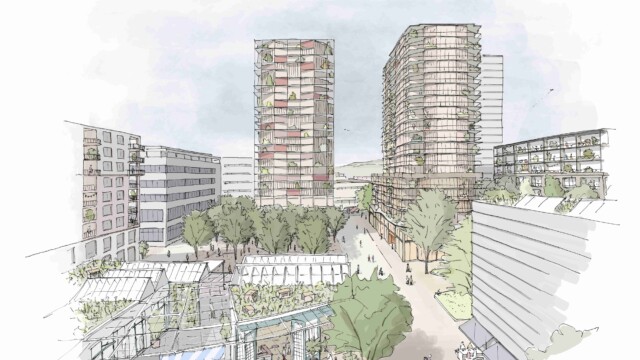
    The owners Ina Invest and Estella Invest and the developer Implenia decided in favour of a digital project competition in which a digital 3D model was submitted instead of physical models. This made the jury process much easier, as different levels and elements could be flexibly combined and analysed. The winning design for the first construction phase, a combination of the proposals from Enzmann Fischer Partner AG and ORT AG, impressed with its innovative floor plans and a well thought-out design of the open space that harmoniously combines living and working.

    Open space design as the key to the attractiveness of the neighbourhood
    The Unterfeld Süd neighbourhood will be enhanced by generous open spaces, which
    extend along the Stampfibach stream. An ecologically valuable green space is being created here that offers a wide range of uses. The central arrival square at the S-Bahn station will be transformed into an inviting place to meet and linger thanks to tall trees and green islands.

    High-rise building with a view to the future
    The 60-metre residential tower block in the first phase is impressive not only for its height, but above all for its well-thought-out floor plans and flexible room layouts. The generous windows offer impressive views from every flat, while the bay windows on the façade allow residents to enjoy both the outside and the inside of their own flat.

    Commercial building as a centre for dynamic companies
    The adjoining commercial building also focuses on flexibility. Two glazed inner courtyards create islands of light that can be used as break areas. With its flexible room structure, the building offers space for a wide range of uses – from small offices to larger rental spaces for anchor tenants.

    The second phase will provide affordable housing and flexible commercial space
    The second construction phase, the planning of which is already at an advanced stage, will focus on affordable rental flats and owner-occupied flats. The inner courtyard of the planned perimeter block development in the second phase will create opportunities for retreat and public meeting spaces in equal measure. The buildings along Nordstrasse are deliberately designed to minimise noise pollution. A referendum on the second stage will also be held in Baar in 2025.

    Sustainable architecture and flexible usage concepts
    The architecture of the buildings reflects the vision of a future-oriented neighbourhood. The combination of flexible living, versatile commercial space and well thought-out open spaces creates a lively and attractive cityscape. Particularly noteworthy is the combination of living and working, which is supported by well thought-out spatial concepts and attractive outdoor areas.

  • Lighthouse Papieri Cham

    Lighthouse Papieri Cham

    People today are looking for the “as well as” – in the case of Papieri, it is the interplay of an urban lifestyle in close proximity to nature. On the one hand, the new district offers all the extras of a lively neighbourhood with practical services for everyday life, such as a wide range of shopping and dining options, childcare and cultural and sporting activities
    And catering facilities, childcare and cultural and sporting activities. On the other hand, you can find peace and quiet by the River Lorze or in one of the neighbouring recreational areas.

    Next Level Spaces
    In the third construction phase, a total of 10,000 m² of office, commercial and retail space will be created with the “Next Level Spaces”. Where and how people work has changed dramatically in recent years. Attractive and adaptable work concepts are needed to inspire employees. This leads to new requirements for buildings, such as a high degree of flexibility in order to fulfil a wide range of needs, from office layout to building services.

    The spaces in the “Next Level Spaces” can be flexibly designed and are over 6 metres high with a payload of up to one tonne per m², and intermediate floors can be installed as required. The user decides where intermediate floors are needed and can also create additional space at a later date. The “Next Level Spaces” offer future-orientated companies a wow location for offices, trade and Industry 4.0.

    Landmark boiler house
    The landmark at the heart of the site – the listed boiler house – will also be converted in the third construction phase. Where steam boilers used to be fired up, guests can expect a culinary treat in future. In spring 2026, the Segmüller Collection will expand its portfolio of unique gastronomy concepts such as Carlton, Loft Five, Roof Garden and Sablier in Zurich to Papieri-Platz in Cham and open a new grill restaurant with bar and lounge on the ground floor of the Kesselhaus. Industrial charm meets modern lifestyle, archaic fire cuisine meets refined elegance – a place that promises enjoyment for every taste. In the western section above, unique office space awaits new users in the former monument, while a fitness centre in the eastern section offers space for physical exercise.

    Sustainability
    Awarded the “Watt d’Or” by the Swiss Federal Office of Energy, the energy system of the Papieri site enables completely CO2-free operation and ultimately generates around 75% of the energy on site. In addition, the “Next Level Spaces” commercial building is certified with the internationally renowned “Leed Platinum” sustainability label. Resource-conserving construction is also already common practice at Papieri. For example, with the conversion of listed buildings such as the boiler house or an innovative timber-hybrid residential tower block. However, the most important contribution to sustainability is a long service life. Great attention is paid to this factor during development. Buildings must be flexible in order to meet the as yet unknown needs of a changing society in the future. An office building that can be converted into flats, for example, prevents premature demolition and thus contributes to sustainability. This is why Papieri constructs high-quality, adaptable buildings that will still be in favour for various uses decades from now.

  • Space for the future “An der Aa”

    Space for the future “An der Aa”

    The “An der Aa” project aims to repurpose and densify the ZVB site. Key elements include increasing the living and working space, a modern infrastructure for public transport and emergency services and opening up the neighbourhood to the local population. Of the planned flats, 40% are to be offered at an affordable price in order to meet the demand for affordable housing in Zug.

    Infrastructure for mobility and emergency services
    In the centre of the new district, a state-of-the-art building will be constructed to house the Zug rescue service and the cantonal administration. The proximity to the new ZVB main base will enable synergies, for example in vehicle maintenance. The new infrastructure will meet the increasing demands of public transport and rescue services and contribute to future-proof mobility.

    Focus on quality of life
    The site is being densified and ecologically upgraded. The Siehbach stream will be uncovered and a barrier-free footpath integrated. Green spaces and public squares will enliven the neighbourhood and provide space for recreation. The Schleifendamm will be secured as a biodiversity-rich oasis for plants and animals and contribute to the quality of life in the neighbourhood.

    Legitimisation and broad support
    Work on the “An der Aa” project has been ongoing for 14 years, involving various stakeholders from politics, administration and the public. With 81.3% approval in March 2024, the people of Zug have given their support to the development plan. Construction is scheduled to begin in 2025 and be completed by 2032. Thanks to this broad support, the neighbourhood will become a flagship for innovative urban development in Zug.

    Future prospects
    The project will change the face of Zug and meet the growing demand for residential and commercial space. The new infrastructure will create capacity for a significantly higher volume of public transport passengers and secure the operation of the emergency services.

  • Collateral in the construction and property sector – What to look out for?

    Collateral in the construction and property sector – What to look out for?

    The usual means of security
    Collateral is ubiquitous in the construction and property sector. For the financing of land or residential property, mortgages (liens on real property) are in the foreground. Step-by-step transactions (e.g. the purchase of a plot of land or a flat) are usually secured with so-called promises to pay from banks. Abstract guarantees or sureties are then frequently used to ensure that construction work is carried out in accordance with the contract. Finally, it is also conceivable to hand over movable property as a pledge or to transfer (future) claims of one’s own company against third parties to a lender.

    Guarantees and sureties in particular
    With a guarantee, a bank or insurance company undertakes to pay the guarantee recipient an amount if certain conditions (e.g. a breach of contract) are met. If the bank/insurance company waives all defences and objections arising from the basic relationship, this is an abstract guarantee in accordance with Art. 111 CO. Such guarantees can be called with a mere notification, which is why they are often also called “guarantee on first demand”. In practice, such guarantees are used as performance, advance payment and warranty guarantees.

    In contrast, a surety is always dependent on the underlying transaction. The bank/insurance company is entitled to the same defences and objections as the principal debtor. The main case of application in practice is the joint and several guarantee, which is also specified in the widely used SIA-118 standard as standard security for liability for defects.

    The recipient of an abstract guarantee is in a better position and usually receives his money immediately. Guarantees are therefore expensive and the guarantor always requires security in the event of a claim. The need for security must be examined on a case-by-case basis and the form of the security must be weighed up.

    Guarantees – a world of formality
    Guarantees on first demand sound tempting because they are supposedly easy to handle. This can be deceptive: Firstly, the guarantee text must be checked, because not every guarantee is abstract. Then you need to keep an eye on the period of validity. When making a claim under a guarantee, the formal requirements in the guarantee document must be meticulously observed, otherwise payment may be refused (so-called guarantee rigour). Another decisive factor is the way in which the claim must be submitted to the bank/insurance company and with which declaration (directly, via a correspondent bank, etc.). It is worth checking this in advance.

    A guarantee is utilised – what needs to be done?
    When the guarantee is issued, it is important to ensure that the bank/insurance company undertakes to provide notification in the event of a claim. This gives the party against whom the guarantee has been issued the opportunity to have the bank/insurance company prohibited from making the payment by court order. However, it should be borne in mind that the courts will only prohibit a payout if the claim is clearly an abuse of rights. The hurdles are so high that payouts are very rarely prohibited.

  • Canton of Zug strengthens its property portfolio

    Canton of Zug strengthens its property portfolio

    The Building Directorate is legally responsible for the construction and maintenance of the canton’s own buildings. The financial framework conditions are carefully analysed in order to make targeted use of both the maintenance and investment budgets. Sound, long-term planning is becoming increasingly important in order to ensure that the buildings retain their value.

    Strategic guidelines for property management
    The Canton of Zug’s real estate strategy is based on the overarching objectives of the Cantonal Government and the specific guidelines of the Building Department. Priority is given to maintaining existing infrastructures rather than building new ones. The targeted use of resources ensures future-orientated buildings that meet the requirements of sustainability and efficiency.

    Cost and benefit efficiency as guiding principles
    The Building Directorate pursues a differentiated strategy that focuses on cost control and the fulfilment of public tasks.
    Properties that do not directly serve a public purpose are used for value creation or exchange transactions in order to optimise the management of the portfolio.

    Investment requirements and future developments
    The Building Department has further expanded the cantonal property portfolio. With the projects realised, the value of the portfolio has risen to CHF 1.06 billion by 2023. Further investments are planned for the coming years. Planned major projects in the education and administration sectors will contribute to the canton’s infrastructural development and strengthen the economic attractiveness of the region. A forward-looking real estate strategy ensures that the canton of Zug makes optimum use of its property portfolio and is equipped to meet future requirements.

  • Affordable living in Zug

    Affordable living in Zug

    The canton of Zug and the city of Zug suffer even more than other cantons and cities from a lack of living space. The canton of Zug has the lowest vacancy rate in the country at 0.2% for the fourth year in a row. The lack of supply and the persistently high demand are leading to strong competition for the few advertised rental flats: the re-letting period is record-breakingly short. There are plenty of affluent tenants moving in and out who are prepared to pay ever higher rents¹.

    Because asking rents are now 50% higher than the Swiss average, complaints that rental flats are no longer affordable have spread far into the middle classes². Even those with normal household incomes who want to move or relocate to the canton have little chance of accessing the housing on offer.

    In this context, the question arises as to what profit-orientated owners who have or would like to develop housing stock in the canton and city of Zug can contribute to the provision of housing for broad sections of the population.

    How should affordable housing be defined?
    The first question is how “affordable” housing should be defined. There is an object-orientated, a market-orientated and a target group-orientated approach³. Affordable housing can be defined as housing rents that are calculated using the maximum fixed investment costs for a residential property. For this calculation to work for yield-orientated owners, a consensus is needed on what constitutes a sensible limit for investment costs. The market-oriented approach categorises low-priced residential rents in certain quantiles of market rents. This requires a consensus on which quantiles are affordable. Finally, affordable housing rents are defined as those that are financially viable for tenants. This requires a consensus that households should not spend more than a third of their gross income – or more generously, their taxable income – on rent, for example.

    Room for manoeuvre via the subject-oriented approach
    The approach based on financial affordability is the most meaningful for a broad-based housing supply. Unlike the approach based on investment costs, this approach recognises that many people in the canton of Zug earn more than in other cantons and can therefore afford higher rents (Fig. 1). However, unlike the approach using the quantiles of market rents, it is not based on the willingness to pay of those moving in and out, but on the real income of the population. This approach helps to target the needs of specific income groups.

    An affordable flat for a person from the lower middle class living alone, who earns between 70 and 100% of the median income, should therefore cost between CHF 1,400 and 1,900 in the city of Zug. How much living space is offered for the price is decided by the provider based on his assessment of the marketability of a flat. Because affordability is based on the unit price of the flat and not the price per square metre, yield-oriented investors have more leeway to integrate affordable housing into their profitability calculations.

    Optimising the distribution of existing affordable housing
    Building flats takes a long time and is often associated with uncertain planning processes. Owners and investors are also not free to decide where and how much additional living space they want to realise. Owners have direct options for action with their portfolio: they can contribute to supplying the wider population if they optimise the distribution of their vacant rental flats. Every change of tenant offers the opportunity to consider the most suitable tenant in line with the “best owner principle”. Owners can instruct lettings teams to maximise the affordability of rental properties that are affordable to the middle class and choose the tenant who can least afford the property – assuming a full salary, for example. Letting teams simply need a matrix that shows them the maximum rental prices affordable for the middle class (or the targeted income group) for each number of rooms. If a vacant flat in the corresponding price range becomes available, the rule would apply.

    Conclusion
    In order to ease the situation in the housing market, the lengthy tasks of reducing barriers to housing construction and developing a cross-party understanding of how affordable housing is defined and how its provision should be regulated must be tackled. In the meantime, yield-orientated owners can make a contribution by approaching the provision of affordable housing with a subject-orientated approach that fits into their market logic. In doing so, they also remain fair to the legitimate interests of their direct stakeholders.

  • Smart City Strategy Zug

    Smart City Strategy Zug

    The challenges of urban growth, from the climate crisis to transport logistics and urban densification, call for holistic approaches. Zug is focusing on digitalisation as a key strategy. With its strong technological basis and the active involvement of all urban stakeholders, the Smart City Strategy Zug offers innovative answers to the questions of the future.

    Intelligent administration and citizen-centred services
    The city of Zug is striving for an efficient, citizen-centred administration that facilitates access to services and promotes transparency. Digital technologies, such as open data and smart administrative processes, offer citizens access to municipal services regardless of time and place. This customer-friendly approach strengthens the dialogue between the city and the population and makes Zug a pioneer for modern city administration.

    Strengthening social participation and digital skills
    With its smart city strategy, Zug is creating new platforms for the participation of all social groups. Digital channels expand dialogue and promote the right to have a say, especially for younger generations and less mobile people. Educational programmes are designed to improve the digital skills of both the population and the administration and prepare the people of Zug for the opportunities and challenges of the digital transformation.

    Smart mobility for sustainable mobility and quality of life
    Smart mobility is a central pillar of the strategy. Innovative technologies and alternative forms of transport are intended to reduce commuter traffic, cut emissions and improve the quality of life. Zug is focussing on real-time data, intermodal mobility and the expansion of emission-free modes of transport. The goal: clean, safe and sustainable mobility that enriches city life.

    Innovative business location
    With its dynamic start-up scene and innovative sectors such as fintech and blockchain, Zug creates an attractive environment for high-tech companies and qualified specialists. The Smart City strategy strengthens the location’s profile and connects companies that are committed to a sustainable economy and circular processes. In this way, Zug is not only positioned for the future as a place to live, but also as a business location.

    Sustainability and environmental protection through smart technologies
    Promoting energy efficiency and CO2 reduction is a key objective of the strategy. Digital applications such as “smart metering” enable a transparent presentation of energy consumption and promote the conscious use of resources. The city is focussing on the expansion of renewable energies and the intelligent use of existing infrastructure – a clear commitment to climate protection and sustainable urban development.

  • Der Switzerland Innovation Park Central

    Der Switzerland Innovation Park Central

    At Suurstoffi in Rotkreuz, the SIPC offers an inspiring environment that promotes dialogue and collaboration between over 120 partners from business, science and society. A vibrant innovation ecosystem is created here that efficiently translates new ideas into marketable solutions in the construction sector.

    Diverse formats to promote innovation
    In order to drive innovation, the SIPC works in five thematically focussed Future Labs, which specifically address current challenges such as the transformation to a circular economy in construction or new processing models
    in construction or new processing models. These labs are hybrid working environments with structured processes and formats that promote collaborative innovation. A variety of event and workshop formats as well as the digital community platform Jointcreate – a kind of “LinkedIn for innovation” – provide inspiration, empower participants and support the innovation process. The focus is always on implementation to achieve real impact. Financing and start-up advice as well as office and project space are available for this purpose.
    The SIPC also manages various programmes, such as the Circular Building Charter, an association of major real estate investors who are increasingly focusing on circular procurement and construction methods. The SIPC imparts knowledge in regular experience workshops. The open sharing of experiences in pioneering projects promotes dialogue within the industry.

    A contribution to the construction industry of tomorrow
    With its clear values – openness, fairness and professionalism – the SIPC makes a decisive contribution to the transformation of the construction industry. As a non-profit organisation, it pursues the motto “Building Excellence” and invites all interested parties to become part of this movement. Switzerland Innovation Park Central shows how innovation in the construction industry can promote not only technological progress but also social responsibility. By combining vision and practice, the SIPC is shaping a sustainable future and is an indispensable partner for anyone who wants to contribute to the construction industry of tomorrow.

  • Climate Charter Zug : Support for SMEs in the canton of Zug

    Climate Charter Zug : Support for SMEs in the canton of Zug

    Around 50% of CO2 emissions in the canton of Zug come from the economy, which emphasises the urgent need for action in this area. The Zug Chamber of Commerce, the WERZ Institute (OST), the Technology Forum Zug and the Switzerland Innovation Park Central have founded the Climate Charter Zug together with the Canton of Zug to support SMEs in particular in implementing climate-friendly and economical measures.

    Consultancy, CO2 footprint and measures
    The advisory services offered by the Climate Charter provide support and tools for recognising and reducing CO2 emissions in your own company. The canton of Zug covers 50% of the consultancy costs and has pledged CHF 1.6 million for this, around 60 per cent of the budget. The remaining funds come from the private sector. The initiative’s office, based at the Zug Environmental Institute WERZ, offers expertise and advice, from energy savings and emission reductions to practical solutions for specific challenges in companies.

    Climate protection as a locational advantage
    Climate protection has long been more than just a trend – it is becoming an important advantage for companies and locations. The Climate Charter Zug supports SMEs in reducing emissions and setting sustainable standards. At the same time, a growing charter community is emerging in which committed Zug companies can exchange experiences and learn from each other. The willingness to invest in climate-friendly innovations strengthens the competitiveness of the company and the canton in the long term.

    Concrete support for SMEs
    Alex Beck, co-leader of the initiative, emphasises: “As a business community, we have a duty,
    to create an intact environment for future generations.” The Climate Charter provides companies that want to reduce their CO2 emissions with customised and practical solutions – from sustainable heating systems to the provision of solar power for e-charging stations.

    Sustainable investments for a climate-friendly future
    As part of the Klima Charta Zug, companies fulfil the increasing requirements in climate protection and position themselves as responsible players. Alex Beck emphasises that the exemplary effect of individual companies creates a “momentum of its own” that has an impact beyond the company itself. The pioneering role in climate protection promotes a culture of commitment that enables sustainable development for the canton of Zug.

  • Climate-neutral industry – Vision 2026

    Climate-neutral industry – Vision 2026

    Founded in 2022, the Association for the Decarbonisation of Industry aims to reduce emissions to a minimum through innovative technology. At the forefront is the methane pyrolysis process, which enables emission-free energy utilisation by splitting hydrogen from methane. The remaining carbon is utilised as a resource, for example as humus in agriculture or as a building material, which binds the carbon in the long term.

    Cooperation between business, research and politics
    Without the cooperation of 16 leading companies, Empa and politicians from the Canton of Zug, the project would hardly be possible. Together, they are contributing to the development and scaling up of the pyrolysis process, which is to be scaled up from laboratory to industrial size by 2026. The partners are providing funding of over CHF 8 million, thereby sending a strong signal for the decarbonisation of industry.

    Methane pyrolysis Reduction of CO2 emissions
    The association is focusing on methane pyrolysis, a process that minimises CO2 emissions when using natural gas. Instead of traditional combustion, hydrogen is obtained from methane, while the carbon is in solid form and therefore does not cause any emissions. This technology could save up to 270 g of CO2 per kilowatt hour produced and is therefore a potential key to the net-zero targets by 2050.

    Sustainable ecosystem without waste
    The association is working to create an ecosystem that optimally utilises all components of the process. Through the circular economy concept, not only hydrogen, but also carbon and waste heat are to be efficiently reused to avoid waste. This holistic strategy creates a model that is ideally suited to a climate-friendly future.

    Membership of the Association for the Decarbonisation of Industry
    Companies that are committed to the climate-neutral future of industry and would like to benefit from the findings of the association can become members. The association is tax-exempt and donations are deductible in the canton of Zug. Members gain access to advanced knowledge and support an initiative that lays the foundations for an emission-free
    industry.

  • Leading global industry clusters

    Leading global industry clusters

    Over the years, more and more companies from the same industries have settled here, resulting in the formation of various industry clusters, as they are known. This also includes education, research and various platforms such as the Innovation Park or associations, in which a lively exchange takes place. The large number of companies, service providers, suppliers and private institutions provide mutual support and promote a service-orientated and efficient administration. The local companies also benefit from the high educational standards and excellent infrastructure.

    Blockchain, fintech and IT
    Zug has developed into a global hotspot for blockchain, fintech and IT. Here, innovations unfold in a symbiotic ecosystem where pioneering technologies meet and create a wealth of limitless opportunities. Zug has earned recognition for its transparent regulations, crypto-friendly banks and administrations, a dynamic labour market for cryptocurrencies and a varied calendar of events. Due to its proximity to the Zurich region, Zug is developing an attractive ecosystem for around 600 crypto companies in the “Crypto Valley” and is the birthplace of Ethereum. This environment is favoured by a positive regulatory framework, attractive taxes, incubators such as CV VC and a large number of fintech companies. The Canton of Zug supports research in this area financially by contributing almost CHF 40 million to the blockchain research initiative of the University of Applied Sciences and Arts Lucerne and the University of Lucerne.

    Zug’s “Fintech Cluster” embodies a centre of innovation in the field of financial technology. Within the “Crypto Valley”, this cluster acts as a dynamic meeting place for fintech companies, start-ups and financial institutions. Zug is also home to the National Test Centre for Cybersecurity (NTC) as well as various labs and research centres in the fields of blockchain, AI, ML and robotics at HSLU, located in Rotkreuz.

    Life sciences (pharma/biotech and medtech)
    The canton of Zug is a leading location for life sciences with around 300 companies and 9,000 employees. In addition to the strong focus on commercial functions, the medical and clinical areas are also growing. The regional innovative strength is reinforced by other leading clusters in deep tech, AI and ICT, which creates innovative synergies.

    Pharma/biotech
    Zug attracts numerous international pharmaceutical and biotech companies, including Biogen, Amgen, Astra Zeneca and Johnson & Johnson. In addition, around 60 US biotech companies have chosen Zug as their European headquarters in recent years. The high density of pharmaceutical and biotech companies in the canton of Zug and the large number of service providers specialising in life sciences create an advantageous business environment.

    Medtech
    In the medical technology sector, more than 100 companies specialising in diagnostics and medical production are represented with production sites and global headquarters. Representative examples of global headquarters are Roche Diagnostics, Medela, SHL Medical, Schiller and Johnson & Johnson Medtech with important global functions at their international campus in Zug.

    Zug also offers up-and-coming medtech start-ups such as Deep Breath Intelligence, Heart Force and Sedimentum optimal conditions for growth and innovation.

    New SHL Medical AG building

    The 5,000 m² office and 10,500 m² production building for the tenant SHL Medical AG is being built on the Tech Cluster Zug site. The compact design, the reduction in materials and the innovative hybrid construction of wood, steel and concrete promote resource-saving, efficient construction. Visible wood on the inside and a protective aluminium layer on the outside reflect the high quality standards. A 20% reduction in CO2 emissions is made possible by on-site concrete production using Jura Eco cement.

    SHL’s energy supply is designed as part of the site-wide multi-energy hub. The energy supply is supplemented by lake water cooling and large-scale PV systems on roofs and façades. The surplus heat and energy is recovered for further use in the hub.

    New Roche production building

    Roche is investing 215 million in a new 29,000 m² diagnostics production building in Rotkreuz, which will be completed by 2027. The flexible design will allow the building to be adapted to future production needs, thereby increasing long-term efficiency. Sustainability is a top priority: a fossil-free energy supply, water circulation systems and resource-saving construction methods are planned. The surrounding area will be designed to be close to nature, with wet meadows, a fen and a roof garden at a height of 23 metres to promote biodiversity.

    Tech industry
    The tech industry is one of the largest employment sectors in Switzerland. With around 14,000 employees and 750 companies, this sector is also important for the canton of Zug. The focus of the high-tech cluster in Zug is on the development, design and manufacture of electronic products and services. Digitalisation, the Internet of Things (IoT), robotics and artificial intelligence (AI) also play important roles.

    Zug stands out as one of the most dynamically expanding technology centres in Europe. The canton of Zug is home to numerous notable SMEs and start-ups specialising in cutting-edge and pioneering technologies. Their influence extends across various industries as they develop ground-breaking solutions based on emerging technologies. Access to various research and networking institutions such as the University of Applied Sciences (HSLU), the Innovation Park Central Switzerland and the Technology Forum Zug create the ideal framework for innovative, technology-driven companies.

    Siemens Campus

    The 81,000 m2 Siemens Campus Zug is a showcase project for digitalisation and sustainability and demonstrates how modern products and solutions can accelerate the digital transformation. It sets technological standards in every respect and shows how buildings and infrastructures can be developed from static, inactive objects into responsive and reactive objects. The campus combines everything a community needs: Fire protection, access and intrusion control, CCTV, CO detection, extinguishing, voice-controlled evacuation, room automation and much more.

    Financial service providers
    Around 2,000 companies form a dynamic environment for financial services in the canton of Zug. Hundreds of companies from the fields of asset management, family offices and hedge funds are based in the canton of Zug.

    In the private equity/venture capital sector, for example, Partners Group, Capital Dynamics, HBM Healthcare Investments, CAPVIS and Invision should be mentioned. Leading Swiss financial institutions and platforms are also based here, including the Institute of Financial Services Zug IFZ, the Swiss Private Equity and Corporate Finance Association SECA, the Swiss CFO Forum and the VQF, the leading self-regulatory organisation in the non-banking sector.

    New Partners Group Campus

    Partners Group, Switzerland

    Partners Group’s new global headquarters consists of three buildings: the “Green Building”, an elongated, elliptical structure whose variously curved, terraced layers provide a richly planted, forward-looking counter-accent to the two brick buildings, which are modelled on historic factory buildings and evoke the past. This is Partners Group’s way of emphasising its focus as a company builder.

    The building not only impresses with its architecture, but also with its high-quality infrastructure, including an in-house gym, canteen, daycare centre and car park.

    Consumer goods
    The canton of Zug is also home to over 1,700 consumer goods companies with around 14,000 employees, which account for around a third of GDP. Zug is home to international and regional headquarters of leading brands in the areas of food and beverages (e.g. Anheuser-Busch InBev, Burger King, Coca Cola HBC), personal care (e.g. Galderma, Kenvue), textiles (e.g. Odlo, Hugo Boss) and sporting goods (e.g. Specialized). The automotive supply sector and the wholesale of raw materials and pharmaceutical products also play an important role.

    Commodities trading
    Zug is a leading global trading centre for commodities, particularly in the areas of metals, (renewable) energy and agricultural commodities, with over 200 companies (e.g. Glencore, Shell) and specialised professionals. Key areas include headquarters, trading, supply chain, production, processing and marketing.

    Headquarters, Supply Chain Management & Procurement
    In recent decades, Switzerland has developed into a leading location for international headquarters with over 1,000 companies. The canton of Zug has the highest density of headquarters with globally leading industry clusters.

    A special centre for companies in the supply chain & procurement sector has developed here.

    Centralisation enables cost-effective procurement and efficient management of production resources along the entire value chain. Large multinational companies such as Bossard, Glencore, Johnson & Johnson and V-Zug have located global supply chain and procurement functions here.

  • Sites in the canton of Zug

    Sites in the canton of Zug

    The cantonal structure plan regulates the main features of the desired spatial developments. It sets out in text and on maps how the cantons and municipalities should develop.

    The need for more affordable living space is recognised by politicians and the canton: In addition to “conventional” flats, flats for families, affordable flats and flats for the elderly are also being built in the various areas.

    A wide variety of site developments are taking place across almost the entire perimeter of the “valley communities”. In addition to the sites, the traffic situation is also being further developed and adapted to the increased utilisation: Examples range from the conversion of bus stops to bypasses to relieve the burden on Cham town centre. This also includes car-sharing concepts, such as at the Papieri site in cooperation with AMAG.

    A lot is also happening in public transport. In future, the Papieri site in Cham is to receive an express bus via the bypass motorway and the Unterfeld Süd site will have a bus stop in the neighbourhood.

    Sustainability plays a decisive role in new projects in particular. The Zug area plays a pioneering role in this respect. The Papieri site in Cham was honoured with the prestigious Watt d’Or award from the Swiss Federal Office of Energy. This emphasises the site’s initiative in the field of renewable energies. A climate-neutral district is being created here that relies entirely on renewable energy sources and covers 75% of its energy requirements on site. The innovative technologies contributing to the high level of energy self-sufficiency include hydroelectric power plants and photovoltaic systems. Geothermal energy is used for heating and cooling.

    The sustainability certificate, awarded by the Swiss Sustainable Building Council to Suurstoffi in Rotkreuz, recognises the sustainable construction methods and holistic planning of the project. The award proves that the highest standards in terms of energy efficiency, mobility and biodiversity have been met. The projects show that Zug not only assumes ecological responsibility, but also serves as a model for forward-looking urban development in Switzerland. By utilising innovative concepts and technologies, the canton of Zug is positioning itself as a pioneer in the sustainable design of urban living spaces.

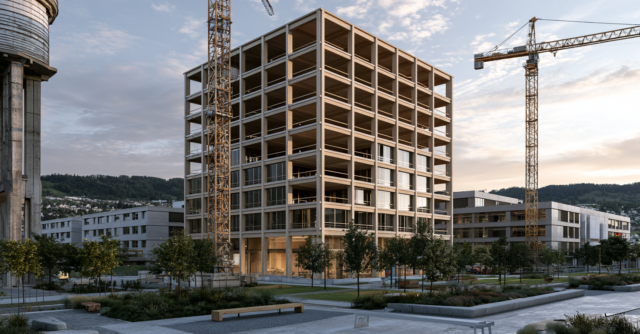
    The other sites are also impressive. The construction of a high-rise building in timber construction is planned on the Tech Cluster site. The “lighthouse project” called “Project Pi” envisages the construction of an innovative residential tower block. With a height of 80 metres, the plan is to build one of the tallest timber high-rises in Switzerland with affordable flats.

    Baar – Unterfeld Süd
    A mixed-use neighbourhood with around 400 residential units and around 1,000 workplaces is planned for the Unterfeld Süd area. The basic structures were defined by representatives of the population of Baar together with experts under the leadership of the municipality. The development plan for the first of three construction phases was put to the people of Baar for a vote on 22 September 2024. The plan was approved with 74 per cent of votes in favour.

    The realisation of the first stage includes the high-rise building at the Baar Lindenpark light rail station and the neighbouring commercial building. These will be transferred to a joint development plan. The earliest possible start of construction of the first stage is planned for 2025. The remaining building plots will be developed in parallel and realised in subsequent construction phases. According to current planning, Implenia’s project will be completed in 2029, provided the subsequent plans are approved by the relevant authorities and construction proceeds according to plan.

    Hinterberg South (Städtler Allmend)
    The Hinterberg Süd site in the Städtler Allmend employment area in Cham will become a new, lively and easily accessible working and shopping centre for the local population. It offers attractive space for new companies to set up shop and ground-floor uses for the neighbourhood. The upper floors of the office buildings offer flexible spaces that can be customised to the individual needs of future companies.

    Publicly accessible uses such as a restaurant, café or bakery are located on the ground floors. They offer workers, shoppers, visitors and passers-by various consumption options and contribute to the revitalisation of the area and the entire neighbourhood. The four buildings surround a public square – the actual centrepiece of the site, which is open to the general public as a place to meet and spend time.

    Bösch Hünenberg
    In order to meet the requirements of a growing service and commercial area, the infrastructure needs to be adapted. The Bösch area should become more attractive for workers and companies and offer space for 6,000 jobs in future. This densification is provided for in the cantonal structure plan. It is binding for the municipality of Hünenberg. The vision is for the Bösch area to develop into a modern and urban place of work that is attractive to investors. To this end, space is to be created through structural densification, which can also lead to an increase in jobs. A holistic landscape design and well-organised mobility will ensure a better quality of life in Bösch. New leisure, supply and catering facilities ideally complement everyday working life in Bösch. On 9 December 2024, the municipal assembly will decide on the road credit of CHF 2.9 million to finance the first stage of the implementation of the operating and design concept in Bösch.

    LG Zug
    Due to its size and prominent location, the LG site is of central importance for the urban perception and urban character of Zug. A lively urban district with a convincing architectural design is to be created on the site of the former industrial area. With the necessary development plan, the planning and building law of the Canton of Zug ensures high-quality development and realisation.

    Papieri Cham
    The Cham Group is developing a new residential and working neighbourhood with industrial charm on the Papieri site. Directly on the River Lorze, the distinctive existing buildings of the former paper factory are being supplemented with striking new buildings and realised in a sustainable way. A new meeting place with supra-regional appeal is being created here, where past and present go hand in hand. A new urban district with around 1,000 flats and 1,000 jobs is being built in several stages over eleven hectares on the site of the former paper factory. It is not being built on a greenfield site, but in the midst of buildings steeped in history: The conversion of characteristic existing buildings preserves the connection to the past – the industrial roots of the neighbourhood remain tangible.

    They are complemented by striking new buildings, including five tower blocks with impressive views. The new neighbourhood directly on the Lorze offers an attractive mix of commercial space, flats, lofts, workplaces, studios, open spaces and public-oriented uses. All of this on a sustainable and well-balanced site that maintains – and continues to write – its own history.

    The Papieri site creates new foundations for an energy-efficient, climate-neutral and sustainable society. It is a pioneering project throughout Switzerland.

    Spinning mill on the Lorze
    Many threads once ran together in the largest spinning mill in Switzerland. The construction of the spinning mill on the River Lorze shaped the development of Baar in the middle of the 19th century. A new, lively neighbourhood with shops, cafés and other local businesses is being created around the historic spinning mill building, which characterises the public pedestrian zone. In addition to family flats and affordable flats, there will also be flats for the elderly. These will be complemented by vegetable gardens, green façades and shady trees.

    Suurstoffi
    The Suurstoffi site was the first site in Switzerland to be awarded the DGNB platinum certificate for sustainable neighbourhoods in planning and construction by the Swiss Sustainable Building Council (SGNI). The DGNB certification confirms that Zug Estates has realised a prime example of sustainable site development with the Suurstoffi site in Rotkreuz. It meets the comprehensive quality requirements of the DGNB certification system, which includes criteria such as energy efficiency, CO2 emissions, life cycle assessment, grey energy, flexibility of use and recyclability of the materials used. The Suurstoffi site is one of the first lighthouse projects of the last 10 years. This also includes the “XUND” health education centre, for which one of the last buildings is currently being completed.

    Tech Cluster
    From June 2018 to May 2019, five renowned Swiss and one Austrian team took part in an overall performance study to explore how affordable living in a high-rise building can be made possible using state-of-the-art construction methods and sustainable materials. At the same time, a study contract was drawn up for an overall urban development concept for the surrounding area of the city of Zug between Baarerstrasse, Göblistrasse, Industriestrasse and Mattenstrasse.

    The Tech Cluster Zug builds on the preliminary investments made by V-Zug and other companies in the Metall Zug Group. Its potential lies in the diverse relationships and synergies between the future users. These will transform the current factory site into an innovative and exciting part of the city of Zug.

  • Zug sets new standards with Circulago

    Zug sets new standards with Circulago

    Since October 2023, the Unterfeld energy centre has been supplying several Zug neighbourhoods and parts of Baar Süd with climate-friendly heating and cooling in stages. Thanks to the use of lake water as the main energy source, the plant meets the growing demand for environmentally friendly energy. With its modern technology, the centre demonstrates how the heating and electricity sectors can be intelligently linked. This model shows the future of energy supply and reduces the need for individual heating and cooling systems through centralised generation.

    Sector coupling as the key to the energy transition
    Sector coupling links the energy sectors of electricity, heat and transport, thereby contributing to the stability of the electricity grid. At the Unterfeld centre, technologies such as “Power-to-X” are used to efficiently convert surplus electricity and reduce the load on the power grid. This innovative approach plays a key role in decarbonisation and makes an important contribution to achieving climate targets. The proximity to the Herti substation also creates optimal conditions for combined heat and power generation and the utilisation of renewable energy sources.

    Efficient and space-saving solution for the region
    The Circulago energy network offers a space-saving solution for energy supply in Zug, where space is scarce and expensive. The centralised generation and distribution of heating and cooling eliminates the need for individual heating systems and increases the efficiency of energy distribution between the city of Zug and Baar South. The network not only significantly reduces CO2 emissions, but also ensures stable prices and economic planning security in the long term – a decisive advantage for investments in new buildings or when replacing existing heating systems.

    Long-term benefits for buildings and industry
    Circulago enables buildings and industrial plants to be connected to a district heating system that provides a reliable and low-emission source of energy. By combining modern storage technologies with renewable energies, the network increases overall energy efficiency. In addition, the centralised heat supply relieves buildings of the investment and reinvestment costs that would be incurred with individual heating solutions. With these advantages, Circulago is creating a strong basis for the economic future and sustainable energy supply in the region.

  • Zug remains Zug – liveable, visionary, vibrant

    Zug remains Zug – liveable, visionary, vibrant

    How is the Zug economy doing?
    Zug is praised in numerous specialist publications and in the media for its diversified economy – services, trade, manufacturing industry and commerce. Growth is still above the Swiss economic average of 1.2% and has so far proved resilient to global or technical upheavals. Thanks to the positive financial results, the city of Zug, together with private households and the flourishing economy, is an important pillar for further growth in the coming years.

    How does the city of Zug plan to ensure its economic growth is sustainable in the coming years, especially given the strong focus on the financial and crypto industries?
    Sustainability also means that we look after the companies based here and are reliable partners and employers. It is therefore important that we continue to have strong legal certainty in Switzerland and Zug. We offer a strong education system, have short distances to the city and canton, maintain great local recreational areas and have good road and rail connections to Lucerne and Zurich.

    Zug is experiencing high demand for residential and commercial space. What long-term solutions does the city see to promote residential construction while maintaining the quality of life?
    Many years ago, we demanded the framework conditions for the V-Zug site/technology cluster development plan and the LG site development plan with a letter of intent. In both of these cases, we defined 10,000 m2 of affordable housing and affordable commercial space. We have also been working closely with Zug’s building cooperatives for over 10 years. We also recently purchased an area right next to the railway station for 65 million. This is to be used for the construction of affordable housing. The mix of flats still needs to be defined and will ultimately be put to a referendum. Here, too, it is to be sold under building rights. This is because the building cooperatives know what the people of Zug need in terms of housing. In addition, the city of Zug is working closely with landowners to develop development plans in cantonal densification areas that permit high densities. The municipal high-rise building regulations form an important legal basis for this. As part of these measures, increased attention is paid to the quality of the open spaces on the sites themselves, as well as the other public open spaces. In the spirit of a “city of short distances”, the inner-city open spaces and leisure infrastructure, as well as the natural and landscape areas, should be easily accessible, especially by public transport, on foot and by bike.

    What new projects and initiatives is the city of Zug planning to promote sustainable urban development?
    There are many new projects in the city of Zug. They all have to take equal account of social, economic and ecological aspects. In this respect, each of our projects should already support sustainable urban development. Perhaps you will allow me to give you two examples in which we are also playing a pioneering role. For example, an internal strategy project is underway to check whether we are well organised and sufficiently fit to master the future challenges of sustainable development. Or in the area of climate adaptation: we are currently installing temperature sensors throughout the city to identify heat islands and take targeted measures.

    The issue of affordable housing is becoming increasingly important. What measures is the city taking to ensure that Zug remains attractive for less affluent people?
    The city council is already calling for affordable housing to be created on at least 20% of the additional eligible floor area in residential and mixed zones when issuing ordinary development plans. Following the adoption of the “2000 flats for Zug’s middle class” initiative, affordable housing of at least 40% of the newly constructed living space must be created in residential and mixed zones located in densely populated areas when issuing ordinary development plans and in the case of rezoning and upzoning. To be honest, however, this has also halted construction projects. We are currently working on solutions.

    How important is citizen participation in municipal projects to you, and what opportunities do the residents of Zug have to contribute their ideas and opinions?
    The city of Zug has a strong and long-standing culture of participation. Public participation projects on various topics have been held regularly since the 1990s. The online participation portal “mitwirken-zug.ch” has also been available since 2020.

    Traffic in and around Zug is increasing. What is the city’s plan to bring the transport infrastructure in line with growth and strengthen public transport at the same time?
    Unfortunately, the city tunnel was rejected and solutions must be found nonetheless. The city of Zug is working closely with the cantonal civil engineering office to develop a joint transport plan for the vibrant centre of Zug. The city’s aim is to ensure that the existing road space is available to all road users equally and efficiently: Cars, public transport, bicycles and pedestrians. Fortunately, the city of Zug is small-scale, so many things can be done on foot or by bike.

    What plans are there to further expand public transport in order to relieve commuters and reduce traffic in the city?
    The next major expansion step is planned for the opening of the Zimmerberg tunnel. This will be around 2035 to 2037. Until then, public transport will continue on the current routes and the frequency will be adapted to demand. The public transport system will thus be adapted to the needs of the municipalities on a “small scale”. According to GöV, the municipalities have the option of purchasing additional services over and above those ordered by the canton. The city of Zug does this with the Zugerberg railway and on bus route 5, where it purchases additional cable cars and courses. This additional service, which is decided by the city parliament, gives the city of Zug flexibility over and above the service determined by the canton. However, it is clear that the service ordered by the canton is excellent and that the municipalities hardly need to make any improvements. The city of Zug already has excellent public transport connections in all neighbourhoods. Additional courses significantly reduce the cost recovery ratio. The cost recovery ratio to be achieved according to the GöV is 40%. Personally, I would like the S-Bahn to offer double-decker trains.

    How does the city of Zug support the expansion of educational facilities in order to address the shortage of skilled labour and at the same time strengthen Zug as a location for education?
    Education is our only resource and this is where the city of Zug invests the most money. The design of attractive school buildings as places to work and learn, with the involvement and participation of pupils and teachers in the planning process, are key concerns. In addition, there are attractive childcare and leisure facilities for children and families as well as a modern ICT infrastructure. In addition, forward-looking and innovative projects and collaborations such as the school portal – where parents can communicate online with teaching and support staff and the school administration – the DigiWerkstatt and the inclusion of AI in lessons are being driven forward. However, it is also important that we meet the needs of companies and actively support the dual education system. A great project is underway here!

    What role does the promotion of innovation play in Zug and how is the city planning to establish itself as a centre for pioneering technologies and companies?
    The promotion of innovation plays a central role in the city and canton of Zug in positioning the city as a centre for pioneering technologies and companies. One important point is: we try things out. For example, following a presentation by a student, we decided to accept Bitcoin as a means of payment in the city of Zug, which caused a worldwide furore. Today, the city of Zug is THE Crypto Valley worldwide with over 4000 employees in over 800 companies. True to the motto: “no risk, no fun”. We will continue to be innovative! Targeted measures and programmes are designed to strengthen the innovative power of the city of Zug so that the environment becomes even more attractive and motivating for companies and, above all, for employees. You can move mountains with innovative projects and motivated people. The framework for this is provided by the development strategy for the city of Zug adopted by the City Council in autumn 2021: “Zug remains Zug – liveable, visionary, vibrant”. It is an overarching management tool with a long-term perspective to help shape the future of the city of Zug. Innovative economy, green city, strong community, healthy finances – these are our credos for the future.

    What is your long-term vision for the city of Zug? What goals are you determined to achieve in the coming years?
    As a growing business location with excellent conditions for companies and skilled workers from near and far, we cultivate our economic diversity and position ourselves specifically through future-oriented industry clusters. We are developing Zug as a green city in a sustainable and resource-conserving manner and are planning mobility, space and energy in a visionary way.

    In the tension between tradition and modernity, we promote dialogue and create an inspiring framework for a vital, diverse and cosmopolitan urban community. And to maintain our healthy finances, it is important to ensure competitive framework conditions, make future-oriented investments and secure our tax base in the long term. In addition to all impact targets, we promote lifelong learning, utilise the potential of diversity in the population, economy and culture for pioneering lighthouse projects for change and use incentives to steer change.

    Zug is committed to more climate protection. Can you give us an overview of the most important measures that are currently being implemented to reduce CO2 and increase sustainability in the city?
    When it comes to climate protection, the focus is on moving away from fossil fuels. All heating systems must be able to run on local renewable energy in the medium term. Compliance with modern building standards and, together with Wasserwerke Zug (WWZ), the expansion of district heating are at the forefront here. We have brought Circulago into being. We take cold and heat from the lake and thus have a “battery” on our doorstep. At the same time, we also want to upgrade our own properties, produce our own electricity and get rid of fossil-fuelled heating systems. The introduction of CO2 monitoring and many larger and smaller measures as part of the “Energy City” programme, where we have also been certified with the “Gold” label for 2023, will help us achieve this. I am convinced that we can supply ourselves with energy. We have innovative companies such as Siemens, Landis & Gyr, V-Zug, the technology cluster and many more companies in Zug that all offer these technologies and innovations. It’s certainly been 10 years since Siemens showed us that the technology for local self-sufficiency already exists, so let’s do it!

    Where do you see the city of Zug in 20 years’ time?
    In 20 years’ time, the city of Zug should be a liveable, innovative and sustainable place that offers both economic dynamism and a high quality of life. In other words, we will have made Zug even more attractive for companies and skilled workers, while at the same time creating space for a strong community. Zug’s role as an international business and financial centre has been strengthened, particularly in the area of digitalisation and new technologies such as blockchain and AI applications. Thanks to sustainable urban planning and environmentally friendly infrastructure, the city of Zug is climate-neutral. We have attractive places to live and work, green recreational areas, attractive cultural offerings and a diverse infrastructure for education, leisure and health. Zug has made a name for itself as a centre of education and innovation that is networked with tertiary education institutions and research facilities. We have intelligent traffic management and an efficient infrastructure that meets the needs of a growing population and is designed to be sustainable. Progress is being made step by step – I am delighted!

  • Zug Economic Area – Facts and Figures Zug

    Zug Economic Area – Facts and Figures Zug

    Located within the Greater Zurich Area (GZA), Zug is one of the world’s leading economic regions. The location boasts an excellent infrastructure, great potential for young talent and political and economic stability.

    Both the municipalities and the canton of Zug are constantly evolving and adapting to the requirements. With innovative projects, such as a bypass to relieve congestion in the centre of Cham, lake water that will regulate the temperature in the houses in residential areas in the future and exciting projects, such as the Association for Decarbonisation or the Climate Charter Zug, the canton is shaping a modern image with ambition.

    Numerous areas of historical significance are being renovated and converted to create attractive mixed-use developments comprising residential, work and commercial space.

    As a result, Zug remains a canton worth living in, which is also reflected in a high level of life satisfaction.

    Zug is not only appreciated by its 133,000 residents, numerous independent ratings and studies also confirm Zug’s outstanding position. For example, Zug has been ranked first among the Swiss cantons in the Credit Suisse and UBS rankings for 24 years. The basic principles of business friendliness, service orientation and a culture of innovation make the canton of Zug an ideal partner for companies, educational institutions and research institutes.

    Testimonials

    Andreas Klopp
    General Manager Roche Diagnostics International AG

    “Rotkreuz is located in the Zurich-Zug life sciences cluster and offers ideal conditions for driving innovation thanks to its excellent infrastructure and high quality of life. For over 50 years, Roche in Rotkreuz has been contributing to the health of patients worldwide with diagnostic solutions.”

    Dr Katja Buller
    Vice President, Head of Corporate Affairs International, Biogen

    “Local and international specialists,
    “Local and international specialists, a multi-layered infrastructure and professional cooperation with the authorities have made the canton of Zug the ideal location for our international headquarters for more than 20 years”

    Katharina Gasser
    President of the Zug Chamber of Commerce

    “Our members appreciate the business-friendly conditions in the dynamic and innovative Canton of Zug. The authorities are service-orientated, make decisions quickly and work efficiently; the unique “spirit of Zug” is palpable.”

    Hanspeter Rhyner
    Chairman of the Executive Board, Zuger Kantonalbank

    “Zuger Kantonalbank combines tradition and modernity. This is precisely the DNA of the attractive location of the Canton of Zug. Digital AND personal –
    this is how we meet the needs of our customers in line with this DNA. And we can fulfil all needs and accompany you through life.”