Category: Zug

  • Final construction phase for sustainable development in Rotkreuz

    Final construction phase for sustainable development in Rotkreuz

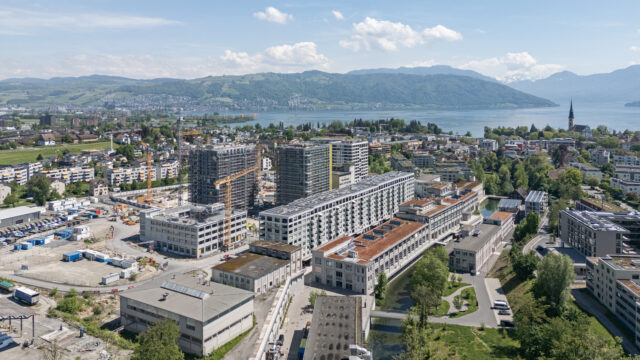
    Zug Estates is tackling the final construction project in the development of the Suurstoffi site in Rotkreuz, which began in 2010. The Zug real estate company announced in a press release that the ground-breaking ceremony for the two new buildings Suurstoffi 43 and 45 was held at the beginning of December together with representatives from the authorities and project partners. Together with a central park, they are due to be completed by mid-2027.

    Zug Estates is creating around 14,400 square metres of office and training space in the two new properties. A further 1,100 square metres have been designed as living space for student accommodation. Once completed, the Suurstoffi 45 property will be home to the Central Switzerland Health Education Centre(XUND). The training centre is relocating from Alpnach OW to Rotkreuz in order to meet the growing demand for practical healthcare training and changing training models. XUND and Zug Estates signed a long-term rental agreement for Suurstoffi 45 in September.

    The final development project for the site “fits seamlessly into the Suurstoffi site, both architecturally and in terms of sustainability”, writes Zug Estates. “The existing, almost emission-free energy system” will have another geothermal probe field. The proportion of grey energy will be lower than in comparable properties thanks to a reduced basement level and the optimisation of façades, building services and statics.

  • The former cantonal hospital becomes an urban oasis

    The former cantonal hospital becomes an urban oasis

    The winning project by Credit Suisse Investment Foundation and HRS Real Estate AG was selected as part of a two-stage competition process. It combines public space, commerce, gastronomy and various forms of housing to create a neighbourhood that will be lively around the clock.

    Living, working and recreation combined
    The development plan allows for a balanced mix of uses, making the neighbourhood attractive for different target groups. There are plans for 272 flats, 50% of which will be affordable, as well as a boutique hotel in the listed south wing of the old hospital. Additional areas for catering, commerce and public services will create a diverse offering. The “Süd-See Hub” construction area in particular is geared towards public uses and is set to become a popular meeting place.

    Open space design takes centre stage
    The “Süd-See Zug – für üs alli” concept focuses on open spaces to make the neighbourhood more attractive. The “Stadthof” as a central square opens up to the lake and connects the old town with the water. A public roof garden, green courtyards and squares offer additional space for recreation and quality of stay. The lakeside terrace and the park promote biodiversity and create a connection to nature.

    A well thought-out process
    The detailed development phase begins once the building lease has been signed. The Credit Suisse Investment Foundation, together with HRS Real Estate AG, will assume responsibility for the realisation of the architectural competition. This exciting project illustrates how a historic site can be transformed into a lively and inviting environment through innovative solutions and planning. The transformation of the former Zug Cantonal Hospital will not only enrich the architectural landscape of the city, but will also make an essential contribution to the quality of life of the population and further strengthen Zug’s position as a sought-after place to live and work.

  • A historical heritage in new splendour

    A historical heritage in new splendour

    in 1896, Richard Theiler laid the foundation stone for the Electrotechnical Institute, which later became world-famous as Landis Gyr, with the construction of the Theilerhaus. The importance of the Theilerhaus for the people of Zug cannot be denied and its preservation became a priority in 1989 when the Canton of Zug acquired the site in order to preserve it for future generations.

    Preservation of historical substance
    The Canton of Zug has developed a comprehensive concept entitled “The Theilerhaus and its spirit”. This outline of ideas aims to preserve the “spirit” of the buildings and to bring together aspects of economy, technology, architecture and culture in a holistic framework.

    Refurbishment in keeping with the heritage
    The maintenance measures extend to all existing old buildings, focussing on earthquake safety, fire protection and accessibility. The renewal of windows, sun protection and roof cladding as well as the insulation of the Shedhalle are important steps towards meeting the requirements. The new building in the eastern area respects the historical substance and creates an appealing overall urban structure.

    A new urban accent
    The planned new building complements the urban ensemble and consists of a five-storey head building and a four-storey intermediate building. This design, which is connected to the high-rise building by a modern stair tower, blends harmoniously into the existing surroundings and strengthens the identity of the site.

    The Shedhalle as a cultural, creative space
    Once the renovation work has been completed, the Shedhalle will not only function as a place of remembrance of the past, but also as a lively space for cultural and artistic events. This use offers added value for the people of Zug and emphasises the versatility of the site and its relevance in today’s world.

    Forward-looking project
    Overall, this project represents a significant step in the urban development of the Canton of Zug and should benefit future generations. The planned measures emphasise how important it is to view historical heritage as part of a living, constantly evolving society and to shape it accordingly.

  • Future prospects at the 103rd immoTable Zug

    Future prospects at the 103rd immoTable Zug

    Mayor André Wicki opened the event with an inspiring look at the economic future of the city of Zug. Under the motto “Zug remains Zug – liveable, visionary, vibrant”, he emphasised the challenges associated with sustainable growth, affordable housing and climate protection. His visions emphasise the aspiration to further develop Zug as an innovative and attractive place to live and do business.

    Sustainable strategies and economic success
    Beat Bachmann presented the “Spirit of Zug” long-term strategy, which strikes a balance between growth and resource consumption. Regional cooperation and attractive conditions for companies will strengthen the region as a leading business location. The innovation platforms, such as HSLU and the Tech Cluster Zug, promote technological advances in areas such as energy, mobility and decarbonisation.

    Successful projects for modern living and commerce
    Lukas Fehr presented the award-winning “Papieri Cham” project. The neighbourhood combines historical substance with modern new buildings, sustainable architecture and green open spaces. With around 1,000 flats and 40,000 square metres of commercial space, the Papieri site sets new standards for sustainable living and working.

    Material innovation in timber construction
    Pius Kneubühler spoke about the advantages of board stack constructions made with Swiss timber and minimal glue. This technology promotes sustainable cascade utilisation and combines high load-bearing capacity with an excellent carbon footprint. Material identity is at the centre of sustainable construction.

    Water treatment and infrastructure safety
    André Spathelf rounded off the event with a comparison of the Swiss market leaders in water treatment. He emphasised the importance of a proactive approach to monitoring and maintaining water networks. This approach ensures the quality and sustainability of vital infrastructure.

    The 103rd immoTable Zug once again demonstrated the importance of dialogue between business, science and politics in shaping a sustainable future. Visionary projects, technological innovations and economic strategies strengthen Zug as a leading region in Switzerland.

  • Future-proof location for business and innovation

    Future-proof location for business and innovation

    Mrs Thalmann, you have been the mayor of the canton of Zug since 2023 and head the Department of Economic Affairs. It houses ten offices from the fields of business, education and social insurance and works with third-party partners from the fields of business and vocational training. How do you see the economic development of the Canton of Zug over the next five years?
    Very well. The financial situation of the Canton of Zug continues to develop positively and the canton has a high level of equity. The 2025 budget anticipates an income surplus of CHF 226 million. The very good earnings situation allows the canton to maintain its attractiveness as a business location. Such surpluses consolidate its already very good position. The canton of Zug can continue to position itself as a financially sound and attractive location for companies and a highly qualified workforce.
    The canton of Zug wants to maintain its position as an economically successful and attractive business location and residential canton. The political debate is ongoing. Large sums will be allocated in the 2025 budget and in the planning years 2026-2028 for contributions to supplementary childcare for pre-school and school-age children, the increase in the cantonal contribution per pupil to recognised public schools and the promotion of research into blockchain development. The increase in the canton’s share of inpatient healthcare costs will also be taken into account. The “Added value for all” package, which provides for tax relief for the people of Zug, businesses and the economy, will result in lower revenue.

    These measures, which the cantonal government intends to implement specifically for the benefit of the people of Zug and the economy, are possible thanks to the high revenue surpluses in previous years and the very solid equity capital. The expected additional income from the introduction of the OECD minimum tax is to be returned in full to the population and the economy.

    What is the Canton of Zug doing to remain an attractive location for companies in the future?
    It is the overall package of several factors that is decisive. The basic principles are business friendliness, service-orientation and a culture of innovation.

    The canton has significant clusters in various sectors and is an attractive location for established and up-and-coming local and international companies. A dense network of service providers, suppliers and private institutions support value-enhancing growth.
    Economic support for local companies is a top priority. The authorities support companies in their long-term growth. To this end, they offer access to the Zug business network. The lines of communication are short; concerns are dealt with quickly and in a solution-orientated manner.

    Which sectors are the focus of location promotion and how does the canton of Zug support their development?
    The canton of Zug has been pursuing a good framework policy for all sectors for decades and wants to maintain its attractiveness. Various industries have formed clusters; the industry groups are broadly diversified: Wholesale incl. consumer goods and commodities trading; high-tech / deep-tech industry; life science including pharma / biotech / medtech; finance with asset management / private equity / family offices; ICT including fintech and blockchain; headquarters as well as global procurement & supply chain functions.

    The focus is on the growth of the resident companies. In addition, new companies, especially value-added intensive companies, are moving here. I am delighted when companies from the second sector prosper in our canton. V-Zug, Siemens and Roche are just a few examples of very high value-added companies.

    The Zug economic region is larger than the canton of Zug. Access to a talent pool of potential specialists is sometimes an important reason for choosing Zug as a business location. There is no individual company promotion policy or cluster policy. What counts is a good economic environment with attractive taxes, well-trained skilled labour, a functioning infrastructure with short administrative distances. Then there is the proximity to the ETH, university, etc. and the regional universities of applied sciences, the quality of life in terms of landscape and culture, the accessibility thanks to the location in the heart of Europe with the connection to the airport in Zurich.

    How important is the tax policy of the Canton of Zug for attracting companies?
    Attractive taxes are an argument in favour of choosing a location; they open the door to the shortlist. Ultimately, it is the overall package of locational advantages that makes the difference. The Canton of Zug has a long-term tax and financial policy, high net assets and an attractive tax environment. It also offers planning and legal certainty.

    How does the Department of Economic Affairs support companies in the canton of Zug?
    80 per cent of the energy is used for economic development. Companies should feel at home here. The team at the Business Contact Centre is very service-minded and is in constant contact with various stakeholders in order to maintain business-friendly conditions for local companies. They see themselves as partners and promote Zug as a business location, are networked and in dialogue with local companies, business associations, organisations, etc. They are committed to the concerns of Zug’s entrepreneurs; their satisfaction is the goal.

    The property market in Zug is tight. What steps is the canton taking to create more living space?
    Finding living space is a major issue that also concerns the Zug government. The canton of Zug has just finalised a “Housing Policy Strategy 2030” with 19 measures that will be successively implemented. The main points are: more flats, more affordable flats and more flats for the local population. One of the aims is to increase the number of vacant flats to allow more movement. The resulting measures are Simplified and more flexible building regulations, such as adding storeys, superstructures or relaxing the requirements for high-rise buildings, should enable the construction of more living space. Existing building permit processes are to be reviewed and examined for simplification, acceleration and optimisation. By strengthening and simplifying the Housing Promotion Act, non-profit property developers should be able to obtain loans more easily and subject aid for needy households should be optimised.

    The Government Council is prepared to initiate the corresponding amendments to the Planning and Construction Act and the Housing Promotion Act. In principle, it wants to achieve the housing policy goals with voluntary measures. Financial incentives should lead to a larger, more readily available and affordable housing supply.

    What role does the canton play in promoting sustainable construction and energy-efficient property projects?
    On the one hand, the canton of Zug fortunately has investors who are taking on a pioneering role with regard to sustainable construction and energy-efficient projects. Examples include the Suurstoffi and Papieri sites and the Techcluster in Zug.

    On the other hand, the cantonal energy law comes into play: when heating systems are replaced, at least 20 per cent of the heating requirement must be covered by renewable energies or energy efficiency must be increased to the same extent. In order to cushion the financial consequences for building owners, the cantonal energy promotion programme will provide generous subsidies for the replacement of heating systems and thermal insulation until 2032.

    As mayor, you are also active in regional and national politics. What challenges do you see for the coming years?
    The challenge is to provide childcare to supplement family life in line with demand. Other tasks include finding answers to demographic developments and dealing with the increasing numbers of asylum seekers – the people of Zug are doing a great deal to integrate; the canton of Zug promotes integration, the loss of tax attractiveness (STAF, minimum taxation) and a clarified relationship between Switzerland and the EU with regard to access to the market.

    Which upcoming property projects will influence the Zug economic region?
    The dynamic economic development of our canton has been and will continue to be strongly fuelled by the development of attractive sites for working and living. The focus on sustainability is particularly important here. Sites such as Suurstoffi (Rotkreuz), Papieri (Cham) and Techcluster/V-Zug (Zug) are already well-known projects with nationwide appeal. Upcoming major projects such as the LG site (Landis & Gyr) (Zug) or Unterfeld (Baar/Zug) as well as Hinterberg/Städtlerallmend (Cham/Steinhausen) will continue this sustainable development.

    The canton of Zug is investing CHF 40 million in the establishment of the Institute for Blockchain Research. What do you hope to gain from this?
    We believe that blockchain technology has the potential to change many areas of our lives and we want to be at the forefront of this development. With Blockchain Zug, we are launching an innovative flagship project with international appeal. This educational project will further strengthen Zug as a business location, also against the backdrop of the OECD minimum taxation introduced on 1 January 2024. This is a measure that will help to secure the competitive position of the canton of Zug as a successful residential and business location. The canton wants to bring together the areas of research, education and business and promote innovation. The aim of the initiative supported by the canton is to make Zug a leading global centre for blockchain research.

    Final question: Why should companies come to Zug?
    Zug has proven that it is a very attractive place to live and do business. Its success is based on a long-term development strategy. Decisive factors for choosing Zug as a business location are its business friendliness, the availability of skilled labour, decades of stability, the high quality of life and the short distances between Zug’s authorities, which work quickly and efficiently.

  • New building for diagnostics solutions in Rotkreuz

    New building for diagnostics solutions in Rotkreuz

    Roche laid the foundation stone for a new diagnostics production building in Rotkreuz on October 29. According to a press release, the pharmaceutical company will invest 215 million Swiss francs in one of the most important sites of its Diagnostics Division. Sustainability and energy efficiency have top priority.

    The new building will replace an old production building, cover around 29,000 square meters and is scheduled for completion by 2027. The development and introduction of new tests and systems for the rapid and reliable diagnosis of diseases reportedly requires additional space that can no longer be provided by the existing infrastructure. “Roche is thus sending a clear signal of the importance of the Rotkreuz production site and underlining its clear commitment to Switzerland,” the company said.

    Roche Diagnostics International AG develops, produces and markets diagnostic systems for clinics, laboratories and doctors’ surgeries in Rotkreuz with around 2,700 employees. It is the largest private employer in the canton of Zug.

    “We are proud that here in Rotkreuz we will be making another important contribution to the healthcare sector in Switzerland and worldwide by providing answers to patients’ health issues with our diagnostic solutions,” said site manager Andreas Klopp. “This innovative and sustainable production facility will play a key role in this.”

  • Canton of Lucerne votes on expansion of renewables

    Canton of Lucerne votes on expansion of renewables

    On 24 November, voters will decide on a bill to amend the Planning and Building Act (PBG). The canton of Lucerne explains in a press release that the amendment to the PBG is intended to accelerate the expansion of renewable energies. Various measures from the planning report on climate and energy policy, which was approved by parliament in 2022, would require these amendments to the PBG. For example, in future, charging stations for electric cars should be planned directly when building car parks. The SVP parliamentary group rejected these changes as they believe that the production of renewable electricity should be voluntary and “not enforced by regulations”. The Centre, FDP, SP, Green and GLP parliamentary groups, on the other hand, approved the government council’s proposal. The cantonal council also voted in favour of the amendments to the PBG by 83 votes to 27. The referendum on 24 November will now take place because a committee has launched a referendum.

    The cantonal government recommends that voters approve the amendments. “We are still investing too much money in importing fossil fuels from abroad. By investing in our domestic renewable energies, we are freeing ourselves from our dependence on foreign countries and generating even more added value here at home,” Fabian Peter, the cantonal councillor responsible for the legislative amendment, is quoted as saying in the press release.

  • Holcim and Amazon support start-ups for sustainable construction

    Holcim and Amazon support start-ups for sustainable construction

    The Zug-based building materials company Holcim and the Climate Pledge Fund, which belongs to Amazon, have decided to support start-ups that are committed to sustainable construction, according to a press release. The money donated from the fund for the company 14Trees, which operates in Africa, will be used for high-rise buildings using 3D printing technology. 14Trees uses the technology developed by Holcim and British International Investment(BII) for 3D-printed buildings such as schools, residential buildings and a low-carbon data center. The company intends to use the funding provided for Paebbl to further advance its mineralization technology, which can be used to store CO2 in concrete.

    “By investing in 14Trees and Paebbl with Amazon’s Climate Pledge Fund, we can scale up these breakthrough technologies to push the boundaries of sustainable construction – from 3D printing to turning concrete into a carbon sink,” Nollaig Forrest, Chief Sustainability Officer at Holcim, is quoted as saying in the press release.

    Francois Perrot, Managing Director of 14Trees, was delighted to have found Amazon and Holcim as investors. For Marta Sjögren, co-founder and co-CEO of Paebbl, this funding round “enables us to take even bolder steps in our mission to make the built environment a cornerstone of the decarbonized economy”.

  • Zug adopts sustainable energy targets

    Zug adopts sustainable energy targets

    Energy consumption in the canton of Zug amounts to almost 3,000 gigawatt hours per year, with buildings and mobility accounting for the largest share. The cantonal government’s new energy and climate strategy (EKS) aims to reduce energy consumption and rely more heavily on renewable energies. At the same time, the government wants to strengthen security of supply in the canton and reduce greenhouse gas emissions to net zero by 2050. With clear interim targets up to 2030, the government is concretising the path to these ambitious goals.

    Investments in solar power and energy storage
    A central component of the strategy is to increase the production of solar power in the canton. At the same time, investments in innovative energy storage technologies such as hydrogen are planned. “We want to shape the energy infrastructure of the future through close collaboration with industry and science,” explains Construction Director Florian Weber. Buildings in the canton should also increasingly serve as energy producers and thus become an energy hub.

    Sustainability in agriculture and negative emission technologies
    As part of the KERB sustainability project, the canton is focussing on measures in agriculture to reduce CO2 emissions. Forests and moors play a central role in CO2 sequestration. For unavoidable emissions, the canton is focussing on negative emission technologies that are intended to permanently remove CO2 from the atmosphere. A study is to determine the potential of these technologies in the canton.

    Adapting to climate change
    In addition to reducing emissions, the canton of Zug is also preparing for the effects of climate change. A cantonal natural hazard strategy aims to minimise climate-related risks such as heat and invasive pests. At the same time, investments are being made in climate-adapted road surfaces and sustainable forest management to ensure both protection and recreational areas.

  • Focus on smart and sustainable buildings

    Focus on smart and sustainable buildings

    According to a press release, Susanne Seitz is the first head of the Buildings Division at Siemens Smart Infrastructure. Previously, as Head of Sales and Marketing at Siemens Smart Infrastructure, she was responsible for the digital transformation of sales and marketing on a global level, among other things. Prior to that, she was a member of the Group Executive Management of Landis Gyr. The Swiss national studied environmental engineering at the Swiss Federal Institute of Technology in Zurich and holds an Executive MBA from the University of St.Gallen.

    Since October 1, the Buildings Division has bundled all building-related areas of Siemens. It has almost 30,000 employees worldwide and works with an ecosystem of partners in 60 countries. “Buildings cause more than 40 percent of annual global CO2 emissions worldwide and we have a responsibility to drive their decarbonization,” Matthias Rebellius, member of the Managing Board and CEO of Smart Infrastructure, is quoted as saying in the press release. “Smarter buildings create added value for owners, users, operators and the environment as a whole.”

    The new business unit is intended to further expand Siemens’ leading position in the building market. “With innovative technology, we can accelerate the transformation towards smarter, more autonomous and self-sufficient buildings by leveraging the benefits of artificial intelligence, IT/OT convergence and digital services,” Susanne Seitz is quoted as saying.

    Siemens Smart Infrastructure is based in Zug.

  • Solar panels for a sustainable energy supply

    Solar panels for a sustainable energy supply

    Lustenberger & Dürst SA has implemented two measures for a sustainable energy supply. According to a press release, 903 solar panels with an output of over 370 kilowatts peak were put into operation on various parts of the Langrüti 4 building at the headquarters in Hünenberg. Further solar modules were installed on the roof and facades at the Langrüti 6 site, with an output of just under 187 kilowatts peak.

    The total capacity of both installations will be 557 kilowatts peak, creating the basis for “maximum energy yield” and helping to cover the company’s own electricity requirements. Lustenberger & Dürst currently generates 60 percent of its annual consumption with self-produced solar power.

    The traditional cheese manufacturer sees potential in terms of sustainability. According to CEO Simon Grander, it will be “a central key to a sustainable world”. “For this reason, we have specifically renewed our infrastructure so that we no longer need fossil fuels in our company buildings,” he is quoted as saying.

  • Merger in the real estate sector: Two companies examine the merger

    Merger in the real estate sector: Two companies examine the merger

    The Opfikon-based real estate company Ina Invest, which is listed on the SIX Swiss Exchange, is examining a merger with the over-the-counter real estate company Cham Group. According to a press release, the talks are still at an early stage. The merger is to take the form of a merger of equals. The boards of directors of both companies have signed a letter of intent to this effect.

    The shares of the merged company are to be or remain listed on the stock exchange in the real estate companies segment. If the negotiations lead to a positive outcome, the shareholders of both companies will be able to vote on the merger at the respective Annual General Meetings in spring 2025.

    The potential merger would create “one of Switzerland’s leading real estate companies with a high-quality and sustainable portfolio in prime locations. Ina Invest develops sustainable residential, working and living space with a focus on hybrid real estate that is flexible and profitable to use in the long term. The Cham Group is currently developing a new quarter with around 1,000 apartments and 1,000 jobs on the former factory site in the center of Cham, the Papieri site and the adjacent Pavatex site.

    Implenia, as the 40 percent owner of Ina Invest, has taken note of the examination of a possible merger. In its own press release, the real estate and construction services company expressly welcomes the possible merger.

  • District heating pipeline between Perlen and Cham to be extended

    District heating pipeline between Perlen and Cham to be extended

    The energy supplier WWZ from Zug is further expanding the Ennetsee heating network. According to its press release, the Ennetsee region is to be supplied with waste heat from the waste incineration plant in Perlen via a district heating pipeline. This requires an extension of the district heating pipeline from Rotkreuz to Cham.

    In a further construction phase, the pipeline will be laid in the municipality of Risch in the Holzhäuser Strasse area from October 7. Sewerage work will begin there on September 7. This became necessary, among other things, due to repeated flooding caused by heavy rainfall in the region.

    The district heating pipeline will be pre-stressed during construction. This means that the pipe is installed and welded in a preheated state. This prevents uncontrolled expansion of the pipeline under operating load.

    During the construction work, traffic obstructions such as road closures and detour are to be expected in the area. WWZ expects the district heating pipeline to Cham to be completed and put into operation by fall 2026.

  • Portfolio expanded with third green bond

    Portfolio expanded with third green bond

    Zug Estates Holding AG placed its third green bond on August 26 with payment on September 30, the real estate company specializing in the development, marketing and operation of properties in the Zug region announced in a press release. The bond, which is aimed at institutional investors, has a volume of 100 million Swiss francs, a term of seven years and an interest rate of 1.65 percent.

    Zug Estates had already issued its first green bond in 2019. In 2022, the real estate company then switched its bond portfolio entirely to green bonds. Green buildings currently account for around 95% of Zug Estates’ total portfolio. Properties are classified as green buildings if they have less than 1 kilogram of greenhouse gas emissions per square meter of energy reference area.

    In future, Zug Estates wants to be able to offer other types of green financial instruments in addition to green bonds. To this end, the real estate company has expanded its green bond framework to include a green finance framework. As part of the expansion, Zug Estates has obtained a second opinion from International Shareholder Services (ISS) Corporate Solutions. The agency, which specializes in ESG research and ratings, awarded the real estate company a C rating and thus prime status on August 23.

  • Growth in the construction industry in Southeast Asia

    Growth in the construction industry in Southeast Asia

    Sika has more than doubled its production capacity in Bekasi, the globally active specialty chemicals group for construction and industry announced in a press release. Sika’s largest production facility in Indonesia produces mortar products such as tile adhesives and grouting mortar as well as system solutions for walls and facades. The plant, which functions as a distribution center for Indonesia, has also been equipped with more storage capacity.

    According to Sika’s estimates, the construction industry in Indonesia will achieve annual growth of around 6 percent over the next few years. In the last two years, the company has expanded its distribution network in the country from around 10,000 to around 30,000 sales outlets. As this has proven successful, Sika is planning to expand its distribution networks in other important markets such as China and India.

    “The significant expansion of our supply chain in Indonesia will enable us to better meet the strong demand in one of the most dynamic markets in Southeast Asia,” said Philippe Jost, Regional Head Asia/Pacific at Sika, in the press release. “In addition, Sika is positioning itself for further growth in this important market, which is driven by rapid urbanization and strong population growth.”

  • Holcim expands use of artificial intelligence in plants

    Holcim expands use of artificial intelligence in plants

    Holcim is expanding the use of AI-based machine intelligence to over 100 plants worldwide over the next four years, according to a statement. The AI is intended to anticipate incidents and avoid breakdowns in order to increase operational resilience, boost efficiency and increase capacity for customers.

    To this end, the international building materials supplier is working with C3 AI, the leading AI platform provider for outstanding forecasting technology, based in Redwood City, California. Holcim has also announced that it will be trialling whether its state-of-the-art predictive maintenance solution can be enhanced by generative AI.

    As part of the rollout, Holcim’s maintenance teams will be equipped with this predictive technology for real-time asset management and optimisation. It will also be used for product quality and process optimisation, autonomous vehicles and computer vision.

    This is all part of Holcim’s Plants of Tomorrow programme to modernise a global network of over 140 integrated plants and grinding stations in more than 40 countries. According to the information provided, this initiative also includes the use of unmanned drones for inspection and intelligent control systems for efficient energy consumption.

  • Sika sets ambitious emission reduction targets

    Sika sets ambitious emission reduction targets

    The Science Based Targets Initiative has validated Sika ‘s short and long-term emission reduction targets, the globally active speciality chemicals group for the construction and automotive industries from Baar announced in a press release. Sika aims to reduce emissions in Scopes 1, 2 and 3 by 30.4 per cent by 2032. By 2050, direct and indirect emissions should have fallen by 90 per cent. At the same time, the Group is sticking to its growth strategy.

    Sika has taken a number of measures to achieve its targets. For example, material efficiency and the circular economy are to be improved through education and skills development. Sika aims to reduce emissions along the value chain through partnerships with key suppliers, among other things. In addition, the focus is on the rapid use of alternative energy sources and the development of new technological solutions for construction and industry.

    “By actively working with our partners, suppliers and customers, we are promoting industry initiatives to mitigate climate change and open up new business opportunities,” Patricia Heidtman, Chief Innovation and Sustainability Officer at Sika, is quoted as saying in the press release. “This strengthens our conviction that we are on the right track and offer sustainable solutions that meet today’s needs without jeopardising the future.”

  • Zug uses OECD minimum tax for location promotion

    Zug uses OECD minimum tax for location promotion

    In response to the imminent introduction of a global minimum tax for large international companies from 2024, which could potentially affect the canton’s competitiveness, the canton of Zug has developed plans to compensate for any locational disadvantages. The planned measures include the complete reinvestment of the expected additional revenue of around CHF 200 million per year in three priority areas: social infrastructure, innovative projects and sustainable development initiatives.

    Focus on social and innovative projects
    The planned social measures are aimed at making life more attractive for the population and the local economy. These include investments in needs-based childcare provision, higher contributions to public schools and measures to improve the living and working environment. In the area of infrastructure and innovation, the focus is on future-oriented projects. Initiatives such as the “Blockchain Zug Joint Research Initiative” and the “ETH Learning Factory Zug” are intended to increase competitiveness and quality of life in the canton by promoting sustainable energy supply and storage.

    Legal framework and financial planning
    In order to achieve these goals, the cantonal government is proposing a new “Location Development Act” that will introduce an efficient and flexible system of subsidies for sustainability and innovation. From 2026, CHF 150 million per year is earmarked for subsidies, with the maximum subsidy amount being approved annually by the Cantonal Council from 2029. This approach is intended to provide companies in the canton of Zug with planning and legal certainty.

    Finance Director Heinz Tännler emphasises that the planned measures are essential in order to maintain Zug as a preferred residential and business location. The public consultation on the new law will run until 15 September 2024 and the law is due to come into force on 1 January 2026. These strategic decisions demonstrate Zug’s commitment to maintaining its leading position despite global tax changes and remaining an attractive location for companies and skilled labour.

  • Ground-breaking ceremony for carbon-free cement plant in Belgium

    Ground-breaking ceremony for carbon-free cement plant in Belgium

    Building materials producer Holcim, headquartered in Zug, has broken ground on a plant for the production of carbon-free cement in Belgium, according to a press release. The event in Obourg took place in the presence of Belgian Prime Minister Alexander De Croo and the EU Commissioner for Climate Action, Wopke Hoekstra.

    The modern GO4ZERO plant should be able to produce a total of 2 million tonnes of net zero cement per year by 2029. With a planned investment of over 500 million euros, the project aims to drive forward the decarbonisation of Europe, according to the press release. Holcim is collaborating on the project with Air Liquide, a Paris-based company specialising in gases for industry, medicine and environmental protection.

    Holcim is supporting the project with 230 million euros from the European Innovation Fund, which is financed by revenues from the EU Emissions Trading System. “The Innovation Fund is driving the introduction of innovative, low-carbon technologies in Europe,” Wopke Hoekstra is quoted as saying.

    “By driving decarbonisation as an engine for profitable growth, Holcim is well on its way to making net-zero cement and concrete a reality on a large scale in this decade,” says Miljan Gutovic, CEO of the Holcim Group. GO4ZERO is one of six projects supported by the European Union for the capture, utilisation and storage of carbon dioxide. “These aim to capture a total of over 5 million tonnes of CO2 per year so that we can offer over 8 million tonnes of fully decarbonised cement per year across Europe by 2030,” says Gutovic.

  • Zug sets standards in global blockchain research

    Zug sets standards in global blockchain research

    With the support of the Canton of Zug, an interdisciplinary research centre is being established that will focus on the diverse applications and effects of blockchain technology. The initiative, which is being realised in cooperation with the University of Lucerne and Lucerne University of Applied Sciences and Arts, will not only research the technological aspects of blockchain, but also the social, economic and political aspects. Finance Director Heinz Tännler emphasises that the project not only promotes scientific research, but also strengthens Zug as a business location, particularly in light of the new OECD minimum taxation that was introduced at the beginning of 2024.

    Globally unique research initiative
    The newly founded Zug Institute for Blockchain Research at the University of Lucerne will focus on the challenges and opportunities of this disruptive technology. Nine new chairs will be created to address the various facets of blockchain technology. The research will pursue a holistic approach that encompasses technological innovations as well as the associated social, economic and political issues. The aim is to develop an in-depth understanding of blockchain technology and its potential impact on society.

    Strengthening research capacities at the Lucerne University of Applied Sciencesand Arts
    The Lucerne University of Applied Sciences and Arts will significantly expand its existing activities in blockchain research through the new initiative. The university is contributing its expertise in the fields of computer science, finance and technology to the project and is working closely with the University of Lucerne to create a comprehensive research environment. This cooperation forms the basis for the hub, a platform for collaboration and communication that promotes exchange between the participating researchers and the global blockchain community.


    Sustainable funding and long-term goals
    Following the initial start-up funding from the canton, it is planned that the project will switch to sustainable sources of funding. An external evaluation after three years will assess the effectiveness and progress of the research initiative. These measures will ensure that the “Blockchain Zug – Joint Research Initiative” becomes a permanent fixture in the global research landscape in the long term and establishes Zug as a leading centre for blockchain technology.

  • Holcim takes over Argentinian company Tensolite

    Holcim takes over Argentinian company Tensolite

    Zug-based building materials producer Holcim has signed an agreement to acquire Tensolite, an Argentinian manufacturer of innovative concrete construction systems, according to a press release. The company, which has plants and a distribution network in Argentina, Paraguay and Uruguay, had net sales of USD 22 million in 2023. Tensolite employs 155 people. All are to be taken over. The transaction is expected to be completed in the second quarter of 2024.

    “With the acquisition of Tensolite, we are further expanding our Solutions & Products portfolio in Latin America and worldwide,” Holcim’s Latin America CEO Oliver Osswald is quoted as saying. “Due to its leading position in innovative precast and prestressed concrete construction systems, Tensolite will be an important part of our further expansion into the most attractive markets while offering synergies with other business units such as our network of Disensa construction markets.” Holcim’s Disensa brand is the largest franchise network for building materials in Latin America.

    Tensolite was founded in 1979. Its concrete construction systems range from beams and roof tiles to customised products for large construction projects such as bridge girders, grandstands and pavements. Other innovations include cost-efficient, interlocking precast walls. They can be assembled by four people without the use of cranes or other machinery.

  • Aliunid turns Landis+Gyr electricity meters into real-time tachometers

    Aliunid turns Landis+Gyr electricity meters into real-time tachometers

    Aliunid and Landis+Gyr have successfully tested the aliunid gateway for the Landis+Gyr E450 smart meter. Combined with an aliunid gateway, the smart meter becomes “a real-time electricity tachometer”, Landis+Gyr, provider of energy management solutions. said in a media release.

    Founded in 2018, Brugg-based start-up aliunid is a digital energy provider, but without physical infrastructures. It provides its services using real-time data, connectivity and a platform based on the Internet of Things, as a white-label offering for energy suppliers, grid operators and energy producers.

    With renewable energy available in varying quantities depending on the time of day or season and ever-increasing electricity consumption, the power grid needs to become more flexible in order to respond more quickly to fluctuations. Aliunid calls this a “breathing supply“. And this only works with real-time data, which even smart meters alone cannot provide. “We are very pleased that, thanks to the cooperation with Landis+Gyr, we will be able to offer a tested solution for the energy world of tomorrow in the future,” Aliunid CEO Dr David Thiel is quoted as saying.

    “Landis+Gyr supports solution providers for real-time applications that build on existing smart meters and contribute to the Energy Strategy 2050,” explains Dr Christian Zaugg, Head of the Switzerland Business Unit at Landis+Gyr. “This creates additional added value for electricity consumers that goes beyond the primary purpose of automated energy metering and billing.”

  • Zug Cantonal Bank promotes young companies in Central Switzerland

    Zug Cantonal Bank promotes young companies in Central Switzerland

    The Zug Cantonal Bank wants to support young Central Swiss companies with sustainable product innovations. To this end, it is participating in the establishment of buildify.earth, the cantonal bank says in a statement. The newly founded public limited company plans to invest in young companies in the Switzerland Innovation Park Central.

    The innovation park, located in the Suurstoffi in Rotkreuz, focuses on sustainable product innovations in the building and energy sectors as well as mobility. The investments of buildify.earth are intended in particular to attract appropriate young companies in early stages, so-called early-stage start-ups, to the innovation park and keep them in the region. The Zug Cantonal Bank will initially contribute one third of the share capital of buildify.earth. It is represented on the board of directors by Martin Neuhaus, head of corporate client consulting.

    “Zuger Kantonalbank is the bank of entrepreneurs in the region,” Hanspeter Rhyner, CEO of Zuger Kantonalbank, is quoted as saying in the statement. “With our commitment to buildify.earth AG, we are advocating for the best possible framework conditions so that start-ups can develop successfully locally and bring sustainable product innovations from Zug out into the world.”

  • Historic preservation in Zug under criticism

    Historic preservation in Zug under criticism

    The revised Zug Monument Protection Act came into force in 2019 and limits protection to “extremely important” buildings. As a result, many historic buildings in the canton of Zug that are valuable but not “extremely important” are at risk. Critics argue that this strict criterion concerns world-famous monuments such as Notre Dame Cathedral or Cologne Cathedral, but not local monuments such as the Zurlaubenhof.

    Appeal and decision of the Federal Court
    The Zug Heritage Society had challenged the law on the grounds of violations of the Granada Convention, an international treaty for the protection of architectural monuments. The Federal Court partially ruled in their favour, but the decision was not upheld in a more recent case, which means that many buildings in the canton of Zug remain at risk.

    Future prospects
    According to recent court decisions, many historic buildings in Zug are not protected. Owners and residents who want to campaign for the protection of these buildings now face the challenge of challenging the legality of the laws and bearing the associated legal costs. They can rely on international agreements and previous court decisions, but the hurdles are high. Homeland Security regrets that the earlier decision of the Federal Court was not upheld.

  • Ecopark Tivoli opens roof garden

    Ecopark Tivoli opens roof garden

    KIRKBI AG, based in Baar ZG, provides both office and commercial space with Ecopark Tivoli. The building in Spreitenbach has been planned sustainably from the very beginning. District heating and solar energy, for example, ensure the CO2-neutral operation of the building. And now the roof garden has also been opened on an area of 2500 square metres, according to a media release.

    The tenants can use the roof garden for recreation. In addition to numerous seating areas, there is also a barbecue area and a sports field. But beyond that, the roof garden is also intended to be “our contribution against species loss and insect mortality in Switzerland”, according to the real estate company. Wild bees and butterflies have already been attracted. And for the coming year, those involved hope for the use of a nesting box by a pair of kestrels.

  • Helion Energy and Meyer Burger enter into partnership

    Helion Energy and Meyer Burger enter into partnership

    Photovoltaic manufacturer Meyer Burger has agreed a strategic partnership with Helion Energy, a provider of complete solar energy solutions and AMAG subsidiary. According to a media release, the AMAG Group will give preference to Meyer Burger solar modules for all its own photovoltaic plants yet to be built. As part of its climate strategy, the AMAG Group will build around 75,000 square metres of solar plants at its own locations by 2025.

    Helion Energy and Meyer Burger Technology are committed to rebuilding the photovoltaic value chain in Switzerland as part of the strategic partnership, the statement added. Currently, Switzerland imports more than 90 percent of its solar modules from Asian countries.

    “Meyer Burger high-performance modules offer a number of advantages for customers: they are developed in Switzerland and sustainably produced in Germany,” Helion CEO Noah Heynen is quoted as saying. The modules show lower performance losses over the years and higher yields in all seasons due to better temperature coefficients and low-light behaviour. They are designed to last more than 30 years and come with an industry-leading warranty of at least 25 years, he said.

    According to CEO Gunter Erfurt, Meyer Burger is in the process of “massively expanding” its production for solar cells and modules. The Swiss solar modules have a technological advantage over the Asian competition and generate significantly higher yields over the entire lifetime.

  • Valais rejects simplified approval of large solar installations

    Valais rejects simplified approval of large solar installations

    Voters in the Canton of Valais have rejected a simplification and acceleration of the cantonal approval procedure for large photovoltaic plants. In the cantonal vote on 10 September, a decree to this effect was rejected by 53.94 percent of those who voted, the State Council of the Canton of Val ais informs in a statement. It “takes note of this result”.

    The decree, which had already been approved by the Grand Council, provided, among other things, for a more concentrated approval procedure and the transfer of the approval authority from the cantonal building commission to the State Council. Complaints against a permit could thus have been lodged with the cantonal court without a diversion. After the rejection of the decree in the cantonal referendum, the previous cantonal procedure remains in force. Permits will continue to be the responsibility of the building commission. Appeals must first be lodged with the State Council. In the second and third instance, the cantonal court and the federal court have a role to play.

    By simplifying the cantonal procedure, the State Council wanted to support the implementation of the new Article 71a in the national energy law. It is aimed at the increased construction of large photovoltaic plants. The corresponding federal law remains unaffected by the result of the cantonal vote. Among other things, the conditions for the approval of large photovoltaic plants are regulated there.

  • Siemens puts climate-neutral campus into operation

    Siemens puts climate-neutral campus into operation

    Siemens has officially opened the new research and development building at the global headquarters of its Siemens Smart Infrastructure Division in Zug. The climate-neutral campus for 1700 employees is now complete after seven years of construction, according to a media release. The German technology group has invested around 250 million Swiss francs in cutting-edge technology and in Switzerland.

    Zug is an important location for the development of building technologies. Every year, about 80 new patents are registered from there. The technology company sees the campus, which consists of three buildings, as a model for its new digital business platform Siemens Xcelerator for sustainable building technologies. One part of this is Building X. At the opening ceremony, the participants also had the opportunity to experience Building X on a tour. The scalable digital building platform from Siemens helps to digitise, manage and optimise building operations.

    “Siemens uniquely connects the real and digital worlds,” Matthias Rebellius, CEO of Smart Infrastructure and Member of the Managing Board of Siemens AG, is quoted as saying in the release. “The new Siemens Campus in Zug is an excellent example of this. Using the latest technologies from our portfolio to improve building operations and achieve maximum efficiency, the campus will be operated in a completely climate-neutral manner.” This means that the company is already achieving the goal to which it committed two years ago.

  • Holcim creates 1.5 degree frames for cement industry

    Holcim creates 1.5 degree frames for cement industry

    Holcim announces the launch of the world’s first science-based framework for decarbonizing the cement industry . This emerged from a partnership with the Science Based Targets Initiative ( SBTi ). Previously, Holcim independently of the SBTi, together with a group of experts from academia, civil society and industry, had developed such a framework to achieve the decarbonization of the industry “in a rigorous and science-based way”. The building materials producer has realigned its own net zero climate targets for 2030 and submitted them to the SBTi for validation.

    For the first time, cement companies have a clear plan “on how to align their decarbonization strategies with climate science,” Alberto Carrillo Pineda, co-founder and CTO of SBTi, is quoted in the release. “The shift to low-carbon technologies is critical to the long-term viability of the industry.” That’s why the SBTi encourages all cement manufacturers to “set science-based targets and play their part in building a climate-resilient economy.”

    “With the growing population and increasing urbanization, the construction sector has a key role to play in building a net-zero future,” says Holcim CEO Jan Jenisch. It’s about “building better with less effort”. Holcim encourages all colleagues to “join us to increase our impact together”. mm

  • Yukon also in Switzerland in the future

    Yukon also in Switzerland in the future

    Yukon’s project management and consulting services focus on the implementation of collaborative project delivery models and lean management approaches in challenging construction projects. The company is currently supporting most of the projects in Germany that are carried out using the Integrated Project Management (IPA) model with multi-party contracts. Customers include well-known companies from industry and the real estate sector as well as public building owner organizations.

    Yukon has also successfully completed its first orders in Switzerland. With the new branch, Yukon now offers customers in Switzerland the entire service portfolio in lean project management.

    The new branch in Rotkreuz is represented by Thomas Hänggi. He brings over 20 years of experience in product and process development and project management in construction and other industries. We are pleased to have gained a proven expert in the field of integrated project management and lean management in construction for our commitment in Switzerland.