Category: Zurich

  • The Sonnenhof is to reinvent Bülach’s centre

    The Sonnenhof is to reinvent Bülach’s centre

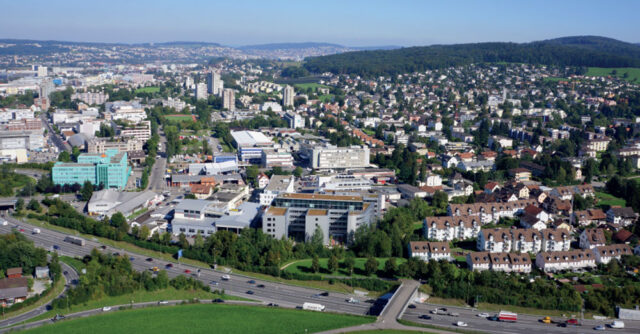
    The Sonnenhof site is centrally located between Bahnhofstrasse and Schaffhauserstrasse and covers a good 20,000 square metres. Today, the site is dominated by a shopping centre from the 1970s, other commercial and residential buildings and a large sealed car park. It is precisely this structure that is now to be fundamentally changed.

    The plan is to create a new, mixed-use district with a public passageway, green courtyards and squares, businesses, restaurants and a cultural and meeting centre. The existing shopping centre will not disappear, but will be modernised and integrated into the new structure.

    Urban densification
    At the heart of the project are around 240 rental flats in various price categories and with different floor plans. In addition, there are around 12,000 square metres for commercial, cultural and public uses on the ground floors and in the passages.

    In terms of urban planning, the project focuses on density and orientation. Four taller buildings will mark the site and give it a clearly recognisable address. The design plan allows for a maximum building height of 55 metres on the north-eastern corner. This shows how clearly the Sonnenhof will stand out from the previous scale.

    Open space instead of tarmac
    The message is particularly strong in the outdoor space. Where heat-retaining pavement dominates today, unsealed surfaces, trees, courtyards and climate-resistant planting will improve the microclimate in future. Rainwater will be able to seep away and evaporate, roofs will be greened and supplemented with photovoltaics.

    The project also aims to reorganise traffic flows. Most of the above-ground parking spaces will be moved to the underground car park, while paths and squares will be designed primarily for pedestrians and cyclists. Nevertheless, around 450 car parking spaces will remain on the entire site.

    Culture as part of the development
    The combination of property development and public use is striking. The planned KUBEZ cultural and meeting centre at Sonnenhof will not only be built, but will also create a regional meeting place for culture, education and leisure. The project is being developed in collaboration with the town of Bülach and neighbouring municipalities.

    This is what makes the Sonnenhof more than just a classic development. The site should not only provide living space, but also create a new centre that expands the everyday life of the town and strengthens the connection between the railway station, town centre and neighbourhood.

    A long road to the new centre
    Sonnenhof is still a planning project. the private design plan is due to be submitted in 2026, with approval scheduled for 2027. The first stage could start in 2029 and be completed in 2031, with overall completion scheduled for 2034 according to the project status.

    This shows the true scale of such projects. The transformation of a central site requires not only capital and design power, but above all time, procedures and political coordination. If Sonnenhof succeeds, Bülach will not simply gain new flats. The town will gain a new piece of urbanity.

  • Zurich sharpens its innovation profile

    Zurich sharpens its innovation profile

    The canton of Zurich is one of the strongest economic regions in Europe. However, even a top location comes under pressure when there is a shortage of skilled labour, development costs rise and global competition becomes tougher.

    This is precisely where the cantonal government comes in. It does not want to boost the innovation centre with individual actions, but rather strengthen it with reliable framework conditions. This Zurich approach is intended to bring research, entrepreneurship and application closer together.

    Five fields with a leverage effect
    The cantonal government has defined five key areas for the years 2027 to 2030. Semiconductors, space, environmental technologies, health and venture capital. The selection is no coincidence. All five areas combine technological dynamism with real growth opportunities.

    At the same time, they show where Zurich is heading. Not in short-term trends, but in fields in which industrial strength, research expertise and new markets overlap. This makes the strategy relevant in terms of economic policy.

    From the laboratory to the market
    The focus on implementation is particularly interesting. Innovation should be applied more quickly. This is precisely where many strong research centres are losing pace.

    For semiconductors, it is about access to chip design, clean rooms and technology transfer. In aerospace, Zurich wants to facilitate the development and scaling of new applications. In the healthcare sector, digital solutions are to be tested, validated and transferred to facilities more quickly. The ambition is clear. Not only invent, but also apply.

    Sustainability is becoming a location factor
    The focus on environmental technologies is also exciting. Sustainable mobility and recyclable construction are not only seen as an ecological task, but also as an economic opportunity.

    That is an important signal. Thinking about security of supply, climate targets and location quality together shifts sustainability from a niche to the centre of location policy. For Zurich in particular, this can create a new profile with international appeal.

    Capital is crucial
    Innovative companies need more than just good ideas. In the growth phase, they need capital that enables scaling. This is why the strategy also focuses on venture capital.

    For the first stage, the Government Council is applying for a framework credit of CHF 23 million. This is not a huge amount. But it marks a political decision of direction. Zurich not only wants to manage its innovative strength, but also translate it into added value and jobs.

  • Zurich bundles economic development in one law

    Zurich bundles economic development in one law

    The road was long. The Department of Economic Affairs has been developing the legal basis since 2020, the consultation process began in 2022 and the Cantonal Council approved it by 114 votes to 59 in the fall of 2025. On April 30, 2026, the cantonal government put the Location Promotion and Business Relief Act into force on July 1, 2026. What was previously piecemeal now has a clear legal home.

    What the law bundles together
    The law brings together six central areas of responsibility under one roof: location development, strengthening innovative capacity, supporting established companies, attracting new businesses, location promotion and external economic relations. At the same time, the previous law on administrative relief will be repealed and fully integrated. This will put an end to a double-track race between two separate sets of regulations.

    The pressure behind it
    Energy shortages, a lack of skilled workers, the OECD minimum tax and the unresolved relationship with the EU are putting pressure on Zurich as a business location. Legally enshrined location promotion should increase the canton’s ability to react and ensure that measures can be implemented quickly and in a targeted manner. The law also provides a basis for the canton to quickly participate in federal crisis support programs.

    Business relief as the centerpiece
    The previous coordination office will be upgraded to a specialist office for business relief. In future, it will systematically examine all new and amended cantonal laws and ordinances for their impact on companies. The so-called regulatory impact assessment has a clear objective: business-friendly regulations and digitally processed enforcement that saves time and effort.

    Zurich as a role model
    Zurich is thus positioning itself as a canton that does not leave economic competitiveness to chance. Carmen Walker Späh, Director of Economic Affairs, played a key role in shaping the law, which is one of the last major projects of her twelve years in office. It will be launched on July 1, 2026, when Walker Späh is already completing her year as President of the Government.

  • Zurich reinvents itself

    Zurich reinvents itself

    Government Councillor Carmen Walker Späh openly stated that many good ideas never make it to the market. It is not a lack of creativity, but a lack of the right support at the right time. The canton of Zurich has therefore taken the step this year of joining the international “MIT REAP” program. The aim is to channel funding in a more targeted manner, network players more closely and systematically promote scaling. Zurich has already established itself as a hotspot in the fields of AI, robotics, life sciences and the new space economy. The task now is to secure this lead.

    Nothing works without people
    Markus Müller, Co-Head of Location Promotion, put it in a nutshell with a quote from medtech entrepreneur Andy Rihs: “Nothing works without people.” Capital alone does not build a future. What makes Zurich strong is the ability to bring together new ideas with the right know-how and the right capacities. Zurich should take on a leading role in the new space economy. According to Müller, innovation is what turns “good” into “leading” in the long term.

    You can’t think about the future alone
    Futurologist Martina Kühne gave the guests three ideas to take away with them. Think beyond tomorrow, develop visions of the future in the majority and shape the future together. Every vision of the future is like a piece of gymnastics equipment on which you can let your mind run wild. Anyone who does this can develop ideas for a possible and desirable future. Because, according to Kühne, the future doesn’t just happen.

    Collaboration as a catalyst
    The ETH spin-off Sevensense shows how this theory translates into practice. in 2021, the young start-up impressed ABB with its 3D vision technology for autonomous robots. Today, around 80 percent of the autonomous robots sold by ABB come from Sevensense. Proof of how effective the combination of established capital and fresh inventive spirit can be.

    Organs in space, muscles in the lab
    Prometheus Life Technologies is even more daring. The start-up uses weightlessness in space to grow organs in three dimensions. This was made possible by a parabolic flight program at the Innovation Park, in close collaboration with the Center for Space and Aviation at the University of Zurich. No less ambitious is Muvon, which is working with the ZHAW on an automated method for muscle regeneration using the body’s own cells. If it can be scaled up, it could be used to treat stress incontinence, which affects a significant proportion of women over 40 in Europe.

    A platform that innovates itself
    Samuel Mösle, Co-Head of Location Promotion, drew a clear line in the final discussion. The three start-ups presented are at the limits of the imaginable future. The innovation platform will become more interactive and networked in future with the support of artificial intelligence. After five years, the initiative has reached the end of its own start-up phase. Samuel Mösle sums it up precisely: “It doesn’t just say innovation on it, it also has innovation in it.”

  • 300 apartments are being made fit – no one has to move out

    300 apartments are being made fit – no one has to move out

    Built in three stages between 1974 and 1990, the “Untere Bühl” still characterizes the old town center of Oberwinterthur today. The complex is considered worthy of protection and some of the buildings are still largely in their original condition. Some of them were already renovated in 2015, and the others are now being renovated. The planning application has been approved and construction is scheduled to start at the beginning of 2027.

    Nobody has to leave the field
    What makes the project stand out is its social consistency. As the asset manager of the AXA Investment Foundation, BNP Paribas designed the refurbishment from the outset in such a way that all tenants can remain in their apartments. The tenants were involved at an early stage, including workshops on outdoor space and design. “Our tenants have been an integral part of the development for years,” says Pascal Messmer, Asset Manager at BNP Paribas. This attitude runs through the entire project.

    Extensions that don’t impose themselves
    For the extension, AXA is relying on bernath widmer architects, who emerged victorious from a cooperative test planning process. The majority of the extensions and new buildings are made of wood and deliberately reflect the character of the existing buildings. Around 80 barrier-free apartments with 1 to 3 rooms will be created. An addition to the existing apartments, most of which are large today. Residential studios, communal areas and a commercial space are planned on the first floor.

    Park remains and becomes more lively
    The park-like outdoor space with communal gardens, playgrounds and the kindergarten from 1977 will be retained. The landscape architecture firm ghiggi paesaggi is taking Fred Eicher’s original open space concept and developing it further. New planting and green roof areas strengthen biodiversity and create habitats for small animals and insects. Greenery is planned on some of the roofs of the new buildings. The central pavilion is to be used by the public in future, for example as a daycare center.

    Into the future in stages
    The project will be implemented in stages, probably up to 2028, with the aim of creating a real estate portfolio with net-zero emissions by 2050. Winterthur is not only gaining refurbished existing buildings, but also 80 new apartments in a mature settlement that knows who it is.

  • When architectural monuments pack their suitcases

    When architectural monuments pack their suitcases

    Two apartment buildings with 57 apartments ranging in size from 2.5 to 5.5 rooms are being built on a 6500 square meter site to the north of the historic station building. Commercial and restaurant space is planned on the first floors, as well as a small commercial building and an underground garage with 59 car and 92 bicycle parking spaces. A park-like open space with a playground will be created between the two buildings.

    Less, but social
    The project has become smaller. SBB originally planned four buildings with 90 apartments, a third of which would be affordable. However, the signal box next to the station building must remain, which means that an entire building is no longer needed. Of the remaining 57 apartments, 20 are to be offered at affordable prices. This corresponds to 35 percent and is even slightly higher than the original quota.

    Switzerland’s last goods shed
    What residential construction demands requires space. Four existing buildings have to make way, including the goods shed from 1928, designed by Meinrad Lorenz, SBB’s chief architect at the time, one of only four buildings of this type in the whole of Switzerland. Following the demolition of the identical shed in Heerbrugg, the one in Wollishofen is the last remaining example of its kind. It is listed in the cantonal inventory of listed buildings.

    A wooden building packs its bags
    Nevertheless, the goods shed will not disappear. It will be dismantled into individual parts, professionally refurbished and rebuilt at the Zurich Oberland Steam Railway Association in Bauma an der Töss. There it will be made accessible to the public and given a museum function as part of the “Bauma 2020 depot area” project. The approval documents for the dismantling are already largely in place.

    History repeats itself
    This move is not the first in the history of Wollishofen station. The current station building was once the first station building in the city of Zug, built in 1864 and moved stone by stone to Lake Zurich in 1897. What was forced by the scarcity of building materials in the 19th century is now a deliberate act of preservation. Wollishofen is thus writing another chapter in an unusual building history.

  • Zurich tests AI in the building permit process

    Zurich tests AI in the building permit process

    From April 2027, the canton of Zurich will require all municipalities to use the eBaugesucheZH platform. This lays the foundation for digitization, but only the foundation. The content of the applications will continue to be processed in different systems, depending on the municipality or canton. This historically evolved system landscape leads to media disruptions, manual coordination rounds and data inconsistencies.

    What the FHNW study shows
    The Building Directorate commissioned the FHNW Institute of Digital Construction to conduct a potential study along the entire process chain. 15 fields of action were identified, from initial digital information to building acceptance. The greatest short-term potential lies at the very beginning. Chatbots for the initial consultation, structured submission support and automated preliminary checks could immediately improve the quality of submitted applications and significantly reduce queries. Many improvements can already be achieved with rule-based systems, without generative AI.

    Prototype with the city of Kloten
    The Innovation Sandbox for AI of the Office of Economic Affairs tested an AI-based preliminary check for the notification procedure together with practice and technology partners, including the city of Kloten. For simple projects such as solar installations or heat pumps, a rule-based system automatically clarifies the admissibility and choice of procedure, and an AI then checks the completeness and quality of the entries. 3336 tests were evaluated. The results are encouraging, even if the reliable interpretation of complex plan representations remains an open challenge.

    Humans remain responsible
    Both studies agree that complete automation is currently not realistic. Where decision-making logic is clearly defined, rule-based systems are preferable to generative AI. The authority to make decisions remains with humans. Legal issues relating to data protection, liability, transparency and copyrighted blueprints as AI training material must be examined in depth before any implementation.

    The results are now being incorporated into the further development of eBaugesucheZH. Individual applications are to be tested in pilot municipalities. Zurich is thus demonstrating how the careful, step-by-step use of AI can work in a complex administrative domain.

  • The wood that protects itself

    The wood that protects itself

    Millions of tons of sawdust are produced worldwide every year. Most of it is burned, and the CO2 bound in the wood is released back into the atmosphere. This is precisely where the research team led by doctoral student Ronny Kürsteiner, under the direction of Ingo Bungert, Professor of Wood-based Materials at ETH Zurich, comes in. The aim is to keep the sawdust in the material cycle for longer.

    The trick with the watermelon seed
    The binding agent is struvite, a crystalline ammonium magnesium phosphate with known fire protection properties. The problem until now was that struvite was difficult to combine with sawdust due to its crystallization behaviour. The researchers found the solution in an enzyme from watermelon seeds. It controls crystallization in such a way that large struvite crystals are formed, which fill the cavities between the sawdust particles and bind them firmly together. The compressed material is then dried at room temperature.

    Three times longer than spruce
    The fire tests at the Turin Polytechnic speak for themselves. In a cone calorimeter, a standardized test method for heat exposure, untreated spruce wood caught fire after around 15 seconds. The struvite-sawdust composite took more than three times as long. Once burning, the material quickly forms a protective layer of inorganic material and carbon, which slows down the further spread of the fire. In addition, the struvite releases water vapor and ammonia under heat, which has a cooling effect and deprives the fire of oxygen.

    Lighter than cement, better for the climate
    Conventional cement-bonded chipboard, which is widely used in interior design today, consists of 60 to 70 percent cement by weight. They are heavy and climate-damaging to produce. The new struvite sawdust boards only require 40 percent binder. They are lighter, have a significantly better carbon footprint and do not end up in hazardous waste landfill after demolition.

    Recyclable and suitable for fertilizers
    The composite can be broken down into its components. Mechanically in the mill, then heated to just over 100 degrees, whereupon ammonia is released and the sawdust is sieved off. The mineral source material newberyite precipitates as a solid and can be reprocessed into struvite. If the material is not reused, it can be used as a long-term fertilizer. Struvite releases phosphorus, nitrogen and magnesium slowly and in a controlled manner into the soil.

    Sewage treatment plant as a source of raw materials
    Another cycle is emerging. Struvite is produced in large quantities as an unwanted by-product in sewage treatment plants, where it clogs pipes and is expensive to dispose of. “We could use these deposits as a base material for our building material,” says Kürsteiner. Whether the material will establish itself on the market depends primarily on the cost of the binder. A problem that could be solved with this source.

  • From data to AI in the real estate world

    From data to AI in the real estate world

    This is precisely why it is worth looking back. Because the way in which real estate is planned, operated and managed has changed fundamentally over the last 30 years.

    Thirty years ago, many processes were still surprisingly analog. Data was stored in folders and paper documents, decisions were based heavily on experience and less on systematic analysis. A phase soon began in which the industry developed step by step: processes became more digital, data more important, buildings and companies increasingly networked.

    It was in this environment that pom was founded in the mid-1990s as a spin-off from ETH Zurich – with the idea of integrating tasks, data and processes in the construction and real estate sector more closely. Thirty years later, pom is celebrating its anniversary and the basic question is still very topical: How can real estate, organization and technology be meaningfully combined?

    In terms of technology, we are now at a new turning point. The digitalization of real estate continues to advance: cloud technologies, IoT and digital models are enabling ever more precise mapping of buildings. The so-called digital twin is increasingly becoming a reality and creating new opportunities for automating processes.

    At the same time, the way companies work is changing. Artificial intelligence will change many processes in the coming years – especially where large amounts of information have to be processed and decisions still have to be made manually. Different data can be analyzed more easily, finished results can be generated automatically and decisions can be massively accelerated, even with the involvement of humans. Assistance systems, known as agents, are becoming part of everyday working life.

    At the same time, a look at the industry reveals an interesting area of tension: technological development is progressing rapidly, while implementation in companies is much slower.

    Every year since 2016, pom Consulting AG has measured the digital maturity of the construction and real estate industry as part of the Digital Real Estate & Construction Study. The Digital Real Estate Index currently stands at 4.3 out of 10 points – a slight recovery compared to the previous year, but definitely not a quantum leap.

    Unsurprisingly, artificial intelligence is increasingly coming into focus. According to the latest study, Artificial Intelligence & Machine Learning is once again one of the most frequently used technologies, alongside Platforms & Portals and Data Analytics. However, the assessment of AI is much more differentiated than in previous years: Around two thirds of respondents see a high benefit in it. In last year’s survey, the figure was 75%. With more frequent use of AI, the possibilities of the technology, but also its limitations, are becoming much more visible, making expectations more realistic.

    Technology alone therefore does not determine success. The decisive factor remains the organization: data quality, implementation strength, clear responsibilities – and the willingness to question existing ways of working.

    Perhaps this is the real parallel to the last 30 years.

    Back then, too, it wasn’t just about new technologies, but about new ways of thinking. Artificial intelligence could therefore become the next big development step in the industry – not because it changes everything, but because it helps to better manage the growing complexity of real estate and organizations.

  • PropTech remains invisible and indispensable

    PropTech remains invisible and indispensable

    Mr. Schwyter, you are one of the pioneers of the Swiss PropTech scene. How did your journey in the digital real estate market begin?
    After my time at Homegate, I asked myself how I wanted to use my knowledge further. The digitalization of the real estate industry was an obvious choice. Before the pandemic, however, hardly anyone was interested in this topic. It was Covid-19 that gave it a huge boost. From then on, digitalization was widely accepted and I found my place in the PropTech scene.

    What early experiences at Homegate still shape your view of PropTech today?
    Above all, the joy of experimenting and developing new approaches together. We wanted to create solutions that would advance the industry as a whole. This attitude is still with me today. Being open, working in an interdisciplinary way and testing boldly.

    How digital is the Swiss real estate industry really, if you leave out the marketing jargon?
    Pom’s Digital Real Estate Index has been below five on a scale of zero to ten for years. This clearly shows that the sector has a lot of potential for improvement. There is progress, but not a continuous digitalization push. Overall, we are more at the beginning of a professional digital transformation.

    Where does Switzerland stand in an international comparison? Pioneer or laggard?
    Switzerland has around 480 PropTech companies, which are small but qualitatively strong and diverse. Germany is significantly higher with more than 1,200 companies. We have areas where we are very good and others where there is potential for expansion. Overall, I would describe us as a solid, well-developed ecosystem.

    In your opinion, which PropTech segments are the most advanced?
    Platform solutions in the broad sense, i.e. not just marketplaces such as data platforms, service platforms and ecosystems. This is where we see the greatest professionalization and maturity.

    What kind of startups do you think will be the first to disappear and why?
    Startups that only cover one isolated process step and cannot be integrated. Real estate companies need solutions that combine several process steps or can be easily integrated into existing systems. Silo products will hardly be viable in the future, neither technically nor economically.

    Where do you see obstacles to digitalization in Swiss real estate companies?
    The industry is highly fragmented. A company with 20 or 30 employees is already considered large. Many have neither internal IT skills nor a budget for larger digitalization projects. This also means a lot of work for providers. Instead of five major customers, you have hundreds of small ones. This structure slows down digitalization.

    Which three megatrends will shape the PropTech landscape in the coming years and why?
    Clearly data, sustainability and artificial intelligence. Data is the basis for every well-founded decision. Sustainability is not possible without data, especially with ESG, and AI is a trend that is highly polarizing. However, the impact only comes when the data quality and organization are right.

    Are there technologies that have long been ready for the international market but have not yet arrived in Switzerland?
    No. Everything that is internationally relevant is generally available in Switzerland in high quality. The challenge lies not in the technology, but in its consistent application and integration.

    What does it take for administrations to become more open to technology and more courageous?
    A clear digitalization strategy, because without a target image, any tool introduction is pure actionism. Companies need to understand that digitalization is a cultural and transformation process and not an IT project. Employees need to be supported and motivated, especially in an environment with high staff turnover.

    How can you recognize the quality of a PropTech company?
    The team. The key question is: do the people have the skills, perseverance and openness to really implement an idea? Markets change, products change and only a strong team can support this change. The team is therefore more important than the idea.

    Which approaches manage to map the entire life cycle?
    Not individual all-in-one products, but integrated cycles. When condition analysis, refurbishment planning and facility management are linked via clean data flows, for example, a genuine life cycle is created. Integration is the key.

    In which phases do you see the greatest untapped potential?
    Clearly in the area of construction technology. How we build, what materials we use, how planning and construction processes work – major changes are imminent here. We are already much further ahead in terms of operations and marketing.

    Are the regulatory framework conditions more of a driver or a brake?
    Startups want fewer hurdles and some things have been improved. However, issues such as the tax treatment of founder shares remain complex. Overall, we should reduce regulation. Innovation does not come from new regulations, but from entrepreneurial freedom.

    What political steps would be necessary for the sector to digitalize faster?
    I am clearly in favour of less government. The real estate industry will digitize itself for economic reasons. If companies can win more mandates and improve quality with the same employees, they will use digital solutions. Without any new political requirements.

    What cultural and organizational stumbling blocks do you encounter most often?
    The misconception that digitalization is a tool issue. In reality, it’s about processes, collaboration and roles. Many underestimate the cultural change. High staff turnover also makes it difficult to establish a digital culture.

    Which developments will irreversibly change the industry?
    Anything that simplifies or automates repetitive tasks and thus creates productivity gains. Whether you call this digitalization or efficiency enhancement is irrelevant. AI is one component, but not the only one.

    If you had to found a new PropTech today, in which area would it be?
    Probably in the area of marketing, because there is a lot of creative potential there. At the same time, I would like to see existing solutions grow more strongly. We have enough good providers, we don’t necessarily need any more.

    Where will PropTech Switzerland be in 2030?
    PropTech will be indispensable, but not in the spotlight. It’s not “sexy” like climate or energy issues. PropTech doesn’t make the headlines, but it ensures that the industry functions digitally, data-based and efficiently. This is precisely why PropTech will play a central role in the long term.

  • What was considered a bargain becomes a billion-euro project

    What was considered a bargain becomes a billion-euro project

    When the city of Zurich announced the renovation of the armory on the barracks site in Zurich-Aussersihl, it still sounded like a manageable project. The initial cost estimate was around 55 million francs. Today, a figure of just under 200 million francs is on the table that makes even experienced city parliamentarians sit up and take notice. A multiplication that needs to be explained.

    Dilapidated fabric drives up costs
    The main driver is the fabric of the building itself. The historic arsenals are in a far worse condition than originally assumed. Pollutant remediation, structural interventions and monument conservation requirements add up to a cost that was simply underestimated in advance. Added to this are increased construction costs and an expanded usage concept that requires higher technical standards.

    Culture, commerce and community
    What is to be created after the renovation has substance. The city council is planning a mixture of cultural use, small businesses and publicly accessible spaces. A lively meeting place in the middle of Zurich-Aussersihl. The social mix is an explicit part of the concept. The aim is to enhance the barracks area as a whole, not just the arsenals themselves.

    Long road to opening
    The timetable is ambitious and the history of the project calls for caution. The renovated arsenals should be ready for occupation in 2034 at the earliest. Until then, the municipal council will need to approve a loan, an approved construction project and a smooth construction process. In Zurich, experience shows that these three factors rarely all work smoothly at the same time.

    Monument obliges
    The arsenals are part of the protected barracks area. An ensemble that makes the city’s history visible. Demolition is out of the question. If you want to preserve historic buildings, you have to be prepared to pay for them. The question is not whether, but how the city finances this task and communicates it transparently, comprehensibly and with clear added value for all Zurich residents.

  • Zurich is still going strong, but for how much longer?

    Zurich is still going strong, but for how much longer?

    The Zurich financial centre employs over 102,000 full-time positions at the end of 2024, 44,000 of which are in the banks alone. With a gross value added of CHF 32.8 billion, the sector generates more than one sixth of Zurich’s total economic output. The banks also cover around 30 per cent of the financing requirements of companies and households throughout Switzerland. These are not just abstract figures, they are the economic basis of an entire metropolitan region.

    Half the city’s coffers from one sector
    The study conducted by management consultants Oliver Wyman on behalf of the Zurich Banking Association makes one figure particularly clear. Around half of corporate taxes in the city of Zurich come from banks and insurance companies. With 10 per cent of jobs, they generate 16 per cent of value added, which is far above average productivity. Zürcher Kantonalbank also distributed a record amount to the canton and municipalities for 2025.

    Fewer banks, more jobs
    The number of banks operating in the Zurich region has fallen from 94 to 78 since 2015. Despite this, employment has risen steadily, with above-average growth since 2017. Bank-related service providers such as fintechs, asset managers and consulting firms have created jobs where traditional institutional structures have been dismantled. The sector is consolidating, but not shrinking.

    Regulation as a sticking point
    CBA Managing Director Christian Bretscher poses the crucial question. What happens if the framework conditions gradually deteriorate? He calls the planned increased capital requirements for UBS “incomprehensible”. The association is calling for targeted banking regulation with a sense of proportion, not blanket tightening that could force internationally active institutions out of Zurich. Swiss banks already contribute 5 per cent to national GDP and directly employ around 158,000 people.

    What is at stake
    The Zurich financial centre is in direct competition with London, Singapore and Frankfurt. Special regulatory burdens or tax deteriorations affect not only the banks, but the entire city economy. Anyone who draws 50 per cent of corporate taxes from a single sector has an interest in ensuring that this sector remains, grows and invests. This is not a lobby statement, this is arithmetic.

  • Rent cap eats its own children

    Rent cap eats its own children

    Since the Housing Protection Ordinance came into force in Basel-Stadt in May 2022, planning applications for rental apartments have plummeted by 76 percent. in 2024, only 151 new-build apartments were completed in the city canton, less than a quarter of the long-term average. While Zurich recorded a 20 percent increase in building applications in the same period, construction activity in Basel effectively came to a standstill.

    No renovation, buildings fall into disrepair
    Regulation not only slows down new construction, it also paralyzes the renewal of existing buildings. Craft businesses are complaining about a lack of orders; individual companies are looking for work 40 kilometers away in Fricktal. Necessary energy-efficient renovations are not being carried out and properties are falling into disrepair. This ultimately affects the tenants themselves and thwarts any claim to climate protection.

    Geneva 40 years of regulation, 40 years behind
    Geneva has had one of the strictest tenant protection laws in Switzerland since 1983. The result is sobering. 83.5 percent of residential buildings over 40 years old have never been comprehensively modernized, compared to 47.6 percent in Basel and 41.3 percent in Zurich. New tenants in Geneva pay an average of 30 percent more per square meter than existing tenants. Strict tenant protection therefore primarily protects those who already have an affordable apartment. Not those who are looking for one.

    The real problem, too little supply
    If you want to reduce rents, you have to increase supply. This means faster approval procedures, more densification, more replacement new builds and extensions and fewer objections. The Zurich Cantonal Council has already drawn up two counter-proposals that focus on better framework conditions rather than bans. This is the right direction.

    What Zurich needs to decide
    The housing market in the canton of Zurich is under pressure, that is real. But a rent cap does not solve the problem, it exacerbates it. Basel and Geneva are not a theory, but a living warning. On June 14, Zurich has the choice of learning from its mistakes or repeating them.

  • Successful job coaching from SVIT Zurich!

    Successful job coaching from SVIT Zurich!

    SVIT Zurich actively supports job searches in the real estate sector. Applicants are not left to their own devices: On request, they can receive targeted support when entering the real estate industry. An experienced real estate professional accompanies them as a personal coach, analyzes their initial situation together and defines effective measures for a successful job search. In this way, participants acquire additional skills that improve their application chances in the long term.

    The job placement service is free of charge for members and non-members alike, provided they have completed or are currently attending the “Career changer assistant in real estate management and marketing” or “Real estate management clerk” course at SVIT Zurich in Oerlikon. With this offer, the association is making an active contribution to combating the shortage of skilled workers and at the same time ensuring that the candidates placed have a sound basic education in the industry at SVIT Zurich.

    More and more members are making use of this qualified specialist resource – with consistently positive feedback. They benefit from the opportunity to build up new team members according to their needs and deploy them in the long term. In addition, many candidates bring valuable additional skills from their previous professional life.

    Interested parties can register by sending an e-mail to diana.waly@svit.ch. SVIT Zurich has an official permit from the Canton of Zurich for private employment agencies.

    Further information on the process and application videos of current candidates can be found at the following link:

    https://www.svit.ch/de/svit-zuerich/themen-services/einstieg-die-immobilienbranche-bewerbungsvideos-quereinsteiger

  • Artificial intelligence: Absolutely, but..

    Artificial intelligence: Absolutely, but..

    Whether the English “AI” or the German “KI” – artificial intelligence is currently omnipresent. How its impact is assessed depends heavily on the perspective of the individual: For some, the opportunities outweigh the risks, while others primarily see risks. However, one thing is undisputed: the technology is here to stay.

    For us as a digital real estate platform, an open approach to technological innovation has always been part of our DNA. With ImmoScout24 and Homegate, we have been actively shaping the real estate market for over two decades. Our principle also applies here: AI must not be an end in itself, but should act as an unprecedented “enabler”. After all, the true potential of these two letters lies in the accelerated development, smart expansion and enhancement of innovative products that can create real added value and achieve daily efficiency gains.

    In the professional real estate sector in particular, the benefits of AI can be seen in its productive integration into existing, established processes. While this enables us as platforms to develop market-oriented products in a more agile way, it creates new efficiency gains for brokers and property managers in their day-to-day operations. The decisive factor is not the technology itself, but its real contribution.

    Two examples from the SMG Real Estate ecosystem illustrate this:

    • Our AI-based listing text creation saves an average of 14 minutes per listing. Extrapolated to an entire portfolio or a marketing campaign, this results in a substantial gain in productivity. The time saved can be invested specifically where it makes the biggest difference – in consulting, negotiation and customer relations. Anyone who instead advertises on ImmoScout24 or Homegate as a private individual can use this new intelligent function to partially compensate for a lack of marketing experience.
    • The new “Insight Hub” for real estate professionals provides AI-driven answers to questions about the potential and performance of listings that were previously difficult to narrow down. Every week, real estate agents and managers receive an overview of the listings with the greatest potential for improvement, including specific recommendations for action and the expected increase in visibility.

    This is just a small excerpt, plus numerous current developments at SMG Real Estate, including “Agentic AI”, a digital companion for real estate professionals in their day-to-day work – from the transcription of meeting notes to seamless CRM integration. But more on that in the near future. At the same time, technological innovation requires continuous investment – especially in cybersecurity. After all, it’s not just the right players who benefit from AI. State-of-the-art protection mechanisms, two-factor authentication, integrated access controls, etc. are essential to secure data and effectively prevent attempted fraud. Trust remains the central currency in the real estate market – especially in the digital one.

    But thanks to these targeted, ongoing investments in AI applications, we at SMG Real Estate are actively continuing to shape our role as the “digital shaper” of the Swiss real estate industry. Our goal is and remains first and foremost to make real estate professionals not only more efficient, but also more successful in the long term. This is also what our vision stands for: “Next-Gen Swiss Real Estate – digital and simple.”

  • The turnaround is real USZ turns positive

    The turnaround is real USZ turns positive

    Anyone driving through the Hochschulquartier will see it immediately. Cranes. Building pits. Large construction site. Campus Mitte is being built and with it the ambition to redefine cutting-edge medicine in the long term. The investments are underway. The question has long been, how will the balance sheet support this? Now there is an answer.

    The turnaround is real
    36 million francs profit. For the first time since 2019. A year earlier, a loss of 31 million francs. The contrast is clear and the direction is right.
    Inpatient cases rose by just under 3 percent, outpatient visits by 5 percent to around 882,000. More patients, better capacity utilization, more consistent processes. The result is no coincidence. The turnaround is real. The work has only just begun.

    Digitalization is paying off
    Since CEO Monika Jänicke took the helm in 2023, the clear strategy “USZ 2030” has been in place. More efficient processes, greater digitalization, focused medicine. The EBITDA margin rose from 2.9 to 6.6 percent. Strong, but not yet at the finish line. As the owner, the canton is demanding 10 percent. At the same pace, this can be achieved in 2026. The target for the equity ratio, just under 40%, has already been met.

    The canton is moving with
    Investments are running in parallel with the increase in earnings. Around CHF 100 million was invested in real estate in both 2023 and 2024. The canton is supporting the project and is borrowing CHF 690 million on the capital market. This at better conditions than the hospital itself would ever receive and passes the money on.
    The retained earnings, which fell to under 200 million francs in 2024, have now risen again to around 230 million francs. The cushion is growing.

    Not just the USZ
    The positive trend is not an isolated case. Winterthur Integrated Psychiatry closed 2025 with a profit of CHF 1.8 million. After red figures in the previous year. Patient numbers up 5 percent. This shows that cantonal healthcare institutions are responding to cost pressure with structure, efficiency and clarity.

  • Regensberg fights for survival

    Regensberg fights for survival

    Regensberg has exactly 477 inhabitants at the end of 2024. Despite two tax increases in recent years, there is not enough revenue to finance the municipality’s tasks. The structural deficit threatens the independence of the medieval country town on the rocky spur above Dielsdorf. A merger with a neighboring municipality is on the cards, a scenario that many Regensberg residents want to avoid.

    A meadow as a turning point
    The impetus came in April 2024 at a Future Day, where the population openly discussed the fate of their municipality for the first time. On the agenda was the Pünt meadow, the last major building site in the village. This discussion gave rise to the idea of a cooperative. In July 2025, the Pünt Regensberg building cooperative was officially entered in the commercial register.

    40 apartments, 80 new people
    The project, a four-storey building with 41 apartments, is to be built on the Pünt, around three quarters of which will be large family apartments with 4.5 to 5.5 rooms, the rest smaller units with 2.5 to 3.5 rooms. The cooperative anticipates 60 to 80 new residents. For a community the size of Regensberg, this corresponds to a population increase of around 15 percent. A competition to find the project team was held back in 2025.

    More than taxes
    The goal is not just fiscal. Regensberg has the fourth-highest average age of all Zurich municipalities. Younger families should come and thus also secure the elementary school, because without a school there are no families and without families there is no village life. The flexible usage concept also allows older people to move from their single-family home to a suitable smaller apartment without having to leave the village.

    non-profit instead of speculative
    If the project had ended up in private hands, the apartments in the attractive location would have primarily been investment properties. In contrast, the cooperative lets on a cost-rent basis, i.e. without the intention of making a profit. The project is being financed via share certificates, member loans, state subsidies and bank mortgages, with a target equity ratio of 35 to 40 percent.

    the cranes will rise in 2028
    Because Regensberg is listed in the federal inventory of sites worthy of protection, particularly strict conditions apply to construction. The building permit is due to be issued in 2027, with construction scheduled to start in 2028. The first apartments could be occupied one or two years later. Whether the cooperative can solve the structural deficit on its own remains to be seen. But it proves that sometimes a village saves itself.

  • Group of 15: Joint plea for a united real estate industry

    Group of 15: Joint plea for a united real estate industry

    The Swiss real estate sector is viewed with suspicion in some places – especially when it comes to the housing market. Is there enough living space in central locations? Why are rents in metropolitan regions rising sharply and constantly? What influence do municipalities, cantons and the federal government have on the activities of the institutional real estate industry? And what voice does the sector speak with throughout the country?

    The professional, institutional and commercial real estate industry is undoubtedly under observation. It is undoubtedly caught between growing regulation, social change and, in many places, calls for innovation, renewal and fairness. The minds and planners of the 25th symposium of the Group of 15, the think tank of the Swiss real estate industry founded in 2001, posed the questions to be answered in the run-up to the event: What does sustainability mean in a market that is becoming increasingly controversial? How can economic incentives be combined with social responsibility and sustainable urban development? And: How much state intervention is necessary – or too much?

    “Curbing regulatory madness”
    For Basel-born Prof. Dr. Christoph A. Schaltegger, one thing is clear: the state’s influence on the construction and real estate industry is enormous – and needs to be curbed. The professor of political economy, director and founder of the Institute for Swiss Economic Policy (IWP) at the University of Lucerne and former member of the executive board of economiesuisse criticized Bern and its authorities. He said that subsidyitis and patronage politics were rampant there in their purest form. “The federal government is twice as big as the state quota implies,” he told the 300 or so guests at the symposium in Zurich’s Kunsthaus.

    The Swiss state is growing more than twice as fast as the productivity of the economy and is now accumulating “implicit debts of over 300 percent of economic output”, Schaltegger continued. His call: the “Sturzenegger approach”, a thorough cleaning of public finances à la Argentina. At the same time, he argued for a significant reduction in federal regulation. He referred to the sharp increase in the number of ordinances and decrees since the 1970s. Of course, many of these federal decisions also affect the local construction and real estate sector.

    Artificial intelligence as a remedy?
    Prof. Dr. Christian Kraft, Head of the Real Estate Competence Centre at Lucerne University of Applied Sciences and Arts, then turned his attention to the topic of structural (dis)order and the question of whether artificial intelligence could possibly promote investment security in the “chaos of Swiss-German building laws”. His answer: a clear yes and no. The current uncertainty, which is partly location-specific, is primarily due to longer approval periods for real estate projects at BZO level. Between 2011 and 2024, for example, the average approval period increased from less than 100 days to almost 200 days on average. In addition, there has recently (since 2020) been a sharp increase of 20 to 30 percent in the planning and construction costs of apartment buildings, according to Kraft.

    Successful neighborhood mix and fatal objections
    Dr. Sibylle Wälty, lecturer at ETH Zurich and founder of Resilientsy, then showed what added value the concept of “10-minute neighborhoods” can create in land use planning. Her research and consulting focus is on a balanced mix of residential and working populations as well as other important factors for liveable urban districts. Dr. Wolfgang Müller, Partner & Head Real Estate at MLL Legal Ltd, then shed light on the “room for contradiction”. He explained where current case law offers opponents and “project obstructors” a hand and what conclusions politicians and the real estate industry could and should draw from this.

    Decency and consideration in residential construction
    After the coffee break, Paolo Di Stefano’s symposium presentation entitled “More freedom and personal responsibility” dealt impressively with how real estate investors can move “from problems to prospects” and make residential real estate “fit for the future”. The experienced Head of Real Estate Switzerland at Swiss Life Asset Managers (with around 37,000 residential units in its portfolio throughout Switzerland) showed, among other things, a successful example of portfolio renovation without vacancy notices at the Schmiede in Zurich-Wiedikon. He also presented the Au-Park in Wädenswil, an almost completed major new construction project in which, in addition to around 200 rental apartments, many condominium units are being built by Swiss Life Asset Managers.

    At the symposium, he made a plea and at the same time urgently appealed to the representatives of the real estate industry to speak with one voice to both politicians and the general public. He also pointed out self-critically that the current representation of the farming community in the Swiss National Council and Council of States, for example, is far more important and influential than that of the construction and real estate industry. Di Stefano warned that speculative building investors and long-term institutional investors were sometimes lumped together in the “political power play”. It is important to work together to counter this with arguments and show that “decent building also means consideration”.

    “Simply make good and convincing projects”
    The major Group of 15 event at the Zurich Kunsthaus concluded with a slightly peppery future talk by conference host Rainer Maria Salzgeber with National Councillor Beat Walti (FDP) and Green Liberal Councillor Esther Keller (Canton of Basel-Stadt). They agreed that regulations in the construction sector should not continue to grow wildly and that, above all, discretionary leeway should be made possible for real estate projects. Both warned against an “unholy political alliance between left and right”, which could have counterproductive consequences for the real estate industry.

    Beat Walti, who has been President of the VIS Swiss Real Estate Association since 2023, which represents the interests of institutional investors such as pension funds, insurers and private real estate companies in federal Berne, called on the real estate industry, which he warned at the beginning with a “yellow card”: “Show what you are building and doing in order to create trust – among politicians and the general public”. Esther Keller, Head of Basel’s Department of Construction and Transport, agreed and summed up her demand succinctly in her closing statement: “Just do good and convincing projects”.

  • From industrial heritage to innovation campus

    From industrial heritage to innovation campus

    Where textile machines and industrial production used to set the pace, a new focus for technology, trade and entrepreneurial development is now being created. The approximately 75,000 square meter site is not being conceived as an isolated business park, but as a networked innovation location with a direct link to the Töss district. Existing buildings, paths and spaces form the backbone of the transformation.

    Historical substance remains where it creates character and identity. At the same time, structures will be opened up, paths made more permeable and new places for encounters, collaboration and exchange created. The Vitus site will thus become a visible driver of Winterthur’s economic development.

    Mission statement and site strategy
    The guiding principle is both simple and ambitious. A tech and innovation cluster that brings together companies, start-ups, education and research in one place. The focus is on work, not living. Office and commercial space is planned for technology-oriented companies, research-related businesses, service providers and creative players. Co-working facilities, flexible spaces and space for young companies will also be added.

    At the same time, the site development focuses on atmosphere. Urban meeting zones, restaurants, cultural offerings and publicly accessible outdoor spaces are intended to ensure that the area also comes alive outside of traditional office hours. The planned Vitus Promenade connects the site with the Töss river and creates an identity-forming open space axis that enables movement, recreation and interaction.

    Development in stages
    The transformation is deliberately taking place in several stages. In the first phase, existing buildings will be activated, renovated or upgraded through targeted conversions. Interim uses, co-working, events and cultural formats will ensure that the area gains appeal even during the planning phase. The first companies from the fields of technology, sustainability and future mobility are already using the Vitus site as a place to work and develop.

    At the same time, structural foundations are being laid for the next steps, such as improved access, sharper utilization concepts, mobility and sustainability approaches. Individual construction projects, such as the new LANDI site, fit into this picture and strengthen the commercial character of the area. In a later stage, the eastern part of the site in particular will be redeveloped in greater depth. Additional, contemporary space for production, laboratories, offices and services will be created here – tailored to market needs and demand.

    Prospects for Töss and Winterthur
    The Vitus site will give Winterthur-Töss a strong economic anchor point. The site offers potential for several thousand jobs and thus strengthens the district’s role as a productive yet urban location. Open spaces, permeable paths and cooperation with local players should prevent the creation of an isolated commercial area.

  • Zurich municipal council elections 2026

    Zurich municipal council elections 2026

    Experience politics in a fun way with SVIT Zurich’s “Built&Rent” game!
    The first round of elections in the city of Zurich will take place on March 8, 2026. With regard to this important election in the largest municipality in our canton (with an impact beyond the cantonal borders), SVIT Zurich is recommending seven candidates for election. They are members of the relevant commissions HBD/SE (Department of Buildings, Urban Development) and FD (Department of Finance) or hold important positions in their parties. Newcomers who are not yet members of the municipal council are also included.

    However, all seven candidates share a common interest: To advance a liberal housing and real estate policy for Zurich that addresses the current challenges on the housing market quickly and effectively.

    The “Built&Rent” game brings to life the pressure that real estate professionals are under – and how political decisions shape the sector. Great learning and non-cash prizes can be won. From numerous Apple vouchers to free participation in SVIT Zurich training courses and seminars. Participation is free for everyone. SVIT membership is not required. Political education becomes an interactive experience! It’s played like “Tetris”.
    (Playing time January 28 to February 15, 2026)

    Competition link: https://www.svit.ch/de/svit-zuerich/politik

  • ABB cashes in and Oerlikon builds

    ABB cashes in and Oerlikon builds

    ABB is selling a site of around 7,000 square meters near Zurich-Oerlikon railroad station to real estate service provider Pensimo. The sale will result in an operating gain on disposal of around CHF 290 million before taxes in the first quarter of 2026. ABB no longer needs the site as a strategic land reserve and is taking this step to enable the further development of the Neu-Oerlikon district.

    Around 500 apartments, a high-rise building and commercial space are planned for the site. Over the next few years, the former industrial area is to be transformed into a mixed-use district with housing, services, workplaces and cultural and commercial facilities. Due to high land prices, rents are expected to be rather high. At best, individual apartments at cost rents are conceivable, for example as part of a densified site development.

    New ABB headquarters in Oerlikon
    ABB is expanding its presence in Oerlikon at the same time as selling the land. The Group is planning a new headquarters in the immediate vicinity, into which around 500 employees are expected to move in 2031. The project comprises a renovated, listed existing building and a new six-storey timber composite construction designed by Christ & Gantenbein.

    With a gross floor area of around 10,800 square meters, modern working environments including an auditorium, lounge and cafeteria, foyer and exhibition area as well as recreation and fitness areas will be created. The investment volume is around 80 million Swiss francs. ABB CEO Morten Wierod emphasizes the company’s commitment to Switzerland and the city of Zurich. Mayor Corine Mauch speaks of an even more “colorful and lively” district around Oerlikon station in the future.

    Strong final quarter of 2025
    ABB made significant operational gains in the final quarter of 2025. Comparable sales rose by 9 percent to 9.05 billion US dollars. Order intake developed particularly dynamically, increasing by 32 percent on a comparable basis to USD 10.32 billion, exceeding the USD 10 billion mark in a quarter for the first time.

    The operating EBITA margin improved from 16.6% to 17.6%, while adjusted net profit rose by 29% to USD 1.27 billion. For the full year 2025, net profit increased to USD 4.73 billion, around 20% more than in the previous year. The dividend is to be increased from CHF 0.90 to CHF 0.94 per share; at the same time, ABB is announcing a further share buyback program.

    Outlook and new buyback program
    For the first quarter of 2026, ABB expects comparable sales growth of 7 to 10 percent and a further increase in the margin. For the year as a whole, management expects growth of 6 to 9 percent and slightly higher profitability. Analysts see particularly strong drivers in the data center business and in the Electrification division, where orders increased by around a third.

    In addition, ABB is launching a new share buyback program with a volume of up to USD 2 billion, which is scheduled to run until January 27, 2027. A previous program of up to 1.5 billion US dollars has expired. This strengthens the attractiveness of the share and signals confidence in the company’s own earning power.

    ABB share at record level
    The figures and outlook were rewarded with price gains on the stock market. ABB shares rose by 8.46 percent to 66.38 Swiss francs, reaching a new all-time high of 67.22 Swiss francs. The strong order intake, the improved margin, the increased dividend and the larger share buyback program clearly exceeded the previously cautious expectations.

    For the Zurich-Oerlikon site, the combination of the sale of land, the construction of the new Group headquarters and the planned development of the district means a significant structural change. From an industrial site to a dense, urban residential and working district, with high investments, but also with the prospect of further rising rents.

  • SVIT Zurich political talk “Zurich municipal council elections 2026”

    SVIT Zurich political talk “Zurich municipal council elections 2026”

    Municipal elections will be held in the city of Zurich on March 8, 2026. With regard to this important election in the largest municipality in our canton (with an impact beyond the cantonal borders), SVIT Zurich recommends candidates for election. They are members of the relevant commissions HBD/SE (Department of Buildings, Urban Development) and FD (Department of Finance) or hold important positions in their parties. Newcomers who are not yet members of the municipal council are also included. However, all seven candidates share a common interest: To advance a liberal housing and real estate policy for Zurich that addresses the current challenges on the housing market quickly and effectively.

    In the political talk, the candidates will explain where they stand up for housing policy and the real estate sector and will also be available to answer critical questions in person during the drinks reception. At the end of the event, our political guests will compete against each other in the SVIT Zurich political game “Build & Rent”. Who will win the game? Who will win the 2026 Zurich municipal elections? We are curious.

    Link to the candidate videos

    Link to registration for the political event

    Download:
    SVIT Zurich “Polit-Check” on the municipal elections

  • Energy future in the Limmat Valley

    Energy future in the Limmat Valley

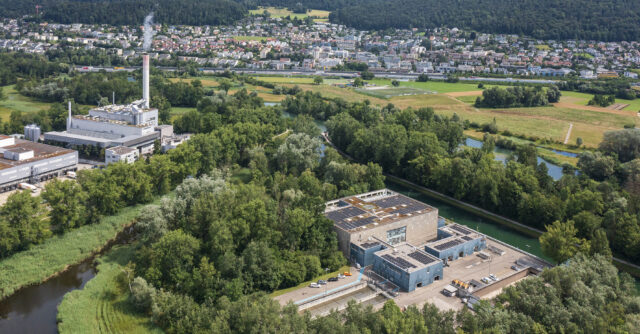
    The Limeco regional plant in the Limmat valley is facing a project of the century. A new waste recycling plant is to be built by 2034, followed by the reorganization of wastewater treatment by 2050. This will ensure that waste and wastewater from the Limmat Valley will continue to be processed in an environmentally friendly manner and used as a source of energy.

    The existing waste incineration plant will be replaced by a new building further to the west. A larger WWTP is to be built at the existing site to meet the needs of the growing Limmat Valley in the long term. The current WWTP will be decommissioned by 2050. It is located in a nationally protected nature and bird sanctuary.

    A project with vision
    The Limmattal Energy Center is a prime example of the transformation in the waste disposal and energy sector. From pure waste recycling, a multifunctional energy hub is being created that provides heat, electricity and gas – resource-conserving, locally anchored and climate-neutral.

    Design plan sets out framework
    A cantonal design plan forms the basis for planning law. It defines in a binding manner how the plants are to be phased, developed and embedded. Specifications on building plots, environmental and water protection, natural areas and public green spaces create planning security.

    An environmental impact assessment is being carried out in parallel. It examines the impact of the construction and operating phases on the environment, local residents and ecosystems. The aim is to create an energy center that combines climate and resource conservation. This includes electricity, district heating and gas production from renewable sources as well as concepts for the direct capture of CO₂ emissions.

    Participation and information
    The design plan will be open to the public for 60 days from January 20, 2026. Citizens, associations and authorities can comment on the draft during this time. The submissions will be examined by the cantonal authorities and documented in an objection report.

    On Wednesday, January 21, Limeco is hosting a public information event at which representatives of the canton and the company will present details of the project and answer questions. Information about the event can be found at www.lez.ch/gestaltungsplan.

    The complete documents are available at www.zh.ch/raumplanung and can also be viewed at the municipality of Dietikon and the Cantonal Office for Spatial Development.

  • Zurich strengthens energy transition with 60 million program

    Zurich strengthens energy transition with 60 million program

    Buildings are among the biggest energy consumers in the canton of Zurich. Around 40 percent of energy requirements and a third of CO₂ emissions are attributable to this area. However, a lot has changed in recent years. Technical innovations, the CO₂ levy and cantonal regulations are having an impact.

    With the energy subsidy programme, the canton is creating additional incentives to replace fossil fuel heating systems, insulate building shells or modernize heat distribution systems. Demand for subsidies remains high, fueled by the revised Energy Act of 2022.

    Financial framework until 2029
    The cantonal government is now requesting CHF 60 million from the cantonal council to continue the program. These funds are to be supplemented with shares from the CO₂ levy and from the national impulse program. Provided the federal benefits are not reduced, this will result in a total budget of up to CHF 286 million for the years 2026 to 2029.

    The focus is on measures in the building sector. Advice and information services will also be supported, particularly for owners who want to renovate their properties to make them more energy efficient or are looking for alternatives before the statutory ban on electric heating systems from 2030.

    Focus on innovation and biogas
    In addition to traditional building renovations, the canton will increasingly promote innovation in future. One million francs per year is available for pilot projects that test new technologies and processes for efficient energy use or storage. A further CHF 250,000 per year will go towards the promotion of biogas from agricultural facilities. A promising energy source for industrial high-temperature processes.

    In this way, the energy promotion program combines climate protection with regional value creation. It strengthens innovation and at the same time acts as a lever on the way to net zero in Zurich’s building stock.

  • Experimental field of cooperative city life

    Experimental field of cooperative city life

    As an innovation and learning platform, “mehr als wohnen” sees the Hobelwerk not only as a housing estate, but also as a real-life laboratory for new forms of housing, participation models and cooperative governance. For experts in planning, housing construction and urban development, the neighborhood offers illustrative material for central questions of future urban development. For example, the focus is on how much community everyday life can actually tolerate and how mixed uses can be organized in such a way that they function robustly in the long term. It also shows how a district can be designed to be socially open, ecologically ambitious and yet economically viable.

    The Hobelwerk is located on the former site of the Kälin & Co. carpentry factory right next to Oberwinterthur railroad station and thus in a well-developed, formerly commercial location. The client is the building cooperative mehr als wohnen, which has realized its second major project after the Hunziker Areal and developed the site in two stages between 2018 and 2023.

    five new buildings and several converted existing buildings have been built on an area of around 16,000 m², with a total of around 158 apartments plus commercial and communal areas. The development is considered a model for socially, ecologically and economically sustainable urban development and has won several architectural and energy awards.

    urban design, architecture and mix of uses
    The various structures, including long blocks along the tracks, a courtyard house, a rectangular building and a small residential tower, create a small-scale quarter with courtyards, alleyways, play areas and gardens. Several offices, including pool Architekten, Ramser Schmid, Pascal Flammer, Baubüro in situ and Studio Vulkan, ensure diversity in the details while maintaining a clear overall figure.

    the mix of uses ranges from classic 1.5- to 6.5-room apartments, cluster apartments and micro co-living to residential studios for cultural workers and commercial space of various sizes, some of which is affordable. The first floor includes a daycare center, bakery, co-working space, studios, laundromats, common rooms and communal areas that function as an extended “living room” for the development.

    living concepts and everyday organization
    The cooperative combines established and experimental forms of living such as micro-co-living for one to two people with shared kitchens and common areas, spacious cluster apartments for shared apartments, classic family apartments and inclusive housing projects, for example with partner organizations such as jawohn. The residential offering is complemented by guest rooms, guest apartments and rooms that can be flexibly rented.

    the commons play a central role with arcades, roof terraces, common rooms and the covered Hobelwerkplatz square, which facilitate informal encounters and shared use. Residents actively shape the neighborhood in neighborhood groups and participation formats, a core component of the “more than housing” DNA.

    existing buildings, open space and identity
    The old planing mill hall and the Z-Hall were preserved, gently converted and now form the center with a covered square for markets, festivals, cultural and neighborhood events. In this way, the industrial past remains present as a spatial and narrative layer and gives the area a clear identity.

    the open space design with vegetable gardens, gravel paths, play areas and the greening of courtyards and façades aims to ensure a high quality of stay, heat reduction and biodiversity. Low-car access and a mobility station with bikes and trailers make everyday life without a car easier.

    sustainability, governance and learning character
    The project focuses on energy-efficient construction, robust, durable materials and the targeted reuse of components, combined with low per capita consumption of resources and space. The Hobelwerk received several awards for this, including as one of the best new construction projects in Switzerland and for its energy-efficient, resource-conserving design.

  • Zurich strengthens energy future with solar and storage obligation

    Zurich strengthens energy future with solar and storage obligation

    The largest unused power plant is located on Zurich’s roofs. Around 6 terawatt hours of solar power could be generated annually, almost two thirds of the canton’s electricity requirements. The cantonal government wants to exploit this potential. In future, all suitable roofs over 300 square meters are to be fully covered with solar systems. New buildings are subject to the obligation from the time of construction, existing buildings when the roof is replaced.

    In this way, Zurich is focusing on proven structures. Solar energy is generated locally, can be implemented quickly and hardly encounters any resistance. It strengthens self-sufficiency, especially if surplus summer electricity can be stored.

    Storage as a bridge to winter
    The way to a secure winter supply is through storage. Three quarters of solar power is generated in the summer months. A surplus that should be available for long-term use in the future. The Government Council wants to oblige grid operators to promote long-term storage in a technology-neutral way.

    A moderate levy of no more than 0.5 centimes per kilowatt hour will feed the subsidy fund, which will be administered by the EKZ. For households and businesses, this means around two percent higher electricity costs. Hardship regulations protect electricity-intensive companies.

    Law with a sense of proportion
    Where systems are uneconomical, financial hardship exists or there is no grid connection, exceptions remain possible and the obligation does not apply. Protective interests for the landscape and townscape are also weighed up.

    Zurich is thus sending out a pragmatic signal. Instead of hoping for large-scale projects in the Alps or wind farms, the potential is being used locally. The combination of nationwide solar production and a storage strategy forms the backbone of a secure, renewable energy future in the canton.

  • Merger strengthens care and living in old age

    Merger strengthens care and living in old age

    The Dübendorf-based Tertianum Group has acquired the Senevita Group, which previously belonged to the French care group Emeis from Puteaux. According to a press release, the transaction has already been approved by the Competition Commission(COMCO). The parties have agreed not to disclose the takeover price.

    The merger of the two care groups is intended to improve the entire area of nursing and residential care for the elderly in German-speaking Switzerland. Both companies combine high quality standards, regional roots and a clear commitment to social responsibility in the care sector, according to the press release.

    “I would like to warmly welcome the employees of the Senevita Group to our joint company. They complement the Tertianum Group perfectly – with their expertise, commitment and professionalism. We are proud to be working with them under one roof in the future to become even better together,” Luca Stäger, CEO of Tertianum Group, is quoted as saying in the press release. “The merger also complements our geographical presence, enables numerous synergies in operational excellence through mutual learning and creates new perspectives for all employees.”

    The now joint company will provide needs-based care for 10,000 guests. The Tertianum Group now has a total of 6,400 care beds and 4,300 age-appropriate apartments at 140 locations throughout Switzerland. In order to secure the next generation of nursing staff, 800 apprentices are being trained.

  • Polysportive lighthouse project takes shape

    Polysportive lighthouse project takes shape

    After many years of planning, construction has now begun. A large polysport complex is being built on the Dürrbach site for around CHF 65 million, realized by HRS Real Estate AG as total contractor. The new building is set to open in fall 2026 and will mark a new sporting focal point in the Glattal.

    Over 30 sports under one roof
    The project is being supported by Zurich Tennis and the Zurich Gymnastics Association, which together unite almost 100,000 sports enthusiasts in the region. The plans include modern halls for tennis and gymnastics, specialized training areas and space for numerous other indoor sports. The offer will be complemented by sports infrastructure, overnight accommodation and facilities for sports medicine and regeneration. The sports center is designed for year-round operation of popular and elite sports.

    Campus for sport and training
    The new sports center will also be home to the Zürcher Oberland Art and Sports School. This will create a campus that combines training, school and talent development in terms of space and content. Young athletes will find ideal conditions on site to combine sporting ambitions and training.

    Beny Ruhstaller strengthens strategic management
    Beny Ruhstaller recently joined the Board of Directors of Sportzentrum Dürrbach AG. He is not joining primarily as a construction specialist, but as an expert in the world of gymnastics. Thanks to his previous activities for the Zurich and Swiss Gymnastics Associations, he brings many years of association experience, a broad network in gymnastics and tennis and a keen sense of the needs of athletes. This strengthens his ambition to develop the Zurich Sports Center into a forward-looking platform for sport, training and exercise in the region.

  • New management confirmed for Stadtwerk Winterthur

    New management confirmed for Stadtwerk Winterthur

    The Winterthur City Council has confirmed Martin Emmenegger as the new Director of Stadtwerk Winterthur, according to a press release. Emmenegger is currently Head of the Networks Division and a member of the Executive Board of Elektrizitätswerk Zürich(ewz). He was previously Head of the Electricity and Telecommunications Division at Stadtwerk Winterthur for four years.

    Emmenegger has a degree in electrical engineering from the Zurich University of Applied Sciences. The 57-year-old succeeds Marco Gabathuler, who has managed the municipal utility since 2017 and will retire in January 2026.

    “With Martin Emmenegger, we have chosen a motivating personality who can successfully lead Stadtwerk Winterthur into the future,” said City Councillor Stefan Fritschi in the press release.

  • Strategic acquisition focuses on specialized commercial areas

    Strategic acquisition focuses on specialized commercial areas

    Swiss Life Asset Managers aims to strengthen its position in the life sciences sector with the acquisition of Schlieremer Gewerbe- und Handelszentrum AG(GHZ), as detailed in a press release. GHZ has developed the Wagi site that belongs to it. A total of around 250 companies and organizations from the life sciences sector are now based there on a rental area of 143,000 square meters, providing more than 2,400 jobs. The Bio-Technopark Schlieren is also located on the site.

    The GHZ site will be retained, the employees will be kept on and GHZ Managing Director Walter Krummenacher will continue to act as a contact person for the tenants and develop the site with his employees. “We are very happy to have found a reliable partner in Swiss Life Asset Managers that shares our values and our long-term commitment to real estate and life science as a contribution to society. In this way, the vision of our founder Leo Krummenacher will be carried into the future”, Walter Krummenacher is quoted as saying in the press release.

    With the acquisition of the “dynamic and fast-growing center with long-term value creation potential”, Swiss Life Asset Managers wants to underline its focus on investments in the Living, Logistics, Light Industrial and Life Science and Tech (“4L”) sectors. “We are delighted to continue the impressive development of the site with the experienced team at GHZ. Swiss Life Asset Managers is convinced of the attractiveness and future strength of life science real estate, as it is of great importance for our economy as well as for our society,” says Paolo Di Stefano, Head of Real Estate Switzerland at Swiss Life Asset Managers.