Category: Construction

  • New CEO to take over management of the construction supplier from January 2025

    New CEO to take over management of the construction supplier from January 2025

    From 1 January, the Arbonia Group will once again be led by a CEO who is not also a member of the Board of Directors. As announced by the company, the Board of Directors has appointed Claudius Moor as CEO. Born in Switzerland in 1983, he has worked for Arbonia since 2015 and has been CEO of the Doors Division since 2020. Previously, he was Head of Group Strategy and Corporate Development at the Arbon-based building supplier.

    Alexander von Witzleben will remain Chairman of the Board of Directors “until further notice”. Born in Germany in 1963, he has chaired the Board of Directors since 2015, was also Delegate of the Board of Directors and CEO ad interim until 2022 and has been Executive Chairman of the Board of Directors since then.

    “We are very pleased to welcome Claudius Moor in his new role as CEO of Arbonia”, Alexander von Witzleben is quoted as saying in the press release. “With his extensive knowledge of the industry, his commitment and his great passion for the door business, he has everything it takes to lead Arbonia into a positive future.”

  • Takeover secures jobs and orders in Freiburg

    Takeover secures jobs and orders in Freiburg

    Burkhalter is stepping into the breach at Etablissements Techniques Fragnière SA, based in Bulle, which has run into financial difficulties. The Zurich-based building technology specialist will take over the business and employees at ETF’s sites in Bulle and Givisiez, Burkhalter announced in a press release. Specifically, 117 employees, including 32 apprentices, will be taken on under the same conditions that apply to them at ETF. Burkhalter intends to use them to fulfil the majority of ETF’s orders at the two Fribourg sites.

    Burkhalter has founded the two companies Bul Elec SA and Fri Elec SA for the takeover. They are intended to strengthen the building technology company’s presence in the canton of Fribourg. In addition, Burkhalter is “now in a position to offer its customers in the canton of Fribourg the entire portfolio of electrical engineering services”, according to the press release. Laurent Murith and Frédéric Bourguet will take over the management of the new companies. Both were previously branch managers at the respective ETF locations.

  • New technology for sustainable building insulation under development

    New technology for sustainable building insulation under development

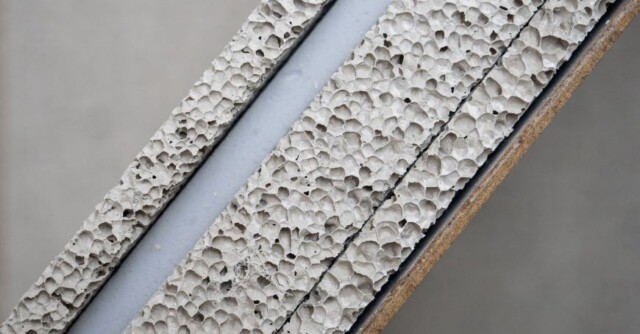
    Aeroskin Tech is looking for investors. The spin-off from the Swiss Federal Institute of Technology in Zurich(ETH) has developed a technology for insulating buildings based on aerogels. So far, Aeroskin Tech has developed prototypes of spray insulation materials and insulation panels, the ETH announced in a press release. Now the technology is to be introduced to industrial production in a pilot plant.

    “We want to offer sustainable and high-performance insulation for buildings,” says Daniel Sanz Pont, founder of Aeroskin Tech and research associate of Robert Flatt, Professor of Building Materials in Civil Engineering at ETH Zurich, in the press release. The insulation materials based on aerogels are characterised by a two to two-and-a-half times better effect than conventional insulation materials. This is due to the nanoporous structures of aerogels, explains Sanz Pont. In the tiny pores, the air molecules collide more frequently with the pore walls than with each other. “This effect makes aerogels the best thermal insulation materials of all,” says Sanz Pont.

    The young entrepreneur did not found the ETH spin-off with partners, but on his own. “Thanks to my diverse education, I combine many competences in my person,” explains Sanz Pont. “I have also received coaching and expanded my training and experience in the field of business management, and I have been supported by outstanding experts from ETH throughout these years.” For upcoming challenges and the next step, the young entrepreneur also has experienced mentors at his side “from whom I can learn more quickly”.

  • Junior staff contribute to the renovation of the Alte Reithalle

    Junior staff contribute to the renovation of the Alte Reithalle

    According to a press release, the Dietikon-based construction company Josef Wiederkehr AG has dedicated its apprentice camp to preparations for the Phänomena exhibition, which will take place in Dietikon in 2026. The apprentice camp took place from December 2 to 6 at the Alte Reithalle in Dietiker Niderfeld. Apprentices from all Wiederkehr Group companies carried out work in preparation for the Phänomena exhibition. The aim was to make the laws of nature, phenomena and complex interrelationships an interactive experience for the apprentices.

    The students carried out preparatory work on the Alte Reithalle. According to the Wiederkehr press release, they demolished old interior rooms, bricked up window openings, removed a ramp and installed a new concrete floor. The commitment of the apprentices played a key role in transforming the Alte Reithalle into a suitable setting, the press release continues.

    According to the company, the Josef Wiederkehr AG Group has been organizing an apprentice camp once a year for more than 45 years. The apprentice camp is a working week during which the apprentices carry out a charitable project under expert guidance. All apprentices take part, from both the craft and commercial areas.

    Phänomena, “Erlebniswelt zum Staunen”, will take place from March to October 2026 at Niderfeld in Dietikon. The first Phänomena took place at Zürichhorn in 1984 and was visited by over 1 million people. In addition to the municipality of Dietikon, the exhibition is supported by the cantons of Aargau and Zurich and numerous partners.

  • Circular economy: sustainable solutions for the construction industry

    Circular economy: sustainable solutions for the construction industry

    According to a statement from ETH Zurich, the Swiss construction industry currently accounts for 70 percent of domestic material consumption, 80 percent of waste and 24 percent of greenhouse gas emissions. To counteract this trend, Innosuisse, the Swiss innovation promotion agency, has launched two projects on the circular economy in the construction sector, which are being led by ETH Zurich.

    The Think Earth project uses building materials such as wood, clay and recycled concrete. One example of this construction method is the Manal Pavilion, which was opened on the Horw campus of Lucerne University of Applied Sciences and Arts. The project was realized by Oxara, a spin-off of the ETH.

    The Swircular project presents a digital ecosystem for circular construction. Digital building inventories and product passports for building materials are to be used to create a basis for circular construction processes. Registered building elements can be reused in the event of demolition.

    “Our vision is a network of stakeholders, digital tools and reliable data that makes it possible to track materials throughout their life cycle and exchange relevant information,” project manager Arabelle de Saussure is quoted as saying in the press release.

    A large number of institutions are involved in the projects, including the Swiss Federal Laboratories for Materials Science and Technology(Empa), the Zurich University of Applied Sciences(ZHAW) and the universities of applied sciences in Bern and eastern Switzerland.

  • Building materials supplier plans IPO in the USA

    Building materials supplier plans IPO in the USA

    Building materials producer Holcim, headquartered in Zug, will fully spin off its branch in the United States and list on the New York Stock Exchange as Holcim United States, according to a press release. Holcim in the USA is headquartered in Chicago, but also has a presence in 350 locations in 43 states and employs 7,000 people in the USA.

    According to the press release, Holcim is making progress with the planned complete spin-off of its North American business. The North American business is to be listed on the New York Stock Exchange as a “domestic issuer” in accordance with SEC regulations, report under US rules and seek inclusion in relevant US stock indices. An additional listing on the SIX Swiss Exchange is planned in order to meet the needs of European investors.

    The planned spin-off is subject to shareholder approval at Holcim’s Annual General Meeting on 14 May 2025, with a positive resolution expected to be implemented by the end of the first half of 2025, according to Holcim.

    Holcim is a global provider of construction solutions with sales of CHF 27 billion in 2023 and around 63,000 employees. The company says it offers a wide range of advanced solutions, from the sustainable building materials ECOPact and ECOPlanet to the recycling technology ECOCycle and modern roofing and insulation systems from its subsidiary Elevate in Zaventem, Belgium.

  • Standstill in the owner-occupied rental value debate

    Standstill in the owner-occupied rental value debate

    The abolition of the imputed rental value, a tax that is unique in Europe, is in danger of failing once again. There is broad agreement in both councils that the system needs to be reformed. However, its implementation remains highly controversial. The issues of property tax for second homes and the debt interest deduction in particular are causing conflict.

    In its third deliberation on Thursday, the Council of States maintained the abolition of the imputed rental value for primary residences only. It also maintained its position on the debt interest deduction. In future, deductions of up to 70 per cent of taxable property income should remain permitted. The National Council, on the other hand, is calling for a complete system change and also wants to exempt second homes from tax.

    Tourism cantons put the brakes on
    The majority rejection in the Council of States is primarily due to the concerns of the tourism cantons. They fear a considerable loss of revenue due to the abolition of the imputed rental value for second homes. The proposal of a property tax to compensate for this has met with resistance there. “We need to focus on primary residences,” emphasised Martin Schmid (FDP/GR). The introduction of a property tax would present “extremely high hurdles”, as it would require a constitutional amendment with a double majority.

    Realistic collapse of the bill
    The collapse of the bill seems increasingly likely. Even the abolition of the imputed rental value for primary residences is facing headwinds. The tenants’ association has already announced a referendum. Its president, Carlo Sommaruga (SP/GE), criticised the bill as a “tax giveaway for rich homeowners” that does not solve the inequality between tenants and owners.

    Doubts are also growing within the centre-right parties. Pascal Broulis (FDP/VD) warned that the bill would unnecessarily complicate the tax system. The National Council must first decide on the bill again before a possible conciliation conference could follow. However, there is currently no majority solution in sight.

  • Long-term entrepreneurship recognized as a model for success

    Long-term entrepreneurship recognized as a model for success

    The construction company Richi AG in Weiningen has been awarded the successor prize Phoenix Award 2024 in the category SMEs with 100 to 250 employees. According to a press release, the company was founded in 1924 by Jakob Richi as a gravel pit and today comprises five divisions with 150 employees, is still family-run and is managed by the third and fourth generations. Chairman of the Board of Directors Jakob Richi (third generation) and David Richi (fourth generation) accepted the award on Wednesday, December 4, in Weiningen. David Richi is a member of the Board of Directors and the Executive Board.

    Today, Richi AG comprises five divisions, it continues. These are the supply of building materials using recycled gravel and concrete, the recycling of building rubble, the company’s own photovoltaic system, a biomass power plant as well as cranes and special transportation.

    “This succession award is a wonderful tribute to us as a family or family entrepreneurs, for whom a succession plan that is right for everyone is an important concern,” David Richi, representing the third and fourth generations, is quoted as saying in his acceptance speech. At the same time, the award is a great recognition for the entire company team and its commitment.

    The Phoenix Award for long-term Swiss entrepreneurship has been presented annually by the Swiss umbrella organization for business succession(CHDU) since 2020. The award honors Swiss SMEs that have mastered their succession planning for at least a century. According to the press release, in the canton of Zurich, with its 113,000 companies, of which around 17,800 are facing an open succession, only just under 20 companies achieve this every year.

  • Acquisition strengthens portfolio for cable protection systems

    Acquisition strengthens portfolio for cable protection systems

    On December 3,ABB announced the acquisition of Solutions Industry & Building(SIB), based in Boulay-Moselle. The company, which has been owned by the French investment fund Galiena Capital since 2019, specializes in electrical installation equipment and connection systems for the construction sector, cable glands, couplings and accessories for the electrical, rail, marine and mining industries, as well as certified products for potentially explosive atmospheres such as oil and gas applications. The purchase price was not disclosed in ABB’s press release. Last year, SIB generated global sales of around 25 million euros.

    The acquisition is intended to expand ABB’s portfolio of cable protection systems and strengthen the technology group’s presence in specialized markets in Europe, the Middle East and North America. “The need for safe, reliable electrification solutions is growing, and with the acquisition of SIB we are adding an industry-leading portfolio and 100 years of experience to our expertise and product range in highly specialized markets,” said Khalid Mandri, Head of ABB’s Installation Products Division, in the press release. According to him, the acquisition is in line with ABB’s strategy “to invest in areas that extend our reach in key markets”.

  • Optical adaptation of photovoltaics is convincing

    Optical adaptation of photovoltaics is convincing

    The social acceptance of photovoltaic (PV) systems on buildings depends largely on their visual design. This is the conclusion reached by the Institute of Psychology at the University of Freiburg and the Fraunhofer Institute for Solar Energy Systems ISE in a comprehensive study. While PV on modern buildings is already perceived positively, its integration into historical buildings poses a greater challenge. This can be remedied by matching the colour of the modules to the building structure.

    Angela Zhou, lead author of the study, explains: “The visual impression weighs more heavily than personal values or political attitudes. A homogeneous integration of PV modules can significantly increase acceptance, especially for historic buildings.”

    Colour matching through innovative technologies
    The study involved both online research based on photos and in the presence of real visual specimens. MorphoColor® technology was used, which enables PV modules to be produced in different colours. Particularly interesting: with the almost invisible integration of photovoltaics, no differences in acceptance between modern and historic buildings could be detected.

    Andreas Wessels, co-author of the study, emphasises: “For existing buildings, it is crucial to select PV modules that blend into the overall appearance rather than using them as architectural accents.” This opens up the opportunity for architects and planners to integrate solar energy into existing buildings in a more efficient and aesthetically pleasing way.

    The potential of photovoltaics on buildings
    Today, 75 per cent of installed PV systems are already located on buildings – and the trend is rising. In order to achieve the energy transition by 2045, around 400 gigawatts of peak installed capacity will be required in Germany. The technical potential of 1000 gigawatts peak shows just how big a contribution building-integrated photovoltaics can make to decarbonising the building sector – without taking up additional space.

    Setting the course for the future
    The results of the study make it clear that a wide range of colour-matched PV modules is needed to optimally serve different building types – from new builds to historic buildings. With innovative solutions for visual integration, photovoltaics can not only cover energy requirements, but also ensure long-term acceptance among the population.

    The combination of aesthetics and functionality is the key to the successful integration of photovoltaics. Colour adaptations and innovative technologies offer enormous potential to establish buildings as the energy source of the future while preserving their architectural character.

  • Sustainable stadium construction with reusable system components

    Sustainable stadium construction with reusable system components

    Hüttwilen-based event and construction services provider Nüssli has been awarded the contract to build an interim stadium by Spanish second-division football club Real Zaragoza. According to a press release, the sports facility will be able to accommodate 20,000 spectators. Its operation is planned for the next two seasons and should therefore maintain the club’s uninterrupted match operations. The actual home ground, Romareda, will be renovated.

    The stadium will consist of three uncovered spectator areas and a covered stand and will enclose a pitch measuring 120 by 80 meters. The planned construction period is six months, with completion scheduled for Real Zaragoza’s first home game in August 2025. As with other buildings by the specialist company, the construction method involves the use of reusable system components that can be dismantled after use.

    The facilities will also include ticket sales points, a merchandising store, a catering area and booths for radio and television commentators. There will also be an adjoining building with changing rooms, a first-aid room, doping control room, VIP lounges and rest areas.

    “The temporary stadium shows that the highest standards and fan experiences are possible even in transitional times,” said Lluis Herrero, Managing Director of Nüssli Iberia, in the press release. “The project also sets standards for other clubs facing similar challenges.”

  • Strategy for sustainable real estate portfolios

    Strategy for sustainable real estate portfolios

    The regulatory requirements for the real estate sector are increasing rapidly. EU building directives, the Corporate Sustainability Reporting Directive and national laws such as the Building Energy Act in the EU are increasing the pressure on real estate owners. “The transformation to sustainable portfolios is no longer an option, but a must,” explains Benjamin Klisa, Deputy Head of the DVFA Real Estate Commission. Inefficient buildings risk losses in value and declining rentability, the so-called “brown discount” is becoming a real danger.

    Energy modernization roadmaps as a key strategy
    The DVFA guidelines focus on energy modernization roadmaps. These offer real estate companies a strategic tool to reduce the energy consumption and CO₂ emissions of their portfolios in a targeted manner. The guide proposes a clear, four-stage approach.

    1. Status quo analysis: Identification of energy weaknesses and determination of the carbon footprint.
    2. Strategic planning: planning measures in compliance with legal requirements and corporate goals.
    3. Roadmap creation: Prioritization according to cost-benefit ratios and modelling of future energy prices.
    4. Implementation and monitoring: Efficient implementation with flexible adaptation to new technological or economic conditions.

    Patrick Hanssmann from DVFA emphasizes the necessary flexibility: “Modernization roadmaps must be alive and constantly adapt to changing conditions.”

    Opportunities through regulatory requirements
    Despite the challenges, the transformation also opens up economic opportunities. Sustainable buildings establish new market standards, reduce operating costs and ensure long-term value stability. Real estate companies are also benefiting from subsidy programs and the increasing demand for energy-efficient properties.

    Practical solutions for different portfolios
    The guide is aimed at both institutional investors and private owners. For large portfolios, the focus is on digital solutions such as AI-supported software, while individual renovation roadmaps offer owners of apartment buildings concrete steps for action.

    The DVFA Real Estate Commission’s guidelines make it clear that sustainability and profitability go hand in hand. Companies that rely on modernization roadmaps minimize risks, increase their profitability and position themselves as pioneers of a sustainable real estate industry. “The right approach turns transformation into an opportunity for long-term success,” summarize Klisa and Hanssmann.

  • EPFL Fribourg campus grows

    EPFL Fribourg campus grows

    The Swiss Federal Institute of Technology Lausanne (EPFL) and the Canton of Fribourg are intensifying their collaboration to develop the EPFL Fribourg campus into a leading center for sustainable construction. Six new chairs will gradually be established by 2030, bringing the campus to a total of ten chairs. This growth will strengthen research in the fields of the built environment, energy and climate and create new impetus for the Fribourg economy.

    At the heart of this development is the CWSC, an international center active in Lausanne and Fribourg. The aim of the CWSC is to develop innovative solutions for sustainable construction through research, education and technology transfer. It thus contributes to the global shift towards environmentally friendly and resource-efficient construction methods.

    Innovative Smart Living Lab as a center
    The new chairs will be housed in the SLL’s pioneering experimental building. Construction of the SLL building will begin in the first quarter of 2025 on the Bluefactory site, with commissioning planned for 2027. The building sets new standards. It serves as a pioneering project for energy efficiency and resource consumption over the entire life cycle.

    Thanks to its experimental features and digital twin technology, the SLL will become a multidisciplinary laboratory. Researchers from EPF Lausanne, HTA Fribourg and the University of Fribourg have state-of-the-art facilities at their disposal to test and further develop new technologies under real-life conditions.

    Stimulus for the Fribourg economy
    By strengthening the EPFL campus and the CWSC, the canton of Fribourg is making an important contribution to climate protection and sustainable development. At the same time, Fribourg’s economy, particularly the construction sector, benefits from this technology transfer. Companies gain access to innovative technologies and solutions that increase their competitiveness and open up new business areas.

    A strong network for the future
    The initiative builds on the existing collaboration between the EPF Lausanne, the School of Engineering and Architecture and the University of Fribourg. This partnership strengthens regional innovation and promotes the development of sustainable construction methods that meet both ecological and economic requirements.

    The expansion of the EPFL Fribourg campus and the establishment of the CWSC will provide a strong impetus for research, innovation and the economy. Fribourg is thus becoming a central location for sustainable construction and a pioneering region in the fight against climate change.

  • Future-proof network infrastructure for buildings

    Future-proof network infrastructure for buildings

    Reichle & De-Massari(R&M) is tackling the expansion of data networks for “Next Generation WiFi”, as detailed in a press release. Accordingly, the global cabling specialist has added a hybrid concept to its range of cabling systems.

    The solution from R&M combines the existing LAN connection with fiber optics for data and power transmission. The higher transmission capacities mean that additional network infrastructures can be implemented.

    The aim is to achieve nationwide availability of WiFi 7 and 5G technologies. Although these technologies multiply transmission rates, they exceed the capacity of existing copper-based LAN cabling. “Anyone who wants to use WiFi 7 and 5G in buildings in the near future needs a practicable and future-proof cabling solution,” it says.

    According to the press release, the hybrid solution based on copper cabling is integrated into the modified building, floor and ceiling cabling (digital ceiling) and thus networks the next-generation access points via fiber optics. “At the same time, the antennas receive their power via the LAN cabling, which eliminates the need for an additional separate power supply,” it says.

  • New app makes measuring and installation planning easier

    New app makes measuring and installation planning easier

    Aadorf-based sun shading manufacturer Griesser has developed a digital platform that can be used to optimize the entire ordering process for customers. According to a press release, potential customers can use the MyGriesser OnSite app with automated processes to significantly reduce the time and effort involved in ordering.

    The app guides the customer step by step through the measuring process. At the same time, a suitable sun shading system can be selected from a digital catalog. Further details about the installation location and installation are added to the app, as are corresponding image or video files. The measurements are transferred to an end device via Bluetooth and the entire data record is synchronized with the MyGriesser platform.

    The app was developed and tested together with users – specialist partners on site. “We wanted to create an efficient, customer-oriented and, in particular, practical digital solution. An important success factor was to involve our specialist partners and our own sales unit, i.e. the stakeholder groups that are particularly close to our customers, right from the start,” Alexander Wimmer, Managing Director of the Griesser business unit, is quoted as saying in the press release. “With our innovative Griesser app, we are revolutionizing everyday life on construction sites and at the same time creating enormous added value for our specialist partners and our direct sales. In addition to massive time savings and fast, expert advice on site, the app creates a better overview and offers an ideal solution for responding even better to individual customer needs.”

  • New acquisition strengthens market for stainless steel fittings

    New acquisition strengthens market for stainless steel fittings

    The Franke Group has acquired Nokite EcoSmart Water Heating Systems (Guangdong), a manufacturer of stainless steel taps and accessories for private kitchens. Financial details were not disclosed. According to a press release from the kitchen specialist from Aarburg, Nokite is “known for its outstanding manufacturing quality and innovative product solutions” and has been in business for over 20 years. The company employs around 150 people and is to be integrated into Franke’s Home Solutions division.

    The expertise of Nokite, which was the first company to manufacture stainless steel mixer taps in China, “fits perfectly with the high-end positioning of the Franke brand”. Furthermore, Franke expects that the regulatory trend towards the elimination of lead will lead to rapid growth in the stainless steel fittings segment. This makes “Nokite’s specific know-how and experience particularly valuable”. According to Barbara Borra, CEO/President of Franke Home Solutions, Nokite’s expertise in multifunctional faucets complements Franke’s strategic focus on the growing water treatment and purification market.

    The Franke Group is a global manufacturer and supplier of solutions and equipment for domestic kitchens, chain restaurants, convenience stores and professional coffee preparation. It employs around 7700 people in 35 countries and is part of the Artemis Group, Switzerland. Franke Home Solutions generated net sales of CHF 932 million in 2023 with around 4200 employees in over 30 countries.

  • The former cantonal hospital becomes an urban oasis

    The former cantonal hospital becomes an urban oasis

    The winning project by Credit Suisse Investment Foundation and HRS Real Estate AG was selected as part of a two-stage competition process. It combines public space, commerce, gastronomy and various forms of housing to create a neighbourhood that will be lively around the clock.

    Living, working and recreation combined
    The development plan allows for a balanced mix of uses, making the neighbourhood attractive for different target groups. There are plans for 272 flats, 50% of which will be affordable, as well as a boutique hotel in the listed south wing of the old hospital. Additional areas for catering, commerce and public services will create a diverse offering. The “Süd-See Hub” construction area in particular is geared towards public uses and is set to become a popular meeting place.

    Open space design takes centre stage
    The “Süd-See Zug – für üs alli” concept focuses on open spaces to make the neighbourhood more attractive. The “Stadthof” as a central square opens up to the lake and connects the old town with the water. A public roof garden, green courtyards and squares offer additional space for recreation and quality of stay. The lakeside terrace and the park promote biodiversity and create a connection to nature.

    A well thought-out process
    The detailed development phase begins once the building lease has been signed. The Credit Suisse Investment Foundation, together with HRS Real Estate AG, will assume responsibility for the realisation of the architectural competition. This exciting project illustrates how a historic site can be transformed into a lively and inviting environment through innovative solutions and planning. The transformation of the former Zug Cantonal Hospital will not only enrich the architectural landscape of the city, but will also make an essential contribution to the quality of life of the population and further strengthen Zug’s position as a sought-after place to live and work.

  • Into the future with wood and clay

    Into the future with wood and clay

    Wood and clay, two proven building materials, are at the centre of the “Think Earth – Regenerative Building” project. Under the leadership of ETH Zurich and in collaboration with Empa and other universities and industrial partners, modern construction techniques are being developed to reduce the environmental impact of the building industry. While wood provides load-bearing capacity and rigidity, clay provides additional mass that contributes to thermal regulation, fire safety and vibration damping.

    Reusable wood connections strengthen the circular economy
    In order to use wood sustainably, its reusability must be increased. Currently, it is only 10 per cent. The project aims to increase this figure to 90 per cent by developing efficient, flexible wood joints. Researchers at Empa and ETH Zurich are working on methods for the simple dismantling of timber structures and developing digital tools that promote the reuse of timber components.

    Crack-free clay construction methods using green additives
    Clay is available in almost unlimited quantities and has an excellent carbon footprint. However, shrinkage during drying is a common problem, resulting in cracks. Researchers at Empa and ETH Zurich are investigating bio-based and biodegradable additives that prevent shrinkage without impairing recyclability. These innovative additives are being tested on a large scale in collaboration with BASF Schweiz AG and Eberhard Bau AG to enable the use of clay in building construction.

  • Sustainable construction projects launched in Germany and abroad

    Sustainable construction projects launched in Germany and abroad

    Implenia, the construction and property company based in the Glattpark district of Opfikon, has won several tenders for building construction contracts. According to a press release, the contracts have a total volume of 160 million Swiss francs.

    The company will construct the new office building of the Swiss National Science Foundation(SNSF) in Bern. The sustainable building will be constructed using local timber and recycled concrete in accordance with the Swiss Sustainable Building Standard (SNBS). Implenia has also been awarded several contracts in Germany.

    In Mainz, Implenia, together with its partners Gemünden and Apleona, was awarded the contract to construct a new 10,000 square metre research building for TRON. The research institute develops new diagnostics and active ingredients for immunotherapeutic treatments.

    In Leipzig, Implenia and its partner GP Günter Papenburg AG are building a seven- to eight-storey residential development on nine connected properties. In addition to 202 residential units, many commercial and ancillary premises are to be built. The buildings will be constructed as low-energy buildings in accordance with the Efficiency House 55 standard and the entire complex will be handed over on a turnkey basis.

    Three residential buildings with 101 units are being built in Munich, which should be ready for handover by 2026. Implenia will also realise a further stage of an ongoing project in Heilbronn and has been commissioned with a pre-construction phase in Siegburg.

  • Winterthur adapts building and zoning regulations

    Winterthur adapts building and zoning regulations

    The aim of the IVHB is to standardise key construction terms and measurement methods throughout Switzerland. Although the canton of Zurich has not joined the concordat, it is implementing the harmonisation – a significant step towards simplifying planning and building law. Winterthur is now integrating these changes into the local building and zoning regulations.

    Significant changes to the building and zoning regulations
    The partial revision of the BZO includes numerous amendments that are mandatory in connection with the IVHB building concepts. For example, 24 paragraphs of the BZO were adapted on a one-to-one basis. The dimensions were reviewed and adjusted in 15 paragraphs. For example, the building height is now defined on the basis of the façade height, which replaces the previous practice of full storeys.

    Introduction of the green area ratio
    This new term replaces the open space ratio and defines the relationship between green and plot areas. The aim is to promote unsealed, planted areas and preserve near-natural characteristics.

    Effects on planning applications and procedures
    The new green space ratio is already subject to a “negative prior effect”. This means that planning applications will be assessed according to both the previous and the new regulations. Projects that are still in the approval phase must fulfil both criteria.

    No value-added tax required
    As the amendments do not result in any planning advantages, there is no obligation to pay compensation in accordance with the law on value-added compensation.

    Public consultation and participation
    The planning documents for the partial revision of the BZO will be open to the public from 27 November 2024 to 27 January 2025. Objections can be submitted to the Office for Urban Development during this period. Interested citizens are invited to actively participate and voice their concerns.

    Winterthur is showing foresight with the implementation of the IVHB building concepts. Standardised definitions and sustainable building regulations strengthen the legal framework and create a future-oriented basis for urban developments.

  • Future for Munich’s city centre

    Future for Munich’s city centre

    THE VERSE is setting new standards in sustainable urban development. Herzog & de Meuron and ACCUMULATA Real Estate Management are transforming the neighbourhood with a comprehensive approach that integrates social, ecological and economic aspects. The aim is to transform the former Postbank-Karree into a lively, future-oriented centre that offers added value not only to future tenants, but also to residents and passers-by.

    Green space as a green lung
    The centrepiece of the plans is a 2,700 square metre green space inside the quarter. This park-like oasis will not only improve the microclimate, but also create space for recreation and socialising. Clearly structured passages connect the green space with the surrounding streets and make the area accessible and inviting.

    Innovation on the roofs
    The roof landscape of THE VERSE offers much more than just energy efficiency. In addition to photovoltaic systems, there are versatile utilisation areas such as sports fields, terraces and a running track. These areas encourage use by employees and provide a unique view over Munich. The concept seamlessly integrates technology into the design and contributes to LEED Platinum certification.

    Diversity and urban dynamism
    A mix of retail, catering and sports facilities will be created on the ground floor. This diversity revitalises the neighbourhood and supports the local economy. The reduced arcade depth along Paul-Heyse-Strasse creates attractive spaces that attract residents and visitors alike.

    Focus on mobility and resources
    THE VERSE combines a modern mobility concept with resource-conserving construction methods. 900 bicycle parking spaces with showers and optimal public transport connections promote sustainable mobility. At the same time, the partial preservation of the building shell reduces the environmental impact through less demolition work and grey energy.

    A hotspot for working and meeting
    With a conference area for up to 600 people, modern co-working areas and an auditorium, THE VERSE will become a meeting place for companies and professionals. The high-quality digital infrastructure and flexible building technology fulfil the requirements of tomorrow’s working world. THE VERSE shows how sustainable densification can improve urban quality of life. The project integrates modern architecture, green energy and social diversity and makes Munich’s railway station district a pioneer in urban development.

  • New approaches to collaboration and remuneration

    New approaches to collaboration and remuneration

    The current revision of the SIA’s service and fee regulations sets a new milestone in construction planning. For the first time, the regulations for architecture (SIA 102), civil engineering (SIA 103), landscape architecture (SIA 105) and building services engineering (SIA 108) have been harmonised. This harmonisation is intended to strengthen cooperation between the disciplines and avoid misunderstandings caused by inconsistent terms or service descriptions. The basis for this is a common phase model and the clear allocation of functions such as overall management, specialist planning, construction management and construction supervision.

    Clear terms – fewer misunderstandings
    A central focus is on the standardisation of terms. For example, the term “creative construction supervision” replaces the previously different use of “creative management” and “construction supervision”. These adjustments are intended to minimise confusion and facilitate communication between the specialist areas. Specialist coordination for building technology and installations is also regulated more clearly. It is defined as a separate service to be agreed and can be undertaken by different specialists depending on the project.

    Future-orientated fee agreements
    The fee calculation based on expenditure-determining construction costs that was previously used has been replaced by a method-neutral approach. This takes project-specific features into account and enables transparent adjustment of fees to individual requirements. The new Article 7 of the LHO describes in detail which criteria should be included in the calculation, thereby creating a basis for legally secure and fair fee agreements.

    Consultation until 2025
    The consultation on the new LHO will run until 28 February 2025. Interested parties can view the drafts and further information on the SIA website and submit comments.

  • Future prospects at the 103rd immoTable Zug

    Future prospects at the 103rd immoTable Zug

    Mayor André Wicki opened the event with an inspiring look at the economic future of the city of Zug. Under the motto “Zug remains Zug – liveable, visionary, vibrant”, he emphasised the challenges associated with sustainable growth, affordable housing and climate protection. His visions emphasise the aspiration to further develop Zug as an innovative and attractive place to live and do business.

    Sustainable strategies and economic success
    Beat Bachmann presented the “Spirit of Zug” long-term strategy, which strikes a balance between growth and resource consumption. Regional cooperation and attractive conditions for companies will strengthen the region as a leading business location. The innovation platforms, such as HSLU and the Tech Cluster Zug, promote technological advances in areas such as energy, mobility and decarbonisation.

    Successful projects for modern living and commerce
    Lukas Fehr presented the award-winning “Papieri Cham” project. The neighbourhood combines historical substance with modern new buildings, sustainable architecture and green open spaces. With around 1,000 flats and 40,000 square metres of commercial space, the Papieri site sets new standards for sustainable living and working.

    Material innovation in timber construction
    Pius Kneubühler spoke about the advantages of board stack constructions made with Swiss timber and minimal glue. This technology promotes sustainable cascade utilisation and combines high load-bearing capacity with an excellent carbon footprint. Material identity is at the centre of sustainable construction.

    Water treatment and infrastructure safety
    André Spathelf rounded off the event with a comparison of the Swiss market leaders in water treatment. He emphasised the importance of a proactive approach to monitoring and maintaining water networks. This approach ensures the quality and sustainability of vital infrastructure.

    The 103rd immoTable Zug once again demonstrated the importance of dialogue between business, science and politics in shaping a sustainable future. Visionary projects, technological innovations and economic strategies strengthen Zug as a leading region in Switzerland.

  • Launch of the EU research project TIMBERHAUS to promote timber construction

    Launch of the EU research project TIMBERHAUS to promote timber construction

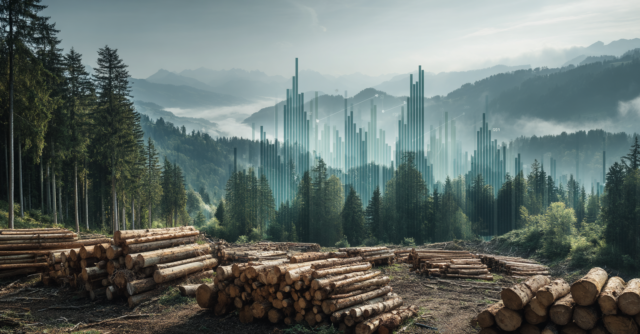
    The European research project TIMBERHAUS was launched in Copenhagen at the beginning of November, Empa announced in a press release. It is one of 19 partners from a total of ten countries taking part in the project, which is funded by the EU and the State Secretariat for Education, Research and Innovation and aims to promote timber construction in Europe. Within four years, innovative timber construction technologies and structures are to be developed with which CO2 emissions in the construction sector can be significantly reduced.

    According to Empa, the construction sector is responsible for 40 per cent of global CO2 emissions. The use of wood could help here. Currently, however, European forest resources, half of which consist of hardwood, are only utilised “very inefficiently” and limited to a few types of softwood for construction, explains project coordinator Anders Kjellow from the Danish Technological Institute. “With TIMBERHAUS, we are trying to overcome this challenge in order to increase the sustainable use of wood in construction.”

    Empa is contributing to the project with innovative prototypes created using digital tools such as machine learning and artificial intelligence. “The prototypes will serve as practical examples of how we can effectively utilise a wider range of wood resources,” Empa researcher Mark Schubert is quoted as saying in the press release. “Our goal is to provide the construction sector with viable and efficient products that meet current building standards while promoting the principles of the circular economy and supporting European climate goals.”

  • Innovative sun shading for modern hotel project in Locarno

    Innovative sun shading for modern hotel project in Locarno

    The Dorint Resort & Spa in Locarno/Riazzino opened in late summer this year after a three-year construction period, Griesser announced in a press release. The internationally active developer of sun protection for buildings from Aadorf contributed the façade awnings to the four-star hotel. Specifically, the Griesser products Solozip II and Soloscreen IV were installed.

    “In addition to reliability and low maintenance, I decided in favour of the Solozip façade awnings because of their elegance,” Simone Garofoli from TIGESTIM, the architectural firm responsible for the project, is quoted as saying in the press release. “This product also fits perfectly with the architectural linearity of the façade.” When choosing the Soloscreen, the vertical awning from Griesser impressed with its colour scheme and discreet structure: “The option of black wire ropes makes the support structure almost invisible, bringing the fabric’s weave to the fore,” explains Garofoli.

  • New indoor swimming pool for theKSS approved

    New indoor swimming pool for theKSS approved

    The decision of the Schaffhausen electorate paves the way for the construction of a new, modern indoor swimming pool on the KSS site. With an investment volume of CHF 80 million, this project represents an important milestone in the further development of the city’s infrastructure. The new building is not only a response to the ageing existing facility, but also a commitment to sustainable and future-oriented urban development.

    The new building will replace the existing indoor swimming pool from 1972, which is no longer up to modern-day standards due to its poor condition and outdated technology. The last refurbishment measures were carried out more than 30 years ago and the facility suffers from serious deficiencies such as water and heat losses, a lack of accessibility and outdated safety equipment. In addition, the current indoor pool can no longer cope with the increasing number of visitors, which leads to considerable conflicts of use.

    An indoor pool for all generations
    The planned new building will not only exceed the previous standard, but will also set new benchmarks. With a swimming pool comprising eight lanes of 25 metres each, as well as a teaching pool, a course pool with a lifting floor, a separate diving pool and a children’s paddling area, the range of facilities will be significantly expanded. There will also be an outdoor warm water pool and a state-of-the-art wellness centre with various saunas, a steam bath and a sauna garden. This facility will not only meet the sporting needs, but also the increasing demands of the population for wellness and relaxation.

    A central element of the new concept is the separation of the pools according to their main uses in order to avoid the current conflicts of use. The new structure makes it possible to use the various facilities simultaneously and without restrictions. The central entrance to the new building will ensure efficient access to all facilities and optimise operations.

    Sustainability as a guiding principle
    The new indoor swimming pool will be built to the “Minergie-P-ECO Standard”, one of the highest standards for energy-efficient and sustainable construction in Switzerland. The project’s energy concept provides for the extensive use of waste heat, in particular from the neighbouring ice rink, as well as a connection to a local heating network. These measures will help to significantly reduce the ecological footprint of the new building and position Schaffhausen as a pioneer in sustainable construction.

    New synergies and sources of income
    The new indoor pool will not only offer sports and health facilities, but will also be of economic importance. A publicly accessible restaurant with 130 indoor and 150 outdoor seats will generate additional income and establish the KSS facility as a meeting place for the entire population. In addition, an underground car park with 150 parking spaces will improve accessibility.
    Additional rental space for health and fitness facilities will round off the concept and contribute to the attractiveness and profitability of the overall project. These synergies between the various uses will strengthen the KSS site as a central focal point for sport, leisure and recreation in Schaffhausen.

    Competition and project management
    Following the approval of the population, the project competition will now begin with the aim of finding an innovative design for the new building that fulfils the high standards of architecture, functionality and sustainability. Twelve qualified teams will develop their proposals by summer 2025 and the winning project will be presented to the public. Construction is scheduled to start in 2027, with the new indoor pool opening in 2029/2030.

    The construction of the new indoor pool in Schaffhausen is more than just a building project – it is a strong signal of the city’s future viability and innovative strength. With state-of-the-art infrastructure, sustainable construction and an expanded range of facilities, the new indoor pool will make the KSS complex an even more attractive and contemporary leisure centre.

  • The Steig school complex is extended and modernised

    The Steig school complex is extended and modernised

    The Steig school complex, the oldest primary school in Schaffhausen, is located in the north-western part of the city, not far from the old town, and comprises several buildings of different ages. The need for renovation is considerable, as the existing infrastructure no longer meets modern requirements. The gymnasium from 1892 and the room capacities for the growing number of pupils no longer meet today’s requirements.

    In order to meet future needs, the city is planning a new building on the existing site. This will include a new single sports hall, additional classrooms and facilities for after-school care. The extension is part of a comprehensive development concept for Schaffhausen’s primary schools.

    The winning project and its elements
    A project competition crowned the “cinque pi” project by Soppelsa Architekten GmbH and Rosenmayr Landschaftsarchitektur GmbH as the winner. This cleverly divides the required programme into five building blocks, which create a harmonious overall impression as an ensemble. A new three-storey building with a gymnasium and classrooms forms the core of the project. The old observatory will be retained as a free-standing building.

    The existing gymnasium will be restored to its historical structure to create space for a new pavilion for the day centre and library. This will become the central hub of the entire complex. Conversions are also planned. The Trotte will now house storage rooms and a public toilet on the ground floor and therapy rooms on the upper floor.

    Redesign of the outdoor facilities
    Not only the buildings, but also the outdoor facilities will be redesigned. Existing qualities are to be further developed with moderate interventions. The observatory and the group of trees by the playground will be retained. The play and sports areas will be rearranged to create space for an all-weather playing field and a hard court.

    Financing and political approval
    The total cost of the project is estimated at CHF 21.7 million. This sum already includes the planning costs approved by the city council. Following the deliberations in the city council, the electorate will make the final decision on the extension of the Steig school complex.

    The “cinque pi” project is a forward-looking response to the growing demands and challenges of the education sector in Schaffhausen. It combines modernity and tradition in a progressive and resource-conserving construction method and the creation of lively learning and living spaces.

  • Forward-looking settlement development strategy for Hofen

    Forward-looking settlement development strategy for Hofen

    The settlement development strategy for the Hofen district of the municipality of Thayngen is a milestone in spatial planning in the canton of Schaffhausen. It forms the first building block of a large-scale local planning revision that serves as a pilot project for the development of the entire municipality of Thayngen and its neighbourhoods. The focus is not only on local structures, but also on the integration of regional requirements and cantonal guidelines.

    The SES was developed in close collaboration with Dost Architektur GmbH, representatives of the municipality of Thayngen, the canton of Schaffhausen and local associations. With an interdisciplinary approach and the involvement of the public, the settlement development of Hofen is to be future-proofed in order to meet the requirements of the predicted growth. Particular attention is being paid to “inward settlement development”, which optimises the use of existing resources and at the same time improves the local quality of life.

    A roadmap for Hof’s future
    The SES is based on four central strategic paths that should characterise the spatial and structural future of Hof.

    1. Preserve historic substance, create new living spaces
      The preservation of the historic building structure is a central element of the SES. Particular emphasis is placed on the spatial and design integration of new construction projects. New living space is to be created, particularly in the areas of the former market garden, in order to meet the growing demand for housing.
    2. Improving the design of the town centre
      The quality of life in Hofen is to be enhanced by upgrading the design of central meeting spaces. The village square will be redefined as a meeting place for the village community, with seating and playground facilities created and traffic-calming measures implemented.
    3. Safety and traffic calming
      One focus of the SES is on improving road safety. Pedestrians and cyclists should benefit from traffic-calming measures and the route to school in particular should be decoupled from the main road to ensure the safety of schoolchildren.
    4. Strengthening Hofen’s identity
      Hofen wants to present itself confidently and emphasise its unique qualities. The SES envisages an increased digital presence and the staging of key historical buildings to make the town more attractive for both residents and visitors.
      These overarching strategy paths include eight specific indicative projects that are to be implemented in the short, medium and long term. These projects range from the creation of new residential areas and the upgrading of the village square to the renaturalisation of the Beaver, which will make a significant contribution to the ecological balance of the region.

    Landscape and nature as a central component
    The Lower Reiat region is characterised by a diverse landscape of hills and agricultural land. This landscape is not only ecologically valuable, but is also listed in the cantonal structure plan as a “landscape worthy of protection”. The dry meadows, pastures and orchards that surround Hofen are striking landscape elements that characterise the townscape and should be preserved.

    The beaver, which flows through Hofen and is used for agricultural purposes in parts, is of particular importance. The planned renaturalisation of the canalised sections is intended to increase ecological diversity and further enhance the attractiveness of the natural environment for residents.

    Buildings worthy of protection and building land reserves
    Hofen has a historic building stock that should not only be protected as part of the SES, but also integrated into the future development of the settlement. In particular, the baroque “Holländer district” with the residence of Tobias Holländer and the striking Schweizerbund inn contribute to the unique identity of the village.

    The SES also envisages strategic utilisation of the existing building land reserves. There is long-term upzoning potential, particularly in the area of the former market garden and on the outskirts of the village, to meet future demand for residential and work space.

    Communication and public involvement
    Transparent communication with the residents of Hofen is a central component of the SES. The planning steps were accompanied by a working group of community representatives, local associations and planners and presented at public events. In particular, the development of the former market garden as a new residential area met with great interest from the population.

    The settlement development strategy drawn up for Hofen not only sets new standards for local planning, but also for cooperation between the administration and local residents. The participatory approach ensures that the future development of the municipality meets the needs of the residents.

    A model for the entire region
    The Hofen SES not only serves the further development of the district itself, but also as a model for the other districts in the municipality of Thayngen. The findings and guidelines developed in Hofen are to be transferred to Altdorf, Bibern, Barzheim, Opfertshofen and Thayngen. In this way, SES is making a significant contribution to safeguarding the quality of life and economic potential of the entire region in the long term.

  • “Vision 2040 “AROVA HALLEN in Flurlingen

    “Vision 2040 “AROVA HALLEN in Flurlingen

    One step on a long journey has been taken: all those involved in the consultation process have signed the utilisation and development concept (NEK) for the AROVA HALLEN site. The Cantonal Office for Spatial Development ARE accompanied the upstream informal process in an advisory capacity without a signature. This means that the planning realisation can be addressed and discussed.

    Culturally unique and economically viable
    The AROVA HALLEN site is currently registered in the regional structure plan as a workplace area and is clearly differentiated from others by its historic building fabric. This represents both an obligation and an opportunity. The aim of the NEK is to put the site on a sustainable and economically viable footing and thus provide a forward-looking response to the challenges of spatial development in the Weinland region.

    Goals and visions for a mixed neighbourhood
    The main objective of the NEK is to maintain and strengthen the location as a place to work and to value the architectural heritage. The plan is for high-quality internal development that brings living and working closer together. “Vision 2040” envisages the creation of around 250 new flats by 2040 without reducing the existing 400 jobs. The focus is on modern forms of living and working as well as a lively neighbourhood with moderate traffic, complementary specialist shops and restaurants.

    Working and living in harmony
    The NEK thus follows the idea of mixed utilisation – living and working are moving closer together. Due to the historic building fabric, the site is particularly suitable for moderately disruptive businesses and services. The “Vision 2040” target image shows how the site can be developed into a modern business park that reduces mutual emissions and creates a lively neighbourhood.

    Current developments and plans
    In addition to the long-term goals, there are numerous current measures to strengthen the image and identity of the site. By focussing on the preferences of potential tenants, additional space has already been let. Interim uses and temporary events are also planned for the future. Following the fire in the beautiful WERKHALLE, the damage was repaired and a meeting point for tenants and their customers is to be created on the ground floor.

    Coordination and information
    The AROVA HALLEN utilisation and development concept is closely coordinated with the settlement development strategy of the municipality of Flurlingen. Further information and the final report can be downloaded at www.arovahallen.ch.

  • Schaffhausen renews its Bahnhofstrasse

    Schaffhausen renews its Bahnhofstrasse

    Bahnhofstrasse in Schaffhausen is being modernised as part of a one-year construction project. The aim is to create a spacious and clearly laid out street that optimises traffic flow and increases safety for all road users.

    Optimisation of the traffic infrastructure
    Bahnhofstrasse is a central traffic junction in Schaffhausen. The renovation measures will renew the road surface in order to improve road safety and utilise public spaces more efficiently. At the same time, the space for pedestrians and passengers will be increased, making it easier to get on and off the train.

    Charging stations for electric buses have already been installed in advance of the refurbishment in order to make public transport in Schaffhausen more sustainable. The current work will not only upgrade the functionality of Bahnhofstrasse, but also reposition it as an inviting arrival and meeting point.

    Accessibility and adaptations
    Accessibility is a key concern for the city. The bus stops will be equipped with higher kerbs to ensure barrier-free access for people with disabilities. These measures were developed in close consultation with disability organisations and ensure that Bahnhofstrasse complies with current legal requirements.