Category: Construction

  • “Smetterling”: a co-operative project by HGW for the Alpenblick site

    “Smetterling”: a co-operative project by HGW for the Alpenblick site

    The Alpenblick site in Schaffhausen, adjacent to the historic Niklausen neighbourhood, will be redesigned by the end of 2027 with the winning project “Smetterling”. The jury, consisting of representatives from the city of Schaffhausen, HGW, the neighbourhood and neighbourhood meeting place nik. as well as independent experts, praised the project in particular for its precise urban design and the clear zoning of the open spaces. The compact design of the building and its harmonious appearance fit in perfectly with the surroundings and create a link between the listed Niklausen single-family house estate and the neighbouring high-rise building.

    A concept that promotes community
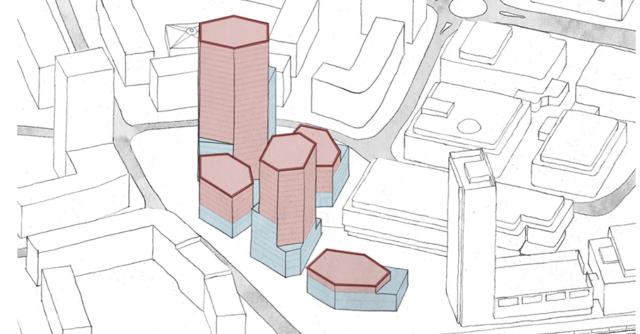
    The “Smetterling” project envisages a tall point building that takes up very little of the surrounding area and marks the transition to the taller houses on the opposite side of the street. The positioning creates two different open spaces. A garden space to the west and an urban space to the east. This arrangement encourages social interaction while at the same time preserving the residents’ privacy.

    The project reflects HGW’s co-operative values by creating communal spaces in addition to living space, thus promoting a lively community life.

    The ground floor of the building will house communal areas such as a laundry room, a co-working space and a commercial space. The upper floors offer 20 flats of different sizes, while the top floor comprises five one-bedroom flats with direct access to the roof garden. The spacious communal areas and the roof garden offer many places of retreat, but also opportunities for neighbourly interaction and the creation of social interaction.

    Wood and recycled concrete
    The winning project favours an ecologically sustainable construction method. The clear, simple geometry of the building also contributes to energy efficiency and makes the project a role model for ecological construction.

    HGW Heimstätten-Genossenschaft Winterthur has been creating affordable living space since 1923 and promotes lively community life and innovative solutions. With over 2,250 flats and more than 5,000 residents, it is the largest independent housing co-operative in the region.

  • A new landmark at the Rhine Falls with great potential

    A new landmark at the Rhine Falls with great potential

    The goal was clearly defined. A third of the 900,000 annual Rhine Falls tourists were to be lured to the other side of the river and attracted to the “Rhyfall Village” area. “Rhyfall Village”, or “RIVI” for short, is the name of the new neighbourhood. With a mix of gastronomy, art and shopping, the area will become a centre of attraction – not only for tourists, but also for the local population.

    The site and its future
    The “RIVI”, once the site of industrial production, is undergoing a reorganisation. The neighbourhood is characterised by two striking high-rise buildings, one of which was acquired by Helvetia. These offer living space with impressive views and space for catering, office and retail areas.

    Potential and challenges
    The visionary project met with broad approval in the region. Beat Hedinger, Managing Director of Schaffhauserland Tourismus, saw the village at the time as a “colourful mosaic piece” in the overall tourism picture. The rooftop restaurant with a view of the Alps in particular promised to be a special highlight. Hedinger also recognised the challenge of skilfully bridging the distance between the Rhine Falls basin and the site.

    Felix Tenger, Mayor of Neuhausen, is optimistic that the “RIVI” will revitalise the centre of Neuhausen and also strengthen the retail trade. Building director Martin Kessler also saw great potential to turn the site into a meeting place that creates synergies with existing facilities and increases the attractiveness of the entire region.

    Good connections and creative solutions
    The site’s location scored highly thanks to its proximity to the Rhine Falls and good public transport connections. The Badische Bahnhof Neuhausen railway station is located directly next to the site and numerous bus connections and over 200 parking spaces are available to visitors. Visitors can travel in comfort between the Rhine Falls basin and the Rhyfall Village on the Rhyfall Express tourist train.

    A project with vision
    Rhyfall Village is more than just another residential neighbourhood in Neuhausen. Whether rooftop restaurant, promenade or art gallery – the RhyTech site stands for a modern, versatile and vibrant future in the immediate vicinity of one of Switzerland’s most impressive natural wonders.

  • The Kammgarn area in the south

    The Kammgarn area in the south

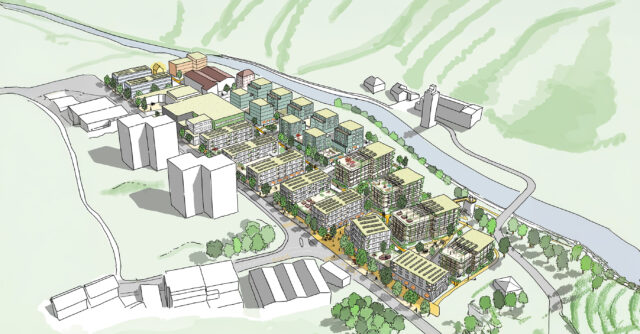
    As part of a comprehensive vision for the city of Schaffhausen, the Kammgarnareal is to be further developed with new access points and better connections to the urban fabric. In addition to the existing access points from Baumgartenstrasse, Rheinuferstrasse and Rheinstrasse, a new passageway will be created along Klosterstrasse to improve accessibility. This will integrate the site even more closely into the urban infrastructure and enable new utilisation options.

    The Kammgarn area will become part of a “string of pearls” of meeting places along the banks of the Rhine, which will play an important role in the further upgrading of this area. With the start of construction in September, the approximately two-year construction phase will begin, with which Schaffhausen will gain a modern, attractive district that will significantly improve the urban quality of life as a meeting place and cultural centre.

    Upgrading the areas and increasing the quality of stay
    The areas are also to be upgraded as part of the planned redesign. The creation of spacious green areas, seating and a water feature in the inner courtyard of the former worsted spinning mill will increase the quality of stay. These measures aim to transform the Kammgarnhof into an attractive place to meet and relax, which can be used for events and everyday activities.

    New uses and modern infrastructure
    A central element of the redesign is the construction of a single-storey underground car park with around 90 parking spaces, which is to be built under the Kammgarnhof. This will make the inner courtyard car-free and provide more space for events and recreation. A pergola is planned in front of the west wing, while a large terrace will be created in front of the north wing.

    The historic west wing of the Kammgarn site will be prepared for new uses as part of the refurbishment. The ground floor, along a new passageway to the inner courtyard, will house the library and the toy library. The glazed façades will give passers-by an attractive insight into the world of books and games.

    Half of the first floor will be used by the library, while the remaining space will be rented out in small to medium-sized units. The Schaffhausen University of Teacher Education will move into the upper floors, while the remaining space will be available for flexible use by other tenants.

    This comprehensive remodelling of the Kammgarn site strengthens the connection to the old town and the Rhine and gives the area a new significance in the urban fabric. The planned measures will contribute to long-term urban development and create a modern, vibrant neighbourhood that will significantly improve the quality of life in Schaffhausen.

  • Properties in the ISOS inventory area – What does this mean?

    Properties in the ISOS inventory area – What does this mean?

    Voser Rechtsanwälte KlG is a full-service law, notarial and tax firm with over 100 years of experience. Our construction and property law department advises investors, entrepreneurs, the public sector and private individuals in all areas of construction and property law throughout the entire life cycle of a property. Together with our other specialist areas, we offer comprehensive support in all legal matters, be it transactions, tax issues or estate planning.

    ISOS as a basic instrument
    The Federal Inventory of Swiss Sites of National Importance, better known as ISOS, is a basic instrument that helps the authorities to recognise and safeguard architectural values in the long term. Cantons and municipalities take the inventory into account when drawing up their corresponding plans (structure planning, utilisation planning). The ISOS was created in the 1970s and comprises around 1,200 objects.

    Binding nature of the ISOS for property owners
    If a property is located in an area covered by the ISOS, this does not mean much, as the ISOS is generally not binding for landowners. However, the municipalities are obliged to take the ISOS into account in land-use planning as part of the comprehensive weighing up of interests under spatial planning law. The building project must be compatible with the applicable land-use planning and comply with the specific requirements of the zone (e.g. a village or core zone). Only where the municipal council, as the building permit authority, has discretionary powers when assessing your planning application must it directly take into account the conservation objectives of the ISOS.

    Direct applicability due to federal tasks
    If the building project affects a federal task, the listed property must be preserved undiminished, or at least protected as far as possible (Art. 6 NHG). However, this only applies in the case of serious encroachment on the ISOS object. According to case law, serious encroachment exists if a construction project causes extensive and irreversible damage. In such a case, an expert opinion must be obtained from the Swiss Federal Commission for the Protection of Nature and Cultural Heritage (ENHK) and / or the Swiss Federal Commission for Monument Preservation (EKD). Planning permission may only be granted if the building project is of national importance. The national nature and heritage conservation organisations are then entitled to appeal against the building project.

    Typical cases of application
    Federal tasks are affected if the building permit relates to a legal matter that falls under federal jurisdiction, is regulated by federal law and is related to nature, landscape and cultural heritage protection. In practice, frequent cases that fall under a federal task according to federal court rulings are when a PV system (Art. 18a RPG) or a mobile phone system (Art. 14 FMG) is authorised or a permit is required under water protection law (Art. 19 para. 2 GSchG).
    To summarise, although the ISOS is not directly applicable to landowners, there are practical exceptions that can often lead to the direct applicability of the ISOS. In this case, further complicated clarifications may be necessary for the construction project, which gives third parties leverage to delay a project.

  • Advanced elevator solutions speed up the construction process

    Advanced elevator solutions speed up the construction process

    Austrian Real Estate is building a modern urban quarter in Vienna’s Donaustadt district. Part of the VIENNA TWENTYTWO project is a 47-storey high-rise building, which is due to be completed by 2025. The Austrian real estate company is relying on KONE from Wangen-Brüttisellen to keep to the schedule.

    Specifically, two JumpLifts from KONE are helping to speed up the construction process, the global elevator and escalator manufacturer explains in a press release. “The construction elevator, which was specially developed for high-rise buildings, uses the shaft before construction is complete,” KONE project manager Joachim Hahn is quoted as saying. “Thanks to the temporary installation of platforms in the open shaft, the KONE JumpLift can be moved to higher floors at regular intervals as construction progresses.” Compared to other outdoor elevators used in construction, the JumpLift is characterized by higher performance and safety as well as comfort and independence from the weather, writes KONE.

    In Vienna, one of the two JumpLifts is also controlled via the KONE SideFlow app, KONE explains. This allows specific usage rights to be assigned to various construction tasks in order to control the flow of materials and people. “This allows us to further accelerate the construction process,” explains Hahn.

    Once the construction work is complete, the two JumpLifts will be converted into KONE MonoSpace elevators. In addition, a further twelve KONE MonoSpace and TranSys elevators are to be installed in the high-rise building.

  • Optimism among Swiss estate agents for 2025

    Optimism among Swiss estate agents for 2025

    The abrupt end to the low interest rate phase of recent years and stricter lending regulations have had a lasting effect on market dynamics. While buyers have become more cautious as a result of higher financing costs, many sellers are still holding on to their inflated asking prices. This discrepancy makes property marketing considerably more difficult and often leads to misunderstandings between the parties. SMK members see this as one of the biggest challenges for the coming year.

    Trust and expertise as the key to success
    Property marketing is and remains a “people business”. Successful estate agents rely on experience, trust and advice based on sound market knowledge. A strong awareness of quality and a high-profile positioning create the necessary trust among buyers and sellers. With their certified expertise, SMK members offer comprehensive, individually tailored advice and guarantee the best possible sales price.

    Focus on sustainability and shortage of skilled labour
    In addition to the price issue, topics such as sustainability and ESG requirements are increasingly coming to the fore. The shortage of skilled labour is also an increasing challenge, as the demands on estate agents are constantly rising. Residential construction activity is also falling short of expectations, which is further exacerbating the supply deficit. Other important topics for 2025 include new forms of housing, the use of artificial intelligence and demographic trends.

    Further information can be found at www.maklerkammer.ch

  • Milestone for the second stage of the innovation park

    Milestone for the second stage of the innovation park

    The Zurich Innovation Park combines research, development and aviation utilisation in a unique way. An area for the innovation park and for a research, test and industrial airfield will be created in the south-western part of the Dübendorf airfield. This vision includes not only modern infrastructure, but also publicly accessible green and open spaces. The project is of central importance for the region, the canton of Zurich and Switzerland as a whole.

    Design plan as the basis for sustainable development
    The newly established design plan for sub-area B creates a binding framework. It regulates the utilisation, the location of the building areas as well as design, ecological and traffic requirements. At the same time, the impact on the regional transport network is analysed in depth and green spaces are optimally integrated.

    Progress through participation and planning security
    Following a public consultation phase and the consideration of objections received, the design plan was revised and approved. It will come into force on 22 November 2024 and form the basis for future construction projects. This marks another important step towards the realisation of the Zurich Innovation Park.

  • DroneHub in NEST

    DroneHub in NEST

    The “DroneHub” at Empa’s NEST provides a platform for the development of pioneering technologies that revolutionise the interaction of drones and robots with the natural and built environment. The focus is on drones that can perform autonomous tasks such as inspections, repairs and data collection. The aim is to reduce environmental pollution and promote climate protection.

    Research at the cutting edge
    The “DroneHub” has three central test environments that simulate real-life conditions. Additive manufacturing from the air enables drones to carry out infrastructure repairs in a vertical area with 3D printing from the air, defying wind and weather. In the biosphere, researchers are testing robots that move around in nature, collect data and use biodegradable materials that decompose after use. In building façades, a modular façade serves as a testing ground to explore how drones can be integrated into buildings to ensure maintenance and safety.

    Autonomous systems as an environmental immune system
    “Our vision is to establish drones as a kind of immune system for the environment,” explains Mirko Kovac, head of the project. These robots are designed to perform precise tasks, such as repairing buildings or monitoring ecosystems, while minimising both costs and risks.

    Collaboration for sustainable solutions
    The development of the “DroneHub” was initiated by Empa in collaboration with Imperial College London. This collaboration enables the exchange of knowledge and technologies to effectively tackle global environmental challenges.

    Sustainable technologies for global goals
    The “DroneHub” plays a key role in the development of autonomous, sustainable technologies that can contribute to global climate goals. Practical tests and interdisciplinary approaches create an interface between technology, the environment and everyday life.

  • New plant for the mineralisation of CO2 in Germany

    New plant for the mineralisation of CO2 in Germany

    Together with its partner Heinrich Feess GmbH & Co. KG,Neustark has commissioned a plant for the permanent storage of CO2 in demolition concrete in Kirchheim unter Teck. The plant at the construction waste recycler in Baden-Württemberg is already the second plant realised by neustark in Germany, ClimateTech from Bern announced in a press release. Around 1000 tonnes of CO2 can be bound in demolition concrete here every year.

    Neustark’s technology works with CO2 generated during local biomethane production. It is captured directly and liquefied for transport. At the plant near Stuttgart, the CO2 is fed into the demolition concrete in an airtight silo. In a short time, it combines there in the form of limestone in the aggregate, writes neustark. The technology shortens the mineralisation process, which takes several decades in nature, to just a few hours.

    “We decided in favour of this innovative technology because it integrates perfectly into our concrete recycling and production process on site,” Walter Feess, Senior Director of the construction waste recycler, is quoted as saying in the press release. For Valentin Gutknecht, co-founder and co-CEO of neustark, the new plant is a further step towards ClimateTech’s goal of being able to permanently bind around 1 million tonnes of CO2 per year by 2030. “What we urgently need now is demand from the public sector for carbonated construction materials in building and road construction and corresponding legal regulations to support efforts towards greater sustainability,” says Gutknecht.

  • PropTech Innovation Challenge 2024

    PropTech Innovation Challenge 2024

    On 19 November 2024, the Swiss start-up was named the winner of the PropTech Innovation Challenge 2024 by the Urban Land Institute (ULI) at the C Change Summit in Barcelona. The competition, which is aimed at leading innovators from the property and technology world, was held this year under the motto of reducing Scope 3 emissions. These emissions, which are generated along the entire value chain, are considered one of the biggest challenges facing the property industry.

    The challenge initiated by the Young Leaders was looking for pioneering solutions that can be implemented regionally, are scalable and sustainable. Particular attention was paid to retrofitting, the circular economy and the integration of ESG platforms.

    AI meets decarbonisation
    The ETH spin-off presented an AI-supported SaaS solution that supports asset managers, investors and consultants in the decarbonisation of building portfolios. The software creates precise, time-coordinated and cost-optimised renovation plans for property portfolios. This enables the industry to comply with strict net-zero targets without having to resort to inefficient, manual approaches.

    The expert jury particularly praised the scalability and efficiency of the solution, which makes it possible to implement complex investment and renovation strategies with minimal effort. The company is thus setting new standards for the reduction of carbon emissions in the property sector.

    A look into the future of the industry
    The PropTech Innovation Challenge shows how important innovative technologies are for the future of the property industry. Solutions play a key role in achieving sustainability goals and leading the industry towards a more climate-friendly future. With its combination of high-tech and practical applications, the company offers a tool that not only increases efficiency, but also strengthens collaboration between stakeholders.

    The success at the PropTech Innovation Challenge 2024 is a clear signal of the relevance of technological innovations in the property sector. The start-up’s AI-supported solution underlines how sustainability and profitability can go hand in hand. The industry is facing a paradigm shift and the company shows how this can be successfully shaped.

  • Successful design for Eichmatt residential development in Villmergen

    Successful design for Eichmatt residential development in Villmergen

    Spreitenbach-based fsp Architekten AG has won first place in the competition for the study contract for the MW Eichmatt Villmergen project, according to a press release. The assessment committee unanimously decided to recommend the Janus project by fsp Architekten AG and landscape architects Appert Zwahlen Partner AG in Cham ZG to the client for further development and realisation. It was the “most convincing project proposal overall”, according to the press release from fsp.

    The new Eichmatt-Villmergen residential development is located on the outskirts of the village. Adjacent to the agricultural zone, this development offers 112 modern 2.5 to 4.5-room flats in three-storey buildings. Balconies and garden seating areas are consistently south-west facing. The arrangement of the twelve buildings provides generous open spaces. The existing Eichmatt Süd development was realised to the Minergie standard.

  • Neue Regelungen für Kreislaufwirtschaft treten Anfang 2025 in Kraft

    Neue Regelungen für Kreislaufwirtschaft treten Anfang 2025 in Kraft

    Der Bundesrat hat beschlossen, die Mehrzahl der Gesetzesänderungen aus der parlamentarischen Initiative Schweizer Kreislaufwirtschaft stärken mit Wirkung zum Jahresbeginn 2025 in Kraft zu setzen. „Die Revisionen des Umweltschutzgesetzes (USG), des Energiegesetzes (EnG) und des Bundesgesetzes über das öffentliche Beschaffungswesen (BöB) schaffen einen übergeordneten gesetzlichen Rahmen für die Stärkung der Kreislaufwirtschaft in der Schweiz“, schreibt der Bundesrat in einer entsprechenden Mitteilung. Die neuen Regelungen sollen es ermöglichen, Materialkreisläufe zu schliessen und die Kreislaufwirtschaft bei Produkten und Gebäuden stärken.

    Dafür werden wichtige Grundsätze gesetzlich verankert. So werden Wiederverwertung und Wiederverwendung künftig grundsätzlich Vorrang vor der Verbrennung haben. Die Kantone sind angewiesen, Grenzwerte für die graue Energie bei Neubauten und wesentlichen Erneuerungen bestehender Gebäude festzulegen. Der Bundesrat bekommt die Kompetenz eingeräumt, Vorgaben zum ressourcenschonenden Bauen zu machen und Anforderungen für Produkte und Verpackungen vorzugeben.

    Mit Ausführungsbestimmungen verbundene Gesetzesänderungen sollen zu einem späteren Zeitpunkt in Kraft treten. Sie werden vom Bundesrat in den nächsten beiden Jahren in die Vernehmlassung geschickt. Dazu gehören die Bestimmungen zur Einführung einer schweizweit geltenden Busse für Vermüllung (Littering) sowie die Bestimmungen zu Ausnahmen vom Siedlungsabfallmonopol.

  • Takeover strengthens expertise in building technology

    Takeover strengthens expertise in building technology

    The Hälg Group, based in the St.GallenBodenseeArea, is taking over Oberhänsli AG Gebäudetechnik from Bütschwil, which specializes in construction planning and execution. According to a press release, the St.Gallen-based company intends to expand its market position in Toggenburg. In addition to opening up new markets, Hälg & Co. AG intends to expand its expertise in the area of air conditioning and ventilation by exchanging specialists.

    The current owners of Oberhänsli AG, Marianne and Peter Oberhänsli, will continue to run their company under the current name until the complete handover on January 1, 2026. Hälg will operate Bütschwil as an additional location. The Hälg Group will take on all 28 employees, including six apprentices, and continue to employ them.

    “We are delighted to have found a strong and future-oriented succession solution in the Hälg Group,” Marianne and Peter Oberhänsli are quoted as saying in the press release. “We particularly appreciate the fact that our values and those of the Hälg Group are very much in line, which gives us the certainty that our company will continue to be managed in the best hands. We are confident that our employees will have optimal development opportunities and will continue to work in an environment that values their dedication and commitment.”

  • New approaches for CO2 credits in the construction industry

    New approaches for CO2 credits in the construction industry

    conspark is part of Switzerland’s first open innovation program on CO2 storage called Carbon Removal Booster. The Zurich-based company, which promotes the circular economy in the construction industry, is thus receiving project-related support from Innosuisse. Under the program, twelve projects will each receive 24,000 Swiss francs a year in funding, methodological support and contacts.

    The project submitted by conspark is entitled “Clarifying carbon credit ownership and methodology in construction”. According to a company press release, the aim of the project is to develop guidelines to clarify the eligibility of CO2 credits in the construction industry. The questions “Who along the value chain can claim CO2 sinks?” and “How are the sink benefits recorded?” are to be answered.

    The background to this is the goal of sustainable construction to turn buildings from CO2 emitters into CO2 sinks. This is possible if carbon is permanently stored in the building structure, building materials are recycled and buildings are operated in a CO2-neutral manner.

    The focus of the conspark project is on mineralization and biochar in building products. The project is reportedly being implemented with implementation partners. These are Klark – the climate clay from Logbau, neustark, zirkulit, First Climate Switzerland and Carbonfuture.

    “The project relies on the necessary cooperation of all relevant stakeholders in the construction industry,” says conspark Managing Director Florian Robineck. “The entire value chain is represented through our strong implementation partners.”

  • Future for the AHV site in Schwyz

    Future for the AHV site in Schwyz

    The relocation of the cantonal administration to the new Kaltbach administration and security centre opens up new opportunities for the subsequent use of the previous administration site. The canton of Schwyz emphasises its responsibility not to leave the vacant site to its own devices, but to establish a value-adding and centre-promoting use together with the municipality of Schwyz. The building rights are to be awarded to a private investor as part of an investor tender in order to drive the development forward.

    Findings from the study process
    As early as 2022/23, the cantonal building construction office conducted a study to analyse potential uses for the site. This revealed the high attractiveness of the site for private-sector projects. Initial development concepts showed that commercial uses, combined with centre-promoting elements such as cultural spaces or green areas, could enrich the village in terms of urban development.

    Roadmap to implementation
    The next steps include the preparation of a partial revision of the municipal utilisation planning, which should be completed by 2025. The subsequent procedural steps, including a referendum in the municipality of Schwyz, are expected to take until 2027. The planned timeframe until the structural realisation of a follow-up project extends until 2029, after the relocation of the cantonal administration.

    An overview of the timetable

    By the 2nd quarter of 2025: Preparation of the subzone plan revision

    By the 1st quarter of 2026: Consultation and cantonal preliminary review

    By the 4th quarter of 2026: Public consultation and objection negotiations

    By the 3rd quarter of 2027: Referendum in the municipality of Schwyz

    From 2029: Construction realisation

    Sustainability and added value
    The target image for the site at Bahnhofstrasse 15 primarily comprises commercial uses, supplemented by publicly accessible areas. Green spaces and cultural facilities could further enliven the neighbourhood and contribute to the attractiveness of the location. The canton and the municipality of Schwyz see this project as an opportunity to strengthen the urban character and contribute to the economic and social development of the centre in the long term.

    The subsequent use of the former AHV building is an important step for the future of the village centre of Schwyz. With strategic planning and clearly defined milestones, the canton and municipality are working to create a value-adding and sustainable neighbourhood. The invitation to tender for investors and the revision of the sub-zone plan are key elements on the way to creating a lively and economically attractive neighbourhood.

  • Digital voice assistant revolutionises documentation for construction projects

    Digital voice assistant revolutionises documentation for construction projects

    Benetics has integrated a digital voice assistant into its digital application for the coordination of construction projects. The assistant, which is based on ChatGPT, can create construction reports, protocols and measurements using free voice input in more than 30 languages and dialects and transmit them to the office in real time, the Zurich-based proptech company explains in a press release. According to the press release, the new function is now available in the Benetics app. There are no additional costs for existing subscriptions.

    “Tradespeople want to build – and not waste time on paperwork,” says Ferdinand Metzler, CEO of Benetics AG, in the press release. For them, documentation becomes a minor matter with the new voice assistant. The digital assistant also “significantly simplifies work for everyone involved in the project and enables companies to generate more revenue thanks to seamless documentation”.

    The Zurich-based proptech was founded in 2022 by Metzler together with Aaron Shon and Johan Tibell. Its app, which was launched in October 2023, is already being used by 50 construction companies in Europe, according to the press release. Benetics worked with 15 tradespeople from various sectors to develop the digital voice assistant that has now been integrated into the app.

  • Price for frameless sliding window

    Price for frameless sliding window

    swissFineLine has been awarded 1st prize in the Architect’s Choice category of the Houses of the Year awards. In this category, the Callwey publishing house in Munich honours products from the fields of construction and architecture that are groundbreaking for modern living thanks to their design and functionality, swissFineLine explained in a press release. The Bern-based company was honoured for its frameless sliding window.

    “We are delighted to have received this award and to have been recognised for our frameless sliding window,” said Céline Bieri, Head of Marketing at swissFineLine, in the press release. This year’s Architect’s Choice honoured a total of five solutions from different manufacturers. The winning product from swissFineLine is summarised in the presentation of the award-winning products with the words “minimalism, aesthetics, transparency”.

    “With its frameless sliding window, swissFineLine brings the outside inside and enables architecture that does not separate us from the environment, but rather connects us to it,” the honouring statement reads. The architecture, characterised by lightness, places “absolute transparency at the centre and creates a harmonious balance between simplicity, aesthetics and functionality”. The glazing with a surface area of up to 25 square metres is cited as an “outstanding unique selling point”.

  • More electric motors researched on construction sites

    More electric motors researched on construction sites

    A team of researchers at Lucerne University of Applied Sciences andArts (HSLU) is to investigate the possibilities for more electric motors on construction sites in a two-year research project. According to a press release, three e-pilot construction sites are to be set up in Lucerne, Basel and Zurich. The savings potential measured there will be compared with values on conventional construction sites that use diesel-powered machines and vehicles.

    The researchers are interested in how smoothly an electrically powered fleet of machines and vehicles can be integrated into everyday construction site operations. The researchers point to the high potential for CO2 reduction and noise reduction, especially on construction sites. According to a preliminary study, cities as clients and construction companies showed great interest. According to estimates, 25 per cent of greenhouse gas emissions are generated in the energy-intensive building sector in particular. Construction machinery and transport vehicles account for 2 per cent over the lifetime of a building.

    Innosuisse, the Swiss Agency for Innovation Promotion, is supporting the research project with around CHF 435,000. Further support is coming from various players in the construction industry. A neutral online platform is to become a hub for the interest groups. Among other things, construction companies will be able to rent electric machines and vehicles there, making climate-neutral construction site technology available to small and medium-sized construction companies. The platform is also intended to provide access to partnership-based financing models for investments in electric construction machinery and transport vehicles.

  • Expansion in the mortar market through takeover in Peru

    Expansion in the mortar market through takeover in Peru

    Sika has acquired Chema in Peru, a manufacturer of products for tile laying. With this acquisition, the Baar-based speciality chemicals company is expanding its distribution channels in the Peruvian mortar market and expanding its production in the area of building finishing, according to a press release.

    The acquisition opens up additional distribution channels and complementary production sites for Sika. This is associated with important opportunities for cross-selling with complementary products such as sealants, adhesives and liquid membranes. “The expanded product offering and geographic footprint will allow us to better serve new and existing customers across the country with complete solutions,” said Mike Campion, Regional Head Americas.

    Chema has been in the business of distributing high-quality, easy-to-use tile installation products for more than 50 years with four modern manufacturing plants and seven warehouses worldwide. “The broad customer base appreciates the efficient logistics organisation and delivery reliability in combination with a top range of products and solutions,” it says.

  • Statistics on non-profit housing construction 2024

    Statistics on non-profit housing construction 2024

    The proportion of non-profit housing throughout Switzerland is around four per cent, but is significantly higher in urban areas such as Zurich at over 20 per cent. Non-profit property developers are not profit-orientated. They set rents based on actual costs and do not make a profit. This approach helps to make housing more affordable and fulfil the constitutional mandate to promote affordable housing.

    Lower rents compared to the market
    Rents in non-profit housing are on average eight to 20 per cent lower than in conventional rental properties. For example, a four-room flat in the non-profit segment costs an average of CHF 1359, while a comparable flat on the general market costs CHF 1647. These cost advantages make a significant contribution to easing the burden on tenants and promote social mixing.

    Efficient use of living space
    The overall use of living space is lower in non-profit housing construction. While the per capita consumption of one- to two-bedroom flats is nine per cent higher than the general stock, it is 25 to 38 per cent lower for larger flats, such as those with four to five rooms. Overall, residents of non-profit flats use 22 per cent less space, which contributes to the more efficient use of living space.

    A look into the future of non-profit housing
    The brochure “Statistics on non-profit housing construction 2024” provides detailed data and valuable insights into this important segment. Infographics and tables provide a clear overview of the development and importance of non-profit housing. They show how this housing model contributes to the creation of affordable and sustainable living space. A central basis for a socially just housing policy in Switzerland.

  • New requirements for office space

    New requirements for office space

    The way in which companies utilise their office space has changed significantly in recent years. As the “Office Space Barometer” survey shows, workstations for individual desk work are no longer the central focus, which is understandable given the average occupancy rate of around 72%. Instead, companies are prioritising spaces that enable both collaboration and concentrated work. Meeting rooms, customer areas as well as relaxation and retreat areas are becoming increasingly important. Traditional open-plan offices are giving way to flexible space concepts that meet the diverse needs of employees.

    City or conurbation?
    Although around 24% of the companies surveyed still prefer a city centre location, locations in conurbations are also increasingly in demand due to good transport links and attractive rental prices. In large centres, as many as 53% of companies prefer a central location. The modern infrastructure enables companies to save costs outside the centres without having to accept losses in accessibility.

    Quality and sustainability as key criteria
    When choosing new office space, the quality of the working environment is the top priority. 59% of companies rate high-quality and ergonomically equipped workplaces as very important, while 37% rate this as somewhat important. Aspects such as sustainable construction and energy-efficient operation are becoming increasingly important, as they not only help to reduce costs but also support companies’ sustainability goals. Mobility factors such as good public transport connections or accessibility by car are also crucial.

    Efficient use of space through data-based strategies
    The fluctuating utilisation of office space poses challenges for many companies and owners. More and more companies are turning to technologies such as automated counting systems to analyse the actual use of office space. This data provides valuable insights and enables flexible customisation of the working environment. By transforming underutilised spaces into communal and meeting areas, space utilisation can be maximised and operating costs reduced while promoting employee wellbeing.

  • Synergies for sustainable building and energy solutions

    Synergies for sustainable building and energy solutions

    From 14 to 17 November 2024, visitors to Bernexpo can expect a unique trade fair format: the Hausbau Energie Messe and Energy Future Days will once again join forces to present the largest Swiss event for construction, renovation and energy. Every year, this event attracts over 10,000 private homeowners, prospective builders, architects and planners and offers a varied programme for experts and interested parties.

    Specialist events and innovations for energy and construction
    This year’s focus is on sustainable energy generation and utilisation. A wide range of specialist and public events offer exciting insights and valuable information on topics such as photovoltaics, storage systems, electromobility and refurbishment processes. For architects in particular, the Architecture Forum will be focussing on innovative solutions for modern construction projects under the motto “Liveable living and working spaces”.

    Specialist day for experts and decision-makers
    Thursday is aimed specifically at experts from the construction and energy sector. Architects, planners, energy specialists, installers and decision-makers from the public sector and investors will find an ideal platform for professional dialogue and networking. The combination of trade fair and expert forum creates synergies that provide pioneering impetus for the future of construction and energy supply.

    New platform for solar energy solutions: “BärnSOLAR 24
    Another highlight is the launch of “BärnSOLAR 24”, a platform dedicated entirely to the integration of solar energy in construction projects. It offers experts targeted answers and customised solutions for the use of solar energy in construction.

  • Circular economy in the construction industry

    Circular economy in the construction industry

    Decarbonising industrial processes is a key approach to reducing CO₂ emissions. An industry roadmap presented here serves as a guide for companies to identify and implement suitable measures.

    Optimisation of concrete as a building material
    The sustainable use of concrete requires optimisation of its properties and targeted use in line with its performance. At the end of a building’s service life, options such as renovation, refurbishment, demolition with reuse of components or recycling must be carefully considered.

    Pollutant management in the circular economy
    Effective pollutant management is essential for a sustainable circular economy. This includes both the client’s disposal concept during dismantling planning and the separation of materials and pollutants during material treatment.

    Dealing with PFAS
    Per- and polyfluorinated alkyl compounds (PFAS) are a particular challenge due to their longevity and ubiquity. The event shed light on the possibilities and limitations of dealing with this group of substances.

    Innovative decarbonisation projects
    One highlight was the presentation of the world’s largest electric melting furnace for rock wool. This project shows how decarbonisation is implemented in practice and the potential that lies in the production of stone wool. The 2024 autumn event underlined the importance of a sustainable circular economy and offered practical solutions for the construction industry.

  • Property sector facing change with obstacles

    Property sector facing change with obstacles

    Growing awareness of climate risks is increasing the pressure on the property sector to find solutions. According to the latest C-Change survey, 93 per cent of the investors surveyed take climate-related risks into account in their decisions. This trend reflects the increasing commitment to not only recognising climate policy requirements, but actively integrating them into the corporate strategy.

    Lack of data and knowledge
    Despite positive developments, there are obstacles to the implementation of decarbonisation measures. According to the survey, 61 per cent of companies lack the in-depth knowledge and qualitative data needed to take the right steps to reduce CO2 emissions. Aleksandra Smith-Kozlowska from ULI emphasises the need for systematic knowledge transfer and better availability of high-quality data.

    Transition risks on investment strategies
    The survey shows that transition risks are increasingly influencing investors’ strategies. 94 per cent of the companies surveyed report that the risks influence their portfolio decisions. Although 51 per cent make investments in properties with these risks and 30 per cent feel compelled to divest themselves of affected properties. The cost of retrofitting and the risk of asset losses are becoming the focus of attention.

    An instrument for risk mitigation
    The survey highlights the growing interest in a CO2 tax as a strategic tool for decarbonisation. 21 per cent of companies have voluntarily introduced internal carbon pricing mechanisms in the last 12 months. Around 71 per cent use a shadow price per tonne of CO2 to incorporate potential emissions costs into business planning

    Obstacles to the sustainable property industry
    Despite the progress made, there are concerns about competitiveness that have so far slowed down the industry-wide introduction of the carbon tax. Critical factors include lack of data consistency, lack of stakeholder support and uncertainty about the impact on financial results and operational strategies.

    As measures, the ULI calls for more intensive education and the introduction of clear guidelines. The ULI’s latest publications, including “Accelerating Accountability: The Case for Carbon Pricing” and “Universal Principles for Carbon Pricing in the Real Estate Sector”, are intended to help the industry establish carbon pricing as an integral part of the value chain and thus promote long-term sustainability goals.

  • Life Sciences Campus Allschwil continues to grow

    Life Sciences Campus Allschwil continues to grow

    With the official laying of the foundation stone for the ALL laboratory building in Allschwil, the Switzerland Innovation Park Basel Area marks a new stage in the development of a world-leading life sciences location. Domenico Scala, President of the Innovation Park, Stephen Wilson, CEO of BIIE, and Johannes Eisenhut, Managing Director of Senn Development AG, celebrated the start of construction with a time capsule in which representatives of the regional economy, politics and schoolchildren from the Swiss International School recorded their wishes for the future.

    Research building with a focus on sustainability
    The new ALL building is scheduled for completion in 2027 and will offer around 21,500 square metres of state-of-the-art laboratory and office space in accordance with the SNBS Platinum sustainability standard. This third collaboration between Senn and the architecture firm Herzog & de Meuron on the Innovation Park’s Main Campus strengthens the long-term orientation of the site. The investor Senn is aiming to intensively promote collaboration across the entire campus in order to maximise the innovative strength of researchers and companies.

    Research for tomorrow’s health
    With the BIIE, the ALL building will be home to one of the most significant investments in the life sciences sector. The BIIE, supported by 15 years of funding totalling USD 1 billion from the Basel Botnar Foundation, is dedicated to researching the immune system in order to develop new solutions for the diagnosis, treatment and prevention of diseases in children and adolescents worldwide. “The choice of location was crucial for our institute. The Main Campus offers exactly the right environment to meet our high standards,” explains Stephen Wilson.

    A strong life sciences cluster in Europe
    As part of the national innovation park Switzerland Innovation, the Switzerland Innovation Park Basel Area is an important hub for research and development in Switzerland. With sites in Allschwil, Jura and the Novartis Campus in Basel, the park focuses on the key areas of biotechnology, medical technology, digital health and industrial transformation. Around 1,200 specialists from 92 companies and 12 research groups work at the Basel site, making it the largest area for life sciences in a Swiss innovation park.

    Future prospects for Allschwil and Switzerland
    The construction of the laboratory building symbolises the sustainable development of Basel as a life sciences location and the innovative strength of the region. “We are using the knowledge gained from previous projects such as the HQ main building and HORTUS and are continuing to focus on sustainable infrastructure and the promotion of synergies,” emphasises Johannes Eisenhut. The development of the Switzerland Innovation Park Basel Area shows how Basel is becoming an international centre for life science research and technology – a win-win situation for science, business and society.

  • Slender bridge construction to relieve the historic Hirschenbrücke bridge in Schwyz

    Slender bridge construction to relieve the historic Hirschenbrücke bridge in Schwyz

    The Schlieren-based construction company Strabag AG is building a new bridge for non-motorised traffic next to the listed Hirschenbrücke dating from 1940. According to a press release, the bridge for pedestrians, bicycles and light vehicles connects the two villages of Lachen and Altendorf in the canton of Schwyz and carries traffic over the train tracks of the Zurich-Chur line. All road users currently use the same bridge. In order to increase safety for slow-moving traffic, the canton of Schwyz has planned an additional bridge to be built next to the existing bridge.

    Construction work on the new pedestrian bridge will be completed by the end of 2024, according to the press release. Work on the connecting structures and road expansion will then follow in 2025. It is expected to take until the end of 2025 before the new bridge is opened to non-motorised traffic.

    According to Strabag, the new bridge is very slender and has been designed as a three-hinged arch. This echoes the design language of the old Hirschenbrücke, which was designed by civil engineer Robert Maillart in 1940.

    According to Strabag, extensive preparatory work such as securing the excavation pit and anchoring the foundations using micropiles preceded construction. The prefabricated bridge was lifted into place at night in just 3 hours and 15 minutes. In August, the civil engineering team lifted the two prefabricated arch elements weighing 27.5 tonnes into place. The work required the closure of the SBB railway tracks, the transmission line, the cantonal road and the railway track. In September, the two edge elements were also installed at night.

  • The Kammgarn area in the south

    The Kammgarn area in the south

    As part of a comprehensive vision for the city of Schaffhausen, the Kammgarnareal is to be further developed with new access points and better connections to the urban fabric. In addition to the existing access points from Baumgartenstrasse, Rheinuferstrasse and Rheinstrasse, a new passageway will be created along Klosterstrasse to improve accessibility. This will integrate the site even more closely into the urban infrastructure and enable new utilisation options.

    The Kammgarn area will become part of a “string of pearls” of meeting places along the banks of the Rhine, which will play an important role in the further upgrading of this area. With the start of construction in September, the approximately two-year construction phase will begin, with which Schaffhausen will gain a modern, attractive district that will significantly improve the urban quality of life as a meeting place and cultural centre.

    Upgrading the areas and increasing the quality of stay
    The areas are also to be upgraded as part of the planned redesign. The creation of spacious green areas, seating and a water feature in the inner courtyard of the former worsted spinning mill will increase the quality of stay. These measures aim to transform the Kammgarnhof into an attractive place to meet and relax, which can be used for events and everyday activities.

    New uses and modern infrastructure
    A central element of the redesign is the construction of a single-storey underground car park with around 90 parking spaces, which is to be built under the Kammgarnhof. This will make the inner courtyard car-free and provide more space for events and recreation. A pergola is planned in front of the west wing, while a large terrace will be created in front of the north wing.

    The historic west wing of the Kammgarn site will be prepared for new uses as part of the refurbishment. The ground floor, along a new passageway to the inner courtyard, will house the library and the toy library. The glazed façades will give passers-by an attractive insight into the world of books and games.

    Half of the first floor will be used by the library, while the remaining space will be rented out in small to medium-sized units. The Schaffhausen University of Teacher Education will move into the upper floors, while the remaining space will be available for flexible use by other tenants.

    This comprehensive remodelling of the Kammgarn site strengthens the connection to the old town and the Rhine and gives the area a new significance in the urban fabric. The planned measures will contribute to long-term urban development and create a modern, vibrant neighbourhood that will significantly improve the quality of life in Schaffhausen.

  • Dietikon presents new building and zoning regulations

    Dietikon presents new building and zoning regulations

    The building and zoning regulations of the town of Dietikon are undergoing a complete revision. On 31 October 2024, the town presented the overall revision to the population. The BZO regulates what, where and how can be built in Dietikon in the future. According to a press release, the draft revision is open to the public until 23 December. During this period, all interested parties are invited to submit written comments and suggestions, according to the city’s press release.

    The municipal building and zoning regulations date back to 1987, and Dietikon’s binding municipal structure plan was approved in autumn 2022. This and requirements such as the new planning and building law of the canton of Zurich were the impetus for the revision.

    With this overall revision of the BZO, the city is creating the strategic and building law framework for the renewal and further development of the current settlement structure, according to the city’s press release. Increasing the building density and thus changing the settlement structure in the outer residential neighbourhoods will be avoided in order to protect the green and uniform structures. Instead, the focus is on the development of central areas that are accessible by public transport, such as the city centre or the city boulevard.

    According to the city, the desired development should not simply offer more space for residents and employees, but also contribute to a higher quality of settlement. There are various specifications for private open and recreational spaces as well as measures to promote biodiversity and improve the urban climate.

  • New district building in Lenzburg receives striking concrete artwork

    New district building in Lenzburg receives striking concrete artwork

    The artwork “Gedankenspeicher” by Paul Takács in front of the new district building in Lenzburg has been realised by the construction company Hächler. According to a press release, the approximately seven-metre-high concrete stele was clad step by step with stones in different colours, shapes and sizes. A total of 35 tonnes of stones were used for the construction. Each of the stones, weighing between 30 and 150 kilograms, was carefully selected and placed on the stele by hand, according to the Hächler press release.

    The Wettingen-based construction company Hächler Group seconded its employees Reto Schwitter and Dear Sadiku for the work, who worked closely with the artist Paul Takács. Construction work began at the beginning of September with the foundations. The concrete stele was then erected as the scaffolding for the “Thought Memory”.

    Before the stones were installed, Paul Takács and the Hächler employees spent two days in a gravel pit to select the individual stones. Despite being delivered by crane, each stone was moved by hand several times before being installed in its final position. The aim was to create a work of art that was both aesthetically and structurally impressive. The “Gedankenspeicher” was completed at the end of September.

    Paul Takács was born in the USA and lives and works in Nussbaumen TG. His work includes oil painting, wall drawing, sculpture, adhesive works and video.

  • New partnership strengthens construction technology in Mexico

    New partnership strengthens construction technology in Mexico

    Leica Geosystems, part of Hexagon, and Dimanor have announced their new partnership. The two companies have agreed that Dimanor, a provider of machinery solutions in agriculture, mining and construction based in Mexico City, will expand its portfolio to include Leica Geosystems’ machine control solutions. Dimanor’s presence in Mexico spans the states of Baja California North and South, Sonora, Sinaloa, Chihuahua, Nayarit, Jalisco, Michoacán, Guerrero, Estado de México, Hidalgo and Mexico City. In these regions, heavy industry customers will have access to Leica Geosystems’ construction technologies.

    “Adding Leica Geosystems’ advanced machine control solutions to our offering is a strategic step to further increase the efficiency and productivity of our customers’ projects,” said Product Manager Ricardo Ortega, explaining his company’s motivation for partnering with Leica Geosystems.

    Evandro Manffra, head of Leica Geosystems’ heavy construction segment in Latin America, describes Dimanor as an ideal partner: “Together, we look forward to bringing our state-of-the-art machine control solutions to a wider audience in Mexico and improving the efficiency and precision of construction projects throughout the region.”