Category: Construction

  • Research into resource-efficient construction driven forward at NEST

    Research into resource-efficient construction driven forward at NEST

    The STEP2 module in the NEST research and innovation building at Empa celebrated its inauguration on August 29, Empa announced in a press release. New technologies for resource-saving construction are being tested in the new module. The approaches installed in STEP2 were developed by Empa in collaboration with research and industry partners. BASF and the architecture firm ROK were the main partners.

    STEP2 features, among other things, a noise-insulating ribbed filigree concrete ceiling and a 3D-printed concrete staircase. The façade with integrated shading and controlled natural ventilation is designed as a test platform. A window element with a 3D-printed structure will be the first to be tested here. All innovations serve to reduce material and energy consumption in construction and promote the circular economy.

    “At the same time, it is very important to us that we develop solutions that are marketable and actually have a future in the construction industry,” said Enrico Marchesi, Innovation Manager at NEST, in the press release. Main partner BASF wants to use STEP2 to “incorporate BASF’s broad chemical know-how into concrete, new and sustainable solutions for the construction sector in collaboration with the other partners”, explains Olivier Enger, Senior Innovation Manager at BASF. “In practice, a construction project of this kind requires close cooperation between all parties involved, from conception to implementation,” says architect Silvan Oesterle from ROK.

  • Pilot project launched to monetize climate performance in the construction sector

    Pilot project launched to monetize climate performance in the construction sector

    Timber Finance wants to provide building owners and investors in real estate with a tool that allows them to monetize their climate performance in timber buildings through CO2 storage certificates. To this end, the Zurich-based proptech has developed “the world’s first recognized methodology”, writes Timber Finance in a press release. The company was supported in its development by the Migros Pioneer Fund.

    A pilot phase to test the methodology in Switzerland will be launched shortly. Around 20 innovative timber construction projects are to take part. Interested parties can apply online to take part. In addition to the timber construction projects, a number of Swiss forest districts are also taking part in the pilot phase. They will be remunerated from the certificate proceeds for sustainable forest management. In the coming year, Timber Finance plans to expand the methodology to markets outside Switzerland.

    “We have succeeded in developing an instrument that contributes to the decarbonization of the building sector and creates new value in the construction sector by monetizing climate performance,” Frank Vasek, Head of Carbon Solutions at Timber Finance, is quoted as saying in the press release. “The proceeds benefit both the construction and forest sectors and thus create an incentive to build more in wood and manage the forest in a climate-relevant way.” The CO2 storage certificates can either be traded on the CO2 markets or offset in the company’s own CO2 balance.

  • Modern office design with innovative lighting installation

    Modern office design with innovative lighting installation

    Dietiker electrical company Jaisli-Xamax has completed the electrical installation in the new offices of household appliance supplier BSH in Geroldswil. According to a Facebook post, special attention was paid to the lighting installation in the BSH commercial building.

    An innovative office concept has been implemented there, according to the press release. This takes flexibility and efficiency to a new level. The newly designed office spaces are divided into different zones to create individual work areas and at the same time strengthen the sense of community within the team, the press release continues. The new office spaces enable employees to carry out their tasks in a flexible and pleasant environment that promotes both concentration and collaboration. The lighting installation plays a central role in this.

    The specialists from Jaisli-Xamax have been carrying out all of the electrical installations since October 2023. According to the company press release, the lighting now provides perfect illumination of the workstations.

    BSH stands for a portfolio of globally renowned household appliance brands as well as local brands. In the Swiss market, the Geroldswil-based company is represented by the household appliance brands Bosch, Siemens and Gaggenau, the ecosystem brand Home Connect and the service brands Foodfittery, Simply Yummy and WeWash.

    BSH was founded in 1967 as a joint venture between Robert Bosch GmbH in Stuttgart and Siemens AG in Munich and has been wholly owned by the Bosch Group since January 2015. BSH operates 37 factories worldwide and, according to its own figures, achieved a turnover of 14.8 billion euros in 2023.

  • ZHAW awards 77 Bachelor’s and 10 Master’s degrees

    ZHAW awards 77 Bachelor’s and 10 Master’s degrees

    On Friday, 30 August 2024, the graduates of the ZHAW Bachelor’s degree programme in Facility Management and the Master’s degree programme in Real Estate & Facility Management were presented with their diplomas at the Technopark Zurich. A total of 47 women and 40 men received their long-awaited diplomas, marking the end of an intensive and successful period of study.

    Prof Dr Urs Hilber, Director of the ZHAW Department of Life Sciences and Facility Management, gave the opening speech at the ceremony. He congratulated the graduates on their degrees and emphasised the importance of their future contributions in a rapidly changing world. Katrin Leuenberger, Head of the Real Estate Office of the Canton of Zurich and member of the Advisory Board of the Institute of Facility Management, gave the ceremonial address. She emphasised how essential well-trained specialists in the field of real estate and facility management are for overcoming major social challenges.

    Awards and special achievements
    Irene Arnold and Anja Fuchs-Barbana, head of the Bachelor’s degree programme, presented the 77 successful Bachelor’s graduates with their diplomas. Till Plüss, who was honoured as the best student in his year, was particularly outstanding. Together with Sara Lehmann, he also received the prize for the best thesis, which was presented by Rainer Artho, Managing Director of the Swiss Association for Facility Management and Maintenance. Both theses were awarded the top grade of 6.00.

    In the Master’s programme, Prof. Dr Isabelle Wrase and Zifei Wang-Speiser were able to award 10 Master’s diplomas to five women and five men. Particularly outstanding were Tania Kornsteiner and Severin Keller, who were both honoured for their excellent performance. Severin Keller also received the prize for the best master’s thesis for his master’s thesis entitled “Asset Returns and Liquidity: Empirical Insights from Publicly Traded Real Estate Assets”, presented by Nora Dainton, board member of the IFMA Switzerland Chapter.

    A look back at an eventful period of study
    Anja Balsiger and Oliver Horner for the Bachelor’s students and Elsa Jeanfavre for the Master’s graduates brought the graduation ceremony to a festive close with an entertaining look back at their time at university. They reviewed the highlights of their years of study and recalled the challenges and successes they had overcome together on their way to this important milestone.

    The graduates can now look forward to a promising future in an industry that demands well-trained specialists and managers and in which they will contribute their skills and knowledge for the benefit of society.

  • Residential construction remains under pressure

    Residential construction remains under pressure

    The main construction industry in Switzerland achieved stable turnover of CHF 11 billion in the first half of 2024, which corresponds to the previous year’s level. Despite this stable result, there are some worrying trends in the details. Incoming orders have fallen slightly, which has hit residential construction particularly hard. At CHF 3.6 billion, turnover in residential construction was CHF 100 million or 3 per cent below the figure for the same period last year. Commercial construction was also unable to decouple itself from the weak economy and recorded a decline of 6 per cent.

    Public construction gains momentum
    By contrast, a positive trend can be seen in public construction. Driven by population growth, public civil engineering increased by 3 per cent, while public building construction recorded an increase of 1 per cent. Private civil engineering also experienced a pleasing development with an increase of 5 per cent. This growth reflects the increasing demand for infrastructure such as railways, roads, hospitals and schools, which must be met by the growing population. However, there is still a considerable need to catch up, particularly in the area of motorways. This is illustrated by the many hours of congestion on motorways and roads. The Swiss Association of Master Builders (SBV) therefore supports the STEP proposal to optimise the motorway network, which will be put to the vote in November 2024.

    Difficult times for residential construction
    Residential construction continues to face major challenges. In the second quarter of 2024, construction activity fell by 10 per cent, while new orders fell by 7 per cent compared to the same quarter of the previous year. Despite a slight increase in residential construction applications in the first half of 2024, a recovery is not expected until the second half of 2025 at the earliest. The SBC expects only around 40,000 new flats to be built in 2024 as a whole, although at least 50,000 would be needed to meet demand. The vacancy rate has continued to fall, further increasing the pressure on the housing market.

    Outlook: Uncertainties remain
    Forecasts for the 2024 construction year remain cautious. Total turnover in the main construction industry is expected to be CHF 23 billion, which corresponds to a decline of 1.6 per cent compared to the previous year. The construction index predicts that construction activity will also stagnate in the first half of 2025, similar to 2023 and 2024, with turnover of CHF 11 billion again.

    The Swiss construction industry faces the challenge of meeting the complex needs of the market while at the same time coping with economic pressure. It remains to be seen whether the measures to revitalise residential construction and infrastructure expansion will bear fruit in the long term.

  • New strategic partnership

    New strategic partnership

    The strategic partnership was established to significantly advance the production and distribution of the cement-free binder. This cooperation combines innovation, technical expertise, industry experience and market reach to make the product widely available on the Swiss construction market. This material, which is based on the reuse of demolition materials, has the potential to serve up to 10 % of the Swiss concrete market while significantly reducing the environmental impact of the construction industry.

    Partnership for a sustainable future
    Cement production accounts for around 5% of Switzerland’s annual greenhouse gas emissions, making the need for sustainable alternatives urgent. The partnership is an example of how circular and decarbonised technologies can be scaled up and introduced to the market. Christoph Duijts, CEO of KIBAG, emphasises that this collaboration is a clear sign of the common goal to promote sustainable practices in the construction industry.

    Holcim, a leading provider of sustainable construction solutions in Switzerland, sees this partnership as an important step towards realising its sustainability goals. Clemens Wögerbauer, Head Commercial and Sustainability at Holcim Switzerland, emphasises that the combination of circular economy and decarbonisation is the focus of the collaboration.

    Sustainable construction practices in response to environmental challenges
    The launch comes at a crucial time as the construction industry is increasingly looking for solutions to reduce its carbon footprint and improve resource efficiency. The product not only promotes the reuse of construction demolition waste, but also offers a decarbonised alternative to conventional cement. This contributes to the circular economy and significantly reduces the environmental impact of construction activities.

    “The combined expertise and resources of our partners allow us to effectively scale our technology and make sustainable construction practices more accessible across the Swiss market,” say Gnanli Landrou and Thibault Demoulin, co-founders of Oxara. “Together, we strive to achieve resource efficiency and support Switzerland’s net-zero targets.”

    This strategic partnership is a significant step towards a more sustainable future for the Swiss construction industry.

  • How nonsensical regulations are slowing down residential construction

    How nonsensical regulations are slowing down residential construction

    In Swiss cities, rental flats are scarce and expensive, and there are many reasons for this. One decisive factor is the increasingly long waiting time between planning application and building permit. The number of waiting days has increased by around 12 per cent on average across Switzerland in the last ten years. Whereas a decade ago, building applications still took an average of 118 days to be approved, today the figure is already 133 days.

    The cantons of Geneva, Fribourg and Basel-Stadt are particularly affected, where it takes up to 188 days to review a planning application. The waiting time in the canton of Zurich is also considerable at 152 days. These delays are a symptom of more far-reaching problems in the Swiss construction industry.

    Nonsensical regulations act as a brake
    Architects and experts see nonsensical building regulations as a key obstacle to the rapid construction of new rental flats in urban centres. Peter Sturzenegger, owner of the architectural firm Isler Architekten AG in Winterthur, cites the multiple length allowance (MLZ) as an example. This regulation stipulates that the boundary distance must be increased for buildings over 14 metres in length, which has made many construction projects impossible. In Winterthur, it is planned to abolish this regulation by the end of 2025, but in other cities such as Zurich, the future of this rule remains uncertain.

    Outdated laws and their consequences
    Another example of outdated building regulations is the orientation of living spaces in the canton of Zurich. The Planning and Building Act requires that the majority of living spaces must not face north-east or north-west in order to maximise daylight and prevent mould growth. However, Pascal Müller from Müller Sigrist Architekten AG argues that this regulation is no longer appropriate in the context of today’s urban conditions, such as noise pollution and climate change.

    In addition to the legal hurdles, Müller also criticises the role of the courts. The large number of court rulings and judgements creates uncertainty for building owners, as they constantly change the regulations and significantly restrict the scope for planners.

    Monument protection and energy-efficient refurbishment
    Aargau architect Daniel Huber emphasises the restrictive requirements for monument protection and the complex requirements for energy-efficient refurbishment as further obstacles. For him, the inconsistent implementation of building regulations, which depends heavily on the interpretation of the responsible authorities, is particularly problematic.

    The mass of regulations as a central problem
    The Swiss Federation of Master Builders sees the growing number and complexity of building regulations as the biggest challenge. Jacqueline Theiler, Head of Communications at the association, explains that the increasing density of regulations and the associated appeal procedures considerably lengthen the building permit process. The over-interpretation of existing noise regulations by the Federal Supreme Court is particularly problematic.

    The association is now pinning its hopes on swift changes to the law by parliament in order to get the faltering housing construction back on track and realise the urgently needed flats in Switzerland.

  • Study shows opportunities for façade greening and solar panels

    Study shows opportunities for façade greening and solar panels

    As part of the GreenPV project, a research team from Lucerne University of Applied Sciences and Arts has developed innovative solutions for the design of building façades. The aim was to explore the potential of photovoltaic systems (PV) and greenery in order to meet the increasing challenges posed by global warming. A brochure specially developed for planners and building owners summarises the findings and recommendations of the project.

    The importance of this research becomes clear when you look at the forecasts of the National Centre for Climate Services: The average annual temperature in Switzerland could rise by up to 5.4 degrees by the end of the 21st century. This will not only significantly increase energy requirements, particularly for cooling, but will also affect comfort levels in buildings. Photovoltaic systems can supply energy precisely when it is needed most, namely when the sun is shining intensely. At the same time, green façades offer a sensible alternative in urban areas where new green spaces are scarce.

    Façades as untapped potential
    “While the benefits of PV systems and greenery are already increasingly being used on roofs, façades have so far remained largely unused,” explains Dr Silvia Domingo, researcher at HSLU. Yet façades offer an excellent opportunity for energy generation and greening without taking up additional space. PV systems on south-facing façades are particularly efficient in the cold season, as they can make optimum use of the low angle of inclination of the sun.

    However, the study also shows that there are obstacles that stand in the way of a wider application of these technologies. These include financial challenges, a lack of guidelines and concerns about fire safety. These factors often cause uncertainty among building owners. To counteract this, the research team has produced a brochure with practical recommendations for the use of PV systems and greenery on façades.

    Visual aspects and functional synergies
    Another obstacle identified by Dr Domingo is the aesthetic perception of solar panels on building façades. Black solar panels often do not meet the visual expectations of building owners. However, research shows that solar panels in different colours and textures could also be available in the future without any significant loss of efficiency.

    In addition to PV systems, green façades offer numerous advantages that go far beyond the cooling effect. They contribute to biodiversity, improve air quality, reduce sound propagation and promote rainwater retention. These benefits are particularly important in densely built-up urban areas, where they can significantly improve the quality of life.

    The combination of greenery and PV systems
    The HSLU study shows that greenery and PV systems on façades can often be combined well in order to utilise synergies. While PV systems on unshaded, higher façade areas ensure maximum energy generation, green areas near the ground have a cooling and noise-absorbing effect. This combination contributes to a more pleasant neighbourhood climate and climate-friendly electricity production.

    Completion of the GreenPV project
    The GreenPV project, which started in December 2021 and ran until mid-2024, was funded by a broad network of supporters, including the Swiss Federal Office of Energy (SFOE) and various foundations. The project team, led by Gianrico Settembrini, gained valuable insights, which are recorded in a brochure and are now available to planners, building owners and interested parties.

    With the results of the GreenPV project, the HSLU is making an important contribution to sustainable development in the construction industry and demonstrating how greenery and solar panels on façades can be combined to effectively meet the challenges of climate change.

  • Opening of the “STEP2” NEST unit

    Opening of the “STEP2” NEST unit

    On 29 August 2024, the latest building module “STEP2” was officially opened in Empa’s NEST research and innovation building. This two-storey module in the south-east of NEST brings together a large number of innovations, all of which are aimed at significantly reducing material and energy consumption in the construction industry and promoting resource-saving construction methods.

    In Switzerland, the construction sector is responsible for the majority of raw material consumption, waste generation and a third of CO2 emissions. With the NEST building, Empa, together with over 150 partners, is pursuing the goal of developing new technologies and materials to the point where they are ready for the market. The “STEP2” unit is the latest example of how this vision is being turned into reality.

    From the digital staircase to the adaptive façade
    When you enter the “STEP2” unit, the innovative ribbed filigree ceiling immediately catches the eye. This was developed by an interdisciplinary team and enables spans of up to 14 metres, ideal for office and high-rise construction. Thanks to digital planning methods and 3D-printed formwork, it was possible to reduce the amount of material used by 40% without compromising on stability. The ceiling also fulfils important functions in terms of room acoustics and as a thermal storage mass.

    Another technological masterpiece is the curved “Cadenza” concrete staircase, which forms the centrepiece of the building. It was realised using computer-aided design and 3D printing technologies, which enabled an extremely material-efficient construction method. This staircase is an impressive example of how digital manufacturing technologies can contribute to innovative and sustainable design solutions in the construction industry.

    Holistic energy concept and innovative materials
    The “STEP2” unit is based on an integrated energy and comfort concept that was developed in collaboration with leading engineers. The innovative double skin façade, which is equipped with modern shading technology and controlled natural ventilation, plays a central role in the building’s energy efficiency. This façade also serves as a test platform so that new technologies can be easily integrated in the future.

    STEP2″ also focusses on innovation and sustainability when it comes to the materials used. For example, wall and floor panels were made from recycled waste materials such as denim fibres, paper cups and coffee grounds. These materials not only reduce the need for new raw materials, but also help to reduce greenhouse gas emissions.

    Co-creation and market readiness
    The “STEP2” unit was developed using a co-creation approach in which all partners involved worked closely together from the outset. This approach made it possible to develop marketable solutions that have a real future in the construction industry. For BASF, the main partner in the project, “STEP2” provides the ideal environment to translate its chemical expertise into concrete, sustainable construction solutions.

    “STEP2” is more than just a building module – it is a real innovation environment that demonstrates how research and industry can successfully work together to bring sustainable technologies to market. In future, the unit will serve as a workplace and innovation workshop to achieve further progress in sustainable construction.

  • New white paper: ‘Energy storage systems for properties: Using renewable energy efficiently’

    New white paper: ‘Energy storage systems for properties: Using renewable energy efficiently’

    Link to the whitepaper

    Switzerland is aiming for a target of net zero by 2050. This means replacing fossil-based energies with renewables. However, the output from systems is dependent on weather conditions, the time of day, and the season. Getting supply and demand in sync calls for storage solutions. This also improves the property’s carbon footprint, because it requires less oil or gas to cover peak loads.

    Electricity storage systems: battery-powered flexibility
    Battery storage systems can temporarily store surplus solar power locally and supply household consumers, electric vehicles or the heat pump later on. This significantly increases the level of self-consumption and with it the cost-efficiency of solar power plants. Not only the operator benefits from a storage system – the electricity grid does as well. This means, for example, that when a solar power plant produces a surplus, it doesn’t have to be shut off for fear of overloading the grid. And in the reverse scenario – when demand outstrips supply – locally stored energy can help cover peak loads, which stabilises the grid and keeps costs low. Currently the standard means of electricity storage is the lithium-ion battery, while alternatives such as sodium-ion batteries and salt batteries have yet to become established. This also applies to bidirectional charging, in which the battery of an electric vehicle is used for local electricity storage.

    Heat storage units: geothermal probes and containers
    One alternative to storing surplus solar power is to transform it into thermal energy. Heat can be stored over weeks or months and used later for heating and hot water supply as required. This makes heat storage a great fit with renewable heating systems such as heat pumps and thermal networks. And some types of storage system can be used as heat sinks in summer to cool buildings with minimal use of energy. The most common storage types in Switzerland are geothermal heat storage units and container heat storage units. One interesting variant that requires less space is ice storage.

    Hydrogen and methane: seasonal storage
    Another way to store surplus solar power seasonally is to transform it into a carbon-neutral gas like hydrogen or methane (‘power-to-gas’). If required, the gas can be used either to produce heat and electricity or as a fuel for vehicles. Hydrogen is produced through the electrolysis of water, and the degree of efficiency in this transformation is up to 80 per cent. Transforming it further into methane has the advantage that it can be stored in the natural gas grid, so it doesn’t require separate infrastructure. The overall degree of efficiency depends on the method used, but with a current best-case result of 50 to 70 per cent, it is not yet cost-effective.

    You can find much more information and real-life examples in the new ewz white paper ‘Energy storage systems for properties: Using renewable energy efficiently’.

  • Sustainable properties: fit for the future

    Sustainable properties: fit for the future

    Residential and commercial properties need energy – and a lot of it. The Swiss building stock is responsible for 25 per cent of Switzerland’s final energy requirements and a third of domestic CO2 emissions. This is why property also plays a key role in the energy transition. However, striving for greater sustainability in the building sector not only makes sense from an ecological perspective, but also from an economic one. Investments to increase energy efficiency and switch from fossil fuels to renewable energies have a value-enhancing effect. And sustainable buildings are marketable in the long term. Migros Bank offers corporate customers a free analysis to identify the optimisation potential in their property portfolio.

    Free analysis of property portfolios
    A sustainable property provides long-term ecological, social and economic benefits. What this means in concrete terms for an individual residential property must be assessed on a case-by-case basis. Ecological sustainability is generally about increasing the energy efficiency of the building and reducing emissions.

    Together with customers, Migros Bank analyses residential properties in terms of sustainability, yield, potential and marketability. Together with property experts, a tool has been developed for this purpose. This shows which investments have an impact on savings and costs resulting from these investments and what CO2 emissions can be expected from the property portfolio. Energy-efficient refurbishment or early replacement of heating systems often have a positive impact on profitability.

    The opportunities of sustainable buildings
    If the energy efficiency of buildings increases, energy costs fall. This is directly noticeable. Of course, the investments – for example in the renovation of the building – must be amortised. However, expensive energy costs mean that the amortisation period is short in many cases. Increased energy efficiency can also increase the market value of the property. The increase in attractiveness is also noticeable for rental properties. The demand for sustainable buildings with low ancillary costs is high. Tenants are prepared to pay more for sustainable living space.

  • Strategic realignment at Implenia with new management team

    Strategic realignment at Implenia with new management team

    Implenia is facing a change of leadership. The internationally active construction and real estate company from Opfikon announced in a press release that current CEO André Wyss will retire from operational business at the end of March 2025. According to information from SBB, the outgoing Wyss will join the Board of Directors of Swiss Federal Railways in April 2025 and will take over the chairmanship from Monika Ribar in 2026. Implenia’s Board of Directors has appointed Jens Vollmar as Wyss’ successor. The current Head Division Buildings and Country President Switzerland has been with Implenia since 2013.

    “I am delighted that in Jens Vollmar we have been able to appoint an ideal internal successor as future CEO,” said Hans Ulrich Meister, Chairman of Implenia’s Board of Directors, in the press release. “The Board of Directors is convinced that with his strategic, business and construction expertise, his experience and his personality, he will lead the Group successfully into the future.” Implenia will decide on a successor for Wyss at the head of the Buildings division at a later date.

    The Civil Engineering Division will also be restaffed. Erwin Scherer will succeed Christian Späth, who is leaving the company, on September 1, 2024. Scherer has been responsible for tunnel construction and related infrastructure projects in the European markets at Implenia since 2019.

    In a further press release, Implenia announces its results for the first half of 2023. According to the statement, revenue increased year-on-year from CHF 1.72 billion to CHF 1.74 billion. At the same time, the operating result at EBIT level rose from CHF 49.9 million to CHF 50.5 million. For the year as a whole, Implenia expects EBIT of around CHF 130 million.

  • Oxara, KIBAG and Holcim Switzerland join forces

    Oxara, KIBAG and Holcim Switzerland join forces

    Oxara, KIBAG and Holcim Switzerland are joining forces to establish the cement substitute Oxacrete Oulesse across the Swiss construction market, according to a press release. According to the press release, cement production accounts for around 5 percent of annual greenhouse gas emissions in Switzerland. The collaboration between Oxara, based in Dietikon, KIBAG in Zurich and Holcim in Zug addresses the urgent need for scalable, circular and decarbonizing technologies. After validating the Oulesse technology and evaluating the market potential of this solution, Oxara, KIBAG and Holcim are now planning to officially enter the market together.

    With Oxacrete Oulesse, the construction industry can be made more sustainable by promoting the reuse of demolition materials and closing loops. This can significantly reduce the environmental impact of building materials and serve up to 10 percent of the Swiss concrete market. The production of Oxacrete Oulesse uses recycled materials and the binder offers a low-carbon alternative to conventional cement.

    “This partnership is a further step towards achieving our sustainability goals,” says Clemens Wögerbauer, Head Commercial and Sustainability at Holcim Switzerland. Holcim has already developed a framework for decarbonizing the cement industry in 2022 with experts from science, civil society and industry. This emerged from a partnership with the British Science Based Targets Initiative(SBTi). “We have visionary and innovative partners at our side who fit perfectly with our mission: To combine a circular economy with decarbonization,” Wögerbauer continues.

  • Environmentally friendly innovation in the construction industry

    Environmentally friendly innovation in the construction industry

    Griesser is switching to even more sustainable aluminum. Previously, the internationally active developer of sun protection systems for buildings from Aadorf used aluminum that consisted of 64 percent primary raw material and 36 percent recycled aluminum, Griesser explains in a press release. Griesser now uses aluminum that consists of only 35 percent primary raw material. The remaining 65 percent is obtained from scrap or consumer scrap generated during the aluminum production process.

    “Our climate vision envisages complete decarbonization by 2050,” Griesser CEO Urs Neuhauser is quoted as saying in the press release. “In the material area of aluminum, we have the greatest leverage to significantly reduce our CO2 footprint.” The aluminum previously used by Griesser had a footprint of around 4.7 kilograms of CO2 emissions per kilogram of aluminum produced. Switching to the even more sustainable aluminum will reduce this figure by 30 percent to 3.3 kilograms of CO2 per kilogram of aluminum. The press release cites a European average of 6.7 kilograms and a global average of 16.7 kilograms as comparative values.

    Griesser is working with two European suppliers to reduce its footprint. They offer certified low-carbon aluminum. In addition to the use of recycled aluminum, the aluminum is produced in Europe using energy from renewable sources and modern technologies, explains Griesser. Compared to conventional production, the production process therefore has “up to five times” lower CO2 emissions.

  • Erster echter Null-Emissions-Ersatz für Portlandzement

    Erster echter Null-Emissions-Ersatz für Portlandzement

    Die Herstellung von Zement ist für rund sieben Prozent der globalen CO2-Emissionen verantwortlich, vor allem aufgrund der energieintensiven Hochtemperaturprozesse und der Verwendung von Kalkstein. Ein neues Verfahren könnte diesen Prozess revolutionieren. Das Startup Sublime Systems hat einen CO2-neutralen Zement entwickelt, der auf elektrochemische Prozesse setzt. Inspiriert von den Techniken der Römer, die ohne extreme Hitze stabile Bauwerke schufen, kombiniert Sublime Systems altes Wissen mit modernster Technologie.

    Bauprojekte mit nachhaltigem Zement
    Sublime Systems hat bereits einen wichtigen Meilenstein erreicht. In Bostons grösstem klimaneutralen Bürogebäude wurden drei Tonnen des neuartigen Zements verbaut. Die erste kommerzielle Produktionsanlage des Unternehmens in Holyoke, Massachusetts, soll 2026 in Betrieb genommen werden und eine Kapazität von 30.000 Tonnen pro Jahr haben. Diese Anlage dient als Modell für die Skalierung der Technologie, mit dem Ziel, zukünftig Fabriken mit einer Jahreskapazität von Millionen Tonnen weltweit zu errichten.

    Elektrochemie statt Hochtemperaturverfahren
    Die Idee für Sublime Systems entstand im Labor von Professor Chiang am MIT. Leah Ellis und Andres Blades untersuchten die chemischen Prozesse der Zementherstellung und entwickelten daraufhin ein Verfahren, das auf Elektrizität statt auf Hitze setzt. Die innovative Technologie umgeht die CO2-intensiven Schritte der herkömmlichen Zementproduktion und bietet eine echte Null-Emissions-Lösung.

    Zukunft der Zementproduktion
    Sublime Systems sieht sich als Vorreiter einer klimafreundlichen Zementproduktion. Mit der neuen Methode zeigt das Unternehmen, dass nachhaltige Alternativen möglich sind, ohne die Leistungsfähigkeit des Materials zu beeinträchtigen. Durch die Partnerschaften mit Immobilienunternehmen wie WS Development wird der Zement bereits in realen Bauprojekten eingesetzt, was das Potenzial der Technologie unter Beweis stellt.

  • Landsgemeinde decides on Braunwald’s development

    Landsgemeinde decides on Braunwald’s development

    The future development of Braunwald will be determined by the Landsgemeinde 2025. Following intensive political and public discussions, a revision of the law on public transport will allow citizens to decide on the development option. The cantonal government favours the modernisation of the funicular railway as the most economical solution with low procedural risk and shorter construction time.

    The favoured solution
    After a long evaluation phase, the cantonal government opted for a new funicular railway, which is considered the most cost-effective and practicable option. It involves investment costs of CHF 24 million and operating costs of CHF 3 million per year. Compared to a gondola lift, which would be almost twice as expensive to build and would take up to ten years to complete, the funicular railway offers clear advantages. An automated funicular railway would also enable use independent of the timetable.

    Legal amendments to involve the Landsgemeinde
    The cantonal government has decided to include the development of Braunwald in a new article of the Public Transport Act, which will enable a discussion and vote at the Landsgemeinde 2025. This will give the population the final say on this important infrastructural decision. Should the Landsgemeinde vote in favour of an alternative gondola lift, the cantonal government would initiate the corresponding planning adjustments.

    Investments and future prospects
    The planned investments of CHF 24 million for the construction of the funicular railway and CHF 3 million for its operation will create sustainable and future-oriented access for Braunwald. The cantonal government expects that the decision of the Landsgemeinde will be an important step towards economic and environmentally friendly mobility, which will strengthen the region in the long term and promote tourism.

  • Design of the area surrounding the Kronenareal has been finalised

    Design of the area surrounding the Kronenareal has been finalised

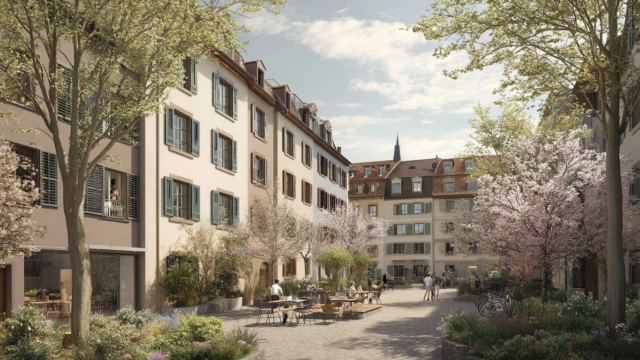
    Back to the roots has prevailed among eight submitted projects in the anonymous competition for the landscaping of the Kronenareal in Dietikon. The project by the two Zurich firms for agricultural architecture, Skala Landschaft Stadt Raum GmbH, and for architecture, S2 Architekten GmbH, received the vote of the competition’s interdisciplinary jury, the administration of the town of Dietikon announced in a press release. The immediate neighbours of the area directly affected by the redesign were also invited to take part in the assessment process as guests.

    According to the press release, Back to the roots impressed with its “sensitive and poetic overall vision of the historic site”. The Kronenareal is interpreted as part of a network of open spaces and connected to the pedestrian zones of the city centre in the east and, in places, to the Reppisch in the west. A fountain is planned as a special element on Zehntenplatz. Hedingerplatz will be designed for multifunctional uses. The pine trees on the site will be integrated into the future design.

    Landscape architect Lars Ruge will present back to the roots at the opening of the competition exhibition. The vernissage will take place on 23 August from 5 pm at the Forum for Urban Development, Innovation and Culture at Zentralstrasse 12 in Dietikon. The event is open to the public. All projects will be exhibited in the forum until 8 September.

  • Demand for residential property picks up

    Demand for residential property picks up

    Raiffeisen Switzerland sees a turnaround in the residential property market. The banking group examined developments on the property market in its study “Real Estate Switzerland – 3Q 2024″. “Demand for residential property has largely recovered following its slump in the wake of the sharp rise in interest rates,” Fredy Hasenmaile, Chief Economist at Raiffeisen Switzerland, is quoted as saying in a Raiffeisen press release on the study. “In addition to the return of the housing cost advantage over renting as interest rates fall again, excess demand is now also spilling over from the rental property market into the owner-occupied property market.”

    However, according to the experts at Raiffeisen Switzerland, the resulting increase in supply will not be met by construction activity, but only from existing properties. They therefore expect that the shortage on the residential property market will only be alleviated in the short term. “The more liquid supply and more confident buyers are beginning to be reflected in a higher number of property changes,” explains Hasenmaile. The majority of properties are being sold at the prices desired by the sellers. In the medium term, the chief economist at Raiffeisen Switzerland therefore expects prices to rise more strongly again.

    According to the experts, an increasing supply of new buildings is being countered by the densification process, in which new residential buildings are primarily being built in place of old properties. Hasenmaile believes that the vacancy rate on the rental flat market will soon fall below 1 per cent. The increase in annual growth in asking rents to 6.4 per cent in the second quarter of 2024 is also evidence of excess demand.

  • Growth in the construction industry in Southeast Asia

    Growth in the construction industry in Southeast Asia

    Sika has more than doubled its production capacity in Bekasi, the globally active specialty chemicals group for construction and industry announced in a press release. Sika’s largest production facility in Indonesia produces mortar products such as tile adhesives and grouting mortar as well as system solutions for walls and facades. The plant, which functions as a distribution center for Indonesia, has also been equipped with more storage capacity.

    According to Sika’s estimates, the construction industry in Indonesia will achieve annual growth of around 6 percent over the next few years. In the last two years, the company has expanded its distribution network in the country from around 10,000 to around 30,000 sales outlets. As this has proven successful, Sika is planning to expand its distribution networks in other important markets such as China and India.

    “The significant expansion of our supply chain in Indonesia will enable us to better meet the strong demand in one of the most dynamic markets in Southeast Asia,” said Philippe Jost, Regional Head Asia/Pacific at Sika, in the press release. “In addition, Sika is positioning itself for further growth in this important market, which is driven by rapid urbanization and strong population growth.”

  • Major order for company in the Middle East

    Major order for company in the Middle East

    Schindler has landed a major order from Riyadh. Schindler Olayan, a subsidiary in which the Schindler Group holds a majority stake, is to supply a total of 293 elevators, escalators and moving walks for The Avenues – Riyadh, Schindler announced in a press release. No details are given about the order volume.

    The Avenues – Riyadh is a multi-purpose project with a total area of 1.8 million square meters. It comprises a shopping center of around 380,000 square meters as well as five multi-purpose high-rise buildings with hotels, apartments and offices. Schindler is contributing 134 Schindler 5500 elevators, one Schindler 2600 elevator, eight Schindler 9500 moving walks and 150 Schindler 9300 escalators to the project. All installations are connected to the cloud and can be monitored via the Schindler ActionBoard.

    “The Avenues – Riyadh is an impressive project that will offer Riyadh residents and visitors a better quality of life,” said Danilo Calabrò, Head of Southern Europe, Middle East and Africa at Schindler Group Management, in the press release. “Thanks to our installations, visitors will be able to move quickly and comfortably through the complex.”

  • Sustainable innovation in the construction industry

    Sustainable innovation in the construction industry

    According to a LinkedIn post, the start-up Oxara from Dietikon has completed the interior of a school building in Confignon with its Nossim clay concrete. The sustainable material not only significantly reduces CO2 emissions, but also gives the space a unique, warm aesthetic, it says. The work was carried out with the construction company Marti Construction from Lausanne.

    Founded in 2019, Oxara has developed an aggregate technology for the production of Cleancrete, a cement-free concrete. Oxara’s aggregates and binders are suitable for the production of cement-free concrete for walls, floors and cast elements as well as cement-free bricks and blocks for conventional masonry.

    At the Dietikon site, Oxara has a production capacity of 300 tons of aggregates per year.

  • Procimmo expands real estate fund

    Procimmo expands real estate fund

    Procimmo is planning to acquire several properties for its Residential Lemanic Fund. The Renens-based company, which specializes in the development and management of real estate investment products, therefore intends to carry out a capital increase of between CHF 30 million and CHF 40 million at the end of September. The exact amount and the subscription period will be communicated at a later date, Procimmo announced in a press release.

    The Procimmo Residential Lemanic Fund currently has gross assets of around 510 million francs. Three quarters of the capital is invested in real estate in Lausanne and Geneva. Procimmo aims to grow the fund “while preserving its intrinsic qualities”, the company writes.

    Founded in 2007, Procimmo SA operates as a real estate asset manager at its headquarters in Renens as well as in Zurich and Geneva. The company has been part of Procimmo Group AG since 2017. The Zug-based group of companies, which is listed on the BX Swiss, offers investment and services in the real estate sector.

  • Four Swiss companies win gold at the best architects awards 2025

    Four Swiss companies win gold at the best architects awards 2025

    A total of 46 Swiss architecture firms have been recognized at the best architects awards 2025. With Inches Geleta, EMI Architects, Nicolas de Courten and Studio DIA, four of them received a gold medal. The best architectural projects of the year in Europe are published annually in a book by the Düsseldorf-based advertising agency Zinnobergruen GmbH. The selection is made by an international jury of architects. A total of 91 awards were presented at the current best architects awards, eight of which were gold.

    Inches Geleta from Locarno TI received the gold award for the extension of the elementary school in the Vaganello district of Lugano. EMI Architekt*innen from Zurich was honored for the terraced houses on Stockmattstrasse in Baden AG. Nicolas de Courten from Lausanne qualified for gold with a long, meandering building complex in the Plaines-du-Loup district of Lausanne. Studio DIA from Bern received a gold medal for the Stromboli cooperative residential building in Bern.

  • Implenia announces management change

    Implenia announces management change

    Implenia, the leading Swiss construction and real estate services provider, will have a new CEO at the helm in spring 2025. André Wyss, who has led the company through a far-reaching transformation since October 2018, has decided to step back from operational activities. Wyss explains: “After six and a half years at Implenia, it’s time for me to focus on existing and new mandates. Implenia is in an excellent position following the transformation and is ready for the next strategic phase.” The successful handover to Jens Vollmar, who has played a key role in shaping the company’s development, is an important step for Wyss.

    Hans Ulrich Meister, Chairman of Implenia’s Board of Directors, praised Wyss’ achievements: “With far-sighted and courageous action, he has shaped Implenia into a financially sound, integrated multinational construction and real estate services provider.” The company is now optimally positioned to continue to grow profitably in the long term.

    Jens Vollmar to take over from April 2025
    The Board of Directors has appointed Jens Vollmar, currently Head Division Buildings, as the new CEO. Vollmar has been with Implenia since 2013 and has made a decisive contribution to the company’s positive development through his role in the Buildings Division and as Country President Switzerland. Meister is convinced that Vollmar will successfully lead the Group into the future with his expertise.

    Vollmar’s successor as Head Division Buildings will be announced at a later date.

    Change in the Civil Engineering division
    In addition to the change in CEO, there will also be a new appointment in the Civil Engineering division. Christian Späth, who has successfully led this division through challenging times, will leave the company at the end of August 2024. Erwin Scherer, previously Global Head Tunnelling, will take over the management of the division from September. Scherer, who has been responsible for tunnel construction at Implenia since 2019, is a proven leader with extensive experience in international tunnel construction. Wyss and the management team are convinced that Scherer will continue to lead the division successfully and make an excellent addition to Implenia’s Executive Committee.

    This comprehensive change of leadership marks an important milestone in Implenia’s future development and sets the course for the continuation of its successful growth trajectory.

  • Starting signal for the “FORUM UZH”

    Starting signal for the “FORUM UZH”

    Construction work has begun on the “FORUM UZH”, a pioneering project of the University of Zurich. The new building will create pioneering teaching and research facilities to meet the increasing demands of modern higher education. The project is a central component of the urban expansion of the Zurich university area. In addition to learning and working areas, publicly accessible cafeterias, libraries and commercial areas will also be created.

    The concept of the new building is characterised by sustainability. The timber-concrete hybrid construction method significantly reduces CO2 emissions and ensures a high quality of stay. The greening of the roof surface in combination with a photovoltaic system makes a positive contribution to the urban climate. The creation of a town square with planting further enhances the urban space.

    Focus on sustainability
    The “FORUM UZH” is orientated towards the highest sustainability standards. With the Minergie-P certificate and SGNI gold certification, the building is a pioneer in ecological construction. The combination of environmentally friendly building materials and energy-efficient technology makes it a model project that will play an important role in Zurich’s urban landscape. Construction is progressing according to plan, with the building due to be occupied from mid-2030.

  • Commission supports selective changes to tenancy law

    Commission supports selective changes to tenancy law

    The National Council’s Legal Affairs Committee has passed two important bills aimed at improving the legal situation in tenancy law. One of the bills stipulates that in future, initial rents can only be contested if the renting party was in an emergency situation at the time the contract was concluded. This is intended to reduce legal uncertainty and avoid lengthy proceedings.

    The second bill deals with making it easier to prove the so-called “local and neighbourhood custom”. This is intended to lower the requirements for the proof of comparative rents and enable the admission of industry-established statistics as evidence. The aim is to improve the comparability of rents and thus prevent abusive rent demands.

    Decision following consultation
    The Commission’s decision is based on the results of the consultation on the parliamentary initiatives of former National Councillor Hans Egloff. Despite the minority motions tabled, the committee was clearly in favour of implementing the initiatives in accordance with the wording.

    The bills that have now been adopted are expected to be debated in the National Council in the 2025 spring session.

  • New owner drives expansion and innovation in the area of room systems

    New owner drives expansion and innovation in the area of room systems

    Swiss Life Asset Managers has reached a binding agreement with Condecta AG on a full takeover of the Winterthur-based specialist for modular construction, Swiss Life Asset Managers announced in a press release. The asset manager of the Swiss Life Group, which specialises in real estate and infrastructure, intends to expand Condecta’s presence and offering. The Winterthur-based company is currently represented in Switzerland, Germany and Italy. The two partner companies have agreed not to disclose the purchase price.

    “The Swiss market for rental solutions in the modular space sector has potential, particularly in the public sector, industry, construction, architecture and the private sector, which require high-quality modular building solutions,” said Gianfranco Saladino, Head of Value-Add Infrastructure at Swiss Life Asset Managers, in the press release. “Condecta, known for its high Swiss quality, is well positioned to meet the growing demand.”

    According to Condecta CEO Olivier Annaheim, the company has found “the perfect new owner in Swiss Life Asset Managers to drive forward our growth and innovation plans and further expand our market leadership in the area of room systems in Switzerland”. For Matthew Dooley, Investment Director at Swiss Life Asset Managers, Condecta is “complementary to Swiss Life Asset Managers’ extensive property and infrastructure business in Switzerland”.

  • Innovative solutions for the tunnel renovation of the Bad Zurzach northern bypass

    Innovative solutions for the tunnel renovation of the Bad Zurzach northern bypass

    Last year, ERNE completed the Bad Zurzach eastern bypass. Work is now underway on the tunnel renovation of the northern bypass, the Laufenburg-based construction company announced in a press release. ERNE is using innovative solutions for this project.

    The press release cites cable and siphon shafts as well as cable shaft covers as examples. The former are not made from polymer concrete, as is usually the case, but from more robust ultra-high performance fibre concrete. The covers are made of composite material (composite). It is lighter and more corrosion-resistant than conventional cast iron.

    The project includes the renewal of the verges with cable conduit system and extinguishing water pipes and a new tunnel coating. Two existing emergency exits will be rebuilt and supplemented with new emergency exits. In addition, the tunnel control centre will be rebuilt and two new stacking basins built. The project poses challenges due to the limited space available and the fact that work has to be carried out while the tunnel is in operation.

    ERNE expects to have completed the ongoing work on the south side of the tunnel by mid-August. Following this, the half-sided traffic routing will be changed so that the north side of the tunnel can be renovated. The construction work is scheduled for completion in 2025.

  • Swiss sales company in the canton of Schwyz

    Swiss sales company in the canton of Schwyz

    Gira has opened its Swiss branch in Feusisberg. From there, the building technology specialist from the German state of North Rhine-Westphalia intends to gain a foothold in the Swiss market with its own sales company. In addition to Switzerland, Gira is also represented in the UK, Austria, the Netherlands and Spain. According to the information provided, importers market and sell Gira products and system solutions in a further 35 markets with a focus on Europe and Asia.

    Alfred Mölzer, who has been Managing Director of Gira Austria GmbH since 2022, will be responsible for the Swiss business. Together with his team, he meticulously prepared the establishment of Gira Swiss GmbH over a period of around one and a half years, according to a company press release. In addition to analysing figures and statistics, numerous discussions were held with market participants from the retail, trade, architecture and construction sectors, according to Mölzer. “This is the only way to get a feel for what makes the market tick and which specific needs we need to fulfil with our range of solutions and services.”

    These have shown the medium-sized technology company that there are opportunities for a successful market entry, particularly in the field of building automation. After all, the company has played a key role in shaping the digital networking of home and building technology with its developments from the very beginning. This will therefore be the “spearhead” of market development.

  • Housing prices develop differently

    Housing prices develop differently

    Anyone looking to buy a condominium had to spend slightly more in July than in the previous month. Specifically, prices for condominiums rose by an average of 0.6 per cent, SMG Swiss Marketplace Group(SMG) reported in a press release on the current Swiss Real Estate Offer Index. The SMG Swiss Marketplace Group combines the digital marketplaces of TX Group, Ringier and Mobiliar.

    By contrast, prices for single-family homes fell by an average of 1.1 per cent in July compared to June. This puts the price level at roughly the same level as at the end of 2023, according to the press release. “For many potential buyers, a single-family home is still difficult to afford despite the recent decline,” Martin Waeber is quoted as saying. According to the Managing Director Real Estate at SMG, buying a condominium with a smaller living space is therefore the only alternative for many. According to Waeber, this is leading to a shift in demand with an impact on the prices of both types of residential property.

    SMG’s property experts observed a 2.2 per cent decline in asking rents across Switzerland in July compared to June. At 3.7 per cent, this was most pronounced in Ticino. Central Switzerland and the greater Zurich region followed with declines of 3.2 per cent each. The smallest decline in asking rents was recorded in north-western Switzerland with an average of 0.5 per cent.