Category: Construction

  • Start of construction work on temporary bridging structure for Zurich Opera House

    Start of construction work on temporary bridging structure for Zurich Opera House

    The historic Zurich Opera House and the adjoining extension need to be renovated in the first half of the 2030s. The “Future Opera” project was launched in April 2023 to plan this comprehensive structural measure and ensure the future viability of the opera house. Due to the acute lack of space, the legal guidelines for occupational safety and workplace design are currently not being adhered to in many places.

    Dialogue process and establishment of a foundation
    A comprehensive dialog process with a wide range of stakeholders and the establishment of a foundation, which plays an important role in the financing, have paved the way for the project. Feasibility studies were carried out to determine the best approach.

    Design by the architectural firm EM2N
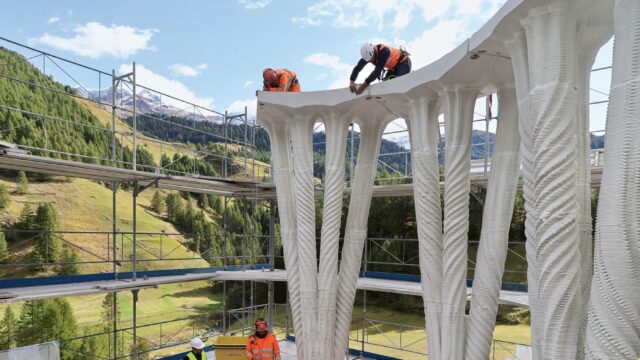
    The design for the bridging building comes from the architectural firm EM2N. The plan is for a single-storey, pavilion-like wooden structure on the roof of the extension building on the corner of Utoquai and Falkenstrasse. Preparations for construction will begin on July 4, 2024, and the actual timber construction will be erected in August 2024. The design emphasizes flexibility, functionality and reusability.

    Costs and schedule
    The total costs for the temporary bridging structure amount to CHF 4.57 million. The additional floor space of 330 square meters is intended to improve the spatial situation for employees in the near future until the long-term structural measures have been completed.

    Improving working conditions
    The temporary building will not solve the general space problem, but it will help to alleviate the acute situation and significantly improve working conditions until the comprehensive structural developments are completed.

    “Future Opera” project
    The “Future Opera” project aims to renovate Zurich Opera House and its extension in the long term while creating added value for the city and canton. These measures are intended to ensure that the opera house will continue to meet the high standards of safety, functionality and design in the future.

  • Cement recycling – a cost-effective and efficient way

    Cement recycling – a cost-effective and efficient way

    The study recently published in the journal PNAS, led by Imperial College London and in collaboration with Empa and EPFL, shows that recycling cement paste from demolished concrete is one of the most effective and economical ways to reduce CO2 emissions. The process of CO2 mineralization, in which CO2 is absorbed into building materials such as concrete, could reduce emissions from cement production by around 15% – equivalent to 0.8% of global greenhouse gas emissions in 2020.

    Cementpaste recycling is the frontrunner among the technologies
    Of the ten CO2 mineralization technologies examined, recycled cement paste proves to be the most promising. Cement paste, a binding agent for concrete, usually comes from demolished buildings and can be processed at low cost. Rupert J. Myers from the Department of Civil and Environmental Engineering at Imperial College emphasizes: “Our results show that CO2-mineralized cement could be a key technology for decarbonizing the construction sector.”

    Economic benefits and sustainability
    The study highlights that cost-effective CO2 mineralization technologies are up to five times cheaper than conventional carbon capture and storage methods. In addition, they offer a long-term solution, as building materials can store CO2 for centuries. Justin D. Driver from the Department of Chemical Engineering at Imperial College adds: “While CO2 mineralization is not an all-purpose solution, it offers great potential for reducing emissions in the construction sector.”

    Limitations and further research needed
    Ellina Bernard, a scientist at Empa’s Concrete and Asphalt Laboratory, points out that the amount of material available for carbonation is limited, which restricts the potential of this technology. Nevertheless, the potential CO2 savings of 15% are significant. Further research to optimize and reduce the cost of carbon capture and utilization (CCU) technologies remains essential.

    Recommendations for the future
    The study formulates concrete recommendations for political decision-makers, investors and researchers:

    • Develop strategies to support the recycling of concrete demolition: the aim is to promote the recycling of concrete demolition in order to maximize emission reductions.
    • Focusing on competitive CO2 mineralization technologies: The focus should be on developing and supporting those technologies that have proven to be economical and effective in making optimal use of resources.

    Ensure transparency in the competitiveness of these technologies: To enable investors to make informed decisions, clear and comprehensible information must be provided on the costs, market opportunities and possible applications of the various technologies.

  • Five years of digital offensive in construction

    Five years of digital offensive in construction

    Five years ago, in 2019, an alliance of more than a dozen employers’ associations and three trade unions launched the Information System Allianz Bau (ISAB). The aim was to use the results of actual inspections more efficiently and thus ensure compliance with generally binding collective labor agreements (CLAs). What began with information on around 1,000 companies in the main construction industry has now developed into a comprehensive database containing information on over 45,000 companies.

    A comprehensive digital working tool
    ISAB has established itself as a comprehensive digital working tool through the introduction of the three modules ISAB Portal, ISAB CLA Certificate and ISAB Card. For the first time, cross-industry and cross-regional information is available on which companies are subject to which collective employment agreement, whether they have been inspected and whether any necessary back payments have been made. The use of the ISAB CEA certificate has increased significantly: While 3300 retrievals were recorded in 2019, this figure had risen to over 59,000 by February 2024.

    Significance for the Swiss construction industry and politics
    ISAB not only plays a central role in the construction industry, but also has a political dimension. It is the most effective instrument for protecting high Swiss wages. In the political debate, particularly in the context of EU negotiations, ISAB sends a strong signal against calls for additional accompanying measures that could burden entrepreneurs.

    A successful digital transformation project
    The digital offensive launched with ISAB 2019 impressively demonstrates how digital tools can increase efficiency and transparency in the construction industry. With secure information on more than 45,000 companies and the widespread use of ISAB CLA certificates, ISAB has established itself as an indispensable tool that protects the high standard of Swiss wages and ensures compliance with CLAs.

  • Winning project for high-rise building near Regensbergbrücke in Zurich

    Winning project for high-rise building near Regensbergbrücke in Zurich

    At the Regensberg Bridge in Zurich Oerlikon, SBB is planning an office building around 40 metres high with public uses on the ground floor. The winning project, developed by “Team Esch Sintzel”, makes skilful use of the challenging site shape and topography. It also achieves a high degree of energy self-sufficiency, which makes it particularly forward-looking.

    Focus on efficient use and sustainability
    The planned high-rise building will be 80 per cent energy self-sufficient. Thanks to advanced building technology, passive cooling and solar cells on the roof and façade, the building will be able to cover most of its own energy requirements. This fits in perfectly with SBB’s ambitious climate targets.

    Eight office floors and public uses on the ground floor
    The new building is being realised as a nine-storey commercial building, with flexible floor plans that are ideal for services, health and education. The ground floor will be enlivened by catering and retail spaces, while the outdoor space concept with a near-natural track level and barrier-free urban level will ensure a high quality of stay.

    Public exhibition of the competition entries
    The competition entries will be exhibited from 12 to 15 July 2024 on the 8th floor of the Franklinturm at Hofwiesenstrasse 349 in Zurich-Oerlikon. Interested parties can visit the exhibition from Friday to Sunday from 2 pm to 6 pm and on Monday from 11 am to 3 pm.

    Framework plan for Zurich Oerlikon railway station south-west development site
    The basis for the project is the “Zurich Oerlikon railway station south-west development site” framework plan drawn up in 2012 together with the City of Zurich. This defined an eight-storey building to the west of the Franklin Tower in terms of urban planning. The building permit requirements have been met and construction is scheduled to begin in 2027.

  • Holcim acquires Belgian construction waste recycler

    Holcim acquires Belgian construction waste recycler

    Holcim is further expanding circular construction as a driver of profitable growth. Following the Cand-Landi Group in Switzerland, Land Recovery in the UK and Mendiger Basalt in Germany, the building materials producer has made its fourth acquisition this year with the family business Mark Desmedt, founded in 1989 and, according to Holcim, the leading recycler of construction demolition materials in Belgium.

    According to a Holcim statement, Mark Desmedt recycles more than 500,000 tonnes annually. In addition, the company is strategically located between Brussels and Antwerp and can therefore serve the country’s two largest conurbations. This will enable Holcim to expand its ECOCycle product range for circular construction solutions in Belgium and boost its profitable growth.

    This acquisition brings Holcim closer to its goal of recycling 10 million tonnes of construction waste per year. “With Mark Desmedt’s team, we are accelerating our vision to drive circular construction in the key metropolitan regions where we operate to build cities out of cities,” Holcim CEO Miljan Gutovic is quoted as saying.

  • Skilled labour shortage – an industry analysis by SVIT Zurich

    Skilled labour shortage – an industry analysis by SVIT Zurich

    [smartslider3 slider=”19″]

    Examining the distribution of roles in property management and developing specialised profiles could reduce the frustration of managing large portfolios. Overall, the shortage of skilled labour in the property sector calls for far-reaching structural adjustments to improve working conditions and the satisfaction of professionals. It remains to be seen whether the sector will successfully implement these strategies.

    Structural problems and proposed solutions
    Experts agree that there are structural challenges that are difficult to change. Nevertheless, there are numerous opportunities for improvement, such as the simplification and standardisation of processes, efficient systems and intelligent digitalisation. In addition, the promotion of leadership skills could better overcome organisational challenges. Improved conflict management and the proactive promotion of talent and career changers are further possible steps to overcome the shortage of skilled labour.

    Shining a light on the distribution of roles in management
    The areas of responsibility of “Bewis” (managers) include activities that require specific skills and competences. The allocation of these tasks within a company is largely determined by the management business model. In order to reduce frustration when dealing with large portfolios, four different “Bewi” profiles were identified and corresponding solutions developed. All-rounders are supported by juniors and administrators. A more efficient support system could help to reduce the frustration of managing large portfolios.

    Digital management promotes clear processes, integrated systems and the use of artificial intelligence (AI). An advanced IT infrastructure is essential here. Specialists and integrated “Bewis” work in teams with other specialised experts. Attractive career paths and complementary skills are key success factors here. A narrowly defined area of responsibility could also help to minimise job frustration.

    Key to solving the skills shortage
    The skills shortage in the real estate sector is a multifaceted and complex problem that requires far-reaching structural and organisational adjustments. Some of the existing challenges can be tackled through clever conflict management, targeted promotion of talent and the adaptation of roles within property management.

    It remains to be seen how the sector will implement these strategic proposals to improve the working conditions and satisfaction of its professionals.

  • First stage Attisholz with UBS investment

    First stage Attisholz with UBS investment

    The Attisholz site in Riedholz is being given a new lease of life thanks to an investment by the UBS pension fund. The “Kocherei”, once a central location for cellulose production, is being extensively remodelled. The winning project by Burckhardt Architektur from Basel envisages around 150 rental flats and 4,000 m² of commercial space, which will breathe new life into the historic building.

    Collaboration between UBS and Halter AG
    The UBS pension fund, which acquired the 73,000 m² core site back in 2022, has now also confirmed its investment in the “Kocherei”. A work contract was signed between the UBS pension fund and Halter AG on 28 June 2024. While the UBS pension fund will act as investor and owner, Halter AG will be responsible for the planning and realisation of the project as overall provider.

    First stage of the site development
    The development of the Attisholz site, which is to be transformed into a sustainable living space over the next 25 years, begins with the first stage. In addition to the “Kocherei”, this also includes the “Lagerhaus” and publicly accessible open spaces. The design plan for this first stage is currently being drawn up in collaboration with the municipality of Riedholz and the canton of Solothurn and will soon be submitted for public consultation and approval.

    Sustainable and vibrant future
    The transformation of the Attisholz site into a vibrant and sustainable neighbourhood is an important project for the region. The revitalisation of the “Kocherei” and the creation of residential and commercial space are central components of this vision. The realisation of the projects is planned for the period 2025 to 2028 and will contribute significantly to the upgrading of the entire area.

    With the UBS pension fund as a strong partner and Halter AG as an experienced developer, the transformation of the Attisholz site will be driven forward swiftly and professionally in order to create a new, sustainable living space for the municipality of Riedholz.

  • Sustainability and quality of life in harmony

    Sustainability and quality of life in harmony

    In a new study published in the “Journal of Cleaner Production”, Empa researchers show that a good life is possible for more than ten billion people within planetary boundaries. Using a technical approach and the so-called donut model, they have calculated that humanity can live sustainably without sacrificing an adequate standard of living. Hauke Schlesier and Harald Desing from Empa’s “Technology and Society” laboratory and Malte Schäfer from the Technical University of Braunschweig have demonstrated this potential.

    The donut as a model for sustainability
    The donut model, consisting of two concentric circles, serves as the basis for the study. The outer circle represents planetary boundaries such as biodiversity, climate and land use. The inner circle symbolises basic human needs. The space between the circles, the donut, represents the sustainable use of natural resources in order to achieve an adequate standard of living. This theoretical basis has now been empirically confirmed.

    Using resources efficiently
    The study shows that an ecological life is possible for more than ten billion people, but far-reaching changes are necessary. There is an urgent need for action, particularly in the energy system and in agriculture. The complete abandonment of fossil fuels and a switch to a plant-based diet are crucial. The sustainable use of phosphorus and nitrogen and the avoidance of land use changes are further key measures.

    A balanced standard of living
    A key component of the transformation is the equalisation of living standards. While the global South would benefit from a significant increase in living standards, resource consumption in the global North would have to be reduced. This applies in particular to living space and individual mobility without compromising well-being. Public transport and healthcare could be expanded without significantly harming the environment.

    Narrow scope for sustainability
    The researchers emphasise that although the donut of sustainable living exists, it is very narrow. However, technological progress and the shift towards a circular economy offer potential for additional ecological leeway. “Our model is based on the current state of technology. Future innovations could expand the donut,” explains Schlesier.

    Empa’s study provides powerful proof that sustainability and quality of life are compatible. It shows the way to an ecologically and socially just life for all people on our planet.

  • Government council doubles housing subsidies

    Government council doubles housing subsidies

    The Government Council of the Canton of Zurich rejects the popular initiative “More affordable housing in the Canton of Zurich”, which provides for a right of first refusal for municipalities to promote non-profit housing construction. Instead, the cantonal government relies on proven structures and instruments for the rapid and effective promotion of affordable housing.

    The counter-proposal provides for a doubling of the framework credit for cantonal housing promotion loans from the current CHF 180 million to CHF 360 million. This enables co-financing at communal level and thus creates a potential of CHF 720 million. This means that more flats can be subsidised and higher loan amounts can be granted per property. The Housing Promotion Ordinance is to be amended accordingly to increase the upper limit for loans from 20 to 25 per cent of the total investment costs.

    Criticism of the right of first refusal – encroachment on the guarantee of ownership
    The Government Council criticises the proposed right of first refusal in the popular initiative as an encroachment on the guarantee of ownership and freedom of contract. Private companies, including institutional investors such as pension funds, would be at a disadvantage, which could lead to legal uncertainty and deter private investment. This could inhibit residential construction activities and exacerbate the existing housing shortage.

    The right of first refusal also harbours the risk of lengthy appeal proceedings and could place a burden on municipalities and their taxpayers. The cantonal government sees the counter-proposal as a more efficient solution for creating affordable housing quickly.

    Housing shortage in the canton of Zurich
    Demand for housing in the canton of Zurich has exceeded supply for years. Construction activity is below average, which is leading to an increasing housing shortage. Although a large proportion of Zurich’s population lives in long-term tenancies and is therefore less affected by rising rental costs, the need for action remains great.

    The Government Council emphasises the need to stimulate construction activity in order to increase the overall supply of housing and curb rental and purchase prices. The counter-proposal aims to provide targeted housing for financially disadvantaged sections of the population.

    Effective promotion instead of right of first refusal
    The government council’s counter-proposal promises rapid and effective promotion of non-profit housing construction by doubling the framework credit and amending the Housing Promotion Ordinance. This will create a solid basis for combating the housing shortage in the canton of Zurich and providing more affordable housing for all sections of the population.

  • New home for senior citizens Greencity 2026

    New home for senior citizens Greencity 2026

    A visionary residential project is being built in the south of Zurich that offers older people a lively and safe environment. The development on construction site B6 in Greencity combines private and municipal involvement. Losinger Marazzi AG is developing the project for the investment foundations of Pensimo Management AG, which are providing a total of 179 flats for older people. Of these, the City of Zurich Retirement Homes Foundation (SAW) will take over 60 flats, while the remaining 119 flats will be let by Pensimo to tenants aged 55 and over. This collaboration represents a new partnership and gives all tenants access to SAW’s services.

    A green centrepiece for Greencity
    Construction site B6 is the latest chapter in the sustainable development of the Greencity district. Since 2014, Losinger Marazzi has been transforming the site of the former Sihl paper factory into Switzerland’s first 2000-watt site. The inner courtyard of the new building will feature green areas, trees and seating, inviting people to linger. Arcades on the ground floor create sheltered access areas to commercial spaces, which could offer facilities such as a medical centre, a fitness studio, a bakery or a café on 3,500 square metres, says René Büchi, the portfolio manager responsible at Pensimo.

    Comprehensive services from SAW
    The City of Zurich Retirement Homes Foundation provides all tenants with a comprehensive service package. This includes a 24-hour emergency call service, extended caretaking, laundry service, social services and various events on the estate. If required, tenants can also take advantage of home help and outpatient care services. Andrea Martin-Fischer, Director of SAW, emphasises: “Our aim is to enable tenants to live independently and safely well into old age.”

    Focus on sustainability
    Greencity’s sustainability goals are consistently applied to the new retirement housing project. Herbert Heinen, Project Manager at Losinger Marazzi, explains: “An optimised load-bearing structure, lightweight walls, a wooden façade and an energy concept with 100 percent renewable energy significantly reduce CO2 emissions and bring the building close to the net-zero target in operation.” Pensimo and Losinger Marazzi are also aiming for certification with the SNBS Gold label. Construction started in March 2024 and the building, designed by JSWD Architekten from Cologne, is scheduled for completion at the end of 2026.

    With this pioneering project, Greencity is setting new standards for sustainable, age-appropriate living and demonstrating how private and public partnerships can create forward-looking solutions.

  • Baden Cantonal Hospital focusses on local companies and sustainability

    Baden Cantonal Hospital focusses on local companies and sustainability

    Baden Cantonal Hospital (KSB) has carried out around 250 publicly tendered procurements over the course of the six-year construction phase of the new building. According to a press release, these tenders resulted in a total of 1066 contracts for work and services. The most recent tender was for the furniture. According to the KSB, the new hospital building lives up to the Swiss made label. 97 per cent of the 177 companies involved in the new building come from Switzerland. Only 3 per cent of the contracts were awarded to companies in Germany and Italy.

    A total of 25 per cent of the companies involved in the construction are based in the canton of Aargau and 40 per cent in the canton of Zurich. “We are proud that KSB has thus made a significant contribution to local and regional value creation,” KSB CEO Adrian Schmitter is quoted as saying.

    Thanks to the high presence of local companies, KSB has also set an example in terms of sustainability, Schmitter continues. “During the construction phase, it was above all a project of short distances for the trade companies involved. This resulted in various synergy effects,” says the CEO. This also applies to the time after commissioning, when reworking, maintenance or similar may be required.

    With a usable area of 76,215 square metres, the new building will offer around 30 percent more space than the building in which KSB has been housed since 1978. Commissioning is scheduled for the end of February 2025.

    The move should then be completed within five days. A total of 4571 cubic metres of medical technology and other goods will be moved, according to a KSB press release. This corresponds to the load of 76 lorries of 40 tonnes each.

  • New paediatric hospital in Geneva

    New paediatric hospital in Geneva

    Integrating the families of young patients is a central concern of the new paediatric hospital. There will be special areas adapted to the needs of families, such as individual rooms with integrated bathrooms for patients and separate day and night areas for parents. There will also be an area for parents or carers with living rooms, kitchens and bathrooms. There are also rooms for parents whose children come to the hospital from far away and who are therefore unable to visit every day.

    Promoting research and training
    The new hospital will also meet the needs of medical staff and training. It will improve working conditions for medical staff and encourage medical students to specialise in paediatrics. The hospital will also provide space for research activities.

    Demographic and economic considerations
    This construction project is part of the cantonal hospital planning process and is based on demographic forecasts and economic considerations. The aim is to enable Geneva University Hospitals to offer children and their families comprehensive, high-quality care in a modern, functional environment.

    Architecture and construction phases
    The architecture of the new paediatric hospital combines comfort and functionality to create an environment conducive to healing. The architects’ competition was organised in accordance with SIA 142 regulations as part of a selective procedure for a multidisciplinary team. Architecturestudio, an international practice with offices in Paris, Shanghai and Zug, won the competition.

    Sustainable and modern construction
    The new building will meet the highest energy and functional standards. In addition to patient-friendly facilities, sustainability will also be a key consideration. Construction will take place in several phases. The inpatient part of the building is due to come into service at the end of 2030, while the outpatient building is scheduled for completion in mid-2035.

  • Pictet de Rochemont Campus

    Pictet de Rochemont Campus

    The PAV project extends over three central districts of the city and covers 230 hectares – an area roughly equivalent to the distance between Bürkliplatz and Letten in Zurich. By 2050, 12,400 homes and 6,200 jobs are expected to be created. Construction of Pictet’s new headquarters will begin in autumn 2021, with opening planned for 2025. The new building will house 2,500 workstations and 100 residential units.

    Innovative and sustainable design
    Pictet’s new headquarters will be built to the most modern standards. The project’s “Feng Shui” design emphasises the link with nature, with elements such as water, air, light and greenery. The building will have 23 floors, including a panoramic restaurant terrace and vast green spaces. A public park and the release of the Drize river are also part of the project.

    Environmentally-friendlyconstruction
    A key aspect of the project is respect for the environment. The building will be designed to minimise energy consumption and maximise the use of renewable energy. An innovative approach is also being taken to soil disposal. 80.a total of 1,000 m³ of soil will be transported by train to significantly reduce the carbon footprint.

    Integration and development of the neighbourhood
    The PAV project aims to transform the area’s industrial past into a vibrant mixed-use neighbourhood. In addition to new housing and jobs, the project will create numerous green spaces and meeting areas.
    Commitment to the city of Geneva
    Renaud de Planta, senior partner at the private bank, emphasises that the new campus is a clear declaration of commitment to the city of Geneva. Despite competition from financial centres such as London and New York, Geneva remains Pictet’s central location. The people of Geneva also contributed to the decision to locate here through their political decisions.

    Looking to the future
    With the completion of the Pictet Campus in Rochemont, Geneva will not only have a new architectural landmark, but also an important working and living centre in the heart of the city. The project is a symbol of forward-looking urban development that emphasises sustainability and modernity, and will improve the quality of life of Geneva’s residents and workers.

  • Zehnder strengthens ventilation business in Spain and Portugal

    Zehnder strengthens ventilation business in Spain and Portugal

    The Zehnder Group is expanding its residential ventilation business in Spain and Portugal. The international indoor climate expert is gaining broader access to these two markets by acquiring the Spanish company Siber. Its administration, factory and innovation centre are located in Les Franqueses del Vallès near Barcelona, while the logistics centre is in Madrid.

    According to an ad hoc announcement, the transaction was financed with existing credit lines and liquid funds. Closing is expected in the coming weeks. Siber expects sales of around EUR 37 million for the 2024 financial year with an EBIT margin on a par with the Zehnder Group’s ventilation segment.

    According to the Zehnder Group, this is a “unique opportunity”. This is because Siber’s attractive product portfolio is ideally tailored to southern European customer needs and covers the mid-price segment. “This will help the Zehnder Group to sustainably strengthen its growth, particularly in Spain and Portugal as well as other southern European countries.”

    Zehnder Group CEO Matthias Huenerwadel describes the acquisition of Siber as “another milestone in the targeted expansion of our residential ventilation business. The complementarity of customers and products, combined with regional strength and a pronounced capacity for innovation, make Zehnder and Siber a perfectly complementary combination.”

  • Transformative materials in the construction industry

    Transformative materials in the construction industry

    As one of the main sources of CO2 emissions in Switzerland and Liechtenstein, the construction sector is under increasing pressure to introduce sustainable practices. Mikaël Genty, advisor to the Swiss Climate Foundation, stresses the need for new technologies to achieve the climate objectives of the Paris Climate Agreement. One promising development is the Terrabloc company, which converts excavated material into environmentally-friendly building materials such as bricks and partitions. This initiative helps to reduce construction waste and transform it into valuable building materials.

    Improving efficiency through modern insulation technologies
    Another key element for a sustainable construction sector is efficient insulation. FenX, a start-up spin-off from ETH Zurich, has developed a technology that transforms industrial waste into a sustainable and recyclable insulating foam. This innovation not only improves the energy efficiency of buildings, but also promotes the circular economy in the construction industry.

    A revolution in the concrete industry
    ETH spin-off Oxara is presenting a forward-looking alternative to concrete that does not require cement with a high CO² content. This innovative concrete is made from excavated materials and could fundamentally change the concrete industry. Meanwhile, Bern-based SME neustark is working on a process that uses concrete as a CO2 reservoir by fixing carbon dioxide in the form of limestone in recycled concrete. This technology not only addresses the problem of CO2 emissions, but also contributes to the development of negative-emission technologies, which are playing an increasingly important role in the Confederation’s climate policy.

    By supporting these innovative projects and technologies, the Swiss Climate Foundation aims to accelerate the transition to a more sustainable construction sector and thus make a key contribution to reducing greenhouse gas emissions. Ongoing research and development in these areas promises not only to reduce pollution, but also to improve quality of life through more sustainable living and working environments.

  • Geneva sets new standards in energy-efficient building renovation

    Geneva sets new standards in energy-efficient building renovation

    In March 2024, Geneva’s Grand Council approved investment credits of CHF 500 million, financed jointly by the canton and the federal building programme. This historic agreement confirms Geneva’s commitment to renovating its built heritage in order to accelerate the energy transition. It includes measures such as maintaining the thermal cost index and specific rates for owners of single-family homes.

    Higher grants for energy renovations
    Property owners can now benefit from additional financial support for the renovation of their buildings. Subsidies totalling CHF 500 million will be awarded mainly to private property owners, while 30% will go to local authorities and autonomous public bodies. The new grants, applicable from 1 June 2024, cover measures such as thermal insulation, improving the energy efficiency class and installing solar panels.

    New offers for energy optimisation and work planning
    Property owners now have the opportunity to obtain the same subsidies as for recognised energy standards by combining individual measures. In collaboration with the cantonal energy office, time-phased plans are drawn up for energy optimisation projects. Individual homeowners enjoy the benefits, including a bonus for the energy standard achieved and additional tax exemptions.

    A tailor-made approach for single-family home owners
    Single-family home owners have an extra three years to meet the renovation requirements, taking into account their individual circumstances. Factors such as the owner’s age and financial situation, the neighbourhood’s development potential and the building’s status as a cultural asset are all taken into account. In addition, CHF 50 million in bridging loans have been made available to facilitate access to finance for energy renovation projects.

    Grant application procedure
    Interested property owners can submit their applications online and, depending on the type and objectives of the project, corresponding grants may be awarded. It is important to submit applications before the work begins and to provide a complete dossier in accordance with the requirements of the cantonal energy department. This breakthrough in energy-efficient building renovation demonstrates Geneva’s commitment to promoting energy-efficient construction and moving the city forward on the road to sustainability and energy transition.

  • Burkhalter Group acquires Kippel building technology in Valais

    Burkhalter Group acquires Kippel building technology in Valais

    The Burkhalter Group has acquired Kippel Leo + Söhne AG in Susten VS with effect from 1 July, according to a press release. Kippel has been operating successfully in the regional market in the canton of Valais for over 50 years and offers services in heating, sanitary and solar technology, according to the Zurich-based building technology specialist. Kippel employs around 20 people and generates an annual turnover of around CHF 6 million.

    Kippel Leo + Söhne AG will be merged with Lauber IWISA AG, which already belongs to the Burkhalter Group and is also based in Naters in Upper Valais, with effect from 1 January 2025. The site will reportedly be retained and all employees will be kept on. The current owners Adolf and Flavian Kippel will continue to work for the company. According to Burkhalter, gaining additional market share through the targeted acquisition of other building technology companies remains part of the strategy.

    At the end of 2023, the Burkhalter Group employed 5,185 people in 84 Group companies at 158 locations in Switzerland and the Principality of Liechtenstein, 971 of whom were apprentices. The holding company, which is headquartered in Zurich, is listed on the SIX Swiss Exchange.

  • Building cooperatives should act more confidently

    Building cooperatives should act more confidently

    Association President Daniel Burri welcomed around 100 delegates and guests to the 13th ordinary delegates’ meeting of Wohnen Schweiz on 20 June at the Landhaus Solothurn, the association of building cooperatives reported in a press release. Everyone agreed that cooperative housing construction is more necessary than ever due to the housing shortage, according to the press release. Those responsible should therefore be “more self-confident”.

    In a video message, Federal Councillor Guy Parmelin acknowledged the important role played by non-profit property developers in the creation of affordable housing. Parmelin cited densification, streamlining procedures and the provision of more affordable housing as the key to solving the housing problem. Association President Burri called for “these statements to be followed by concrete action and for the instruments of indirect housing promotion, in particular the Fonds de Roulement, as well as the work of the associations to be strengthened”. In particular, Wohnen Schweiz wants to defend itself against planned cuts to the federal government’s performance agreements with the umbrella organisations.

    The wohnen malters cooperative was honoured with the Swiss Housing Foundation’s recognition award at the delegates’ meeting. The company, which is based in Malters LU, received the award, worth CHF 10,000, for the refurbishment of the Oberfeld property in Malters.

  • A world centre for internationality and innovation

    A world centre for internationality and innovation

    Geneva plays a central role on the international stage, not only as the home of the United Nations and nearly 400 NGOs, but also as the headquarters of numerous multinationals, particularly in the fields of research and development. This position underlines Geneva’s importance as a global centre for international cooperation, supported by an academic landscape that is among the best in the world.

    Excellence in infrastructure
    As one of the most business-friendly cities in Europe, Geneva has an excellent infrastructure that attracts international conferences and business travellers. Geneva International Airport, just a few minutes from the city centre, offers direct flights to some 150 destinations worldwide. The well-developed international rail network, including the TGV, which reaches Paris in just three hours, and the Léman Express, Europe’s largest regional rail network, considerably enhances Geneva’s accessibility.

    Promoting multilateral discussions
    Geneva hosts major international discussions, from the United Nations to world economic forums and the International Committee of the Red Cross. These discussions are part of Geneva’s heritage and reflect the city as a crossroads for international negotiations and arbitration. Here, the World Intellectual Property Organisation documents the many innovations that have emerged from local research and development centres.

    Sustainable urban development
    In addition to its role as an international centre, Geneva is setting new standards in sustainable urban development. A subsidy programme with a budget of CHF 500 million is aimed at accelerating the energy renovation of buildings and meeting climate targets. This commitment shows that Geneva is striving to achieve climate neutrality by 2050, and supports private and public property owners in modernising their real estate.
    Geneva is an impressive demonstration of how a city can be both a centre of international politics and economics and a centre for promoting sustainable development. Thanks to this dual role, Geneva is strengthening its position as a place where global challenges are tackled innovatively and effectively.

  • Future Perfect launches project for circular construction

    Future Perfect launches project for circular construction

    The Future Perfect association, together with the Plavenir professional association, the Constructa Association of Teachers of Drawing Professions and the educational materials publisher LernMedien-Architektur GmbH, is realising a project to integrate circular construction into basic vocational training in spatial and construction planning. The Future Perfect Circular Building project aims to teach skills for the reuse and recycling of materials and components, Future Perfect explains in a press release. A test run is planned for the spring semester 2025. The courses will be available to schools on a regular basis from autumn semester 2025.

    The project is aimed at both students and teachers of spatial and construction planning. Teachers will be offered full-day training courses in which they will be introduced to circular construction and the use of Future Perfect’s digital teaching materials will be explained. Digital courses for basic education, advanced seminars, project work and project competitions will be made available to learners. The project is financially supported by the Minerva Foundation and the Federal Office for the Environment.

  • Meier Tobler Group AG sells Lüftungshygiene AG to Hälg Group

    Meier Tobler Group AG sells Lüftungshygiene AG to Hälg Group

    Meier Tobler Lüftungshygiene AG, founded in 2009, has established itself as an independent company with 25 employees at two locations. Despite its success, it remained a niche business within Meier Tobler. Due to the increasing focus on core areas, Meier Tobler decided to sell the company to the Hälg Group in June 2024. Roger Basler, CEO of Meier Tobler, comments: “We are delighted to have found the ideal buyer in the Hälg Group. Its strategic direction is a perfect fit and we are convinced that our employees will be optimally integrated into the Hälg team.”

    Leading company in ventilation cleaning
    The Hälg Group is pursuing a targeted growth strategy and sees an increasing demand for hygiene solutions and clean air. It is already active in the field of ventilation cleaning at its sites in Bern, Zurich and St. Gallen. The acquisition of Meier Tobler Lüftungshygiene AG will enable the company to significantly expand its team of experts and utilise additional synergies. The aim is to become the market leader in ventilation cleaning. Sandro Keller, CEO Building Technology at the Hälg Group, explains: “The takeover will enable us to almost triple our capacity in ventilation cleaning and strengthen the organisation. This will significantly expand our expertise and put us in a position to take on large mandates in the future.”

    Hälg Group bundles its expertise
    In order to exploit its full potential and position itself optimally on the market, the Hälg Group is combining its activities in a new organisational unit. Under the umbrella of Service Schweiz, Hälg & Co. AG Lüftungsreinigung will offer its services throughout Switzerland under the management of Cyrill Rohner. All employees of Meier Tobler Lüftungshygiene AG are to be taken over.

    Cyrill Rohner, member of the Hälg Group’s Building Technology Management Board, is delighted about the new addition: “We want to grow in the service sector and also see opportunities in ventilation cleaning. By strengthening the team and pooling our strengths in the Hälg & Co. AG Ventilation Cleaning organisational unit, we will exploit this potential and play to our strengths in a targeted manner.”

  • New strength in Swiss Equans Switzerland

    New strength in Swiss Equans Switzerland

    The rebranding process is in full swing and will continue over the coming months. From 1 July 2024, “Bouygues E&S InTec Schweiz AG” will be renamed “Equans Switzerland AG” and “Bouygues E&S Prozessautomation AG” will be renamed “Equans Switzerland Process Automation AG”. However, these changes do not affect existing business relationships.

    The subsidiaries will also undergo adjustments under the new umbrella brand. The Facility Management division was already renamed “Equans Switzerland Facility Management AG” in January 2024. MIBAG Property Managers and Kummler+Matter EVT AG have been given new logos. Bouygues E&S EnerTrans AG became independent as EnerTrans Switzerland AG and also received a new logo.

    Expansion of the service portfolio
    The strategic merger enables Equans Switzerland to expand its service portfolio and respond even more specifically to the needs of its customers. The focus is on the areas of building technology, energy supply and efficiency, facility management, smart city, transport infrastructure and digital transformation. The aim is to further expand the company’s leading position in these areas.

    Opportunities and challenges
    Claudio Picech emphasises the importance of this merger: “The merger of Bouygues E&S and Equans is a challenging project that harbours great opportunities. The Swiss company can look back on over 180 years of tradition and history, which makes us all very proud. The coming months will be challenging, but also promising. The involvement of all employees will play a central role in this. Personal contact with all employees is also very important to me. Together, we want to use this change to increase our attractiveness as an employer.” True to the motto: Shaping the future together.

    With these structural and strategic changes, Equans Switzerland is positioning itself as a forward-looking company that is ready to successfully master the challenges of the coming years and leave a lasting mark on the industry.

  • CDE market analysis 2024 with a focus on BIM functionalities

    CDE market analysis 2024 with a focus on BIM functionalities

    In the updated white paper, 17 project CDE solutions were analysed in detail. It was found that the user-friendliness of many tools has been improved compared to the previous year in order to support user groups without extensive BIM expertise. Nevertheless, the operation of most CDEs remains complex. Only three tools received full marks in the “usability” criterion, while six tools achieved four out of a possible five points. Almost half of the tools analysed were rated with three or fewer points on the five-point scale, which shows that the expected improvements in terms of usability were only partially achieved.

    Focus on BIM functionalities
    The expansion of BIM functionalities in most CDE solutions is particularly striking. A third of the tools analysed now offer comprehensive functions for complete BIM information management. Significant improvements were noted in BIM viewers in particular, which now offer better graphics and performance for large models. Geometric model checking has also been improved, particularly through the ability to perform clash checks directly in the CDE and visually analyse geometric changes in different project statuses.

    Integration capabilities can be expanded
    Despite this progress, there is still a need to optimise the integration and consistency of information management. The options for checking information are still rarely available and the use of artificial intelligence remains inadequate. The transfer of data between different parties and the integration of executing companies are also often rated as inadequate at present. Only one of the tools analysed allows data to be processed directly in the tool, which highlights the shortcomings in this area.

    About the market analysis
    The CDE market analysis has been conducted annually since spring 2023. In the first update, 17 project CDEs were analysed using around 40 evaluation indicators in the areas of usability, information management, interfaces, file storage, BIM functions and data protection. The analysis provides a comprehensive overview of the current status of technical developments and shows where there is still room for improvement.

  • Award for innovative circular economy in the construction industry

    Award for innovative circular economy in the construction industry

    Researchers from Lucerne University of Applied Sciences and Arts(HSLU) have won the Sustainability Challenge organised by the German Sustainable Building Council(DGNB) together with the Technical University of Munich(TUM). According to a press release, the circularWOOD project was awarded first place in the research category. Sonja Geier, Deputy Head of the Competence Center Typology & Planning in Architecture(CCTP) at HSLU, and Sandra Schuster from TUM accepted the award in Stuttgart on 18 June 2024 as part of the DGNB’s Sustainability Day.

    The CO2-neutral and ecologically high-quality raw material wood is becoming increasingly popular in the construction industry The circularWOOD research project aims to introduce this important raw material into a circular economy. “Today, wood does not remain part of the material cycle long enough,” Sonja Geier is quoted as saying in the press release. According to the press release, circular construction with the CO2-neutral building material wood will make an important contribution to achieving climate protection goals.

  • PropTech start-up secures three prizes in June 2024

    PropTech start-up secures three prizes in June 2024

    Optiml has won three prestigious awards just over two months after launching its NetZero investment and renovation planning solution for the property industry in June 2024, according to its press release. The company, based in Technopark Zurich, was honoured in Berlin with the ZIA PropTech of the Year Award from the German Property Federation (ZIA), under the patronage of CBRE, the world’s largest real estate services and investment company based in Dallas, Texas. Optiml also received a W.A. De Vigier Award from the Solothurn foundation of the same name. And it came second in the ICT category of the Venture Startup Competition.

    “With its NetZero investment and renovation planning, Optiml offers a digital solution for one of the most pressing pains of our real estate decade,” said ZIA Awards jury chairwoman Prof. Dr Verena Rock at the award ceremony, according to a statement from the ZIA. “With this solution, budgets, cash flows and returns can finally be digitally mapped at asset and portfolio level during energy-efficient refurbishment.”

    The refurbishment and decarbonisation software from the spin-off of the Swiss Federal Institute of Technology in Zurich, founded in 2022, is based on years of research in the ETH Sustainability and Technology Group(SusTec). It uses science-based optimisation algorithms and artificial intelligence.

    According to Evan Petkov, CEO and co-founder of Optiml, the awards confirm “that the industry has never seen anything comparable for renovation or decarbonisation plans”. Optiml now wants to convince the DACH region and then Europe of its software.

  • Acquisition expands offering in construction and recycling

    Acquisition expands offering in construction and recycling

    Holcim acquires Cand-Landi Holding in western Switzerland. The company, which has been family-owned for 128 years, has consolidated net sales of CHF 70 million and is active in various areas: from recycling and waste management to aggregates and ready-mix concrete.

    According to a Holcim press release, the acquisition will open up new sources of alternative raw materials and fuels for Holcim and thus accelerate decarbonisation at the Holcim plant in Eclépens VD. In addition, the acquisition will enable Holcim to increase the transformation of construction waste into new construction solutions by 100,000 tonnes per year.

    Following a long-standing partnership between the two companies, Holcim intends to offer its customers an even more comprehensive range of construction, logistics and recycling services through this acquisition. The “high value-added” services in rail logistics and the Cand-Landi Group’s network will contribute to the diversification of Holcim’s business.

    “The acquisition of the Cand-Landi Group will drive decarbonisation and the circular economy in Switzerland, a beacon market for innovation at Holcim,” summarises Holcim CEO Miljan Gutovic. “I look forward to welcoming all 250 employees of the Cand-Landi Group and investing together in our next chapter of growth.”

  • New Master’s programme for urban change

    New Master’s programme for urban change

    From the start of the 2025 autumn semester, the School of Architecture, Civil and Environmental Engineering(ENAC) at the Swiss Federal Institute of Technology Lausanne(EPFL) will be offering a Master’s degree in the challenges of urban change. A Master’s degree in Urban Systems will enable ENAC students to become specialists in adapting cities and surrounding areas to climate change, according to a press release from EPFL.

    In view of climate change, Switzerland needs to equip itself with experts in urban management in the broadest sense, according to the EPFL. The new Master’s degree programme has been developed in collaboration with practitioners. It offers graduates of the ENAC Bachelor’s degree programmes in Civil Engineering and Environmental Engineering the opportunity to specialise in the sustainable transformation of cities and surrounding areas. The Master’s programme is also open to other related disciplines, including architecture, provided they submit an application.

    The programme has three specialisations: Mobility and Transport in a Changing Climate, Sustainable Transitions in Urban Systems and Health and Wellbeing in the Urban Environment.

    At the end of the programme, students receive an EPFL Master of Science MSc in Urban Systems. This diploma entitles them to use the title EPF qualified engineer.

  • Federal Council imposes limits on buildings outside building zones

    Federal Council imposes limits on buildings outside building zones

    The Federal Council is proposing that the number of new buildings outside of building zones be increased by a maximum of 1 per cent compared to 2023. At its meeting on 19 June, it submitted a corresponding draft for consultation, the Federal Council announced in a press release. The consultation draft is a proposal for the ordinance on the revised Spatial Planning Act. It was passed by both chambers on 29 September last year and aims to stabilise construction outside of building zones at a certain level.

    There are currently around 620,000 buildings outside of building zones in Switzerland. If the bill comes into force, this figure could increase by a maximum of 6,200 buildings. With an average of 500 new buildings outside the building zone each year, the maximum permitted number would be reached in just over ten years, writes the Federal Council.

    The Federal Council is also proposing changes to the handling of special zones. Here, the volume and area of new buildings outside of building zones will have to be compensated for by the demolition of existing structures. In agricultural zones, the priority of agriculture over other uses is reaffirmed.

  • Planning in Geneva: a difficult exercise

    Planning in Geneva: a difficult exercise

    The Office de l’urbanisme is responsible for spatial planning in the canton of Geneva. Can you give us an overview of your responsibilities?
    The Office de l’urbanisme develops and implements a land use policy that aims to promote housing, economic, social and cultural development while improving the living environment in terms of ecological transition and enhancing the natural and built heritage. It is the gateway for all territorial projects and ensures a permanent and iterative dialogue between the local and regional levels and between the public policies that affect these projects (nature, landscape, mobility, land, social, health, economy, etc.).

    One of the instruments is the cantonal structure plan, which provides general guidance on the major spatial balances, particularly in coordination with the neighbours in France and Vaud. The town planning office is also responsible for zoning changes in order to adapt the uses to the needs of the area, as well as for master plans such as the neighbourhood plans or the localised neighbourhood plans, which specify the layout of the buildings, organise the outdoor spaces and distribute the building rights.

    Since 2015, the urban planning office has had a department for citizen participation, which is a centre of expertise for all the consultation processes that accompany all projects. Indeed, the consideration of the population and their utilisation expertise in the projects has been further strengthened by the consultation approaches. In order to understand how the area is inhabited and to enable the projects to take better account of the residents’ wishes, sociological studies are increasingly being integrated into the basic studies of the projects in addition to the participatory approaches.

    To accompany the construction of the Léman Express intersections, the urban planning office has also created an operational directorate responsible for public space projects: squares, greenways for non-motorised traffic, school playgrounds, parks, etc.

    What challenges and opportunities does urban development in Geneva face, especially in comparison to other Swiss cantons?
    The biggest challenge today is to accommodate this growth in a high-quality manner in an increasingly confined and limited space.

    For decades, the territory of Geneva has preserved its agricultural and natural areas as well as its landscapes, allowing it to offer its inhabitants a high quality of life. This constant attention between preservation and development has led it to play a pioneering role in the urban process of inward growth. The challenge today is to accommodate this growth within existing settlement structures, but also to initiate positive processes of regeneration and redevelopment of already urbanised areas. Climate resilience requires us to redesign public spaces by better managing water infiltration, unsealing soils and increasing vegetation cover. At the same time, the energy refurbishment of existing buildings must lead to significant savings while switching to renewable energy sources.

    This challenge of building the city on already built-up areas must also address the preservation of the built heritage and trees as well as the consideration of biodiversity in the urban environment.

    Which areas in Geneva are particularly attractive for companies and why?
    Geneva’s built-up area is particularly dense and compact. Companies in the secondary sector benefit from the high-quality industrial areas that, through the “Ecoparc”, aim to both dynamise the economic fabric and take into account the challenges of adapting to environmental change: better water management, greening, energy efficiency, circular economy, etc. These industrial areas are generally well connected to transport axes and some have a railway connection.

    The more mobile service activities have recently seen significant relocations to take advantage of new “addresses” that are better located, more modern and, above all, better connected to the mobility networks. In this quest for optimisation, the new business districts of the PAV have proved very attractive, especially those located close to the Léman Express stations. We can see that companies are paying attention to various parameters, including location, transport links (public and private), the local amenities offered in the neighbourhood, the flexibility of the premises and the environmental friendliness of the buildings.

    What are the most important construction projects in the canton of Geneva and how do they contribute to urban and spatial development and which projects would you describe as flagship projects and for what reasons? Where does urban and spatial development in Geneva still see development potential and how could this be utilised?
    Current urban development mainly consists of three large project families:

    The “large-scale projects” as urban expansion on agricultural land. These projects were conceived around ten years ago and have gone through the entire process from inclusion in the cantonal structure plan to zoning changes and neighbourhood development plans. Each of these projects comprises several thousand flats, commercial space, amenities and public facilities. They are all in the construction phase, which will last in stages until 2040.

    The urban regeneration projects in the Villa zone. These projects have great potential for new housing, but their planning is tricky due to the impact on the existing fabric, which not only has a natural resistance to change, but in places also has patrimonial and environmental qualities that require delicate balancing of interests.

    The third large family concerns the densification of the urban crown, including the “Praille-Acacia-Vernet (PAV)” sector and the Léman Express railway station districts. While the latter are in the final stages of completion and offer housing and commercial space with excellent transport links, the PAV sector aims to transform an industrial area of over 200 hectares into a new city centre. Far from a wasteland, this dynamic sector is now in operation and requires the relocation of companies to ensure their continuity in Geneva’s economic fabric.

    Are there any unused sites in Geneva that could be considered for new development projects? If so, where are they located?
    As already mentioned, the canton of Geneva is forced to develop inwards and regenerate its settlement area. Unlike other cities, there are no urban brownfields in Geneva, as these are often associated with deindustrialisation. Thus, urbanisation is mainly driven by the mutation of existing building zones, with the perspective of equipping the area to promote proximity practices.

    The quality of life is improved through the renewal of neighbourhoods. This includes the redesign of public spaces, the provision of facilities and services for the neighbourhood, the preservation of the built and natural heritage and easier access to recreational spaces. In this sense, the villa areas from the last century now represent the greatest potential for mutation for development projects in the canton.

    Geneva’s ambitions to preserve its natural and agricultural areas are supported by the Sectoral Plan for Crop Rotation Areas (SDA), which aims to preserve a quota of 8400 hectares of high-quality agricultural land to contribute to Geneva’s self-sufficiency. As this limit has practically been reached, future large urban expansions in the agricultural zone are no longer possible.

    Has the pandemic led to long-term changes in Geneva’s planning? If so, which ones?
    The pandemic was a moment in which the collective awareness of the close link between lifestyles and the city’s production was heightened.

    Indeed, the lockdown has been a real experience of urban resilience for all in a context where adaptation to climate change is necessary. It has also highlighted the need for a diverse city capable of offering services, places of relaxation and recreation close to a neighbourhood. The quality of public spaces is therefore of crucial importance, as is the networking of parks and gardens. In hot summers, access to water is also important and has led to a complete reorganisation of the use of lakeshores and watercourses by opening up walking paths and creating new recreational areas (banks of the Rhône, Eaux Vives beach, Vengeron beach, etc.).

    The need for leisure and recreation also put pressure on the agricultural and natural areas, with a high level of footfall during the pandemic, mainly due to the closure of borders. Today, thought is being given to the “socio-ecological” management of these areas to try to reconcile agricultural activity and the preservation of ecosystems, while allowing reasonable access for the public.

    How do you envisage the ideal development of the canton of Geneva? What would be the key elements?
    The development of the canton of Geneva primarily requires the preservation and valorisation of its agricultural and natural areas, both for reasons of biodiversity, food production and the landscape.

    New potential will therefore ideally be located in the already built-up area, partly in urban regeneration and partly in the densification of the villa zone.

    The vision underlying the development aims to promote a dense, green city that offers services and amenities nearby and locates future developments in areas that are well connected to mobility networks (active mobility and public transport). Neighbourhoods that offer diverse reception conditions and support a mix of generations, that are green and designed for all types of people, soft mobility networks that connect living spaces (housing, work, education, leisure, etc.) A self-confident urbanity of a dense city that knows how to contextualise building typologies and fully involve residents in their planning and implementation.

  • Easier building in noisy areas

    Easier building in noisy areas

    As part of the revision of the Environmental Protection Act, the UREK-N would like to simplify building in noise-polluted areas. In principle, at least half of the noise-sensitive rooms in new homes should have a window that complies with the noise limits. Relaxations are possible if controlled ventilation systems are installed or a quiet, private outdoor space is available. These regulations are intended to create a balance between densification and noise protection.

    Positions of the National Council and the Council of States
    The Council of States proposes that the limit values no longer have to be complied with at any open window in flats with controlled ventilation. However, the UREK-N considers the National Council’s version to be more balanced, as it offers a pragmatic solution to the housing shortage. The committee emphasises that building permits will only be granted if the buildings meet stricter noise protection requirements and measures to limit noise emissions are still prescribed.

    No reduction in noise protection regulations in aircraft noise areas
    The UREK-N dispenses with specific aircraft noise limits and agrees with the Council of States. This means that no further legal amendments should be necessary to allow construction near airports. The Commission does not envisage any additional restrictions for municipalities with regard to lowering the speed limit.

    Remediation of contaminated sites and VOC steering levy
    In the area of remediation of contaminated sites, the UREK-N maintains that owners must pay for the costs of investigating and remediating private playgrounds and gardens. The committee also requests that alternatives to the VOC incentive tax be examined and calls for an in-depth analysis by the Federal Council.

    Geoinformation Act and energy research
    The UREK-N has decided to refer the draft amendment to the Geoinformation Act back to the Federal Council for a thorough review. In the area of energy research, the aim is to harmonise the credit period of the SWEETER programme with the four-year period of validity of the ERI Dispatch.

    Approval of the electricity reserve
    The Commission supports the amendment to the Electricity Supply Act without a dissenting vote and emphasises the importance of a secure electricity supply even in extreme situations. It will examine the concept of the electricity reserve in depth and analyse various options in order to guarantee security of supply while minimising the environmental impact and costs.

    The UREK-N also recommends that the Federal Council provide stronger incentives for the formation of local electricity communities and relieve them of grid utilisation fees. The meeting took place under the chairmanship of National Councillor Christian Imark and partly in the presence of Federal Councillor Albert Rösti.