Category: Trends

  • Photo analysis to efficiently record the condition of infrastructures

    Photo analysis to efficiently record the condition of infrastructures

    Straintest ‘s customers include the first major companies: SBB and, more recently, the Swiss Federal Armaments Office armasuisse. According to a report by startupticker.ch, they are working with the Zurich-based start-up, which was founded in August 2024, in pilot projects to explore the benefits they can derive from its technology for the simple measurement and observation of cracks in facades and infrastructure structures such as bridges.

    Unlike time and energy-intensive sensor methods, Straintest only requires a photo that can also be taken with a smartphone camera. A small metal plate is attached to the left and right of the crack as a reference point. The images are uploaded to the Straintest platform. There, the software records and measures even the finest hairline cracks and automatically issues a report.

    “Our solution is particularly suitable for short deployments, for example on houses next to a construction site, or for monitoring over a longer period of time when only a few data points – once a month, for example – are required,” Straintest co-founder Matteo Pariset is quoted as saying in the report. In such cases, it can be worthwhile to dispense with sensor methods that are more expensive to install and require a constant power supply and battery changes. The proptech start-up, which has so far been financed exclusively from its own funds, now wants to find suitable sales partners and then concentrate more on the further development of the product.

  • 75 years of Swiss sustainability

    75 years of Swiss sustainability

    The event is organised in close cooperation with Strüby Unternehmungen, which is the main sponsor of this event. The focus will be on sustainable development in Switzerland, an area in which Strüby Unternehmungen excels as they work with Swiss wood, one of the most sustainable building materials available. FIABCI-SUISSE and the Strüby companies are delighted to be celebrating their 75th anniversary together!

    The FIABCI-SUISSE association acts as a hub and information service provider for the Swiss property industry in predominantly international matters. FIABCI-SUISSE is an umbrella for all Swiss organisations with an international real estate focus. The international association is thematically unbound and economically independent

    As a full-service provider specialising in timber, Strüby Unternehmungen combines development, planning and timber construction under one roof. This is an important prerequisite for the efficient and precise realisation of multi-storey buildings and large-scale projects. Strüby is Switzerland’s leading full-service provider specialising in Swiss timber.

    PROGRAMME OF THE DAY

    10:15 a.m Meeting point in front of the KKL in Lucerne and welcome by FIABCI-SUISSE
    Bus transfer to Zug with delivery of “Strüby’s small snack”
    11:00 a.mArrival in Zug
    Tour of Zephyr V-Zug and Herti retirement centre
    11:30 a.m Bus transfer to Seewen SZ to the headquarters of Strüby Unternehmungen
    12:00 pm Lunch on the premises of the Urmiberg business centre (GZU)
    13:30 hrsGuided tour of the Urmiberg Business Centre (GZU), a Strüby construction
    14:00 hrs Specialist conference:
    The Strüby companies – Pius Kneubühler
    Modern timber construction architecture – Didier Pichonnaz
    Timber input with a view to NetZero – Andreas Binkert
    Panel, questions and answers – All
    15:00 hrsBus transfer to Root LU
    15:30 hrsGuided tour of the Strüby Holzbau AG production centre in Root LU
    16:00 hrsAperitif
    16:30 hrsReturn journey by bus to Lucerne

    For further information : www.fiabci.ch

  • Life sciences boost the entire Basel Area

    Life sciences boost the entire Basel Area

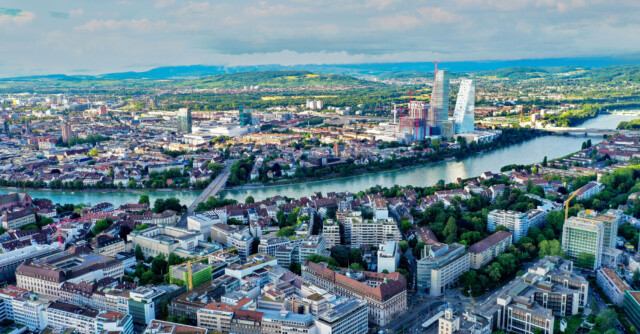
    in 2024, 36 international companies decided to locate in the Basel Area, 26 of them from the life sciences sector. This development underlines the cluster’s outstanding role as a driver of growth and innovation. More and more companies are choosing locations in Basel-Landschaft and Jura, which contributes to regional diversification and makes the economic structure more resilient overall.
    Areas such as the Switzerland Innovation Park Basel Area in Allschwil, the Novartis Campus and the Jura site are creating highly attractive ecosystems for biotech, medtech and healthtech companies.

    Strong international interest
    In total, the companies that relocated in 2024 came from 16 countries. Mainly from Europe, but also from America and Asia. This internationality not only strengthens the region’s expertise, but also increases its global visibility.

    The strategic focus of Basel Area Business & Innovation is having an impact. According to fDi Intelligence, the region occupies the top position for location promotion in a European comparison of smaller cities. A clear sign of the quality and reach of the regional strategy.

    Start-ups ensure future growth impetus
    The region also scored highly in the start-up sector. Although the number of start-ups supported fell slightly to 67, it is still in line with the long-term average. The inflow of capital is particularly impressive. in 2024, 478 million francs flowed into start-ups in the two programmes BaseLaunch and DayOne, a strong signal of innovative strength and investor access.

    According to feedback from the newly established companies, over 700 new jobs will be created in the next five years. This is also a clear commitment to the region as a long-term business location.

  • Urban trees and their influence on our mortality

    Urban trees and their influence on our mortality

    Trees are more than just decorative street furniture, they are health-relevant infrastructure. A comprehensive study by ETH Zurich and the National University of Singapore analysed the relationship between the distribution of trees in the vicinity of residential buildings and the mortality rate of over six million people in Switzerland over a period of ten years. The result: the better connected trees are, the lower the risk of dying from natural causes, especially in densely populated neighbourhoods.

    It’s not the number, but the interconnectedness that counts
    The researchers used high-resolution data on tree crowns, which contained information on the shape, size and spatial arrangement of the tree areas. These were compared with mortality rates, taking into account age, gender and socio-economic status. The analysis shows that large, contiguous green spaces have a significantly more positive effect on health than fragmented, irregular groups of trees. The effect is particularly strong in neighbourhoods with heat islands or poor air quality.

    New impetus for urban development
    The study thus provides a concrete call to action for cities. Instead of planting isolated trees, planners should create green networks, such as tree avenues or green corridors. These not only have a microclimatically stabilising effect, but also invite active use by the population. Geometrically clearly structured areas could be more effective than irregular greenery.

    Still at the beginning with potential
    Despite the robust database, many questions remain unanswered. For example, there are currently no reliable threshold values that can be directly translated into planning guidelines. Individual factors such as pre-existing conditions or people’s behaviour have also not yet been fully taken into account. Nevertheless, it is clear that urban greenery has an impact and, if cleverly designed, can make a measurable contribution to public health.

  • Roman Mayer takes over as Head of the Federal Office for Spatial Development

    Roman Mayer takes over as Head of the Federal Office for Spatial Development

    Roman Mayer will take over as Head of the Federal Office for Spatial Development (ARE) on 1 October 2025. The 51-year-old from Nidwalden brings with him in-depth knowledge from his previous role as Deputy Director at the Federal Office of Energy and is considered an expert in complex authorisation procedures, legislative processes and sectoral planning.

    With his legal training and his positions in various cantonal administrations, Lucerne, Basel-Landschaft and Bern, Mayer stands for a balanced combination of expertise, administrative practice and strategic foresight.

    Spatial development as the key to location attractiveness
    The ARE is at the centre of spatially relevant future issues such as overall transport, settlement development, sustainable use of resources, maintaining quality of life and promoting economic areas. Under the new management, it is expected that these challenges will be tackled in an even more networked manner – with coherent, forward-looking planning across sectors and spatial types.

    This is a key message for investors, project developers and location managers. The federal government is strengthening the planning framework and thus promoting stable and attractive investment areas in the long term.

    Generational change with vision
    Roman Mayer succeeds Maria Lezzi, who has headed the Federal Office since 2009 and will retire at the end of September. Her era was characterised by far-reaching impulses in spatial planning and the sustainable development of Switzerland. The Federal Council would like to thank her for her many years of service.

    In Mayer, a high-profile personality is now taking over who will continue to think about and shape spatial development in the context of social, ecological and economic transformation.

  • Microsoft promotes Swiss AI innovation

    Microsoft promotes Swiss AI innovation

    Inait’s technology is based on two decades of neuroscientific research and represents a radical break with conventional AI approaches. The centrepiece is a cognitive platform called Digital Brain, which understands cause-and-effect relationships, learns from experience and adapts flexibly to new situations. This brings us closer to the goal of general, human-like intelligence. Beyond the narrow limits of today’s systems.

    Strategic alliance with global reach
    With Microsoft on board, inait now wants to scale its technology globally. The partnership focusses on joint product developments, market launch strategies and co-selling initiatives. The Azure cloud serves as the technological basis, while Microsoft’s international network paves the way into new markets. The first step will focus on the financial and robotics sectors.

    Revolution in fintech and robotics
    In the financial sector, inait’s AI is set to set new standards, for example through intelligent trading algorithms, more precise risk assessments and personalised advisory solutions. In industry, AI is creating new opportunities for adaptive robots that can operate in dynamic environments. The aim is for machines to master complex tasks autonomously and continue to develop.

    Switzerland as a business location and source of innovation
    The collaboration emphasises Switzerland’s role as a hotspot for pioneering AI development. For Microsoft Switzerland, the partnership is a strategic step. “inait’s neuroscience-inspired technology is groundbreaking,” says Catrin Hinkel, CEO of Microsoft Switzerland. “We see immediate opportunities for transformation, especially in fintech and robotics.”

    A milestone for cognitive AI
    The partnership not only marks a significant step for inait, but also an innovative impulse for the global AI market. The Digital Brain is a new approach that closes the gap between man and machine a little further and has the potential to change entire industries.

  • New trade fair in Lucerne

    New trade fair in Lucerne

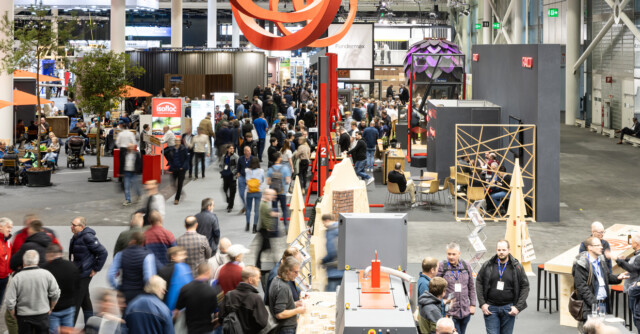
    Messe Luzern AG is launching Terra Solid, a trade fair dedicated entirely to the complex interplay between foundation engineering, infrastructure and natural hazards. At a time when civil engineering projects are increasing and climate-related risks are growing, the trade fair is responding to an urgent need in the industry for exchange, orientation and concrete solutions in a specialised format. Exhibition Director Elio Cavazzutti emphasises: “Terra Solid is more than just a product show, it is a platform, knowledge centre and meeting place for professionals with responsibility.”

    Future topics at the centre
    The B2B platform is aimed at professionals from planning, science, authorities and the construction industry. The focus is on innovations in building materials, digital solutions in risk management, sustainable construction methods and protection systems against natural hazards. The exhibitors are organised in two clearly structured segments. On the one hand, planning and service providers and, on the other, manufacturers and contractors.

    A specialist forum with expert presentations, discussion rounds and networking zones rounds off the programme. The exchange is intended to provide impetus for sustainable, resilient and technically advanced solutions, from urban development planning to slope stabilisation.

    Strong partnerships – high credibility
    With the Federal Office for the Environment FOEN as a patronage partner and other organisations such as InfraSuisse, Terra Solid receives strong support from research, practice and politics. Direct access to specialist knowledge and the latest research also makes the trade fair attractive for strategically-minded investors and site developers.

    Hybrid thinking and active 365 days a year
    Thanks to the live content marketing concept, Terra Solid is not only active during the trade fair days; exhibitors can also present their expertise, projects and events online. This creates a digital platform that enables networking, knowledge transfer and visibility throughout the year – a modern response to the demands of the market.

  • More transparency, more clarity in tenancy law

    More transparency, more clarity in tenancy law

    With the amendment to the ordinance, which comes into force on 1 October 2025, the Federal Council is responding to ongoing criticism of the lack of transparency in the determination of the initial rent. The most recent values of the reference interest rate and the national consumer price index must now be shown on the form for new lettings in cantons where forms are mandatory.

    The aim is to make it easier for tenants to recognise whether a rent is justified or contestable. This not only increases confidence in the rental housing market, but also makes it easier for investors and institutional landlords to plan ahead.

    Urban centres are particularly affected
    The change affects cantons with mandatory forms such as Zurich, Geneva, Basel, Lucerne and Zug. These are regions in which the majority of new tenancies are concluded. There, the official and private forms must be adapted and approved by 1 October 2025 at the latest. Failure to do so could result in the tenancy agreement being classed as invalid with regard to the initial rent. This is a legal risk that professional property owners should not ignore.

    At the same time, the Federal Council is easing the administrative burden for graduated rents. A simple written notification of the rent increase is now sufficient; an official form is no longer required.

    Foundation for a future-proof rent model
    The existing calculation model for rent adjustments, which dates back to the 1980s, is to be fundamentally revised. This is a political response to studies that judge the current model to be outdated. In future, the focus will be on realistic cost assumptions for capital, maintenance and administration, another development that is particularly important for institutional investors and project developers.

  • Digital property information on the rise

    Digital property information on the rise

    The PLR-cadastre has long been a central tool for spatial planning and project development in Switzerland. It provides interactive information on public-law property restrictions, from building zones to protected areas. Now the Federal Council wants to modernise the legal basis for this. The rules for recording information in the cadastre are to be simplified, responsibilities clarified and duplication with the land register reduced.

    A key aim is to increase legal certainty. For example, the previous assumption that the contents of the cadastre are generally known will be removed. This is an important step towards better delimitation of responsibility and liability.

    Future model for the national property information portal
    The cadastre should now also contain general, abstract and officially binding regulations such as building and distance lines. These play a decisive role in the assessment of utilisation potential, for example in site developments or new construction projects near roads and bodies of water.

    In future, all information from the PLR-cadastre will be made centrally accessible via a national portal. This will make things much easier for everyone involved in working with land. This will provide investors, authorities, planning offices and project developers with transparent data on the ownership and utilisation structure at the click of a mouse.

    Setting the course by summer
    The consultation on the amendment to the law will run until 30 June 2025, paving the way for a property information system that meets the digital requirements of modern spatial and location development. The federal government is thus sending a strong signal in favour of planning simplification, investment security and data-based location promotion.

  • Basel property market under pressure

    Basel property market under pressure

    Despite moderate price trends compared to the rest of German-speaking Switzerland, residential property in the Basel region remains in demand. Prices are rising significantly in rural communities in particular, which is increasingly prompting potential buyers to extend their search radius. According to Marco Pirelli from Basellandschaftliche Kantonalbank, the fall in mortgage interest rates over the past two years has also fuelled demand. However, this has been accompanied by growing affordability problems. While prices for detached houses have remained stable, condominiums have risen slightly. The result is a 35 per cent increase in mortgage enquiries within one year.

    Examine financial options at an early stage
    Pirelli advises prospective buyers to consider financing at an early stage. “The choice of mortgage products and terms varies from person to person. Clarifying the financial scope with the bank in good time creates planning security.” For many people today, this is crucial in order to be successful in the tense market environment.

    Despite housing protection, prices are rising
    The rental market in Basel is also showing signs of continuing inflation. Fabian Halmer from Holinger Moll Immobilien AG points to structural causes such as an outdated building stock with a high need for renovation. Despite housing protection, rents are continuing to rise, particularly in Basel-Stadt, where 84 per cent of the population live in rented accommodation. Although the situation is not as tense as in Zurich or Geneva, the low vacancy rate of 0.7 per cent signals an acute housing shortage.

    Bottleneck due to too few building applications
    The number of building applications submitted in the canton of Basel-Stadt is particularly alarming. While an average of 784 building applications were recorded each year from 2014 to 2020, the figure fell to just 190 between 2021 and 2023. Halmer believes the new Housing Promotion Act is one of the causes. It protects existing tenants, but hinders new construction projects and makes it more difficult to move in or relocate. The resulting supply bottleneck is likely to lead to further increases in rents.

    Need for reform in legislation and planning
    The experts agree that without targeted adjustments to the Housing Promotion Act and accelerated authorisation procedures, the housing market in Basel is at risk of coming under further pressure. Development sites such as Klybeckplus or Dreispitz Nord could provide relief. Provided they are pursued consistently. A sustainable housing policy must not only focus on protecting existing properties, but also actively consider future growth.

  • New companies strengthen life sciences in the Basel region

    New companies strengthen life sciences in the Basel region

    Basel Area Business & Innovation, the agency for location promotion and innovation promotion, supported a total of 36 companies with their relocation in 2024. According to its annual report, 26 of these are active in the life sciences. The companies come from 16 countries, 24 from Europe and six each from the USA and Asia.

    In his press release on this annual report, Christof Klöpper, CEO of Basel Area Business & Innovation, emphasises that his agency’s efforts to expand the life sciences industry to the entire economic region are bearing fruit: “Foreign companies that settle here are increasingly choosing the cantons of Basel-Landschaft and Jura as a location in addition to Basel-Stadt. This enriches our life sciences cluster immensely.”

    This is thanks to the expansion of innovation areas such as the Switzerland Innovation Park Basel Area with its three sites in Allschwil BL, Novartis Campus and Jura. It is also pleasing that companies from other sectors, such as ICT, are increasingly settling in such innovation areas. The press release also mentions that Basel Area Business & Innovation was ranked number one among smaller European cities in February 2025 by fDi, the investment portal of the Financial Times, in its Top 10 rankings of European Cities and Regions of the Future 2025.

    Overall, the number of new companies founded last year was slightly lower than the previous year at 67, but remains in line with the long-term average. The location promoter describes the track record of the two local start-up incubators BaseLaunch and DayOne as impressive. Investments totalling 478 million were channelled into start-ups that were supported by them. According to the companies that set up or founded in 2024, they aim to create more than 700 additional jobs in five years.

  • Comparison of differences in life cycle assessments for building products

    Comparison of differences in life cycle assessments for building products

    The company conspark has published a fact sheet that highlights the differences between the EU and Swiss accounting rules for construction products. It is now available for download in German and English and is intended to provide a compact guide for construction industry professionals involved in planning, production and sustainability. After all, the life cycle assessment results of building products form the basis for the future assessment of buildings.

    In Switzerland, the Coordination Conference of Building and Property Bodies of Public Building Owners (KBOB) specifies accounting rules for the life cycle assessment of construction products and publishes these results in the list of life cycle assessment data in the construction sector. In the EU, life cycle assessments are drawn up in accordance with EN 15804 A2 and their results are presented as environmental product declarations (EPDs).

    For comparison purposes, the life cycle assessment of different types of recycled concrete was prepared in accordance with the two standards. This showed that the greenhouse gas emissions and energy requirements of the same concrete vary greatly depending on the standard, with the KBOB life cycle assessment showing higher values in each case. According to conspark, this is due to the background data sets used: The EPD life cycle assessment is based on more up-to-date data, which already takes into account technological advances such as lower clinker content and the increased use of alternative fuels.

    “The comparability of life cycle assessment data plays a decisive role for future regulations and CO2 limits,” said the Managing Director and co-author of this factsheet, Florian Robineck, in a press release. Accordingly, the authors of the factsheet recommend: “A regular update of the KBOB background data sets and greater harmonisation of the two approaches would help to reduce existing differences and enable comparable sustainability assessments.”

  • Digitalisation and AI as the answer to skills shortages and climate targets

    Digitalisation and AI as the answer to skills shortages and climate targets

    The construction industry needs both digitalisation and AI in response to increasing complexity and data density. According to a HSLU press release on the seminar organised by its Institute of Building Technology and Energy(IGE), both are also needed to increase efficiency in times of a shortage of skilled workers, declining productivity and an urgently needed reduction in greenhouse gases from buildings.

    This annual IGE event is aimed at specialists in energy, building and construction technology and architecture. This year’s event attracted 110 participants.

    Several speakers shed light on the latest developments in AI for the construction industry. For example, Bruno Michel from IBM Research spoke about “artificial stupidity” when generative AI generates incorrect information with poor training data from the internet. Jörn Plönnings from the University of Rostock also emphasised that a lack of training data is a major problem for the construction industry. However, AI is neither a curse nor a blessing, but simply a necessity in view of the increasing complexity and flood of data.

    Marcel Imfeld from Schindler Aufzüge and Roman Steffen from Trafiko spoke about intelligent mobility, which enables denser construction or fewer parking spaces in neighbourhoods, for example. The automated monitoring of buildings was also covered in various presentations.

    The HSLU presented its Lightscore project, which aims to launch an evidence-based integrative lighting assessment. It is also working on a new SIA standard for the energy efficiency of data centres. And finally, Roger Buser from HSLU reported on his journey through India with the emission-free solar vehicle Solar Butterfly made of ocean PET, where he encountered numerous innovative solutions to combat climate change.

  • Intelligent energy management optimizes power consumption in buildings

    Intelligent energy management optimizes power consumption in buildings

    A predictive control algorithm developed by Empa optimizes energy management in buildings in such a way that security of supply is guaranteed throughout the entire energy system. Automated building systems communicate directly with energy providers and the power grid.

    According to a report by Empa, automated systems can optimize electricity consumption in such a way that both grid stability and consumer flexibility are guaranteed at all times. At the same time, energy surpluses are not necessarily stored locally, but fed into the power grid wherever possible so that demand can be met at all times.

    During the practical test by Empa’s Urban Energy Systems Lab in its NEST test building in Dübendorf, the focus was on reducing CO2 emissions, the flexibility of energy demand and the comfort of the residents. Using the predictive control algorithm, the team succeeded in optimizing energy management within the building with the following setup: a photovoltaic system for electricity production, a battery storage system, a heat pump and a bidirectional charging station for electric vehicles.

    The system reportedly reduced the building’s CO2 emissions by more than 10 percent. The building was able to communicate the consumption and feed-in of electricity in advance. “The experiment has therefore shown that the flexible availability of renewable energies is not a problem a priori,” says Empa.

    However, in order to implement these results on a large scale, buildings will have to be consistently digitalized in the future. The technology developed by scientist Federica Bellizio is to be brought to market by the start-up Kuafu. She was recently awarded the Empa Entrepreneur Fellowship for her work.

  • Bern-Wabern heating network promotes energy transition and CO2 reduction

    Bern-Wabern heating network promotes energy transition and CO2 reduction

    The energy company Energie Wasser Bern(ewb) and the municipality of Köniz want to make a contribution to reducing CO2 emissions and achieving the climate policy goals of Köniz and Bern with the Bern-Wabern energy network, according to a press release.

    The ewb Board of Directors decided to build the Bern-Wabern heating network on March 7, 2025, based on the “great interest” of the population as determined by a survey. Construction of the production facilities is scheduled to start in 2027. The first heat supply is expected from 2028.

    Specifically, the heat production concept envisages using the energy from surplus water from the Schönau pumping station for thermal use. The production facilities will be installed in the existing heating center of the Morillon residential complex on Bondelistrasse.

    With the cooperation agreement that has now been signed, the heating and cooling supply in Wabern will be the responsibility of ewb, which is also responsible for the operational and financial responsibility for the construction.

    The heating network could help to promote the energy transition and climate protection. The sustainable energy project will create a replacement for many oil and gas heating systems in Wabern and the neighboring districts of Bern. “In densely built-up areas, a heating network is often the only solution for heating buildings with renewable energy in a CO2-free and economical way,” says Hansueli Pestalozzi, a local councillor in Köniz.

  • Modular school pavilions as a temporary solution to secure school operations in Dietikon

    Modular school pavilions as a temporary solution to secure school operations in Dietikon

    The town of Dietikon is renovating the Wolfsmatt school complex. Three new school pavilions have been built on the city-owned site on Vogelauweg in order to be able to continue teaching. This provides an additional 27 classrooms. Aare Limmat Elektro AG was commissioned with the planning and execution of the complete electrical installations. The entire electrical installation was newly installed and corresponds to the current state of the art, according to a press release from the company based in Baden and Olten SO.

    The three school buildings were built entirely in modular construction and prefabricated. The temporary buildings will serve as a fully usable transitional solution during the renovation of the Wolfsmatt school complex, the statement continues.

    Around 500 children attend kindergarten and elementary school in the Wolfsmatt school unit, according to the Dietikon school. The school unit comprises 21 regular classes. Eight kindergartens are located in the residential areas around the school building. Daycare facilities with lunch are offered on the school grounds.

    Around 3,000 pupils attend public school in Dietikon, from kindergarten to secondary level. There are a total of six school units in the town.

  • New CEO takes the helm at indoor climate specialist

    New CEO takes the helm at indoor climate specialist

    The Pfäffikon-based Condair Group has appointed Martin Plüss as its new CEO with immediate effect, according to a press release. In his new role, the experienced manager will drive forward the growth strategies of the company, which specialises in indoor climate.

    Before joining the Condair Group, Martin Plüss was CEO of Gilgen Door Systems AG, an internationally active subsidiary of the Japanese Nabtesco Corporation. Plüss also has over 20 years of experience in international building technology companies.

    “We are delighted to welcome Martin as our new CEO,” said Silvan G.-R. Meier, owner and CEO of Condair, in the press release. “His technological and manufacturing expertise, his strong organisational and team-building skills and his strategic intuition will help us to further expand our market presence and technology leadership.”

    The new CEO is delighted with his new role and is convinced that “we will build on the foundations of the company and forge a successful path into the future”.

  • Rhine water and waste heat as an energy source for the heating network

    Rhine water and waste heat as an energy source for the heating network

    The electricity supplier AEW Energie AG, based in Aarau, is investing over 8 million Swiss francs in the new Augst BL heating network, according to a press release. This will replace the existing AEW contracting plant in Pratteln BL, which is fuelled by wood pellets and oil. The planning application for the heating network, which will run on 100 per cent renewable energy, has been submitted. The first heat supply is scheduled for the 2025/26 heating period.

    The heating centre will be built in the machine hall of the Augst power plant and will use the waste heat from the power plant generators and Rhine water as heat sources. The waste heat from the generators is currently discharged unutilised into the Rhine. With this combination, a reliable and sustainable heat supply can be guaranteed, according to AEW. Three heat storage tanks, each with a capacity of 16,000 litres, serve to compensate for fluctuations and ensure a constant supply.

    The heat is distributed to the connected buildings via a district heating network that is around 1.3 kilometres long. According to the press release, a total thermal output of 2 megawatts will be provided, with a planned annual heat output of 4,400 megawatt hours in the final stage of expansion. Compared to fossil heating systems, this corresponds to a reduction of around 1200 tonnes of CO2 per year.

    According to the press release, AEW began developing heat supply systems in the early 1990s. The first heating network was put into operation 30 years ago in the municipality of Möhlin. Today, AEW operates 75 heating networks and contracting plants for heating and cooling in the canton of Aargau and neighbouring cantons. The current production capacity is over 230 gigawatt hours per year and avoids the emission of around 55,000 tonnes of CO2 per year.

  • New railway line in Sweden takes shape

    New railway line in Sweden takes shape

    Construction services provider Implenia has been awarded the contract for the first construction phase of the new East Link railway line by the Swedish Transport Infrastructure Agency (Trafikverket). According to a press release, the project is worth CHF 130 million. Implenia will build the 8-kilometre section of the Bibana Nyköping line by 2031.

    This is a section that connects the centres of Skavsta and Nyköping with the main route of East Link. East Link connects several coastal towns in eastern Sweden with Stockholm. Implenia’s contract includes bridges, railway tracks, refurbishment of existing buildings and other work.

    According to Erwin Scherer, Head Division Civil Engineering, Implenia is helping to “take the mobility infrastructure in eastern Sweden to a new level”.

  • House of the Future secures further tenants in Winterthur

    House of the Future secures further tenants in Winterthur

    The Green Spin project aims to change the world of work in a sustainable way. To this end, the House of the Future is being built in Winterthur with 100 per cent sustainability and 100 per cent work quality, according to the Green Spin website. The project has now found its second anchor tenant in the form of the Foundation for Speech Therapy Schools in the Canton of Zurich, Green Spin explains in a press release.

    “Green Spin offers the perfect setting for innovative educational approaches,” Peter Felix from Felix Partner Architektur Design, which initiated and developed the project, is quoted as saying. “With the Stiftung Sprachheilschulen im Kanton Zürich, we have gained another tenant that ideally complements our concept of openness, networking and forward-looking development.” The foundation currently operates at four locations in Zurich, Winterthur, Fahrweid in the Limmat Valley and Stäfa.

    Green Spin received its building permit last year and construction is due to start this year. The centre is expected to be ready for occupation in 2027. In addition to the foundation, the leisure sports provider Padelta has already reserved premises in Green Spin.

    Green Spin is intended to offer young and established companies an ideal environment. The building is designed as a modular timber construction and will have a photovoltaic façade and wind power for its own energy supply. In addition to bright working environments, the project envisages meeting places such as a roof garden, a courtyard forest and market alleyways.

  • Pioneering work and education centre being created in Winterthur

    Pioneering work and education centre being created in Winterthur

    The Green Spin project aims to change the world of work in a sustainable way. To this end, the House of the Future is being built in Winterthur with 100 per cent sustainability and 100 per cent work quality, according to the Green Spin website. The project has now found its second anchor tenant in the form of the Foundation for Speech Therapy Schools in the Canton of Zurich, Green Spin explains in a press release.

    “Green Spin offers the perfect setting for innovative educational approaches,” Peter Felix from Felix Partner Architektur Design, which initiated and developed the project, is quoted as saying. “With the Stiftung Sprachheilschulen im Kanton Zürich, we have gained another tenant that ideally complements our concept of openness, networking and forward-looking development.” The foundation currently operates at four locations in Zurich, Winterthur, Fahrweid in the Limmat Valley and Stäfa.

    Green Spin received its building permit last year and construction is due to start this year. The centre is expected to be ready for occupation in 2027. In addition to the foundation, the leisure sports provider Padelta has already reserved premises in Green Spin.

    Green Spin is intended to offer young and established companies an ideal environment. The building is designed as a modular timber construction and will have a photovoltaic façade and wind power for its own energy supply. In addition to bright working environments, the project envisages meeting places such as a roof garden, a courtyard forest and market alleyways.

  • Glarus North mobilises building land – opportunities for investors and developers

    Glarus North mobilises building land – opportunities for investors and developers

    The municipality of Glarus North has given the go-ahead for a comprehensive mobilisation of municipal land. The focus is on sites in Filzbach and Oberurnen. This initiative follows the newly defined guidelines for the allocation of building land and properties and emphasises the municipality’s commitment to sustainable and needs-based development.

    Attractive plots on offer
    Specifically, three plots of building land in the residential zone in Filzbach are being advertised for sale. In Oberurnen, the 5,084 m² Schranerwiese in the work zone is being allocated under building rights. These plots offer a wide range of opportunities for residential and commercial projects and are therefore of interest to a broad spectrum of investors and developers.

    Transparent and structured process
    The tendering process is clearly defined and transparent. Interested parties can find all relevant documents on the municipal website (www.glarus-nord.ch) and in the official gazette of the Canton of Glarus. A registration form is available for applications, which ensures a fair and objective evaluation based on the defined award criteria.
    The closing date for applications is 30 May at 16:00.

    Focus on future-oriented development
    The mobilisation of building zone areas is a central component of Glarus Nord’s new land use planning. The municipality is thus consistently implementing the requirements of the Spatial Planning Act and creating the conditions for orderly and future-oriented development. The continuous tendering of municipal land makes an important contribution to strengthening the location and creating attractive living and working space.

  • Complete renovation of the Zug cantonal school

    Complete renovation of the Zug cantonal school

    The Zug Cantonal School, a masterpiece of post-war modernism, was designed between 1971 and 1975 by the renowned architects Leo Hafner and Alfons Wiederkehr. The exterior design by Fred Eicher is also an integral part of this architectural heritage. In view of the advancing structural ageing, there is an urgent need for comprehensive renovation measures. These include upgrading the load-bearing structure, replacing the building envelope and replacing the building services and interior fittings. In particular, the focus on adapting the room structure is crucial in order to guarantee learning conditions.

    Refurbishment concept and targeted extension
    The refurbishment concept, which was developed in close cooperation with the school management, offers a balanced solution between the needs of flexible teaching methods and the existing spatial conditions. The available space will be expanded in a targeted manner through clever room renovations and adaptations. Planned measures include a new connecting wing and an extension to Wing 7 in order to meet the challenges of modern educational requirements.

    Principles of sustainability
    The decision in favor of a complete renovation is based on the financial, ecological and scheduling advantages. The Construction Department of the Canton of Zug is thus pursuing its clear real estate strategy. New construction projects should only be considered if it is no longer possible to optimize the existing buildings.

    Project competition and next steps
    The next milestone in the renovation process is the project competition in a selective procedure, which was announced in mid-2024 and is aimed at general planning teams. The aim is to find the best solutions for a renovation that respects the preservation of the original architecture while meeting the requirements of a modern educational establishment. The Construction Department of the Canton of Zug emphasizes that the competition represents a decisive phase in the implementation of the project and should ensure a high-quality renovation.

  • Cham-Hünenberg bypass

    Cham-Hünenberg bypass

    The Cham-Hünenberg bypass (UCH) is more than just a new road. It is the last big piece of the puzzle in the transport planning of the Canton of Zug, which not only serves to bundle transit traffic, but also to free the centre of Cham from through traffic. This ambitious project, which is being implemented by the Canton of Zug’s Department of Construction in collaboration with the Ennetsee municipalities, aims to enhance living and economic areas and improve mobility for all road users.

    Construction and location
    Construction of the UCH has already begun and is scheduled for completion in 2027. The route runs predominantly parallel to the A4 motorway, which allows for minimal land consumption and efficient use of space. This aspect is particularly important in order not to jeopardise the planned settlement and landscape development in the Ennetsee municipalities.

    Tunnelling and construction work
    The main work on the Städtlerwald road tunnel began in March 2024 with the construction of the pumping stations and settling basins. The tunnel operations centre is also being built, while the pre-cut for the Stumpen tunnel portal is being constructed in parallel. The tunnel itself will have a total length of 543 metres, the majority of which will be created underground using a roadheader.

    Progress of the preliminary work
    Preliminary construction work has been taking place along the future UCH route since 2022 and has now been completed. The first ground works along the western UCH perimeter and neighbouring N4 national roads are already in full swing. Neighbouring woodland areas have already been cleared, with the standing tree trunks being handed over to the hydraulic engineering department for later projects.

    A benefit for all road users
    The Cham-Hünenberg bypass not only promises improvements for road traffic, but also positive effects on the quality of life of local residents. By relieving the congestion in the villages of Cham and Hünenberg, a quieter and safer living environment will be created, offering space for additional leisure and recreational activities. The improved transport links will also encourage companies to settle in the region, which in turn will strengthen Zug as a business location.

  • Central Switzerland’s economy remains confident

    Central Switzerland’s economy remains confident

    The economic mood in Central Switzerland remains largely optimistic. According to the latest edition of “Finanzmonitor Zentralschweiz 2025”, an annual study conducted by the Institute of Financial Services Zug at Lucerne University of Applied Sciences and Arts and the Central Switzerland Chamber of Commerce and Industry, almost 65 per cent of the companies surveyed rate their economic situation as good. This shows an overall stable development despite slightly gloomier expectations compared to the previous year.

    Focus on expansion and skills shortage
    Around 60 per cent of companies are planning to expand, which indicates a continued willingness to grow. At the same time, the shortage of skilled labour remains a key challenge for the economy. Companies are finding it increasingly difficult to recruit qualified employees.

    International uncertainties affect export-oriented companies
    While small and medium-sized companies are reporting a stable business situation, larger export-oriented companies are more affected by global developments. Uncertainties in the USA, France and Germany in particular are having an impact on planning. In addition, protectionist measures by the new US government are increasingly becoming the focus of economic concerns.

    Exchange rate risks are becoming less significant
    Compared to the previous year, the strong Swiss franc is perceived as less of a problem. Despite an expected further appreciation against the euro, concerns about exchange rate fluctuations appear to be becoming less important.

    Less voluntary reporting, less effort
    Another topic covered by the Financial Monitor is sustainability reporting. The number of voluntarily active companies is declining, but it is clear that the actual effort required to prepare a sustainability report is less than many companies initially feared.

    Stability with growing challenges
    Central Switzerland’s economy remains optimistic, but faces structural and international challenges. There are prospects for growth, but issues such as a shortage of skilled labour, global uncertainties and regulatory requirements will have a significant impact on future development.

  • Buildings contribute to grid stability

    Buildings contribute to grid stability

    The transformation of the energy sector brings challenges. Renewable energies such as photovoltaics do not provide a constant supply of electricity, but are subject to weather conditions and times of day. The power supply must therefore become more flexible in order to utilise production peaks and compensate for bottlenecks. This is precisely where automated building systems come in. They control consumption and feed-in intelligently and reduce the load on the grid.

    Predictive control for maximum efficiency
    An innovative algorithm developed by Empa analyses energy availability and user behaviour in order to optimally control energy consumption. For example, surplus solar energy is prioritised or stored instead of overloading the grid. At the same time, comfort is maintained. Hot water or heating are available exactly when they are needed.

    Successful practical test in the NEST building
    The algorithm was tested under real conditions in a pilot project in Empa’s NEST building. A photovoltaic system, battery storage, a heat pump and a charging station for electric vehicles were used. The results show that CO2 emissions were reduced by more than 10 per cent without compromising user comfort. The building was also able to communicate independently with the grid in order to absorb peak loads.

    Digitalisation as a prerequisite for scalable solutions
    The study shows that intelligent energy control is a key building block for a sustainable energy future. In order for such solutions to be used across the board, consistent digitalisation is required. At the same time, it must be ensured that the IT infrastructure remains sustainable. Empa researchers are therefore already investigating ways of using old smartphones as control units for building automation.

    The future of energy supply lies in the networking of intelligent systems. Through predictive management, buildings can not only cover their own energy requirements, but also actively contribute to grid stability.

  • Government council shortens deadlines in the building permit procedure?

    Government council shortens deadlines in the building permit procedure?

    The Zurich cantonal government wants to optimise the building permit procedure and has proposed shortening the processing period from four to three months. This measure is intended to make the authorisation process more efficient and reduce planning uncertainty for building owners. A key factor in this acceleration is the digitalisation of processes, which should reduce the administrative burden.

    Political background to the change in the law
    The initiative to shorten the time limit stems from a motion by the FDP, SVP and GLP, which was passed by the Cantonal Council by 96 votes to 73 in February 2023. The cantonal government sees this as an opportunity to optimise processing times without jeopardising the quality of the examination procedures.

    No reduction in the preliminary review period
    Contrary to the request in the motion, the preliminary review period will not be reduced from three to two weeks. In doing so, the Government Council is responding to the feedback from the consultation process, according to which a preliminary review that is too short could slow down the procedure overall instead of speeding it up. A thorough preliminary review is seen as crucial for the smooth processing of planning applications.

    More efficient procedures for a dynamic construction industry
    The planned amendment to the law is intended to make construction in the canton of Zurich more efficient and easier to plan. The digital transformation of approval procedures could not only save time, but also minimise bureaucracy. It is now up to the Cantonal Council to decide on the proposed amendment to the Planning and Building Act.

  • Research into the mobility of tomorrow at UZH

    Research into the mobility of tomorrow at UZH

    Mobility is a fundamental social need and is subject to constant change. New technologies, alternative means of transport and political regulations are changing the way people get around. While public transport is the subject of intensive research, there has been a lack of comprehensive research into individual mobility to date. This gap is now to be closed by the newly founded research centre at UZH.

    Research with an interdisciplinary approach
    The “UZH Centre for the Future of Personal Mobility” investigates economic, ecological and social aspects of mobility. The focus is on topics such as climate policy, new drive technologies, digital networking and the future of charging and refuelling infrastructure. The centre also analyses the change in vehicle ownership and the role of autonomous vehicles, sharing models and app-based mobility services.

    Cooperation across disciplinary boundaries
    The centre will be based at the Institute of Business Administration in the Faculty of Economics and will cooperate closely with other disciplines. In addition to economics, geography, psychology, ethics and digital technologies will be involved in the research. The aim is to analyse mobility from a holistic perspective and translate scientific findings into practical solutions.

    Structure and development of the research centre
    At the heart of the centre is a professorship focusing on “Personal Mobility Management and Innovation”, which is scheduled to be filled in the second quarter of 2025. The professorship will be complemented by four doctoral positions and one postdoc position. The centre will be established gradually and integrated into UZH’s existing research structures.

    Scientific foundations for the mobility of the future
    By establishing the research centre, UZH is making an important contribution to shaping the mobility of tomorrow. Through interdisciplinary research and close collaboration with partners from science and practice, innovative solutions are to be developed that promote sustainable and efficient forms of mobility.

  • Company from Rapperswil BE wins prestigious business award

    Company from Rapperswil BE wins prestigious business award

    Gasser Ceramic has won this year’s Prix SVC Espace Mittelland. The family-run company based in Rapperswil in the Bernese Seeland produces tiles for roofs and façades as well as bricks and photovoltaic systems integrated into roof tiles. With around 200 employees, ten production lines and six kilns at four locations, the winning company is one of the leading Swiss companies in this sector, according to a statement from the Swiss Venture Club(SVC).

    “Nobody can get past Gassers,” jury president Jürg Schwarzenbach is quoted as saying in a statement from his laudatory speech. “During the jury’s visit, we felt the enthusiasm for the products and the pride of the employees in working for this traditional company.”

    Platit AG from Selzach followed in second place. The company manufactures high-tech systems for PVD coating. Its machines are used to emboss five-figure coins and gold medals and to coat the hinges and dials of luxury watches. Over 650 Platit coating systems are installed worldwide. The company also has branches in Europe, America and Asia.

    Third place went to Schwob AG from Burgdorf. The long-established company develops and manufactures high-quality table and bed linen for hotels, restaurants, clinics and residences with around 240 employees in its own Jacquard weaving mill. Schwob has five of its own laundries and 30 local partner laundries for cleaning. Schwob exports to facilities around the globe. Megasol Energie from Deitingen SO, a developer of solar modules and assembly systems, and Olwo, a production, trading and service company in the timber industry from Worb BE, were honoured with a diploma.

    The award ceremony took place in front of 1,300 guests in the Kursaal Bern. “The Prix SVC is far more than just an award,” said Reto Portmann, President of the SVC organising committee. “This prestigious event symbolises entrepreneurial spirit, innovative strength and the courage it takes to be successful in our dynamic and competitive world.”

  • Open day at timber construction company in Uetendorf

    Open day at timber construction company in Uetendorf

    Holzbau Graber is holding an open day at its new building at Gewerbestrasse 7 in Uetendorf on Saturday, 15 March 2025, according to a press release. From 10 am to 4 pm, the public will have the opportunity to visit the new company headquarters. Visitors can find out about all facets of the timber construction company. The range of services offered by Graber Holzbau GmbH includes carpentry, roofing, solar technology and interior fittings. The company specialises in the construction of timber houses.

    The owner-managed company employs 20 people. The SME intends to continue to grow at the new site and create additional jobs. According to the press release, the previous locations in Heimberg BE and Horrenbach BE had become too small for this.

    The move to Uetendorf means that the work and processes are now on the same company premises. According to owner and managing director Johann Graber, the merger will enable further growth. The production hall offers sufficient space for efficient working, and travelling distances for suppliers will be shorter. Numerous organisational advances also speak in favour of a central location.

    The open day will provide an opportunity for professional discussions and a cosy get-together. According to the company, a tour of the plant and a performance by musician Roberto Brigante are also planned.