Category: Trends

  • New open space concept enhances quality of life and biodiversity

    New open space concept enhances quality of life and biodiversity

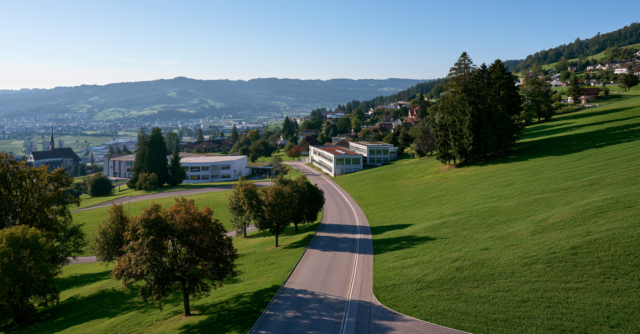
    According to a press release, Spreitenbach Municipal Council has adopted the open space concept. This establishes a legally binding framework for the future development of open spaces within the municipality’s built-up area. The aim is to safeguard and improve the quality and use of open and green spaces.

    The plan’s objectives include strengthening the identity of neighbourhoods, promoting biodiversity and enhancing climate resilience based on the ‘sponge city’ principle – rainwater runoff should be absorbed locally wherever possible.

    The plan also includes a catalogue of 21 specific measures. The first measures include the planning and implementation of Neumatt Park, the further development of the Ziegelei site, and the creation of temporary open spaces. Immediate measures are intended to improve the quality of the environment, whilst better signage will indicate the route connections. By the end of 2026, responsibilities are to be clarified, priorities set and initial measures prepared.

    The municipal assembly approved the commitment credit for the open space concept, amounting to 170,000 Swiss francs, on 28 November 2023. An interdisciplinary planning team subsequently developed the concept in collaboration with a broadly based steering group.

  • Start-up is driving the scaling up of CO2-to-raw-material solutions

    Start-up is driving the scaling up of CO2-to-raw-material solutions

    The Zurich-based start-up DeltaSpark has received funding of 150,000 Swiss francs from Venture Kick. The company plans to use the fresh capital to scale up its technology and carbon dioxide capture process, according to a statement from the Schlieren-based start-up accelerator.

    In this process, an electrocatalytic process is used to process a mixture of absorbed carbon dioxide and added minerals in such a way that hydrogen, oxygen and green sulphuric acid are produced. Much of the CO2 remains bound in the minerals, which can be used as building materials.

    DeltaSpark, a spin-off from the Swiss Federal Institute of Technology in Lausanne (EPFL), offers this technology as a service to major emitters such as cement factories or waste incineration plants. The CHF 150,000 now secured is intended to accelerate paid pilot projects and prepare for an upcoming seed funding round.

    “Venture Kick is far more than just funding,” Luc Bondaz, CEO of DeltaSpark, is quoted as saying in the press release. “Through targeted coaching, the programme has helped us refine our business plan for our target customer segments. This has enabled us to better understand our customers’ needs, clarify our value proposition and develop a clear go-to-market strategy.”

  • Winter electricity from the Alps is performing above average

    Winter electricity from the Alps is performing above average

    The Madrisa Solar power plant generated around 1.5 gigawatt hours of electricity during the first winter half-year, from October to March. This means that production exceeded expectations, as Repower AG states in a press release. During its first winter of operation, around 3,600 solar modules were in operation, which corresponds to approximately 20 per cent of the planned total capacity.

    The plant, which was the first alpine solar power plant in Switzerland to feed electricity into the grid, is located above Klosters at around 2,000 metres above sea level and is specifically designed for winter electricity production. Following the first snowfall, output rose by around 15 per cent thanks to the so-called albedo effect. The bifacial modules also utilise light reflected from the snow cover.

    The electricity generated is used, amongst other things, directly to power the Klosters-Madrisa mountain railways. In combination with existing installations, more energy was produced during the first winter than was required to operate the winter season. With its output to date, Madrisa Solar has comfortably met the minimum production requirement of 500 kilowatt-hours per installed kilowatt of capacity stipulated under the national Solarexpress scheme.

    The second construction phase is scheduled to begin in early May. Once completed, around 70 per cent of the plant is expected to be connected to the grid. Full commissioning is planned for the end of 2027. The developer of the alpine plant is Madrisa Solar AG, in which Repower, the Zurich Cantonal Electricity Works (EKZ) and the municipality of Klosters hold stakes.

  • Investment supports expansion of decentralised energy infrastructure

    Investment supports expansion of decentralised energy infrastructure

    Youdera Group SA has secured a strategic investment from Amundi Energy Transition. According to a statement, the funds will support the company’s next phase of growth and an implementation plan of around 150 million euros for decentralised energy infrastructure in the European commercial and industrial sector.

    Youdera offers companies energy management, which involves the planning and development, financing, construction and operation of energy systems. The aim is to reduce dependence on the electricity grid, make energy costs more predictable and drive electrification. The offering includes photovoltaic systems, battery storage, building envelope refurbishments, heat pumps and other measures to increase energy efficiency.

    The investment by Amundi Energy Transition, a subsidiary of French asset manager Amundi S.A., offers the opportunity to scale the model across Europe, says Pedro Miranda, CEO and co-founder of Youdera. “In a more volatile world, European companies need to act decisively to remain competitive.”

    Youdera was founded in 2015, is based in Ecublens and has its main site in the EPFL Innovation Park in Lausanne. Its core markets are Switzerland, Spain and Portugal, but the company sees further growth potential in Europe. “As commercial and industrial customers are looking for more resilient and cost-efficient energy solutions, we are convinced that Youdera is ideally positioned to meet this growing market demand,” says Claire Chabrier, Head of Direct Investments – Private Markets at Amundi.

  • Railway station heating plant switched to wood pellets

    Railway station heating plant switched to wood pellets

    Industrielle Werke Basel(IWB) is making progress with the decarbonisation of district heating. According to a press release, they tested the two new boilers of the wood pellet plant at the Bahnhof heating plant in March. With an output of 30 megawatts, it is expected to generate around 95 gigawatt hours of district heating per year.

    The switch from natural gas to wood pellets will save around 23,000 tonnes of CO2 per year. This corresponds to a 9 per cent reduction in total CO2 emissions from district heating in Basel. “With the new wood pellet plant, IWB is making an important contribution to the decarbonisation of district heating and to achieving the net-zero target of the Canton of Basel-Stadt,” said Evelyn Rubli, Head of the Heating Division, in the press release.

    The area surrounding the heating plant will be open to the public as a green space in future. The city gardening department plans to start landscaping it in the autumn.

    IWB wants to have completely converted its district heating to waste heat and renewable energy sources by 2035. The next step is to convert the Volta district heating power plant. IWB will also rely on large heat pumps in future. ProRheno’s Basel wastewater treatment plant is a possible location.

  • Dormakaba expands in the healthcare sector

    Dormakaba expands in the healthcare sector

    Dormakaba is focussing on further growth in the healthcare sector. The provider of access solutions has reported an increased number of orders from the healthcare sector for the 2025/2026 financial year. According to a press release, dormakaba has secured projects in Norway, Germany and the USA as part of its market entry strategy.

    The Rümlang-based company, which operates worldwide in the field of locking technology, offers solutions for doors, including locks, door fittings, door automation, access control systems and mechanical locking systems, which are reportedly sold in 130 countries.

    In Norway, dormakaba has received an order for 5500 doors as part of the new New Aker hospital project. In the USA, entrance systems are being modernised and maintained and other services provided on behalf of two organisations in the healthcare sector. And in Germany, dormakaba has received an order from the m&i clinic group Enzensberg, which includes access solutions for 4500 doors. The total order volume is in the low double-digit million range.

    “These latest project successes demonstrate the growing demand for secure, efficient and innovative access solutions,” said dormakaba CEO Till Reuter. “These orders further strengthen our position in the healthcare sector and support our growth in this sector.”

  • Beer, concrete and living – Baden builds on its history

    Beer, concrete and living – Baden builds on its history

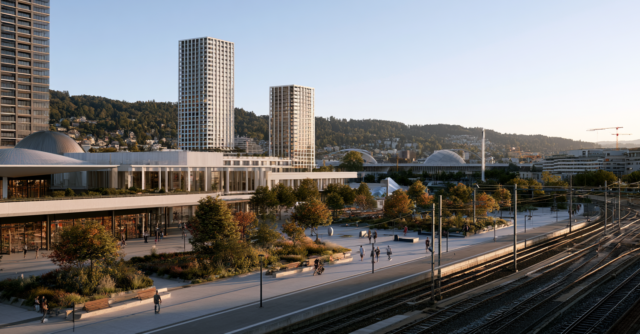
    Four new buildings are being constructed on around 8,000 square meters directly next to Baden train station, divided into two construction sites. Building site A is the responsibility of Frei Architekten AG from Aarau, building site B is the responsibility of the renowned Harry Gugger Studio from Basel. The volume is considerable: 81,888 cubic meters of enclosed space, 22,914 square meters of floor space and an investment of around 64.5 million Swiss francs. The general contractor is Gross AG from Brugg.

    Living where malt used to steam
    136 rental apartments with 1.5 to 4.5 rooms are being built in the heart of the city. On the first floor, a total of 2268 square meters of retail and restaurant space will characterize the quarter. In the inner courtyard, a 900 square meter beer garden invites you to linger. The motto of the building owner, the fourth-generation brewery H. Müller AG, sums it up: “brew – live – enjoy”.

    History remains visible
    Not everything makes way for the new building. The boiler house, brewhouse and malt silo remain as architectural witnesses to a brewing history that began in 1897. The Müllerbräu beer itself is now produced by the Falken brewery in Schaffhausen. However, there is still a specialty brewery on the site. The site’s past thus not only remains visible, it can still be experienced.

    Timetable and marketing
    The building permit dates from October 2023, with demolition starting in April 2024. The facades of the new high-rise buildings have been visible for the first time for a few days now. A milestone for the project. Marketing of the apartments is scheduled to start in summer 2026, with first occupancy planned for June 2027.

  • Laufenburg builds windmills at the train station

    Laufenburg builds windmills at the train station

    The Schützegärte site is located in a sensitive urban location. Three streets surround it, and building typologies from different decades clash all around. It is precisely this chaos that is the theme. AWW Architekten AG makes the “contrasting and bilateral” the basis of the concept. The architecture emerges from the tension of the location, not against it.

    Offset, rotated, anchored
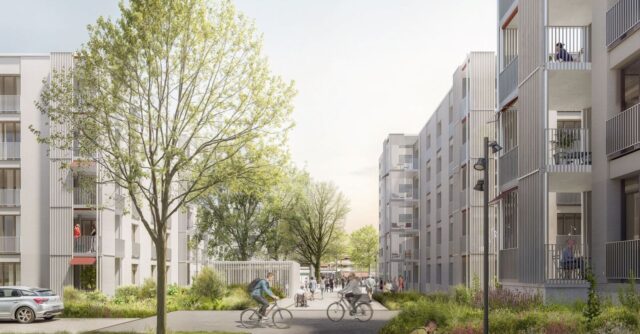
    Two identical, four-storey buildings form the ensemble. They are not parallel, but offset and rotated in relation to each other on the slightly sloping terrain. This positioning is not an aesthetic conceit, but a precise reaction to the formation of edges and the flow of space in relation to the neighboring buildings. An ensemble that blends in while remaining independent. The total floor area is around 4,600 square meters, the building volume around 13,800 cubic meters.

    Windmill as a residential model
    The architectural concept is based on a compact four-span “windmill” building shape with a central staircase core. The projecting wings characterize the façade and make reference to typical bay window shapes in the district. Each apartment is oriented on three sides. At the heart of the building are the “four-season rooms” with spacious rooms that can be used as conservatories, studios or living and dining areas. Together with loggias, this creates a flexible range of spaces for a wide variety of lifestyles.

    Green, communal, grounded
    The open space between the houses is deliberately kept low-threshold. Accessible from inside and from the street. A green layer of native shrubs and perennials protects the first floor apartments and gives the development character. At one corner, the area opens up to a meadow-like situation with fruit trees, a reference to the local tradition of orchards close to settlements. The project considers housing and community as a unit.

    Next steps open
    The town of Laufenburg was not involved in the planning process. Town clerk Marco Waser confirms that the building authorities only clarified the building regulations in advance. The town has not yet made an assessment. The landowner Erne Immo AG has not yet commented on the time horizon for implementation.

  • DGNB certificate for deconstruction in Switzerland

    DGNB certificate for deconstruction in Switzerland

    The grain silo tower from 1939 was demolished, but its concrete was not disposed of. In the nearby concrete plant, the material was processed according to a specially developed formula and 75 to 95 percent of it was reused as recycled material in the new building. Around 60 percent of the new building consists of the old tower. The client is Gutgrün AG from Chur, which deliberately refrained from making short-term profits in order to consistently implement the sustainability concept.

    52 apartments, three certificates
    The project comprises 37 rental apartments on eleven floors in the new residential tower and 15 loft apartments in the renovated historic mill building. The architects from Ritter Schumacher have recorded all the materials used in a building resource passport. A forward-looking approach that makes future life cycles transparent today. The project was awarded three DGNB certificates for this achievement. DGNB Platinum for the demolition, DGNB Gold for the new tower and DGNB Gold for the refurbishment of the old building.

    Fire protection reinvented
    The 30-metre-high photovoltaic façade poses a problem for conventional fire protection regulations. They require partitions on every floor to prevent fire from spreading from floor to floor. This would have interrupted the façade and significantly reduced its efficiency.

    The PV surface is not interrupted anywhere by windows and is continuous from the floor to the roof. Specialist planners, contractors and the insurance company worked together to develop a tailor-made solution. Fire cannot reach the façade from the inside and the façade cannot reach the apartments.

    Alliance instead of conflict
    The project was built using the alliance model. The client, planners and contractors sat around the table together right from the start. Problems from construction practice were thus incorporated directly into the planning. The basic attitude was one of trust and fairness rather than pure risk hedging. One detail also testifies to the unconventional spirit: the graffiti that adorned the vacant building was retained as decorative elements in the stairwell.

    A signal for the industry
    There was not a single objection to the conversion project. This is unusual for a construction project of this size. Grüsch Mill shows that circular construction also works in a peripheral region and that sustainability is not a contradiction to economic viability.

  • Consumer confidence collapses

    Consumer confidence collapses

    The decline is abrupt. In January and February 2026, the index was still at around – 30 points, slightly above the previous year’s level. The slump in March to – 43 points is therefore one of the sharpest monthly declines in recent years. The turnaround came quickly and affected several areas simultaneously.

    Where sentiment has tipped the most
    Three of the four SECO sub-indices are clearly below the level of March 2025. Expectations regarding economic development have slumped the most. The expected financial situation of households and the willingness to make major purchases have also fallen significantly. Only the view of the past financial situation remained stable compared to the previous year.

    Geopolitics as a mood killer
    The war in Iran and the associated rise in oil prices are seen as the main triggers. Inflation expectations jumped sharply in March: from 98.3 to 121.4 points. At the same time, unemployment expectations rose. Both are having a direct and noticeable impact on household confidence.

    What this means for consumption
    Falling consumer sentiment is not just a statistical signal. It shows that households are postponing major expenditure and opting for security. For the retail trade, real estate market and construction industry, this means less stimulus from domestic consumption, at least in the short term. Trading Economics expects a gradual recovery to around – 34 points by mid-2026 and – 26 points by 2028.

    Whether sentiment recovers depends heavily on the geopolitical situation and price trends. The Swiss economy has been robust so far, but consumer confidence is a leading indicator. If the buying mood remains subdued, the growth figures usually follow with a delay.

  • The wood that protects itself

    The wood that protects itself

    Millions of tons of sawdust are produced worldwide every year. Most of it is burned, and the CO2 bound in the wood is released back into the atmosphere. This is precisely where the research team led by doctoral student Ronny Kürsteiner, under the direction of Ingo Bungert, Professor of Wood-based Materials at ETH Zurich, comes in. The aim is to keep the sawdust in the material cycle for longer.

    The trick with the watermelon seed
    The binding agent is struvite, a crystalline ammonium magnesium phosphate with known fire protection properties. The problem until now was that struvite was difficult to combine with sawdust due to its crystallization behaviour. The researchers found the solution in an enzyme from watermelon seeds. It controls crystallization in such a way that large struvite crystals are formed, which fill the cavities between the sawdust particles and bind them firmly together. The compressed material is then dried at room temperature.

    Three times longer than spruce
    The fire tests at the Turin Polytechnic speak for themselves. In a cone calorimeter, a standardized test method for heat exposure, untreated spruce wood caught fire after around 15 seconds. The struvite-sawdust composite took more than three times as long. Once burning, the material quickly forms a protective layer of inorganic material and carbon, which slows down the further spread of the fire. In addition, the struvite releases water vapor and ammonia under heat, which has a cooling effect and deprives the fire of oxygen.

    Lighter than cement, better for the climate
    Conventional cement-bonded chipboard, which is widely used in interior design today, consists of 60 to 70 percent cement by weight. They are heavy and climate-damaging to produce. The new struvite sawdust boards only require 40 percent binder. They are lighter, have a significantly better carbon footprint and do not end up in hazardous waste landfill after demolition.

    Recyclable and suitable for fertilizers
    The composite can be broken down into its components. Mechanically in the mill, then heated to just over 100 degrees, whereupon ammonia is released and the sawdust is sieved off. The mineral source material newberyite precipitates as a solid and can be reprocessed into struvite. If the material is not reused, it can be used as a long-term fertilizer. Struvite releases phosphorus, nitrogen and magnesium slowly and in a controlled manner into the soil.

    Sewage treatment plant as a source of raw materials
    Another cycle is emerging. Struvite is produced in large quantities as an unwanted by-product in sewage treatment plants, where it clogs pipes and is expensive to dispose of. “We could use these deposits as a base material for our building material,” says Kürsteiner. Whether the material will establish itself on the market depends primarily on the cost of the binder. A problem that could be solved with this source.

  • The construction site also wants flexibility

    The construction site also wants flexibility

    Adrian Dinkelmann, Managing Director of Infra Suisse, put it in a nutshell. Compatibility is not achieved through individual measures, but through a fundamental anchoring in the corporate culture. Two projects funded by the federal government highlight specific areas for action. The framework must be designed in such a way that it accommodates the different realities of employees’ lives.

    Not everyone wants the same
    Jan Malmström, CEO of the JMS Group, asked around in his company. The result is surprising. The desire for part-time work is strong in the office, but much less so on the construction site. But even there, there is a clear need for more flexibility in everyday life. Standard models fall short. Anyone who treats all employees the same is missing the point.

    Co-CEO as a reality check
    Sandra Werneyer and Lea Ott at werneyer ott architektur gmbh demonstrate what is possible: shared leadership in the co-CEO model. This works with high organizational and communicative requirements. Their presentation made it clear that new forms of work are not a sure-fire success. They require clarity about which responsibilities can really be shared.

    Stereotypes slow down the industry
    Dörte Resch, Professor of Applied Psychology at the FHNW, made it clear that image campaigns alone do not change anything. Stereotypes that no longer correspond to the reality of the construction professions must be actively addressed. Authentic career marketing is needed that makes the attractive aspects of the industry visible to everyone. Caroline Farberger, Swedish entrepreneur, added a personal perspective. Inclusion begins with questioning existing thought patterns.

    Culture beats concept
    The panel made it clear what makes the difference. Olivier Imboden, CEO of Ulrich Imboden AG, describes it like this. When employees share a company’s values, this has a direct impact on its attractiveness as an employer. Sven Stingelin from Frutiger AG added to the construction site perspective and addressed the framework conditions, which are different to those in the office. Thomas Weber from Walo Bertschinger pointed out that project processes have a significant impact on the scope for action. Cornel Müller, founder of Work-ID AG, showed how targeted career marketing opens up new target groups, including through early career guidance.

  • No longer a bonus, but mandatory

    No longer a bonus, but mandatory

    From ESG label to strategic reality
    Sustainability in the real estate industry has had its noisy years behind it. After gaining a certain reputation as a differentiating feature, it has now taken its place as a strategic core issue in the form of ESG criteria. However, this is precisely why the topic is in danger of becoming quiet between reporting obligations and day-to-day business. What becomes the norm disappears from the limelight. But routine is no protective shield. Especially not in an industry that thinks in decades but often makes decisions in years.

    Because while sustainability is being discarded as a done deal in many places, the structural challenges remain. Real estate thinks in cycles of 30, 40 or more years. Net zero by 2050 is therefore not a distant vision, but a real planning horizon. This also means that a large proportion of today’s existing properties can only be properly renovated or completely refurbished once.

    Uncertainty as the new planning reality
    The current geopolitical situation, volatile markets and unclear framework conditions are currently making it difficult to draw up reliable climate reduction paths. In practice, this often leads to decisions being postponed or reduced to the most favorable short-term solution. However, those who persist in linear thinking are limiting themselves in the long term. Climate protection roadmaps, gray energy, life cycle costs and climate risks must be an integral part of every decision in order to achieve climate neutrality in an economically viable way. And not at some point, but now.

    In practice, it is becoming clear that portfolio holders are taking an increasingly differentiated approach to sustainability. In addition to traditional CSR approaches, a clearly risk-oriented approach is becoming established. The focus is on reliable data on condition, consumption and emissions as well as building-specific risk profiles, which are incorporated into the portfolio strategy as control parameters. This makes sustainability a strategic decision-making factor that goes beyond reporting. The location in particular is taking center stage: Real estate must not only be efficient, but also resilient to heat, water, extreme events and social tensions. Those who systematically assess these risks can take targeted action. Everyone else reacts to the consequences later.

  • When cantons go from being a drag to a location factor

    When cantons go from being a drag to a location factor

    In several cantons, digital building permits are no longer a vision of the future, but part of everyday life. Building applications are submitted via central platforms, distributed digitally and reviewed in standardized processes. This relieves the burden on administrations, planners and building owners and makes procedures more transparent for all parties involved.

    Pioneers rely on clear cantonal solutions and cooperation. Shared platforms reduce costs, pool expertise and prevent isolated solutions. At the same time, digitalization is only effective if it is not thought of as an IT project, but as a change to the entire process, from submission to decision.

    Who already approves digitally
    Several cantons use canton-wide platforms to submit and process building applications electronically. Bern with “eBau”, Zurich with “eBaugesucheZH”, Graubünden with ebau.gr.ch or Valais with “eConstruction” show what a digitally managed procedure looks like, in some cases obligatory or with transitional periods. Other cantons such as Solothurn or Aargau rely on the common open source solution Inosca and are introducing their systems in stages.

    However, the degree of digitization differs significantly. In some cantons, digital submission is mandatory; in others, analog and digital channels run in parallel or there are only pilot municipalities. There is no complete, up-to-date overview across Switzerland, and not every platform already maps the process fully digitally end-to-end.

    Politics between speed and legal protection
    Politically, the building permit process is caught in the crossfire. On the one hand, there is the housing shortage, energy and climate targets, and on the other, federalism, appeal rights and complex technical specifications. Business associations are calling for shorter deadlines and more binding regulations, while municipalities and cantons are insisting on their own responsibilities and limited resources.

    Digitalization reveals these tensions. It makes it clear how many places a dossier affects, where there are snags and how different practices are between the cantons. However, it does not replace political decisions. Whether objections are restricted, procedures harmonized or deadlines shortened remains a question of power, not software.

    Costs, benefits and risks
    For administrations, the switch to digital procedures is a tour de force. New specialist applications, interfaces, training and change management cost time and money. Smaller municipalities in particular are reliant on cantonal platforms and joint solutions to carry the burden.

    On the other hand, there are tangible effects. Fewer interruptions to a process, fewer multiple entries, faster workflows. Even more important are the indirect effects. Every shortened approval week reduces project and financing costs, increases the ability to plan and makes a location more attractive. At the same time, the handling of data remains sensitive. Transparency, data protection and acceptance must be carefully balanced.

    From e-dossier to intelligent inspection
    The digitalization of building permits is only just beginning. In the short term, the aim is to introduce cantonal platforms across the board, eliminate media disruptions and manage building applications digitally throughout. At the same time, expectations are growing. Planners want digital interfaces, investors want reliable deadlines and municipalities want more control options.

    In the medium term, the focus will shift to automated plausibility and rule checks, the integration of planning and construction data and AI-supported assistance. They can speed up procedures, enforce standardization and direct resources to those cases where political or technical decisions really need to be made. Whether building permits in Switzerland go from being a drag to a strategic locational advantage will depend on how consistently politicians and administrators manage this change and whether they are prepared to shake up rules, roles and routines.

  • From data to AI in the real estate world

    From data to AI in the real estate world

    This is precisely why it is worth looking back. Because the way in which real estate is planned, operated and managed has changed fundamentally over the last 30 years.

    Thirty years ago, many processes were still surprisingly analog. Data was stored in folders and paper documents, decisions were based heavily on experience and less on systematic analysis. A phase soon began in which the industry developed step by step: processes became more digital, data more important, buildings and companies increasingly networked.

    It was in this environment that pom was founded in the mid-1990s as a spin-off from ETH Zurich – with the idea of integrating tasks, data and processes in the construction and real estate sector more closely. Thirty years later, pom is celebrating its anniversary and the basic question is still very topical: How can real estate, organization and technology be meaningfully combined?

    In terms of technology, we are now at a new turning point. The digitalization of real estate continues to advance: cloud technologies, IoT and digital models are enabling ever more precise mapping of buildings. The so-called digital twin is increasingly becoming a reality and creating new opportunities for automating processes.

    At the same time, the way companies work is changing. Artificial intelligence will change many processes in the coming years – especially where large amounts of information have to be processed and decisions still have to be made manually. Different data can be analyzed more easily, finished results can be generated automatically and decisions can be massively accelerated, even with the involvement of humans. Assistance systems, known as agents, are becoming part of everyday working life.

    At the same time, a look at the industry reveals an interesting area of tension: technological development is progressing rapidly, while implementation in companies is much slower.

    Every year since 2016, pom Consulting AG has measured the digital maturity of the construction and real estate industry as part of the Digital Real Estate & Construction Study. The Digital Real Estate Index currently stands at 4.3 out of 10 points – a slight recovery compared to the previous year, but definitely not a quantum leap.

    Unsurprisingly, artificial intelligence is increasingly coming into focus. According to the latest study, Artificial Intelligence & Machine Learning is once again one of the most frequently used technologies, alongside Platforms & Portals and Data Analytics. However, the assessment of AI is much more differentiated than in previous years: Around two thirds of respondents see a high benefit in it. In last year’s survey, the figure was 75%. With more frequent use of AI, the possibilities of the technology, but also its limitations, are becoming much more visible, making expectations more realistic.

    Technology alone therefore does not determine success. The decisive factor remains the organization: data quality, implementation strength, clear responsibilities – and the willingness to question existing ways of working.

    Perhaps this is the real parallel to the last 30 years.

    Back then, too, it wasn’t just about new technologies, but about new ways of thinking. Artificial intelligence could therefore become the next big development step in the industry – not because it changes everything, but because it helps to better manage the growing complexity of real estate and organizations.

  • Zurich remains the world’s number one smart city

    Zurich remains the world’s number one smart city

    Zurich retains the top spot in the seventh edition of the IMD Smart City Index. Oslo is ranked second, ahead of Geneva, which, according to a statement, also occupies third place this year. Lausanne has climbed three places since 2025 to reach seventh place. For the index, the World Competitiveness Center (WCC) at IMD Business School surveyed citizens in a total of 148 cities.

    As the index showed, citizens also assess the quality of their city based on its political transparency and opportunities for participation. ‘Smartness’ therefore concerns not only the introduction of the latest technologies, but also a stronger perception of good urban governance and the implementation of digital services. According to the press release, cities where people feel they are being listened to perform significantly better.

    “The most progressive urban centres, where citizens feel happiest, are not necessarily those characterised by utopian skylines, visible sensor networks or pure technological sophistication,” Arturo Bris, Director of the WCC, is quoted as saying in the press release. “They are distinguished by how effectively they align administrative structures, sustainability priorities, decisions on public investment and – perhaps most importantly – citizens’ trust.”

    Behind Zurich, Oslo and Geneva, London, Copenhagen and Dubai rank fourth to sixth. Behind Lausanne, Canberra, Singapore and Abu Dhabi round off the top 10.

  • New partnership drives innovation in heat storage systems

    New partnership drives innovation in heat storage systems

    Cowa Thermal Solutions has announced its global partnership with Innova. Under the terms of the partnership, Innova, an Italian company based near Turin, will integrate Cowa’s phase-change material (PCM)-based thermal storage technology into its own heat pump systems. According to a statement from the spin-off of the Lucerne University of Applied Sciences and Arts, founded in 2019 and based at Technopark Lucerne, this collaboration enables “a new generation of solutions that combine compact design, high comfort and sustainable technology”.

    According to the information provided, this cooperation builds on technical validations and assessments that have confirmed the suitability of Cowa’s PCM for Innova’s heat pump systems. According to Cowa, the tests demonstrated the high performance and efficiency of the integrated solution.

    Innova, for its part, is responsible for the design, development and manufacture of the systems. The Piedmont-based company specialises in modern solutions for heating, cooling, hot water and indoor air quality, and supports its global clientele in replacing fossil fuel heating systems with sustainable alternatives.

  • Succession planning launched at regional utility

    Succession planning launched at regional utility

    There is to be a change at the helm of Industriellen Betriebe Interlaken AG. According to a statement, CEO Helmut Perreten has informed the Board of Directors that he intends to step down from his role in mid-2027. He plans to pursue a career outside the energy sector thereafter.

    The search for a successor will begin in the coming months. The early announcement of the change will allow for a careful and structured succession plan, the statement said. The Board of Directors regrets but respects the decision.

    Perreten has been CEO of IBI since 2015. Prior to that, the trained mechanic and mechanical engineer was Head of the Oberland region at BKW Energie AG and, before that, Managing Director of the Grindelwald Electricity Works.

    In 2025, IBI sold a total of 96 million kilowatt-hours of electricity, 35.9 million kilowatt-hours of gas and 1.8 million cubic metres of water.

  • Experimental space showcases the future of retail

    Experimental space showcases the future of retail

    OF GOODS is set to become a “new space where production, trade and the public come together” in Bern, as stated in a press release. The trading house will open on 10 April across three floors of the Kaiserhaus. The organisers aim to create an experimental space with a view to realising a potential trading house of the future.

    As consumers are increasingly interested in the origin of materials and their life cycles, OF GOODS aims to provide context in this area. Open workshops and curated retail spaces contribute to this, as do accompanying formats. On the one hand, this brings craftsmanship to the fore, and on the other, customers can learn how to mend clothes or care for shoes at a do-it-yourself station.

    In addition, workshops, exhibitions and other events are held at the retail space. A variety of formats are designed to invite visitors to “rediscover materials, processes and ideas”.

    To date, more than 60 established and lesser-known brands, studios and manufacturers are among the suppliers at OF GOODS, which celebrates its opening on 10 and 11 April. Catering establishments such as Brasserie Kaiser, Kaiser Deli and Hof-Bar are also part of the concept.

  • Municipal energy supplier is systematically expanding its infrastructure and district heating network

    Municipal energy supplier is systematically expanding its infrastructure and district heating network

    The Zurich City Electricity Works generated turnover of 1.44 billion Swiss francs in 2025, according to a statement from ewz. This represents an increase of CHF 11 million year-on-year. Operating expenses rose by CHF 64 million to CHF 1.02 billion over the same period. This was driven by the integration of the district heating network of Entsorgung Recycling Zürich (ERZ-Fernwärme) and additional energy procurement. A profit of CHF 303 million was reported, compared with CHF 391 million in the previous year.
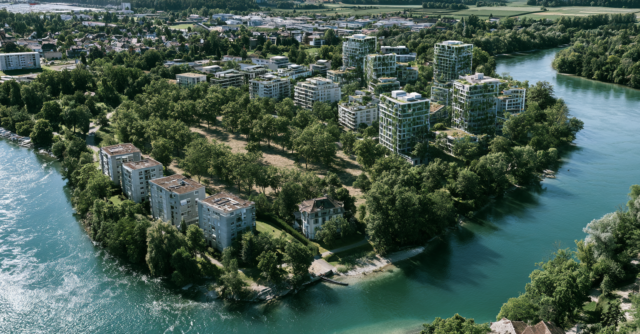
    “This strong result is primarily attributable to energy sales on the open market, a profit from the marketing of wind power production abroad and the targeted use of funds,” ewz Director Benedikt Loepfe is quoted as saying in the statement. “The successful integration of district heating, involving over 100 additional employees, impressively demonstrates our company’s adaptability.”

    In the reporting year, ewz also invested CHF 244 million in networks, power stations and shareholdings. That is CHF 48 million more than in the previous year, the energy supplier writes. “Capital requirements will rise massively over the next ten years so that the necessary investments of over CHF 3 billion can be made,” explains Loepfe. “ewz’s current strong financial position enables us to make these investments in the future of energy and security of supply in the coming years using our own funds.” CHF 80 million of this year’s profit will be transferred to the city.

  • Winterthur is turning to solar power from the local area

    Winterthur is turning to solar power from the local area

    Since the start of the year, residents of Winterthur have been able to sell their own solar power to their local community. To do so, they must register their solar installation with a local electricity community (LEG) run by Stadtwerk Winterthur. The municipal utility currently offers 155 such LEGs across the city, according to a statement from Winterthur City Council. This means that around seven in ten households in Winterthur have the opportunity to purchase solar power from their neighbourhood.

    Of the 2,500 photovoltaic systems installed across the city, 535 are currently registered with the 155 existing LEGs. Anyone wishing to register their own system or purchase electricity from an LEG can do so via the leghub.ch platform. It is also possible to set up your own LEG via the platform.

    The federal government is promoting the purchase of solar power from the neighbourhood by offering a discount on the grid usage component of the electricity price. The price of LEG solar power is therefore up to 15 per cent lower than the standard electricity price. In the press release, Stefan Fritschi, Head of Winterthur’s Department of Technical Services, highlights a further advantage of electricity communities: “LEGs also enable tenants and homeowners without their own system to access locally produced solar power”.

  • New construction project bolsters the research hub in the Bernese Oberland

    New construction project bolsters the research hub in the Bernese Oberland

    The cost of constructing the new Empa building on plot B5 of the Thun Nord site amounts to 47 million Swiss francs. According to a press release, a financing solution has now been put forward. The City of Thun states in a press release that the project will be financed through a new site development company to be established, in which four partners will hold stakes.

    Under the proposal, the City of Thun will provide a mortgage-backed, interest-free loan of 16 million Swiss francs. It will also provide a guarantee for a loan for which the Canton of Bern has issued a letter of intent under the New Regional Policy for 10 million Swiss francs. Empa is investing CHF 16 million in laboratories and the technical centre. Halter AG, as the development partner for the site, is contributing CHF 5 million. The site development company is to be transferred to investors once the project is completed.

    The Thun City Council will decide on the current proposal at its meeting on 30 April. Planning permission for the first phase on construction site B5 has already been granted. Construction is scheduled to begin in spring 2027, with completion expected by the end of 2029.

    “The City of Thun has a keen interest in the realisation of the new building,” Mayor Raphael Lanz is quoted as saying in the press release. “Empa secures long-term, highly skilled jobs in research and development, generates regional value creation and strengthens Thun as a technology and innovation hub within the Canton of Bern.”

    Empa has had a research site in Thun since 1994. Here, it conducts research in the fields of high technology and materials.

    A new district is taking shape in Thun Nord. Alongside the first concrete project on the B5 construction site, the planned Thun Nord S-Bahn station plays a central role. The total potential of the Thun Nord site encompasses around 6,500 jobs.

  • Former industrial site to be transformed into a mixed-use neighbourhood

    Former industrial site to be transformed into a mixed-use neighbourhood

    According to a press release, Halter AG has celebrated the topping-out ceremony at the Aebi site. The construction company, based in Schlieren, is developing extensive commercial, office and residential space on the site, with completion scheduled for early 2027. The ground-breaking ceremony took place in February 2025. The Aebi company manufactured agricultural machinery on the site until 2010. Burgdorf’s mayor, Stefan Berger, along with Marcel-Jann Blattert and Marc Weber from Halter AG, expressed their gratitude at the topping-out ceremony for the efforts of everyone involved.

    In total, the site will feature 26 owner-occupied and 79 rental apartments, as well as around 3,625 square metres of floor space for versatile commercial, office and retail premises. The usable space can be partly rented and partly purchased as freehold. According to the project description, the central location at the railway station and the proximity to Bern (ideal conditions for businesses) are particularly attractive to companies that value a strong presence, accessibility and a vibrant environment.

    Halter AG is a property and construction company operating throughout Switzerland. The company handles a construction volume of around 800 million Swiss francs per year across seven sites and currently has around 320 projects in development and under construction.

  • Start-up is driving the electrification of industrial processes

    Start-up is driving the electrification of industrial processes

    SolidWatts has announced the completion of a seed funding round. The Vaud-based start-up, founded in late 2022, has raised 1.8 million Swiss francs. According to a press release, existing investors Evercurios VC (Athens), Kickfund (Basel) and Axel Carbon Capital (Milan) have continued their support. New investors include Uni.Fund and Investing for Purpose, both based in Athens, Loggerhead Ventures from Thessaloniki, and the British investor Almanac Ventures.

    In developing his solid-state high-frequency platform, SolidWatts CTO and founder Dr Markus Aicheler, then a postdoctoral researcher at CERN, drew inspiration from the Geneva-based nuclear research centre’s pioneering work in high-frequency (HF) solid-state technology. Whilst CERN uses this technology for scientific applications, the scientist recognised its potential to replace fossil fuels in industry. HF enables high-power dielectric heating “with an efficiency and scale that make it suitable for direct use in conventional fossil fuel-based processes for the first time”, according to the start-up, which is supported by the Swiss Climate Foundation, in the press release.

    “This investment is a huge endorsement of our mission to fundamentally transform the industry’s energy consumption,” Aicheler is quoted as saying. “It enables us to bring HF technology up to the power and efficiency levels that the industry actually needs.” The seed funding will be used to scale up the SolidWatts platform to higher power levels and to carry out pilot projects with industry partners and customers who are actively seeking to reduce their energy consumption and costs through the electrification of heating processes.

    “SolidWatts is shaping the future of industrial resilience,” says George Georgiadis, partner at Evercurious VC and representative of the investor group. “Its technology boosts efficiency and offers a clear path away from dependence on fossil fuels.” The group is backing “an innovator founded in Europe and equipped for the world”.

  • The City of Biel believes it is on track to meet its climate targets despite the obstacles

    The City of Biel believes it is on track to meet its climate targets despite the obstacles

    In light of ongoing global warming, the City of Biel has been pursuing a comprehensive climate strategy since 2020. At that time, the City Council adopted the relevant climate regulations. Now, for the first time, the city has published a report taking stock of developments to date – with data-related delays of around two years.

    The key finding from the Department of Construction, Energy and the Environment is that Biel is essentially on track to meet its targets. Greenhouse gas emissions have fallen steadily in recent years and are currently slightly below the reduction pathway set out in the climate regulations. According to emissions monitoring, emissions in 2023 amounted to around 174,000 tonnes of CO2 equivalents – a decrease of approximately 34 per cent compared to 2010. At the same time, the share of renewable energy in total energy consumption rose to 39 per cent.

    Looking to the future, however, it is emphasised that further reductions will be more challenging. Particular challenges exist in urban buildings as well as in the transport and heating sectors.

    Furthermore, emissions from transport and heating are falling only slowly. The share of electric vehicles, currently at 13 per cent, is set to rise. Moreover, many fossil fuel heating systems are still being installed, which, due to their long service life, jeopardise the achievement of climate neutrality by 2050.

    Against this backdrop, the city emphasises the central role of the public: the general consensus is that climate targets can only be achieved through their active engagement and the use of existing funding and advisory services.

  • Robotics in the construction industry is gaining in importance thanks to new investment

    Sika, the Baar-based specialist group, has invested in Mesh AG once again following its 2022 investment. The start-up Mesh specialises in robotic construction, reinforcement and formwork and, according to a statement from Sika, has completed a funding round totalling €2.9 million. Alongside Sika, participants included ABB Robotics and the Shimizu Corporation from Tokyo.

    MESH was founded in 2022 as a spin-off from the Swiss Federal Institute of Technology Zurich. With partners such as Sika, Mesh developed the first robotic process between 2019 and 2021 that enables complex shapes to be produced without formwork. “In robot-assisted production, it doesn’t matter whether something is straight or curved: complexity comes at no extra cost,” explains Mesh CEO and co-founder Ammar Mirjan in an interview published by Sika. “This gives architects and building clients new creative freedoms.”

    According to Sika, over a million reinforcement elements have already been installed in Switzerland using Mesh technology. These solutions have been used in demanding large-scale projects such as the new Gotthard Road Tunnel, amongst others.

    “Through our investment in Mesh, we are investing in one of the world’s most innovative technologies for robot-assisted manufacturing in industrial series production,” Sika’s Head of Construction, Ivo Schädler, is quoted as saying in the press release. “Combined with our materials expertise, we are creating new opportunities for significant improvements in efficiency, quality and sustainability in the construction industry.”

    According to Ammar Mirjan, the partnership with Sika and other international industry leaders marks “a decisive turning point for Mesh on its journey from regional innovator to global technology provider”. He describes the funding round as a key milestone in driving growth by combining digital manufacturing with advanced material solutions “and jointly tapping into new business potential around the world”.

  • Trust company expands offering with industry software for construction SMEs

    Trust company expands offering with industry software for construction SMEs

    Gewerbe-Treuhand AG, based in Lucerne, is expanding its range of industry software. According to a press release, the company is now offering AbaBau software from Abacus Business Solutions AG for SMEs in the ancillary construction industry.

    The company in Thalwil ZH is a subsidiary of Abacus Research AG. It develops this specialised software with an expert team of 80 employees.

    As an Abacus partner, Gewerbe-Treuhand not only organises the distribution of the construction software, but also supports the SMEs that use it with the practical and process-optimising introduction and implementation in practice.

    Companies using the software also have the option of calling in their fiduciary partner in the event of staff shortages or temporary substitutions for administrative tasks, according to the press release.

    Gewerbe-Treuhand is already a sales partner of Abacus Research AG in 2019. The new partnership with Abacus Business Solutions builds on this collaboration.

  • Zurich Soft Robotics installs a Solskin façade on the KELLER Diamant building

    Zurich Soft Robotics installs a Solskin façade on the KELLER Diamant building

    Zurich Soft Robotics GmbH has deployed its Solskin technology on the KELLER Diamant building owned by KELLER Pressure AG in Winterthur, marking its largest façade project to date. A total of around 3,500 movable modules were installed, which adjust to the position of the sun. As Zurich Soft Robotics writes in a blog post, this can increase energy generation by up to 40 per cent compared to standard static solutions. At the same time, Solskin provides effective shading whilst maintaining natural light levels.

    The starting point for the project in Winterthur was the high level of solar radiation on the south-facing façade and the correspondingly increased cooling requirements within the building. The adaptive façade is designed to reduce energy consumption whilst improving working conditions.

    Installation was modular and relatively quick: individual units could be fitted in less than an hour. With this project, the company demonstrates that the technology can also be implemented on an industrial scale.

    Zurich Soft Robotics GmbH was founded in 2022 as a spin-off from the Swiss Federal Institute of Technology Zurich (ETH) and is based at Technopark Zurich.

  • Strategic reorientation with a focus on energy and technology

    Strategic reorientation with a focus on energy and technology

    BKW is announcing a change in its Group Executive Board: On 1 April this year, Margarita Aleksieva will take over from Philipp Hänggi as Head of the Energy Production business area, the Bern-based energy supplier announced in a press release. At the same time, Aleksieva will join the BKW Group Executive Board. The designated Head of Business Area is currently Head of the Wind & Solar business unit at BKW.

    “Renewable energy production is very close to my heart”, Aleksieva is quoted as saying in the press release. “I am therefore all the more pleased to be able to play an active role in shaping the energy transition on the BKW Group Executive Board.” Before joining BKW, Aleksieva held “various management positions at international energy companies”, including Alpiq, according to the press release.

    Philipp Hänggi, who joined BKW in 2014, is stepping down from the Group Executive Board after six years as Head of Energy Production. According to the press release, he intends to focus on strategic tasks in the future, particularly in the areas of nuclear energy and radioactive waste disposal, and “increasingly devote himself to topics relating to artificial intelligence”. Hänggi was already involved in the design and utilisation of artificial intelligence at BKW during his time on the Group Executive Board.

  • New foundation to bring SMEs forward

    New foundation to bring SMEs forward

    Lucerne performs solidly in national competitiveness rankings. In terms of innovative strength, however, the canton ranks at the bottom. Those who fail to address this shortfall risk losing out in the competition between locations in the long term. This finding is the starting point for the planned Lucerne Innovation Foundation and for the special credit that the cantonal government is now applying for.

    The foundation as the linchpin
    The new foundation is not intended to create a parallel structure, but rather to coordinate existing partner organizations and better network their offerings. The focus is on companies in the early stages of development. In other words, where the need is greatest and resources are scarcest. In addition to coordination, the foundation can also co-finance specific implementation projects such as feasibility studies. The foundation board should consist of at least five members, and a four-year performance agreement ensures planning security.

    24 million with a clear earmarking
    One million of the requested 24 million francs will flow into the foundation’s capital. The remaining CHF 23 million is earmarked for the foundation’s services in the years 2026 to 2029. Lucerne is thus positioning itself as a canton that does not wait for federal funding, but acts itself. In addition to national programs such as those of Innosuisse, which support SME innovation throughout Switzerland.

    Part of a larger reorganization
    The foundation is embedded in the canton’s broader location promotion package. In January 2026, the cantonal council approved a package of measures worth around CHF 300 million per year. This was in response to the OECD minimum taxation, which reduces previous tax advantages. The Lucerne innovation contribution alone comprises CHF 110 to 160 million per year for companies that invest in research and development. The Lucerne Innovation Foundation is therefore not an individual measure, but part of a coordinated offensive.

    Referendum in September
    The Cantonal Council has already approved the overarching Location Promotion Act. However, the voters have the final say. The vote is scheduled for September 2026, with entry into force in October 2026. However, the foundation can already be established on the basis of the current legal foundations. The go-ahead does not have to wait for the referendum.